



Abstract
Primarily using a variable-centered approach, job search research explores the connections between antecedents, processes, and outcomes. A person-centered approach, however, categorizes individuals based on personal and contextual elements. This study used CSM as a theoretical framework to identify job seeker profiles by exploring configurations of job search self-efficacy, conscientiousness, financial need, social pressure, and job search quality and intensity. We examined how these profiles correspond with sociodemographic variables and job search outcomes such as rumination, interviews, and job offers. In a sample of 300 job seekers, four profiles emerged: casual job search contemplator, financially burdened job seeker, financially secure job seeker, and multifaceted job search strategist. The contemplator profile correlated with the fewest interviews, while the financially burdened job seeker had the most. These findings suggest career counselors need to recognize distinctive job seeker patterns requiring tailored counseling approaches, underscoring the potential of the person-centered approach for further job search research.
Exploring job seeker profiles through latent profile analysis
Meta-analytic research indicates that a myriad of antecedents shapes job seeking, impacts employability, and dictates job search outcomes (Van Hooft et al., 2021). While individual antecedents significantly influence, their collective understanding through theoretical frameworks like the social cognitive career theory (SCCT) provides deeper insights (Kanfer & Bufton, 2018). Most research has employed a variable-centered approach, but a person-centered perspective allows a more holistic examination of key factors in job seeking (Hofmans et al., 2020). This study leverages a person-centered approach to identify subgroups among job seekers. Grounded in the social cognitive model of career self-management (CSM; Lent & Brown, 2013), we explore how job search self-efficacy, personality, contextual elements, and job search engagement collectively predict and enhance job search outcomes.
The examination of job seeker subpopulations is emphasized as an important focus in scholarly literature, offering rich insights into the diverse profiles and unique characteristics of job seekers (Boswell et al., 2012, Norder et al., 2022, Vansteenkiste & Van den Broeck, 2018). For instance, Boswell et al., (2012) detailed the limitations of categorizing job seekers solely based on employment status, positing that job seekers with aligned objectives may encounter analogous experiences during the job search process. Furthermore, meta-analytic studies underscore the existence of substantial variability in job search factors, hinting at the presence of moderators or subgroups that shape these experiences (Kanfer et al., 2001, Kim et al., 2019, Van Hooft et al., 2021). This body of research bolsters the rationale for investigating job seeker subpopulations, fostering a more comprehensive understanding of job search processes and offering valuable theoretical and practical advancements in career development research.
With this study, we intend to make three important contributions. First, at a fundamental level, research has yet to show whether configurations of profiles including job search behavior exist in the job search context. Most quantitative analyses assume job seekers come from a homogeneous population, and parameters can be averaged. If qualitatively distinct subgroups exist, it suggests the assumption of homogeneity is not always tenable because variables may function differently in different subgroups of job seekers (Hofmans et al., 2020, Spurk et al., 2020). Thus, via one of the first person-centered analyses in the study of job search, we test a critical assumption of the empirical job search literature.
Second, we further contribute to research on job search by determining whether distinct job seeker profiles can be identified based on social cognitive, personality, contextual factors, and job search behavior. Previous job search research has generally aimed to understand either (1) how job seekers’ psychological characteristics and initiative influence successful job search outcomes, or (2) the importance of contextual factors (e.g., social pressure, financial need) for motivating job search. However, we know little about how personal and contextual characteristics combine to form subgroups of individuals who share similar experiences of the job search process, and we also have a limited understanding of the role these characteristics play in determining job search outcomes (Norder et al., 2022). We make a theoretical contribution by integrating the CSM model (Lent & Brown, 2013) into the literature on job search to explain how configurations develop. We suggest different subgroups of job seekers who differ in personal characteristics may create meaning from the job search context similarly. Social cognitive career theory is a fitting framework for studying job search, as it explains the combined influence of personal and contextual variables (Lim et al., 2016).
Third, by identifying subgroups of job seekers according to social cognitive, personality, and contextual variables we advance an alternative to employment status-based typologies often discussed in research and practice (i.e., new entrant, job loser, employed job seeker; Boswell et al., 2012). Our results suggest subgroups of job seekers emerged not according to their employment status but according to variables central to their job search. Thus, our results validate an alternative typology aligned with variables central to a job search process. This presents an alternate lens for practitioners because it suggests that subgroups containing both employed and unemployed job seekers may exist that search for jobs similarly. This is important because it has implications for which groups might benefit from different job search interventions (Liu et al., 2014).
Social cognitive model of career self-management
Our study is grounded in the social cognitive model of career self-management (CSM; Brown & Lent, 2019, Lent & Brown, 2013). This model, an extension of the social cognitive career theory (SCCT; Lent et al., 1994), highlights the dynamic interplay between social cognitive factors, such as self-efficacy, personality traits, and contextual factors, in shaping adaptive career behaviors. It specifically emphasizes the role these factors play in the job search process. Furthermore, the CSM model acknowledges the significant influence of sociodemographic factors on career behaviors. Our investigation is centrally focused on exploring the intertwined relationships between job search self-efficacy, personality traits, contextual influences, and job search behaviors in relation to job search outcomes.
As a social cognitive variable, job search self-efficacy (a job seeker’s confidence in his or her ability to meet the requirements of potential employers) plays a vital role in the job search process. Individuals with high job search self-efficacy are expected to approach job search activity, will be more persistent in the face of challenges, and will perform better (Kim et al., 2019). Understanding whether and how job search self-efficacy is related to job search intensity and quality has important theoretical and practical implications (Saks et al., 2015, Stremersch et al., 2021).
Secondly, this study highlights conscientiousness as a pivotal personality trait in the CSM model (Lent & Brown, 2013). Conscientiousness significantly shapes job-seeking due to its attributes, like organization, planning, and persistence (Turban et al., 2009, Van Hooft et al., 2021, Wanberg et al., 2002). These traits propel conscientious job seekers to engage in effective search strategies and analyze employer feedback for better outcomes (Turban et al., 2009). Notably, their invested effort tends to yield high-quality search processes (Stremersch et al., 2021). By integrating conscientiousness into the CSM framework using latent profile analysis, this study uncovers distinct job-seeker subgroups, enhancing our understanding of their search behaviors and outcomes.
In addition, people are more likely to undertake action when they are supported by their environment and are not hindered by contextual barriers. These supports and barriers are critical components of CSM as they work in concert with social cognitive variables during job search (Lent & Brown, 2013). Job seekers must balance the demands of intentionally striving toward job attainment with adapting to the pressures of the context. Social pressure refers to the external influence or expectations imposed by others or the broader social context. It can create expectations, norms, or pressures that may influence an individual’s decision-making and actions related to job search, limiting an individual’s perceived autonomy or control over their job search process and potentially affecting their perceived volition (Vansteenkiste et al., 2004). Financial need, on the other hand, refers to financial obligations and economic instability job seekers might face. As a result, individuals' job search becomes driven by the immediate need for income and stability, narrowing their choices and prioritizing short-term financial relief over long-term career prospects and personal goals (Wanberg, Hooft, et al., 2020). We focused mainly on contextual barriers because they are often underexposed in CSM research (Stremersch et al., 2021). We expect both social pressure and financial need to show complex interrelationships with job search intensity and quality, meaning that social pressure may influence the level of effort individuals exert in their job search endeavors, whereas financial need may be more likely to shape the quality of job search activities (Van Hooft et al., 2021). Understanding these complex interrelationships is essential for gaining insights into the multifaceted nature of job search processes and outcomes.
Overall, social cognitive variables, personality, contextual factors, and job search behavior interact in concert with each other to affect job search outcomes. Drawing on the CSM model, we examined how job search self-efficacy, personality (i.e., conscientiousness), and contextual factors (i.e., financial need, social pressure), are combined into profiles with certain job search behaviors (i.e., job search quality and intensity), as well as how they relate to job search outcomes. This study makes a notable contribution to the CSM model by examining the integrated effects of job search self-efficacy, personality, and contextual factors, on job search behaviors and outcomes. Through the application of latent profile analysis, the study identifies distinct profiles of job seekers and investigates the associations between these profiles and job search outcomes. By incorporating these variables within the framework of the CSM model, this research expands our scholarly understanding of the intricate interplay between social cognitive factors, personality traits, contextual influences, and job search behaviors, thereby enriching our comprehension of the underlying mechanisms shaping job search processes and ultimate outcomes within the broader CSM framework.
A person-centered approach to studying job search
Most quantitative job search research has used variance-based approaches (such as regressions) to understand the average parameters of a few variables operating in isolation or through a few interactions. While variance-based approaches have substantially advanced our understanding of job search in recent years, such approaches cannot easily examine the complexity of interactions between social cognitive, personality, and contextual factors that typify job search (e.g., Lent & Brown, 2013). To be able to identify different configurations of job seekers, we propose a person-centered approach. A person-centered approach differs from variance-based approaches because it allows researchers to look at the combined effects of social cognitive, personality, and contextual factors holistically (Hofmans et al., 2020). A person-centered approach enables researchers to identify subgroups of job seekers that share similar characteristics and function similarly.
The first objective of the current study was to determine whether distinct job seeker profiles could be identified. Given the relatively unchartered nature of job search regarding the emergence of diverse and heterogeneous profiles, the study adopts an exploratory approach. The exploratory approach has been the standard protocol in case of limited prior theory building regarding profile or configuration development (see Hirschi & Valero, 2017). Consistent with this methodology, we explore the following research question: RQ 1. Are there quantitatively and qualitatively distinct job seeker profiles based on social cognitive (i.e., job search self-efficacy), personality (i.e., conscientiousness), contextual factors (i.e., social pressure, financial need), and job search behavior (i.e., job search intensity, and job search quality)?
A second objective of the study was to examine the discriminant and criterion-related validity of the job seeker profiles by examining their relationship with sociodemographic characteristics (i.e., age, gender, educational level, employment status, years of work experience, and unemployment insurance or welfare benefits) and job search outcomes (i.e., rumination, number of interviews, and number of job offers). We sourced sociodemographic characteristics for discriminant validation purposes from review studies and meta-analyses showing important relationships with job search behaviors and attitudes (i.e., Boswell et al., 2012, Kanfer et al., 2001, Van Hooft et al., 2021). Additionally, by considering sociodemographic characteristics, we recognized the influence of these factors within the broader social and economic context on individuals' career self-management processes, aligning with the CSM model (Lent & Brown, 2013). The interplay between sociodemographic characteristics, social cognitive factors, and contextual influences contributes to a comprehensive understanding of job search behaviors and outcomes. For example, unemployed job seekers must search for employment within a context where security and stability are lacking and are driven by a financial need to find work. In contrast, employed job seekers may have a variety of motives for searching for new work, such as finding a new job, obtaining leverage for negotiating job offers, or staying aware of opportunities (Van Hoye & Saks, 2008). We expect these differences to be reflected in the results of our discriminant validation. Further, in terms of criterion validation, we differentiated between qualitative (i.e., rumination; Cropley et al., 2012), as well as quantitative job search outcomes (i.e., number of job interviews and job offers). While scholars have extensively examined the number of job interviews and offers, the significance of rumination in work psychology has been well-established (e.g., Querstret & Cropley, 2012). However, its relevance in the context of job searches has only recently started to receive attention (Chawla et al., 2019, Gabriel et al., 2021). The theoretical importance of rumination lies in its capacity to explore the job seeker’s level of satisfaction with the job search process, leading to a better understanding of overall affective evaluations concerning decision quality (Crossley & Highhouse, 2005). Overall, consistent with profile-based research protocol, we seek to establish discriminant and criterion-validity for our job seeker profiles by exploring the following research question: RQ 2. To what extent do job seeker profiles exhibit variations in sociodemographic characteristics and job search outcomes?
Method
Participants and procedure
Our sample consisted of active job-seeking individuals registered with Prolific Academic’s online research portal. We collected data during April 2022 and paid participants £3 to participate in the study. We recruited individuals who were registered at Prolific Academic as actively looking for a job, aged 18–65 years, with English as their first language, living in the U.S., Canada, U.K., Ireland, Australia, or New Zealand, and with a 90–100% Prolific Academic approval rate (resembling Van Hooft et al., 2022). The study consisted of a questionnaire measuring social cognitive factors (i.e., job search self-efficacy), personality (i.e., conscientiousness), contextual factors (i.e., financial need, social pressure), behaviors (i.e., job search quality and job search intensity), and job search outcomes (i.e., rumination, job interviews, and job offers), along with sociodemographic characteristics (i.e., age, gender, educational level, employment status, employed or not, years of work experience, and unemployment insurance or welfare benefits).
Of the 300 respondents, the average age was 34.52 years (SD = 10.47), and 58.3% were female. The racial/ethnic composition of our sample was as follows: 85.0% identified as white, 4.3% as black, 6.0% as Asian, and 2.3% as mixed. The remaining 2.4% represented other racial/ethnic designations. In terms of job search duration, 11.0% of participants were actively seeking employment for less than a month, while 30.0% had been searching for over six months, and 9.7% had been engaged in their job search for more than 12 months. Regarding employment status, 47.3% of participants were employed full-time, 23% were part-time, and 29.7% were unemployed. On average, job seekers had 14.11 years of work experience (SD = 10.31). Some (11%) participants reported receiving unemployment insurance or welfare benefits. We obtained informed consent from all respondents. The ethics committees of the first authors' university and the second and third authors’ university approved this study and we followed all procedures.
Measures
All items were rated on a 7-point scale ranging from 1 = completely disagree to 7 = completely agree unless stated otherwise.
Conscientiousness
Like other recent job search studies (e.g., Kim et al., 2019, Stremersch et al., 2021), we measured conscientiousness with a ten-item scale from the International Personality Item Pool (2001; e.g., “I am always well prepared”; α = .88), corresponding to the broad conscientiousness domain of the Revised NEO Personality Inventory (NEO-PI-R; Costa & McCrae, 1995).
Job search self-efficacy
For job search self-efficacy we used Van Ryn and Vinokur’s (1992) six-item measure because it captures behavioral job search self-efficacy and is similar to the behavioral items in other recent scales (Saks et al., 2015). Participants indicated their confidence in successfully performing job search tasks on a 7-point rating scale (1 = not at all confident to 7 = a great deal confident). A sample task is: “Make the best impression and get points across in an interview” (α = .83).
Job search quality
Job search quality was measured using a 20-item scale from Van Hooft et al., (2022). We asked participants to what extent they engaged in goal establishment and planning, preparation and alignment, emotion regulation and persistence, learning, and improvement in the past month. Sample items are: “I was determined to find a job” and, “I thought carefully about how best to present myself to potential employers''. Even though the authors suggested a four-factor structure of job search quality (Van Hooft et al., 2022), the purpose of our study was not to model how the separate job search quality dimensions act in concert, but how job search quality acts in concert with job search intensity and other variables. Therefore, combined all items into one overarching factor (α = .89).
Job search intensity
We used a 10-item scale based on previous job search intensity measures (e.g., Van Hoye et al., 2015). Participants were asked to indicate how frequently they did specific search activities during the past month on a 7-point rating scale (1 = never to 7 = every time). A sample item is “Looking for a job on the Internet” (α = .83).
Social pressure
Social pressure was measured using the Job Search Self-Regulation Questionnaire (Van Hooft et al., 2021, Vansteenkiste et al., 2004). Participants were asked to indicate why they are looking for a job. They were then provided with different reasons for engaging in a job search and asked to indicate to which extent they agreed with each item. A sample item is “I am looking for a job because I don’t want others to think I am lazy” (α = .83). To reflect
Financial need
Three items by Vinokur et al., (1996) assessed the participants’ financial need to find a job. Participants rated the extent to which each item applied to their situation. A sample item is “It is difficult for me to live on my total household income right now” (α = .89).
Rumination
We measured rumination with four items by Chawla et al., (2019), that were adapted from Cropley et al., (2012). Participants rated the extent to which they agreed with each item during the past month. A sample item is “I became tense when thinking about job search-related issues” (α = .90).
Job interviews
We used a single item asking participants to indicate the number of job interviews they had done during the past month: “How many job interviews have you done in the past month? (approximately)”
Job offers
We used a single item asking participants to indicate the number of job offers they had received during the past month: “How many job offers have you received in the past month? (approximately)”
Analytical approach
We used latent profile analysis, a mixture model, using Mplus 8.4 (Muthén & Muthén, 2012) to ascertain the optimal profile solution. Using the iterative method, we first estimated a two-profile version and added consecutive profiles until an adequate fit was achieved. Statistical fit and content-related criteria were used to retain the best profile solution (Ram & Grimm, 2009). To investigate the discriminant validity of the profiles we studied the relationship between a range of sociodemographic variables and job seeker profiles as a dependent variable, using cross-tabulations (i.e., gender, employment status, employed or not, educational level, employment benefits, age, and work experience). Cross tabulations were used to assess whether differences in sociodemographic variables are linked to a greater possibility of a respondent fitting one profile rather than its alternative. To study the outcome effects of profiles we modeled rumination, job interviews, and job offers as auxiliary variables of the four job seeker profiles using the BCH command in MPlus. This command reported mean levels across profiles for each auxiliary variable and compared overall and between-profile means using Wald tests. The BCH procedure was chosen because it was the most robust option (for a discussion of the procedure, see Bakk & Vermunt, 2016).
Results
Validity Check
Means, standard deviations, internal consistencies, and correlations of study variables.
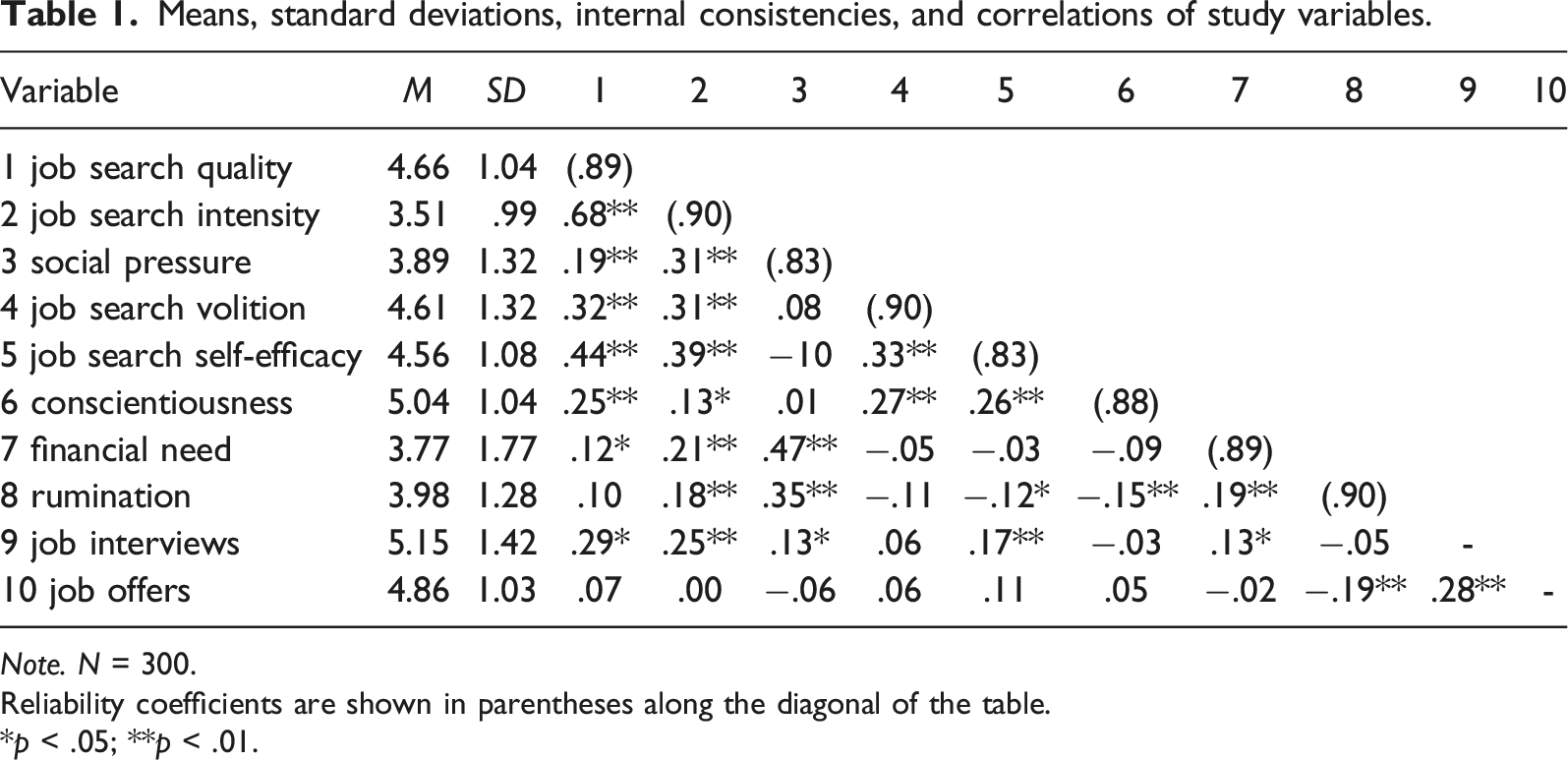
Note. N = 300.
Reliability coefficients are shown in parentheses along the diagonal of the table.
*p < .05; **p < .01.
Latent profile analysis: Determining profiles
Selecting the optimal profile solution is crucial when performing latent profile analysis. This typically involves considering statistical fit values and content-related factors (Hirschi & Valero, 2017, Vermunt & Magidson, 2002). We adhered to Ram and Grimm’s (2009) procedure, adopted by others (Spurk et al., 2020), and examined our models (2-profile to 5-profile solutions) using distribution-free information criteria such as the Akaike information criterion (AIC; Akaike, 1987) and Bayesian information criterion (BIC; Schwarz, 1978). Smaller AIC and BIC values imply superior models. The sample-adjusted BIC (SABIC; Sclove, 1987) was used to ascertain the best-fitting model with the fewest parameters. We performed likelihood ratio tests (BLRT and LMR) to examine model parsimony and calculated entropy values to gauge confidence in individual profile classification. Regarding content-related criteria, Berlin et al., (2014) suggest retaining an additional profile only if it adds qualitatively new information. Additionally, if a new profile represents only a small percentage of observations, it poses concerns about power and precision, requiring strong justification.
Model fit statistics for job seeker profile solutions.
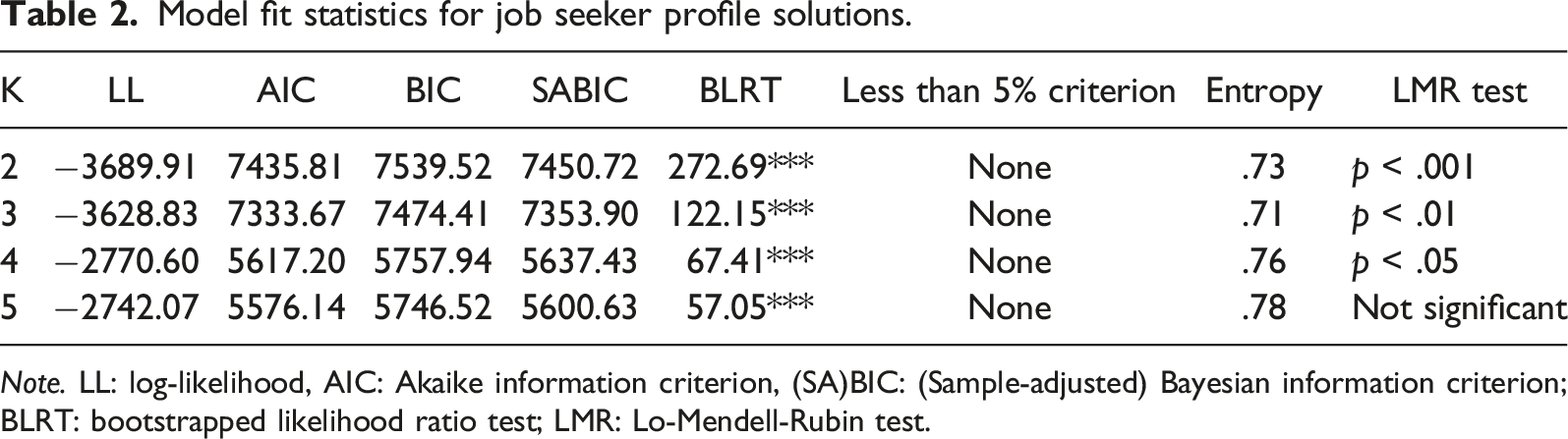
Note. LL: log-likelihood, AIC: Akaike information criterion, (SA)BIC: (Sample-adjusted) Bayesian information criterion; BLRT: bootstrapped likelihood ratio test; LMR: Lo-Mendell-Rubin test.
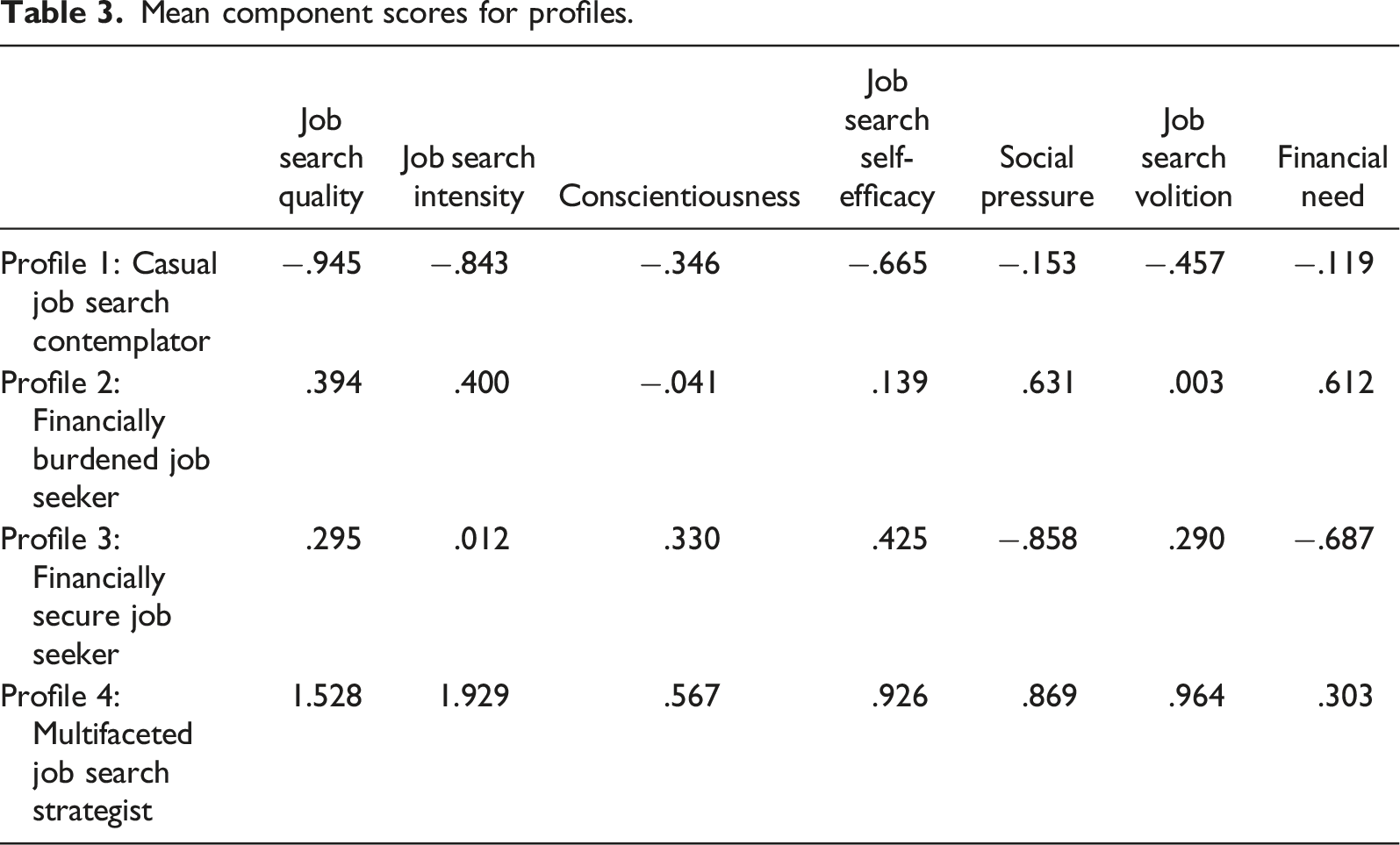
We analyzed the standard scores for seven indicators resulting in four distinct job seeker profiles (Figure 1 and Table 3). The first profile, casual job search contemplator (N = 108, 36%), demonstrated the lowest job search intensity, quality, self-efficacy, and conscientiousness, coupled with average social pressure, moderately low job search volition, and average financial need. The second profile, financially burdened job seekers (N = 91, 30%), displayed average social pressure and job search volition, translating to moderately high job search intensity and quality. However, they showed the highest financial need. The third profile, financially secure job seekers (N = 75, 25%), exhibited average job search quality and intensity, but low financial need and social pressure, alongside higher-than-average job search self-efficacy and conscientiousness. The fourth profile, multifaceted job search strategists (N = 26, 9%), contrasted with the first profile by showing the highest job search quality, intensity, volition, conscientiousness, and self-efficacy with average financial needs. These findings highlight the existence of diverse job seeker profiles, each characterized by unique combinations of personal and contextual factors. Job seeker profiles based on the four-profile solution. Mean component scores for profiles.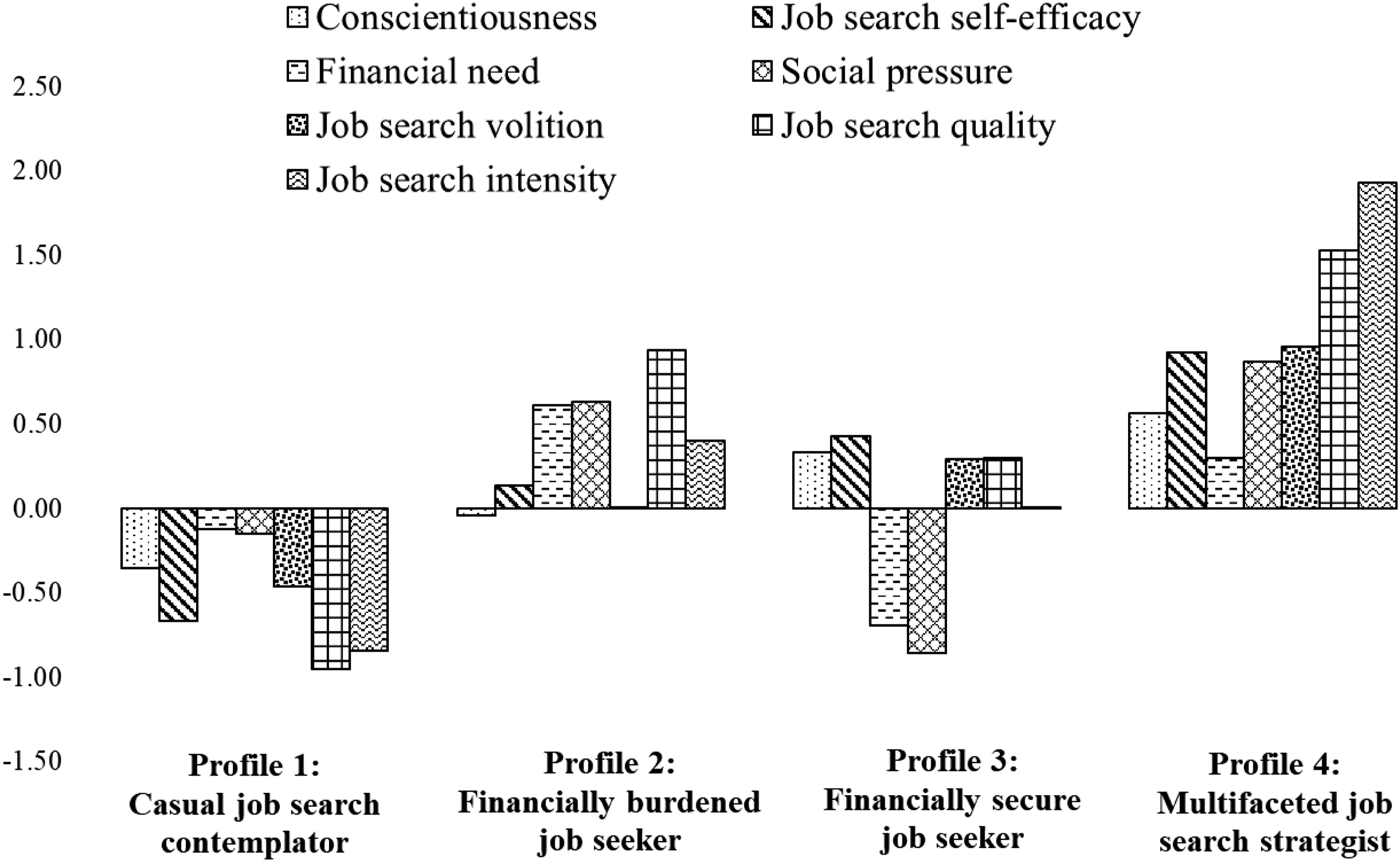
Discriminant validity and criterion-related evidence
Sociodemographic characteristics of the different profiles.
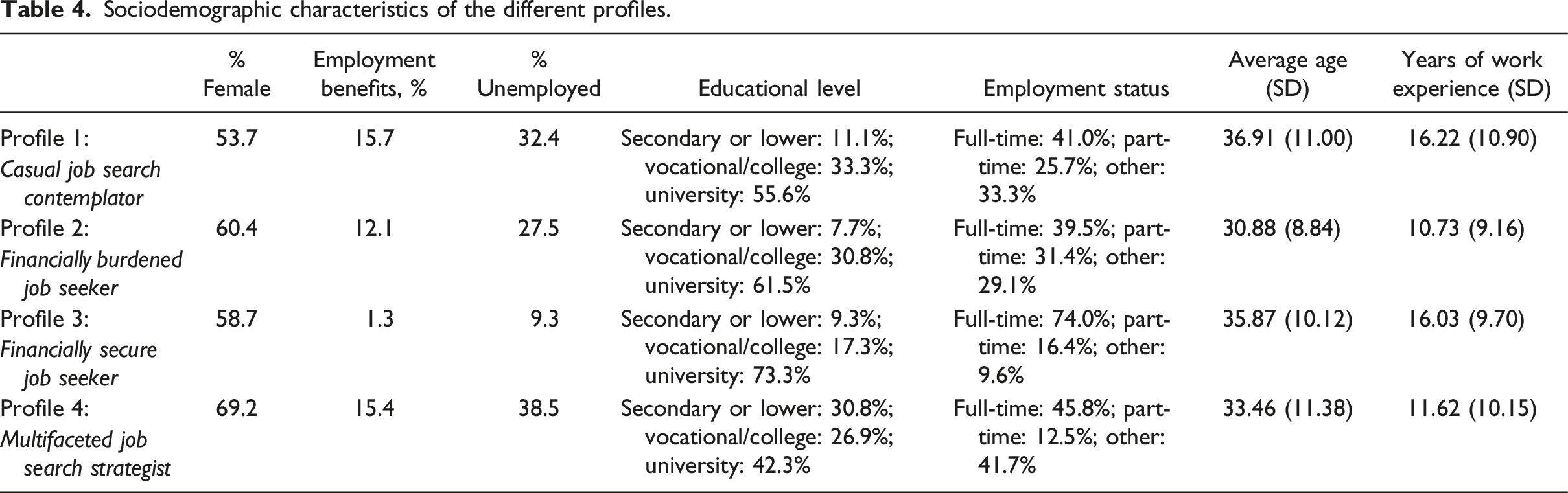
Moving to education, we discerned significant differences in the distribution of job seeker profiles concerning educational attainment. For instance, individuals with a university degree and those with secondary or lower education were predominantly represented among financially secure job seekers, in contrast to those holding a vocational or college degree. Furthermore, individuals with a vocational or college degree formed a larger proportion of financially burdened job seekers than those with secondary or lower education.
As for employment status, we found that full-time employees were predominantly represented among financially secure job seekers compared to part-time workers and those in the 'other' category. Intriguingly, the 'other' category had a relatively higher proportion of multifaceted job search strategists compared to both full-time and part-time workers.
In terms of age, we observed that financially burdened job seekers tended to be younger than their counterparts in the casual job search contemplators and financially secure job seekers profiles. However, we did not detect any other significant differences across the profiles in terms of age. As for years of work experience, it was evident that financially burdened job seekers had less work experience compared to casual job search contemplators and financially secure job seekers. However, no significant differences were observed when comparing multifaceted job search strategists with financially secure job seekers, financially burdened job seekers, and casual job search contemplators in terms of work experience.
Further, we discerned noteworthy differences related to those who received employment insurance or welfare benefits. Expectedly, beneficiaries were heavily concentrated in the casual job search contemplator category, while being notably underrepresented among the financially secure job seeker profile. In terms of employment status, a similar pattern was observed. Specifically, those who were employed formed a smaller proportion of the casual job search contemplator category compared to those who were unemployed, with a higher concentration of the employed found among the financially secure job seeker profile.
Criterion validity job seeker profiles: Equality test of means across profiles for rumination, job interviews, and job offers using the BCH procedure.
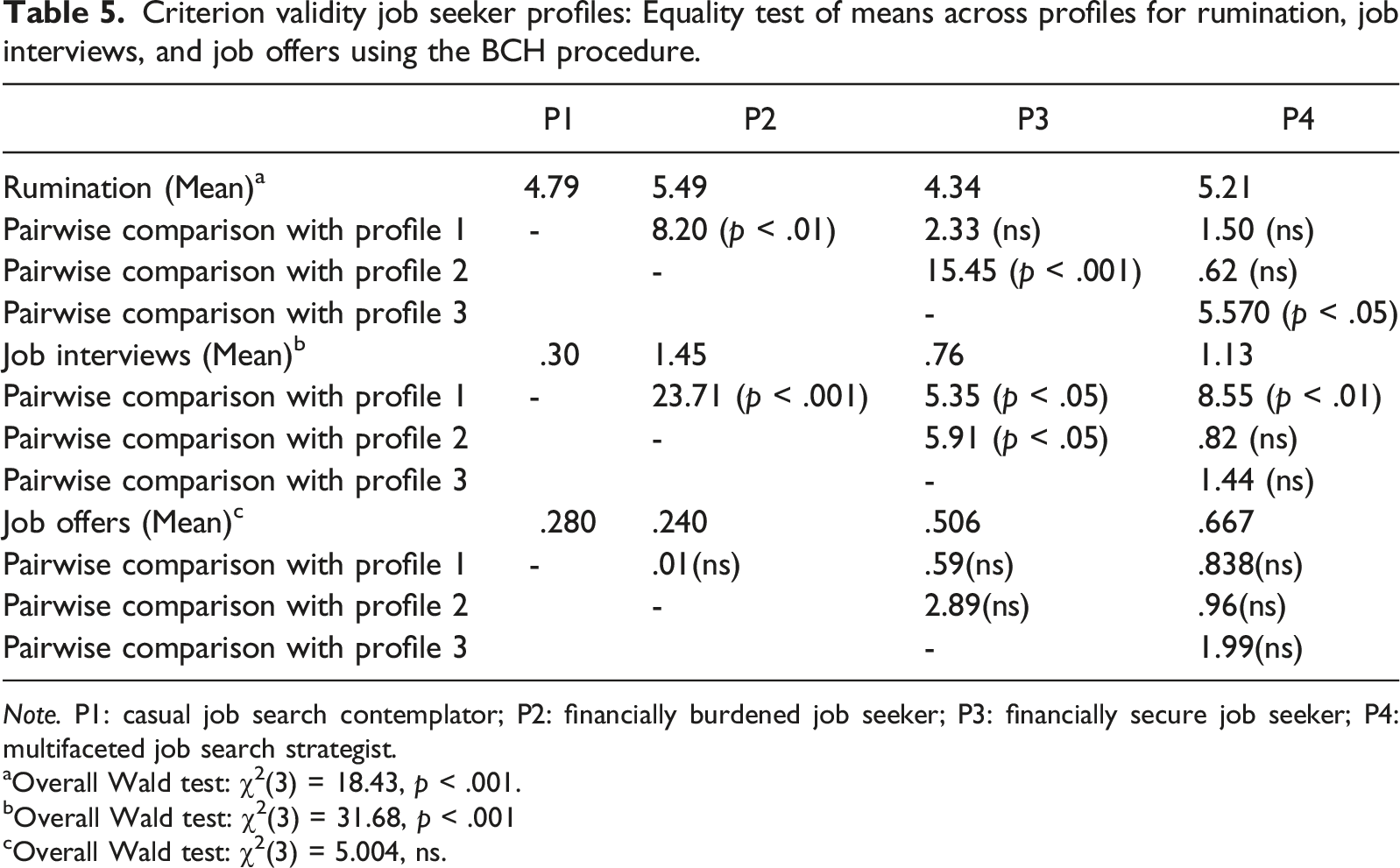
Note. P1: casual job search contemplator; P2: financially burdened job seeker; P3: financially secure job seeker; P4: multifaceted job search strategist.
aOverall Wald test: χ2(3) = 18.43, p < .001.
bOverall Wald test: χ2(3) = 31.68, p < .001
cOverall Wald test: χ2(3) = 5.004, ns.
Discussion
By adopting a unique, person-centered approach to the study of job search, the current study illustrates how heterogeneous job seeker profiles relate to job search outcomes. Drawing from the social cognitive model of career self-management (CSM; Lent & Brown, 2013), we set out to identify profiles of job seekers, as indicated by job search quality and intensity, conscientiousness, job search self-efficacy, social pressure, job search volition, and financial need. We examined these profiles within a sample of both employed and unemployed job seekers.
Our study makes three main contributions to the scholarly literature. First, using a person-centered analytic approach, we were able to identify four distinct profiles of job seekers: the casual job search contemplator, the financially burdened job seeker, the financially secure job seeker, and the multifaceted job search strategist. Two of the four profiles were quantitatively distinct, with low to high scores for the levels of all variables, while the remaining two profiles differed qualitatively from the others. In other words, the found profiles differed in both level (quantitative differences) and shape (qualitative differences), providing evidence that a person-centered approach is suitable for studying a job search. If we had only found quantitatively distinct profiles (differing in level, low to high) but not in shape, this approach would have provided little added value compared to the more traditional variable-centered (i.e., mainly regression-based) methods in the study of job search.
Further, our study also shows that some sociodemographic variables were meaningfully related to profile membership. These findings support the discriminant validity of job seeker profiles. Age was positively associated with a greater likelihood of membership in the casual job search contemplator and financially secure job seeker profiles than the financially burdened job seeker profile. These results are similar to work experience, which is unsurprising since job seekers with more work experience are often also older. Given their precarious labor market position, older job seekers are especially likely to benefit from understanding and advancing job search quality (Wanberg et al., 2016). Regarding unemployment benefits, we found a greater likelihood of membership in the casual job search contemplator profile and a smaller likelihood of membership in the financially secure job seeker profile. Similar results emerged for the employed job seekers, as compared to the unemployed job seekers. However, gender was not a statistically significant predictor of profile membership. This finding is consistent with the theory stating that gender is not related to job search behavior (Kanfer et al., 2001).
Regarding outcome variables, we found that rumination was generally highest in the financially burdened job seeker and the multifaceted job search strategist profile. Despite the high levels of rumination, the multifaceted job search strategist was also characterized by a high-quality job search. Interestingly, job interviews were also the highest in the financially burdened job seeker profile. Regarding job offers, no differences were noted between the four job seeker profiles. Note, however, that the timing of our measures may have impacted our findings regarding job offers, as we asked participants about offers obtained within the past month. Overall, our results support the criterion validity of the job seeker profiles by showing differences in relationships with the job search outcomes. These findings also contribute to research on the CSM model (Lent & Brown, 2013) by identifying the integrated effects of job search self-efficacy, personality, and contextual factors, on job search behaviors and outcomes.
Third, our results provide an alternative to the employment status typologies sometimes referenced in research and practice (i.e., new entrant, job loser, employed job seeker; Boswell et al., 2012). In the present research, subgroups of similar individuals emerged concerning social cognitive, personality, and contextual factors, and these profiles cut across the lines of employment status. Accordingly, it may be helpful to think about, research, and counsel different job seekers according to their personal and contextual profiles—e.g., whether one is a casual job search contemplator, multifaceted job search strategist, financially burdened, or financially secured job seeker, irrespective of whether one person is employed and the other is unemployed. Similarly, two unemployed job seekers may be qualitatively different depending on their profiles. Attempts to understand and predict their behavior using averaged parameters can lead to inaccurate conclusions or recommendations. Our findings suggest researchers should consider profiles of casual job search contemplators, multifaceted job search strategists, and financially secure or burdened job seekers. We presented validity for the typology presented here, in that (1) it is rooted in variables central to the SCCT model of self-regulated job search and linked to the psycho-social context of job search (Van Hooft et al., 2021) and (2) the profiles predicted job search outcomes in our study. We, therefore, believe this research is an essential first step toward differentiating job seekers according to configurations of contextual and personal characteristics to complement insights based on employment status-based differentiation. Future research is needed to investigate whether and how job seekers with different profiles respond to targeted interventions (Liu et al., 2014).
In general, our findings support the additional usefulness of the person-centered approach, which complements the traditional variable-centered research approach (Hofmans et al., 2020, Spurk et al., 2020). Both approaches are essential for a comprehensive understanding of job search and other multidimensional variables. While person-centered and variable-centered approaches offer complementary insights, job search profiles have received limited attention from scholars. By identifying subgroups within a population and considering the combined effects of personal and contextual attributes, we enhance our understanding of the complex job search process more holistically (Spurk et al., 2020).
Limitations and future research directions
While it is valuable to study job seeker profiles, we want to highlight a few limitations and directions for future research. The first aspect concerns the nature of our study. Since our person-centered analysis is one of the first of its kind in job search, we acknowledge its more exploratory nature. However, as we have observed in related research areas that have begun to fully embrace profile-based research (e.g., job and organizational attitudes and behaviors, work motivation, career-related attitudes and orientations, and vocational interests; Spurk et al., 2020), we believe that our preliminary study of the field will provide an excellent reference for future studies to consider adopting a person-centered approach, not only to replicate our findings but also to address other exciting research avenues. For example, future research might examine the functioning or effectiveness of job search profiles embedded within different social networks or geographic locations (Norder et al., 2022).
Second, this study relies on a snapshot of job search profiles using a cross-sectional design, and future research may replicate our findings with additional measurement points. Our focus was on the identification of different profiles and not on testing the temporal stability of job search (quality). Therefore, we did not opt for a longitudinal design. However, as the next step in this research program, a study using two or more time points can allow researchers to employ growth mixture modeling and latent transition analysis, allowing researchers to study interindividual differences in intraindividual change processes (Hofmans et al., 2020, Ram & Grimm, 2009). Furthermore, using self-reported measures is an additional limitation. However, this limitation is diminished by the validity of our used measures and the theoretical grounding of the constructs. Given that our sample was collected on Prolific Academic, it may not have been a representative sample of job seekers. However, we undertook several measures to strengthen the validity of our sample (e.g., attention checks). Still, future research is needed to replicate the findings with other samples of job seekers. Another limitation is the use of a single item to measure unemployment insurance and welfare benefits. This variable is a “double-barreled” measure, which prohibits differentiating between unemployment insurance and welfare benefits. Future research is therefore needed to further investigate the relationship between unemployment insurance and our job seeker profiles, for instance by including additional measures (e.g., UI generosity; Wanberg et al., 2020).
Practical implications
Applying person-centered methods to job search behavior is a valuable tool for scholars and practitioners. Our focus on job seeker profiles aligns with the trends in job search and organizational behavior literature on how job seekers differ in key characteristics (Hofmans et al., 2020). By adopting a person-centered perspective, which involves identifying and evaluating identical subclasses within a population, we deviate from the variable-centered methodology that primarily examines relationships between variables. This person-centered approach allows for a more holistic understanding of individuals and enables the exploration of distinct arrangements of job search behaviors and predictors. When measured in combination rather than separately, our chosen approach has unique implications for the antecedents and outcomes of job search. Thus, the person-centered methodology complements the variable-centered methods by taking a fundamentally different approach to studying vocational behavior (Hofmans et al., 2020, Spurk et al., 2020), aligning with the holistic perspective often adopted by counselors when working with job seekers.
Second, our study’s insights harbor substantial practical implications for tailoring job search interventions. Identifying the unique attributes of each job seeker profile allows us to align support optimally, enhancing experiences and outcomes. For casual contemplators, the focus should be on intensifying their job search via motivational workshops and training programs, proven to be effective strategies (Liu et al., 2014). Boosting job search self-efficacy could entail coaching, goal-setting (Bandura, 1986), and networking opportunities (Wanberg et al., 2020), which also aids in addressing social pressure. Interventions for financially burdened job seekers should prioritize addressing financial concerns, through literacy programs and resource accessibility. Support should take into account their financial situation, for instance, job placement services or higher-earning opportunities referrals. Emotional support, crucial for managing stress (Liu et al., 2014), is another focus area. For financially secure job seekers, interventions to maintain their financial stability are beneficial. Proffering advanced job search techniques and professional development opportunities can improve job search quality, even as networking guidance (Wanberg et al., 2020) remains essential despite lower social pressure. Lastly, multifaceted strategists need additional resources to sustain high job search success levels. Further enhancement of their self-efficacy can be achieved through mentoring and advanced coaching. Encouraging them to share their successful experiences can act as an inspiration to other job seekers.
Supplemental Material
Supplemental Material - Exploring job seeker profiles through latent profile analysis
Supplemental Material for Exploring job seeker profiles through latent profile analysis by Jolien Stremersch, Dave Bouckenooghe, and Adam M. Kanar in Journal of Career Assessment
Footnotes
Acknowledgments
The authors would like to thank Greet Van Hoye for her suggestions on an earlier draft of this paper.
Declaration of conflicting interests
The author(s) declared no potential conflicts of interest with respect to the research, authorship, and/or publication of this article.
Funding
The author(s) received no financial support for the research, authorship, and/or publication of this article.

Supplemental Material
Supplemental material for this article is available online.
Note
References
Supplementary Material
Please find the following supplemental material available below.
For Open Access articles published under a Creative Commons License, all supplemental material carries the same license as the article it is associated with.
For non-Open Access articles published, all supplemental material carries a non-exclusive license, and permission requests for re-use of supplemental material or any part of supplemental material shall be sent directly to the copyright owner as specified in the copyright notice associated with the article.
