



Abstract
Tropical Africa is known to be lagging far behind the rest of the world in its fertility transition. Many attempts have been made to specify the factors responsible for its resistance to fertility decline; however, no systemic explanation of the mechanisms sustaining its high fertility has been presented in cross-cultural perspective. In this article, we show how a set of anthropological factors provides both social and economic foundations for the preservation of high fertility in tropical Africa. Cross-cultural tests imply that the most important obstacles to tropical Africa’s fertility transition are (a) a high ideal family size, (b) a large potential to absorb increases in the female labor force participation rate without any substantial decreases in fertility due to ample child care readily available through extended family structures, (c) a large potential to increase fertility at the early stages of economic development through the abolition of postpartum sex taboos, and (d) a low potential for increases in birth spacing to contribute to fertility decline. In the last section, we discuss how the results obtained could be useful for policy recommendations aimed at accelerating the fertility decline in tropical Africa, and mitigating the forecasts of explosive population growth.
Keywords
Introduction
Tropical Africa 1 is well-known to be lagging far behind the rest of the world in terms of completing its demographic transition and achieving replacement-level fertility. This issue has drawn considerable scholarly interest, especially taking into account the fact that in the 1950s and even 1960s tropical Africa seemed to be on approximately the same “starting level” with most countries of Asia in terms of both its demographic transition and economic development in general (see, for example, McNicoll, 2011). However, today the difference between the two regions is notable: Almost all the countries of Asia are successfully completing their fertility transition or have already completed it, and their promptness in fertility decline seems to have played a great role in their economic achievements and in Asian development as a whole. By contrast, the majority of tropical African countries encountered a marked slowing in their fertility decline throughout late 1990s and the major part of the 2000s, and thus currently remain at the very high-fertility level of four children per woman or more (see, for example, Bongaarts, 2008; Ezeh, Mberu, & Emina, 2009; Kreider, Shapiro, Varner, & Sinha, 2009; Shapiro & Gebreselassie, 2008; Zinkina & Korotayev, 2014a, 2014b).
It is remarkable that, despite considerable social, linguistic, ethnic, economic, and environmental variability within tropical Africa, its countries and societies demonstrate such similarity in their fertility dynamics. For example, differences in recent economic performance hardly seem to have any pronounced effect on fertility. Indeed, lagging fertility declines have not been limited to the economically lagging countries, but are observed in many “high achievers” as well—for example, the total fertility rate (TFR) has recently been rising both in Zambia with its 5% to 6% annual economic growth during the 2000s, and in vibrant Mozambique where gross domestic product (GDP) per capita has nearly doubled since the mid-1990s. Fertility has been staying at roughly the same level or even growing in Nigeria throughout the years it has enjoyed record high oil prices. Thus, in many cases, fertility trends have been running contrary to the oft-advocated slogan—“Development is the best contraceptive.” 2
More or less, the same can be said about infant mortality, another important aspect of development. Out of 20 tropical African countries for which the Demographic and Health Surveys (DHS) 3 data attest to a remarkable slowdown in fertility decline for some period in the 1990s, or 2000s, or both, seven countries experienced a visible slowdown in infant mortality decline (or even some growth of this indicator), while in the other 13 infant mortality declined steadily, sometimes at a rather high speed. Thus, fertility decline slowdowns occurred against the background of all types of infant mortality performance, as shown in more detail in Table 1.
TFR and Infant Mortality Trends in Tropical African Countries in Periods Without Pronounced Fertility Declines.

Source. ICF International (2014).
Note. TFR = total fertility rate.
The purpose of this article is to identify the deep-rooted causes that may explain why the economically vibrant and lagging tropical African countries, the richest (such as oil-producing Equatorial Guinea or Gabon) and the poorest (rural communities in large parts of Eastern Africa), those countries with effective governments and those with failed states are still rather commonly—and very significantly—lagging behind the rest of the developing world in terms of completing their fertility transition. When looking for factors responsible for such uniformity of demographic behavior in such a great variety of societies, we turn our attention not to their specific features, but to forces strong enough to overcome this variability and support strongly pro-natalist behavior within all of them.
Various attempts have been made in the demographic literature to specify direct and indirect determinants of high fertility, and in the anthropological literature to specify the sociocultural norms and behavior patterns supporting high-fertility regimes. However, no systemic explanation has been offered so far, which would unite the two lines of discourse, that is, showing how high fertility stems from the traditional African culture and socioeconomic system and through what mechanisms these traditional norms and economic practices shape the proximate determinants of high-fertility persistence. This article presents such an explanation, with the outline as follows: In the section “African ‘Pro-Natalism’: What Factors Define It in Cross-Cultural perspective?” we review the existing demographic and anthropological literature (especially employing the cross-cultural approach) and review how it treats various fertility-related economic practices, social norms, and household-level behavior patterns. In the section “Hypothesis: From Agricultural Systems to Lagging Fertility Decline,” we lay out our hypothesis regarding the set of interactions through which traditional socioeconomic practices are translated into direct determinants of fertility, and we show how they encourage and maintain high fertility. The section “Tests” presents cross-cultural tests for the hypothesis, the results of which are discussed in the “Discussion” section, including possible implications for population policy in tropical Africa.
African “Pro-Natalism”: What Factors Define It in Cross-Cultural Perspective?
Demographic trends in tropical Africa have frequently been compared with those observed in other parts of the developing world to see if the fertility transition experience of other regions could be applicable to tropical Africa. The most recent work by John Bongaarts and John Casterline compares tropical Africa with Asia and reports that “the recent pace of fertility decline in Africa is slower than the pace observed in Asia . . . in the 1970s,” even though “in the 1970s Asia and Latin America were at approximately the same early to middle stages of the transition, as Africa is today” (Bongaarts & Casterline, 2012, p. 155). They mention two major factors that are responsible for this divergence and will very likely make future reductions in African fertility even more difficult:
Birth intervals are longer in Africa than in Asia, so there is less chance for increased spacing to reduce births;
“Ideal family size is higher in [tropical] Africa [in comparison with Asia]. This is expected in part because Africa is still early in its transition, but in fact African societies show a higher ideal family size controlling for stage of the transition.” (Bongaarts & Casterline, 2012, p. 166)
Both these factors have long been seen by demographers as contributing to sustained high fertility in tropical Africa (see, for example, Bongaarts, Frank, & Lesthaeghe, 1984; J. C. Caldwell & Caldwell, 1987; J. C. Caldwell, Orubuloye, & Caldwell, 1992; Lesthaeghe, 1980). However, no systemic explanation has been offered in the demographic literature for why African fertility-related values and behavioral patterns historically developed in a way so different from those in the rest of the developing world. These factors have been attributed to a general “pro-natalist culture” (the term coined by J. C. Caldwell & Caldwell, 1987; also J. C. Caldwell et al., 1992) in tropical Africa, which obviously does not suffice to show why these values and behaviors arose and are strongly maintained. Therefore, it seems necessary to bring anthropological knowledge and cross-cultural approach into the discourse to understand the deep causal mechanisms behind tropical Africa’s pro-natalism and its laggard fertility transition.
More than 30 years ago, Levine and Scrimshaw (1983), in their essay, “Effects of Culture on Fertility,” noted that anthropological and ethnographic knowledge provided the cultural keys to understanding the various fertility-related behaviors prevailing in developing societies. Later on, Lockwood (1995) presented a substantial review of anthropological knowledge that could provide organizing frameworks in the analysis of fertility, sexuality, child spacing, marriage, and reproduction in general. We will now briefly review the traditional behavioral patterns with the greatest relevance for our hypothesis on the causes of stubbornly high fertility in tropical Africa (presented in the “Tests” section). These patterns include postpartum sexual abstinence, long birth spacing, polygyny, extended families, and high rates of married female participation in labor outside the home.
Postpartum Abstinence and Birth Spacing
The practice of long postpartum sexual abstinence has been found in numerous tropical Africa societies (see, for example, Benefo, 1995, on Cote d’Ivoire, Ghana and Cameroon; J. C. Caldwell & Caldwell, 1977, and P. Caldwell & Caldwell, 1981, on Yoruba in Nigeria; Dehne, 2003 on Burkina Faso). Schoenmaeckers, Shah, Lesthaeghe, and Tambashe (1981) noted that
the concatenation of (i) the cultural norm that births should be spaced at intervals of at least two years, (ii) the custom of prolonged breast-feeding, and (iii) the existence of a postpartum taboo resulting in sexual abstinence for the mother after each birth, was already being reported at the time of the first major waves of colonial administrators and Western missionaries, doctors and anthropologists in tropical Africa. (p. 25)
It has been suggested that the postpartum taboo and the resulting pattern of birth spacing played the same fertility-regulating role in tropical Africa as the “nuptiality valve” did in Europe (Lesthaeghe, 1980).
As regards the natural conditions and socioeconomic context in which the long postpartum abstinence practice emerged, Whiting (1964) was the first to argue that in the rainy tropics, with diets low in protein, avoidance of getting pregnant during breastfeeding (i.e., postpartum sexual abstinence) was useful to keep an infant on mother’s milk as long as possible. Saucier (1972) proposed important corrections to Whiting’s nutrition theory, emphasizing the importance of the type of agriculture rather than the protein value of cultivated food, and revealing important correlations between population density, extensive agriculture, and long postpartum taboos. Whiting (1964) and, later on, Schoenmaeckers et al. (1981)—who compiled data on 167 African societies to draw a map of how postpartum taboos spread across the region—concluded that long taboos were positively correlated with polygyny. They also argued that the postpartum taboos were a basic element producing the child-spacing pattern in tropical Africa, and were likely to erode with modernization, especially with increasing female education and/or the level of urbanization. This latter point is of particular importance for demographic policy in tropical Africa: It should be taken into account that modernization can bring considerable declines in postpartum abstinence, which would initially lead to an increase, rather than a decrease, in fertility and actually delay the African demographic transition (see Benefo, 1995).
Polygyny
The presence of polygyny in tropical Africa was documented in early anthropological research (see Radcliffe-Brown & Forde, 1950). Numerous works tried to evaluate its impact upon fertility but, all things considered, no pronounced impact on society-level fertility has been established (for a review of this literature see Burch, 1983). 4 Still, we consider polygyny to be one of the crucial elements of our hypothesis that may explain the persistence of a high-fertility regime in tropical Africa. Of particular interest for us are two relationships established between polygyny and African traditional social and economic practices, as well as fertility-related behavior.
First, in terms of fertility-related behaviors specific to tropical Africa, polygyny has been established to be associated with long postpartum abstinence (Whiting, 1964). Indeed, the causal relation here seems mutual, with polygyny both enabling and being reinforced by the postpartum taboo 5 (see, for example, Murdock, 1967b; Saucier, 1972).
Second, as regards the connection between polygyny and traditional tropical Africa economic systems, the line of argument important for us was first sketched out in Clignet’s ground-laying “Many Wives, Many Powers.” Clignet measured the incidence and intensity of polygyny (using the Human Relations Area Files [HRAF] Collection of Ethnography) in Africa and concluded that
in societies where subsistence depends upon agricultural production and where such production depends heavily on the manpower available, particularly so on the productive value of women, each family group tends to use its surplus income to increase its labor force—and, more specifically, the number of its polygynous units as well as the number of its co-wives. (Clignet, 1970, pp. 22-23)
This chain of logic was then laid out into a coherent hypothesis by Boserup (1970), who suggested why there was a link between polygyny and the productive value of women. Boserup’s causal argument can be presented as follows: Low population density and nutrient-poor soils in tropical Africa determined the establishment of shifting cultivation with hoe and female labor as the basis of the traditional economic system, which implied high economic value of women, which, in turn, called for the emergence and spread of polygyny. This line of argument was tested and generally supported by Goody (1976); for a detailed discussion see Lesthaeghe, Kaufmann, Meekers, & Surkyn, 1994). 6
Extended Families
In addition to polygyny, a large variety of behavior patterns, norms, and values aimed at preserving extended families and preventing their nuclearization have been observed in various tropical Africa societies. These include strong allegiance to kinship, temporary separation of spouses, separate spousal budgets, and widespread child fosterage within kinship, and so forth (see, for example, J. C. Caldwell & Caldwell, 1987; Kingsley, 1964; Lesthaeghe, 1989; Marris, 1961; Notermans, 2004; Radcliffe-Brown & Forde, 1950). For our hypothesis, the main “pro-natalist” function of extended family households matters the most, namely, a ready and relatively cheap provision of baby- and child-caretakers for a mother, including co-wives, older siblings, sisters, sisters-in-law, grandmothers, and so forth.
Indeed, in well-organized polygynous households, it is rather common for women to take turns working on the land while one of them stays at home and takes care of all the children (see, for example, Clignet, 1970). Where co-wives do not get along, they can choose to work with their sisters-in-law or daughters-in-law (Madhavan, 2001; see also Gulliver, 1970; Linares, 1984). Moreover, cooperation is likely to increase with increasing age and number of surviving children, as women feel their status is better established and their fear of rivalry diminishes (Madhavan & Bledsoe, 1996).
The availability of child care within an extended family household makes it possible for a mother to successfully combine her work outside of the home—both in subsistence agriculture and informal trade, and so forth—with her maternal functions, allowing for an easy and flexible management of home and market economic activity (Farooq, 1985). Indeed, as has been demonstrated by Pasternak, Ember, and Ember (1976), in pre-industrial societies “extended family households are likely to emerge when . . . work outside the home makes it difficult for a mother to care for her children . . .” (C. R. Ember & Levinson, 1991, p. 83). 7
Female Labor Force Participation
Supplies of alternative caretakers for children (provided through extended households) have the utmost importance for African women, considering that both fertility levels and rates of female participation in work outside the household have long been extremely high compared with the rest of the developing world. Indeed, this was a truly fundamental difference between the traditional complex 8 socioeconomic systems in Asia and North Africa, on one hand, and the ones in tropical Africa, on the other—all the complex traditional agrarian socioeconomic systems of Asia were based on plow agriculture, whereas those in tropical Africa were almost exclusively based on hoe agriculture. As has been shown long ago, hoe agriculture tends to be associated with a significantly higher female contribution to subsistence than plow agriculture—with hoe agriculture, it is the woman who tends to be the main worker in the field, whereas with plow agriculture this role tends to be played by the man (Boserup, 1970; Burton & Reitz, 1981; Burton & White, 1984; C. R. Ember, 1983; Korotayev, 2004; Sanday, 1973; White, 1988; White, Burton, & Dow, 1981).
In most societies in Europe, Asia, and Latin America, women’s shift to regular employment outside the home has long been recognized as one of the major fertility-inhibiting factors brought by economic development (see, for example, Bulatao & Lee, 1983). However, the situation for tropical African societies looks completely different in this respect. Ware (1977) clearly described this effect:
In the West, where childrearing is largely incompatible with work-force participation, female participation rates by age exhibit two peaks, one before childbearing and the other at a later stage when mothers are able to reenter the work force as their children start school . . . In contrast, in tropical Africa the female curve is generally similar to that of the males . . . there is no evidence that women leave the work force in order to bear or rear children. (p. 2)
The basic foundation enabling such a combination is the continued commitment to extended families. Moreover, the effect appears to be sustained even when women transfer from subsistence agriculture and informal trade to regular paid employment.
A very vivid example is found in a study at the Tea Tole Estate in Cameroon, which provided a day care center (crèche) free of charge for the pre-school-age children of its female workers. Yet only 7% of the wage-employed women at Tole with young children used the crèche. Some 62% of the women had their young children cared for by siblings, co-wives in polygamous families, or other members of the extended family. Indeed, many families would bring along a young relative from their ethnic homeland specifically to help around the house and to care for the children (Delancey, 1982; Weller, 1984). Another study of women employed as hospital nurses in Accra gave quite similar results—combining formal wage employment with child rearing was significantly eased for them through the availability and help of either low-paid childkeepers, or relatives (Oppong, 1975).
Ware drew a striking comparative conclusion from these studies: As long as extended families provide working women (not only agricultural workers, but ones in urban areas having paid employment as well) with relatives who are willing to come and assist with household tasks and child care, paid female employment may not only make a far smaller contribution to fertility decline in tropical Africa than that observed in other regions, but it may also actually delay fertility reduction in Africa by slowing the trend toward the nuclear family system (Ware, 1977).
Hypothesis: From Agricultural Systems to Lagging Fertility Decline
The system of causal relations among the various elements of the traditional economic system, social system, and fertility-related values and behavior patterns appears rather complex. We attempt to construct a hypothesis for a system of mechanisms through which pro-natal values became embedded in tropical Africa’s traditional socioeconomic system. More importantly, we show how these mechanisms work to sustain a high-fertility regime, successfully resisting fertility declines even as social modernization and economic development occur.
Our hypothesis is that practically all the high-fertility-encouraging practices in tropical Africa can be logically traced back to the characteristics of hoe agriculture and the social practices that surround it. The overall scheme of our hypothesis, presenting a system of relationships binding traditional hoe agriculture with present-day tropical Africa’s resistance to fertility decline, can be spelled out as follows (see Figure 1).
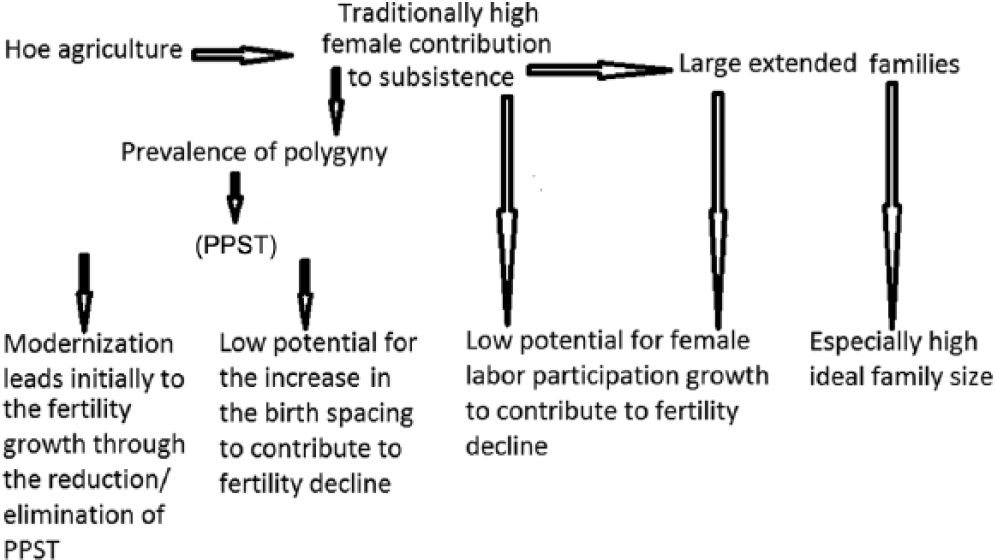
How the hoe agricultural basis of the traditional tropical African economy creates resistance to fertility decline.
If this hypothesis is supported, it will have major policy implications in terms of the applicability of the fertility transition experience of other developing regions to tropical Africa. Indeed, if the mechanisms behind continued high fertility in tropical Africa prove to be so deeply rooted in its traditional social and economic systems (fundamentally different from other world regions), one would have to apply in tropical Africa much stronger measures of sociodemographic policy (both in the field of family planning and education promotion) than in other world regions to facilitate fertility decline.
In fact, those measures have so far been much weaker in Africa than in many Asian countries, with few African governments adopting strong national policies to support family planning (Rwanda and Ethiopia being the main exceptions). Instead, the slogan “Development is the best contraceptive” is consistently rallied at major population conferences. Yet the failure of economic development to have the same impact on fertility in Africa as in other regions suggests that different mechanisms are at work.
Tests
Types of Agriculture and Family Size
As has been mentioned above, there is a fundamental difference between the traditional complex 8 socioeconomic systems in Asia and North Africa, on one hand, and the ones in tropical Africa, on the other—all the complex traditional agrarian socioeconomic systems of Asia were based on plow agriculture, whereas almost all the complex agrarian socioeconomic systems in tropical Africa were based on hoe agriculture. For example, according to Murdock’s Ethnographic Atlas database (Murdock, 1967a, 1981; Murdock, Textor, Barry, & White, 1986, 1990; Murdock et al., 1999-2000), 9 this distribution looked as follows (see Table 2).
Types of Agriculture Among the Pre-Modern Complex Cultures of Africa and Asia: Cross-Tabulation.
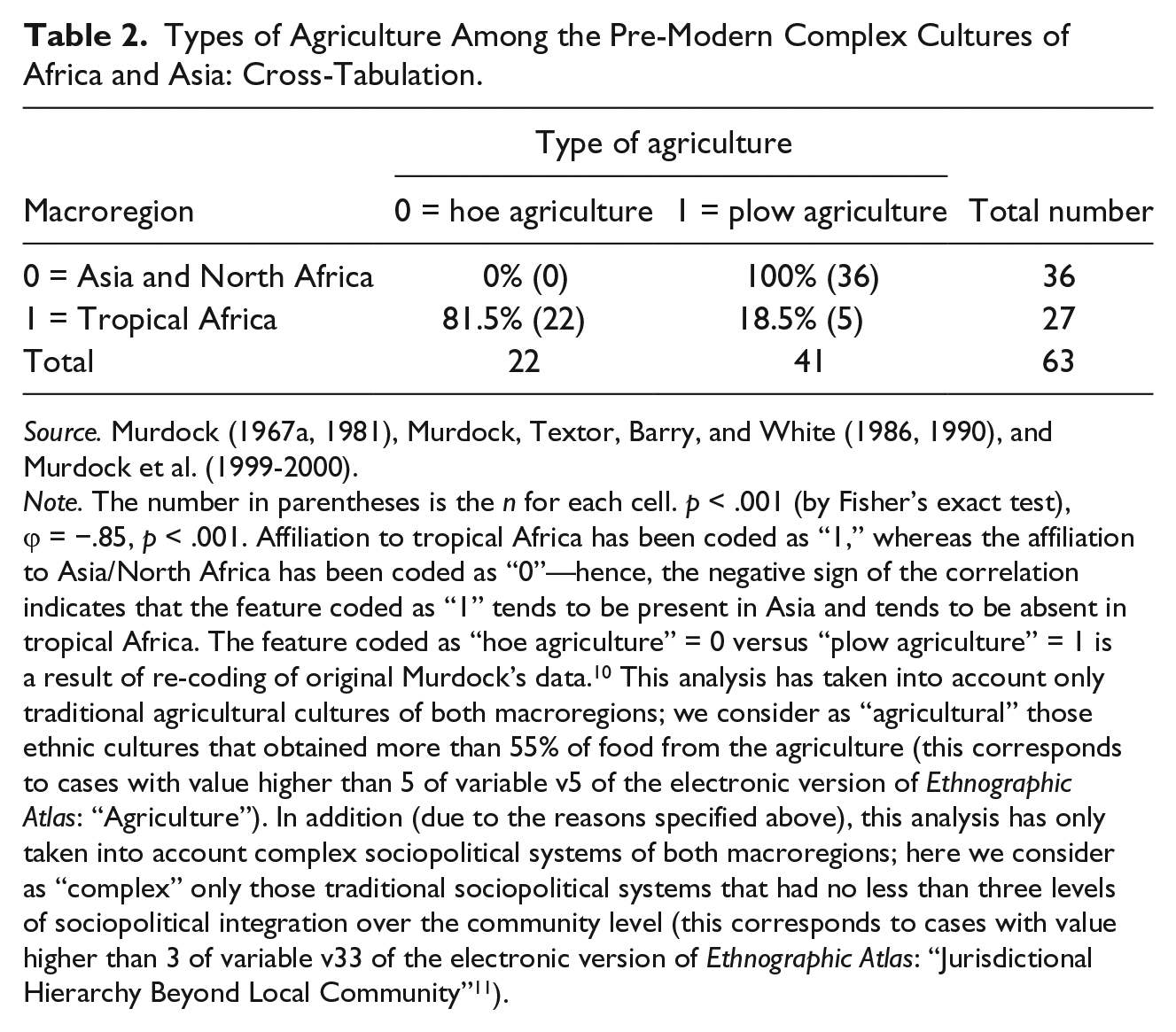
Source. Murdock (1967a, 1981), Murdock, Textor, Barry, and White (1986, 1990), and Murdock et al. (1999-2000).
Note. The number in parentheses is the n for each cell. p < .001 (by Fisher’s exact test), ϕ = −.85, p < .001. Affiliation to tropical Africa has been coded as “1,” whereas the affiliation to Asia/North Africa has been coded as “0”—hence, the negative sign of the correlation indicates that the feature coded as “1” tends to be present in Asia and tends to be absent in tropical Africa. The feature coded as “hoe agriculture” = 0 versus “plow agriculture” = 1 is a result of re-coding of original Murdock’s data. 10 This analysis has taken into account only traditional agricultural cultures of both macroregions; we consider as “agricultural” those ethnic cultures that obtained more than 55% of food from the agriculture (this corresponds to cases with value higher than 5 of variable v5 of the electronic version of Ethnographic Atlas: “Agriculture”). In addition (due to the reasons specified above), this analysis has only taken into account complex sociopolitical systems of both macroregions; here we consider as “complex” only those traditional sociopolitical systems that had no less than three levels of sociopolitical integration over the community level (this corresponds to cases with value higher than 3 of variable v33 of the electronic version of Ethnographic Atlas: “Jurisdictional Hierarchy Beyond Local Community” 11 ).
As discussed above, hoe agriculture tends to be associated with a significantly higher female contribution to crop production than plow agriculture. Against this background, extended family households are likely to emerge when women encounter difficulties combining their necessary subsistence work with maternal functions, to provide free or very cheap alternative childminders.
This, of course, suggests that extended families should be much more typical for hoe rather than plow agriculturalists. Statistical tests support this supposition (see Table 3). As we see, almost half of plow agriculturalists were traditionally organized in nuclear or stem families, whereas among non-plow agriculturalists this was only observed in one fifth of all the cases; on the contrary, large extended families were found among non-plow agriculturalists twice as often as among their plow counterparts, and in less than 12% of the latter.
Correlation Between Types of Agriculture and Family Size for the Traditional Agricultural Societies of the World.
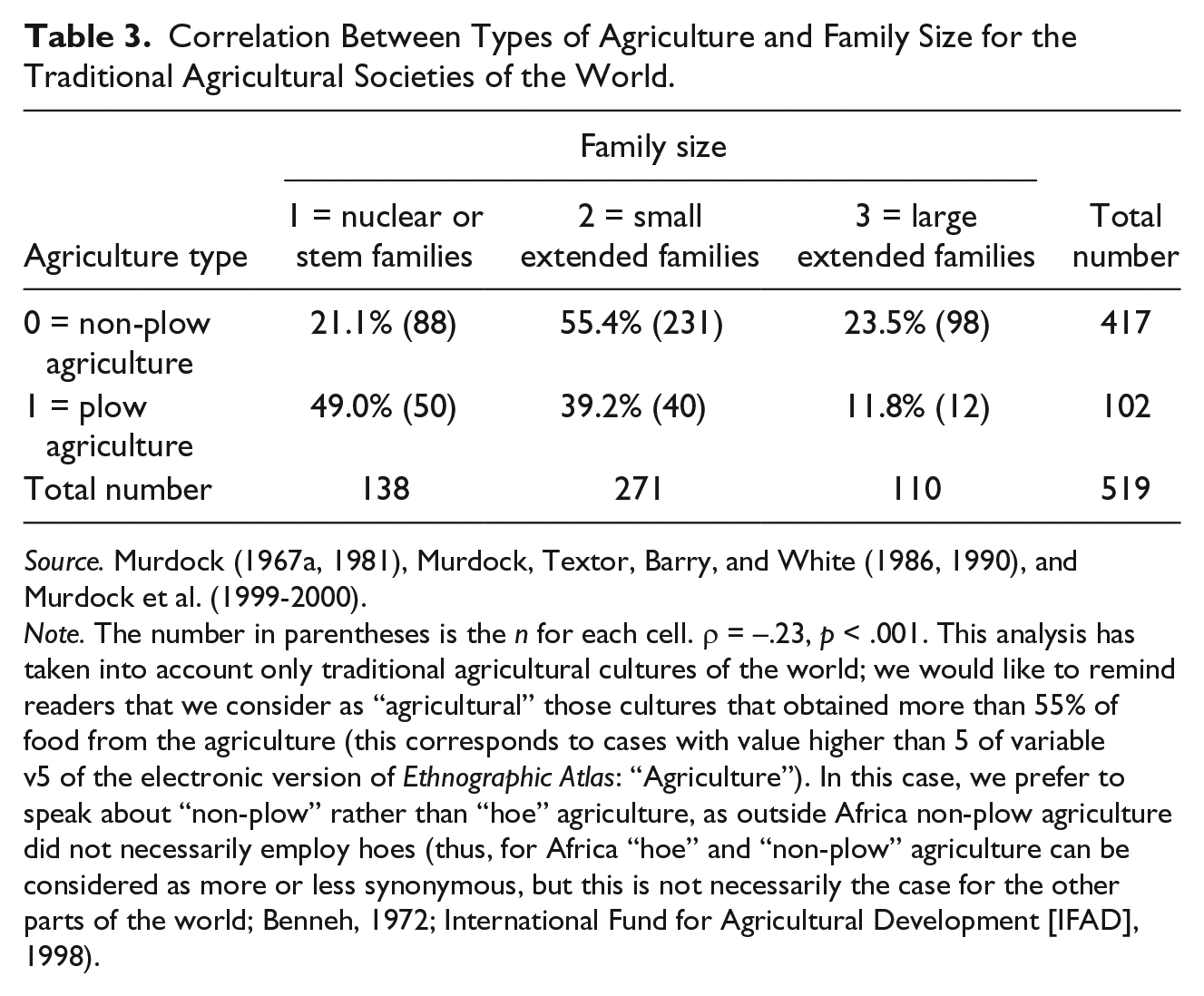
Source. Murdock (1967a, 1981), Murdock, Textor, Barry, and White (1986, 1990), and Murdock et al. (1999-2000).
Note. The number in parentheses is the n for each cell. ρ = –.23, p < .001. This analysis has taken into account only traditional agricultural cultures of the world; we would like to remind readers that we consider as “agricultural” those cultures that obtained more than 55% of food from the agriculture (this corresponds to cases with value higher than 5 of variable v5 of the electronic version of Ethnographic Atlas: “Agriculture”). In this case, we prefer to speak about “non-plow” rather than “hoe” agriculture, as outside Africa non-plow agriculture did not necessarily employ hoes (thus, for Africa “hoe” and “non-plow” agriculture can be considered as more or less synonymous, but this is not necessarily the case for the other parts of the world; Benneh, 1972; International Fund for Agricultural Development [IFAD], 1998).
To formally test the relationship between hoe agriculture and large extended families, we use multinomial logistic regressions (Croissant, 2013). The results of this estimation are presented as Model 1 in Table 5). As we already mentioned, within hoe agriculture large extended families are almost 5 times more likely than nuclear or stem families. 12
Of course, the association we have identified between hoe agriculture and large extended families can possibly be accounted for through such factors as political complexity, social stratification, and especially urbanization. Indeed, traditional cultures of plow agriculturalists tend to be characterized by significantly higher levels of these three factors than hoe agriculturalists. These factors are therefore commonly considered major contributors to the transition from large extended families to nuclear families as the prevailing type of family organization (Blumberg & Winch, 1972; McNett, 1973; Nimkoff & Middleton, 1960; Osmond, 1969). To control for these factors, we have run multinomial logistic regressions with family size as the dependent variable and hoe agriculture as the independent variable while controlling for political complexity, social stratification, and urbanization (see Model 2 in Table 5). We have chosen to consider hoe agriculture, social stratification, and urbanization as factors because they are measured on an ordinal scale. However, political complexity was measured by George P. Murdock at what can be well regarded as an interval scale (see Table 4), which allows us to consider political complexity as a covariate. We have re-coded this variable using the following transformation (see Table 4).
Re-Coded Measure of Political Complexity.
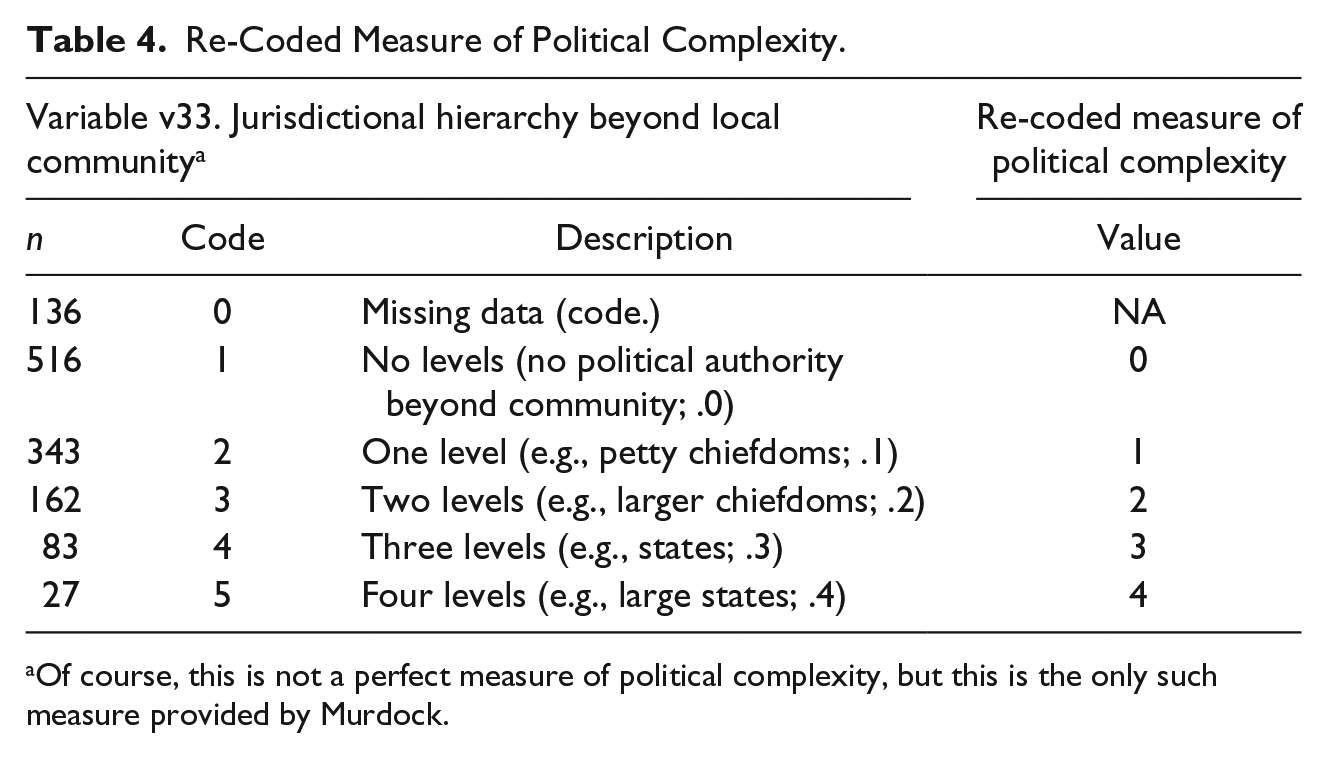
Of course, this is not a perfect measure of political complexity, but this is the only such measure provided by Murdock.
It is easy to see that after this re-coding we have not an interval variable, but a ratio one. For example, value “3” of this variable means that the corresponding culture has two more levels in political complexity than a culture with this variable of value “1” (the same difference will be between cultures with four and two levels of political complexity, etc.). That is why we have found it necessary to include this variable as a covariate and not as an ordinal factor.
As we see, the hoe/plow agriculture factor has survived the introduction of all controls (see Table 5 columns). In fact, only the hoe/plow agriculture factor has turned out to be significant in our model in the full specification, whereas all the control variables have turned out to be insignificant.
Results of Estimation of Multinomial Logistic Model, Explaining Family Size by Plow/Hoe Agriculture.

Note. Baseline category “large extended families (Famsize = 2).”
.01 ≤ p < .05. **.001 ≤ p < .01. ***p < .001.
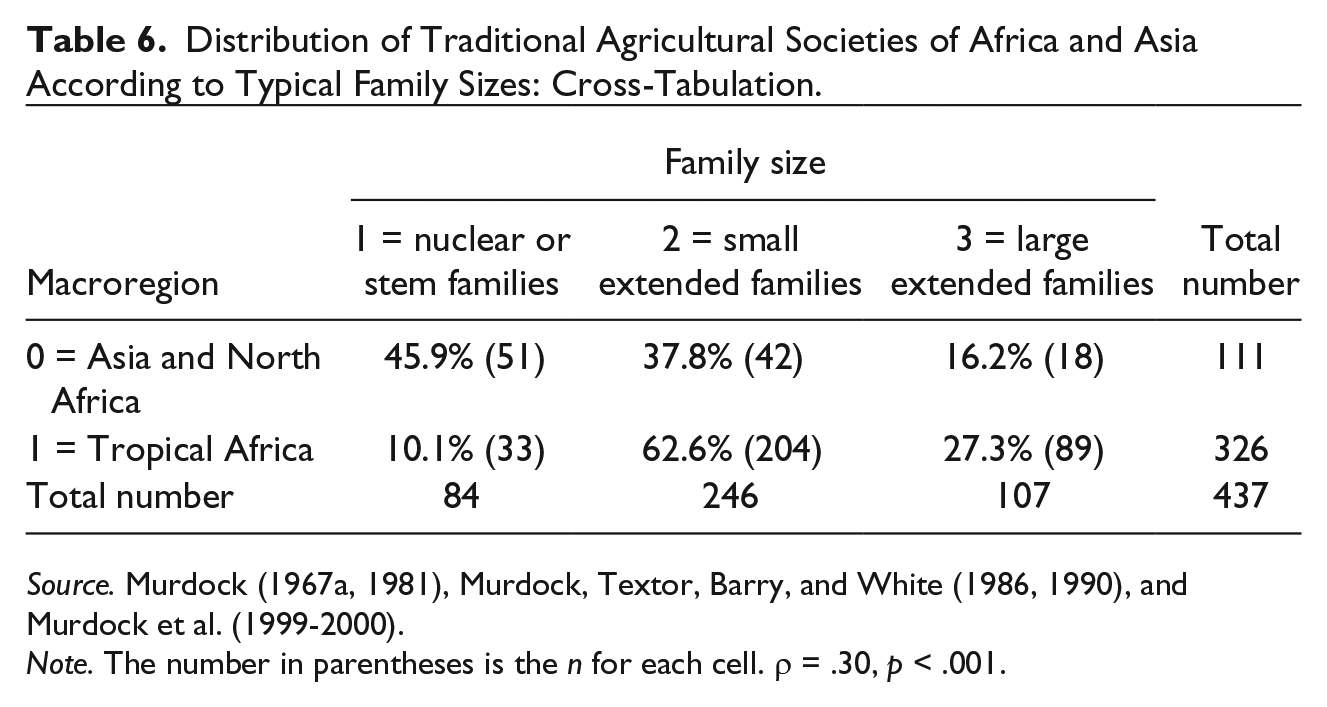
As a result, quite predictably, we find large extended families to be much more typical for tropical Africa than for Asia (see Table 6).
Distribution of Traditional Agricultural Societies of Africa and Asia According to Typical Family Sizes: Cross-Tabulation.
Source. Murdock (1967a, 1981), Murdock, Textor, Barry, and White (1986, 1990), and Murdock et al. (1999-2000).
Note. The number in parentheses is the n for each cell. ρ = .30, p < .001.
As one could expect, the association between tropical Africa and larger families (as well as between Asia and smaller families) becomes significantly stronger if we leave in the sample only complex agrarian societies of both macroregions (see Table 7).
Distribution of Traditional Complex Agricultural Societies of Africa and Asia According to Typical Family Sizes: Cross-Tabulation.

Source. Murdock (1967a, 1981), Murdock, Textor, Barry, and White (1986, 1990), and Murdock et al. (1999-2000).
Note. The number in parentheses is the n for each cell. ρ = .39, p = .001.
The data show that almost half of the complex traditional societies of Asia were organized in nuclear or stem families, whereas this was only observed for about one tenth of their tropical African counterparts. However, among the latter, large extended families were found almost 3 times as often as in the former. The fact that ideal family size tends to be significantly higher in tropical Africa than in Asian societies with comparable levels of socioeconomic development thus turns out to have very deep historical roots and stems from fundamental differences in the traditional socioeconomic systems typical for both macroregions.
The combination of high female labor participation in subsistence farming with large extended families (which is typical for tropical Africa) has another very important implication. It implies a very low potential for growth in female labor force participation to contribute to fertility decline. The female labor force participation rate (63%) in tropical Africa is already higher than the world average (51%; World Bank, 2013: SL.TLF.CACT.FE.ZS). Moreover, tropical Africa can likely accommodate further increases in this variable without significant declines in fertility, as the tropical African extended family is extremely well suited (through supplying alternative caretakers within the household) to provide women with the ability to combine child rearing with work outside the home.
Polygyny and Postpartum Sex Taboos
In addition, in traditional societies the high female contribution to subsistence tends to be positively correlated with the presence of polygyny. As a result, plow agriculture would tend to correlate negatively with the presence of polygyny, whereas hoe agriculture would tend to correlate with it positively (Burton & Reitz, 1981; M. Ember, Ember, & Low, 2007; Heath, 1958; Korotayev, 2001, 2002, 2003b, 2004; Lee, 1979; Low, 1988; Osmond, 1965; Schlegel & Barry, 1986; White & Burton, 1988; White et al., 1981). Actually, those findings could hardly be called surprising. An average intensive plow agriculturalist in a culture with a very low female contribution to subsistence would hardly ever consider seriously the possibility of having five wives (as he would simply not simply be able to feed all of them, together with their children). Yet, this would not constitute a serious problem for a hoe horticulturalist within a culture with a very high female contribution to subsistence. The former, acquiring five wives gets first of all five mouths that he will have to feed; whereas the latter, getting five wives, first of all acquires 10 hands that may feed the horticulturalist himself.
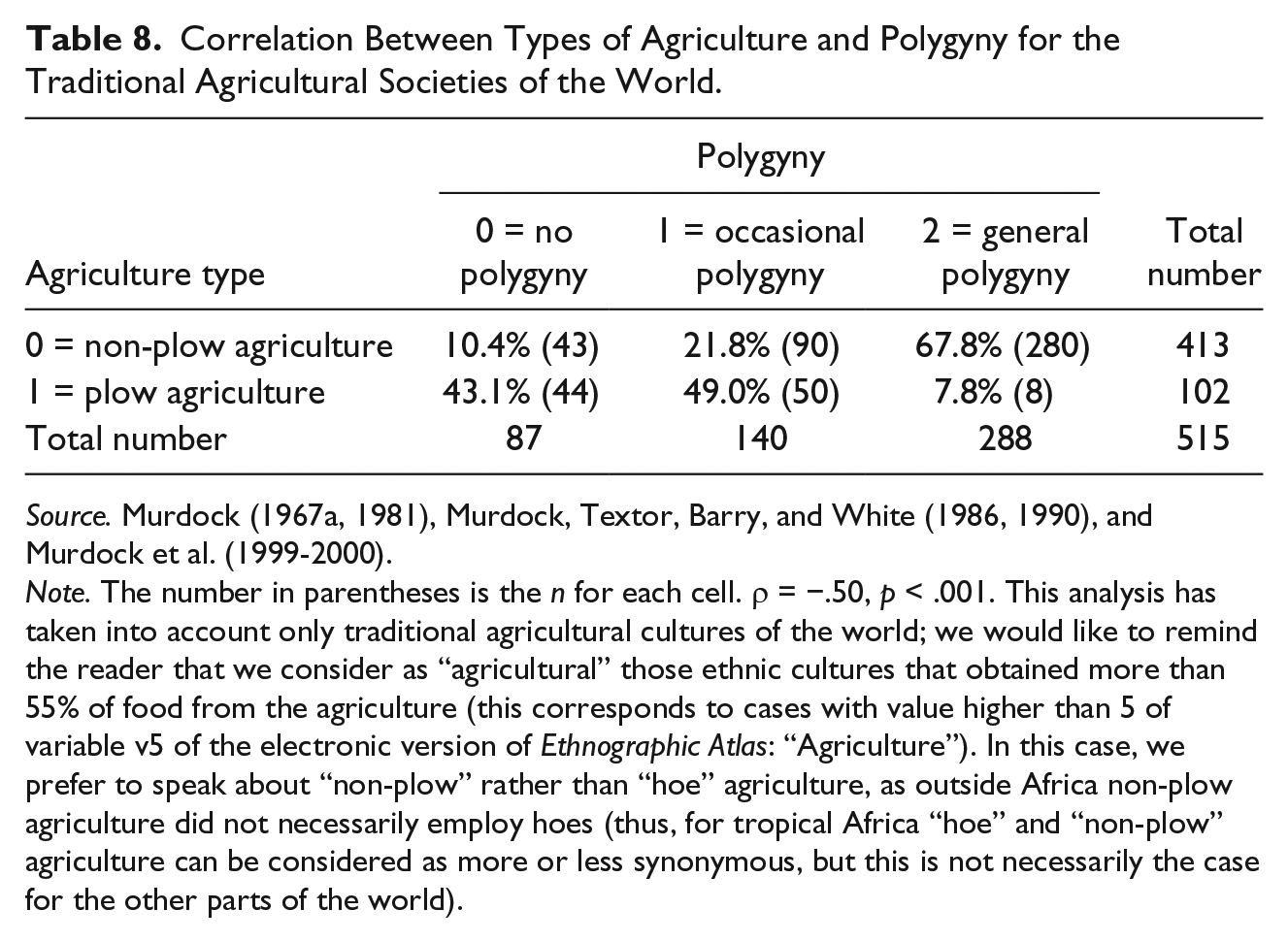
Our tests with the Ethnographic Atlas database have confirmed those findings. Non-plow (hoe) agriculture (vs. plow agriculture) is associated with polygyny (see Table 8). As we see, the overwhelming majority of traditional cultures of plow agriculturalists had either occasional polygyny, or no polygyny at all, whereas more than two thirds of non-plow agriculturalists were characterized by the prevalence of general polygyny. 13
Correlation Between Types of Agriculture and Polygyny for the Traditional Agricultural Societies of the World.
Source. Murdock (1967a, 1981), Murdock, Textor, Barry, and White (1986, 1990), and Murdock et al. (1999-2000).
Note. The number in parentheses is the n for each cell. ρ = −.50, p < .001. This analysis has taken into account only traditional agricultural cultures of the world; we would like to remind the reader that we consider as “agricultural” those ethnic cultures that obtained more than 55% of food from the agriculture (this corresponds to cases with value higher than 5 of variable v5 of the electronic version of Ethnographic Atlas: “Agriculture”). In this case, we prefer to speak about “non-plow” rather than “hoe” agriculture, as outside Africa non-plow agriculture did not necessarily employ hoes (thus, for tropical Africa “hoe” and “non-plow” agriculture can be considered as more or less synonymous, but this is not necessarily the case for the other parts of the world).
As Asian and northern African traditional complex agricultural societies all have plow agriculture (Table 2), and complex agricultural societies with the plow generally lack polygyny (Table 8), it is not surprising to find that traditional complex agricultural societies in tropical Africa tend to be significantly more polygynous than their Asian counterparts (see Table 9). As we see, the overwhelming majority of tropical African traditional complex agricultural societies are characterized by general polygyny, whereas in Asia general polygyny is found very rarely. Whereas in tropical Africa the total absence of polygyny was very rare, in Asia this was found almost 10 times more often.
Polygyny in Traditional Complex Agrarian Cultures of Africa and Asia: Cross-Tabulation.

Source. Murdock (1967a, 1981), Murdock, Textor, Barry, and White (1986, 1990), and Murdock et al. (1999-2000).
Note. The number in parentheses is the n for each cell. ρ = .72, p < .001.
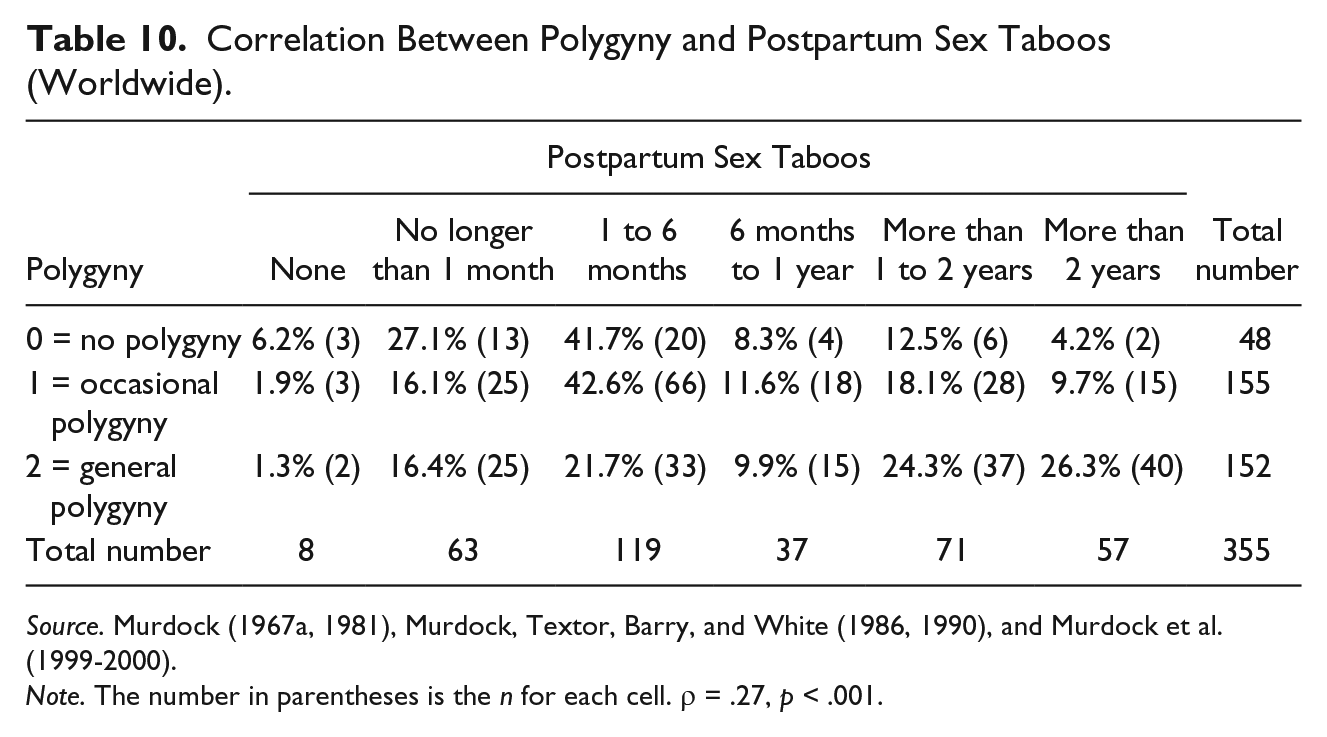
The point that is most important for us is that polygyny tends to correlate significantly with prolonged postpartum sex taboos. This was found already by Whiting (1964); the relationship in the Ethnographic Atlas is shown in Table 10 with more detail about the length of the postpartum sex taboos.
Correlation Between Polygyny and Postpartum Sex Taboos (Worldwide).
Source. Murdock (1967a, 1981), Murdock, Textor, Barry, and White (1986, 1990), and Murdock et al. (1999-2000).
Note. The number in parentheses is the n for each cell. ρ = .27, p < .001.
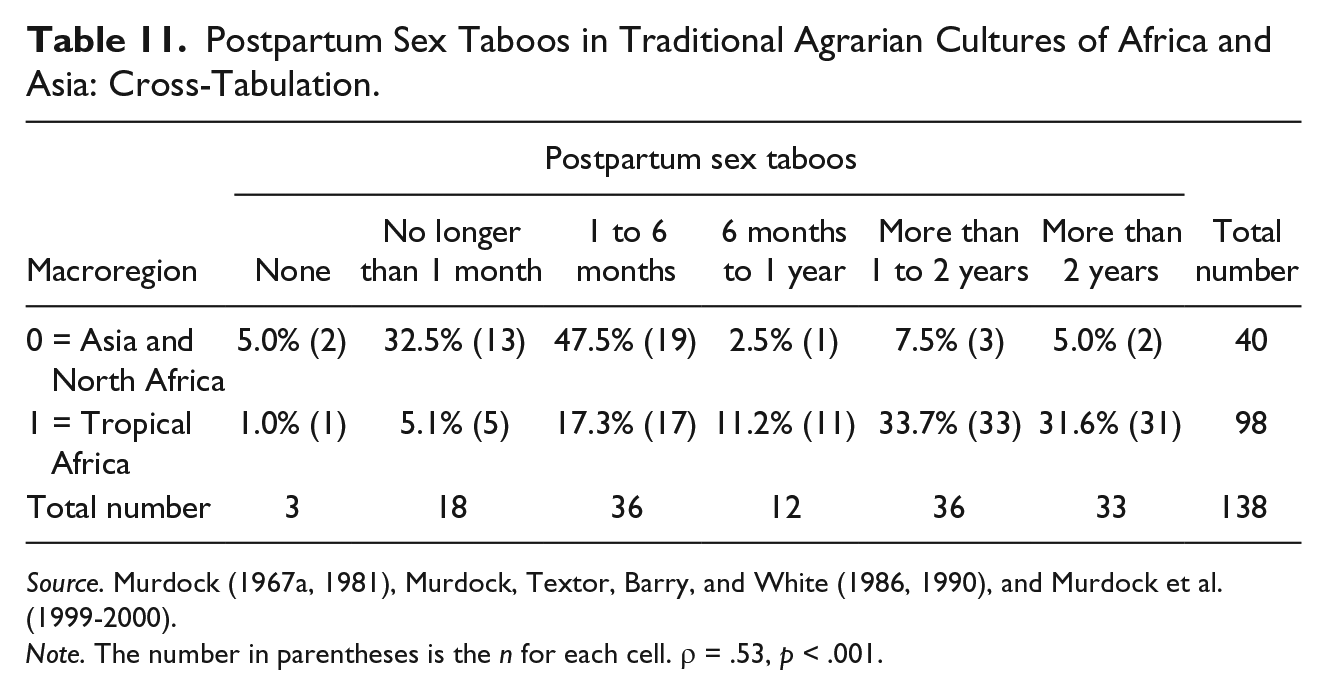
As we see, most societies with occasional or no polygyny have postpartum sex taboos of no longer than 6 months (which is rather unlikely to affect significantly the interval between births), whereas more than 50% of all the societies with general polygyny have such taboos of more than a year. In a quarter of them, their length exceeds 2 years (which could affect birth intervals in a very significant way). Against this background, it is hardly surprising to find a striking difference between weakly polygynous Asia and highly polygynous tropical Africa (see Table 11).
Postpartum Sex Taboos in Traditional Agrarian Cultures of Africa and Asia: Cross-Tabulation.
Source. Murdock (1967a, 1981), Murdock, Textor, Barry, and White (1986, 1990), and Murdock et al. (1999-2000).
Note. The number in parentheses is the n for each cell. ρ = .53, p < .001.
It is clear that in the overwhelming majority of traditional Asian and North African societies, the length of the postpartum sex taboos did not exceed 6 months (and thus they could not significantly affect birth spacing), whereas in a substantial majority of traditional tropical African societies, postpartum sex taboos exceeded 1 year. In about one third of them, it exceeded even 2 years, 14 which could affect birth spacing to a very significant degree. 15
As a result, pre-demographic-transition tropical Africa entered its modernization phase with a combination of very high fertility and unusually long intervals between births—much longer than was observed in other parts of the world at a comparable phase of social development. 16 As a number of demographers have noted, this feature led to the situation that the onset of modernization in most countries of tropical Africa led not to decreases but to increases in fertility rates, as modernization led to the weakening of many traditional norms, including the postpartum sex taboos, which resulted in shortening of the birth intervals and, hence, increase in TFRs (see, for example, J. C. Caldwell & Caldwell, 1987; Lesthaeghe, 1980; World Bank, 2010; see also Figure 2).
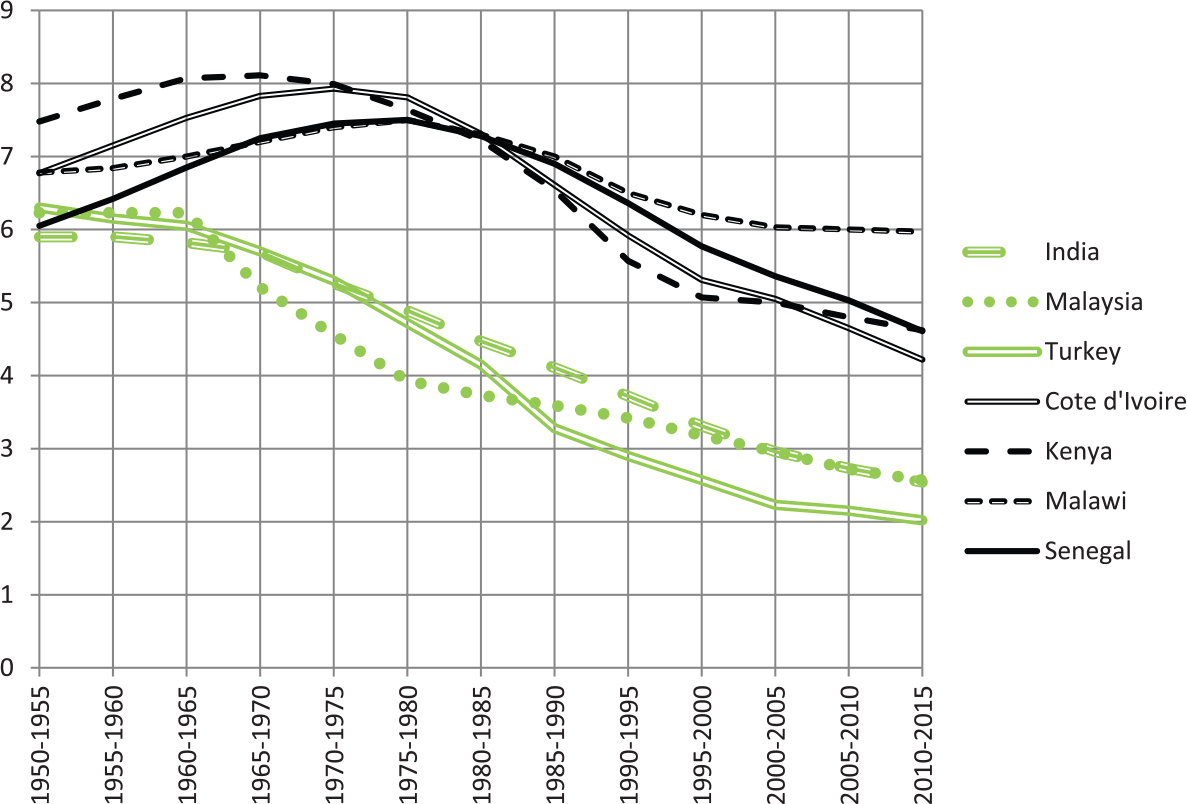
Patterns of fertility decline in selected tropical African countries as compared with selected Asian countries, UN data.
Yet other features of traditional socioeconomic relations did not change, such as the existence of an extended family to support women in work outside the home, and a very large ideal family size. This meant that other features of modernization, such as more wage work and higher education, did not necessarily produce continuing fertility decline.
A small increase in fertility was in fact observed at the onset of modernization in some Asian countries, but in Asia this was observed much more rarely than in tropical Africa (see Table 12). Even today,
birth intervals in Africa tend to be roughly one year longer than in other regions at this level of fertility (which can be regarded as early transition) . . . An important inference from [this] is that the potential for fertility decline due to lengthening of inter-birth intervals is less in Africa at present than it was in the other two regions
17
at the equivalent stage of decline. (Bongaarts & Casterline, 2012, p. 159)
TFR Increase at the Onset of Demographic Transition in Africa and Asia.
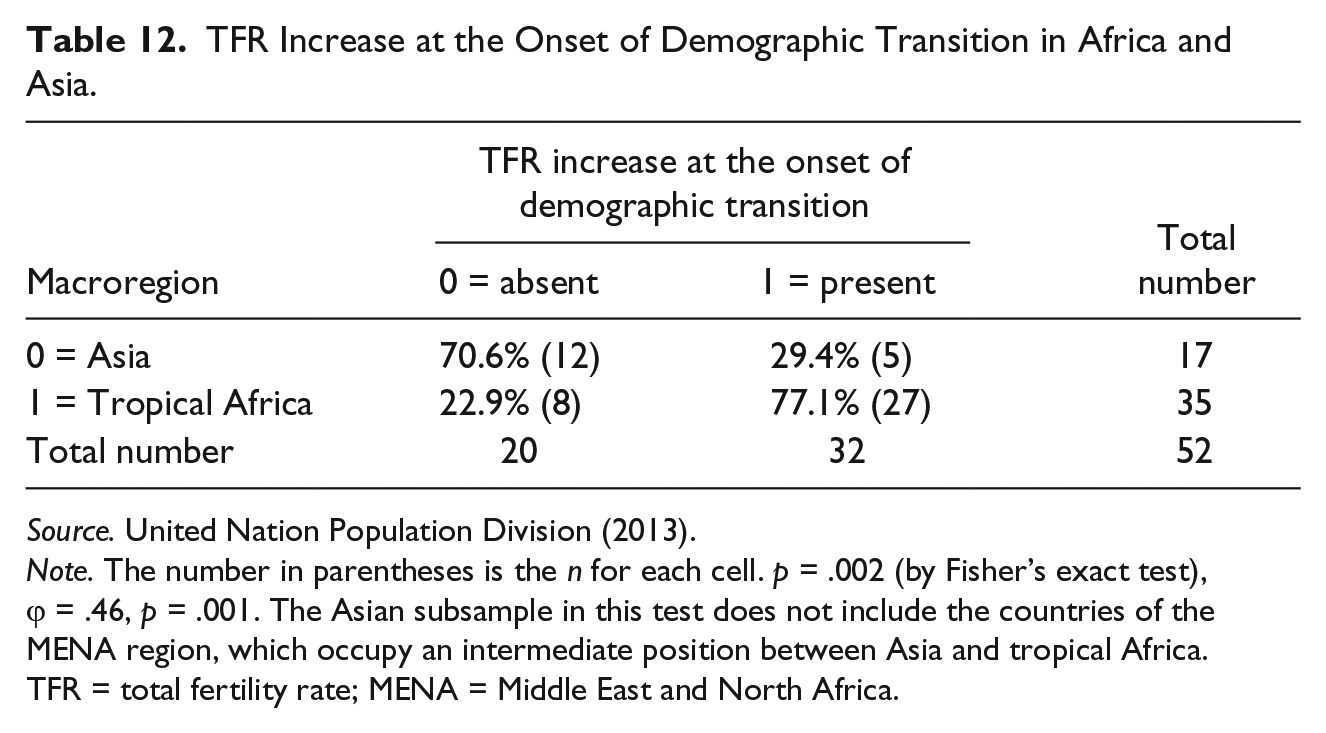
Source. United Nation Population Division (2013).
Note. The number in parentheses is the n for each cell. p = .002 (by Fisher’s exact test), ϕ = .46, p = .001. The Asian subsample in this test does not include the countries of the MENA region, which occupy an intermediate position between Asia and tropical Africa. TFR = total fertility rate; MENA = Middle East and North Africa.
Given the strong support for our hypothesis relating the incidence of hoe agriculture in tropical Africa to a host of fertility-relevant behaviors, including polygyny, postpartum sex taboos, extended families, and high ideal family size, it seems reasonable to proceed to discussing the policy implications if our hypothesis is true.
Discussion
The preceding tests offer support for both the general line of our hypothesis, as well as particular relations between its elements. We can therefore state with a substantial degree of confidence that tropical Africa’s traditional socioeconomic systems differ in fundamental ways from those in other regions of the developing world, and those ways affect the fertility-related values and behavior patterns in tropical Africa. The main determinants through which the traditional patterns continue to resist fertility decline include the following:
Very high ideal family size (much exceeding that in other developing regions when they were going through comparably early stages of fertility transition);
Very high potential to absorb increases in the female labor participation rate without any substantial decreases in fertility;
Very high potential to increase fertility through the abolition of postpartum sex taboos and subsequent reduction in inter-birth time intervals; and
Very low potential for the increase in the birth spacing (which has already been longer than in other regions and could hardly be expected to increase any further but, on the contrary, is expected—and proved—to decrease with modernization) to contribute to fertility decline.
These findings suggest that the pro-natal disposition of tropical Africa has very deep historical roots and stems from fundamental characteristics of its traditional socioeconomic system.
Moreover, these findings undermine the popular belief that further economic development will accelerate the fertility decline automatically—indeed, our tests have shown that some of the development-related fertility-inhibiting factors, such as the increase of female labor force participation rate, will most likely not work in tropical Africa to their full capacity as they previously did in other regions. At the same time, modernization is likely to weaken (and gradually completely eliminate) some traditional fertility-inhibiting practices, such as long postpartum sexual abstinence and the related birth spacing pattern. If, when such practices are weakened, women cannot substitute modern means of family planning (which can only be achieved through large-scale governmental family planning campaigns with special accent on outreach to rural households), then modernization may lead not to a decrease in fertility, but to the absence of fertility declines at high TFR levels or even fertility increases (which has been the recent experience of the majority of tropical African countries for the past decade and a half and continues to represent a serious problem for the region).
The conditions we have specified do not imply that current high-fertility rates in tropical Africa are wholly resistant to change. Countries that have undertaken strong, coordinated programs to enhance education and family planning, such as Rwanda and Ethiopia, have attained much greater fertility reductions than other countries in the region. However, given the strength of the factors appearing to favor high fertility in tropical Africa, it appears necessary to apply very strong measures to promote fertility reduction if countries in this region are to “catch up” with developing countries in other parts of the world that have progressed much further in their demographic transitions.
Footnotes
Declaration of Conflicting Interests
The author(s) declared no potential conflicts of interest with respect to the research, authorship, and/or publication of this article.
Funding
The author(s) disclosed receipt of the following financial support for the research, authorship, and/or publication of this article: This research has been supported by the Russian Presidential Academy of National Economy and Public Administration, Moscow, Russia.