



Abstract
As hunters and gatherers, humans have always exploited a wide variety of natural resources. Hunting, in particular, focuses upon individual species. The relationships between human and game are most often seen as isolated entities, for example, human–bison, human–whale, human–seabird or human–mammoth. However, hunting interactions are embedded in large and complex ecological networks. Seabirds such as the common eider (Somateria mollissima) have been and are still being hunted by both indigenous people of the Arctic and Europeans. Due to anthropogenic pressures, including hunting, several common eider populations have declined during the 20th century, even as much as up to 10-fold. Here, we review the ecological role of the common eider in Arctic networks and the diversity of human–eider interactions, underlining its importance for both humans and nonhumans. We place these interactions in a wider ecological context and discuss how human activities affecting eiders propagate through the Arctic ecological network and can cause far-reaching ecological effects.
Introduction
Humans have always exploited natural resources, by hunting animals for meat and fur, collecting plants, seeds, and fruit for food, using wood and animal bones as tools and building materials, and more recently in our history through domestication of plants and animals. Our relationship to birds is one chapter of our natural history, probably with as old as our own evolution; it comes in an endless variety of forms, even in some cases turning sacred, for example, as practiced by traditional Native Americans through bird shamanism (Cohen, 2003). In the Arctic, due to its harsh climate constraining plant growth, Inuit people are more dependent upon animal food than probably any other culture. However, since the 1960s, an increasing market of non-Inuit food, that is, food that is not fished, hunted, or gathered within the Inuit homeland, has become available (Searles, 2002; Wenzel, 1991). Nevertheless, Inuit people continue to hunt and fish, partly as an important supplement to their economy, and partly to express their cultural identity (Cameron & Weis, 1993; Searles, 2002). One animal that illustrates this Inuit ecologically based economy, and which had and still has a close relationship with Inuit people, is the common eider (Somateria mollissima). The common eider is a large, migratory seabird found throughout the circumpolar north (Figure 1). It constitutes an important resource for many people in the Arctic, indigenous as well as European, not only as a food resource, but also as a resource for eiderdown, which provides people with warm clothing and, for example, duvets (e.g., Müller, 1906).

Common eider (male) resting on rocky shore.
The eider is migratory, moving annually between distant sites for breeding and wintering. Thus, it becomes part of two different ecological networks. In this way, it becomes a long distance connector, coupling together the ecology of remote geographical regions. Migratory animals may stabilize ecological networks by providing a variety of resources to different areas (Lundberg & Moberg, 2003) and perhaps because two coupled systems may act as reciprocal buffers against disturbance. Yet, as the industrialization has made inventions, such as firearms and powerboats, which are increasingly available, the nature of the human–nonhuman species interactions may be altered or even disrupted. Through time, each node, that is, species, of these networks undergo evolution by natural selection, and as a result, the network, as an entity, achieves resistance against disturbances through what has been called eco-evolutionary feedback mechanisms (Post & Palkovacs, 2009). However, sudden major disturbances such as the arrival of Inuit and European people and recent climatic change may lower this resistance and push the network into an alternative state, which further, mediated by long distance connectors, may affect the stability of other networks.
In this article, we aim to demonstrate the importance of the common eider as a long distance connector in Arctic ecological networks including its relations to humans. We will do so by introducing the reader to the ecology of the common eider, describing the interactions between people and the common eider, and discuss how human–eider interactions affect interactions between eiders and other nonhuman species in a way that may have far-reaching ecological consequences. Our approach is novel as it is based on network ecology, thus using, as our research focal point, the ecology of one natural resource, the eider, and its multitude of interactions to other living organisms.
Ecological Role of Eiders
The current global population size estimate of common eiders is 3.3 to 4 million individuals (Wetlands International, 2016), and the species is divided into at least six subspecies, each with its own characteristics and geographical range: the European eider, S. m. mollissima, in Northern Europe; the northern common eider, S. m. borealis, in Iceland, Greenland, and Arctic Canada; the American eider, S. m. dresseri, in the northern United States and Canada; the Hudson Bay eider, S. m. sedentaria, restrained to the Hudson Bay area of Canada, and the Pacific eider, S. m. v-nigrum, ranging from Arctic Canada and Alaska to Eastern Russia. All subspecies, except for the Hudson Bay eider, migrate between breeding and wintering grounds. Hence, common eiders connect at least two ecological networks; one at the breeding site and one at the wintering site. As a long distance connector, the common eider links ecological networks, and it does so in different ways. Connectors or mobile links may have at least three functional roles: resource linkers, translocating essential resources, for example, nutrients; genetic linkers, translocating genetic information, for example, pathogens and seeds; and process linkers, providing essential processes, for example, grazing (Lundberg & Moberg, 2003). The common eider plays all three roles.
The common eider is a resource linker because nutrients and organic matter are dispersed by guano and by its carcass when it dies. Thus, the offshore rocky islands on which common eiders breed become enriched with nitrogen and phosphate, some originating from mussel beds far away, which is utilized by other organisms such as plants, algae, and small decomposer animals. In general, seabird subsidies of nutrients change the composition of the local microbiome (Keatley, Douglas, Blais, Mallory, & Smol, 2009; Mallory, Fontaine, Smith, Wiebe Robertson, & Gilchrist, 2006; Wainright, Haney, Kerr, Golovkin, & Flint, 1998), and hence change the general species composition in local terrestrial, marine, and freshwater habitats. As a genetic linker, the common eider carries living genetic material by moving parasites such as flukes and tapeworms, obtained via its prey (e.g., Bishop & Threlfall, 1974; Skirnisson, 2015). Although never shown, the common eider may, like other seabirds, play a role in the dispersal of seeds (Aoyama, Kawakami, & Chiba, 2012). Finally, the common eider acts as a process linker by foraging on benthic invertebrates, and hence controlling the species composition of the near-shore seabed.
Apart from the common eider’s importance in linking different networks, it is also important within the local ecological networks (Figure 2). First, the eider has a high trophic position as a predator in Arctic food webs (Mallory, Gilchrist, Braune, & Gaston, 2006). By diving 10 m to 15 m down to the seabed, it catches benthic invertebrates such as bivalves, gastropods, crustaceans, polychaetes, and sea urchins (Cantin, Bedard, & Milne, 1974; Kristjánsson, Jónsson, & Svavarsson, 2013; Merkel, Jamieson, Falk, & Mosbech, 2007). During winter, the common eider is able to reduce the abundance of its main prey, blue mussels, substantially (Guillemette, Himmelman, & Reed, 1996; Hamilton, 2000; Merkel et al., 2007). The reason eiders can deplete the populations of their prey must partly lie in the fact that eiders gather in large aggregations. However, eiders are not top predators; they themselves act as prey. Nesting common eiders are important food to the arctic fox, which especially predates on the eggs (Frafjord, 1993; Hersteinsson & Macdonald, 1996; Stickney, 1991), to the white-tailed sea eagle (Krone, Wille, Kenntner, Boertmann, & Tataruch, 2004), and to several species of gulls and crows, which also predate on eggs and ducklings (Åhlund & Götmark, 1989; Bolduc & Guillemette, 2003; Keller, 1991; Mendenhall & Milne, 1985). Because the number of species generally decreases with increasing latitude (Stevens, 1989), the Arctic ecological networks often consist of relatively few species compared with networks in temperate and tropical regions. Thus, the few Arctic top predators, for example, arctic fox and white-tailed sea eagle, rely heavily on the eider as an animal of prey.
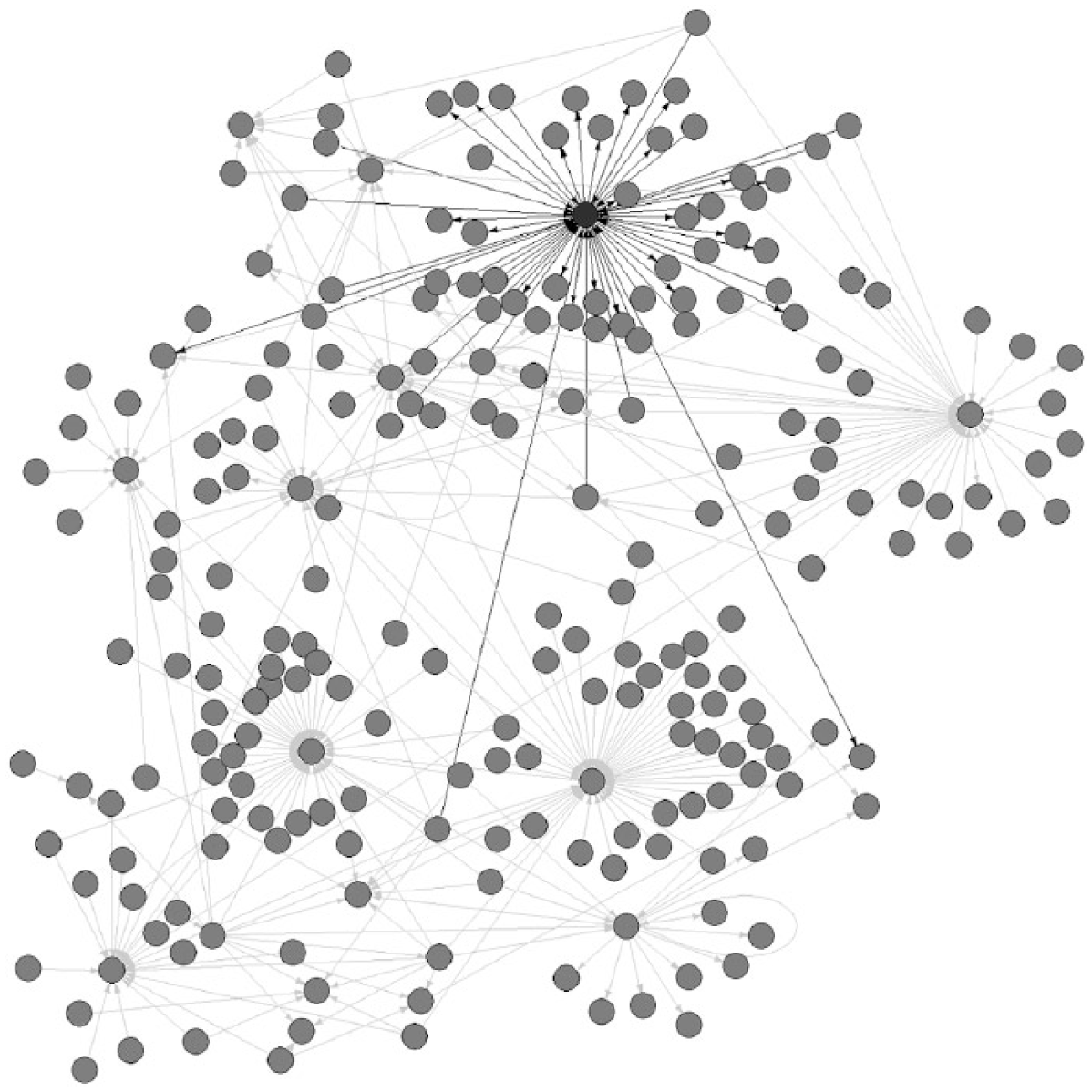
Common eider interactions in a coastal ecological network, Southeast Canada (data not shown).
Locally, the eider interacts with a wide range of organisms (Figure 2), that is, it functions as a local hub, and the consequences of its migration become especially important to ecosystem composition and diversity, because the more linked a network is, the more likely it is that disturbances cause cascade effects that might be unforeseen (Buldyrev, Parshani, Paul, Stanley, & Havlin, 2010). However, in general network analysis, this has been shown to be mitigated by the protection of hubs (Gong, Ma, Cai, & Jiao, 2015).
Human–Eider Interactions Before 1950
Hunting of the common eider is an old tradition in many cultures. For instance, before the mid-20th century, hunting of eiders was essential for the survival of the Inuvialuit Inuit people of the Northwest Territories, Canada (Byers & Dickson, 2001). Similarly, Müller (1906) gives an extensive report on usage and hunting of common and king eiders (Somateria spectabilis) in South Greenland from the 1820s. He describes the eider as the most useful bird to the Greenlandic Inuit; eggs and meat provide them with food, eiderdown is traded, and the skin with its down and feathers is used for clothing and blankets. Yet, according to Müller (1906), the eider is the most mistreated bird in South Greenland. The eggs are collected several times during the breeding season, incubating females are shot on the nests, ducklings are collected, and adults are shot and killed both during their daily and seasonal migration. In addition, often two to three eiders become wounded during the shooting of a single one. Müller (1906) states that this overexploitation of breeding eiders was provoked by a decrease in the number of reindeer, which the Greenlandic Inuit commonly hunted during summer. However, part of the overexploitation was likely driven by the Danish colonization of Greenland, which began in 1721. As a response to the increasing number of European immigrants, who were unable to live as self-sufficiently as the Inuit, local markets with country foods, for example, seals, whales, fish, and sea ducks, emerged, and eiderdown was a valuable trade commodity for the Danish Royal Greenland Trade Department (Marquardt & Caulfield, 1996). In addition, the doubling of the human population in Greenland during the 19th century probably also facilitated increasing trade and the decrease in eider populations. However, regardless the reason, the exploitation of the breeding eider population in South Greenland during this period caused it to decrease more than 10-fold (Müller, 1906).
Around the 13th century, ancestors of modern Inuit called Thule or Thule culture colonized Greenland from Canada. The survival of this culture relied on hunting of marine animals for food, clothes, and tools. This included numerous seabirds, as shown by fecal analysis and preserved clothes that were recovered from the Qilakitsoq Inuit mummies from the 15th century on the Nuussuaq Peninsula at the West coast of Greenland (Møller, 1989). The inner furs were made of bird skin, including skin of the eider, with feathers. The use of eider skin with feathers for clothing has persisted in Inuit culture into modern times as seen in a parka from Hudson Bay from 1914 exhibited at the Royal Ontario Museum in Canada (Daderot, 2011).
Eiderdown has been and still is a valuable resource for humans. It is the best natural insulation material considering its weight, and down collection by humans dates back 900 years in Iceland and 300 years in Norway and North America (Berglund, 2009; Skarphedinsson, 1996; Waltho & Coulson, 2015). During the Viking Age, down and feathers were a trade commodity, and have been found in graves in Norway, Sweden, and Denmark (Berglund, 2009). Eiderdown was also used as a currency to pay taxes in 18th century in Norway (Berglund, 2009). In the view of Liu et al. (2013), eiderdown can be defined as a “telecoupler” because it links human and natural systems. A full telecoupling analysis is beyond the scope of this article (and for limitations to this approach, see Friis and Nielsen [2014]), but eiderdown has telecoupling characteristics, as it is produced locally but distributed globally, resulting in a skewed relationship between supply and demand, and hence putting increased pressure on the local ecological system, that is, the breeding eider colonies. Thus, eiders are, by the virtue of their down, long distance connectors in human socioeconomic networks.
Icelandic Norse came to Greenland around AD 985 and established settlements close to the present-day cities, Nuuk and Nanortalik. They lived here for around 500 years and during that time there was contact between the Thule culture and the Norse. However, archeological excavations of Norse settlement middens only recorded few remains of eiders bones. Thus eiders were probably not important as a resource for the Norse in contrast to a documented contemporary, regulated harvesting of eider eggs and down.
Human–Eider Interactions After 1950
Previously, eiders have been hunted as game throughout their range, but today this occurs only in Denmark, Greenland, Russia, and North America. In Iceland, Svalbard, and Britain eiders are protected, partly due to their value for down collection (Skarphedinsson, 1996). Even though subsistence hunting of eiders has become less relevant for indigenous people in the Arctic, due to the shift from a subsistence economy to a mixed subsistence and wage economy (Byers & Dickson, 2001; Wenzel, 1991), eiders are still a valuable food resource for Inuit people in Canada and Greenland, for example, in southern Greenland about 80,000 eiders were reported shot in 1993 (Merkel, 2013). In Southwest Greenland, where half a million common eiders overwinter, the birds—although not preferred—constitute a stable food resource during winter. The introduction of firearms and powerboats has improved the possibilities for humans to hunt eiders (Cooch, 1986). Hunting of eiders is valued in maintaining people’s natural and cultural heritage, and because all family members can engage with the activity, it is also considered to strengthen family ties (Byers & Dickson, 2001).
The extensive exploitation of eiders in Greenland during the 19th and 20th centuries led to alarmingly low population sizes by the end of the 20th century. As a result, the Greenland Home Rule Department of Hunting and Fisheries issued a notice in 2001 on the protection of Greenlandic birds, based on strong recommendations from the Greenland Institute of Natural Resources. Hunting of eiders became restricted to autumn and winter to avoid disturbance of breeding eiders, and egg collection was prohibited (Greenland Home Rule Department of Hunting and Fisheries, 2001). This reduced the annual number of killed eiders by two thirds (before 2001 at least 60,000 and after 20,000 birds; Piniarneq, 2003-2014). The regulation also resulted in an increase in the number of breeding eiders in Greenland; from 12,000 to 15,000 pairs in 2001 (Merkel, 2004a) to 80,000 to 90,000 pairs in 2012 (Merkel, 2013).
The spring gillnet fishery of, for example, lumpsucker and cod also results in eider mortality, as eiders are caught in the nets and subsequently drown. This is common in the area around Nuuk, Greenland, where drowned ducks are sold on the local market. From October to March, hunting with firearms within 30 km of Nuuk accounted for 98% of the eiders sold on the market, but in March and April, 52% of eiders sold on the market came from bycatch in gillnets (Merkel, 2004b). As many as eight to nine birds have been observed being caught in a single gillnet (Greenland Home Rule Department of Hunting and Fisheries, 2008), and annual number of eiders killed by gillnets in South Greenland is estimated to 6,000 to 20,000 birds (Merkel, 2011).
The present eiderdown harvest is less than one third of its size in the 18th and 19th centuries (Skarphedinsson, 1996). The current global production is around 4 tons, and one eider nest produces between 7 g and 20 g of down, which explain why the product is so expensive (Fageraas, 2016; Sveinsson, 2011; Waltho & Coulson, 2015). Currently, Inuit people are still using this resource as a private commodity, but most of the total down collection happens in Iceland, which is responsible for the by far largest contribution (~3 tons) to the global market (Skarphedinsson, 1996). Iceland has always been the leading producer of eiderdown, and has over time developed “eider farms.” In eider farms, the down is still collected from wild birds, but the eiders are lured to settle in man-made nests and the breeding grounds are protected from human disturbance. Because of the eiderdown’s socioeconomic importance to Iceland, hunting of adult eiders has been banned for more than 150 years (Waltho & Coulson, 2015). In addition, the Icelandic government each year subsidizes the regulation of eider predators, such as foxes, gulls, mink, and ravens, close to the nesting sites (Skarphedinsson, 1996), and due to centuries of such eider husbandry, the nesting eiders in Iceland have become very tame. The Icelandic down harvest usually occurs in June, that is, during the breeding period, where workers collect down from the nests, when the female eiders temporarily leave. Females pluck down from their plumage, which then insulates the incubating eggs, and workers thus replace the removed downs with dry grass or hay. The Icelandic eiderdown products, which all are government approved (“Eiderdown, a Generation of Warmth Unique to Iceland,” 2016), are mainly exported to Germany and Japan (Skarphedinsson, 1996).
Eiderdown can be seen as a telecoupler because it connects socioeconomic and ecological systems. Recently, prices for eiderdown have decreased, caused by false eiderdown products in Japan, which is the largest importer of the Icelandic eiderdown products (Iceland on Review Line, 2010). This has economic implications for the Icelandic farmers, as eiderdown collection constitutes an important source of income.
In the Inuit community Sanikiluaq, located on the Belcher Islands in Hudson Bay, Canada, an eiderdown factory reopened in May 2015 after having been shut down since 2005 (“Sanikiluaq Eiderdown Factory Could Be Running by March,” 2014; Weber, 2015). The Inuit people of Sanikilauq and the rest of the Belcher Islands have a long history on dependency of eiders (Waltho & Coulson, 2015; Wein, Freeman, & Makus, 1996), and the eiderdown factory had been open for 20 years before its closure, which happened in part because of decreasing demands (Robertson & Gilchrist, 1998). The newly reopened factory plans to buy down from the local Inuit, and the strategy is to sell them not only to European manufacturers, but also to local businesses, which sell parkas sewn by local Inuit women. The reopening of the Sanikiluaq eiderdown factory is an initiative to provide long-term and sustainable jobs for the community (Weber, 2015). Thus, in this particular Inuit community, eiderdown can be considered as a driver for increased economic potential and improved social status.
Finally, the common eider is one of the most studied birds in the Northern hemisphere (Skarphedinsson, 1996), and thus has contemporary importance as a scientific model species (Bolduc & Guillemette, 2003). Research involving eiders is used to assess ecologically important aspects such as the level of pollutants in the Arctic region and the level of climate change, which is expected to have larger impacts in the Arctic than in the rest of the world (Mallory, Gilchrist, et al., 2006).
Waterfowl in general serve as important providers of ecosystem services, and the eider is no exception (Green & Elmberg, 2014). Viewing the variation of human–eider interactions in the light of the common eider ecology, it becomes obvious that eiders provide humans with a range of ecosystem services. First, the eider offers provisional services such as meat and eggs for consumption and eiderdown used for clothing and duvets. Second, the eider provides cultural services, for example, regarding conservation efforts as human interest facilitated the establishment of the Ramsar Convention (Ramsar Convention on Wetlands, 1971). Specific sites have been established because of eiders, for example, Ramsar site no. 385 on Disko Island, Greenland, which was important for molting king eiders (Egevang & Boertmann, 2001). Finally, the eider provides supporting and regulating services, which are connected to their role as mobile links (i.e., long distance connectors). By moving nutrients and parasites, and by predating on benthic invertebrates, they maintain a certain type of ecosystem and level of biodiversity, which are often preferred by or which may even have emotional value to humans. As such, the common eider can be regarded as a provider of mobile-link-based ecosystem services (Kremen et al., 2007).
Human Disturbances and Their Effects
For many species, adult survival is of minor importance to the survival of the population as a whole, but this is not the case for the common eider. Even though eiders are long-lived ducks with an average life span of more than 20 years (Baillie & Milne, 1982), and hence can reproduce for many years, the persistence of the population depends on adult survival. This is due to a low annual survival of ducklings (less than 10 % survive through their fletching period) because of predation, parasitism, disease, starvation, and physiological factors (Skarphedinsson, 1996). In addition, not all females in a population breed if resources are in short supply, hence decreasing the effective number of breeding females (Coulson, 1984). Thus, to prevent population decline, it is necessary to maintain a healthy and stable adult population size. Consequently, hunting has resulted in population size decreases in many common eider populations throughout the species’ circumpolar range, which ultimately have resulted in a change in the species’ conservation status. In 2015, its status was altered from being of least concern (LC) to being near threatened (NT), according to the IUCN (International Union for Conservation of Nature) Red List of Threatened Species (BirdLife International, 2016).
Apart from hunting, a variety of modern human activities unintentionally disturb eider colonies, for example, powerboating, sailing, swimming, hiking, and general traffic (Korschgen & Dahlgren, 1992). Bolduc and Guillemette (2003) investigate the effect of human disturbance on nesting eiders in Arctic Canada and found that the timing of the disturbance was the most influencing factor on nesting success. If the colony was visited late in the incubation period, the nesting success was higher compared to visits early in the incubation period. Decreased nesting success of eiders was related to the abundance of nesting gulls, because human visits caused disturbance, which gave gulls the opportunity to predate on the eider nests. Similarly, black-backed and herring gulls are predating on common eider nests in Sweden, and this predation is significantly increased if motor boat disturbances occur (Åhlund & Götmark, 1989). This is also the case for eiders in the Ythan Estuary, Scotland, which has the largest breeding common eider colony in Britain. Especially, human disturbances on land, such as fishing and walking, disturbed the eiders resting or feeding at low tide (Keller, 1991). These disturbances increased the frequency of predators attacking the eiders by 5 times during the first minutes after the disturbance. Keller (1991) warns that future increases in human activity, for example, powerboats, will increase the negative effects of disturbance of the eiders in the Ythan Estuary, and thus lead to a decline in the population. Although the exact reason is uncertain, population declines of common eiders in the Ythan Estuary were observed from 1991 to 2010 (adult spring peak number decreased from 5,048 to 3,158; Patterson & Laing, 1992; Patterson & Thorpe, 2010). A less obvious, unintentionally human-caused disturbance of eiders is wind turbines. Larsen and Guillemette (2007) find that eiders avoid flying close to wind turbines, a behavior that reduces habitat availability. This means that areas with wind turbines, which previously had eider colonies, lose these.
Considering the detrimental effects of human disturbances on nesting eiders, down collection is expected to have a negative influence on common eider survival. According to Robertson and Gilchrist (1998), overexploitation of eiderdown has been suggested to be a reason for eider population declines, for example, in Svalbard, Norway (Rossnes, 1991), and Greenland (Müller, 1906). However, most down collection carried out today (i.e., the Icelandic harvesting) happens under controlled conditions. Under such circumstances, the eiders’ predators are culled, and the nests are covered with grass, which have been shown to decrease egg predation (Götmark & Åhlund, 1984). In addition, the tameness of the eiders potentially diminishes the effect of disturbance by down collectors. Indeed, in both Iceland and Norway, the eiderdown harvesting has resulted in increasing eider populations. In the Norwegian region Helgeland, local people practiced down collection up until the 1950s. At that point, the local people living on the islands off the coast of Helgeland were motivated by governmental subsidies to move to the mainland, thus abandoning the eider nesting sites. As a result, the eider population on the Helgeland archipelago decreased. However in 2003, a large part of the Helgeland archipelago obtained the status of an UNESCO world heritage site, in part due to the legacy of eiderdown production by the locals. The number of eider nests and the eiderdown production began to increase again, although it is still of a minor scale (Berglund, 2009; Fageraas, 2016). Thus, down collection, if controlled, can have no or even positive effects on eider populations (Mehlum, 1991).
Pollution and oil spills are frequent human-caused threats to seabirds. The oil fills the porous air spaces between the feathers, which decreases both the thermal insulation and the buoyancy of the plumage (Stephenson, 1997). Consequently, the bird must spend more energy attempting to avoid hypothermia and drowning, though, often in vain. Sea ducks such as the common eider, which aggregate in large flocks, are especially prone to mass deaths caused by oil spills (Mosbech, 2000; Skarphedinsson, 1996). Another unintentionally human-caused source of eider mortality is collisions with nautical vessels. As other seabirds, eiders are attracted to artificial light sources, such as search lights and spot lights used by vessels to navigate through icy waters or to illuminate working areas at night. Often the birds get disorientated by the light source while flying and collide with the vessel, resulting in their death. In Southwest Greenland, Merkel (2010) find that 95 % of all seabird collisions caused by artificial light sources involved common eiders. The largest reported number of birds killed in a single collision is 88, and the annual estimate in Southwest Greenland of bird casualties in collision with ship traffic is about 2,000. However, this estimate is very uncertain, especially due to missing or irregular reporting of collision incidents by some of the vessels participating in the study of Merkel (2010). Industrial fishing vessels cause two additional lethal disturbances to eiders; removal of food items by fishery (Camphuysen et al., 2002; Laursen, Asferg, Frikke, & Sunde, 2009) and bycatching in gillnets. The magnitude of the latter is currently unknown, in large part due to uncooperative fishing companies.
In this paragraph, the effects of human disturbances to eiders have been reviewed; most of them resulting in decreasing populations. However, changes in common eider population size potentially have profound system effects, which might ripple through the coastal networks, and hence have the potential to change the structure of the coastal area where the eider feeds, and the terrestrial areas where it breeds. For instance, if the eider disappeared from a certain area, its preferred prey item might become more abundant, perhaps to a level where the prey species outcompetes other benthic organisms. Hence the role of the eider as a process linker would cease to exist. However, some studies show that in communities dominated by blue mussels, exclusion of common eiders does not result in any major changes in the intertidal community because of compensatory predation from dogwhelks (Nucella lapillus), which consequently increased in abundance (Hamilton, 2000; Hamilton & Nudds, 2003). Thus, in this case, the dogwhelk took over the ecological function of the eider, but studies from other areas with other types of communities are needed to confirm the generalizations about the eider’s importance as a process linker. Obviously, the eider’s role as a genetic linker will also cease if the eider disappears. By spreading certain species of parasites, the eider is expected to increase the overall biodiversity of the intertidal community (Mouritsen & Poulin, 2002). Thus, if the spread of parasites ceases because of a decrease in eiders, the biodiversity of the community will also decrease. The resource linkage by common eiders is important, because it enriches rocky islands with nutrients, enabling a variety of plant and invertebrate species to survive. A decrease in eider abundance will hence leave such islands deserted. Overall, the absence of the eider in local ecological networks affects directly its interacting partners, viz., prey, predators, and parasites, but indirectly the stability properties of the network will be affected, and local networks or some of their populations may go extinct.
In addition, the ecosystem services provided by eiders will be lost. Eider meat and eggs will not be available for food; eiderdown collection by local people will end, at least in places with unregulated harvest, leading to a loss of vital insulation material; and ecosystem maintenance caused by eiders and their long distance migration will disappear, leading to the loss of a type of natural system of emotional value to humans. Thus, complex and vital ecological and cultural interactions between humans and eiders will break and disappear.
Climate Change Implications
Climate change is becoming increasingly important, especially in the Arctic region, where recorded changes are larger than the global averages (Johannessen, Miles, Bengtsson, Bobylev, & Kuzmina, 2003). The shrinking sea ice cover has strong impact upon Arctic organisms, including the eiders, for example, in the Bering Sea individuals of spectacled eider (Somateria fischeri) resting on open water spend 1.5 times more energy than individuals resting on sea ice (Lovvorn, Grebmeier, Cooper, Bump, & Richman, 2009). Thus, loss of sea ice due to climate change has the potential to increase the energy expenditure for eiders during winter, which could lead to starvation and increased mortality.
Another Arctic species dependent on sea ice is the polar bear (Ursus maritimus). The polar bears use the sea ice for hunting seals, which is their main animal of prey. Derocher, Lunn, and Stirling (2004) predict that changes in sea ice condition would cause changes in the trophic dynamics of networks including the polar bear. This prediction has been confirmed for polar bears in both Arctic Canada and Svalbard, where the reduced sea ice cover is causing bears to change their diet, thus rather than eating seals, polar bears are now raiding nesting eider colonies, causing great reproductive losses to the eiders (Iverson, Gilchrist, Smith, Gaston, & Forbes, 2014; Prop et al., 2015).
Although changing sea ice conditions seem to bring bleak prospects for the common eiders, other effects of climate change, such as increasing temperatures, are known to have positive effects. Over a period of 30 years, Icelandic common eiders have advanced their egg-laying date, and increased the number of active nests, which is positively correlated with milder winters (D’Alba, Monaghan, & Nager, 2010). Similarly, in the Baltic Sea, increasing temperatures is expected to increase the breeding success of common eiders (Lehikoinen, Kilpi, & Öst, 2006). Regardless of the direction of climate change effects on common eiders, the changes in population numbers will affect the entire ecological network, both locally and globally.
Conclusion
Here, we argue that the common eider is a key actor in Arctic ecological networks; locally by having the role as prey, predator, and host for parasites, and to indigenous people, providing meat and eggs for food and down for winter clothes. Regionally, the eider is an important long distance connector of local ecological networks by translocating nutrients and organisms, but it also connects socioeconomic systems through human-exploited commodities, and human communities through its seasonal migration. Thus, our network approach demonstrates that the eider is deeply embedded in the Arctic region, its people and nature, and any factor changing the network, for example, hunting, wind turbines, or climate change, jeopardizes the stability of the entire network, and thus contributes to an increasingly unstable ecology of the Arctic.
Footnotes
Acknowledgements
The authors thank Environment and Climate Change Canada for providing photographical image, and AURA members for valuable feedback concerning earlier versions of this article. A special thanks to Flemming R. Merkel for the introduction of the eider and professional guidance. They also thank the organizers of the conference Forging of Cultures in the Circumpolar North, held in Aarhus, Denmark, 2015.
Declaration of Conflicting Interests
The author(s) declared no potential conflicts of interest with respect to the research, authorship, and/or publication of this article.
Funding
The author(s) disclosed receipt of the following financial support for the research, authorship, and/or publication of this article: This study is supported by the Danish National Research Foundation Niels Bohr professorship project Aarhus University Research on the Anthropocene (AURA).
