



Abstract
The current article investigates the relation between values and modernization applying some elements of the method proposed by Inglehart and Welzel (the authors of the Human Development Sequence Theory) to the data of Shalom Schwartz. The values survey by Schwartz specifies two main value axes, namely, conservation versus openness to change and self-transcendence versus self-enhancement. Our research has revealed that the correlation between these two value axes differs in its direction when estimated for “macro-Europe” (that includes Europe and former settlement colonies of North and South America and Oceania) and “Afroasia” (that includes Asia and Africa). In “macro-Europe,” we deal with a significant positive correlation between openness to change and self-transcendence, whereas in “Afroasia,” this correlation is strong, significant, and negative. We investigate the possible impact of modernization on this difference. To do this, we approximate modernization through such indicators as gross domestic product (GDP) per capita and the proportions of the labor force employed in various sectors of economy. We find that, in both megazones, modernization is accompanied by increasing openness to change values. As for the self-transcendence/self-enhancement axis, we propose two possible explanations of the different dynamics observed in Europe and in “the East” (Asia and North Africa), namely, (a) that Eastern and Western societies find themselves at different modernization stages and (b) that this difference is accounted for by different civilizational patterns. Further analysis suggests that the latter explanation might be more plausible.
Keywords
Introduction
This article contributes to the study of the dynamics of human values within the processes of modernization. The prominent scholars in the field of human values, Ronald Inglehart and Christian Welzel, show that the advancement of societies toward modernization is one of the main processes shaping the values of generations. The features of the development of society make impact on the values in childhood, adolescence, and youth, and these values form the sociocultural image of society when these generations reach maturity (see Inglehart & Welzel, 2005).
We examine the correlation between values and modernization using some elements of Inglehart and Welzel’s methods (where indicators such as gross domestic product [GDP] per capita and proportions of the population employed in various sectors of the economy serve as proxy variables for modernization), but we use the value indices of Shalom H. Schwartz (see Appendix B for detail) rather than the ones of Inglehart and Welzel. The reason for this is very simple: The correlation between modernization process and changes in Inglehart/Welzel value indices has been studied very thoroughly by R. Inglehart and K. Welzel themselves (whereas the correlation between modernization and changes in Schwartz index values has not been studied yet).
Schwartz, in his research, identifies two main value axes: conservation versus openness to change and self-transcendence versus self-enhancement (see “Materials and Method” section and Appendix B). The most noteworthy result is that the correlation between these two value axes differs in its directions in the “macro-European” megazone (that includes countries of Europe and the former settlement colonies of North and South America, as well as of Oceania) and the “Afroasian” megazone (i.e., Asia + Africa). In both cases, the correlation turns out to be strong, but in “macro-Europe,” it is negative (i.e., higher openness to change is associated with decline in self-enhancement values), and in “Afroasia,” the correlation is positive (i.e., higher openness to change is associated with higher self-enhancement). In this article, we study the relationship of both value axes with modernization indices and put forward two hypotheses that might help to explain the opposing directions of the correlation in these megazones.
Analytic Framework
Modernization is by no means the only trajectory of the human development that influences the value structure of societies. Nevertheless, globally, modernization remains one of the key factors affecting the value patterns of the population in different countries. The theory of the human development sequence of Ronald Inglehart and Christian Welzel describes this point.
Their theory is based on a factor analysis of several waves of the World Values Survey (WVS), which identified two main principal components. One of them is defined as the axis of traditional religious values versus secular rational values (explains the most part of the variation); the second axis is survival values versus postmaterialist self-expression values (their main components are listed in Appendix A). The processes of value modernization according to Inglehart and Welzel’s theory take place in two phases. In the first phase, one can observe a transition from traditional religious values to secular rational values in connection with the transition from agrarian to industrial socioeconomic system. In the second phase of modernization (in connection with the transition from industrial to postindustrial society), we deal with a shift along the second axis, from survival values to self-expression values (see Inglehart & Welzel, 2005; Welzel, 2013; Welzel & Inglehart, 2005; Welzel, Inglehart, & Klingemann, 2003).
However, on closer examination, these value axes raise a number of questions. Regarding the first axis, there is a controversial point of mixing state integration and religious integration. For example, is it possible to consider that a sense of national pride has some religious connotations? Moreover, it should be remembered that the emergence of modern national statehood (as well as feelings of nationalism) is the result of the modernization of the Early Modern Period that constituted a definite movement from the traditional society. As for the second axis, the question here is the inclusion of the subjective level of happiness. First, the inclusion of such an indicator in the list of values is ambiguous. Second, there is a possibility that the results of the factor analysis conducted by Inglehart and Welzel in 2005 (on the basis of the data from the 1990s) were influenced by the situation in post-Communist countries, where a particularly high percentage of people claimed that they had a low level of happiness against the background of highly pronounced survival values in this part of the world (see, for example, Korotayev & Khaltourina, 2009). The situation in these countries has changed quite noticeably, and the results of the correlation analysis require rechecking with new data.
The theory of the human development sequence is fundamentally materialistic, because economic development is the main determinant of value changes. Industrialization leads to a substantial growth of GDP per capita accompanied by a transition from traditional religious to secular rational values. In the second phase, material abundance causes a gradual shift toward postmaterialist self-expression values. Moreover, this theory postulates that it is through values that the economic development influences democratization. As economic progress proceeds, a transition to self-expression values and emancipation takes place, and the desire to manage one’s own life creates a motivation for demanding more democracy (see Inglehart & Welzel, 2005; Welzel, 2013; Welzel & Inglehart, 2005; Welzel, Inglehart, Aleksander, & Ponarin, 2012; Welzel et al., 2003).
However, this conclusion has been criticized in a number of studies (Dahlum & Knutsen, 2016; Hadenius & Teorell, 2005; Spaiser, Ranganathan, Mann, & Sumpter, 2014; Teorell, 2010; Teorell & Hadenius, 2006). For example, in a recent paper (Spaiser et al., 2014), it was shown that the trigger of both democratization and the emancipation of the population is the achievement of a critical level of the Human Development Index, while democratization based on human rights precedes a growth of emancipation values, and not the other way round. Other research work (Dahlum & Knutsen, 2016) emphasizes that the cross-national correlations between self-expression values and democracy identified by Inglehart and Welzel are not necessarily a result of a causal relationship between these phenomena, but may be caused together by some other factors. Dahlum and Knutsen show that self-expression values do not raise either the level of democracy or the likelihood of democratization and do not stabilize existing democracies, quite the opposite, the experience of democracy increases self-expression values. In view of this, we retest Inglehart and Welzel’s theory on the connection between values and modernization but using the data of Shalom Schwartz.
Materials and Method
One of the most developed theories of human values is Schwartz’s theory (see Schwartz, 1992, 1994, 1996, 2006a, 2006b; Schwartz & Bardi, 1997; Schwartz & Boehnke, 2004; Schwartz et al., 1997, 2012; Schwartz, Melech, Lehmann, Burgess, & Harris, 2001), which seeks to identify the basic value orientations by which every individual is guided, regardless of his cultural affiliation. The basic 10 values of Shalom Schwartz include values of power, achievement, hedonism, stimulation, self-direction, universalism, benevolence, tradition, conformity, and security. These values are grouped into four blocks: conservation values (security, conformity, and tradition), openness to change values (self-direction, stimulation, and hedonism), self-transcendence values (universalism and benevolence), and self-enhancement values (power, achievement, and hedonism). The four blocks form a space of values structured along two major axes: conservation versus openness to change values and self-transcendence versus self-enhancement values (see Appendix B for detail).
The complete questionnaire of Schwartz consists of two parts. The first includes 57 items such as nouns and adjectives describing certain values (equality, pleasure, etc.), and the respondent during the survey assesses the importance of these values. The second is the so-called personality profile, which consists of 40 statements describing a person in accordance with the 10 above-mentioned basic value types. In this part of the survey, the respondent is asked to assess how much the described person is similar to him. The Schwartz’s questionnaire was used to collect data for several projects, one of which is the WVS. WVS is a comparative value study that was started in 1981 with the goal of providing researchers with cross-country data on values and preferences. The study is conducted in almost 100 countries around the world with nationally representative samples. Simultaneously with WVS, a similar European study, European Values Survey (EVS), has been conducted in 49 countries. EVS also included questions from the Schwartz’s questionnaire, which were identical to questions in the WVS project. Therefore, for the purposes of our study, we have combined data from these two bases. Descriptive statistics for the respective data set can be found in Appendix C.
Tests
Correlations Between the Schwartz Axes for Different World Macrozones
Both scholars—S. Schwartz and R. Inglehart (see Inglehart, 2018; Schwartz, 2006c) have acknowledged that there exists a correlation between value axes they have elaborated. They mainly draw attention to the correlation between self-enhancement and self-transcendence values, on one hand, and autonomy-embeddedness values, on the other hand. As the autonomy-embeddedness makes the part of the larger conservation openness to change index, our hypothesis was that the relation between this larger index and self-enhancement–self-transcendence index would be much the same.
However, it turns that the correlation between these axes is rather weak and insignificant (see Figure 1). This finding needs an explanation and raises interesting questions about the relation between Schwartz’s value axes and modernization indices.
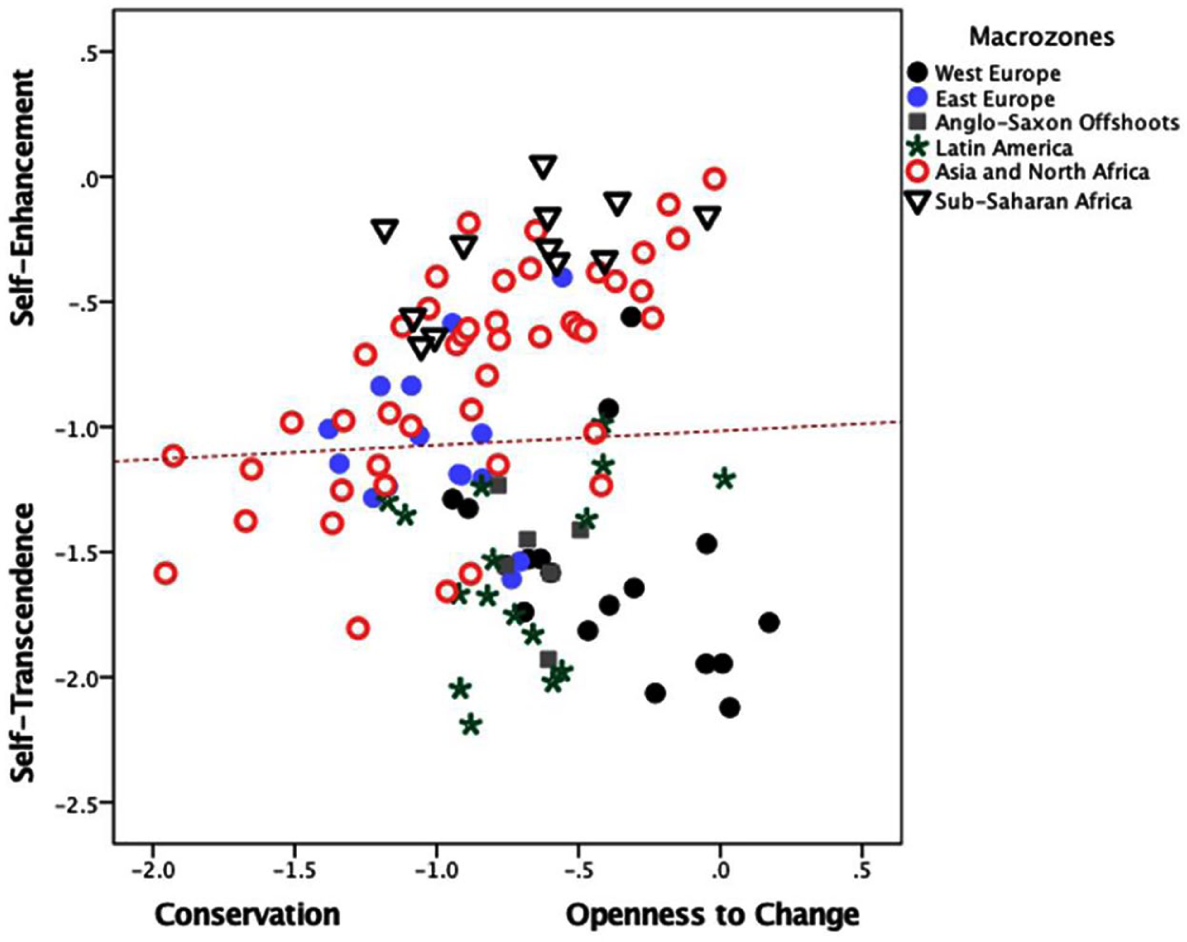
Correlation between openness to change and self-enhancement values for all the world macrozones according to the data of the two latest WVS waves (2005-2014), scatterplot with a fitted regression line.
The reason for this divergence becomes clearer if we look deeper at the zonal level. In Europe, the growing emphasis on openness to change is accompanied, as predicted, by rising emphasis on self-transcendence values. Thus, European countries are characterized by a bipolar value structure—high levels of conservation and self-enhancement values are typical for Eastern Europe, whereas high levels of openness to change and self-transcendence values are characteristic of Western Europe; it still makes sense to consider Western and Eastern Europe together, as both areas form a single European macroregion in the cultural anthropology perspective (Korotayev, 2004; see Figure 2).
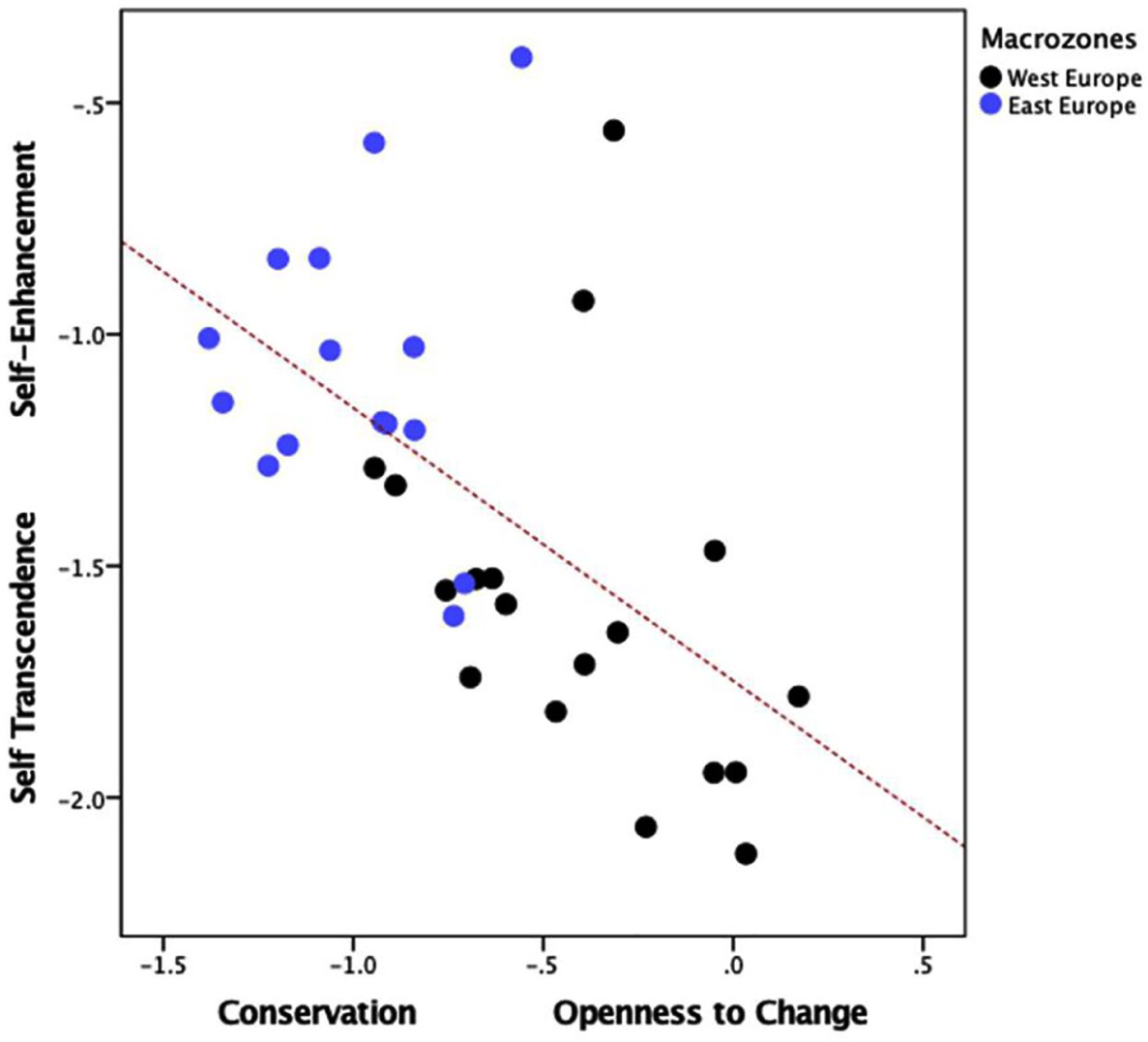
Correlation between openness to change and self-enhancement values for Europe according to the data of the two latest WVS waves (2005-2014), scatterplot with a fitted regression line.
The same pattern remains when we add to the sample of European countries the former Anglo-Saxon settlement colonies (United States, Canada, Australia, and New Zealand) that tend to demonstrate a high level of similarity with the West European cultures and, thus, are known as “West European offshoots” (e.g., Maddison, 2001). In this case, the negative correlation is at a high level, and the significance of the correlation has slightly increased (see Figure 3).
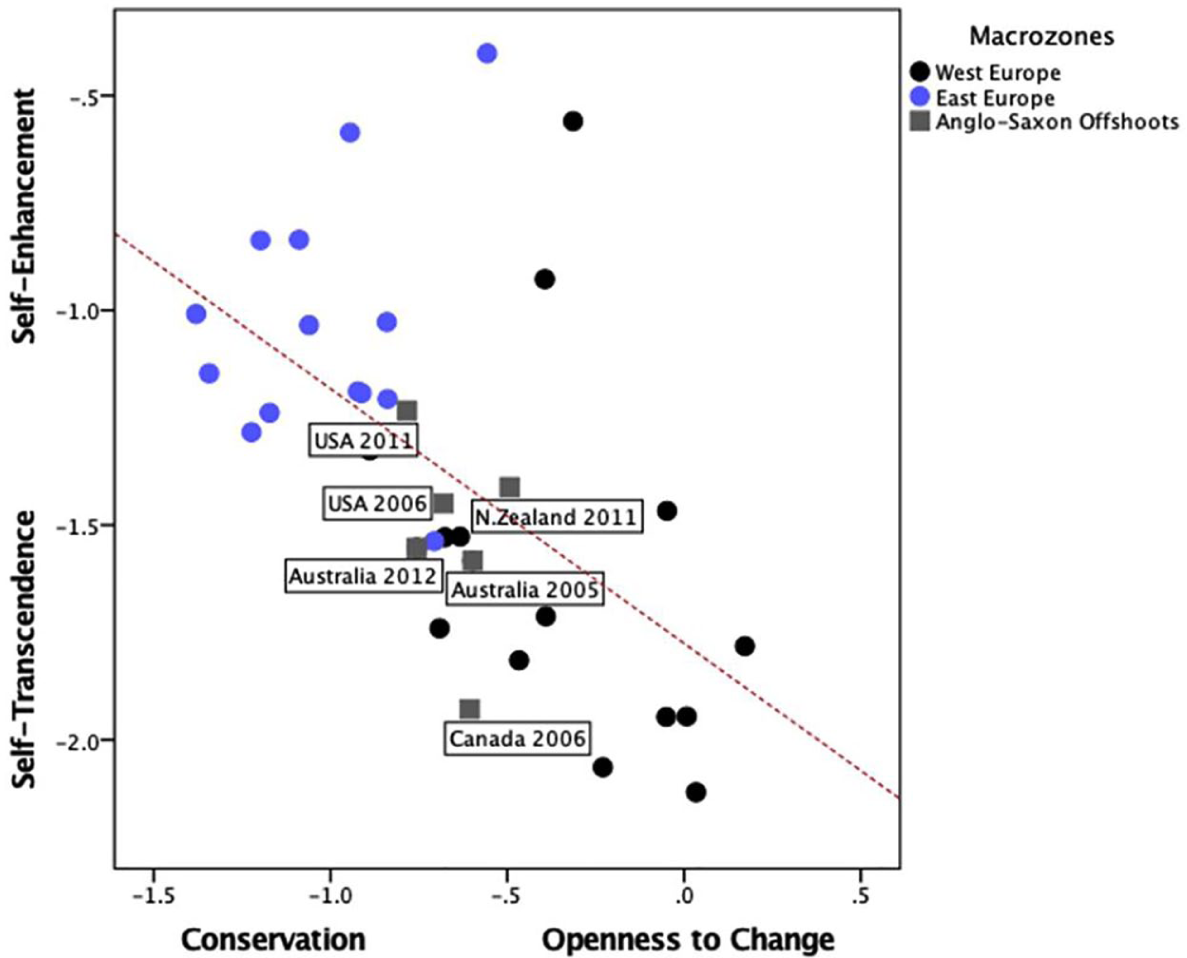
Correlation between openness to change and self-enhancement values for Europe and the former Anglo-Saxon settlement colonies according to the data of the two latest WVS waves (2005-2014), scatterplot with a fitted regression line.
However, when we add Latin America to the sample of European countries, the strength of negative correlation significantly decreases (see Figure 4).

Correlation between openness to change and self-enhancement values for Europe, America, Australia, and New Zealand according to the data of the two latest WVS waves (2005-2014), scatterplot with a fitted regression line.
Latin America’s cluster (though not demonstrating any significant relationship by itself) fits quite well into the European cluster. It forms a particularly close cluster with the former Anglo-Saxon settlement colonies that leads to forming a single macrocluster of the former European settlement colonies of America, Australia, and New Zealand. This macrocluster in its turn combines with the West European and East European clusters to form a single “macro-European” megacluster, which unites all the European countries and all the former European settlement colonies.
At the same time, if we examine “Afroasian” megacluster, we will also see a clear correlation between openness to change and self-enhancement values, but this correlation has the opposing direction. In other words, in the “macro-European” megacluster, we are dealing with a negative correlation, but for the Afroasian megacluster, we find a strong positive correlation (see Figure 5).
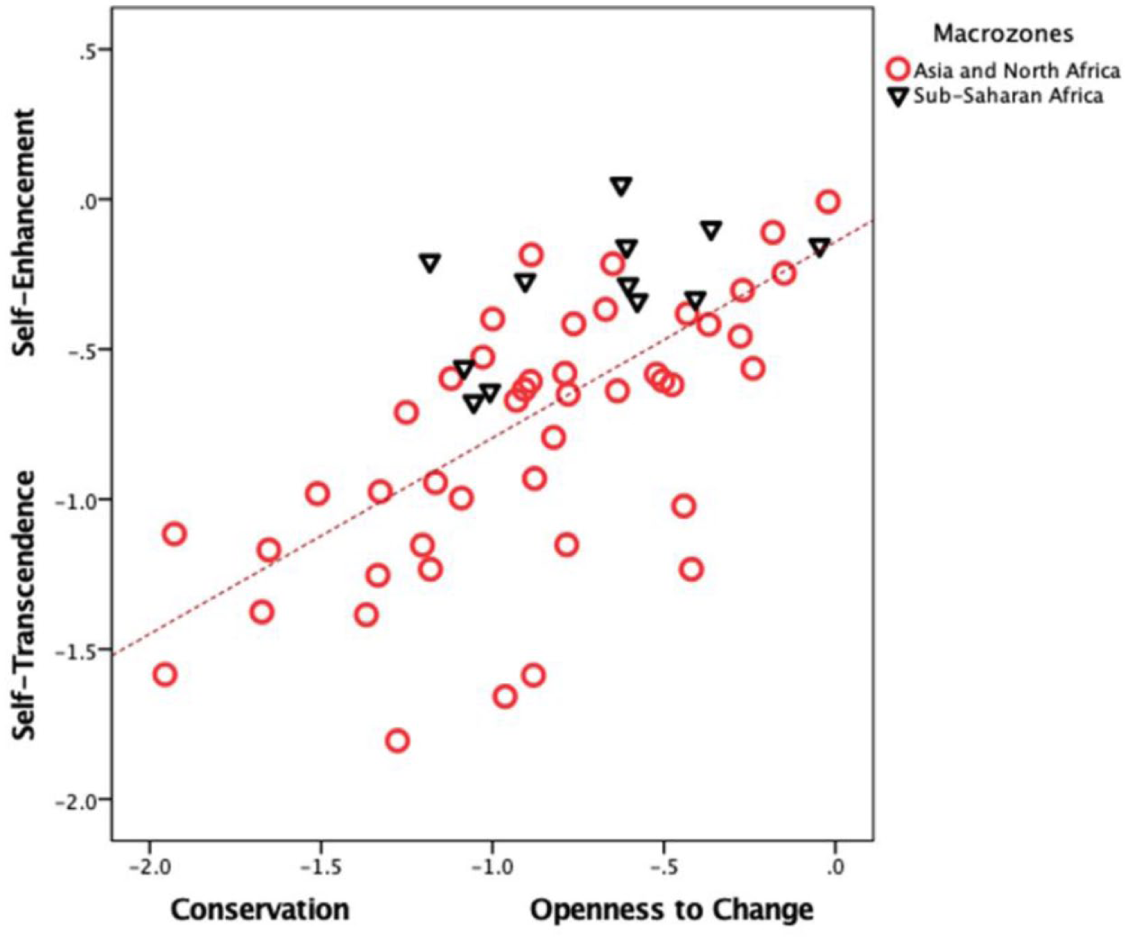
Correlation between openness to change and self-enhancement values for Asia and Africa according to the data of the two latest WVS waves (2005-2014), scatterplot with a fitted regression line.
This correlation is strengthened when we leave in the sample only Asian and North African countries (r = +.661, p < .001), but it becomes particularly strong, after we remove from the sample the most Westernized Asian societies such as Japan and Taiwan (see Figure 6).
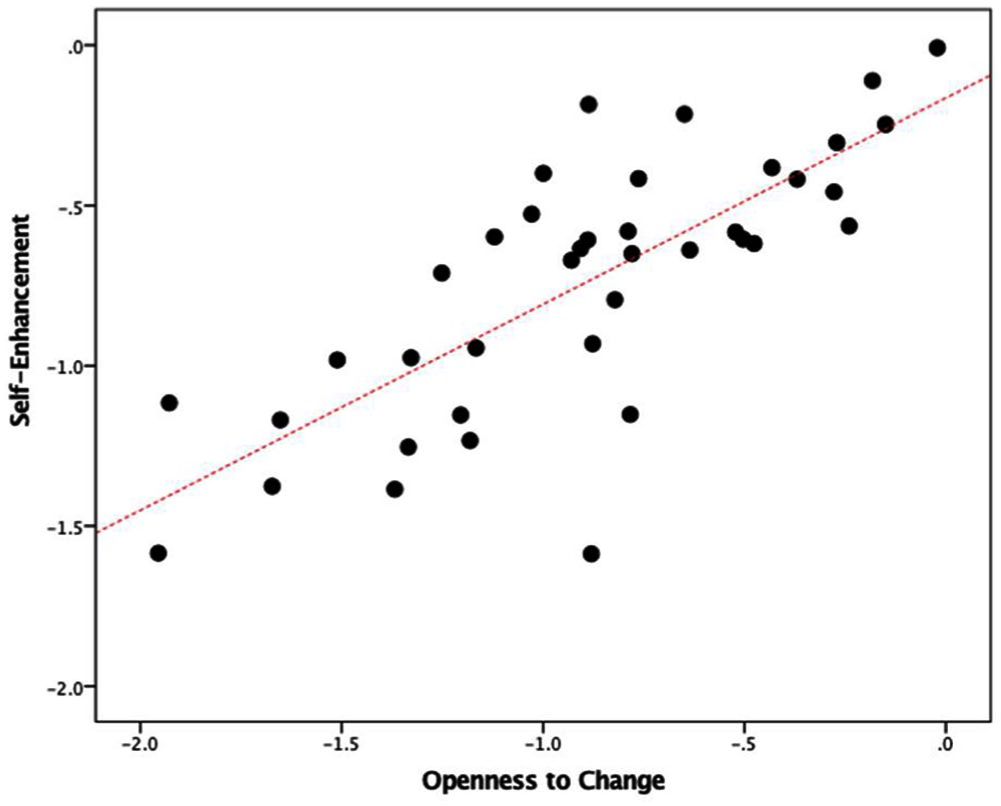
Correlation between openness to change and self-enhancement values for Asia and North Africa (excluding Japan and Taiwan) according to the data of the two latest WVS waves (2005-2014), scatterplot with a fitted regression line.
Thus, we have identified two macroclusters with opposite correlations between the two major Schwartz value axes (whereas the presence of two clusters that behave in an opposite manner makes the correlation insignificant).
Let us analyze in detail the questions indices are based on:
Openness to change: It is important to this person to think up new ideas and be creative: to do things one’s own way. It is important to this person to have a good time: to “spoil” oneself.
Self-enhancement: Being very successful is important to this person: to have people recognize one’s achievements. It is important to this person to be rich: to have a lot of money and expensive things.
Care for others/self-transcendence: Looking after the environment is important to this person: to care for nature and save life resources. It is important to this person to do something for the good of society/It is important to this person to help the people nearby, to care for their well-being.
In this research, it is worth paying attention to two facts:
Focus on respect as evidence of recognition from other people (to have people recognize one’s achievements).
Inconsistency of the care for others index.
Starting with the care for others index, we should say that regarding the fifth WVS wave, in which the questions according to Schwartz’s methodology first appeared, this question was as follows: “It is important to this person to help the people nearby, to care for their well-being.” And, if we analyze this issue in more detail, then it turns out that respondents in Russia, Ukraine, and other countries that are not a part of Western Europe highly appreciated the need to care for others. It can mean that, this index does not allow us to find differences between the Western European macrozone and other countries. However, by formulating the question as “the need to do good for society” allows us to see the differences between macrozones. That is, in fact, care for others means caring for society in the most common sense and also nature. Thus, the “self-enhancement–self-transcendence/care for others” axis is opposed to the desire to have high status in others’ eyes, on one hand, and the desire to help society and nature, on the other. The differences between two macrozones regarding the above-mentioned value axes can be explained by the contrast between the embedded cultures and autonomous cultures that Schwartz (2006c) mentions. In embedded cultures, where the environment is important, individuals seek to gain respect and status in society, and the status is expressed through richness (O’Cass & Frost, 2002). 1 A well-known example of conspicuous consumption in Arab countries shows that the desire to have money and luxury goods is motivated by the intention to take or maintain a high position in a particular social group (Farah & Fawaz, 2016; O’Cass & Frost, 2002). 2
In European countries, especially in Northern Europe, on the contrary, demonstration of material prosperity is not encouraged, reference to the social group is absent, and such abstract concepts as society and nature (as opposed to any social group) play a prominent role. It can be said that with the progress in the modernization, which correlates with the growth of income, each macrozone maximizes its values: On one hand, it is a group affiliation, the desire to maintain or take a high status, on the other hand, it is autonomy. Of course, this explanation, why in “macro-Europe” we deal with a significant positive correlation between openness to change and self-transcendence, whereas in “Afroasia,” this correlation is strong, significant, and negative, can only be regarded as preliminary and does not exclude the need to look for a more profound explanation for the detected fundamental value difference between the two major global civilizational megazones.
Now, examine how value axes correlate with some indicators of modernization in both megazones.
Schwartz Value Axes and Indicators of Modernization
Note that the Schwartz value axes have not strong but statistically significant correlations with value axes used by Inglehart and Welzel (2005)—traditional religious versus secular rational values and survival versus self-expression values. Herewith, Schwartz’s openness to change values shows not a strong but statistically significant positive correlation with Inglehart–Welzel’s secular rational values, and Schwartz’s self-enhancement values show not a strong, but statistically significant negative correlation with Inglehart–Welzel’s self-expression values (see Figures 7 and 8).
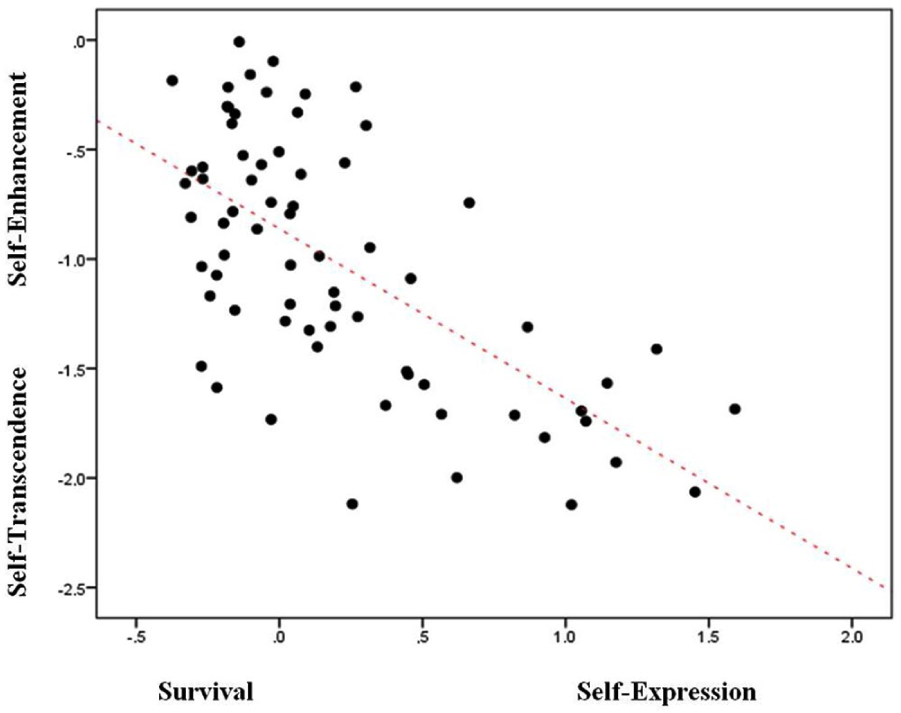
Correlation between Inglehart–Welzel’s survival versus self-expression values axis and Schwartz’s self-transcendence versus self-enhancement values axis, scatterplot with a fitted regression line.
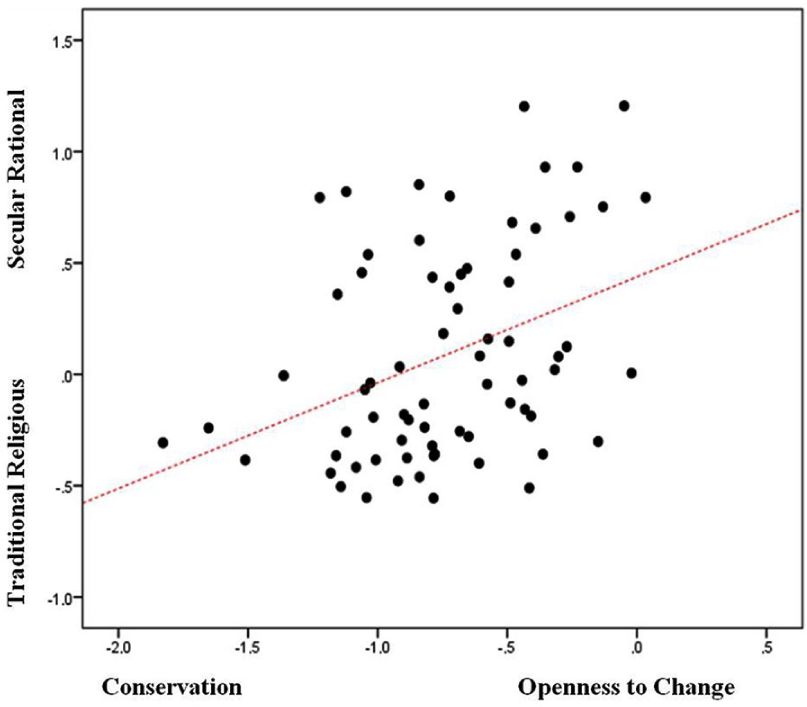
Correlation between Schwartz’s conservation versus openness to change values axis and Inglehart–Welzel’s traditional religious versus secular rational values, scatterplot with a fitted regression line.
Inglehart and Welzel explain the variation along their axes to a very noticeable degree by civilizational differences (see, for example, Inglehart & Welzel, 2005), but actually they focus more on the socioevolutionary development (Inglehart & Welzel, 2005). They show that to a very high degree, this variation is due to global processes of value modernization. According to them, global modernization is very closely linked with the modern model of economic growth and its main characteristic that is the systematic advance in GDP growth rates compared with demographic growth, which manifested itself in the systematic growth of GDP per capita (see, for example, Kuznets & Murphy, 1966; Solow, 1956). Inglehart and Welzel link with this point the positive correlation between the levels of GDP per capita, on one hand, and secular rational values as well as self-expression values, on the other (Inglehart & Welzel, 2005).
Given this, we can expect that openness to change values will show a positive correlation with GDP per capita and self-enhancement values—a negative one. We begin our empirical test of this hypothesis on the data of European countries. When using these data, we find strong correlations in the predicted directions with respect to both openness to change values (see Figure 9) and self-enhancement values (see Figure 10).
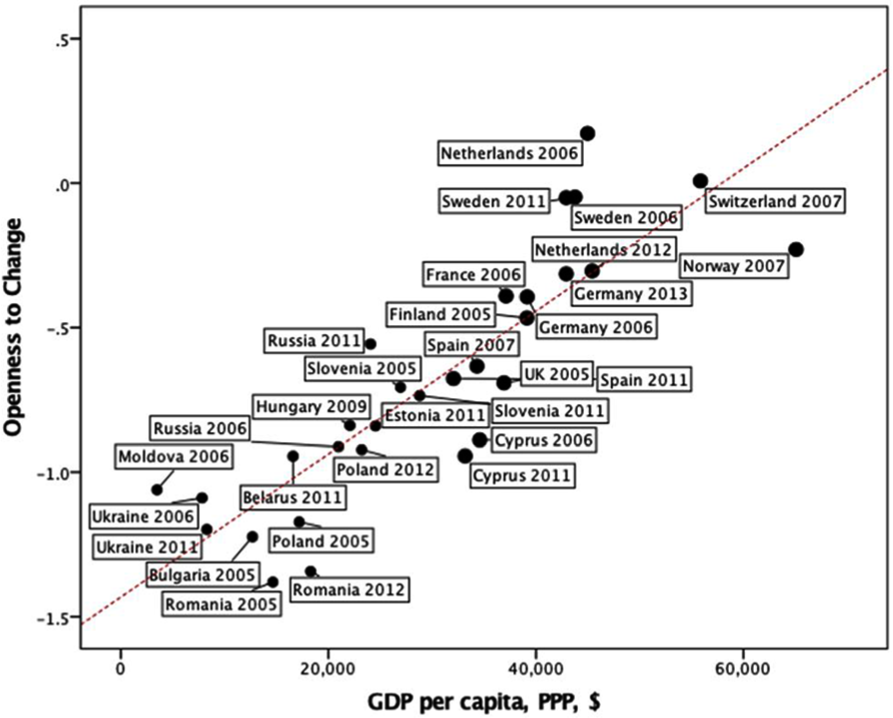
Correlation between GDP per capita (PPP)a and openness to change values for Europe according to the data of the two latest WVS waves (2005-2014), scatterplot with a fitted regression line.
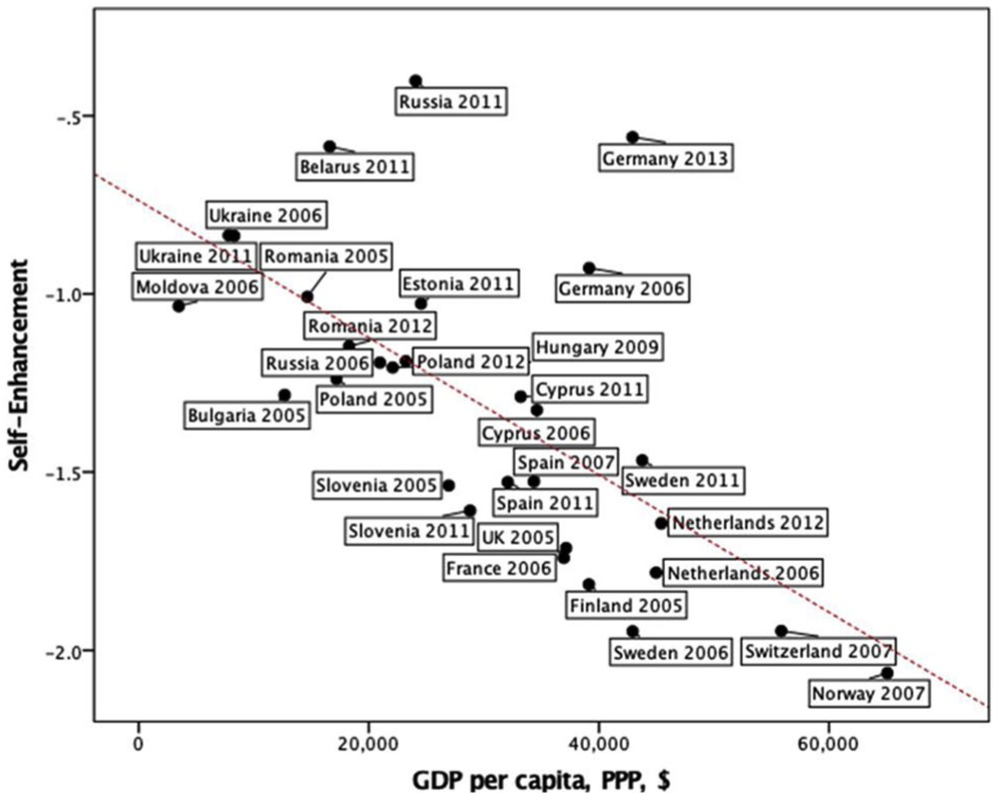
Correlation between GDP per capita (PPP)a and self-enhancement values for Europe according to the data of the two latest WVS waves (2005-2014), scatterplot with a fitted regression line.
As we can see, for modern European countries, the positive correlation between GDP per capita and openness to change values is especially strong. The negative correlation between GDP per capita and self-enhancement values is weaker, but it is still strong and certainly statistically significant. All this suggests that the modernization in Europe tends to be accompanied (in a predictable way) by an increase in openness to change values and a decline in the prevalence of conservation values. However, this suggests that in European countries, modernization (especially at its most advanced phases) is accompanied (in a less predictable way) by decline in the prevalence of self-enhancement values and growth of self-transcendence values (as well as protection of nature ones).
As mentioned, according to Inglehart and Welzel’s theory, the modernization of values involves two phases. The first phase (corresponding to the transformation of agrarian societies into industrial ones) involves the transition from traditional religious to secular rational values. Inglehart and Welzel support this hypothesis using a correlation analysis, which shows that the rise of the share of population employed in industry against the background of decline of the share of those employed in agriculture is associated with decline of the prevalence of traditional religious values and growth in the prevalence of secular rational values.
The shift from survival to self-expression values, according to Inglehart–Welzel’s theory, occurs at the second phase of global modernization, during the transition from industrial to postindustrial society. They also support this hypothesis using a correlation analysis, which shows that an increase in the share of population employed in service sector against the background of decrease of the share of those employed in industry is accompanied by decline in the prevalence of survival values and growth of the prevalence of self-expression values that again fully corresponds to the main points of the Inglehart–Welzel hypothesis.
Given the fact that Inglehart–Welzel’s secular rational values positively correlate with Schwartz’s openness to change values (whereas Inglehart–Welzel’s self-expression values negatively correlate with Schwartz’s self-enhancement values), one would expect that Schwartz’s openness to change values must demonstrate a particularly strong negative correlation with the share of agriculture in total employment and a particularly strong positive correlation with the employment in industry as percentage of total employment. However, Schwartz’s self-enhancement values should show a particularly strong negative correlation with the proportion of the workforce in the industrial sector and a particularly strong positive correlation with the percentage of the workforce in the service sector.
The empirical test of this hypothesis provides inconclusive results. Neither the Schwartz’s openness to change values nor Schwartz’s self-enhancement values show any statistically significant correlation with the proportion employed in industry. However, for the European countries, in accordance with the theoretical expectations, the openness to change values demonstrates a strong negative correlation with the percentage of the workforce in agriculture (see Figure 11). As one would expect on the basis of Inglehart–Welzel’s theory, the percentage of the labor force in agriculture shows a positive correlation with self-enhancement values (see Figure 12), but this correlation is not as strong as a negative correlation between the workforce in agriculture and openness to change values.
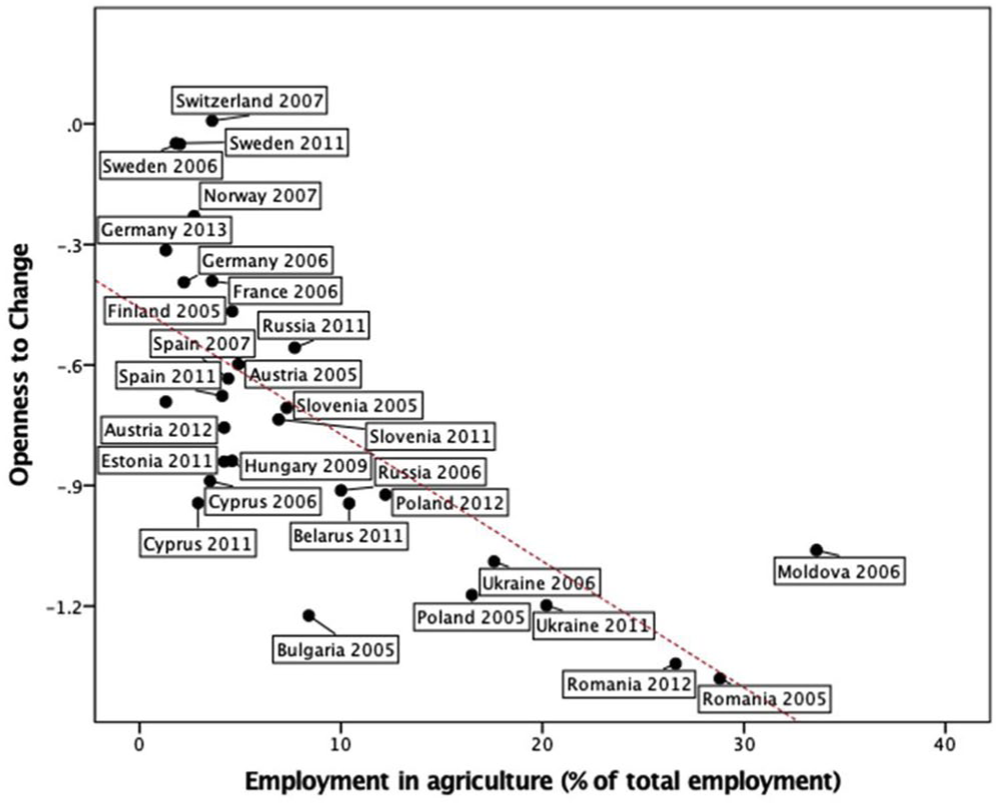
Correlation between the employment in agriculture and openness to change values for Europe according to the data of the two latest WVS waves (2005-2014), scatterplot with a fitted regression line.

Correlation between the percentage of the workforce in agriculture and self-enhancement values for Europe according to the data of the two latest WVS waves (2005-2014), scatterplot with a fitted regression line.
The less modernized societies in Europe with a high percentage of the labor force in agriculture are characterized by a significantly higher prevalence of self-enhancement values and a significantly less importance of self-transcendence values (as well as protection of nature values).
However, self-enhancement values demonstrate a theoretically predicted statistically significant negative correlation with Inglehart and Welzel’s (2005) postindustrialization index—% workforce in services minus % in industry (r = −.477, p < .05).
The negative correlation between the noncalibrated percentage of the workforce in the service sector and self-enhancement values is almost as strong and statistically significant (see Figure 13). The positive correlation between the percentage of the labor force in the service sector and the prevalence of openness to change values is even stronger and statistically significant (see Figure 14).
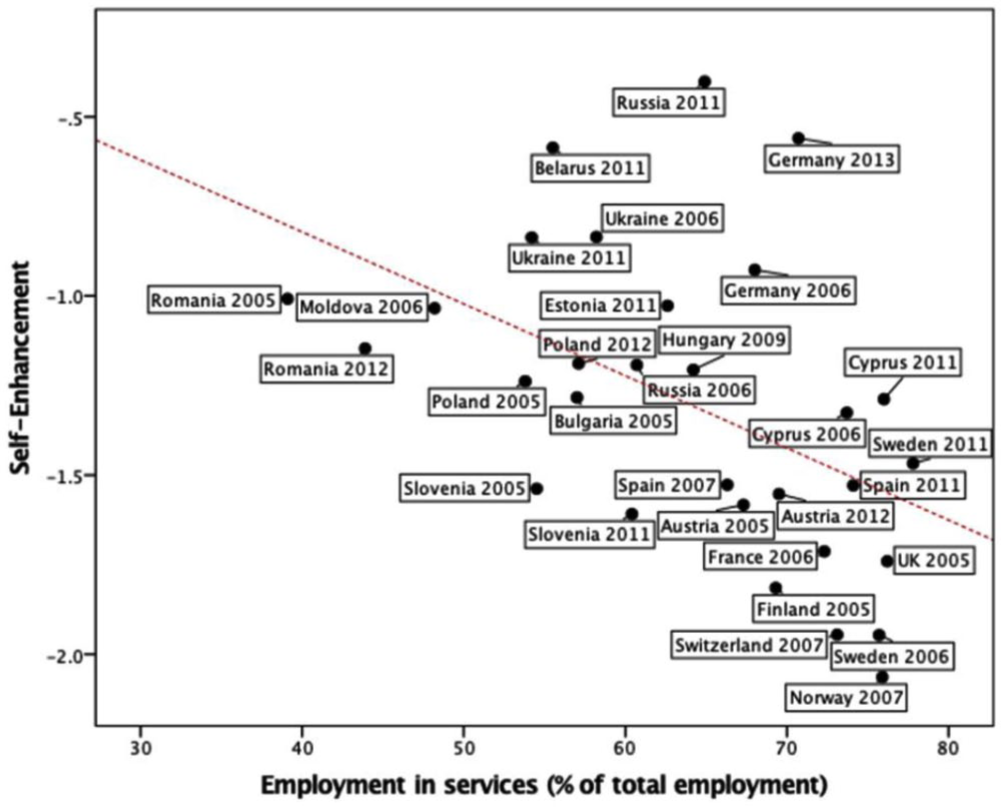
Correlation between the percentage of the labor force in the service sector and self-enhancement values for Europe according to the data of the two latest WVS waves (2005-2014), scatterplot with a fitted regression line.

Correlation between the proportion of the workforce in the service sector and openness to change values for Europe according to the data of the two latest WVS waves (2005-2014), scatterplot with a fitted regression line.
Notwithstanding some ambiguity in the results that we have obtained by the moment, they appear to support the possibility of a socioevolutionary interpretation of value variation in Europe. However, there are reasons to believe that the processes of value modernization in Asia and Africa show quite significant differences in comparison with Europe. Both in Europe (see Figure 9) and in Asia and North Africa, we can find a positive statistically significant correlation between GDP per capita and openness to change values (see Figure 15). However, the correlation between GDP per capita and self-enhancement values in Asia and North Africa is statistically significant, as in Europe, but, unlike the negative correlation attested for Europe (see Figure 10), this correlation is positive for the East 3 (see Figure 16).
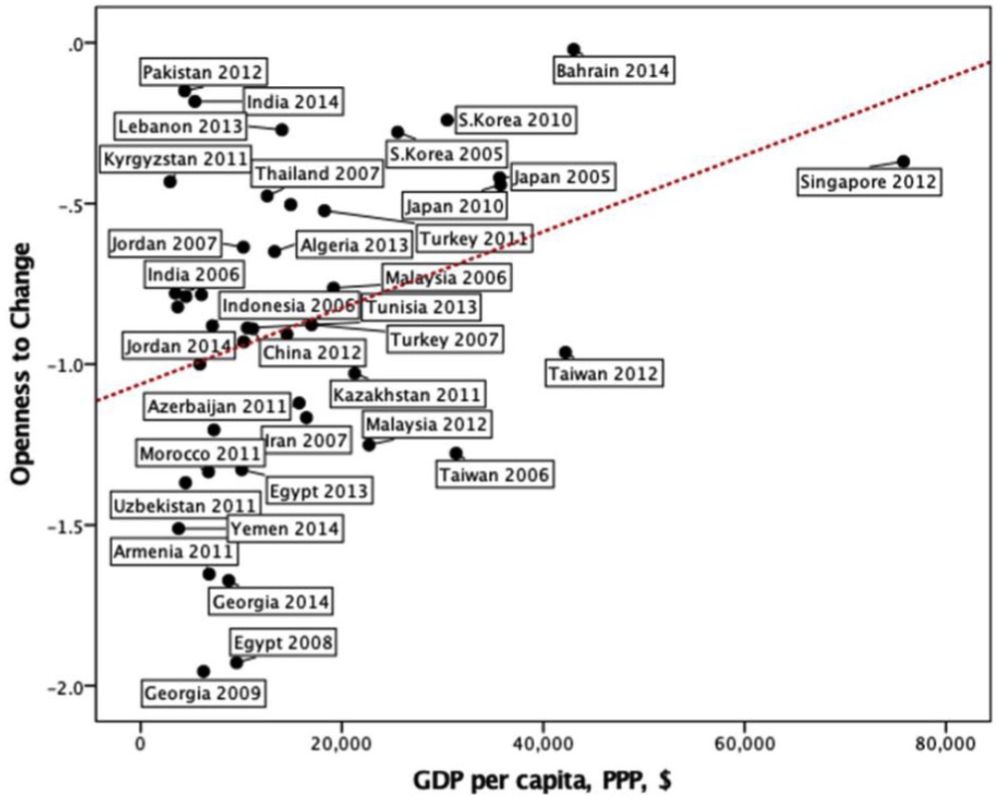
Correlation between GDP per capita and openness to change values for Asia and North Africa (with Japan and Taiwan, but excluding Gulf oil-producing countries) according to the data of the two latest WVS waves (2005-2014), scatterplot with a fitted regression line.
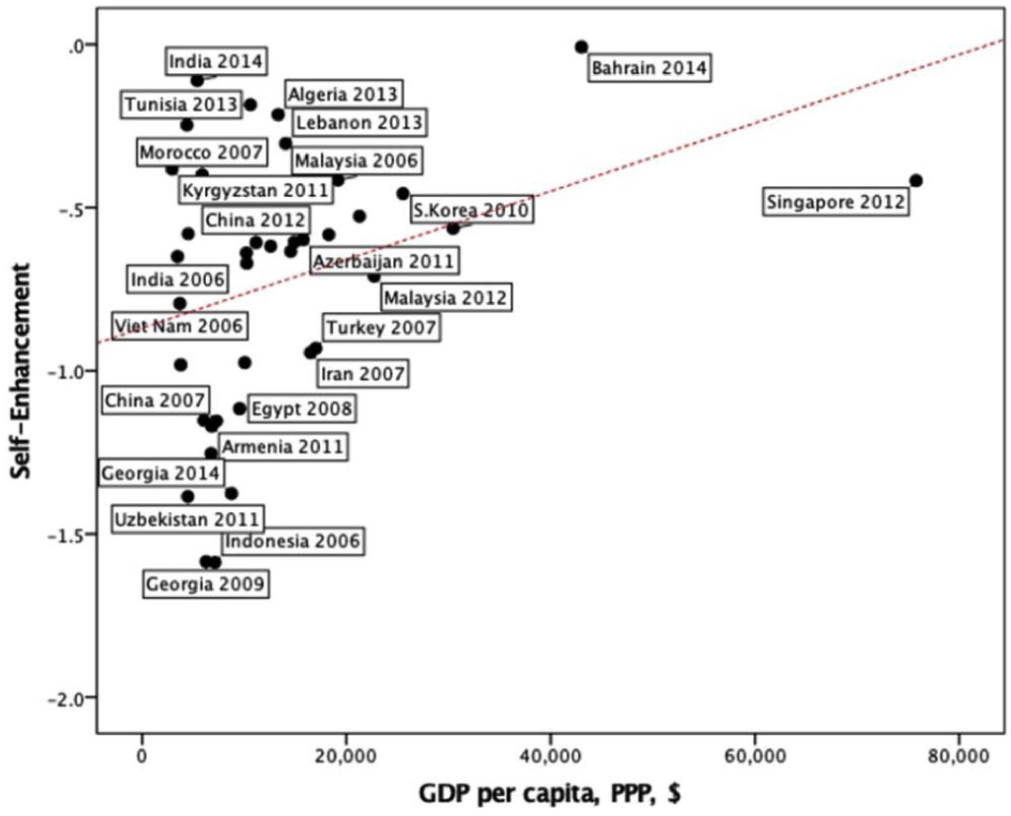
Correlation between GDP per capita and self-enhancement values for Asia and North Africa (excluding Japan, Taiwan, and Gulf oil-producing countries) according to the data of the two latest WVS waves (2005-2014), scatterplot with a fitted regression line.
These results suggest that the value modernization patterns in “the East” (i.e., Asia and North Africa) may differ noticeably from the pattern in European countries. Our tests support the idea that both in Europe and in the East, modernization is accompanied by a transition from conservation values to openness to change values. However, in Europe, modernization leads to a decline in the prevalence of self-enhancement values, whereas in Asia and North Africa countries, self-enhancement values tend to increase with the further modernization of those nations. This assumption is supported by our analysis of the between the proportion of the workforce in various sectors of the economy in Asia and Africa and the prevalence of openness to change and self-enhancement values.
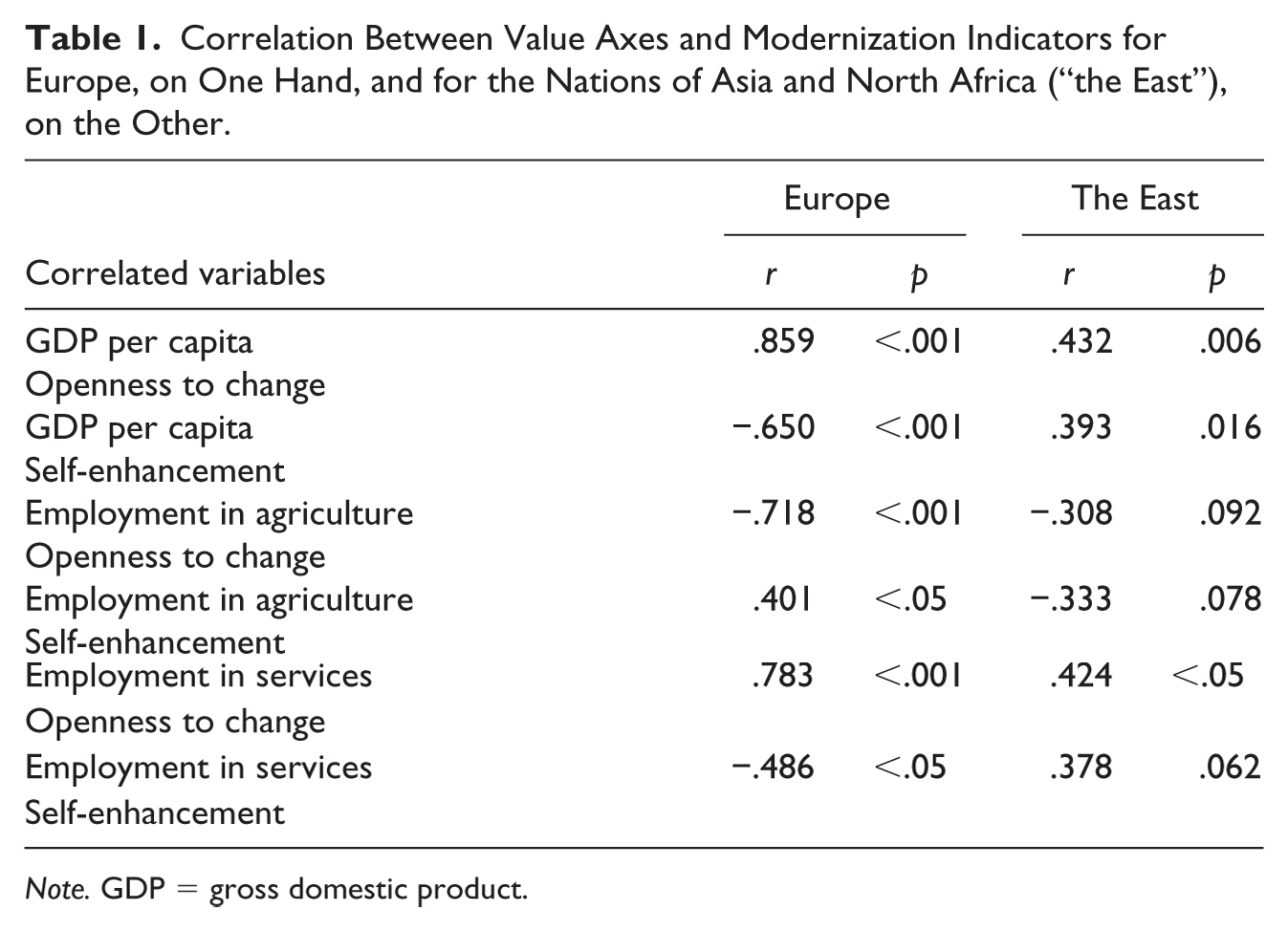
Indeed, like in Europe, for the East, we find a marginally significant negative correlation between the percentage of the workforce in agriculture and the prevalence of openness to change values (see Table 1).
Correlation Between Value Axes and Modernization Indicators for Europe, on One Hand, and for the Nations of Asia and North Africa (“the East”), on the Other.
Note. GDP = gross domestic product.
But in Europe, the percentage employed in agriculture positively correlates with the prevalence of self-enhancement values, whereas in Asia and North Africa, we are dealing with a marginally significant negative correlation (see Table 1), whereas the reduction of the percentage of the workforce employed in agriculture is one of the most important components of modernization processes (see, for example, Black, 1967).
Thus, a statistically significant negative correlation between the employment in agriculture and self-enhancement values that we observe in the East (against the background of the positive correlation in Europe) can be regarded as additional support for the above formulated hypothesis, maintaining that in Europe, modernization tends to decrease prevalence of self-enhancement values, whereas in Asia and North Africa, modernization tends to be accompanied by an increase in prevalence of self-enhancement values.
Similar results are obtained in the correlation analysis of openness to change and self-enhancement values with the proportion employed in the service sector. Openness to change in the East (as well as in Europe; see Figure 14) shows a positive correlation with the percentage of the workforce employed in the service sector (see Table 1). However, self-enhancement values also show a positive correlation for Asia and North Africa (see Table 1), whereas for Europe, this correlation is negative (see Figure 13).
Thus, while in Europe we find a negative correlation between the percentage of the workforce in the service sector and self-enhancement values, in Asia and North Africa we are dealing with a positive correlation. This can be regarded as additional empirical support for the hypothesis put forward above: Although both in Europe and in Asia and North Africa, the modernization leads to the increase in the prevalence of openness to change values, only in the East, the modernization tends to lead to the strengthening of self-enhancement values. At the same time, in Europe, modernization processes are accompanied not by growth, but by decline in the prevalence of self-enhancement values.
Discussion
Thus, both in Europe and in the East, we are dealing with essentially different patterns of value modernization. What factors might account for this? Below, we will consider two possible explanations:
1. “Development or phase explanation.” The opposing directions of the correlations between openness to change and self-enhancement values for Europe and the East may be accounted for by the fact that most of Asian and North African countries are at much earlier phases of the modernization transition than most European countries. This suggests that an increase in openness to change values is being seen throughout the modernization transition, and an increase in self-enhancement values occurs only at its earlier phases, whereas in its later phases, the further development of social systems leads to a decline in the prevalence of self-enhancement values.
This explanation is supported by the fact that in the most modernized social systems in Asia, such as Japan and Taiwan, there are quite low levels of self-enhancement values like in highly developed Western European countries, but unlike the middle-income Asian countries that are characterized by relatively high levels of prevalence of the self-enhancement values (see Figure 17).
2. “Civilization explanation.” There are, however, serious doubts that the positive correlation between openness to change and self-enhancement values for most Asian and North African countries can only be explained by the difference in phases of modernization processes. The fact is that the positive correlation between modernization and self-enhancement values can be seen in the East at a very high level, one at which a negative correlation can already be seen in Europe. In this regard, we can assume that the inflection point found in the Eastern world to be at a higher level than in Europe. For example, the tendency toward the increase in self-enhancement values can be seen in Asia and North Africa quite definitely up to an interval of US$15,000 to US$30,000. In Europe, there is already a pronounced negative correlation at this interval. In addition, Asian and North African countries in the range of about US$20,000 to US$30,000 have average values of self-enhancement index that are significantly higher than those in Europe 4 (see Figure 18).
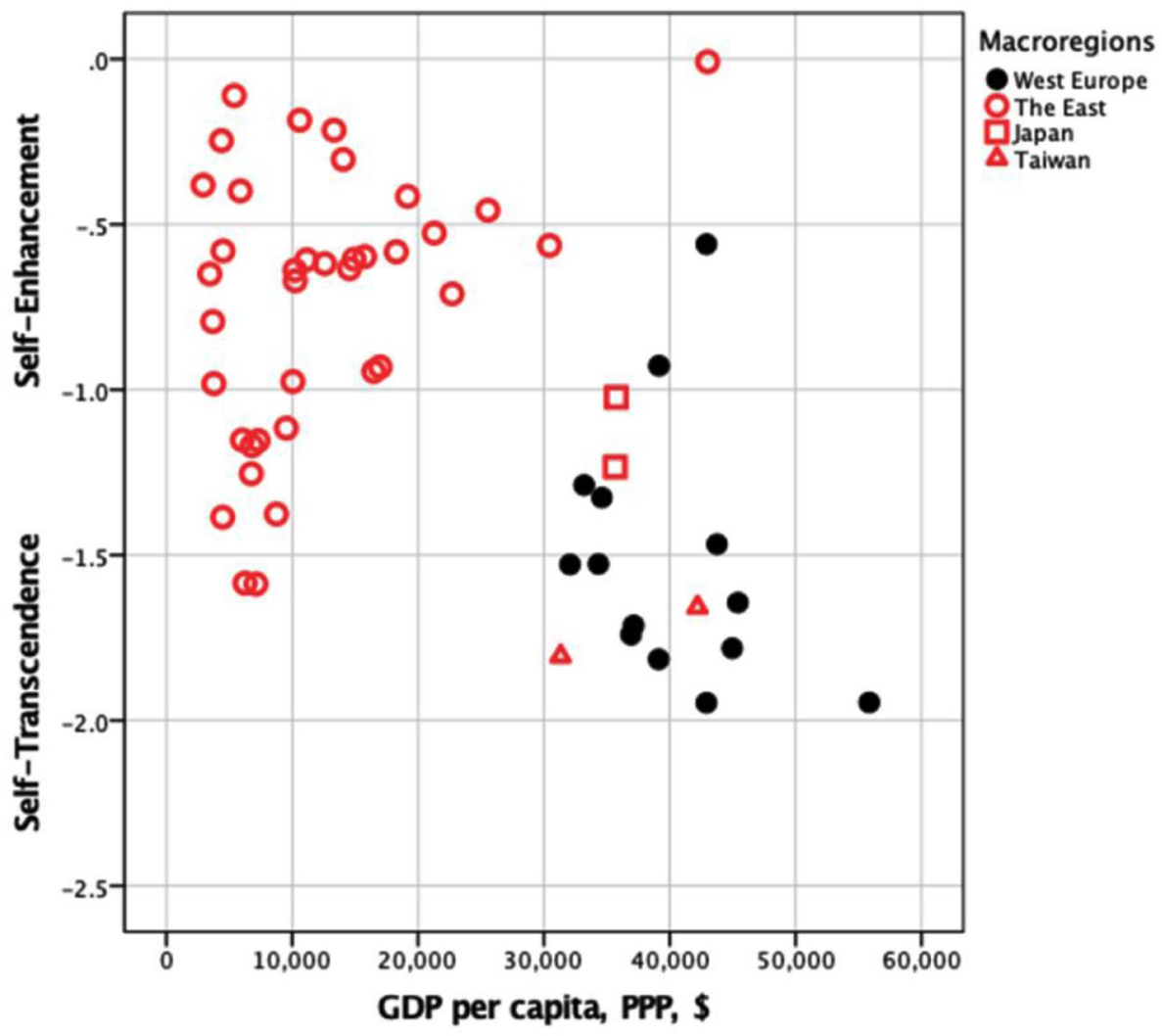
Correlation between GDP per capita and self-enhancement values for West Europe and the East (Asia and North Africa) according to the data of the two latest WVS waves (2005-2014), scatterplot.
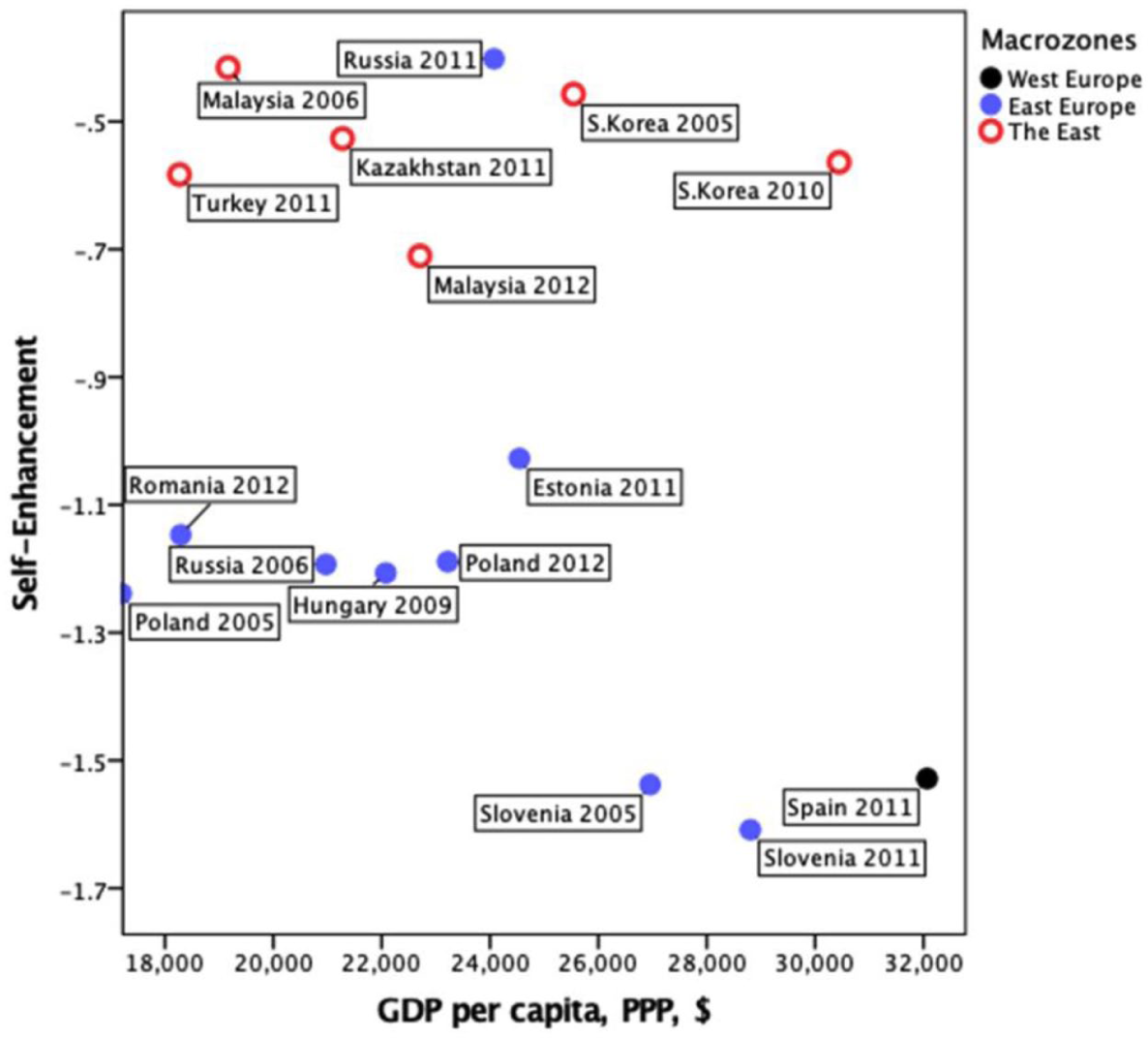
Correlation between GDP per capita (PPP) and self-enhancement values for Europe and the East (Asia and North Africa) according to the data of the two latest WVS waves (2005-2014), a scatterplot for an interval between US$18,000 and US$32,000.
Thus, the crucial distinction found between Europe, where there is a pronounced negative correlation between openness to change and self-enhancement values, and the East, where there is a pronounced positive correlation, can be only partly explained by phases of modernization transition. To a large extent, we appear to be dealing with different civilizational patterns of value modernization.
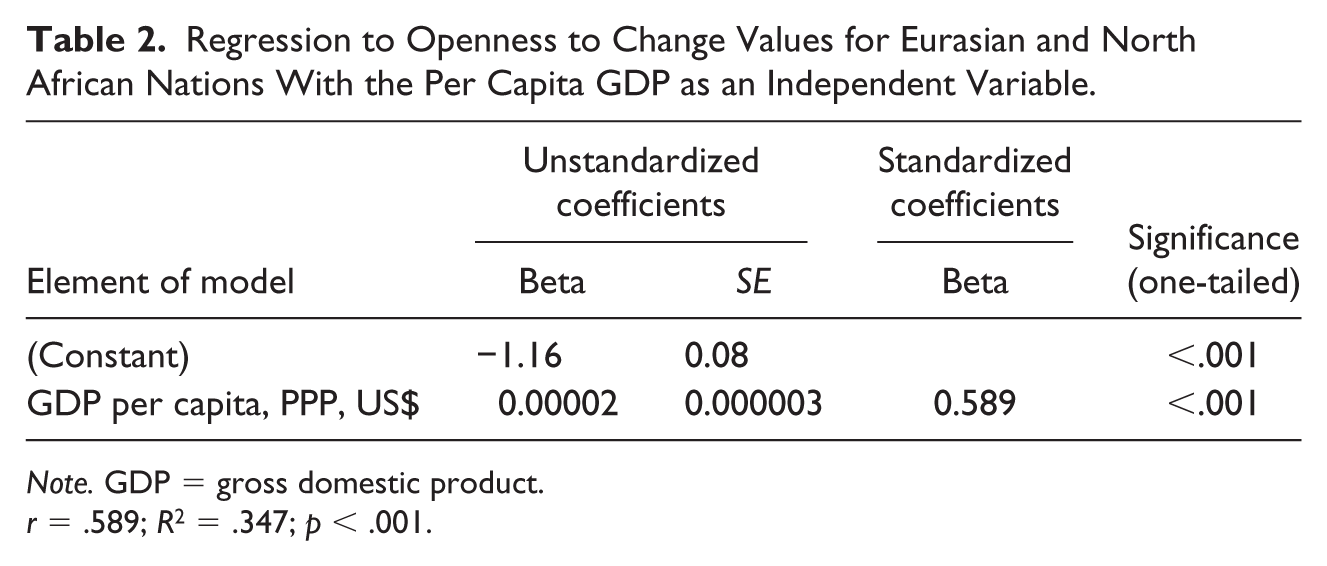
The interplay of modernization and civilization patterns can be shown more formally. If we perform for Eurasian and North African countries a bivariate regression to openness to change values with the per capita GDP as an independent variable, we get the following result (see Table 2).
Regression to Openness to Change Values for Eurasian and North African Nations With the Per Capita GDP as an Independent Variable.
Note. GDP = gross domestic product.
r = .589; R2 = .347; p < .001.
Adding here a control for the megacivilization factor (with a dichotomized “East–West” variable coded as “1” for the East [= Asia and North Africa], and “0” for the West [= Europe]) does not change much (see Table 3).
Regression to Openness to Change Values for Eurasian and North African Nations With the Per Capita GDP and Megacivilization Factor as Independent Variables.

Note. GDP = gross domestic product.
r = .599; R2 = .358; p < .001.
As we see, in this multiple regression model, only the general modernization indicator, GDP per capita, remains significant (what is more, its strength and significance only increases after the introduction of control for the general macrocivilization indicator [East vs. West]).
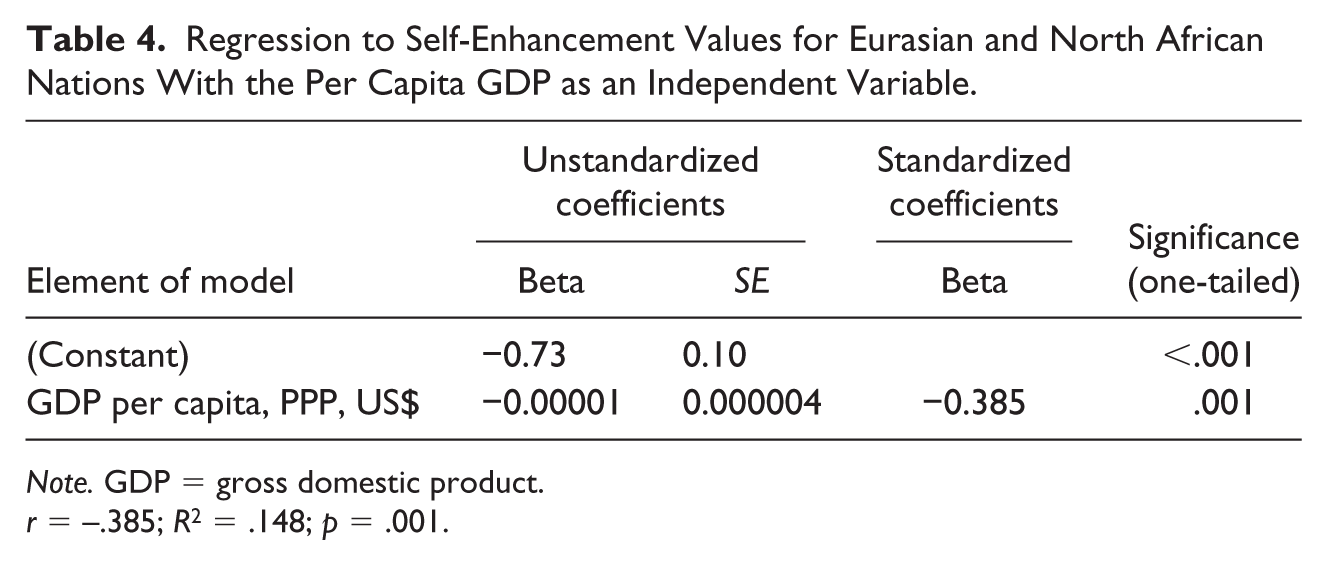
However, the correlation between the per capita GDP and self-enhancement values only remains significant before the introduction of the civilization control (see Table 4).
Regression to Self-Enhancement Values for Eurasian and North African Nations With the Per Capita GDP as an Independent Variable.
Note. GDP = gross domestic product.
r = –.385; R2 = .148; p = .001.
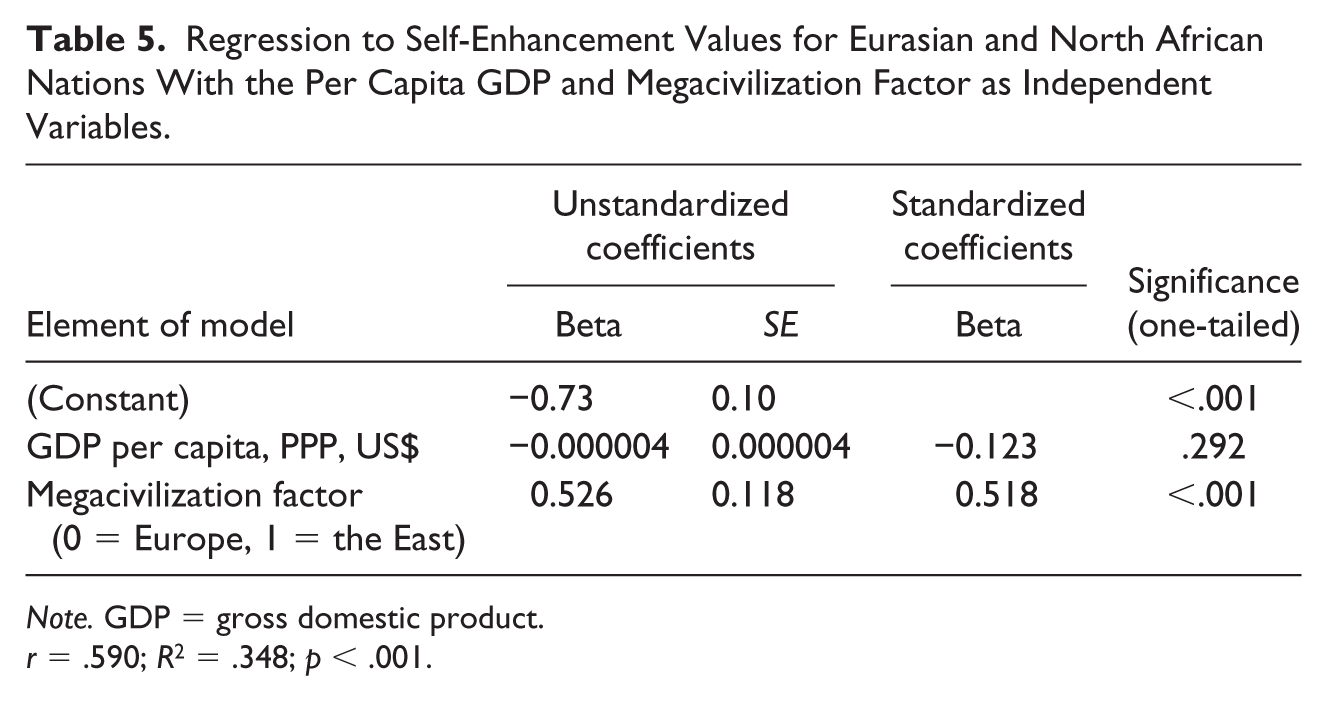
However, as soon as we add the macrocivilization control, the correlation between the per capita GDP and self-enhancement values becomes insignificant, whereas the macrocivilization variable turns out to be squarely significant and rather strong (see Table 5).
Regression to Self-Enhancement Values for Eurasian and North African Nations With the Per Capita GDP and Megacivilization Factor as Independent Variables.
Note. GDP = gross domestic product.
r = .590; R2 = .348; p < .001.
However, there is an additional factor. In the vast majority of countries, younger age groups have higher indices of openness to change values as well as self-enhancement values (see, for example, Korotayev, Novikov, & Shulgin, 2019; Korotayev, Zinkina, Slinko, & Bilyuga, 2018; Robinson, 2013). Most Afroasian countries have a very young population compared with Europe, which would seem to explain why, in these countries, there are much higher indices of both value types mentioned above and which would not be expected taking into account the level of modernization of these countries. It could seem that this factor may also play its role in explaining why in the Afroasian countries, we find a correlation between the two value dimensions, which is directly opposite to the correlation found for “old” Europe. Nevertheless, the preliminary analysis has shown that this factor can explain the difference in the correlation patterns between Europe and the Afroasian world to an unexpectedly small extent.
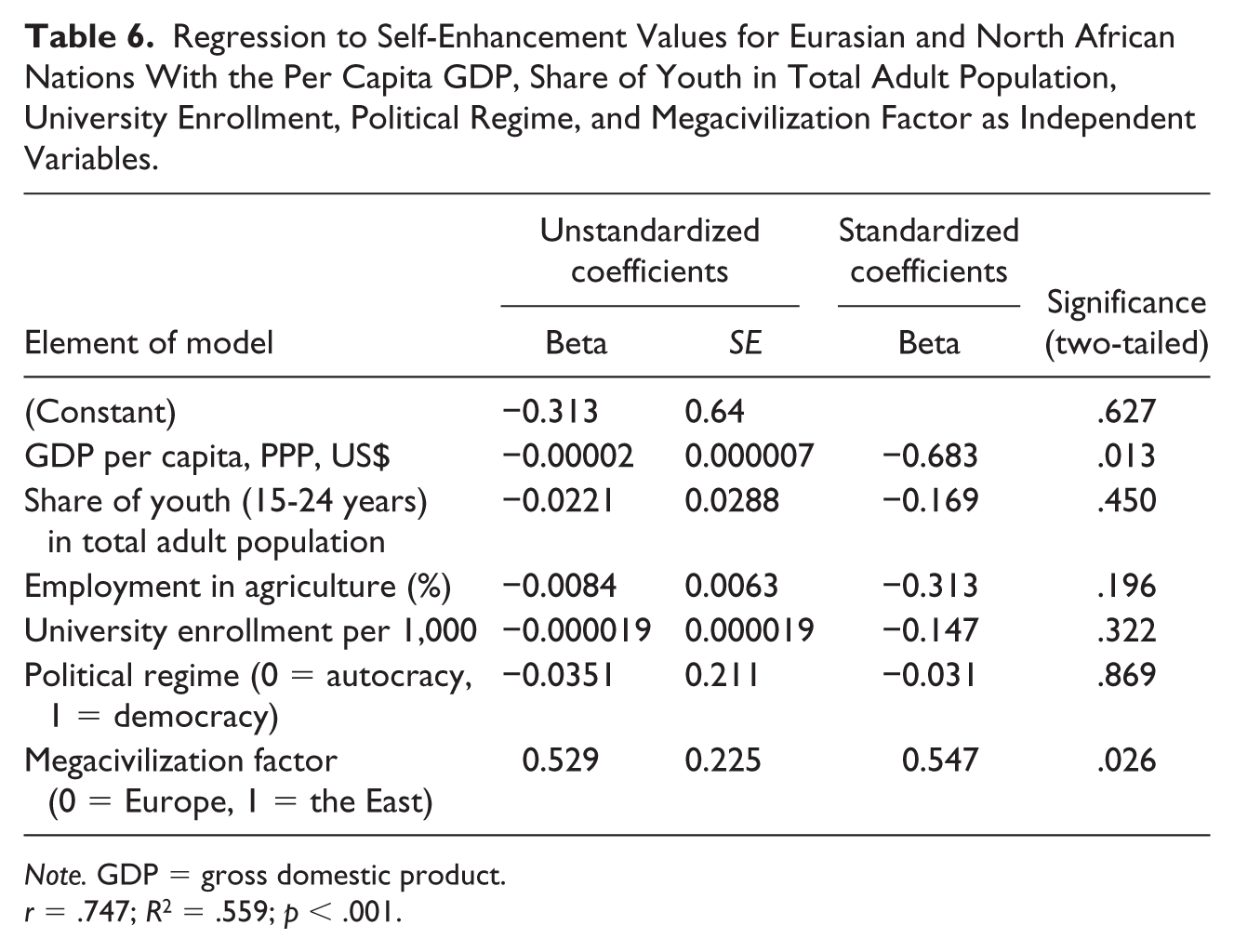
Indeed, adding the “youth factor” 5 to the regression together with controls for education, 6 political regime, 7 and employment in agriculture 8 does not change its results in any significant way (see Table 6).
Regression to Self-Enhancement Values for Eurasian and North African Nations With the Per Capita GDP, Share of Youth in Total Adult Population, University Enrollment, Political Regime, and Megacivilization Factor as Independent Variables.
Note. GDP = gross domestic product.
r = .747; R2 = .559; p < .001.
As we see, the introduction of all these controls does not result in any significant change. GDP per capita remains a rather negative predictor of the adherence to self-enhancement values (the lower per capita GDP, the higher the adherence to self-enhancement values), whereas the country belonging to the “East” (as opposed to Europe) remains a rather strong positive predictor of the proliferation of self-enhancement values. All the other controls including the share of the youth turn out to be insignificant.
Conclusion
Thus, our analysis suggests that the world may be divided into two major human value megazones. The macro-European megazone, which includes not only all the European countries but also all the former European settlement colonies of America and Oceania, is characterized by a pronounced negative correlation between openness to change and self-enhancement values (see Figure 4; r = −.354, p = .008). This correlation is especially strong for Europe (see Figure 2; r = −.564, p = .001). The Afroasian megazone, which consists of all countries in Asia and Africa, is characterized by a pronounced positive correlation between openness to change and self-enhancement values (see Figure 5; r = +.646, p < .001), whereas it is especially strong for Asia and North Africa 9 (see Figure 6; r = +.768, p < .001).
In both megazones, modernization (approximated by such indicators as GDP per capita and proportions of employment in various sectors of the economy) is accompanied by a decline in conservation values and an increase in openness to change values, but in the macro-European megazone, a growth of openness to change values is accompanied by a growth of self-transcendence values, and in Afroasia by an increase in self-enhancement values. We propose two hypotheses that allow one to explain the opposing directions of the correlations in these megazones and they are (a) being at different modernization stages and (b) the difference in civilizational patterns. Further analysis shows that the difference found between Europe and the Eastern world can only partly be explained through the phase factor, and to a large extent, we appear to be dealing with the difference in civilizational patterns of the value modernization.
Footnotes
Appendix A
Traditional values emphasize the following:
(Secular rational values emphasize the opposite):
Survival values emphasize the following:
(Self-expression values emphasize the opposite):
Source: Inglehart and Welzel (2005).
Appendix B
Schwartz’s value axes were formed on the basis of respondents’ answers to the following questions in 2011:
In 2006, respondents were asked a similar block of questions, but the formulation of one of them sounded differently: It is important for this people to help the people nearby, to care for their well-being.
Appendix C
Declaration of Conflicting Interests
The author(s) declared no potential conflicts of interest with respect to the research, authorship, and/or publication of this article.
Funding
The author(s) disclosed receipt of the following financial support for the research, authorship, and/or publication of this article: This article is an output of a research project implemented as part of the Basic Research Program at the National Research University Higher School of Economics (HSE) in 2019 with support by the Russian Science Foundation (Project Number 18-18-00254).