



Abstract
The COVID-19 pandemic has affected 222 countries and territories around the globe. Notably, the speed of COVID-19 spread varies significantly across countries. This cross-cultural research proposes and empirically examines how national culture influences the speed of COVID-19 spread in three studies. Study 1 examines the effects of Hofstede’s national cultural dimensions on the speed of COVID-19 spread in 60 countries. Drawing on the GLOBE study (House et al., 2004), Study 2 investigates how GLOBE cultural dimensions relate to the speed of the pandemic’s spread in 55 countries. Study 3 examines the effect of cultural tightness in 31 countries. We find that five national cultural dimensions – power distance, uncertainty avoidance, humane orientation, in-group collectivism, and cultural tightness – are significantly related to the speed of COVID-19 spread in the initial stages, but not in the later stages, of the pandemic. Study 1 shows that the coronavirus spreads faster in countries with small power distance and strong uncertainty avoidance. Study 2 supports these findings and further reveals that countries with low humane orientation and high in-group collectivism report a faster spread of the disease. Lastly, Study 3 shows that COVID-19 spreads slower in countries with high cultural tightness.
Keywords
Introduction
The COVID-19 pandemic has spread across 222 countries and territories worldwide since the first reported case at the end of 2019. Notably, the speed of COVID-19 spread varies significantly across the globe, which raises the important question of why COVID-19 spreads faster in certain countries and slower in others. It could be broadly explained by how individuals react toward the pandemic at the micro level as well as how macro-level forces, such as government interventions and lockdowns, jointly influence the actions and behaviors of individuals within a country (Dizikes, 2020; Mayer et al., 2020). Much of the discussion on national differences in COVID-19-related outcomes has centered on political and economic factors (Tisdell, 2020), and little is known about how national culture affects the speed of COVID-19 spread. Culture is defined as “the collective programming of the mind which distinguishes the members of one category of people from another” (Hofstede, 1984). National culture reflects the different patterns of beliefs and behaviors that vary across countries, and therefore culture may predict individuals’ or groups’ actions and reactions toward the pandemic. We argue that national culture serves as an important determinant of the between-country variations in the speed of COVID-19 spread since national culture has been shaping “collective actions and norms” during the pandemic (Guan et al., 2020). For instance, the United States Centers for Disease Control and Prevention (2022) suggests that the best way to prevent the disease is through vaccination and social distancing, which limits individuals’ exposure to the coronavirus. People in different cultures may react differently to social distancing, lockdown measures, and other COVID-19-related national health guidelines. Consistent with the cultural perspective that national culture has been a significant determinant of individuals’ actions during the pandemic and subsequent COVID-19-related outcomes, a recent cross-cultural study showed that people in the United States view their self-serving acts, such as social gatherings, as more acceptable, while such a self-interest bias is not found in China (Dong et al., 2021). Similarly, another recent study found that power distance is negatively related to COVID-19 morbidity and mortality (Kumar, 2021). Nevertheless, despite the importance of national culture, only a few studies have examined the effects of culture on the speed of COVID-19 spread. For example, one recent study suggested that relational mobility – the extent to which it is easy “to form new relationships and terminate current ones” – significantly predicts the speed of COVID-19 spread, such that countries with high relational mobility report a faster spread of the virus (Salvador et al., 2020). Another study showed that individualism and indulgence are positively related to the increase rate of total COVID-19 cases in European countries (Gokmen et al., 2021). However, other effects of national cultural dimensions remain largely unexplored.
We extend the cultural perspective by building on the path-breaking work of Hofstede (2001), (Hofstede & Bond, 1988), and Gelfand et al. (2011) to systematically examine the vital question of how differences in national culture explain the variations in the speed of COVID-19 spread across countries. We identify five important national cultural dimensions – power distance, uncertainty avoidance, humane orientation, in-group collectivism, and cultural tightness – that may influence the speed of COVID-19 spread and empirically test our hypotheses in three studies. Study 1 investigates how power distance and uncertainty avoidance relate to the speed of the virus spread using a sample of 60 countries. The results suggest that small power distance and strong uncertainty avoidance are related to faster disease spread at the beginning of the pandemic. Using a sample of 55 countries, Study 2 adopts the national cultural dimensions from House et al.’s (2004) GLOBE study and supports the findings of Study 1. Moreover, Study 2 reveals that countries with low humane orientation and high in-group collectivism report a faster spread of the coronavirus. Study 3 focuses on cultural tightness-looseness and shows that the speed of coronavirus spread is slower in countries with high cultural tightness.
Theory and Hypotheses
Power Distance
Power distance refers to the extent to which less powerful individuals “accept and expect that power is distributed unequally” (Hofstede et al., 2010). Similarly, the GLOBE project defined power distance as “the degree to which members of an organization or society expect and agree that power should be unequally shared” (House et al., 2002). Respect for authority and centralization are favored in large power distance countries, while independence and decentralization are valued in small power distance countries. People in large power distance societies believe that “whoever holds the power is right and good,” but people in small power distance cultures believe that “the use of power should be legitimate and follow criteria of good and evil” (Hofstede et al., 2010). These differences may translate into distinct opinions and actions toward the pandemic and subsequently affect the speed of coronavirus spread within a country.
Since people in large power distance countries are more likely to respect and follow COVID-19-related regulations such as social distancing and lockdown rules while people in small power distance countries value their individuality and independence over authorities, leading to the faster spread of the disease, we expect that power distance is negatively related to the speed of COVID-19 spread. Moreover, large power distance cultures generally have greater socioeconomic class inequalities (Carl et al., 2004). In such cultures, decision-making power is more likely to be centralized. During the pandemic, governments have used their authoritarian power expeditiously, and the people in large power distance cultures expected and accepted this since they are more tolerant of hierarchies. Furthermore, one study showed that in large power distance countries, patients report shorter medical consolation times since, compared to people in small power distance countries, they tend to respect and trust their doctors (Meeuwesen et al., 2009). When facing the COVID-19 pandemic, people in high power distance countries such as Russia, Vietnam and China are more likely to conform to authorities and follow the recommendations of medical experts, practicing social distancing, mask wearing, and hand washing, all of which dampen the spread of the disease. Supporting this view, a recent study suggested that Vietnam – a large power distance culture – effectively slowed down the spread of the coronavirus by implementing an early lockdown, introducing mask wearing regulations, and improving the “virality” of health information (Huynh, 2020). Therefore, we expect that people in large power distance countries are more likely to obey social distancing guidelines and to support national efforts to contain the pandemic, both of which contribute to the slower spread of COVID-19.
In contrast, in small power distance cultures, people tend to be suspicious of authority and hierarchy. People in such countries does not readily accept the social hierarchy or tolerate inequalities. They are more likely to question the legitimacy and power of authorities and experts. The relative preference for decentralization and individual freedom and the lack of respect for authority in small power distance countries such as France and Italy make it harder for authorities to convince citizens to follow new rules and regulations and take actions to prevent the spread of the disease. For example, more than 4000 people had been fined for violating the COVID-19 lockdown in France by March 2020 (McAuley, 2020), while the number reached 110,000 in Italy (Duncan, 2020); such rampant violations of COVID-19-related new regulations can speed up the spread of the disease. Taking these findings into account, we argue that people in small power distance countries are less likely to follow new safety guidelines and lockdown rules, thus potentially accelerating the spread of the disease. Hypothesis 1: Power distance is negatively related to the speed of COVID-19 spread.
Uncertainty Avoidance
Uncertainty avoidance is the extent to which the members of a society feel threatened by ambiguous and unknown situations (Hofstede et al., 2010). The GLOBE project defined uncertainty avoidance as “the extent to which members of an organization or society strive to avoid uncertainty by reliance on social norms, rituals, and bureaucratic practices to alleviate the unpredictability of future events” (House et al., 2002). In other words, uncertainty avoidance measures the extent to which a country manages ecosystem ambiguity and change through existing, known technological and organizational solutions (House et al., 2004) instead of engaging in risky behaviors (De Luque & Javidan, 2004). The COVID-19 pandemic has created highly ambiguous and unstructured situations. People in strong uncertainty avoidance countries report relatively higher stress and anxiety and believe that “the uncertainty inherent in life is a continuous threat that must be fought,” while people in weak uncertainty avoidance countries report lower stress and anxiety and believe that “uncertainty is a normal feature of life, and each day is accepted as it comes” (Hofstede et al., 2010).
People in uncertainty avoidance cultures rely on a mix of available resources, such as traditional knowledge, and tradable resources, such as modern technology, to avoid the costs of adverse change (Gupta et al., 2004). They tend to be less comfortable with environmental ambiguity and less tolerant of the uncertainty caused by the COVID-19 pandemic. Consequently, they are more likely to rely on traditional knowledge and known technologies for the initial management of pandemic, leading to over-confidence about their immunity. Prior research shows that knowledge deemed relevant to an issue breeds an overconfidence bias (Fabricius & Buttgen, 2013). Overconfidence based on known solutions that possibly worked in alternative situations makes them less concerned about the new virus and less likely to change their behaviors to follow new social distancing guidelines or lockdown rules, leading to the faster spread of COVID-19. Moreover, uncertainty avoidance is negatively related to individuals’ agreeableness (Hofstede & McCrae, 2004), suggesting that people may be less agreeable to new safety regulations and lockdown rules in strong uncertainty avoidance cultures, consequently accelerating the spread of COVID-19. Furthermore, uncertainty avoidance is positively related to willingness to justify unethical behaviors, such as cheating on taxes, avoiding public transportation fares, and claiming “unentitled government benefits” (Parboteeah et al., 2005). For example, one survey found that 60 percent of people in France – a strong uncertainty avoidance country – defied the lockdown rules and 43 percent invited others into their homes during the second national lockdown (Morrow, 2020). Therefore, we argue that violations of social distancing, masking wearing, and lockdown rules constitute new unethical behaviors amidst the pandemic and that such behaviors would be more prevalent in strong uncertainty avoidance cultures, resulting in a faster spread of the disease.
Conversely, uncertainty-accepting cultures are more tolerant of the chaos and uncertainties caused by the COVID-19 pandemic and more capable of coping with the unprecedented ambiguities. People in such cultures tend to have low confidence in the integrity of existing methods and machinery and seek to design new solutions through discovery-oriented planning. When facing substantial uncertainty caused by the COVID-19 pandemic, they are more likely to support new measures outlined in national contagion management guidelines to help curb the spread of the disease. They may engage in proactive social distancing and other preventive behaviors, such as using hand sanitizers, washing hands frequently, and not touching their faces, resulting in a slower spread of the disease. For example, Singapore – a weak uncertainty avoidance country – has taken effective measures to fight the pandemic and has successfully vaccinated more than 80 percent of the general population (Cortez et al., 2021). Hypothesis 2: Uncertainty avoidance is positively related to the speed of COVID-19 spread.
Humane Orientation
Humane orientation is defined as “the degree to which individuals in organizations or societies encourage and reward individuals for being fair, altruistic, friendly, generous, caring, and kind to others” (House et al., 2004), which is similar to Hofstede and Bond’s (1988) Kind Heartedness dimension. For example, Irish people living in Ireland, a country with a high humane orientation, have donated more than 2.5 million euros to native American tribes to help them cope with the devasting effects of COVID-19 (McGreevy, 2020). People in humane-oriented cultures tend to be concerned about the well-being of the socioeconomically weak members of the national community, take responsibility for others’ health and well-being, and benevolently provide social support to others and help solve their problems through personal engagement, even if they are strangers (Kabasakal & Bodur, 2004). Once they are aware of the gravity of the life-changing challenge faced by the socioeconomically vulnerable sections of their society, they tend to find channels to become personally involved in order to be a part of a solution. Since countries with a high humane orientation encourage, pursue, and reward generosity, kindness, and altruism (House et al., 2004), we expect that when facing the COVID-19 pandemic, people in such countries are more likely to be considerate and to altruistically participate in social distancing and other measures to help curtail the spread of the deadly disease since they tend to genuinely care about the health and well-being of others. Furthermore, research has shown that a humane orientation is positively related to religiosity – “the degree to which religion plays a central role in the lives of societal members” (Schlösser et al., 2013). Religiosity can be manifested as showing compassion to others and benefiting others altruistically (Wuthnow, 1991), both of which may help to dampen the spread of the disease because such personal characteristics may lead to prosocial behaviors such as mask wearing, practicing social distancing, avoiding crowds, taking care of the needy, and proactively helping vulnerable neighbors with grocery shopping during the pandemic. Consistent with this perspective, recent studies showed that religiosity is related to stronger prosocial COVID-19 responses across countries (Romano et al., 2021) and that moral considerations predict higher acceptance of societal disease-prevention regulations (Zhu et al., 2021) on dimension that matters most (staying at home). All of the above attitudes and behaviors may lead to a slower spread of COVID-19.
By contrast, people in low humane-oriented cultures believe that people are responsible for their own problems and that institutions are accountable for helping people to be responsible, and therefore they focus more on institutionalized human rights (Gupta et al., 2004). As a result, they are less likely to participate in staying at home and other disease contagion management initiatives proactively and selflessly, which subsequently leads to the faster spread of the disease. Moreover, people in low humane-oriented countries are more willing to justify their unethical behaviors (Parboteeah et al., 2005), such as not wearing masks and ignoring social distancing rules, which lead to the faster spread of the disease. Hypothesis 3: Humane orientation is negatively related to the speed of COVID-19 spread.
In-Group Collectivism
In-group collectivism refers to “the degree to which individuals express pride, loyalty, and cohesiveness in their organizations or families” (House et al., 2002). The GLOBE study assessed in-group collectivism by measuring the extent to which parents and children take pride in each other’s accomplishments, as well as the extent to which “aging parents generally live at home with their children” and “children generally live at home with their parents until they get married” within a society (House et al., 2004). Brewer and Venaik (2011) suggested that GLOBE’s in-group collectivism should be relabeled as “family collectivism” since the questions in the GLOBE study reflect family orientation and show a strong correlation with the “strength of family ties” and “respect for family and friends” dimensions reported in Gelfand et al. (2004).
We expect that people in high in-group collectivism cultures are more likely to have family gatherings and live in multigenerational households, both of which may significantly accelerate the spread of COVID-19. For example, people in family-oriented cultures are concerned about the well-being of the vulnerable members of their family and kinship group and the integrity of the whole family, even if that entails compromising due process (Gupta et al., 2004). The close family relationship may lead to higher occurrences of family gatherings and close social contacts within families, which may result in the faster spread of the disease. For example, in high in-group collectivism countries such as the Philippines and India, living in multigenerational households increases the probability of vulnerable family members such as elderly and those with comprised immune systems being exposed to the coronavirus, and the high occurrence of large family gatherings may accelerate the spread of COVID-19. In comparison, people in low in-group collectivism cultures such as New Zealand, Sweden, Denmark, and Czech Republic tend to focus on the integrity of the process that empowers them to be excellent, functional, and healthy. Compared with people in high in-group collectivism countries, they may be less likely to physically meet their close or extended family members during the pandemic, which ultimately reduces social gatherings and slows down the spread of the virus. Hypothesis 4: In-group collectivism is positively related to the speed of COVID-19 spread.
Cultural Tightness
Tight cultures establish clear social norms that are imposed on individuals (Pelto, 1968) suggests that in countries with high cultural tightness, “little deviation from normative behavior is tolerated, and severe sanctions are administered to those who deviate.” Gelfand et al. (2006) suggest that tightness-looseness comprises two dimensions: the strength of social norms and the level of tolerance for deviance from such norms. Particularly, compared with countries with a loose culture, countries with a tight culture report stronger norms and a lower tolerance of deviant behaviors (Gelfand et al., 2011). In short, in loose cultures, heterogeneity is common and deviations from the social norms are accepted. India, Malaysia, Singapore, and South Korea are examples of “high tightness” countries, while Brazil, New Zealand, Israel, and Venezuela are examples of “high looseness” countries.
When facing the COVID-19 pandemic, countries with high cultural tightness would report a slower spread of the disease because such nations are better at creating strong new social norms to dampen the spread of the disease, such as social distancing and mask wearing, punishing behavior that deviates from such norms, and enhancing social coordination to competently slow down the spread of the disease (Gelfand et al., 2011). Since people in tight cultures are “less willing to live near dissimilar others” and less tolerant of moral deviations (Uz, 2015), they may be less likely to become infected with COVID-19 through interacting with others and more likely to obey new safety rules and regulations and behave responsively to help stop the spread of the disease. Supporting this view, one recent study showed that countries with “high cultural looseness” reported 4.99 times the number of COVID-19 cases and 8.71 times the number of deaths than countries with “high cultural tightness” because nations with high cultural tightness are “more willing to abide by cooperative norms” which are essential for curbing the spread of the pandemic (Gelfand et al., 2021). Furthermore, people in tight cultures tend to have interdependent self-concepts, while those in loose cultures tend to hold independent self-concepts (Carpenter, 2000). The sense of interdependence in a tight culture may unite the nation to fight against the coronavirus as people understand the interdependence of individuals within the country and see themselves as an important part of the national pandemic control efforts, while the value of independence in loose cultures can lead to violations of COVID-19-related rules which may accelerate the spread of the disease. Therefore, we argue that the spread of the COVID-19 pandemic is slower in countries with tight cultures since individuals in such cultures tend to conform to new social norms due to the COVID-19 pandemic, such as social distancing, avoiding social gatherings, and mask wearing, and to be less tolerant of behaviors that deviate from these new norms, both of which slow the spread of the coronavirus. Hypothesis 5: Cultural tightness is negatively related to the speed of COVID-19 spread.
Overview of the Present Study
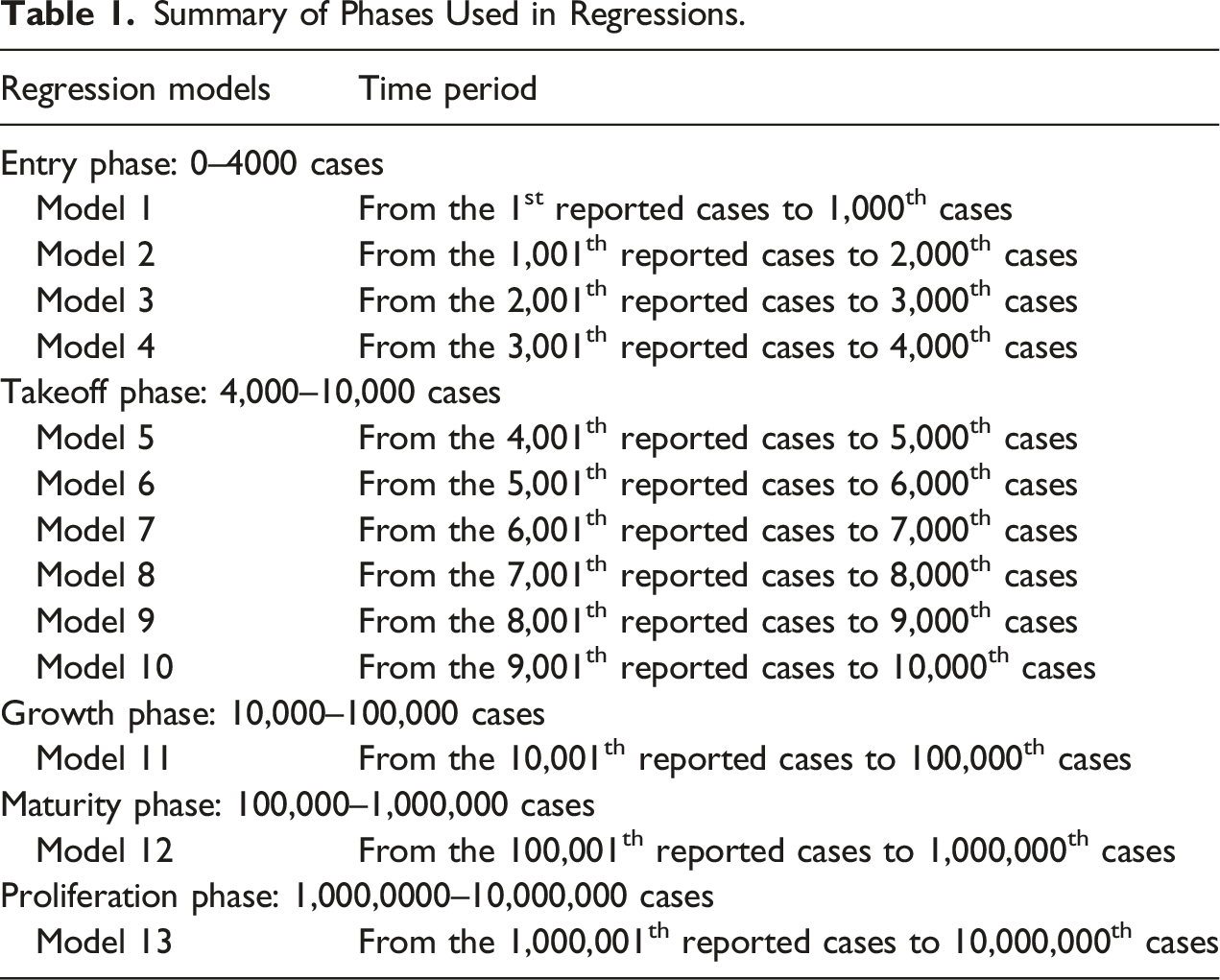
Summary of Phases Used in Regressions.
Descriptive Statistics for Study 1 Hofstede Analyses.
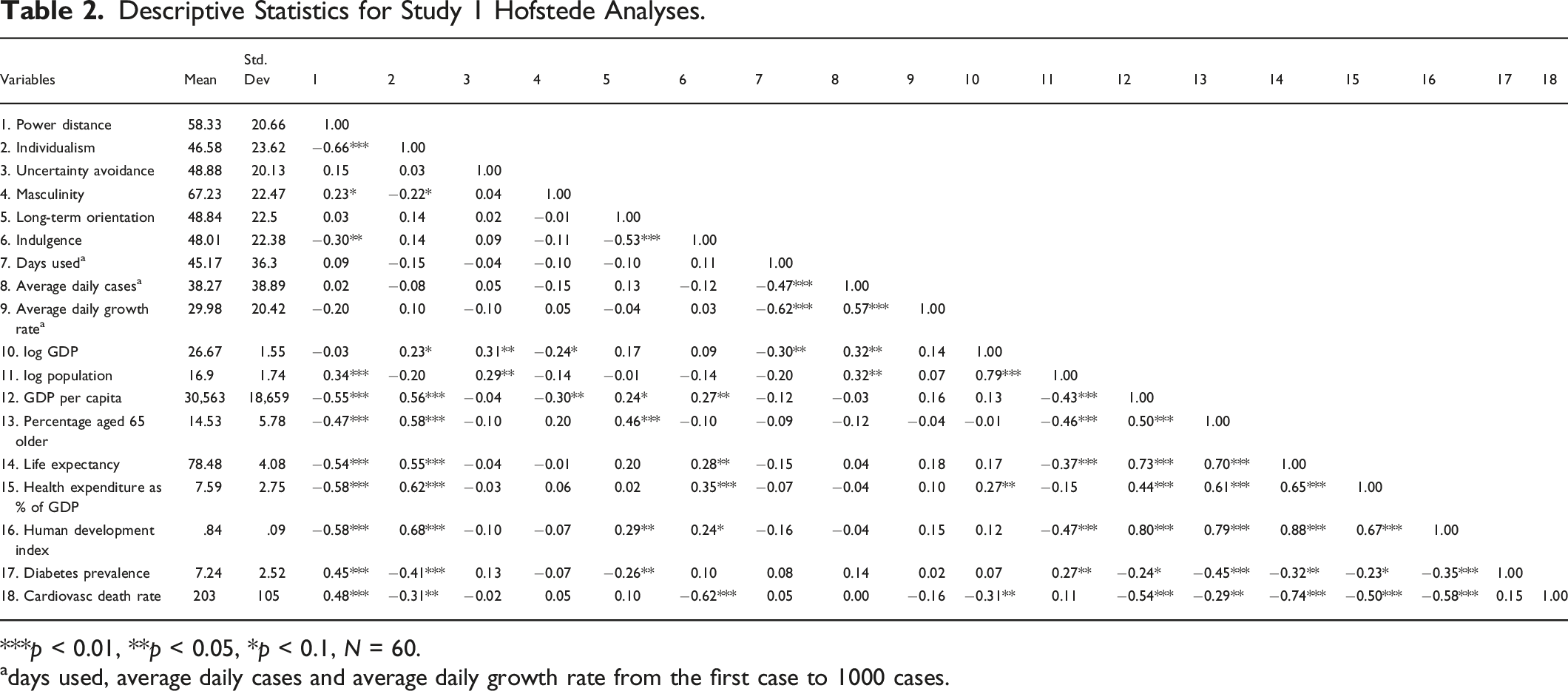
***p < 0.01, **p < 0.05, *p < 0.1, N = 60.
days used, average daily cases and average daily growth rate from the first case to 1000 cases.
Descriptive Statistics for Study 2 Globe Analyses.
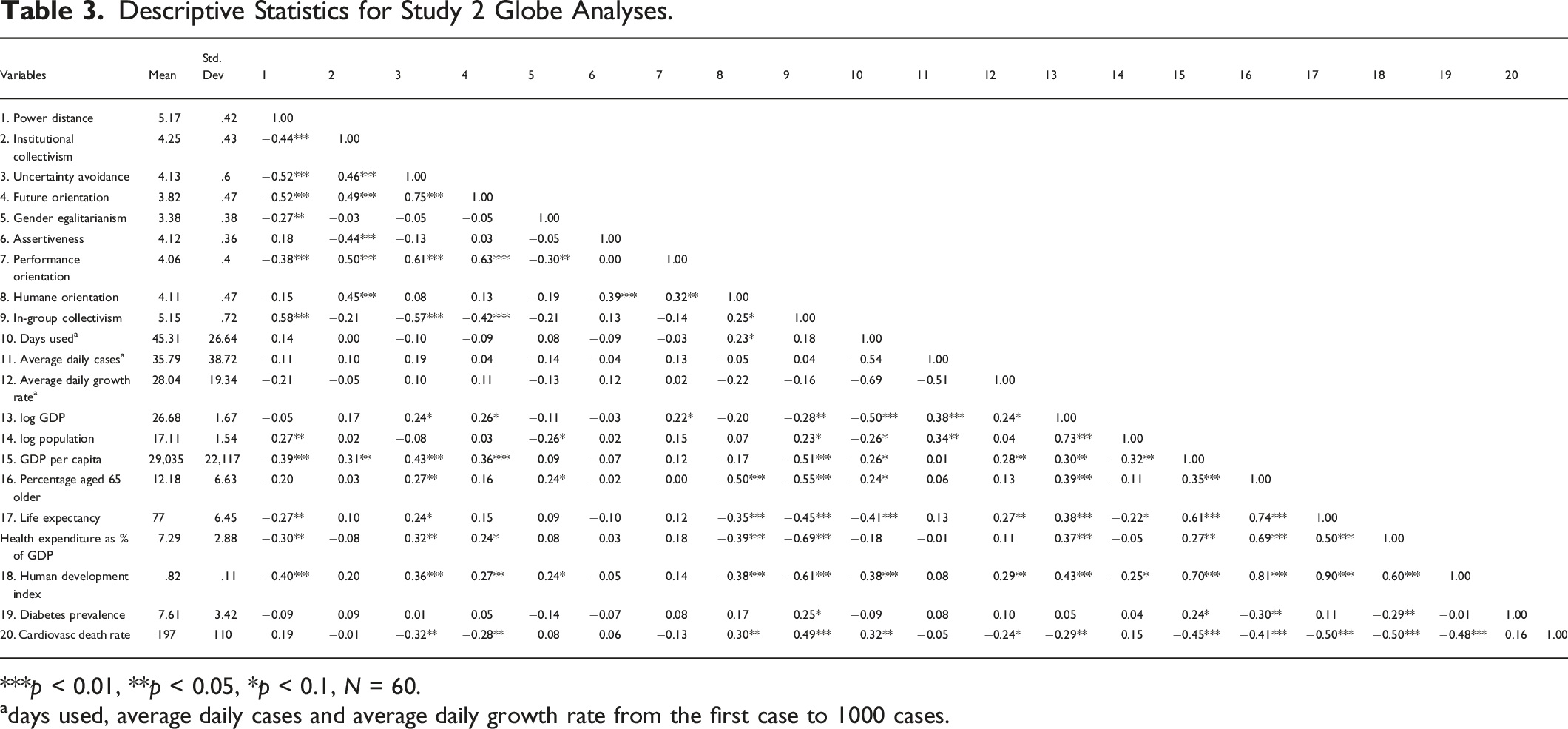
***p < 0.01, **p < 0.05, *p < 0.1, N = 60.
days used, average daily cases and average daily growth rate from the first case to 1000 cases.
Descriptive Statistics for Study 3 Cultural Tightness.
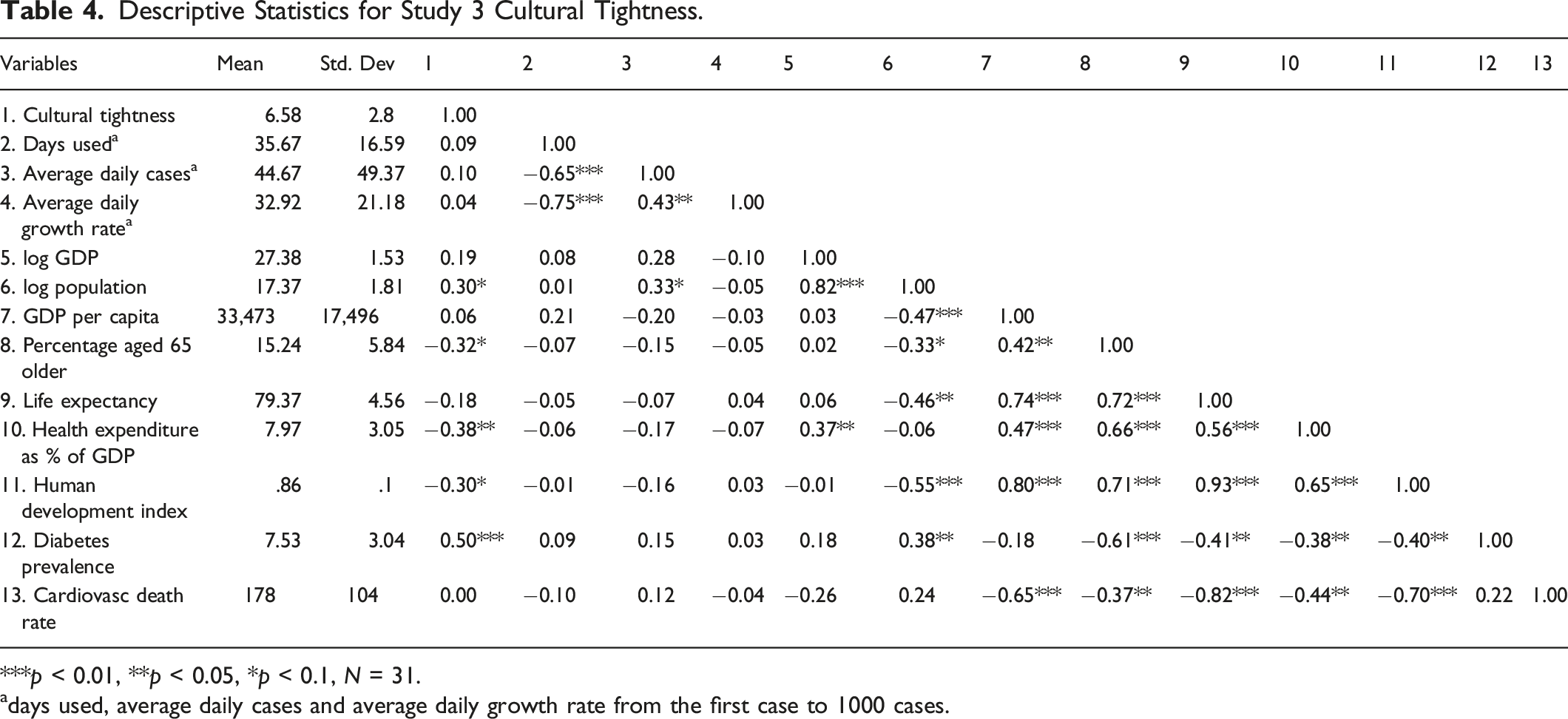
***p < 0.01, **p < 0.05, *p < 0.1, N = 31.
days used, average daily cases and average daily growth rate from the first case to 1000 cases.
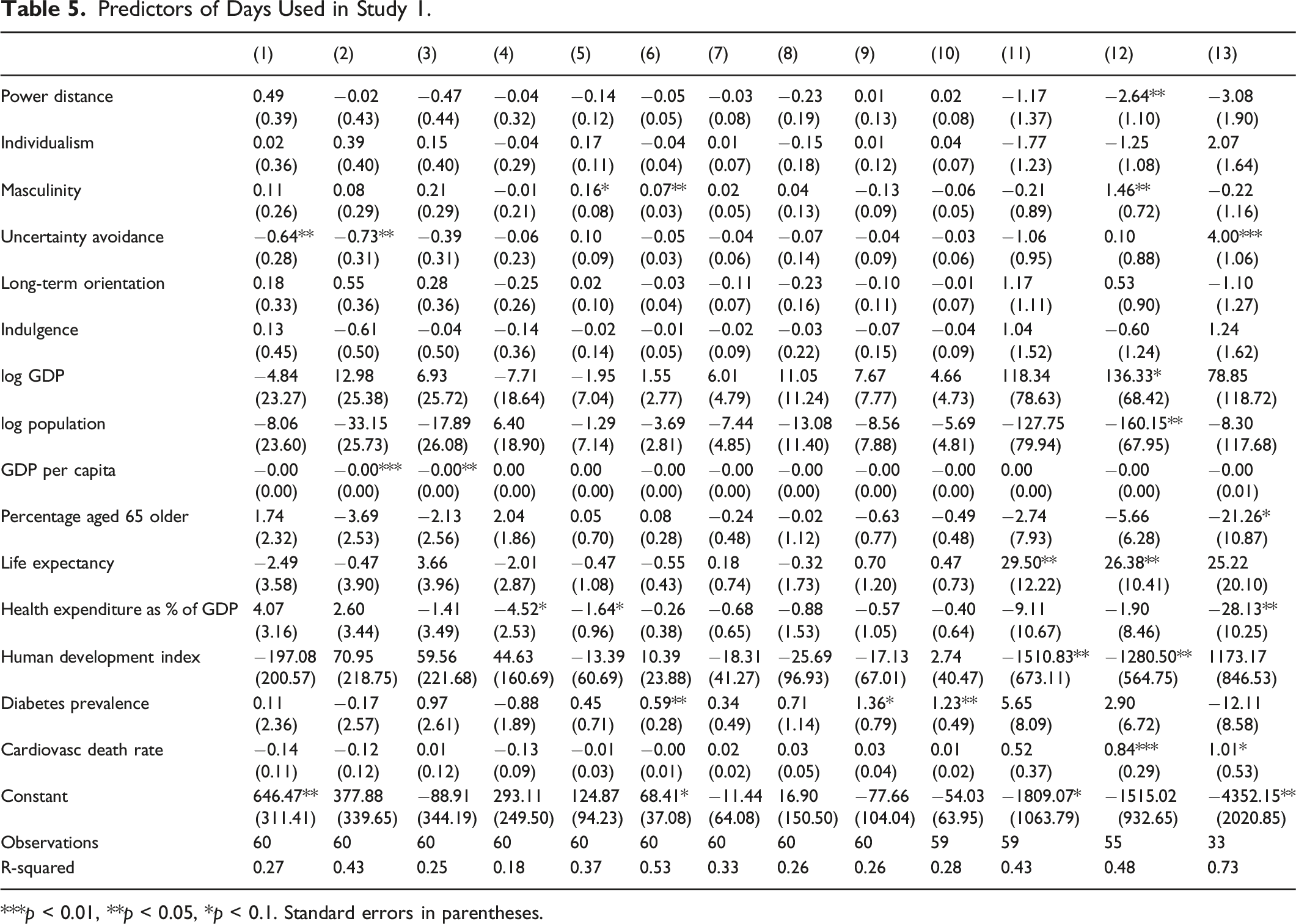
Predictors of Days Used in Study 1.
***p < 0.01, **p < 0.05, *p < 0.1. Standard errors in parentheses.
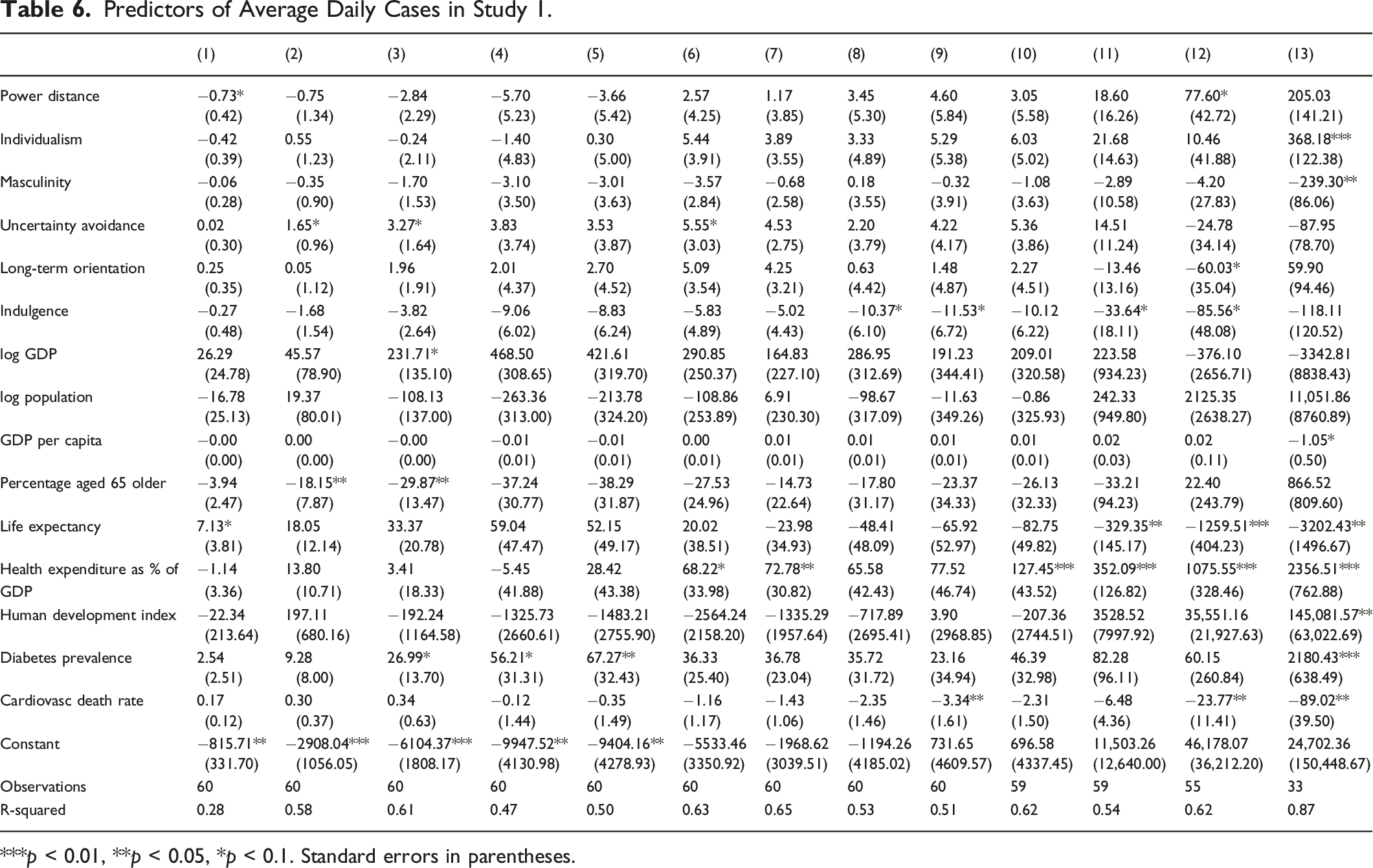
Predictors of Average Daily Cases in Study 1.
***p < 0.01, **p < 0.05, *p < 0.1. Standard errors in parentheses.
Predictors of Average Daily Case Growth Rates in Study 1.

***p < 0.01, **p < 0.05, *p < 0.1. Standard errors in parentheses.
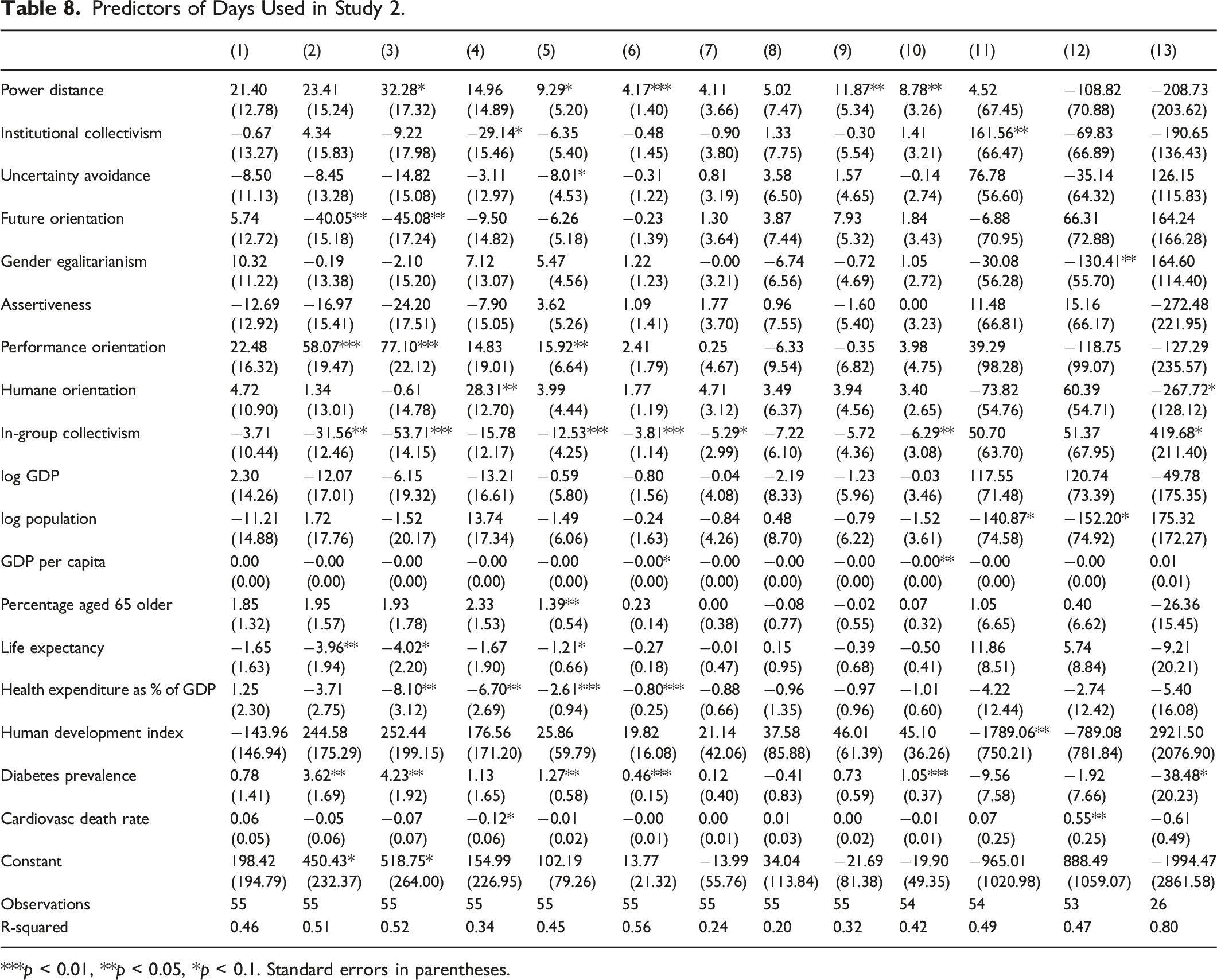
Predictors of Days Used in Study 2.
***p < 0.01, **p < 0.05, *p < 0.1. Standard errors in parentheses.
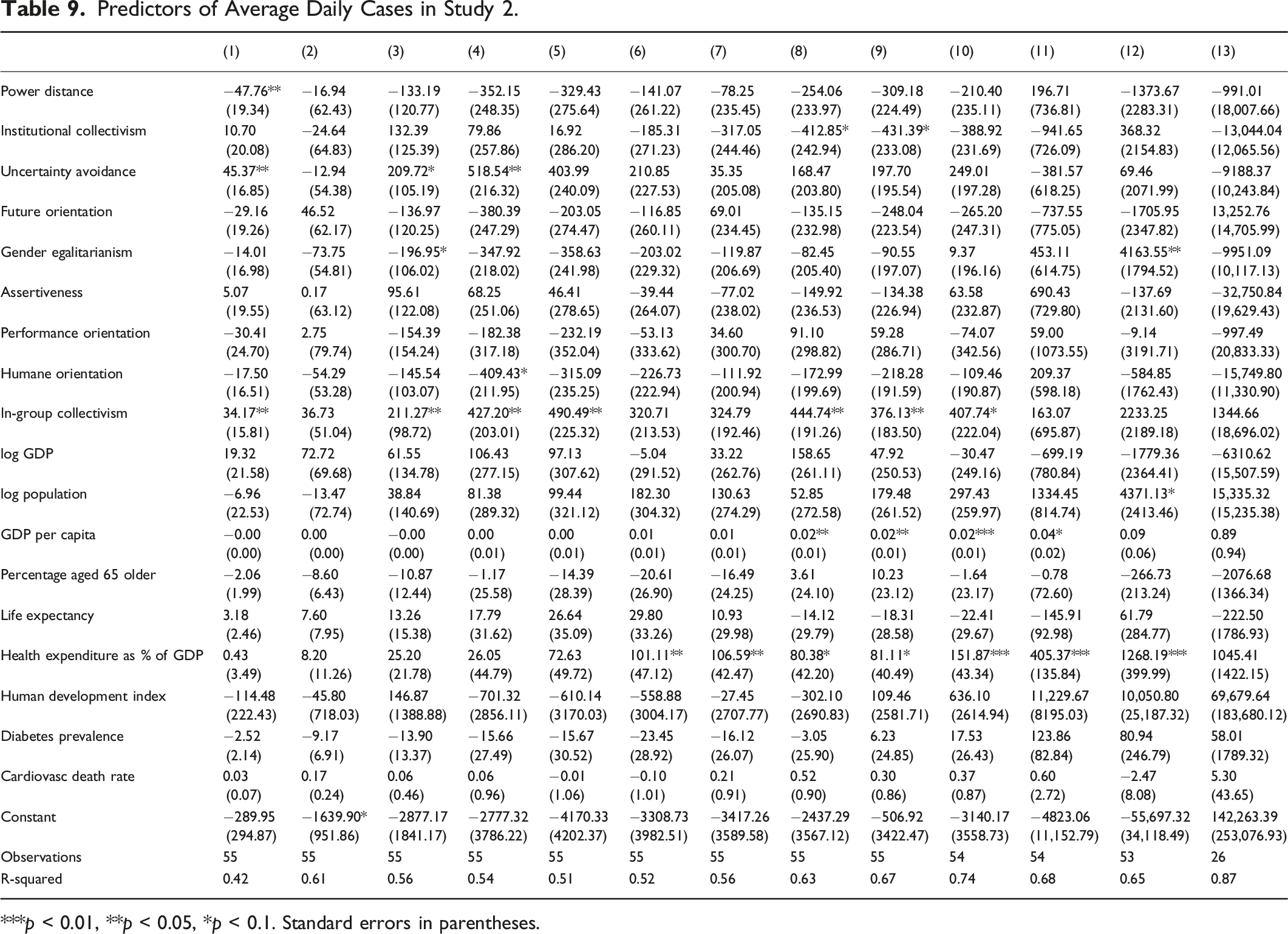
Predictors of Average Daily Cases in Study 2.
***p < 0.01, **p < 0.05, *p < 0.1. Standard errors in parentheses.
Predictors of Average Daily Case Growth Rates in Study 2.
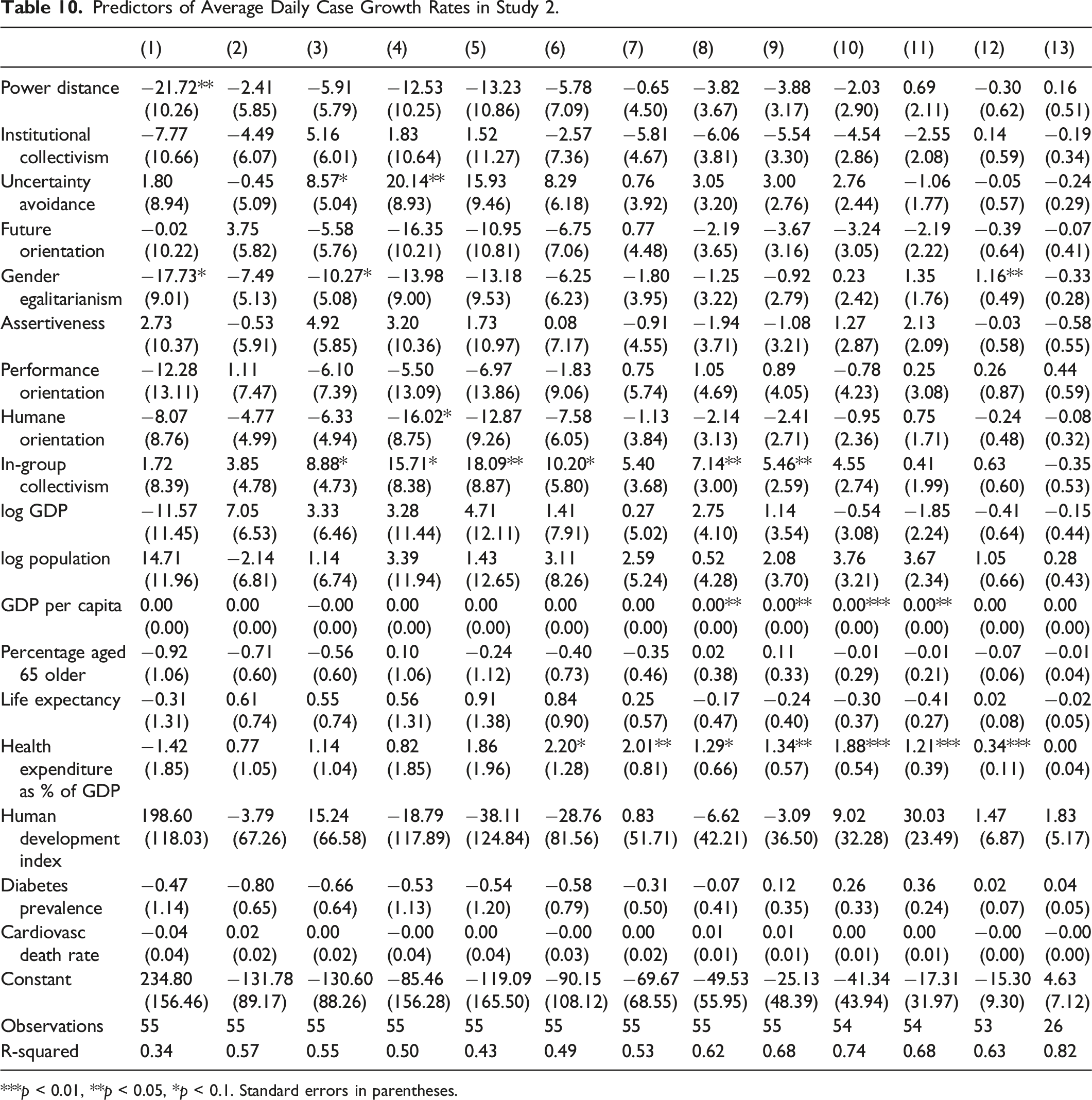
***p < 0.01, **p < 0.05, *p < 0.1. Standard errors in parentheses.
Predictors of Days Used in Study 3.
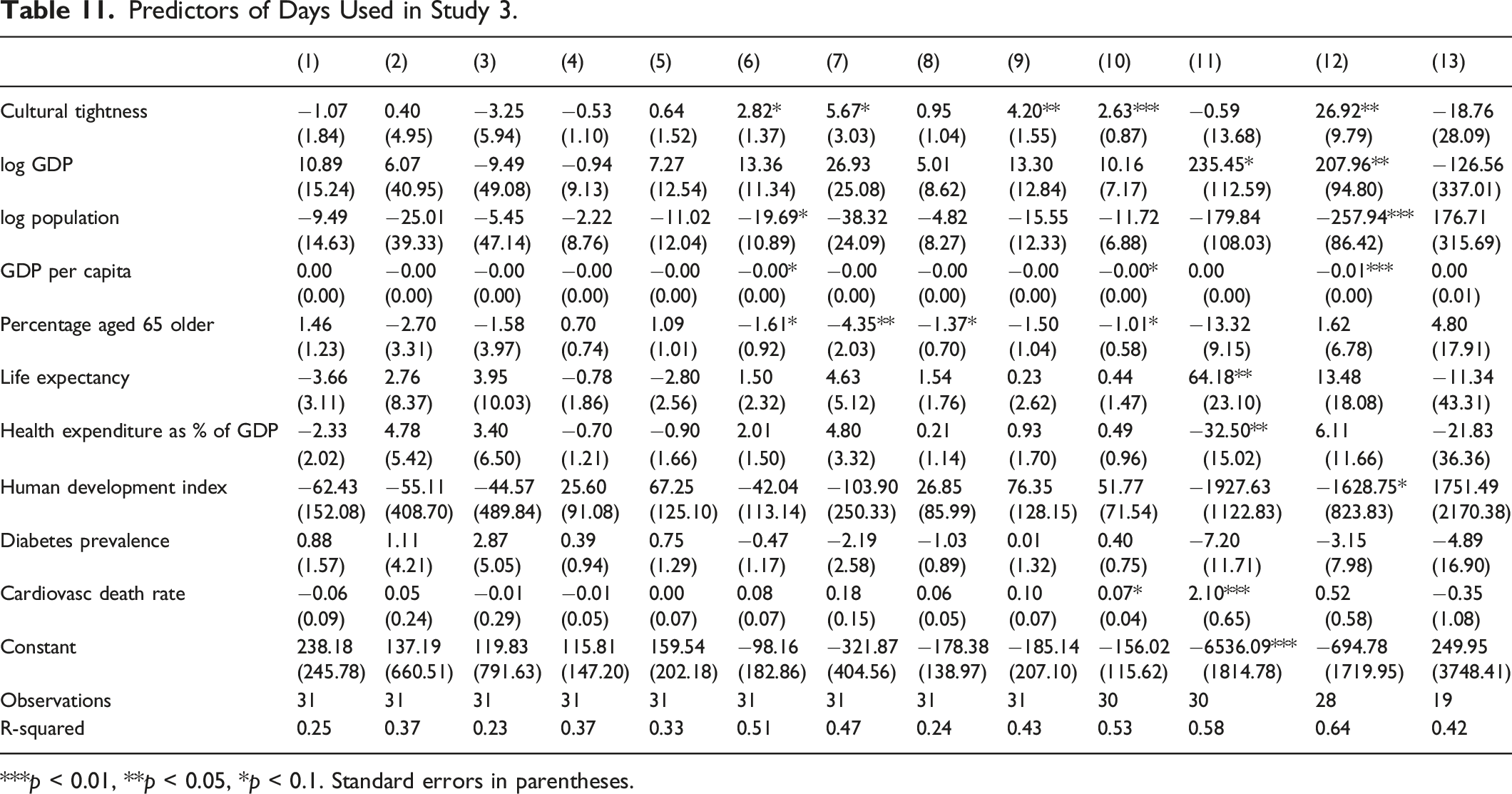
***p < 0.01, **p < 0.05, *p < 0.1. Standard errors in parentheses.
To rule out alternative explanations, we controlled for several important national socioeconomic, demographic, and health-related characteristics. GDP and GDP per capita are key economic indicators related to the number of COVID-19 cases (e.g., Pardhan & Drydakis, 2021). In this paper, GDP is the 2019 GDP measured in current U.S. dollars. GDP per capita is the 2019 GDP per capita. We also controlled for Human Development Index which is “a summary measure of average achievement in key dimensions of human development: a long and healthy life, being knowledgeable and have a decent standard of living,” measured by the “the geometric mean of normalized indices for each of three dimensions” (United Nations Development Programme, 2020) since it may influence the speed of the pandemic spread. We controlled for population which is the total number of people in the country since research shows that population is related to the number of COIVD-19 cases (e.g., Khan et al., 2021). We used log-transformed GDP and population in the regressions. We controlled for the percentage aged 65 older which refers to the percentage of people who are aged 65 years or older, since seniors are more suspectable to the virus and countries with higher proportion of seniors may experience faster spread of the pandemic. Lastly, we include key indicators of nations’ medical capability and relevant health-related variables which can influence how fast the virus spread. Life expectancy is the average age that people can expect to live, measured by the average age at which people die in a country. Health expenditure percentage measures the percentage of GDP a country spends on health. We controlled fro diabetes prevalence – the percentage of the population who have diabetes – since diabetes is shown to be positively related to COVID-19 infection (e.g., Singh et al., 2020). We also controlled for cardiovascular death rate which is the rate of death due to cardiovascular disease since it is positively related to the severity of COVID-19 (e.g., Kang et al., 2020).
Study 1
Method
Study 1 investigated how two of Hofstede’s national cultural dimensions – power distance and uncertainty avoidance – relate to the speed of COVID-19 spread. The scores on the six national cultural dimensions were obtained from Hofstede et al. (2010). All cultural dimension indices were measured on a 0-100 scale, with higher numbers representing great power distance, individualism, masculinity, uncertainty avoidance, long-term orientation, and indulgence. Each cultural dimension index was divided by 100 in this study.
Results
Tables 5–7 present the multivariate analyses results for our three dependent variables in Study 1: (1) number of days taken for the number of COVID-19 cases to grow from x cases to y cases and (2) average daily cases and (3) average daily case growth rate for that country during that period. In these analyses, we found limited support for Hypothesis 1 (model 1 in Table 6 and model 1 in Table 7), suggesting that power distance is negatively related to the speed of COVID-19 spread only at the very beginning of the COVID-19 pandemic (i.e., the period taken to reach 1000 cases in a particular country) and not in the later stages of the pandemic. The coefficients in other models were mostly in the hypothesized direction during the entry phase.
We also found support for Hypothesis 2, which posited that uncertainty avoidance is positively related to the speed of COVID-19 spread (models 1 and 2 in Table 5; models 2, 3, and 6 in Table 6; models 1, 3, and 7 in Table 7). While uncertainty avoidance did not have an across-the-board impact, it did play a noticeable role during the earlier phase of the COVID-19 lifecycle in a nation. Uncertainty avoidance was key to the rapid entry of COVID-19: It was negatively related to the average number of days from the first to the 2,000th case of COVID-19. It had a positive impact on average daily cases during the initial entry period and during the periods between the 1,001st and the 3,000th case and between the 5,001st and the 6,000th case. It also had a positive impact on the average daily case growth rates during the periods between (a) the first and the 1,000th case, (b) the 2,001st and the 3,000th case, and (c) the 6,001st and the 7,000th case. The coefficients in other models were largely in the predicted direction during the entry, take-off, and growth phases. Taken together, the results suggest that power distance only affects the speed of COVID-19 spread in the entry phrase, while uncertainty avoidance has more enduring effects which last through the entry, take-off, and growth phases of the pandemic.
Study 2
Method
In Study 2, we examined how four cultural practice dimensions studied in the GLOBE project – power distance, uncertainly avoidance, humane orientation, and in-group collectivism – relate to the speed of COVID-19 spread. The national culture data came from House et al. (2004). The GLOBE project expanded the five Hofstede dimensions into nine more refined categories. It retained Hofstede’s labels for power distance and uncertainty avoidance, changed Hofstede’s long-term orientation to future orientation, split Hofstede’s collectivism into institutional collectivism and in-group collectivism, divided Hofstede’s masculinity into gender egalitarianism and assertiveness, and added humane orientation and performance orientation as two distinct dimensions. The GLOBE practices measure a country’s culture “as it is” exhibited. Population weighted indices were used for Germany, South Africa, and Switzerland. In Study 2, the final sample consisted of 55 countries, of which 39 were the same as those used in Study 1 and 16 were different countries. The dependent variables and control variables were the same as in Study 1.
Results
Tables 8–10 present the multivariate regression results for Study 2. First, consistent with the findings of Study 1, we found support for Hypothesis 1, which posited that power distance is negatively related to the speed of COVID-19 spread (models 3, 5, 6, 9, and 10 in Table 8; model 1 in Table 9; model 1 in Table 10). Noticeably, power distance had positive impacts on the number of days used for five periods taken for the number of cases to grow from 2001 to 10,000 cases, considering the interval of every 1000 cases. As for the average daily cases and average daily case growth rates, power distance had a significant negative effect during the period of the first 1000 cases. The coefficients in other models were generally in the hypothesized direction during the entry, take-off, and growth phases.
Second, also consistent with the findings of Study 1, the results supported Hypothesis 2, which posited that uncertainty avoidance is significantly positively related to the speed of COVID-19 spread (model 5 in Table 8; models 1, 3, and 4 in Table 9; models 3 and 4 in Table 10). Uncertainty avoidance had a negative effect on the number of days taken for the number of cases to grow from 4001 to 5000 and a positive impact on average daily cases and average case growth rates during the early phase when COVID-19 cases were between 0 and 4000. The coefficients in other models were mostly in the predicted direction during the entry, take-off, and growth phases. Since Hofstede’s Uncertainty Avoidance Index is negatively correlated with GLOBE’s Uncertainty Avoidance practice scores (−0.61, p < 0.01: Hanges & Dickson, 2004, p. 140), these findings suggest that the results are robust regardless of the construct measurement variations.
Third, we found limited support for Hypothesis 3, which posited that humane orientation is negatively related to the speed of COVID-19 spread (model 4 in Table 8; model 4 in Table 9; model 4 in Table 10). Humane orientation was positively related to (a) the number of days taken for the number of cases to grow from 3001 to 4000 and (b) average daily cases and (c) average case growth rate during that period. The coefficients in the other models were largely in the expected direction during the entry, take-off, and growth phases.
Lastly, we found strong support for Hypothesis 4, which posited that in-group collectivism is positively related to the speed of COVID-19 spread (models 2, 3, 5, 6, 7, and 10 in Table 8; models 1, 3, 4, 5, 8, 9, and 10 in Table 9; models 3, 4, 5, 6, 8, and 9 in Table 8), suggesting that in-group collectivism has more lasting effects (i.e., up to the first 10,000 cases) than the other hypothesized cultural effects. In-group collectivism had a significant negative impact on the days taken for the number of COVID-19 cases to rise from 1001 to 10,000. For all three measures of the speed of COVID-19 spread, six out of the 10 coefficients, considering the interval of every 1000 cases, were significant. Most of the other coefficients of in-group collectivism were also in the expected direction.
Study 3
Method
Study 3 examined whether cultural tightness is negatively related to the speed of COVID 19 spread. We adopted the cultural tightness index from Gelfand et al. (2011) which systematically measures cultural tightness (as opposed to looseness). Sample items include “There are many social norms that people are supposed to abide by in this country”; “In this country, if someone acts in an inappropriate way, others will strongly disapprove”; and “People in this country almost always comply with social norms” (Gelfand et al., 2011). Our final sample consisted of 31 countries. A population weighted tightness index was used for Germany. The dependent variables and control variables were the same as in Study 1.
Results
Predictors of Average Daily Cases in Study 3.
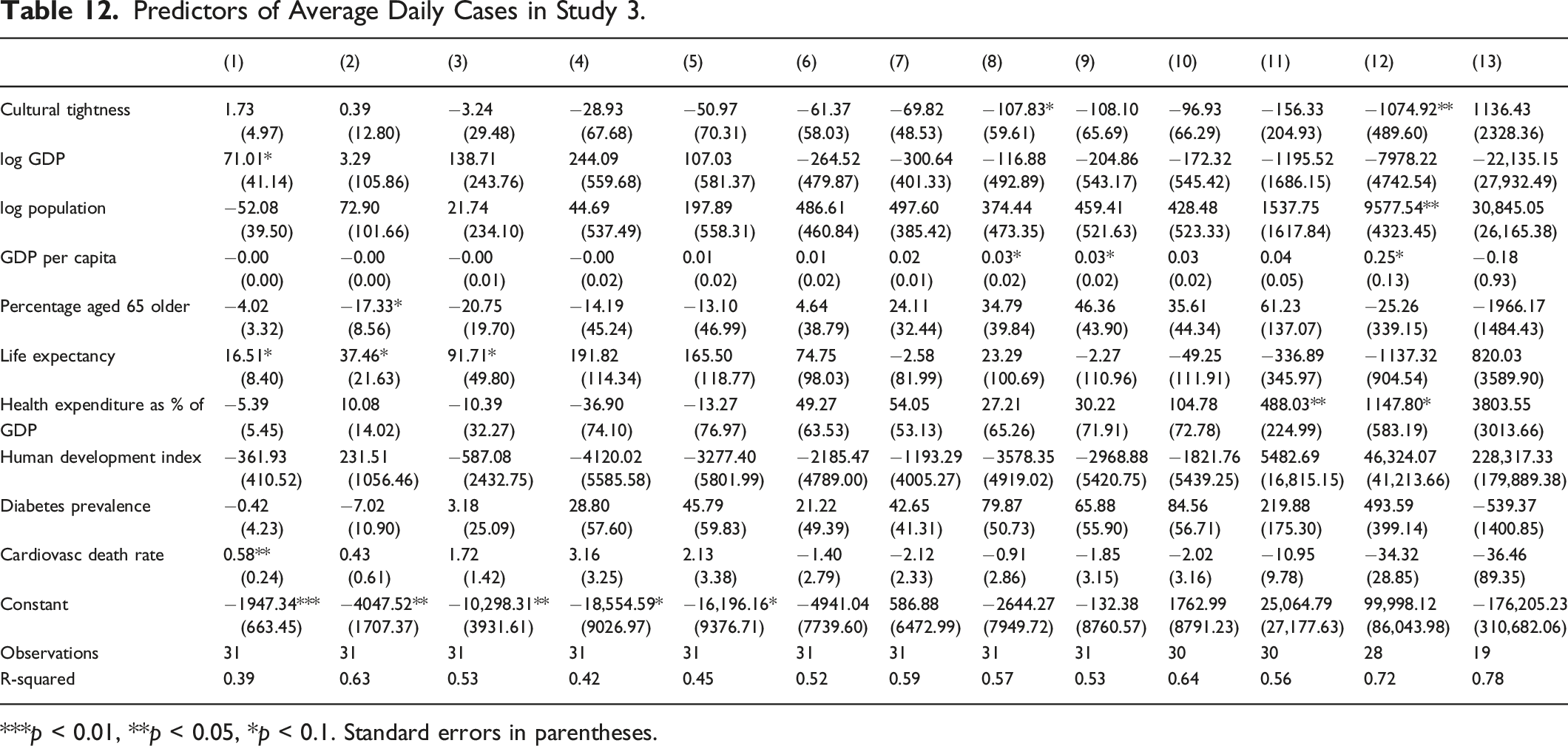
***p < 0.01, **p < 0.05, *p < 0.1. Standard errors in parentheses.
Predictors of Average Daily Case Growth Rates in Study 3.
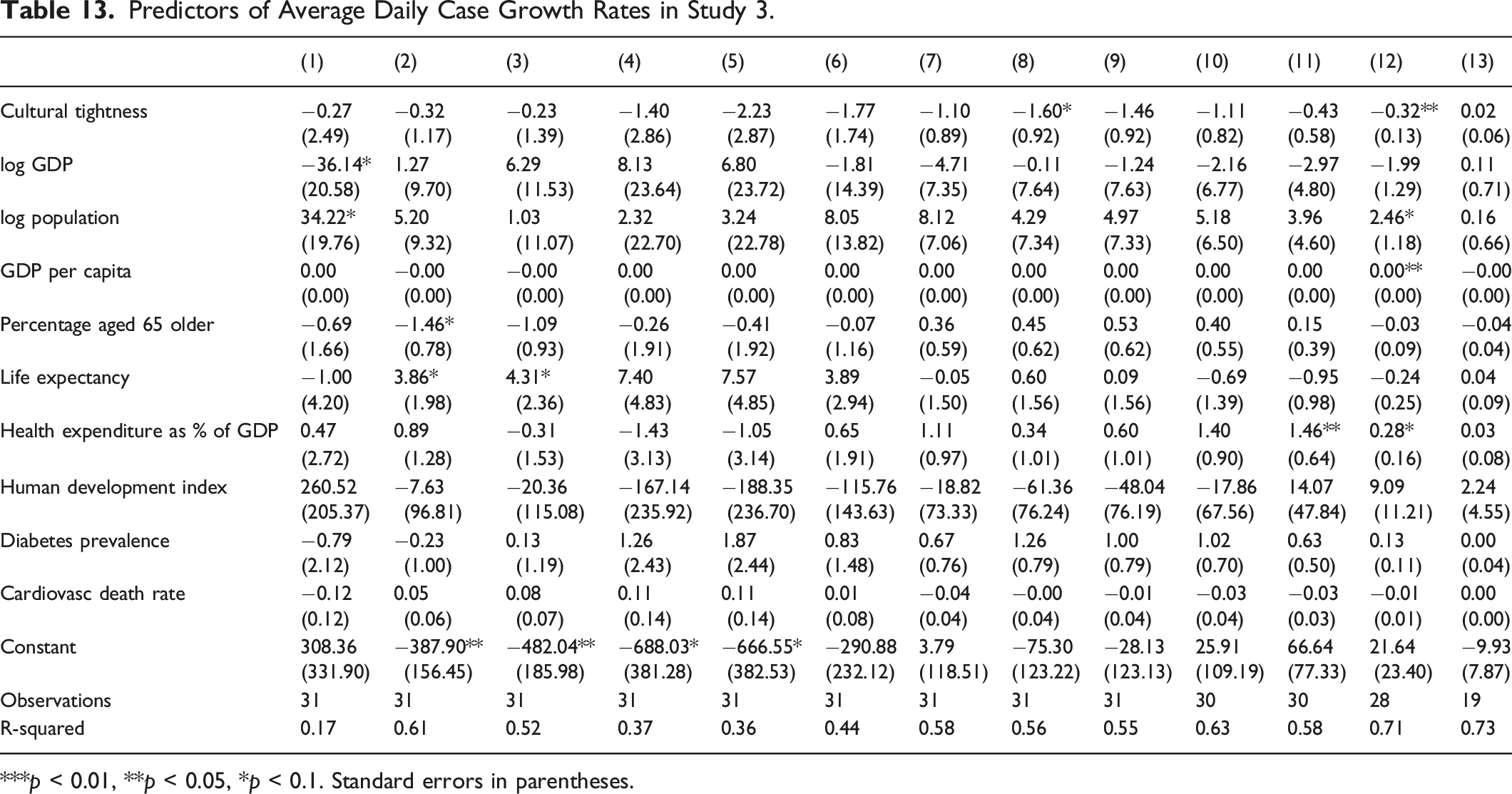
***p < 0.01, **p < 0.05, *p < 0.1. Standard errors in parentheses.
Discussion
General Discussion
Consistent with Hypothesis 1, we found that during both the entry and take-off phases, power distance practices slowed down the entry of COVID-19 up to the first 10,000 cases. Under novel conditions, people wait and watch for more information, paralyzed by the conceived uncertainty about the need for divergent behaviors. The personal authority of leaders helps to fill the consciousness void. People are open to following guidance from leaders when there is a risk to their life and health. Nevertheless, we found that nations where the societal culture supported the exercise of power by leaders and deference to the power of leaders were more effective in slowing the spread of COVID-19. Nations where the societal culture promoted a suspicious view of leaders witnessed a rapid spread of COVID-19, possibly because the leaders in these countries were more reluctant to exercise their power and the followers were also reluctant to adhere to the guidance issued by their leaders.
Supporting Hypothesis 2, we found that during the entry phase (i.e., up to the first 4000 cases), uncertainty avoidance practices were a catalyst of the higher caseload overall and the average cases per day. Uncertainty avoidance also led to the rapid entry and spread of COVID-19 up to the first 2000 cases. The nations where the societal culture supported the mitigation of uncertainty using appropriate techniques and technologies witnessed a rapid early spread of COVID-19. In such nations, people seek social validation of the data, information, and knowledge from trusted formal channels. Few trustworthy channels were available during the early phase of the spread of COVID-19. Formal networks tend to be liberal and to promote life-as-usual without any safeguards until sufficient data are available that signal the need for a divergent behavior. In contrast, the nations where the societal culture embraced uncertainty witnessed a slower spread of COVID-19 in the early phase. In such nations, people tend to rely on informal networks for making sense of novel conditions and managing the conceived uncertainty about the need for divergent behaviors. Informal networks “quickly gather high-resolution information and data. Neighborhood needs are rapidly assessed, support and failure points are known, and local knowledge is quickly disseminated” (Brugh et al., 2019).
Consistent with Hypothesis 4, we found that during the entry and take-off phases (i.e., up to the first 10,000 cases), in-group collectivism practices were a catalyst of the rapid entry and the average daily caseload. In the nations with societal cultures grounded in cohesive family and group ties, people were more vulnerable to a rapid spread of COVID-19 during both the entry and take-off phases. In contrast, in the nations with societal cultures grounded in weak family and group ties, people were less susceptible to a rapid spread of COVID-19 and to becoming super-spreaders during the entry and take-off phases.
Some recent studies have reported a positive impact of individualism on COVID-19 spread (Lu et al., 2021; Maaravi et al., 2021). Individualism refers to the extent to which tertiary societal institutions are weak, and people focus on their individual freedoms that may engender collective well-being (House et al., 2004) like in Eastern Europe (Gupta et al., 2004). In regions like Southern Asia, where tertiary institutions such as the non-government organizations and the media are strong, the people’s choices and freedom tend to be integrated with the spirit for collective good (Gelfand et al., 2004). Therefore, as a follow-up, we investigated the effect of individualism using Hofstede’s Individualism index and GLOBE’s institutional collectivism practices scale in Tables 5–10 respectively. Institutional collectivism practices mitigated the average daily case load during the take-off phase (effects are negative in all five models of take-off phase and significant in two). Additionally, Individualism catalyzed the average daily case load during the proliferation phase of more than a million cases.
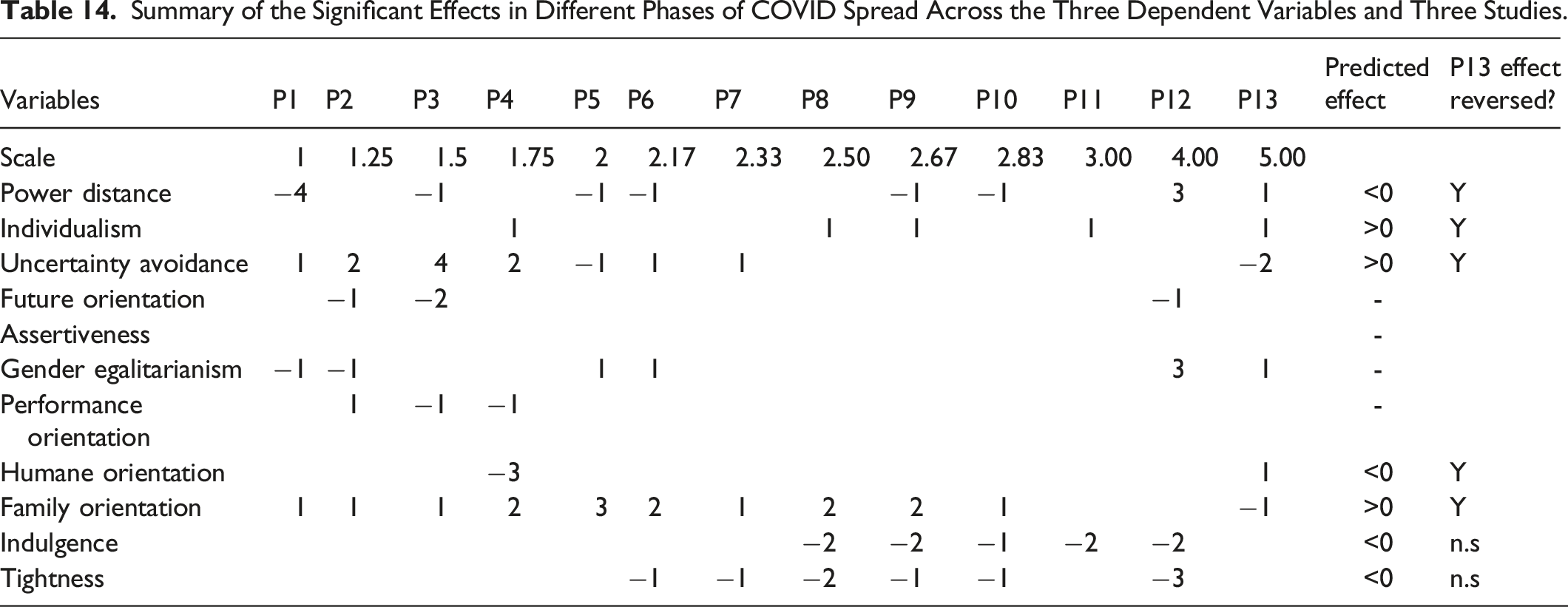
Supporting Hypothesis 5, we found that during the take-off phase (i.e., the period from the 4,001st to the 10,000th case), cultural tightness dampened COVID-19 penetration in a nation. During the maturity phase (i.e., the period from the 100,001st case to the 1,000,000th case), cultural tightness slowed the spread of COVID-19 and mitigated the average daily caseload. In nations with tight cultures, people formalize institutional codes over time and enforce those codes at all levels. Thus, during the maturity phase, cultural tightness significantly attenuated the spread of COVID-19. Figure 1 summarizes the effects over the spread phase across the five hypotheses. Table 14 presents the summary of the significant effects in different phases of COVID spread across the three dependent variables and three studies. Effects over spread phase. Summary of the Significant Effects in Different Phases of COVID Spread Across the Three Dependent Variables and Three Studies.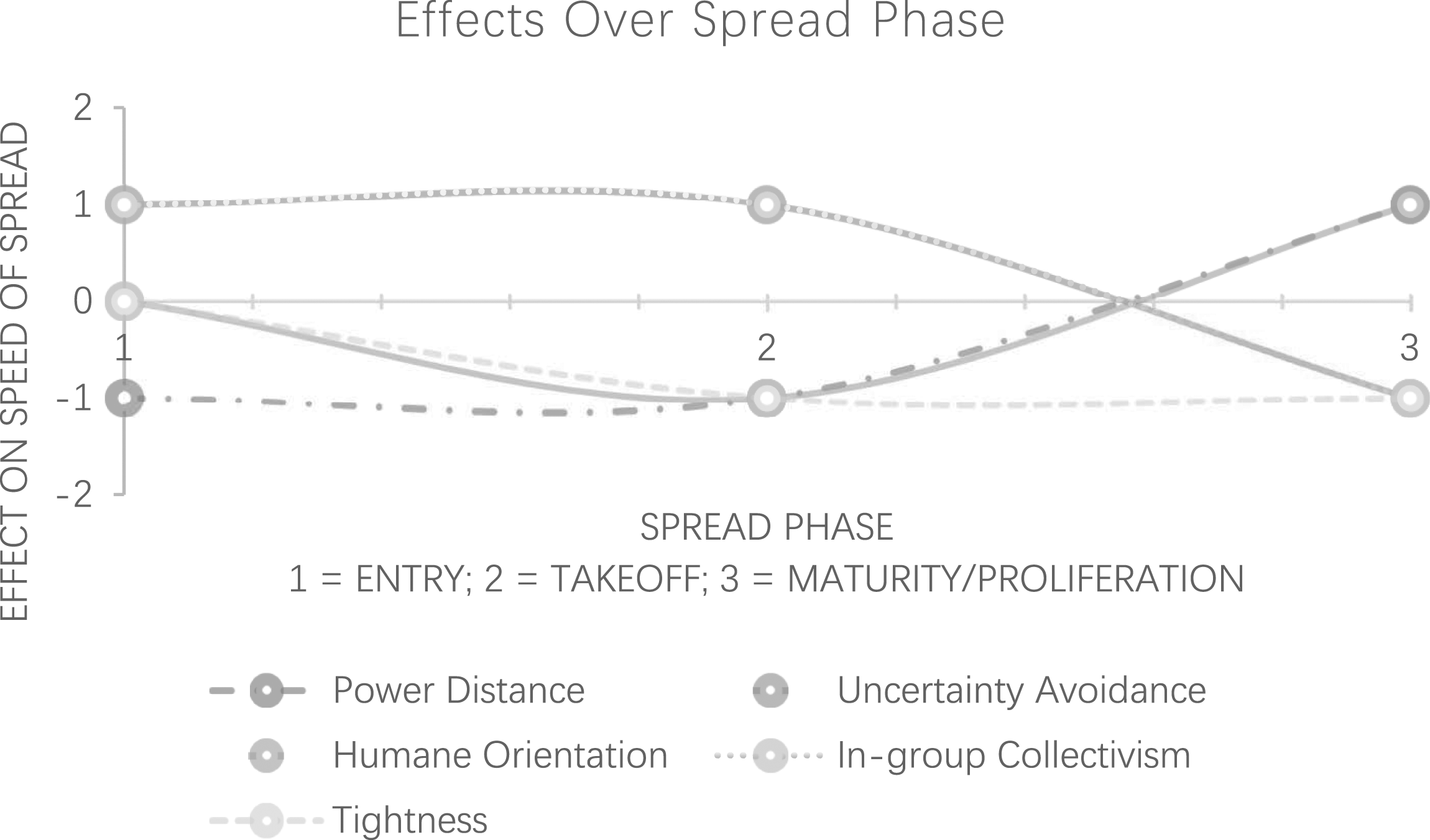
In summary, national culture played an important role in terms of galvanizing leaders into taking decisive actions and encouraging people to adopt “COVID-apt” behaviors during the entry and take-off phases that constituted the first wave of COVID-19. In large power distance cultures, leaders are likely to offer their guidance and followers tend follow that guidance to mitigate the effects of the novel conditions. In strong uncertainty avoidance cultures, leaders tend to offer their guidance until sufficient data were available and followers may not follow the guidance until a sufficient number of people had experienced the effects of the novel conditions themselves. The cultural factor also influenced the institutional entrepreneurship of people in becoming the infecting super-spreaders or the infected victims during the first wave of COVID-19. Family and in-group collectivism encouraged people to continue enjoying their freedom to interact with different groups. In-group interactions limited the power of people to self-manage the risks of contagion during the entry and take-off phases. Overall, in absence of leader-centric risk-mitigation and COVID appropriate behavioral clarification and enforcement, group orientation and cultural looseness accelerated the COVID-19 spread during the early stages.
Cultural factors did not play a prominent role during the growth phase. By this time, sufficient data were available for people to make conscious decisions and to follow COVID-apt behaviors, even in low power distance nations. Further, even in weak uncertainty avoidance nations, adequate knowledge existed in the informal networks to lead people to exercise caution, whether they trusted the data or not. Additionally, sufficient time was available for social networks to become digital as people worried about the life and health of their loved ones even in in-group collectivism cultures. Cultural factors again became salient during the maturity phase, where some nations experienced their second wave of COVID-19. Cultural tightness played a key role in societies formalizing the norms of COVID-apt behaviors and in universalizing them religiously through everyone’s efforts.
This study has important practical implications. Following earlier research suggesting that there are significant cultural differences among various racial and ethnic groups within a nation (e.g., Coon & Kemmelmeier, 2001), this study helps to explain why people of different racial and ethnic groups are affected differently by the COVID-19 pandemic in multicultural societies such as the United States. For instance, APM Research Lab (2021) showed that the COVID-19 death rate for White Americans is 40.4 deaths per 100,000; the corresponding rates for African Americans, Hispanic Americans, and Asian Americans are 88.4, 54.4, and 36.4, respectively in the beginning of the pandemic. Culture may explain the racial differences beyond economic and political reasons, since people from different cultures may act differently in terms of social distancing, avoiding social gatherings, and wearing masks. For example, high in-group collectivism might explain the faster spread of the coronavirus among Hispanics, while high power distance may explain the slower spread of COVID-19 among Asian Americans. Policy makers should consider the cultural differences among countries and among diverse racial and ethnical groups in multicultural societies when designing and implementing COVID-19 contagion management policies and practices.
Limitations and Future Research
We recognize the limitations of this research. We adopted a phased approach, dividing the data into 13 periods, making the results suspectable to Type 1 error. To control for Type I error (see Edwards, 2001), we divided the nominal p value of .05 by the number of models examined (i.e., 13), yielding a critical p value of .003,846. Results remain robust at this critical p value. Further, while we show that cultural dimensions measured earlier (Gelfand et al., 2011; Hofstede, 2010; House et al., 2004) predict pandemic management during the 2019–2021 period, there is a further need to examine the causal mechanisms through which cultural dimensions generate these effects using multisource, multi-wave research designs. There is a need to measure and evaluate the paths through which the cultural effects materialize, as without knowledge of these effects, decision makers are likely to persist with culturally correlated biases and may not be conscious of the cultural factors that are shaping and binding their rationality. Moreover, as many studies have noted the dynamic nature of national cultures (e.g., Beugelsdijk & Welzel, 2018; Inglehart, 1990, 1997; Inglehart & Welzel, 2005), we recommend that future studies reexamine the effects of national culture on the speed of COVID-19 spread with updated cultural indexes. Research over the past 30 years has highlighted how power is becoming more decentralized (e.g., Triesman, 2007); people are relying more on data, information, and knowledge; and the world is becoming increasingly socially networked for managing the flow of knowledge and decentralized powers (e.g., Kushlev et al., 2017). Our findings suggest that these global cultural factors may have been a key catalyst for the rapid entry and take-off of COVID-19 across the world. Decentralized power, data orientation, and social networks make people more sensitive to emerging situations. The negative factors may get amplified before sufficient data are available about their negativity. Thus, the benefits of data-based knowledge may be attenuated. Further, when sufficient data are available, not all societies may be prepared to translate them into norms to be universally followed. For instance, for some groups, the imperative to safeguard their livelihoods in the face of weak social security may override the norms of COVID-apt behaviors. Additionally, even when societies translate the knowledge into normative codes, people may become lax after a while. Therefore, further research is needed to understand these behavioral tendencies and develop appropriate educational methods for promoting healthy behaviors.
There is also a need to further understand the cultural dimensions of the proliferation phase. Table 5.6 summarizes the significant effects across the three dependent variables and the three studies. This table suggests that national culture influenced the speed of the spread of COVID-19 in expected direction during the early stages; the direction reversed during the proliferation phase (above 1 million cases) for power distance, uncertainty avoidance, humane orientation, in-group collectivism, as well as individualism. In case of tightness, the effects were not significant during the proliferation phase. Additionally, although not hypothesized, future orientation had a negative impact on the speed of spread during the entry and growth phases, possibly due to proactive planning. Gender egalitarianism had a negative impact during the entry phase, but positive during the takeoff, maturity, and proliferation phases possibly because of the stronger risk of contagion when both men and women are equally active in diverse spheres. Indulgence had a negative impact during the takeoff, growth, and maturity phases. Indulgence is related to enjoying life and being happy Hofstede et al., (2010). People in the Indulgence cultures like Latin America indulge themselves with the emergent social situations, enjoying that as a virtual medium of entertainment for watching how others fall victim to the unexpected situations and being happy that they have gained the knowledge to save themselves from the same, adverse fate. There is a need for studies that consider these additional dimensions as well.
Conclusions
Why does COVID-19 spread faster in certain nations than in others? Although the political and economic differences among countries and the differential government interventions can significantly influence how fast the coronavirus spreads, we show that national cultural dimensions – power distance, uncertainty avoidance, humane orientation, in-group collectivism, and tightness – are significant predictors of the speed of COVID-19 spread at the beginning of the pandemic and should not be overlooked. In this research, we systematically examined the effects of national culture across 78 countries in three studies. The results collectively indicate that national culture significantly influences the speed of COVID-19 spread at the beginning of the pandemic but not in the later stages. We find that power distance, humane orientation, and cultural tightness are negatively related to the speed of COVID-19 spread, while uncertainty avoidance and in-group collectivism are positively related to speed of the disease spread at the beginning of the pandemic. We also show that compared with other cultural dimensions, cultural tightness has more lasting effects since it is significantly related to the speed of coronavirus spread up to the first 1,000,000 cases in a country.
Footnotes
Declaration of Conflicting Interests
The author(s) declared no potential conflicts of interest with respect to the research, authorship, and/or publication of this article.
Funding
The author(s) disclosed receipt of the following financial support for the research, authorship, and/or publication of this article: This work was supported by the National Social Science Foundation of China (No.22BGL140).

Appendix
Variable Definitions. *Our World COVID-19 dataset, provided by the European Centre for Disease Prevention and Control (ECDC).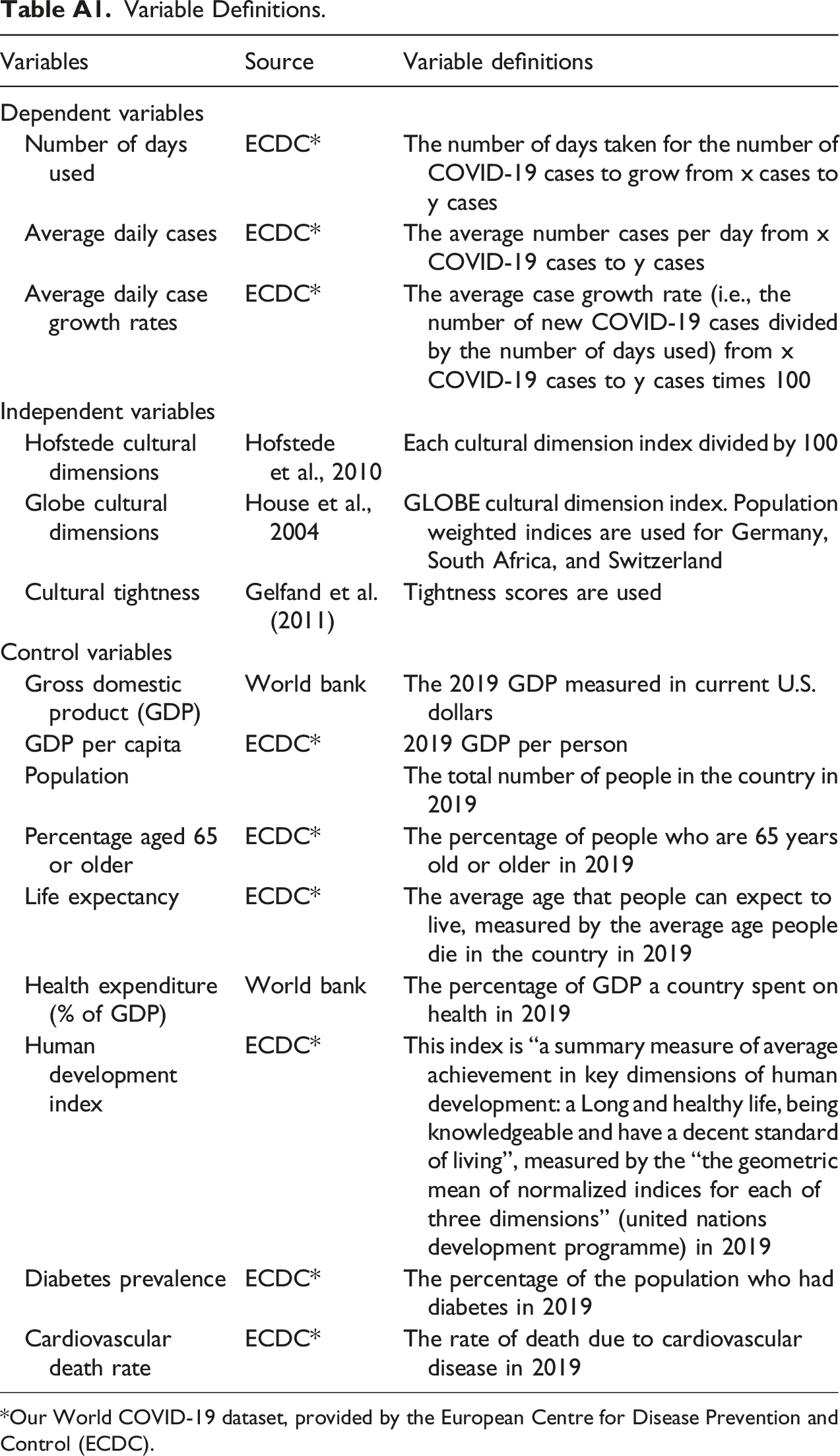
Variables
Source
Variable definitions
Dependent variables
Number of days used
ECDC*
The number of days taken for the number of COVID-19 cases to grow from x cases to y cases
Average daily cases
ECDC*
The average number cases per day from x COVID-19 cases to y cases
Average daily case growth rates
ECDC*
The average case growth rate (i.e., the number of new COVID-19 cases divided by the number of days used) from x COVID-19 cases to y cases times 100
Independent variables
Hofstede cultural dimensions
Hofstede et al., 2010
Each cultural dimension index divided by 100
Globe cultural dimensions
House et al., 2004
GLOBE cultural dimension index. Population weighted indices are used for Germany, South Africa, and Switzerland
Cultural tightness
Gelfand et al. (2011)
Tightness scores are used
Control variables
Gross domestic product (GDP)
World bank
The 2019 GDP measured in current U.S. dollars
GDP per capita
ECDC*
2019 GDP per person
Population
The total number of people in the country in 2019
Percentage aged 65 or older
ECDC*
The percentage of people who are 65 years old or older in 2019
Life expectancy
ECDC*
The average age that people can expect to live, measured by the average age people die in the country in 2019
Health expenditure (% of GDP)
World bank
The percentage of GDP a country spent on health in 2019
Human development index
ECDC*
This index is “a summary measure of average achievement in key dimensions of human development: a Long and healthy life, being knowledgeable and have a decent standard of living”, measured by the “the geometric mean of normalized indices for each of three dimensions” (united nations development programme) in 2019
Diabetes prevalence
ECDC*
The percentage of the population who had diabetes in 2019
Cardiovascular death rate
ECDC*
The rate of death due to cardiovascular disease in 2019
List of Included Countries. *Population weighted measures are used.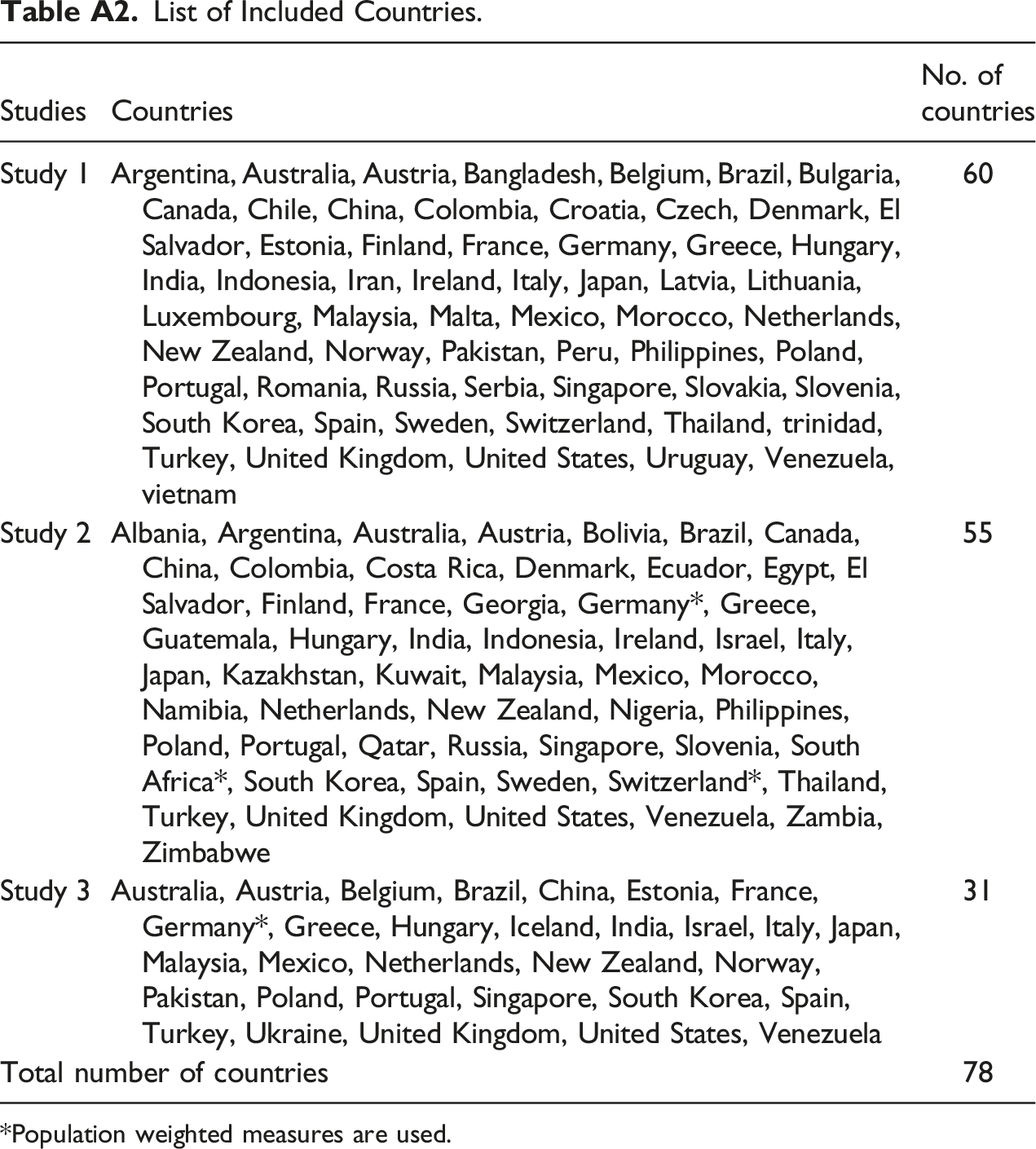
Studies
Countries
No. of countries
Study 1
Argentina, Australia, Austria, Bangladesh, Belgium, Brazil, Bulgaria, Canada, Chile, China, Colombia, Croatia, Czech, Denmark, El Salvador, Estonia, Finland, France, Germany, Greece, Hungary, India, Indonesia, Iran, Ireland, Italy, Japan, Latvia, Lithuania, Luxembourg, Malaysia, Malta, Mexico, Morocco, Netherlands, New Zealand, Norway, Pakistan, Peru, Philippines, Poland, Portugal, Romania, Russia, Serbia, Singapore, Slovakia, Slovenia, South Korea, Spain, Sweden, Switzerland, Thailand, trinidad, Turkey, United Kingdom, United States, Uruguay, Venezuela, vietnam
60
Study 2
Albania, Argentina, Australia, Austria, Bolivia, Brazil, Canada, China, Colombia, Costa Rica, Denmark, Ecuador, Egypt, El Salvador, Finland, France, Georgia, Germany*, Greece, Guatemala, Hungary, India, Indonesia, Ireland, Israel, Italy, Japan, Kazakhstan, Kuwait, Malaysia, Mexico, Morocco, Namibia, Netherlands, New Zealand, Nigeria, Philippines, Poland, Portugal, Qatar, Russia, Singapore, Slovenia, South Africa*, South Korea, Spain, Sweden, Switzerland*, Thailand, Turkey, United Kingdom, United States, Venezuela, Zambia, Zimbabwe
55
Study 3
Australia, Austria, Belgium, Brazil, China, Estonia, France, Germany*, Greece, Hungary, Iceland, India, Israel, Italy, Japan, Malaysia, Mexico, Netherlands, New Zealand, Norway, Pakistan, Poland, Portugal, Singapore, South Korea, Spain, Turkey, Ukraine, United Kingdom, United States, Venezuela
31
Total number of countries
78