



Abstract
The purpose of the present article is to consider optimal trade policies for biofuels, taking into account the potential for carbon leakage and the complex set of policies used or discussed for biofuels. First, the authors consider the case of optimal trade policies and find that the combination of an import standard and a border carbon adjustment welfare dominates using only a border carbon adjustment (BCA). The import standard should be set such that the emissions per unit of output is as if the foreign biofuels industry were subject to the globally optimal green house gas (GHG) emission tax. Second, the authors study the same trade policies in the context of a blending mandate, which significantly alters the way the market works. Given the suboptimal implementation of a blending mandate, the optimal BCA depends on the domestic subsidy to biofuels production. High levels of subsidies may in fact imply a negative BCA; that is, the optimal policy would be to subsidize imports.
Introduction
There is an established consensus that greenhouse gas (GHG) emissions caused by human activities are warming the globe (Intergovernmental Panel on Climate Change [IPCC], 2007; Oreskes, 2004). The transport sector is a major contributor of GHG emissions. From 1990 to 2004, its total share of emissions in EU 25 grew from 17% to 24% (European Environment Agency [EEA], 2006). On a global scale, more than 20% of the world’s GHG emissions come from transport (United Nations Framework Convention on Climate Change [UNFCCC], 2009). These numbers are expected to grow in the years to come, partly because there are currently few alternatives to the conventional internal combustion engine–based on fossil fuels, and partly because of the expected increase in the number of vehicles, which in turn is the result of increasing income (Chow, Kopp, & Portney, 2003). Hence, there is a great demand for low-carbon fuels to replace the currently dominating fossil fuels. Biofuels provide an interesting set of opportunities to combat GHG emissions and are generating an increasing interest worldwide.
Biofuels refer to either ethanol made from fermenting sugar or starch or biodiesel made from oily plants. While ethanol replaces gasoline, biodiesel replaces conventional diesel. Given proper land use (Fargione, Hill, Tilman, Polasky, & Hawthorne, 2008; Searchinger et al., 2008), net emissions can be reduced as biofuels replace fossil fuels. Life-cycle analysis suggest that replacing gasoline with Brazilian sugarcane ethanol could result in emission reductions of 70% to 110%. 1 Biofuels are interesting to industrialized countries since the technology is nearly ripe. Ethanol made from sugarcane has from time to time been able to compete with gasoline depending on the prices of oil and sugar (Kojima et al., 2007). Moreover, the industry is optimistic about producing ethanol from cellulose competitively. This has the potential of reducing the costs of producing ethanol by more than 50% within 20 years (Hamelinck & Faaij, 2006), which would greatly enhance the chances of biofuels replacing fossil fuels on a larger scale in the future.
The European Union has stated an ambition to take a lead in biofuel deployment, and common goals for consumption have been made within the framework of the EU biofuels policy. The Biofuels Directive (European Commission [EC], 2003) set a target value of 5.75% biofuels of the total energy consumption in transport by 2010, and in the Renewable Energy Road Map (2006), the member states agreed on a minimum binding target of 10% market share for biofuels by 2020. However, if the targets are reached through imports, carbon leakage may become a problem. As the EU increases its use of biofuels, GHG emissions may increase from areas outside the EU, most notably from mid-income and poor countries that do not have binding restrictions on carbon emissions but may have great potential for producing biofuels. Today, the EU has a tariff on biofuel imports from some countries, 2 and further, in order to maximize the GHG emission reductions from the replacement of fossil fuels by biofuels, the EU is considering a certification scheme for biofuels.
The purpose of the present article is to consider optimal trade policies for biofuels, taking into account the potential for carbon leakage and the complex set of policies used or discussed for biofuels. There are several recent contributions on biofuels (see Moschini, Lapan, Cui, & Cooper, 2010, and their references), but these mainly relate to the United States and give little attention to the specific aspect of trade. The issue of trade policies to prevent carbon leakage in general has been treated by Hoel (1996) and Maestad (1998, 2001). Our analysis confirms some of the central results from this literature. First, it is efficiency enhancing from a global point of view to use border carbon adjustment (BCA) on import of biofuels to the extent that their production entails GHG emissions, and these emissions are not subject to any climate policy. Second, supporting a local biofuel industry either by production subsidies or by less stringent environmental regulation in order to “level the playing field” is not advisable.
We extend the analysis and include the possibility for GHG emissions abatement, which allows us to look at biofuel import standards. We show that an import standard should be set such that the emissions per unit of output is as if the foreign biofuels industry were subject to the globally optimal GHG emission tax. Moreover, the BCA should still be positive and equal to the marginal environmental damage from the last unit of output exported. The combination of a BCA and an import standard yields a welfare improvement compared to the case when only the BCA is used. As far as we know, these are all new results.
Our theoretical results face at least two serious challenges if applied to real-world conditions. First, monitoring and enforcement of an optimal import standard may be costly and partly offset the gains. Second, in case the exporting country also has production of biofuels for domestic usage, exporting firms have an incentive to export “low emission biofuels” and sell “high emission biofuels” to their domestic market, a problem known as shuffling (Bushnell, Peterman, & Wolfram, 2008). However, shuffling can be counteracted by applying the standard to the whole biofuels production in the exporting country, which is the case we analyze.
Furthermore, we explore the scope for misusing a BCA aimed at reducing carbon leakage. If trade policies are set to maximize the welfare of the biofuels importing region, and not to maximize global welfare, the beggar-thy-neighbor motive may lead to misuse. However, since the importing region only receives a part of the global damages from GHG emissions, the part of the BCA aiming at reducing emissions from imports will be smaller than desirable. Thus, although the importing region has an incentive to apply a beggar-thy-neighbor policy, the actual BCA may be close to the globally optimal BCA. To our knowledge, this is also a new result.
Finally, we consider trade policy with a blending mandate, which significantly alters the way the market works. A blending mandate is equivalent to an additional tax on conventional fuels and a general subsidy to all biofuels. Hence, if the only purpose of introducing biofuels is to reduce GHG emissions, a blending mandate will likely reduce global welfare. Moreover, in case the blending mandate is combined with a subsidy to domestic biofuels production, the optimal BCA may be negative. That such conditions may occur in reality is indicated by our simulation model using 2004 data for the European transport fuel market. We find that, given the current subsidy to biofuels production in the EU, the BCA on imported biofuels should be negative. The reason is that a blending mandate amplifies the distortive effects of all domestic policies, and thus, requires a far more drastic change in the BCA rate than in the case without a blending mandate.
The Model
Our intention is to illustrate some important principles that should guide trade policy for biofuels. We have chosen to model both the demand and the supply side of the market for transport fuels using straightforward functional forms. This enables us to derive explicit solutions that are easy to interpret and that can be used for numerical illustrations.
In the model there are two jurisdictions. Production of biofuels takes place in both jurisdictions by a representative producer of biofuels in each region. There is only one-way trade in the model, and Region 2 exports to Region 1. Region 1 has a climate policy that may favor the use of both imported and domestic biofuels, but in Region 2 there is no climate policy. In particular, the government in Region 1 can use the following instruments to regulate GHG emissions and the production of biofuels: Tax Tc on GHG emissions from the use of conventional fuels, tax TB on GHG emissions from biofuels production, subsidy S1 to domestic biofuels production, BCA t1 on imported biofuels, an import standard γ1 fixing GHG emissions per unit of output for imported biofuels, and finally, a blending mandate h1 fixing the share of biofuels in transport. Although the model is general, Region 1 can be thought of as European Union and Region 2 a biofuel-producing country without climate restrictions like Indonesia or Brazil.
The Market for Transport Fuels
Biodiesel can be blended with regular diesel up to 20% without any adjustment of standard diesel engines. The corresponding figure for bioethanol is at least 10%. In 2008, the biofuels share in the EU transport market was about 3%. These figures imply that a substantial increase in biofuels sales can be achieved without any changes to the current transport vehicles. Hence, we assume that all transport fuels, that is, gasoline, diesel, biodiesel, and ethanol, are perfect substitutes. 3 We measure all transport fuel in energy equivalents, that is, in metric ton of oil equivalents (TOE), and represent demand for transport fuels by a single demand function:

where Pi is the price of transport fuel, Mi and Ni are parameters, and i denotes the region, that is, Region 1 and Region 2; Qi is total quantity of transport fuel in TOE.
Even with a dramatic increase of the biofuel share within the European Union the impact on the global fossil fuel demand would be limited. EU-27 accounts for 17% of the global fossil fuel consumption, and a threefold increase of its biofuels consumption would imply a reduction in the global fossil fuel demand of only about 1%. In addition, OPEC no longer reliably exerts much market power and the competitive fringe is likely the dominant fraction in the market. Hence, for the type of biofuels policies we are discussing, it is reasonable to assume a completely elastic supply of conventional fuels (gasoline and diesel). 4 Moreover, we assume that all production of conventional fuels takes place outside the two regions in our model.
Next, we normalize the import price of conventional fuels to zero and measure GHG emissions in the same unit as transportation fuels. Thus, the marginal cost of conventional fuels in Region 1 is Tc. In equilibrium, the price of transport fuels must be equal to the constant marginal cost of conventional fuels; that is, we have P1 = Tc. Demand is then given by
Consumer surplus is derived from Equation 1:

That is, the consumer surplus is decreasing in the tax on conventional fuels.
In Region 2, there is neither a tax on conventional fuels nor a tax on the emissions from biofuels production. Moreover, Region 2 faces the same completely elastic supply of conventional fuel as Region 1. Finally, we assume that the supply of biofuels from the producers in Region 2 to the domestic Region 2 market is fixed. Thus, we can concentrate on the supply of biofuels to Region 1. 5
The Supply of Biofuels to Region 1
We assume that production costs are convex in output. This is to capture that since the availability of land is limited, the more land that is allocated to biofuel crops, the higher the marginal value of land in its alternative usage. The cost function is then approximated by the following polynomial:

where yi is the producer i ‘s supply to Region 1, and θ i , θ ii ≥ 0 are region-specific parameters.
Growing and processing biofuels entails GHG emissions. For instance, according to Macedo et al. (Macedo, Seabra, & Silva, 2008), the emission sources when producing ethanol from sugarcane can be grouped into the following categories: (a) fossil energy usage for harvesting, transporting, and so on, (b) onsite trash burning, (c) fertilizer usage, (d) direct land-use change, and (e) indirect land-use change. Moreover, Macedo et al. discuss several actions that might be taken in order to reduce emissions from (a) to (c), for example, increasing output per unit land and decreasing energy input per unit biofuels.
Fargione et al. (2008) look at biofuels in general and in particular at emissions from direct land-use change (Category d above). Their study shows that converting different types of virgin land to crop land may give high initial emissions, coined by Fargione et al. as carbon debt. The article points out that the carbon debt can be significantly reduced by carefully choosing the type of land to be converted. Furthermore, Lapola et al. (2009) analyzes indirect land-use change (Category e above) caused by expanding sugarcane production in Brazil. The article shows that indirect land-use changes may offset GHG savings from converting to biofuels if cattle ranging is pushed into the Amazonian rain forest area. On the other hand, the effect can be neutralized by modestly increasing the average livestock density.
Clearly, governments can introduce various type of policies in order to reduce GHG emissions from biofuels production. One obvious measure is to put a tax on all atmospheric releases of GHG emissions independent of source (including all types of land-use change). Alternatively, the government may introduce various types of direct regulation aimed at increasing land use and energy efficiency in biofuels production and in order to limit both direct and indirect land-use change. These types of policies will all lead to a deviation from the laissez faire way of growing, harvesting, and processing biofuels. We define a variable Ai denoting GHG abatement in Region i, which measures the costs of this deviation. Moreover, we approximate emissions from biofuels production by the following polynomial:

where again yi is producer i‘s supply to Region 1 and λ
i
, λ
ii
≥ 0 are region-specific parameters. Note that if production of biofuels can go on unchecked, emissions are given as
Our point of departure is that there is no climate policy in Region 2, and hence, the representative biofuel industry in Region 2 will not incur any abatement costs, for example, deviate from the laissez faire way of growing, harvesting, and processing biofuels. Emissions are then given by Equation 4 with A2 = 0. Note that the emissions from the fixed supply of biofuels from the producers in Region 2 to the domestic Region 2 market is included in Equation 4. 7
In Region 1, there is a tax TB on GHG emissions from biofuel production. Thus, the representative biofuel producer in Region 1 will minimize the sum of emission tax payments

where the price of abatement is 1. Hence, the level of abatement is given from
While the cost function for the producers in Region 2 is still given by Equation 3, the cost function for the producers in Region 1 can be written as follows:

which includes both abatement costs and emission tax payments through the term
The linear terms θ1y1, θ2y2, λ1y1, and λ2y2 do not add anything to the results from the analytical part of the article. Thus, from now on and until the section with the numerical illustrations, we set θ1, θ2, λ1, λ2 = 0. We also normalize λ11 = 0, and we will skip the −1 term in Equation 6 from the cost and profit functions. In equilibrium, the price of biofuels in Region 1 must be equal to the marginal cost of the two representative producers. Denoting the price on biofuels in Region 1 by ρ1, the supply of biofuels to Region 1 from the representative producers is then given by

In equilibrium, the price of biofuels must be equal to the price of conventional fuels: ρ1 = Tc. Thus, the sales of biofuels from Region 1 are not influenced by the BCA t1 and the sales of biofuels from Region 2 do not depend on the subsidy s1. The market solution can be shown in the following diagram (Figure 1).
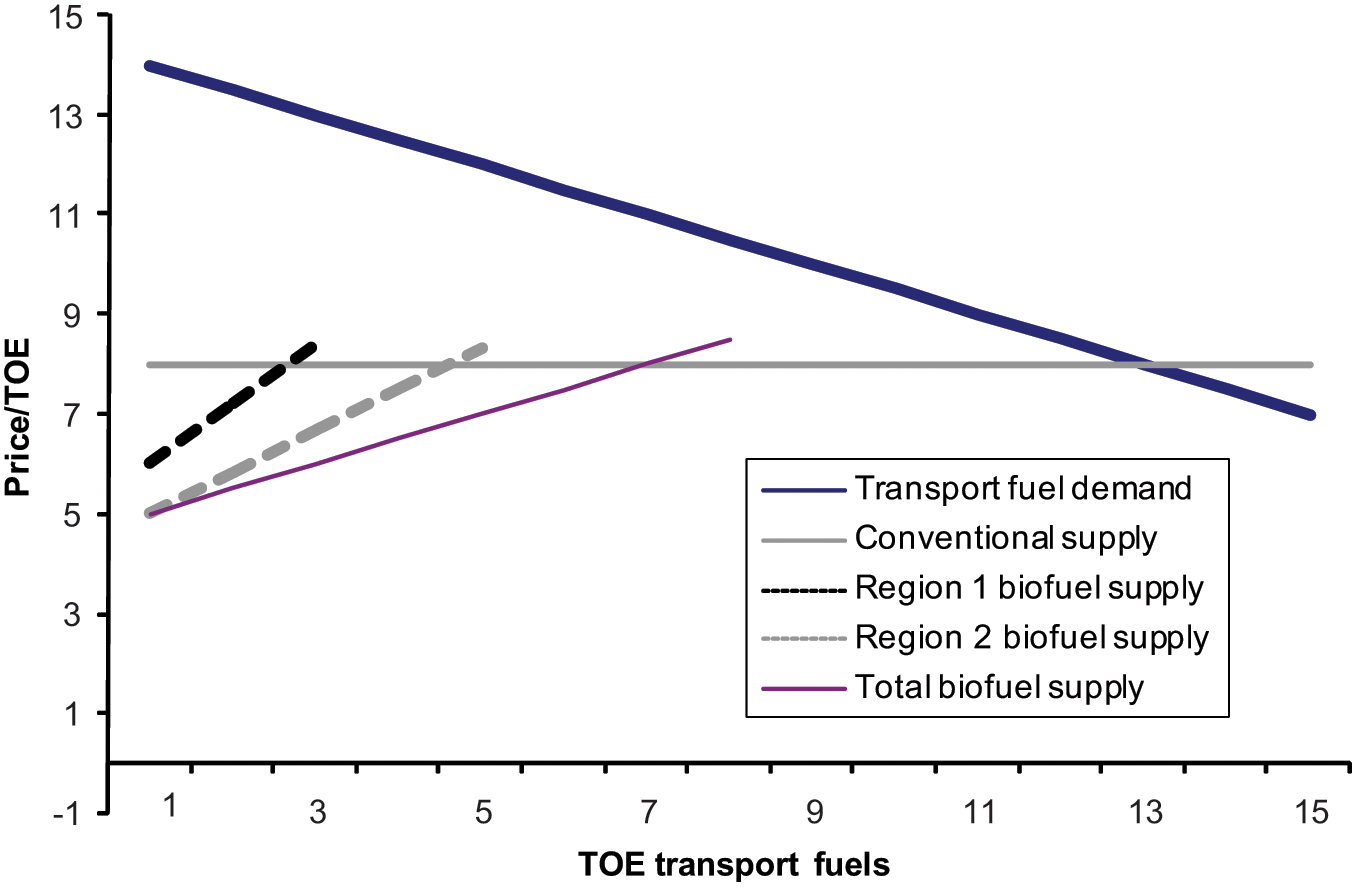
The market solution without a blending mandate
Note that the total sales of transport fuel only depend on TC; that is, total sales are given where the transport fuel demand schedule crosses the conventional fuel supply curve. Adding the two supply curves for biofuels gives total biofuel supply for any transport fuel price. The sales of conventional fuel are then equal to the residual demand, which in Figure 1 for practical reasons are approximately half of the transport fuel demand. In 2004, biofuel sales in the European Union were about 2%, which had increased to about 3% in 2008.
Welfare and Environmental Costs
Global environmental damages D is a function of the stock of GHG in the atmosphere. Since we are looking at a fairly short period of time, we express damages as a function of the flow of GHG emissions by using a linear damage function
Furthermore, we assume that Region 1 receives a share Ψ1 of the damages with Ψ1 < 1. The welfare of Region 1 is then given by

where π1 is the profit of the representative biofuels producer in Region 1,
As mentioned, we measure GHG emissions in the same unit as transportation fuels. Total GHG emissions from the use of conventional fuels are then given by
For global welfare W, we have

where π2 is the profit of the representative biofuels producer in Region 2 and
Use of Trade Policies Without a Blending Mandate
BCA Only
Since Region 1 cannot enforce emission taxes in Region 2, the question is to what extent the BCA t1 can improve global welfare. There is also a question of whether the subsidy to domestic production of biofuels s1 or the environmental policy instruments TC and TB should be used in any way to limit emissions from biofuels production in Region 2. We start by looking at the most simple case without a blending mandate and without an import standard.
Producer surplus can simply be written as θ11 (y1)2 and θ22 (y2)2. These expressions can, together with Equations 2, 4, and 5, be inserted into the welfare functions (Equations 8 and 9), and after a great deal of rearranging we have for total welfare W
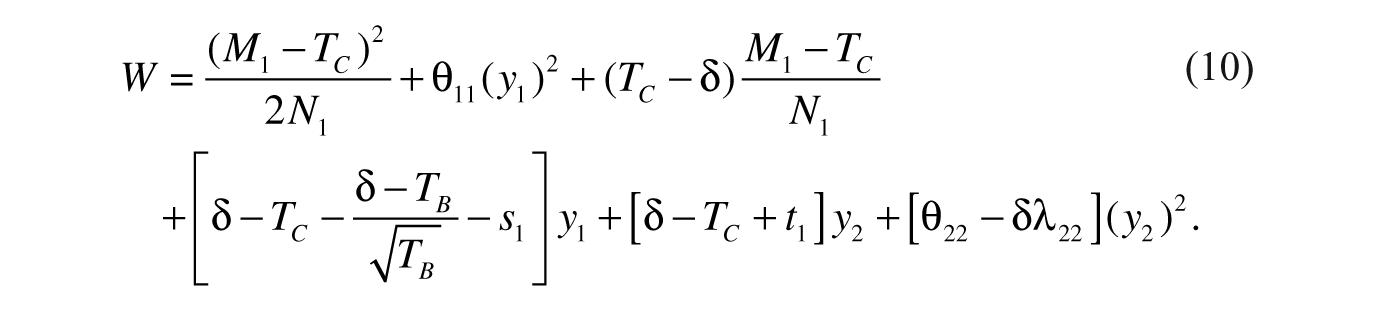
The first two terms in Equation 10 are consumer and producer surplus in Region 1, respectively. The third term is tax income minus the environmental damages from the use of conventional fuels. The fourth term is the external effects of Region 1 biofuel production; that is, domestic biofuel production reduces GHG emissions, decreases conventional fuel tax income, and leads to subsidy outlays. The fifth term is the gross effect of foreign biofuel production, which does not include emissions from the production in Region 2. These are included in the last term as a correction of the Region 2 producer surplus.
We maximize W with respect to TC, t1, s1, and TB. The first-order conditions are given by



First, note that the optimal BCA t1 is independent of the optimal subsidy s1 and the GHG tax on domestic biofuel production TB. Note also that the subsidy is independent of the BCA. Thus, the instrument used for regulating the supply of biofuels from Region 2 to Region 1 and the instruments used for regulating the domestic biofuels supply should be set independently of each other. In other words, policies should not be guided by intentions to “level the playing field.” The reason is the flat conventional fuel supply curve fixing the equilibrium price of transport fuels. Note that when Region 1 introduces a blending mandate, this independence disappears in spite of the flat conventional supply curve (see the section “Numerical Illustrations”).
The solution to the set of equations Equations 11, 12, 13, and 14 is TC = δ, TB = δ, s1 = 0 and t1=2δ22y2. The BCA is positive, and we can see that it equals the global marginal environmental damage from a marginal increase in imports. Our results are summarized in the following proposition:
Proposition 1: In a situation with import of biofuels from countries without a climate policy, global welfare can be improved by subjecting the import to a BCA, depending on the marginal environmental damage embodied in the last unit of output exported. Domestic biofuel production should be subject to the same GHG emission taxes as other sectors and should receive no production subsidies.
The BCA is increasing in the import volume. The understanding is that GHG emissions per unit of biofuel increases with output. Furthermore, as long as TC = TB = δ, that is, the environmental damage resulting from both conventional fuel use and domestic production of biofuels, is fully internalized, the subsidy to biofuels s1 should be zero. On the other hand, if for instance TB < δ, the subsidy should be negative.
The BCA does not give any incentive to invest in GHG abatement in Region 2. Thus, Region 1 is likely able to improve global welfare further by using more instruments. We will return to this in the section “Use of an Import Standard Together With a BCA.”
BCA With Point of Departure in Domestic Welfare
If Region 1 were free to set t1 and s1, it would not necessarily do so with the aim of maximizing global welfare. Many suspect that BCAs and subsidies will be misused. In order to investigate the scope of such misuse, we look at the optimal t1 and s1 when Region 1 only maximizes its own welfare given by Equation 8. The tax on conventional fuels and the domestic tax on biofuel production should then be according to Tc, TB = Ψ1δ. Thus, the welfare of Region 1 is given by

From the first-order condition for the optimal BCA, we obtain

There are two effects of the BCA; it will reduce emissions from biofuel production in Region 2, and it makes it possible for Region 1 to appropriate some of the producer surplus in Region 2 (beggar-thy-neighbor policy). Note that the difference between the unilateral BCA and the globally optimal BCA is given by [θ22 − (1 − Ψ1)δλ22]2y2. Defining misuse of BCA as setting a too high BCA, we obtain
Proposition 2: Region 1 will only misuse the BCA when θ22 > (1 − Ψ1)δλ22.
Thus, misuse is less likely if the share of environmental damages belonging to Region 1 Ψ1 decreases. Since Region 1 only partly internalizes the environmental damages from GHG emissions in Region 2, the emission-reduction part of the BCA is smaller than desirable. Thus, although Region 1 has an incentive to apply a beggar-thy-neighbor policy, the domestic second-best BCA may be close to the globally optimal BCA.
For the optimal subsidy, we have

Again, we note that the optimal subsidy is zero. When TC = TB = Ψ1δ, the environmental damage resulting from conventional fuel use and domestic production of biofuels is fully internalized. There is thus nothing to gain from increasing the use of biofuels any further by setting s1 > 0.
Use of an Import Standard Together With a BCA
The European Union is considering an absolute standard for biofuel import, which would deny all biofuels not fulfilling the standard at the border. The European Union is also discussing a multicriteria standard, that is, specifying not only GHG emissions per unit of production but also working conditions in the biofuels industry and the effect of biofuels production on biodiversity conservation. In this article, we only consider a standard on GHG emissions per unit of output γ1. To avoid the problem of shuffling, the standard would have to hold for the whole production of biofuels in Region 2, also the amount being used for domestic purposes. As noted previously, the emissions from the fixed supply of biofuels from the producers in Region 2 to the domestic Region 2 market is included in Equation 4. From Equation 4 it then follows that, in order to be able to export, the producer in Region 2 must buy abatement according to

which directly yields the abatement cost function:

and the profit is still given by π2 = θ22(y2)2.
Again we consider global welfare. We know from above that global welfare is maximized when TC and TB is set equal to δ, and when s1 is set equal to zero. The welfare-maxmizing import standard and the BCA is then found from

where the first term is the profit of the foreign industry, the second term is environmental damage resulting from GHG emissions in Region 2 given the import standard γ1, and the third term is income from the BCA. Note that, as long as TC, TB = δ and s1 = 0, it is only the profit of the foreign industry and the emissions of the foreign industry that enter the maximum expression. Hence, when setting the standard, Region 1 should not look at the emissions of its own industry.
After inserting for y2 and some rearranging, the two first-order conditions can be written as follows:


The optimal BCA given the standard is δγ1. Inserting t1 = δγ1 into Equation 19 yields the optimal import standard:
Proposition 3: The welfare-maximizing import standard should be set such that the emissions per unit of output is as if the foreign producer were subject to an emission tax δ. Moreover, the BCA should be positive and equal to the marginal environmental damage from the last unit of output exported.
An import standard cannot replace a BCA fully. The reason is that the optimal import standard does not remove all emissions from the export of foreign biofuels, and since these residual emissions lead to environmental damages, they should be taxed in one way or another. Governments will seldom have enough information to set the correct import standard given by
In fact, it can be shown that the combination of an import standard and the BCA will yield exactly the same GHG emissions, export output, and abatement level as in the case where it was possible for Region 1 to directly decide the abatement level in Region 2 in addition to setting a BCA. Thus, the import standard must improve global welfare. The reason is that it forces the biofuels industry in Region 2 to carry out profitable abatement investments.
Trade Policies With a Blending Mandate
Market Equilibrium
So far we have concluded that the taxes on GHG emissions TC and TB should not be distorted and that an import standard γ1 improves welfare. We will use these insights in the analysis of a blending mandate.
A blending mandate fundamentally changes the way the market for transport fuels works. Earlier we had that the BCA should be set independently of the domestic production subsidy and vice versa (see Equations 12 and 13). The reason was that none of the instruments affected the price on conventional fuels. However, with a blending mandate the different policy measures will all depend on each other. In a way, the blending mandate creates a new product that we call transportation fuel and that must consist of biofuels and conventional fules in certain proportions.
Denote the blending mandate by η1, and the supply of transportation fuel by Q, and observe that we must have η1(y1 + y2)Q1. 10 Given the blending mandate, the cost of one unit of transport fuel is given by

where ρ1 is the Region 1 equilibrium price of biofuels. Since biofuels are guaranteed some sales, we may now have TC < ρ1. Furthermore, the equilibrium condition for the transport market in Region 1 is now P1 = (1 − η1)TC + η1ρ1 (instead of P1 = Tc).
By adding the two supply functions for biofuels given in Equations 7 and 18, and given that y1 + y2 = η1Q1, we obtain the following relationship between the biofuel price and total sales of transport fuel:

This equation can be used to solve the equilibrium price of biofuels ρ1 as a function of total supply of biofuels. Then by inserting ρ1(Q1) into Equation 21, and given that P1 = (1 − η1)TC + η1ρ1, we obtain the supply of transport fuels:

First, note from the first term in Equation 23 that we now have an increasing supply curve for transportation fuels. The reason is of course the increasing marginal costs of biofuels. Note also from the last term in Equation 23 that a subsidy to domestic production of biofuels s1 will shift the supply curve downwards and increase the supply of transportation fuels for any given price of transportation fuel. As this will also increase the use of conventional fuels, a subsidy to domestic production of biofuels s1 works as an implicit subsidy to conventional fuels as pointed out by De Gorter and Just (2009). We can illustrate the market solution in the following diagram (Figure 2).

The market solution with a blending mandate
Note that the total sales of transportation fuels no longer depend solely on TC. From Equation 23 we see that the total sales of transport fuels now depend on all the instruments s1, t1, γ1, and TB in addition to TC. Total sales are given where the transportation fuel demand schedule crosses the transportation fuel supply curve. As long as the blending mandate is binding and the other policy instruments are the same, this will happen to the left of the original equilibrium, that is, with lower total sales of transport fuel. Total biofuel supply is then equal to a η1 share of total supply, and sales of conventional fuel is equal to a (1 − η1) share of total supply.
Once we know the new market equilibrium Q1, it is easy to calculate the respective market shares. The sales of conventional fuels is equal to (1 − η1)Q1, and the price of biofuels is given implicitly by Equation 22. This price can be inserted into Equations 7 and 18. We then obtain for the supply of biofuels


where Δ = 2(θ11 + θ22)N1 + 4θ11θ22(η1)2.
Our conjectures above are easily verified: Given the blending mandate η1, the instruments TC, s1, TB, t1, and γ1 now have more wideranging trade effects. These are summarized in the following proposition:
Proposition 4: First, increasing t1 and/or decreasing γ1 not only reduces the import of biofuels but also spurs biofuel production in Region 1. Second, increasing s1 and/or decreasing TB not only spurs biofuel production in Region 1 but reduces the import of biofuels.
Policy makers should be aware of how a blending mandate changes the workings of the market. In the situation with a blending mandate, domestic producers of biofuels will have much to gain from convincing their goverment to set a strict import policy for foreign biofuels. Without a blending mandate, the incentive to try to influence import policy for biofuels disappears.
In the Appendix, we show that any binding blending mandate η1 is equivalent to introducing an extra tax on conventional fuels T1 and a general subsidy S1 on all biofuels with the additional constraint that the income from the tax and the outlay for the subsidy should balance, that is, T1(1 − η1)Q1 = S1η1Q1. 11 Clearly, when the policy instruments TC, TB, s1, t1, and γ1 are set as in the global first-best or second-best solution, any T1, S1 ≠ 0 must be nonoptimal. Hence, a binding blending mandate will likely decrease global welfare.
The BCA Given a Blending Mandate
We will now look at the optimal BCA with a blending mandate and an import standard in place. With TC, TB = δ, global welfare is given as

where the first term is consumer surplus, the second and third terms are producer surplus, the fourth and the fifth terms are BCA income and subsidy outlay, and, finally, the last term is environmental damage resulting from production in the other region.
12
The output quantities of biofuels y1 and y2 are given from Equations 24 and 25. Hence,for the derivatives we have
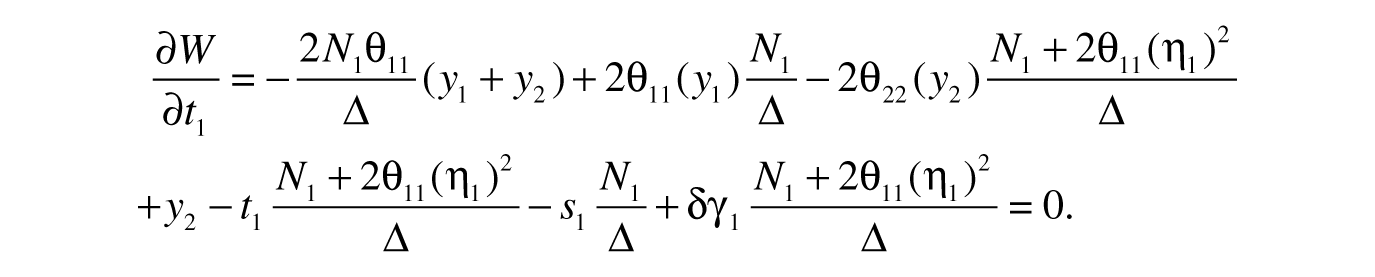
The first four terms cancel. Hence, simplifying yields

In the global first-best, we had
Proposition 5: The rule for setting the BCA now includes the subsidy rate s1. The BCA should be lower, if the subsidy rate is higher.
The blending mandate does not rule out a BCA. However, if subsidies to domestic biofuel production are extensive, the BCA could turn negative.
Numerical Illustration
To illustrate the effects of a blending mandate, we have calibrated the model to data from 2004 (Table 1) covering the EU transport market, the European production of biofuels, and the Brazilian ethanol production (see Eurostat, 2007; Kutas, Lindberg, & Steenblik, 2007). Since our focus is on the blending mandate and the data with respect to GHG abatement possibilities are limited, we did not include possibilities for GHG abatement in biofuel production and, consequently, we cannot analyze the effect of an import standard. 13
Key Data for the Year 2004
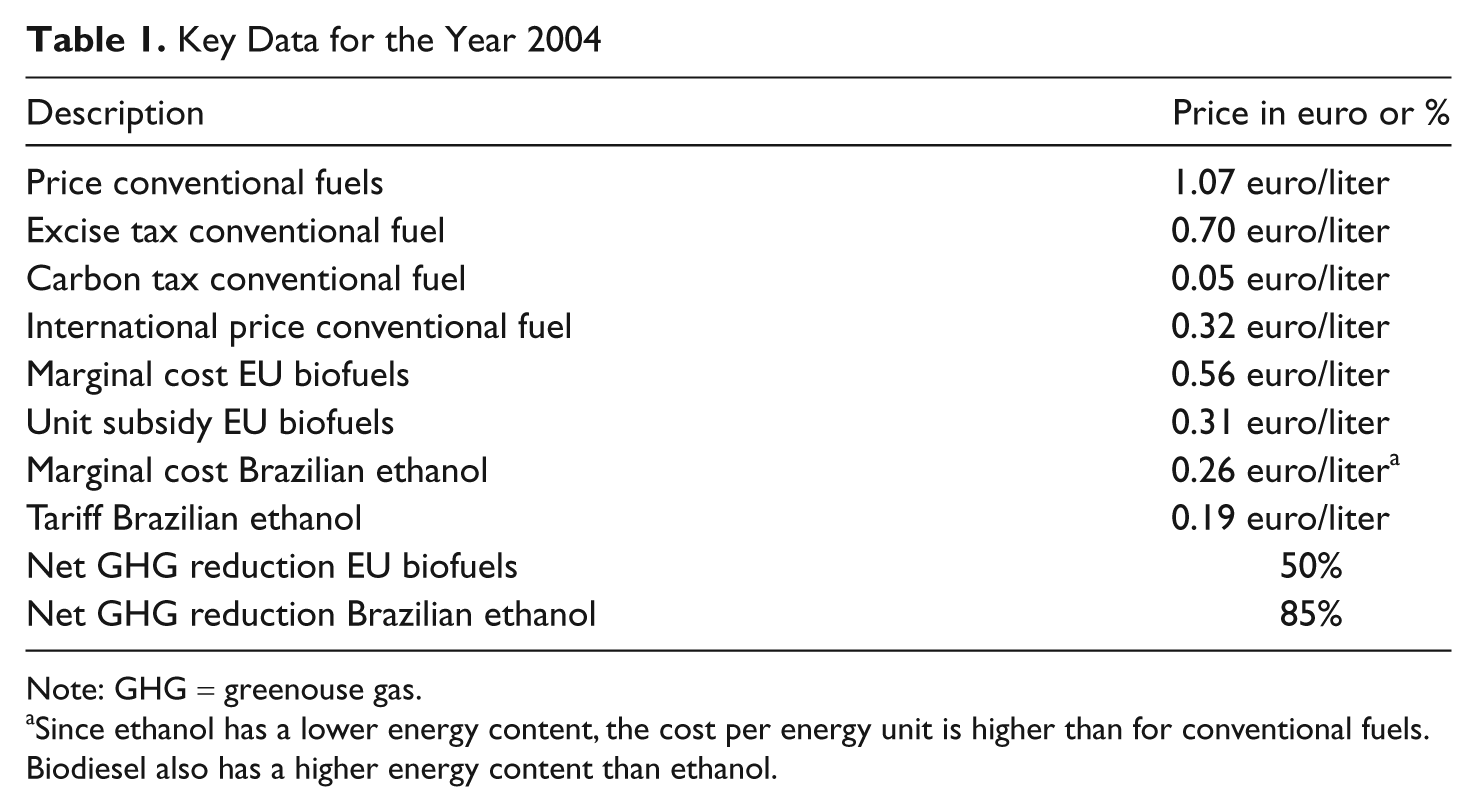
Note: GHG = greenouse gas.
Since ethanol has a lower energy content, the cost per energy unit is higher than for conventional fuels. Biodiesel also has a higher energy content than ethanol.
We treat the European Union as one market and convert all fuels to energy equivalents. By weighting consumer prices for gasoline and diesel in each country by their share of total consumption, we computed an average consumer price, excise tax, and carbon tax for conventional fuels. Supply of conventional fuels is then assumed to be completely elastic at the average consumer price. Given a price elasticity of transport fuels of −0.4, it is then easy to fit a linear demand schedule to the 2004 data.
Supply of Brazilian ethanol is upward sloping, and the average cost is assumed to increase by 5% for every doubling. In 2004, the production costs were comparable to the international price of gasoline measured in volume units (Kojima et al., 2007). Then by using production figures from 2004, we were able to calibrate the Brazilian supply schedule.
We decided to treat European biodiesel and ethanol together. Due to the intricate support scheme for European biofuel production, it is difficult to find cost data. Instead, we used the cost of producing biodiesel from soybeans, which is available from the U.S. energy department. Moreover, for European biofuel production, we assumed that the average cost increases by 10% for every doubling due to less availability of land. The supply schedule can then be calibrated using current biofuels production in the European Union. Finally, the current European subsidy to biofuels production measured as a fixed per-unit subsidy is calculated residually. 14
The carbon tax amounts to 20 euro/metric ton CO2. Domestic biofuels are partly exempt from the excise tax, which is reflected in the subsidy.
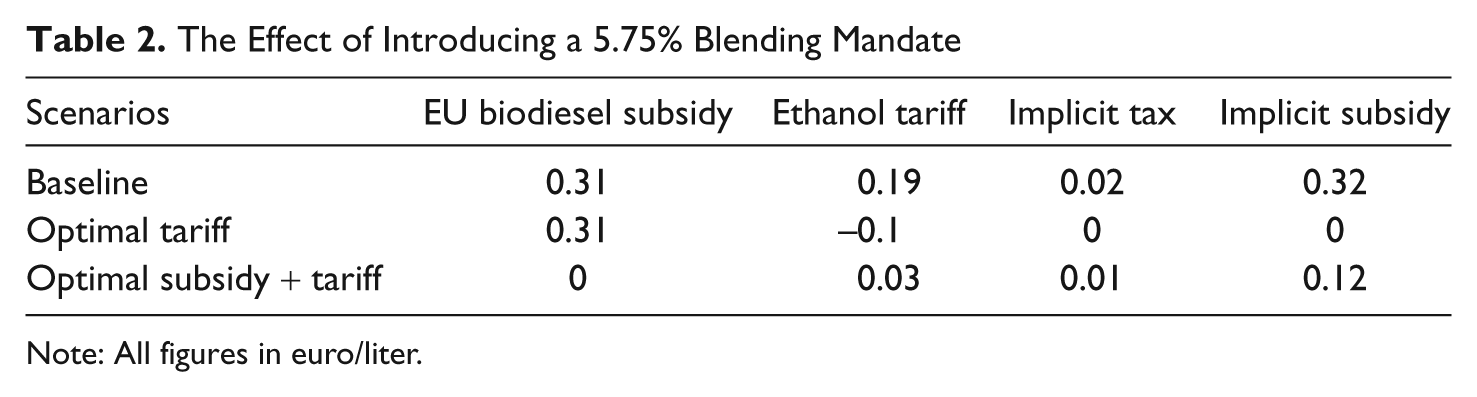
In what follows, we show results for three scenarios. In the baseline scenario, we introduce a 5.75% blending mandate based on the 2004 figures. The implicit tax on conventional fuels and subsidy to both types of biofuels can then be calculated. In the next scenario, we look at the optimal tariff from a global point of view, given the EU domestic biofuel subsidy. Finally, we look at the optimal combination of the EU subsidy and tariff.
In the baseline scenario, total subsidies to European biofuels production amounts to 8 billion euro, of which more than half is paid directly by consumers through a higher price on transport fuels. Consumers also subsidize Brazilian ethanol through the blending mandate, and this subsidy amounts to nearly 4 billion euro. Thus, given current policy, the blending mandate implies a transfer of more than 8 billion euro from consumers to biofuel producers, which does not show up in the national budgets.
The tariff is nonoptimal both from a global point of view and from a strict EU perspective. If for some reason the EU cannot remove the European domestic biofuel subsidy, tariffs should be negative as indicated in the third row of Table 2. The blending mandate is then reached by increasing only the Brazilian ethanol supply and keeping the EU biofuels supply fixed. The welfare improvement from such a policy shift is about 3 billion euro for the European Union alone. Finally, the hidden transfer from consumers to biofuels producers is eliminated.
The Effect of Introducing a 5.75% Blending Mandate
Note: All figures in euro/liter.
From a global welfare point of view, the European domestic biofuel subsidy should be completely removed and the tariff set slightly positive. The reason for not removing the tariff fully is the small, but still significant, GHG emissions from Brazilian ethanol production. Finally, note that the optimal policy does not eliminate the hidden subsidies. Removing the domestic subsidy implies that in order to reach the blending mandate, approximately 4 billion euro must be transferred from EU consumers to Brazilian biofuel producers. This is also optimal from an EU point of view.
Discussion and Conclusion
In this article, we study trade policies for biofuels in the context of reducing GHG emissions. The global interest in biofuels is also driven by concern for energy safety and local environmental pollution, particularly in developing countries, as well as by an interest in supporting domestic agriculture related to ongoing trade liberalizing negotiations (Kojima et al., 2007). The current EU policies for biofuels are likely influenced by all of these factors with the possible exception of concern for local environmental pollution.
For an incomplete international climate agreement, BCA can be used to prevent leakage when signatory and nonsignatory countries are trading. Due to the scope for misuse, allowing individual regions to decide BCA levels may jeopardize the international trading system. Rather, setting BCAs to reduce carbon leakage should follow a fixed scheme negotiated and agreed upon by the partners of future climate treaties. It should also be considered whether the countries introducing GHG emission–based BCAs should be the recipient of the income from the BCAs. Furthermore, BCAs and standards may be questioned within the WTO/GATT rules. De Gorter and Just (2010) forcefully argue that standards are illegal under WTO law. Horn and Mavroidis (2009), on the other hand, hold that a BCA will be considered domestic and not a trade instrument. Furthermore, following the WTO Appellate Body Report on the Dominican Republic—Import and Sale of Cigarettes, even if the government wants to both protect domestic producers and the environment, using a BCA may pass if it can be proved that it is actually protecting the environment.
The European Union is planning to introduce a standard for biofuel imports. Our results indicate that import standards combined with BCAs can improve global welfare. However, our results depend on the costs of successful enforcement.
The EU is also toughening its biofuel blending mandate. We show that a blending mandate fundamentally alters the way the market works. For instance, if domestic biofuel production is subsidized, the optimal BCA may be negative. Clearly, a negative BCA is unrealistic, yet on the other hand, it stresses the need for the European Union to reconsider both its trade policy and subsidy policy with respect to biofuels.
Using 2004 data for the EU, we find that a 5.75% blending mandate implies a transfer of 8 billion euro from consumers to producers . This should not be misinterpreted as a welfare loss since the transfer partly shows up as increased producer surplus. Although our numerical model should not be expected to give exact figures, one may ask whether transferring anything in the range of this amount of money to biofuel suppliers is well spent given all the uncertainty regarding biofuels as a long-term solution to GHG abatement in the transport sector. Kutas et al. estimated the costs to achieve GHG reductions with current subsidies to be in the range of 215 to 800 per metric ton of CO2-equivalent reduction, which can be contrasted to social cost of carbon estimates of 10 and 30 per ton emitted CO2 (Kopp, Golub, Keohane, & Onda, 2011; Tol, 2008). Market prices for emission permits in 2006 at the Chicago and the European Climate Exchange were in the range of 3 to 26 (Kutas et al., 2007). Hence, we feel it is safe to claim that the current EU biofuel policy does not achieve the biggest “bang for the buck.”
Policies for reducing emissions from the transport sector are easily combined with other targets. Both industrialized countries and developing countries are concerned about energy safety. If energy safety is another objective of EU’s biofuels policy, the current tariff on ethanol imports from, for example, Brazil, could be suboptimal. Ethanol from Brazil would reduce dependence on both Russian gas and oil from OPEC, but it is also superior in terms of GHG reductions compared to EU-produced ethanol (Kojima et al., 2007), indicating that the optimal tariff in this case would be negative. The empirical application part of this study has focused on the European Union, but the U.S. policies bear a lot of resemblance. “The modern U.S. ethanol industry was born subsidized,” Koplow and Steenblik (2008) write, finding the 18.5 billion liters of ethanol produced in the United States during 2006 to be subsidized by about 4 billion.
Clearly, the current EU policy on biofuels is hard to grasp within our model. One additional argument frequently cited for subsidies is the potential for future cost reductions using new cleaner energy technologies (see Hamelinck & Faaij, 2006). Here, we have not treated induced technological change, which is clearly an area for future research.
Footnotes
Appendix
Acknowledgements
We thank two anonymous referees for valuable comments. Remarks and suggestions from colleagues in the research program ENTWINED are also appreciated.
The authors declared no potential conflicts of interest with respect to the research, authorship, and/or publication of this article.
The authors disclosed receipt of the following financial support for the research, authorship, and/or publication of this article: We are grateful for financial support from the ENTWINED programme, which is funded by the Mistra Foundation. We also acknowledge financial support from the Norwegian Research Council and Formas through the program Human Cooperation to Manage Natural Resources (COMMONS).