



Abstract
There is an ongoing debate about criteria based on which allocation of climate finance, particularly financing adaptation, is made. This article aims at investigating the determinants of fund allocation and the consequences of rearrangement considering the case of the Adaptation Fund (AF). This research conducts a mixed-method approach including binary logistic regression and multiple regressions to analyze the factors that influence access to and volume of funding from the AF, respectively, along with a qualitative assessment of the AF’s institutional features. The findings suggest that the level of vulnerability of a country is likely to affect accessibility to and the volume of funding from the AF. Besides, low-income countries are more likely while least developed countries are less likely to access the fund. Readiness of country is not significant for accessing the AF; however, it affects the volume of funding. Funding allocation rearrangement may put the AF on pressure for effective use of the readiness program.
Multilateral climate finance mechanisms have evolved in the recent decades in response to the criticism over lack of incentives or means for alternative to developing countries (Heller & Shukla, 2003). Climate change has been one of the focal areas the Global Environment Facility (GEF) since it was established as the first multilateral environmental institution that assists developing countries to comply with multilateral environmental conventions. Coupled with the decisions on the rules and procedures for clean development mechanism, three multilateral funds were created in 2001 to support climate action in developing countries. These three funds—the Special Climate Change Fund, the Least Developed Countries Fund (LDCF), and the Adaptation Fund (AF)—expressed the intention to devote special attention to climate adaptation. While the former two launched operations right after the their establishment, the AF had to wait till 2007. At the Conference of the Parties (COP15) in 2009, developed countries pledged to provide new and additional resources, called the First Start Finance, approaching US$30 billion between 2010 and 2012 and with balanced allocation between mitigation and adaptation. Finally, but not the last, the Green Climate Fund was established in 2010 as part of the United Nations Framework Convention on Climate Change. It set a goal of raising US$100 billion a year by 2020 to deliver equal amounts of funding to mitigation and adaptation in developing countries.
Fund allocation has been under hot debate since the inception of the GEF. The GEF is criticized for concentrating fund allocation to a few global environmental problems and to a limited number of host countries (Clémençon, 2012). The governance structure dominated by developed countries, coupled with their reliance on multilateral institutions for implementation, was blamed for unequal allocation (Grasso, 2010). The rising criticism brought about a resource allocation framework that attempted to rebalance the fund allocation between the problems and countries as well as to increase transparency in decision-making (Evaluation Office of GEF, 2009).
Climate change adaptation finance has also been criticized for allowing high-income developing countries to access sizable share, thus not taking equity in allocation into account (Ferreira, 2017). It tends to take a technology-based view of adaptation, disregarding the specific needs and social vulnerabilities of developing countries (Ayers, Alam, & Huq, 2010). It focuses on capacity development of institutions and community representatives rather than communities in designing projects and programs (Biagini et al., 2012). Despite its focus on adaptation, the First Start Finance, for instance, allocates the fund mainly to mitigation rather than adaptation (Fransen et al., 2015) and prioritizes institutional strength of recipient country rather than vulnerability while funding adaptation (Barrett, 2014; Robertsen, Francken, & Molenaers, 2015).
With these criticisms, adaptation institutions face complex operational challenges and may find it difficult to address, if required to take efficiency, effectiveness, and equity into account at the same time (Fankhauser & Burton, 2011). To address these challenges, the AF takes several innovative missions and institutional arrangements. It aims at helping developing countries that are particularly vulnerable to the adverse effects of climate change to build resilience and adapt to climate change through concrete projects and programs, instead of helping preparation and implementation of National Adaptation Programmes of Action that the LDCF does. It organizes the Board in a way where representatives of developing countries account for the majority and make all the decisions and minutes public to ensure transparency in the decision-making process. It finances the full cost of projects and programs so that the host country can implement projects and programs even if implementing entities cannot secure cofinancing. To ensure adequate and predictable funding, it is designed to rely sources of finance mostly on the proceeds of Certified Emission Reductions issued under the clean development mechanism projects. However, it did not work ultimately.
Finally, but not last, the AF adopts the direct access modality under which an institution from a developing country can access the Fund without using the services of multilateral institutions, once the former is accredited as a national implementing entity (NIE). This modality places the responsibility for the life cycle of a funded project on NIEs, ranging from identifying, designing, developing, submitting proposals to supervising, evaluating, and reporting, while the rules and procedures are not as rigorous for NIEs as multilateral implementing entity (MIE)-initiated projects (Bird, Billett, & Colon, 2011). This is why the modality is expected to enhance project’s consistency with national strategies and priorities, and flexibility in project implementation, thus to increase ownership to adaptation financing and effectiveness in the end (Ayers, 2009).
Nonetheless, criticism continued against the initial fund allocation. The fund is effectively allocated on a first-come, first-served basis, contradicting its mission to help address vulnerability. It places high priority on absolute economic savings of host countries while low on the level of vulnerability, poverty, and equal funding per capita in fund allocation (Stadelmann, Persson, Ratajczak-Juszko, & Michaelowa, 2014). While it attempts to ensure equity between states, it does not prepare any operationalized definition of particular vulnerability for approval or prioritize countries from the most vulnerable quantile in practice (Persson & Remling, 2014).
In response, the AF has devoted substantial efforts in developing an efficient project cycle for delivering funding. It has prepared clearer guidance on consultation (Trujillo & Nakhooda, 2013). It implements the streamlined accreditation process, applying simplified approval procedures, and enhances readiness support for LDCs and small island developing states (SIDS; AF, 2014). It launches a number of readiness programs for climate finance with the aim of helping some of the most vulnerable countries take critical steps in building national capacities to adapt to climate change (AF, 2018a). Under this program, it provides three categories of readiness grants: Project Formulation Grants that facilitate a comprehensive stakeholder consultation process in the project preparation stage, once they succeed pass project concept; South-South Cooperation Grants intending to increase peer-to-peer support among accredited NIEs and those seeking accreditation; and Technical Assistance Grants aiming at strengthening the capacity of NIEs in the areas of environmental, social, and gender risk management. At the same time, it imposes a ceiling for the allocation to MIEs, which is less than half of the accumulated disbursement to secure funding for NIE latecomers. These developments might have enabled the AF to prioritize vulnerability in fund allocation through an increase in institutional readiness of host countries.
Against this backdrop, this article aims at identifying the determinants of fund allocation and exploring the consequences of these rearrangements in fund allocation. For this purpose, it employs a mixed-method approach, combining the AF’s unique institutional feature of direct access modality and its supporting programs with regression analysis on fund determinants and volume.
Literature Review
Adaptation investments in general face a trade-off among prioritizing the most vulnerable countries, the least developing countries, and effectiveness or efficiency in adaptation benefits (Barr, Fankhauser, & Hamilton, 2010; Ferreira, 2017). Vulnerable countries tend to be less ready and have lower capacity for adaptation interventions (Notre Dame Global Adaptation Initiative [ND-GAIN], 2015). This is why a number of researches have done to explore how vulnerability and readiness affect international allocation of adaptation funding.
Most of the researches find that the level of vulnerability affects adaptation finance in general. Countries highly susceptible to climate change risk receive more funding for adaptation both on a per capita basis and as a percentage of total adaptation finance (Betzold & Weiler, 2017). This implies that vulnerability has been used as a guide to adaptation funding in general (Cruce, 2009; Metzger, 2005).
Meanwhile, it is found that a similar level of vulnerability does not ensure identical size of finance flowing toward different countries (Donner, Kandlikar, & Webber, 2016). Several studies explore a number of factors that affect the amount of adaptation finance. These factors range from degree of control to donors (Scoville-Simonds, 2016), geopolitical and trade relations between donors and recipient countries (Halimanjaya, 2016), location/SIDS (Robinson & Dornan, 2017) to readiness, equity and efficiency (Chen, Hellmann, Berrang-Ford, Noble, & Regan, 2018), the country’s ability to finance the necessary public investments (Sachs & Schmidt-Traub, 2013), and monitoring and reporting of expenditures (Vanderweend, Glemarec, & Billett, 2012).
Fund-specific analyses further pose a question that the level vulnerability works as a guiding principle in fund allocation. The GEF allocates larger amounts to locations that are not ranked as highly vulnerable (Rahman & Ahmad, 2015). Data analysis, document analysis, and a correlation analysis using Spearman’s rank-ordered correlation coefficient provide no evidence that a higher level of vulnerability works as a guiding principle in the fund allocation of the AF (Persson & Remling, 2014; Remling & Persson, 2015; Stadelmann et al., 2014).
These bodies of literature suggest that a number of factors other than vulnerability should be taken into account in exploring the determinants of fund allocation in multilateral climate funds.
Trend of Fund Allocation at the AF
The AF has approved funding for 130 proposals totaling US$654 million as of July 2019, of which 94 are project grant and 36 are project formulation grant. The project grants are also allocated steadily, with temporal declines in 2013 and 2016. While the number of host countries has been steadily increasing, it does not commensurate with the number of approved projects because some host countries, such as India, are approved for multiple projects (Figure 1).
Cumulated number of approved funding projects and host countries.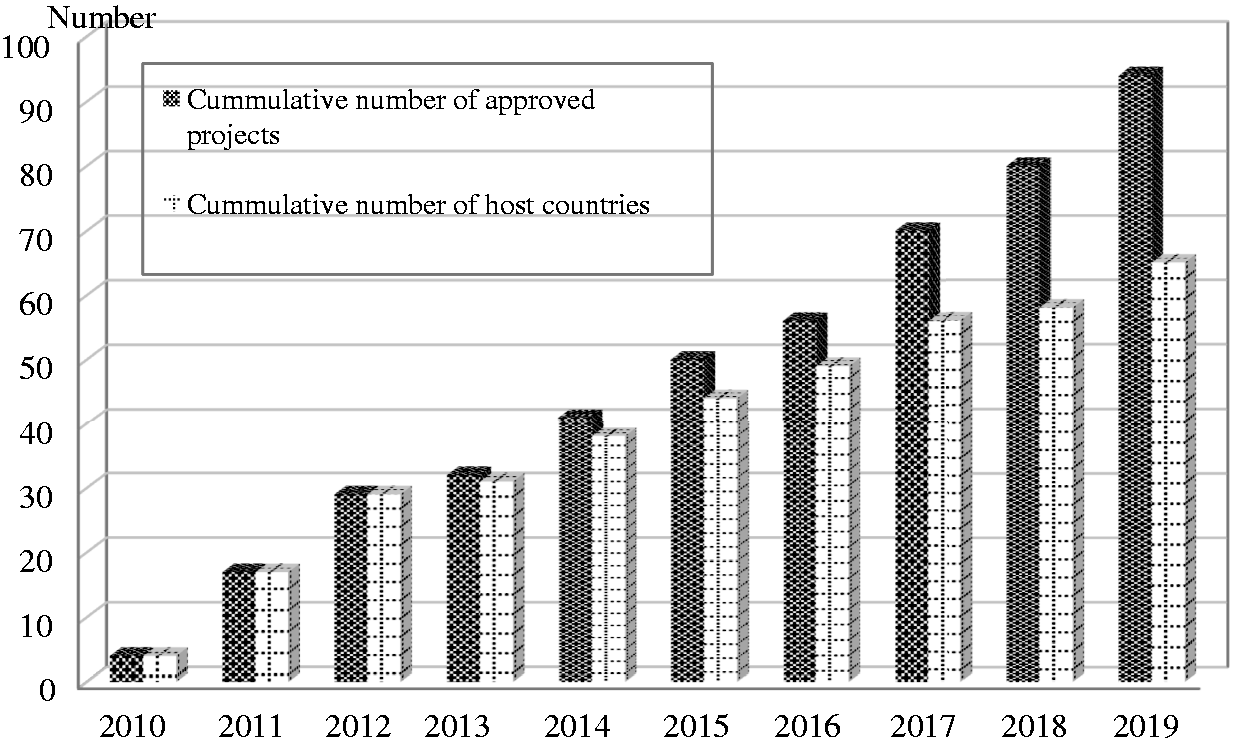
Several features can be pointed out in the fund allocation. By region, the largest amount is allocated to sub-Saharan Africa (37%), followed by Central and South America (32%) and South Asia (8%); see Figure 2. By income group, upper-middle-income countries gain the most (34%), followed by lower-middle-income countries (28%) and low-income countries (23%); see Figure 3. SIDS accounts for 23% of the number of approved projects and 24% of approved project grants during the period, but the allocation is concentrated in 2011–2012 and 2017–2019 (Table 1). By type of implementing entity, MIEs obtain a lion’s share, while NIEs take a minor portion (Figure 4). NIEs even obtain less amount when regional entities are accredited as regional implementing entity and begin project implementation.
Amount of approved project funding by region. Amount of approved project funding by income group. Amount of approved project funding by implementing entity. Number and Amount of Approved Project Funding for SIDS. Source. Same as Figure 1. Note. SIDS = small island developing states.
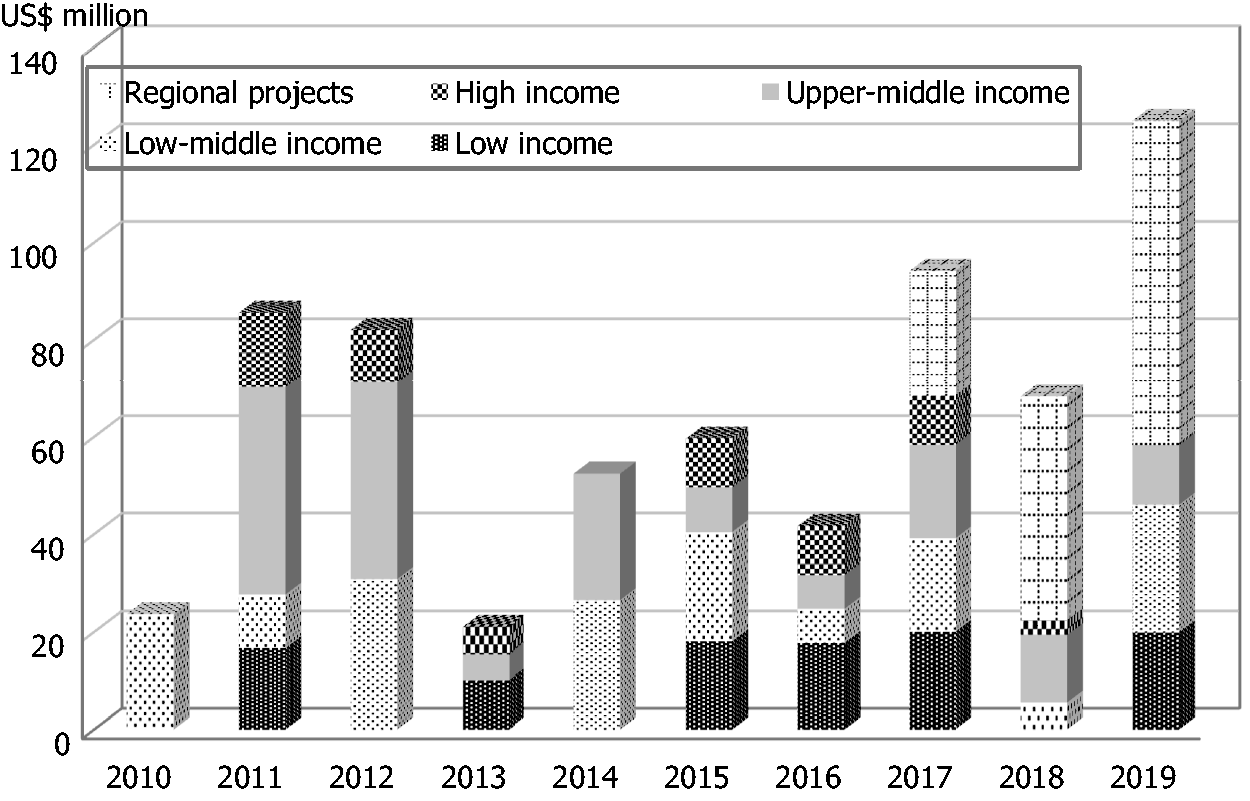
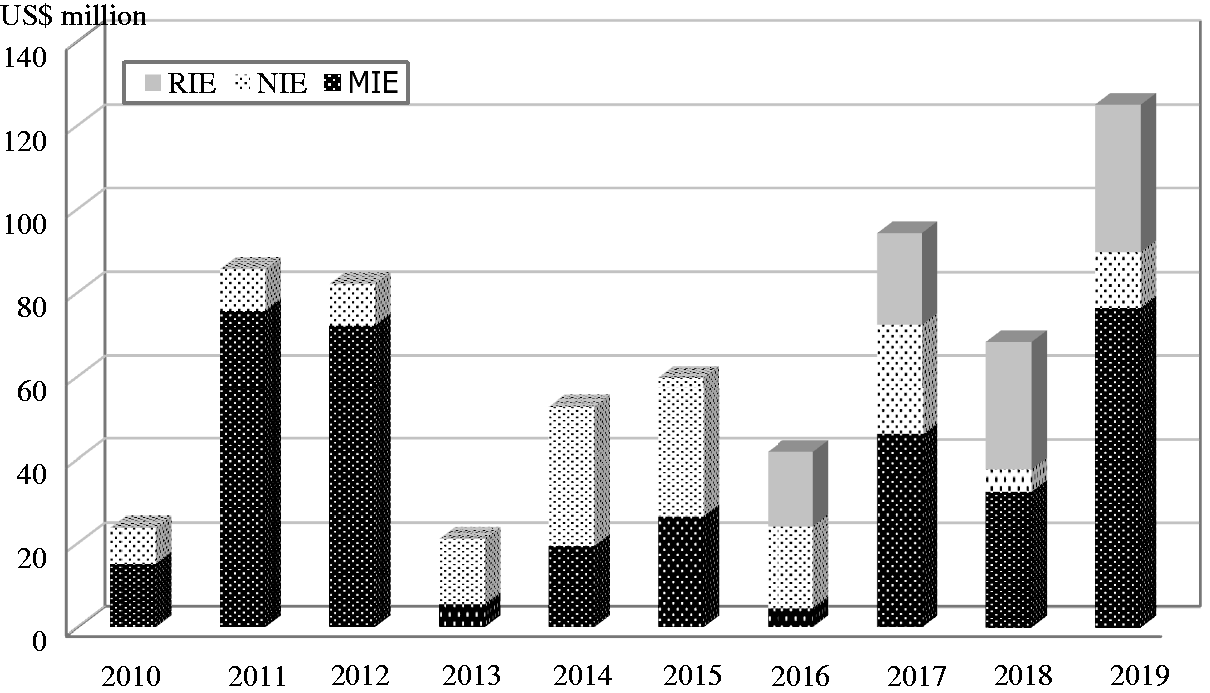

These initial assessments suggest that vulnerability, income level, and institutional readiness of the host country are probable determinants of accessibility and project fund allocation but may not be significant as major determinants.
Methodology and Data
This article employs econometric techniques to find the marginal effects of the determinants on the access to and volume of funding from the AF. It conducts both multiple regression analysis and logistic regression. In the logistic regression, the response or dependent variable is a binary that represents whether the country is obtaining funding from the AF. A set of factors, identified from the existing literature affecting the dependent variables both in logistic and multiple regressions, has been assumed, which includes climate risk, governance, location, and income. Each factor includes several core independent variables. The variables are vulnerability and readiness (climate risk), political instability and fragility of a nation (governance), region and categorization as SIDS (location), and income classification and categorization as LDC (income).
In line with Chen et al. (2018) and Robinson and Dornan (2017), this article considers level of vulnerability and readiness as climate risk factors. Because there are no unique readiness indices for climate finance and adaptation, the ND-GAIN readiness index has been used. Besides, readiness toward the actions addressing climate change has been assumed as a factor in this analysis based on the specific goal of the AF that explicitly says that it targets countries at risk and the least prepared.
Governance quality influences funding for adaptation (Robinson & Dornan, 2017). Politically friendly but inefficient, economically closed, and mismanaged nondemocratic former colony receives more aid than other former noncolonized countries with similar level of poverty and a superior policy stance (Alesina & Dollar, 2000). Based on this assumption political stability, level of fragility and presence of conflict have been chosen as determinants.
Regional bias exists for few donors, for instance, the United States toward the Middle East (Alesina & Dollar, 2000). Robinson and Dornan (2017) argue that being LDC or country from Africa does not have any impact on access to overall adaptation funding; however, a country with a classification as SIDS or not is a determinant for the volume of adaptation financing. Besides, SIDS status influences commitments for adaptation funding (Robinson & Dornan, 2017). Hence, the categorization as SIDS and the region a country belongs to have also been considered as factors affecting adaption funding.
According to the explanation derived from the middle-income and low-income bias that refer to the observation that countries with varied income levels tend to receive more or less aid (Dowling & Hiemenz, 1985; Harrigan & Wang, 2011), it seems reasonable to consider income classification as a determinant for climate finance in general and adaptation finance in particular.
Logistic Regression
In this analysis, under the binary logistic model, the estimated value of the dependent variable was interpreted as the probability that a country would avail funding from the AF, as identified by the explanatory independent variables. Thus, binary logistic analysis measured the impact of each independent variable on obtaining the AF by different countries. This research used the following expanded specification for countries’ access to the AF:

Multiple Linear Regression
A multiple linear regression was conducted to assess if the set of independent variables, as used in logistic regression, helps predict the volume of funding from the AF. The following regression equation (main effects model) was used:


Logistic Regression for Accessing Funding to the AF.
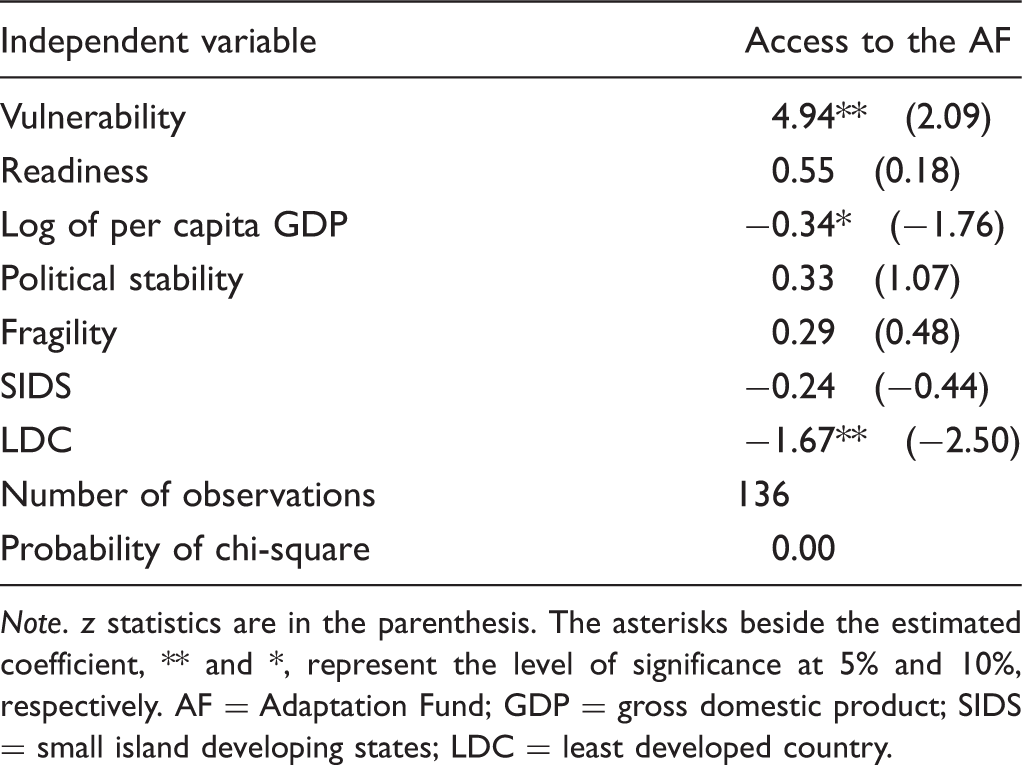
Note. z statistics are in the parenthesis. The asterisks beside the estimated coefficient, ** and *, represent the level of significance at 5% and 10%, respectively. AF = Adaptation Fund; GDP = gross domestic product; SIDS = small island developing states; LDC = least developed country.
Multiple Regression for Amount of Approved Funding From the AF.
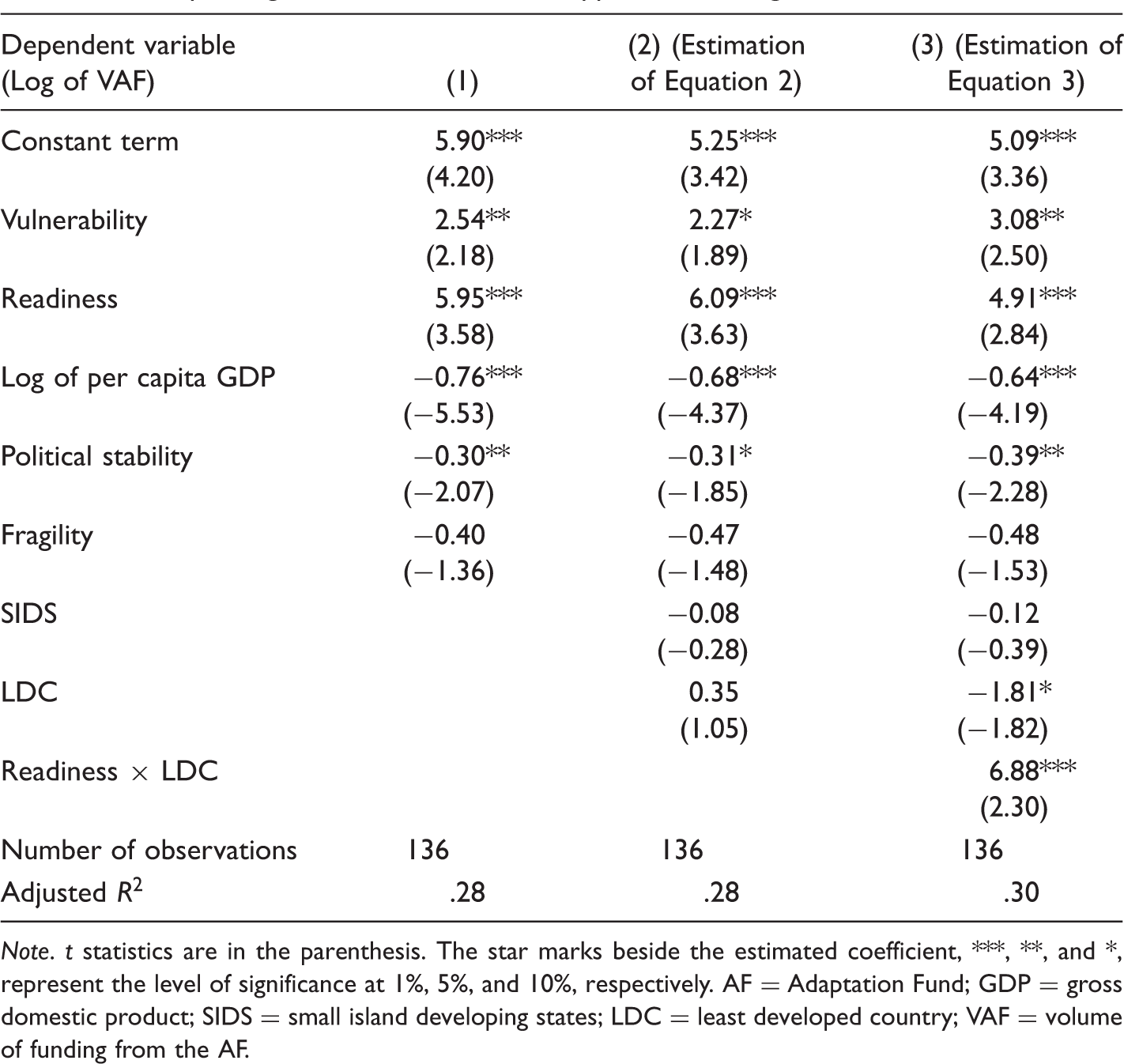
Note. t statistics are in the parenthesis. The star marks beside the estimated coefficient, ***, **, and *, represent the level of significance at 1%, 5%, and 10%, respectively. AF = Adaptation Fund; GDP = gross domestic product; SIDS = small island developing states; LDC = least developed country; VAF = volume of funding from the AF.
Sources of Data
Tracking climate finance, especially for adaptation, toward the developing part of the world is difficult for obvious reasons (Dipak Dasgupta and Climate Change Finance Unit Staffs, 2015; Donner et al., 2016). However, with various coding, for instance, Rio Marker, the difficulties are being minimized. Various organizations monitor climate funds; among them, Climate Funds Update (CFU; www.climatefundsupdate.org), a joint initiative of the Overseas Development Institute and Heinrich-Böll-Stiftung and a recognized source of information about global climate finance, is prominent, which was used for this study. This database was also used to analyze bilateral mitigation finance commitment and disbursement along with OECD database (Halimanjaya, 2016). This study summarized the amount of approved funding from the AF, as listed in the CFU website and not in the AF website, until January 2018 since its inception in 2013. Data for a total of 147 countries were considered for this study. The CFU database categorizes countries by region, income classification, presence of conflict, either LDC or not, as well as either SIDS or not.
Level of vulnerability and readiness of countries were taken from ND-GAIN. ND-GAIN data for 2017 studied 192 countries, among which only 181 countries were ranked with available data for both vulnerability and readiness. Lower score in vulnerability ranks a country less vulnerable, while a higher score ranks a country as better prepared in term of readiness (see the online Appendix). Vulnerability is measured by a country’s exposure, sensitivity, and capacity to adapt to the negative effects of climate change. To measure a country’s ability to leverage investments and transform the same to adaptation intervention, the ND-GAIN takes economic, governance, and social readiness into accounts. While economic readiness apprehends national business environment based on which adaptation reduces sensitivity and improves adaptive capacity, governance readiness focuses on institutional strength to ensure proper investment. Social readiness deals with social inequality, education, information system, and innovation that affect investment and promote adaptation actions (ND-GAIN, 2015).
Ranking on political stability were collected from the Country Policy and Institutional Assessment of the World Bank database. Political stability index ranges mostly from −2.5 to + 2.5, where 2.5 refers to more stable countries and −2.5 refers to most unstable one. For readiness, vulnerability, and political stability, 2016 data were used.
Results
Access to the AF
Table 2 shows that the level of vulnerability is positively significant, denoting that the more vulnerable a country is, the more likely it accesses funding from the AF. This finding is in line partly with the findings from Betzold and Weiler (2017), Cruce (2009), and Metzger (2005) and strengthens the argument of the AF (2018a) that the AF is successful in its core goal of targeting countries most at risk. At the same time, per capita gross domestic product (GDP) and the status of LDC are negatively significant. This implies that lower income countries are more likely to access the AF, but LDCs are less likely to access the AF than are non-LDC developing countries.
However, readiness is not significant over accessing the AF. This contradicts, at least partly, with the findings of Robertsen et al. (2015) and Barrett (2014), who argue institutional strength of the recipient country over the country’s vulnerability as preferred factor for accessing dedicated climate fund.
Amount of Funding From the AF
Table 3 shows that both the level of vulnerability and readiness are positively significant, whereas per capita GDP and political stability are negatively significant at 5% level. This result indicates that an increase of 0.01 in vulnerability index increases funding from the AF by 3.08%, and a 0.01 point increment in readiness index increases funding by 4.9%. These findings support the arguments made by Cruce (2009) and Metzger (2005).
The significant and positive coefficient of the interaction term between LDC and readiness could be interpreted as the difference between LDC and non-LDC countries, thus implying that the effect of readiness for LDCs is higher than that of non-LDC over volume of funding. A 0.01 point increase in readiness index in LDCs would bring 6.88% higher funding from the AF than in non-LDC.
Underlying Determinants Behind the Result
A number of possible underlying factors can be listed to interpret the seemingly contradictive results. MIEs keep playing a dominant role in the fund allocation. MIEs, especially the United Nations Development Programme and the United Nations Environment Programme, have enhanced capacity and accustomed to organizing new project proposals and supporting developing countries to apply for funding to multilateral climate funds. They have received funding from the GEF to implement pilot adaptation projects and from the LDCF to support LDCs to draft National Adaptation Programmes of Action. A project proposal to the AF is one of the options to get funding. As long as they capitalize their own network with specific government departments or developing countries to organize adaptation projects, it is rational for them to collaborate with host country partners with higher readiness to prepare and implement adaptation projects, regardless of LDCs or not. The country allocation ceiling motivates them to expand the scope of assistance to developing countries with insufficient institutional readiness for climate finance as a way of continuing their business. At the same time, such developing countries welcome their service provision. It provides easier solution to potential recipient countries to get funding from multilateral funds than the direct access modality (Mori, 2015; Ratajczak-Juszko, 2012).
On the other hand, it takes longer for national institutions to be accredited as NIEs and organize project proposals that are aligned with the AF because accreditation process is too rigorous, and many countries lack adequate institutional capacity to meet the fiduciary standards (Bugler & Rivard, 2012), the environmental and social safeguard policy and gender policy, and operational procedures. These rigorous requirements and process prolong the accreditation and project approval process, bringing about an imbalanced fund allocation that are favorable to MIEs and small number of NIEs with high capacity (Rüther, Müller, & Jara, 2014).
This is why upper-middle-income countries have obtained the largest portion among the approved project funding to NIEs, followed by high-income and low-middle-income ones (Figure 5). The rearrangements in fund allocation have not changed this trend so far. In addition, significant delay in schedule or failure in project completion in the initial NIEs-initiated projects
1
may raise the AF’s concerns over the readiness of host countries (AF, 2018a). In contrast, lower-middle-income countries account for the largest portion, followed by high-income ones among the countries funded through MIEs (Figure 6). This trend looks to be accelerated after the rearrangements in fund allocation. These contrasting consequences may place pressure on the AF to make much more effective use of the readiness program to climate finance, which is expected to reconcile readiness and vulnerability in fund allocation and to enhance ownership of the communities over the funded projects.
Amount of approved project funding to NIEs by income group. Amount of approved project funding to MIEs by income group.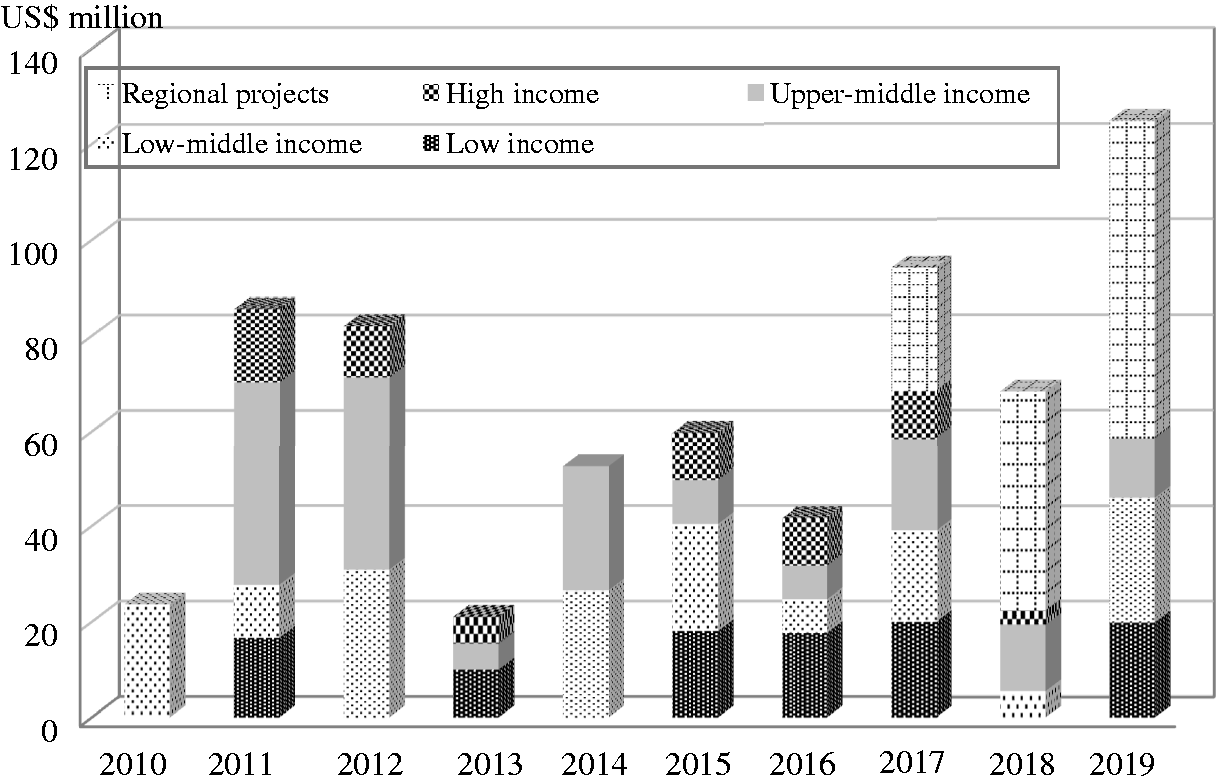

Conclusion
In response to the criticism against climate finance over insufficient address to the needs of developing countries, the AF has developed institutional arrangements that enable the fund to help developing countries that are particularly vulnerable to the adverse effects of climate change to build resilience and adapt to climate change through concrete projects and programs. Set aside of the direct access modality, it implements additional measures such as the readiness program for climate finance to address the further criticism over inadequately prioritizing vulnerability in fund allocation. Against this backdrop, this article aims at quantitatively identifying the determinants of fund allocation, exploring the consequences of these rearrangements in fund allocation.
This article finds that, set aside of per capita GDP and political stability, only the level of vulnerability is positively significant over the access to the AF, whereas the level of vulnerability; readiness in terms of economic, governance, and social readiness; and interaction term between LDC and readiness are positively significant over the amount of AF funding. It also finds that, in contrary to the AF’s recent endeavors, MIEs have worked with their counterparts in lower-middle- and upper-middle-income countries, whereas NIEs have implemented projects mostly in upper-middle-income and high-income countries. These results imply that many potential national implementing entities in climatic vulnerable low-income countries are not adequately ready to climate adaptation funding and that they are more likely to convince the AF to get funding once they enhance their readiness in terms of economic, governance, and social readiness. In this regard, the AF’s ongoing institutional evolution can be evaluated as heading for the right way to overcome the complex operational challenge of reconciling efficiency, effectiveness, and equity, as long as host countries and their domestic institutions are seriously committed to enhance resilience to climate change.
Supplemental Material
JED877483 Appendix - Supplemental material for Climate Financing Through the Adaptation Fund: What Determines Fund Allocation?
Supplemental material, JED877483 Appendix for Climate Financing Through the Adaptation Fund: What Determines Fund Allocation? by Akihisa Mori, Syed M. Rahman and Md. Nasir Uddin in The Journal of Environment & Development
Footnotes

Acknowledgments
The authors are thankful to the feedback for their presentation of this article at the 29th Congress of the Japan Society for International Development on November 24, 2018, and the 2nd Kyoto University-University of Hamburg Symposium on October 10, 2018.
Declaration of Conflicting Interests
The authors declared no potential conflicts of interest with respect to the research, authorship, and/or publication of this article.
Funding
The authors disclosed receipt of the following financial support for the research, authorship, and/or publication of this article: This work was supported by JSPS RONPAKU (Dissertation PhD) Program and JSPS Research Grant 26285041.
Note
References
Supplementary Material
Please find the following supplemental material available below.
For Open Access articles published under a Creative Commons License, all supplemental material carries the same license as the article it is associated with.
For non-Open Access articles published, all supplemental material carries a non-exclusive license, and permission requests for re-use of supplemental material or any part of supplemental material shall be sent directly to the copyright owner as specified in the copyright notice associated with the article.
