




Abstract
Environmental issues such as water scarcity are typically multidimensional problems, and resolving them requires a systems-based approach and socio-technical innovations. This article applies the “Problem-oriented Innovation System (PIS)” as a new approach to resolve water scarcity problem. In Iran, this has not been the case as natural water scarcity along with decades of mismanagement has turned water scarcity into a national crisis and caused several interrelated socioeconomic problems. Using case study, in this article, Iran’s water scarcity is analyzed to see how the PIS is able to help resolve this problem. Results indicate that the inefficient management and monitoring the water scarcity and lack of appropriate standardization and tariffs are the most important system failures of the water scarcity PIS in Iran. Also, the most important policy implications are moving toward decentralization in water management based on a participatory approach and establishing a national drought monitoring system.
Keywords
Introduction
Water scarcity is one of the most serious sustainability challenges facing the planet as the World Economic Forum listed it as one of the three major global systemic risks in the world (Hoekstra, 2014). By 2025, it is projected that 1.8 billion people will experience absolute water scarcity, and by 2050, over 40% of the world’s population will be living in water-stressed areas, and more than 240 million people will lack access to clean water (Russ, 2018; OECD, 2015). The Middle East, which has only 1% of the world’s freshwater, is the region most affected by water scarcity as almost all of the countries in this region are exposed to high or extremely high water stress (Reig et al., 2013). In this region, Iran is also one of the countries facing water scarcity due to factors such as geographical location, arid and semiarid climates, high levels of water evaporation (around 70% more than of the global average), low mean annual precipitation, and high levels of water demand in domestic, industrial, and agricultural sectors (Nazari et al., 2018). Mean annual precipitation of the country is around 250 mm3 (Mirzaei et al., 2017), and based on the Falkenmark Index, the country is on the brink of a water crisis (Nanoindustry, 2017). Also, the severity–duration index indicates that the eastern, northwestern, and western parts of the country are exposed to very high drought severity (Ghadami et al., 2020).
The Department of Environment estimates the rate of groundwater use in Iran to be three times higher than the world standard. This is due to inefficient water management rather than water scarcity. Scientific and innovative solutions in the technical and social fields might be helpful in effectively addressing the water scarcity problem. But, the key actors on water management have historically considered only water engineering solutions and neglected to investigate societal aspects of the problem (Nazari et al., 2018; Rezaei et al., 2017).
On the other hand, water-related problems are typically multidimensional and trans-sectoral, and addressing them requires innovative, emergent, and technological solutions (Wehn and Mantolvo, 2018). In other words, water scarcity is a socio-technical problem with a trans-sectoral nature that requires the development of different technologies. It also involves different structural components (such as actors, institutions, and technical and social subsystems) with different knowledge bases. Therefore, water management requires a systems-based approach to innovation. This approach is recognized as an “innovation system” in the innovation literature. But, the application of this approach in water management has not been studied yet.
An innovation system applies a systems-based approach to create, disseminate, and use knowledge and technology to create economic value. This view has opened up a new perspective for evaluating the innovative performance of countries and their success or failure through taking into account the behavior of actors, their interactions, and the environment surrounding them (Edquist & Hommen, 1999). Additionally, innovation systems are policy-oriented (Wehn and Mantolvo, 2018), and their scope of studies has been extended to development issues, especially in developing countries. Therefore, they are suitable for studying water-related problems at a macro level.
A type of innovation system that considers all economic, social, technological, and political aspects of the problem is needed to analyze water scarcity and other environmental problems. In other words, the resolution of these problems requires the systemic application of technological, cultural, and social innovations with a collaborative and interdisciplinary approach. That is because on the one hand, social innovations and in particular their social entrepreneurship function are very important in water management. On the other hand, the development of technologies needed for the reduction of water consumption in industrial, domestic, and especially agricultural sectors is important as well.
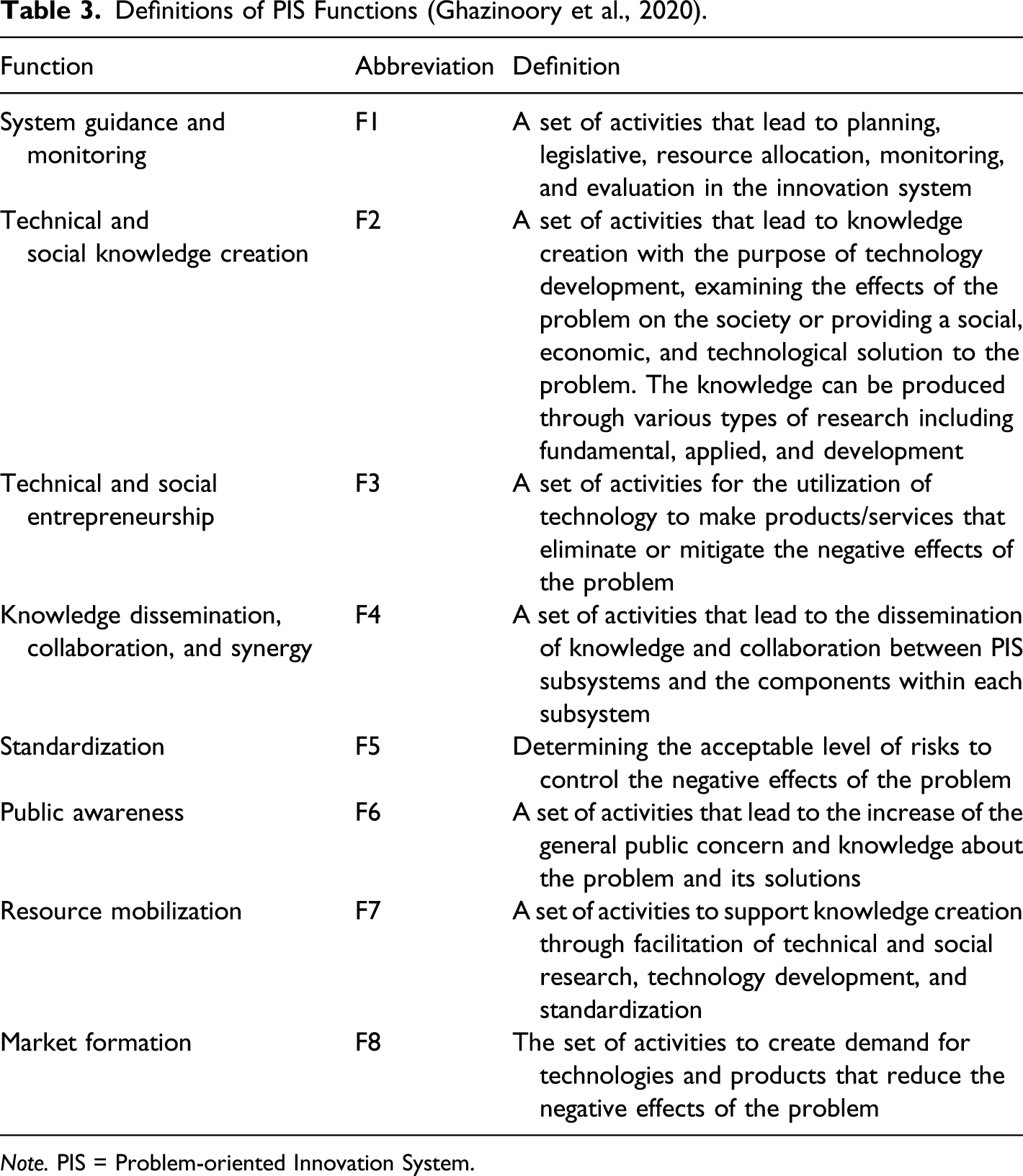
In short, the strong ties between “economic and social development” and “water management” make it inevitable to take a problem-oriented approach based on public–private partnership and discourse, to reform water management at the national level. This type of approach has been overlooked among prevalent innovation system approaches. In a recent study, this theoretical shortcoming has been addressed. Ghazinoory et al. (2020) introduced a Problem-oriented Innovation System (PIS) to analyze air pollution in the United States as a large-scale socio-technical problem. Finally, they have defined eight functions for the PIS: system guidance and monitoring; social and technical knowledge creation; technical and social entrepreneurship; standardization; public awareness; knowledge dissemination, collaboration, and synergy; resource mobilization; and market formation (Ghazinoory et al., 2020).
In this study, by using a case study, we analyze Iran’s water scarcity problem using the PIS approach. We show how this approach can resolve this problem which is threatening the thousand-year-old Persian civilization.
Water Scarcity Problem and Challenges of Water Resources Management in Iran
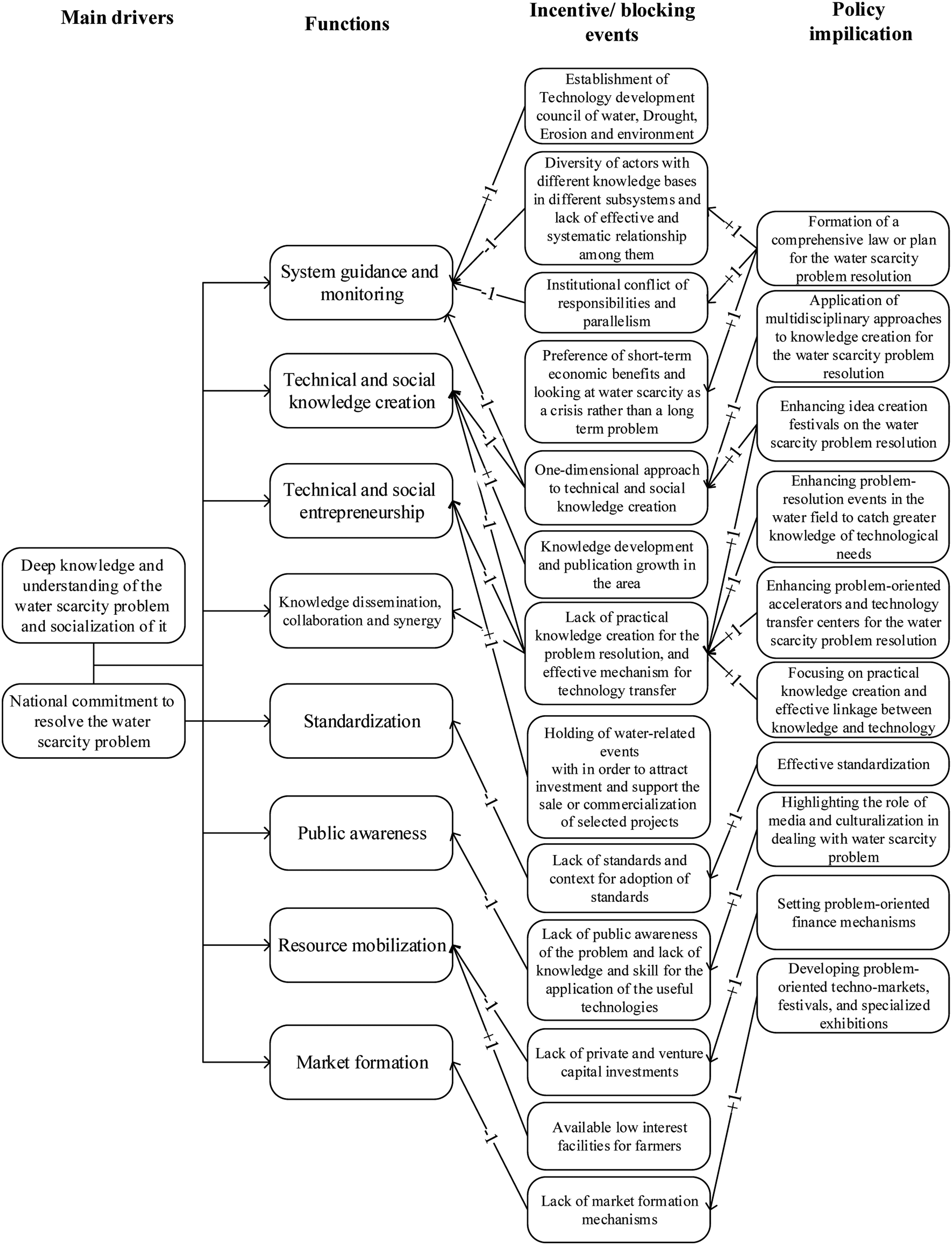
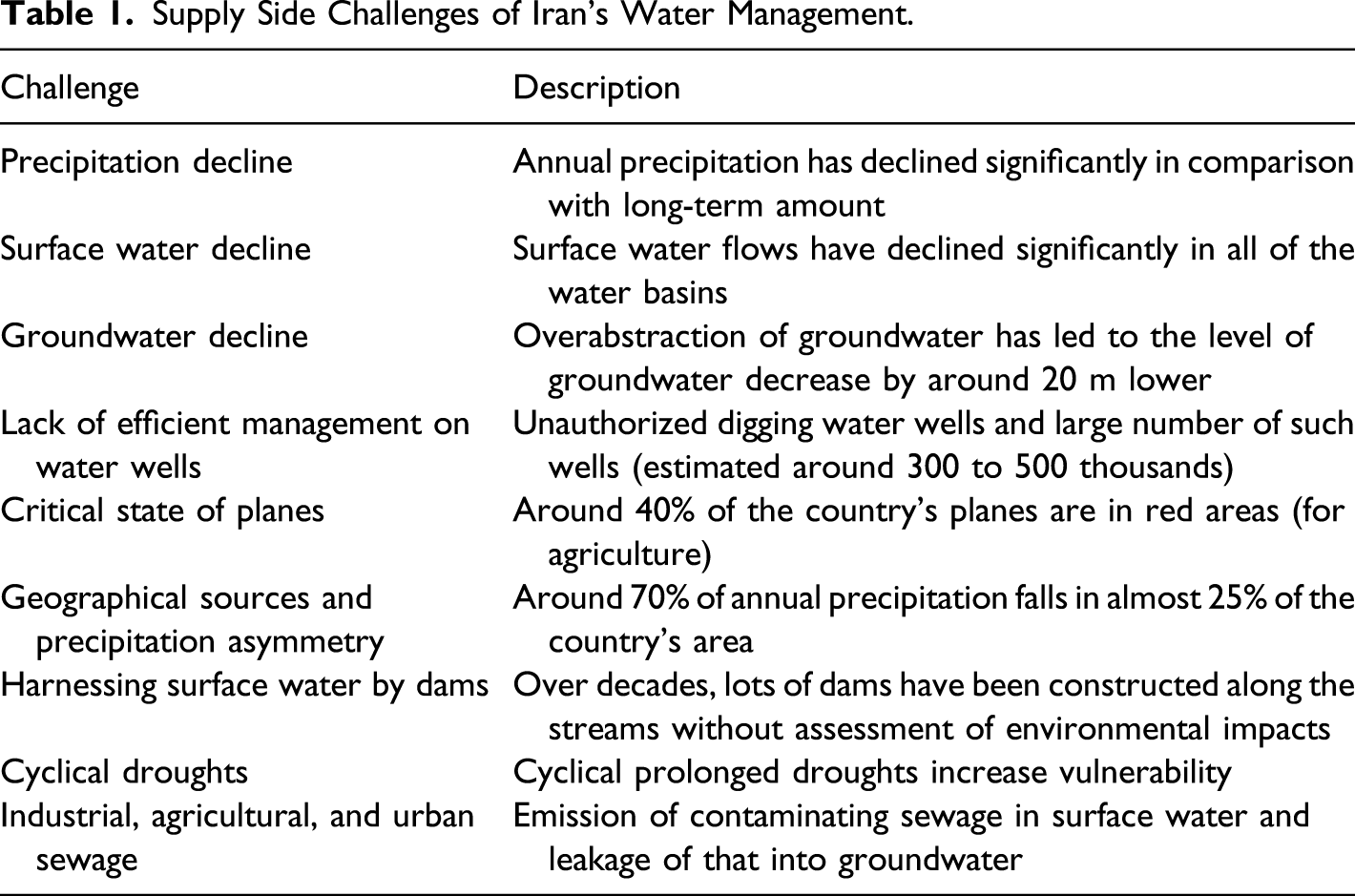
Iran’s water scarcity problem has different drivers, including natural crises like droughts, floods, and climate change; economic and political conditions such as sanctions; social factors like society’s lack of environmental awareness; and the most important, mismanagement of water resources (Madani et al., 2016). These factors have put Iran in a worrying position among drought and water scarcity indices. For example, the Falkenmark Index, the United Nations Index, and the International Water Management Institute Index show the status of Iran as “absolute scarcity” and “severe crisis.” Some of the available evidence and data such as the trend of annual temperature increase, number of wells and wells withdrawal during different years, and the trend of changing amount of renewable water resources are shown in Diagram 1–3 (Ministry of Energy, 2020; Mazaheri & Abdolmanafi, 2017). Basic steps in the research process, adapted from (Yin, 1989). Interrelations among Problem-oriented Innovation System functions (research theoretical framework), adapted from (Ghazinoory et al., 2020). Main drivers, functions, incentive and blocking events, and policy implications in the water scarcity problem of Iran based on the Problem-oriented Innovation System framework (our compilation).

Supply Side Challenges of Iran’s Water Management.
Demand Side Challenges of Iran’s Water Management.
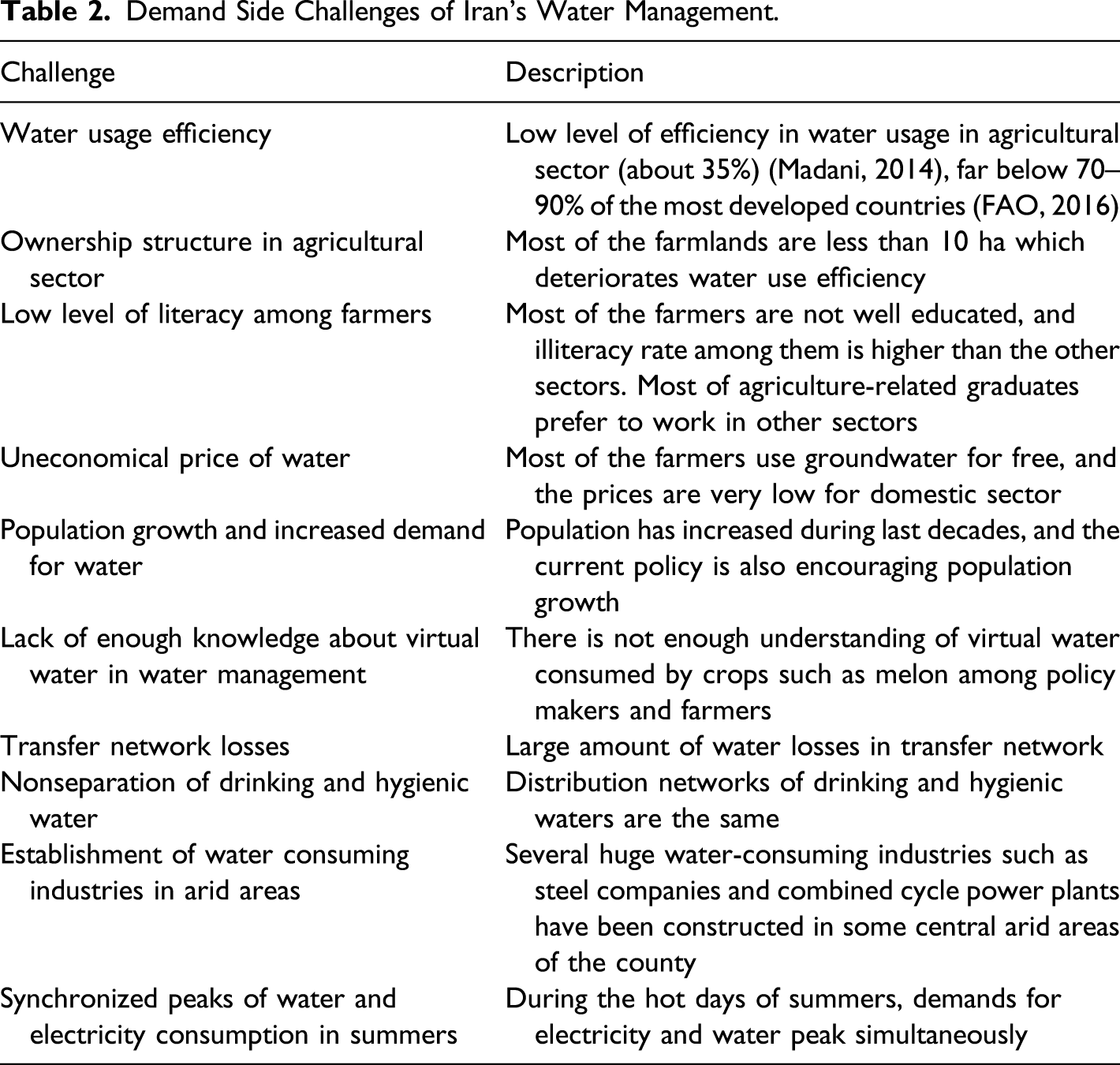
These challenges could be evaluated based on three criteria: geographical area that is affected by the challenge (regional, national, and international), need for technology to address the challenge (whether in a single technological sector or several sectors, or no need), and the necessity of public awareness and civic attention (Figure 1) The increasing trend of the average annual temperature of the country during the past decades.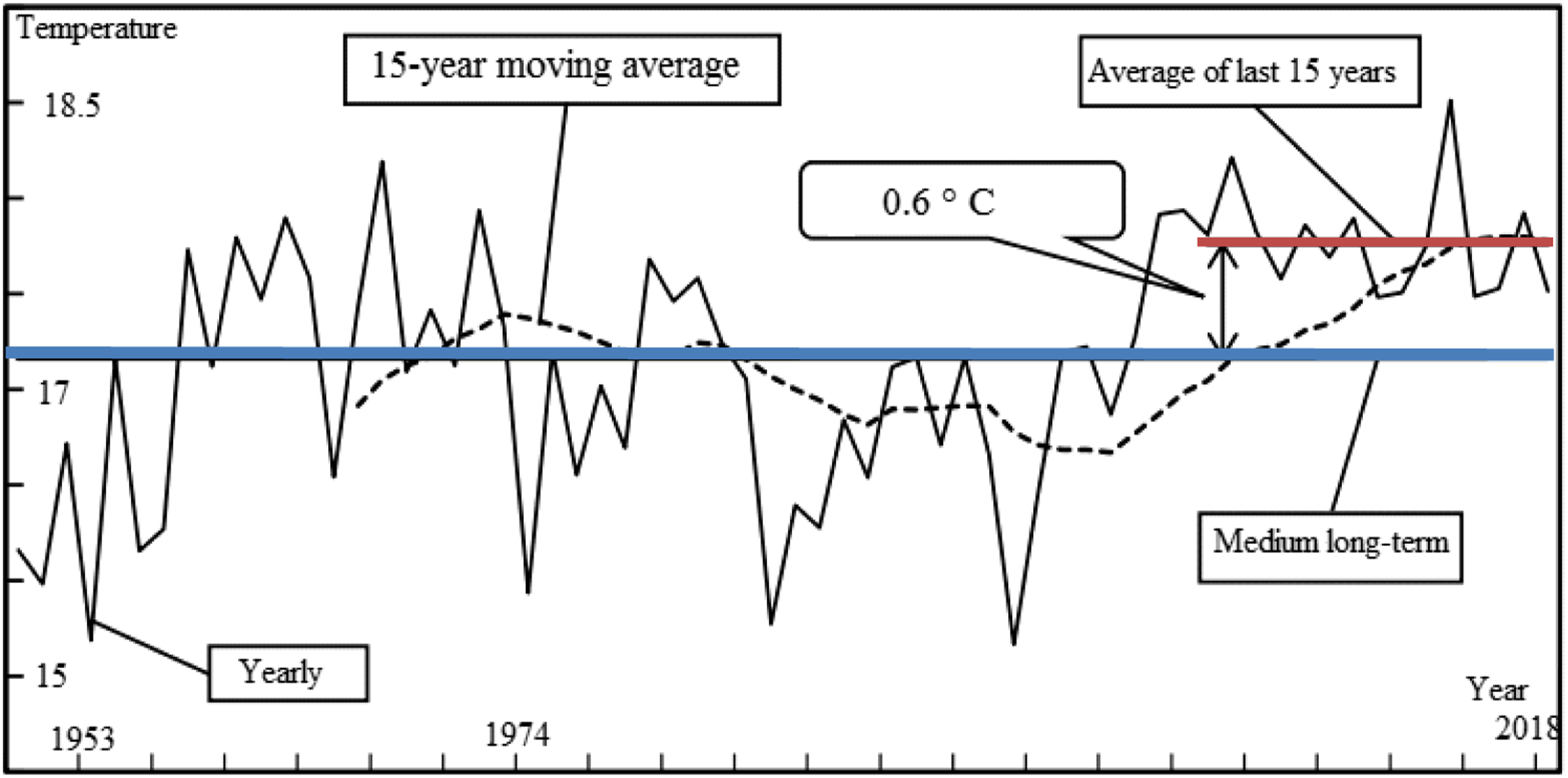
Therefore, resolution of the problems related to water scarcity and effective management requires systemic technological and social innovations. In the next section, the relationship between innovation systems and water management approaches is discussed.
Innovation Systems and Effective Management for Water Scarcity
Given the nature of water problems, managing and tackling them requires a coordinated effort among policy makers and other stakeholders: those who play a role in, and those who are affected by, actions and outcomes in the water sector (OECD, 2015). 1 The United Nations introduced integrated water resource management in the late 1990s as an ecosystem-based approach. This approach considers the relationship among natural resource systems, biophysical processes, and socioeconomic systems as a whole for water management (UNDP, 2012). 2 The World Economic Forum also considers investment in infrastructure, application of innovative technologies, modern policies, and appropriate legislation and governance in the water-related problems as inevitable elements of water resources management (Sarni, 2019).
Water-related studies might be classified into three categories: water services, water resources management, and water infrastructures. Each of these categories includes different technologies and sectors. Even technological sectors such as information and communications technology and business models may be useful for resolving water scarcity (When and Mantolvo, 2018).
However, existing approaches to manage water scarcity have not been systems-based and have focused only on specific dimensions, such as water services, water resources management, water governance, policy-making and infrastructure development, consumer awareness, private sector initiatives, legislation, and investment (Hoekstra, 2014; Msangi, 2014). Also, some other studies have emphasized the close relationship between society and water management and the importance of economic and link approaches to water scarcity management (Appelgren & Klohn, 1999; Garrote, 2017).
Therefore, given the nature of the water scarcity problem which is known as systemic issue and the arguments mentioned above, water scarcity is inherently in need of a systems-based solution. Resultantly, implementing integrated water management needs a new approach with significant changes in existing interactions between politics, laws, regulations, institutions, private sectors, and civil society bases on a systems-based approach (Mirzaei et al., 2017). OECD studies also support these arguments. Accordingly, coordination between key actors in water governance is needed to effectively manage the water scarcity problem. In this regard, interactions among government, service providers, regulators, civil society, and watershed institutions are required. In other words, the activities performed by these actors shape the functions required to resolve water-related problems (OECD, 2015).
As it was mentioned earlier, one of the useful approaches in this regard is the “innovation system.” In other words, effective water management has functions that an innovation system approach can address. Various approaches to innovation systems with different points of view from micro to macro levels have been introduced in the literature. In the following, while introducing common approaches of the innovation system, we will show why we take a PIS approach to analyze the water scarcity problem in Iran.
Geographically, there are two main approaches to innovation systems: National Innovation System (NIS) and Regional Innovation System (RIS).
National Innovation System was introduced by Freeman. He defined NIS as “the network of institutions in the public and private sectors whose activities and interactions initiate, import, modify, and diffuse new technologies” (Freeman, 1987). In this view, the geographical borders of a country are boundaries of its NIS. But, NIS does not have efficacy for water scarcity because its goal is to promote innovation in general rather than for any specific technology or sector. However, in order to resolve water scarcity, related technologies or technological sectors are needed. Finally, while most of the water management challenges (Tables 1 and 2) require civic attention, NIS pays less attention to civil society and the social aspects of innovation.
The other geographical approach is the RIS. According to Cooke et al. (1998), the main purpose of RIS is to create, utilize, and disseminate knowledge and ultimately boost innovation and competitiveness in a specified geographical region. In this approach, the emphasis is on the importance of local and regional accumulation of industrial firms—as the core actors of innovation systems—in competitiveness and technological and innovation dynamics (Cooke et al., 1998). However, water scarcity is a national problem that requires a national solution supported by policies made by the government. Therefore, RIS is not an appropriate approach to address water scarcity.
Thematically, there are two main approaches to innovation systems: Sectoral Innovation System (SIS) and Technological Innovation System (TIS). Based on Malerba’s definition, SIS is “a set of products and the set of agents carrying out market and nonmarket interactions for the creation, production, and sale of those products” (Malerba, 2002). Each sector has its knowledge base, learning processes, technological base, demand for products, and inputs. Together, these determine the system’s border, which is not typically fixed (Malerba, 2002; Viotti, 2002). Oltra and Jean (2009) have used the concept of SIS for environmental innovations. They argue that sectoral patterns of environmental innovation result from the interplay among three factors: technological regimes, demand conditions, and environmental and innovation policies. Although SIS focuses on a specific sectoral innovation and we can analyze all water-related technologies with this framework, it still has two deficiencies. First, Iran’s water scarcity problem is not only a technological problem. Resolving the water scarcity requires innovation in different areas, including technology. Second, like NIS and RIS, it lacks sufficient attention to the social problems. Finally, the unit of analysis in SIS is a sector rather than a problem.
Carlsson & Stankiewicz (1991) define TIS as a “dynamic network of agents interacting in a specific economic/industrial area under a particular institutional infrastructure and involved in the generation, diffusion, and utilization of technology.” Their view stresses the flows of knowledge/competence rather than flows of ordinary goods and services. The unit of analysis in TIS is a specific technology or technological product. Therefore, it may be used for analyzing technologies related to the water scarcity problem. But, it is not suitable for a comprehensive analysis at a macro level of a societal problem that requires the development of different technologies. Like SIS, lack of attention to social problems is a deficiency in TIS too.
Regarding the deficiencies of prevalent innovation systems approaches and nature of the water scarcity problem described above, an applicable innovation approach to Iran’s water scarcity problem should have a number of characteristics (Figure 2) Based on characteristics of an effective framework for resolving water scarcity problem mentioned in Figure 2, the PIS is the most appropriate framework to address the water scarcity among the prevalent approaches of innovation systems. Amounts of renewable water resources in different periods (billion cubic meters).
Research Methodology
The present study seeks to apply the PIS framework in resolving the water scarcity problem in Iran; therefore, it is considered an applied research. On the other hand, since this study focuses primarily on recognizing and narrating the meaning of human experiences (Levers, 2013) based on meaning-oriented methodologies, such as interviewing, to understand the water scarcity phenomenon, this research follows the interpretivist paradigm. The data collection tools in the present study are library studies, interviews, and questionnaires. Relevant data were collected during late 2019 and early 2020. The main research strategy in this study is the case study that deals with an in-depth study of the water scarcity phenomenon from different aspects (Yin, 1989). Accordingly, the research steps are presented in Figure 3 Number of wells and wells withdrawal amount in recent years.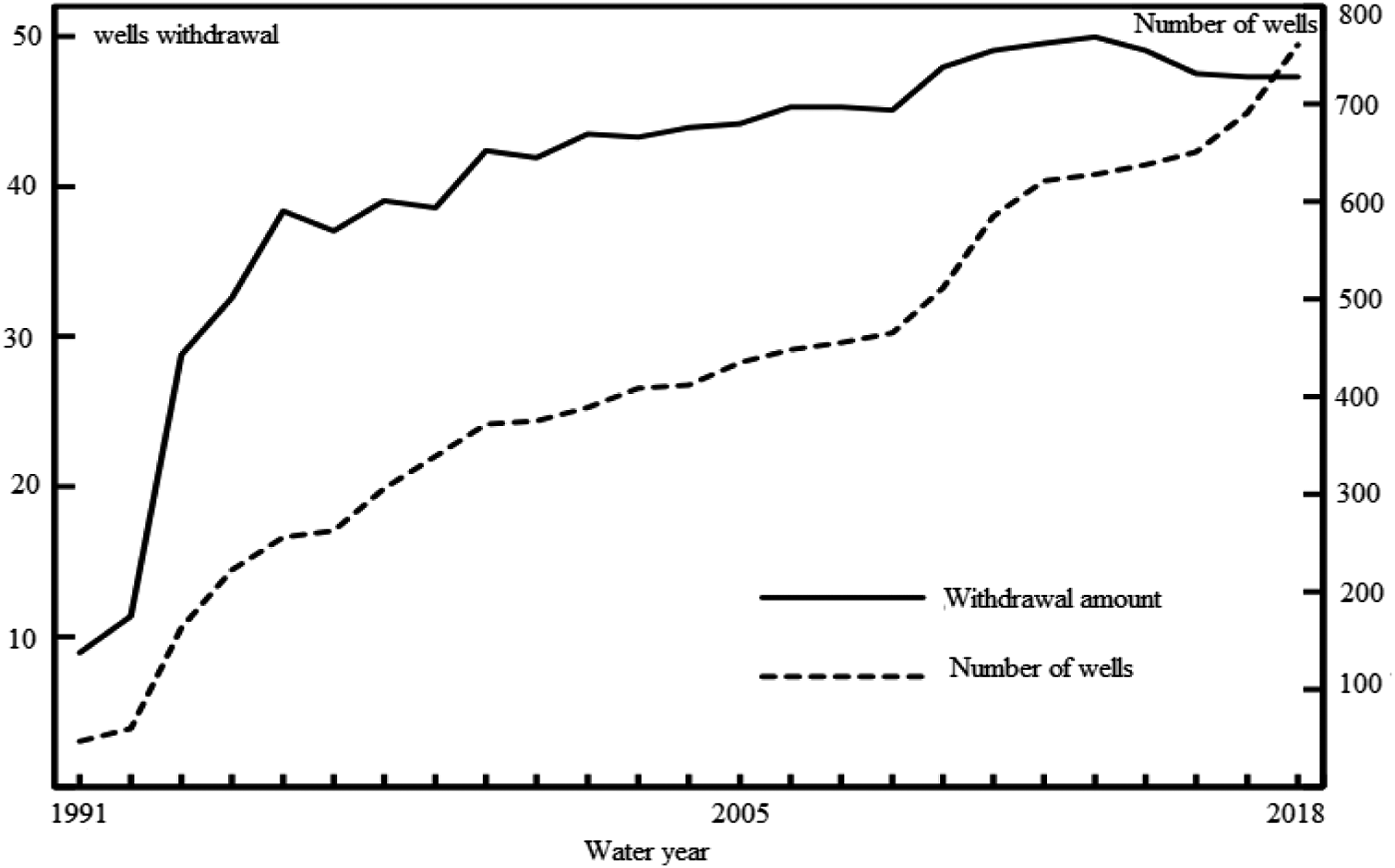
Determining the Research Question
In the case study, the research question is the start point (Yin, 1989). In this study, the research question is posed as: what is the appropriate framework for resolving the water scarcity in Iran?
Research Theoretical Framework: PIS
Definitions of PIS Functions (Ghazinoory et al., 2020).
Note. PIS = Problem-oriented Innovation System.
There are dynamic relations among eight functions of the PIS in order to resolve a socio-technical large-scale problem. These dynamics help resolution of problem in an evolutionary manner (Figure 4) Analytical framework for water resources management.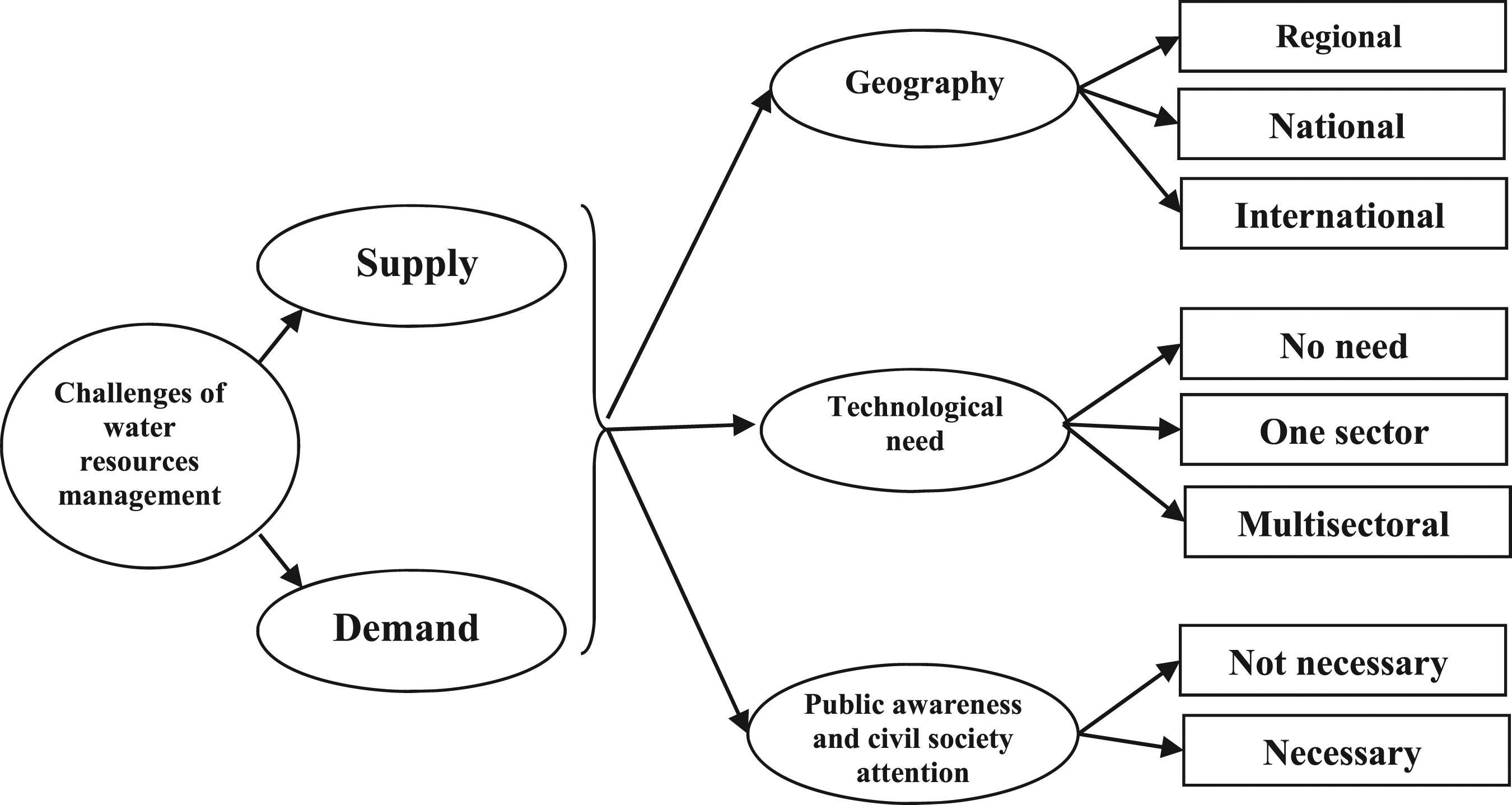
Data Collection Based on the Initial Theoretical Framework
Interviewees Statistics in the Executive and Policy-Making Layers.

In the next section, we examine the application of the initial theoretical framework to the analysis of Iran’s water scarcity problem and present a narration of the problem based on PIS functions.
Application of the PIS in the Resolution of Iran’s Water Scarcity Problem
Water scarcity is a problem that has different economic, social, political, and cultural dimensions. At the political and governance scale, various stakeholders and actors with different knowledge bases are involved from different sectors and organizations, such as Agriculture Jihad and energy ministries, Department of Environment, the parliament, and municipalities. In other words, water scarcity is a trans-sectoral problem.
But, there is no mechanism for analyzing interrelations between different policies and integration and management of performance and policy implementation in different political institutions. The Ministry of Energy is responsible for managing water and electricity, and the Ministry of Agriculture Jihad is responsible for managing agriculture and food security. While the Ministry of Energy’s main goal is to decrease water use in all sectors, especially to decrease the need for water supply rationing in the domestic sector, the Ministry of Agriculture Jihad’s main mission is to provide food security and pursue the implementation of supportive policies toward self-sufficiency and protect farmers. The Department of Environment, which is the main party responsible for environmental issues, is politically weaker than the other government sectors such as the Ministries of Energy and Agriculture Jihad. Therefore, there should be a coordinator body above the ministerial level to plan, coordinate, and monitor implementation of water-related policies. In recent years, a presidential council has been established—the Supreme Council of Water—whose main mission is policy-making and coordination in areas related to supply, distribution, and consumption of water in the country. The council is comprised of different members who are mainly from governmental organizations such as ministers of Energy, Agriculture Jihad, and Department of Environment. The president chairs the council. Despite the supreme level of the council, the current situation of water in the country calls the effectiveness of the council into question. One of the reasons might be the up-down approach to planning and coordination as there is almost no representative from the demand side, like ordinary farmers in this council.
This variety of actors and lack of a systemic approach have caused challenges and inefficiencies in the implementation of different water-related strategies and plans in the governance. For instance, conflicts and parallelism in responsibilities are among the consequences of the lack of appropriate and systemic relations among different actors in different sectors. Therefore, effective fulfillment of “system monitoring and guidance” is important in the resolution of the water scarcity problem (F1).
Lack of an appropriate national strategy or law is one of the other challenges regarding this function. This challenge is rooted in the historical disintegrated planning and managerial myopia in this country. This “symptom-based” management paradigm focuses mainly on the treatment of symptoms instead of causes of environmental problems. This means that decision-makers seek immediate economic benefits, no matter what environmental problems may appear in the long term, when they are not in charge anymore (Madani, 2014). This shortsighted vision prevents them from understanding and caring about interrelated dynamics between economic development and the environment. In the trade-off between near economic benefits and future environmental impacts, priority is always given to the short-term economic benefits. Water management and environmental management in general is practiced under the “crisis management paradigm” (Madani, 2014). This means that environmental issues are not considered as a matter of importance unless they reach a critical point (Ghazinoory & Huisingh, 2006). If water or other environmental problems arise, resources are mobilized to push the situation to a seminormal condition. Therefore, solutions are not typically fundamental and the problems reappear somehow in the future (Madani, 2014). The situation deteriorated during the last two decades, especially when the water management geographical boundaries changed from watershed to provincial. This added a political aspect to the problem as an intense competition among provinces was created whereby each province tried to maximize their water share from the shared watersheds (Zarezadeh et al., 2013), resulting in losses for all of them in the long run (Madani, 2014). But the point is that the agricultural sector consumes more than 90% of the total annual water use in the whole country, and the farmers have no choice but to overuse water to make a living. Because the amount of water they use is free of charge, they are not willing to invest in reducing of water usage.
In other words, these challenges have resulted in crisis management rather than systems-based approach and innovative governance and management of water scarcity, while many nations have shifted from drought and water scarcity crisis management to more innovative approaches (Jedd et al., 2021). Therefore, at the first step, a comprehensive strategy regarding the water scarcity problem should be formulated, and the responsible institutional body for that should be created afterward (F1).
In recent years, the Technology Development Council of Water, Drought, Erosion, and Environment (WDEE) was founded as a subdivision of the Vice-Presidency for Science and Technology, in order to perform system guidance on the water scarcity management. However, due to the lack of a systems-based view and proper communication among institutions, this council has not yet been able to play a useful and effective role. Therefore, a new framework needs to be proposed to it.
To develop research and technologies required for the resolution of the problem, a financing strategy is necessary. Therefore, after the formulation of the national strategy, an “appropriate problem-oriented financing strategy” for related research and entrepreneurial activities for the fulfillment of “resource mobilization” function (F7) are needed. However, some work has been done in this area. As an example, calls for identification and support of technological innovations in the water industry, which have been held by several universities or research organizations, could be mentioned. Besides that, some events have been formed so far. For instance, a problem resolution event for the water-related problems has been held, to identify capacities for the attraction of investor, sales support, and commercialization of the selected designs (Ecomotive Website, 2019) (F3).
Besides, regarding the agricultural sector, the Ministry of Agriculture Jihad provides low-interest loans for every farmer who decides to set up a pressured irrigation system. The Ministry also compensates around 50% of the implementation of the system. Despite these encouraging policies, modern irrigation systems have been installed in only 20% of farmlands so far. One of the reasons is that most farmlands in the country are less than 10 ha (around 80%), which is considered small in size (Keshavarz et al., 2005) that makes the application of these modern systems difficult (F7). However, these finance mechanisms are not integrated into a comprehensive strategy or law.
One of the other functions to be considered to address the water scarcity problem is “public awareness” (F6). That is because one of the other major causes of the current situation is that Iranian people were not aware of the situation for decades. It shows that the “public awareness” function of the PIS does not work properly. The Iranian society, like many other societies, does not comprehend completely the dynamics between rapid development plans and their environmental costs in the long run and therefore does not value the ecosystem properly (e.g., Asadi et al., 2018; Shobeiri et al., 2007; Veisi & Zarandian, 2012). One of the reasons is instabilities during the past decades, which have made the Iranians feel insecure about the future and therefore focused on the immediate benefits (Madani, 2014; Rezaeian and Ghazinoory, 2011) (F6).
In recent years although, the Iranian media, society, and youth have been more responsive and concerned about the environmental issues due to the improvements in the public knowledge (Kalantari et al., 2007) and the problems like the Urmia Lake tragedy and dust storms (e.g., Mokhtari Malekabad et al., 2014; Noorhosseini et al., 2017). People use social media to share information and form campaigns on environmental issues, and new media inform people about the importance of environmental and water problems (e.g., Roshandel Arbatani et al., 2016) (F6). The value of these activities is that they eventually make an environmentally educated society that does not assess the performance of elected decision-makers only based on short-term economic outcomes and pressure them to make decisions that are environmentally responsible (Madani, 2014) (F1).
Despite that, one of the challenges regarding “public awareness” is lack of enough knowledge about available products and technologies for reduction of water consumption (F6). For instance, farmers have poor knowledge and awareness about new water technologies. Therefore, educating them in order to improve their skills is necessary. Public awareness of the problem and its consequences is also important. In the United States, for instance, some people who are called “Water Police” refer to people’s homes and make them aware of water scarcity, proper water consumption models, and solutions to prevent wasting water (Sioshansi, 2011).
In recent years, lots of research related to environmental issues, especially water management, has been done and lots of articles have been published in academic journals. Iran has achieved the ninth place in the world and the first in the Middle East in 2018 in publications related to water technologies which led to increased public awareness (Scimago Institutions Rankings, 2019).
Lots of university graduate programs in environmental sciences have been established, and there have been many graduates by now. As the water crisis has been recognized as a societal problem in academia, many dissertations in graduate studies in nonenvironmental disciplines are also encouraged (F7) to focus on environmental problems and eco-innovations (Chen et al., 2017) (F2). So far, these dissertations in IRANDOC 8 database have reached more than 20 cases of water scarcity problem annually. In addition, research centers such as the Research Center for Water scarcity and Drought in Natural Resources and Agriculture and the Center for Drought Studies were established (Morid, 2018).
Another problem in the PIS context, is “knowledge dissemination, collaboration, and synergy” malfunction (F4). There is no mechanism for the integration of knowledge and practice in the development of water management technologies. For example, many new water management technologies, especially in the agricultural sector, such as pressured irrigation and irrigation sensors to control the outgoing waters from wells, are now available for Iranians, and Iranian experts can design and apply them in farmlands. International sanctions have limited Iranian access to technologies and therefore slowed the speed of development, but the problem is not due to lack of access to technologies or technical expertise but rather the disintegrated decision-making and problem-solving and the fact that qualified experts work individually (Madani, 2014) (F4).
Knowledge and technology, generated in universities and research institutions, are accessible through publications or patents. Moreover, each year several national conferences on the water crisis are held by different institutions to facilitate knowledge sharing among scholars in the related disciplines. Also, media and virtual social networks and messaging applications have facilitated and accelerated knowledge dissemination, as well as their important role in realizing public awareness. Despite that, one of the challenges in this regard is that environmental issues are typically interdisciplinary, and problems related to them and their impacts are also multidimensional and interrelated (Huisingh et al., 2015). Thus, actors who strive to find solutions for environmental problems should understand different aspects of the problems to be able to reach feasible solutions that do not negative impacts on other aspects of everyday life. Today’s water scarcity problem in Iran is the result of decades of one-dimensional development planning targeting only on improving economic indicators (F4).
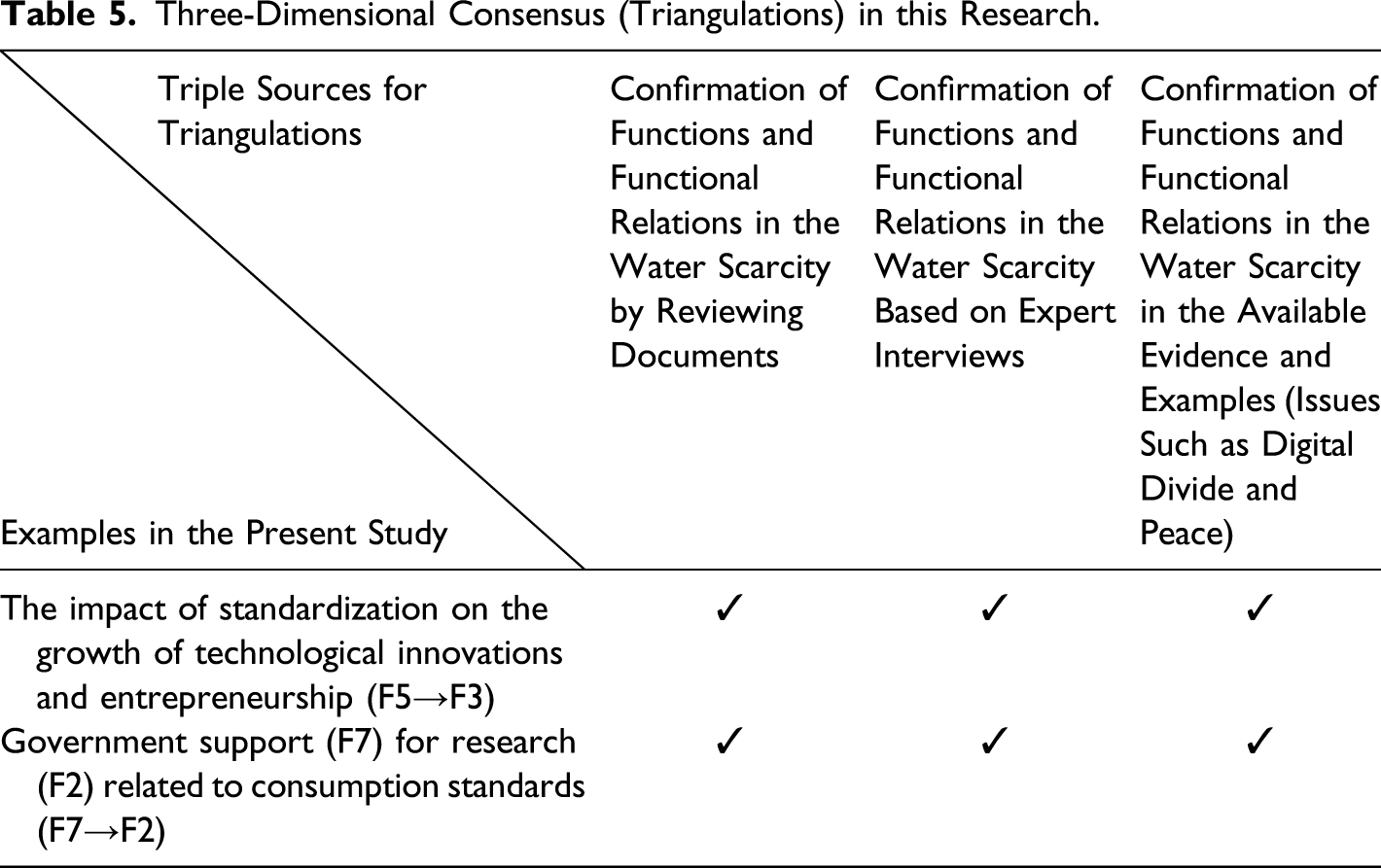
Economists, who formulated these plans, did not have considerable knowledge about environmental sciences. Today, the challenge may appear oppositely. Policies and technologies applied to resolve the problem have not been effective. Because they emphasize solely on environmental indicators, they ignore human aspects (as a part of the ecosystem) including economic, social, and political aspects. One of the reasons might be the lack of scientific relationships among scholars studying the problem from different areas of science and technology. Considering this point at the macro level in the context of “system guidance” on making policies to direct research and promote scientific interchanges among academics may improve the situation. Scientific and academic institutions usually do not go beyond making a pilot model or prototype in the innovation value chain. In other words, the lack of effective relationship between the created knowledge and its commercialization (which means innovation) is another challenge in the “knowledge dissemination, collaboration, and synergy” function. That means, despite the development of public knowledge and the growth of publications on the water scarcity problem (according to the data extracted from the SCIMAGO Journal and Country Rank), 9 related technologies have not been developed proportionately. This problem stems from the weakness in technology development through local knowledge as well as through international collaborations. One of the important solutions in this regard is to design specialized and problem-oriented mechanisms for the transfer of knowledge and technologies, such as technology transfer or growth centers (F4). In other words, innovations need to be commercialized by entrepreneurs to be adopted and applied by potential users. Commercialization requires “market formation” as well (F3 and F8). Market formation here means to prepare the situations so water users feel there is a need to use new solutions and be motivated to use them. One of the ways to generate demand for new technologies from the government point of view is to put requirements through regulations (F1). One of the solutions for this problem is government support (F7) for research (F2) related to consumption standards and water scarcity indicators (F5).
Standardization (F5) encourages the creation of technological innovation in environmental areas to comply with determined standards (Makkonen & Inkinen, 2018) (F3) and stimulates demand and market formation (F8). The Ministry of Energy is the main body responsible for setting standards for water consumption in different sectors. By now, different standards have been set in this regard and some of them have been enacted for many years. But, there has not been sufficient monitoring on compliance of end users with standards before the conditions became critical. For example, most affected areas of the country in terms of water scarcity and droughts have been detected and declared as banned areas in which digging new wells are strictly prohibited. By now, hundreds of unauthorized wells have been filled by the authorities. However, this number cannot be influential as the total number of unauthorized wells is much higher at around 400 thousand wells (Irna, 2019). Additionally, while standard water flow for agricultural wells has been defined, there is no standard for the water consumption per hectare. Lack of such standards as well as the very low price of water encourages farmers to continue traditional irrigation methods and not adopt new irrigation technologies. In the domestic sector, for each consumer, a mandatory counter is installed at the main pipe of the building to calculate the total amount of consumed water. Standard price categories have also been defined so that, depending on the consumption, prices are raised exponentially. Standards in other sectors and aspects are compiled by the authorities or academia, or projects for the compilation of them have been identified. To sum up, more than the lack of availability of standards, the problem is the implementation and integration of the standards (F5).
Some necessary activities should also be done related to the “technical and social entrepreneurship” (F3). The development of problem-oriented scientific parks and accelerators might help to stimulate entrepreneurial activities. For example, Watech 10 is a specialized accelerator in the area of water that has been able to make a suitable platform for fostering and commercializing creative and innovative ideas.
Besides, today, pressured irrigation technologies are produced at an industrial scale in the country and are available to be used in the farmlands. Moreover, the Iranians have acquired quite good expertise at the construction of hydraulic structures and in some areas, such as dam construction, they have accomplished some international projects (e.g., Kiamehr, 2017). But, in the domestic sector, no mentionable technologies have been introduced to decrease water use. People are only advised to decrease their water use and almost the only tool to control their water consumption is price regulation by the Ministry of Energy, which has not been prohibitive, because water bills in households' monthly total costs are not significant.
In the energy sector, because of considerable economic benefits in reducing consumption, some companies have been formed as “Energy Service Companies” that help people adopt new energy-saving technologies. In return, the price of saved energy is paid to these companies for a period of time (e.g., for one year). In the water sector, the establishment of such companies has not been feasible due to the low price of water. Especially in the agricultural sector, irrigation water is almost free and farmers pay only for construction, maintenance, and energy needed for abstraction and direction of water from the source to the plant facilities and/or royalty. In case of proper pricing, commercialization and entrepreneurship in this section become economical as well.
Besides policy-making and standardization, technological regimes and market conditions are also important for environmental innovations (Oltra and Jean, 2009). Every business needs markets to survive and this is also true about new water management technologies. Development of problem-oriented techno-markets, festivals, and specialized exhibitions might be effective.
Relations among real events and different functions of Iran’s PIS of water scarcity support the preliminary theoretical framework of the study, that is, the PIS functional framework (Figure 4). Incentive and blocking events in the PIS have caused an emergent PIS to be formed. Figure 5 indicates the main incentivizing/blocking events and related policy implications previously mentioned. In this figure, it is shown whether each event is incentivizing (+1) or blocking (−1). Two main incentives according to the PIS framework are “deep knowledge and understanding of the water scarcity problem and socialization of it” and “national commitment to resolve the current societal problem (i.e., the water scarcity problem).” Main characteristics of an effective framework for resolving water scarcity problem.
Evaluation of the Research Quality
The last step is the validation of research in which the quality of the case study is evaluated (Yin, 1989). In this research, three tests are used to establish the quality of the case study including internal validity, external validity, and reliability
Internal Validity
There are several methods for evaluating the internal validity of the research. In this research, content validity ratio (CVR) introduced by Lawshe (1975) has been used to evaluate the internal validity of the research based on the opinions of experts. To this end and to ensure the validity of the PIS functional framework on Iran’s water scarcity, 10 experts were interviewed to get their opinions. Also, at the end of the interview, a number of questions were asked about the possibility of applying the PIS functions to the Iran’s water scarcity problem based on a three-point scale (not necessary, useful but not essential, and essential). For a minimum of 10 experts, the minimum value of the CVR index is 62%. In this research, since the value of CVR index for all functions and functional relationships (Figure 4) was higher than 62%, the PIS framework has internal validity for the water scarcity problem in Iran.
External Validity
According to the Yin (1989), there are several methods for evaluating external validity, one of which is the pattern-matching 11 method. In this research, the theoretical framework of the PIS has been applied in Iran’s water scarcity problem. Additionally, the PIS framework has been applied in some other problems such as Iran’s digital divide (Nasri et al., 2020), peace engineering (Ahn & Yi, 2021), earthquake (Nasri & Ghazinoory, 2020), and COVID-19 (Farzad et al., 2020) which shows the generalizability of the PIS framework.
Reliability
Three-Dimensional Consensus (Triangulations) in this Research.
Discussion and Concluding Remarks
Theoretical Implications
In this article for the first time (both nationally and internationally), we tried to apply the PIS as an approach to use innovation and technology in the resolution of environmental problems such as water scarcity. This approach analyzes the problem systemically and considers all aspects of the problem including technical, economic, and social as well as environmental and proposes innovation to resolve such problems. The main difference between the PIS and other approaches to innovation systems is that other approaches, such as TIS, SIS, and NIS, focus mainly on the innovation itself or the process of innovation, and they consider defined geographical, sectoral, and technological boundaries, while the PIS focuses on the socio-technical problem at the macro level. In addition, the main difference between the PIS and social innovation is its systemic approach to innovation across sectors. Therefore, these are the reasons that show briefly why we have used the PIS for the analysis of Iran’s water scarcity problem, instead of the prevalent innovation systems.
Based on the data analysis, it was indicated that the PIS approach is able to resolve Iran’s water crisis and improve the management of water resources systemically through the application of science, technology, and innovation. Hence, proposing the theoretical framework of PIS approach for water scarcity helps policymakers to effectively manage and govern water-related problems.
Policy Implications
The research findings indicate that the PIS of Iran’s water scarcity is immature and emerging. This challenge stems from the ineffective implementation of PIS functions. To achieve a mature PIS in Iran’s water scarcity problem, a systems-based approach to water management and synergy among different subsystems is necessary.
According to the structural (institutional) and functional approach, concluding remarks and policy implications for the Iran’s water scarcity problem in the PIS context may be summarized as follows: System guidance, which means a powerful regulator and coordinator body at the highest level of the government, is the most important part of the system structure. This body must have a problem-oriented and holistic view seeking the application of knowledge and innovation in resolving the problem. Therefore, there is a need to formulate a national strategy or law and to apply the new generation of problem-oriented innovation policies. Besides, priority setting plans in the area of technology development and technological collaborations in the water scarcity problem are also important. Another important point is to strengthen standardization. Manufacturers and targeted users may not be willing to adopt a specific technology, unless the standards and regulations require using of that or consider some rewards for the adoption (Makkonen & Inkinen, 2018). Therefore, it is necessary to pay attention to proper standardization and regulation in the water sector and consider all aspects of the problem and related dynamics and impacts in the process of policy-making. Comparison of water tariffs in Iran with some countries shows that there is a significant difference in this regard. This low tariff severely affects the efficiency of the water management system. Considering the use of 92% of Iran’s renewable water resources in the agricultural sector, one of the effective ways in managing water demand in Iran is to reorganize the consumption pattern of agricultural sector. Economic valuation of water resources and appropriate tariffs for irrigating agricultural products are important in this regard. Therefore, one of the possible driving forces to increase the efficiency of water use in Iran is the modification of tariffs. This can help the economic feasibility of commercialization and adoption of innovations. It also decreases the persistent need for governmental support from the public budget. It is important to formulate policies to prioritize the development and transfer of technologies in water-related problems and to support the establishment of laboratory networks for the development of technologies needed in this regard. For example, encouraging the development of technologies for desalination of seawater and the use of desalination plants, wastewater treatment, and closing the water cycle in agricultural sectors by reusing treated wastewater for irrigation will strengthen the technical and social entrepreneurship function. Development of specialized incubator and accelerators is one of the stimulus measures for entrepreneurship and water technology development. According to the assessment of Iran’s water situation by some indices, it seems that water management is possible through proper management of existing water resources. Hence, it is necessary to set up a national drought monitoring system to strengthen the system guidance function and improve the management and evaluation of water supply and demand in the PIS of Iran’s water scarcity. The country’s food security policies, especially in water-intensive crops, have sometimes contradicted the management of water scarcity and exacerbated the drought crisis. Therefore, the coordination and synergy of these policies should be considered in the system guidance function. It is necessary to decentralize decision-making power from government institutions (especially the Ministry of Energy, the Plan and Budget Organization, and the Ministry of Agriculture Jihad) and move toward a participatory approach with stakeholders and nongovernmental sectors in the water resources policy process to reduce government hegemony in water scarcity management and improving the performance of the system. For example, supporting the effective formation of the National Farmers' Union as a large sector related to the water demand side in Iran and involving them in the policy-making process can be effective. Changes in water consumption patterns are an important issue. In this regard, strengthening public awareness is one of the important solutions. General knowledge and the level of people responsibility have a significant effect on the pattern of water consumption. Therefore, the more people are aware of the water crisis outcomes, the more appropriate they will behave in water consumption.
Footnotes
Declaration of Conflicting Interests
The author(s) declared no potential conflicts of interest with respect to the research, authorship, and/or publication of this article.
Funding
The author(s) received no financial support for the research, authorship, and/or publication of this article.
