




Abstract
In southeastern Morocco, irrigated agriculture is expanding rapidly in a desert area formerly characterized by oasis agriculture and livestock grazing. The 2008 Green Morocco Plan (GMP) is fueling this expansion with incentives encouraging agricultural growth and foreign investment. Despite the GMP’s green, poverty fighting claims, job opportunities are low-paying and unreliable and water supply is decreasing. Outsider investors and farmers benefit from free groundwater and cheap local labor, leaving locals to deal with the long-term ecological damage. This research utilizes a mixed methods approach including document analysis, semi-structured interviews, household surveys, and a roundtable discussion. It examines GMP implementation in Boudnib as a continuation of historical, state-managed water policies that emphasize technological fixes and ignore associated social and environmental costs. It calls for action on the part of those in power to prevent the deepening of existing inequalities and threats to the livelihoods and environment of already vulnerable populations.
Introduction
I sat down one evening to interview Omar 1 , the owner of a cyber café in Boudnib, Morocco. Omar is all too familiar with the rise and fall of ever-changing technologies. Business at his once thriving cafe on the main street of Boudnib, a town of 12,000 people in the southeastern desert of Morocco, has slowed to a crawl. Once the only option for accessing the world wide web, the plethora of smartphones and cafes with Wi-Fi serving tea and coffee have all but replaced the corner cyber café, serving only internet by the half hour on slow, outdated computers. He described the effects of the expansion of another new technology in Boudnib, large-scale drip irrigation agriculture. Beginning in 2014, irrigated agriculture in the Boudnib area of southeastern Morocco expanded rapidly with the construction of farms belonging to foreign investors, the royal family, agricultural firms from other parts of the country, and more recently smaller plots acquired by local people as former communal lands are divided and privatized. This local eruption of activity and investment is part of a national development plan in Morocco that reflects global efforts promoting irrigated agriculture and the liberalization of land markets as engines for rural development and economic growth (World Bank, 2013).
In Morocco, this trend can be seen in the 2008 Green Morocco Plan (GMP) for promoting agricultural development to improve rural livelihoods (MMAFRDWF, 2014). In Boudnib, the GMP specifically focuses on intensive irrigated date palm production. The GMP’s green label affirms Morocco’s projected international image as a leader in environmental policy (Del Vecchio & Barone, 2018. p. 646). Further, the plan claims to fight poverty in rural areas through increased economic opportunity.
Omar complained that foreign investors are profiting from the natural resources of Boudnib, exploiting cheap labor, and giving little in return. Local people lack the means to compete with foreign investors. Echoing the sentiment of many community members interviewed, Omar imagined that development in Boudnib would include the provision of a hospital, better roads, an agricultural job training center, more schools for the growing population and specifically a girls’ boarding school to further the education of girls from the surrounding villages.
This paper examines the transformation of agricultural systems and their impacts on livelihoods. Following a mixed methods approach, it includes document analysis, household surveys, a roundtable discussion, and interviews. It draws from scholarship on the role of irrigated agriculture in development and from critical development studies. This research responds to calls from development scholars to evaluate the on-the-ground reality of rural development projects (Bennett et al., 2018) by examining the early phases of a GMP irrigated agriculture project.
This research finds a disconnect between the stated objectives of the GMP and its implementation on the ground. Its green label and poverty alleviation claims mask ecological damage and limited economic opportunity for local people. This has implications for GMP application elsewhere in Morocco and for the implementation of irrigated agriculture development around the world.
Methods and Approach
This project uses document analysis, semi-structured interviews, household surveys, and a roundtable discussion, to understand the effects of irrigated agriculture on local people and the environment. This integration of qualitative and quantitative methods addresses the heterogeneity of households in Boudnib while producing an in-depth understanding of those households, increasing the overall strength of the research study (Creswell, 2008). Data is derived from 3 months of intensive research conducted in the study area between May and August 2018.
First, the author analyzed official documents on the GMP and agricultural development processes in the study area. These include documents from the Moroccan Ministry of Agriculture, the World Bank, and the United Nations Environment Programme.
Second, 66 semi-structured interviews were conducted in the study area using a snowball sampling strategy. Interviewees include farm owners and managers, farm laborers, local government, NGO, and tribal leaders, employees of agriculture-related industries, business owners, the ministries of water, agriculture, and development, nomads, speculators, and various other individuals impacted by the GMP in Boudnib.
Third, quantitative data was gathered through 168 household surveys administered by three local women research assistants between May and August 2018. The original intention was to conduct the household surveys by going door to door to every 10th house; however, because of opposition from some local government officials and out of consideration for the safety of survey enumerators, the surveys were conducted using convenience sampling. Although the author obtained research clearance from the Moroccan government well in advance of beginning research, because the research area included both rural and municipal areas with separate governing bodies, some government officials were aware of the research clearance while others, allegedly, were not. In consultation with a local research assistant, we organized meetings with each of the local government officials upon arrival informing them of our research plan. Some officials, presumably those who had not received news of the research clearance, were initially opposed to the surveys and interviews and would sometimes send government employees to sit outside of the lodging of the author and main research assistants until the issue was resolved. The enumerators lived on opposite sides of the community and began by surveying their immediate neighbors, relatives, and acquaintances. They gradually expanded out to other parts of the community and at various events such as weddings and baby showers as the government official situation was resolved. Surveys in the surrounding villages were conducted by enumerators during semi-structured interviews in those areas. Enumerators would begin by surveying people they knew or found outside of their homes or gathering water and then proceed door to door as time allowed. This likely contributed to the survey’s bias towards female survey respondents (See Appendix B).
Finally, a roundtable discussion with stakeholders in Boudnib was hosted by a local NGO at the conclusion of this fieldwork. Stakeholders included local associations, government officials, tribal leaders, farmers, community members, and other key individuals involved in water and economic and social development in the area. Preliminary research results were presented and stakeholders shared their concerns and perspectives on water and development issues.
Conflicting Views on Irrigated Agriculture and Development
Governments face challenges in managing groundwater use (Molle & Closas, 2015; 2020). As an invisible resource with many users and unclear water rights, groundwater control often shifts to the domain of the state. Molle and Closas (2020) examine the prevalence of state-centered groundwater governance and acknowledge that it is largely ineffective. They identify three main policy objectives that states use to address severe groundwater depletion: “(a) preventing the drilling of new wells and increased depletion of the aquifer, (b) controlling or reducing the water abstracted by existing wells, and (c) increasing supply through water transfer and/or recharge” (Molle & Closas, 2020, p. 2). The last point, in the form of dam construction, has been the main strategy historically applied in Morocco (Ennabih, 2020). A common challenge of the first two points is enforcement. Additionally, depending on the timing of well-drilling or water metering regulation, there is often a backlog of illegal wells that need to be shut down or brought into compliance (Molle & Closas, 2020). Even when government regulations are in place, people are reluctant to comply due to a fear of fees and new costs incurred from the installation of water meters. Enforcement is a challenge as “registration and licensing processes are bedeviled by the cost and time needed to process files, by the lack of capacity to check reality on the ground, by the lack of budget and staff of agencies, by political pressures and the capacity of influential people to circumvent the rules and get authorizations, [and] by the lack of knowledge of the hydrology, which invariably results in the over-allocation of rights” (Molle & Closas, 2015, p. 3).
Although often justified as aiding smallholder farmers, Molle and Closas (2015; 2020) attribute the lack of well regulation enforcement to profits derived from unregulated wells by powerful beneficiaries. In the long run, the lack of regulation “benefits users who are able to drill deeper (and illegal) wells and extract water at a higher cost, and gradually displace those who cannot” (Molle & Closas, 2015, p. 3) This encourages continued unregulated well-drilling (Closas & Molle, 2016). Currently, the number of wells in Morocco is not known or estimated. Closas and Molle (2016) attribute declining water tables and well depths in southwestern Morocco to the expansion of unregulated private irrigation. Further, some scholars (Del Vecchio & Barone, 2018; Grafton et al., 2018) illustrate the paradox of the green technology of groundwater-sourced drip irrigation, arguing that it results in increased water use through the planting of more water intensive crops and the expansion of agriculture into more arid lands. One potential strategy for controlling water use is indirect regulation through raising awareness of the issue, banning high water use crops, and adjusting energy costs (Molle & Closas, 2020).
The impacts of irrigation in Morocco have been documented by development agencies and some academics in southwestern Morocco (UNEP FI, 2009; World Bank, 2016). However, the effects of large-scale irrigation on rural livelihoods remain unexamined in the more water-scarce context of southeastern Morocco. The dangers of overdrawing aquifers are well-documented, often resulting in land subsidence, salinization and a reduction in water quality, water and food shortages, higher food prices, and social instability (Cho, 2015). Agricultural expansion in other areas of Morocco has had devastating effects on water supply and local livelihoods (Wright, 2020; Tekken & Kropp, 2012). As one of the top regional exporters of watermelons, Zagora, Morocco, a town 400 km southwest of Boudnib, has suffered from a declining water table and reduced drinking water quality due to the large-scale planting of this water-intensive crop (Al-Talbi, 2021).
In Morocco, development narratives promising jobs and economic growth mask concerns about an overdrawn water supply (Akesbi, 2012). Tania Murray Li (2014) questions claims by optimistic development narratives that economic growth and the expansion of markets lift rural people out of poverty and benefit all strata of society. Examining a palm oil plantation case in Indonesia, Li argues that the actual jobs generated by this development are few, existing smallholders are often excluded, and that poverty is inevitably produced alongside growth.
Expansion in irrigated agriculture is promoted as a means of providing jobs, but as Houdret (2012, p. 291) argues, “working conditions in large agribusiness companies are far from satisfactory [with] high rates of informal employment, low salaries, [and] no social security.” Women are particularly targeted for these exploitative job opportunities. The quality and sustainability of employment opportunities must be considered in addition to quantity for these economic opportunity interventions to make progress in fighting rural poverty.
Numerous examples of development projects that continue to be implemented in the name of rural poverty alleviation, but inevitably fall short, raise important questions about their continued implementation (Bennett et al., 2018). Some development scholars (Ferguson, 1990) suggest that development interventions provide the opportunity for infrastructural and administrative expansion of the state into as-yet-unreached areas, while others (Scott, 1998) focus more on development interventions as ways of standardizing individual subjects for easier control by the state. Interventions by the State, according to Ferguson, justified by the demand for national development, consist of a visible structure that often masks invisible components of the actual process. As a result, the rhetoric of development plans can be neither dismissed nor accepted at face value. These plans, “constructed within a conceptual apparatus [,] do have effects [,] but in the process of having these effects they generally ‘fail’ to transform the world in their own image. But ‘failure’ here does not mean doing nothing; it means doing something else, and that something else always has its own logic” (Ferguson, 1990: 276). This research examines GMP implementation in Boudnib using a critical development theory framework.
The Study Area: Boudnib, Morocco
Boudnib is located in the southeastern desert of Morocco near the border with Algeria. With an average annual rainfall of 100–150 mm (4–6 inches) (Alterra, 2012), the climate is hot and dry with summer temperatures in the triple digits. Boudnib is surrounded by eight smaller satellite villages that have remained tribally divided. Four of the villages are primarily Amazigh (the indigenous people of Morocco) in origin, two are primarily Arab, and two are settled primarily by former slaves of mixed sub-Saharan African descent. Tribe in this context refers to a social division of people who trace their origin to a single family patriarch. In southeastern Morocco, tribal identity remains an important distinction among people in the area with one’s aasl or origin serving as a primary distinction when talking about members of the community. The majority of Boudnib’s population hails from one of the surrounding villages or other nearby tribes, so it is a mix of Amazigh, Arab, and people of mixed sub-Saharan African descent. Due to its strategic location near the Algerian border, Boudnib has five military bases, contributing a sizable transient military population.
The Green Morocco Plan (GMP)
Launched by King Mohammed VI in 2008, the GMP boasts the twin objectives of: 1) promoting modern agriculture and increasing productivity by encouraging private investment and increasing agricultural exports and other agriculture-related industries, and 2) “improve [ing] the living conditions of the small farmer and… fight [ing] poverty in rural areas by raising agricultural income in the most vulnerable areas” (MMCC, 2013, p. 1). The GMP defines two pillars or types of projects. Difference in suitability for agriculture is the main distinction with Pillar II areas defined as marginal zones with unfavorable growing conditions and dependent on direct aid from the state (MMAFDRWF, 2014, p. 1). The GMP divides the country into 16 regional plans with different agricultural focuses depending on suitability. Building blocks of the GMP include: (1) state incentives such as 70%–80% rebates on private investments in the agriculture sector, (2) promoting sustainable agriculture through water-conserving irrigation systems and the use of renewable energies, (3) accelerating land titling and the privatization of public and collective land, (4) adopting water management policies that emphasize the use of water for high value added crops, and (5) modernizing distribution channels to ease the transfer of agricultural products to the national market (MMAFDRWF, 2014).
The GMP in Boudnib, Morocco
Implementation of the GMP in Boudnib started in earnest in 2014 with a specific focus on intensive irrigated date palm production. Categorized in the GMP as a pillar II area because of unfavorable growing conditions, Boudnib is set to receive extensive aid for agriculture from the state. However, the majority of the land around Boudnib is communal, belonging to the local tribes. A significant criticism of the GMP across Morocco is its co-option of tribal land (Akesbi, 2012). The Tribal governments in Morocco retained significant power and autonomy for centuries, but French colonial rule began breaking down the power of the tribes and this process continued until by the early 2000s almost all tribal power was lost (Smallholder Farmer 1, 2018). However, recent land divisions have partially restored tribal power, at least in the short-term. The Moroccan government mandated a new form of tribal authority, an Association Sullalia, for each village that determines the eligibility of individuals to receive communal land (Local NGO Leader 1, 2018). Each Association Sulalia has an elected group of leaders from each of the original families of the tribe with one main leader who makes final decisions regarding land division issues. The main land division leader must be approved by the Qaid (local appointed representative of the Monarchy) and in many cases is directly selected by the Qaid (Smallholder Farmer 1, 2018). The Association Sulalia of each tribe determines who is eligible to receive communal land and tribal members must submit formal paperwork requesting GMP land (Local NGO Leader 1, 2018). Some tribes now allow women to inherit communal land while others do not. This has been a source of contention involving protests and marches by women’s groups from the villages to the Qaid’s office in town center (Smallholder Farmer 5, 2018). Disputes have also arisen within tribes such as whether tribal members who no longer live in the area will be allowed to inherit land (Smallholder Farmer 5, 2018). Additionally, land tenure issues rooted in colonial governance created tensions between tribes as paperwork issued by the French Colonial government differs from that issued by the Moroccan State (Smallholder Farmer 5, 2018).
The result of these historical, political, and global processes helps define the two main types of actors investing in irrigated agriculture in the Boudnib area. Large farmers are the first group, defined as non-local investors, either international or from other parts of Morocco, renting more than five hectares of land in the Boudnib area for agricultural use. The second group of actors is smallholder farmers, defined as local investors renting five hectares or less of land in the Boudnib area for agricultural use. The Moroccan government and agricultural ministries also use these distinctions in determining the cost of rent for land. Large farmers are charged 700 MAD (€65) per hectare per year while smallholder farmers are charged 50 MAD (€5) per hectare per year. Farmers receive formal title, but the land is rented, not owned, and the GMP mandates its use for agricultural purposes only (Government Official 1, 2018). As of 2022, there are around 800 hectares of land in the Boudnib area used for traditional farming. In addition, there are 120 large farmers in the area farming between 100 and 500 hectare plots each and 500 smallholder farmers renting either 3 or 5 hectare plots (Smallholder Farmer 1, 2022; Smallholder Farmer 5, 2022). Irrigated agriculture has expanded rapidly in Boudnib, a desert area formerly characterized by traditional small-scale oasis agriculture and livestock grazing, primarily sheep and goats. People have survived in the desert here for centuries using the water-smart engineering system of traditional irrigation canals sourced by shallow groundwater. Most of the eight villages around Boudnib source their irrigation canal water from the river, but two source their irrigation water from khettarats (a series of well-like structures dug into a sloping tunnel that uses gravity to transport groundwater. These canals form the backbone of oasis agriculture (Walker & Salt, 2012). Winding through connected plots of cultivated land, they provide the source from which farmers divert water into smaller earthen canals for irrigating their crops. In most villages, inhabitants also depend on the irrigation canal for the majority of their household and drinking water needs, gathering water from a widened section of the irrigation canal in clay and plastic jugs carried by hand, cart, bicycle, or donkey back to their homes (Household Survey, 2018, Figure 1). Traditional irrigation canal in Boudnib where people gather water for household use. Earthen canals carry this same water source to oasis farms.
Date palms are another key element of the oasis ecosystem, protecting against harsh climate changes and creating a microclimate for a variety of underlying crops including olive trees, carrots, sweet peas, figs, pomegranates, grapes, and alfalfa (Sedra, 2015). Dates also form an important part of the local diet. Boudnib has historically been known for its high quality date palms of the medjhool and bfagus varieties (Wright, 2016). However, GMP restrictions on date palm varieties are increasing the cost of date palms and introducing genetically modified versions.
Much has been written on smallholder agriculture in the southern oases of Morocco pertaining to the use of remittances for growing and developing agriculture (Rignall, 2016; De Haas, 2006). In Boudnib, a significantly smaller number of individuals have migrated to Europe for work opportunities in comparison with the instances of Mgoun Valley, the Todgha Oasis, and others (Rignall, 2016; De Haas, 2006). In Boudnib, funding for oasis farming is more likely to come from extra cash from other employment opportunities such as the military, government employment, or teaching either locally or in other parts of Morocco (Small Farmer 1, 2022). However, there are similarities across the oases of Morocco in motivations for the diversity of crop choices that allow for greater resilience in shifting weather patterns and that also highly value crops such as olive trees and date palms that can be stored for later sale or consumption (Rignall, 2016).
The Advent of Irrigated Agriculture in Boudnib
While traditional irrigation canals are a form of irrigated agriculture, drip irrigation agriculture was recently introduced in the region. For the purpose of this paper, irrigated agriculture refers to the ‘modern’ drip irrigation agriculture mandated by the GMP which uses a system of pipes, valves, and perforated tubing to distribute a slow-moving supply of water directly to the soil’s surface or the root zone of individual plants. According to the World Bank (2018, p. 1), a partial funder of the GMP, the transition to drip irrigation is part of “making every drop count of Morocco’s precious water resources [and] is at the center of the country’s effort to boost its agricultural and agribusiness industry. It is about farmers’ livelihoods, rural jobs, efficient use of water and increased agricultural productivity.” Drip irrigation mandated by the GMP uses a large, above-ground basin to source water for the drip system. Deep, borehole wells extract water from the Errachidia aquifer for basin storage. The basin is formed of packed dirt and lined with a black plastic material to prevent water from seeping (Figure 2). Some larger farms have planted dense, vining plants around the outside wall of the basin to prevent erosion. Fences are placed around the top of the basin to prevent humans, wandering dogs, and wildlife from falling into the water. Basin water is mixed with fertilizer and conveyed to crops through drip irrigation. This architecture of wells and basins, appearing like swimming pools protruding out of the desert, is transforming the landscape around Boudnib. Yet, the model for this transformation dates back to a few decades earlier. Basin mandated by the GMP for drip irrigation agriculture.
Many residents trace the changes in local irrigation to a particular event, either the construction of Riad Tafilalelt in the early 2000s with its subsequent stages of growth and expansion, or to the early 2010s when a number of other farmers and investors arrived in the area. The division of land for irrigated agriculture in Boudnib came in stages with Riad Tafilalet serving as an early test and demonstration site. The project started in 2002 with both European and Moroccan investors, not from the region, renting 1000 hectares of land east of Boudnib centre (Farm Manager 1, 2018). This rented communal land belongs to local tribes and was formerly used primarily for livestock grazing (Nomad 1, 2018). Riad Tafilalet hired local people at 50 MAD (€5) per day to transform the rocky desert into a forest of date palms and olive trees (Farm Laborer 1, 2018). Olive trees comprise 400 hectares of the farm and date palms, 100 hectares, with half of the land not yet under cultivation. The original plan was to plant primarily olive trees, a popular crop throughout Morocco, but later the focus switched to date palms because of their suitability for the area and high crop yields. A single medjhool date palm with sufficient water can produce 70–120 kg of dates per year (Robinson et al., 2002). Riad Tafilalet turned into a demonstration site as national and international visitors came to visit and learn about the farm’s process and progress (Government Official 1, 2018).
The Riad Tafilalet test farm showed investors the potential for agriculture in Boudnib. However, date palms require five to 7 years from the time of planting before producing dates. As a result, several years passed before the full success of the Boudnib business venture was realized (Smallholder Farmer 1, 2018). This coincided with the GMP and government efforts to divide, privatize, and title land, encourage foreign investment, and promote agricultural intensification. In Boudnib, this resulted in the development of other large investment farms as well as smaller farm plots divided among local people. In interviews, many members of the community indicated that local residents did not realize the economic value of their communal land and water until after the investors arrived (Business Owner 1, 2018).
The GMP Landscape in Boudnib
The GMP plan for local smallholder farmers consists of plots of three or five hectares, each with its own borehole well and pump inside of a small, block building next to an above-ground earthen basin. The remaining land is a mix of large square-meter holes dug for planting trees and plowed rows for crops. Above-ground drip irrigation tubes extend out from pipes connected to the basin. A designated non-local company is responsible for digging wells, constructing the basin, and installing the basic infrastructure for small farms (Smallholder Farmer 1, 2018). GMP policy requires the installation of this basic infrastructure in order for farmers to retain the land (Government Official 2, 2018). The irony of this state-mandated infrastructure is its uselessness to many smallholder farmers. As a result, there is a mismatch between the design of the farms and the actual crops planted.
As most farmers purchase palm and olive tree saplings rather than large, more established palms and trees, the square meter holes are useless, too deep for saplings. This inefficiency results in many smallholder farmers planting saplings in the spaces between the large holes. One farmer mentioned that he used the large holes as a water catchment and planting area for a mixture of plants including watermelon, desert melon, and sunflowers (Figure 3). His experience indicated that mixing plants together rather than planting a single type produces better yields (Smallholder Farmer 2, 2018). This method reflects an oasis agriculture approach in which farmers have a mix of crops growing together in a small area. As such, GMP plans mandate ‘modern’ agriculture without valuing traditional agricultural knowledge and techniques that have sustained life in this desert climate for generations. This standardization of once communal land in the name of development is placing increasingly more territory under state control (Scott, 1998; Ferguson, 1990).
The first goal of the GMP in Boudnib is to enhance date palm production. Large farmers are required to plant at least 75% of their land with date palms (Government Official 1, 2018). Requiring five to 7 years from the time of planting before they start producing, date palms continue to produce a greater quantity and quality of dates as they get older (Farm Manager 1, 2018). In the meantime they require water, weeding, fertilizer, and protection from potential date palm thieves. Date palm saplings are costly, starting at €40per sapling (Smallholder Farmer 1, 2018). According to results from household survey data, this is about the cost of a month’s rent for many people in Boudnib (Household Survey, 2018). A mix of crops planted and irrigated in the square meter sapling holes mandated by the GMP.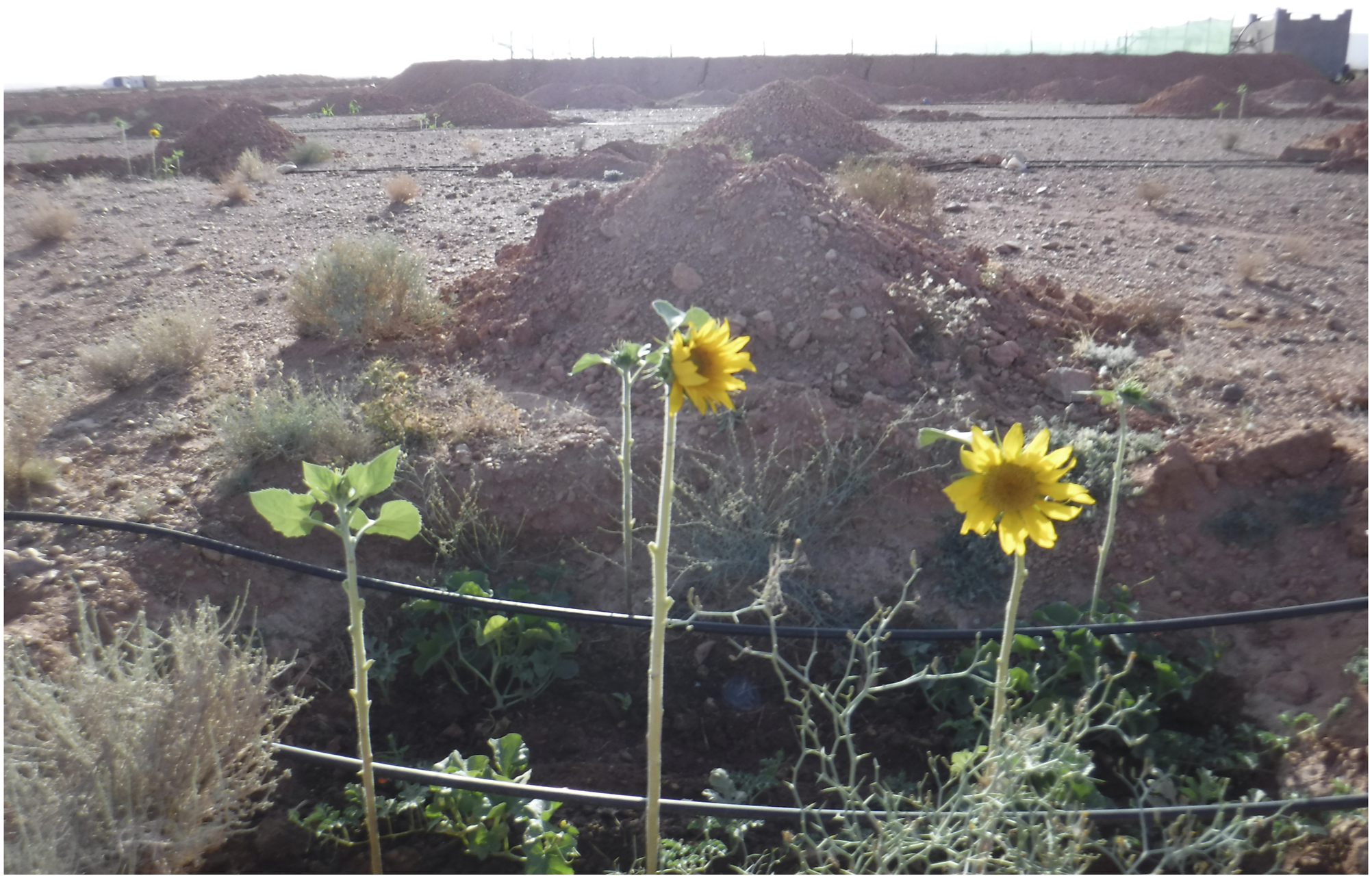
The cost of date palm saplings increased even more in 2018 due to a requirement forbidding the planting of oasis saplings on both small and large investment farms. The ban is based on the concerns of large farmers about disease from local-sourced palms infecting date palms across the region (Smallholder Farmer 3, 2018). The resulting increase in start-up expenses hits smallholder farmers even harder. Certified date palms can only be acquired at designated palm dispensaries located in a few large cities (Smallholder Farmer 1, 2018). By contrast, local date palms are obtainable for less than certified palms and do not require the additional financial and time costs of travel and paperwork. The closest palm dispensary to Boudnib is located in Meknes, 400 km away. Only 10 percent of household survey respondents reported owning a motor vehicle (Household Survey, 2018). This journey further increases the financial challenges of acquiring date palms for smallholder farmers and encourages the planting of higher-water-use crops as an alternative. In 2018 and in the earlier days of the GMP, smallholder farmers were purchasing their own date palms, but in 2020, 200 of the smallholder farmers received 100 bfagous date palms from the government and an additional 100 medjhool date palm saplings in 2021 (Smallholder Farmer 1, 2022; Smallholder Farmer 5, 2022). The remaining smallholder farmers have been told their date palm saplings are on their way. (Smallholder Farmer 5, 2022).
While date palms are an ideal crop for the region due to their suitability for the climate and the high market price for dates, the years of waiting between planting and yield make date palms impractical for smallholder farmers with limited access to resources and credit. As a result, in 2018 and earlier, many smallholder farmers in the area would plant a few date palms as their budget allowed, but focus primarily on planting seasonal crops on the land that return a profit in the same year (Smallholder Farmer 4, 2018).
One smallholder farmer attempted growing garlic on a portion of their five hectare farm. Planting in the plowed area, the irrigation tubes they received from the GMP were not designed for watering crops such as garlic that are planted close together in a row. This mismatch, compounded with other issues, resulted in garlic that was too small to fetch a price on the market (Smallholder Farmer 5, 2018). Further, within the same crop, the garlic bulb size differed depending on the proximity of the bulb to a drip spot in the irrigation tube. Even the largest bulbs were repeatedly reduced in sale price at the local store and failed to make a profit after accounting for the costs of water, transportation, and labor. It took 16 women farm laborers with four male overseers 3 days to harvest the garlic (Field Notes, 2018). If each of those workers was paid the standard 60 MAD (€6) per day, the harvesting labor alone cost at least 3600 MAD (€335).
The regional Ministry of Agriculture in Errachidia is responsible for approving plans and distributing GMP reimbursements. One Ministry of Agriculture employee stated that they follow-up on large farm plans to ensure usage of the materials for which farmers apply for reimbursements. However, the Ministry of Agriculture has no authority to enforce breaches of contract by large farmers, such as the planting of watermelons in place of date palms or the digging of illegal wells, or to assist smallholder farmers if the private companies installing their GMP-mandated irrigation infrastructure use defective materials (Ministry of Agriculture Employee, 2018). Women smallholder farmers are a minority in the area. Two women farmers interviewed received faulty irrigation materials which they attributed to a gender bias on the part of installation companies (Smallholder Farmers 5, 6, 2018). In response, a Ministry of Agriculture employee acknowledged that many smallholder farmers receiving land have no previous irrigated agriculture experience and are often not present for the installation of their irrigation materials which can lead to quality issues. However, he reiterated that although the Ministry of Agriculture is responsible for implementing the GMP, they do not have the capacity to follow-up on all aspects of the plan (Government Official 2, 2018). These research findings confirm many of the challenges in state-centered groundwater governance identified by Molle and Closas (2020).
Speculators and Emerging Water and Energy Issues
As water resources decline from GMP over-extraction in other parts of the country, through intensive irrigated agriculture in Zagora and building a dam diverting water from traditional farmers to new irrigated agriculture in El Guerdane, money flows towards new reservoirs (Ennabih, 2020). Boudnib is the latest hot spot. Farmers must use the GMP land for agriculture and pay an annual rent per hectare to maintain land title. As a result of the high entry expense for smallholder farmers and a lack of access to resources and credit, many are renting their land to speculators from other parts of Morocco. One speculator interviewed in June 2018 rented the five hectare plots of multiple smallholder farmers in Boudnib to plant watermelons for the international market. He had been working on olive tree farms in Marrakech and traveled to Boudnib looking for new business ventures (Speculator 1, 2018). Using a special mixture of chemical fertilizer and water requirements to meet international food size and appearance standards, he anticipated selling his watermelons to Greece and the United Kingdom for 3.5 MAD per kilo (Speculator 1, 2018). In Morocco, watermelons sell for between one to two MAD per kilo (Smallholder Farmer 1, 2018).
Returning to the same small farm in August 2 months later, the scene resembled a graveyard. Hectares of rotting watermelons were abandoned in the field, still on the vine and surrounded by debris remaining from export preparations (Figure 4). The scene was jarring, especially considering the groundwater wasted fattening those rotting melons. Thousands of watermelons were decomposing above the black plastic applied to keep weeds out and trap moisture in. Some of the plastic was coming off, blowing with the wind to catch on something else and pollute other open areas of desert. With the GMP’s emphasis on agriculture for export, and agriculture responsible for 80 percent of water use in Morocco, the country is essentially exporting its water resources (Ennabih, 2020).
Water supply issues play a significant role in this development drama as well. Installing drip irrigation or constructing a dam does not automatically save water, without monitoring or incentives to use less water, these technologies simply ease the access for higher water use (Ennabih, 2020. Survey and interview respondents pointed to drought, climate change, a large dam under construction nearby, and in the case of irrigation canals, failure by the community to clean and maintain waterways as reasons for a perceived decrease in water (Local NGO Leader 1, 2018; Community Members 1, 2, 2018). However, the most common reason given was the increase in groundwater extraction as a result of large-scale irrigated agriculture (Household Survey, 2018). In addition to the choice of crops planted, the means of extracting water from the aquifer has an impact on water quantity used. Graveyard of abandoned watermelons near Boudnib.
Many smallholder farmers in the Boudnib area invested in solar panels to operate their wells for irrigation. However, some community members and farmers blame excessive water use on this green technology (Smallholder Farmer 5, 2018). After the initial material and installation expense, solar panels can extract unlimited groundwater for virtually no additional cost. As a result, some smallholder farmers mentioned neighbors with solar panels leaving pumps running constantly. Until a cost or limit is set for groundwater extraction, there is little economic incentive for farmers to reduce or monitor their water use (Mukherji & Das, 2014). Additionally, the recurring cost of non-solar energy sources such as electricity and butane gas is a greater burden on smallholder farmers with less resources than it is on large investors.
The GMP and Economic Opportunity
National government representatives in Boudnib are full of praise for the GMP (Government Official 1, 2018; Government Official 3, 2018). Acknowledging initial reluctance by local people to rent their land to foreigners, one national government representative praised the GMP’s merits for the jobs provided and the accompanying economic benefits (Government Official 1, 2018). Farm laborer salaries go back into the local economy and benefit the entire community. Day farm laborers earn between 50 to 70 MAD (€5–7) per day (Household Survey, 2018). GMP income potential as a farmer depends on one’s ability to make the startup investment. Those who can afford solar panels to operate their wells and irrigation systems have a significant financial advantage (Smallholder Farmer 2, 2018). Seventy two percent of employed survey respondents reported working for small or large farms (Household Survey, 2018).
Prior to the GMP, jobs in the agriculture sector were few. Those with small plots in the oasis would primarily rely on their own labor or the labor of immediate family members (Smallholder Farmer 1, 2018). While the increase in employment opportunities is viewed positively in an area with few job options, especially for women, the dearth of other employment possibilities creates a space ripe for exploitation. Farm laborers in Boudnib report lower pay than in other parts of the country. The Boudnib labor market is saturated and locals have few income alternatives beyond leaving the region (Farm Laborer 1, 2018). As a result, wages have remained low and farm laborers who protest for better pay or conditions are dismissed and replaced.
Moroccan labor law recognizes fixed duration employment contracts in the agriculture sector which are renewable after 6 months and become indefinite after 2 years. Indefinite contracts accrue benefits over time including a periodic increase in salary and medical services (Invest in Morocco, 2015). To avoid paying for medical services and higher salaries, large farms hire most employees on short-term contracts. Large farms have a few higher skilled employees with full contracts, but these workers are usually male and often not from the local community. After protests by workers at a large farm in the area forced the owners to pay minimum wage and provide contracts for their employees, conditions improved, but are still less than ideal. The protests resulted in labor improvements for future workers, but all of the employees working at the time, even those not directly involved in the protest, were fired (Farmer Laborer 1, 2018; Community Member 3, 2018). Farm laborers are now given rotating 3 month contracts which allow large farmers to pay lip service to legal requirements while preventing workers from accumulating benefits or job security. Some large farms have a quota for certain tribes and justify short contracts as a means of providing employment for more tribal members (Community Member 4, 2018). However, this leaves individual farm workers in a position of insecurity with an irregular source of income. Development policies alone do not inherently generate beneficial impacts across the socioeconomic spectrum (Li, 2014), but they can provide a positive front for furthering state control (Ferguson, 1990).
Discussion
With roots in colonialism, the GMP is also a result of neoliberalism and the “washington consensus”, beginning with Morocco’s first Structural Adjustment Plan in 1983 (Olivié & Pérez, 2018). Despite attracting 40–50% of all foreign investment inflows to North Africa in the 1990s and continuing to diversify economic activities and attract foreign investment in the 2000s, Morocco “continues to exhibit persistent poverty and acute inequality,” particularly in rural areas (Olivié & Pérez, 2018: 37; UNDP, 2016). This early phase study of a GMP irrigated agriculture project reveals substantial effects on rural livelihoods. Applying the GMP cookie cutter approach in Boudnib disadvantages smallholder farmers by catering to large investors with access to cash and credit (Akesbi, 2012). Specific water supply issues within the GMP include lack of monitoring of and limits to water use exacerbated by the renting of smallholder farmland to outside speculators and the paradox of solar panels and drip irrigation as green technologies with negative environmental effects. The GMP is generating a larger number of jobs, but they are often low-quality and unreliable. Though a failure at achieving its stated goal of alleviating poverty, the GMP serves a larger, political purpose. Utilizing colonial-era strategies of divide and rule (Davis, 2006; Swearingen, 1987; 1996), the GMP pits community members against each other in the quest for land and job opportunities. It preys on the promise of a more stable and profitable livelihood for local people. Finally, the ponderous bureaucracy of the GMP distracts local people from larger issues such as a diminishing water supply and the parceling of massive sections of once communal land for commercial agriculture.
A Cookie Cutter Approach to Development
The GMP presents local people with the possibility of economic opportunity and livelihood sustainability in the form of smallholder farms, but fails to account for realities on the ground. This study illustrates a mismatch between ecosystems and farming practices as well as between those practices and farming infrastructure. The GMP plan works for a narrowly defined farmer with an existing surplus of cash and resources (Ennabih, 2020). As a result, large farmers benefit from the plan’s subsidies while small local farmers, unable to front the bill to create the mono-crop farms envisioned by the GMP, must work around the unwieldy mandated infrastructure to make ends meet. This illustrates Akesbi’s (2012) criticism of the GMP as a technology and high-productivity focused plan that favors large farmers while endangering the environment and natural resources. Through the GMP, large farmers receive government subsidies of up to 80 percent on date palm saplings and irrigation materials and subsidies of up to 60 percent for the construction of irrigation basins and for digging wells (Farm Manager 1, 2022). Subsidies are available for smallholder farmers as well, but the land available for division among local people is increasingly scarce with plots now reduced to one hectare per person, with a shared well among a minimum of five other farmers (Smallholder Farmer 5, 2022). Investors with the resources to maximize benefits from the GMP subsidy system are obtaining thousands of hectares of Boudnib land, leaving local people to fight over the crumbs. On a local level, the GMP mandates a cookie cutter approach with small farms forced into a particular formula. This is seen on a national level as well (Faysse, 2015). The GMP is implemented in a similar manner across the country despite its water supply and economic opportunity ‘failures’ in other regions. The logic behind replicating a development intervention in a new arid region immediately after its failure from insufficient water supply in another is perplexing. This reflects Ferguson’s (1990) notion of “development apparatus,” or a machine for expanding bureaucratic state power that “takes ‘poverty’ as its point of entry.” In Morocco, the poverty reduction goals and green labeling of the GMP mask substantial short-term profits gained from the exploitation of rural land and water resources. This “greenwashing” of the GMP hearkens to other technologies such as clean coal and corn ethanol that are advertised as green alternatives to fossil fuels, but still contribute to global environmental degradation (Johansen, 2015). Ultimately, the GMP’s cookie cutter approach expands state power by standardizing rural populations (Scott, 1998), funneling once communal land into profits for the state and state beneficiaries (Akesbi, 2012), and pitting rural populations against each other through ponderous bureaucracy and the mirage of more stable and lucrative livelihood opportunities.
Money Flows Towards Water…While Water Flows
Similar to other areas, such as Peru, where large monoculture plantations with existing capital resources dominate the market (Bennett et al., 2018), smallholder farmers in Boudnib face an uphill battle to even begin cultivation of their plots. In southeastern Morocco, the upfront cost of starting a date palm farm, the wait for date production, requirements for imported date palms, the expense of transportation to distant farms, and inefficient energy sources for pumping water, continually place smallholder farmers at a disadvantage. News reports about large-scale watermelon farming drying up water resources in Zagora in Southern Morocco raised concerns in Boudnib about the damage this water-intensive crop could cause locally (Gulf News, 2017). Some local smallholder farmers in Boudnib who had planted watermelons in the past chose not to continue because of the water use. Yet, for other farmers, and speculators without vested personal or financial interest in the area, the short-term profit of water-intensive farming is worth the potential long-term ecological damage.
Irrigated agriculture is promoted as a water-saving mechanism that enables farmers to get the most “crop per drop” (Ennabih, 2020). The official government and development discourse places the onus for reducing agricultural water use on replacing gravity-fed irrigation with green drip irrigation (Del Vecchio & Barone, 2018). Yet, studies show that although irrigated agriculture uses water more efficiently, subsidized irrigation does not result in water savings. Rather, higher irrigation efficiency increases the irrigated area and the more intensive planting of high water use crops (Grafton et al., 2018). Local people bear the burden of natural resource exploitation as outsiders profit economically. A recurring problem is that external environmental costs of economic activities, such as natural resource pollution or exhaustion, accumulate “long before the activity becomes unprofitable in a narrow profit-and-loss sense” (Scott, 1998: 353).
Further, even the short-term gains from this agriculture primarily benefit large farmers with the means to invest, make a profit, and then move elsewhere when the water dries up. This leaves local farmers to cope with the ecological consequences (Houdret, 2012). Farmers investing in solar panels for operating borehole wells may turn a greater profit in the short run, but have no financial incentive to conserve water. The positive image of solar panels greenwashes yet another unsustainable practice (Johansen, 2015). These challenges distract from the larger water crisis and contribute to GMP land abandoned by smallholder farmers or turned over to speculators.
It is well documented that the division and privatization of communal lands in Morocco for groundwater-fed agriculture is causing groundwater depletion (Rignall & Kusonose, 2018; De Haas, 2001). In response, a representative of the National Water Office in Errachidia, the regional capital, cited increased regulation of water use as the solution for ensuring that a water supply crisis, similar to that in Zagora, does not occur in the Boudnib area. Information on aquifer levels is not publicly available, but he assured that it is carefully monitored. Additionally, he drew a diagram of the aquifer. The main features of the diagram included a 25–30 m top layer which he claimed was divided by a plastic-like layer of sediment and rock which completely separated it from the deeper layers of the aquifer (Water Office Official 1, 2018). In other words, deep well pumping for large, irrigated farms should have no impact on the shallow water supply used in traditional farming. He concluded by stating that “the water in Morocco belongs to the government, not to anyone individually, we are just allowed to use it” (Water Office Official 1, 2018). Local people are making connections between deep well pumping with the drying up of their shallow personal wells, but the office in charge of monitoring water supply remains in complete denial.
A key challenge identified in this research is a lack of communication between stakeholders, particularly between government officials, project implementers, and local people (Bourne, 2016). Elected and appointed officials implement different elements of the GMP and are unaware of what is happening in other areas. Smallholder farmers and community members are kept in the dark about larger development processes and the water supply status of Boudnib is unknown to the people it affects the most. The cookie cutter approach marches forward without evaluation or question by those with the power to change it. This is evidenced in interviewee responses to the question of whether the water resources in Boudnib would be sufficient for continued implementation of the GMP plan. The 22% who responded yes consisted solely of government officials, large farm owners, and farm-related industry employees (Household Survey, 2018).
This case highlights the critical importance of a holistic consideration of the social, ecological, and political effects of a development intervention before, during, and after its implementation (Bennett et al., 2018). The rights of local people should be prioritized with profits for foreign investors taking a back seat to ensuring that local people and their resources are not exploited for outsider profit. As a start, governments and development agencies need more open lines of communication with the people they serve. Locals bear the burden of development projects, supposedly comprise some of the projects’ beneficiaries, and should also reap its benefits.
Economic Opportunity and Exploitation
Government representatives defend the GMP by pointing to the economic opportunities it provides. As one interviewee exclaimed, “houses are renting,…women are working, and the economy is moving” (Farm-Related Industry Employee 1, 2018). In some ways, the GMP has succeeded, with a massive increase in private investments in modern agriculture and providing income opportunities for local people and smallholder farmers. However, if large farms emulate the Riad Tafilalet test farm in Boudnib, many agricultural jobs will be mechanized as farms move into the production phase. This is a pattern noted on Palm Oil farms in Southeast Asia and termed “agriculture without farmers” (Li, 2014, p. 184). How long can agricultural expansion continue in this fashion before traditional livelihoods are displaced, traditional irrigation canals dry up, large farms shut down from aquifer over extraction, and temporary jobs disappear along with the natural resources? Without protections in place for the environment and rural people, this blaze of development and prosperity will surely flicker out.
The bargain made by national governments with investors to expand agriculture in the GMP depends on the goodwill of investors to achieve the plan’s poverty reduction and rural development goals. With no requirements or incentives for investing in rural development beyond those necessary for the successful production of their farms, investors predictably extract maximum labor for minimum wages and gladly accept the free water, cheap land, and heavily subsidized farming inputs provided by the GMP.
Within the opportunity for economic profit from industrial agriculture lies a political motivation as well. The promise of jobs and the division of land among select community members has engendered both hope and tension. In an area of the country neglected by the state for decades, investment in the region for many is a welcome change (Maddy-Weitzman, 2011). Moroccans in the southeastern part of the country, especially young people, are searching for employment and livelihood alternatives to migration. The GMP provides this opportunity, at least in the short-term, with agriculture sector jobs and the possibility for local people to benefit from land of their own (MMAFRDWF, 2014).
The prospects for some are diminishing due to decreased water supply, poor quality of agriculture sector jobs, and the perception that land is running out (Li, 2014). Nonetheless, in utilizing a “divide and rule” strategy from the colonial playbook, discontent on the part of locals is directed at each other rather than at the State (Davis, 2004). Although members of varying tribal origins have lived peacefully together in Boudnib for decades, the recent division of communal land premised on tribal affiliation is creating tension. This strain can be seen within tribes as certain members receive five hectare land plots while others do not, and also between tribes as disputes arise over which land belongs to which tribe. Inter-tribal land disputes are further complicated by French colonial meddling that issued formal paperwork for land rights to certain tribes differently from the Moroccan state. Local people’s participation in the GMP, however limited and controlled by the state, also provides an alibi for big players benefitting from the plan through government subsidies and incentives. As colonial-era narratives in Morocco blamed pastoralists for desertification and other environmental ills (Davis, 2004; Rignall & Kusonose, 2018), so the token participation of local people in the GMP opens them to criticism for participation in their own land’s demise.
Conclusions
Another water technology has made its way to the Boudnib area recently with the construction of the Kadoussa Dam. The expressed purpose of the dam is to provide water for agricultural expansion in the area, to protect the town and villages downstream from flooding, and to backup drinking water supply for people downstream (Mahboub et al., 2020). Not unlike the GMP, the Kadoussa Dam is touted as providing jobs for the area, with an estimate of 500 jobs created for 50 months of work at the dam, with additional jobs derived from extracting and transporting the necessary construction materials (Mahboub et al., 2020). The GMP and construction of the Kadoussa Dam in Boudnib continue a long history of “store and save” water policies in Morocco (Ennabih, 2020). In order to address water supply challenges, water is stored through dams and saved through drip irrigation (Ennabih, 2020).
The stated goals of the Kadoussa Dam and its close relationship with large-scale irrigated agriculture are eerily similar to that of the El Guerdane Dam in southwestern Morocco. Similar to Kadoussa, the El Guerdane Dam was constructed with the goal of providing water for agriculture in the area, specifically citrus, drinking water for local people, and for recharging the aquifer (Houdret, 2012). However, many are finding that dams and drip irrigation are inadequate responses to water supply challenges and deepen existing inequalities as individuals with more political, social, and economic power secure access to limited water at the expense of those with less (Houdret, 2012; Ennabih, 2020). Although still in its early phases, without a firm commitment to ensuring the livelihoods and water access of local people, the GMP and Kadoussa Dam in Boudnib seem posed to continue the trend. Dams place water and its distribution ever more securely in the hands of the state.
This study of GMP implementation in and around the town of Boudnib in southeastern Morocco examines the effects of irrigated agriculture on local people and the environment. It follows a mixed methods approach to highlight the voices and experiences of local people affected by irrigation alongside those of government, NGO leaders, and foreign investors. Findings suggest that despite the GMP’s green, poverty fighting claims, job opportunities are low-paying and unreliable and water supply is decreasing. This means that outsider investors and farmers benefit in the short-term from free groundwater and cheap local labor, leaving local people to deal with the long-term consequences of ecological damage.
This research shows how the GMP continues to borrow from colonial narratives to justify agricultural modernization and the displacement of people from their traditional lands. Additionally, it shines light on negative aspects of irrigated agriculture in development by examining the challenges of regulating an invisible resource without the provision of transparent data as well as the green labeling of solar energy activities that exploit water resources. This research reveals the need for a more holistic analysis of the social and environmental costs and benefits of irrigated agriculture development. Finally, it reveals that the continued re-implementation of failed development plans under a green, poverty alleviation label reflects their short-term financial and political side-benefits for the state in the form of quick profits and a preoccupied population. However, in the longer-term, diminished natural resources negatively impact everyone, including the state, and especially people already living in poverty.
These findings have implications for GMP implementation in other parts of Morocco as well as for other water-stressed parts of the world implementing irrigation-based agricultural development. As global trends of more extreme temperatures and expanding droughts are predicted to increase over the coming years, it is now more crucial than ever that governments and development agencies invest in truly green, sustainable development that respects the rights, dignity, and livelihoods of vulnerable, rural populations. We must break the mold of cookie cutter approaches, colonial policies, and hiding behind false green labels.
GMP implementers must look beyond short-term profits and prioritize the plan’s tandem goal of promoting sustainable livelihoods for rural people. The onus lies on national governments and the World Bank as a primary funding agency of the GMP to both promote economic opportunity and protect natural resources and local livelihoods. This can be accomplished through increased monitoring and transparency about the state of the water table and about economic and natural resource winners and losers resulting from the GMP. In addition, concerted national and international efforts must be taken to ensure the long-term sustainability of new development. Without transparency, responsibility, and action on the part of those in power, unsustainable development will deepen existing inequalities and threaten the livelihoods of already vulnerable populations.
Footnotes
Acknowledgments
The author thanks the people of Boudnib, Raja Aouijil, Brahim Arajdal, Zohour Sagoui, Habiba Simo, and Fatim Zahra Achamlal for their invaluable support and contributions to this research. She also thanks Andrea K. Gerlak, Katherine Snyder, Tom Evans, and two anonymous reviewers for their comments on this article.
Declaration of Conflicting Interests
The author(s) declared no potential conflicts of interest with respect to the research, authorship, and/or publication of this article.
Funding
The author(s) disclosed receipt of the following financial support for the research, authorship, and/or publication of this article: This work was supported by the University of Arizona Social & Behavioral Sciences Institute (Pre-Doctoral Research Grant), University of Arizona Graduate and Professional Student Council (Research and Project Grant), University of Arizona Center for Middle Eastern Studies (Environmental Studies Internship Funding Award) and American Institute for Maghrib Studies (Short-Term Research Grant).

Note
Characteristics of Semi-structured Interview Participants.
Interviewee Characteristics*
Male
Female
Total
Smallholder farmer
7
3
10
Large farm owner
1
0
1
Large farm manager
4
0
4
Farm laborer
2
5
7
Local business owner
4
1
5
Government official (these include representatives of the local and national water offices, ministry of agriculture, and elected and appointed officials)
10
0
10
Local NGO leader
2
0
2
Speculator
1
0
1
Tribal leader
3
0
3
Nomad
1
1
2
Farm-related industry employee (this includes representatives of fertilizer and manure companies and agricultural credit union employees)
7
1
8
Community member
6
7
13
*Some interviewees fall into multiple categories. For example, one farm manager is also a smallholder farmer, but he was coded as both because he was interviewed two separate times in different capacities. Other interviewees who fell into multiple categories were coded for the characteristic for which they were primarily interviewed. For example, while most of the smallholder farmers interviewed are also local NGO leaders and community members, because they were interviewed in their capacity as smallholder farmers that is how they were coded.
Characteristics of 168 Survey Respondents.
Gender
Male
Female
41%
59%
78%
22%
57%
43%
Author Biography
Alison D. Elder is a PhD student and National Science Foundation Graduate Research Fellow in the School of Geography, Development & Environment at the University of Arizona. She lived in Morocco first as a Peace Corps Volunteer and then working for the Hillary Clinton Center for Women’s Empowerment.