



Abstract
Hospitalization data provide context to understanding abusive and non-abusive injuries and how these hospitalizations change over time. The purpose of this study was to utilize Texas inpatient hospitalization data to assess age-related differences among infants (<12 months of age) and toddlers (12–59 months of age) in injury trends and patterns of injury among abusive and non-abusive hospitalization encounters over a 15-year time period. For both age groups, pediatric hospitalizations for non-abusive injuries decreased significantly over time; however, hospitalizations for abusive injuries did not. Compared to non-abusive injury hospitalizations, abusive injury hospitalizations were statistically more likely to involve more body regions and were associated with fractures, internal organ injuries, and superficial wounds. Abusive injury hospitalizations had longer lengths of stay and resulted in higher illness severity scores. Toddler injury hospitalizations were associated with most of the body regions, with the exception of traumatic brain injury for which the odds of hospitalization were higher for infants. This study confirms the persistence of abusive injury hospitalizations and the age-related susceptibility to certain injuries comparing infants and toddlers. The findings reflect the clinical documentation and decision making of pediatric practitioners in a large state over 15 years and inform the trends in identification of injuries which are most common and consistent by age and intent.
Introduction
Children birth to five years of age, especially in the first year of life, is the period with the highest risk for hospitalization for abusive injuries (Farst et al., 2013). Most of the epidemiological work surrounding childhood injury relies on hospital administrative data, which has focused on assessing the various mechanisms of injury. Additionally, hospitalization administrative data can provide further information describing the type of injury and body region(s) affected by the injury, which can provide context for understanding these injury hospitalizations and how these hospitalizations change over time.
Published data demonstrate age-related shifts in the mechanism of injury that results in a hospitalization over the 0–5 age range (Agran et al., 2003). Agran and colleagues (2003) reported that falls were the leading mechanism of injury resulting in hospitalizations across the early childhood age range in California. The second most frequently reported mechanisms of injury were abuse for infants and poisoning for toddlers.
Two other characteristics of pediatric hospitalizations for injury that are important and available in the inpatient hospitalization data are body region and type of injury. These are distinctive from mechanism of injury, which documents the manner that an injury occurred (e.g., motor vehicle collision, fall, or drowning) and the intent of the injury (e.g., abusive or non-abusive; Centers for Disease Control and Prevention, 2018). The body region documents the area of the body that was impacted by the injury (e.g., head and neck, torso, or extremities) and the type of injury documents the nature of the injury (e.g., fracture, open wound, or amputation). Comprehensive study of these characteristics across all injury mechanisms, type of injury, and body region, are rarely included in epidemiologic studies of childhood injury. Body region and type of injury characteristics have not been included in more comprehensive examinations of injury, but do appear in studies of specific mechanisms of injury, such as abusive injuries or falls (Leventhal et al., 2010; Ryznar et al., 2015; Wang et al., 2013; Zielinski et al., 2012). Abusive traumatic head injury has been studied extensively through hospitalization data. Some studies have shown that it is the primary body region documented in the literature for abuse-related hospitalizations for infants (Leventhal et al., 2010). In contrast, during the toddler period (12–59 months of age) this type of injury is rarely reported in abuse hospitalization data. Understanding changes over time and across age groups for body region and type of injury is important because they can provide insight into age-related susceptibility to certain injuries. Finally, these injury characteristics may inform the severity of the injury, the clinical decision making or treatment the child received, or the length of hospitalization.
To our knowledge, no prior study using population level data has comprehensively studied trends over time in body region, type, and mechanism of injury for young pediatric patient hospitalizations. The purpose of the current study was to assess the age-related differences among infants (<12 months of age) and toddlers (12–59 months of age) in injury trends and patterns of injury (mechanism, type, and body region of injury) among abusive and non-abusive hospitalization encounters over a 15-year time period. Comprehensive assessment of hospitalizations from injuries occurring in early childhood has not been recently conducted on a large population. This assessment provides information on how these injury hospitalizations differ across early childhood age groups and how they have changed over time. These trends are important to understand for surveillance, prevention, and understanding treatment strategies for these injuries.
Method
De-identified data were taken from the 2004–2018 Texas Health Care Information Center’s hospital discharge data (Texas Department of State Health Services, 2018). Data from this public use data file include inpatient hospitalizations from all state licensed hospitals in Texas, including limited demographic information about the patient, up to 25 diagnosis codes associated with the hospitalization, up to 10 external injury codes (E-Code), and summary information about the hospitalization. Diagnostic coding in United States inpatient administrative data transitioned from the International Classification of Diseases, ninth revision, clinical modification (ICD-9-CM) to the 10th revision (ICD-10-CM) in October 2015 (Office of the Secretary, HHS, 2009). Data from the year 2015 was excluded from this analysis due to coding disruptions during the transition period (Slavova et al., 2018). Slavova et al. found that while there were initial coding disruptions for injury surveillance in the immediate months after the transition from ICD-9-CM to ICD-10-CM; however, by the end of 2015, injury coding completeness returned to pre-transition levels. The summary information included in the hospitalization data includes demographic characteristics, the length of hospitalization, All Patient Refined Diagnostic Related Group (APR DRG) codes, and illness severity score. Illness severity, calculated in conjunction with the proprietary algorithm that produces the APR DRG code, is scored on a 4-point scale with 1 indicating a low illness severity and 4 a high illness severity (Averill et al., 2002).
Data Reduction and Coding
For these analyses, the hospital data were limited to non-birth inpatient hospitalizations for patients younger than 5 years of age with an injury or abuse diagnostic code. Births were identified as infants with APR DRG codes in the 540–640 range. Encounters that were coded as transfers from a unit of the hospital to another unit of the same hospital resulting in a separate claim to the payer were excluded to reduce potential duplication. E-codes and diagnosis codes were used to identify those hospitalizations that included injury or abuse. The Supplemental Appendix A shows the cross walk between the ICD-9-CM and ICD-10-CM mechanism of injury codes used in this analysis. All sequelae E-Codes and diagnosis codes were excluded. The final dataset included 72,229 injury-related hospitalization encounters over the 15-year period.
Mechanism of injury was coded using the coding scheme outlined in Agran et al. (2003) with two key differences. First, in this analysis all E-Code fields were used, not just the first E-Code field. Second, we defined abusive injuries using the diagnosis codes and the E-Codes as described by Leventhal and Gaither (2012). If a hospitalization was determined to be an abusive injury, no other mechanism of injury was coded. For hospitalizations with non-abusive injuries, more than one mechanism of injury could be coded (e.g., one hospitalization may have E-Codes for more than one injury mechanism). Hospitalization encounters with an E-Code indicating undetermined injury intent and no abusive injury E-Code or diagnosis code were categorized as undetermined injury intent and not included in comparisons between abusive and non-abusive injuries.
The body region and type of injury were coded using the procedures outlined in Barell et al. (2002), with two specific modifications. As with mechanism of injury, all diagnosis codes were included in the algorithm, resulting in multiple body regions and types of injuries per hospitalization encounter. Further, the abuse diagnosis codes were dropped from within the following Barell matrix categories—”traumatic brain injury,” “internal organ,” and “other external causes”—so their definitions would not be circular with abuse as a mechanism of injury. Barell et al. (2002) and Fingerhut and Warner (2006) matrices were used to guide the ICD-9-CM and ICD-10-CM cross walk for body region and type diagnoses codes (Supplemental Appendices B & C). A sensitivity analysis was conducted to detect differences in the ICD-9-CM and ICD-10-CM data coding, and no significant differences were observed. Two aggregate measures were created that counted the number of different body regions and the number of different types of injury documented for each hospitalization.
Data Analysis
Data analyses were conducted using Stata version 14.2 (StataCorp, 2015). Data were analyzed to assess changes over time for each age group (infants: <12 months; and toddlers: 12–59 months). The annual hospitalization encounter to population ratio per 10,000 children in the population was calculated for each injury mechanism, body region, and type. Population numbers were taken from the Texas Office of the State Demographer (Texas Demographic Center, 2018). Trends in the annual hospitalization ratios were assessed using regression analysis. Because mechanism, body region, and type of injury were not mutually exclusive within the hospitalization, each was analyzed separately.
Regression analyses were also conducted to assess differences between abusive and non-abusive injury hospitalizations, while adjusting for age group. For these analyses, intention of the injury and the age group of the child was regressed onto each separate body region and type of injury; the p-value to assess significance was lowered to .002 using the Bonferroni correction to account for multiple comparisons. The aggregate number of body regions and injury types follow a Poisson distribution, therefore, Poisson regression was used to assess these associations with non-abusive or abusive injury hospitalizations.
The impact of the intention associated with these injuries on the patient can be assessed several ways. One such indicator is the length of the patient’s stay in the hospital. Kaplan-Meier survival analysis and Cox regression were conducted to examine differences in length of stay by injury intent. These survival analyses included censoring for deaths.
Results
Demographic Characteristics
The demographic characteristics of the patients with injury-related inpatient hospital encounters between 2004–2018 included in this study are reported in Table 1. There were 72,229 injury-related encounters, with 19,881 for infants (27.52%) and 52,348 (72.48%) encounters for toddlers. A total of 55,122 (76.32%) encounters had documented injury intent and were included in the analyses for abusive and non-abusive injury.
Demographic Characteristics of Injury Hospitalizations of Young Children in Texas, 2004–2018.
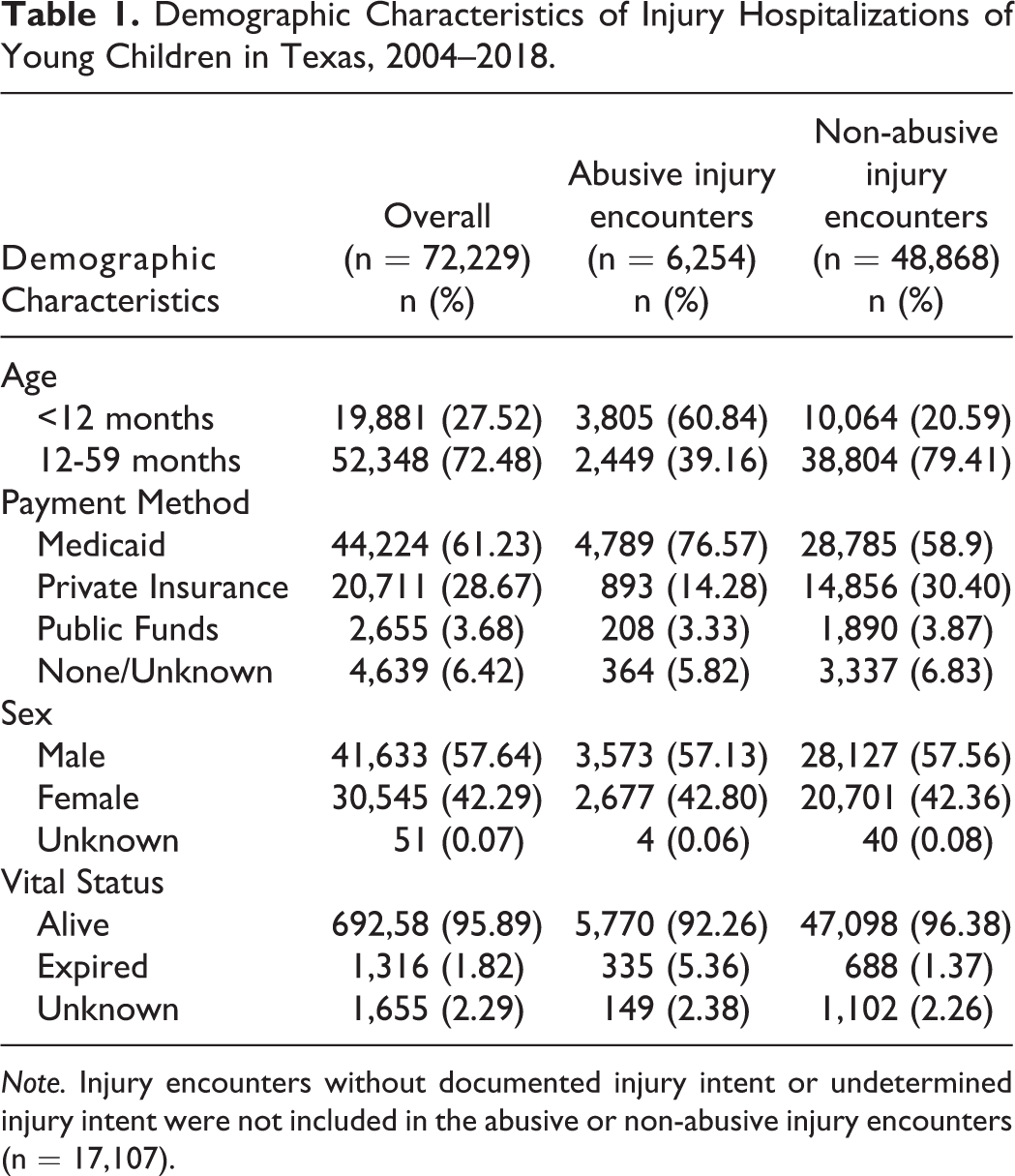
Note. Injury encounters without documented injury intent or undetermined injury intent were not included in the abusive or non-abusive injury encounters (n = 17,107).
Overall Hospitalization Ratios for Injury Characteristics
Texas has seen significant decreases in non-abusive injury hospitalizations (<12 months: b = −.28, p = .03; 12–59 months: b = −0.70, p < .0001) among young children (Figure 1). Abusive injury hospitalizations did not show significant changes over the 15-year period for either age group (<12 months: b = 0.07, p = .21; 12–59 months: b = 0.01, p = .10).
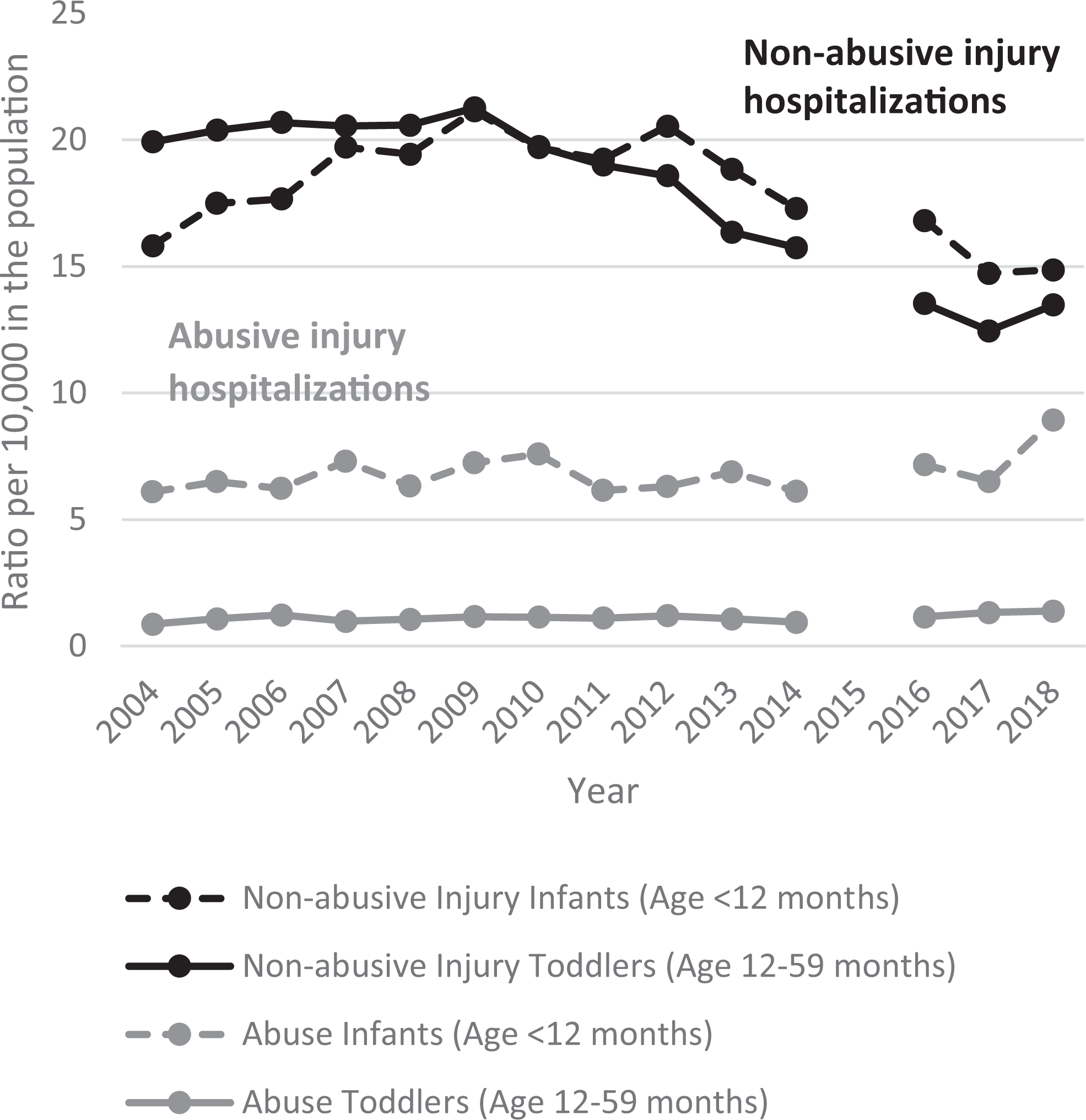
Injury intent (abusive and non-abusive) infant and toddler hospitalizations in Texas; 2004–2018.
Trends in mechanism of injury
For infants, fall-related injury hospitalizations were the most prevalent mechanism of injury with abusive injuries being second (Table 2). “Other-injuries” (b = 0.30, p = .0002) were the only mechanism of injury with a significant increase in hospitalizations over the 15-year period among infants. This category includes injuries due to natural and environmental factors, injuries caused by machinery, and injuries coded as unspecified. Hospitalizations for motor vehicle related injuries (b = −0.06, p = .026), bites (b = −0.09, p < .0001), drowning (b = −0.02, p = .031) and cuts (b = −0.01, p = .008) significantly decreased for infants, although the degree of the reductions (β coefficient) was modest for all significant injury mechanisms. For toddlers, falls was also the most prevalent hospitalized mechanism of injury. Hospitalizations among toddlers significantly decreased over time in five injury mechanism categories: falls (b = −.28, p < .0001); motor vehicle (b = −0.17, p < .0001); bites (b = −.10, p < .0001); struck by, against (b = −0.07, p < .0001); and cuts (b = −0.04, p < .0001). The other-injury category was the only cause of injury that showed a statistically significant increase over the 15 years (b = 0.13, p = .001) for toddlers.
Trend Analysis Results for Changes in Mechanism of Injury Over Time, 2004–2018.
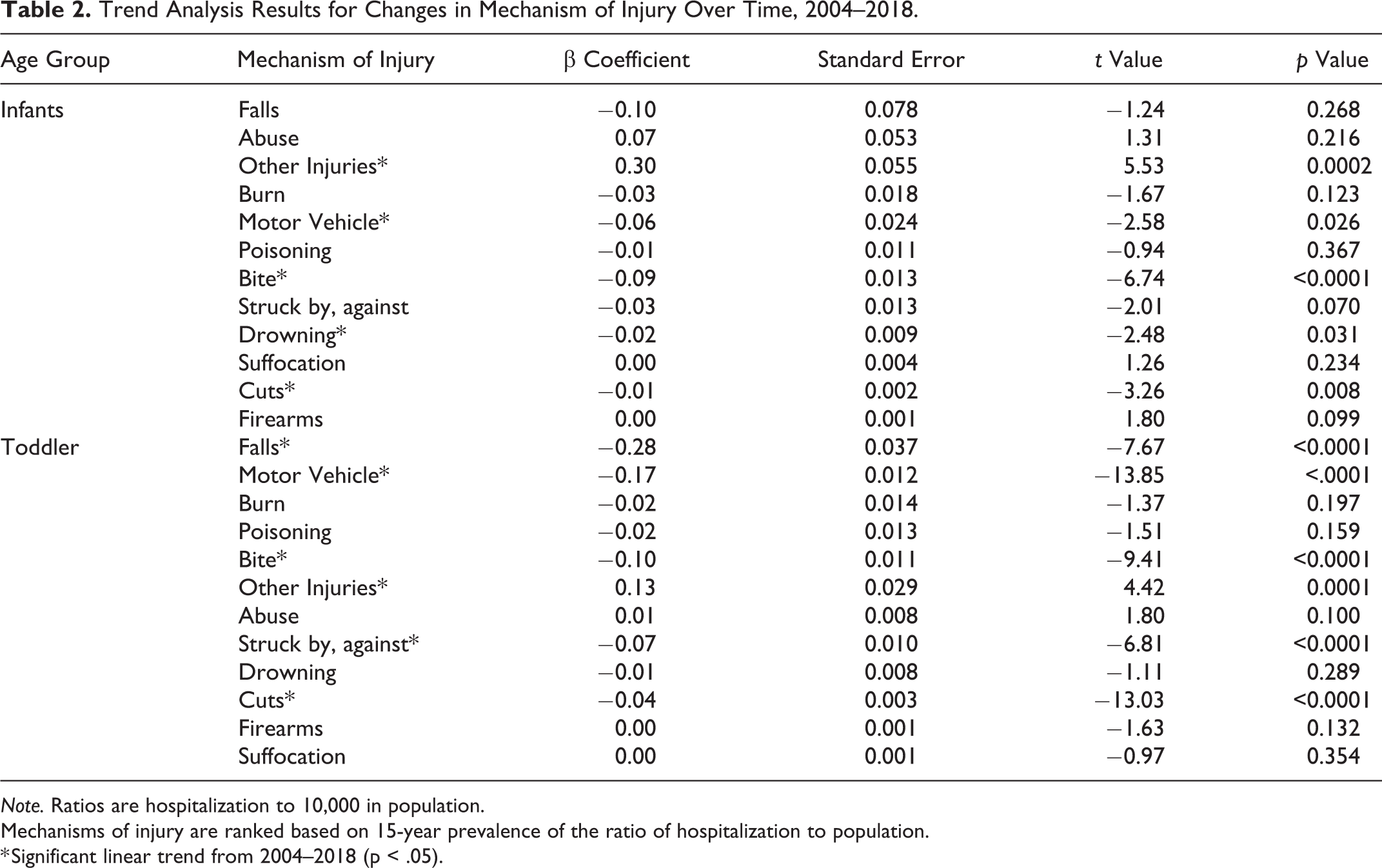
Note. Ratios are hospitalization to 10,000 in population.
Mechanisms of injury are ranked based on 15-year prevalence of the ratio of hospitalization to population.
* Significant linear trend from 2004–2018 (p < .05).
Trends in type of injury
The most prevalent type of injury for the 15-year period for hospitalized infants, regardless of intention, was fractures, followed by internal organ injuries (Table 3). Among toddlers, fractures and superficial wounds were the most prevalent hospitalized injury type for the 15-year time period. There were significant changes in type of injury hospitalization trends among infants and toddlers during the 15-year study period. Among infants, internal organ (b = 0.29, p = .003) and dislocation injuries (b = 0.02, p = .018) showed statistically significant increases from 2004–2018. Fractures (b = −0.22, p = .042), foreign body (b = −0.13, p = .003), open wound (b = −0.04, p = .036), toxic injuries (b = −0.07, p = .032), and multiple or unspecified injury type (b = −0.12, p = .011) hospitalizations significantly decreased for infants during the study period. For toddlers, there were no significant increases in any type of injury over the 15-year period; however, there were significant decreases in hospitalizations for fractures (b = −0.44, p < .0001), superficial contusions (b = −0.18, p = .0004), open wounds (b = −0.15, p < .0001), foreign body (b = −0.06, p < .0001), toxic injuries (b = −0.07, p = .0005), nerve injuries (b = −0.01, p = .014), amputations (b = −0.01, p = 0.010), and multiple or unspecified injury type (b = −0.10, p = .0003) over this time period.
Trend Analysis Results for Changes in Type of Injury Over Time, 2004–2018.

Note. Ratios are hospitalization to 10,000 in population.
Types of injury are ranked based on 15-year prevalence of the ratio of hospitalization to population.
* Significant linear trend from 2004–2018 (p < .05).
Trends in injury body region
The most prevalent injury body region for hospitalized infants was the head and neck region, which included traumatic brain injury and head and neck injuries not classified as traumatic brain injuries (Table 4). There were small but significant decreases in hospitalizations involving lower extremity injuries (b = −0.16, p = .0003) and multiple or unspecified injury regions (b = −0.12, p = .017) and a significant increase in injuries to the torso (b = 0.24, p = .003) over the study period for infants. For toddlers, the two most prevalent injury body regions were head and neck injuries not classified as traumatic brain injuries and upper extremity injuries. The hospitalizations of several of these injury body regions showed significant changes for toddlers over the 15-year period. Upper extremity (b = −0.26, p < .0001) and lower extremity (b = −0.22, p < .0001) injuries showed significant decreases during this time, consistent with the significant decrease in fractures for toddlers. Head and neck injuries not classified as traumatic brain injuries showed a significant decrease (b = −0.22, p = .0007) over this time period as well.
Trend Analysis Results for Changes Over Time in Injury Body Regions, 2004–2018.

Note. Ratios are hospitalization to 10,000 in population.
Injury body regions are ranked based on 15-year prevalence of the ratio of hospitalization to population.
* Significant linear trend from 2004–2018 (p < .05).
Injury Characteristic Differences Between Abusive and Non-Abusive Injuries
Systematic differences between abusive and non-abusive injury hospitalizations in terms of body region and type of injury, while controlling for age group, are reported in Figure 2. For injury body region, after adjusting for age group, most regions were significantly associated with abusive injury hospitalizations. The only region significantly associated with non-abusive injuries was multiple or unspecified body regions. Injury body region also differed based on age group, controlling for intent (abuse status; Figure 3). Traumatic brain injuries were significantly more likely to be seen in hospitalized infants than toddlers. However, all other regions were more likely to be seen in hospitalized toddlers than infants. Poisson regression showed that abusive injury hospitalizations were significantly associated with more injury regions than non-abusive injuries (b = 0.28, p < .0001), even after controlling for age group. To place this result in perspective, 31.1% of non-abusive injury hospitalizations had more than one documented injury body region. In contrast, 56.6% of abusive injury hospitalizations had more than one documented injury body region.
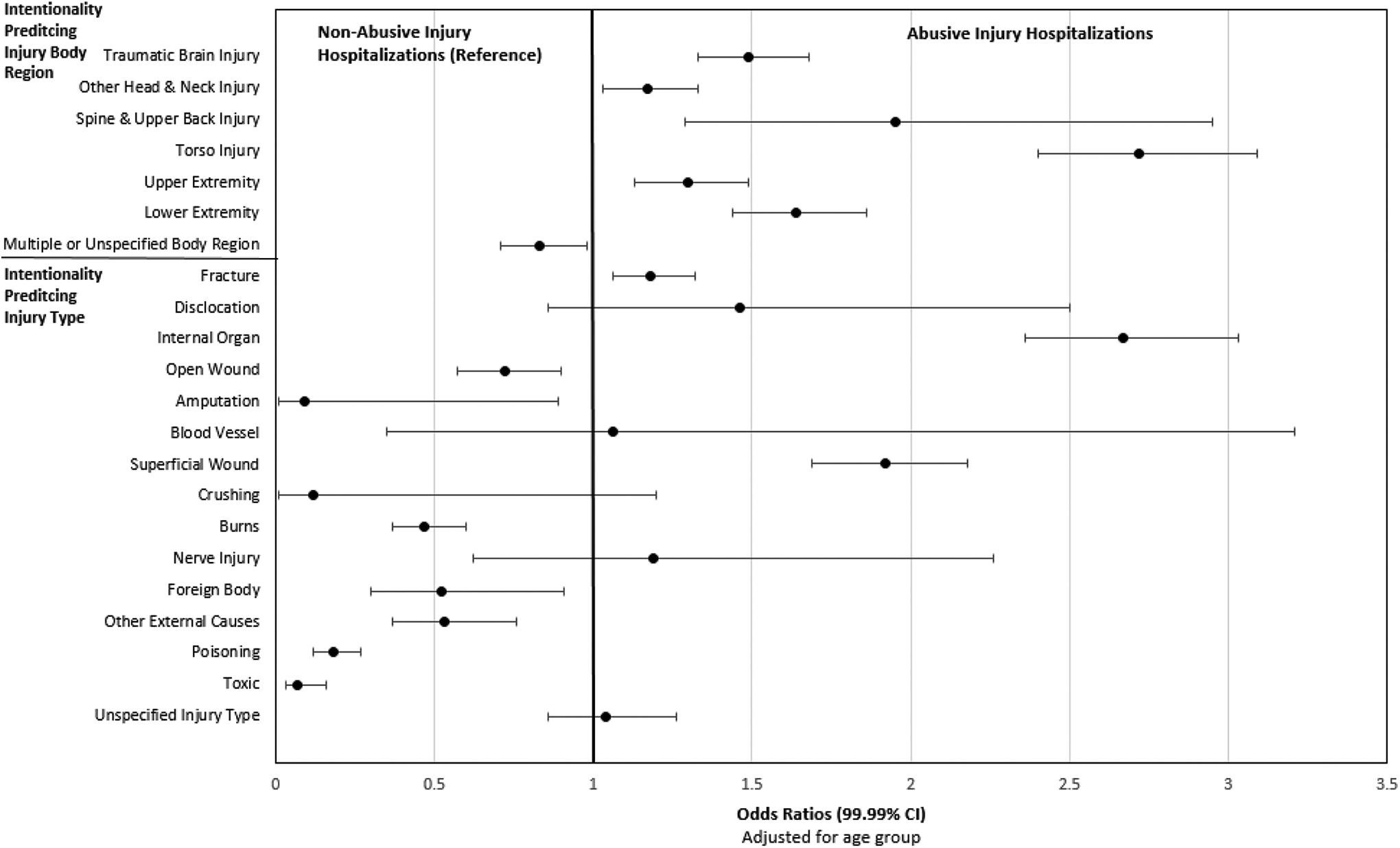
Regression results showing intentionality of injury predicting body region and type of injury adjusted for age group; 2004–2018.
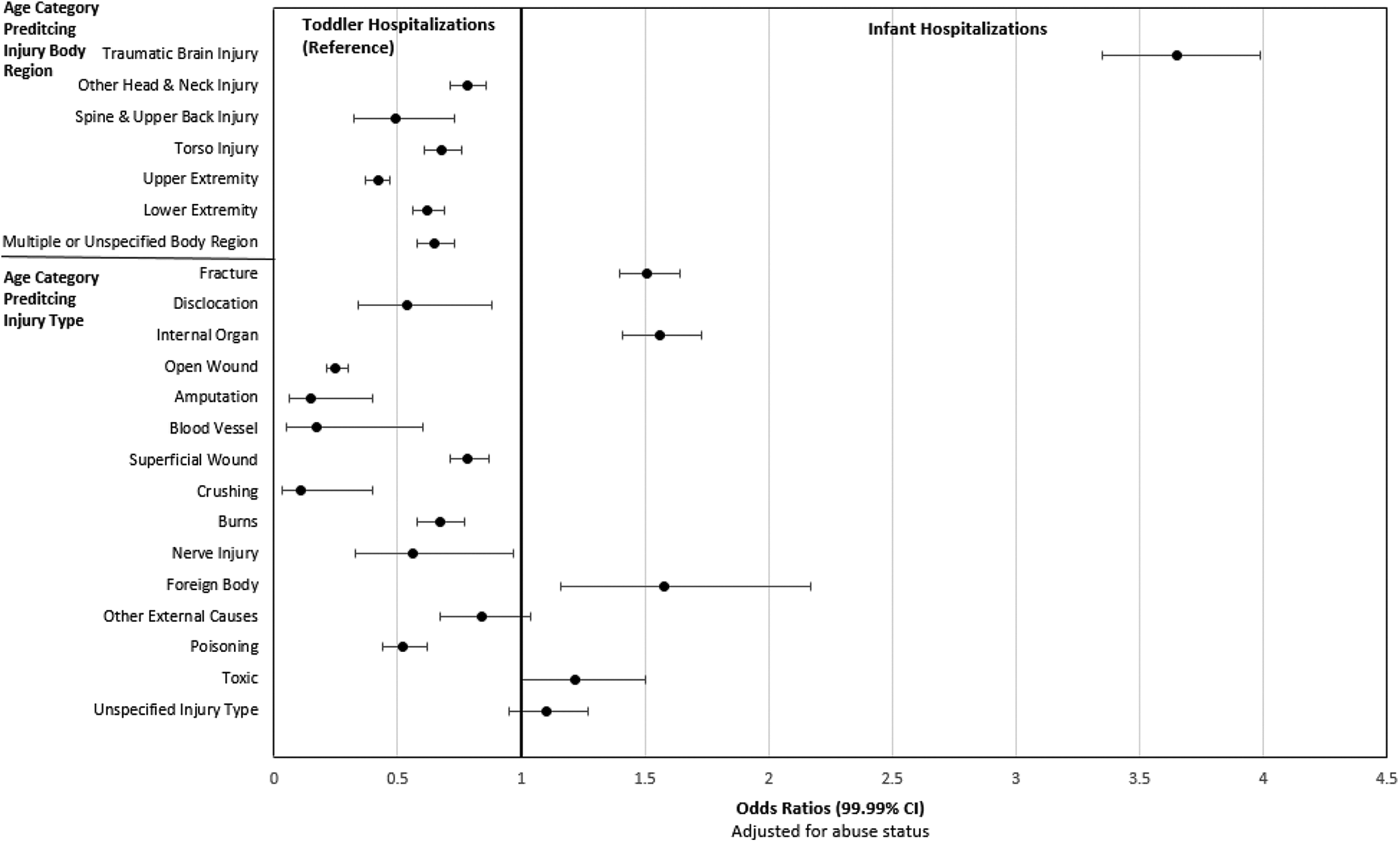
Regression results showing age category of the child predicting body region and type of injury adjusted for abuse status; 2004–2018.
As with body region, abusive injury hospitalizations were associated with more documented types of injury (b = 0.09, p < .0001). For non-abusive injury hospitalizations, 22.3% of hospitalizations had more than one documented injury type. For abusive injury hospitalizations, 45.6% had more than one injury type. For type of injury, there were significant differences between abusive and non-abusive injury hospitalizations. After controlling for age group, abusive injuries were significantly associated with fractures, internal organ, and superficial wound injuries relative to non-abusive injuries (Figure 2). Non-abusive injuries were significantly associated with open wounds, amputations, burns, foreign body, other external causes, poisoning, and toxic injuries. Among these injury types, there were also significant differences between the age groups controlling for intentionality of the injury (Figure 3). Fractures, internal organ, and foreign body injuries were significantly associated with hospitalized infants compared to toddlers.
Length of stay and illness severity
Children with abusive injury hospitalizations have significantly longer lengths of stay, when controlling for age and censoring for deaths (Hazard ratio = 1.78, p < .0001; Figure 4). For non-abusive injuries, 66.2% of children were discharged within 2 days of admission. For abusive injury hospitalization, only 32.7% of children were discharged after 2 days and 54.9% were discharged after 4 days.
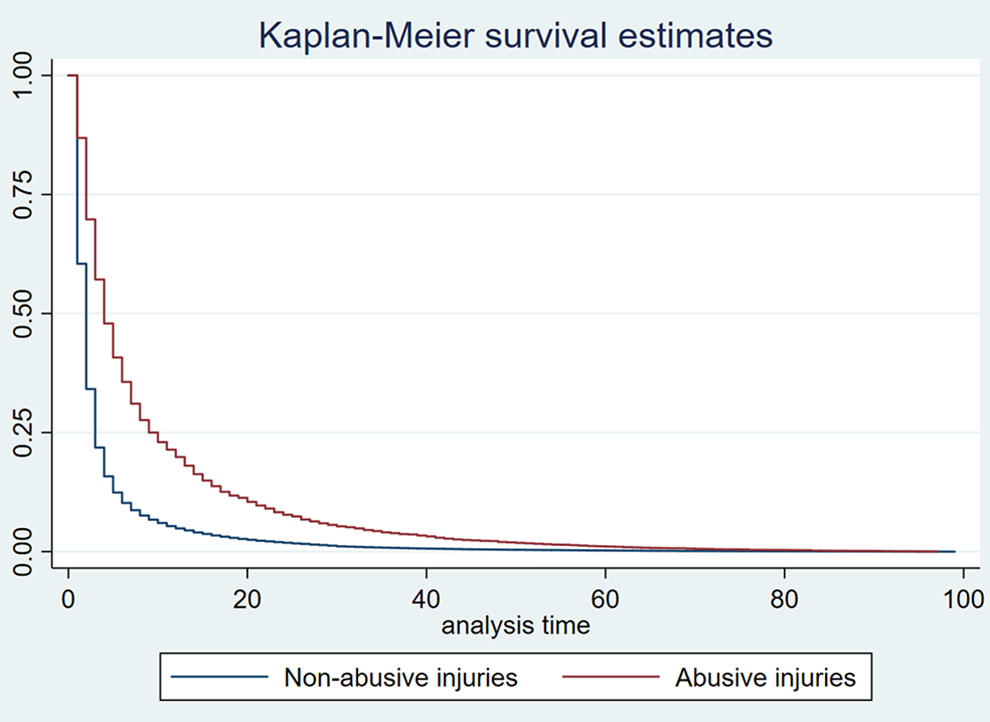
Kaplan-Meier survival analysis on length of stay associated with injury intent adjusted for age group.
In addition to longer lengths of stay, abusive injury hospitalizations had significantly higher illness severity scores (b = 0.44, p = .0001). Only 12.8% of abusive injury hospitalizations had the lowest illness severity score of 1 (mean illness severity score = 2.56, SD = 0.96), whereas 55.8% of non-abusive injury hospitalization had the lowest score (mean illness severity score = 1.65, SD = 0.88). Over the 15-year period, the average illness severity score showed small but significant increases for both abusive and non-abusive injuries for infants and for toddlers. This indicated that, on average, injuries that resulted in a hospitalization were more severe over time (abusive injuries: b = .02, p = .003; non-abusive injuries: b = .03, p < .0001).
Discussion
This study aimed to assess age-related differences among infants and toddlers in injury trends and patterns of injury, by body region and type of injury, among abusive and non-abusive hospitalization encounters over a 15-year time period. A strength of this study includes using hospitalization data from all state licensed inpatient hospitals in a single large state. Approximately 10% of the child population in the United States reside in Texas, which is demographically diverse. These data provide a wider view of the nature and scope of injury-related inpatient hospitalizations among young children than has been offered before.
Trends in Non-Abusive Injury Hospitalizations
There have been significant changes over time in the hospitalizations of several injury mechanisms, especially among toddlers. Some of the changes in mechanism of injury may be attributable to a decrease in the prevalence of injuries, whereas other changes may reflect changes in treatment standards that result in fewer of these injuries requiring hospitalization. Both age ranges studied showed significant decreases in injury hospitalization caused by motor vehicle collisions (MVC). This decrease was especially dramatic for toddlers. In 2004–2007 MVC were the second leading mechanism of injury-related hospitalization, but dropped to the fifth leading mechanism by 2014 and the seventh leading mechanism by 2018. This decrease is likely not due to the ICD-9 to ICD-10 coding transition because the decreasing trend started prior to 2015. Given that Texas has not seen a decrease in MVC (Insurance Council of Texas, 2017), these decreases may reflect safety measures that have made these crashes less likely to result in an injury severe enough to result in a hospitalization, such as changes to Texas’ child passenger safety laws, Texas Department of Transportation funding for child passenger safety programs, and improvements in motor vehicle and car seat safety features (Kahane, 2015; Texas Department of Transportation, 2019; Texas Legislature, 2008).
For toddlers, falls resulting in a hospitalization significantly decreased over the study period. This decrease was the highest magnitude of change for any cause of injury. However, these data coupled with the trends in the type of injury call into question whether this decrease is actually related to a decrease in falls in the population. The injury type most associated with falls is fractures. With the significant decrease in fracture hospitalizations also observed during this time for toddlers, it is possible that the decrease in falls, fractures, and any other injuries noted in this analysis are attributable to changes in reimbursement policies and changes in inpatient admission criteria (Graff, 2011). Over the study period, there was an effort to reduce unnecessary hospitalizations with a shift toward outpatient or observation management for many medical conditions among pediatric patients (Lyons et al., 2016; Macy et al., 2012; Reuveni-Salzman et al., 2016). These changes may have resulted in less severe fractures and other injuries being treated in the emergency department or the patient admitted under observation status and not admitted as inpatient status. Our finding of the significant increase in hospitalizations with higher severity scores also support this interpretation.
Trends in Abusive Injury Hospitalizations
Overall, our study demonstrated important findings related to differences in abusive and non-abusive injury hospitalizations among young children. First, despite significant decreases in non-abusive injury hospitalizations over the 15-year study period, we found that the trend in abusive injury hospitalizations did not significantly change for infants or toddlers. Using a national dataset, Leventhal and Gaither (2012) also found that there was no decrease in the incidence of severe abuse resulting in hospitalizations between the years of 1997–2009. We also found that the illness severity of hospitalizations for both abusive and non-abusive injuries significantly increased over the 15-year time period, which indicates that there was an increase in the severity of injuries that were hospitalized, regardless of intent. The decrease in hospitalizations for non-abusive injuries potentially accounts for some of the increases in illness severity of these hospitalizations. However, abusive injury hospitalizations had no significant changes over the time period despite also having increased illness severity and compared to non-abusive injuries, abusive injury hospitalizations had higher illness severity scores. Young children hospitalized for abusive injuries had more affected body regions, as well as more types of injuries, compared with children admitted for non-abusive injuries. This finding may be influenced by guidelines for skeletal surveys performed on infants and toddlers with suspected abusive injuries, which may increase the detection of additional injuries (Christian et al., 2015). Additionally, when a provider suspects abuse may have occurred, this increased index of suspicion may lead to a more thorough exam, thus identifying more body regions and types of injuries.
Another important finding is that children with abusive injury hospitalizations have significantly longer lengths of stay, when controlling for age. Potential reasons for this might include a) the increased severity of injury that was noted for abusive injuries compared to non-abusive injuries; b) more affected body regions and types of injuries that were found in abusive injuries compared to non-abusive injuries; or c) the involvement of child welfare and social services during the hospitalization. Other studies have documented longer lengths of stay for children hospitalized with abusive injuries (Russo et al., 2008). A study conducted in a large children’s hospital in Texas found that 1 in 5 abused children experienced a delay of discharge after medical clearance by greater than 1 day, many related to child welfare placement (Lee et al., 2017). In addition to longer lengths of stay, the decision to admit a child for hospitalization may also be influenced by the complex social disposition of patients with suspected abusive injuries in order to ensure a safe and appropriate placement where the child is not at risk for further abuse. These factors may contribute to the persistence in the trend of abusive injury hospitalizations over the 15-year period.
Age-Related Differences in Injury Hospitalizations
Additionally, our study demonstrated that regardless of intent, there are age-related differences in injuries that result in hospitalization. Consistent with previous studies, we found that infants had significantly higher odds of having a traumatic brain injury than toddlers (Selassie et al., 2013). Toddlers, in contrast, had significantly higher odds of having injuries involving all other body regions including head and neck injuries, extremity injuries, and torso injuries. This age-related shift in the body regions is likely the result of developmental differences across the age groups such as the toddler’s increased mobility and curiosity in their environment and the infant’s minimal control over their head position/movements and inability to take protective action during a fall or when confronted by a hazard (MacInnes & Stone, 2008). These changes likely also reflect changes in skull development, which make traumatic brain injuries less likely to occur as children grow older.
Limitations
This study has several limitations related to using de-identified hospitalization data for public health surveillance. The data represent encounters and not individuals. Patients with multiple hospitalizations could have been counted multiple times. To help decrease including multiple hospitalizations for the same injury, we excluded hospitalizations that included codes for the late effects or complications of an injury and encounters which were transfers between units within the same hospital. Another limitation of using hospitalization data for surveillance is admission bias, impacting which patients are and are not admitted to the hospital. Additionally, hospital claims data are not medical records; they reflect charges for treatment, not a comprehensive view of what was documented in the medical records. Hospital culture and practice for translating medical record documentation into claims data will affect the claims codes in this administrative data set, which may hide or highlight certain injury types. Furthermore, studies show variability in specific abuse diagnoses depending on how the injury was coded and the provider’s discretion as to whether an injury was abusive or non-abusive (Berger et al., 2015; Parks et al., 2012). Comparisons between abusive and non-abusive injuries should also be viewed with caution as there may be more motivation to extensively document an injury suspected to be caused by abuse, due to the nature of these cases. The findings of our study show that all documented body regions were associated with abusive injuries, except “multiple and unspecified.” This “unspecified” documentation of injuries may not be routinely used to document abusive injuries. These are limitations of all surveillance studies that utilize hospital claims data and not necessarily limitations unique to this study.
This analysis included diagnostic codes from ICD-9 and ICD-10. The authors created a crosswalk for each diagnostic code between ICD-9 and ICD-10 (included in the Supplemental Appendices) and excluded data from the year 2015 due to coding disruptions during the transition period. Studies on injury coding found that by the end of 2015, coding completeness returned to pre-transition levels (Slavova et al., 2018). The ICD-10 addition of suspected abuse may account for some increases in abuse diagnoses after the transition or masked decreases (Puls et al., 2020). Another limitation was the absence of complete data on race. The authors did not include race and ethnicity in the analyses for several reasons: The data manual states that race and ethnicity data, while required to submit for each encounter, are generally not collected by hospitals and may be subjectively captured (Texas Department of State Health Services, 2018); the manual also states suppression criteria for race; ultimately this results in incomplete data for this variable.
Implications for Policy and Practice
Our study found that despite a significant decrease in non-abusive injury related hospitalizations, the trend in abusive injury hospitalizations did not significantly change for infants or toddlers. For both abusive and non-abusive injuries, the illness severity scores increased over time suggesting that increasingly more severe injuries were hospitalized and less severe injuries were not admitted for hospitalization and overall abusive injuries had higher illness severity scores and longer lengths of stay compared to non-abusive injuries. There are multiple implications from these findings. First, this shows potential improved outpatient management of non-abusive injuries compared to abusive injuries. For abusive injuries, in addition to the documented injuries being more severe, there may be additional psychosocial implications for the hospitalizations. Second, the injury patterns, identified by age, body region, and type, are reflective of clinical documentation and decision making of pediatric practitioners. Also, taking in to account other factors that impact hospitalizations and designations of abusive or non-abusive diagnoses that are not reflected in the hospitalization data, the current study provides insight for further inquiry that can be used to test injuries suspicious for abuse beyond those previously identified (Lindberg et al., 2015; Sheets et al., 2013). Finally, despite the limitations of hospital data mentioned earlier, these differences in non-abusive and abusive injury hospitalization trends indirectly suggest an opportunity for integration between non-abusive and abusive injury prevention. By preventing injuries regardless of the intention, reductions may be noted in involvement with child welfare. Cohen et al. (2003) stated that “addressing injury as a whole would foster healthier, safer communities that are more resilient and less susceptible to all types of injury.” Additionally, the findings of this study showing age-related susceptibility to certain body regions and injury types, even within the first four years of life, reinforce the need to prioritize prevention strategies according to developmental stages (i.e., age-appropriate anticipatory guidance with caregivers; Zonfrillo et al., 2018).
Conclusion
This study revealed the persistence of abusive injuries resulting in hospitalization among young children and describes the specific associations with injury type and body region. Furthermore, this study confirmed age-related susceptibility to certain injuries comparing infants and toddlers. The findings reflect the clinical documentation and decision making of pediatric practitioners in a large state over 15 years and inform the trends in identification of injuries which are most common and consistent by age and intent. Integrating surveillance data from other datasets that include social conditions, race/ethnicity, and other factors that potentially impact admission to a hospital and designations of abuse should be investigated. Additionally, noting the significant decreases in hospitalizations for non-abusive injuries, this study shows potential improved outpatient management of non-abusive injuries compared to abusive injuries and reinforces the need to integrate prevention strategies to reduce the morbidity and mortality from severe injuries.
Supplemental Material
Supplemental Material, sj-pdf-1-cmx-10.1177_1077559520979572 - Trends in Abusive and Nonabusive Injury Hospitalizations in Young Children in Texas, 2004–2018
Supplemental Material, sj-pdf-1-cmx-10.1177_1077559520979572 for Trends in Abusive and Nonabusive Injury Hospitalizations in Young Children in Texas, 2004–2018 by Cary M. Cain, Dorothy J. Mandell, Ralph R. Thompson, Angela L. Cummings, Bethanie S. Van Horne and Christopher S. Greeley in Child Maltreatment
Footnotes
Authors’ Note
The findings and conclusions in this report are those of the authors and do not represent the official position of the Texas Department of Family and Protective Services.
Declaration of Conflicting Interests
The author(s) declared no potential conflicts of interest with respect to the research, authorship, and/or publication of this article.
Funding
The author(s) disclosed receipt of the following financial support for the research, authorship, and/or publication of this article: Funding for this project was through the Texas Safe Babies project (IAC 24307170) from the Texas Department of Family and Protective Services.

Supplemental Material
The supplemental material for this article is available online.
References
Supplementary Material
Please find the following supplemental material available below.
For Open Access articles published under a Creative Commons License, all supplemental material carries the same license as the article it is associated with.
For non-Open Access articles published, all supplemental material carries a non-exclusive license, and permission requests for re-use of supplemental material or any part of supplemental material shall be sent directly to the copyright owner as specified in the copyright notice associated with the article.
