



Abstract
The purpose of this study was to determine whether statutory wording of child maltreatment mandated reporting legislation was associated with reporting patterns and substantiation of abuse across U.S. states and territories. Annual state averages for total referrals, referrals screened-out, referrals screened-in, referrals substantiated, and child population (all children in the U.S.; annual average = 74,457,928) were obtained from the 2010-2017 Child Maltreatment Reports. Odds ratios were calculated for: (1) two major statutory language frameworks (suspicion versus belief), (2) seven sub-categories (e.g., suspect, reasonably believe, etc.), and (3) universal mandated reporting (yes versus no). Use of suspicion (versus belief) was associated with higher rates of referrals made (OR = 1.13) and screened-in (OR = 1.13), but lower substantiation rates (OR = .92). States using universal mandated reporting (versus those who did not) had slightly lower rates of referrals (OR = .99), but higher rates of referrals screened-in (OR = 1.16) and substantiated (OR = 1.06). Differences in statutory wording are associated with variability in reports, suggesting the possibility that statutory wording is one factor involved with these differences. However, future research is needed to explore alternative contributing factors and/or explanations.
Child maltreatment is associated with long-term negative impacts on a range of outcomes including cognitive, language, and social functioning, as well as physical and mental health (Zeanah & Humphreys, 2018). Unfortunately, experiences of maltreatment are common, with U.S. child protection agencies receiving approximately 4.1 million referrals per year, involving 7.5 million children (U.S. Department of Health and Human Services, 2017). Recent data indicate that, between birth and 18 years of age, one-third of U.S. children are “screened-in” for a child protective services (CPS) investigation (Kim et al., 2017), and 1 in 8 children are found to have been maltreated (Wildeman et al., 2014). Among those with a CPS investigation, the recurrence of maltreatment is high (Kim & Drake, 2019). However, there is concern about the completeness of these data given that many adults who report having been maltreated as children were never the subject of a CPS investigation (Gilbert et al., 2009; MacMillan et al., 2003). This discrepancy can be explained at least in part by mandated reporters failing to report suspected child maltreatment, with some studies finding that 20 to 40% of professionals have failed to report at least one incident in their career despite having concerns that abuse may have occurred (Flaherty et al., 2008; Herendeen et al., 2014; Talsma et al., 2015; Zellman, 1990).
Barriers to reporting include individual characteristics of the reporter (Eisbach & Driessnack, 2010; Singh et al., 2017), such as negative prior experience with CPS, and fear that CPS involvement will damage their relationship with the child or family, or will cause more harm than good (Flaherty et al., 2000). Other barriers involve factors related to the child/family (including cultural background), institutional factors (e.g., lack of support from supervisors, inadequate training, unclear reporting policies) (Alvarez et al., 2004), and the fact that many reports do not result in either an investigation or social services being offered (U.S. Department of Health and Human Services, 2017). Yet, there is reason to believe that the wording of the statutory threshold for mandated reporting also affects reporting practices (Blacker, 1998; Brosig & Kalichman, 1992; Flieger, 1998). If so, it is important to understand the direction and magnitude of the potential impact of statutory wording on the reporting of child abuse and neglect (hereafter, collectively referred to as abuse).
The dangers of under-reporting are both obvious and sometimes severe. But the very experience of being reported for suspected child abuse can cause significant distress and/or disruption to a family, and when unwarranted is quite likely to be harmful (Besharov, 1994). Furthermore, child welfare interventions can themselves have deleterious effects. For example, instability in foster care placement is distressing for youth (Unrau et al., 2008) and is associated with a range of negative outcomes such as decreased well-being (even when baseline characteristics were accounted for; Rubin et al., 2007), increased mental health problems (Bederian-Gardner et al., 2018; McGuire et al., 2018), and increased engagement in risky behaviors (Stott, 2011). Accordingly, the right threshold for reporting possible child abuse is the one that maximizes sensitivity (i.e., identifying children likely to have been abused) without encouraging over-reporting, which can lead to unwarranted oversight of children/families, as well as unnecessary burdens to an already resource-strapped CPS system (Besharov, 1994).
The first mandatory reporting laws in the U.S. were passed in 1963. By 1967, all 50 states had instituted some type of related legislation, and in 1974 the Federal Child Abuse Prevention and Treatment Act made mandatory reporting legislation a prerequisite for receiving federal grants supporting programs related to child maltreatment assessment, investigation, or case prosecution (Brown & Gallagher, 2014). The fact that these laws were enacted state by state led to significant variation, including who qualifies as a mandated reporter. Currently, 18 states have legislated universal mandatory reporting, whereby every competent adult qualifies as a mandated reporter; other states specify categories of individuals who are required to report, including medical, educational, legal, law enforcement, and social service professionals, along with an assortment of other job categories, from hairdressers to animal control officers (Brown & Gallagher, 2014). Interestingly and perhaps surprisingly, there are a variety of professions such as postal workers, FBI personnel, and IRS officials who, despite regular interactions with families, are not mandated reporters because they are federal employees. Importantly, prior literature on states with and without universal mandated reporting and reporting behavior is mixed. Several studies report that universal mandated reporting is not significantly associated with total or substantiated reports of child maltreatment (e.g., Ho et al., 2017; Krase & DeLong-Hamilton, 2015; Steen & Duran, 2014), while another study reports higher total cases and substantiation rates in states with universal mandated reporting (Palusci et al., 2016).
In addition to these differences in who qualifies as a mandated reporter, mandated reporting laws vary enormously with regard to the minimum threshold of confidence (that abuse occurred) that should trigger mandated reporters to report to CPS—with some states using a variant of belief, and others some variant of suspicion. Prior research (Brosig & Kalichman, 1992; Levi et al., 2012; Levi & Brown, 2005; Levi & Loeben, 2004; Levi & Portwood, 2011) has examined both conceptual implications of different thresholds and variation among mandated reporters in terms of how they interpret the threshold that is supposed to trigger mandated reporting. In brief, these studies have shown that 1) different individuals hold different thresholds regarding the probability of abuse required in order to make a report to child protection services, and 2) different ways of framing probability markedly influence where a given person sets that threshold for reporting. One choice for framing probability uses a numerical threshold somewhere between 1 to 100%, for example, while another uses a rank-order threshold, in which “abuse” must reach a given position on a rank-order list of possible explanations for the cause of an injury/condition (see Levi & Brown, 2005). That said, there has been no empirical examination of the relationship between mandated reporting thresholds and actual rates of reporting. The purpose of this study was to determine whether statutory wording of state-specific child abuse mandated reporting legislation was associated with either reporting patterns or the outcomes of reports made to CPS. Of note, while it is common to talk about individuals making “a report” to CPS, the technical term for this act is referral, and report (technically) is reserved for referrals that have been “screened-in” for formal assessment.
Method
Data for this study were obtained from the most recent Child Maltreatment Reports (2010-2017), which are annual summaries of state-level data submitted to the Federally sponsored National Child Abuse and Neglect Data System (NCANDS), run by the United States Department of Health and Human Services Administration for Families, Children, and Youth. While state participation is voluntary, all 50 states, the District of Columbia, and the Commonwealth of Puerto Rico (hereafter, included in the term “states”) are encouraged to submit case-level data for each report (i.e., a referral that has been screened-in for further assessment). Such case-level data include reporter characteristics, child characteristics, (alleged) perpetrator characteristics, report disposition and outcome, and services offered to the child/family. Case-level data are not submitted for referrals that are screened-out (i.e., no action is undertaken after the referral has been made to CPS).
Number of States* Providing Data to NCANDSΩ (2010-2017).
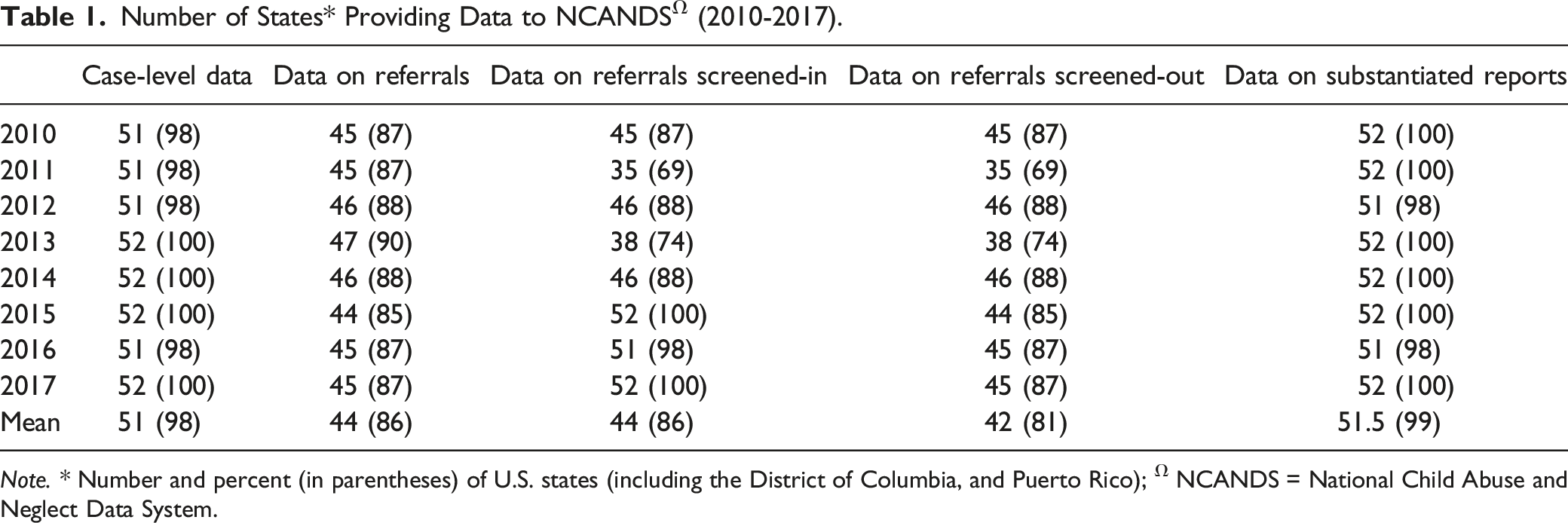
Note. * Number and percent (in parentheses) of U.S. states (including the District of Columbia, and Puerto Rico); Ω NCANDS = National Child Abuse and Neglect Data System.
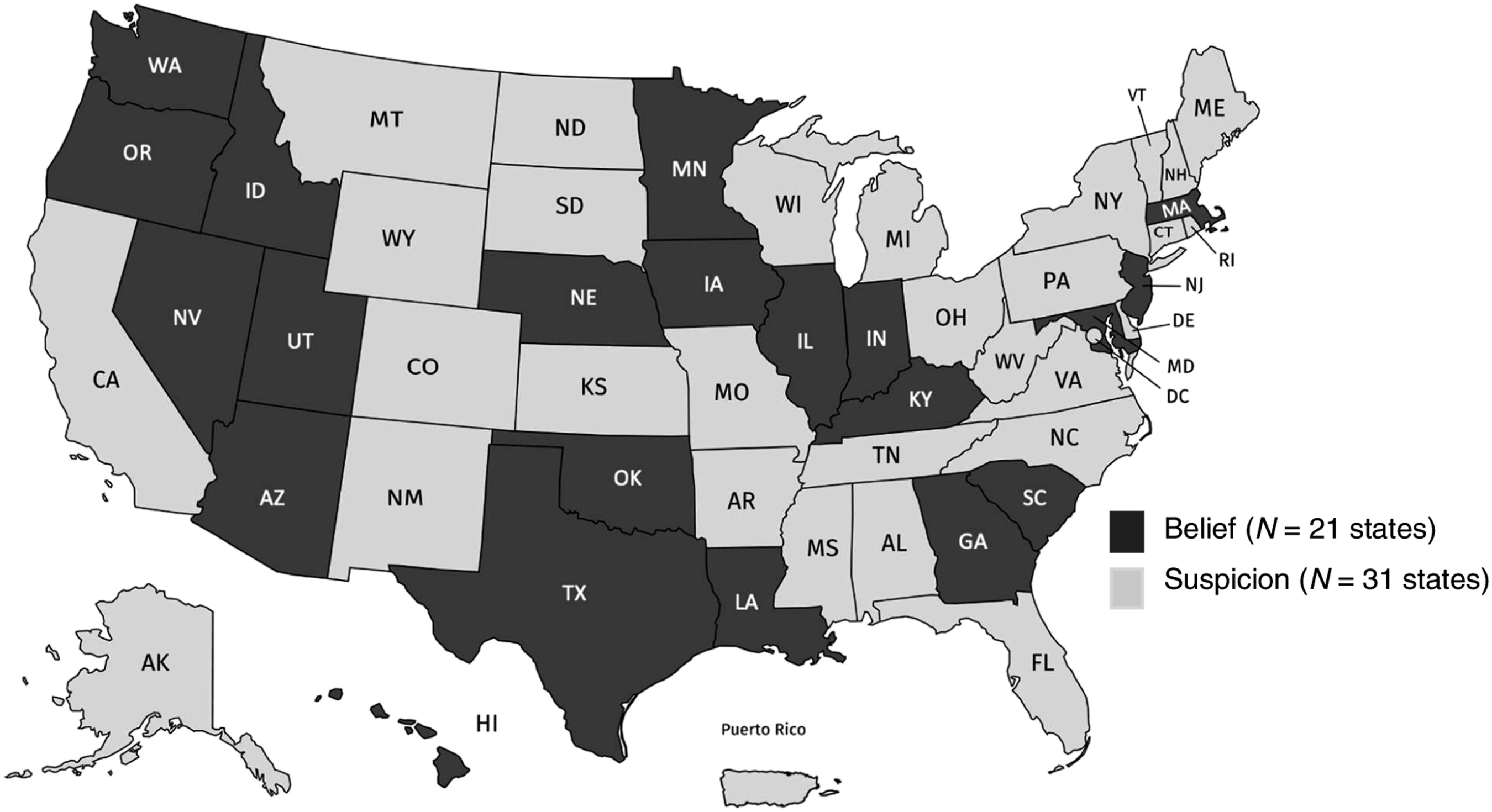
State mandatory reporting statutes were reviewed. Each state was then assigned to one of two frameworks (suspicion or belief) and one of seven sub-categories, based on the wording used to specify the minimum threshold of confidence that should trigger a mandated reporter to report (i.e., make a referral) to CPS (see below). Twenty-nine states employed some variant of suspicion, while 22 states used some variant of belief (see Figure 1, Supplemental Table 1). The seven distinct statutory wordings were ordered in terms of the level of confidence (from high to low) needed to trigger mandated reporting (see Figure 2). 1. “Reasonably believe” (two states) 2. “Reasonable cause/grounds to believe” (nine states) 3. “Reason/cause to believe” (10 states) 4. “Reasonably suspect/reasonable suspicion” (three states) 5. “Suspect” (three states) 6. “Reasonable cause to suspect” (21 states) 7. “Reason/cause to suspect” (four states) Illustration of which U.S. states use suspicion or belief in their statutory threshold for mandated reporting of possible child abuse. Illustration of which U.S. states use each of the seven statutory thresholds for mandated reporting of possible child abuse.
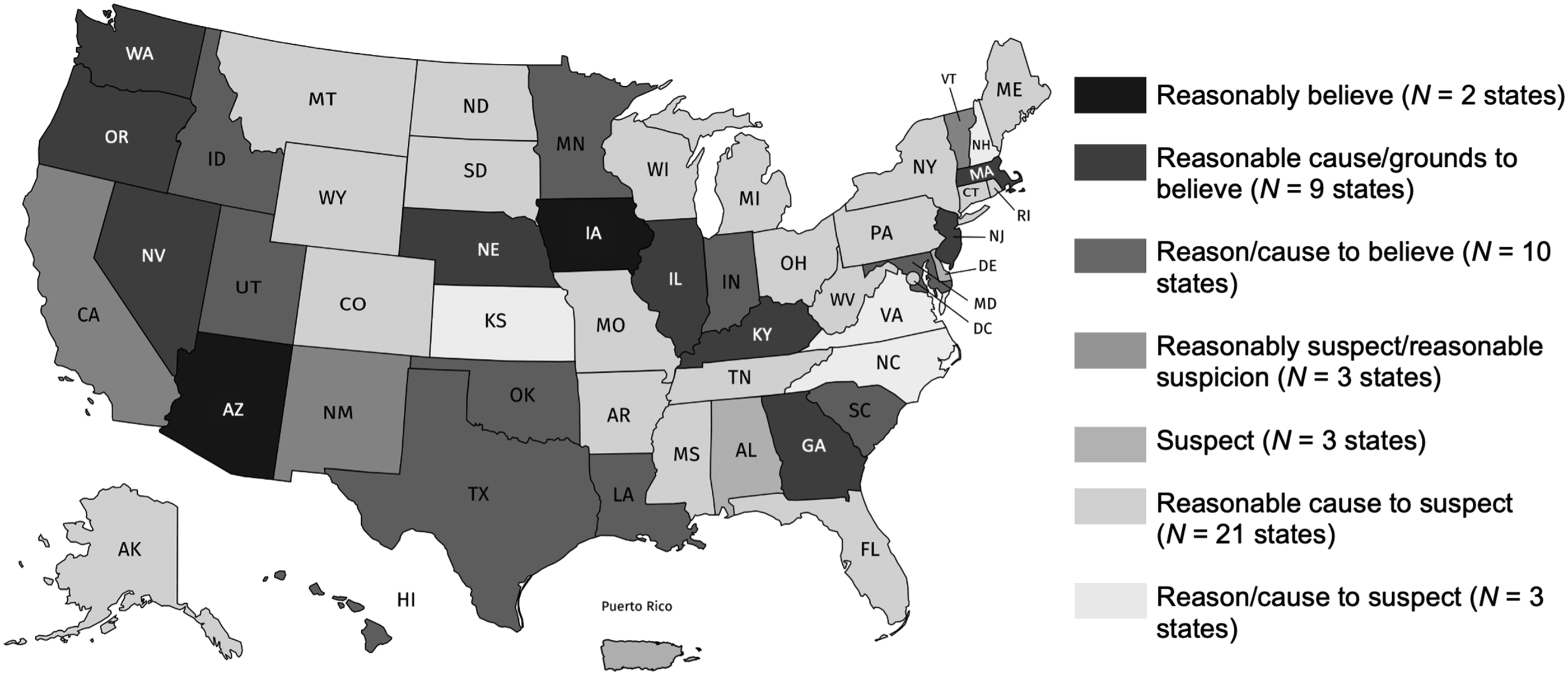
The rationale for the ordering of these seven statutory thresholds is as follows. Because belief is the holding of an idea to be true (Pierce, 1958), while suspicion involves a particular kind of feeling that something might be true (Levi & Loeben, 2004), all variants of belief were understood as representing a higher level of confidence than variants of suspicion. Accordingly, “reasonably believe” is the highest threshold of confidence, since it involves a further qualification of the kind of belief that is needed before a mandated reporter is legally required to act. Likewise, “reasonable cause to believe” is a higher threshold than “reason/cause to believe” because, here, “reasonable” serves as a further qualifier of cause. It is interesting that no state uses the unqualified term believe—which would be a higher threshold than “reason/cause to believe” (because actually believing logically entails a greater commitment than merely having reason or cause to believe). For similar reasons, the qualifier “reasonable” makes “reasonably suspect/reasonable suspicion” a higher threshold than merely suspecting; and “reasonable cause to suspect” specifies a higher threshold than merely having a “reason or cause to suspect”. That being said, the logic of this ordering is not necessarily related to how people actually interpret and apply these various thresholds. Both perceptions and behavior are strongly influenced by many factors unrelated to logic (Kahneman, 2011), and the semantics of these various statutory words may in fact be contested. Still, some terminology is needed to communicate the expectation for when a report must be made. Thus, knowing whether different statutory wordings are related to different reporting rates and/or outcomes can help states make more informed decisions when stipulating the threshold for reporting possible child abuse.
For each state, totals from 2010 to 2017 were calculated for the total number of referrals, referrals screened-out, referrals screened-in, referrals substantiated, and child population. Odds ratios were then calculated for the two major frameworks (suspicion and belief) and the seven sub-categories to determine whether outcomes were correlated with statutory wording. Odds ratios were also calculated to compare outcomes for states that had universal mandated reporting to those that did not (see Figure 3). Illustration of which U.S. states use specified mandated reporting or universal mandated reporting.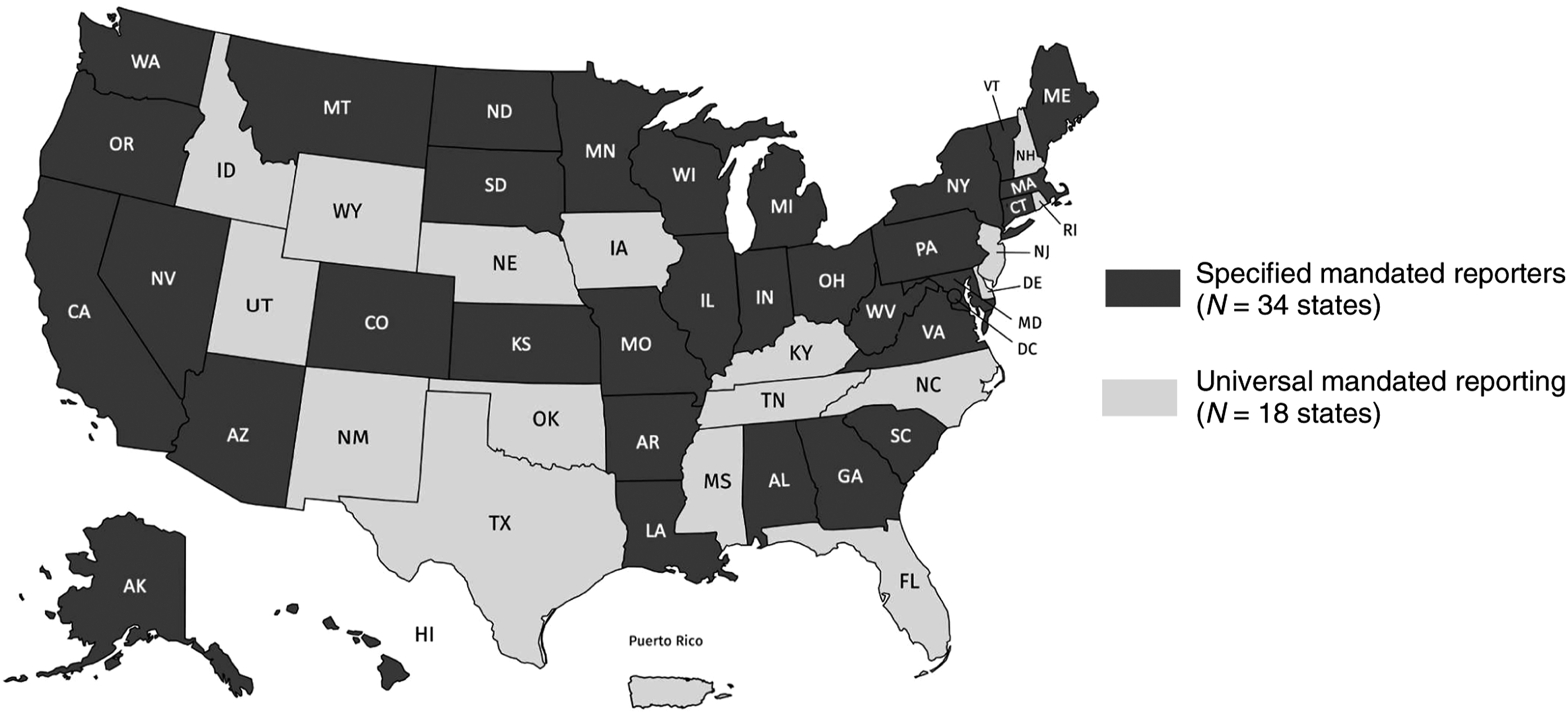
Results
Comparison of 2010–2017 NCANDSΩ Data for States that Use Suspicion Versus Belief as the Minimum Threshold for Reporting Possible Child Abuse.

Note. Reference group = Belief; SD = standard deviation; OR = odds ratio; CI = confidence interval; Ω NCANDS = National Child Abuse and Neglect Data System.
Comparison of 2010–2017 NCANDSΩ Data for States with Universal Mandated Reporting Versus Specified Mandated Reporters.

Note. Reference group = select groups qualify as mandated reporters; SD = standard deviation; OR = odds ratio; CI = confidence interval; Ω NCANDS = National Child Abuse and Neglect Data System.
Comparison of 2010–2017 NCANDSΩ Data for States with Universal Mandated Reporting Versus Specified Mandated Reporters, and Use of Suspicion Versus Belief as the Minimum Threshold for Reporting Possible Child Abuse.

Note. Reference group = Belief—selected groups; SD = standard deviation; OR = odds ratio; CI = confidence interval; Ω NCANDS = National Child Abuse and Neglect Data System.
Comparison of 2010–2017 NCANDSΩ Data as per States’ Statutory Threshold for Reporting Possible Child Abuse.
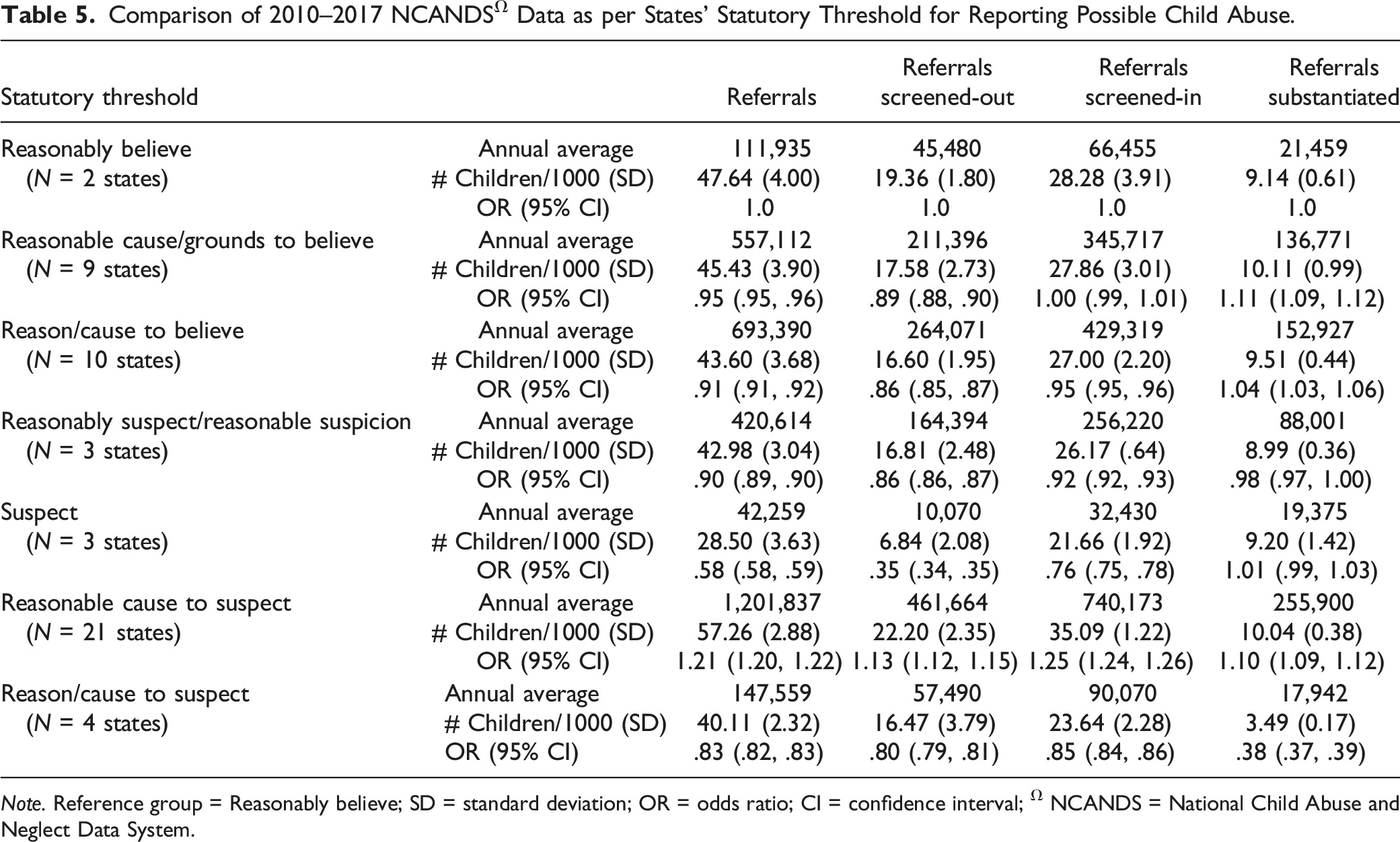
Note. Reference group = Reasonably believe; SD = standard deviation; OR = odds ratio; CI = confidence interval; Ω NCANDS = National Child Abuse and Neglect Data System.
Discussion
This analysis demonstrates that the two statutory thresholds for mandated reporting of belief and suspicion differ on average in their reporting rates for possible child abuse, as well as the likelihoods that those reports will be screened-in and/or substantiated. Though we cannot make causal determinations about these associations, prior research (Brosig & Kalichman, 1992) found that legislative wording significantly affects reporting for hypothetical cases. It is also well established that reporting is affected by a plethora of case- and reporter-related variables (Alvarez et al., 2004; Ayling et al., 2019; Delaronde et al., 2000; Dinehart & Kenny, 2015; Falkiner et al., 2017; Foster et al., 2017; Hansen et al., 1997; Hupe & Stevenson, 2019; Levi & Brown, 2005; McTavish et al., 2017; Tufford & Lee, 2019), indicating that reporting rates are influenced by a range of factors. Past studies also have shown wide variation in both the training of mandated reporters and their interpretation of mandated reporting legislation (Alvarez et al., 2004; Levi & Brown, 2005; Vulliamy & Sullivan, 2000). The present findings, however, are the first to demonstrate that statutory thresholds for mandated reporting are associated with real-world differences in the reporting of possible child abuse. It is also notable that the present findings identified significant correlations between distinct statutory thresholds for mandated reporting and the outcomes of referrals to child protective services (CPS). It is important to note that, in addition to the actual reports of suspected abuse, there are numerous factors that influence CPS responses including those at the case, decision-maker, organizational, and external levels. Such factors include a child having a history of prior referrals, caseworker workloads, as well as political and cultural exigencies (USDHH, 2003). Accordingly, the associations found in the present study should in no way be taken to imply that statutory wording is the only—or most influential—factor in whether referrals are either made or substantiated.
Given that suspicion (a feeling that something might be true) is a conceptually lower threshold than belief (the holding of an idea to be true), it is not surprising that the mean rate of total referrals was 13% higher in states whose legislation uses some variant of “suspicion” as the minimum threshold of confidence for mandated reporting. Interestingly, the most frequently used (21 states) statutory wording for suspicion (“reasonable cause to suspect”) yielded a substantiation rate (10.04/1000 children) similar to “reasonable cause/grounds to believe” (10.11/1000 children), even though “reasonable cause to suspect” generated far more overall referrals (57.01/1000 children) than “reasonable cause to believe” (45.51/1000 children). If this difference (i.e., 11.5 per 1000 children) were extrapolated to the roughly 74 million children in the U.S., it would amount to a difference of ∼850,000 reports per year. Given the recent data demonstrating that over one-third of all children (and >50% of Black children) in the U.S. are the subject of an investigation for suspected abuse by their 18th birthday (Wildeman et al., 2014), such disproportional outcomes warrant further investigation. It is also worth noting that states in which every competent adult qualified as a mandated reporter had equal referral rates (OR = .99), but higher rates of substantiation (9.65/1000 children), compared with states in which only certain job classifications qualify someone as a mandated reporter (9.13/1000 children). These findings align with prior research showing that total referrals do not differ between states with and without universal mandated reporting (Krase & DeLong-Hamilton, 2015; Steen & Duran, 2014). However, the present analysis does suggest that there is a higher substantiation rate in states with universal mandated reporting—as has been found in one prior study (Palusci et al., 2016). While an increase in the number of reports will likely result in the identification of more children experiencing child maltreatment, this must be weighed against the co-occurring downside of bringing more children and families into the child welfare system when no maltreatment was present.
Further research, particularly more qualitative research, is needed to fully understand the relationship between people’s knowledge/interpretation of the various statutory thresholds and their actual decisions to report possible child abuse. Would we see fewer inappropriate (and/or unhelpful) reports if every adult knew they were expected to contact child protective services when there was “reasonable cause to believe” that a child had been abused? This is a critical issue in part because there are substantial costs to both states and families if certain statutory wording generates more referrals, but no higher yield in terms of substantiating child abuse. We believe that the goal should be to create public policy that strikes the right balance, encouraging reporting to avoid missing cases of abuse, but not so much that it inadvertently ensnares many more families in which no abuse is occurring. To achieve such balance, those expected to report need guidelines that make sense, are easily interpreted, and (if followed) yield the right outcomes.
Despite the fact that state systems for child protection are imperfect (U.S. Department of Health & Human Services, 2017; Ringel et al., 2018; Solomon & Åsberg, 2012; Wells et al., 2009), we know that the earlier child abuse is identified, the more opportunity there is to make a significant and positive difference in children’s lives. Children who experience maltreatment are at high risk for physical, emotional, cognitive, and social difficulties; many of the resultant disorders are responsive to intervention (Zeanah & Humphreys, 2018); and without intervention many children will continue to experience maltreatment and its sequalae. That said, it is problematic to propose that any level of suspicion of abuse should be reported. This is because, for families, the experience of being reported and evaluated for suspected abuse can have serious negative consequences even when no abuse is identified. Such deleterious impacts include the psychological stress on families and additional time requirements during investigations, as well as the harm caused by even brief unwarranted parent–child separation (for discussion of the impact of separations see Humphreys, 2018). Additionally, promoting low-yield reports further taxes already over-burdened child protective agencies, thereby diverting resources from children and families most in need (Besharov and Douglas, 2005).
The present data suggest that differences in statutory wording may contribute to significant and concerning variability as to whether child protection agencies will be notified about concerns that a child has been abused. Broadly speaking, children in states using some variant of belief are less likely to be referred to CPS, but those who are referred are slightly more likely to have their report substantiated, suggesting that this higher threshold may be one factor associated with higher quality reports. However, we are unable to determine whether this higher threshold comes at a cost to sensitivity (i.e., cases in which abuse is occurring are not reported). More specifically, for example, compared to the highest threshold (“reasonably believe”), use of “reasonable cause/grounds to believe” is associated with ∼1 more substantiated cases per 1000 children despite generating ∼2 fewer reports per 1000 children, while “reasonable cause to suspect” states have approximately 12 more reports per 1000 children to achieve a similar substantiation rate. If additional reports made do not translate into higher substantiation rates (as is the case with “reasonable cause/grounds to believe” versus “reasonable cause to suspect” and “reasonably believe”), this would indicate a potential burden on the child welfare screening system as well as families. That said, unanswered questions remain regarding how and why people interpret mandated reporting thresholds as they do, as well as what statutory wording can optimize appropriate referrals while minimizing unwarranted reports. Careful attention to the wording of mandated reporting statutes could make a positive difference in terms of protecting children and avoiding not only undue stress to families, but also undue burden to child protective services that are already stretched thin.
The current findings must be interpreted in light of several limitations. First, it is quite possible that some individuals who make reports are unaware of the specific wording of their state’s legislation. Among mandated reporters, this may be due to inadequate training or failure to incorporate the statutory wording into their decision-making. Such lack of awareness may be particularly true for those who are not mandated reporters or are non-professionals, and thus likely have no formal training regarding the legal threshold for reporting suspected abuse. Across states with and without universal reporting, such non-professionals were responsible for approximately 16% of reports to CPS in 2019. Previous research has not investigated how well mandated reporters know the statutory wording of their state. However, to what degree mandated reporters know and understand the statutory wording of their state is an empirically testable question that would have implications for our findings. Second, the various factors that have been shown to influence reporting behavior, such as attitudes towards reporting and awareness of the significance of child maltreatment (Alvarez et al., 2004) may vary by state. Furthermore, social, political, cultural, and economic factors that influence reporting practices may also differ by state. This study only examined the relationship between statutory wording with reporting behavior and outcomes and did not investigate the role of other relevant factors. These other factors—for example, attitudes in a state—may influence both the formation of legislation and individuals’ reporting behavior, and thus explain the relationships identified.
Furthermore, this study’s findings were limited by incomplete data (due to variations in state participation in reporting to the National Child Abuse and Neglect Data System), as well as year-to-year variations in reported data across Child Maltreatment Reports. Both of these factors hindered systematic analysis for confounding variables, such as state-specific demographic, cultural factors, or public events that might affect reporting practices. Further, because child welfare agencies differ in their policies and practices (even within states), more detailed data are needed to determine whether and to what degree agency level decision-making (vis-à-vis screening-in and substantiation) is related to a state’s statutory threshold.
The associations found suggest that statutory language may play some role in reporting behavior and CPS decisions. The current study design precludes the possibility of determining causality in the relationship between statutory wording and either reporting behavior or CPS responses to reports. That said, the present findings are intriguing, and warrant further research into whether changes in statutory wording could influence child abuse reporting.
Supplemental Material
Supplemental Material - Statutory Threshold Wording is Associated with Child Maltreatment Reporting
Supplemental Material for Statutory Threshold Wording is Associated with Child Maltreatment Reporting by Hannah A. Piersiak, Benjamin H. Levi, Kathryn L. Humphreys in Child Maltreatment
Footnotes
Declaration of Conflicting Interests
The author(s) declared no potential conflicts of interest with respect to the research, authorship, and/or publication of this article.
Funding
The author(s) disclosed receipt of the following financial support for the research, authorship, and/or publication of this article: This work was supported by the Jacobs Foundation (2017-1261-05).

Supplemental Material
Supplemental Material for this article is available online.
References
Supplementary Material
Please find the following supplemental material available below.
For Open Access articles published under a Creative Commons License, all supplemental material carries the same license as the article it is associated with.
For non-Open Access articles published, all supplemental material carries a non-exclusive license, and permission requests for re-use of supplemental material or any part of supplemental material shall be sent directly to the copyright owner as specified in the copyright notice associated with the article.
