




Abstract
Through an online survey of residents in areas affected by Hurricane Matthew (n = 596), this study examines antecedents that lead to perceived community resilience (PCR) in a disaster crisis. Crisis efficacy, community identification, positive and negative emotions, and social media engagement are identified as factors contributing to PCR. Social media engagement was defined as coping behaviors such as, information seeking, social support seeking, and giving behaviors on social media during and in the aftermath of crisis. The results of this study provide implications for postcrisis rebuilding processes, and how government and organizational communicators can utilize social media communication to foster PCR.
Keywords
On September 28, 2016, Hurricane Matthew formed in the Atlantic Ocean. In only a few days, the deadly Category 5 hurricane had swept through the Caribbean and the entire U.S. East Coast (Harlan & Fritz, 2016). Disaster crises such as Hurricane Matthew are characterized with threats and uncertainty, and they are also high profile and large scale in terms of their online visibility (Ulmer, Seeger, & Sellnow, 2007). Therefore, the need for successful social media communication is heightened, both for the residents seeking information, and for the organizations distributing information that will be heavily scrutinized. Despite this, existing literature on the role of social media in crisis communication focuses on early stages of the crisis life cycle such as, preparation prior to crisis and crisis response during crisis for the purpose of reputation restoration (Coombs & Holladay, 1996). Relatively little attention has been given to postcrisis communication, or the communication processes essential for crisis recovery during the immediate aftermath of a disaster (Coombs, 2015). The discourse of renewal is one of the few theoretical perspectives attempting to address this important research area (Ulmer & Sellnow, 2002). Its role in this study is to provide a theoretical framework for understanding how crisis leaders can harness intangible resources such as community core values to recover from a disaster (Ulmer et al., 2007).
This study examines the concept of perceived community resilience (PCR), within the context of Hurricane Matthew, by analyzing antecedents that may lead to PCR building in postcrisis communication. PCR refers to a community’s ability to recover from crises (Leykin, Lahad, Cohen, Goldberg, & Aharonson-Daniel, 2013). It indicates how fast and how well a community can withstand and heal from emergency scenarios, an important factor in the crisis recovery phase (Coombs, 2015). To address the deficiency of PCR literature in crisis scenarios, this study draws from community psychology (Leykin et al., 2013), emotions and coping theories (Folkman & Lazarus, 1988), as well as health communication (Witte, 1994). More specifically, this study examines crisis emotions, crisis efficacy, community identification, the publics’ postcrisis social media engagement and the role social media plays in fostering PCR in disaster scenarios. In this study, social media engagement is defined as publics’ mid- and postcrisis cognitive and affective coping behaviors on social media. The term coping refers to efforts made by the respondents to remove undesirable elements from their emotions or environment. The coping behaviors on social media being examined include (a) action taking, (b) information seeking, (c) social support seeking and giving, and (d) avoidance (see Table 1 for measurement dimensions).
Social Media Engagement Measurement Items.
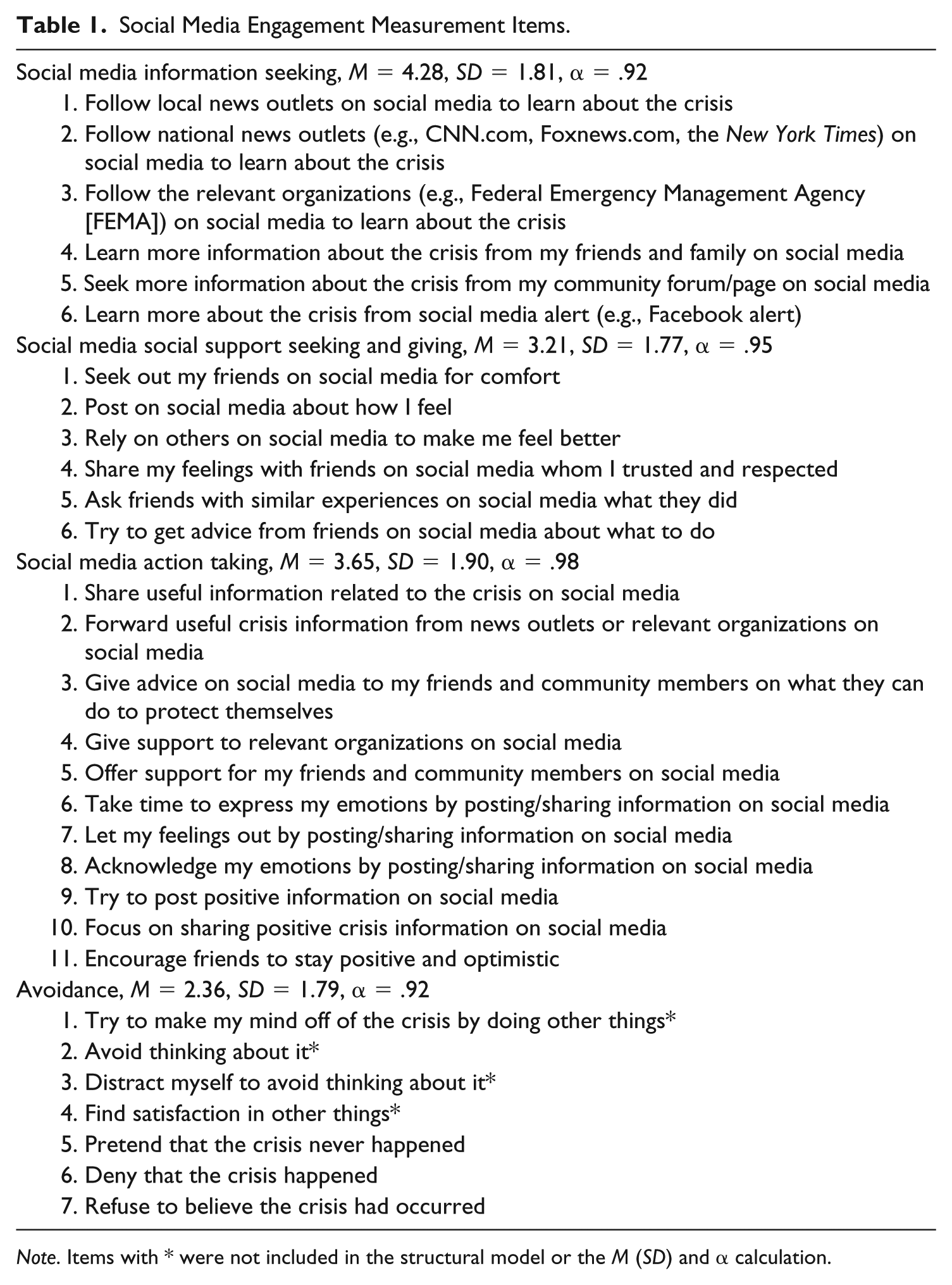
Note. Items with * were not included in the structural model or the M (SD) and α calculation.
The purpose of this study is to examine how psychological aspects of the crisis process, as well as cognitive and affective coping strategies on an individual level, built PCR during Hurricane Matthew. The results of this study provide implications for government and organizational communicators in terms of how social media communication can be utilized during crisis recovery to foster PCR.
Literature Review
The Discourse of Renewal and PCR
Postcrisis communication refers to continuous efforts taken after a crisis event to repair damage, to provide follow-up information, and to facilitate the publics’ healing and coping (Austin, Liu, & Jin, 2014). The discourse of renewal shifts the focus of postcrisis communication from reducing public blame and restoring reputation, to facilitating dialogue and enacting the healing/coping process for the public (Seeger & Padgett, 2010). It refers to the resuming, revitalizing, and rebuilding of tangible and intangible community infrastructure through common community values, dialogue, supportive leadership, and opportunities inherent in the crisis (Ulmer et al., 2007). The purpose of the discourse is to give publics an optimistic outlook (Ulmer & Sellnow, 2002), and to envision a future built upon consensus and commitment (Seeger & Padgett, 2010). This study examines PCR in postcrisis communication to gain insights into the discourse of renewal from a more empirical and individual perspective, than the framework’s traditional rhetorical applications (Austin et al., 2014).
Community resilience describes a community’s ability to withstand and overcome adversities such as a natural disaster (Leykin et al., 2013). A resilient community quickly and successfully adapts to and copes with negative events. Resilience is a set of capacities (Norris, Stevens, Pfefferbaum, Wyche, & Pfefferbaum, 2008) and the capability to bounce back “emerges from collective activity in which individuals join together in efforts that foster response and recovery for the whole” (Pfefferbaum & Klomp, 2013, p. 279). Community resilience can be assessed through either indicators of local economic and social capital (Sherrieb, Norris, & Galea, 2010) or gauging individual perceptions (Pfefferbaum & Klomp, 2013). To differentiate the two levels of operationalization (i.e., individual perception vs. community actual ability; Nass & Reeves, 1991), this study defines PCR as publics’ belief in their community’s ability to withstand and recover from disaster crisis. This individual perspective offers unique “bottom-up” insights into how individual experience and communication fosters or impedes resilience building (Houston, Spialek, First, Stevens, & First, 2017) thus allowing for “community-driven interventions” (Pfefferbaum, Pfefferbaum, Nitiema, Houston, & Van Horn, 2015, p. 182).
This study conceptualizes PCR along the lines of two frequently tested dimensions: publics’ perceived preparedness and recovery (Cagney, Sterrett, Benz, & Tompson, 2016; Cuervo, Leopold, & Baron, 2017) and trust in the community (Houston et al., 2017; Leykin et al., 2013). Perceived preparedness and recovery refers to the degree to which individuals are confident in how well their community are prepared for and can handle an adversity such as a disaster (Pfefferbaum et al., 2015). For instance, Cagney et al. (2016) examined, through a survey, New York residents’ perceptions of preparedness and recovery as markers of PCR in the aftermath of Superstorm Sandy. Trust in the community reflects the degree of connections and attachments individual community members have with each other and with the community (Houston et al., 2017). For instance, Pfefferbaum et al. (2015) developed a five-dimension PCR model based on individual perceptions of a community on factors such as connection and caring, disaster management, and communication.
People’s perceptions about their community’s survival, especially their perceived preparedness and trust/connectedness, may be more crucial than tangible resources and infrastructure in the aftermath of a disaster (Tandoc & Takahashi, 2016; Watson, 2016). For example, in the aftermath of Buffalo Creek floods in West Virginia in 1972, despite prompt arrival of outside aid, the Buffalo Creek community was never able to recover due to the lack of connectedness among community members. Outside aid provided mobile homes for those without accommodations and as a result, community members were “scattered all over the hollow,” “torn out of familiar neighborhoods,” and left isolated and alienated (Erikson, 1976, p. 47). This perspective is echoed by the Chief Resilience Officer in Tulsa, Oklahoma, who believes PCR during tornadoes is about the strength and tenacity of the citizens (Bliss, 2017).
PCR captures numerous themes critical to the discourse of renewal. For example, PCR reflects collective trust in leadership, belief in community values, and a positive outlook for the future (Leykin et al., 2013; Norris et al., 2008). In addition to a community’s physical infrastructure, its social infrastructure could potentially affect its ability to rebuild successfully (Cagney et al., 2016; Houston et al., 2017). Strong PCR gives the community a positive outlook and accelerates the rebuilding process (Leykin et al., 2013) by lowering stress and increasing life satisfaction (Kimhi & Shamai, 2004). As a majority of literature on the construct of PCR derives from other fields, this study will now draw from emotions and coping theories (Folkman & Lazarus, 1988) to expand the theoretical framework.
Social Media Engagement
This study incorporates coping literature (Folkman & Lazarus, 1988) to explain the functions and motivations behind social media engagement behaviors in crisis. Coping is defined as cognitive and behavioral efforts to manage undesirable emotions or specific demands from the environment that are appraised as overwhelming (Lazarus, 1991). Coping efforts intend to change the appraisal of the situation and the emotions. For example, an angry consumer with a negative service experience may try to cope by expressing their feelings through negative word-of-mouth (Duhachek, 2005). Coping strategies may be cognitive (i.e., avoidance, denial, positive thinking and rational thinking) or behavioral (i.e., action taking, emotional venting, emotional support, and instrumental support; Duhachek, 2005). From the functionality perspective, coping can be conceptualized as both problem-solving strategies (i.e., action taking, instrumental support, information seeking, etc.) and emotional-regulating strategies (i.e., emotional support, avoidance, emotional venting, etc.; Lazarus & Folkman, 1984).
Coping strategies are also situation-dependent. How people cope depends heavily on the resources available to them (Lazarus & Folkman, 1984). The need to cope becomes especially salient in times of crises such as natural disasters (Tandoc & Takahashi, 2016). According to Lazarus and Folkman (1984), any tools, skills, or social networks can be coping resources. Social media provides publics a unique communication platform for coping in the aftermath of disasters (Tandoc & Takahashi, 2016). For example, in the aftermath of Hurricane Katrina, communities in New Orleans resorted to online blogging as a way to alleviate sources of community stress (Watson, 2016). Facebook was found to be the main platform where survivors from Typhoon Haiyan in the Philippines shared their experiences with one another. This phenomenon is known as collective coping (Tandoc & Takahashi, 2016), and it highlights the need to examine social media engagement as a coping strategy in postcrisis communication and the building of PCR.
Social media literature operationalizes social media engagement as publics’ consumption, contribution, and creation behaviors on social media (Men & Tsai, 2014). For instance, consumption behaviors may include seeking and consuming information or giving and sharing information (Muntinga, Moorman, & Smit, 2011). Lazarus and Folkman (1984) posited that coping should be viewed as a process where different functions (i.e., problem-solving vs. emotional-regulating strategies) and nature of coping (i.e., cognitive vs. behavioral strategies) may co-exist at different coping stages. Accordingly, based on Muntinga et al. (2011)’s segmentation, this study conceptualizes social media engagement as a coping strategy and segments it into four major dimensions: action taking (social media contribution aimed at problem solving and emotional-regulation), social support seeking and giving (social media consumption aimed at problem solving and emotional-regulation), information seeking (social media consumption aimed at problem solving), and avoidance (no consumption or contribution aimed at emotional-regulation).
Action taking refers to behaviors intending to share and provide necessary resources (i.e., information or experience) on social media for the benefit of others (Duhachek, 2005). Action taking is considered to be one of the most effective behavioral coping strategies in postcrisis situations (Reynolds & Seeger, 2014). It helps people regulate negative emotions and restore a sense of control in their disrupted lives (Lazarus & Folkman, 1984). For example, checking on a friend reduces anxiety and stress created by a crisis (Reynolds & Seeger, 2014). Similarly, on social media, offering constructive help to those seeking information or support has the potential to alleviate stress and promote a healthy and positive outlook (Tandoc & Takahashi, 2016). Stress reduction and positive outlook maintenance are essential for promoting perceptions of connectedness and trust, as well as a sense of control (in that the community is prepared) and empowerment (Reynolds & Seeger, 2014). As these are crucial dimensions of PCR (Pfefferbaum et al., 2015), the inclusion of action taking via social media as a potential predictor of PCR is justified. Therefore, this study proposes the following:
Lazarus and Folkman (1984) argued that each individual is not subject to a linear relationship between action taking and perceived community, but would likely experience a cycle of coping (i.e., action taking, information seeking, support seeking/giving, or avoidance) and appraising the situation (i.e., perceiving PCR to be at a certain level). Accordingly, the scope of this study is to test for the existence of a (positive or negative) relationship between the variables, rather than to account for the starting and end point of an individual respondent’s efforts to remove undesirable elements from their emotions or environment. This definition of scope applies to the hypothesis above, and all subsequent hypotheses to follow.
Although action taking may help people to take their minds off of their problems temporarily, it may not always lead to successful problem resolution (Lazarus & Folkman, 1984). People reappraise the situation to determine the effectiveness of their action-taking strategy and other coping strategies may be attempted should the initial action taking deemed insufficient (Lazarus & Folkman, 1984). Yi and Baumgartner (2004) demonstrated that avoidance or mental disengagement is often the next strategy attempted. Avoidance is when an individual distances oneself from the crisis (i.e., not thinking about it or thinking about something else; Lazarus & Folkman, 1984). Should action taking not adequately remove undesirable elements from a respondent’s emotions or environment, action taking may lead to avoidance.
Social support seeking and giving is defined as publics’ coping behavior for mutual social support, such as sharing feelings with trusted ones on social media (Tandoc & Takahashi, 2016). Social support is one of the most frequently used resources for coping (Lazarus & Folkman, 1984). The interactive and personal nature of social media allows the community to grieve over their loss and to move on (Tandoc & Takahashi, 2016). It is an opportunity for victims to voice their crisis experiences and feelings with friends and family (Coombs, 2015). This sharing is an essential process to create trust and connectedness among community members (Houston et al., 2017). Accordingly, seeking and giving social support on social media can contribute to a community’s collective experience and memories, thus creating trust, solidarity, and cohesion among the community members (Waverijn, Groenewegen, & Klerk, 2017):
Information seeking via social media is a frequently examined coping behavior in crises (H. K. Kim & Niederdeppe, 2013). In this study, information seeking refers to publics seeking and consuming media content to deal with specific problems (i.e., reducing uncertainty; Lazarus & Folkman, 1984). Crises create uncertainty for community members. Information seeking allows publics to receive updates about the crisis situation such as the cause of a crisis to reduce uncertainty (Reynolds & Seeger, 2014). Further evidence from pandemic crisis communication demonstrated that active information seeking had the potential to increase the public’s trust in an organization’s leader (H. K. Kim & Niederdeppe, 2013). Therefore, the trust in a community leader, and reduced uncertainty/stress facilitated by information seeking may accelerate the healing and recovery of a community; in turn increasing PCR. Accordingly, this study proposes
As mentioned earlier, when other coping strategies are not effective, an individual may attempt to cope with a crisis through avoidance. Avoidance usually indicates that people appraise the situation as unchangeable (Lazarus & Folkman, 1984). This kind of hopelessness may increase negative emotions that have an adverse effect on PCR (Reynolds & Seeger, 2014). Although avoidance may take one’s mind off of the problem temporarily, the negative emotions fostered are likely to prevent the creation of PCR (Lazarus & Folkman, 1984). Hence, avoidance is unlikely to contribute to positive beliefs about community rebuilding and recovery:
Antecedents Influencing PCR
Crisis efficacy
Collective efficacy, or people’s willingness to take collective actions and work for the common good (Waverijn et al., 2017), has been identified as a major predictor of PCR (Chandra et al., 2010). As a similar construct, perceived efficacy refers to people’s perceived ability to successfully follow instructions (Witte, 1994). It involves self-efficacy (i.e., belief in ability to take actions) and response efficacy (i.e., belief in the effectiveness of the instructions; Witte, Cameron, McKeon, & Berkowitz, 1996). Studies have shown that collective efficacy and perceived efficacy lead to successful adoption of self-protective behaviors contributing to a community’s well-being (Waverijn et al., 2017; Witte et al., 1996). Perceived efficacy motivates self-protective behaviors by decreasing negative emotions such as fear and anxiety in health communication literature (Witte, 1994). Therefore, perceived efficacy is usually negatively related to the negative emotions evoked by health risks.
To better capture and reflect the context of disaster crises, this study applies the concept of crisis efficacy to measure perceived efficacy. Crisis efficacy is defined as the public’s perceived ability to engage in self-protective communication behaviors during and after natural disaster crises. Similarly, this study proposes that in a disaster crisis context, crisis efficacy may motivate self-protective communication behaviors among publics and may also reduce negative emotions evoked by the crisis event. As with health risks, disasters crises create stress and uncertainty. The discourse of renewal argues for publics’ active engagement in postcrisis communication to reduce uncertainty and stress (Ulmer et al., 2007). Dialogues between crisis leaders and publics may help the public to make sense of the crisis event, create a sense of security, and to restore faith in the community (Seeger & Padgett, 2010). In addition, as perceived shared experience is important in crisis, crisis efficacy also reflects collective beliefs and can be transferred interpersonally (Avery & Park, 2016). Therefore, crisis efficacy may contribute to empowerment and resilience of the community through perceived shared risk (Avery & Park, 2016; Leykin et al., 2013):
Community identification
Organizational identification is defined as “a perceived oneness with an organization and the experience of the organization’s success and failures as one’s own” (Mael & Ashforth, 1992, p. 103). Within the context of this study, community identification is defined as an individual’s perceived relationship and attachment with their community (Yoshida, Gordon, Heere, & James, 2015). Identification signifies the intrinsic connection individuals feel toward one another and their collective community though shared community values and emotional bonds (Mael & Ashforth, 1992).
Social resources such as social support, social bonds, and community identification are contributing factors to PCR (Cagney et al., 2016; Leykin et al., 2013). Through surveys of communities affected by Hurricane Sandy, scholars have suggested that residents in communities with higher social exchange and cohesion are more likely to believe in the fast recovery of their community (Cagney et al., 2016). Therefore, community identification may be positively associated with PCR. In addition, as individuals identify with their community through common values (Yoshida et al., 2015), community identification may provide a positive outlook for the public in crisis situations (Seeger & Padgett, 2010). For example, communication following the 9/11 terrorist attacks that emphasized core patriotic and American values provided a positive perspective and strong appeals to community engagement (Fredrickson, Tugade, Waugh, & Larkin, 2003). Therefore, this study proposes that community identification promotes positive emotions, motivating individuals to take action; offering assistance; as well as seeking and offering social support to their community during crises (Fredrickson et al., 2003):
Crisis emotions
As a psychological construct, emotion is an arousal state elicited by cognitive appraisal of a situation and can affect various cognitive and behavioral outcomes (Lazarus, 1991). Dimensional and discrete emotions are two main theoretical perspectives in psychological literature. Dimensional emotions are characterized by two broad dimensions: arousal (i.e., high vs. low) and valence (i.e., negative and positive). Discrete emotions operationalize the construct as categorical emotional states, elicited by specific cognitive appraisals (e.g., threat evokes fear; misconduct evokes anger; Nabi, 2010).
Following these two perspectives, common crisis emotions were subclassified. Whereas anger, sadness, fear, disgust, contempt, embarrassment, guilt, shame, anxiety, and apprehension are identified as negative crisis emotions (Jin, Liu, Anagondahalli, & Austin, 2014), hope, relief, sympathy, awe, contentment, gratitude, love, pride, surprise, joy, and interest are recognized as positive crisis emotions (Fredrickson et al., 2003; H. K. Kim & Niederdeppe, 2013). This study adopted the dimensional emotion’s approach to crisis emotions by combining discrete emotions based on their shared attribute valence (H. K. Kim & Niederdeppe, 2013; Lazarus, 1991).
Negative and positive crisis emotions may trigger different communication and behavioral outcomes (Jin, 2014). For example, negative emotions (i.e., anger and fear) were strong predictors of information seeking in both health risk (Witte, 1994) and crisis literature (H. K. Kim & Niederdeppe, 2013). However, negative emotions (i.e., anger, fear, and contempt) induced by uncertain situations are negatively associated with trust (H. K. Kim & Niederdeppe, 2013) and may activate negative word-of-mouth intentions (Coombs & Holladay, 2007). Therefore, negative emotions are unlikely to promote PCR. Despite this, positive emotions are significant predictors of how individuals recover from adversities (Fredrickson et al., 2003). Through a survey examining publics’ emotions and resilience in the aftermath of the 9/11 terrorist attack, Fredrickson et al. (2003) found that gratitude, interest, and love are the most frequently experienced positive emotions during a terrorist attack crisis. They have also discovered that interest, hope, and pride are associated with resilience. Therefore, this study proposes
Method
Procedures for Data Collection
A survey was created though Qualtrics and distributed to an online respondent panel procured via Survey Sampling International (SSI). To qualify for the study, participants needed to reside in communities in the four states affected by Hurricane Matthew (i.e., Florida, Georgia, South Carolina, and North Carolina; Harlan & Fritz, 2016) and were directly affected by the hurricane. Data collection began within 1 month of the storm’s conclusion and lasted for 2 weeks. After securing the data (n = 627), visual inspection for repeated answers (i.e., straight liners) or patterned answers (i.e., Christmas-treeing) left a final sample size of n = 596.
Independent and Dependent Measures
Crisis Emotions Scales were adopted from previous studies (Fredrickson et al., 2003; Jin, 2009) and were categorized into two dimensions based on valence through exploratory factor analysis (EFA). Respondents were directed “I experience this kind of feeling the most frequent during and in the aftermath of the hurricane” (see Table 2 for items). An EFA with maximum likelihood factor extraction and oblique rotation (Costello & Osborne, 2005) was used to extract the negative and positive emotions factors. Five items (sympathy, apprehension, anxious, fearful, and amused) were dropped due to low factor loading (<.40). Therefore, negative emotions involve angry, disgusted, contempt, embarrassed, guilty, and ashamed; and positive emotions include hope, relieved, awe, contented, gratitude, love, pride, surprised, joy, and interest.
Perception and Emotion Measurement Items.

Note. Items with * were not included in the structural model or the M(SD) and α calculation.
Social media engagement measurement was adapted from coping style scales (Duhachek, 2005). Participants were instructed “How frequently did you carry out the following social media activities during and in the aftermath of the crisis?” (1 = never, 7 = very frequent). Based on relevant literature (Lazarus & Folkman, 1984; Men & Tsai, 2014), this study created the following social media engagement dimensions: social media information seeking, social media social support seeking and giving, social media action taking, and avoidance (Table 1).
All other variables were measured by 7-point Likert-type scales (1 = strongly disagree, 7 = strongly agree). The crisis efficacy scale was adopted from Avery and Park (2016). EFA with maximum likelihood factor extraction and oblique rotation extracted only one factor, “self-efficacy” (eigenvalue = 5.59, accounting for 52.42% of the variance). This did not include the “response efficacy” dimension, which might be because Avery and Park (2016) tested the construct with instructional crisis messages while the current study did not. Therefore, the “response efficacy” dimension did not load onto the perceived efficacy construct. Community identification was measured by Mael and Ashforth’s (1992) organizational identification scale. PCR was measured by scales adopted from previous studies (Cagney et al., 2016; Leykin et al., 2013). See Table 2 for measurement items and Cronbach’s α.
Data Analysis
Structural equation modeling (SEM) with AMOS was used for data analysis. To further triangulate the SEM results, the hypothesized pathways were tested by linear regression as well. A confirmatory factor analysis (CFA) was conducted on the social media engagement scales. After initial inspection, four items from factor “avoidance” were deleted due to low factor loading (<.70; Table 1). The resulting measurement model showed good fit: x2(df = 286) = 1029.18, p < .001, comparative fit index (CFI) = .96, root mean square error approximation (RMSEA) = .04, and standardized root mean square residual (SRMR) = .06 (Byrne, 2010). Fit is an evaluative measure that assesses whether the data collected fit the proposed model relative to the null model (all observed values are uncorrelated; Hair, Black, Babin, & Anderson, 2010). Although a significant chi-squared analysis (x2) can suggest poor model fit, models with sample sizes larger than 200 tend to produce statistically significant chi-squared results (Barrett, 2007; Sharma, Mukherjee, Kumar, & Dillon, 2005). Accordingly, other fit indices such as the CFI, RMSEA, and the SRMR were used. The benchmarks for each fit index were CFI > 0.90; RMSEA < 0.10; and SRMR < 0.08 (Hu & Bentler, 1999; Sharma et al., 2005; Suki, 2011). The standardized factor loadings between factors and their indicators range from .79 to 1.00. Therefore, the resulting four dimensions of social media engagement were used in the analysis of the overall model.
The analysis of the overall model followed a two-step latent variable modeling approach, assessing the construct validity of the measurement model in a CFA in Step 1 and assessing the structural model in Step 2. Due to high residual covariance, two items from PCR (Table 2), three items from factor “positive emotion” (i.e., awe, surprised and contended) and one item from factor “negative emotion” (i.e., disgusted) were deleted. The resulting measurement model showed good fit: x2(df = 1593) = 3,241.52, p < .001, CFI = 0.95, RMSEA = 0.04, and SRMR = 0.06 (Byrne, 2010). As mentioned earlier, the large sample size (n > 200) requires the evaluation of fit using CFI, RMSEA, and SRMR (Barrett, 2007; Hu & Bentler, 1999; Sharma et al., 2005). The benchmarks for each fit index were CFI > 0.90; RMSEA < 0.10; and SRMR < 0.08 (Hu & Bentler, 1999; Sharma et al., 2005; Suki, 2011). The standardized factor loadings between factors and their indicators range from .76 to 1.00.
In the second step, a structural model was created based on the relationships proposed in the hypotheses (Figure 1). The assessment of the structural model followed procedures suggested by Byrne (2010). The initial examination of the structural model indicated unsatisfactory fit: x2(df = 1609) = 4,305.95, p < .001, CFI = 0.92, RMSEA = 0.05, and SRMR = 0.15. The benchmark for SRMR < 0.08 was not met (Hu & Bentler, 1999). Accordingly, the structural model was adjusted based on the regression weights table in the modification indices (Byrne, 2010), and the model was then re-estimated with added new paths suggested by the modification indices. Byrne (2010) argued that in the determination of a well-fitting model, the addition of freely estimated pathways is appropriate when their modification index scores are higher than those of existing pathways, and the causal relationship suggested by literature remains intact. For example, the additional pathways action taking → social support seeking / giving, action taking → information seeking, and avoidance → social support seeking / giving, all maintain face validity and internal consistency with the literature reviewed. The scholarly implications and internal consistency of these pathways is addressed in greater detail within the discussion. Examination of the structural parameter estimates for the model also indicated nonsignificant structural paths. To obtain a parsimonious model, the nonsignificant structural paths were deleted (Byrne, 2010). Kline (2005) argued that in the determination of a model with improved parsimony, the removal of pathways based on empirical considerations (i.e., lack of statistical significance) is appropriate. The resulting structural model (Figure 2) suggested good fit and was accepted as the final model: x2(df = 1612) = 3,354.53, p <. 001, CFI = .95, RMSEA = .04, and SRMR = .07 (Byrne, 2010). Once again, the large sample size (n > 200) requires the evaluation of fit using CFI, RMSEA, and SRMR (Barrett, 2007; Hu & Bentler, 1999; Sharma et al., 2005). The benchmarks for each fit index were CFI > 0.90, RMSEA < 0.10, and SRMR < 0.08 (Hu & Bentler, 1999; Sharma et al., 2005; Suki, 2011). See Figure 2 for the results of the final structural model.
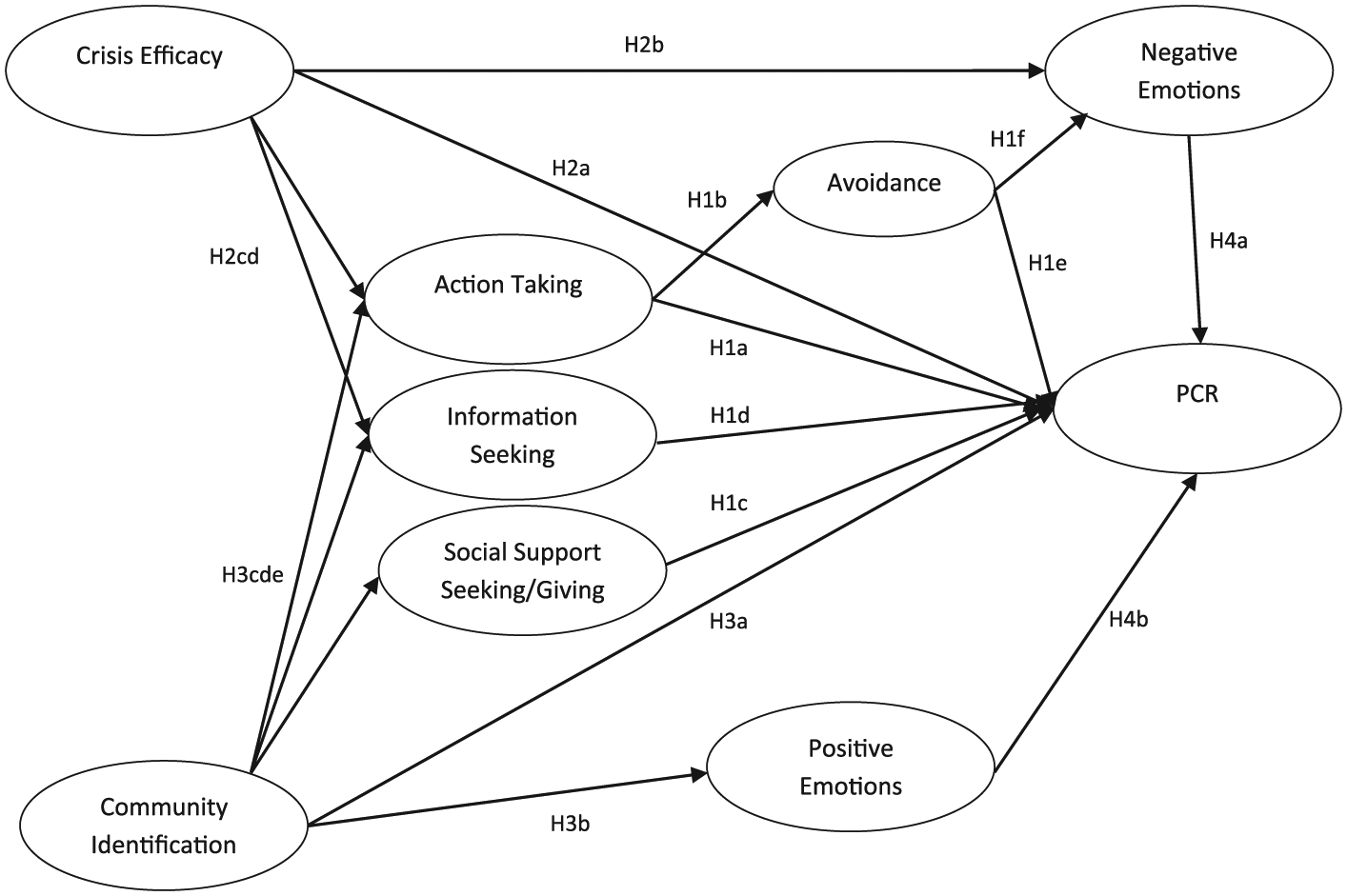
Proposed theoretical model.
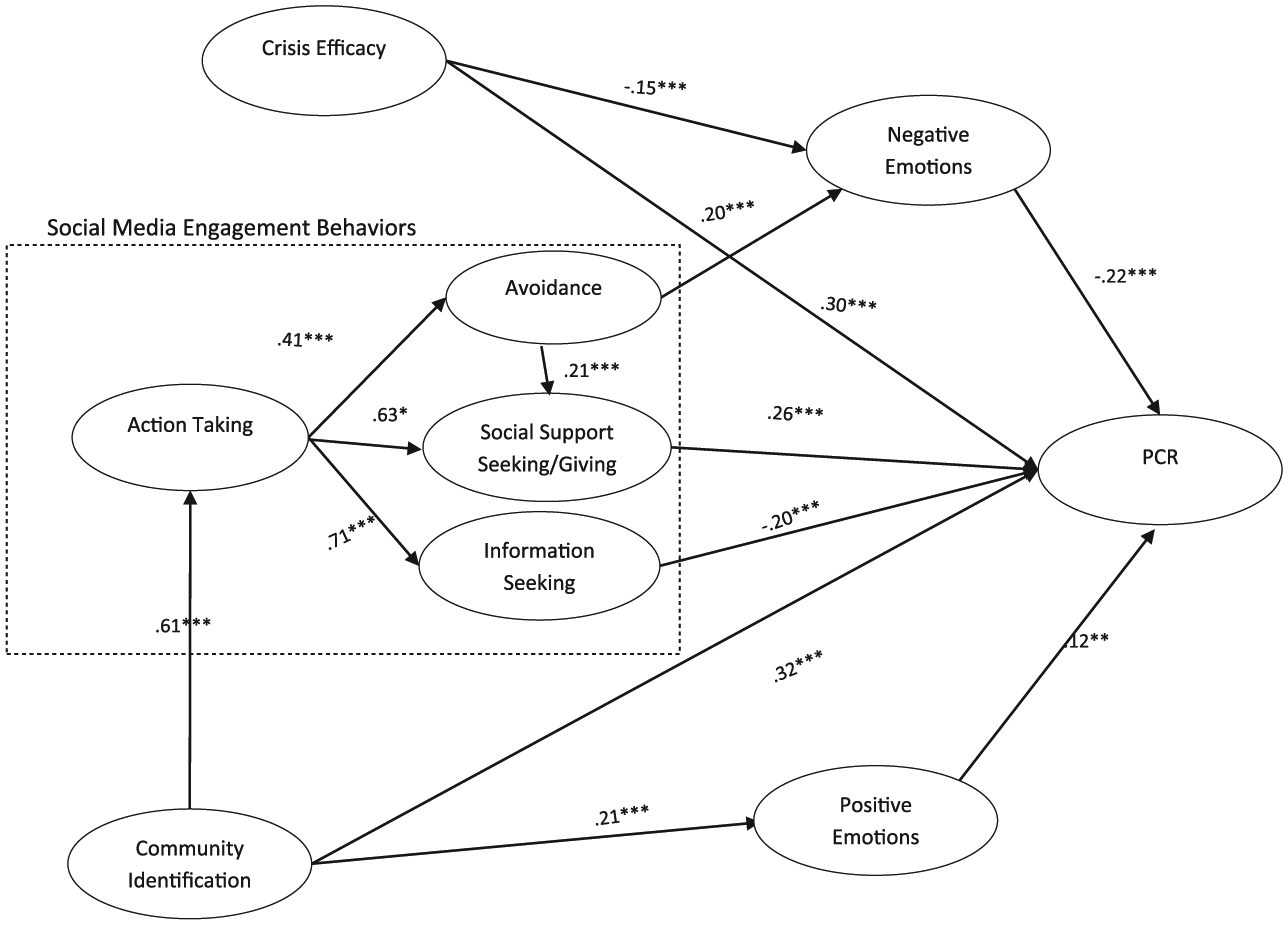
SEM results.
Sample Characteristics
Of the 596 respondents, n = 279 (46.8%) were male and n = 316 (53%) were female. Age of respondents varied from 18 to 81 years with a mean of 44.95 (SD = 16.30). Respondents consisted of n = 89 (14.9%) Hispanic or Latino, n = 467 (78.4%) White, n = 82 (13.8%) Black, n = 20 (3.4%) Asian, n = 20 (3.4%) Multiracial, n = 5 (0.8%) American Indian or Alaska Native, and n = 2 (0.3%) Native Hawaiian or Pacific Islander. The majority of respondents live in a rural community with a population of 49,999 or less (n = 268, 45%), followed by those who live in an urban community with a population of 50,000 to 299,999 (n = 211, 40.6%), and those in a large city with a population of 300,000 or more (n = 86, 14.4%).
As for social media usage during and in the aftermath of the crisis (respondents were instructed to check all that applied), the three major sites were Facebook (n = 466, 78.2%), YouTube (n = 195, 32.7%), and Twitter (n = 139, 23.3%). In terms of the usage frequency of the social media sites, Facebook was used most frequently (M = 4.56, SD = 2.11), followed by YouTube (M = 3.17, SD = 2.21) and Twitter (M = 2.59, SD = 2.14).
Findings
SEM Results.
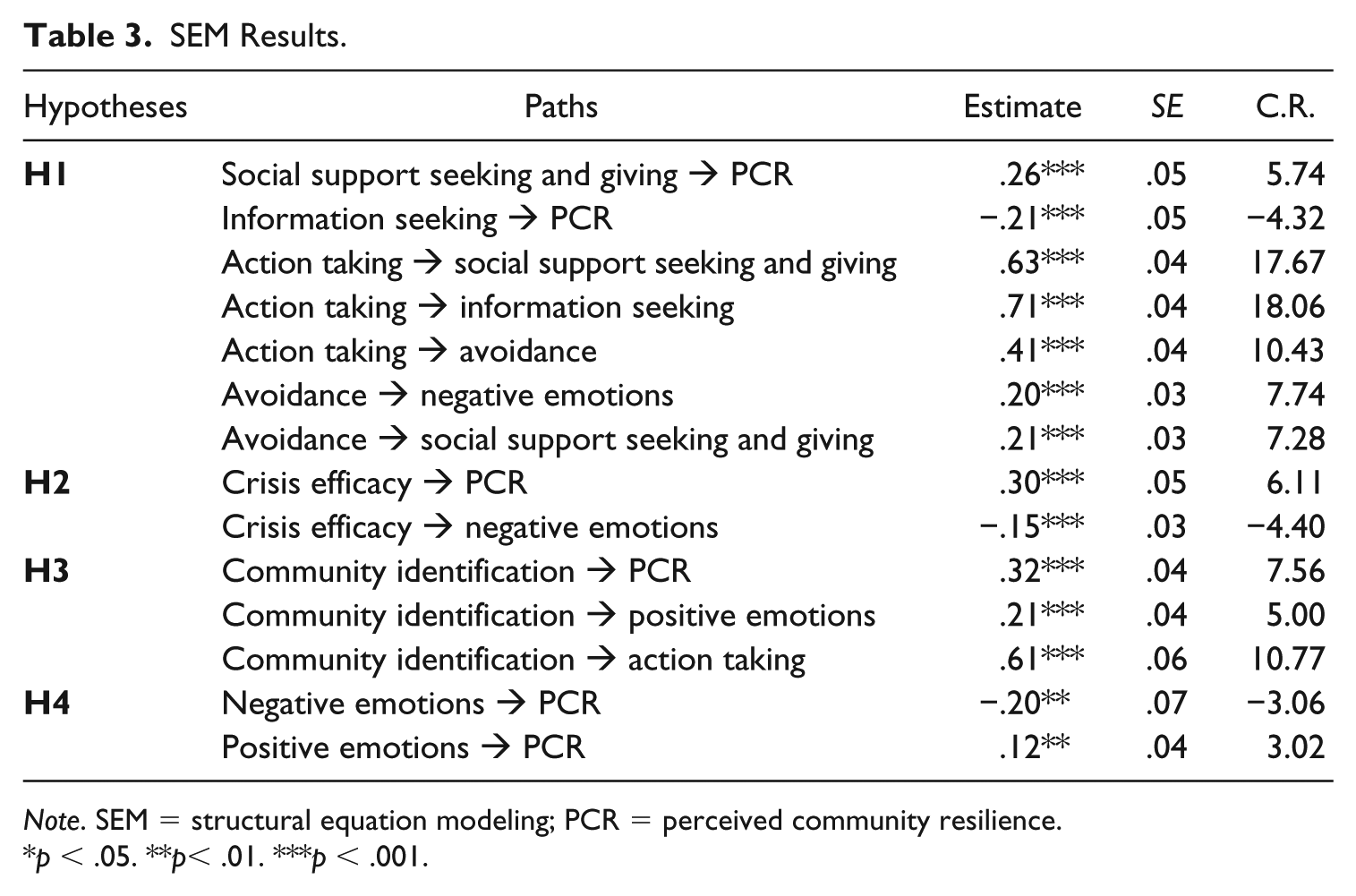
Note. SEM = structural equation modeling; PCR = perceived community resilience.
p < .05. **p< .01. ***p < .001.
Linear regression tests were used to further triangulate and confirm the SEM results. Results showed that action taking was positively associated with PCR, F(1, 594) = 16.72, p < .001, β = .17, p < .001, and was positively associated with avoidance, F(1, 594) = 113.35, p < .001, β = .40, p < .001. Social support seeking and giving had a positive relationship with PCR, F(1, 594) = 41.84, p < .001, β = .26, p < .001, and information seeking had a weak positive relationship with PCR, F(1, 594) = 8.88, p < .01, β = .12, p < .01. Consistent with SEM results, avoidance’s relationship with PCR was not significant, F(1, 594) = 1.74, p = .19, β = .05, p = .19. However, linear regression tests did suggest that avoidance is negatively related with negative emotions, F(1, 594) = 131.66, p < .001, β = .43, p < .001. While
Discussion
Through the examination of the cognitive, affective, and behavioral factors in the aftermath of Hurricane Matthew, this study indicates that crisis efficacy, community identification, positive and negative emotions, as well as social media engagement behaviors are important predictors of PCR (Figure 2).
Crisis efficacy (i.e., the dimension of individual self-efficacy) was found to be a significant predictor of PCR, implying that belief in one’s own ability to perform self-protective behaviors can contribute to overall resilient traits within the community. Although an individual attribute, self-efficacy can be activated and increased through behavioral recommendations in crisis communication (Chang, 2016). This suggests that PCR can be built through postcrisis communication, in addition to existing physical and social infrastructures.
In addition to the direct effect, crisis efficacy indirectly affected PCR through negative emotions’ mediation. According to Witte (1994), self-efficacy increases behavioral engagements by decreasing the negative emotions (primarily fear and anxiety) experienced. As fear and anxiety were not included in the negative emotions factor, this study shows that self-efficacy, within the context of PCR building, reduces negative emotions such as anger, contempt, and disgust. However, crisis efficacy did not directly affect any of the social media engagement behaviors. This suggests that, in the context of PCR building, community identification may play a larger role than crisis efficacy, particularly in influencing social media engagement behaviors.
Community identification is found to be an important predictor of PCR. It also had a statistically significant relationship with the affective and behavioral factors that can predict PCR. Community identification reflects rich social resources such as social capital and shared value. In line with prior literature (Cagney et al., 2016), strong social ties are crucial factors contributing to PCR. Although not previously identified (Leykin et al., 2013), this study suggests that the sense of shared community value and emotional attachment indicated in community identification (Mael & Ashforth, 1992) may be equally important in building a resilient community.
Trustworthy leadership and common community values are essentials for the renewal process (Ulmer et al., 2007). From a social identity perspective, perceived value or identity sharing with the community helps with trust building (Mael & Ashforth, 1992). Sharing identities or values with other members of the community prior to a crisis may increase the perception that community members are experiencing similar misfortunes, thus strengthening the bond within the community (Avery & Park, 2016). Therefore, cultivating strong community identifications, before crises, is crucial to successful postcrisis communication and rebuilding.
Furthermore, community identification indirectly affected PCR when mediated by positive emotions. Creating and maintaining a positive outlook for the public is one of the important tasks of renewal (Ulmer et al., 2007). Community identification creates positive emotions such as love, pride, gratitude, relief, and hope, despite the negative emotions and stress experienced during crisis (H. K. Kim & Niederdeppe, 2013). Adding to previous literature that positive emotions are positively associated with individual resilience (Fredrickson et al., 2003), this study indicates that positive emotions also contribute to PCR.
The results indicate a strong tie between community identification and action taking. The stronger publics identify with their community, the more likely they will engage in social media communication that will benefit others. Consistent with previous literature (Zhang & Kim, 2017), strong identification with an organization can turn into strengthened support for the organization in times of crisis. Accordingly, when crises threaten both social group identity as well as an individual’s identity, people are motivated to act.
In regard to social media engagement as a crisis-coping mechanism, results show that (a) action taking, (b) information seeking, (c) social support seeking and giving, and (d) avoidance may play an even larger role in building PCR than community identification or crisis efficacy. However, each coping behavior on social media fulfills a different role and may either impede or promote PCR. More specifically, action taking leads to social support seeking and giving, information seeking, and avoidance. Although not initially predicted, this is consistent with both coping (Lazarus & Folkman, 1984) and emergency response literature (Reynolds & Seeger, 2014). Problem-solving coping strategies such as action taking empower publics during crises by giving them tasks to do and may lead to reappraisal of the situation, which in turn may result in other coping strategies. Depending on the reappraisal, action taking may lead to support seeking and giving, information seeking, and avoidance. In line with previous literature, coping should be viewed as a process that includes several stages (Lazarus & Folkman, 1984).
As choosing between action taking; information seeking; social support seeking and giving; and avoidance is situation-dependent (Lazarus & Folkman, 1984), the findings holistically shed light on the different ways a community can recover from a disaster crisis. For example, the mediators between action taking and PCR (i.e., information seeking; social support seeking/giving; avoidance via negative emotions) have the potential to play a large practical role in the community rebuilding process, as their relationships can be exploited by organizations to facilitate improved resilience. Furthermore, they suggest an organization should offer both “push” and “pull” forms of postdisaster communiques. Although proactively sending postdisaster messages (i.e., push) fulfills the organization’s need to share crucial recovery information, aggregating all resources onto a single platform (i.e., pull) facilitates the opportunity for an individual to fulfill their need to take action or engage in other social media behaviors.
Consistent with offline social support being an important coping mechanism (Lazarus & Folkman, 1984), this study suggests that social support seeking and giving via social media also promotes PCR. Social support seeking and giving solicits support from community members, which reinforces community ties. Although not affecting PCR directly, avoidance has an indirect effect on PCR when mediated by negative emotions or social support seeking and giving. In line with previous research, this indicates that effectiveness of avoidance may be a double-edged sword (Lazarus & Folkman, 1984). On one hand, it may not help with permanent problem solving and could eventually heighten negative emotions and stress (Lazarus & Folkman, 1984). On the other hand, avoidance may “make life more bearable by avoiding realities which might prove to be overwhelming if directly confronted” (Lazarus & Folkman, 1984, p. 154).
Contrary to prediction, information seeking was negatively related with PCR. Both coping and disaster communication literature have provided explanations for this result (Lazarus & Folkman, 1984; Reynolds & Seeger, 2014). When people resort to information seeking to reduce uncertainty, “they may discount information that is distressing or overwhelming” (Reynolds & Seeger, 2014, p. 23). In other words, not all information obtained during crisis is helpful. The process of acquiring new information in a state of panic may contribute to increased uncertainty and anxiety (Lazarus & Folkman, 1984), which may result in a negative relationship with PCR. In addition, previous literature has emphasized the importance of credible and trustworthy sources in delivering information in crisis (Reynolds, 2011), especially familiar sources such as community leaders (Reynolds & Seeger, 2014). It is likely that information seeking from outside sources may not contribute to PCR.
Theoretical and Practical Implications
This study contributes to postcrisis communication literature by incorporating and testing PCR in a theoretical model in crisis context. There is a deficiency in crisis literature as to empirically measure public crisis recovery. Initially introduced in community psychology literature (Leykin et al., 2013), PCR reflects numerous constructs important in the discourse of renewal such as trust, shared value, and positive outlook (Ulmer et al., 2007). Thus, it fits well with the existing corpus and can be used as a measure to assess the public’s recovery from crisis. The theoretical model identifies promoting and impeding cognitive, affective, and behavioral contributors to PCR. For example, community identification is found to be a more crucial predictor of social media engagement than crisis efficacy in the context of PCR-building.
Findings provide insights into social media engagement behaviors as coping strategies during disasters, filling a research gap in both coping literature and disaster communication literature (Lazarus & Folkman, 1984; Reynolds & Seeger, 2014). Results reveal common patterns and relationships between the behaviors used. For example, different problem-focused and emotion-focused strategies may co-exist; and people may engage in the reappraisal of a situation if one strategy fails to help (Lazarus & Folkman, 1984).
The model in this study can help guide postcrisis communication and PCR-building practice. For example, community identification and crisis efficacy are important prerequisites for PCR. Community identification requires cultivation prior to the crisis. Crisis literature emphasizes that developing and maintaining a good relationship with publics prior to a crisis, may reduce blame and crisis damage (Coombs, 2015). Similarly, cultivating and strengthening the ties among community members before a crisis is an important starting point for ensuring good crisis recovery. Other considerations include ensuring behavioral recommendations (i.e., self-protection or risk-aversion instructions) are in crisis communiques, as this can increase self-efficacy and response efficacy (Chang, 2016); and the importance of creating positive emotions during crises, as gratitude, love, and hope are crucial for PCR building (Fredrickson et al., 2003).
Finally, in times of disaster crisis, social media becomes one of the few means for people to communicate with each other and with the outside world (The Associated Press, 2017). In addition to basic information needs, social media engagement behaviors are shown in this study to be effective means for coping and rebuilding. Simply being connected on social media apps with your neighbors can create reassurance and reduce panic (Denton, 2017). Sharing narratives on social media helps to construct collective memory and make sense of the crisis experience (Tandoc & Takahashi, 2016). Therefore, this study argues that community leaders and government officials should frequently use social media platforms, such as Facebook and Twitter, not only as information channels, but also as platforms for ground-level interactions, social sharing, and to increase community cohesiveness during and after disasters.
Limitations and Future Research
This study has limitations that should be acknowledged. Only one factor (i.e., self-efficacy) emerged from EFA. Therefore, the measurement of crisis efficacy only includes the dimension of self-efficacy, but not response efficacy. As this study only asked participants about their experiences in general, rather than how they responded to specific instructions, the response efficacy dimension is not as salient. To address this limitation, future research should examine crisis efficacy with both dimensions, as well as its relationship with PCR. It should be noted that seemingly causal relationships in this study need to be interpreted cautiously. Although the survey research method and SEM analysis allow for a certain level of generalization, the relationships among variables should not be assumed to be causal in nature. Future research could utilize experimental methods to test suspected causal relationships between the antecedents and PCR. Finally, this study only examines PCR and its antecedents through Hurricane Matthew, a single disaster crisis. Therefore, to further generalize the results, future research could apply this study’s theoretical framework to examine PCR in other crisis contexts, such as terrorist attacks, pandemics, and even corporate crises.
Footnotes
Declaration of Conflicting Interests
The author(s) declared no potential conflicts of interest with respect to the research, authorship, and/or publication of this article.
Funding
The author(s) received no financial support for the research, authorship, and/or publication of this article.