



Abstract
The purpose of this cross-sectional study was to examine self-reported sexual assault perpetration history, as well as violence prevention-related prosocial tendencies, among fraternity men, unaffiliated men with membership intentions, and unaffiliated men without membership intentions with data from 262,634 college men in the United States. Results indicate that fraternity status was related to sexual assault perpetration, both prior to and while at their current institution of higher education; both perpetration history and fraternity status significantly related to diminished violence prevention-related prosocial tendencies. The findings have important implications for future research and practice to reduce the incidents of sexual assault on college campuses.
Sexual assault is a major public health concern on U.S. college campuses. Victimization is associated with a range of negative health outcomes (Breitenbecher, 2006; Ullman et al., 2007), in addition to negative academic outcomes (Banyard et al., 2020). Increasingly, institutions of higher education are taking steps to address sexual assault, and prevention programming can take various forms. Primary prevention strategies may seek to modify the risk factors associated with perpetration (DeGue et al., 2014), and a public health perspective of violence prevention suggests tailored programming, such as working with specific risk groups, to increase the effectiveness of such efforts (Malamuth et al., 2018; Nation et al., 2003). Thus, identifying groups that demonstrate risk for perpetration can help focus prevention efforts, in light of theorizing that sexual aggression may be fostered among all-male social networks via their support for hypermasculine norms (Dekeseredy & Schwartz, 1993; Godenzi et al., 2001; Schwartz & Dekeseredy, 1997). Research finds that men who participate in fraternities demonstrate a particularly high risk of perpetrating sexual assault, as well as greater endorsement of the problematic attitudes and beliefs theorized to contribute to perpetrating violence (see Murnen & Kohlman, 2007 for a review). Less is known, however, about men who intend to join fraternities, both in terms of sexual assault perpetration and the violence prevention-related prosocial tendencies associated with risk reduction. The purpose of this study was to examine (1) differences in college men's self-reported sexual assault perpetration history based on fraternity status, and (2) how fraternity status and perpetration history relate to sexual assault prevention-related prosocial tendencies.
Sexual Assault Perpetration Among College Men
Early research showed nearly one-quarter of college men self-reported using sexual aggression (Koss et al., 1987). A recent review of perpetration among college men found that on average, nearly 30% report committing sexual assault, and 6.5% report nonconsensual completed penetration (Anderson et al., 2021). There is a great need to similarly measure men's preuniversity perpetration (Salazar et al., 2018). Some research suggests that serial perpetration may be less common than single offenses (Swartout et al., 2015); however, repeat perpetration may be an issue due to the lack of detection (Lisak & Miller, 2002) and, ostensibly, adjudication of those who commit assault (Foubert et al., 2020). Among men entering college, nearly one-fifth self-report a history of perpetration (Salazar et al., 2018), and among men who commit assault while in college, a substantial proportion of those had a previous history of perpetration (Zinzow & Thompson, 2015). Several longitudinal studies (e.g., Loh & Gidycz, 2006; Loh et al., 2005) and cross-sectional studies (e.g., Gidycz et al., 2007; Loh et al., 2007) found that men's history of perpetration significantly increased odds of subsequent perpetration. It is important to recognize that men may enter college with a history of perpetration, and these factors may affect the effectiveness of such prevention efforts, suggesting the need for tailored and targeted interventions (Elias-Lambert & Black, 2016; Malamuth et al., 2018).
Fraternity Men and Men with Fraternity Intentions
Scholars assert that sexual aggression, a facet of hypermasculinity, may extend from gender socialization (West & Zimmerman, 1991). Kilmartin (2000) argued that participating in all-male social groups might be particularly attractive for men who hold hypermasculine attitudes because such beliefs will go unchallenged among like-minded peers. Others have suggested the potential for social groups to impart their hypermasculine ideals on members by showing support for such. Theorizing links between all-male social groups and aggression, DeKeseredy and Schwartz (1993) articulate a theory of male peer support where among all-male social groups with “exaggerated levels of sexual aspiration” (Godenzi et al., 2001, p. 5), sexual aggression may result from their effort to meet the heterosexual, hypermasculine expectations of their peers. As such, there exist decades of scholarship on sexual assault perpetration among fraternities (Murnen & Kohlman, 2007).
Fraternity men have been found to possess problematic attitudes and beliefs associated with sexual violence (Boeringer, 1999), as well as increased rates of perpetration (Loh et al., 2005; Salazar et al., 2018). One study found that fraternity men were more likely to perpetrate sexual assault in the first year of college, compared to unaffiliated counterparts, despite similar rates of preuniversity perpetration (Foubert et al., 2007). Research finds that men who believe their friends use coercion to obtain sex may be more likely to do so themselves; nonperpetrators may feel compelled to uphold hypermasculine norms, such as adhering to violence-accepting attitudes, as a way to maintain the belief system that ultimately privileges them (Berkowitz, 1992). With respect to fraternity men, nonperpetrators may be reluctant to adopt violence prevention-related prosocial tendencies due to the incongruence with group culture. Seabrook et al. (2018b) established links between fraternity men's adherence to, and pressure to uphold, masculine norms and their acceptance of sexual violence. To that point, Kingtree and Thompson (2013) found that, among first-year college men, joining a fraternity was associated with increased peer approval of sexual aggression at the one-year follow-up, which was associated with perpetration at the two-year follow-up.
An important consideration for this line of inquiry is whether, among unaffiliated men, differences exist based on their fraternity membership intentions. The lack of attention paid to nonaffiliated men who express interest in joining a fraternity represents a gap in the literature. Recently, longitudinal research showed no significant difference in rape proclivity between fraternity members, interested nonmembers, and uninterested nonmembers (Seabrook et al., 2018a). Although fraternity members reported greater rape myth acceptance (RMA) than nonmembers who were uninterested in fraternity affiliation, there was no difference in RMA between fraternity members and nonmembers with interest in affiliation. The authors concluded that risk of perpetration among men may be established prior to membership, which is counter to others’ assertions that these all-male social groups cultivate risk (Kingtree & Thompson, 2013; Loh et al., 2005). The findings of Seabrook et al. (2018a) provide important insight into the preexisting risk of unaffiliated men with membership intentions; the current study seeks to build on this work by examining perpetration, specifically, rather than rape proclivity, as well as additional violence prevention-related prosocial tendencies that may relate to fraternity status.
Correlates of Sexual Assault Perpetration
Considerable research examines correlates of sexual assault perpetration (see Tharp et al., 2013, for a review). Among these, alcohol consumption, sexual consent communication, victim-blaming, and bystander intervention willingness have demonstrated significant relationships to either sexual assault perpetration or rape proclivity specifically in samples of college men. The following is a brief overview of these factors, referred to here as violence prevention-related prosocial tendencies, and the evidence of their link to perpetration or proclivity, as well as evidence suggesting the relationship between these variables and fraternity membership status.
Alcohol Consumption, Consent, and Sexual Assault
Research on campus sexual assault consistently demonstrates its relationship to alcohol consumption. Data show high rates of sexual assault occurring when either the victim, perpetrator, or both consumed alcohol, and because assaults commonly occur in social settings, such as parties or dates, scholars generally believe that perpetrators and victims drank together prior to the assault (Abbey et al., 2014). Although intoxicated individuals cannot consent to sex (Breiding et al., 2015), men have been found to believe that alcohol decreases women's sexual inhibition, and thus, increases their sexual availability (Abbey et al., 1999; Zawacki et al., 2003). Evidence suggests that lacking knowledge of the legal definition of rape is associated with perpetration (Maxwell et al., 2003), such that men willing to engage in sexual activity with an intoxicated person may not conceptualize this as sexual assault. Masculine norms can perpetuate alcohol consumption (McCready, 2019); indeed, the relationship between alcohol consumption and fraternity membership is well established (Biddix et al., 2014). Fraternity men may still engage in sexual activity with women who are drinking on the basis of subjective cues that do not point to intoxication. Being “passed out” or “throwing up” (p. 367) has been cited as signs indicating a point of intoxication where women could not consent (Foubert et al., 2006). As nearly half of sexual assaults involve alcohol use by the victim and/or perpetrator (Abbey et al., 2004), avoiding engaging in sexual activity with someone who is intoxicated is examined here as part of men's violence-prevention prosocial tendencies.
Communication and Sexual Assault
Sexual assault is defined as a nonconsensual sexual activity (Breiding et al., 2015). Men who entered college without a history of perpetration have been found to possess greater knowledge of effective sexual consent than those with a history of perpetration (Salazar et al., 2018). Research shows that many men rely on nonverbal cues to signify consent (Jozkowski et al., 2014). Although the hypothesis that sexual assault results from miscommunication has been critiqued (e.g., O’Byrne et al., 2008), men's overestimation of women's interest in sex (Abbey, 1982, 1987) and misinterpretation of women's refusal as inauthentic resistance (Osman, 2003) suggests that verbal communication about sexual wants and desires may be one effective strategy for avoiding perpetrating an assault. Fraternity men have expressed reluctance to communicate with partners about sex, with few in one study reporting to ask verbally for consent (Foubert et al., 2006). Reasons cited include fear of rejection and perception that such discussion takes away from the sexual experience. Fraternity men's ambiguity around consent when people are drinking (Foubert et al., 2006) is particularly troubling for a group with such expressed reliance on nonverbal cues or body signals. Effective communication and interpretation of consent is being argued to be a minimum standard for ensuring consensual sex (Jozkowski et al., 2014), and active verbal consent is linked to reduced risk for perpetration (Zinzow & Thompson, 2019). Therefore, communicating with a partner about sex is examined here as part of men's violence-prevention prosocial tendencies.
Victim-Blaming and Sexual Assault
Victim-blaming attitudes, conceptualized as beliefs that women are responsible for their victimization (Ryan, 1971), and victim empathy may be salient factors in reducing perpetration (Wheeler et al., 2002). Such attitudes have been shown to correlate with rape proclivity and/or perpetration among male college (Scott & Straus, 2007) and high school samples (Maxwell et al., 2003). Scholars encourage prevention programming delivered to all-male audiences to integrate content aimed to increase empathy toward survivors (Vladutiu et al., 2011). There is limited research on the victim-blaming attitudes of fraternity men, or unaffiliated men with membership intentions, specifically, although research demonstrates the link between fraternity membership and other attitudes supportive of rape (Bleecker & Murnen, 2005). Negative social reactions to assault, such as victim-blaming, are associated with poor outcomes among survivors (DeCou et al., 2017; Ullman et al., 2007). Thus, reducing these attitudes represents an important aspect of secondary and tertiary prevention of negative health outcomes attributed to victimization. Therefore, victim-blaming is examined here as part of men's violence-prevention prosocial tendencies.
Bystander Intervention and Sexual Assault
The bystander intervention model has emerged as a commonly relied upon strategy for the prevention of campus sexual assault (Orchowski et al., 2020). Research shows that men are particularly at risk for low bystander engagement, with reportedly greater barriers to intervention (Banyard, 2008; Burn, 2009) and more missed intervention opportunities (Brown et al., 2014; Hoxmeier et al., 2020a, 2020b). Bystander intervention intentions have also been found to correlate with similar factors of perpetration discussed here, including knowledge about sexual assault and rape myths (McMahon, 2010). Indeed, intervention willingness is diminished among sexually aggressive men (Austin et al., 2016; Orchowski et al., 2015). Given the high rates of perpetration among fraternity men, and research showing the social influence of prosocial intervention (Austin et al., 2016; Orchowski et al., 2015), this group has been the focus of bystander intervention research in recent years (e.g., Bannon et al., 2013; Foubert et al., 2011), though many compare fraternity men to sorority women or have no comparison group. One study, however, found no difference in intervention among fraternity men relative to unaffiliated men (Hoxmeier et al., 2020a). Among college men with fraternity intentions, two studies did not observe any difference in bystander attitudes or intervention behaviors (McMahon, 2010; McMahon et al., 2011). Men's failure to intervene in sexual assault risk situations may reflect an acceptance of violence against women (Murnen et al., 2003) and/or diminished responsibility for sexual assault prevention (Burn, 2009; Banyard et al., 2014; Hoxmeier et al., 2020b). Therefore, bystander intervention intentions are examined here as part of men's violence-prevention prosocial tendencies.
Assessing Sexual Assault Perpetration
Experts note the many challenges of measuring perpetration (Aguilar et al., 2016; Krebs et al., 2016). The reliance on self-reported measures raises issues of social desirability and response bias (Carr & VanDeusen, 2004), which may be mitigated through ensuring anonymity, the use of computer-based surveys, and inquiring about past experiences, such as during adolescence (Aguilar et al., 2016). Cook et al. (2011) encourage including specific behavioral descriptions, force tactic used, and lack of consent. Qualitative findings from research aiming to understand how to engage more men in this line of inquiry suggests that response options beyond “yes/no” may also elicit responses that are more honest (Aguilar et al., 2016), which is implemented here as part of collecting data on perpetration.
Demographic Variables: Year in School, Racial Identity, and Sexual Orientation
This study accounts for men's years in school, their self-reported racial/ethnic identity, and sexual orientation. These demographics are important to consider based on previous research showing fraternities are primarily comprised of White members (Park, 2014). Although the etiology of perpetration may be similar across diverse racial/ethnic groups (Abbey et al., 2006), it may look different among men with minoritized sexual identities (Finneran & Stephenson, 2014). Some evidence suggests that while queer men do participate in fraternities (Case, 1996), they are unlikely to share their heterosexist attitudes (Rankin et al., 2013), which may also extend to queer men outside of a fraternity context. How men conceptualize and perform masculinity reflects the intersection of their identities, including racial identity, sexual orientation, and age or life experience (Kimmel & Messner, 2007). Therefore, controlling for these variables can clarify the risks for perpetration associated with fraternity membership.
The Current Study
The purpose of this study was to examine (1) differences in college men's self-reported sexual assault perpetration history based on fraternity status, and (2) how fraternity status and perpetration history relate to sexual assault prevention prosocial tendencies. Based on the literature, we hypothesized the following:
Methods
Procedure
This study is a secondary analysis of anonymized data, which cannot be linked to individual participants. Data were collected as part of students’ participation in a web-based sexual assault prevention course designed for undergraduate students and implemented at their respective institutions in the United States (see Zapp et al., 2021 for additional information). Over 460 institutions participated in the program in 2018. The program is intended for incoming students, and data analyzed in this study come from a survey that participants completed prior to exposure to the curriculum. Throughout the survey, prompts asked participants to respond honestly, advised them to skip questions should they feel uncomfortable, and reminded them that their responses are confidential. This study was approved as exempt research by the first author's institutional Human Subjects Review Council.
Sample
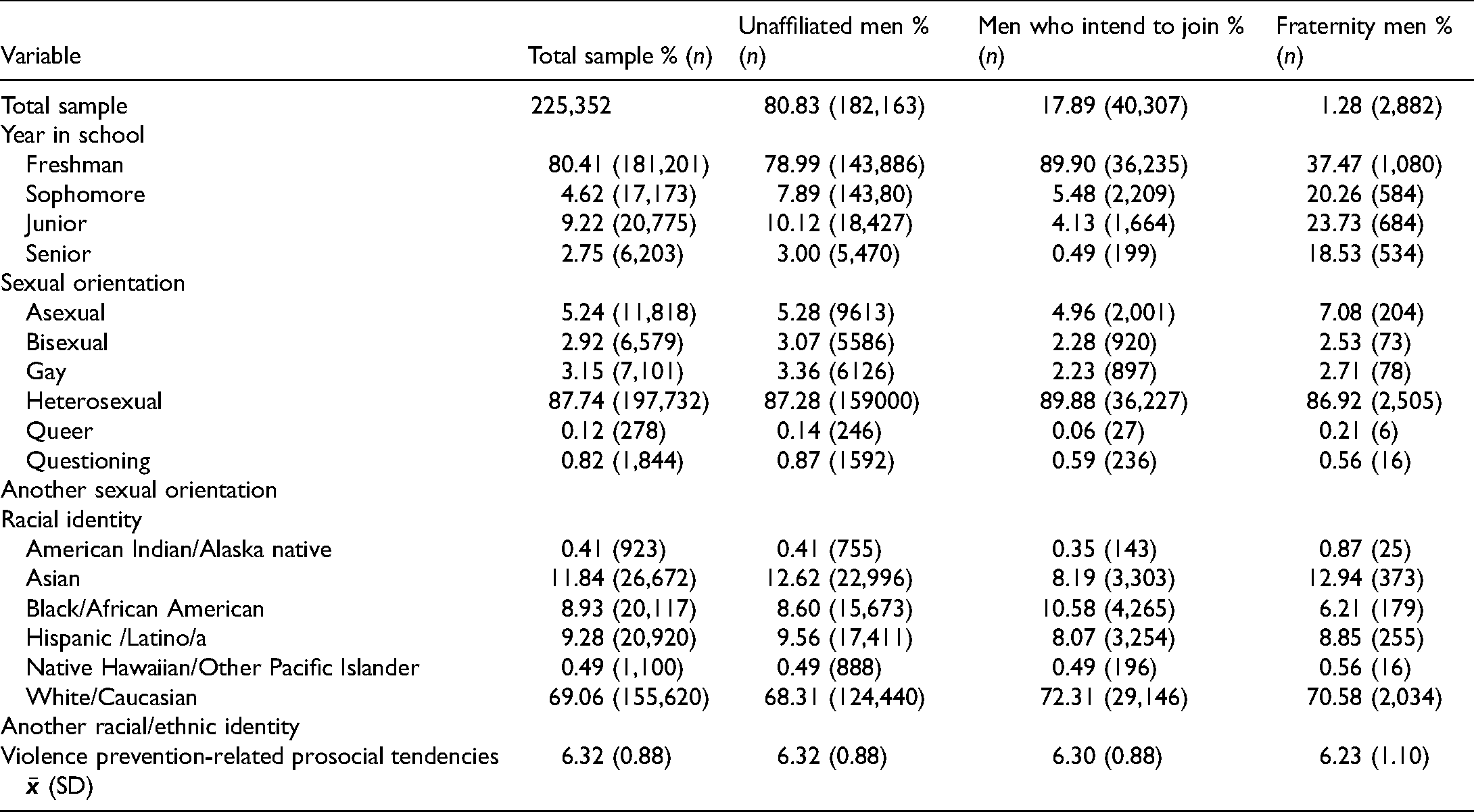
Data come from 363,924 men who completed surveys, which examined a range of interpersonal violence topics, in the summer and fall of 2018. Inclusion criteria for the sample included those who were between the ages of 18–23 years, enrolled in college/university, and had complete data on age, year in school, sexual orientation, racial identity, and violence-prevention prosocial tendencies. The final analytical sample (N = 225,352) included 2,882 (1.28%) fraternity men, 40,307 (17.89%) unaffiliated men with fraternity membership intentions, and 182,163 (80.83%) unaffiliated men without fraternity membership intentions (Table 1).
Sample Demographics and Violence Prevention-Related Prosocial Tendency Mean Scores by Fraternity Status.
Measures
Gender identity was captured with a single item asking, “What is your current gender identity?” Response options included: female, male, transgender female, transgender male, genderqueer, gender-nonconforming, and not listed. Racial/ethnic identity was captured with a single item asking, “Select one or more of the following options that best describes your race: American Indian or Alaska Native; Asian; Black or African American; Hispanic or Latino/a; Native Hawaiian or Other Pacific Islander; White; and not listed.” Sexual orientation was captured with a single item asking, “Do you consider yourself to be: asexual, bisexual, gay, heterosexual, lesbian, queer, questioning, or not listed.” Age was captured with a single item asking, “How old are you?” Response options included 16 or younger, 17, 18, 19, 20, 21, 22, 23, or 24 or older.” Year in school was captured with a single item asking, “In what year of school are you currently enrolled?” Response options included: college freshman (first-year); college sophomore (second-year); college junior (third-year); college senior (fourth/fifth/sixth-year); graduate or professional school student; high school student; not a student; or other.
One item asked participants if they were currently members of various organizations, including a “fraternity or sorority.” Those who endorsed this option were characterized as “fraternity members.” One item asked participants if they intend to be a member of various organizations, including a “fraternity or sorority.” Those who endorsed this option were coded as “unaffiliated men with membership intentions.” Those who did not endorse either option in these two items were coded as “unaffiliated men without membership intentions.”
To assess self-reported sexual assault perpetration, participants were asked, “Have you ever had sexual contact with another person that they did not consent to or did not want? (e.g., used physical force or threatened to physically harm them; manipulated them through lies, threats or pressure; took sexual advantage of them when they were significantly impaired or incapacitated by drugs/alcohol, etc.).” Response options included: no; yes, before I arrived at my school as a student; yes, after I arrived at my school as a student; yes, both before and after I arrived at my school as a student; not sure; and, prefer not to answer. This item was drawn from the Sexual Experiences Survey (Koss et al., 2007) and the Campus Sexual Assault Study (Krebs et al., 2008).
Five items assessed participants’ violence-prevention prosocial tendencies (adapted from Berkowitz, 2013), including (1) in a sexual situation, I would make sure to communicate with the other person about what they want; (2) I would take action in a situation in which someone was trying to take advantage of another person sexually; (3) I would never place blame on a person who told me someone had sexually assault them; (4) I would not engage in sexual activity with someone if the other person was severely intoxicated; and (5) I would express concern if I saw someone exhibiting abusive behaviors toward their partner. The agreement was measured on a 7-point rating scale (1 = strong disagree to 7 = strongly agree). Reliability for the scale was strong (Cronbach's α = .83)
Analytical Plan
To describe men's perpetration history and test whether fraternity status was related to perpetration history (Hypothesis 1), chi-square tests of independence were conducted. Adjusted logistic regressions determined whether odds of reporting a history of perpetration were higher among fraternity men and unaffiliated men with membership intentions, compared to unaffiliated men without fraternity intentions. To assess whether fraternity status and perpetration history related to men's violence prevention-related prosocial tendencies (Hypothesis 2), a linear regression was conducted using men's mean scores for all five prosocial tendency items. Both the adjusted logistic regression and linear regression analyses controlled for year in school (0 = first year, 1 = beyond first year), racial/ethnic identity (0 = white, 1 = nonwhite), and gender/sexual minoritized identity status (0 = cisgender, straight/heterosexual, 1 = Gay, Bisexual, Ttransgender, Queer+ (GBTQ+) identity). All reference groups in the control variables are those with the largest sample.
Results
Hypothesis 1: History of Perpetration and Fraternity Status
The hypothesis that fraternity men and men with fraternity intentions will be more likely to report a history of sexual assault perpetration compared to unaffiliated men without membership intentions was partially supported (see Table 2). Less than 1% (0.60%; n = 1,302) of men, regardless of fraternity status, reported having perpetrated sexual assault prior to coming to their current institution. Odds of reporting perpetration prior to current school were significantly higher for unaffiliated men with fraternity intentions (adjusted odds ratio [AOR] = 1.20, p = .008) and fraternity men (AOR = 1.74, p = .005) relative to unaffiliated men without fraternity intentions. Less than 0.15% (0.14%; n = 297) of men reported having perpetrated sexual assault while at their current institution, and 0.1% (n = 224) reported having perpetrated both prior to and while at the current institution. Odds of perpetrating sexual assault prior to coming to their current institution, and both prior to and since coming to the current institution, were significantly higher for fraternity men (AOR = 4.43, p < .001 and AOR = 5.31, p < .001, respectively), but not for unaffiliated men with membership intentions, relative to unaffiliated men without membership intentions. Just under 1.5% (1.4%; n = 3,050) of men reported being “unsure” about perpetrating sexual assault. The odds of reporting being “unsure” were significantly higher for both fraternity men (AOR = 2.25, p < .001) and unaffiliated men with membership intentions (AOR = 1.21, p < .001). Just under 2.5% (2.49%; n = 5,464) of men selected “prefer not to answer,” and odds of this selection were significantly higher for fraternity men (AOR = 1.74, p < .001), relative to unaffiliated men without membership intentions. Just under 0.5% (0.43%; n = 917) of men did not respond to the perpetration history item, and fraternity status was unrelated to missing data.
Self-Reported Sexual Assault Perpetration History by Fraternity Status, Chi-Square Tests of Independence and Logistic Regression (N = 225,352).
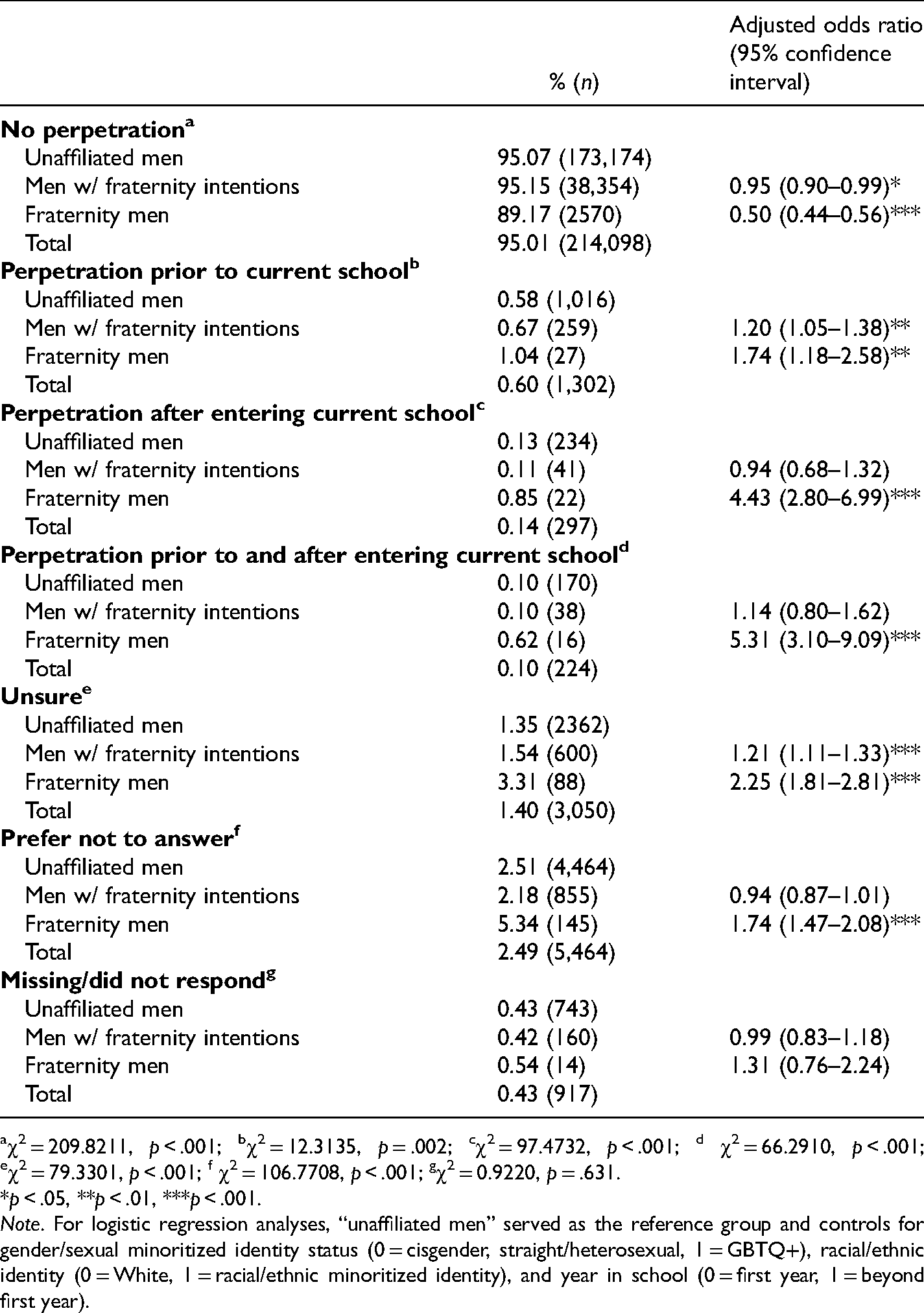
aχ2 = 209.8211, p < .001; bχ2 = 12.3135, p = .002; cχ2 = 97.4732, p < .001; d χ2 = 66.2910, p < .001; eχ2 = 79.3301, p < .001; f χ2 = 106.7708, p < .001; gχ2 = 0.9220, p = .631.
*p < .05, **p < .01, ***p < .001.
Note. For logistic regression analyses, “unaffiliated men” served as the reference group and controls for gender/sexual minoritized identity status (0 = cisgender, straight/heterosexual, 1 = GBTQ+), racial/ethnic identity (0 = White, 1 = racial/ethnic minoritized identity), and year in school (0 = first year, 1 = beyond first year).
Hypothesis 2: Perpetration, Prosocial Tendencies & Fraternity Status
The second hypothesis that fraternity membership, membership intentions, and all nonperpetration history responses would relate to reduced violence prevention-related prosocial tendencies was supported (see Table 3). A simple linear regression was calculated to predict prosocial tendencies based on fraternity status and perpetration history, while controlling for year in school, racial identity, and sexual orientation, and a significant equation was found (F(11, 225,340) = 527.31, p < .001). A linear regression analysis showed that both fraternity membership intentions (β = −0.008, p < .001) and fraternity membership (β = −0.011, p < .001) related to lower mean scores of prosocial tendencies, compared to counterparts. Similarly, perpetration history was also significantly related to prosocial tendencies, with all nonperpetration history responses relating to significantly reduced tendencies, all below the p < .001 level, compared to those who reported no history of perpetration.
Relationship Between Fraternity Status and Perpetration History, Linear Regression.
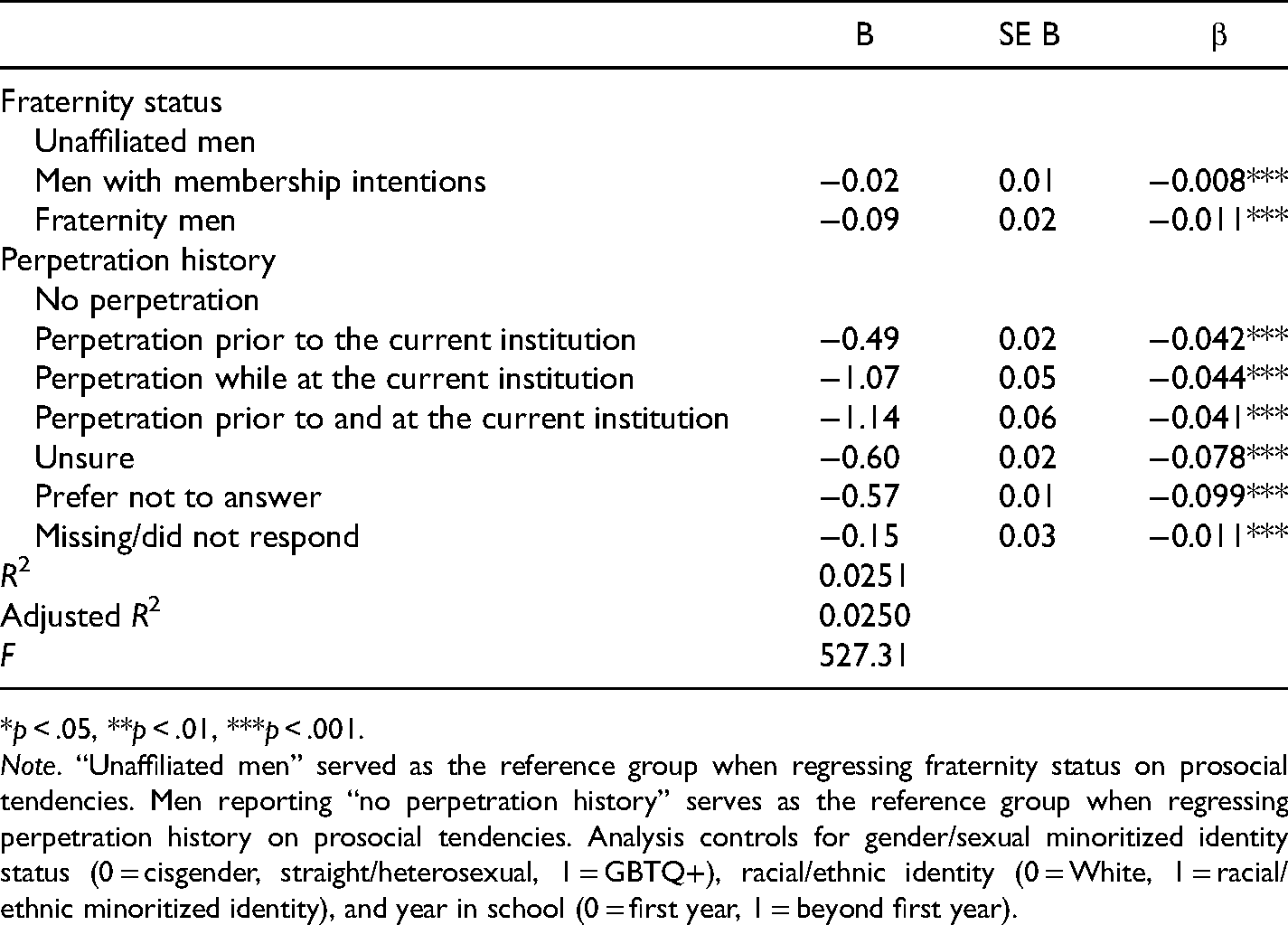
*p < .05, **p < .01, ***p < .001.
Note. “Unaffiliated men” served as the reference group when regressing fraternity status on prosocial tendencies. Men reporting “no perpetration history” serves as the reference group when regressing perpetration history on prosocial tendencies. Analysis controls for gender/sexual minoritized identity status (0 = cisgender, straight/heterosexual, 1 = GBTQ+), racial/ethnic identity (0 = White, 1 = racial/ethnic minoritized identity), and year in school (0 = first year, 1 = beyond first year).
Perpetration status related to reduced prosocial tendencies for those who reported perpetration prior to current school (β = −0.042), while at current school (β = −0.044), and prior to and while at current school (β = −0.041). However, standardized coefficients were largest for those who responded “prefer not to answer” (β = −0.099) and “unsure” (β = −0.078), compared to those who reported no perpetration history. Failure to provide data on perpetration history also had a significant, inverse relationship with prosocial tendencies (β = −0.011). Variance explained by fraternity membership status, and perpetration history, along with age, racial identity, and sexual orientation was low (adjusted R2 = 0.025).
Discussion
Institutions of higher education are charged with implementing policies and programming to address campus sexual violence, and it is vital to understand student populations that demonstrate risk for perpetration. The purpose of this study was to extend the literature on perpetration risk and fraternity status by differentiating unaffiliated men by their membership intentions, as well as understand the relationship between men's fraternity status, perpetration history, and their violence prevention-related prosocial tendencies.
Self-Reported History of Perpetration
Rates of reported sexual assault perpetration for the sample were low, though similar to previous investigations of this nature (Anderson et al., 2021; Krebs et al., 2008). Consistent with previous research (Loh et al., 2005; Salazar et al., 2018), fraternity men were more likely to report having perpetrated sexual assault. Unaffiliated men with membership intentions, relative to unaffiliated men without membership intentions, also had increased odds of reporting perpetration prior to attending their current institution. These findings suggest the importance for institutions to identify this population, which may ultimately benefit from targeted programming. Men reported to be “unsure” about whether they have perpetrated, and odds were higher for both fraternity men and unaffiliated men with membership intentions. Although it was outside the scope of this study to delve deeper into the context of those situations, previous scholarship suggests that the normalization of alcohol and sexual activity may contribute to the lack of clarity on whether some situations are assault. Salazar et al. (2018) found that knowledge of effective sexual consent correlated with a lower risk of perpetration. Importantly, however, reporting to be “unsure” about past perpetration did relate to diminished prosocial tendencies, such that those endorsing this response looked more similar in terms of their violence prevention-related behaviors to those who endorsed perpetrating sexual assault compared to those who reported not having perpetrated sexual assault. Further work is necessary to understand the contexts of men's experiences for which perpetration is unclear. Although fraternity status was unrelated to missing data on perpetration history, fraternity men were more likely to endorse “prefer not to answer,” which both related to diminished prosocial tendencies.
Violence Prevention-Related Prosocial Tendencies
Longitudinal research shows that rape-supportive beliefs and peer approval for sexual aggression correlate with perpetration over time (Thompson et al., 2015). The findings here suggest that increased rates of perpetration among fraternity members may reflect both the self-selection of members based on risk histories (Kilmartin, 2000; Seabrook et al., 2018a), as well as the potential for such problematic attitudes and behaviors to be fostered in these all-male social groups (DeKeseredy & Schwartz, 1993; Godenzi et al., 2001; Kingree & Thompson, 2013; Loh et al., 2005; Murnen & Kohlman, 2007; Schwartz & DeKeseredy, 1997). Past perpetration may motivate men to affirm violence-accepting attitudes and behaviors as to condone their own behavior (Elias-Lambert & Black, 2016), such that fraternities may be attractive social networks for men who perpetrate sexual assault prior to entering college if they perceive their actions and related attitudes will go unchallenged or potentially be supported among those peers.
Scholars discuss the variability in perpetration trajectories (Swartout et al., 2015); sexual aggression may increase with access to victims and alcohol, as well as peer influence—particularly important for fraternity men, as well as men with fraternity intentions. Men's reports of perpetration prior to their current institution, and perhaps in their adolescence, but no perpetration while at their current institution may reflect maturation and positive change in their behavior (Aguilar et al., 2016). Evidence supports the salience of perception of peers’ behavior, or social norms, on men's perpetration behavior and violence-related attitudes, as well as the fact that those men generally underestimate their peers’ prosocial behaviors (Austin et al., 2016; Berkowitz, 2005; Dardis et al., 2015). Fraternity men reported lower violence prevention-related prosocial tendencies, such as communicating about sexual activity, not engaging in sexual activity with someone who is intoxicated, and willingness to intervene in sexual assault; perpetration history independently related to diminished prosocial tendencies. Among fraternity men, the opportunity to know of, and bear witness to, peers’ problematic behavior may be greater in close, all-male social groups, perhaps further pressuring men to conform.
Practical Implications
Although only longitudinal designs can uncover how joining a fraternity changes perpetration risks, assessments should continue to inquire whether men have plans to join a fraternity, as a way of identifying men who may have diminished prevention tendencies and focusing targeted prevention efforts (Seabrook et al., 2018a). Although investigating perpetration presents many challenges, the findings here highlight the importance of implementing prevention initiatives to engage men as allies in violence prevention. Experts (e.g., Foubert et al., 2006) recommend programming with fraternity men should be facilitated by a male, in-group member, whereas someone unfamiliar—and worse, critical of—fraternity culture may be ineffective. Although federal mandates require prevention programming for all incoming students, these global efforts may be less effective for students with a history of perpetration or diminished violence prevention-related prosocial tendencies (Malamuth et al., 2018).
Scholars urge conducting assessments of risk prior to programming to tailor behavioral and attitudinal change (Elias-Lambert & Black, 2016). The effectiveness of programs may also increase when implemented with all-male groups, as well as cohesive social groups (Gidycz et al., 2011; Vladutiu et al., 2011), which may alleviate men's barriers to open dialogue about sexual assault (Berkowitz, 1992, 1994). Yet, much of the published evidence of sexual assault programming is for programs implemented in mixed-sex groups (e.g., Anderson & Whiston, 2005; Jouriles et al., 2018). As institutions of higher education increasingly rely on bystander intervention programming exclusively for violence efforts (Orchowski et al., 2020), which are primarily conducted with students of all genders together, there is limited understanding of whether these programs are changing behaviors among men, generally, and high-risk men, specifically. While harm-reduction efforts play an important role in sexual violence education and prevention programming (Orchowski et al., 2020), such initiatives should not supplant primary and secondary prevention strategies.
Although many men may feel pressure to uphold masculine norms, such conformity may be stronger among fraternity men (Seabrook et al., 2018b) due to the tight-knit nature of these social groups. As such, programming addressing both sexual violence and alcohol use may benefit from working with cohesive social groups. Research supports the potential to make a positive impact on violence-related attitudes and behaviors among men, such as with the Men's Project (Berkowitz, 1994; Gidycz et al., 2011). Founded on the integrated model of sexual assault which proposes that, among other salient factors, men's peer group relationships determine the contexts of their perpetration (Berkowitz, 1992), program principles recognize the role alcohol plays in perpetrators’ ignoring sexual partners’ nonconsent or peers’ discomfort with their risk behavior (Berkowitz, 2002; Orchowski et al., 2018). Men represent important allies in sexual violence prevention; efforts to engage men, specifically, or as part of other programs, such as bystander intervention training, should adhere to consistent messaging around the gendered expectations for communicating consent, victim-blaming, and peer contexts that may make challenging such norms difficult (Orchowski et al., 2018). Beyond programming, strong policies—and strong enforcement thereof—to hold those who perpetrate accountable can demonstrate institutions’ commitment to addressing sexual violence. As evidence shows, assaults occur in fraternity houses (Minow & Einolf, 2009), and institutions should address the inequity of regulations prohibiting parties at sororities, and hold entire fraternities responsible for crimes committed on their premise (Jozkowski & Wiersma-Mosley, 2017).
Limitations and Conclusions
The findings should be considered in the context of several limitations. First, rates of self-reported perpetration were generally low. As others have suggested, these rates may be underestimated (Krebs et al., 2008), which has been hypothesized to reflect both intentional and unintentional misreporting (Strang et al., 2013). Second, although alcohol consumption is linked to perpetration, drinking behavior was not questioned. There is potential for alcohol consumption, as well as norms about alcohol, to vary among different fraternity contexts, and it is not the intention here to suggest that all fraternity members are at risk for perpetration. Finally, fraternity status and perpetration history explained a small proportion of variance in violence prevention-related prosocial tendencies; other variables may have stronger explanatory and predictive capabilities, such as social norms (Dardis et al., 2015) and knowledge about effective sexual consent (Salazar et al., 2018), in addition to alcohol consumption (Abbey et al., 2014).
Campus sexual violence is a major public health issue warranting the implementation of effective risk assessments and programmatic initiatives aimed to reduce its occurrence. Given the demonstrated risk of perpetration, as well as diminished violence prevention-related prosocial tendencies, fraternities have the potential to make a positive impact on the reduction of sexual violence if actively engaged in evidence-based programming. Institutions of higher education should extend these efforts to men with membership intentions early in their academic careers. Victim empathy, bystander intervention, and sexual communication represent important attitudinal and behavioral areas of focus to bolster men's violence prevention tendencies. Although there exists variability in the effectiveness of sexual assault prevention programming conducted with men, continued examination of the pathways that demonstrate promise for reducing perpetration is warranted as part of primary and secondary prevention efforts on college campuses.
Footnotes
Declaration of Conflicting Interests
The authors declared no potential conflicts of interest with respect to the research, authorship, and/or publication of this article.
Funding
The authors received no financial support for the research, authorship, and/or publication of this article.
