



Abstract
The lifetime prevalence of sexual abuse in institutional settings in Germany was examined in a sample representative of the general adult population (N = 2,437). Participants completed a survey on whether they had ever experienced such abuse, its nature (contact, noncontact, forced sexual, intercourse), the type of institution (e.g. school, club), and the relationship of perpetrator to victim (peer, caregiver, staff member). Overall, 3.1% of adult respondents (women: 4.8%, men: 0.8%) reported having experienced some type of sexual abuse in institutions. Adult women reported higher rates of all types than did men, with rates of 3.9% versus 0.8% for contact sexual abuse, 1.2% versus 0.3% for noncontact sexual abuse, and 1.7% versus 0.2% for forced sexual intercourse. We conclude that a remarkable proportion of the general population experiences sexual abuse in institutions, underscoring the need for development of protective strategies. Especially, schools seem to represent good starting points for primary prevention strategies.
Introduction
The last few years have seen a significant increase in research into the problem of child sexual abuse. In Germany, this increase has been spurred by media reports on sexual abuse in various institutional settings, with public and political debate reaching a peak in 2010 following the disclosure of cases of abuse in a Catholic-run school and an elite boarding school. Further scandals were exposed in a range of institutions, including other boarding schools, residential child welfare institutions, and places of worship (e.g., Böhm, Zollner, Fegert, & Liebhardt, 2014). Sexual abuse scandals in the Roman Catholic Church have also been observed in other countries worldwide (Dale & Alpert, 2007): for example, Ireland (Commission to Inquire Into Child Abuse, 2003), the United States, Austria (Lueger-Schuster et al., 2014), Australia (Middleton et al., 2014), and the Netherlands (Langeland, Hoogendoorn, Mager, Smit, & Draijer, 2015). There is increased realization that efforts to prevent child sexual abuse need to target not only families but also institutional settings, including all types of establishments where adults work with or take care of children.
In general, being a victim of childhood sexual abuse is a risk factor for lifelong problems including, but not limited to, attachment disorders, internalizing and externalizing problems and school problems in infancy and childhood, depression, conduct disorder, substance abuse, personality disorders, relationship problems, low self-esteem, and self-harm behavior in adulthood and adolescence (De Bellis, 2001; Gilbert et al., 2009). Beyond the individual consequences, there is a high economic burden for society. A range of studies have addressed this topic, and a study from Germany reported an estimate between 11.1 and 29.8 billion euro per year (Habetha, Bleich, Weidenhammer, & Fegert, 2012), while a study for the United States reported estimates of US$56 billion per year (Fang, Brown, Florence, & Mercy, 2012; Habetha, Bleich, Weidenhammer, & Fegert, 2012). The financial impact of the problem underscores the need to better understand its extent and to develop effective security measures that are specifically designed for institutional contexts.
Studies have shown that in addition to obvious institutional environments such as schools, hospitals, and child welfare residences, the problem can exist in locales such as foster families, clubs, and facilities offering recreational activities. Some perpetrators may use strategies such as deliberately seeking positions in such settings to gain access to potential victims (Turner et al., 2014). Once perpetrators have entered a setting, the grooming starts, using strategies such as creating situations in which perpetrators are alone with the potential victim and a gradual sexualization of the relationship between the offender and the victim is used. When an abuse has occurred, strategies shift toward the silencing of the victim by threatening, bribing, manipulating, or blackmailing the victim (Craven, Brown, & Gilchrist, 2006; Elliott, Browne, & Kilcoyne, 1995).
The overall extent of child sexual abuse has been addressed in a range of international studies. Global estimates of prevalence average around 12% (Stoltenborgh, van Ijzendoorn, Euser, & Bakermans-Kranenburg, 2011), with studies consistently finding that girls are victims more often than boys (Finkelhor, 1994; Pereda, Guilera, Forns, & Gomez-Benito, 2009; Sethi et al., 2013). In Germany, 1.9% of the general population has reported having experienced severe sexual abuse in childhood (Häuser, Schmutzer, Brähler, & Glaesmer, 2011; Iffland, Brähler, Neuner, Häuser, & Glaesmer, 2013), and the 12-month prevalence rate for sexual violence in general has been reported by 1.2% of females and 0.6% of males (Allroggen et al., 2016).
Compared with the current understanding of child sexual abuse overall, much less is known about the extent of the problem in institutional settings. Individuals either currently living or who have ever lived in institutions are usually underrepresented in surveys of the general population, and the focus of most studies has been on the overall extent of sexual abuse regardless of where the incidents occurred. Only a few studies to date have addressed this issue. In a representative survey of the general population conducted in Germany of participants between 16 and 40 years of age, researchers found a rate of 0.38% for sexual abuse that had occurred in institutions (Stadler, Bieneck, & Pfeiffer, 2012), and in a representative survey conducted in England, 0.3% of 11- to 17-year-olds and 0.6% of 18- to 24-year-olds reported having experienced sexual abuse at an institution, most often a school (Radford et al., 2011). In Switzerland, a survey of ninth graders found a reported rate of 0.15% of attempted or completed rape at school (Averdijk, Müller-Johnson, & Eisner, 2011). While these percentages may seem small, the total size of the student population means that significant numbers of individuals are being affected.
If a broader definition of sexual abuse is applied, the number of victims increases. For example, a Dutch study that surveyed students aged 15 to 16 years about their experience of sexual violence at school found prevalence rates of 0.9% and 0.4% for girls and boys, respectively, but when participants were asked about unwanted sexual attention within the previous 12 months, these rates rose to 24% and 11%, respectively (Timmermann, 2003). In a survey of adolescents living in residential institutions, 20% of participants reported having been sexually assaulted in the last year, with up to two-thirds saying that they were victimized by peers (Euser et al., 2013). A recent study from Germany including 322 adolescents (mean age = 16.69 years, 43% female) living in residential care facilities or boarding schools reported a lifetime prevalence for severe sexual victimization in and outside of institution of 46.7% for girls and 8.0% for boys (Allroggen, Rau, Ohlert, & Fegert, 2017). These numbers underscore the importance of better understanding the phenomenon of sexual abuse in institutions, and the need for more research to determine its extent and to design effective interventions. Although a couple of studies have already addressed the prevalence of sexual abuse in institutional contexts, most of them were limited with regard to their generalizability either as they referred to selected age groups, contexts (e.g., church) or time span. We therefore decided to address the issue of institutional sexual abuse in a broad sample representative of the German population across different age groups. Examining institutional sexual abuse on a population level in a wide range of different institutions might also provide information about the relevance of the problem in specific settings, where so far little awareness of the problem exists. In addition, research on a population level provides the opportunity to examine different types of institutions in general and not only specific institutions. Furthermore, Germany has been criticized for its insufficient data basis in the field by the UN Committee on the Rights of the Child (2014) in response to Germany’s report regarding the United Nations Convention on the Rights of the Child.
The primary aim of this study was to assess the lifetime prevalence of different types of sexual abuse in institutions in the general population, and to determine potential trends over time by comparing the data of different age cohorts. The co-occurrence of the experience of other types of violence in institutions was examined as well.
Method
Procedure
Data collection took place between March and May of 2015 using a survey that asked questions about participants’ experience of sexual abuse in institutions as well as questions about exposure to other types of violence. A sample that was representative of the German population with regard to age, gender, education, and region was obtained through the services of the social research firm USUMA (Berlin, Germany), using the “random route” procedure whereby streets are randomly selected and an attempt is then made to contact the residents of every nth dwelling, starting from a specific address. In this case, members of the study team approached every third residence on the designated streets, asked householders whether they were willing to complete a questionnaire and, for multiperson households, would randomly select one person to do so. Participants had to be at least 14 years of age and to have sufficient German language skills. Of 4,902 designated addresses, 2,576 households were given questionnaires, of which 76 were participants under the age of 18 and an additional 63 could not be analyzed due to missing data. Accordingly, the final sample size was 2,437, which represented about half the households targeted. The main reasons for nonparticipation were failure to contact anyone in the residence after four attempts (n = 671), refusal by the individual who answered the door to have anyone in the household participate in the study (n = 710), failure to contact the randomly selected household member after four attempts (n = 95), and refusal by the selected member to participate (n = 749).
Individuals who agreed to take part were given information about the study and provided informed consent. They were not told any specifics about the purpose of the research, but only that it was about psychological health and well-being. Responses were anonymous. After obtaining sociodemographic information, the researcher gave the participant a copy of the questionnaire and an envelope in which to seal it after answering the questionnaire. The research assistant waited for the participant to finish the questionnaire and stayed put in case any assistance was needed while answering the questions. The completed questionnaires were linked to the respondent’s demographic data, but did not contain name, address, or any other identifying information.
The study was conducted in accordance with the Declaration of Helsinki, and fulfilled the ethical guidelines of the International Code of Marketing and Social Research Practice of the International Chamber of Commerce and of the European Society of Opinion and Marketing Research. Prior to being carried out, it was approved by the Ethics Committee of the Medical Department of the University of Leipzig.
Participants
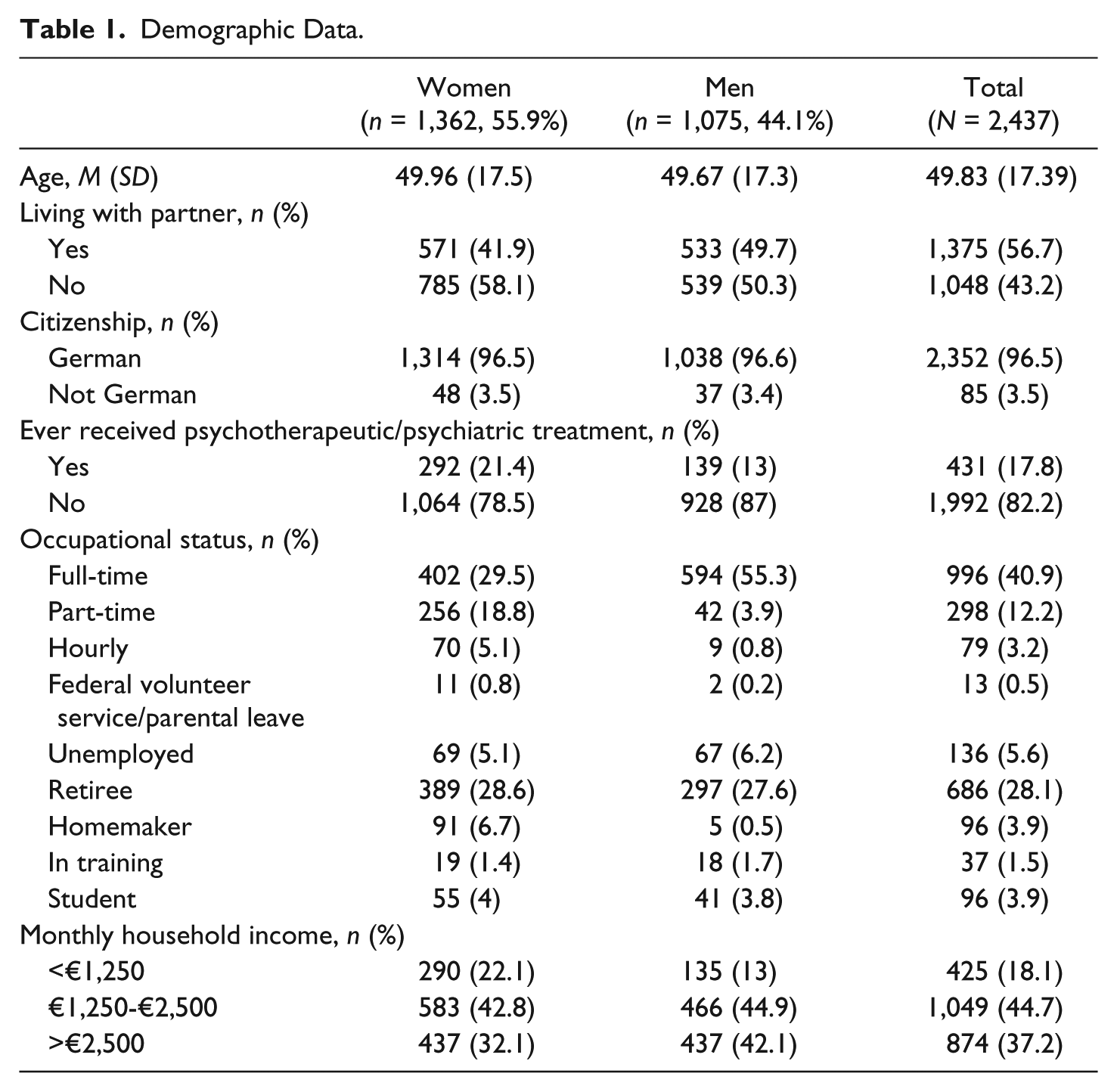
Of the 2,437 participants, 1,362 (55.9%) were female, which was slightly higher than the 51.2% female representation in the general German population (Statistisches Bundesamt, 2014). Mean age across both age groups was 49.83 years (SD = 17.3, range = 18-94). Detailed demographic information is presented in Table 1.
Demographic Data.
Measures
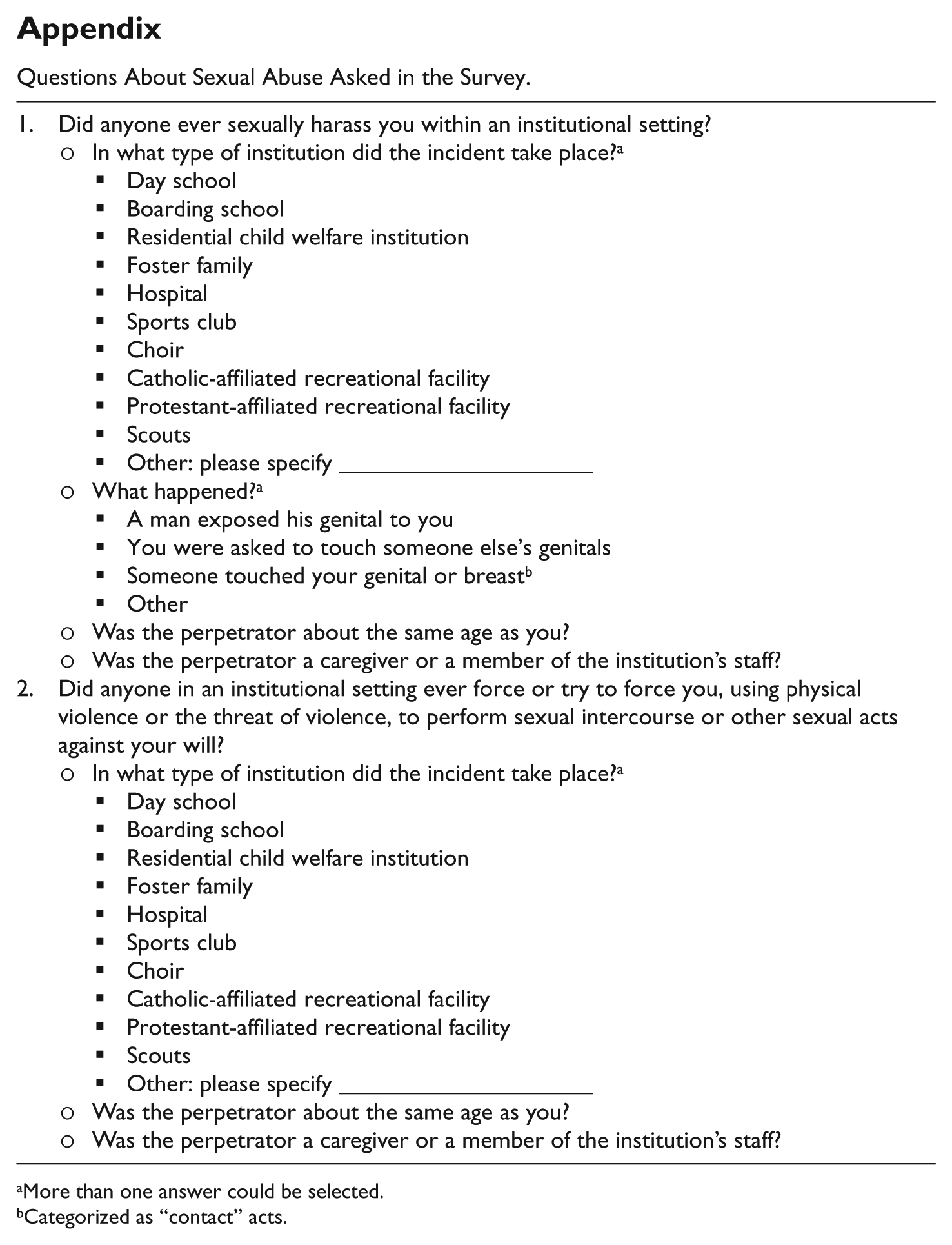
The questions asked of participants are shown in the appendix. They are based on the definitions of the World Health Organization (WHO), which differentiates between acts perpetrated by caregivers versus peers (Butchart, Harvey, Mian, & Furniss, 2006), and of the Centers for Disease Control and Prevention in the United States, which differentiates between contact and noncontact sexual abuse (Leeb, Paulozzi, Melanson, Simon, & Arias, 2008). Contact sexual abuse entails physical contact, of which forced sexual intercourse involving penetration is viewed as the most severe form. Noncontact sexual abuse includes exhibitionism, voyeurism, forcing the child to watch or participate in pornography, and sexual harassment via digital media.
Participants were asked to indicate whether they had ever been sexually harassed or forced to perform sexual acts while in any type of institutional setting, and if the answer was yes, to answer some questions about the circumstances including what had happened with a partly open answering format. Answers were categorized as yes/no for any type of sexual abuse when participants affirmed either Question 1 or Question 2 as presented in the appendix. The categorization for forced sexual intercourse was based on responses (yes/no) to Question 2, presented in the appendix. The categorization into contact and noncontact acts was based on Question 1, presented in the appendix, and participants’ answers to “what happened?” Participants could choose from three options (multiple choice possible) and had the possibility for an open answer format if necessary. The open answering format was only chosen, when participants felt their experiences did not match the categories presented beforehand. When participants described an act in the open answer format, those answers were categorized under “heterosexual harassment” and “homosexual harassment.” This categorization was conducted by an experienced research assistant based on a first semantic analysis. The answers were unmistakably classifiable based on the research assistants’ own interpretation. This type of classification was necessary in eight cases. The categories that are summarized under contact and noncontact acts of sexual abuse are presented in Table 2. The categorization was clear on the basis of the answers and the definition by the Centers for Disease Control and Prevention (Leeb et al., 2008). Similar questions were asked about the experience of physical violence. All of the adolescents answered all questions about sexual abuse, but among the adults, each question was missing responses from between nine and 12 participants.
Prevalence of Sexual Abuse in Institutions.
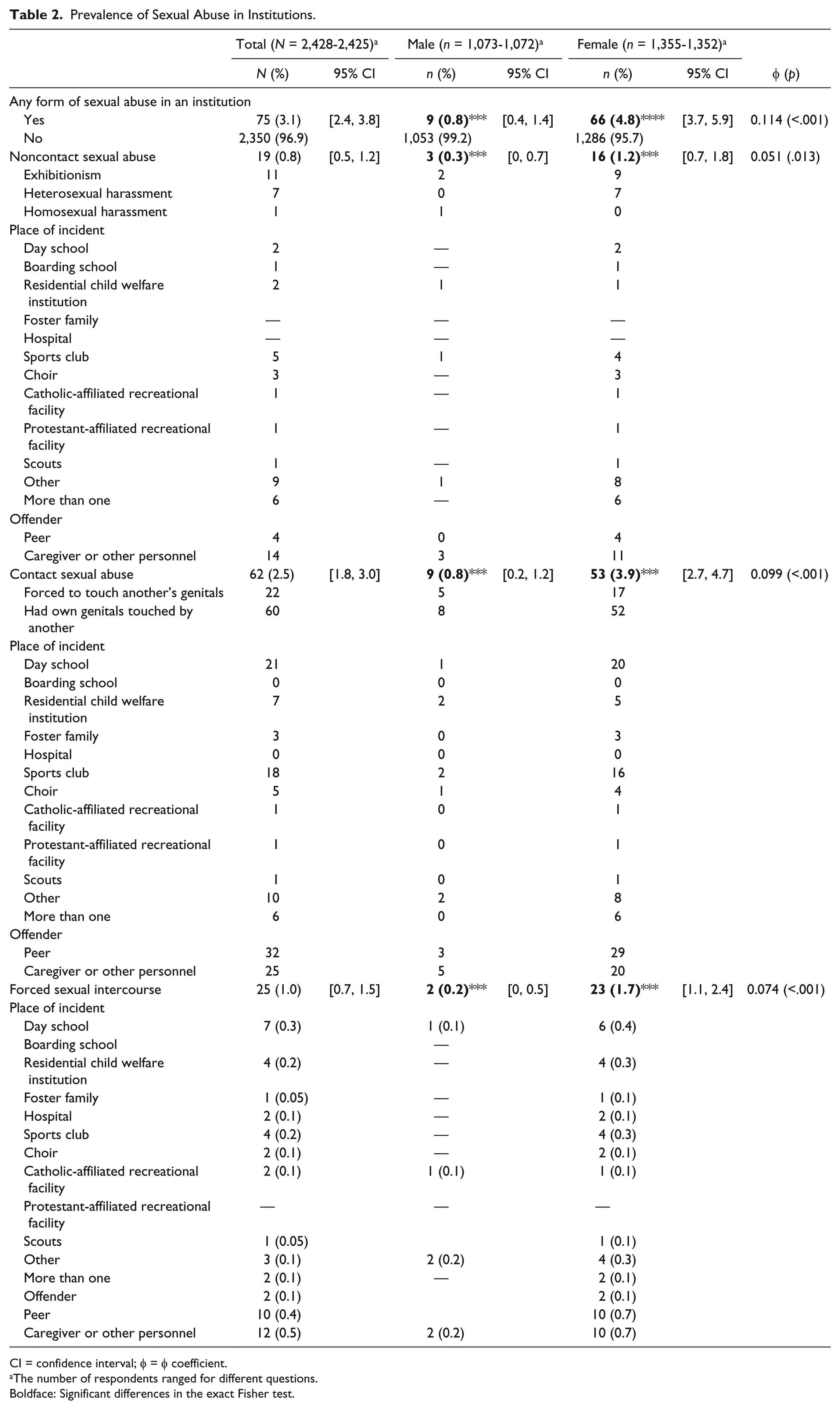
CI = confidence interval; φ = φ coefficient.
The number of respondents ranged for different questions.
Boldface: Significant differences in the exact Fisher test.
Statistical Analyses
Descriptive statistical analyses were conducted using IBM SPSS Statistics, version 20.0. Gender differences were calculated using the exact Fisher test, and odds ratios, as well as φ coefficients as indicators of effect sizes, were calculated accordingly.
Results
The lifetime prevalence for the different types of sexual abuse in institutions by gender and overall is presented in Table 2. “Any” type of sexual abuse was reported by 3.1% (n = 75) of adults. Overall, women were more likely than male participants to report having experienced all forms of sexual abuse: any, contact, noncontact, and forced sexual intercourse, with odds ratios of 6.03, 4.38, 5.44, and 9.25, respectively (see Table 2). With respect to perpetrators, about half of the adults reported having been abused by peers and half by caregivers or other staff. The most common settings where contact sexual abuse and forced sexual intercourse had taken place were schools, sports clubs, and residential child welfare institutions.
Apart from sexual abuse, almost 30% (n = 21) of victims (N = 75) reported having been exposed to other types of violence in institutions as well (see Table 3).
Exposure to Other Types of Violence.

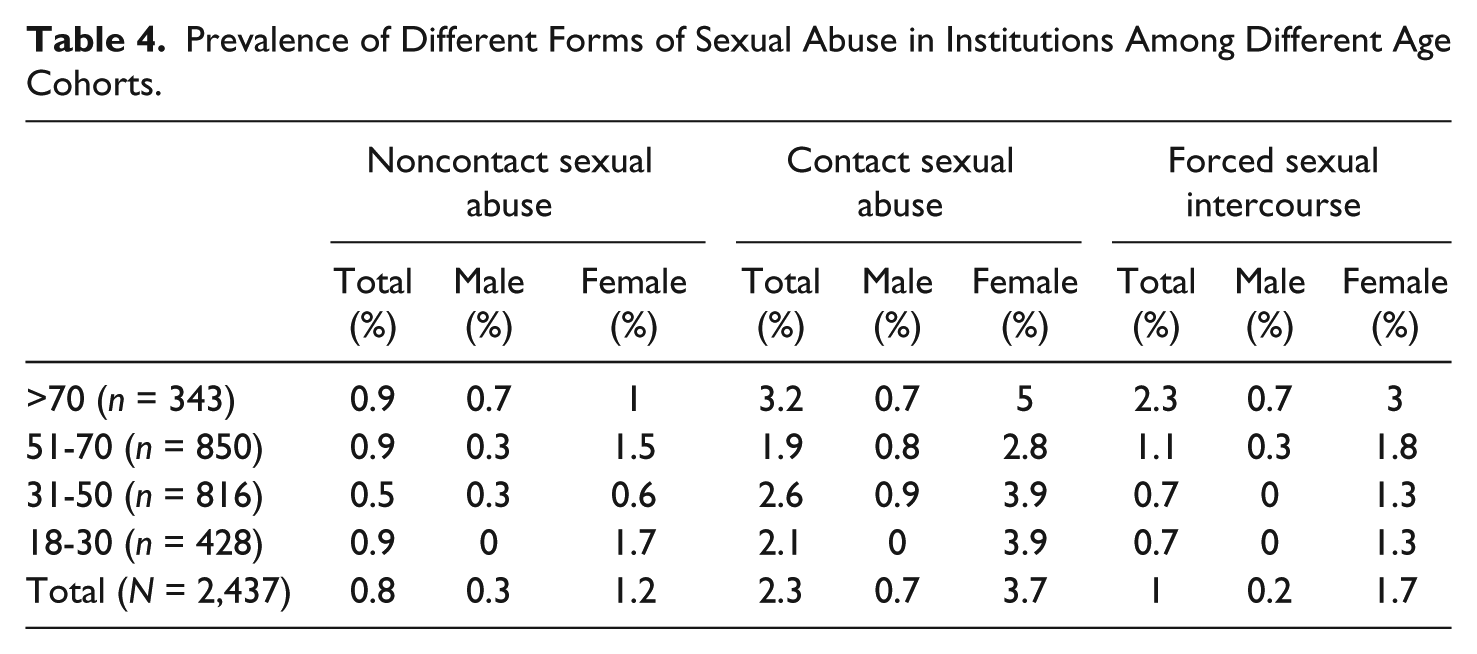
Table 4 presents a breakdown of the data into four age cohorts of 18 to 30 years, 31 to 50 years, 51 to 70 years, and >70 years. For forced sexual intercourse, the prevalence of reports decreased with age. This result may indicate that the prevalence rate decreases over time and younger generations may be affected less often than older generations. The prevalence of contact and noncontact acts did not differ significantly between the cohorts, indicating stability of these types of abuse over time.
Prevalence of Different Forms of Sexual Abuse in Institutions Among Different Age Cohorts.
Discussion
This study examined the lifetime prevalence of sexual abuse experienced in German institutions and leisure activities, as reported in a sample that was representative of the general adult population. This is the first study that reports prevalence estimates for sexual abuse in institutions for the general adult population in Germany for a broad range of institutions and leisure activities, not focusing on specific subpopulations such as students or restricted to specific contexts (such as churches). As expected, as the focus was limited to specific environments, the rates were lower than those reported in studies that have examined abuse experienced in any context. For example, the reported rate of forced sexual intercourse was about half the rate found by other studies (Häuser et al., 2011; Stadler et al., 2012a) for severe child sexual abuse in the general German population, and the reported rate of contact sexual abuse was lower than that found by Stadler et al., 2012a). However, the rates were high enough to indicate that a sizable proportion of what sexual abuse does occur is taking place in these settings. Also, while a prevalence of 3.1% may seem relatively low, given the size of the total German population, even a small percentage means that a significant number of people are affected; for example, the student population of Germany is 11 million (Statistisches Bundesamt, 2016).
Overall, 3.1% (n = 75) of the adults in our sample reported having experienced any type of sexual abuse in one of the identified institutional settings. These rates are considerably higher than the 0.38% sexual abuse in schools, foster families, and residential institutions reported by Stadler et al. (2012a) in their study of sexual abuse in Germany. The discrepancy may in part be due to the fact that in the Stadler et al. study, there was an underrepresentation of individuals who were currently or had formerly been institutionalized, as well as of young persons. Furthermore, the present study assessed sexual abuse in a broad context of institutions; for example, it included sports clubs and other places offering recreational activities. An additional factor that could account for differences in prevalence is that other studies examined samples of particular populations, not one that was representative of the entire population. For example, Averdijk and colleagues (2011) found a reported prevalence of 0.15% for rape and attempted rape in a sample of ninth graders in Switzerland. In a study of a similar age group in the Netherlands, Timmermann (2003) found that the rate of sexual violence experienced over the past year was 0.9% for girls and 0.4% for boys; however, when the questions were about unwanted sexual attention, the rates rose to 24% for girls and 11% for boys. In general, the prevalence of sexual abuse in institutions that is found in a study depends on what types of abuse are being asked about and the sample in which it is being assessed. As the present study assessed forms of abuse beyond the most severe, and used a sample representative of the general population, the overall rate is higher compared with studies that only assessed severe types or in risk populations.
Consistent with many other studies, our results found females to be at greater risk for sexual abuse of all types compared with males (Häuser et al., 2011; Iffland et al., 2013; Pereda et al., 2009; Sethi et al., 2013; Stoltenborgh et al., 2011). It must be noted, however, that a higher proportion of female victims does not hold true in all contexts. A preponderance of male victims has been reported in several countries for institutions connected to the Roman Catholic Church (Böhm et al., 2014; Commission to Inquire Into Child Abuse, 2003; Deetman et al., 2011; John Jay College Study, 2004; Rassenhofer, Zimmer, Spröber, & Fegert, 2015), and Spröber and colleagues (2014) found more male than female victims in both secular and religiously affiliated institutions, again with the greatest percentage (69.8%) seen in the Roman Catholic context. Those findings may possibly be explained by the fact that the samples in the above studies predominantly included residents of child welfare institutions and boarding schools run by the Catholic Church, and traditionally, many of these institutions have been operated exclusively for boys (Rassenhofer et al., 2015). The present study, however, assessed sexual abuse in a broad context of locales that had more equal gender ratios.
With respect to the type of institution, the highest rates were found for schools, child welfare institutions, and sports clubs. Sexual abuse in other settings was reported less often by the participants. In general, the difference for specific settings might be due to the fact that respondents had less experiences within these institutions or recreational activities. For example, actually all of the participants of the present study had been visiting schools in their life, while the rate of those who have attended choirs, for example, is unknown. In this sense, schools seem to be safe even though schools were the most common places to experience sexual abuse. This is in line with findings from other studies (Gallagher, 2000). In addition, the results underline the need to consider prevention strategies in specific settings, such as sports clubs. So far, in this setting, there is little awareness about the problem.
Generally, safe institutions seem to have strict sexual harassment policies, a dissemination of the consequences of sexual harassment, as well as a procedures for filing complaints, a training for students and school staff, and education around handling incidents of sexual harassment. Therefore, institutions are recommended to perform a risk assessment in the first step, and next to realize some specific structural changes where required as well as to implement prevention and intervention strategies based on the results of the risk assessment (Runder Tisch, 2012).
In comparison, only a small number of incidents have been reported in a wide range of leisure activities, such as choirs and scouts, in the present study. Yet, absolute numbers are missing, and especially, high-risk samples such as persons living in institutions might be underrepresented in the present sample; therefore, an accurate estimate on basis of the present data is not possible. Future research should clearly focus on the determination, which institutions provide safety, and which factors are associated with a higher safety. Thus, prevention and intervention efforts should focus on the highest-risk settings and be tailored for them (Runder Tisch, 2012).
By implementing prevention and interventions, for example, in school settings, a wide range of potential victims may be reached as there are about 11 million students in Germany at the moment (Statistisches Bundesamt, 2016). Prevention strategies in school settings would therefore represent an important intervention for primary prevention, and a range of school-based sexual abuse prevention programs have been found to be effective (Walsh, Zwi, Woolfenden, & Shlonsky, 2015). This underlines the relevance of current efforts by the Germany Independent Commissioner for Questions of Child Sexual Abuse (Unabhängiger Beauftragter für Fragen des Sexuellen Kindesmissbrauchs [UBSKM], 2016) to implement prevention measures.
A substantial proportion (about 30%) of respondents who reported having experienced sexual abuse in an institution also reported having experienced other forms of violence. Research on the co-occurrence of different types of victimization has found that exposure to multiple types of violence is associated with worse outcomes (e.g., Witt et al., 2016). So far, no studies have examined the co-occurrence of different types of maltreatment in institutions, but from research on abuse in general, it is known that such co-occurrence is the rule rather than the exception, and can be up to 95% (Finkelhor, Ormrod, & Turner, 2007; Herrenkohl & Herrenkohl, 2009). In this study, the overall prevalence of co-occurring types of victimization (0.9%) was slightly lower than what has been reported by other studies using representative samples, which found from 3.3% for the co-occurrence of two different types of child maltreatment to 0.1% for the co-occurrence of five different types (Häuser et al., 2011; Iffland et al., 2013). This in part is due to the fact that in the present study, the assessment of sexual abuse as well as other forms of violence was limited to victimization within institutions.
The results of the age cohort comparison are somewhat encouraging in that they indicate that while rates of contact and noncontact sexual abuse in institutions seem to have remained similar over time, there may be a decline in the prevalence of forced sexual intercourse. This is consistent with studies in the United States that have found evidence, based on official statistics and surveys, of a decline of sexual abuse in general (Finkelhor & Jones, 2006, 2012; Finkelhor, Turner, Ormrod, & Hamby, 2010). In Germany, results from official crime statistics (Bundesministerium des Innern, 2016; Stadler et al., 2012b) and some studies (e.g., Stadler et al., 2012b) point in a similar direction. The present results must be interpreted with caution, as the numbers are small and the study was not designed to examine trends. To determine that, repeated surveys using the same methodologies or ongoing incidence monitoring would be needed.
Future research should therefore include a regular monitoring of sexual abuse in institutions and overall in Germany to determine trends of sexual abuse and to inform policy about the effectiveness of prevention and intervention strategies. In addition, more research is needed on special high-risk populations, such as children and adolescents living in residential child welfare institutions and that are usually underrepresented in population surveys. Besides the examination of the problem, research on intervention and prevention strategies are needed. The results suggest that schools represent a setting for the implementation of primary prevention strategies as a great number may be reached. Research should certainly focus on how to design prevention programs considering different types of perpetrators (peers and caregivers) who may also tackle perpetrators themselves as half of the perpetrators in the present sample were peers.
Limitations
Several limitations of this study must be noted. First, the random route approach of contacting family households excludes people currently residing in institutions; thus, particularly in the youngest age groups (adolescents and young adults), residents of group homes or other child welfare institutions would have been systematically omitted. Therefore, high-risk populations such as the disabled, particularly those who had been victims of sexual abuse in that setting, might have been underrepresented in our sample, as has been found to be the case in other studies. For example, Stadler and colleagues (2012a) found that the representation of current or formerly institutionalized people in their sample was less than 10% of what it should have been. Accordingly, the current study may have underestimated the true rate of sexual abuse in institutions, and the results have to be interpreted accordingly. Another limitation was the manner in which sexual abuse was assessed. Participants were simply asked whether they had ever experienced “sexual harassment,” without much further specification of what this entailed, meaning that it came down to a personal judgment: That is, some participants may have experienced some form of abuse that they did not identify as such. If the questionnaire had asked about more specific actions or events, the rate might have been higher. Third, the questionnaire did not explicitly ask only about experiences that had occurred in childhood, so it cannot be ruled out that in some cases “peers” were adult peers, especially in the setting of institutionalized recreational activities. Fourth, the fact that we asked for lifetime prevalence of sexual violence and that there is an approximately 70-year age range within the sample leads to a likewise quite long observed time horizon. This has to be taken into account when interpreting the results and concluding on the situation in institutions. Fifth, there was a slight overrepresentation of women. However, data for males and females were analyzed separately. Furthermore, it has to be stated that the present sample of the participants may differ from those who declined participation. This cannot be ruled out and should be considered while interpreting the results. A final concern is that, as is true for all self-report retrospective studies, the results may have been affected by selective memory or attribution biases, avoidance, or repression (Hardt & Rutter, 2004).
Conclusion
In conclusion, the findings of this study indicate that the phenomenon of sexual abuse in institutions should be viewed with concern, as a relevant proportion of adults in the general population report experiences of sexual abuse in institutions. Including a broad context of institutions, the usual preponderance of female victims has been found. Victims of sexual abuse in institutions are likely to have experienced other forms of violence as well. Prevention and intervention strategies that address both sexual and physical abuse in institutions are needed, and must be tailored to this context, including a recognition that peers as well as staff may be potential offenders. Finally, if experimental strategies are implemented, ongoing monitoring would be necessary to determine whether the measures in place for prevention and interventions are effective.
Footnotes
Appendix
Questions About Sexual Abuse Asked in the Survey.
| 1. Did anyone ever sexually harass you within an institutional setting? ○ In what type of institution did the incident take place? a ■ Day school ■ Boarding school ■ Residential child welfare institution ■ Foster family ■ Hospital ■ Sports club ■ Choir ■ Catholic-affiliated recreational facility ■ Protestant-affiliated recreational facility ■ Scouts ■ Other: please specify _____________________ ○ What happened? a ■ A man exposed his genital to you ■ You were asked to touch someone else’s genitals ■ Someone touched your genital or breast b ■ Other ○ Was the perpetrator about the same age as you? ○ Was the perpetrator a caregiver or a member of the institution’s staff? 2. Did anyone in an institutional setting ever force or try to force you, using physical violence or the threat of violence, to perform sexual intercourse or other sexual acts against your will? ○ In what type of institution did the incident take place? a ■ Day school ■ Boarding school ■ Residential child welfare institution ■ Foster family ■ Hospital ■ Sports club ■ Choir ■ Catholic-affiliated recreational facility ■ Protestant-affiliated recreational facility ■ Scouts ■ Other: please specify _____________________ ○ Was the perpetrator about the same age as you? ○ Was the perpetrator a caregiver or a member of the institution’s staff? |
More than one answer could be selected.
Categorized as “contact” acts.
Authors’ Note
Andreas Witt and Miriam Rassenhofer have shared first authorship.
Declaration of Conflicting Interests
The author(s) declared the following potential conflicts of interest with respect to the research, authorship, and/or publication of this article: AW, MR, MA, EB state that they have no competing interests.
Funding
The author(s) disclosed receipt of the following financial support for the research, authorship, and/or publication of this article: JMF has received research funding from the EU, DFG (German Research Foundation), BMG (Federal Ministry of health), BMBF (Federal Ministry of education and Research), BMFSFJ (Federal Ministry of Families, Senior Citizens, Women and Youth), German armed forces, several state ministries of social affaires, State Foundation Baden-Württemberg, Volkswagen Foundation, European Academy, Pontifical Gregorian University, RAZ, CJD, Caritas, Diocese of Rottenburg-Stuttgart. Moreover, he has received travel grants, honoraria and sponsoring for conferences and medical educational purpose from DFG, AACAP, NIMH, /NIH, EU, Pro Helvetia, Janssen & Cilag (J&J), Shire, several universities, professional associations, political foundations, and German federal and state ministries during the last five years. Every grant and every honorarium has to be declared to the law office of the University Hospital of Ulm. JMF holds no stocks of pharmaceutical companies. PLP has received research funding from the Bundesinstitut für Arzneimittel und Medizinprodukte, BMBF (Federal Ministry of education and Research), State Foundation Baden-Württemberg, Volkswagen Foundation, Lundbeck, Servier. PLP holds no stocks of pharmaceutical companies.