




Abstract

The 13th Annual Meeting of the International Cytokine & Interferon Society (ICIS) took place in Seattle, Washington, USA, from November 2 to 5, 2025, at The Westin Seattle. The meeting brought together a diverse and international community of cytokine biologists, immunologists, and trainees. As always, the conference served as a central venue for sharing new discoveries across innate immunity, interferon biology, cytokine signaling, infection, and inflammation. This year’s meeting welcomed over 700 registrants representing 20 countries. The program featured 4 keynote talks, 49 invited speakers, and more than 200 poster presentations, creating a vibrant scientific atmosphere throughout the 4 days.
As an early-career researcher, I had the unique opportunity to participate in the meeting, with the added bonus of exploring the beautiful city of Seattle, Washington (Fig. 1). My research focuses on cytokine engineering and applying cytokine signaling in cell therapy, so attending Cytokines 2025 was especially valuable. The meeting provided important insight into current advances and future directions in the cytokine and interferon field.
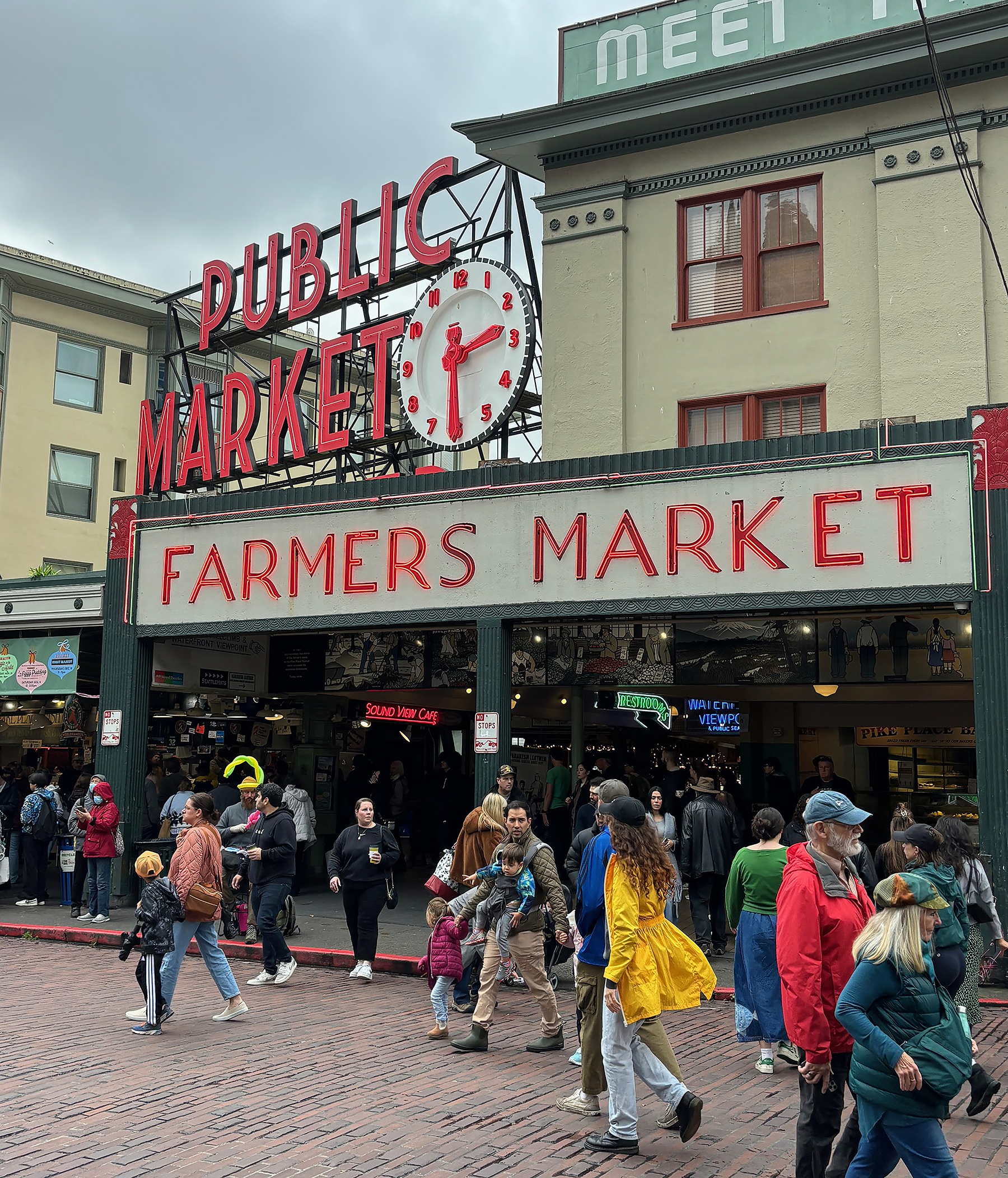
The street scene at the Public Market in Seattle, Washington, during the week of the annual meeting of the International Cytokine & Interferon Society.
The meeting opened on the afternoon of Sunday, November 2, with two concurrent Guest Symposia: “Regulatory T cells in the tumor microenvironment,” sponsored by the Korean Association of Immunologists, and “Innate Immunity I,” sponsored by the G-LAMP Multidimensional Genomics Research Center. Afterward, Program Chair Dr. Ram Savan (University of Washington) and Dr. Michael Gale Jr. (University of Minnesota) delivered the opening remarks, followed by the ICIS Awards Ceremony and presentations from the awardees. Dr. Francisco Quintana (Brigham and Women’s Hospital, Harvard Medical School), recipient of the ICIS–Pfizer Award for Excellence in Interferon and Cytokine Research, presented “Regulation of the immune response in the CNS.” The ICIS–BioLegend William E. Paul Award for Excellence was awarded to Dr. Hongbo Chi (St. Jude Children’s Research Hospital), who discussed “Immunometabolism governs adaptive immunity: a functional genomics perspective,” outlining recent discoveries in metabolic regulation and target identification. The session concluded with Dr. Burkhard Becher, another ICIS–Pfizer Award recipient, who presented “Adenophages: an atypical macrophage population in exocrine glands sustained by ILC2-derived GM-CSF.”
After the opening session and award ceremony, Dr. Susan Kaech (Salk Institute) delivered the conference’s first keynote address, titled “From Signal to Secretion: How TCR and Metabolic Circuits Fuel T Cell Fate and Function.” Her talk was memorable both for its insights into how metabolic circuits shape T cell differentiation and for the personal connection she brought to the audience. She shared that Seattle holds special meaning for her, having grown up in the area, and noted that she recently joined the Allen Institute to lead its Immunology Moonshot program.
Monday morning (Day 2) began with the first plenary session, titled “Interferon Regulation and Function.” The second keynote speaker, Dr. Charles M. Rice (The Rockefeller University) and recipient of the 2020 Nobel Prize in Physiology or Medicine, delivered a presentation entitled “Hooked on Interferon.” He revisited his pioneering work on how hepatitis C virus infection drives interferon responses and interferon-stimulated genes (ISGs) and shared his recent interest in how ISGs are dynamically regulated in stem cells, highlighting new layers of interferon control that may influence both development and antiviral defense. The second invited speaker, who also served as program chair, Dr. Michael Gale Jr. (University of Minnesota), delivered a presentation titled “25 Years of RIG-I,” reviewing the discovery and characterization of the RIG-I pathway. The third invited speaker, Dr. Russell Vance (University of California, Berkeley), presented “Effector-triggered immunity and regulation of type I interferons,” and the final invited speaker of the session, Dr. Jan Rehwinkel (University of Oxford, UK), presented “Regulation of Type I Interferon Receptor Signaling.”
The Opening Session was followed by the first poster session and three concurrent symposia. Symposium 1, supported by GILEAD, focused on interferon regulation and function. The first invited speaker and program chair, Dr. Ram Savan (University of Washington), delivered a presentation titled “The transcription of type I and III interferons is regulated by lineage-specific factors.” The second invited speaker, Dr. Jonathan Miner (University of Pennsylvania), presented “Therapeutic targeting of the TREX1-cGAS-STING pathway in autoimmunity,” followed by the third invited speaker, Dr. Emily Hemann, who presented “Beyond ISGs: IFN-lambda regulation of pulmonary immunity.” The final invited speaker of Symposium 1, ICIS Regeneron Young Investigator Award winner Dr. Ang Cui (Harvard University), delivered a fascinating presentation titled “Dictionary of immune responses to cytokines and chemokines at single-cell resolution.”
Cytokines in fungal and parasite infections were the focus of Symposium 2. The first invited speaker, Dr. Selinda Orr (Queen’s University Belfast, UK), presented “Type I IFN increases macrophage candidacidal activity of C. albicans.” The next invited speaker, Dr. Sarah Gaffen (University of Pittsburgh), discussed “Combinatory synergy of Type 17 cytokine signals in mucosal infection.” The symposium concluded with ICIS Young Investigator Awardee Dr. Kathleen Mills (Weill Cornell Graduate School of Medical Sciences), who presented her work titled “GM-CSF-mediated epithelial-immune cell crosstalk orchestrates pulmonary immunity to Aspergillus fumigatus.”
Symposium 3 focused on Host Responses to Microbial Infection I. The first invited speaker, Dr. Sunny Shin (University of Pennsylvania), presented “Metabolic regulation of inflammasome responses to bacterial infection.” The next invited speakers, Dr. Caitlyn Holmes (University of Minnesota) and Dr. Tyler Bold (University of Minnesota), presented “Klebsiella pneumoniae requires distinct fitness strategies across tissues during bacteremia” and “Ventral nervous system hypo-inflammation is associated with mortality in HIV+ tuberculous meningitis,” respectively. The final invited speaker, Dr. Naeha Subramanian, delivered a presentation titled “Inflammasome activation controls antimicrobial resistance of an intracellular pathogen.”
After the lunch break, Symposia 4–6 began concurrently. Symposium 4, titled “Innate Immunity II,” featured invited speaker Dr. Katherine Fitzgerald (UMass Chan Medical School), who presented “Tissue-Specific Consequences of STING Activation,” followed by invited speaker Dr. Josh Woodward (University of Washington) with “Illuminating the Disguised: Bacteriophage-Encoded Phagocyte Surveillance.” Invited speakers Dr. Susan Carpenter (University of California, Santa Cruz) and Dr. Adriana Forero presented “High-Throughput CRISPR Screening Reveals Novel Regulators of Innate Immunity” and “Nuclear Gatekeepers as Novel Regulators of Interferon Responses,” respectively. The final invited speaker of Symposium 4, Dr. Liraz Galia, presented “Rewiring Immunity: Novel Mechanisms at the Gut Interface.”
Symposium 5, supported by Cytokine journal, focused on cytokine regulation of adaptive immunity. The invited speaker Tal Arnon (Oxford University, UK) presented “Plasma Cell Differentiation in Complex Environments.” Symposium 6, supported by NOVARTIS, focused on nucleic acid sensing. ICIS–Regeneron Young Investigator Awardee Dr. Nandan Gokhale (Cincinnati Children’s Hospital Medical Center) presented his work, “Cellular RNA Interacts with MAVS to Promote Antiviral Immunity,” followed by invited speaker Dr. Helene Liu (National Taiwan University), who delivered a presentation titled “LncRNA–MDA5 Circuits Controlled by m5C Modification Link IFN Signaling to Senescence and Autoimmunity.”
After the exhibitors and poster break, Symposia 7–9 were held concurrently. Symposium 7, titled “Host Responses to Virus Infection” and supported by Moderna, featured invited speaker Dr. Ryan Langois (University of Minnesota) with “Deciphering How Viruses Navigate Host Species Barriers Using a ‘Fibroblast Zoo’.” He was followed by invited speaker Dr. Sharon Lewin (Doherty Institute, Australia), presenting “The Role of Immune Checkpoints in HIV Persistence and as Targets for HIV Cure Interventions,” and invited speaker Dr. Alison Kell (University of New Mexico) with “Hantavirus–Host Interactions Govern Immune Activation and Inflammation.” The session concluded with ICIS Young Investigator Awardee Dr. Alexander Lercher (The Rockefeller University), who presented “Antiviral Innate Immune Memory in Alveolar Macrophages Following SARS-CoV-2 Infection.”
Symposium 8, supported by Eli Lilly, focused on inflammation in acute and chronic diseases. Invited speaker Dr. Jenny Ting (University of North Carolina at Chapel Hill) presented “The Importance of Innate Immune Receptors in Innate and Adaptive Immunity,” followed by invited speaker Dr. Autume York (University of Washington), also an ICIS Young Investigator Awardee, with a talk titled “Decoding the Immunological Lipidome.”
Symposium 9, titled “Innate Immunity III,” featured invited speaker Dr. Carolina Lopez (Washington University), who presented “Virus vs. Host: Decoding the Battle for Survival.”
The symposium was followed by Poster Session 2, where I had a great time discussing research with the poster authors. The second day of the conference concluded with the Early Career Research Networking Reception, which provided an excellent opportunity to connect with both peers and established scientists.
The third day of the meeting commenced with the second plenary session, titled “DNA Sensing.” Dr. James Chen (UT Southwestern Medical Center) delivered the keynote lecture, “Roles of cGAS in Inflammation and Lysosome Homeostasis.” The session continued with invited speakers Dr. Glen Barber (Ohio State University), presenting “STING-Ignited Inflammation and Cancer,” and Dr. Dan Stetson (University of Washington), presenting “Regulation of Intracellular DNA Sensing.” The session concluded with invited speaker Dr. Andrea Ablasser (École Polytechnique Fédérale de Lausanne, Switzerland), who presented “Sensing DNA as a Danger Signal through the cGAS-STING Pathway.”
Following the plenary, Symposia 10–12 were held concurrently. Symposium 10, focused on Cytokine Regulation of Adaptive Immunity II, featured invited speaker Dr. Mark Ansel (University of California, San Francisco), presenting “RNA Regulation of Cytokine Signaling and Immune Responses.”
Symposium 11, titled Cytokines in Inflammation and supported by PBL Assay Science, included invited speakers Dr. Rachel A. Gottschalk (University of Pittsburgh), presenting “Mechanisms Underlying Gene-Specific Decoding of Cytokine Context,” and Dr. Robyn Klein (University of Western Ontario, Canada), presenting “Cytokines and Virus-Mediated Memory Impairment.” The symposium concluded with ICIS Regeneron Young Investigator Awardee Dr. Ruaidhri Jackson, who presented “Chimeric Gasdermin D mRNA-Encoded Protein Promotes IL-1β Release During Pyroptosis.”
Symposium 12, focused on Cytokines in Cancer and sponsored by Coherus, featured invited speaker Dr. Brendan Jenkins (The University of Adelaide, Australia), who presented “Preferential Requirement for IL-18 in Inflammasome-Driven Upper Gastrointestinal Cancers.”
Poster Session 3 was held during the lunch break, followed by Symposia 13 and 14 in the afternoon. Symposium 13, titled “Cytokines in Autoimmunity” and sponsored by Millipore Sigma, began with invited speaker Dr. Jane Buckner (Benaroya Research Institute), who presented “Linking Multiomic Immunotypes to Immune Dysregulation in Young Women.” She was followed by invited speakers Dr. Virginia Pascual (Drukier Institute at Weill Cornell Medicine) with “SLE: Interferon and Beyond,” and Dr. Rami Bechera (Paris-Saclay University), who presented “Methyl Marks and Misfires: RNA Modifications in Autoimmunity.”
Symposium 15, focused on Cytokines in Microbiome/Virome Dynamics, featured invited speaker Dr. Nikki Klatt (University of Minnesota), who presented “Novel Mechanisms of Microbiome-Mediated Influence in the Female Reproductive Tract.” Day 3 concluded with the conference Gala Dinner, an energetic gathering that brought attendees together outside the scientific sessions. The event featured a live band, and many participants joined the dance floor, creating a fun and relaxed atmosphere.
The final day of the conference opened with the last keynote speaker, Dr. David Baker, recipient of the 2024 Nobel Prize in Chemistry. He presented a series of projects using RF diffusion to generate de novo protein binders, including designs that target antigens, cytokines, and receptors with high precision. The talk was highly engaging and sparked active discussion, with many attendees asking questions throughout the session.
The keynote was followed by the ICIS Annual Member Business Meeting and the last set of concurrent symposia. Symposium 15, titled “Cytokines in Inflammation II” and sponsored by AMGEN, featured invited speakers Dr. Carolyn Coyne (Duke University), presenting “Beyond IFNs: DUX4-Driven Antiviral Mechanisms in Placental Trophoblasts,” and Dr. Helen Lazear (University of North Carolina at Chapel Hill), presenting “Spatial Effects of Interferon Lambda Signaling During Congenital Infections.”
Symposium 16 focused on Cytokine Regulation in Innate Immune Cells. Invited speaker Dr. Carla Rothlin (University of Minnesota) began with “Decoding the Response to Cell Death,” followed by invited speaker Dr. Shekhar Pasare (Cincinnati Children’s Hospital Medical Center), presenting “Memory T Cells as Drivers of Innate Inflammation.” The session continued with invited speakers Dr. Mehul Suthar (Emory University), presenting “Innate Immune Control of Respiratory Viral Infections,” and Dr. Jessica Hamerman, presenting “Monocyte Differentiation During Inflammation and Autoimmunity.”
Symposium 17, titled “Cytokines, Genomics & Disease,” featured invited speaker Dr. Sara Cherry (University of Pennsylvania), presenting “Emerging RNA Viruses: Antivirals and Innate Immune Control.” Invited speakers Dr. Stephanie Boisson-Dupuis (The Rockefeller University) and Dr. Musa Mhlanga (Radboud Institute for Molecular Life Sciences) presented “Tuberculosis and Cytokine Deficiency in Humans” and “Epigenetics at the Apex of Innate Immune Memory,” respectively.
After the final symposia, Plenary III, titled “Cytokines in T-Cell Programming and Responses,” was held. The session began with the invited talk “T Cell Responses to Self and Cancer” by Dr. Vavia Vezys (University of Minnesota). This was followed by invited speaker Li-Fan Lu (University of California, San Diego), who presented “Molecular Regulation of Th17 Cell Differentiation and Function,” highlighting the role of Tox in Th17 differentiation.
The conference concluded with a Meeting Wrap-Up by the scientific organizers that included an invitation to the next annual ICIS meeting in Glasgow, Scotland, scheduled for October 18–21, 2026. As a first-time participant, I found the “Cytokines 2025” meeting to be an exceptionally rewarding experience. The picturesque location for this year’s annual meeting, Seattle, WA, made my attendance at this scientific conference even more memorable (Fig. 2). The talks offered deep insights into emerging directions in cytokine and interferon research, leaving me inspired and eager to attend future ICIS meetings.
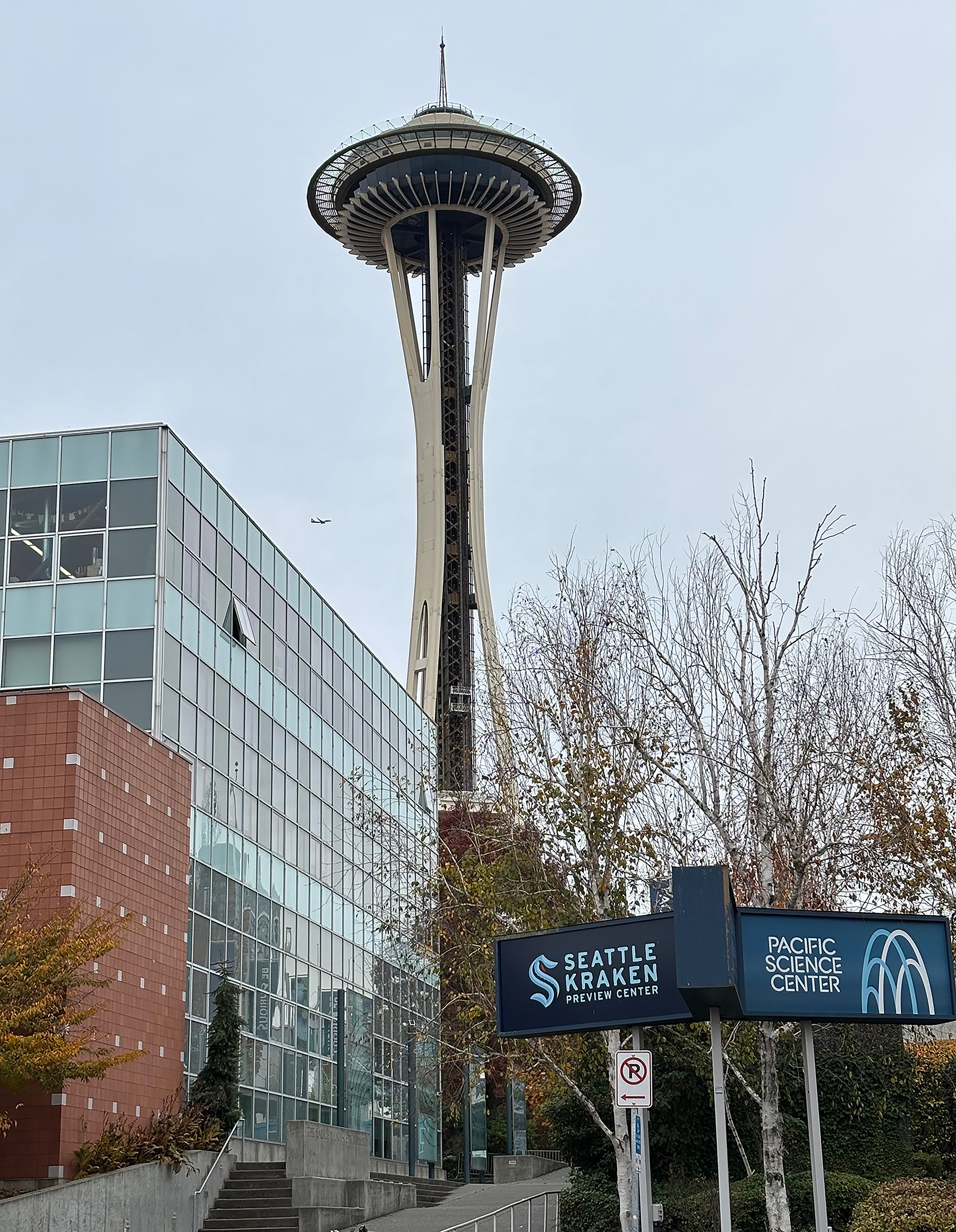
A view of the famous Seattle Space Needle observation tower in downtown Seattle, WA.
Footnotes
Author Disclosure Statement
No competing financial interests exist.
Funding Information
No funding was received for this article.