



Abstract
Objective:
There are no definitive results about either the presence of exact comorbidity between celiac disease (CD) and attention-deficit/hyperactivity disorders (ADHD) or etiology. We intend to screen ADHD-related cognitive and behavioral traits in children with biopsy-proven CD and investigate the possible association of these traits with certain vitamin levels, body-mass index, and gluten-free diet (GFD) compliance.
Method:
A total of 85 children with biopsy-proven CD (the ages of 8–18 years) were compared with age and sex-matched 72 healthy controls in terms of demographics, psychiatric symptoms, certain vitamin levels, and anthropometric measurements.
Results:
ADHD-like cognitive issues, such as inattention and learning difficulties, as well as psychosomatic symptoms and poor prosocial behavior, were all associated with GFD noncompliance in childhood CD.
Conclusion:
Untreated CD may predispose to ADHD-resembling symptoms. Physicians should be aware of the probability of ADHD misdiagnosing due to ADHD-resembling cognitive and behavioral traits in untreated CD.
Introduction
Celiac disease (CD) is an autoinflammatory illness characterized by intestinal villus atrophy, which often results from gluten consumption in genetically susceptible individuals (Fasano & Catassi, 2005). Despite the geographical variation, the average global prevalence of CD has been reported to be 0.5% to 1% (Ashtari et al., 2021). A small-bowel biopsy along with a positive CD serology is currently the gold standard method for diagnosis, and a lifelong, strict gluten-free diet (GFD) is still the only definitive treatment so far (Ertürk et al., 2020). CD with nonclassical symptoms has now emerged as more prevalent than the classical variety (Fasano & Catassi, 2005), implying that the autoinflammatory basis of CD is not limited to the gut and absorption but also includes systemic manifestations linked to vitamin/mineral deficiencies. Six to eleven percent of individuals with CD have exhibited comorbid neurologic difficulties, perceptual impairments, and mental issues such as attention deficit and hyperactivity disorder (ADHD) (Cakir et al., 2007; Chin et al., 2003; Dalgıc, 2008; Green et al., 2005; Hadjivassiliou et al., 1996). The risk of neuropsychiatric disturbances was 2.6% in children with CD, while it was 26% in adults with CD. This disparity may be attributable to shorter illness duration, faster gluten removal, stricter diet adherence, or a distinct vulnerability to immune-mediated diseases in childhood (Ruggieri et al., 2008). A more recent population-based cohort study with approximately 12 years of follow-up reported, however, that childhood CD was associated with a 19% increase in the risk of any psychiatric disorder; the first year after CD diagnosis was the period with the highest potential incidence increase in psychiatric comorbidity; the increase in risk was observed in all childhood age groups and persisted into adulthood (Lebwohl et al., 2021). Nevertheless, the pathophysiology of neurological and neurodevelopmental comorbidities that develop neither in the pediatric nor adult CD course is unclear (Green et al., 2005; Zelnik et al., 2004).
ADHD, a childhood neurodevelopmental disorder characterized by age-inconsistent levels of inattention and hyperactivity/impulsivity along with impairment in daily functioning in multiple settings, frequently persists into adolescence and adulthood (APA, 2013). The worldwide community prevalence of ADHD in people aged 18 years or younger is about 5% (Polanczyk et al., 2014), ranging between 2.2% and 7.2% according to methodological differences, and the community prevalence of ADHD has remained stable over the past three decades (Sayal et al., 2018). There are a few studies examining neuropsychiatric disorders and ADHD symptoms in individuals with CD (Lahat et al., 2000), but there are no definitive data about the prevalence of CD in ADHD cases (Niederhofer & Pittschieler, 2006; Zelnik et al., 2004). Several executive dysfunctions, including memory deficits, acalculia, learning inefficiencies, inattention, and visuospatial deficits, have been defined in patients with CD (Makhlouf et al., 2018). Most patients with CD often report experiencing “brain fog” (Lichtwark et al., 2014) which is considered to be a mild cognitive impairment including difficulty in concentration, inattention, confusion, disorientation, etc. (Yelland, 2017). However, the findings of whether there is a real correlation between disease activity (intestinal symptoms) and cognitive impairments remain controversial (Casella et al., 2012; Hu et al., 2006; Makhlouf et al., 2018). Evidence regarding the impairment of neuropsychiatric symptoms with the healing of intestinal mucosa after GFD initiation is also conflicting; some previous studies have reported the beneficial outcomes of GFD on cognitive impairments (Cassisi et al., 2020; Kristensen et al., 2019; Lichtwark et al., 2014), while others have not (Briani et al., 2008; Casella et al., 2012; Makhlouf et al., 2018). The disparity in previous findings can be explained by the variation in cognitive dysfunction, techniques used in neuropsychological testing, and the timing of GFD initiation where retardation decreases its efficiency (Makhlouf et al., 2018). In addition, some authors asserted that the greater gluten exposure at a younger age, the more likely the cognitive impairment is to be irreversible (Casella et al., 2012). Therefore, early diagnosis of both CD and neuropsychiatric comorbidities in childhood and capturing GFD compliance as early as possible seem to be crucial to treatment efficacy.
Children with CD have an increased risk for conduct disorders and ADHD, whereas children with a background of conduct issues were at increased risk of diagnosing a CD on the contrary (Butwicka et al., 2017). Compared to age- and sex-matched controls, some authors defined more prevalent disruptive behavior disorders as a comprehensive diagnosis rather than ADHD in children with CD (Pynnönen et al., 2004). The previous findings regarding the comorbidity between conduct problems and CD were possibly associated with the more frequently accompanied ADHD-related symptoms in CD. However, highly divergent findings regarding ADHD comorbidity existed: Some authors reported no rise in CD incidence among ADHD children (Güngör et al., 2013). Although Mazzone et al. (2011) found no differences in conduct or ADHD-related symptoms between children with CD and healthy controls, they noted gender-related variations in the findings, such as more externalizing, social, cognitive, and attention problems in males than females. In addition, Smith et al. (2017) detected more parent-proxy-reported aggressive behaviors in children with positive celiac serology than in healthy controls. According to previous findings, of which the majority have been obtained from research on adults with CD (Ertürk et al., 2020; Kristensen et al., 2019); neuropsychiatric complaints such as chronic fatigue, apathy, inattention, learning problems, pain, and headache could predispose individuals with CD to ADHD-like traits, resembling mainly inattentive type that may be alleviated by proper GFD compliance. However, very limited evidence is available on structural or functional brain deficits in pediatric patients with CD, despite the phenotypes related to neurodevelopmental disorders that require investigation to understand the mechanisms underlying the potential association between ADHD-like traits and CD (Ertürk et al., 2020). In this study, we intend to contribute to the limited existing literature by assessing ADHD-associated cognitive and behavioral traits in children with biopsy-proven CD and investigating the relationship between these traits and physical challenges related to the nature of the disease and GFD compliance.
Materials and Methods
Study Design and Sample Collection
A total of 157 children between the ages of 8 and 18 participated in the present study, either in the celiac or control groups. The celiac group (n: 85) consisted of newly diagnosed or followed-up children in the pediatric gastroenterology clinic of a training and research hospital located in an urban region of the country. The controls (n: 72) comprised volunteers with neither a psychiatric nor medical diagnosis who applied to the pediatric outpatient clinic for screening or were referred for other consultative reasons about their transient complaints such as abdominal pain, indigestion, bloating, etc., which were not further diagnosed with any medical or psychiatric disorder. The children with CD, whose diagnosis was verified by positive celiac-related autoantibodies and duodenal biopsies compatible with Marsh-destructive type (Marsh-type 3), were referred to child and adolescent psychiatry for psychiatric screening and included in the celiac group with their consent. The psychiatric assessment consisted of a semi-structured clinical interview, child self-reporting, and parent proxy-reporting scales that screen for internalization and externalization traits of mental disorders. All participants (both groups) were asked to fill out the form with demographic information such as gender, age, age at diagnosis of CD, education status, medical background, and family-related data such as parental age, parental education, and parental psychiatric/medical background, as well as study-related self-rating and parent-proxy-reporting questionnaires. Enrollment of controls and patients took place throughout the Spring and Summer of 2022 and involved either newly or previously diagnosed CD patients who matched the following exclusion criteria. Exclusion criteria: (1) a lack of motivation to participate; (2) individuals who have chronic medical illness in addition to CD that necessitates a prescribed dietary regimen, such as inflammatory bowel disease, irritable bowel syndrome, other digestive disorders, diabetes mellitus, and cystic fibrosis; (3) psychiatric disorders (other than ADHD) with above-threshold diagnostic features such as depression and anxiety disorders, in particular, as well as autism or other cognitive disabilities that limit self-reporting and participation.
In the first step of the analysis, the children with CD were compared with their age- and sex-matched opponents in terms of their sociodemographic characteristics, psychiatric scale scores, certain vitamin levels, and body mass index. In the second step of the analysis, the patients in the “celiac group” were allocated separately according to their diet compliance status, which was determined in line with methods that were widely recommended in previous studies (Mager et al., 2018). Patients with higher anti-tissue transglutaminase (anti-tTg) IgA and anti-tTg IgG levels (>7 IU/mL) and self-report for non- or less adherence to GFD (as if the transgression number was greater than 2 per month; transgression is explained as approximately >10 mg/day gluten intake) within the last 3 months were classified as having “poor GRD” (n: 35, 41.1%), while patients with lower antibodies and good adherence were classified as having “adequate GRD” (n: 50, 58.8%).
Ethics
The research protocol was approved by the local ethics committee (ethics committee decision date: March 02, 2022, decision number: 2020-KAEK-141/303, protocol number: E-22/03-296) and was in line with the Declaration of Helsinki. Written informed consent was obtained from all participants and their parents/legal custodians before the onset of the study.
Measures/Data Sources
Demographic data, including the psychiatric and medical histories of both children and their parents, was administered to parents in a form designed by the authors. The socioeconomic status (SES) was figured out by the Hollingshead-Redlich Index (HRI), which allows the social status of each individual to be determined by categorizing the occupation and education into three main categories: low (HRI: 0–22), moderate (HRI: 23–44), and high SES (HRI: 45–66).
The Schedule for Affective Disorders and Schizophrenia for School-Age Children Present and Lifetime Version, DSM-5, Turkish Version (K-SADS-PL-DSM-5-T), a semistructured clinical interview adapted into Turkish by Ünal et al. (2019), was administered individually to screen for psychiatric diagnosis and comorbidities.
Conners’ Parent Rating Scales-48 (CPRS-48), a measure of attention deficit, hyperactivity, and conduct problems in children ages 3 to 17, were included in the present study. The CPRS-48 comprises 48 items, for which parents record the frequency with which their children exhibit certain behaviors. Each item is rated according to a four-option response format (0 = Not at all, 1 = Just a little, 2 = Pretty much, and 3 = Very much). The CTRS-48 is composed of the following factor scales: (a) Conduct Problems, (b) Learning Problems, (c) Psychosomatic Behavior, (d) Impulsive-Hyperactive Behavior, and (e) Anxiety. Factor analytic studies have yielded relatively stable/consistent results across studies, with substantially similar variables discovered for both mothers and fathers. The psychometric properties of the original English version were confirmed through a series of studies conducted with either normal or clinical samples. The Turkish version had previously been culturally adapted and validated (Dereboy et al., 1998, 2007; Kılıç & Şener, 2003). Cronbach’s alpha coefficient of .90 indicated that the Turkish version of the CPRS-48 had good internal consistency.
Atilla Turgay DSM-IV-Based Child and Adolescent Disruptive Behavioral Disorders Screening and Rating Scale (AT) is a parent/teacher-proxy reported evaluation instrument created by Atilla Turgay by translating the DSM-IV criteria into questions without altering their meanings. The scale comprises a total of 41 questions and the following factor scales: (a) Attention Deficit/9 items, (b) Hyperactivity/6 items, (c) Impulsivity/3 items, (d) Oppositional Defiant Disorder (ODD)/8 items, and (e) Conduct Disorder/15 items. Each item is rated according to a four-option response format (0 = Not at all, 1 = Just a little, 2 = Pretty much, and 3 = Very much). The results of the scale establish an ADHD diagnosis if at least six of either attention-deficit-related nine items or hyperactivity/impulsivity-related nine items are rated with a score of 2 or 3, which persist for at least 6 months. The study on the psychometric validation of both the entire scale and each subscale of the original Turkish version was previously conducted (Ercan et al., 2001).
Strengths and Difficulties Questionnaire-Parent Form (SDQp) and Child Form (SDQc), a brief screening questionnaire for child mental health problems that can be completed by parents, teachers, and children, are widely used for research purposes to identify children with mental health disorders (aged 4–17 years). Children with high scores on the SDQ total and the first four subscales have greater rates of mental problems than those with low scores, whereas the higher scores on the prosocial behavior subscale indicate a tendency toward positive socialization. Previous research on the psychometric validation of the SDQ in many cultures and languages has justified its use as a screening device for identifying high-risk children. The 25 items cover five subscales relating to (a) emotional symptoms, (b) conduct problems, (c) hyperactivity, (d) peer problems, and (e) prosocial behavior (Goodman, 1997). The first four subscale scores are summed to create a total difficulty score ranging from 0 to 40. Psychometric validation of the Turkish version in different age groups was present (Dursun et al., 2020; Güvenir et al., 2008; Husky et al., 2020).
Vitamin (Vit) levels and laboratory processes: The current celiac-related nutritional parameters (including Vit-B12, Vit-D, iron, and ferritin) were recorded for all patients as part of their routine clinical management. CD patients and controls were checked for serum celiac-related autoantibodies, including anti-tTg IgA, anti-tTg IgG, and IgA. As for the verification of CD at the first diagnostic process, the patients with CD also underwent an upper gastrointestinal endoscopy process with multiple biopsies, both from the bulb (two samples) and distal duodenum (four samples). Duodenal lesions were reported according to the Marsh-Oberhuber classification; a vast majority of the cases had commonly destructive-type (Marsh 3b) measures.
Current anthropometry with weight and height was evaluated to obtain the body-mass index (BMI).
Statistical Analysis
All statistical analyses were performed with the Statistical Package for the Social Sciences (SPSS), Version 22.0 (SPSS Inc., Chicago, IL, USA). The normality of continuous data distribution was tested by the Kolmogorov-Smirnov test. Descriptive statistics were presented as numbers and percentages (n [%]) or mean ± standard deviation, which demonstrated the demographic and clinical characteristics and laboratory findings. Pearson chi-square test (χ2) was performed on categorical variables, while a Mann-Whitney U-test (Z) or Kruskal-Wallis (KW) test was performed on continuous variables to explore group differences. Post hoc tests were also used to identify differences among multiple groups, along with a Bonferroni correction for each test to reduce type I errors. Bonferroni adjustments in the between-group analysis were demonstrated as “p¹, p², and p³” for the analysis according to groups by GFD compliance. p¹: p-values of the difference between poor-GFD and adequate-GFD groups, p²: p-values of the difference between poor-GFD and control groups, p³: p-values of the difference between adequate-GFD and control groups after the Bonferroni adjustment. In post hoc analysis, the “p ≤ .017” indicates statistical significance after the Bonferroni adjustment. The p-values were based on two-tailed tests with α = .05.
Results
Demographic and Clinical Characteristics
Table 1 summarizes the findings regarding the comparison of demographic data between the celiac and control groups. While there was no difference in age between the groups, there was a variation in terms of age-groups and gender distribution. However, the adolescent age-group and the female gender predominate in both categories. Individuals in the celiac group tended to have lower SES. Parental education levels tend to be lower in the celiac group. There was no difference between the groups in terms of other demographic characteristics. According to clinical interviews based on the K-SADS-PL-DSM5-T and symptom ratings on diagnostic scales, a total of 12 (10.2%) participants from the celiac group were clinically diagnosed with ADHD, of which three were ADHD/combined type, six were ADHD/inattention type, and three were ADHD/hyperactivity-impulsivity type.
Demographic Data of Celiac and Control Groups.
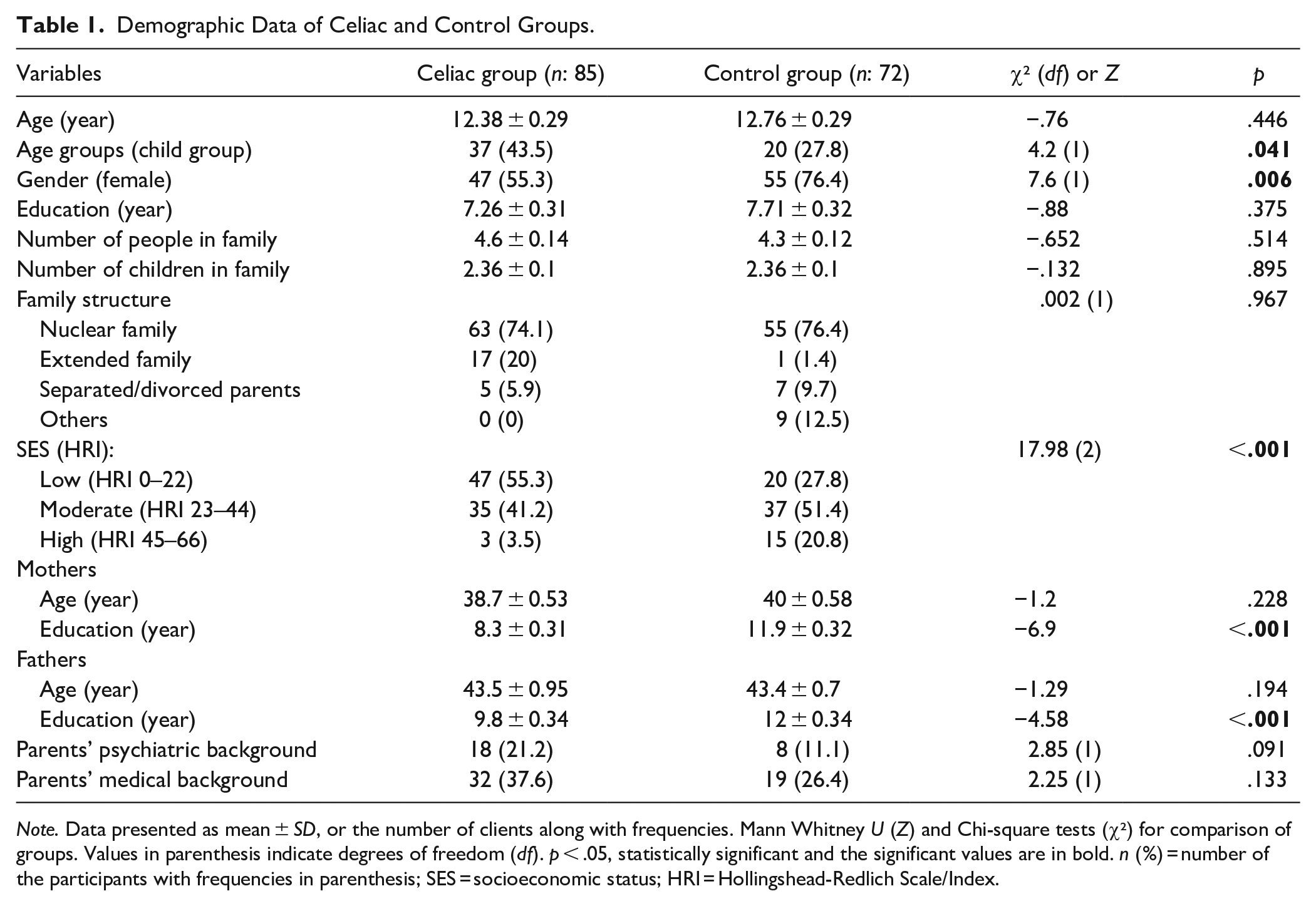
Note. Data presented as mean ± SD, or the number of clients along with frequencies. Mann Whitney U (Z) and Chi-square tests (χ²) for comparison of groups. Values in parenthesis indicate degrees of freedom (df). p < .05, statistically significant and the significant values are in bold. n (%) = number of the participants with frequencies in parenthesis; SES = socioeconomic status; HRI = Hollingshead-Redlich Scale/Index.
Comparison of Groups in Terms of Clinical and Psychometric Characteristics
Table 2 and Figure 1 reflect the data on the comparison of celiac and control groups in terms of clinical features such as vitamin levels and psychiatric evaluation results. The mean celiac-related autoantibody levels of the celiac group were: Anti-TtIgA = 79.6 ± 11.8 U/mL, Anti-TtIgG = 23.5 ± 5.6 U/mL, and IgA = 132.8 ±6.7 U/mL. BMI levels tended to be lower in the celiac group than the controls, however without indicating any physical implication of a malnutrition (mean BMI of the celiac group: 19.2 ± 0.5 kg/m2). Among the comparisons of groups in terms of vitamin levels, only vitamin D levels were found to be lower in the celiac group. While no difference in CPRS-48 overall scores was identified between groups, subscale scores describing learning problems and psychosomatic symptoms were considerably higher in the celiac group compared to their counterparts. Other subscales reflecting hyperactivity, conduct problems, and anxiety symptoms revealed no difference across groups.
Comparison of Celiac and Control Groups in terms of Clinical Characteristics.
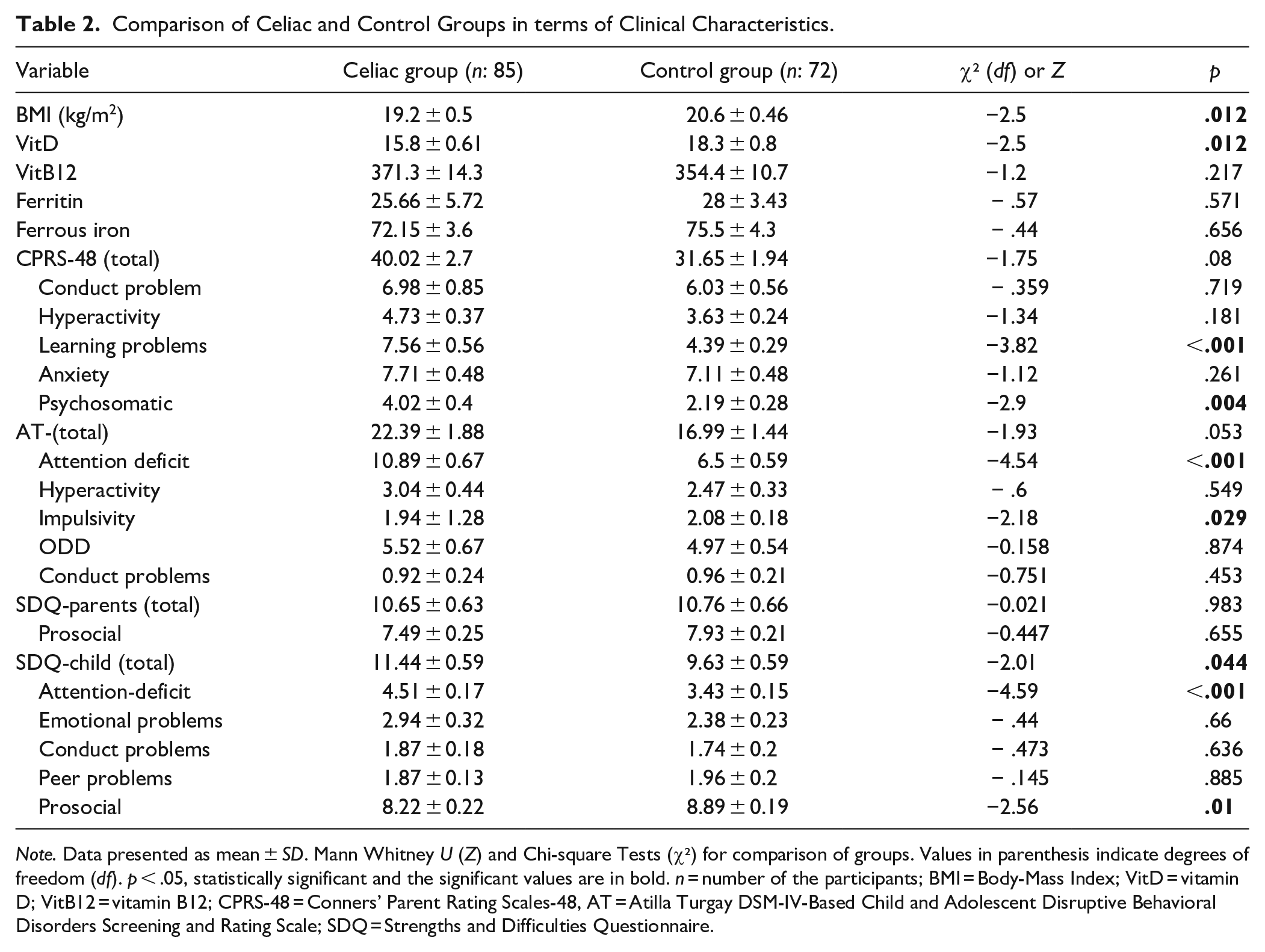
Note. Data presented as mean ± SD. Mann Whitney U (Z) and Chi-square Tests (χ²) for comparison of groups. Values in parenthesis indicate degrees of freedom (df). p < .05, statistically significant and the significant values are in bold. n = number of the participants; BMI = Body-Mass Index; VitD = vitamin D; VitB12 = vitamin B12; CPRS-48 = Conners’ Parent Rating Scales-48, AT = Atilla Turgay DSM-IV-Based Child and Adolescent Disruptive Behavioral Disorders Screening and Rating Scale; SDQ = Strengths and Difficulties Questionnaire.

Demonstration of psychometric differences between celiac and control groups.
Only the attention deficit subscale scores were higher in the celiac group among the AT scale categories, supporting the greater learning problems in the celiac group. The absence of difference in the hyperactivity subscale and the lower impulsivity scores in the celiac group, on the other hand, is not consistent with the earlier findings of the current study about ADHD symptoms in the celiac group. No difference was found between the groups in terms of SDQp-total scores (sum of the first four subscores) and SDQp-prosocial subscale scores. However, individuals with CD had greater total difficulty scores, higher attention-deficit subscale scores, and lower prosocial subscale scores on the SDQc. There was no difference across groups in the other subscales of difficulties reporting emotional, behavioral, and peer problems on the SDQc.
Correlation Between Vitamin D Levels and Psychiatric Measurements
In the correlation analysis of Vit-D levels and subscale scores, of which differed across groups in bivariate analysis, no correlational relationship was found between Vit-D levels and any of the subscale scores (Table 3). However, there was a positive correlation between the CPRS-48 learning problems, AT attention-deficit, and SDQc attention deficit subscale scores, which demonstrates the consistency of parent-proxy reports and children’s self-reports.
Correlational Analysis between Vitamin D Levels and Subscale Scores that Varied Between Groups.
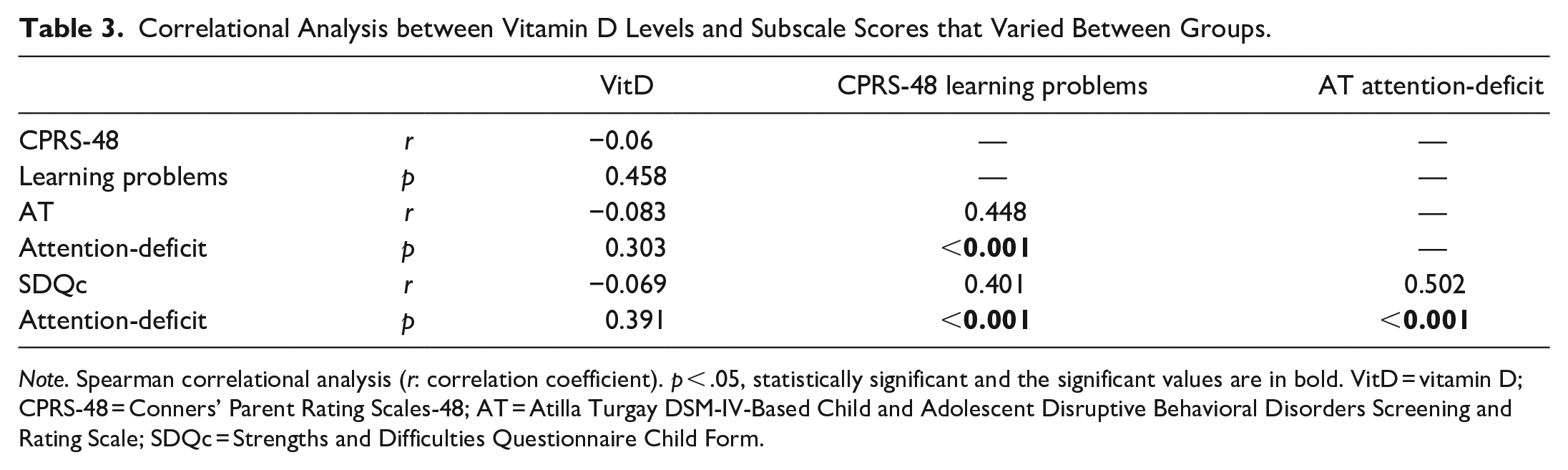
Note. Spearman correlational analysis (r: correlation coefficient). p < .05, statistically significant and the significant values are in bold. VitD = vitamin D; CPRS-48 = Conners’ Parent Rating Scales-48; AT = Atilla Turgay DSM-IV-Based Child and Adolescent Disruptive Behavioral Disorders Screening and Rating Scale; SDQc = Strengths and Difficulties Questionnaire Child Form.
Investigation of the Effect of GFD Compliance on Clinical and Psychometric Characteristics
Table 4 summarizes the findings of the intergroup analysis to better understand the relationship between the clinical characteristics of the celiac and control groups, as well as the differences in the findings according to gluten diet compliance. In the analyses between groups separated according to GFD compliance, it was observed that those with poor GFD compliance tended to be younger than the others.
Comparison of Prominent Clinical Characteristics by GFD Compliance.

Note. Data presented as mean ± SD, or the number of clients along with frequencies. Kruskal-Wallis (KW) and Chi-square tests (χ²) for comparison of groups. Values in parenthesis indicate degrees of freedom (df). p < .05, statistically significant and the significant values are in bold. When the p-value was found to be smaller than the adjusted p-value (.017) by the Bonferroni correction in post hoc analysis, it was considered to be significant. p¹: p-values of the difference between poor-GFD and adequate-GFD groups, p²: p-values of the difference between poor-GFD and control groups, p³: p-values of the difference between adequate-GFD and control groups after the Bonferroni adjustment. n (%) = number of the participants with frequencies in parenthesis; BMI = Body-Mass Index; VitD = Vitamin D; CPRS-48 = Conners’ Parent Rating Scales-48; AT = Atilla Turgay DSM-IV-Based Child and Adolescent Disruptive Behavioral Disorders Screening and Rating Scale; SDQ = Strengths and Difficulties Questionnaire.
However, the statistical difference between the groups in terms of mean age (p = .027, p¹ = .03, p² = .081, p³ = 1.00) disappeared with Bonferroni correction. Although females were the dominant gender in all three groups, the rates of dominance varied across groups. BMI rates are significantly lower in individuals with poor dietary adherence (p < .001, p¹ < .001, p² < .001, p³ = 1.00). Although there was a significant difference in Vit-D levels across groups, the difference disappeared after the Bonferroni adjustment (p = .041, p¹ = 1.00, p² = .114, p³ = .107). In terms of psychometric evaluations, a significant difference in CPRS-48 psychosomatic subscale scores was identified between celiac patients with poor GFD compliance and controls, while the difference between the other groups was not significant (p = .005, p¹ = .443, p² = .004, p³ = .205).
Individuals with poor dietary adherence had greater CPRS-48 subscores for learning problems than the other two groups, but there was no difference between individuals with good dietary adherence and controls (p < .001, p¹ = .033, p² < .001, p³ = .115). There was no difference between GFD subgroups in terms of CPRS-48 total and other subscale scores. Differences in attention-deficit based on the AT-attention deficit (p < .001, p¹ = .381, p² < .001, p³ = .004) and SDQc attention-deficit/hyperactivity (p < .001, p¹ = .048, p² < .001, p³ = .015) subgroups were also observed in comparisons in terms of scale scores. As can be seen from the subgroup analyses after the Bonferroni adjustment, the difference between the groups in attention-deficit subscale scores is mainly due to the presence of a celiac diagnosis and does not change according to GFD compliance (Figure 2). There was no difference in total and remaining subscale scores of other scales according to GFD compliance; however, SDQc-prosocial subscale scores differed between individuals with poor dietary compliance and controls (p = .014, p¹ = .467, p² = .012, p³ = .379).
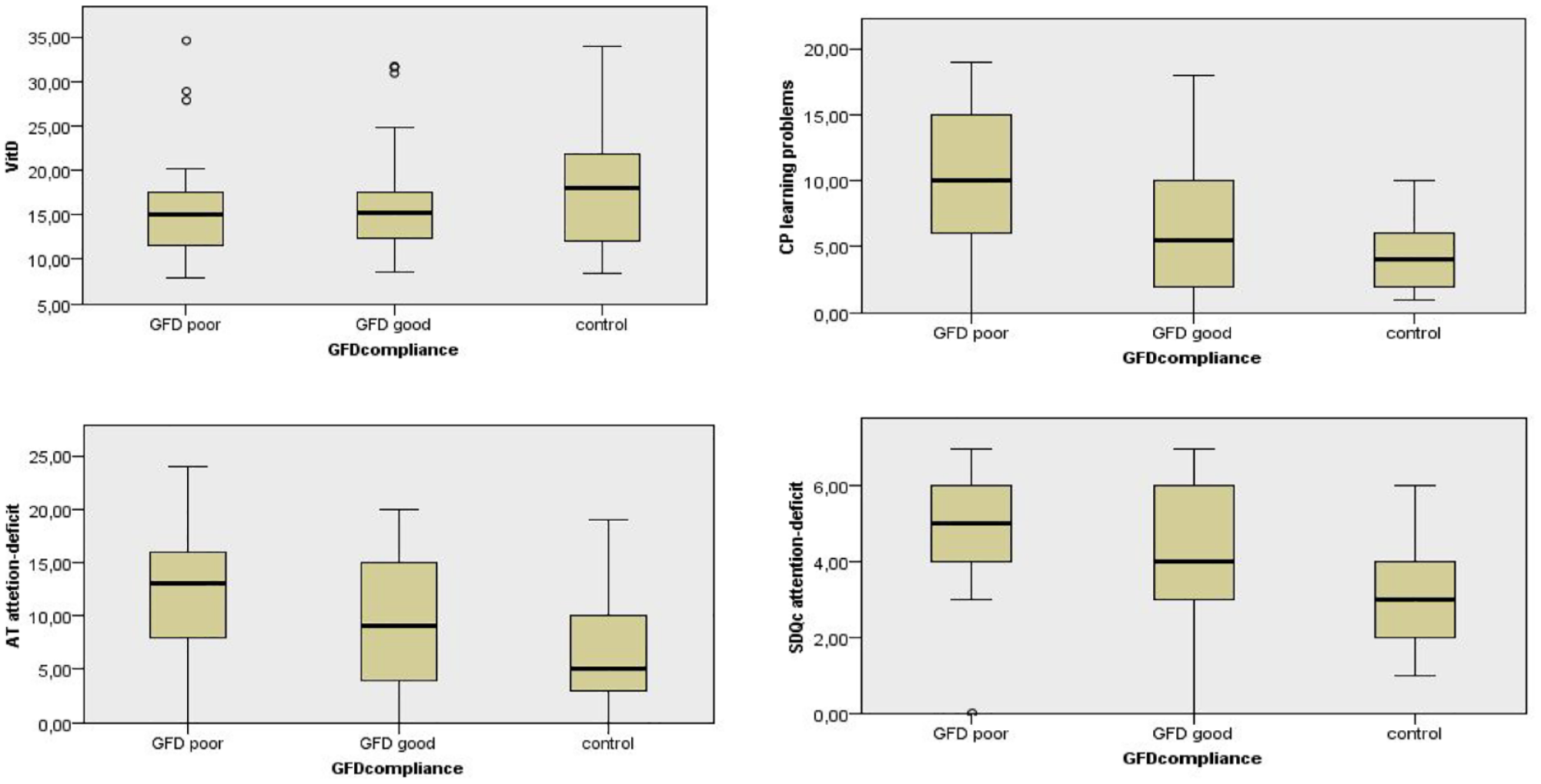
Demonstration of differences by GFD compliance.
Discussion
Psychiatric symptoms usually described in patients with CD include depressive symptoms, apathy, excessive anxiety, irritability, eating disorders, and ADHD (Karwautz et al., 2008). Childhood CD is associated with an increased risk of subsequent psychiatric disorders, which persists into adulthood (Lebwohl et al., 2021). A higher frequency of major depressive disorder and disruptive behavior disorder has been found in adolescents with CD, particularly before gluten restriction, which probably indicates mental problems in some of them depending on untreated CD (Pynnönen et al., 2004). Furthermore, preliminary evidence indicating a relative improvement in hyperactivity, inattention, and conduct problems associated with autism after GFD may support concerns about a possible link between ADHD and CD (Whiteley et al., 2012). However, to date, the link between those two is still unclear, given the discrepancies in the findings of a few available studies with very distinct designs and limitations (Ertürk et al., 2020). With the present research, we intend to investigate this issue between ADHD traits and childhood CD in a sample drawn from a centrally located hospital where many CD children can be followed for a long time.
According to current findings in demographics, although the groups were matched in age and sex distribution, the adolescent age range, and female gender predominated in both, which supports previous evidence indicating the female sex as a risk factor for CD (Wingren, Agardh et al., 2012; Wingren, Björck et al., 2012). In the celiac group, lower SES and lower parental education status were detected, but previous findings indicated that most socioeconomic factors had very little importance on the development of CD (Ludvigsson, 2005). There are additionally various findings on the impact of socioeconomic properties on the development of CD, such as the association of low SES only in males with CD (Wingren, Björck et al., 2012). This disparity may be attributable to the fact that families with lower SES are more likely to undergo treatment for CD due to the presence of more severe symptoms, such as short stature and anemia. However, the reasons for the detected geographical and SES-related variations could be speculated but are still unknown (Wingren, Agardh et al., 2012).
In the present study, only 12 (10.2%) participants in the celiac group were clinically diagnosed with ADHD, and the subtype distribution of those was determined as follows: 3 as ADHD/combined type, 6 as ADHD/inattention type, and 3 as ADHD/hyperactivity-impulsivity type. However, we cannot mention here the prevalence of ADHD because of the clinically referred patient participation and case-control study design. The relatively low rate of ADHD diagnosis in our CD sample also demonstrates an impact on lower impulsivity levels and greater learning problems, as well as comparable scores of hyperactivity and conduct problems in the celiac group compared to their non-celiac opponents. Only two earlier studies on the prevalence of ADHD in CD reported an increased rate (Niederhofer & Pittschieler, 2006; Zelnik et al., 2004), while the remaining three were unable to support this evidence (Dazy et al., 2013; Pynnönen et al., 2004; Ruggieri et al., 2008). Moreover, only three studies were detected regarding the prevalence of CD in ADHD patients; while one of them, a brief report, demonstrated greater celiac autoantibodies in patients with ADHD (Niederhofer, 2011), the other two were unable to confirm this evidence (Güngör et al., 2013; Lahat et al., 2000). However, some of these studies have several methodological limitations, such as involving CD patients with non-biopsy-proven diagnoses, an absence of comparison with controls, a relatively small sample size, etc. (Ertürk et al., 2020). Therefore, there was no conclusive evidence for the reciprocal relationship between ADHD and CD from the review of available earlier studies; further research on either ADHD or ADHD-related traits, particularly in different age groups, was required (Coburn et al., 2019; Ertürk et al., 2020).
Some authors also concentrated on the ADHD-resembling neurologic and psychosomatic manifestations secondary to the pathophysiological processes of chronic illness, such as pain, chronic fatigue, trouble concentrating, distractibility of attention, and other kinds of various cognitive dysfunction, which are especially exhibited in just the first year of CD diagnosis or non-adherence to the GFD, as well as gradually improving with the beginning of gluten-restriction, normalization of the serologic abnormalities, and adjustment of the CD-related nutritive deficiencies (Lichtwark et al., 2014; Terrone et al., 2013). Therefore, in the present study, both newly diagnosed and already followed-up CD patients were involved, and laboratory and psychometric characteristics were further analyzed according to GFD-compliance status. The current findings specifically point to learning problems, attention-deficit, and psychosomatic symptoms in CD patients, and the cognitive implications were deepened with the presence of GFD non-compliance. An accumulation of numerous impacts, including dietary and immunologic/inflammatory variables, may explain the link between CD and attention/learning difficulties. For example, global serotonergic dysfunction, frontal cortical hypoperfusion, and/or structural brain alterations such as the bilateral volumetric decrement in the caudate nucleus, cerebellum, or other multiple cortical regions were defined as the possible reasons for neuropsychiatric comorbidity in CD, which were primarily attributed to malnutrition, vitamin/mineral deficiencies, and immunologic factors (Addolorato et al., 2004; Bilgic et al., 2013; Currie et al., 2012; Jackson et al., 2012; Pynnönen et al., 2005). However, indirect impacts associated with chronic illnesses’ nonspecific effects cannot be ruled out (Zelnik et al., 2004). Further research revealing pathophysiological mechanisms underlying the potential relationship between ADHD, ADHD-resembling symptoms, and CD is required (Ertürk et al., 2020).
Poor prosocial behaviors, particularly in our participants with poor GFD adherence, may be directly associated with challenges with food availability and cost, as well as difficulties in pursuing GFD such as stigma and social isolation (Ciacci & Zingone, 2015; Rashid et al., 2005). The tendency toward positivity, being observed in parent-proxy reports of either global or prosocial subscale scores of SCQp, is in line with the previous findings on the increased reports of childhood depression and anxiety, aggressive behaviors, and sleep problems when participating mothers were unaware of their children’s celiac-related serology (Smith et al., 2017).
Noncompliance with the diet and inattention to the disease’s requirements are common issues encountered during the follow-up of CD patients. Therefore, chronic inflammation and malnutrition-related micronutrient deficiencies may be the most important mechanisms underlying neurodevelopmental problems. Damage to the small intestine villi due to chronic inflammation often leads to the malabsorption of various micronutrients. Therefore, micronutrient deficiencies (especially of ferrous iron, folate, Vit-B6, Vit-B12, and Vit-D, selenium, copper, zinc, carnitine, calcium, and magnesium) are common complications of CD (Friedman, 2012; Mariani et al., 1998; Öhlund et al., 2010; Shepherd & Gibson, 2013; Wild et al., 2010). Regarding this, the BMI levels were significantly lower in our celiac group, particularly in the patients with poor-GFD compliance, however without any clinical or laboratory indication of a malnutrition, as confirmed by the normal levels of ferritin, ferrous iron, and Vit-B12. The lower BMI levels may be directly related to the nature of CD and relevant dietary compliance (Green et al., 2015).
Current guidelines suggest screening for micronutrient deficiencies during the CD diagnostic process. The prevalence of micronutrient deficiencies at different time intervals in children with CD is, however, currently understudied. The need for annual measurements for those micronutrients, which are costly, is debatable. The rate of Vit-D deficiency in the healthy pediatric population was almost 40% to 43%, whereas it was raised to 70% in the pediatric CD population (Erdem et al., 2015; Roth et al., 2005). On the other hand, lower serum Vit-D levels were also reported in ADHD children (Eyles et al., 2009; Johnson & Williamson, 2003). Previous empirical hypotheses on the cognitive outcomes of Vit-D deficiency claimed a reduction in the release of neuronal growth factors, resulting in attention deficit via increased NMDA receptor sensitivity. The evidence on the improvement of ADHD-related cognitive symptoms with Vit-D supplementation (Elshorbagy et al., 2018) has supported the hypothesis of Vit-D deficiency-related ADHD-resembling cognitive and behavioral traits in CD. In the most recent double-blind placebo-controlled randomized study, Vit-D and magnesium supplementation for 8 weeks in 66 children with ADHD was associated with improvement in either the total or subscores of the SDQ (Hemamy et al., 2021). However, in the present study, the alteration in Vit-D levels of CD did not correlate with the attention-deficit subscores of either SDQc or AT. The addition of vitamin supplementation to conventional treatment is recommended whenever a deficiency is identified, albeit it has not been proven to have a substantial benefit on cognitive impairments (Makhlouf et al., 2018).
The answer to the following question is still unknown: “Are the learning problems and attention deficit in CD dependent on the nutritional, immunological, and inflammatory factors, the indirect and nonspecific outcomes of chronic illness, or both?” (Carta et al., 2002). However, our findings contribute to the issue by demonstrating the greater ADHD-like traits and poor prosocial tendency substantially in CD with poor GFD compliance, implying that the current findings cannot reveal the link between the aforementioned cognitive impairments and natural nutritional issues. The learning problems were apparently correlated with attention-deficit in our sample. The greater psychosomatic symptoms of the patients with poor GFD compliance were also in line with the previous findings (Campagna et al., 2017). This current evidence on impaired cognitive and psychosomatic traits is in line with a recent earlier prospective study in 43 newly diagnosed, biopsy-proven CD patients, which screened ADHD symptoms with parent reports on the Conners’ Continuous Performance Test (CPT3) and Child Behavior Checklist first at CD diagnosis and second at the sixth month of GFD. An improvement both in psychosomatic symptoms and inattention after GFD was reported (Lee et al., 2020). Also, a previous study, investigating the effects of GFD on CD-related cognitive impairments at 0th, 3rd, and 13th months after GFD initiation via observing the correlation between the alterations in performance on a battery of cognitive tests and improvement in Marsh scores and celiac serology, demonstrated performance improvement in verbal fluency, attention, and motor functions with intestinal mucosal healing (Lichtwark et al., 2014). Previous evidence for the higher incidence of neuropsychiatric symptoms in the premorbid period and the first year of CD diagnosis (Lebwohl et al., 2021) and for improvement in cognitive, emotional, and behavioral dysfunction with GFD (Kristensen et al., 2019; Lee et al., 2020) indicates that the majority of the neurodevelopmental comorbidity may be an outcome of inadequate treatment in CD. Nevertheless, there is a need for future studies with a prospective design, different age group populations, and evaluations with neuropsychological testing and imaging methods on the actual relationship between CD-related inflammatory, metabolic, and autoimmune processes, neuropsychiatric traits, and GFD compliance.
The findings should be considered in the context of the following limitations: The inclusion of only clinically referred children with CD, the relatively small sample size, and the cross-sectional design limited the generalizability of the interpretation of the findings. The verification of psychiatric diagnosis by a semi-structured clinical interview, the inclusion of clients with biopsy-proven CD, and the exclusion of major psychiatric and medical disorders (other than ADHD and CD) that could affect the findings as covariates were the strengths of the study design. The psychiatric measurements used in the current study are all culturally adapted, and the studies for psychometric validation of their adapted versions were already conducted with healthy populations or samples with various mental disorders. However, the lack of research on the psychometric validation of these scales in the CD population is also a limitation, which is even more difficult for rare disorders like the CD. The majority of previous studies investigating the relationship between ADHD and CD appeared to use these measurements, and current findings were discussed in line with previous findings. This study provides, nevertheless, a useful and informative contribution to the literature in terms of its demonstration of the relationship between diet noncompliance and ADHD-like traits, rather than ADHD itself, with its hypothesis-generated design, clinical interview-based diagnostic verification, and use of verified measurements.
Our findings lend credence to the notion that CD should be considered a complicated systemic condition with multifaceted phenotypes. However, there is currently no definitive evidence of a link between ADHD and CD. According to the current findings, ADHD-like cognitive issues, such as attention deficit, learning difficulties, psychosomatic symptoms, and poor prosocial behavior, were all associated with GFD noncompliance in childhood. Although mental health surveillance is subsequently suggested to be integral in the care of CD (Lebwohl et al., 2021), it is not recommended to routinely test for CD while evaluating ADHD (or vice versa) or to use GFD as a conventional therapy for ADHD. Nonetheless, it should be noted that untreated CD may predispose to ADHD-like behavior, and clinicians should keep in mind that behavioral traits in untreated CD children are at risk for an ADHD misdiagnosis.
Footnotes
Acknowledgements
The authors are thankful to the patients and their parents/custodians of the University of Health Sciences, Ankara Dr. Sami Ulus Maternity, Child Health, and Disease Research and Training Hospital for their volunteer participation and their patience during the diagnostic and psychometric assessment procedures of the study.
Author Contributions
AE was the corresponding author of the study who took the major role in the creation of the study design and the maturation of the manuscript, along with the assistance of AT in the literature review, data collection, and editing of the paper. All authors read and approved the final manuscript. AE and AT oath the presentation of information was not influenced by any personal or financial relationship with other people or organizations.
Declaration of Conflicting Interests
The author(s) declared no potential conflicts of interest with respect to the research, authorship, and/or publication of this article.
Funding
The author(s) received no financial support for the research, authorship, and/or publication of this article.

Data Availability Statement
Data sharing is not applicable for this article as no new data were created or analyzed in this study.