



Abstract
Since the 1960s, homicides against children have decreased dramatically in Finland. The article examines this decrease by disaggregating the trend in five child homicide types between 1960-1974 and 2003-2009. There were several factors reducing the motivation and opportunity to commit most child homicide types during the period. Some were results of active social policies, some were byproducts of the policies, and some were related to the change of the moral climate. Most of the factors were interdependent. However, one type of child homicide has been resistant to any of the factors and the decreasing general trend: maternal filicide-suicides.
Introduction
Changes in child homicide rates 1 in Finland have been dramatic during the last 50 years. In the 1960s, the annual homicide mortality of children was 14 per million on average; from 2000-2009 it was six per million. During the last 50 years, the crime level has more than halved (Statistics Finland, cause of death statistics, 1936-2009). The change was most radical in homicides against infants; their death rate decreased from 112 per million in the 1960s to 14 per million in the 2000s.
The drop in the homicide mortality of children in Finland since the Second World War has not been a unique phenomenon. From the 1970s until the 2000s, infanticide mortality and the homicide mortality of older children both decreased in many Western industrialized countries (Karlberg, 1997; Pritchard & Sharples, 2008, p. 304). Relatively, few international studies have so far dealt with this decrease and the structural changes related to it (see, however, Lindsey & Trocmé, 1994; Pritchard, 1992; Pritchard & Sharples, 2008). In the following article, we have analyzed the structural changes in child homicides in Finland from 1960 to 2009 by comparing the main characteristics of the crimes, their victims and perpetrators. Our aim has been to determine whether the drop in mortality rates concerned all child homicide types similarly or whether some crime types decreased more than others, and to ascertain the possible explanations for the differences. We have also studied the associations between child homicide trends and the general demographic and social changes during the period.
Types of Child Homicides
Child homicides are not a uniform phenomenon. In international studies, the following types have been established based on the attributes of victim and perpetrator: filicide, infanticide, neonaticide, filicide-suicide, and familicide (e.g., Yarwood, 2004). Filicide refers to the killing of one’s own child (see for example, Bourget, Grace, & Whitehurst, 2007). Infanticide refers to a parent killing a child less than 1 year of age, and neonaticide to a parent killing a newborn within the first 24 hr of life. In addition to these, filicide-suicide means a parent killing a child, followed by the suicide of the offender (see for example, Friedman, Holden, Hrouda, & Resnick, 2008); familicide refers to a person killing his or her child/children and intimate-partner, followed by the offender’s suicide (Liem & Koenraadt, 2008a).
There also exist several classifications of filicides and child homicides based on the motives of perpetrators (Boudreaux & Lord, 2005; Boudreaux, Lord, & Jarvis, 2001; d’Orban, 1979; Guileyardo, Prahlow, & Barnard, 1999; Oberman, 2003; Resnick, 1969). For example, Bourget and Bradford (1990) classify infanticides in four categories. The first category is pathological filicide, referring to crimes committed by offenders suffering from mental disorders (see also for example, d’Orban, 1979; Stroud, 2008). According to Bourget and Bradford, this category includes three subcategories: altruistic filicides, extended suicides, and psychotic filicides. In an altruistic filicide, the motive is to relieve an imagined or real suffering of the child. In many cases, altruistic filicides are associated with suicide. For example, in a study of Friedman, Hrouda, et al. (2005; see also Friedman et al., 2008), the majority of the motives for filicide-suicides were identified as altruistic. 2 Psychotic filicide refer to the perpetrators’ psychotic or irrational motivations, such as “inner sounds” which require the perpetrator to kill the child. Guileyardo et al. have separated filicides which are committed during an acute psychotic episode from those of postpartum mental disorders. The latter mean filicides that occur during the postpartum period as a result of a mental disorder related to pregnancy (Guileyardo et al., 1999). Mothers are perpetrators of pathological filicides more often than fathers (Bourget & Bradford, 1990; Eronen, Hakola, & Tiihonen, 1996; Kauppi, Kumpulainen, Vanamo, Merikanto, & Karkola, 2008; Kauppi, Kumpulainen, Karkola, Vanamo, & Merikanto, 2010a, 2010b; Liem & Koenraadt, 2008b; McKee & Bramante, 2010; McKee & Shea, 1998; Vanamo, Kauppi, Karkola, Merikanto, & Räsänen, 2001). The second category in Bourget and Bradford’s typology deals with accidental homicides, which are often related to repeated abuse. In these cases, the death of the child is not the intention of the offender but the result of repeated excessive physical maltreatment or neglect (Bourget & Bradford, 1990). Fathers constitute the majority of the offenders of accidental filicides (Bourget & Bradford, 1990; Bourget et al., 2007; Liem & Koenraadt, 2008b; McKee & Shea, 1998). The crimes are usually the results of battered-child syndrome and rarely involve a psychotic disorder or suicide attempt (Bourget et al., 2007). The third category in Bourget and Bradford’s typology is neonaticide, the killing of a newborn child within the first 24 hr of his or her life (Bourget & Bradford, 1990). In a typical case, the perpetrator is young, unmarried, and has had an unwanted pregnancy and no prenatal care. Women committing neonaticides have a tendency to deny their pregnancy and are afraid of its discovery (Friedman, Horwitz, et al., 2005). The fourth category in Bourget and Bradford’s typology is retaliatory filicide. In these cases, the perpetrator seeks retaliation against an intimate partner, often as a result of a breakdown in a relationship. He or she may have feelings of rejection or jealousy, and the child becomes the “instrument of revenge” to punish the spouse and attempt to make her or him suffer. This type of filicide is usually perpetrated by men (West, Friedman, & Resnick, 2009).
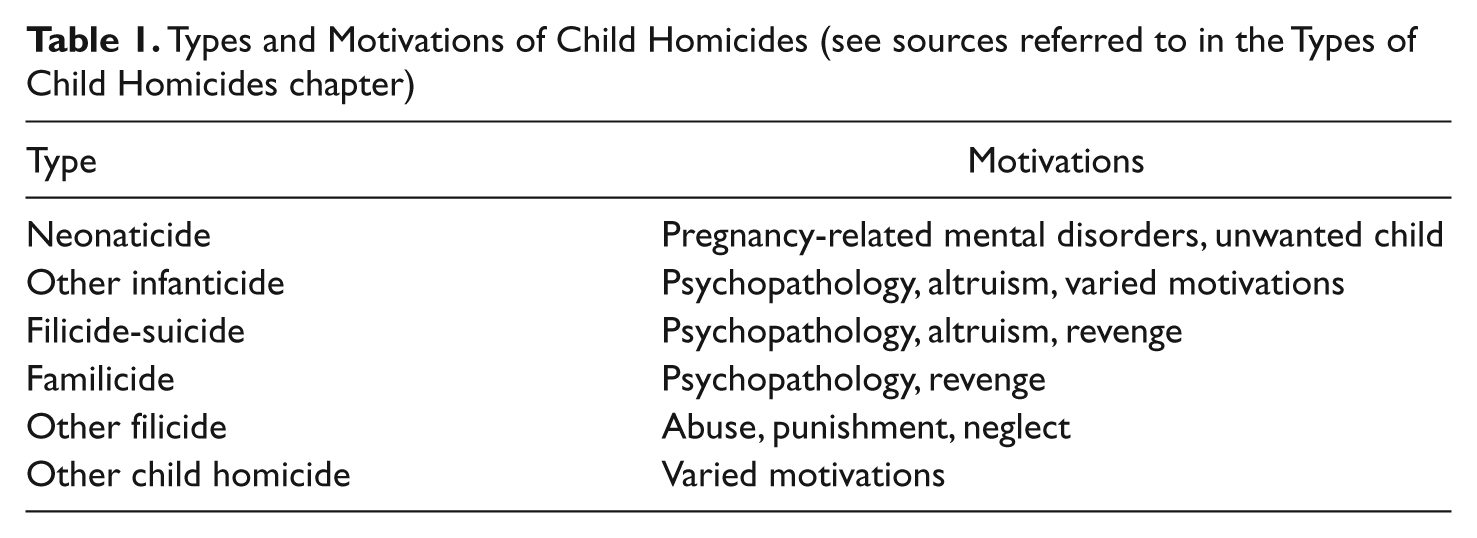
In Table 1 we have combined the types of child homicides with the classifications based on the perpetrators’ motives.
Types and Motivations of Child Homicides (see sources referred to in the Types of Child Homicides chapter)
Data
In our analysis we have used two different main data sets. No comparable uniform structural data on child homicides currently exist in Finland for the whole period 1960-2009. Comparable data exist only for 1960-1974 and 2003-2009.
The structural data for 1960-1974 are from a National Research Institute of Legal Policy database on homicides in Finland 1960-1974. They have been collected from the yearbooks of the Finnish Bureau of Investigation and cover more than 90% of homicides committed during the period. However, coverage of infanticides is substantially lower than that of homicides against children above 1 year of age (which corresponds to the general coverage 3 ; Kivivuori, 2002). Because of this, we have used the Cause of Death data published by Statistics Finland as a data source for the number of infanticides as well as for the mortality rates of all age groups for both periods. The Cause of Death data are available and fully comparable for the whole period 1960-2009.
The structural data 2003-2009 are from the Finnish Homicide Monitoring System (FHMS). This data include all child homicides committed in Finland 2003-2009 and registered in the FHMS database by the end of February 2011. The FHMS database is maintained jointly by the National Research Institute of Legal Policy, the Finnish Police College, and the Police Department of the Finnish Ministry of the Interior. The database registers information on crimes investigated by the police under the Penal Code titles: murder (murha), manslaughter (tappo), manslaughter under mitigating circumstances (surma), and infanticide (lapsensurma; Penal Code 21:1-4) as well as involuntary manslaughter (kuolemantuottamus, törkeä kuolemantuottamus; Penal Code 21:8-9) committed in a single act accompanied by a voluntary assault crime (Penal Code 21:5-7). In addition, the deaths of infants investigated as involuntary manslaughter committed in a single act accompanied by voluntary neglect of the necessary care (heitteillepano; Penal Code 21:14) are registered. Attempted homicides are not included. The FHMS is based on information produced during preliminary investigations. The data are collected directly from the chief investigator of each individual homicide on a standard electronic form. The general crime reporting system of the police is used as a control and follow-up instrument to ensure that the data are acquired from all registered homicides. The database contains information on the main characteristics of the crimes, on their regional and temporal distribution, on the sociodemographic background of both the victim and the main offender, and on their crime scene behavior.
Results
Trends in Child Homicides in Finland
From the 19th century 4 until the late 1930s, the level of infanticide mortality was fairly stable in Finland. This changed during the Second World War, after which the mortality levels began to drop, and they have been dropping ever since (Figure 1a; Verkko, 1948; Statistics Finland, Cause of Death Statistics, 1936-2009). In the first decade of the 2000s, the annual average infanticide rate was only 2.5% of the rate of the late 1930s.
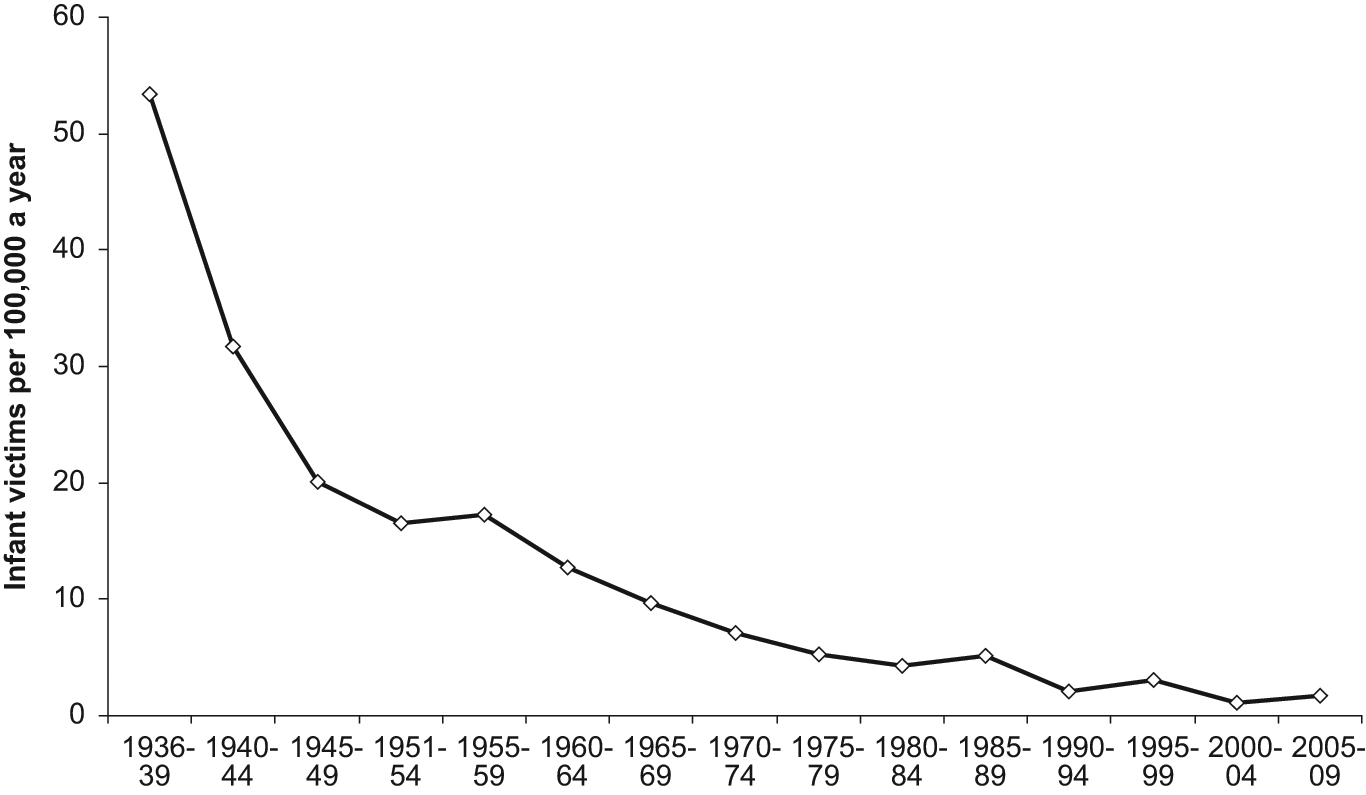
Homicide mortality of infants in Finland in 1936-2009
The annual average homicide mortality of 1- to 14-year-old children decreased from seven per million in the 1960s to five per million in the 2000s (Figure 1b). Unlike infanticides, the number of homicides against older children 5 did not decrease linearly: the mortality rate was fairly stable until the mid-1970s, after which it dropped sharply in the latter half of the decade, stabilizing at a new lower level (Figure 1c).
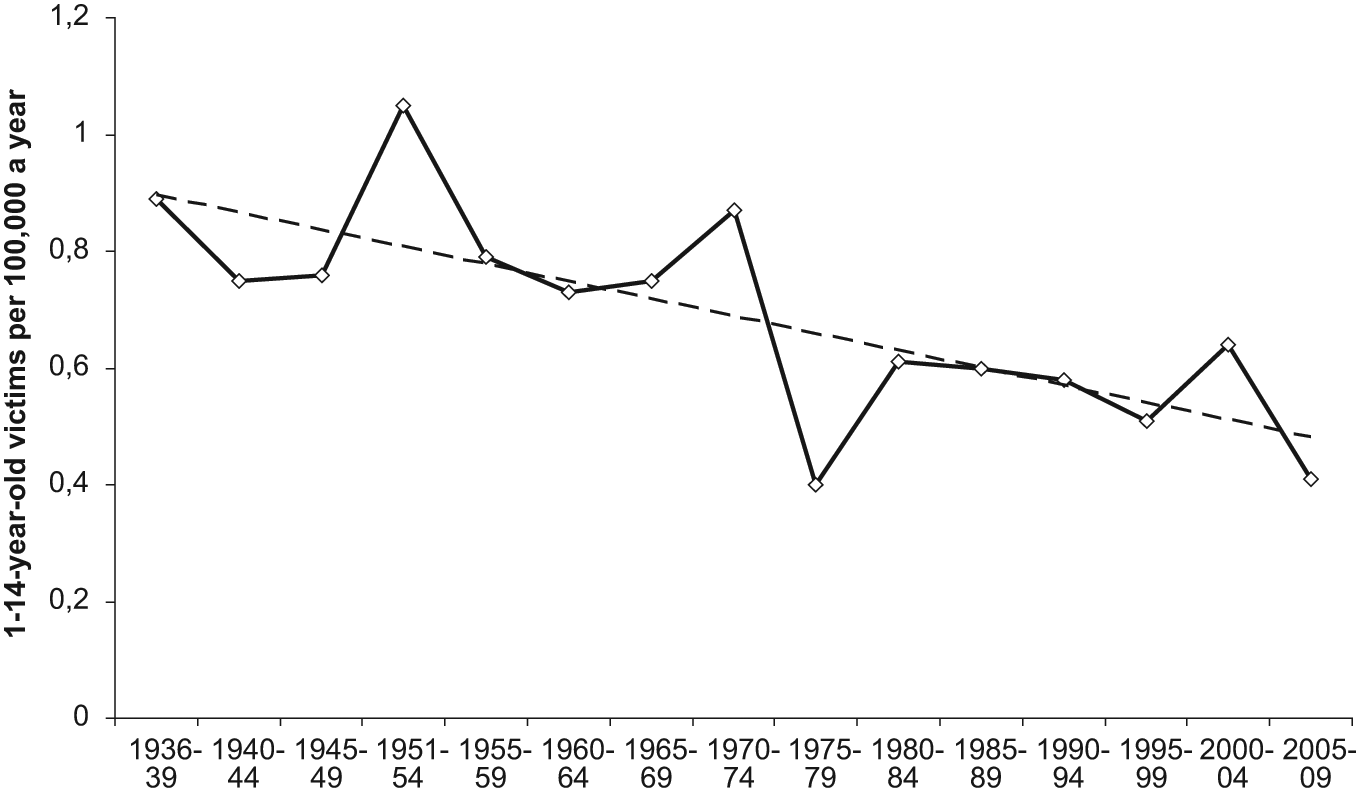
Homicide mortality of 1- to 14-year-olds in Finland in 1936-2009
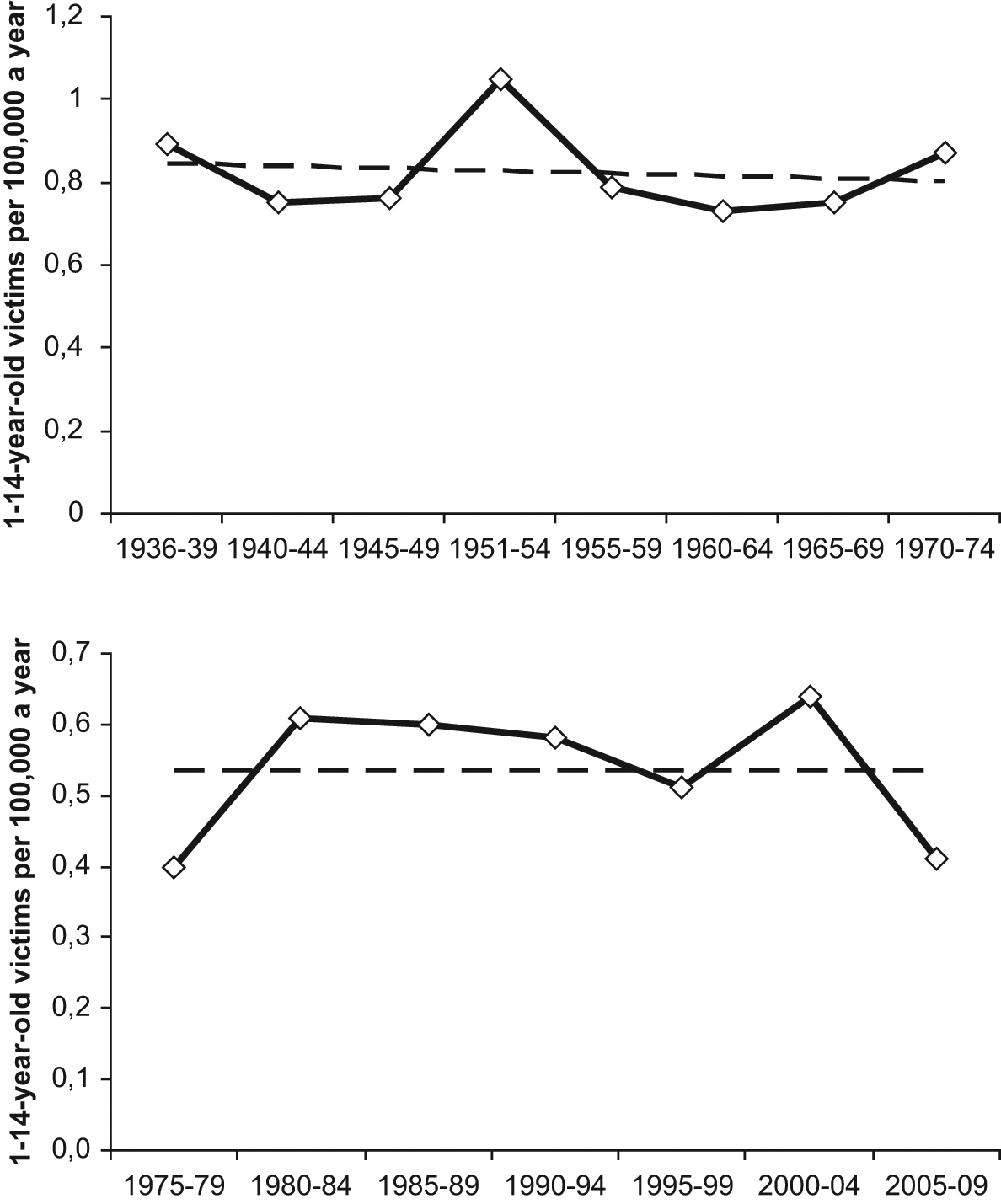
Homicide mortality of 1- to 14-year-olds in Finland in 1936-1974 and 1975-2009
The trends in both infanticides and homicides against older children differed sharply from the trends in other forms of inter- and intrapersonal lethal violence during the period. From the 1960s until the 2000s, general homicide mortality increased above 4% in Finland (male homicide mortality about 3% and female mortality above 6%; Statistics Finland, cause of death statistics, 1936-2009). General suicide mortality decreased during the period, but only by 1% (male suicide mortality decreased by 5%, female mortality increased by 8%). The suicide mortality of children increased above 80% from about two annual victims per million children to four (Statistics Finland, cause of death statistics, 1936-2009). In the 1960s the annual number of homicide victims among 1- to 14-year-olds was over three-fold the number of suicide victims; in the 2000s it was only 25% higher.
Comparing the Structure of Child Homicides in Finland 1960-1974 and 2003-2009
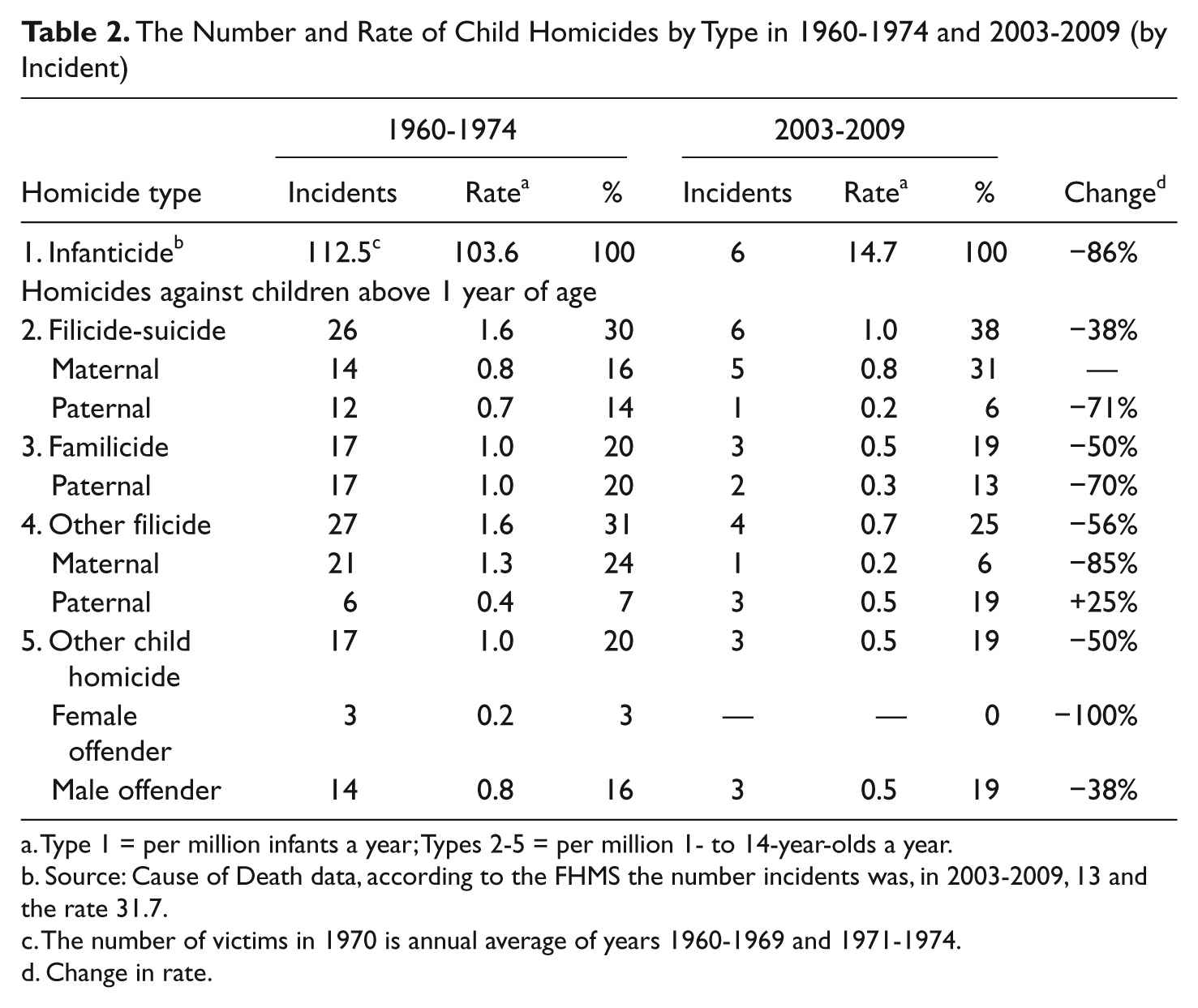
We have based our analysis on five categories of child homicides: (a) infanticides include all homicides against children less than 1 year of age (Type 1); 6 (b) filicide-suicides include all filicides against children above 1 year of age, where the offender committed or attempted to commit suicide (Type 2); 7 (c) familicides include all filicides against children above 1 year of age where the offender also killed his or her spouse (Type 3); 8 (d) other filicides include all other filicides against children above 1 year of age, that is, filicides not belonging in groups (c) or (d) (Type 4); and (e) other child homicides include all homicides against children above 1 year of age not committed by the child’s parents (Type 5; Table 2).
The Number and Rate of Child Homicides by Type in 1960-1974 and 2003-2009 (by Incident)
Type 1 = per million infants a year; Types 2-5 = per million 1- to 14-year-olds a year.
Source: Cause of Death data, according to the FHMS the number incidents was, in 2003-2009, 13 and the rate 31.7.
The number of victims in 1970 is annual average of years 1960-1969 and 1971-1974.
Change in rate.
The most dramatic change took place in infanticides (Type 1): from the 1960s to the 2000s, their number per million infants decreased by 86%. What did not change was the much higher victimization rate of infants compared with older children, although the risk difference decreased sharply between the periods (Table 3).
Homicide Mortality by Age Group in 1960-1974 and 2000-2009 (Victims per Million Children a Year)
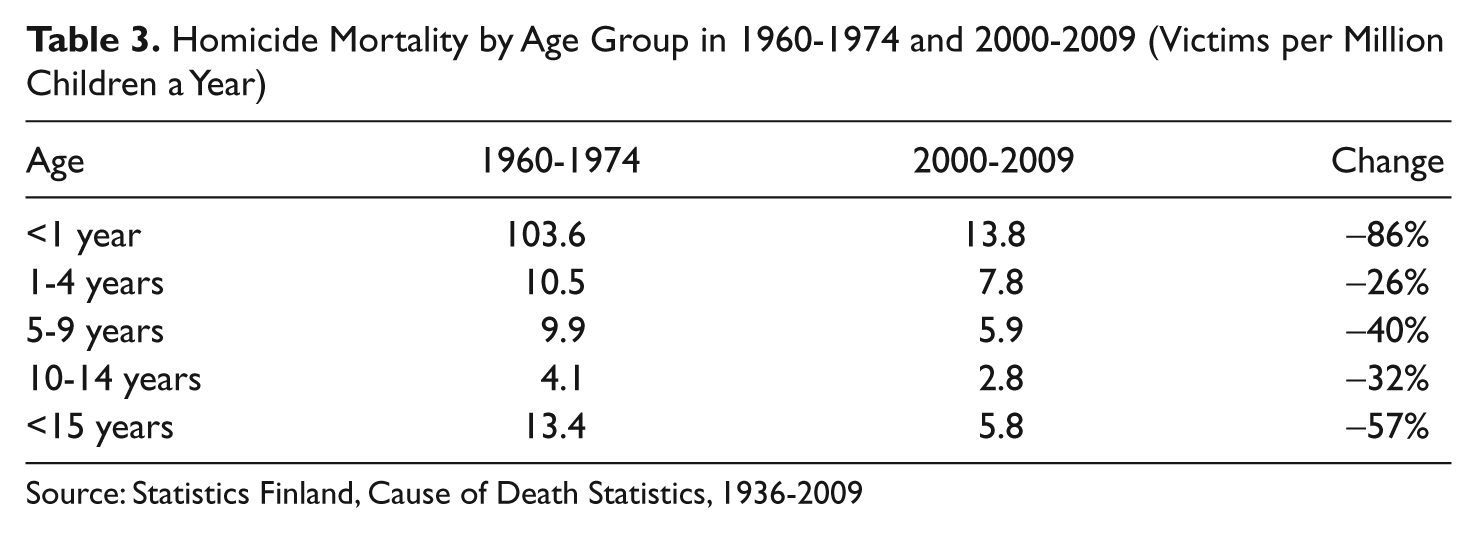
Girls accounted for 60% of infanticide victims in 1960-1974 and 46% in 2003-2009; the number of victims was, in the latter period, so small that random factors had a substantial effect on the gender division. 9 In general, it seemed that the gender of the victim did not influence the homicide mortality risk among infants in either period. During both periods, almost all infanticides were committed by mothers 10 ; thus, the decrease in the number of the crimes took place mainly in women’s violence against their children.
Homicides against children above 1 year of age decreased in all homicide types during the period; there were, however, differences in the magnitude of the decrease between crime types. Before we discuss these differences in detail, some words must be mentioned about the characteristics and trends which were common to all homicide types in the age group throughout the period. One of these was the overrepresentation of boys among the victims. In both periods, boys made up 65% to 70% of homicide victims in the age group, irrespective of the offender. Another stable characteristic concerned the victim–offender relationship. Both in the 1960s and in the 2000s, children were killed mainly by their parents. However, the percentage of mothers out of all child killers increased between the periods, because the decrease in maternal filicides was smaller than in paternal filicides or in non-parent child homicides. An even clearer change was the proportional increase in multiple child-victim homicide incidents. 11 Considering the general decrease in the average number of children in families in the population, 12 this was surprising. Both in 1960-1974 and 2003-2009, a substantial percentage of homicides in the age group took place in multiple child-victim homicide incidents. This was especially true concerning filicides in which all the children of the family were often killed in the same crime. In 1960-1974, 31% of filicide incidents against children above 1 year of age had multiple child victims; in 2003-2009, it was 56%. Out of all child homicide incidents in the age group, the share of multiple child-victim crimes increased from 29% in 1960-1974 to 50% in 2003-2009. This increase was due to a radical decrease in the rate of single-victim child homicides, whereas the rate of multiple child-victim crimes stayed almost unchanged. The annual rate of single-victim homicides in the age group dropped between the periods from 3.7 per million children to 1.2 (–68%); the rate of multiple child-victim homicides was the same (1.5) in both periods. 13 Thus, the decrease in the homicide mortality of children above 1 year of age was caused almost totally by a drop in the numbers of single-victim homicides. The fact that the families have become smaller does not seem to have had any significant effect on the decrease in mortality rates; on the contrary, the average number of children killed in child homicide incidents grew between the periods by 14%. 14 This increase was caused by the increase in the share of multiple child-victim homicides; in the multiple child-victim homicides themselves, the effects of decreasing family sizes could be observed: the average number of child-victims per homicide incident decreased by 8% between the periods.
By crime type, the decrease in homicide rates in the age group was the smallest in filicide-suicides (–38%). In crime Types 3-5, the decrease in rates was more or less of a similar magnitude, 50% to 55% (Table 2). 15 This means that a clear structural change took place in homicides against 1- to 14-year-old children in Finland between the 1960s and the 2000s. The percentage of filicide-suicides out of all homicides in the age group increased, whereas the percentage of other filicides (and other child homicides) decreased. Consequently, homicides in the age group are linked today more closely to parent suicides than they were 50 years ago. In the following, we shall look more in detail at the changes which took place in the different homicide types in the age group.
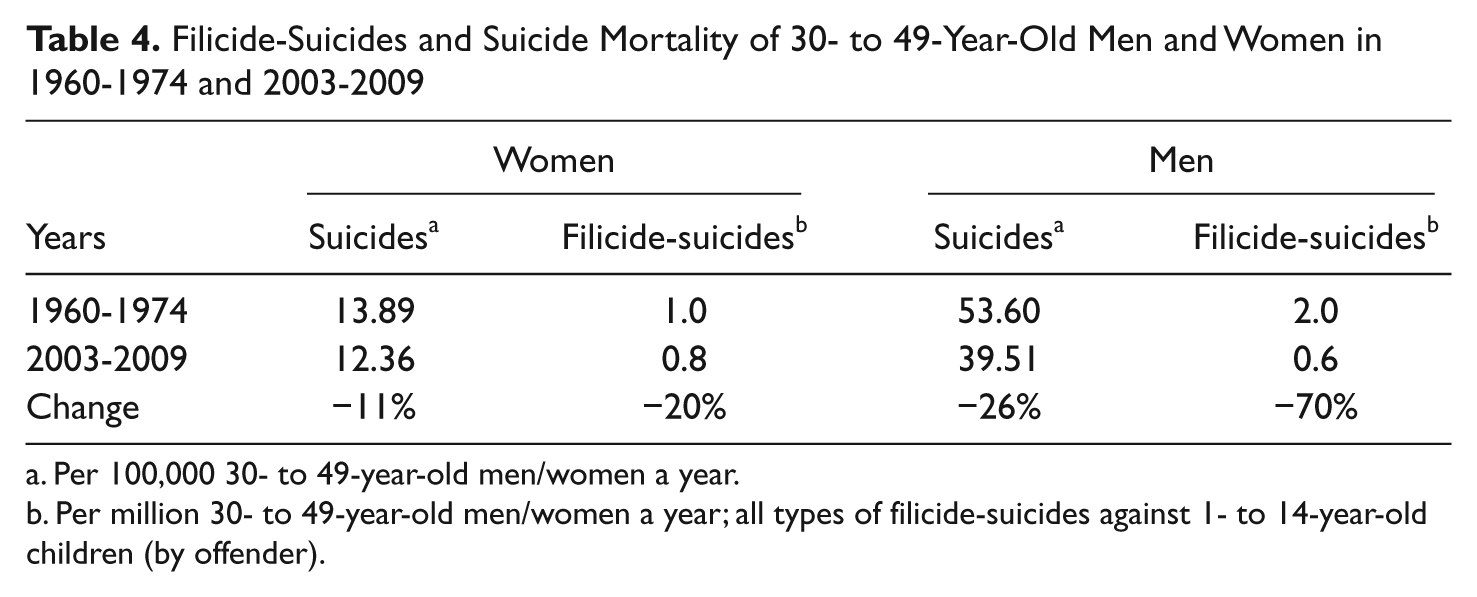
The rate of maternal filicide-suicides (Type 2) was the same in both periods, whereas that of paternal filicide-suicides decreased by 70%. Because of the differing trends, the percentage of filicide-suicides, out of all male filicides, decreased from 35 to 15 between the periods; whereas in female filicides, the share increased from 40% to above 80%. The trend in the male filicide-suicide rate decreased more sharply than the trend in the general male suicide mortality, whereas the trend in the female filicide-suicide rate did not differ so much from that of general female suicide mortality (Table 4).
Filicide-Suicides and Suicide Mortality of 30- to 49-Year-Old Men and Women in 1960-1974 and 2003-2009
Per 100,000 30- to 49-year-old men/women a year.
Per million 30- to 49-year-old men/women a year; all types of filicide-suicides against 1- to 14-year-old children (by offender).
What caused the differing trends? There is no evidence that the general trends in the frequency of suicidal behavior-related mental health problems would have differed radically between the genders during the period studied (Table 4). Our hypothesis is that suicidal men nowadays live less often with their children than they did in the 1960s and, thus, cannot take their children with them when committing suicide. To test the hypothesis, one ought to have analyzed data on the family status of suicide victims in both periods; unfortunately such data were not available for this article.
The rate of familicides (Type 3) was halved between the periods; in 1960-1974, 28 children above 1 year of age were killed in familicides, on the average two each year; in 2003-2009 the number was six, less than one per year. The number of familicide incidents in the 1960-1974 data was 17, in the 2003-2009 data the number was three. Almost all the crimes were committed by men, 16 and they were motivated either by the offender’s suicidal behavior or marital problems; children were usually not the primary object of the crimes.
The trend in familicides differed clearly from other types of male intimate-partner killings during the period. The rate of male spousal 17 killings was the same in both periods, whereas that of all male intimate-partner killings increased by 20%. Thus, the decrease in the familicide rate was not part of a general decrease in male intimate-partner homicides; the percentage of familicides, out of all male spousal killings, decreased from 12 to 3 between the 1960s and the 2000s. On the other hand, at the same time, structural changes also took place in other types of spousal killings. One of them was the decrease in offender homicides: the percentage of men taking their own life in connection with a spousal killing decreased from 41 to 33 between the periods; the rate of male spousal homicide-suicides decreased by more than 20%. This change was closely related to another even more conspicuous one taking place in the association of spousal killings with alcohol consumption situations and alcohol intoxication. In 1960-1974, 38% of the men killing their spouse were drunk at the moment of the crime; in 2003-2009, it was 75%. The change also applied to victims: in 1960-1974, 10% of the victims were intoxicated; in 2003-2009 the figure was 64%. However, in familicides, alcohol did not play any role, either in the 1960s or in the 2000s. 18 If we look at the annual rates of alcohol-related and non-alcohol-related spousal killings between the periods, we see that the rate of alcohol-related killings increased by almost 110%, whereas the rate of killings not related to alcohol consumption situations decreased by 60%. Thus, not only familicides but also other spousal-killings not related to alcohol consumption situations decreased dramatically from the 1960s to the 2000s, and the decrease was more or less of the same magnitude. The decrease in familicides seems to have been, after all, related to a more general structural change in male spousal homicides.
In 1960-1974, other filicides (Type 4) constituted about one third of all homicides against children above 1 year of age; in 2003-2009, their share was only one-fourth. Also, in this type of crime, the trends in maternal and paternal crimes differed from each other; the rate of crimes carried out by mothers decreased above 85% during the period, whereas that of crimes committed by fathers increased 25% (Table 5). In the 1960s maternal homicides of this type accounted for 24% of all homicides against children of the age group; in 2003-2009, the percentage had dropped to 6.
Female Filicides by Type and Main Characteristics in 1960-1974 (by Offender/Homicide Incident)
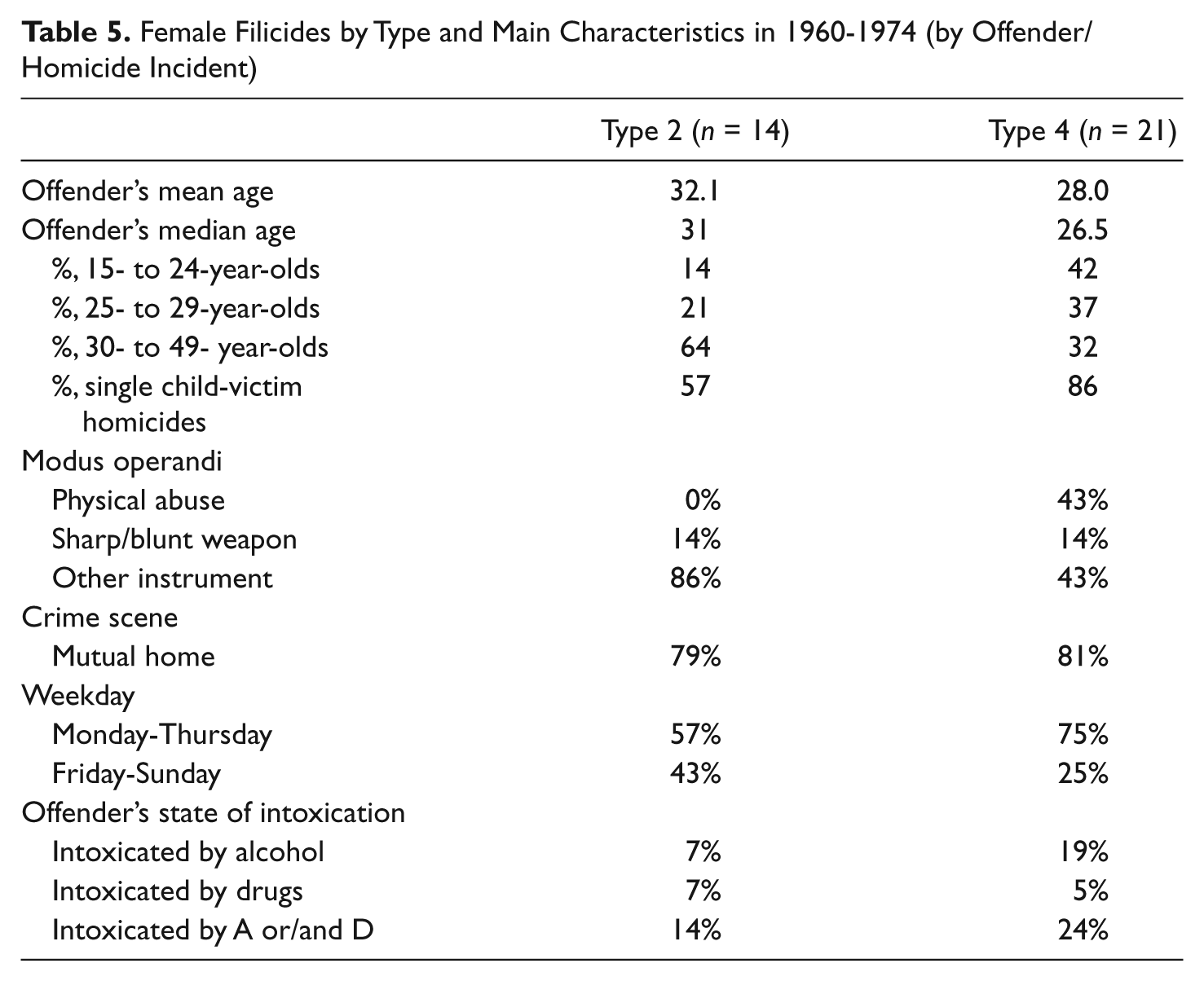
In the 1960s, women committing filicides (Type 4) were, on the average, much younger than those committing filicide-suicides. Their crimes had usually only one victim and, in more than 40% of the cases, the cause of death was physical abuse. The crimes were committed in most cases on weekdays in the mutual home of the victim and the offender; and one out of every four of the offenders was intoxicated by alcohol or drugs at the time of the crime. Thus, the majority of the crimes were the results of impulsive violent acts committed by very young mothers against their children; and a substantial percentage of the offenders seem to have had some kind of substance abuse problems.
Also, child homicides committed by others than parents (Type 5) decreased clearly in the age group between the periods: their annual rate was halved. The 1960-1974 data included 18 homicides of this type; in the 2003-2009 data there were only three crimes. The annual rates of homicides committed by siblings or strangers were more or less the same during both periods but homicides committed by friends and by relatives outside the nuclear family had disappeared; in the 1960s relatives and friends still committed over half of Type 5 homicides (Table 6).
Offender in Type 5 Homicides (by Victim)
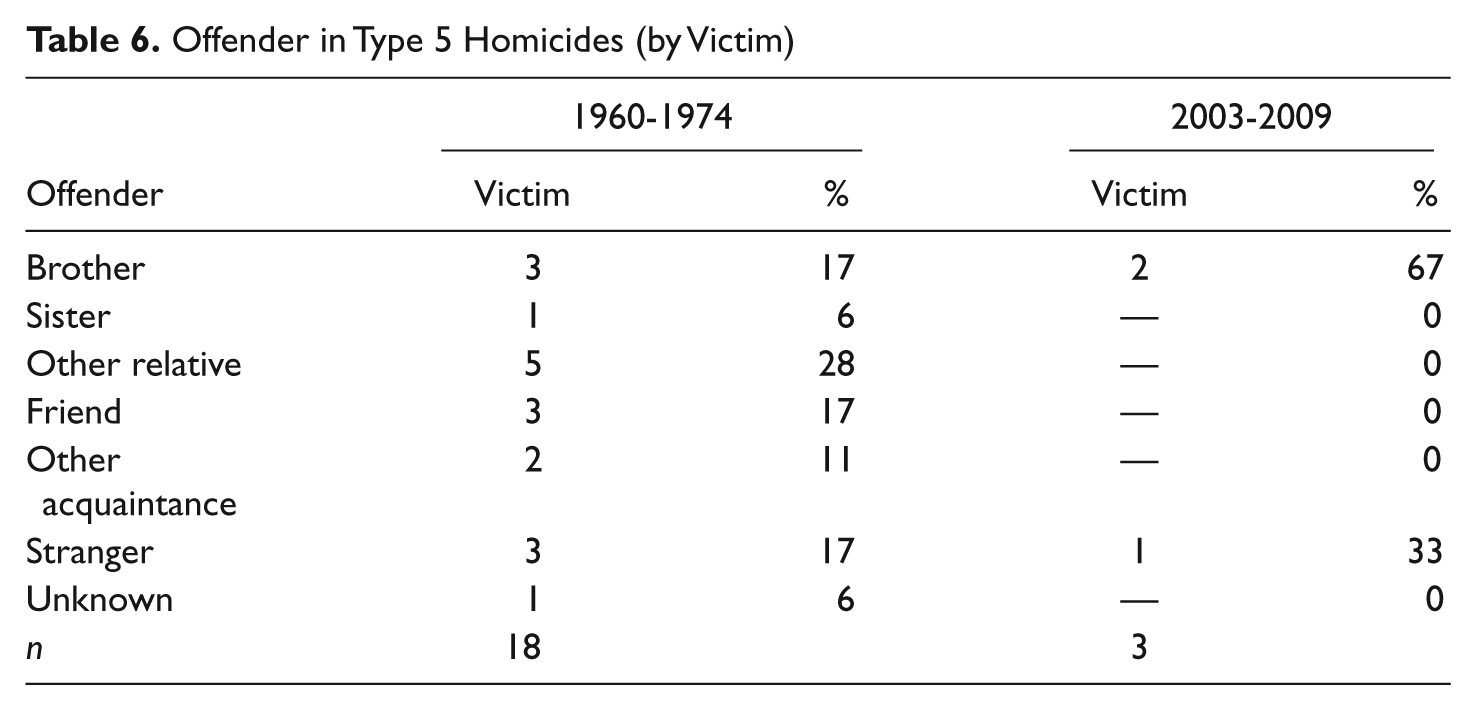
In 1960-1974, crimes carried out by other relatives than siblings were all committed by adults and 80% by men. The offenders in crimes committed by friends and acquaintances were also usually older than their victims, but in 80% of the cases the offenders were less than 20 years of age. Thus, they were predominantly teenagers, and 80% of them were boys.
Discussion
In the last 50 years, homicides against children have decreased sharply in Finland. In this article we have examined this decrease and its possible causes by disaggregating the trend in different homicide types. In our analysis, we have used five child homicide categories: infanticide, filicide-suicide, familicide, other filicide and other child homicide. The periods studied were 1960-1974 and 2003-2009. In the following, we will sum up the main findings and offer some interpretive explanations. The main explanations roughly follow the classical canon of criminological theories. Thus, we refer to the increasing living standards of families, which have reduced the level of economic strain (strain theory). Second, we refer to the increasing social control of human reproduction as childbirth was medicalized. Efforts by the state to forestall violence towards children also belong to the category of control effects (social control theory). Third, we refer to changes in routine activities relating to, for example, birth control methods, sexual behavior patterns, and to persons typically present in the family (routine activity theory). Fourth, single parenthood, as well as divorce, have become less stigmatizing, making it easier to raise an illegitimate child (labeling theory).
Sociodemographic Background
The whole period from the 1960s to the 2000s, especially the first two decades, was a period of a profound social, demographic, and cultural change in Finnish society; this affected not only welfare policies and services, but also, for example, family structure and sexual behavior patterns. In the 1960s, Finland was still a predominantly rural society; in 1960, the percentage of urban population was 38%; in 1974, it was 58%, and today it is about 84% (Statistics Finland, population statistics, 1900-2009). Thus, when comparing the crimes of the 1960s with those of today, we compare, to a large extent, rural criminality with urban crime. Also, Finnish families have changed a lot during the last 50 years. First, they have become more unstable: in the 1960s, 15% of new marriages ended in divorce. Today the percentage is 45 (and actually even higher, because common-law marriages, practically unknown in the sixties, nowadays constitute about 20% of all families 19 , and these break up more often than marriages; http://tilastokeskus.fi/til/ssaaty/2009/ssaaty_2009_2010-05-06_tau_001_fi.html). This does not necessarily mean that there are more children in estranged relationships today than there were in the sixties (probably there are), but it certainly means that today there are more children living with only one parent than 50 years ago. 20 Second, in all types of Finnish families, there are substantially fewer children today than half a century ago, and their parents are older. In the 1960s, Finnish women had, on average, 2.5 children; the figure today is 1.8. The average age of women giving birth to their first child has increased by 3 years since the sixties (from 25 years to 28 years); the average age of all women giving birth today is 30 years; in the 1960s, it was 28 years. Just like mothers, fathers of small children today are also older than 50 years ago. These changes have been partly related to changes in family planning methods, new contraceptives, especially the e-pill, and the legalization of abortion in 1970; these changes have resulted in there not only being fewer children in general, but also that there are fewer unwanted children today than 50 years ago; and the parents of all small children being on average more mature than they were half a century ago. A dramatic change has also taken place in the way that children are born. Before the 1950s, most children in Finland were born at home; at the beginning of the 1980s, practically all children were born in hospitals. In a few decades, births were moved from uncontrolled spaces to being under strict public control (Paananen et al., 2006).
Infanticides
In the period studied, the infanticide rate was the highest, and it decreased the most, by about 86%. Both in the 1960s and in the 2000s, infanticides were typically acts perpetrated by young mothers, often motivated by an unwanted and denied pregnancy. The annual number of the crimes decreased between 1960-1974 and 2003-2009 from about eight to less than one. Their disappearance was caused mainly by concurring changes in routine activities, social policies, and social control affecting both the opportunities and motivation to commit these types of homicides (Kivivuori, 2001). The means to prevent unwanted pregnancies improved significantly during the period, as public sexual health services and sexual education in school were started, new cheap contraceptives were introduced, and abortion was legalized. Together, all these factors decreased the number of potential infanticide victims. On the other hand, the period of our study also overlaps with the last stages of another momentous change: the medicalization of childbirth. This process started earlier and took place in stages. At first, childbirth was increasingly brought under the supervision of professional midwives. Subsequently, childbirth increasingly took place in hospitals under the supervision of medically trained personnel. In addition, a comprehensive child health care system was created; every pregnant woman had to attend services where the well-being of the mother and the child was monitored more or less from conception to birth and during the first years of the child’s life. These two institutional changes together amounted to a massive increase in the social control of human reproduction. An additional factor probably influencing infanticide rates since the 1960s concerns income transfer policies making the economic situation of single mothers more secure than before.
Homicides Against 1- to 14-Year-Old Children
The homicide death rate among 1- to 14-year-old children decreased by about one-third during the period studied. Unlike the decrease in infanticides, this was not linear; it took place in a relatively short period in the 1970s, and there were also substantial differences between the trends in different homicide types.
In the rate of filicide-suicides, the decrease was the most modest (less than 40%). In fact, only the rate of paternal crimes decreased between the periods, whereas the rate of maternal crimes remained unchanged. The explanation for this difference was probably again related to changing routine activities, in this case to changes in family structure. Because of the dramatic increase in the divorce rate and the consequent increase in the number of single-parent families, there are more children living only with one parent today than 50 years ago. After divorce, the custody of children is usually given to the mother. This means that the proportion of mentally distorted suicidal fathers living with their children has probably decreased substantially since the 1960s, whereas the proportion of distorted mothers has stayed more or less stable. There are also fewer children today in Finnish families than half a century ago; this does not seem to have greatly affected the general decrease in child homicide mortality, but it seems to have affected, to some extent, the filicide-suicide rate; the average number of child victims in multiple-child victim filicide-suicides has decreased slightly since the 1960s.
The rate of familicides was halved during the period studied. Almost all familicides in our data were committed by men; and the trend in the crime rate greatly resembled that in paternal filicide-suicides. Familicides can be divided into two subtypes: those related to the suicidal behavior of the offender and those committed in revenge against an estranged spouse. The decrease in the rate of crimes of the first subtype was probably caused by similar factors as the decrease in paternal filicide-suicides. Also, the decrease in the second sub-type may have been caused by family structure-related factors, not by changes in routine activities, but by changes in the stigmatizing effect of failed marriage in male culture. All types of spousal killings by men related to the breaking up of a relationship decreased substantially during the period; it is probable that this was at least partly caused by changes in the way that marriage, divorce and honor in marriage were understood in the mainstream male culture. Active gender-equality policies since the 1960s changed gender roles in both society and family; and the radical increase in the divorce rate resulted in divorce and the breaking up of relationships becoming rather commonplace. All these factors probably contributed to the drop in the rate of male spousal-killings (including familicides) related to separation situations.
The rate of other filicides (filicides not related to offender suicides or familicides) against children above 1 year of age decreased in the period studied by above 55%; also, in this crime type, the trends in maternal and paternal crimes differed radically. The rate of maternal crimes decreased above 85%, whereas that of paternal crimes increased slightly. Most homicides of this type were crimes defined as “accidents” in Bourget and Bradford’s (1990) typology. The death of the child was usually a non-intended result of excessive physical maltreatment, neglect, or of extreme forms of corporal punishment. In the case of Finland, there was also clear evidence that many of the offenders had substance abuse problems. There are several possible explanations concerning why the number of cases, especially where the offender was the mother, declined considerably during the period; again some of them are related to changes in routine activities and some to increasing social control. Today, the mothers of young children are both older and spend less time with their children (because more of them are working outside the home) than in the 1960s; the majority of the children under school age are nowadays cared for in the publicly supervised, communal or private day care system; in the 1960s, they were still cared for mainly by their mothers or private nurses in their homes. On the other hand, because of abortion and new contraceptives, fewer unwanted babies are born to young mothers today than 50 years ago. Also, parentś attitudes to corporal punishment have changed over time; corporal punishment was prohibited by law in Finland in 1984. Several studies show that attitudes towards corporal punishment have become clearly negative in the last 25 years (Sariola, 2007), but the prohibition itself showed that attitudes to corporal punishment had changed and were already changing earlier in the 1960s, 1970s and 1980s (Ellonen, Kääriäinen, Sariola, Helveg-Larssen, & Boving-Larsen, 2011). However, as mentioned, the mothers who killed their children in the 1960s were not any young mothers, but a large percentage of them seem to have had substance abuse problems; it is likely that the very sharp drop in the numbers of victims of lethal maternal child abuse between the periods studied was also related to the improvement in public child care services; the children of violent alcoholic mothers are better protected by society today than they were 50 years ago, that is, they are separated from their mothers and placed in foster homes.
Child homicides not committed by parents decreased by 50% between the 1960s and 2000s; this decrease was due to a sharp drop in the rates of two types of crimes: of the crimes committed by teenage peers and of those committed by adult male relatives. The rates of child homicides committed by siblings, as well as of crimes by strangers, were more or less the same during the two periods. The fact that crimes committed by male relatives were no longer a factor can be explained by changes in routine activities, by the loosening of family relations outside the nuclear family because of urbanization; there are fewer male adult relatives around in the everyday life of young children today than there were 50 years ago. The decrease in teenager-child violence again seems at least partly to have been related to a more general decrease in aggravated violent crime among teenage boys; the general homicide offending rate among 15- to 19-year-old boys decreased between the periods by almost 25% (FHMS; Statistics Finland, court statistics, 1927-2009).
Conclusions
There were several factors reducing both the motivation and opportunity to commit child homicides in Finland during the period studied; and these factors affected both infanticide rates and the homicide mortality of older children. Many of them were the direct results of active social policies aiming to reduce infant and child mortality, such as the improvement in public child care services, the moving of births in hospitals, and the creation of the comprehensive child health care system. Some of them, on the other hand, were indirect by-products of social policies, such as the legalization of abortion and the gender-equality policies which supported women’s equal access to employment and their financial independence; some were related to the change in the moral climate of society, leading to changes in gender roles in the family, sexual behavior patterns, birth control, and in the understanding of marriage. It would be problematic, even with more detailed data with a longer coverage period, to separate the influence of the different factors from each other, because they were, to a large extent, simultaneous and interdependent on each other. However, it seems that one type of child homicide has been quite resistant to any of the factors and the decreasing general trend: maternal filicide-suicides. In order to reduce child homicide rates in the future, too, we should find more effective measures to protect children from this type of violence, usually related to the mental problems of their mothers. It should not be impossible, considering the results achieved in reducing paternal filicide-suicides as well as filicides committed by alcoholic mothers.
A more problematic question is this: what lessons could be drawn from the reduction in child homicides to prevent other categories of homicidal crime? It seems that the most effective social policy measures in the case of child homicides have been those increasing direct social control. It is not easy to apply those measures to other types of homicides. Also, the measures not related to direct social control, such as reducing the economic strain of high-risk groups, have probably worked better in the case of child homicides (single mothers) than they would in other types of homicides, where substance abuse has, in Finland, a central role. On the contrary, there is evidence in Finland that the effects of social policies based on mere direct income transfers to the high-risk groups have been blunted by the high prevalence of addiction problems in these groups and may even have contributed to an increase in homicide rates. Perhaps social assistance for the at-risk groups should be more intimately connected to social control. This might influence the general homicide rates in the same way as the medicalization of childbirth, which was linked with the social assistance of single mothers, influenced child homicide rates.
Footnotes
The authors declared no potential conflicts of interest with respect to the research, authorship, and/or publication of this article.
The authors received no financial support for the research, authorship, and/or publication of this article.