




Abstract
This study examines the extent to which variations in homicide rates across Europe, particularly differences between Western and Eastern Europe, can be explained by democratic cultural values. Prior studies have shown that individualism and egalitarianism promoted by democratic regimes are usually associated with lower levels of interpersonal violence. This study tests this relationship on a sample of 33 countries circa 2010. Not only does this relationship hold, but further analysis also shows that democratic values have both a direct and indirect effect on homicide rates as they are mediated by the strength of democratic institutions and practices.
Introduction
In their comprehensive analysis of homicide rates and trends in Europe, Marshall and Summers (2012) showed that there are meaningful variations across geographic clusters within this region. For example, in 2008, Western Europe had the lowest homicide victimization rates with an average of 1.11 per 100,000, followed by Northern Europe, the Mediterranean, and Anglo-Saxon countries. Central and Eastern Europe had the highest rates with an average of 3.46 per 100,000, with the Baltic countries slightly lower than that (Marshall & Summers, 2012; see also Nivette, 2012). When looking more closely at country-level variation, the rates range from less than 0.50 per 100,000 in the United Kingdom and Finland to more than 15 per 100,000 in Russia (World Health Organization, 2012). Most cross-national analyses of homicide variations have examined structural predictors, such as poverty/wealth, income inequality, or the demographic composition of the population. In contrast, this article looks at the extent to which differences in homicide rates across Europe can be attributed to differences in cultural values, particularly democratic values. Other studies have shown that democratization is significantly related to levels of interpersonal violence, but they have focused on democratic structures; that is, the institutional arrangements and practices that distinguish democracies from authoritarian regimes. This study builds on that literature by separating out the effects of democratic cultural values versus structures on homicide rates in Europe.
Many cross-national analyses of homicide in Europe have pointed out important differences in homicide rates between Western and Eastern Europe. They have emphasized the political and economic instability in the East due to the post-communist transformations as the primary driver of higher rates in the East (Kim & Pridemore, 2005a, 2005b; LaFree & Tseloni, 2006; Pridemore, Chamlin, & Cochran, 2007; Pridemore & Kim, 2006, 2007; Stamatel, 2008, 2009b, 2012, 2014). Although crime rates in Central and Eastern Europe increased in the early 1990s due to this instability, they also decreased in later years as new political regimes solidified control over public order (Marshall & Summers, 2012; Stamatel, 2008). In fact, several of the Central and Eastern European countries that joined the European Union now have homicide levels on par with their Western European counterparts (e.g., Croatia, Czech Republic, Hungary, Poland, Slovakia, and Slovenia).
Yet, despite some signs of convergence of homicide rates, there are still significant differences across geographic clusters that warrant explanation beyond Durkheimian anomie caused by the post-communist transformations. Twenty-five years after the fall of communism in the region, most of the former communist countries are relatively politically stable and not necessarily more economically vulnerable than some Western European countries, as evidenced by the Eurozone crisis of 2009. Thus, the analytical problem posed in this article is how we can account for the persistence of differences in homicide rates between Western and Eastern Europe despite these structural similarities.
Such constancy requires an explanation that is sensitive to long-term historical patterns and slow-moving social processes (Tilly, 1984). Karstedt (2003) offered such an explanation when she argued that differences in levels of violence were due to “legacies of inequality” in Central and Eastern Europe due to the communist experience (p. 295). During the communist reign, social structure in these societies was intentionally shaped as an “hour glass,” where the majority of the population was at the bottom sharing scarce resources whereas the small elite at the top of the hierarchy enjoyed excessive wealth and privileges (Rose, 1995, 2000). Social relations were based on clientelism and rent seeking. Despite ideological rhetoric promoting social equality, in reality, this social structure fostered a culture of inequality based on collectivistic and non-egalitarian values, which in turn created high levels of mistrust and uncertainty. These conditions were exacerbated by the post-communist transformations. “The new form of conspicuous inequality resulted during the transition phase in an explosive mixture of distrust, social degradation, exclusion and further social division” (Karstedt, 2003, p. 309).
Karstedt (2003) argued that the culture of collectivism and authoritarianism created by the communist system was more conducive to violence than the democratic cultural values of individualism and egalitarianism because the democratic values foster social capital and generalized trust that suppress interpersonal violence. She tested this argument with a bivariate analysis of data from 1968 to 1972 and found support for the argument that “collectivistic and authoritarian patterns . . . are mostly related to high rates of lethal violence” (Karstedt, 2003, p. 300; see also Karstedt, 2001, 2006). The primary goal of this article is to test whether this relationship between political and cultural values and homicide levels still holds in Europe in the first decade of the 21st century, when controlling for other known correlates of cross-national homicide variation. Can these different cultural orientations explain the persistent geographic differences in homicide rates across Europe? Second, are cultural values related to different political regimes better predictors of homicide variation than more common measures of political institutions and practices or are they redundant?
Prior Literature
Most cross-national homicide literature has examined structural predictors of homicide variation rather than cultural ones due to both theoretical influences and the availability of appropriate measures. Theoretically, cross-national crime literature has been most influenced by three grand theories—modernization, world systems, and civilization—and their derivatives (see Howard, Newman, & Pridemore, 2000; Neapolitan, 1997; Stamatel, 2009a, for reviews of these theories). These theories tend to emphasize material and demographic explanatory factors over other possibilities, although they do not completely ignore culture, as discussed below. In addition, quantitative cross-national researchers often rely on secondary data from international government agencies to measure these theoretical constructs, and these sources primarily collect economic and demographic data.
Two recent reviews of this literature have summarized the strengths and limitations of the research emphasis on structural predictors of cross-national homicide variation. Nivette (2011) performed a meta-analysis of 55 quantitative, cross-national crime studies conducted between 1960 and 2010. She found that some common predictors, such as poverty, inequality, ethnic composition, youth population above age 15, and divorce, generally met theoretical expectations, whereas other frequently utilized measures, such as economic development, modernization, urbanism, population density, and sex ratio, were consistently weak or ineffectual predictors. Trent and Pridemore (2012) drew even more pessimistic conclusions in their review of structural correlates of cross-national homicide variation. They argued that “[s]ave for the association between economic inequality and violent crime, the literature fails to converge and few conclusions can be drawn” (Trent & Pridemore, 2012, p. 133; see also Pridemore & Trent, 2010).
Despite the research focus on social structure, most cross-national crime researchers acknowledge that culture is important for understanding differences in levels of crime because countries have different norms, values, and beliefs that may motivate certain criminal behaviors, and they also have different value systems “that control criminal behaviors and bind their people to the social order” (Neapolitan, 1997, p. 78). In her review of the literature, Nivette (2011) noted that “‘soft’ concepts such as trust and cultural values remain scarcely tested at the international level,” although they have not been completely ignored (p. 104). Some studies have considered a culture of violence created by state-sanctioned violence, cultural values such as machismo, or criminal inertia (Briggs & Cutright, 1994; Fajnzylber, Lederman, & Loayza 2002; Gartner, 1990; Krahn, Hartnagel, & Gartrell, 1986; Neapolitan, 1994; Neumayer, 2003; Stamatel, 2009b). However, the concept of a culture of violence is difficult to measure and is often represented by regional dummy variables, which capture all country-level, fixed effects, not just culture (Karstedt, 2001; Nivette, 2011).
Other studies have examined religion as a cultural influence either encouraging or discouraging criminal behavior. For example, Protestantism is believed to foster excessive individualism that could weaken social cohesion and social control, contributing to more crime (Groves, McCleary, & Newman, 1985; Haferkamp & Ellis, 1992). On the contrary, Islam is believed to create a more unified community less prone to criminal activity, as is Buddhism, Taoism, and Confucianism (Groves et al., 1985; Groves, Newman, & Corrado, 1987; Haferkamp & Ellis, 1992; Neapolitan, 1997; Newman, 1976). Most of the cross-national homicide studies focusing on religion are quite dated and tend to operationalize religious influences by the dominant religion in a country, which tends to overlook religious diversity as well as the social processes linking religion and crime.
Newer studies emphasizing the importance of cultural predictors of cross-national homicide studies include an examination of honor cultures as prohibitive of crime (Altheimer, 2013), the role of communitarianism in reintegrative shaming (Schaible & Hughes, 2011), and the imbalance between cultural goals and structural means as posited by institutional anomie theory (Chamlin & Cochran, 2007; Messner & Rosenfeld, 1997; Messner, Thome, & Rosenfeld, 2008). In addition, more attention has been paid to political influences, both structural and cultural, on crime. The third wave of democratization (Huntington, 1991) seemed to be accompanied by significant violence, prompting researchers to examine the links among political regimes, regime changes, and violent crime (see Karstedt & LaFree, 2006).
Drawing from Durkheimian anomie and modernization theories, researchers have examined the political dimensions of social order and development in cross-national analyses of homicide. Some have shown that the political instability that accompanies transitions into democracies increases violent crime levels due to anomie and a breakdown of social control (LaFree & Tseloni, 2006; Pridemore et al., 2007). Others have found that regime characteristics other than stability have an effect on crime levels. Lin (2007) and Stamatel (2009b, 2014) found that more democratic societies had fewer homicides than less democratic societies, whereas Nivette and Eisner (2013) found that countries with greater political legitimacy had fewer homicides than those with less legitimacy. All of these studies have focused on the structural characteristics of political regimes, namely, electoral processes, institutional practices, and legal rights; however, little attention has been paid to the cultural underpinnings of different types of political regimes, which is the focus of the theoretical framework of this article.
Theoretical Framework
In a study that not only revitalized cultural explanations of cross-national variations in violence but also built on the relatively new research focus on political regimes, Karstedt (2006) outlined the cultural advantages and disadvantages of democratic regimes relative to authoritarian regimes with respect to controlling violence. In particular, she examined whether the core democratic values of individualism and egalitarianism facilitated or proscribed violent behavior, including interpersonal violence and collective violence. The paradox of democracies, according to Karstedt, is that these values have the potential to foster both social control and criminogenic tendencies.
Democracy offers its citizens wide opportunities for deviant, licentious, and dangerous behavior and simultaneously reduces their desire to do what democracy allows them to do by establishing common and shared values and procedures that ensure the exertion of individual rights. (Karstedt, 2006, p. 57)
Building on Durkheim’s (1897/1951, 1933/1984) concept of moral individualism, Karstedt (2006) argued that universal bonds foster social capital and generalized trust, which should contain violence as opposed to group-centered bonds that increase intergroup conflicts. However, the protective features of individualism and egalitarianism can be weakened under certain conditions. For example, excessive individualism can weaken social bonds and social control. In addition, discrepancies between egalitarian values and material inequality can also foster anomie (Messner & Rosenfeld, 2007).
To test whether the comparative advantages of democratic values outweigh the disadvantages, Karstedt (2006) compared homicide rates from 1968 to 1972 from the Comparative Crime Data File (Archer & Gartner, 1984) and from 1960 to 2000 from the World Health Organization for 26 countries with levels of individualism and egalitarianism. She borrowed from Hofstede’s (1980, 1983, 1998, 2001) work on the primary dimensions of national cultures to classify her sample countries in terms of these two values.
Hofstede’s classic studies originally identified four dimensions of national cultures, but they were later expanded to six. Power-distance measures how much less powerful members of society accept social inequality. Individualism is a measure of how much members of society look out for themselves and their immediate families rather than feeling a strong loyalty to a larger group. The masculinity/femininity dimension captures competitiveness and achievement orientation versus cooperation and modesty. Uncertainty avoidance measures rigid codes of belief versus a greater acceptance of ambiguity. Pragmatism is the degree to which cultures adapt to change as opposed to holding on to tradition. Finally, indulgence measures the degree to which societies allow for instant gratification versus encouraging restraint (Hofstede, 1980, 1998).
Karstedt’s (2003, 2006) analysis focused on two of these dimensions: individualism and power-distance, which is essentially a measure of egalitarianism. Using bivariate analyses, she found that countries that were more individualistic and egalitarian had lower levels of violent crime as long as egalitarian social structures were also in place. However, in democracies with high structural inequality, the tension between egalitarian values and material inequality contributed to more violence. “Democratic values have a high potential to realize their comparative advantages and disadvantages in restraining violent crime if they are fostered by democratic practices and institutions” (Karstedt, 2006, p. 75).
The Current Study
The results of Karstedt’s study are compelling despite some limitations of the quantitative analysis. This study seeks to expand on her original analysis by examining whether the persistent geographic differences in homicide rates in Europe can be explained by different cultural values stemming from post–World War II historical trajectories. Karstedt (2006) concluded her study stating that “a systematic comparison between democracies and autocracies with regions of similar value patterns will help to develop more precise knowledge about the role of democratic values in restraining violent crime” (p. 75, emphasis added). This recommendation is the point of departure for this article.
Sample
Although Karstedt’s (2003, 2006) study used all available data from 26 countries representing different regions of the world and different types of political regimes, this study instead focuses specifically on Europe. This decision constrains variation in both the dependent and independent variables, but certainly does not eradicate it, as there are nonetheless interesting differences across Europe in terms of both degrees and types of democracies and levels of homicide victimization.
Cross-national research is often criticized for using convenience samples that do not adequately represent worldwide patterns, over-emphasize Western countries, and are typically rather small (Neapolitan, 1997; Stamatel, 2006). As such, Gartner (1995) recommended the use of theoretically meaningful samples to improve the interpretation of quantitative results, particularly with respect to generalizability. The geographically constrained sample selected for this study emphasizes meaning over power and avoids the pitfall of much cross-national research that treats countries simply as variables (Abbott, 1997).
Finally, and most importantly, the focus on Europe allows for an investigation of historical legacies that have contributed to the persistence of regional differences over several decades. To test whether a communist legacy of collectivism and authoritarianism is associated with higher levels of violent crime in post-communist countries, the natural comparison is against Western democracies that have been historically characterized by individualism and egalitarianism.
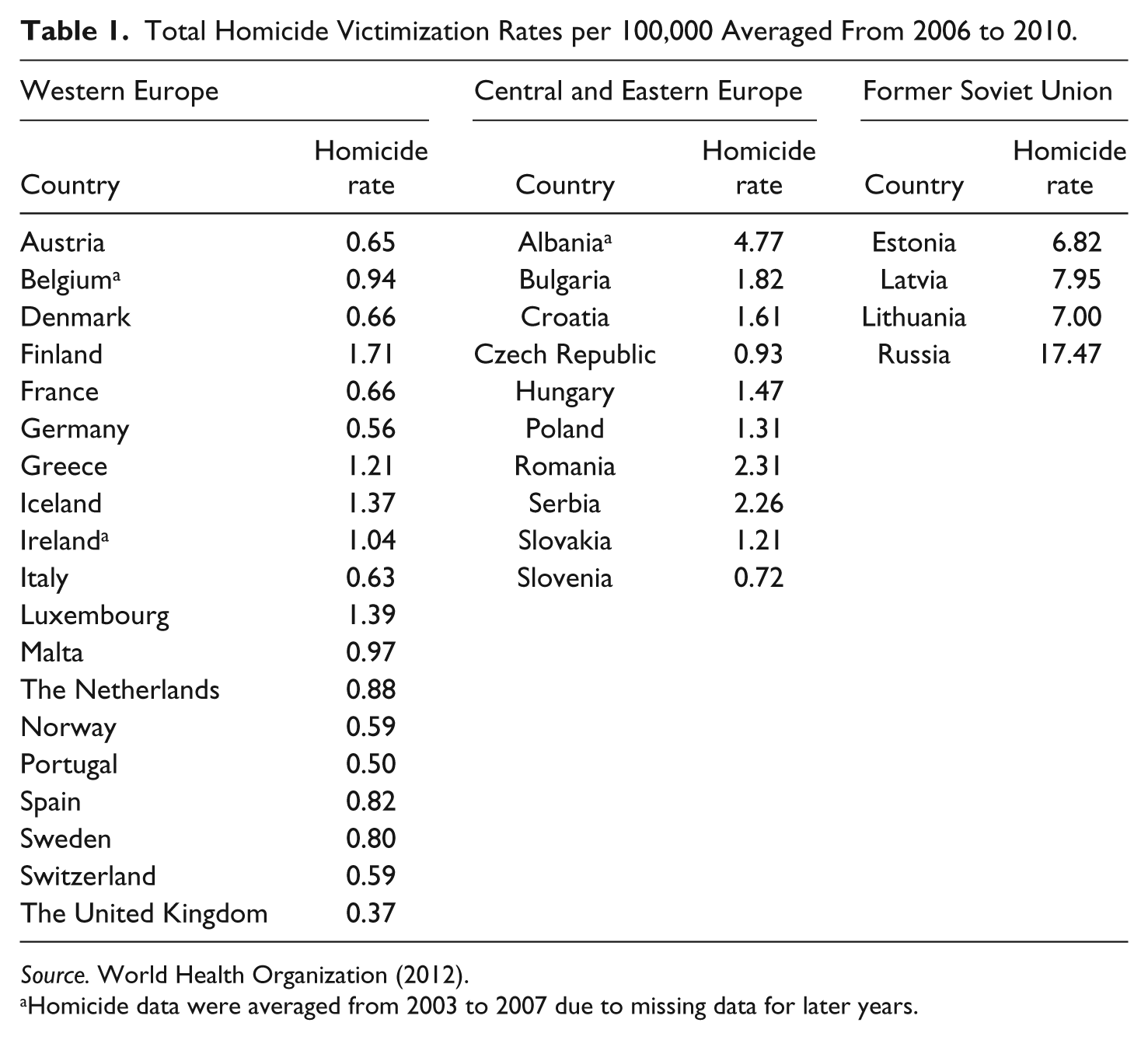
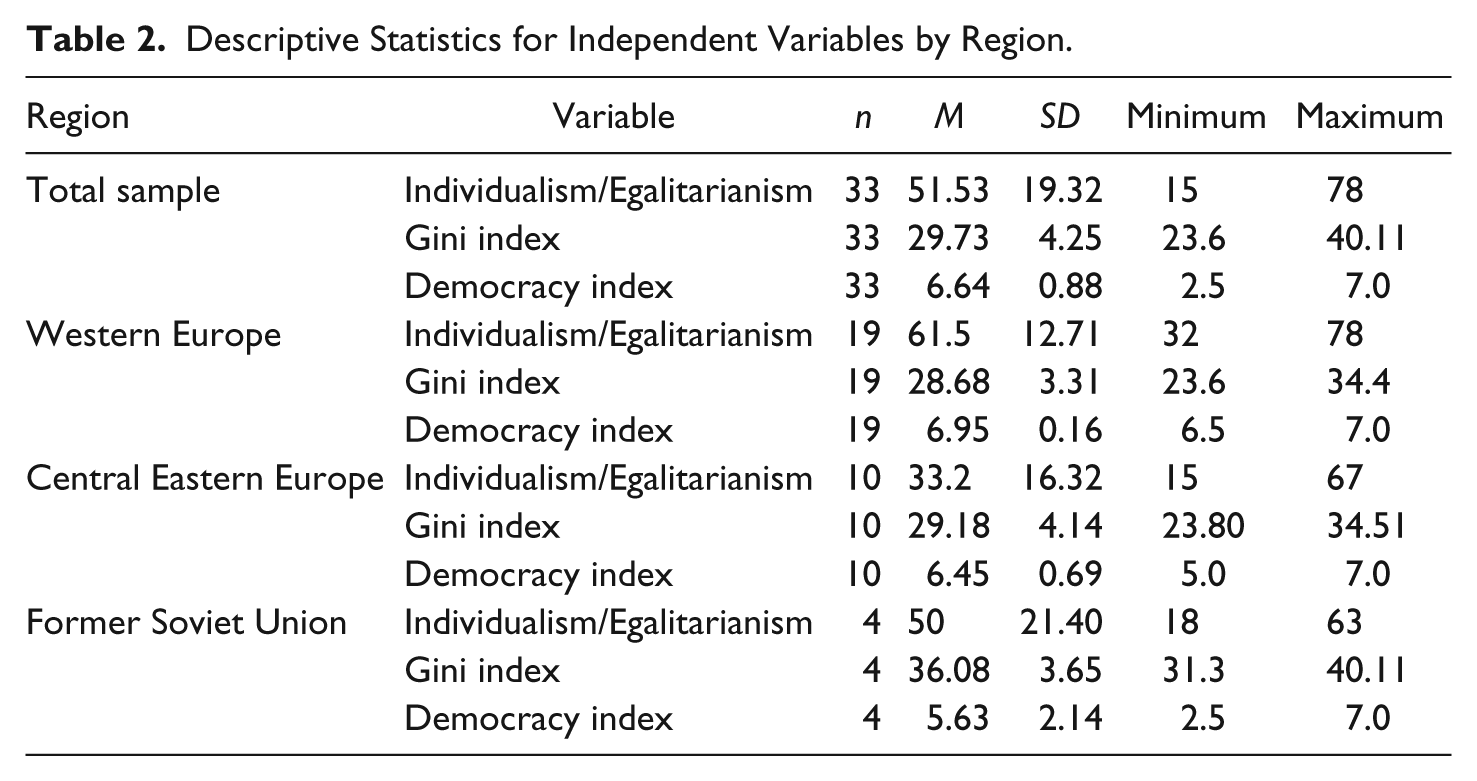
The 33 countries analyzed in this study include 19 from Western Europe, 10 from Central and Eastern Europe (the satellite countries of the former Soviet Union), and 4 from the former Soviet Union. Because the data for this study are from circa 2010, 20 years after the fall of communism in Europe, the Cold War distinction between West and East (i.e., democratic and communist) is not as salient as it was in the 1990s. Many post-communist countries, particularly in Central and Eastern Europe, have joined the European Union and look similar to Western European countries on many of the measures used in this study (see Tables 1 and 2). However, the countries of the former Soviet Union are still rather distinct with respect to many of these same indicators, so the contrast between this geographic cluster and the rest of Europe is the focus of the analysis below.
Total Homicide Victimization Rates per 100,000 Averaged From 2006 to 2010.
Source. World Health Organization (2012).
Homicide data were averaged from 2003 to 2007 due to missing data for later years.
Descriptive Statistics for Independent Variables by Region.
Data
Cross-national criminologists often use homicide data to measure violent crime because the definitional consistency of the data and the greater likelihood of reporting and recording this crime make it more reliable than other types of crimes. This does not imply that homicide is a representative indicator of crime more broadly defined, but rather that it is the best measure of interpersonal violence. Cross-national homicide data are available from two sources—police records or death certificates completed by medical examiners. The latter are considered a more reliable source because they are less susceptible to police corruption or reporting biases (Howard et al., 2000; LaFree, 1999; LaFree & Drass, 2002; Stamatel, 2009a; but see also Neuilly, 2011). Therefore, this study used mortality data from the World Health Organization (2012) to obtain the total homicide rate per 100,000 population for each country. The goal was to use the most recent data available, which is 2012 for some countries, but 2010 for many others. To adjust for annual fluctuations in crime data, particularly for countries where the homicide rate is quite small, 5-year averages were calculated from 2006 to 2010 to use the same years of data for each country. For three countries (Albania, Belgium, and Iceland), homicide data were not available for these years so the average homicide rate for 2003-2007 was used instead. This substitution did not significantly change the results of the analysis, as explained below.
Table 1 shows the total homicide victimization rates per 100,000 population for the sample countries by region. Figure 1 maps the same data to illustrate the geographic differences in homicide across Europe. The average homicide rate is 0.86 (SD = 0.35) for Western Europe, 1.79 (SD = 1.21) for Central Eastern Europe, and 9.81 (SD = 5.13) for the former Soviet Union. Not only do homicide rates increase from West to East, but also the amount of variation.

Total homicide rate per 100,000 for sampled European countries.
The key concept for this analysis is culture. Hofstede (1980, 1998) proposed six dimensions of national cultures: (a) power-distance, (b) individualism, (c) masculinity/femininity, (d) uncertainty avoidance, (e) pragmatism, and (f) indulgence. The first two have been analyzed in prior cross-national homicide literature, with the argument that egalitarian societies (with low power-distance scores) and individualistic societies would have less violence than non-egalitarian and collectivist nations. Although some of the other dimensions, notably uncertainty avoidance and indulgence, are conceptually related to criminological theory, particularly self-control, they were not significant predictors of cross-national homicide victimization in preliminary analyses for this study. In addition, little theoretical work has been done to operationalize self-control theory on a macro-level, so these other dimensions were not considered in the final analyses of this article.
Power-distance is the extent to which less powerful people in a country accept that power is not distributed equally. It is essentially a measure of inequality. The original scale, ranging from 0 to 100, was reverse-coded to represent a measure of egalitarianism, the extent to which less powerful people do not accept inequality. The second dimension, individualism, emphasizes personal fulfillment, lower interdependence, and primary responsibility for individuals and immediate family only. It was also measured on a scale of 0 to 100. These two dimensions were highly correlated (.68) so a scale was created with their average scores. 1 Higher scores on the combined scale indicate more egalitarianism and individualism than lower scores. Table 2 shows the descriptive statistics for all of the independent variables, broken down by sub-region. Western European countries score highest on this measure, followed by the former Soviet Union, and then Central Eastern Europe, although the standard deviation is greatest for the former Soviet Union.
Given the small number of cases, there is a practical limit as to the number of control variables that can be considered in the regression model due to both a lack of power and the high potential for multicollinearity with aggregated data. Although many structural variables have been included in previous cross-national homicide studies, the empirical evidence supporting these variables has been inconsistent, at best (see Nivette, 2011; Trent & Pridemore, 2012, for reviews of this literature). Decisions for which independent variables to include were based on the theoretical relevance of the variables for a European sample of countries. For example, gross domestic product (GDP) per capita is often used as a measure of economic development, but it is fairly highly correlated with the egalitarian and individualism index in this sample and resulted in high variance inflation factors. 2 In addition, the percentage of the population that consists of young males is often used as an indicator of the pool of potential offenders, but recent studies have shown this to be an inaccurate representation for many countries, particularly European ones (Rogers, 2014; see also Nivette, 2011; Trent & Pridemore, 2012).
Given the mixed results of many structural correlates of cross-national homicide variation, two variables were chosen based on the empirical evidence and relevance for this particular sample. The Gini index was added as a measure of actual income inequality because this has been the most consistent predictor of cross-national homicide victimization in the existing literature (see Nivette, 2011; Trent & Pridemore, 2012). It is also important for this study to test the cultural perceptions of inequality against the material reality. This measure was obtained from the World Bank (2012). It ranges from 0 to 100, with higher scores indicating greater inequality.
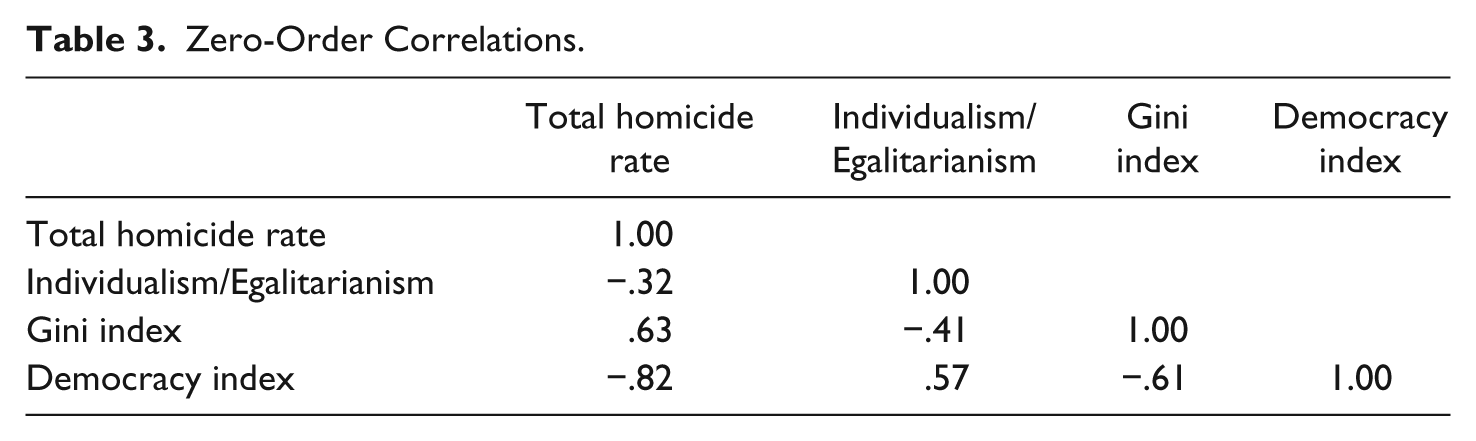
The degree to which the political institutions function democratically has also been shown to be a significant predictor of homicide in previous literature, particularly when comparing Western and Eastern Europe after the fall of communism (LaFree & Tseloni, 2006; Stamatel, 2009b). This study used a democracy score from Freedom House (2010). This indicator is a combination of national scores on two scales measuring political rights and civil liberties, which capture the institutions and practices of governments, including the electoral process, political participation, rule of law, and legal rights. Similar to the rationale for the Gini index, this measure of democracy captures the structural characteristics of governance, in contrast to the cultural underpinnings. The two original Freedom House scales were reverse-coded and added together so that higher scores indicate more democratic structures and practices. Zero-order correlations for all of the variables are provided in Table 3.
Zero-Order Correlations.
Results
Regressions were estimated using ordinary least squares (OLS). The total homicide victimization rate per 100,000 was logged because the distribution was highly skewed resulting in residuals that were not normally distributed. Initial regression results showed that most of the independent variables were statistically significant and the relationships were in the expected directions (see Table 4). Greater presence of individualism and egalitarianism and higher levels of democratic structures and practices were associated with lower homicide rates. In addition, countries of the former Soviet Union had significantly higher rates controlling for other variables than the other European countries. The only variable that was not statistically significant was the Gini index. In other words, controlling for egalitarian values, actual income inequality did not have a significant effect on homicide rates. This was true even when the indicator for the countries of the former Soviet Union was not included in the model.
Initial OLS Results Regressing Homicide Victimization on Democracy Measures and Controls (N = 33).
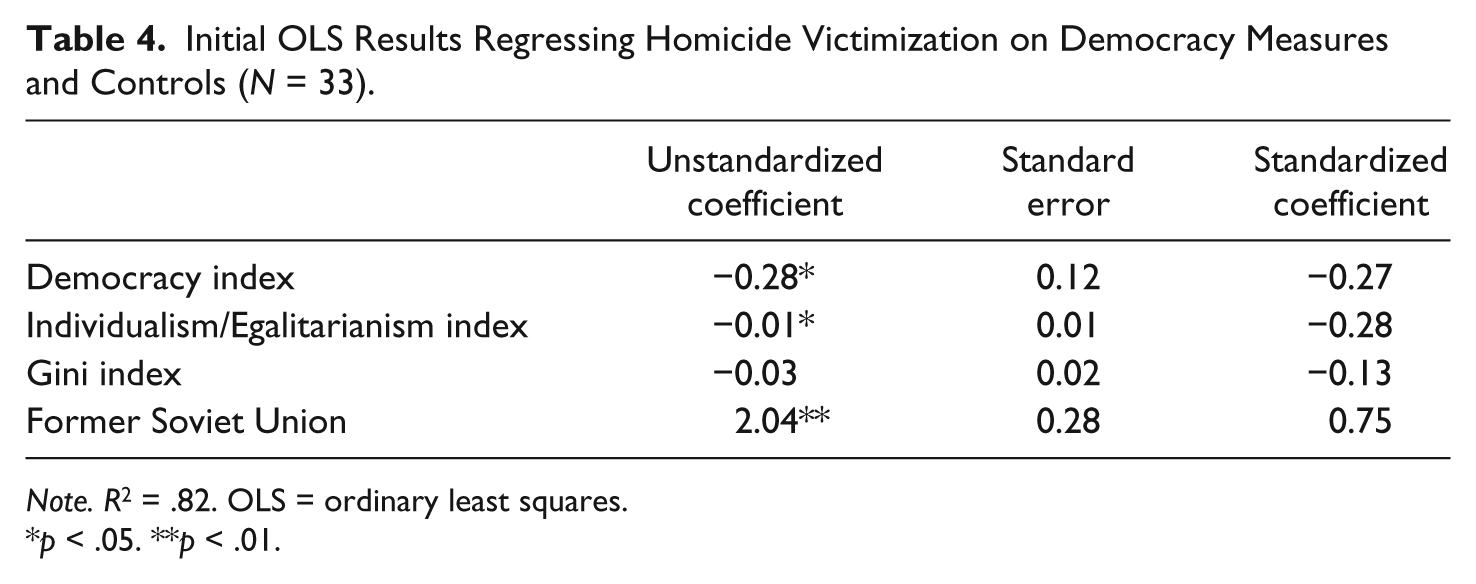
Note. R2 = .82. OLS = ordinary least squares.
p < .05. **p < .01.
The results for democratic structures and cultural values are consistent with prior research although they have not been analyzed simultaneously so the fact that they are both significant is an important finding. However, it is theoretically more interesting to see how they are related. Therefore, another regression was run to see whether democratic structures and practices mediated the relationship between democratic values and region on homicide rates. Karstedt (2006) argued that there was a reciprocal relationship between democratic values and institutions, but that democratic values were the starting point for building democracy. “Values are the foundation for democracy’s practices and institutions, which in turn foster democratic values” (Karstedt, 2006, p. 52; see also Jaggers & Gurr, 1995). It would be interesting to test a recursive model of the relationship between democratic culture and institutions, but that is beyond the capabilities of this modest data set. Inglehart and Welzel (2005) used data from the World Values Survey to show that democratic institutions had a “miniscule” effect of cultural values, but self-expression values, including liberty and tolerance, had a “strong and significant effect” on democratic institutions (p. 4). Therefore, this analysis examined whether the democratic values of individualism and egalitarianism had both a direct effect on homicide rates and an indirect effect through their relationship with democratic institutions.
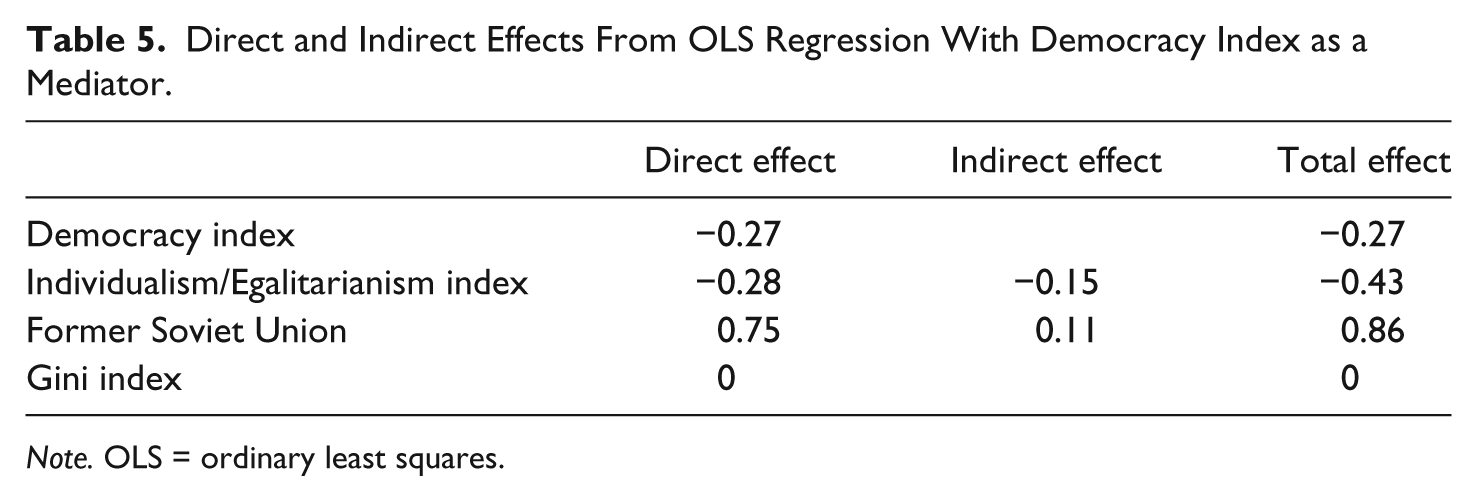
Figure 2 shows this to be the case. Individualism and egalitarianism had a statistically significant, positive effect on the level of structural democracy, whereas former Soviet Union status had a significant negative effect, in addition to the direct effects of these two variables on homicide rates. 3 Table 5 summarizes the direct and indirect effects of the independent variables on homicide victimization rates across Europe. Individualism and egalitarianism not only have a direct effect lowering homicide rates but also have an additional indirect effect through democratic structures and practices contributing to more than one fourth of the total effect. In addition, the total effect of democratic values on homicide rates is about 1.5 times greater than democratic structures and practices. Although both measures of democracy matter for predicting homicide rates, cultural values have a stronger effect than democratic structures and practices.
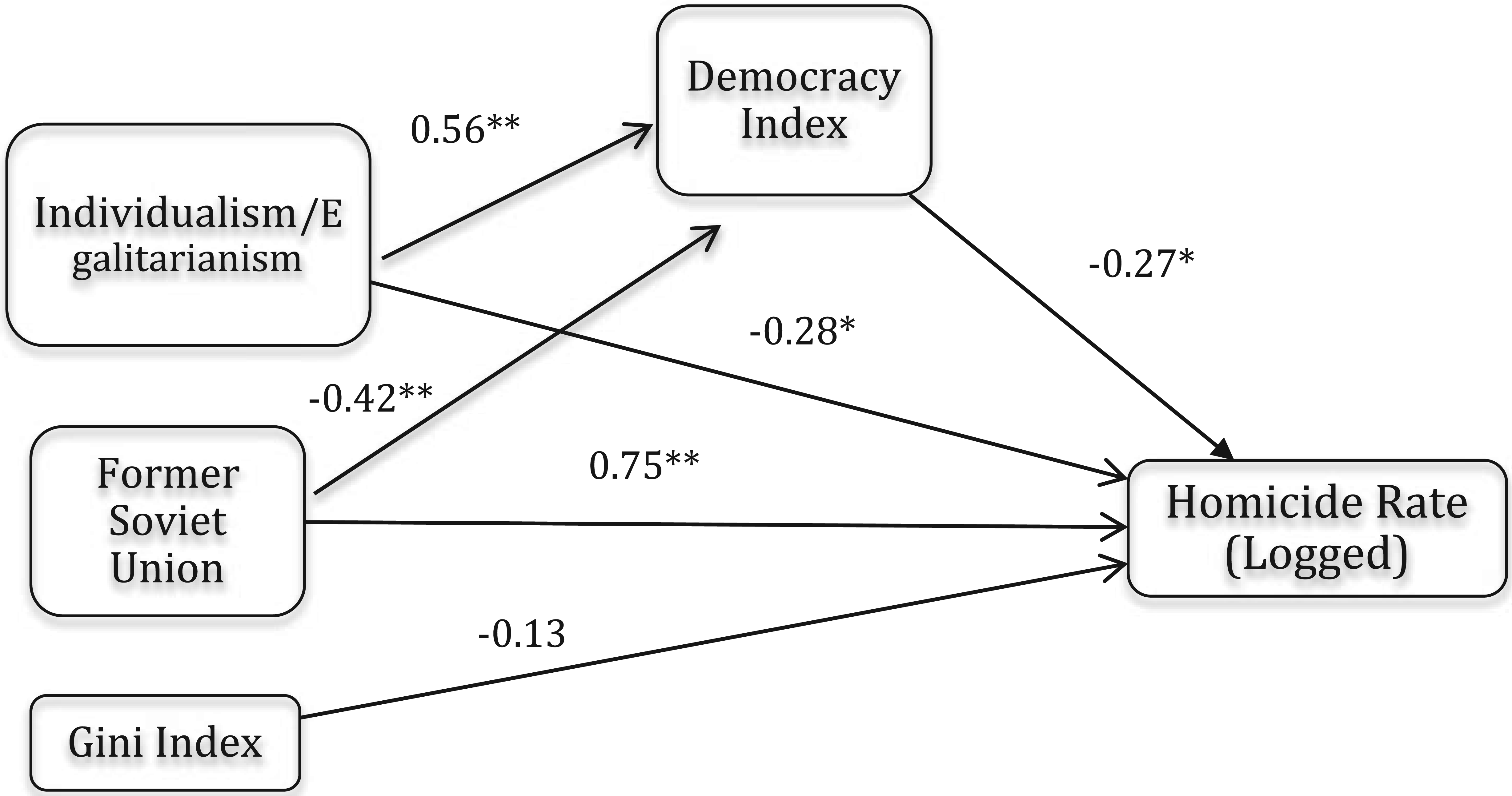
Mediation results.
Direct and Indirect Effects From OLS Regression With Democracy Index as a Mediator.
Note. OLS = ordinary least squares.
Diagnostic tests indicated no problems with heteroscedasticity or normality once the dependent variable was logged. Multicollinearity was also not a problem. Variance inflation factors were all under 2.5. Russia is clearly an outlier in terms of both homicide rate and level of democratic structures and values. It is also an influential case, as measured by Cook’s D; however, so are the United Kingdom, Albania, Hungary, and Slovenia. Given the small sample size, it would not be wise to drop these cases. In large-n studies, dropping influential cases from the model is not likely to have a meaningful effect on the regression results, but that is not the case with small-n analyses. In addition to affecting the power of the model, dropping cases can change the variation of the variables in meaningful ways. Following the rationale of choosing a theoretically meaningful sample, each case was selected for inclusion for a reason, and therefore, each case matters. The differences that are so strongly present in Russia are exactly what this study is trying to explain. In addition, the pattern present in Russia is likely to be similar to that of other countries not present in the sample because of data availability, such as Belarus or Moldova (United Nations Office on Drugs and Crime, 2013). Eliminating Russia or any of the other influential cases from the model would artificially truncate the variation of the variables of interest and introduce bias into the models. 4
Discussion
This study specifically examined two characteristics of democratic regimes and their effects on homicide variation across Europe. The first aspect of democracies consists of the institutional structures and practices of democratic regimes, such as voting rights and rule of law, which has been the common measure of democracy used in the cross-national crime literature. The second expression of democracies focuses on the cultural underpinnings, namely, individualism and egalitarianism. This analysis of the dual characterization of democracies revealed three important findings.
First, both aspects of democracies have significant effects on homicide rates across Europe. Data limitations with respect to operationalizing cultural values for a large number of countries have meant that this aspect of democratic regimes has often been overlooked. This study has shown that democratic structures and democratic values both contribute to lower rates of interpersonal violence. The rule of law and sense of legitimate governance conveyed through democratic institutions and the social capital and generalized trust fostered through democratic values work simultaneously to control violence.
Second, the mediation analysis illustrated how these two aspects of democracies are related. Democratic values support democratic institutions and practices; therefore, they have both a direct and an indirect effect on homicide rates. The mediation also allows us to compare the magnitude of the effects. When considering total effect, democratic values are a stronger predictor of cross-national homicide variation in Europe than democratic institutions and practices.
Third, the lack of significance of the Gini index cannot be overlooked. Despite the strong bivariate correlations between the Gini index and the homicide rate (see Table 2), the Gini index was not a significant predictor controlling for other variables. Of course, inequality is also captured in the individualism/egalitarianism scale, perhaps suggesting that egalitarian values are more important for suppressing interpersonal violence rather than material reality. It is also possible that the truncated variation of the Gini index due to the sample selection reduced its predictive power relative to other studies using global samples.
This point highlights some of the limitations of this study. Although the focus on Europe is theoretically meaningful, it limits the sample size. This, in turn, constrains the number of covariates that can be considered and thus the complexity of the regression models. In addition, by casting variation in terms of the historical trajectories of Western and Eastern Europe, the countries are not as diverse as a sample with different geographic regions would be. Finally, finding reliable quantitative measures of culture for a large sample of nations is also difficult.
Another important consideration is how culture was operationalized for this study. Hofstede’s conceptual framework and data were used for this study primarily to provide an updated analysis of Karstedt’s (2003) original study. In addition, Hofstede’s work has survived decades of criticism and has been extended and adapted in response to empirical research, so it is considered a classic framework within the comparative culture literature. Hofstede provides a dimensionalist perspective on culture that “aims at finding the ultimate, most frugal, and yet most meaningful basic set of axes with which to explain the broad range of attitudes, beliefs, life-styles and the diversity of practices among large populations and/or organizations across societies” (Vinken, Soeters, & Ester, 2004, p. 8). A major criticism of dimensionalism is that it assumes a fair amount of cultural stability. This is not necessarily a limitation for this study because it is a cross-sectional analysis, but it nonetheless raises an important point of consideration for future work on the relationship between cultural values and cross-national homicide variation.
In sum, despite some limitations of the empirical analysis, the findings from this study still provide research evidence in support of the role of culture for understanding national variations of interpersonal violence. They also refine our understanding of the characteristics of political regimes that can be conducive to or prohibitive of violence. The findings not only support Karstedt’s (2003) original study, but also expand our conceptualization of political regimes and how they affect homicide rates.
Footnotes
Declaration of Conflicting Interests
The author(s) declared no potential conflicts of interest with respect to the research, authorship, and/or publication of this article.
Funding
The author(s) received no financial support for the research, authorship, and/or publication of this article.