




Abstract
This research comprises two studies that extend the literature on the proactive behavior of feedback seeking. Study 1 uses cross-sectional data from frontline employees across 51 apparel stores to examine how feedback seeking is formed and under what conditions. The results suggest that the development of feedback-seeking behavior is contingent on a feedback-seeking climate and the relationship between an employee and his or her supervisor. Study 2 uses longitudinal data collected across three time periods from multiple respondents (i.e., frontline employees and managers) not only to replicate the findings from Study 1 but also to explore when feedback seeking matters. The findings reveal that managers should target employees who are less (vs. more) satisfied with their jobs because such employees perceive more instrumental value from feedback as a means to improve customer service and sales performance. The findings from this research provide insights that managers can use to increase feedback-seeking behavior from employees and effectively identify and manage the conditions under which feedback seeking will occur to greater or lesser degrees.
Keywords
Most modern companies use a formalized and mandated appraisal system for providing feedback to employees. However, such information is often poorly timed or, worse, can create a passive and dependent attitude among employees, encouraging them to wait to hear from their supervisors about their performance before taking any action. Feedback seeking—defined as an employee’s proactive and self-regulatory effort to search for evaluative information from his or her manager about the (in)adequacy of overall work performance, role fulfillment, and customer service—creates an ongoing informal exchange of information that shifts ownership to employees and better equips them to use the information to improve their performance on a regular basis (e.g., Ashford and Tsui 1991).
Feedback seeking has many benefits including building trust and providing a conduit for communication between supervisors and employees. Despite such advantages, however, employees are often reluctant to seek feedback from their supervisors. A natural question that emerges then is, notwithstanding the obvious benefits, why don’t more employees engage in feedback seeking? This research attempts to answer this question by testing a model that examines the drivers to feedback-seeking behavior (FSB hereinafter) and the conditions under which FSB is affected.
Understanding the factors that contribute to FSB is a strategically important question to address because when employees engage in more FSB, they will develop a greater sense of awareness and knowledge, build a roadmap for what needs to be done to achieve goals, and become more involved and confident in their work environment. This study also examines when FSB is likely to improve a frontline employee’s service and sales performance because, as we assert, not all employees are expected to benefit to the same degree from seeking feedback. The effect of FSB on employee performance is mixed and equivocal (Renn and Fedor 2001), prompting the need to further investigate the boundary conditions of the FSB-performance relationship. Challagalla, Venkatesh, and Kohli (2009) call for more research to ascertain whether some types of employees are more suitable for feedback seeking than others. By taking a contingency approach to the consequences of FSB, we provide greater clarity to the literature, which has previously shown inconsistent effects of FSB on employee performance. Our findings have important implications for managers. With a better understanding of the conditions under which FSB is more likely to occur, managers can more effectively understand how and when to create conditions that are most likely to induce employees to seek feedback and to target and prioritize the employees who will benefit most from FSB.
Because feedback seeking is proactive in nature, self-initiated, and complicated by the fact that employees need to put themselves in the vulnerable position of having to approach and seek feedback from their supervisors, employees face potential risks (e.g., losing face, appearing unconfident or incompetent, damaging their reputation) that may deter them from seeking feedback. Accordingly, the quality of the perceived social exchange relationship an employee has with his or her supervisor (i.e., leader-member exchange [LMX hereinafter]; Graen and Uhl-Bien 1995) becomes a critical factor that can mitigate the potential risks associated with feedback seeking and ultimately lead to more (and more productive) feedback seeking. We posit that frontline employees 1 experience tension and conflict due to the many, and often competing, job demands they face when interacting with customers (e.g., the demand for greater efficiency/productivity and the need for patient and personal customer service; e.g., Rapp et al. 2017). Frontline employees are typically responsible for service and sales, which requires them to be adept at both skills. Yet they may not possess sufficient resources to adequately fulfill their job duties, which in turn makes FSB a more challenging proposition and task to perform. Consequently, it is critical that employees perceive an organizational climate that encourages, supports, and rewards feedback seeking.
Against this backdrop, our research contributes to the literature by illuminating the roles of LMX and perceived feedback-seeking climate on FSB. These factors are particularly important because they are actionable variables for firms and managers. In addition, we examine the conditions under which LMX and perceived feedback-seeking climate have more or less impact on FSB by studying the conditioning effect of feedback-seeking climate strength. Study 1 uses cross-sectional data to examine the moderating effect of feedback-seeking climate strength. Study 2 relies on longitudinal data across three time periods from multiple respondents (both frontline employees and managers) not only to replicate Study 1 but also to test the return of FSB on frontline employees’ performance under the conditioning role of job satisfaction (for a graphic depiction of our model, see Figure 1).

Proposed model. Phase 1 variables: leader-member exchange and perceived feedback-seeking climate. Phase 2 variables: service orientation and proactive personality. Phase 3 variables: feedback-seeking behavior and job satisfaction.
Theoretical Background and Hypotheses
Most studies in marketing have been confined to examining feedback giving by supervisors and/or coworkers (e.g., DeCarlo and Leigh 1996; Jaworski and Kohli 1991) rather than employees’ feedback seeking from a specific target (e.g., supervisor; for an exception, see Challagalla, Venkatesh, and Kohli 2009). We focus on feedback seeking rather than feedback giving (or receiving) because feedback giving involves a formalized conveyance of performance-related information maybe once or twice a year, at best, making it difficult for employees to incorporate this feedback into their daily routines on an ongoing basis. This formalized approach can lead to a passive, “wait and see” mentality. Instead, we posit that feedback seeking creates a proactive and continuous dialogue and exchange with supervisors that can yield multiple benefits. Our research builds on the work of Challagalla, Venkatesh, and Kohli (2009) but is different in two important ways. First, while these authors study feedback seeking from customers as part of the broader concept of “proactive postsales service,” we focus on feedback seeking from supervisors that can be used to improve frontline employee performance. Second, Challagalla, Venkatesh, and Kohli do not empirically test their propositions, and thus the outcome of feedback seeking in their studies is unclear. In the current research, we test our predictions across two studies, yielding new insights that firms can use to manage feedback seeking and enhance frontline employee performance.
LMX and FSB
LMX theory has established that managers develop different quality relationships with their subordinates (e.g., Graen and Uhl-Bien 1995). Employees are more willing to engage in FSB when they feel encouraged, inspired, and supported by their managers (e.g., Anseel et al. 2015). Employees are likely to decide whether to seek feedback by weighing potential costs (e.g., energy, effort, risk of embarrassment, and loss of face) against potential gains (e.g., obtaining reliable, useful information and guidance to improve their performance; Ashford 1986). A high level of LMX, characterized by positive and healthy social exchange between the two parties, can reduce the perceived costs/risks and promote the potential gains associated with FSB because the supervisor is viewed as a reliable and trustworthy source of information, support, and guidance (e.g., Chen, Lam, and Zhong 2007). Therefore, as LMX increases, employees will worry less about the costs and focus more on the instrumental value of the information gained from feedback seeking, such as the reduction of uncertainty and role ambiguity (e.g., Brown, Genesan, and Challagalla 2001).
Perceived Feedback-Seeking Climate and FSB
Organizational climate can be conceptualized at two levels: the group and the individual. At the group level, organizational climate captures the shared perceptions of employees within a group (Kozlowski and Klein 2000). In this sense, climate draws on the tenets of social information–processing theory (Salancik and Pfeffer 1978), such that employees within a group form similar views about the importance of organizational climate attributes through their social interactions with one another. At the individual level, organizational climate is conceptualized as psychological or perceptual (Jones and James 1979; Ostroff, Kinicki, and Tamkins 2003) and represents an individual’s “cognitive interpretations of the organizational context or situation…and provide[s] a representation of the meaning inherent in organizational features, events, and processes” (Kozlowski and Doherty 1989, p. 547).
We define perceived feedback-seeking climate (i.e., at the individual level) as frontline employees’ perceptions of the feedback-oriented policies, practices, and procedures they experience and the feedback-seeking emphasis they observe in the behaviors that are expected, supported, and rewarded. A positive perceived feedback-seeking climate is an example of an initiative-driven climate because it has “a specific referent to employee initiative and proactivity in customer service” (Raub and Liao 2012, p. 12).
When frontline employees experience tension and conflict due to the competing demands of delivering service and making sales, they may not possess the adequate resources and ability to seek feedback even if they desire to do so. Therefore, perceiving a climate that supports and rewards feedback seeking can help employees overcome the challenges associated with feedback seeking. Under a positive perceived feedback-seeking climate, an employee will feel that he or she is receiving sufficient education and information about how best to approach a supervisor for feedback. Employees working under these conditions will sense that they have the necessary guidelines and the resources (e.g., time, advice) to seek the feedback they desire rather than being left to form their own notions of what to do and how effectively they are doing it.
The Moderating Role of Feedback-Seeking Climate Strength (Cross-Level Interactions)
We define feedback-seeking climate strength as the degree of agreement among employees regarding perceptions of the feedback-seeking climate. A strong (weak) feedback-seeking climate indicates little (much) variation in employees’ perceptions of the importance of, support for, expectation of, and reward for feedback seeking or the lack thereof. Importantly for our purposes, feedback-seeking climate strength is conceptualized as a group-level construct that captures the distribution of feedback-seeking climate perceptions (Chan 1998).
LMX-FSB relationship
We maintain that when there is a strong feedback-seeking climate, the impact of LMX on FSB will be attenuated. More specifically, when there is strong agreement about feedback-seeking climate perceptions (i.e., either agreement that feedback seeking should be pursued or not), positive LMX will have less of an effect on FSB. When there is agreement that feedback seeking should be pursued, FSB will be sought regardless of LMX. Conversely, when there is agreement that feedback seeking should not be pursued, less FSB will be sought despite high LMX.
In contrast, when there is high variability in feedback-seeking climate perceptions (i.e., a weak climate), employees will rely more on and be influenced more by the quality of their relationships with leaders in deciding whether to seek feedback. When little consensus exists about whether feedback seeking should be pursued or not, employees are more inclined to rely on LMX to decide whether to engage in FSB. Thus, the impact of LMX on FSB will increase when employees collectively experience little agreement in feedback-seeking climate perceptions.
2
Accordingly, we propose the following cross-level interaction:
Perceived feedback-seeking climate-FSB relationship
When conditions are such that an employee perceives a positive feedback-seeking climate and there is shared (group level) agreement that the feedback-seeking climate is strong, FSB will be further encouraged. In others words, this group-level consensus will bolster an individual employee’s beliefs about the feedback-seeking climate, resulting in a higher motivation to engage in FSB when needed. Conversely, when an employee perceives a positive feedback-seeking climate but group consensus is that feedback seeking is not valued, FSB will not increase as much due to an individual’s differing perception of the feedback-seeking climate relative to that of the group’s. Our argument is consistent with the group dynamics literature, which states that individuals’ attitudes and behaviors are affected by both personal experience and group perceptions (e.g., Gigone and Hastie 1993). Therefore, taking this notion of collectively into consideration, we predict that perceived feedback-seeking climate will have a positive effect on FSB when the feedback-seeking climate is strong (regardless of the level of shared feedback-seeking climate perceptions).
However, when there is little agreement on feedback-seeking climate perceptions (i.e., a weak climate), the effect of perceived feedback seeking on FSB will be attenuated because employees will sense a lack of consistency, uniformity, and direction in feedback-seeking climate perceptions. Therefore, we propose the following:
FSB and Frontline Employee Performance
We argue that FSB will result in higher frontline employee performance defined as the extent to which frontline employees excel in sales and exhibit high performance with respect to in-role service to customers (Liao and Chuang 2007). Our prediction is based on the following three reasons. First, the literature on proactive work behavior consistently shows that employees who demonstrate proactive behavior in the workplace outperform those who do not (e.g., Chen, Lam, and Zhong 2007). Second, through feedback seeking, employees are able to reduce uncertainty and increase role clarity because feedback seeking is an informational resource that allows employees to become more aware of how certain expectations provide them with direction for improvement (Brown, Ganesan, and Challagalla 2001). Third, feedback seeking, as a self-regulatory process, is an impetus for goal setting and will motivate and mobilize employees to strive toward goal accomplishment (Parker, Bindl, and Strauss 2010). Thus, we propose the following:
The moderating role of job satisfaction
The literature has conflicting findings about the outcome of feedback seeking (Renn and Fedor 2001), which stresses the need to delineate boundary conditions. To this end, we study the moderating role of job satisfaction because we believe that employees will use information from feedback seeking differently depending on their level of job satisfaction. We focus on job satisfaction such that the referent is the work itself because when job satisfaction involves aspects related to work, employees are more likely to use feedback because this information can help improve their efficacy at performing their assigned tasks.
When employees are satisfied with their jobs, we expect the motivation to take proactive actions and utilize the information received from feedback seeking to be diminished, thus attenuating the impact of FSB on performance. Employees who are already satisfied with their jobs may find new information from feedback seeking less instrumental because they are already content with their jobs, rendering the need or desire for change and improvement less critical. However, when employees are less satisfied with their jobs, they may view feedback seeking as more valuable and helpful because feedback provides them with an opportunity to leverage new information and make performance improvements, thus ultimately improving their job satisfaction. Accordingly, less satisfied employees may desire greater change and thus may be willing to take proactive actions to effect that change, and therefore they will benefit more from FSB (Ashford and Tsui 1991; Lam, Huang, and Snape 2007). Formally, we propose the following:
Study 1
Sample and Data Collection Procedure
In Study 1, we test the moderating role of feedback-seeking climate strength on the LMX-FSB relationship and the perceived feedback-seeking climate-FSB relationship (Hypotheses 1 and 2). We collected the data for Study 1 from a retail chain of a Turkish clothing company; all respondents were frontline employees of that company. The company operates nationwide stores to sell its products. The company’s human resources department distributed the surveys to 51 stores in three metropolitan cities, and store managers then distributed them to employees. Employees completed the surveys during business hours and returned them to the store manager in a sealed return envelope. We received 409 usable surveys (for a response rate of 75%) from 51 stores. The number of responses from each store ranged from 3 to 12, with a response rate ranging from 50% to 100%. Of the respondents, 55.3% were female, 43.3% were 22–26 years of age, 58.7% had a college degree, 88.5% were single, 60.2% had a store tenure of 0–2 years, and 33.3% had 0–2 years of previous experience in a similar position.
Survey and Measures
We designed the survey in English and then translated it into Turkish employing translation/back-translation techniques (Brislin, Lonner, and Thorndike 1973). We drew mostly from well-established scales to measure the study’s constructs. Except for feedback-seeking climate and climate strength (i.e., measured at the store level), we measured and operationalized all constructs at the employee level. Table A1 in the Appendix reports the scales and their respective items.
Our focal interest is in the strength (or lack thereof) of the feedback-seeking climate within a store, which we derived from employees’ responses to the scale assessing feedback-seeking climate. In line with its definition and existing scales to measure climate and group norms (Schneider, White, and Paul 1998), we developed a 6-item scale to assess feedback-seeking climate (1 = strongly disagree, 5 = strongly agree). Then, we computed the within-store standard deviation (SD; i.e., within-store variability) of employees’ perceptions of feedback-seeking climate to obtain a score of climate strength, which was unique to each store (Schneider, Salvaggio, and Subirats 2002). We found a significant between-store difference in climate (t = 13.44, df = 50, p < .001). A high SD implies a low level of agreement among employees regarding the feedback-seeking climate of their store. Therefore, we multiplied the SD values by −1 to obtain values that manifest a high level of agreement on climate (Schneider, Salvaggio, and Subirats 2002).
We measured LMX with a 7-item scale (1 = not at all, 5 = to a great extent) originally developed by Scandura and Graen (1984) and then improved by Liden, Wayne, and Stillwell (1993) and T. N. Bauer and Green (1996). This scale, also known as LMX7 (Graen and Uhl-Bien 1995), has been used by researchers in a variety of cultural contexts including the United States, Turkey, and China (e.g., T. N. Bauer and Green 1996; Erdogan and Bauer 2010; Liao, Liu, and Loi 2010). We found a significant between-store difference in LMX (t = 71.02, df = 50, p < .001). We measured FSB with a 6-item, 5-point scale (1 = almost never, 5 = very frequently) borrowed from VandeWalle et al. (2000).
We ruled out alternative explanations and substantiated the robustness of our model by including several control variables at two levels: the employee level and the store level. We chose control variables based on their theoretical relevance to the model’s focal constructs and their power to explain additional variance in the hypothesized relationships (Carlson and Wu 2012; Spector and Brannick 2011). Previous studies report that feedback seeking varies across employees depending on their demographic characteristics (e.g., Chen, Lam, and Zhong 2007). It is also theoretically plausible that service-oriented and proactive employees are more inclined to seek feedback from their supervisor. Therefore, we controlled for the effects of select demographics (age and store tenure), proactive personality, and service orientation when estimating the model. We measured age and store tenure as follows: age (18–22 years = 1; 22–26 years = 2; 26–30 years = 3; 30–34 years = 4; and >34 years = 5) and store tenure (0–2 years = 1; 2–4 years = 2; 4–6 years = 3; 6–8 years = 4; and >8 years = 5). We measured service orientation with a 5-item, 5-point scale (1 = strongly disagree, 5 = strongly agree) taken from Bettencourt, Gwinner, and Meuter (2001). We measured proactive personality with 6 of the highest-loading items from the scale developed by Bateman and Crant (1993), which has been used in previous research (e.g., Li, Liang, and Crant 2010).
We also controlled for the group-level mean of feedback-seeking climate. We aggregated employees’ responses to derive feedback-seeking climate as a store-level variable. The within-store agreement (median r wg = .96) and the reliability of store-level means (intraclass correlation (ICC) 2 = .81) for feedback-seeking climate were well above the threshold value and thus provide statistical justification for data aggregation (LeBreton and Senter 2008).
Previous studies have suggested that supervisor-subordinate demographic similarity (i.e., age, gender, and store tenure) has a positive influence on FSB (e.g., Chen, Lam, and Zhong 2007), whereas group size has a negative effect on FSB because supervisors of large groups may be less accessible to employees seeking feedback. However, our data do not show significant correlations between store size and the demographic similarity measures with our model’s dependent variables. Therefore, we did not control for the effect of store size and demographic similarity when estimating our models.
Measurement Model and Common Method Bias
Measurement model
We assessed the validity and reliability of our measures by conducting a confirmatory factor analysis (CFA). After we deleted 2 scale items with low factor loadings, the CFA indicated a good fit to the data (χ2 = 864.12, df = 340; Tucker-Lewis Index [TLI] = .920; comparative fit index [CFI] = .928; and root mean square error of approximation [RMSEA] = .061). Cronbach’s αs and composite reliability scores greater than .70 and average variance extracted (AVE) values greater than .50 (Bagozzi and Yi 1988) indicate that the measures are highly reliable (see Table 1). As we report in Table A1 of the Appendix, significant factor loadings provide support for convergent validity of the constructs (Anderson and Gerbing 1988). In addition, the AVE estimates are greater than the squared correlation between all pairs of constructs (Fornell and Larcker 1981), which supports discriminant validity.
Descriptive Statistics, Intercorrelations, and Reliabilities (Study 1).
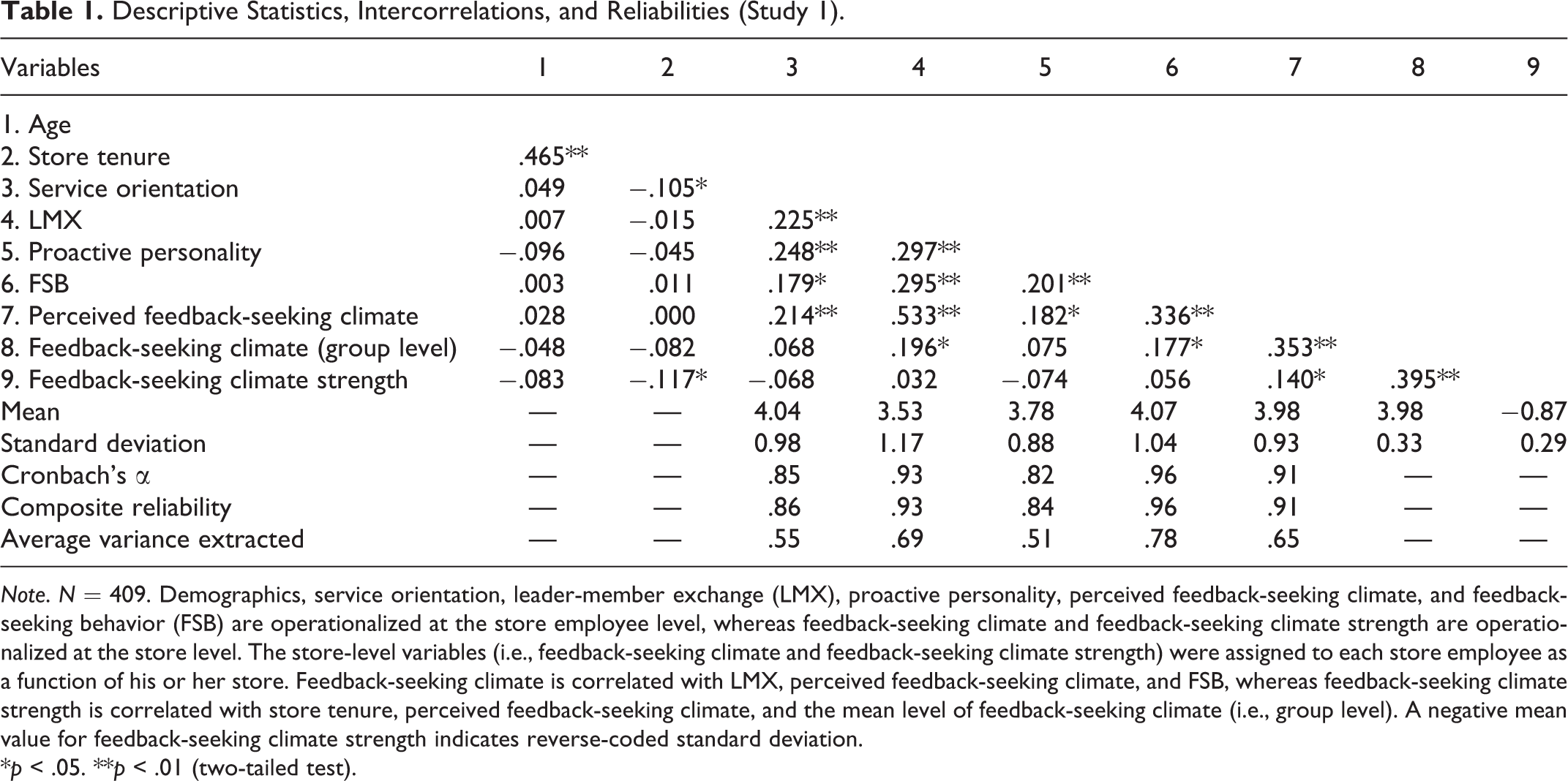
Note. N = 409. Demographics, service orientation, leader-member exchange (LMX), proactive personality, perceived feedback-seeking climate, and feedback-seeking behavior (FSB) are operationalized at the store employee level, whereas feedback-seeking climate and feedback-seeking climate strength are operationalized at the store level. The store-level variables (i.e., feedback-seeking climate and feedback-seeking climate strength) were assigned to each store employee as a function of his or her store. Feedback-seeking climate is correlated with LMX, perceived feedback-seeking climate, and FSB, whereas feedback-seeking climate strength is correlated with store tenure, perceived feedback-seeking climate, and the mean level of feedback-seeking climate (i.e., group level). A negative mean value for feedback-seeking climate strength indicates reverse-coded standard deviation.
*p < .05. **p < .01 (two-tailed test).
Table 1 reports the descriptive statistics and correlations of all the variables. In particular, both LMX (r = .295, p < .01) and perceived feedback-seeking climate (r = .182, p < .05) are correlated positively with FSB.
Common method bias treatment
Single-respondent effects due to cross-sectional data may raise concerns about inflated (or deflated) main-effect relationships (Podsakoff et al. 2003; Siemsen, Roth, and Oliveira 2010). Conversely, one reason for not observing otherwise significant interaction effect(s) might be due to the suppressive power of common method bias. Nevertheless, advancing Evans’s (1985) study, Siemsen, Roth, and Oliveira (2010, p. 456) conclude that “interaction effects cannot be artifacts of common method variance.” Therefore, following Podsakoff, MacKenzie, and Podsakoff (2012), we designed a model to test both cross-level and within-level interaction effects by diagnosing the extent of common method bias and controlling for it when estimating the proposed model.
We reestimated the measurement model by including an unmeasured common method factor, which loaded on all items of the focal constructs (Podsakoff et al. 2003). The measurement model with the method factor indicated a better fit to the data than the model without the method factor (▵χ2 = 221.78, ▵df = 28, p < .01). Specifically, 78% of the variance was due to the trait factors (i.e., the constructs), 3% of the variance was accounted for by the method factor, and 19% of the variance resulted from unique sources. Nevertheless, we controlled for common method bias in the model estimations.
Analytic Approach
The nested nature of our data set (employees nested in stores) implies the nonindependence of employees’ responses, which must be taken into consideration to avoid biased estimates of the hypothesized relationships. Because we conceptualize feedback-seeking climate strength as a store-level variable, its interaction with LMX and perceived feedback-seeking climate is, by its nature, a cross-level interaction, which requires appropriate treatment to precisely estimate the standard error of the hypothesized relationships (e.g., Raudenbush et al. 2011). Thus, we performed a multilevel path analysis in Mplus Version 7.0 (Muthén and Muthén 2012) to control for variation at the store level and to estimate the model’s relationships simultaneously. Feedback-seeking climate and control variables were centered on grand means, and all other variables were centered on their group mean values (Hofmann and Gavin 1998). We created the interaction terms using mean-centered values of their respective constructs. We tested the effects of LMX and perceived feedback-seeking climate on FSB across the entire range (i.e., from −2 SD to +2 SD) of climate strength (see Spiller et al. 2013) and determined the Johnson-Neyman (J-N) point using the approach for testing interaction effects in multilevel models (D. J. Bauer and Curran 2005; Miyazaki and Maier 2005).
Hypothesis Testing
We tested the model in a hierarchical manner (e.g., Preacher, Zhang, and Zyphur 2011). As Table 2 (Model 1) reports, the relationships between LMX and FSB (γ = .189, p < .01) and between perceived feedback-seeking climate and FSB (γ = .225, p < .01) are positive and significant in support of our expectations. Next, we include the interaction effects to estimate the hypothesized model (Model 2).
Results (Study 1).
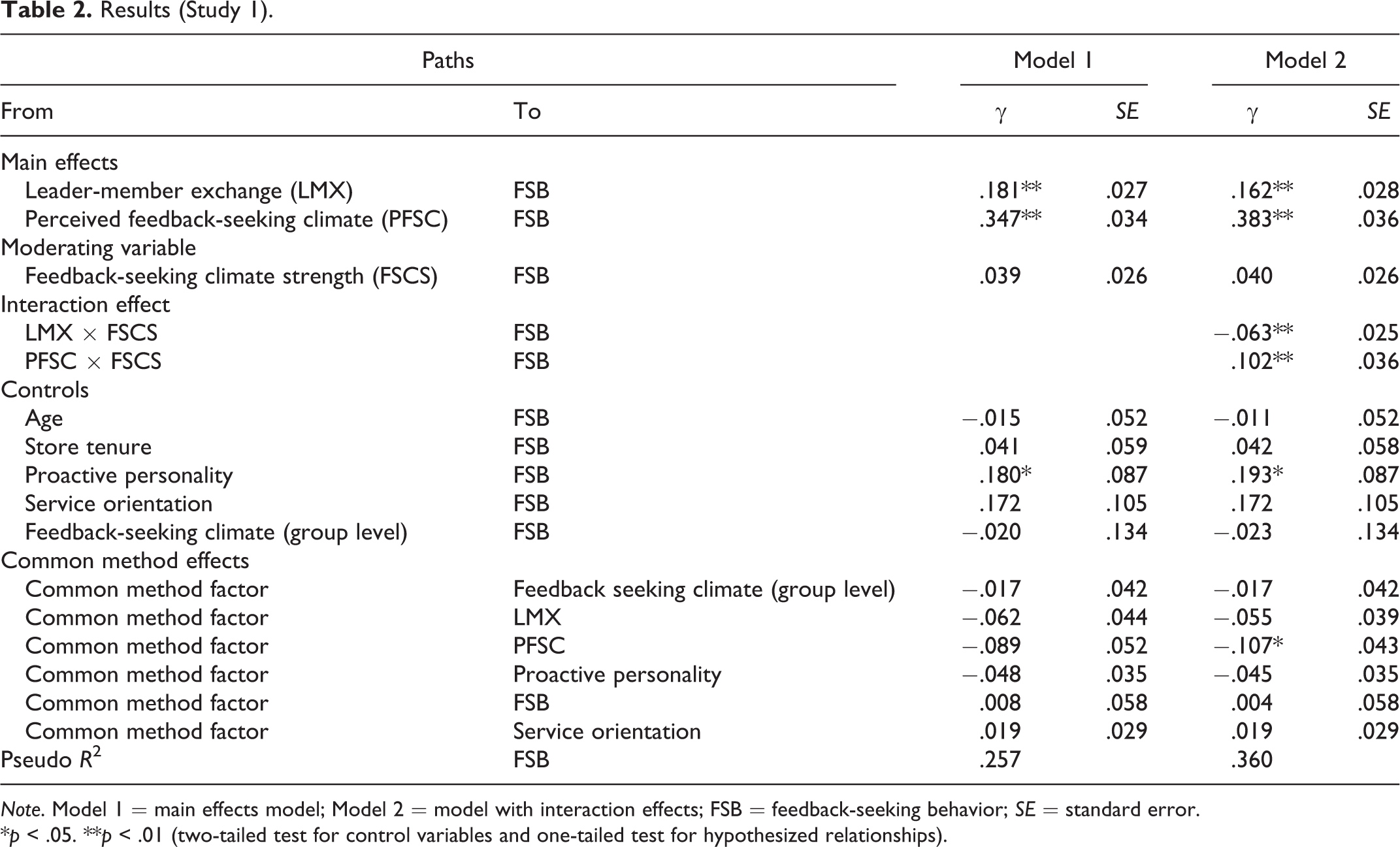
Note. Model 1 = main effects model; Model 2 = model with interaction effects; FSB = feedback-seeking behavior; SE = standard error.
*p < .05. **p < .01 (two-tailed test for control variables and one-tailed test for hypothesized relationships).
Hypothesis 1 posits that feedback-seeking climate strength moderates the LMX-FSB relationship such that the relationship will be more positive when climate strength is weak (vs. strong). Model 2 shows that the interaction effect of climate strength and LMX on FSB is negative and significant (γ = −.063, p < .01; see Figure 2). The J-N point for climate strength occurs at the value of −.40 (i.e., .47 SDs above the mean of −.87). That is, high levels of LMX result in significantly higher FSB than low levels of LMX for all values of climate strength below −.40. There are no significant differences between low and high LMX in relation to FSB for climate strength above −.40. Thus, the results support Hypothesis 1.
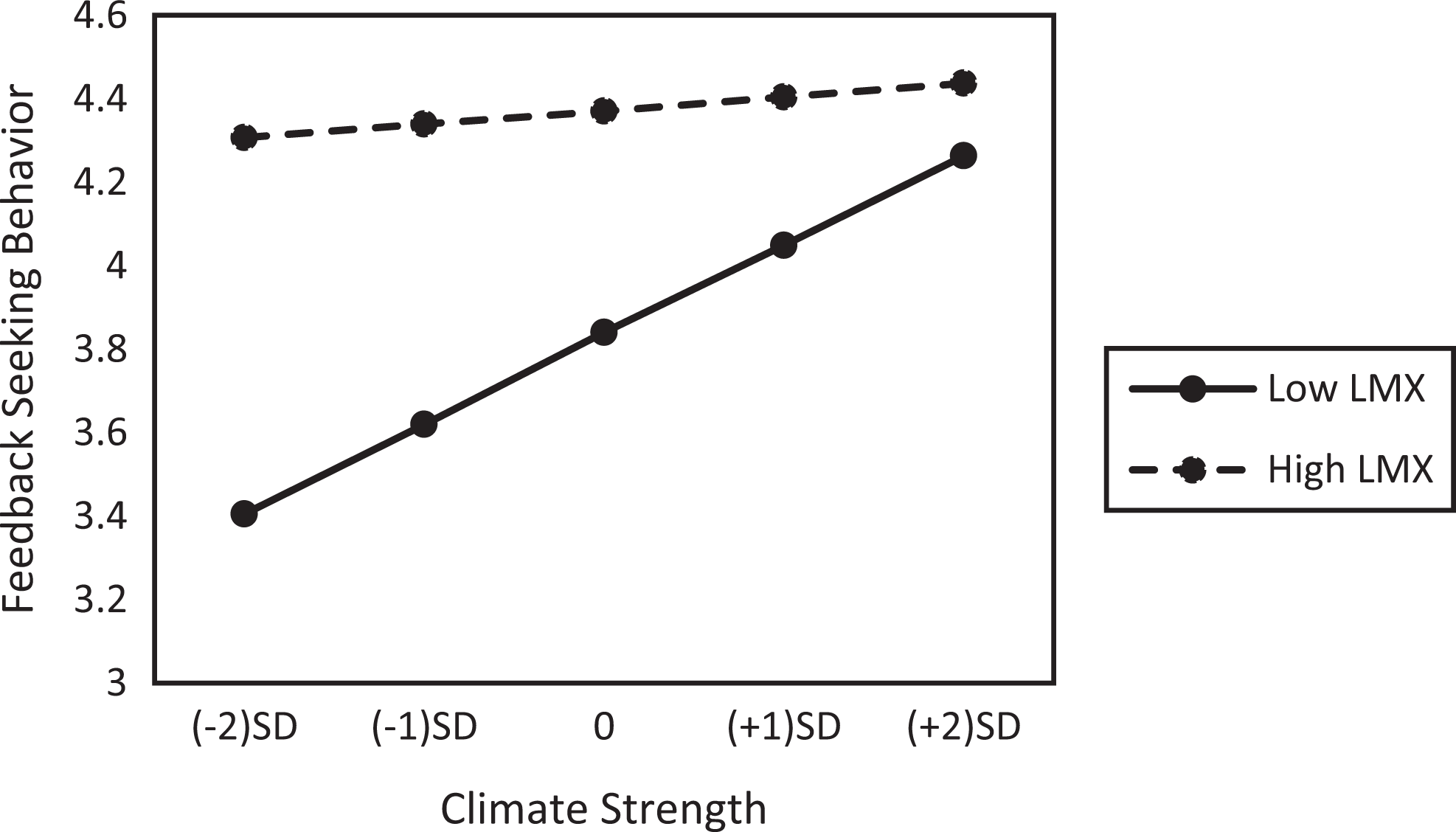
Climate strength moderates the influence of leader-member exchange (LMX) on feedback-seeking behavior (FSB; Study 1).
Hypothesis 2 posits that feedback-seeking climate strength moderates the relationship between perceived feedback-seeking climate and FSB such that the relationship will be more positive when climate strength is strong (vs. weak). The interaction effect of perceived feedback-seeking climate and climate strength on FSB is positive and significant (γ = .102, p < .05). The J-N point for climate strength occurs at the value of −1.63 (i.e., .76 SD below the mean of −.87). High levels of perceived feedback-seeking climate result in significantly higher FSB than low levels of perceived feedback-seeking climate for all values of climate strength above −1.63 (Figure 3). Thus, the results support Hypothesis 2.
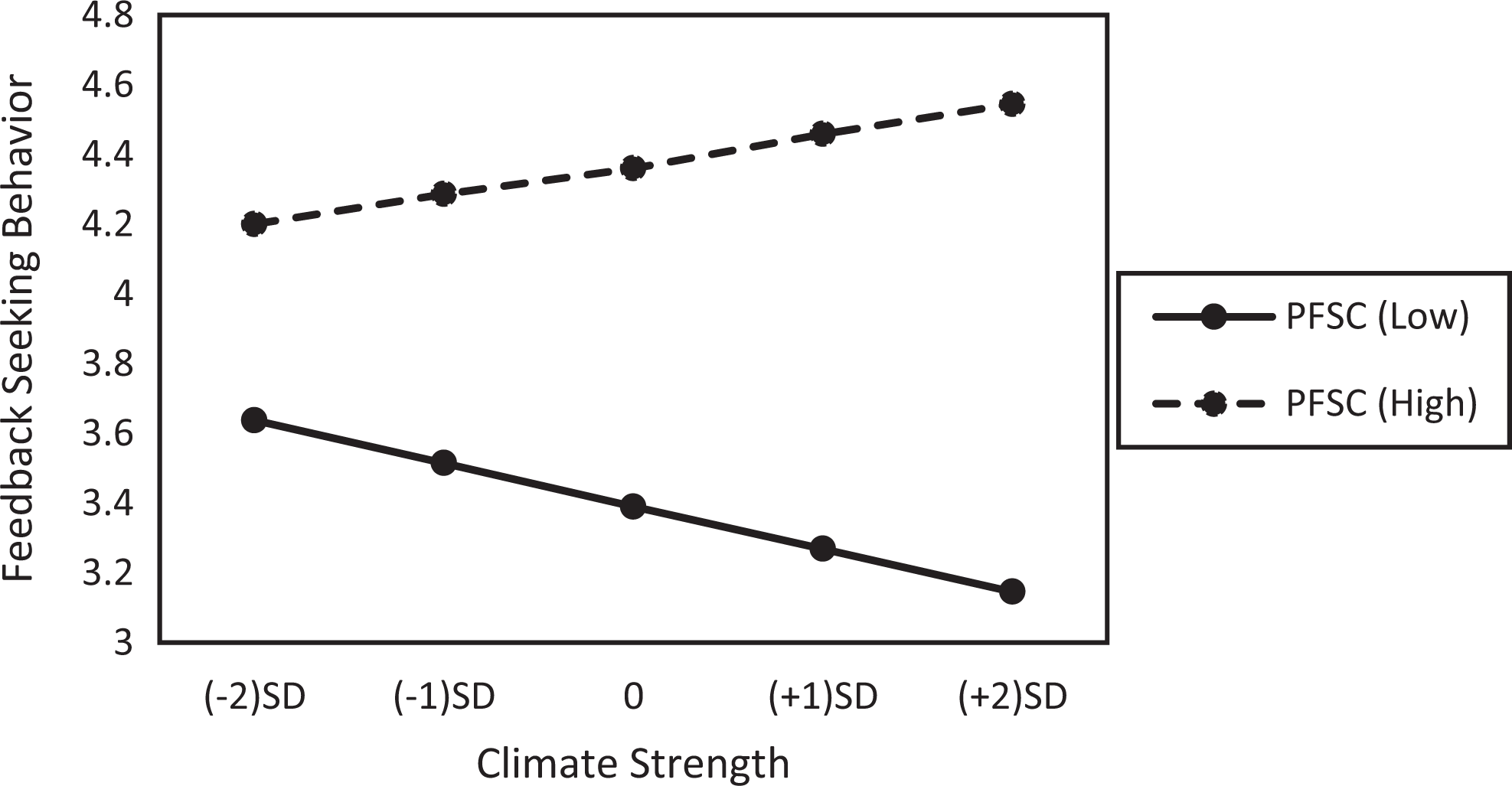
Climate strength moderates the influence of perceived feedback-seeking climate (PFSC) on feedback-seeking behavior (Study 1).
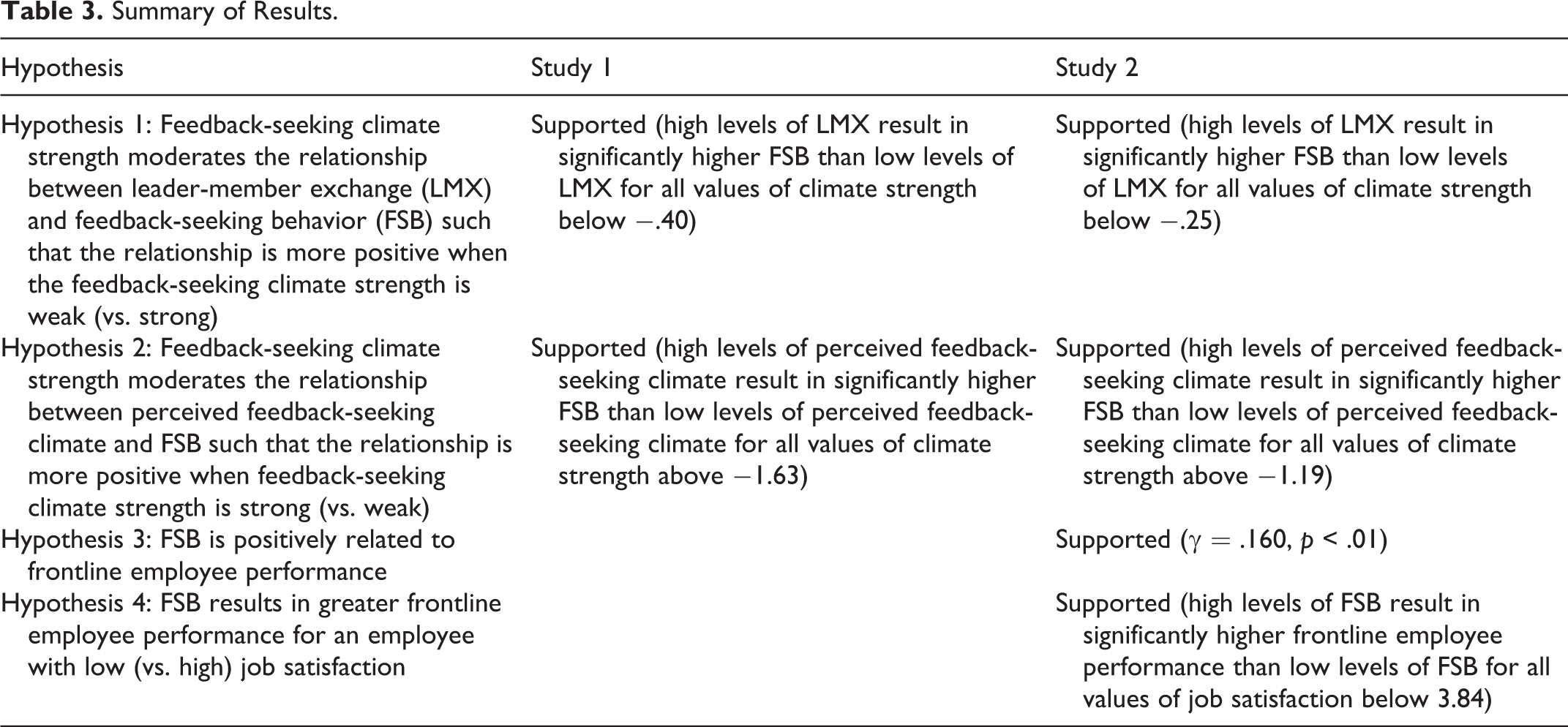
Table 3 summarizes the findings from Study 1. That is, LMX and perceived feedback-seeking climate have a positive effect on FSB, and feedback-seeking climate strength negatively and positively moderates the LMX-FSB and the perceived feedback-seeking climate-FSB relationships, respectively. These findings support the proposed hypotheses of Study 1.
Summary of Results.
Study 2
Purpose
In Study 2, consistent with the dual role of frontline employees as providers of service and facilitators of sales (Rapp et al. 2017), we focus on frontline employee performance by testing whether (1) FSB is positively related to frontline employee performance and (2) FSB leads to greater performance for employees with lower levels of job satisfaction. To this end, unlike Study 1’s cross-sectional, single-respondent data, we used multiwave, multirespondent data to test an expanded model in Study 2. Using a longitudinal research design addresses the limitation associated with cross-sectional data used in Study 1 and strengthens the causality among constructs.
Sample and Data Collection Procedure
We collected data from 40 stores of a Turkish apparel company operating in two regions using an identical procedure to that of Study 1. We targeted 214 frontline employees and 40 store managers of the company. We conducted the employee surveys in three waves. Employees provided demographic information and responded to the LMX and perceived feedback-seeking climate scales in Phase 1, to the service orientation and proactive personality scales in Phase 2, and to the FSB and job satisfaction scales in Phase 3. After the employee surveys were completed, we asked store managers to rate their employees’ performance. Overall, we obtained usable surveys from 133 employees (for a response rate of 62%) and 40 store managers (for a response rate of 100%). The response rate from each store ranged, on average, from 50% to 100%. We matched data collected from employees with data collected from store managers for the purpose of data analysis. Of the respondents, 53.4% were female, 36.8% were 22–26 years of age, 55.6% had a college degree, 85% were single, 60.2% had a store tenure of 0–2 years, and 31.6% had 2–4 years of previous experience in a similar position.
Survey Design, Measures, and Measurement Model
We prepared employee and manager surveys for Study 2 using the same design method as that for Study 1. The scales measuring LMX, feedback-seeking climate, service orientation, proactive personality, and FSB were identical to those used in Study 1. In this study, we also measured employees’ job satisfaction and store managers’ evaluation of frontline employee performance. We measured job satisfaction with a 4-item scale adapted from Chan, Yim, and Lam (2010). Managers rated employees’ performance on a 7-item, 5-point Likert-type scale (1 = needs improvement, 5 = excellent) taken from Liao and Chuang (2007).
We aggregated employees’ responses to the Feedback-Seeking Climate Scale to compute a single score for each store. We found a significant between-store difference in climate (t = 54.93, df = 39, p < .001). In addition, the within-store agreement value (median r wg = .96) and reliability of store-level means (ICC2 = .80) for feedback-seeking climate supported data aggregation (LeBreton and Senter 2008). We operationalized feedback-seeking climate strength (i.e., a store-level variable) in the same way as in Study 1. We observed between-store difference in climate strength (t = 11.23, df = 39, p < .001). In addition, we found a significant between-store difference in LMX (t = 59.78, df = 39, p < .001).
We ran two separate measurement models to test the reliability and validity of the scales to which the store employees and managers responded. After we deleted 1 item with a low loading, the CFA indicated good fit to the employee data (χ2 = 726.93, df = 480; TLI = .90; CFI = .91; RMSEA = .06). As Table 4 reports, the measures were highly reliable, as Cronbach’s αs and composite reliability scores were greater than .70 and AVE values were greater than .50 (Bagozzi and Yi 1988). Factor loadings were statistically significant as well (Anderson and Gerbing 1988), indicating convergent validity of the constructs. We also find support for the discriminant validity of the scales, as the AVE estimates were greater than the squared correlation between all pairs of constructs (Fornell and Larcker 1981; see Table A1 in the Appendix and Table 4). The store manager model also indicated a good fit to the data (χ2 = 24.7, df = 14; TLI = .97; CFI = .98; RMSEA = .07). Statistically significant factor loadings supported convergent validity of the Frontline Employee Performance Scale.
Descriptive Statistics, Intercorrelations, and Reliabilities (Study 2).
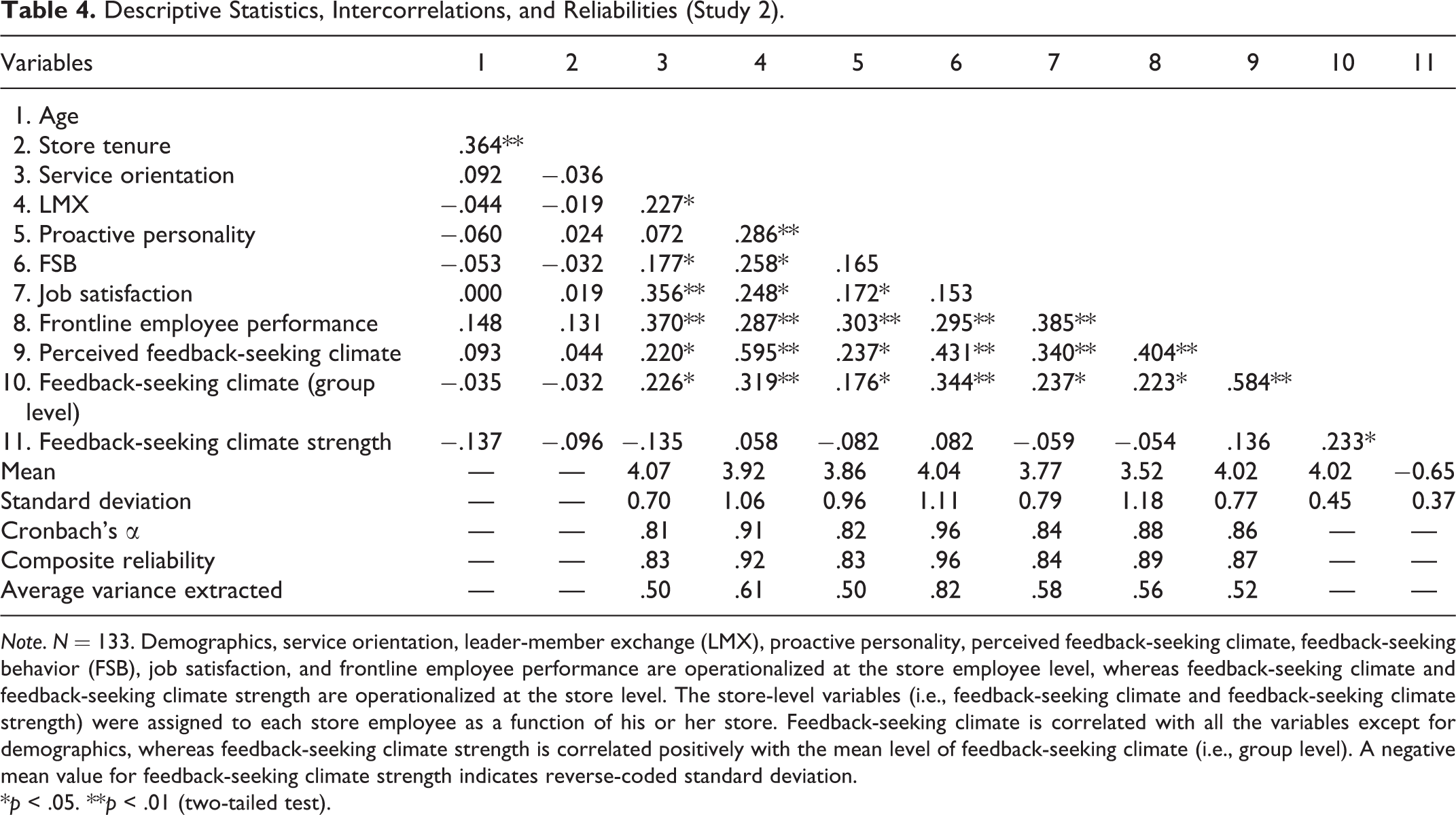
Note. N = 133. Demographics, service orientation, leader-member exchange (LMX), proactive personality, perceived feedback-seeking climate, feedback-seeking behavior (FSB), job satisfaction, and frontline employee performance are operationalized at the store employee level, whereas feedback-seeking climate and feedback-seeking climate strength are operationalized at the store level. The store-level variables (i.e., feedback-seeking climate and feedback-seeking climate strength) were assigned to each store employee as a function of his or her store. Feedback-seeking climate is correlated with all the variables except for demographics, whereas feedback-seeking climate strength is correlated positively with the mean level of feedback-seeking climate (i.e., group level). A negative mean value for feedback-seeking climate strength indicates reverse-coded standard deviation.
*p < .05. **p < .01 (two-tailed test).
Table 4 reports descriptive statistics and correlations for all the variables. Accordingly, LMX is correlated positively with FSB (r = .258, p < .01) and frontline employee performance (r = .287, p < .01). Perceived feedback-seeking climate is correlated positively with FSB (r = .431, p < .01) and frontline employee performance (r = .404, p < .01). Moreover, FSB is correlated positively with frontline employee performance (r = .295, p < .01), providing initial support for Hypothesis 3.
Analytic Approach and Findings
We tested the model by employing a multilevel path analysis in Mplus Version 7.0 (Muthén and Muthén 2012). As Table 5 reports, we find a positive and significant effect of FSB on frontline employee performance (γ = .160, p < .01) in support of Hypothesis 3. Job satisfaction moderates the FSB-frontline employee performance relationship negatively and significantly (γ = −.295, p < .01). The J-N point for job satisfaction occurs at the value of 3.84 (i.e., .07 SD above the mean of 3.77). That is, high levels of FSB result in significantly higher employee performance than low levels of FSB for job satisfaction below 3.84. There are no significant differences between low and high FSB in relation to employee performance above 3.84 (see Figure 4). Thus, the results support Hypothesis 4.
Results (Study 2).
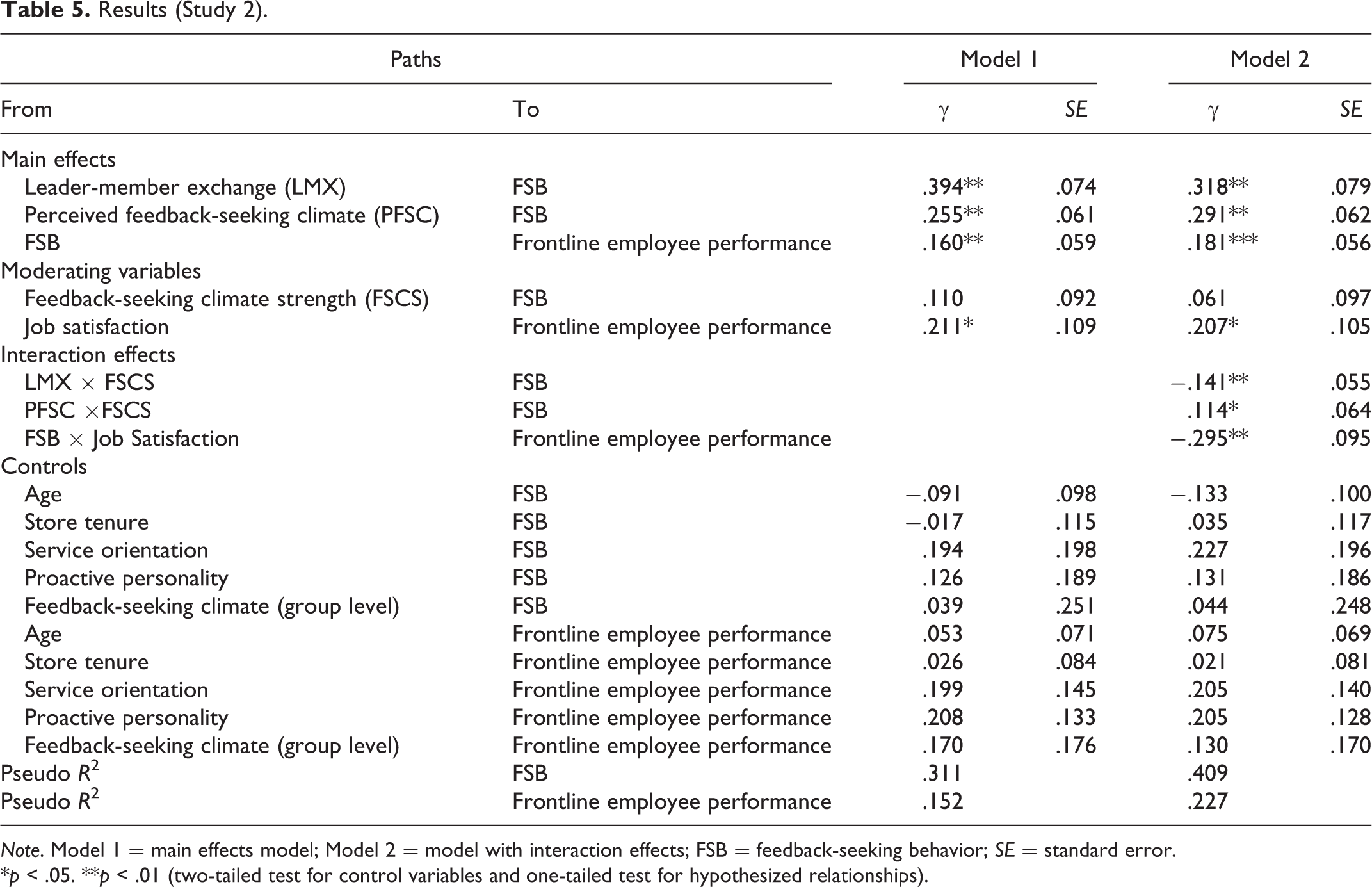
Note. Model 1 = main effects model; Model 2 = model with interaction effects; FSB = feedback-seeking behavior; SE = standard error.
*p < .05. **p < .01 (two-tailed test for control variables and one-tailed test for hypothesized relationships).

Job satisfaction moderates the influence of feedback-seeking behavior on frontline employee performance (Study 2).
The interaction effect of climate strength and LMX on FSB is negative and significant (γ = −.141, p < .01). The J-N point for climate strength occurs at the value of −.25 (i.e., .40 SD above the mean of −.65). That is, high levels of LMX result in significantly higher FSB than low levels of LMX for climate strength below −.25. There are no significant differences between low and high LMX in relation to FSB above −.25. Thus, the results support Hypothesis 1 (see Figure 5). The interaction effect of perceived feedback-seeking climate and feedback-seeking climate strength on FSB is positive and significant (γ = .114, p < .05). The J-N point for climate strength occurs at the value of −1.19 (i.e., .54 SD below the mean of −.65). High levels of perceived feedback-seeking climate result in significantly higher FSB than low levels of perceived feedback-seeking climate for climate strength above −1.19. Thus, the results support Hypothesis 2 (Figure 6).

Climate strength moderates the influence of leader-member exchange (LMX) on feedback-seeking behavior (Study 2).
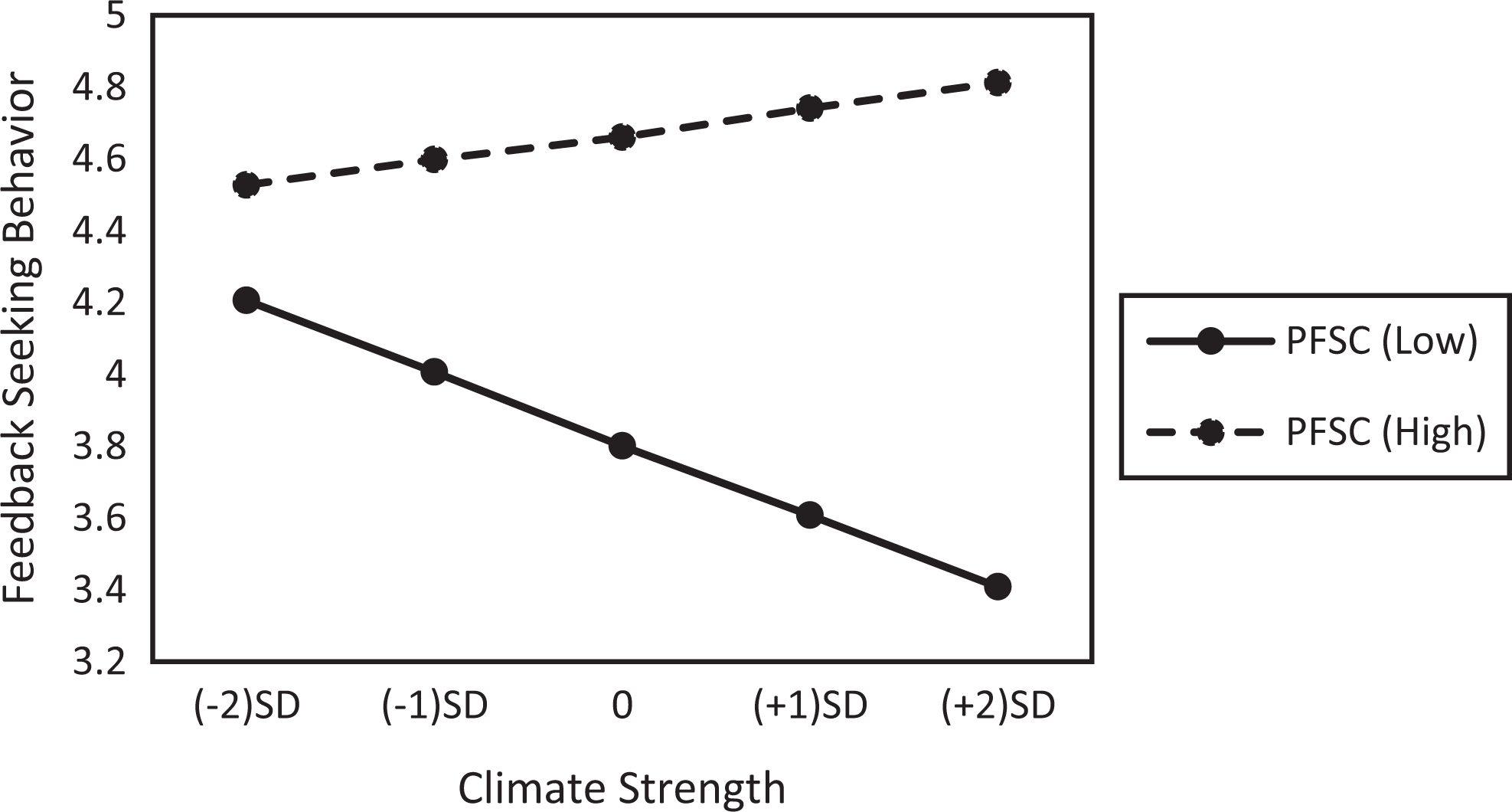
Climate strength moderates the influence of perceived feedback-seeking climate (PFSC) on feedback-seeking behavior (Study 2).
We tested an alternative model that posits the interaction of feedback-seeking climate strength and FSB on frontline employee performance. The interaction effect was not significant (γ = .07, ns), and the model did not indicate a better fit to the data than the proposed model.
Table 3 summarizes the findings from the two studies. Overall, Study 2 replicates the interaction relationships tested in Study 1. Thus, the significant effects found in Study 1 may not be an artifact of common method bias. Although our longitudinal design to measure Study 2’s constructs might decrease the significance of the relationships, Study 2 yielded similar results to those found in Study 1 for the same variables. Overall, when data are collected at two different points in time and are correlated with each other (Study 2) and if the relationships are highly similar to those obtained when the variables are collected at the same point in time (Study 1), the data collected at the same point in time can be considered valid.
Discussion
Theoretical Implications
Leaders and climate play a critical role in FSB
Our results strongly emphasize the important role that leaders play—and even more importantly the role of the quality of the exchange relationship between employees and leaders (i.e., LMX)—in enabling FSB. Although not formally hypothesized, the results show a direct positive effect of LMX on FSB, which corroborates the role of LMX and the broader role of leadership (Anseel et al. 2015). Although not tested in this model, we also predict that when employees have good relationships with their supervisors, they are more engaged, which can lead to more FSB. Research suggests that leaders are primarily responsible for employee engagement, and the nature of the interactions they develop with their subordinates accounts for why engagement levels vary (Tims, Bakker, and Xanthopoulou 2011). Although we did not empirically test this “engagement-based explanation” in the current model, from a theoretical perspective, LMX is likely to enhance engagement, which in turn will lead to more FSB. This would be a worthy proposition to test in future research.
To the best of our knowledge, no study to date has empirically examined the effect of perceived feedback-seeking climate on FSB. Given the myriad job responsibilities that many frontline employees hold in today’s business environment, employees may find it difficult to seek feedback due to a lack of resources (e.g., time, opportunity, psychological safety), even if it is something they want to do. Our study finds that perceptions of a positive feedback-seeking climate can help alleviate such challenges by providing the necessary resources and rewards, thus incentivizing employees to engage in feedback seeking. Although not directly tested, the two antecedents (i.e., LMX and perceived feedback-seeking climate) in our model implicitly underscore how frontline employees mentally calculate the benefits versus costs associated with FSB. When both LMX and perceived feedback-seeking climate are high, the benefits of FSB outweigh the costs, resulting in higher levels of FSB. This is consistent with the literature, which has asserted that a “cost-benefit framework has been used as the dominant theoretical model of most studies on FSB in organizations” (Anseel et al. 2015, p. 320).
The moderating role of feedback-seeking climate strength
The role of feedback-seeking climate strength as a moderator is rather complex because, on the one hand, it strengthens the positive impact of perceived feedback-seeking climate while, on the other hand, it weakens the positive effect of LMX on FSB. These results imply that whether LMX should be emphasized or not as a determinant for FSB depends on the level of climate strength. That is, when the climate is strong, the effect of LMX on FSB is more limited because there is shared agreement among employees regarding whether feedback seeking should be pursued or not, thus diminishing the instrumental value of LMX for FSB. However, when feedback-seeking climate is weak, LMX has a greater effect on FSB because employees’ perceptions regarding feedback seeking will be mixed, thus creating an environment in which LMX plays a more critical role in evoking and encouraging FSB. The reduced effect of LMX on FSB under a strong feedback-seeking climate is also compatible with the predictions that follow from substitute-for-leadership theory (Kerr and Jermier 1978). According to substitute-for-leadership theory, neutralizers can weaken the impact of leadership such that the positive effect of leadership is attenuated in the presence of neutralizers. This implies that the neutralizer (i.e., climate strength) is a competing factor rather than a complementary asset to leadership.
Return on FSB
Studies that link FSB or personal initiatives to customer-related performance are few and far between, and the few studies that do exist have been met with mixed success (Rank et al. 2007; Renn and Fedor 2001). Our results show that managers’ ratings of employee performance are higher when employees seek feedback. Thus, feedback seeking can be a win-win situation for both parties because it reassures managers that the provision of feedback will be worthwhile and will benefit employees, and at the same time, it reflects employees taking a more proactive attitude toward their own professional development and improvement. However, the results from Study 2 qualify this dynamic. Using longitudinal data from multiple respondents, Study 2 shows that FSB has a positive effect on frontline employee performance from a service and sales perspective and that this relationship is stronger for employees who have low (vs. high) levels of job satisfaction. This finding provides a clear departure from research that has taken a universal approach to studying the consequences of FSB. With the conditioning role of job satisfaction, it is possible to obtain a more nuanced understanding of to whom FSB-related efforts should be targeted, invested in, and communicated. It is likely that employees who are less (vs. more) satisfied with their jobs find information from feedback seeking more instrumental and thus are more motivated to use such information to improve their performance.
Managerial Implications
Importance of LMX
Leaders need to instill confidence in employees that feedback seeking is beneficial, worthwhile, and risk-free. Imparting a sense of value from feedback seeking through social exchange relationships will send a clear and strong signal to employees to engage in FSB. Because FSB entails not only advantages but also potential risks and costs, it is imperative that employees feel reassured through high-quality relationships with their supervisors that the benefits of feedback seeking (e.g., achieving certain goals, advancing one’s career, developing new skills) outweigh the costs (e.g., losing face, feeling incompetent). Supervisors and organizations can alleviate some of the concern and fear associated with feedback seeking during new employee training and through socialization processes.
Perception of positive feedback-seeking climate
Our findings show that when employees perceive a positive feedback-seeking climate—that is, when they sense the importance, value, support, and associated rewards of feedback seeking—they are more likely to seek feedback from their supervisors. Furthermore, the results suggest that not only does an individual employee’s perception of feedback-seeking climate matter but also the group that the employee is a part of can play a central role. When there is group consensus that the organization takes feedback seeking seriously and an individual employee perceives a positive feedback-seeking climate, this consensus (i.e., the joint effect of individual- and group-level factors) provides fertile conditions for feedback seeking to thrive.
The double-edged sword of feedback-seeking climate strength
Although a strong feedback-seeking climate bolsters the positive impact of perceived feedback-seeking climate on FSB, the opposite is true for LMX—that is, a strong feedback-seeking climate attenuates the effect of LMX on FSB. This finding implies that an organization can act strategically to emphasize or deemphasize LMX depending on the strength of the feedback-seeking climate. If there is little variation among employees in terms of their perception of the feedback-seeking climate (i.e., a strong climate), LMX will have limited effectiveness in increasing FSB. Conversely, when there is significant variation among employees’ perceptions of the feedback-seeking climate (i.e., a weak climate), FSB will benefit from positive LMX. Therefore, organizations need to be cognizant of the intricate relationship between LMX and feedback-seeking climate strength and be discerning in their efforts to develop LMX when there is a strong feedback-seeking climate. Our suggestions should be interpreted within the confines of encouraging FSB. Improving LMX in general is a positive phenomenon that should be welcomed in general, but the key point in our context is that the role of LMX will be limited when the singular goal is to increase FSB when feedback-seeking climate is already strong.
Targeting the right employees to engage in feedback seeking
Our findings indicate that not all employees are equally receptive to feedback seeking and that some will benefit more than others. This suggests that managers can prioritize their targets for FSB. Targeting employees who are less satisfied with their jobs will lead to higher frontline employee performance. Managers need to identify employees who have low job satisfaction and encourage them to engage in FSB by developing a positive and strong feedback-seeking climate or a healthy LMX in the case of a weak feedback-seeking climate.
Limitations and Future Research Directions
As with all research, this study is not without its limitations, which provides fertile grounds for future studies. We developed our conceptual model by relying largely on theories (i.e., LMX, situational strength) originated in Western cultures (e.g., in the United States). We conducted our studies in Turkey, a country with a collectivistic culture. Although the hypotheses received support, our findings might still be specific to the collectivist nature of the Turkish culture. Therefore, it would be worthwhile conducting additional studies to investigate whether our results can be not only replicated in an individualistic culture but also generalized to other collectivistic cultures.
Although we used longitudinal data and managers as respondents to assess employee performance in Study 2, having customers as respondents who can evaluate the service they receive would further strengthen our results. An interesting avenue for future research would be to examine whether and to what extent feedback seeking matters to performance above and beyond feedback giving. One way to further pursue the intricate relationship between feedback giving and seeking would be to examine what feedback combinations help maximize employee performance. This would allow us to understand whether feedback seeking and giving have a complementary (if performance increases when both are high) or competing (if performance decreases when both are high) relationship on performance.
A potential moderator that could alter the relationship between FSB and employee performance is feedback quality. Not only is feedback seeking important, but the quality of the feedback received can also play a key moderating role. We expect that when feedback quality is high (low), FSB will lead to higher (lower) levels of employee performance.
Finally, considering that the literature has examined performance enhancement and impression management as dual motives for FSB (Lam, Huang, and Snape 2007), future studies could examine which motive has a greater effect on FSB depending on different goal orientations. For example, a learning orientation might strengthen the performance-enhancing motive, while a performance approach/avoidance orientation might bolster the impression management motive of FSB (Ashford, Blatt, and VandeWalle 2003).
Supplemental Material
Supplemental Material, Executive_Summary_4.09.18-edited - Frontline Employee Feedback-Seeking Behavior: How Is It Formed and When Does It Matter?
Supplemental Material, Executive_Summary_4.09.18-edited for Frontline Employee Feedback-Seeking Behavior: How Is It Formed and When Does It Matter? by Seigyoung Auh, Bulent Menguc, Pinar Imer, and Aypar Uslu in Journal of Service Research
Footnotes
Appendix
Measures and Factor Loadings.
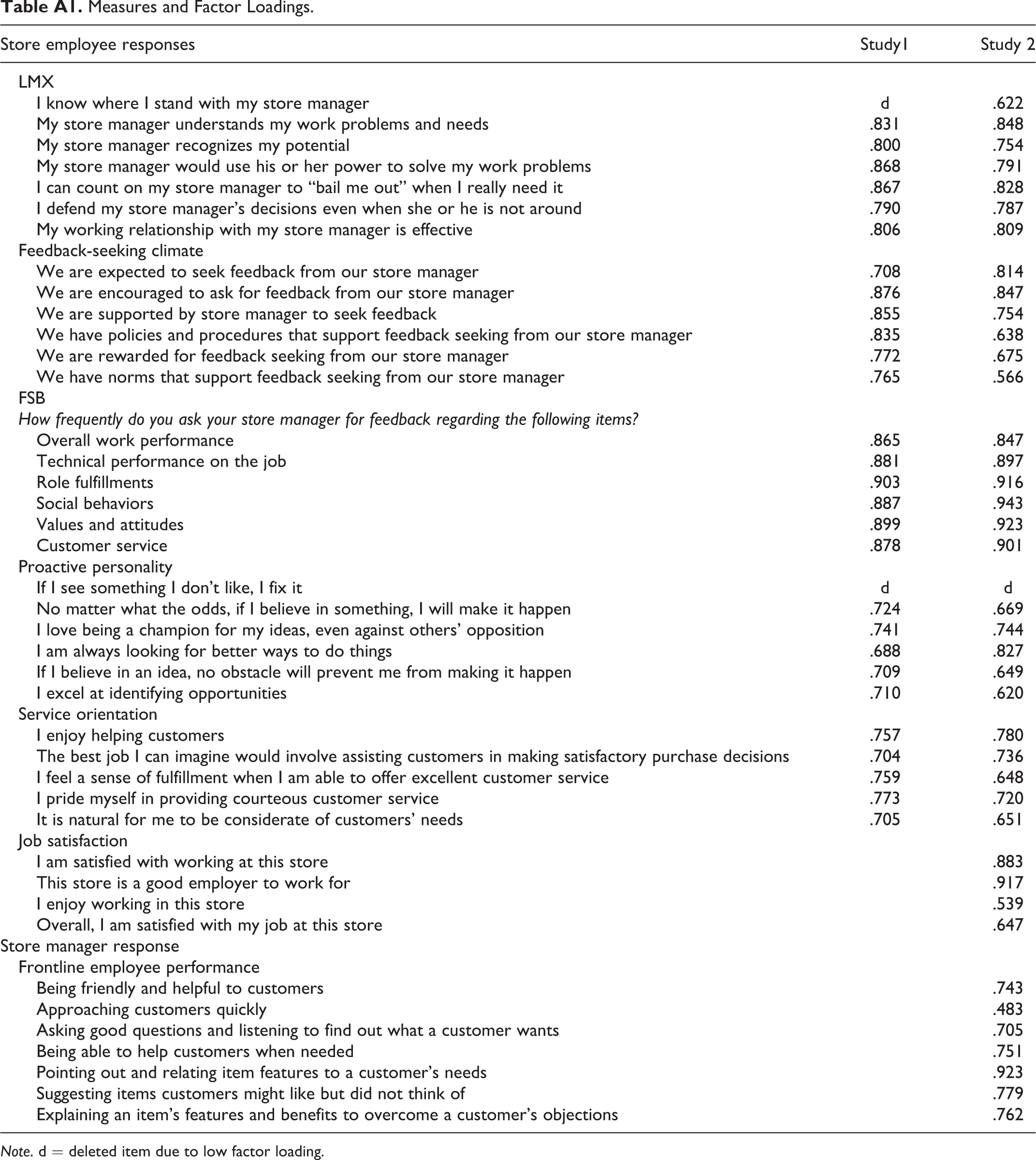
| Store employee responses | Study1 | Study 2 |
|---|---|---|
| LMX | ||
| I know where I stand with my store manager | d | .622 |
| My store manager understands my work problems and needs | .831 | .848 |
| My store manager recognizes my potential | .800 | .754 |
| My store manager would use his or her power to solve my work problems | .868 | .791 |
| I can count on my store manager to “bail me out” when I really need it | .867 | .828 |
| I defend my store manager’s decisions even when she or he is not around | .790 | .787 |
| My working relationship with my store manager is effective | .806 | .809 |
| Feedback-seeking climate | ||
| We are expected to seek feedback from our store manager | .708 | .814 |
| We are encouraged to ask for feedback from our store manager | .876 | .847 |
| We are supported by store manager to seek feedback | .855 | .754 |
| We have policies and procedures that support feedback seeking from our store manager | .835 | .638 |
| We are rewarded for feedback seeking from our store manager | .772 | .675 |
| We have norms that support feedback seeking from our store manager | .765 | .566 |
| FSB | ||
| How frequently do you ask your store manager for feedback regarding the following items? | ||
| Overall work performance | .865 | .847 |
| Technical performance on the job | .881 | .897 |
| Role fulfillments | .903 | .916 |
| Social behaviors | .887 | .943 |
| Values and attitudes | .899 | .923 |
| Customer service | .878 | .901 |
| Proactive personality | ||
| If I see something I don’t like, I fix it | d | d |
| No matter what the odds, if I believe in something, I will make it happen | .724 | .669 |
| I love being a champion for my ideas, even against others’ opposition | .741 | .744 |
| I am always looking for better ways to do things | .688 | .827 |
| If I believe in an idea, no obstacle will prevent me from making it happen | .709 | .649 |
| I excel at identifying opportunities | .710 | .620 |
| Service orientation | ||
| I enjoy helping customers | .757 | .780 |
| The best job I can imagine would involve assisting customers in making satisfactory purchase decisions | .704 | .736 |
| I feel a sense of fulfillment when I am able to offer excellent customer service | .759 | .648 |
| I pride myself in providing courteous customer service | .773 | .720 |
| It is natural for me to be considerate of customers’ needs | .705 | .651 |
| Job satisfaction | ||
| I am satisfied with working at this store | .883 | |
| This store is a good employer to work for | .917 | |
| I enjoy working in this store | .539 | |
| Overall, I am satisfied with my job at this store | .647 | |
| Store manager response | ||
|
|
||
| Being friendly and helpful to customers | .743 | |
| Approaching customers quickly | .483 | |
| Asking good questions and listening to find out what a customer wants | .705 | |
| Being able to help customers when needed | .751 | |
| Pointing out and relating item features to a customer’s needs | .923 | |
| Suggesting items customers might like but did not think of | .779 | |
| Explaining an item’s features and benefits to overcome a customer’s objections | .762 | |
Note. d = deleted item due to low factor loading.
Declaration of Conflicting Interests
The author(s) declared no potential conflicts of interest with respect to the research, authorship, and/or publication of this article.
Funding
The author(s) received no financial support for the research, authorship, and/or publication of this article.
Supplemental Material
Supplementary material for this article is available online.
Notes
References
Supplementary Material
Please find the following supplemental material available below.
For Open Access articles published under a Creative Commons License, all supplemental material carries the same license as the article it is associated with.
For non-Open Access articles published, all supplemental material carries a non-exclusive license, and permission requests for re-use of supplemental material or any part of supplemental material shall be sent directly to the copyright owner as specified in the copyright notice associated with the article.
