



Abstract
Some retailers encourage consumers to mention the names of frontline service employees when writing online reviews. As a result, although most consumers do not pay attention to frontline service employees’ names during consumption, they often see them in online reviews. The effect of this asymmetry on review persuasiveness is still unknown. This research examines the impact of mentioning frontline service employee names in online reviews on readers’ likelihood of being persuaded by them. The results of one secondary data analysis and four online experiments from China demonstrate that readers are less persuaded by positive online reviews mentioning (vs. not mentioning) frontline service employee names, and perceived deception mediates this negative effect. In addition, the level of required service expertise, occurrence frequency, and review valence moderate this negative effect. For services that require a high level of expertise, when the occurrence frequency of positive reviews mentioning frontline service employee names is low, and when the reviews are negative, the aforementioned negative effect diminishes. Our study offers a new direction for name research and identifies a new factor that influences online review persuasiveness. Our findings provide valuable managerial insights into online review management strategies in the Chinese context.
Introduction
Imagine that you have to choose a restaurant for your weekend date with friends. You find one online that you have never been to before. It meets your requirements in terms of customer ratings, location, types of dishes, and prices. When you browse its reviews, you find that many positive reviews named frontline service employees to praise them (e.g., “The waiter Andy is polite and helpful”). Does this make you better believe or question the credibility of this restaurant’s online reviews?
Online reviews have a large impact on a consumer’s decision-making process (Babić Rosario et al. 2016; Floyd et al. 2014). Reviewers often mention their experiences with a company’s service when writing online reviews (Ordenes et al. 2014; Zhu, Ye, and Chang 2017). Although many reviewers usually use the terms “the waiter/waitress” or “the service” to refer to frontline service employees, we have observed that the names of these employees also often appear in online reviews. Our pre-study on Chinese consumers reveals that although most consumers don’t notice waiters’ and waitresses’ names at restaurants, they often see them in online reviews. Through interviews with restaurant staff, we learned that some managers use the number of positive online reviews that mention staff members’ names to evaluate frontline service employees’ performances and further increase the number of positive reviews.
Although this phenomenon is not unusual, it is unclear what readers think of such reviews. Previous studies that were conducted on names primarily focused on consumer names (Carlson and Conard 2011; Sahni, Wheeler, and Chintagunta 2018) and brand names (Gao et al. 2020; Pogacar et al. 2021). Although Kim and Baker (2017) examined the effect of disclosing frontline service employee names on consumers’ perceived authenticity of ethnic restaurant experiences, no study has yet looked into the consequences of frontline service employee names in online reviews. As the antecedents of online review persuasiveness are the focus of businesses and scholars (Hong et al. 2017; Reich and Maglio 2019), it is of great importance to explore the persuasiveness of online reviews that mention frontline service employee names. To fill this gap, this study aims to investigate how frontline service employee names affect review persuasiveness using empirical evidence from China.
Merchants are out-group members to Chinese customers, and names are powerful tools to build social connections and indicate the quality of relationships (Finch 2008; Zhang and Patrick 2021). Thus, we speculate that readers may perceive reviewers who mention the names of frontline service employees in their positive online reviews as being friendly with said employees and worry that their positive reviews are biased, which consequently makes the reviews seem less persuasive. We provide evidence for the negative persuasive effect of naming frontline service employees in reviews. This was done via one secondary data analysis and four online experiments with Chinese consumers.
Our research has several implications. First, this work expands on existing name-related research. To the best of our knowledge, this study is the first to explore the use of names in online reviews and finds that the usage of frontline service employees’ names needs to be taken seriously. Second, our research expands the literature by examining the factors that influence online review persuasiveness. This study proves that frequent mentions of frontline service employee names in positive online reviews negatively affect review persuasiveness when the required expertise is low. Third, our research enriches the existing definition of fake reviews. Unlike most studies that believe that reviews are only considered fake when manipulated or inconsistent with facts (Wu et al. 2020; Zhuang, Cui, and Peng 2018), our research proposes that true reviews can be perceived as fake by readers.
Theoretical Background and Hypotheses
Frontline Service Employee Name
Research in the field of names has investigated the influence of consumer names and brand names on consumer behavior. On the one hand, prior research reveals that the behavior of consumers is affected by their own names. For example, people are likelier to choose brands whose names start with letters from their own names (Brendl et al. 2005). Mentioning consumers’ middle names while shopping increases their perception of guilt, thereby reducing their indulgent consumption (Siddiqui, Ling, and May 2020). Even in a distracting environment, people automatically orient their attention to their own names (Cherry 1953; Tacikowski and Nowicka 2010). Although mentioning consumer names in brand marketing may raise worries about privacy (Wattal et al. 2012), most studies have demonstrated that mentioning consumer names has a positive effect.
An Overview of Research on Names.

Every contact with frontline service employees impacts consumers’ perceptions of businesses (Keller 2003; Subramony et al. 2021). Previous studies have examined the factors of the appearance and behavior of frontline service employees and confirmed their importance in influencing consumer behavior. For example, physical attractiveness promotes customers’ perceptions of frontline service employees’ competence (Magnini, Baker, and Karande 2013) and decreases customers’ social distance perceptions (Li, Zhang, and Fang 2022). Appropriate dress increases interaction with consumers (Wang and Lang 2019). Authentic smiles lead to higher ratings of service performance (Hennig-Thurau et al. 2006; Lechner, Mathmann, and Paul 2022). Communicating with consumers via eye contact often establishes bonds with them (Ford and Etienne 1994). Expressive similarity with customers heightens consumer satisfaction (Lim, Lee, and Foo 2016). These studies address how frontline service employees should deal with consumers and maximize satisfaction without involving their own names. To the best of our knowledge, only Kim and Baker (2017) have examined the positive influence of service providers introducing themselves by name on the perceived authenticity of consumers’ experiences in ethnic restaurants. Therefore, the name of frontline service employees is a new topic.
To better understand the phenomenon of frontline service employee names in online reviews and their impact on reader perceptions, we recruited 343 Chinese consumers (42.57% male, Mage = 30.49) from the Chinese professional survey platform “wjx.cn” to participate in our pre-study. First, we asked participants “Have you ever been asked by a restaurant server to give a good review and mention his/her name on platforms like Dianping.com?” The results revealed that 28.86% of the respondents selected “yes,” indicating that it is common for frontline service employees to ask for positive online reviews that mention their names. Second, the participants were asked, “When you read online reviews on platforms like Dianping.com, have you ever seen reviews praising a specific server?” The results revealed that 56.85% of respondents chose “yes.” Last, they were asked, “When you consume in restaurants, have you ever paid attention to whether the server wears a name tag with his/her name on it?” The results demonstrated that only 10.79% of respondents pay attention to employees’ name tags. Thus, most consumers do not pay attention to frontline service employees’ names during consumption, but they often see them in online reviews. However, little is known about whether this asymmetry affects the persuasiveness of online reviews, and we aim to explore this mystery.
Social Categorization, Frontline Service Employee Names, and Review Persuasiveness
Social categorization is a natural cognitive process that is an important part of social cognition (Shkurko 2013). Categorizing people into different social groups to distinguish between them happens everywhere in society (Thijs and Verkuyten 2023). Among social categorization criteria, the general in-group/out-group distinction is the most typical representation of group differences, and it is the basic form of human social cognition behind many complex social phenomena (Shkurko 2013). People consider individuals who share similarities in social identity categories as in-groups and those who do not meet certain criteria as out-groups. For instance, when shopping, consumers and merchants play opposite social roles. In this context, since both readers and reviewers are consumers, readers will view reviewers as members of the in-group and merchants as members of the out-group.
People have more positive attitudes toward in-group members than toward out-group members (Choi and Winterich 2013). Children already actively help in-group members over out-group members even if they are unfamiliar with said in-group members (Weller and Lagattuta 2013). In addition, people use their own traits and characteristics to form their impressions of other in-group members (Rogers and Biesanz 2014). Accordingly, when readers view reviewers as in-group members, they assume that reviewers should be on their side rather than on the merchants’ side. However, the use of names often implies a social connection (Finch 2008; Zhang and Patrick 2021). Positive online reviews that mention employee names may raise readers’ suspicions of a social relationship between the reviewer and the employee. Our pre-study demonstrates that people tend not to pay attention to server names during consumption. As Chinese people tend to follow a collectivist culture, they are often more sensitive to the in-group and out-group boundaries than those from an individualist culture (Zhu, Ye, and Chang 2017). Reviews that mention employee names can lead Chinese readers to feel that the reviewers, instead of being in-group members who should be helping them make decisions, are helping out-group members, the frontline service employees, improve their performance by publicizing them. This asymmetry makes them feel extraordinary and thus results in feelings of being deceived. Prior research has also suggested that when readers realize that reviewers are trying to influence their thoughts to achieve personal goals, they consider the reviews to be deceptive (Zehrer, Crotts, and Magnini 2011). Deceptive reviews are often considered false (Mayzlin, Dover, and Chevalier 2014) and negatively impact their persuasiveness. Therefore, we propose the following hypotheses:
Readers are less persuaded by positive online reviews mentioning (vs. not mentioning) frontline service employee names.
The negative effect of mentioning frontline service employee names in online reviews on readers’ likelihood of being persuaded by them is mediated by perceived deception.
Moderating the Negative Effect of Mentioning Frontline Service Employee Names
Required Service Expertise
Different services require service employees to have different levels of expertise. For example, restaurant waiters and hotel front desk agents need lower expertise, while chefs, doctors, and lawyers need higher expertise. Generally speaking, for services that only require service employees to have low expertise, there is minimal difference in service outcomes between different frontline employees. Thus, customers do not necessarily care who the frontline service employee is. On the contrary, for services that require employees to have a high level of expertise, individual differences can be significant, and customers thus often deliberately choose specific frontline service employees. For example, consumers rarely choose waiters in restaurants, but they often select specific high-quality service employees in hairdressing shops (Bove and Johnson 2006, 2009) and beauty care salons (Khan and Tabassum 2012). Furthermore, patients read online reviews about healthcare providers to determine whether or not to consult them (Khasawneh et al. 2018). As consumers pay more attention to the names of frontline employees when partaking in services that require high expertise, it seems less extraordinary if names are mentioned in online reviews. Therefore, we assume that the negative impact of employee name mentions on readers’ likelihood of being persuaded by them is moderated by the required service expertise and that it reduces as the required service expertise increases. The hypothesis is as follows:
Required service expertise will moderate the negative effect of mentioning frontline service employee names in online reviews on readers’ likelihood of being persuaded by them, such that the negative effect is attenuated for services where the required service expertise is high.
Occurrence Frequency
When we read reviews in our daily lives, we always look at multiple reviews at once (Reich and Maglio 2019). Signal repetition can decrease the ambiguity of judgments (Valsesia and Diehl 2022), so multiple signals of the same type are more diagnostic (Skowronski and Carlston 1987). Accordingly, the names of frontline service employees appearing frequently in reviews can be a definite diagnostic signal. As our pre-study demonstrated that most consumers do not pay attention to the name of the frontline service employee during consumption, such signals can make consumers feel that these reviews are biased. However, as the saying goes, there are exceptions to every rule. When the names of frontline service employees only occasionally appear in reviews, readers may assume that these are exceptions for individual customers. Therefore, it seems less out of the ordinary. We thus assume that the negative effect of mentioning employee names in online reviews on readers’ likelihood of being persuaded by them reduces when the frequency of positive reviews mentioning employee names is low. The hypothesis is as follows:
The occurrence frequency will moderate the negative effect of mentioning frontline service employee names in online reviews on readers’ likelihood of being persuaded by them, such that the negative effect is attenuated when the occurrence frequency of mentioning frontline service employee names in positive reviews is low.
Review Valence
As one of the most important attributes of online reviews (Zablocki, Schlegelmilch, and Houston 2019), review valence (positive vs. negative) indicates a reviewer’s overall evaluation of a focal product (Lu et al. 2013). People value and believe negative information far more than positive information, starting as infants (Vaish, Grossmann, and Woodward 2008). Meanwhile, according to attribution theory, compared to positive attitudes, people believe that negative attitudes can better reflect a person’s true feelings (Weaver and Bosson 2011) because expressing negative attitudes risks receiving unfavorable judgments (Folkes and Sears 1977). Therefore, consumers may trust negative reviews more than positive reviews. Prior research has demonstrated that compared to positive attitudes, sharing negative attitudes increases receivers’ feelings of familiarity and closeness to the sharers (Bosson et al. 2006; Weaver and Bosson 2011). According to the theory of social categorization (Shkurko 2013), readers categorize reviewers as members of the in-group and merchants as members of the out-group. As a result, readers may perceive negative reviewers as closer than positive reviewers, and be more likely to trust their reviews. Therefore, regardless of the presence or absence of employee names, readers naturally trust and are persuaded by negative reviews. For positive reviews that readers don’t naturally trust, reviews are less likely to persuade readers when extraordinary information is present. As our pre-study shows, the frequent occurrence of employee names in positive reviews is extraordinary, so positive reviews mentioning employee names are less persuasive.
In addition, from a practical perspective, a negative review is generated when a reviewer is highly dissatisfied with a purchase (Richins 1983; Wang et al. 2023). Instead of asking dissatisfied consumers to expose specific employees in negative reviews, merchants always encourage satisfied consumers to praise specific employees in positive reviews. As a result, positive reviews mentioning (vs. not mentioning) employee names lead to increased perceived deception and low persuasiveness; negative reviews mentioning (vs. not mentioning) employee names do not lead to deceptive perceptions that reviewers conspired with merchants to deceive readers, so review persuasiveness does not decrease. Therefore, we assume that the negative effects of mentioning employee names on readers’ likelihood of being persuaded by them diminish when the review is negative. The hypothesis is as follows:
Review valence will moderate the negative effect of mentioning frontline service employee names on readers’ likelihood of being persuaded by them, such that the negative effect is attenuated when reviews are negative.
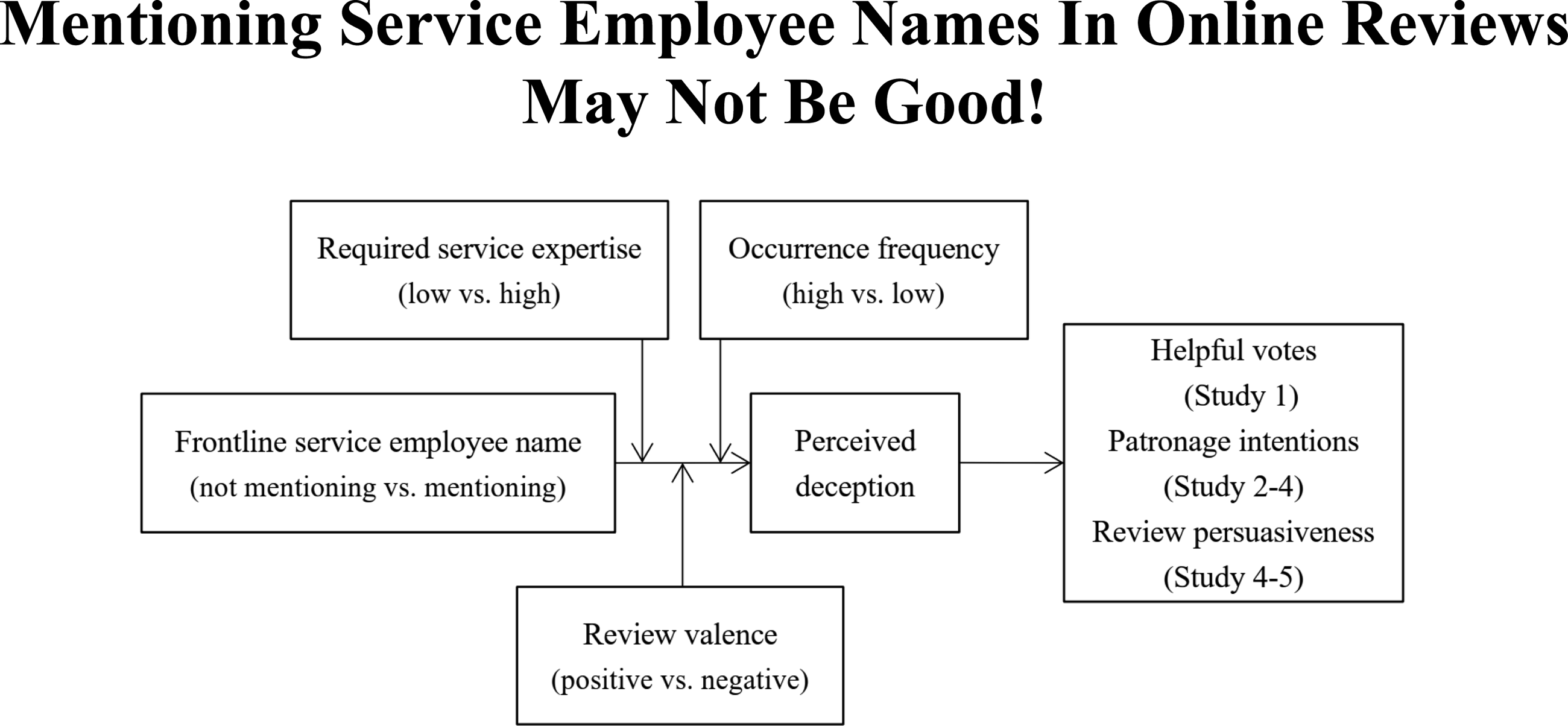
Figure 1 presents the theoretical model of this study. Theoretical model.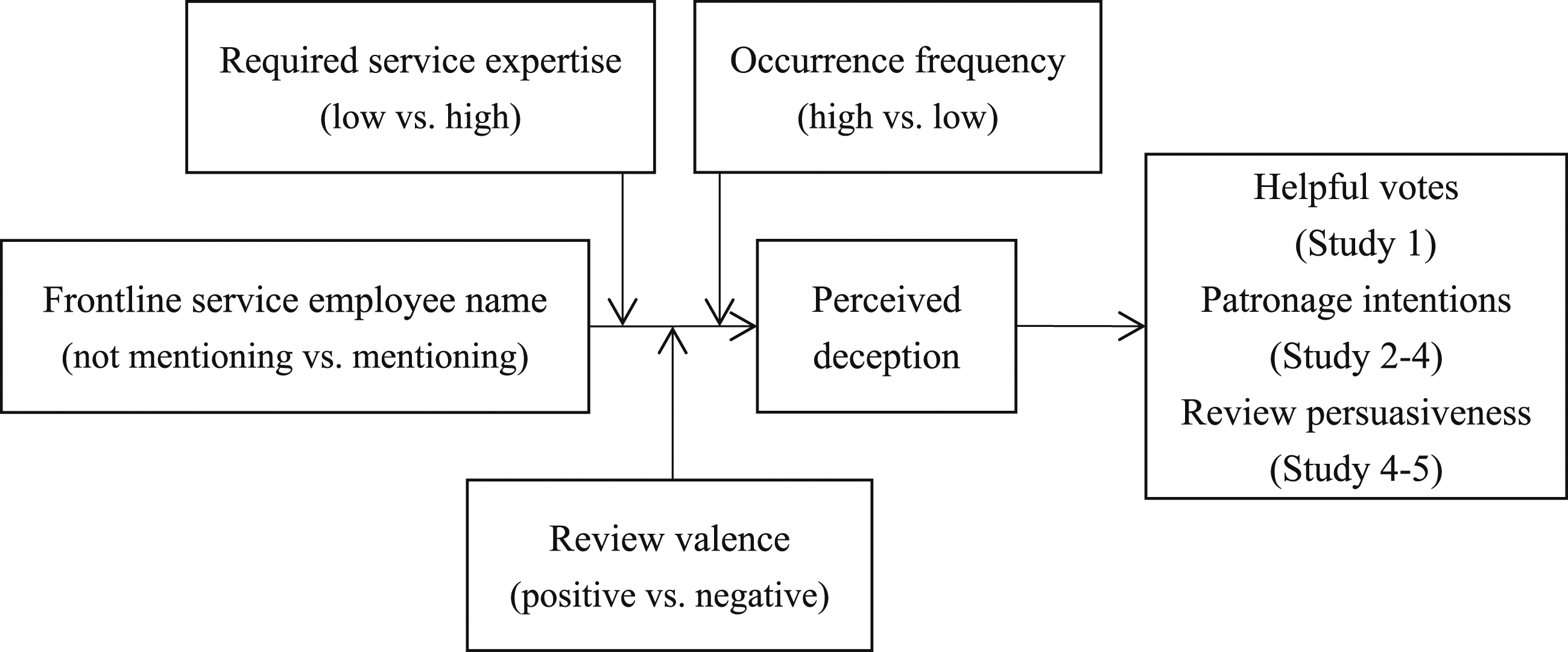
Overview of Studies
Our conceptual framework was examined through real online review data and experiments with different dependent variables (i.e., helpful votes; patronage intention; perceived persuasiveness). Employing data from Dianping.com, which is a third-party online review platform in China, Study 1 examined the effect of mentioning (vs. not mentioning) the names of frontline service employees on the number of helpful votes a review received (H1). Helpful votes were used as a proxy for review persuasiveness, because they reflect a review’s perceived quality and impact readers’ purchase intentions (Chen, Dhanasobhon, and Smith 2008). In Study 2, an online experiment tested whether positive online reviews mentioning (vs. not mentioning) frontline service employees’ names decreased participants’ patronage intentions. It also tested the mediating role of perceived deception in the context of restaurants (H2). Patronage intentions were used as an indication of the extent to which reviews persuade readers, consistent with Kupor and Tormala (2018) and Van Laer et al. (2019). Study 3 investigated the moderating role of required service expertise in the context of foot-care shops (H3), and also used patronage intention as the dependent variable. We chose patronage intention as our dependent variable in these two studies to examine our effect from the behavioral intention aspect. Study 4 tested the moderating effect of the frequency of positive reviews that mentioned frontline service employee names in the context of restaurants (H4) with the dependent variables of patronage intention and perceived persuasiveness. Finally, Study 5 examined the moderating effect of review valence in the context of hotels (H5), with perceived persuasiveness as the dependent variable.
Study 1: Secondary Data Analysis
The purpose of Study 1 was to examine whether readers are less persuaded by positive online reviews that mentioned employee names, testing H1. Since secondary data is more natural and could not be manipulated by researchers, we collected review data from Dianping.com, which is the largest independent third-party online review platform in China (Zhu et al. 2019). Similar to Yelp, Dianping.com lists various shops (restaurants, pedicure shops, theaters, barbershops, hotels, etc.). Reviewers can post ratings, submit text reviews, and upload pictures of their experiences. Readers can vote a review “helpful” if they find it informative or useful, and the number of such votes is presented under each review (Wu et al. 2015). Consistent with the methods of many similar studies (e.g., Kupor and Tormala 2018; Reich and Maglio 2019; van Laer et al. 2019), we used these “helpful” votes as the proxy for review persuasiveness, because they reflect a review’s perceived quality and impact readers’ purchase intentions (Chen, Dhanasobhon, and Smith 2008). We also conducted two pre-tests to prove the effectiveness of “helpful” votes as a proxy for review persuasiveness (see the Web Appendixes A and B for details). We predicted that positive online reviews mentioning (vs. not mentioning) frontline service employee names have fewer “helpful” votes.
Data
We scraped the reviews of mid-level Chinese food chain restaurants that frequently included waiters’ names from Dianping.com. On January 26, 2021, we scraped all the reviews of 10 stores in a Chinese food restaurant chain in a central Chinese city. The total number of reviews was 16,470. Each review consisted of the reviewer’s ID, review post time, rating, textual review, the number of images, and the number of “helpful” votes. The formal research data were collected through three steps.
First, one researcher summarized all the frontline service employee-related indicators that appeared in 500 online reviews and, in discussion with another researcher, identified a set of indicators to determine whether a frontline service employee’s name was likely to be included in a review. The indicators included food service-related terms such as “service,” “waiter,” and “auntie,” as well as Chinese nicknames for waiters “Xiaojiejie” and “Xiaogege.” Second, two independent research assistants who were not aware of the research purpose separately searched for the above indicators in an Excel sheet containing the reviews using the “find” function. After locating all the reviews that mentioned service employees, they read and coded whether the reviews mentioned the employees’ names. Finally, a total of 4470 reviews containing the above indicators were extracted. Among them, 2910 reviews did not mention waiter names, and 1560 reviews mentioned waiter names. Any information that could help identify a specific waiter was regarded as the waiter’s name, including their real name, nickname, or employee number. Third, the 2910 reviews that praised a specific waiter without mentioning their name were marked “1,” and the 1560 reviews that praised the waiter and mentioned their name were marked “2.”
The inter-coder reliability was then checked. The results showed that the percentage agreement was 94.2%, and the Cohen’s kappa coefficient was 0.870, which indicated good inter-coder reliability (Nahm et al. 2002). Therefore, the final dataset included 2910 reviews that did not mention waiter names and 1560 reviews that did. The remaining 12,000 reviews did not mention service at all and were thus not included.
Results
Results of Negative Binomial Regressions in Study 1.

Note: (1) Dianping.com uses “赞” votes, which is the same as “helpful” votes according to Wu et al. (2015). The number of “helpful votes” is often used to measure review persuasiveness (e.g., Kupor and Tormala 2018; Reich and Maglio 2019; van Laer et al. 2019). In addition, our pre-studies showed that whether the richness of review content is low or high, more helpful votes (“赞” votes) increase review persuasiveness (see the Web Appendixes A and B).
(2) Standard errors are in parentheses.
(3) ***—p<.001, **—p<.01, *—p<.05.
Discussion
These results provide initial support that mentioning the names of frontline service employees in online reviews decreases helpful votes; this is consistent with the idea that readers might be less persuaded by online reviews including frontline employee names. Many factors influence readers’ choice to click the “helpful” button of online reviews, such as the amount of informative content or humorous language they contain. Thus, Study 1 did not rule out the influence of other factors besides naming frontline service employees. Next, Study 2 conducted an online experiment to control the influence of other factors, examine the main effect again, and test the mediating effect of perceived deception.
Study 2: The Mediator of Perceived Deception
The purpose of Study 2 was to further examine H1 and the mediating effect of perceived deception by using an online experiment, thus testing H2. We used patronage intention as an indication of the extent to which reviews persuade readers in line with Kupor and Tormala (2018) and Van Laer et al. (2019), we also conducted a pretest to support the effectiveness of patronage intention as a proxy for review persuasiveness (see the Web Appendix B for details). We predict that mentioning (vs. not mentioning) employee names decreases the patronage intentions of participants, and perceived deception mediates the negative effect.
Method
We recruited 132 participants (77.3% female, Mage = 21.89) from the Chinese professional survey platform “wjx.cn.” They were randomly arranged to a single factor (frontline service employee names: not mentioning vs. mentioning) between-subjects design. Three participants who failed an attention test were removed, leaving 129 valid samples.
To create an environment that allowed participants to view reviews in a real way (Reich and Maglio 2019), participants were presented with five reviews. First, they were asked to imagine that they were going to visit a restaurant with their friends the next day. They had to browse the Dianping.com reviews of a restaurant that they were considering going to on this occasion. Then they each saw five reviews. The difference was that one group saw each review mentioned a waiter’s name (e.g., “No. 11 waiter Miss Lulu was warm and thoughtful, the environment was clean and tidy”), while the other group only saw the frontline service employees being referred to as “waiter” instead of with their names (e.g., “The waiter was warm and thoughtful, the environment was clean and tidy”). These reviews were adapted from the reviews of Study 1 (see the Web Appendix C for all reviews).
Finally, participants reported their patronage intentions (“How likely are you to choose this restaurant?” 1 = Not likely at all, 7 = very likely, adapted from Aaker, Vohs, and Mogilner (2010)), perceived deception (“These reviews are: truthful (reverse-coded)/honest (reverse-coded)/misleading/deceptive,” 1 = strongly disagree, 7 = strongly agree, adapted from Darke and Ritchie (2007), α = .88), attention checks (“This question is to see if you are paying attention. Please select the second option.” Three participants failed to choose the second one. “Did those reviews mention the name of the waiter?” “No/Yes.” All the participants of the mentioning (vs. not mentioning) group chose “Yes (vs. No).”), and demographic information.
Results
Patronage Intentions
A one-way ANOVA on patronage intentions showed a significant difference between the two service employee name conditions (Figure 2). Reviews mentioning (vs. not mentioning) frontline service employee names group had lower patronage intentions (Mno-name = 5.09, SD = 1.22 vs. Mname = 4.55, SD = 1.45; F (1, 127) = 5.360, p = .022, ηp2 = 0.040). Results of Study 2 on patronage intentions and perceived deception.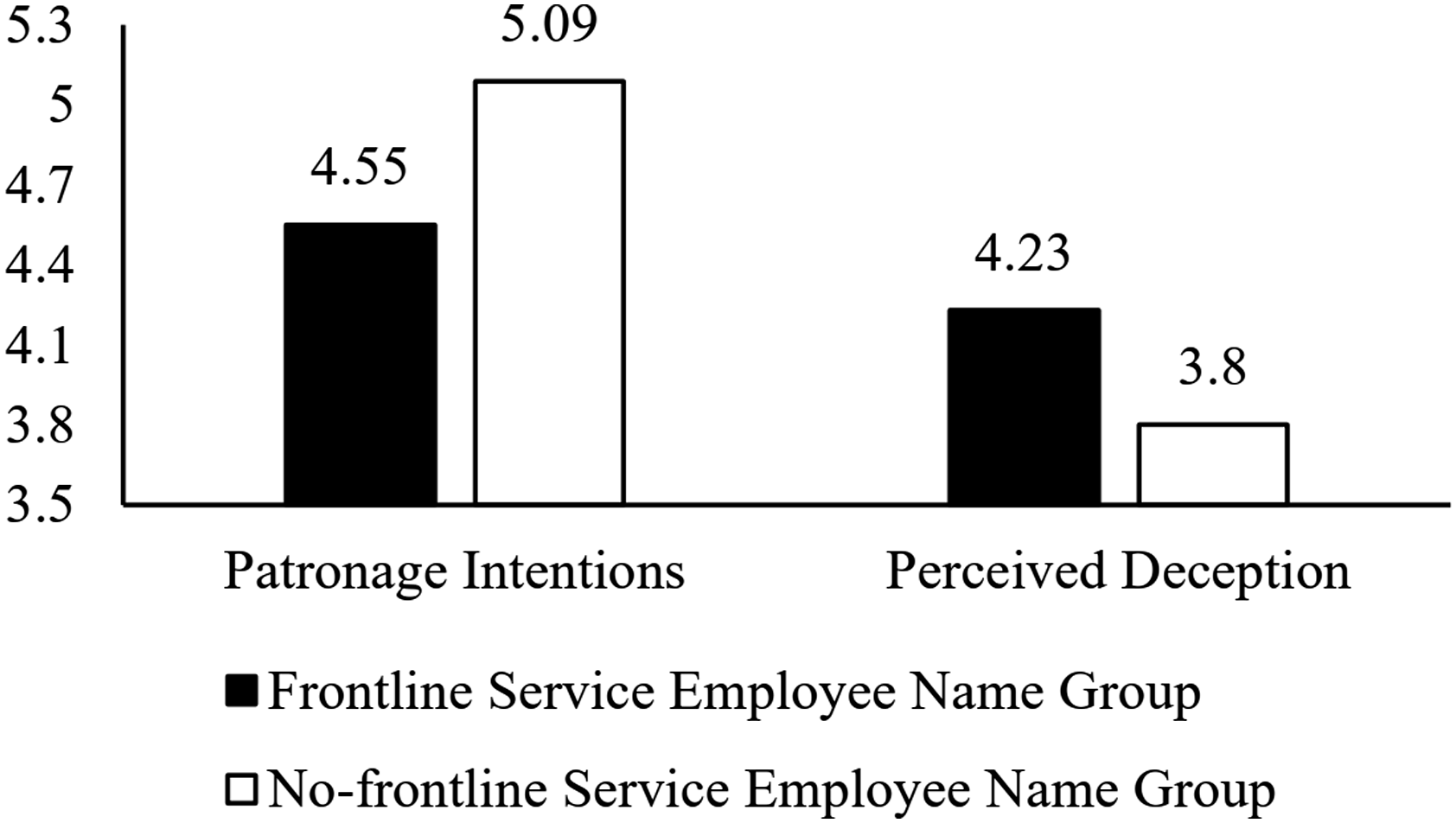
Perceived Deception
A one-way ANOVA on perceived deception showed a significant difference between the two name conditions (Figure 2). Reviews mentioning (vs. not mentioning) frontline service employee names group had higher perceived deception (Mno-name = 3.80, SD = 1.05 vs. Mname = 4.23, SD = 1.21; F (1, 127) = 4.781, p = .031, ηp2 = 0.036).
Mediation Analysis
We examined whether perceived deception mediated the relationship between the mention of frontline service employee names and patronage intentions using Hayes (2018)’s PROCESS Model 4 with 5000 bootstrap samples and 95% bias-corrected CIs. We included mentioning names as the independent variable (1 = not mentioning, 2 = mentioning), patronage intentions as the dependent variable, and perceived deception as the mediator. Findings showed that the CI surrounding the negative indirect effect of frontline service employee name outcomes on patronage intentions did not contain zero (indirect effect = −0.3259; 95% CI [−0.6460, −0.0298]), while the CI surrounding the negative direct effect of frontline service employee name outcomes on patronage intentions contained zero (direct effect = −0.2196; 95% CI [−0.5889, 0.1497]). This indicated that perceived deception served as a mediator.
Discussion
Study 2 supports the idea that mentioning frontline service employees’ names reduced patronage intentions; this finding is consistent with the idea that readers are less persuaded by online reviews mentioning frontline service employee names. We also find evidence that the mediator is perceived deception. Since both Study 1 and Study 2 employed restaurant scenarios as the research background, we conducted a supplementary experiment using a hotel scenario instead. Unlike in Study 2, where all the reviews mentioned services, one review in the supplementary experiment did not mention services to simulate a more realistic online review context. The results of this experiment also support the negative impact of mentioning the names of frontline service employees in online reviews on readers’ likelihood of being persuaded by them and the mediating role of perceived deception (see the Web Appendix D). Next, Study 3 tested the moderating effect of required service expertise.
Study 3: The Moderator of Required Service Expertise
The purpose of Study 3 was to examine the moderating role of required service expertise, testing H3. It is a common phenomenon for both skilled technicians and ordinary employees to be employed by foot-care shops, and the expertise required by a technician is higher than that of a service employee. Therefore, a foot-care shop was chosen as the background of this study because it allows for the manipulation of the required service expertise level by considering different types of frontline service employees. We predict that mentioning (vs. not mentioning) frontline service employee names in positive online reviews decreases the patronage intentions of participants by increasing perceived deception when the required expertise of the service is low, whereas the negative effect decreases when the required expertise of the service is high.
Method
We recruited 239 participants (64.4% female, Mage = 22.57) from “wjx.cn.” They were randomly divided into a 2 (frontline service employee names: not mentioning vs. mentioning) * 2 (required service expertise: high vs. low) between-subjects design. Nineteen participants who failed an attention test were removed, leaving 220 valid samples.
First, participants were asked to imagine that they were planning to go for foot care with their friends. The high-expertise group was told that they were looking for a foot-care shop that was serviced by professional technicians. The service process of this kind of shop is that consumers first choose a professional technician. The chosen technician then leads them to the massage room and personally provides the massage services. The low-expertise group was told that they were looking for a foot-care shop serviced by an intelligent massage barrel. The service process of this kind of shop is that consumers are first greeted by a service employee who then leads them to the massage room to enjoy massage services provided by an intelligent massage barrel. Participants were then asked to browse four reviews of a foot-care shop that they were considering visiting on Dianping.com. Participants in the mentioning employee name group read one service-irrelevant review (i.e., This store is quite luxurious. It also offers snacks during the massage. You can choose glutinous rice balls and dumplings) and three positive reviews that mentioned employees’ names (e.g., Come to experience the pedicure on my friend’s birthday, No. 5 technician/waiter Li Liu’s massage skill/service is very good). Participants in the not mentioning employee name group read the same service-irrelevant review and three positive reviews that did not specifically mention the employee’s name (e.g., Come to experience the pedicure on my friend’s birthday, the technician/waiter’s massage skill/service is very good) (see the Web Appendix C for all reviews).
Finally, participants reported their patronage intentions, perceived deception (α = .91), attention checks, manipulation check about required service expertise (How important do you think the expertise of the frontline service employee who will service you tomorrow? 1 = very unimportant, 7 = very important), and demographic information. The measures of patronage intentions, perceived deception, and attention checks were the same as in Study 2.
Results
Manipulation Check
The score of the high-expertise group was significantly higher than the low-expertise group (Mhigh = 6.18, SD = 1.01 vs. Mlow = 4.31, SD = 2.21; F (1, 218) = 66.270, p < .001, ηp2 = 0.233), indicating that the manipulation was successful.
Patronage Intentions
A two-way ANOVA on patronage intentions showed a significant main effect of mentioning names (F (1, 216) = 8.953, p = .003, ηp2 = 0.040) and a non-significant main effect of service provider expertise (F (1, 216) = 1.547, p = .215).
More importantly, the two-way interaction was significant (F (1, 216) = 8.809, p = .003, ηp2 = 0.039). Planned contrasts revealed that in the low required service expertise group, participants in the reviews mentioning (vs. not mentioning) frontline service employee names group had lower patronage intentions (Mno-name = 5.12, SD = 1.32 vs. Mname = 4.03, SD = 1.41; F (1, 216) = 17.283, p < .001, ηp2 = 0.074), while in the high required service expertise group, the patronage intentions of two groups had no significant difference (Mno-name = 4.81, SD = 1.36 vs. Mname = 4.80, SD = 1.30; F (1, 216) < 0.001, p = .986) (Figure 3). Results of Study 3 on patronage intentions.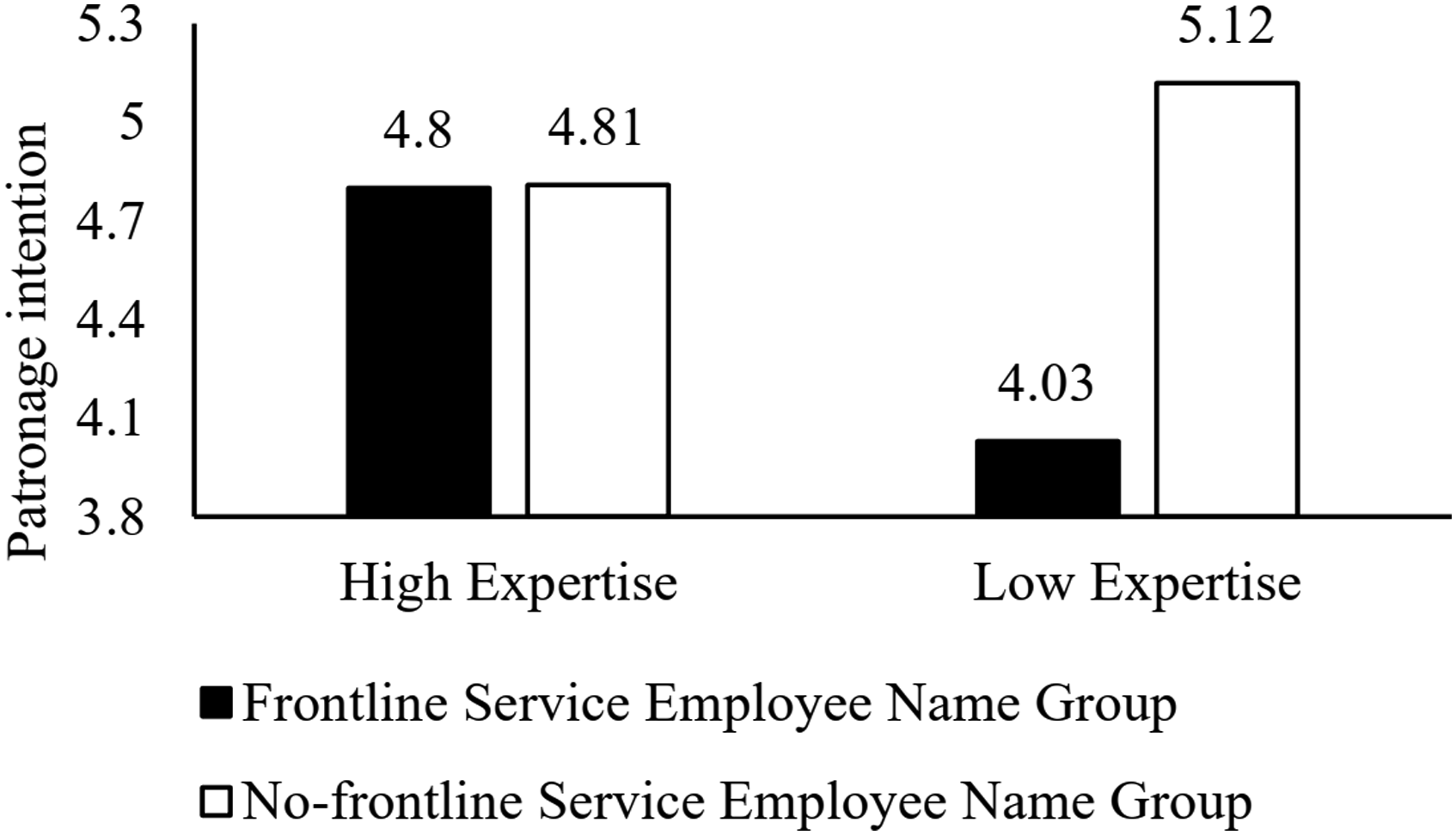
Perceived Deception
A two-way ANOVA on perceived deception showed a significant main effect of mentioning names (F (1, 216) = 4.926, p = .027, ηp2 = 0.022) and a non-significant main effect of required service expertise (F (1, 216) = 1.459, p = .228).
The two-way interaction was significant (F (1, 216) = 10.904, p = .001, ηp2 = 0.048). Planned contrasts revealed that in the low required service expertise group, participants in the reviews mentioning (vs. not mentioning) frontline service employee names group had higher perceived deception (Mno-name = 3.54, SD = 1.11 vs. Mname = 4.39, SD = 1.33; F (1, 216) = 14.834, p < .001, ηp2 = 0.064), while in the high required service expertise group, the perceived deception of two groups had no significant difference (Mno-name = 3.86, SD = 1.09 vs. Mname = 3.69, SD = 1.03; F (1, 216) = 0.603, p = .438).
Moderated Mediation Analysis
We ran a moderated mediation model by using Hayes (2018)’s PROCESS Model 8 with 5000 bootstrap samples and 95% bias-corrected CIs. We included mentioning names as the independent variable (1 = not mentioning, 2 = mentioning), patronage intentions as the dependent variable, perceived deception as the mediator, and required service expertise as the moderator (1 = high, 2 = low). Results show that the indirect effect of mentioning names through perceived deception on patronage intentions for the low required service expertise condition was significant (indirect effect = −0.6523; 95% CI [−1.0275, −0.2984]), and the direct effect of mentioning names on patronage intentions was also significant (direct effect = −0.4357; 95% CI [−0.8431, −0.0282]). However, consistent with the above ANOVA results, the indirect effect in the high required service expertise condition was not significant (indirect effect = 0.1279; 95% CI [−0.1691, 0.4328]), the direct effect was neither significant (direct effect = −0.1323; 95% CI [−0.5163, 0.2516]). Finally, a significant moderated mediation effect was found (index = −0.7802; 95% CI [−1.2677, −0.3208]).
Discussion
Study 3 provides evidence that the level of service expertise required moderates the influence of mentioning employees’ names on patronage intentions through the mediator of perceived deception; this is consistent with the idea that for services where there is low service expertise required, readers might be less persuaded by online reviews mentioning employee names via increased perceived deception, whereas for services where there is high service expertise required, the negative effect of mentioning employee names is attenuated. In both Study 2 and Study 3, there was a high occurrence frequency of positive reviews specifying the names of employees. Since we believe that this negative effect exists when there is a high occurrence frequency, Study 4 tested the moderator of occurrence frequency.
Study 4: The Moderator of Occurrence Frequency
Study 4 aimed to examine the moderating role of occurrence frequency, testing H4. Deviating from Studies 1–3, which used proxy variables to measure review persuasiveness, Study 4 added the direct measurement of review persuasiveness. In addition, unlike Studies 2 and 3, which did not specify the genders of the frontline service employees, Study 4 used terms such as “waitress” and “she” to reveal the gender of the employees in all the groups and exclude its influence. We also tested participants’ social categorization of reviewers and service employees to determine whether our assumption that readers categorize reviewers and service employees into different groups is supported. We predict that mentioning (vs. not mentioning) employee names in positive online reviews decreases patronage intentions and review persuasiveness by increasing perceived deception when occurrence frequency is high, whereas such negative effects decrease when occurrence frequency is low.
Method
We recruited 238 participants (74.8% female, Mage = 22.84) from “wjx.cn.” They were randomly arranged to a single factor (occurrence frequency: not mentioning vs. low frequency vs. high frequency) between-subjects design. Nine participants were removed for failing an attention test, leaving 229 effective data.
First, the participants were instructed to imagine that they were going to a restaurant with their friends the next day. They had to choose the restaurant type in which they were most interested from a list of 10 (e.g., hot pot). Next, they had to read reviews of an option of their favorite type of restaurant on Dianping.com to help them make a choice and were asked to judge two statements about social categorization (“When it comes to restaurant choice, consumption, and evaluation, consumers who write reviews and you are the same type of person that belong to the same group; When it comes to restaurant choice, consumption, and evaluation, service employees of the restaurant and you are the same type of person that belong to the same group.” 1 = strongly disagree, 7 = strongly agree; adapted from Escalas and Bettman (2005)). Afterward, they were shown five reviews of that restaurant. The high-frequency group had different waitresses’ names mentioned in four reviews (e.g., No. 11 waitress Chenchen Liu was friendly, the dishes cater to young people’s tastes.), and the low-frequency group had it mentioned in only one review. The not mentioning group used the term “waitress” instead of specifying their names (e.g., The waitress was friendly, the dishes cater to young people’s tastes.) (see the Web Appendix C for all reviews).
Finally, participants reported their patronage intentions, perceived persuasiveness (“These reviews are persuasive/not persuasive, convincing/unconvincing, important to me/not important to me, and helpful/not helpful”; 7 point semantic differential scales; adapted from Zhang, Craciun, and Shin (2010), α = .85), perceived deception (α = .87), attention checks, manipulation check about occurrence frequency (“Do you agree with this sentence: There are many reviews that mention the names of servers”; 1 = strongly disagree, 7 = strongly agree), and demographic information. The measures of patronage intentions, perceived deception, and attention checks were the same as in Study 2.
Results
Manipulation Check
The perceived occurrence frequency of each group varied significantly (F (2, 226) = 96.002, p < .001): the score of the high-frequency group (Mhigh = 5.78, SD = 1.32) was significantly higher than that of the low-frequency group (Mlow = 4.20, SD = 1.88; F (1, 226) = 38.831, p < .001, ηp2 = 0.147) and not mentioning group (Mnot = 2.26, SD = 1.40; F (1, 226) = 190.886, p < .001, ηp2 = 0.458), and the score of the low-frequency group was significantly higher than that of not mentioning group (F (1, 226) = 60.471, p < .001, ηp2 = 0.211), indicating that the manipulation was successful.
Social Categorization
A one-way ANOVA on social categorization showed a significant difference between participants’ social categorization of reviewer and service employee. Participants perceived reviewers (vs. service employees) to be more like the in-group members (Mreviewer = 5.17, SD = 1.16 vs. Mserver = 3.84, SD = 1.39; F (1, 456) = 122.855, p < .001, ηp2 = 0.212). There was no significant difference in categorization on reviewers (Mno = 5.16, SD = 1.03 vs. Mlow = 5.22, SD = 1.24, F (1, 226) = 0.102, p = .750; Mno = 5.16, SD = 1.16 vs. Mhigh = 5.12, SD = 1.21, F (1, 226) = 0.029, p = .864; Mlow = 5.22, SD = 1.24 vs. Mhigh = 5.12, SD = 1.21, F (1, 226) = 0.237, p = .627) nor service employees (Mno = 3.86, SD = 1.44 vs. Mlow = 3.86, SD = 1.27, F (1, 226) < 0.001, p = .987; Mno = 3.86, SD = 1.44 vs. Mhigh = 3.81, SD = 1.47, F (1, 226) = 0.046, p = .830; Mlow = 3.86, SD = 1.27 vs. Mhigh = 3.81, SD = 1.47, F (1, 226) = 0.054, p = .816) between the three groups.
Patronage Intentions
A one-way ANOVA on patronage intentions showed a significant effect of occurrence frequency (F (2, 226) = 4.405, p = .013, ηp2 = 0.038) (Figure 4). Patronage intentions in the high-frequency group (Mhigh = 4.41, SD = 1.57) were significantly lower than the low-frequency group (Mlow = 5.03, SD = 1.28; F (1, 226) = 7.664, p = .006, ηp2 = 0.033) and the not mentioning group (Mnot = 4.94, SD = 1.24; F (1, 226) = 5.509, p = .020, ηp2 = 0.024). There was no significant difference between the low-frequency group and the not mentioning group (F (1, 226) = 0.170, p = .681). Results of Study 4 on patronage intentions, perceived persuasiveness, and perceived deception.
Perceived Persuasiveness
A one-way ANOVA on perceived persuasiveness showed a significant effect on occurrence frequency (F (2, 226) = 4.800, p = .009, ηp2 = 0.041) (Figure 4). Perceived persuasiveness in the high-frequency group (Mhigh = 4.38, SD = 1.22) was significantly lower than the low-frequency group (Mlow = 4.97, SD = 1.19; F (1, 226) = 9.339, p = .003, ηp2 = 0.040) and the not mentioning group (Mnot = 4.77, SD = 1.17; F (1, 226) = 4.065, p = .045, ηp2 = 0.018). There was no significant difference between the low-frequency group and the not mentioning group (F (1, 226) = 1.084, p = .299).
Perceived Deception
A one-way ANOVA on perceived deception showed a significant effect on occurrence frequency (F (2, 226) = 5.909, p = .003, ηp2 = 0.050) (Figure 4). Perceived deception in the high-frequency group (Mhigh = 4.33, SD = 1.15) was significantly higher than the low-frequency group (Mlow = 3.79, SD = 1.04; F (1, 226) = 9.892, p = .002, ηp2 = 0.042) and the not mentioning group (Mnot = 3.85, SD = 0.93; F (1, 226) = 7.914, p = .005, ηp2 = 0.034). There was no significant difference between the low-frequency group and the not mentioning group (F (1, 226) = 0.102, p = .750).
Mediation Analysis
We examined whether perceived deception mediated the relationship between occurrence frequency (1 = not mentioning, 2 = low frequency, 3 = high frequency, indicator coding) and perceived persuasiveness using Hayes (2018)’s PROCESS Model 4 with 5000 bootstrap samples and 95% bias-corrected CIs. Findings outlined that the CI surrounding the indirect effect of low-frequency outcomes on perceived persuasiveness contained zero (indirect effect = 0.0416; 95% CI [−0.2044, 0.2777]), and the CI surrounding the direct effect of low-frequency outcomes on perceived persuasiveness contained zero (direct effect = 0.1573; 95% CI [−0.1182, 0.4328]); the CI surrounding the indirect effect of high-frequency outcomes on perceived persuasiveness did not contain zero (indirect effect = −0.3744; 95% CI [−0.6422, −0.1150]), and the CI surrounding the direct effect of high-frequency outcomes on perceived persuasiveness contained zero (direct effect = −0.0184; 95% CI [−0.3042, 0.2675]). The mediation effect still exists when the dependent variable is patronage intentions. Afterward, we examined whether perceived deception and perceived persuasiveness serially mediated the relationship between occurrence frequency and patronage intentions using Hayes (2018)’s PROCESS Model 6 with 5000 bootstrap samples and 95% bias-corrected CIs. Findings outlined that the CI surrounding the indirect effect of low-frequency outcomes on patronage intentions contained zero (indirect effect = 0.0239; 95% CI [−0.1178, 0.1706]), and the CI surrounding the direct effect of low-frequency outcomes on patronage intentions contained zero (direct effect = −0.0479; 95% CI [−0.3223, 0.2265]); the CI surrounding the indirect effect of high-frequency outcomes on patronage intentions did not contain zero (indirect effect = −0.2153; 95% CI [−0.3707, −0.0714]), and the CI surrounding the direct effect of high-frequency outcomes on patronage intentions contained zero (direct effect = −0.0842; 95% CI [−0.3680, 0.1997]).
Discussion
Study 4 provides evidence that occurrence frequency moderates the effect of frontline service employee name usages on review persuasiveness through the mediator of perceived deception. This negative effect exists when occurrence frequency is high, whereas it decreases when occurrence frequency is low. In addition, this study demonstrates that the negative effects on review persuasiveness carry over to patronage intentions, and supports our assumption that readers perceive reviewers (vs. service employees) as their in-group members. In the above-mentioned online experiments (Studies 2–4), the reviews shown to the participants were all positive. Since we believe that this negative effect exists in the case of positive reviews, Study 5 tested the moderating effect of review valence.
Study 5: The Moderator of Review Valence
Study 5 aimed to test the moderating role of review valence, testing H5. Study 4 set the gender of all the employees mentioned to the groups as female in the background materials, while Study 5 set the gender of the employees in all groups as male to maximize the generality of our effect. We predict that positive online reviews mentioning (vs. not mentioning) service employee names decrease review persuasiveness by increasing the level of perceived deception, whereas this negative effect decreases when the reviews are negative.
Method
Five hundred and three participants (64.2% female, Mage = 23.71) were recruited from Credamo.com, a Chinese survey platform. They were randomly arranged into a 2 (frontline employee names: not mentioning vs. mentioning) * 2 (review valence: positive vs. negative) between-subjects design. 25 participants who failed an attention test were removed, leaving 478 valid samples.
First, the participants were asked to imagine that they were planning to travel. They were made to choose a city that they were interested in from a list of 13 Chinese cities (e.g., Wuhan, Xian). Next, they were shown five reviews of a hotel located in their chosen city. In the positive review group, participants were shown three positive service-relevant reviews mentioning (vs. not mentioning) employee names (e.g., Praise the front desk clerk Hao Wang, he is very thoughtful.) and two positive service-irrelevant reviews (e.g., This hotel is next to the subway!). In the negative review group, participants were shown three negative service-relevant reviews mentioning (vs. not mentioning) employee names (e.g., Criticize the front desk clerk Hao Wang, he is very careless.) and two positive service-irrelevant reviews, the latter of which were the same as those in the positive group. We added positive, service-irrelevant reviews to the negative review group to increase the participants’ feelings of reality, as no business’s online reviews are entirely negative or service-relevant (see the Web Appendix C for all reviews).
Finally, participants reported their perceived persuasiveness (α = .86), perceived deception (α = .93), attention checks, manipulation check about review valence (How were the reviews about hotel service? 1 = very negative, 7 = very positive), and demographic information. The measures of review persuasiveness, perceived deception, and attention checks were the same as in Study 4.
Results
Manipulation Check
As for the review valence, the score of the positive review group was significantly higher than the negative review group (Mpositive = 6.44, SD = 0.63 vs. Mnegative = 1.67, SD = 0.76; F (1, 476) = 5575.825, p < .001, ηp2 = 0.921).
Perceived Persuasiveness
A two-way ANOVA on perceived persuasiveness showed a significant main effect of mentioning employee names (F (1, 474) = 6.796, p = .009, ηp2 = 0.014) and a non-significant main effect of review valence (F (1, 474) = 0.340, p = .560).
More importantly, the two-way interaction was significant (F (1, 474) = 7.398, p = .007, ηp2 = 0.015). Planned contrasts revealed that in the positive review group, participants in the reviews mentioning (vs. not mentioning) frontline service employee names group had lower perceived persuasiveness (Mno-name = 5.83, SD = 0.73 vs. Mname = 5.35, SD = 1.28; F (1, 474) = 14.187, p < .001, ηp2 = 0.029). However, in the negative review group, the perceived persuasiveness of the two groups had no significant differences (Mno-name = 5.53, SD = 0.81 vs. Mname = 5.54, SD = 1.00; F (1, 474) = 0.006, p = .936) (Figure 5). Results of Study 5 on perceived persuasiveness.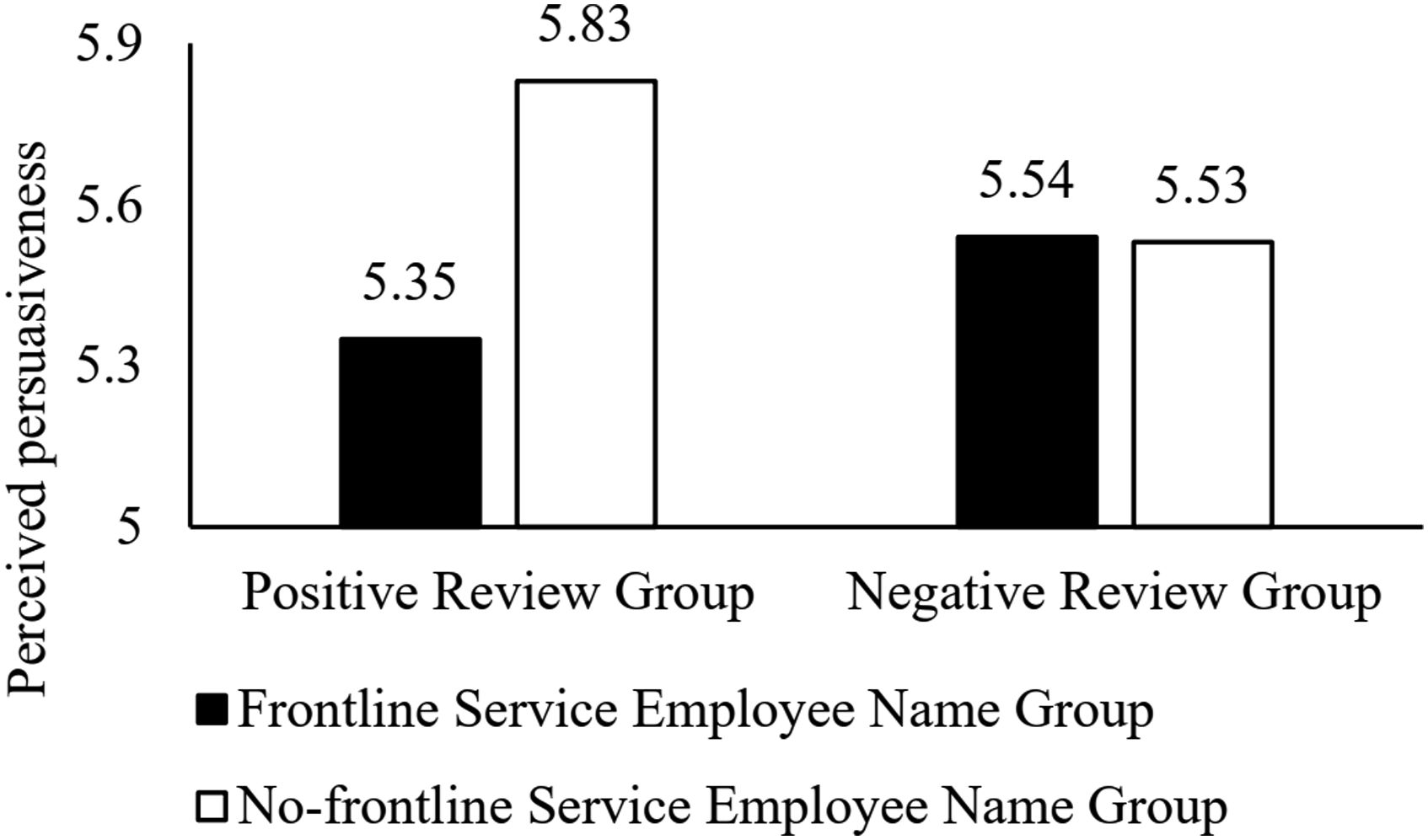
Perceived Deception
A two-way ANOVA on perceived deception showed a significant main effect of mentioning frontline service employee names (F (1, 474) = 11.519, p = .001, ηp2 = 0.024) and a marginally significant main effect of review valence (F (1, 474) = 3.624, p = .058, ηp2 = 0.008).
The two-way interaction was significant (F (1, 474) = 9.526, p = .002, ηp2 = 0.020). Planned contrasts revealed that in the positive review group, participants in the reviews mentioning (vs. not mentioning) frontline service employee names group had higher perceived deception (Mno-name = 2.53, SD = 0.81 vs. Mname = 3.16, SD = 1.36; F (1, 474) = 20.998, p < .001, ηp2 = 0.042). In the negative review group, the perceived deception of the two groups had no significant difference (Mno-name = 2.64, SD = 0.92 vs. Mname = 2.67, SD = 1.10; F (1, 474) = 0.047, p = .828).
Moderated Mediation Analysis
We ran a moderated mediation model by using Hayes (2018)’s PROCESS Model 8 with 5000 bootstrap samples and 95% bias-corrected CIs. We included mentioning names as the independent variable (1 = not mentioning, 2 = mentioning), perceived persuasiveness as the dependent variable, perceived deception as the mediator, and review valence as the moderator (1 = negative, 2 = positive). The results showed that the indirect effect of mentioning names through perceived deception on perceived persuasiveness is significant in the positive review condition (indirect effect = −0.4372; 95% CI [−0.6690, −0.2299]), but the direct effect of mentioning names on perceived persuasiveness is insignificant (direct effect = −0.0406; 95% CI [−0.2086, 0.1274]). Consistent with the above ANOVA results, the indirect effect in the negative review condition was not significant (indirect effect = −0.0208; 95% CI [−0.2008, 0.1579]), the direct effect was neither significant (direct effect = 0.0309; 95% CI [−0.1335, 0.1953]). Finally, a significant moderated mediation effect was found (index = −0.4164; 95% CI [−0.7124, −0.1439]).
Discussion
Study 5 provides evidence that review valence moderates the influence of specifying employee names on review persuasiveness via perceived deception. The negative effect of mentioning names on review persuasiveness via perceived deception is higher when reviews are positive, whereas it decreases when reviews are negative. To increase participants’ feeling of reality, we added two positive service-irrelevant reviews in both the positive and negative review conditions, resulting in the negative group containing three negative reviews and two positive reviews. The mixed valence may lead to the persuasiveness of the negative group having no significant difference from the positive group.
General Discussion
This research examines whether mentioning the name of frontline service employees in online reviews affects their persuasiveness. One secondary data analysis and four online experiments support that readers are less persuaded by online reviews mentioning (vs. not mentioning) frontline employee names via the mediator of perceived deception, and this negative effect is moderated by required service expertise, occurrence frequency, and review valence. Study 1 investigated the main effect of mentioning employee names using secondary data analysis in the restaurant context. Study 2 examined the main effect and the mediating effect of perceived deception through an online experiment in the same restaurant scenario. Study 3 tested the moderating role of required service expertise through an online experiment using the background of the foot-care shops. Study 4 examined the moderating role of occurrence frequency through an online experiment in the context of restaurants. Study 5 tested the moderating role of review valence through an online experiment in a hotel context.
Theoretical Implications
First, this study expands the existing literature on the study of names. Previous studies have primarily investigated the effects of consumer names (Carlson and Conard 2011; Sahni, Wheeler, and Chintagunta 2018) and brand names (Gao et al. 2020; Zhang and Patrick 2021). Research on name use in online reviews and its effect on consumers is lacking. To the best of our knowledge, this is the first study to investigate the impact of mentioning frontline service employee names in online reviews. Contrary to other studies that found consumer names and suitable brand names to have a positive effect on consumer behavior, this study demonstrates that frequent mentions of frontline service employees’ names in positive online reviews have a negative effect on review persuasiveness. This is especially evident in the context of services that have low required service expertise. In addition, deviating from the study that indicated that service providers introducing themselves by name in ethnic restaurants increases consumers’ perceived experience authenticity (Kim and Baker 2017), this study finds that when names appear in online reviews, the effect is negative. This work expands existing name-related research and demonstrates that using the names of service employees and where they are mentioned is a research area that needs to be paid attention to.
Second, this study enriches the existing literature on the impact of textual reviews. Previous studies have identified many factors that influence review persuasiveness, such as review length (Pan and Zhang 2011), valence (Tang, Fang, and Wang 2014), extreme (Kupor and Tormala 2018), and mentions of previous purchase mistakes (Reich and Maglio 2019). This study proposes a new influencing factor: mentions of frontline service employee names. We provide evidence that mentioning frontline service employees’ names increases readers’ perceived deception and decreases review persuasiveness. Moreover, we demonstrate three important moderators (i.e., required service expertise, occurrence frequency, and review valence) to outline the premise that mentioning frontline service employee names has negative effects, which heightens the theoretical depth of the aforementioned effects.
Third, this research extends the definition of fake reviews. Existing research on fake reviews can be divided into three categories: definition and causes, the negative effects after they are discovered, and detecting them (Plotkina, Munzel, and Pallud 2020; Wu et al. 2020; Zhuang, Cui, and Peng 2018). To our knowledge, no research has focused on judging fake reviews by different roles (reviewers vs. readers). Existing studies largely define fake reviews as deceptive reviews that are inconsistent with the true evaluations of products or services (Plotkina, Munzel, and Pallud 2020) and created by reviewers for certain purposes (Filieri 2016; Peng et al. 2016). Our research found that reviews mentioning frontline service employee names are considered fake by readers. However, neither the frontline service employees who request the reviews nor the consumers who write them think these reviews are fake. Employees believe that they serve their customers well, so reviews praising them are in line with facts, and consumers believe, although they may have written the positive review at the behest of a frontline service employee, that they have written the review due to their own satisfaction with the service and conform to their true feelings. Our research proposes that different social roles have different perceptions of fake reviews, which broadens their definition: The reviewers don’t think their reviews are fake, but readers may believe they are.
Managerial Implications
First, managers need to realize that mentioning names of frontline service employees in positive online reviews will negatively affect review persuasiveness, especially in the Chinese market.
Second, to prevent the mention of employee names from negatively affecting the persuasiveness of positive reviews, managers need to adopt different strategies based on the levels of required service expertise. On the one hand, for businesses with low required service expertise, such as restaurants and hotels, we suggest that managers refrain from encouraging consumers to praise specific service employees by using their names in reviews. In particular, restaurants in China that use the number of positive reviews mentioning a frontline service employee’s name as a measure of the employee’s performance should stop doing so. On the other hand, for businesses where the level of expertise required for service is high, such as foot-care shops and beauty care salons, customers can be reminded during payment and after service to mention frontline service employee names in their reviews. This will help both managers and potential customers better understand service employees’ capabilities without decreasing review persuasiveness. For online review platforms, managers can design differentiated review modules based on the expertise characteristics of the services provided by the establishment. When the enterprises to be reviewed provide services with high required expertise levels, a non-mandatory question asking for the name of the frontline service employee who served the customer can be added to the review page as a reminder for reviewers. This can help readers identify good service employees without decreasing review persuasiveness. This question should not appear for enterprises where service requires a low level of expertise.
Third, our pre-study demonstrated that consumers generally do not pay attention to the names of their service employees. Study 4 showed that there is a non-significant negative effect on review persuasiveness when there is a low occurrence frequency of positive reviews that specify the names of frontline employees. Therefore, for businesses with a low level of expertise required for service, managers need to pay attention to whether the names of their service employees frequently appear in positive reviews. On the one hand, if many customers actively mention employees’ names in existing reviews due to good customer service, we recommend that employees wear name tags printed with only their employee numbers. These numbers can be periodically changed. Compared to the use of nicknames or full names, employee numbers may reduce readers’ perceptions that there is a pre-existing relationship between reviewers and employees. On the other hand, if employee names are only occasionally mentioned, managers need not worry.
Fourth, manager responses on review platforms are visible to readers (Wang and Chaudhry 2018). To reduce the negative effect of mentioning names in reviews, managers can attract readers’ attention to positive reviews that do not mention employee names (vs. positive reviews that mention employee names). This can be achieved by more frequently responding to positive reviews that do not mention employee names. Although there is no significant difference between the persuasiveness of negative reviews mentioning employee names and those not mentioning employee names, managers should respond to all negative reviews to decrease their negative effects (Wang and Chaudhry 2018).
Limitations and Future Research Directions
Although our findings have important theoretical and practical implications, some limitations need to be further investigated in future research. First, all the secondary data and samples in this study were from China, but the moderating effect of culture was not tested. The unique differences between Chinese and Western cultures greatly affect readers’ thinking (Gefen and Heart 2006; Sia et al. 2009). In Western countries, consumers give service greater importance (Nakayama and Wan 2018). Additionally, as Eastern cultures emphasize collectivism and Western cultures emphasize individualism, people from these two cultures process different views on the concepts of in-group and out-group members (Bolton, Keh, and Alba 2010; Duclos and Barasch 2014). We analyzed 328 reviews of restaurants and 7869 reviews of hotels in America on Tripadvisor.com and found a marginal positive effect of mentioning the names of frontline service employees (restaurants: F (1, 326) = 2.944, p = .087, ηp2 = 0.009; hotels: b = 0.8815, z = 6.90, p < .001), which contradicts the conclusion of this study (Web Appendix E). Although secondary data analysis has been conducted in Study 1, due to different data sources, further studies are required to ensure the reliability of the conclusion. Future research can investigate the moderating effect of culture.
Second, in real life, people often identify experts by name. However, while Study 3 found that mentioning (vs. not mentioning) names in the high-expertise group did not reduce review persuasiveness, it did not find a significant positive effect either. It is unclear whether this is because the expertise of foot-care technicians is not considered very important to consumers. Future research could examine more specialized service providers, such as doctors or lawyers, and investigate whether mentioning their names in positive online reviews positively affects review persuasiveness.
Third, we found evidence that occurrence frequency moderates the negative effect of mentioning the names of frontline service employees on review persuasiveness. However, the inflection point of the frequency is not clear, and it can be further investigated through future research.
Fourth, we added two positive irrelevant reviews in both the positive and negative review conditions in Study 5 to increase participants’ feeling of reality. This was because no business has online reviews that are entirely negative. This resulted in the valence of the negative review group being mixed, which may artificially increase the information value of the negative review group, and lead to increased persuasiveness. The potential effect of mixed valence is worthy of further investigation. Fifth, we didn’t use a consistent dependent variable across studies. Although helpful votes (Study 1) and patronage intentions (Study 2–4) have been shown to be proxies for perceived persuasiveness (Study 4–5), a consistent dependent variable across studies can improve the logic of the empirical part. Future research can test this effect with a fixed dependent variable.
Supplemental Material
Supplemental Material - The Negative Effect of Name: Mentions of Frontline Service Employee Name Reduce Online Review Persuasiveness
Supplemental Material for The Negative Effect of Name: Mentions of Frontline Service Employee Name Reduce Online Review Persuasiveness by Xinlan Li, Dong Hong Zhu, and Yaping Chang in Journal of Service Research
Footnotes
Declaration of Conflicting Interests
The author(s) declared no potential conflicts of interest with respect to the research, authorship, and/or publication of this article.
Funding
The author(s) declared the following potential conflicts of interest with respect to the research, authorship, and/or publication of this article: This paper is sponsored by National Natural Science Foundation of China (NO. 71972080, NO. 72232003).

Supplemental Material
Supplemental material for this article is available online.
Appendix
Author Biographies
References
Supplementary Material
Please find the following supplemental material available below.
For Open Access articles published under a Creative Commons License, all supplemental material carries the same license as the article it is associated with.
For non-Open Access articles published, all supplemental material carries a non-exclusive license, and permission requests for re-use of supplemental material or any part of supplemental material shall be sent directly to the copyright owner as specified in the copyright notice associated with the article.
