



Abstract
This study examines possible moderating effects of generational differences (Baby Boomers, Generation X, Millennials) on the relationship between job burnout (emotional exhaustion, cynicism, reduced professional efficacy) and employee satisfaction and turnover intention, as well as its moderating effects on the relationship between employee satisfaction and turnover intention using data collected from employees of a midscale chain hotel. Findings indicate that generational differences between Baby Boomers and Millennials have significant moderating effects on the relationship between emotional exhaustion and job satisfaction and turnover intention, and on the relationship between job satisfaction and turnover intention.
Keywords
Introduction
The hospitality industry is a service-oriented industry where workers are always required to behave politely and display appropriate emotions when serving customers. Such work environments have been reported to be stressful for employees because of the amount of time spent with customers and the intensity of those interactions (Chuang & Lei, 2011; Kim, 2008). Schaufeli and Enzmann (1998) have argued that burnout is one of the most important dimensions of employees’ well-being, as it could impair employees’ social relations and health. As with other service workers such as teachers, nurses, social workers, and health care professionals who have been reported to exhibit high job burnout rates (e.g., Acker, 1999; Martin & Schinke, 1998), hospitality workers also tend to exhibit signs of high burnout rates (Buick & Thomas, 2001; Pienaar & Willemse, 2008). Given that employees are widely considered as the most important asset for organizations (Dalci & Kosan, 2012), job burnout is no doubt a critical issue demanding considerable attention from managers and researchers.
The antecedents and consequences of job burnout have been extensively studied (Demerouti, Bakker, Nachreiner, & Schaufeli, 2001; Kim, Shin, & Swanger, 2009). Generally, burnout has been correlated with a variety of negative responses to the job, including job dissatisfaction, low organizational commitment, and high job turnover intention (Schaufeli & Enzmann, 1998). A number of studies (e.g., Jackson & Maslach, 1982; Leiter, 1988) have suggested burnout results in substantial cost for both organizations and workers because of high job turnover, absenteeism, and reduced productivity. Clearly, job burnout is one of the most important predictors of job satisfaction and turnover intention.
While the majority of prior burnout studies have mainly focused on identifying individual- and organizational-level antecedents (e.g., Leiter & Maslach, 1988; Pretty, McCarthy, & Catano, 1992) and outcomes (e.g., Jackson & Maslach, 1982; Jackson, Schwab, & Schuler, 1986) of burnout, limited attention has been paid to factors that are likely to moderate the relationship between burnout and its antecedents or outcomes. Studies suggested that several factors such as the generational cohort employees belong to are likely to influence employees’ workplace attitudes, their satisfaction, and turnover intention (Solnet & Kralj, 2011). Generational differences, therefore, might be an important moderating force for the impact of burnout on its consequences (e.g., job satisfaction, turnover intention).
People of the same generation generally share some common characteristics derived from shared historical experiences (Schuman & Scott, 1989). Those distinct shared characteristics of different generations may cause differences on how employees perceive and value their jobs, and such differences may lead to variations of burnout as well as its impact on work-related outcomes such as job satisfaction and turnover intention. Accordingly, the purpose of this study is to examine possible moderating effects of generational differences on the relationship between burnout and employees’ satisfaction and turnover intention, as well as its moderating effects on the relationship between satisfaction and turnover intention.
Literature Review
Job Burnout, Job Satisfaction, and Turnover Intention
Maslach and Jackson (1981) developed the Maslach Burnout Inventory (MBI) by categorizing burnout into three dimensions (emotional exhaustion, depersonalization, and personal accomplishment). According to them, emotional exhaustion is interpreted as the emotional depletion due to excessive psychological and physical demands. Depersonalization refers to the treatment of others as objects rather than people due to negative, cynical attitudes and feelings. Diminished personal accomplishment represents people’s tendency of negative assessment and dissatisfaction about themselves because of unfulfilled performance or responsibilities.
Later, Schaufeli, Leiter, Maslach, and Jackson (1996) developed the MBI–General Survey (MBI-GS) to overcome issues associated with MBI scale’s restricted focus on human service professionals. They also replaced MBI’s three dimensions with exhaustion, cynicism, and professional efficiency. Compared with MBI, MBI-GS uses broader definitions for three subcategories. Exhaustion includes any sources that can lead to an individual’s fatigue, whereas cynicism means apartness and indifferent attitude toward work in general. Professional efficacy includes both social and nonsocial aspects of job accomplishment.
In the hospitality literature, earlier research has identified numerous factors such as role ambiguity, role conflict, poor management, poor communication, demanding customers, low job autonomy, excessive work load, and task characteristics as antecedents of job burnout (Brymer, Perrewe, & Johns, 1991; Law, Pearce, & Woods, 1995; Pizam & Neumann, 1988; Zohar, 1994). Over the past decade, the continual research interest on burnout in the hospitality industry has made significant contributions to the understanding of burnout as well as its antecedents and outcomes. For example, Gill, Flaschner, and Shachar’s (2006) study found that hospitality managers can mitigate stress and burnout among their employees by implementing transformational leadership. Kim, Shin, and Umbreit (2007) investigated the effect of the Big Five personality dimensions on hotel employees’ job burnout. They reported that personality attributes explain significant proportions of three burnout factors. A year later, Kim (2008) further examined the relationship between emotional labor and its antecedents, and the impact of two typical acting strategies (surface and deep acting) adopted by employees on job burnout. Results showed that surface actors are more exhausted and cynical than deep actors, and emotional labor only partially mediates the relationship between burnout and job and personality characteristics.
Two attitudinal work outcomes, job satisfaction and turnover intention, have been frequently examined along with burnout in various fields (e.g., Acker, 1999; Martin & Schinke, 1998) and are considered as two important outcomes of burnout (Kahill, 1988). Job satisfaction can be conceptualized as “the pleasurable emotional state resulting from the appraisal of one’s job as achieving or facilitating the achievement of one’s job values” (Locke, 1969, p. 316), whereas job turnover intention can be defined as “the last in a sequence of withdrawal cognitions, a set to which thinking of quitting and intent to search for alternative employment also belongs” (Tett & Meyer, 1993, p. 262). Job satisfaction is widely recognized as beneficial for organizations because it is generally associated with positive work outcomes such as low turnover intention (e.g., Muchinsky & Tuttle, 1979; Porter & Steers, 1973) and high organizational commitment (Lo & Lam, 2002; Wanous, Reichers, & Malik, 1984). In contrast, job turnover intention, an important predictor of actual turnover (Mobley, Horner, & Hollingsworth, 1978), is what managers and leaders strive to prevent as employees’ actual turnover would generate extensive cost to both the individual and the organization (Karatepe & Ngeche, 2012; T. W. Lee, Mitchell, Sablynski, Burton, & Holtom, 2004).
Reduced job satisfaction and increased turnover intention are likely to occur as a result of burnout (Kahill, 1988). Conservation of resources theory establishes a framework to better understand the impact of burnout on job satisfaction and turnover intention. According to this theory, resources are those entities that either are centrally valued in their own right (e.g., self-esteem, close attachments, health, and inner peace) or act as a means to obtain centrally valued ends (e.g., money, social support, and credit; Hobfoll, 2002). The conservation of resources theory posits that individuals will seek to obtain, retain, protect, and foster resources (Hobfoll, 1989, 2002), and if the potential or actual loss of resources takes place, it will lead to emotional exhaustion, which in turn will cause job dissatisfaction and intention to leave. Concurring with this theoretical argument, a number of earlier studies have empirically identified burnout’s direct impact on turnover intention (e.g., Jackson & Maslach, 1982; R. T. Lee & Ashforth, 1993) and negative impact on job satisfaction (e.g., Jayaratne, Chess, & Kunkel, 1986; Wolpin, Burke, & Greenglass, 1991).
Generational Differences
Kupperschmidt (2000) defined a generation as an identifiable group sharing birth years and significant life events at critical developmental stages such as common historical or social life experiences, the effects of which are relatively stable over their lives. In the context of the workplace, these shared experiences and core values affect a person’s feelings toward authority and organizations, what a person desires from work, and how he or she plans to satisfy those desires (Jurkiewicz & Brown, 1998). The influence of generational characteristics has been examined primarily within organizational contexts, focusing on work-related constructs such as work-related values, attitudes, and preferences (Chi, Maier, & Gursoy, 2013; Gursoy, Chi, & Erdem, 2013; Twenge, 2010). However, the impact of generational differences on employees work values, attitudes, and behaviors has received little attention from hospitality researchers. One exception would be Gursoy, Maier, and Chi’s (2008) study that examined generational differences and similarities of work values between hospitality employees and managers in regard to developing proper management and leadership strategies to lead employees from different generations. Another exception is Chen and Choi’s (2008) study that identified differences in work values perceived by hospitality managerial workforce across three different generations. Recently, Gursoy et al. (2013) identified seven dimensions of hospitality frontline employees’ work values across three generations. A series of one-way analysis of variance tests indicated that there are significant differences among three generations of employees’ work values. Although these empirical studies have provided a comprehensive understanding of distinct work values perceived by three generations, further knowledge on this issue can be achieved by operationalizing generational differences as a moderating variable for the relationships among other variables. This study thus intends to identify possible moderating effects of generational differences on the relationships among burnout, job satisfaction, and turnover intention.
There are three generational groups dominating today’s work force: Baby Boomers (Boomers), Generation X (Gen-Xers), and Millennials. However, according to Smola and Sutton (2002), there is little agreement on the years encompassing each generation because researchers used different birth years to define the Boomers generation, beginning anywhere from 1940 to 1946 and ending anywhere between 1960 and 1964. There is even less consistency on the Gen-Xers’ birth years, reported to begin somewhere in the early 1960s and end in either 1975, 1980, 1981, or 1982 (Adams, 2000; Jurkiewicz & Brown, 1998). Millennials’ birth years begin somewhere around 1980 and generally end in 2000 (Cennamo & Gardner, 2008). Given that the literature has such wide variation in the use of year range to determine three different generations, this study uses birth years of three generations used in Gursoy et al.’s (2008) study, which also investigated generational differences in the context of hospitality workforce.
Impact of Job Burnout on Job Satisfaction and Turnover Intention: Generational Differences as Moderator
According to Lazarus and Folkman (1984), the impact of stressors on people’s well-being depends on how people perceive stressors. Therefore, burnout may yield different levels of impact on its successors if people hold different interpretations of their state of burnout. This study suggests that distinct work values, preferences, and expectations of three different generations will make workers interpret and perceive burnout differently, and these differences are likely to result in different levels of job satisfaction and turnover intention across three generations.
Generally, Baby Boomer (1943-1960) employees stress the importance of job security and stability (Smola & Sutton, 2002). They are service-oriented, good team players, good at socializing, and value good work ethics with many taking up a number of middle and upper positions in today’s workplace (Salahuddin, 2011). A number of researchers (e.g., Gursoy et al., 2013; Twenge, 2010) have indicated that Boomers place much more importance on work and consider their job as being more central to their lives than younger generations do (i.e., Gen-Xers and Millennials; Park & Gursoy, 2012). In addition, compared with Gen-Xers and Millennials, Boomers are more loyal and attached to their organizations and believe that hard work will pay off (Gursoy et al., 2008, 2013; Hart, 2006). Also, as the Families and Work Institute (2006) reported, Boomers are more driven by goals and rewards in the workplace, showing a higher desire to land positions with greater responsibility than younger generations. In addition, as career stage theory (Super, 1980) suggests, people in the maintenance stage (older than 44 years) are well settled in their career patterns, strive to maintain their status at work, and hold onto their positions. People in the maintenance stage are more likely to be risk averse (McGill, 1980) and are reluctant to move between companies (Slocum & Cron, 1985). Their tendency to maintain current positions and their reluctance to move around might mitigate job dissatisfaction and turnover intention derived from burnout, either because they are already satisfied with the standard of living that their current job provides or because they may think it is too risky to start a new job in a new work environment. Because they are more likely to consider work as a central part of their lives, remaining loyal to their organizations, Boomers are less likely to think of burnout as negatively as younger employees do. Their hard working spirit and willingness to take greater responsibility would make them view this syndrome as part of their demanding job environment. Therefore, compared with younger employees, Boomers may be less likely to attribute burnout symptoms to the job itself, which might result in relatively lower job dissatisfaction and turnover intention compared with younger generations. Based on the preceding discussion, the following hypotheses are proposed:
Generation X employees (1961-1980) are seen to be more adaptable, independent, creative, and more likely to be skeptical and unimpressed with authority (Salahuddin, 2011). They are individualistic and place more importance on their own careers over being loyal to organizations (Beutell & Wittig-Berman, 2008). Moreover, they value extrinsic rewards such as increased pay and material possessions (Twenge, Campbell, Hoffman, & Lance, 2010). Therefore, they are likely to change jobs frequently to search for more challenging positions with a higher pay or better benefits (Hays, 1999). Because they value autonomy and freedom from supervision in their workplace (Jurkiewicz, 2000), flexible work hours, informal work environment, and adequate supervision can motivate them to perform their job better (Salahuddin, 2011). Compared with Boomers, Gen-Xers are less work-centric and value work–life balance (Gursoy et al., 2013) and leisure (Twenge et al., 2010).
Similar to Baby Boomers, Millennial (1981-2000) employees are characterized as driven and demanding of the work environment (Gursoy et al., 2013). They show confidence, voice their opinions, enjoy collective action, and have a strong appetite for work (Hart, 2006). Similar to Gen-Xers, Millennials value freedom and work–life balance more than Boomers do (Cennamo & Gardner, 2008; Twenge, 2010). Highly emphasizing the value of leisure, Millennials prefer a job that provides more vacation time (Twenge et al., 2010). Despite lower work centrality, Millennials have higher expectations about rapid promotions, pay raises (Ng, Schweitzer, & Lyons, 2010), instant feedback, and praise (Gursoy et al., 2008) from their workplace. They emphasize skill development and enjoy looking for new opportunities and challenges (Wong, Gardiner, Lang, & Coulon, 2008).
The preceding overview of Gen-Xers and Millennials shows that these two generations share some commonalities in their work-related values such as low work centrality, low loyalty toward organizations, and high leisure values. These similarities in work-related values may result in similar levels of job satisfaction and turnover intention under burnout conditions for both Gen-Xers and Millennials. For these two groups of generational employees, work is just as or even less important than their personal life. As such, when they start suffering from burnout, they are less likely to take such symptom as part of their job and are more likely to blame this psychological pain on the job itself and their organizations. Also, as career stage theory (Super, 1980) argues, people in the trail stage (younger than 31 years) show a higher level of mobility and willingness to leave their current organization because of their tentative commitment to their current occupation and the desire to explore different options. People in the advanced to stabilization stage (31-44 years old) usually have chosen an occupation and have set their personal and career goals, which usually includes rapid career advancements. Since Millennials (mostly in the trail stage) are not typically very committed to their current job and willing to try other options, burnout could easily stimulate strong dissatisfaction and intention to leave. Even though Gen-Xers’ (mostly in the stabilization stage) propensity to leave their current job might be decreasing, burnout could also generate high job dissatisfaction and turnover intention since they may be willing to change their workplace for career advancement (Iverson & Deery, 1997). Taken together, the impact of burnout on job satisfaction and turnover intention should not be significantly different between Gen-Xers and Millennials. Therefore, the following hypotheses are proposed:
Method
Sample and Procedure
Participants of the present study were employees from 29 mid- or upscale hotels owned or managed by a North American branded hotel management company. Human resource managers of each hotel distributed self-administrated questionnaires to managers of each department. During regular staff meetings, managers of each department encouraged frontline employees who have frequent contact with customers to actively participate in this study. Employees who voluntarily participated returned the completed questionnaire using an attached return envelope. Out of a total of 1,577 distributed questionnaires, 677 usable responses were collected, yielding a 42.9% response rate.
Measurements
For measures of burnout, the present study adopted the MBI-GS (Schaufeli et al., 1996) rather than the original MBI scale (Maslach & Jackson, 1981) because of two reasons. First, three components of MBI-GS assess respondents’ burnout symptoms through a general work perspective, whereas subscales of MBI directly refer to other people as the major source of those burnout feelings (Schutte, Toppinen, Kalimo, & Schaufeli, 2000). Compared with MBI, MBI-GS is a more appropriate measure to evaluate burnout conditions of hospitality workforce since employees’ burnout symptoms can be generated from a number of different sources. Second, as argued by Barnett, Brennan, and Gareis (1999), MBI scale has two drawbacks: (a) items purport to assess feelings, but half do not directly address feelings and (b) response categories are not mutually exclusive, making it difficult to interpret results and inflating the measurement error. Barnett et al. (1999) argued that MBI-GS corrects flaws of MBI scale while retaining its strengths. The MBI-GS scale is composed of three subdimensions, with five items in exhaustion (α = .87; sample item: “I feel emotionally drained from my work”), five items in cynicism (α = .80; sample item: “I just want to do my job and not be bothered”), and six items in professional efficacy (α = .78; “I have accomplished worthwhile things in this job”). For measures of job satisfaction, Hartline and Ferrell’s (1996) six-item scale was used with slight modification. As for turnover intention, a three-item scale from Boshoff and Allen (2000) was used. All items were measured on a 5-point Likert-type scale ranging from 1 = strongly disagree to 5 = strongly agree.
Considering length of tenure might be significantly associated with employees’ turnover intention (e.g., Robinson, 1972) and job satisfaction (e.g., Sarker, Crossman, & Chinmeteepituck, 2003), this study included employee tenure in the analysis as a control variable. The employee tenure variable was measured using the single item “Length of time with current hotel,” and was measured in years.
Data Analysis
First, a chi-square test was performed to examine whether significant differences in gender and length of tenure exist across three generational employees. Afterward, three hierarchical regression analyses were carried out to investigate the moderating effect of generational differences on the relationships among burnout, job satisfaction, and turnover intention, as well as on the relationship between job satisfaction and turnover intention. Since hierarchical regression is a frequently used statistical technique and is widely considered appropriate to estimate moderating effects (Phillips & Jang, 2007; Yang & Peterson, 2004), it was considered an appropriate approach for this study.
A summated scale for each of the three subconstructs of job burnout (exhaustion, cynicism, professional efficacy), and job satisfaction and turnover intention were created by summing up all the items used to measure each and then averaging them to form individual composite scores for analysis. Three dummy-coded variables denoting three individual comparisons of two generations were also created for testing the moderating effect of generation (1 = Millennials and 0 = Gen-Xers; 1 = Millennials and 0 = Baby boomers; 1 = Gen-Xers and 0 = Baby boomers). For every hierarchical regression analysis, length of tenure was included in the model as a control variable first; each subdimension of burnout and three dummy-coded variables were entered into the equation second; and job burnout × generation interaction terms were added last.
Results
Profile of Sample
Table 1 presents profiles of respondents. Respondents were composed of 193 Millennials (28.4%), 248 Gen-Xers (36.6%), and 236 Baby boomers (35%) with a mean age of 36 years. There were 225 (33.2%) males and 440 (65%) females. Average tenure of respondents with the company was 4.2 years. Around 70% of respondents had been with their current company for less than 5 years.
Profile of Respondents
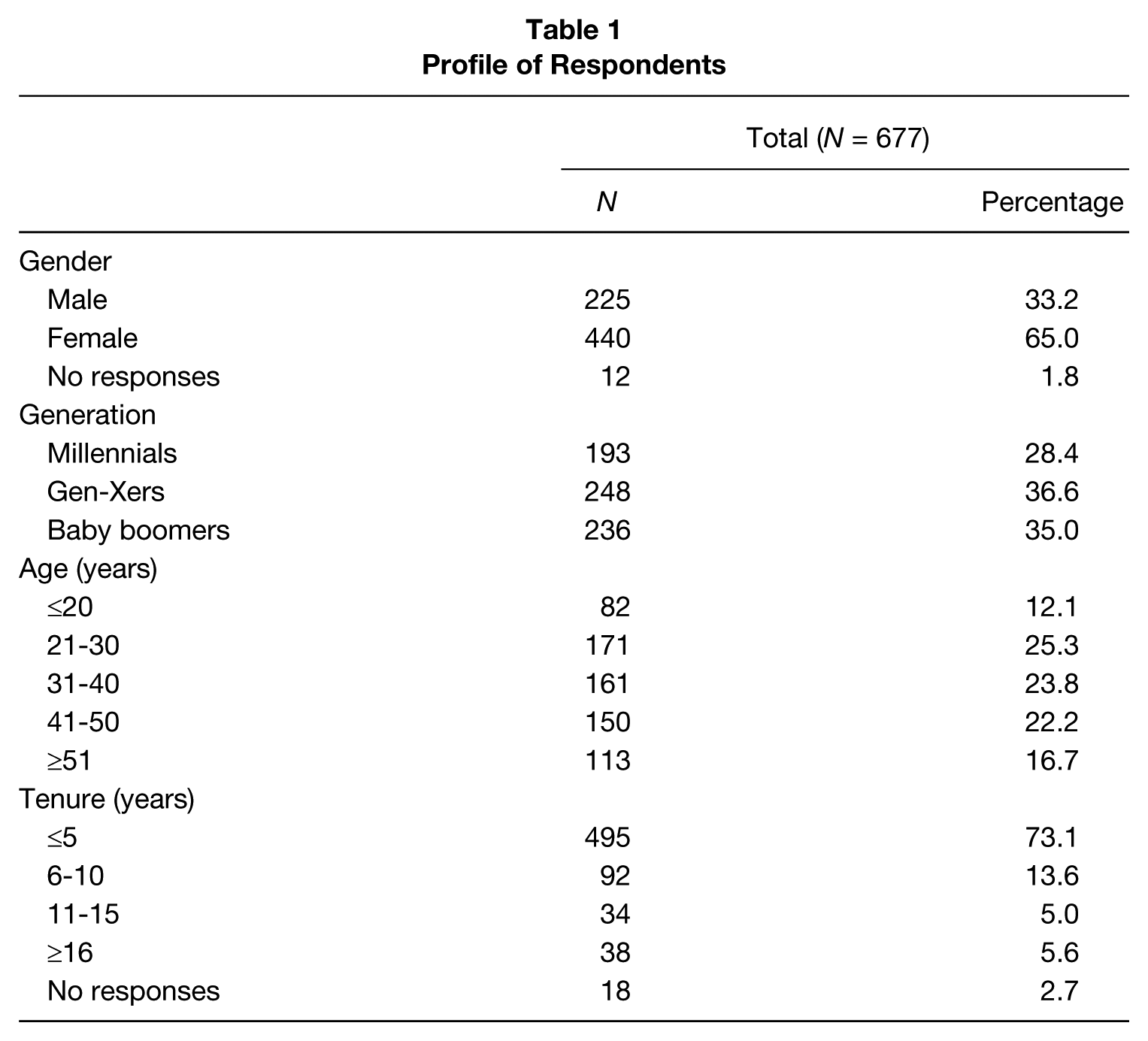
Table 2 reports results of chi-square tests on the gender and length of tenure across three generational employees. Findings indicated that the three generations of employees are not significantly different in terms of gender, χ2(2, N = 665) = 4.25, p > .05, but are significantly different in length of tenure, χ2(6, N = 659) = 108.77, p < .01.
Chi-Square Test on Gender and Tenure of Three Generations
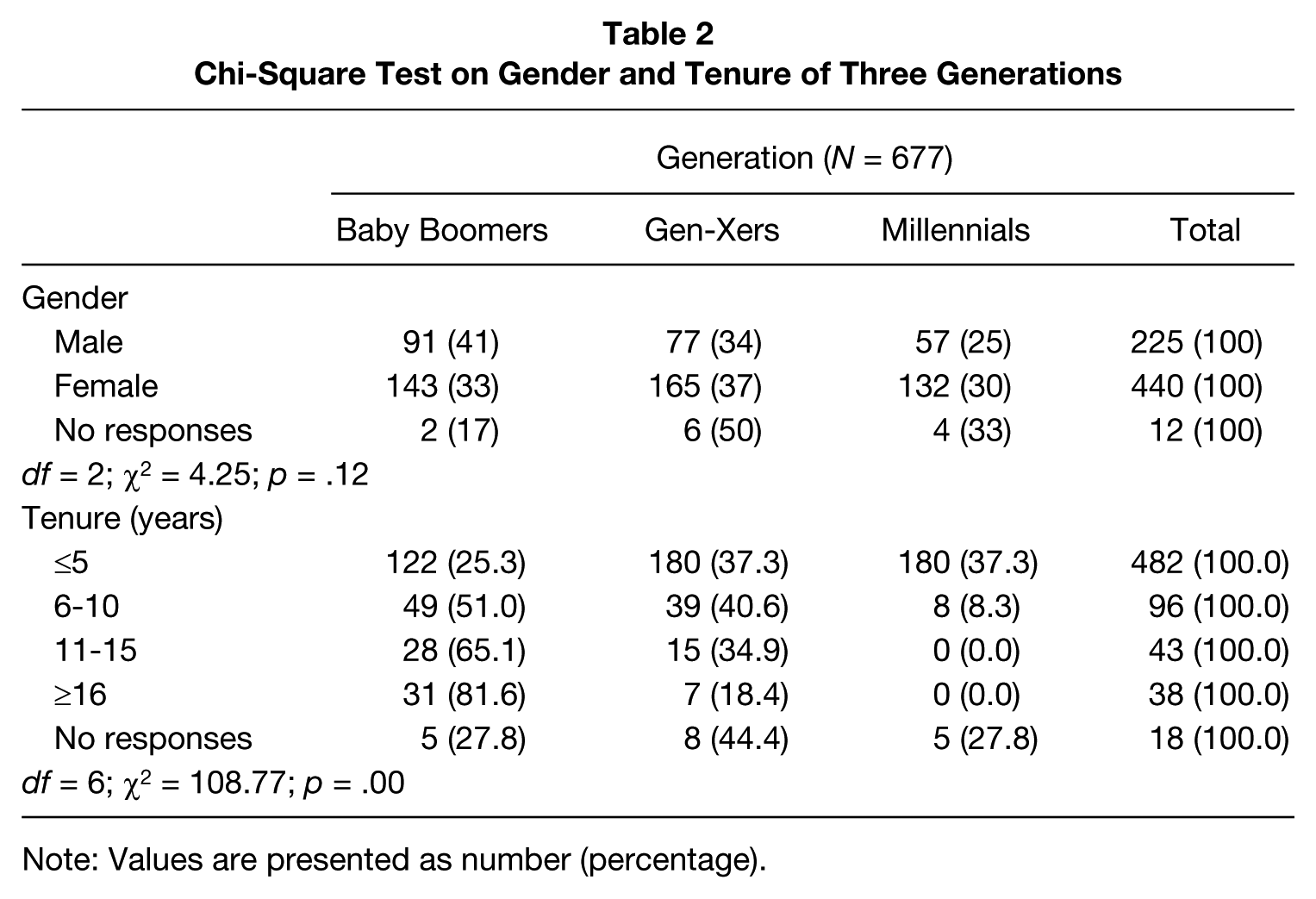
Note: Values are presented as number (percentage).
Descriptive Statistics
Table 3 presents means, standard deviations, and correlations among three dimensions of burnout, job satisfaction, and turnover intention. Findings indicated that exhaustion and cynicism both have significant negative relationships with job satisfaction (r = −.38, p < .01; r = −.35, p < .01, respectively), and positive relationships with turnover intention (r = .46, p < .01; r = .52, p < .01, respectively). Professional efficacy showed a significant positive relationship with job satisfaction (r = .32, p < .01) and negative relationship with turnover intention (r = −.24, p < .01). Results also suggest a significant negative relationship between job satisfaction and turnover intention (r = −.55, p < .01).
Descriptive Statistics, Reliability Coefficients, and Correlations Among the Variables
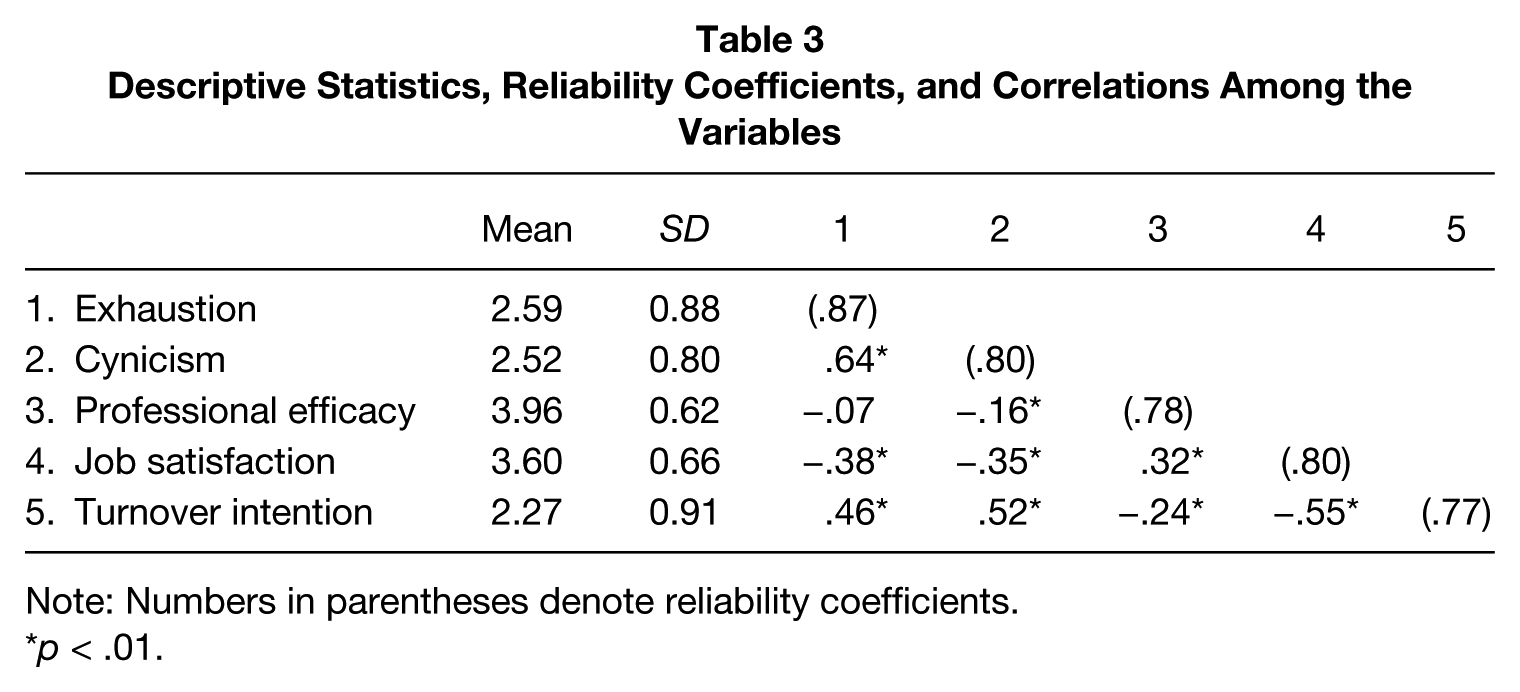
Note: Numbers in parentheses denote reliability coefficients.
p < .01.
Moderated Regression Results
Table 4 reports the results of regression analyses for the moderating effect of generation on the relationship between burnout and job satisfaction. Consistent with results of correlation analyses, three dimensions of job burnout showed significant effects on job satisfaction across three generations. Exhaustion was negatively related to job satisfaction (Millennials vs. Gen-Xers: b = −.43, p < .01; Millennials vs. Boomers: b = −.43, p < .01; Gen-Xers vs. Boomers: b = −.36, p < .01). Cynicism showed a significant negative relationship with job satisfaction (Millennials vs. Gen-Xers: b = −.38, p < .01; Millennials vs. Boomers: b = −.40, p < .01; Gen-Xers vs. Boomers: b = −.36, p < .01). Professional efficacy also showed significant positive effects on job satisfaction (Millennials vs. Gen-Xers: b = .31, p < .01; Millennials vs. Boomers: b = .29, p < .01; Gen-Xers vs. Boomers: b = .28, p < .01).
Summary of Hierarchical Regression Analyses for Moderating Effect of Generation on the Relationship Between Burnout and Job Satisfaction
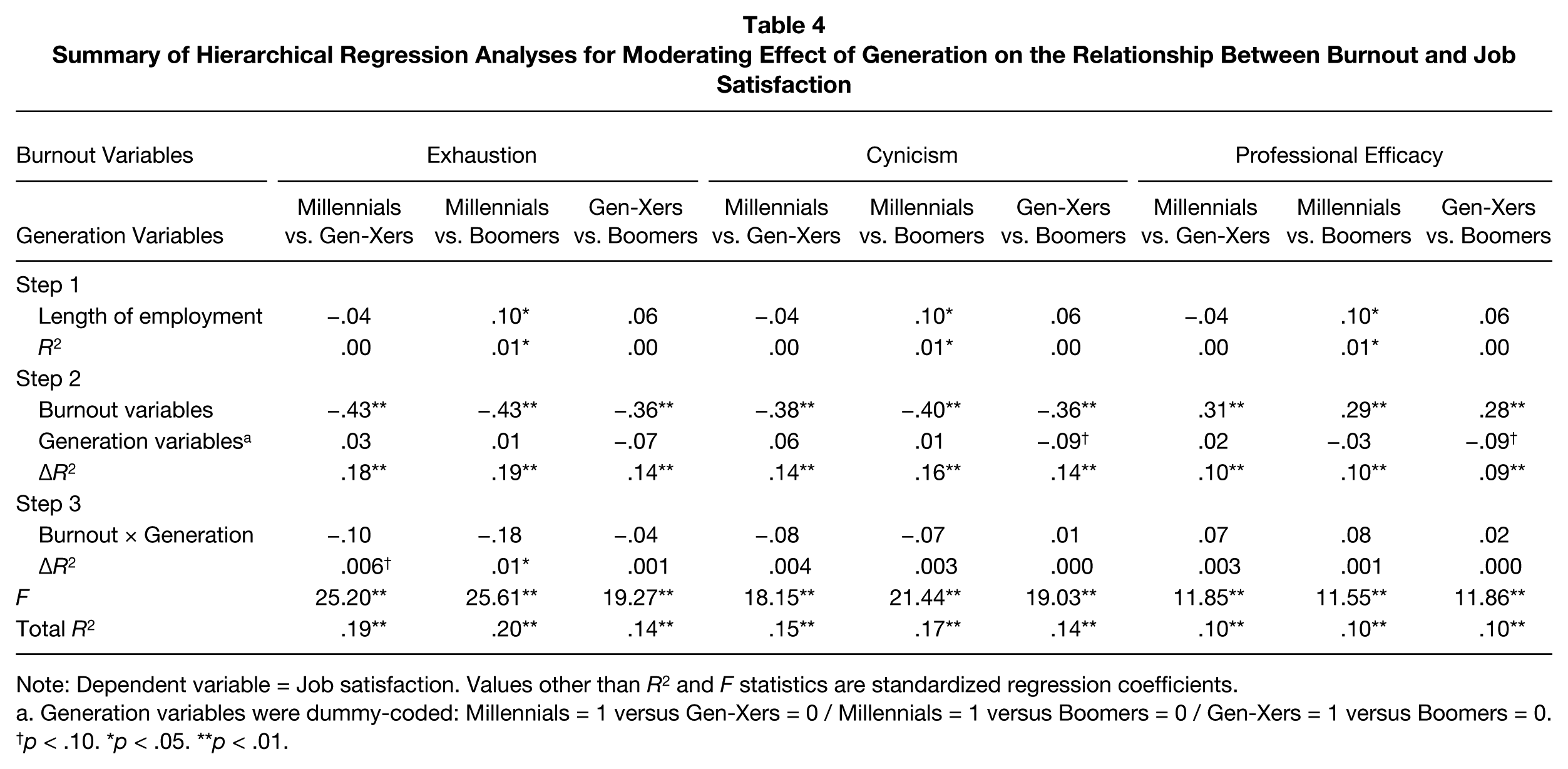
Note: Dependent variable = Job satisfaction. Values other than R2 and F statistics are standardized regression coefficients.
Generation variables were dummy-coded: Millennials = 1 versus Gen-Xers = 0 / Millennials = 1 versus Boomers = 0 / Gen-Xers = 1 versus Boomers = 0.
p < .10. *p < .05. **p < .01.
The exhaustion × generation interaction term for Millennials versus Gen-Xers added only marginally significant incremental variance (ΔR2 = .006, p < .10), and both the cynicism × generation (ΔR2 = .004, p > .10) and professional efficacy × generation (ΔR2 = .003, p > .10) interaction terms for Millennials versus Gen-Xers did not add any significant incremental variance. Therefore, Hypotheses 5a, 5b, and 5c were all supported. Whereas generation significantly moderated the effect of exhaustion on job satisfaction, adding 1% of incremental variance for Millennials versus Boomers (ΔR2 = .010, p < .05), the cynicism × generation (ΔR2 = .003, p > .10) and professional efficacy × generation (ΔR2 = .001, p > .10) interaction terms for Millennial versus Boomers did not add any significant incremental variance. Therefore, findings provided support for Hypothesis 1a whereas both Hypothesis 1b and Hypothesis 1c were not supported. In addition, findings further indicated that generation did not significantly moderate the respective effect of exhaustion (ΔR2 = .001, p > .10), cynicism (ΔR2 = .000, p > .10), and professional efficacy (ΔR2 = .000, p > .10) on job satisfaction between Gen-Xers and Boomers. Thus, Hypotheses 2a, 2b, and 2c were not supported.
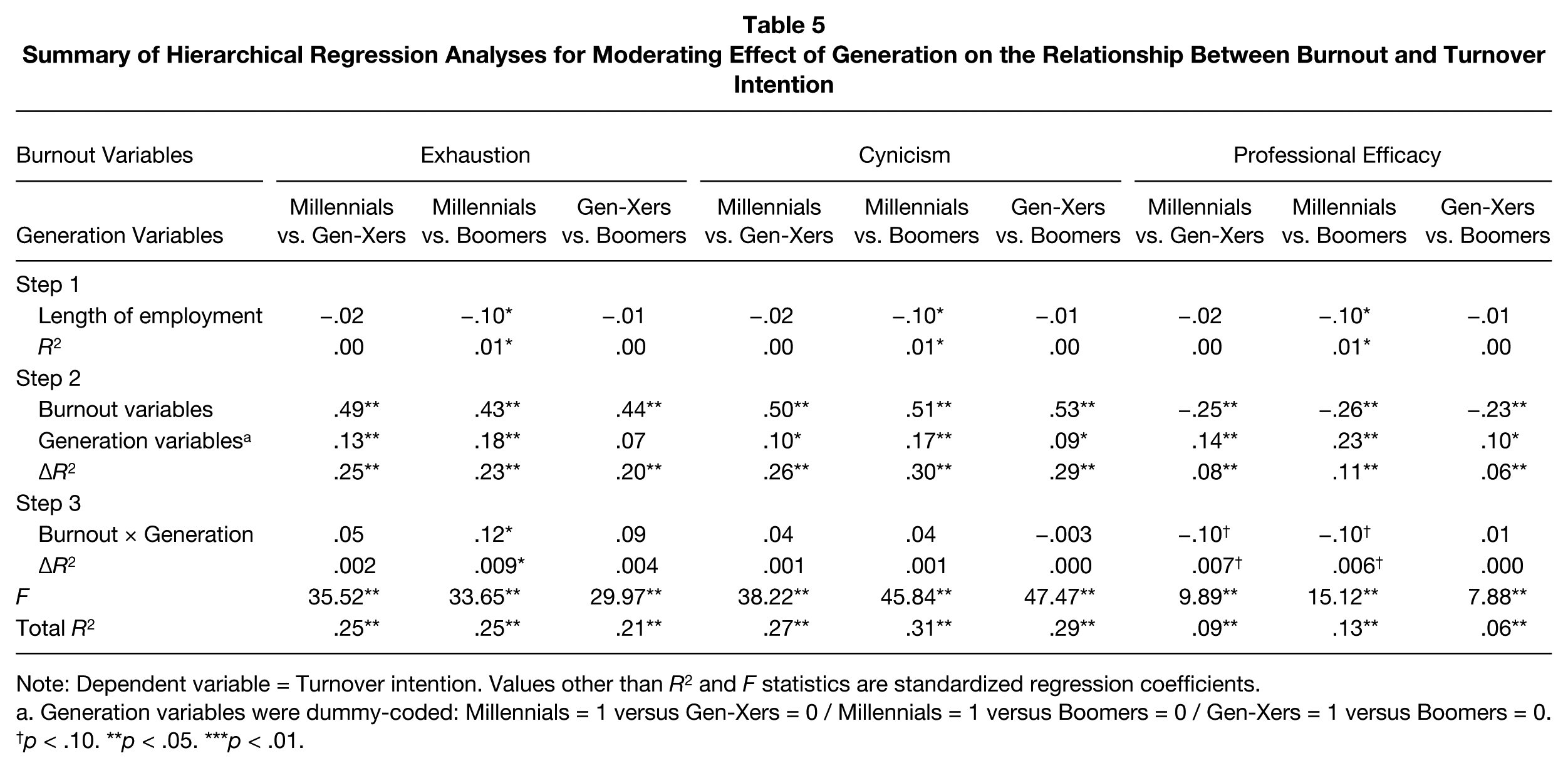
Table 5 presents the results of regression analyses for moderating effects of generation on the burnout–turnover relationship. Exhaustion and cynicism were found to be positively related to turnover intention, and professional efficacy was found to have a negative relationship with turnover intention. Generation showed a significant positive relationship with turnover intention after controlling for length of tenure and exhaustion for Millennials versus Gen-Xers (b = .13, p < .01) and for Millennials versus Boomers (b = .18, p < .01), indicating that Millennials reported significantly higher turnover intention than Gen-Xers and Boomers. After controlling for length of tenure at Step 1 and cynicism at Step 2, generation also showed significant effects on turnover intention (Millennials vs. Gen-Xers: b = .10, p < .05; Millennials vs. Boomers: b = .17, p < .01; Gen-Xers vs. Boomers: b = .09, p < .05), indicating that younger employees tend to have higher turnover intention than older generations. Generation was also found to be significantly related to turnover intention while controlling for length of tenure and professional efficacy (Millennials vs. Gen-Xers: b = .14, p < .01; Millennials vs. Boomers: b = .23, p < .01; Gen-Xers vs. Boomers: b = .10, p < .05). The exhaustion × generation interaction term added significant incremental variance at Step 3 for Millennials vs. Boomers (ΔR2 = .009, p < .05). However, the cynicism × generation interaction term for Millennials versus Boomers did not add any significant incremental variance (ΔR2 = .001, p > .10), and the professional efficacy × generation interaction term for Millennials versus Boomers added only marginally significant incremental variance (ΔR2 = .006, p < .10). Hence, Hypothesis 3a was supported but both Hypotheses 3b and 3c were not supported.
Summary of Hierarchical Regression Analyses for Moderating Effect of Generation on the Relationship Between Burnout and Turnover Intention
Note: Dependent variable = Turnover intention. Values other than R2 and F statistics are standardized regression coefficients.
Generation variables were dummy-coded: Millennials = 1 versus Gen-Xers = 0 / Millennials = 1 versus Boomers = 0 / Gen-Xers = 1 versus Boomers = 0.
p < .10. **p < .05. ***p < .01.
Findings also indicated that generation did not significantly moderate the impact of exhaustion (ΔR2 = .004, p > .10), cynicism (ΔR2 = .000, p > .10), and professional efficacy (ΔR2 = .000, p > .10) on turnover intention for Gen-Xers versus Boomers comparison. Therefore, Hypotheses 4a, 4b, and 4c were not supported. Whereas both the exhaustion × generation (ΔR2 = .002, p > .10) and cynicism × generation (ΔR2 = .001, p > .10) interaction terms for Millennial versus Gen-Xers did not add any significantly incremental variance, the professional efficacy × generation interaction term added only marginally significant incremental variance (ΔR2 = .007, p < .10). Thus, Hypotheses 6a, 6b, and 6c were all supported.
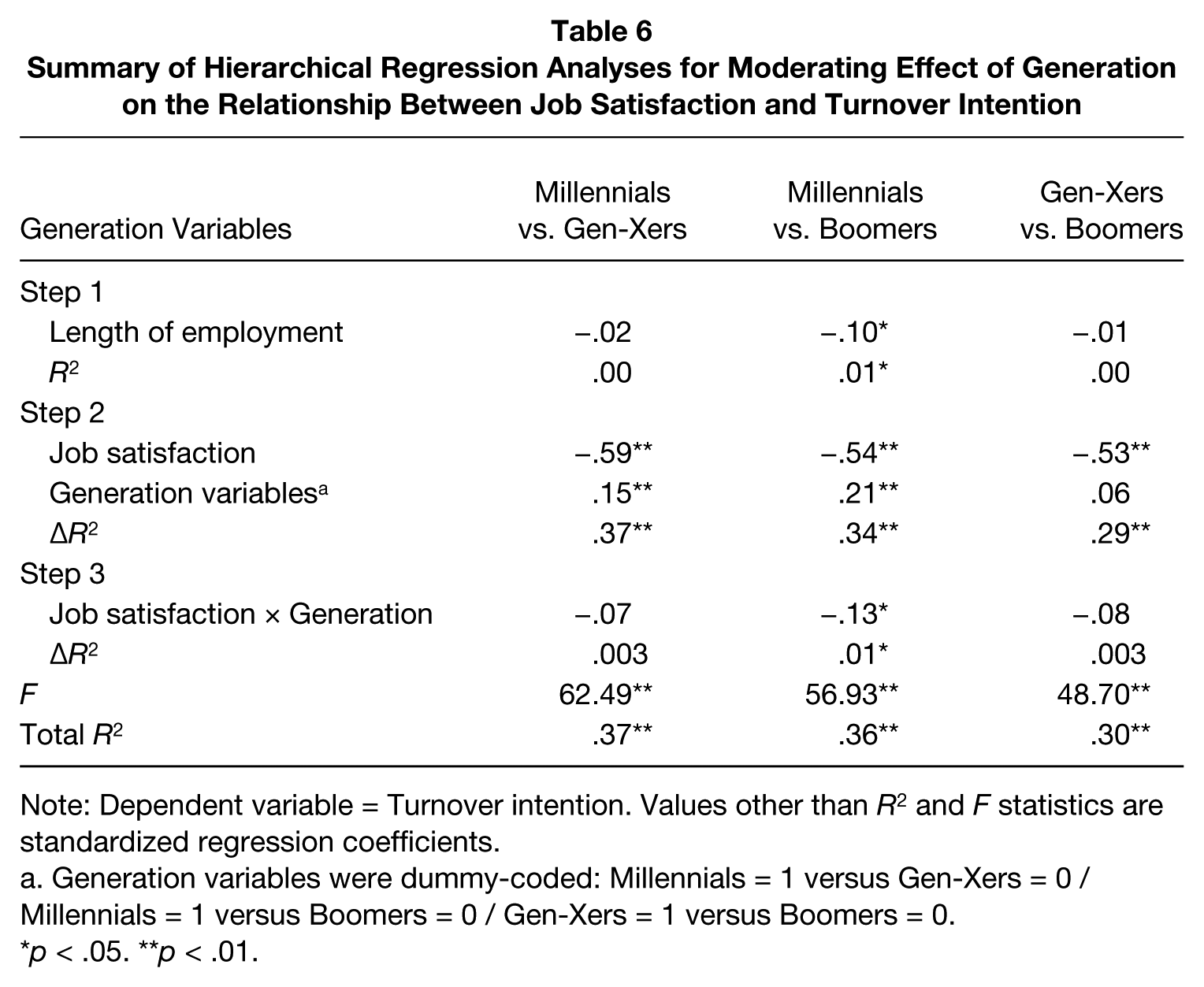
As shown in Table 6, job satisfaction was found to have significant negative effects on turnover intention. After controlling for length of tenure and the effect of job satisfaction, generation was found to have a positive relationship with turnover intention for Millennials versus Gen-Xers (b = .15, p < .01) and for Millennials versus Boomers (b = .21, p < .01). The job satisfaction × generation interaction term showed additional significant incremental variance for Millennials versus Boomers (ΔR2 = .01, p < .05).
Summary of Hierarchical Regression Analyses for Moderating Effect of Generation on the Relationship Between Job Satisfaction and Turnover Intention
Note: Dependent variable = Turnover intention. Values other than R2 and F statistics are standardized regression coefficients.
Generation variables were dummy-coded: Millennials = 1 versus Gen-Xers = 0 / Millennials = 1 versus Boomers = 0 / Gen-Xers = 1 versus Boomers = 0.
p < .05. **p < .01.
Discussion and Conclusions
This study found a significant moderating effect of generation (Millennials vs. Boomers) on the relationship between emotional exhaustion and job satisfaction (Figure 1) and turnover intention (Figure 2), as well as on the relationship between job satisfaction and turnover intention (Figure 3). As expected, Millennials reported significantly lower job satisfaction and higher turnover intention than Boomers when they are exhausted. These findings may be because of differences in perceptions and interpretations of the state of emotional exhaustion across three generations, and the difference between Boomers’ and Millennials’ work centrality (Twenge, 2010). Placing much more emphasis on work–life balance and leisure, Millennials could easily attribute their emotional exhaustion to their job itself since the value of their work does not outweigh their personal life and leisure. Boomer employees, on the other hand, might be more willing to tolerate such emotional depletion rather than blaming it on their job because of the strong emphasis they place on their job. In addition, as career stage theory (Super, 1980) suggests, Boomers (mostly in the maintenance stage) may consider maintaining their current status and holding their current job as a top priority, whereas Millennials (mostly in the trail stage) may be willing to try other occupations to figure out their ideal career. Emotional exhaustion can, therefore, become a much stronger facilitator of job dissatisfaction and turnover intention for Millennials because of their weaker commitment toward their job compared with Boomers. Therefore, taken together, it is not surprising to find that Millennial employees are likely to exhibit higher job dissatisfaction and turnover intention than Boomer employees.
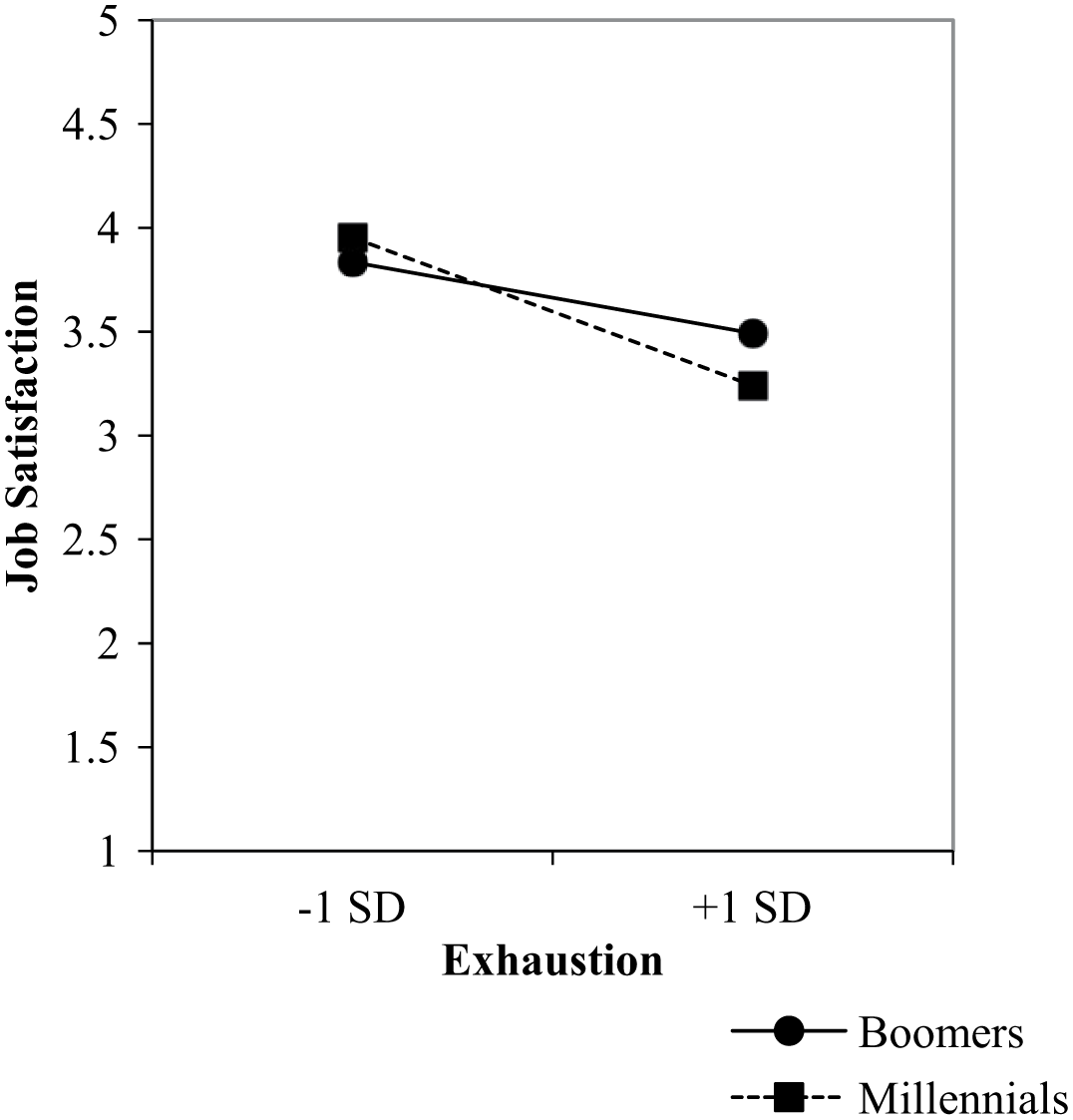
Moderating Effect of Generational Differences in the Impact of Exhaustion on Job Satisfaction
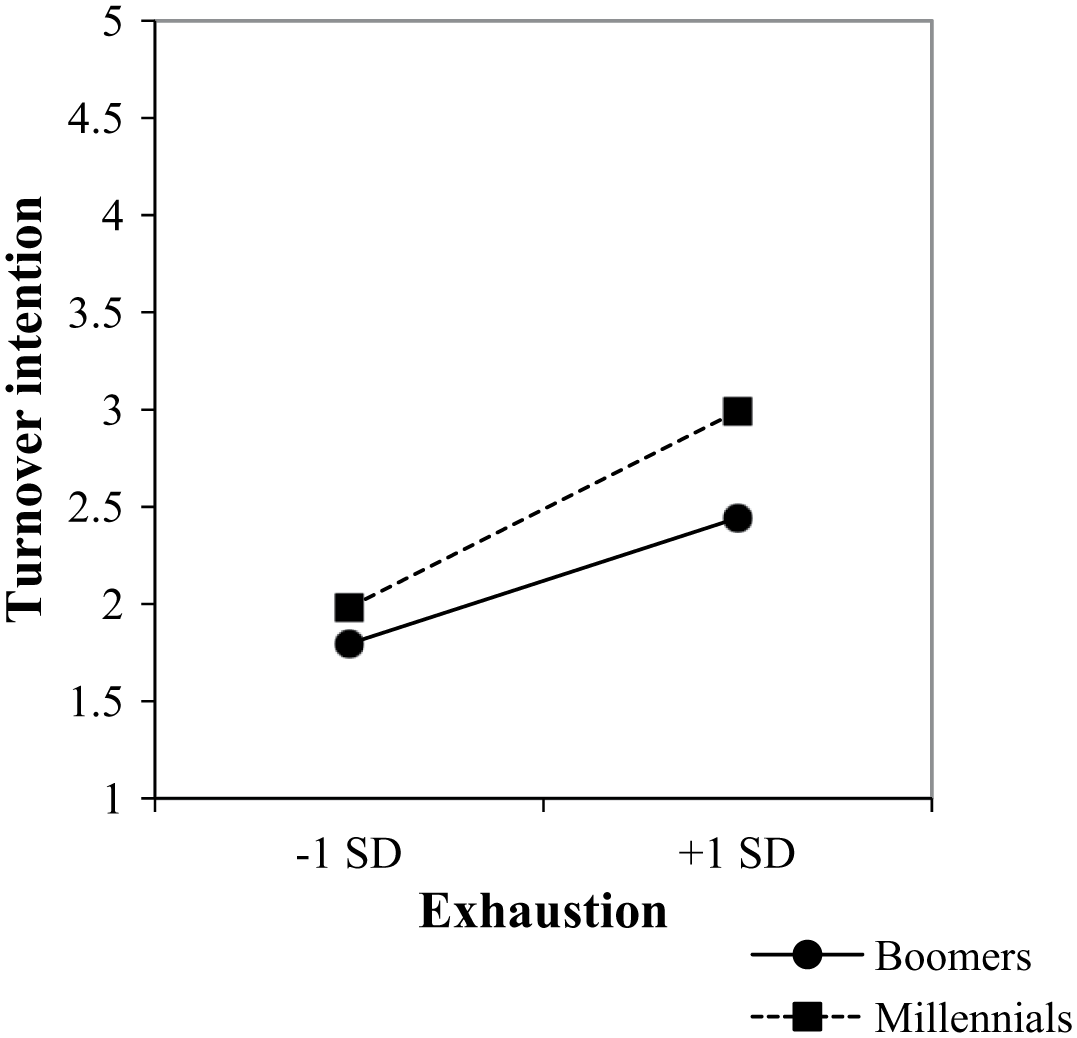
Moderating Effect of Generational Differences in the Impact of Exhaustion on Turnover Intention
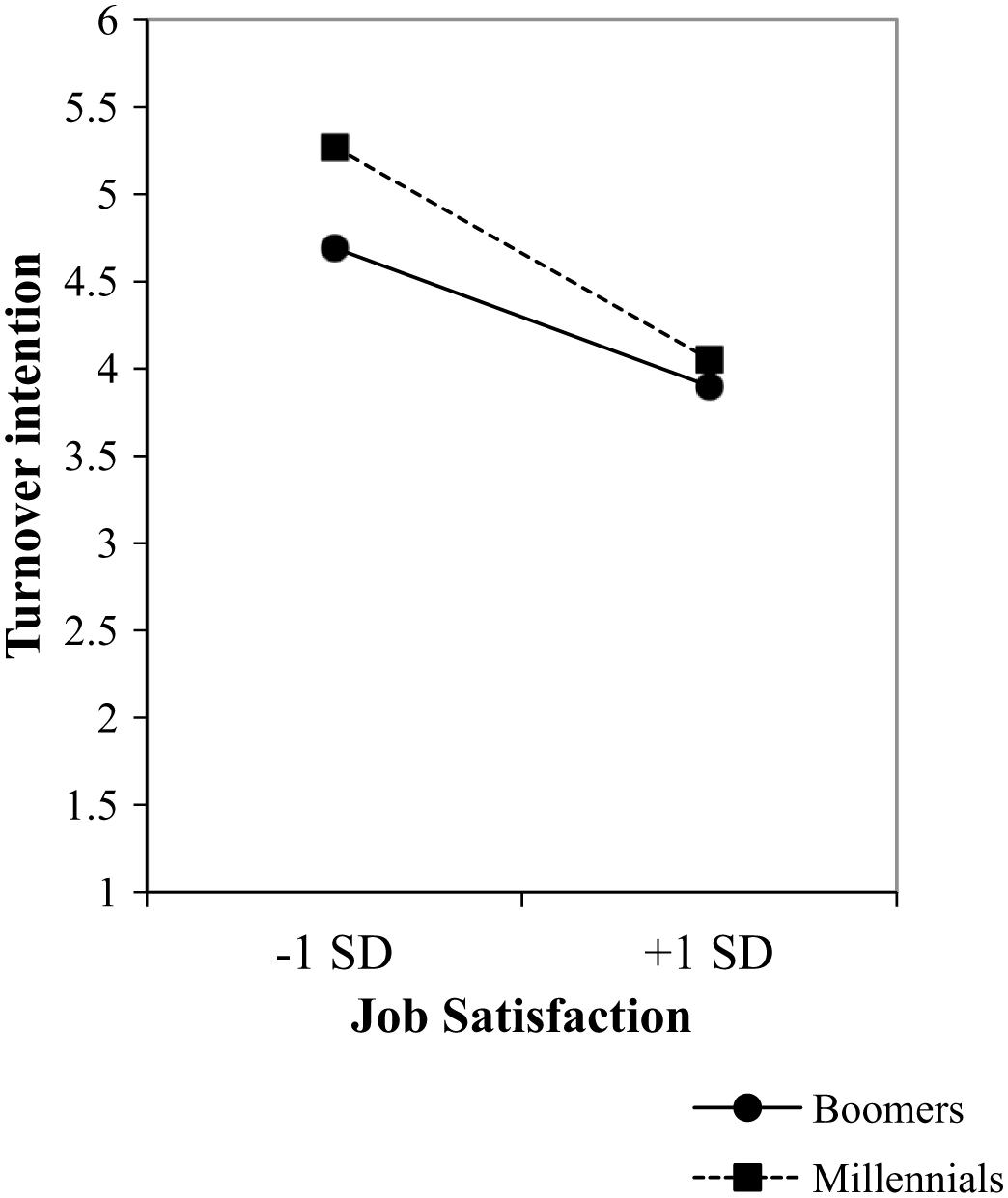
Moderating Effect of Generational Differences in the Impact of Job Satisfaction on Turnover Intention
Although no significant moderating effects of generational differences for Millennials and Gen-Xers on the relationship between exhaustion and job satisfaction, and between exhaustion and turnover intention, were hypothesized, it was surprising to find that generational differences between Boomers and Gen-Xers did not have any significant moderating effect on the relationship between exhaustion and job satisfaction, and between exhaustion and turnover intention. This might be explained by the fact that Gen-Xers share distinct similarities with both Millennials and Boomers. For example, both Gen-Xers and Millennials highly value work–life balance and are not very loyal. On the other hand, as suggested by the career stage theory (Super, 1980), Gen-Xers who are mostly in the stable career stage tend to have their career path planned. In other words, even though Gen-Xers have been reported to be similar to Millennials regarding low loyalty toward organizations, there is also evidence suggesting that Gen-Xers are more serious and attached to their current careers than Millennials. Gen-Xers’ approach to their careers, to some extent, is similar with Boomers’ approach to their careers. As such, sharing particular commonalities on work-related attitudes with both Boomers and Millennials, Gen-Xers might be less likely to yield attitudinal and behavioral outcomes that are substantively different from those of Boomers and Millennials when encountering the same occurrences. This might help explain why Gen-Xers yield a similar level of job satisfaction and turnover intention with Boomers and Millennials when all three generations experience emotional exhaustion.
Findings did not indicate any moderating effect of generational differences on the relationship between the two other burnout dimensions, and job satisfaction and turnover intention. This finding might be explained by Leiter and Maslach’s (1988) burnout model, which suggests emotional exhaustion is the first phase of burnout, given it is a response to the emotional stressors of the job. They also argue that emotional exhaustion is the predictor of depersonalization, and depersonalization further predicts decreased personal accomplishment. Similarly, an effort by Koeske and Koeske (1989) to examine the construct validity of the three dimensions of burnout also leads to a conclusion that depersonalization and diminished personal accomplishment are consequences of emotional exhaustion. In line with this rationale, emotional exhaustion can be viewed as the first stage of burnout and, if handled inappropriately, this first stage could advance to the next two levels of symptoms. Accordingly, when burnout advances from emotional exhaustion to cynicism and reduced professional efficacy, it might affect both older and younger employees at similar magnitudes. That is, although Boomers might still be able to handle emotional exhaustion with a better mind-set than younger employees do, it might not be the case when Boomers also start experiencing cynicism and reduced professional efficacy.
For Boomers, when everything at work becomes meaningless and negative (i.e., cynicism), they are likely to suffer badly because they view their job as the center of their lives. In addition, losing the sense of professional accomplishment and competence (i.e., reduced professional efficacy) in the workplace could hurt their belief that hard work and their willingness to take greater responsibility will pay off. Under these circumstances, dissatisfaction with their current job could easily occur and could force them to seek a new workplace. On the other hand, younger employees emphasize skill development and value extrinsic rewards such as increased pay and material possessions. When becoming cynical toward work, younger employees may lose their trust in their current job and start to doubt that their preferences and expectations will be satisfied in the current organization. Furthermore, studies (e.g., Twenge & Campbell, 2001; Twenge, Konrath, Foster, Campbell, & Bushman, 2008) examining generational differences in psychological traits reported that younger generations have higher narcissism and self-esteem than older generations. Narcissism and self-esteem are two highly correlated personality traits (Emmons, 1984) and people with high levels of narcissism are found to react to negative feedback with more anger and aggression than people with low narcissism (e.g., Kernis & Chien-Ru, 1994; Rhodewalt, Madrian, & Cheney, 1998). In other words, narcissistic and high self-esteem individuals are pleased with the way they are and see little room for improvement (Chatterjee & Hambrick, 2007). Having these two traits more salient than older generations, younger employees are unlikely to be comfortable with accepting frequent self-negative assessment because of unfulfilled performance or responsibilities (i.e., reduced professional efficacy). In this situation, younger workers could easily become dissatisfied with their current job and begin to search for another workplace to reestablish self-confidence and satisfy their work expectations. All this might explain why this study could find only moderating effects of generational differences in the impact of emotional exhaustion, but not in the impact of cynicism and diminished professional efficacy, on job satisfaction and turnover intention.
In conclusion, given that most scholarly efforts addressing job burnout in hospitality academia focus on the work environment and its conditions (Kim et al., 2007), this study enriches the body of hospitality literature by empirically illustrating that hospitality employees’ job burnout significantly predicts reduced job satisfaction and increased turnover intention, and reduced job satisfaction also significantly predicts increased turnover intention. In addition, building on the generational differences literature, this study bridges the gap between burnout and generational differences by identifying the moderating effect of generational differences on the impact of emotional exhaustion on its two attitudinal outcomes, and on the impact of job satisfaction on turnover intention.
Managerial Implications
Developing strategies to decrease employees’ burnout rate in the first place is the most important task for hospitality practitioners. Reducing job demand for employees sometimes might be impractical or even impossible since maximizing customer satisfaction is always the top priority and a difficult task that demands substantial effort from employees. Instead, improving job resources for employees might be a preferable and more efficient strategy. For these strategies to be effective, distinct work values from three different generations should also be taken into consideration.
Findings suggest that employers should develop a customized incentive structure for employees from each generation. For example, giving Boomer workers a 3.5% raise at the end of the year might make a Boomer employee happy, whereas having a pay raise of 1% three times a year could be more adequate for Millennial employees as they desire more rapid feedback and rewards. Similarly, providing a sense of job security for Boomers is more critical as they view work as one of the most important parts of their life, whereas offering Millennial employees plenty of opportunities for work variety, challenge, and even decision making might be more appropriate since they value personal development and like to voice their opinions. In addition, work–life balance should be the most important aspect demanding considerable attention from hospitality practitioners, as it could be beneficial for all three generational employees in decreasing the chance of burnout, especially helping mitigate the negative impacts of burnout on Millennial employees.
Given that younger employees, especially Millennials, have lower job satisfaction and higher turnover intention compared with older employees under emotional exhaustion, managers might need to consider developing corporate-wide strategies to address work–life balance. For example, providing flexible work hours and adequate supervision might enable younger workers to organize their work and leisure time with more freedom and autonomy. It would give younger employees a sense of control over their professional careers, which may contribute to a sense of fulfillment and pride. As such, aligning the organization’s values and operations with younger employees’ work values would help manifest and strengthen younger employees’ identity toward the job and the organization. This might help improve employees’ loyalty and satisfaction and lower turnover intentions of younger workers under emotional exhaustion (Nunkoo, Gursoy, & Ramkissoon, 2013). All these benefits could also apply to older employees.
Limitations
There are a few limitations associated with this study. Data for this study were collected from employees of a North American branded hotel management company, which may limit the generalizability of the findings reported. Future studies should be conducted on a larger sample of hospitality employees, preferably a national sample including several large chains. In addition, although this study found a significant moderating effect of generational differences between Boomers and Millennials for the relationships among burnout, job satisfaction, and turnover intentions, the reported R2 change of adding an interaction term in the hierarchical regression model was small, which may limit the practicality of the findings. Therefore, readers should be very cautious about interpreting the findings. Another limitation is that the sample of this study included significantly more female respondents than male respondents. When interpreting the results, readers should consider the possibility of gender bias in responses.
Common method bias is also a limitation that should be noted. Data used were self-reported and all independent and dependent variables were obtained from the same raters (Podsakoff, MacKenzie, Lee, & Podsakoff, 2003). This study did not separate the source of independent and dependent variables due to great difficulties in linking the data together while protecting subjects’ anonymity. Protecting respondents’ anonymity and reducing evaluation apprehension were more critical for this study to ensure that subjects could answer the questions as honestly as possible, given that measures for independent and dependent variables of this study were very likely to cause socially desirable responses. To control common method bias, this study used some of the possible remedies suggested by Podsakoff et al. (2003) during the development of the survey instrument and data collection stages. For example, this study created psychological separation by using a number of irrelevant items to make it appear that the measurement of the independent variable is not connected with or related to the measurement of the dependent variable, counterbalanced the order of measurements of independent and dependent variables, and used well-established scale items to avoid ambiguous and complicated questions. However, it is strongly recommended that future studies should set stricter research procedures to minimize this issue, preferably obtaining measures of independent and dependent variables from different raters while also protecting respondents’ anonymity.
In addition, the cross-sectional design used in this study is limited in the ability to observe the changing patterns of subjects across time, which may have caused misidentification of the causal relationship between independent and dependent variables. Future studies should address these shortcomings by using longitudinal analysis to detect and monitor variations and trends among subjects. The present research analyzed each generation as a homogeneous group; however, studies have pointed out that there may be more heterogeneity within generations than between generations (e.g., Dencker, Joshi, & Martocchio, 2008). Other sociodemographic variables such as race, ethnicity, or culture of workers within the same generation might play critical roles in predicting significant differences of work values (Parry & Urwin, 2011). Therefore, future studies should include these sociodemographic variables in the analysis to ensure more accurate effects of generational differences on the variations of employees’ work values.