



Abstract
Since information sharing is achieved in cooperation with others, not just by oneself, social networking sites (SNSs) based on extensive social networks are an ideal environment for sharing information. In particular, SNSs’ network externalities are crucial to the success of the information and communication technologies industry. Thus, this study investigated how SNSs’ network externalities affect users’ perceptions of benefits, satisfaction, and restaurant information-sharing intentions. This study found that perceived network size and perceived complementarity significantly influenced perceived usefulness. Furthermore, perceived referent network size, perceived complementarity, and perceived compatibility significantly influenced perceived enjoyment. In addition, perceived benefits significantly influenced satisfaction, which in turn significantly influenced restaurant information-sharing intentions on SNSs. These findings have considerable implications for understanding the role of SNSs’ network externalities in sharing information.
Introduction
Social networking sites (SNSs) have become a significant force in our lives, particularly in shaping consumers’ information-sharing and decision-making behaviors (Kwok & Yu, 2013; Mangold & Faulds, 2009). SNSs allow users to express themselves and build new social connections (Muscanell & Guadagno, 2012) that facilitate interactivity and social influence between users (C. P. Lin & Bhattacherjee, 2008; Luarn, Yang, & Chiu, 2014). With network technologies such as SNSs, the utility of the technology increases as the number of people participating in the same network increases (Katz & Shapiro, 1985). This is generally referred to as “network externalities” (Katz & Shapiro, 1985). Network externalities also generate additional value or benefits for users through complementary products or services (C. P. Lin & Bhattacherjee, 2008). Previous studies have demonstrated that network externalities are crucial factors that determine which technologies are adopted and used (Chiu, Cheng, Huang, & Chen, 2013; K. Y. Lin & Lu, 2011).
SNSs are increasingly important continuing progressive communication channels where many people express and share opinions and views (Chang & Yang, 2013; Osatuyi, 2013). According to the Social Media Marketing Industry Report, 86% of marketers stated that SNSs are substantially important to their business, which is a 3% increase compared with 2012’s survey (Michael, 2013).
SNSs are particularly important for the restaurant industry, which by nature is intangible and heterogeneous. These characteristic make it more difficult to assess the quality of a restaurant compared with a tangible material product. It also increases the importance of other consumers’ experiences and opinions (Lewis & Chambers, 2000). Accordingly, restaurant customers tend to depend on information from experienced customers (Bei, Chen, Rha, & Widdows, 2015; Yang, 2013; Zhang, Ye, Law, & Li, 2010). On SNSs consumers actively and enthusiastically engage in the decision-making process by searching for diverse information about restaurants (E. J. Jeong & Jang, 2011). Consumers can also comment on others’ restaurant reviews on SNSs, which are emerging as a trendy information source (Kwok & Yu, 2013). Zhang et al. (2010) found that consumers’ online restaurant reviews led consumers to visit the restaurants’ websites. As the amount of online reviews increase, so do the restaurants’ websites visitation rates. Furthermore, S. B. Jeong (2012) identified that online word-of-mouth activity has a positive relationship with market share in the restaurant industry. Taken together, prior studies suggest that activities on SNSs, such as networking with others, acquiring information, and exchanging opinions, are better when networks are strong and broad.
The decision to use particular information technologies is driven by motivations associated with the utilitarian and/or hedonic nature of the products and services (Davis, Bagozzi, & Warshaw, 1992; C. P. Lin & Bhattacherjee, 2008; K. Y. Lin & Lu, 2011; Van der Heijden, 2003). In much of the previous researches, usefulness and enjoyment are regarded as representative motivational factors (B. S. Kim, 2012; J. S. Park & Byun, 2013; Pillai & Mukherjee, 2011). A number of studies have investigated what generally motivates people to use SNSs. However, it is important to figure out the specific motivations that influence consumers to share restaurant information on SNSs. This will help researchers and practitioners alike to more clearly understand users’ behaviors and, thus, design effective tailored marketing strategies. Therefore, this study focuses on motivations for using SNSs for the purpose of sharing information about the restaurant industry, which is by nature reliant on the interpersonal influence of other consumers’ experiences and reviews.
Furthermore, despite the importance of SNSs’ network externalities, such as the number of users sharing information, related research so far is insufficient. Most of the previous research focused on personal traits, information characteristics, and system characteristics as antecedents of information sharing. In this study, we established and tested a more focused theoretical model that represents the correlations between network externalities, perceived benefits, satisfaction, and restaurant information–sharing intentions on SNSs. Thus, the specific objectives of this study were to (a) examine the effects of SNSs’ network externalities on perceived benefits, (b) investigate the relationship between the perceived benefits of SNSs as restaurant information–sharing tools and users’ satisfaction, and (c) examine the influence of users’ satisfaction on intentions to share restaurant information on SNSs.
Literature Review
Network Externalities
Network externality is defined as an increase in the utility of a product or service due to an increase in the number of people using a similar product (Katz & Shapiro, 1985; C. P. Lin & Bhattacherjee, 2008; K. Y. Lin & Lu, 2011). Most people believe that networks with a large number of users provide higher quality services, so people prefer networks with strong network externality, especially communication technology–based networks (Han, Sohn, & Lee, 2004). For instance, when SNSs’ users reaches a critical mass the benefits increase for subsequent users because they now have a larger group to communicate with. Furthermore, network externalities make SNSs easier to use and more convenient. The number of users and the availability of complementary goods or services drive the network effect and are called drive network externalities (C. P. Lin & Bhattacherjee, 2008; K. Y. Lin & Lu, 2011). This concept is often applied in research to explain behavioral intentions toward and adoption of interaction-based technologies such as blogs, online auctions, and SNSs (H. T. Kang, 2012; K. Y. Lin & Lu, 2011; Lu & Lin, 2012; Zhao & Lu, 2012).
Network externalities fall into two distinct types: direct and indirect (Katz & Shapiro, 1985). Direct externalities are related to the number of users (Zhou & Lu, 2011). Websites, mobile instant messengers, and telecom facilities are examples of technologies benefiting from direct externalities. As more users join a network, there are additional opportunities to interact with more people (Gupta & Mela, 2008; C. P. Lin & Bhattacherjee, 2008). In contrast to direct network externalities, indirect network externalities signify value related to an increase in complementary services and functions (K. Y. Lin & Lu, 2011; Zhou & Lu, 2011).
Accordingly, network size and referent network size are direct network externalities, while complementarity and compatibility are indirect network externalities (Katz & Shapiro, 1985). Perceived network size refers to the total number of users. The number of early adopters affects the subsequent number of individuals who choose to use a network service (Sledgianowski & Kulviwat, 2009). Consumers determine the quality of a service based on the number of existing users (Smallwood & Conlisk, 1979; Song, Parry, & Kawakami, 2009). In addition, perceived referent network size reflects the number of peers, such as friends and colleagues, using a network (Zhou & Lu, 2011). This is a major factor influencing people’s intentions to participate in an SNS since the aim of an SNS is to allow people to keep in touch with one another (Baker & White, 2010; K. Y. Lin & Lu, 2011). Information on SNSs can be disseminated more broadly with a larger network size. Users with more connections are able to spread information more efficiently by sharing with their personal networks, pushing a “Like” button, or commenting on someone else’s post (Luarn et al., 2014).
Perceived complementarity, one dimension of indirect network externalities, refers to the number of available complementary functions and additional services, which adds value to the network (Strader, Ramaswami, & Houle, 2007; Zhou & Lu, 2011). Complementary services enhance network externalities (J. M. Lee & Chung, 2012) and differentiate them from competitors. Furthermore, the compatibility of a firm’s communication network with other firms’ networks is a major issue (Katz & Shapiro, 1985). Gao and Bai (2014) found that network size and complementarity are crucial factors that influence flow on mobile SNS services. Network services or devices with greater compatibility are used widely, which expands market share and ultimately increases market value (Katz & Shapiro, 1985). Because consumers can choose between a number of diverse technological applications to communicate with, operational efficiency and general applicability are important to gain market dominance (Hyun & Hyun, 2000; Ruiz-Molina, Gil-Saura, & Berenguer-Contri, 2014).
Motivation Theory
There is ample evidence that people’s motivations affect their behavior (Arnold & Reynolds, 2003). Motivation theory has been widely adopted to explain an individual’s acceptance of particular information technologies (K. Y. Lin & Lu, 2011). Perceived usefulness and perceived enjoyment are usually considered determinants (Van der Heijden, 2003). Perceived usefulness is the representative extrinsic motivation behind the acceptance of new technologies (Davis, 1989) and is a major factor, along with ease of use, in the technology acceptance model (Davis, 1989). These utilitarian values are related to the productivity or performance of a technology (Davis, 1989). Previous studies have consistently shown that perceived usefulness influences intentions to use a technology (Davis, 1989; J. S. Park & Byun, 2011). However, perceived ease of use has drawn inconsistent results. Thus, this study only adopted perceived usefulness as it was deemed the more evident determinant (Koufaris, 2002; Wang, Chung, Park, McLaughlin, & Fulk, 2012; Wu & Wang, 2005). Moreover, J. S. Park and Byun (2011) found that the usefulness of a restaurant’s blog had a significant influence on intentions to visit the restaurant and suggested that convenient and useful technology is a competitive advantage.
On the other hand, perceived enjoyment is a hedonic-oriented motivation that is separate from a technology’s outcomes or utilitarian benefits (Davis et al., 1992). Users motivated by hedonic desires use technology for leisure and fun (S. Lee, Li, & Merrier, 2010). As information technologies have become common, they are no longer the exclusive property of IT experts or businessmen (W. Lee & Lee, 2005). People turn to computers and the Internet not only to accomplish tasks but also to pursue hedonic values such as enjoyment, pleasure, and fun (W. Lee & Lee, 2005). Dickinger, Arami, and Meyer (2008) identified that social norms and peers using a technology service arouse enjoyment and asserted that interactions between friends influences not only the adoption of new technologies but greatly enhances interactivity. Furthermore, enjoyableness significantly affected loyalty and the active participation of users (K. Kang, Tang, & Fiore, 2014). Moreover, C. P. Lin and Bhattacherjee (2008) noted that individuals use communication technologies for both communication and enjoyment, and they expect hedonic outcomes, such as entertainment, rather than utilitarian outcomes like productivity. Even though all technologies potentially have utilitarian and hedonic aspects, the actual motivations of individual users may differ depending on his or her purpose for using the technology (Pillai & Mukherjee, 2011; Van der Heijden, 2003).
Restaurant Information Sharing on SNSs
The rapid development of information technology in the 21st century has contributed to worldwide communication, particularly virtual communities on SNSs. In this era of advancing information technology, information and knowledge have become competitive new economic advantages (D. M. Lee & Park, 2011). Accordingly, individuals and companies continuously struggle to obtain more information more rapidly than others (Y. C. Kim, Shim, Kim, Shin, & Shon, 2012). This implies that because people have a high level of dependence on information, information increases competitive power in the business market. Recognizing the expanding influence of information and the emergence of SNSs based on participation, openness, communication, and connection, many researchers have shifted their attention from information search behaviors to information-sharing behaviors (Mangold & Faulds, 2009). Information sharing is interactive among participants and allows consumers to seek information by posting questions and interacting back and forth with the community (H. Lee, Reid, & Kim, 2014).
C. H. Kim and Hwang (1997) stated that information-sharing behaviors include disclosing news, personal advice, and personal experiences. More specifically, information sharing on SNSs empowers consumers to describe and reconstruct their personal experiences with products or services (Ip, Lee, & Law, 2014). SNSs such as restaurant Facebook fan pages are a highly effective channel for enhancing consumer–brand relationships. They provide consumers with a personal space to provide feedback on new menu items, offer new ideas, and share their dining experiences (DiPietro, Crews, Gustafson, & Strick, 2012; K. Kang et al., 2014).
Information is shared regarding every conceivable type of product and service including electronic goods, books, cosmetics, resorts, hotels, and restaurants. However, consumers tend to depend more on word of mouth to reduce the uncertainty and risk (Klein, 1998; C. H. Lee & Cranage, 2014; Zhang et al., 2010) associated with intangible experiences that are difficult to evaluate prior to consumption, such as restaurant services and products (Lewis & Chambers, 2000). Thus, consumers not only want to share their experiences but also obtain detailed information about a restaurant, such as locations, menus, photos, and comments posted by consumers (Zhang et al., 2010). Online spaces facilitate better decision making by allowing consumers to share relevant experiences in textual, audio, or visual formats and evaluate this information (Cox, Burgess, Sellitto, & Buultjens, 2009; Ip et al., 2014; Senecal & Nantel, 2004). DiPietro et al. (2012) mentioned that communicating on SNSs generates more interest in a restaurant brand not only among consumers but employees as well.
Zhang et al. (2010) suggested the importance of online information and highlighted the positive relationship between the number of consumer created reviews and the online popularity of a restaurant. Yang (2013) noted that the hospitality industry increasingly relies on reviews, recommendations, and information shared on the Internet due to its experience-based services. Consumers visit restaurants after referring to online information on SNSs and then post their own reviews and experiences in turn (E. J. Jeong & Jang, 2011; Kwok & Yu, 2013). These new postings generated by restaurant customers then become new sources of information for others. This circular information-sharing pattern is a great help to both consumers and restaurants alike (Yun & Lee, 2011).
Model Development and Hypotheses
SNSs’ Network Externalities and Perceived Benefits
Katz and Shapiro (1985) explained that network externalities by provide utility and are generated by the direct physical effect of the number of users. Recent studies focusing on the key dimensions of network externalities suggested that network size, referent network size, complementarity, and compatibility were the most prominent dimensions underlying network externalities (Chiu et al., 2013; K. Y. Lin & Lu, 2011). These constructs of network externalities are essential to communication technologies, including telephones, the Internet, instant messengers, and SNSs, in order to provide benefits and quality services to users. This argument was supported by Strader et al. (2007), who found that perceived network externalities were positively related to usefulness in the case of e-mail and instant messenger services. K. Y. Lin and Lu (2011) indicated that perceived usefulness increased with perceived network size, whereas perceived enjoyment was enhanced by perceived referent network size and perceived complementarity. H. T. Kang (2012) emphasized that perceived network size and perceived complementarity influence usefulness and enjoyment. Furthermore, as Chiu et al. (2013) noted, perceived network size, perceive complementarity, and perceived compatibility are positively related to satisfaction with an SNS. Koufaris (2002) mentioned that complementary tools are high value-added services that generate enjoyment for users, while C. P. Lin and Bhattacherjee (2008) asserted that if a single platform enables users to participate in various complementary services such as playing games, listening to music, and viewing movies, pleasure and fun are enhanced. Thus, based on the above discussion, the following hypotheses were proposed:
Hypothesis 1a: Perceived network size has a positive effect on perceived usefulness.
Hypothesis 1b: Perceived referent network size has a positive effect on perceived usefulness.
Hypothesis 1c: Perceived complementarity has a positive effect on perceived usefulness.
Hypothesis 1d: Perceived compatibility has a positive effect on perceived usefulness.
Hypothesis 2a: Perceived network size has a positive effect on perceived enjoyment.
Hypothesis 2b: Perceived referent network size has a positive effect on perceived enjoyment.
Hypothesis 2c: Perceived complementarity has a positive effect on perceived enjoyment.
Hypothesis 2d: Perceived compatibility has a positive effect on perceived enjoyment.
Perceived Benefits and Users’ Satisfaction
Related previous studies about information sharing through information systems or IT media asserted that perceived usefulness and perceived enjoyment influence satisfaction, attitudes, adoption, and intentions. J. H. Kim and Ha (2012) found that perceived usefulness and perceived enjoyment were positively related with users’ satisfaction and continued intentions to use a particular technology. J. S. Park and Byun (2013) stressed that greater perceived usefulness led to increased satisfaction with an SNS. Gao, Bai, and Park (2014) suggested that perceived enjoyment is a significant factor in sharing information in online communities and affects satisfaction. Furthermore, J. H. Kim and Ha (2012) and B. S. Kim (2012) reported that perceived usefulness and perceived enjoyment influence users’ satisfaction with information technologies and emphasized the importance of satisfying both utilitarian and hedonic motivations. Based on the previous research, we proposed the following hypotheses:
Hypothesis 3: Perceived usefulness has a positive effect on users’ satisfaction.
Hypothesis 4: Perceived enjoyment has a positive effect on users’ satisfaction.
Users’ Satisfaction and Restaurant Information–Sharing Intentions on SNSs
User satisfaction is widely applied to measure the success of information technologies (H. S. Park, 2005). When a user is satisfied with the content or functions of a technology used for sharing information, he or she is likely to have a positive attitude and continued intentions to share information via the technology (He & Wei, 2009). According to studies of virtual communities (Davarj, Fan, & Kohli, 2002; M. Y. Park & Chung, 2011), users’ satisfaction was emphasized as a variable affecting intentions, flow experience, and loyalty. Bhattacherjee and Premkumar (2004) confirmed that users’ satisfaction influenced usage intentions for information systems. Moon and Lee (2009) found that satisfaction with online shopping evoked positive feelings between customers and companies, which were positively related to trust, loyalty, and purchasing intentions.
Users’ satisfaction with using an SNS was found to influence continued intentions to engage with the technology (B. S. Kim, 2012; Y. H. Kim & Park, 2013). Chiu, Wang, Shih, and Fan (2010) reported that an individual’s satisfaction with knowledge sharing positively affected intentions to continue using the virtual community to share information. Moreover, Ma and Agarwal (2007) showed that an online community member’s satisfaction with the community yielded greater information-sharing intentions. Based on this previous research, we proposed the following hypothesis:
Hypothesis 5: Users’ satisfaction has a positive effect on restaurant information–sharing intentions on SNSs.
Based on the discussion above, the present study developed a conceptual model that presents the relationship between four components of network externality (perceived network size, perceived referent network size, perceived complementarity, and perceived compatibility), perceived benefits (perceived usefulness and perceived enjoyment), users’ satisfaction, and restaurant information–sharing intentions on SNSs (see Figure 1).
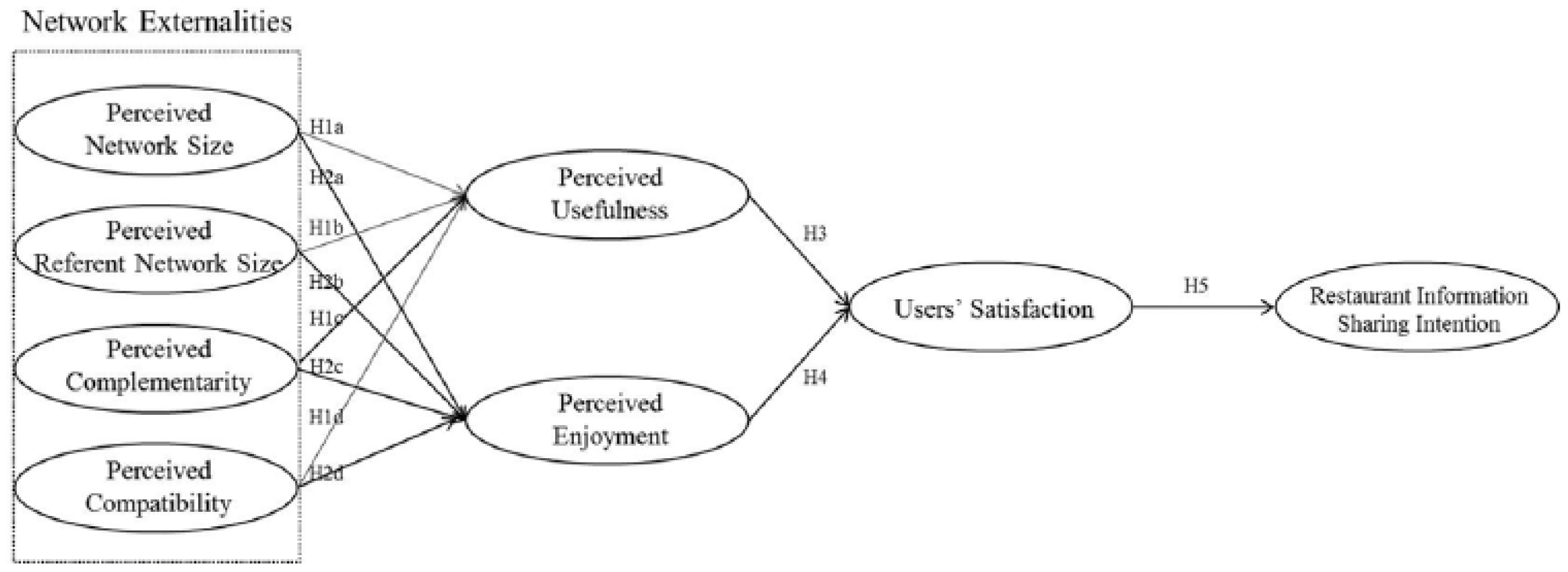
A Proposed Model of SNS Network Externalities, Perceived Benefits, Users’ Satisfaction, Restaurant Information–Sharing Intentions
Methodology
Data Collection
The adoption of smartphones is exploding worldwide. In particular, South Korea has a greater penetration rate of smart devices than any other country. The rate of Internet users in South Korea who own a smartphone is 78.5% among individuals ages 18 to 59 (Korea Internet & Security Agency, 2013). According to Internet usage statistics for 2013, 55.1% of Internet users visit SNSs, while 56.2% of individuals use an SNS more than once a day. The purpose of this study was to empirically investigate the effects of SNSs’ network externalities on consumers’ restaurant–information sharing. Thus, we obtained data from South Korea since it has such a high percentage of SNS users. In this study, SNSs were defined as web-based communication technologies, such as Facebook, Twitter, blogs, online communities, KakaoStory, and so on, that allow users to connect with others and share interests, information, and activities (Luarn et al., 2014; Osatuyi, 2013).
Online questionnaires were sent out over a 2-week period in April, 2014, by an online research company to randomly chosen South Koreans who had shared restaurant information on an SNS within the past month. The online research company was established 16 years ago and has collaborated with many institutes in Korea, Japan, China, and Taiwan. It has approximately a million panels and provides accurate online research results. For this study, 8,407 questionnaires were sent out to online panels and 1,908 questionnaires were filled out and returned. By using screening items to select respondents who had shared restaurant information on SNSs, 1,449 questionnaires were disqualified for research on restaurant information sharing on SNSs. The screening questions were (a) Which services have you used within the past month? (If respondents checked an “SNS,” they moved on to the next screening question.) and (b) What kinds of information did you share on the SNS in the past month? (If respondents checked “Restaurant,” they could continue to the next step of survey.). Based on these steps, qualified persons who were willing to participate in the survey were asked to complete the questionnaires. As a result, 459 surveys were analyzed to test our hypotheses.
Measurement Development
Data for the study were collected by a self-administered questionnaire consisting of two parts. The first part comprised 23 items pertaining to SNSs’ network externalities, perceived benefits, satisfaction, and restaurant information–sharing intentions. All items in the survey appear in the Appendix. Perceived network size (e.g., “I think most people are using this SNS”) and perceived referent network size (e.g., “I think many friends around me use this SNS”) were measured with items from K. Y. Lin and Lu (2011) and C. P. Lin and Bhattacherjee (2008), who explored factors affecting whether users join an SNS or instant messenger. Perceived complementarity (e.g., “There are a wide range of supporting tools to help share information on this SNS” and “A wide range of restaurant information content is available on this SNS”) and perceived compatibility (e.g., “This SNS is highly compatible with other SNSs” and “This SNS is highly compatible with websites”) were measured with items from Chiu et al. (2013), which identified influences of SNS’s network externalities on loyalty. The items measuring perceived usefulness (e.g., “Using an SNS allows me to more efficiently share information about restaurants”) and perceived enjoyment (e.g., “Using SNSs provides me with a fun way of sharing information”) were drawn from K. Y. Lin and Lu (2011) and T. H. Lee and Park (2013). Users’ satisfaction (e.g., “I am satisfied with the services provided by SNSs for sharing restaurant information,” and “The efficiency of SNSs as a tool for sharing restaurant information is better than I expected”) was measured with items adapted from Oliver (1981). Restaurant information sharing refers to interactions with others involving information searches, exposing personal experiences and knowledge, or asking/responding to questions about restaurants (Dipietro et al., 2012). Sharing behaviors include both responding to questions and initiating conversations to obtain information. Restaurant information–sharing intentions on SNSs (“I will continuously share restaurant information using SNSs.”) was measured with items from Chung and Han (2012). All 23 items in the first section of the survey were measured using a 7-point Likert-type scale ranging from 1 (strongly disagree) to 7 (strongly agree).
The second part of the survey examined five items related to demographics, including gender, age, education, occupation, and family income. In addition, two questions regarding SNS usage behavior, specifically the types of SNSs used to share restaurant information and the frequency of sharing restaurant information on SNSs, were included.
Data Analysis
Descriptive statistics were conducted to profile the respondents by using SPSS 18.0. This study followed a two-step approach to test the hypothesized model with the use of AMOS 18.0 (Anderson & Gerbing, 1988). A confirmatory factor analysis with a maximum likelihood was first conducted to estimate the measurement of the constructs; components, which determine the relationships of the indicators with their posited constructs. Then, structural equation modeling was used to specify relationships among the hypothesized constructs and assess the proposed model and hypotheses.
Results
Descriptive Statistics
Table 1 presents demographic profiles and SNS usage behaviors. Approximately 50.8% of respondents were male and 49.2% were female. The respondents were evenly dispersed across age groups (20s = 24.4%; 30s = 24.0%; 40s = 24.9%; 50s = 21.8%; 60s = 4.9%). Among various types of SNSs, most respondents used blogs to share restaurant information (36.6%), followed by Facebook (21.8%). In terms of frequency, 33.8% of the respondents shared restaurant information two to three times a month, followed by one to two times a week (26.6%), and less than once a month (14.6%).
Profile of the Sample (n = 459)

Note: SNS = social networking site.
KakaoStory is the popular social network service in Korea.
Measurement Model
A measurement model using the maximum likelihood estimation method was evaluated. First, a confirmatory factor analysis of the specific constructs proposed in the model was conducted. Results showed a satisfactory model fit for the eight-factor model, in which every item loaded on its intended constructs (χ2 = 423.907; degrees of freedom [df] = 202; χ2/df = 2.099; goodness of fit index [GFI] = .925; normed fit index [NFI] = .942; incremental fit index [IFI] = .969; comparative fit index [CFI] = .969; root mean square residual [RMR] = .045; root mean square error of approximation [RMSEA] = .049). As shown in Table 2, four criteria were used to assess the convergent validity of the construct: factor loading, Cronbach’s alpha, average variance extracted (AVE), and composited reliability. In the evaluation of the factor loadings for each item, 23 items met the criteria of .5 suggested by Fornell and Larcker (1981). The level of internal consistency for each construct was acceptable, with Cronbach’s alpha values ranging from .75 to .89. It also met the adequate reliability criteria of above .7 suggested by Nunnally (1978). To assess discriminant validity, AVE was compared with the squared correlation between constructs. The discriminant validity of the study was evident since the AVE for each construct exceeded .5 (Fornell & Larcker, 1981), ranging from .547 to .720, and exceeded all squared correlations for each pair of constructs, ranging from .113 to .507 (Fornell & Larcker, 1981). Table 3 illustrates the correlations among the constructs in this study. The items used to measure SNSs’ network externalities were positively related to the items used to measure perceived benefits, users’ satisfaction, and restaurant information–sharing intentions. These results indicated that the eight constructs were distinct and unidimensional. Last, convergent validity was observed since all confirmatory factor loadings exceeded .7 and were significant at the alpha level of .001 (Anderson & Gerbing, 1988). Therefore, convergent validity was confirmed.
Reliabilities and Confirmatory Factor Analysis Properties
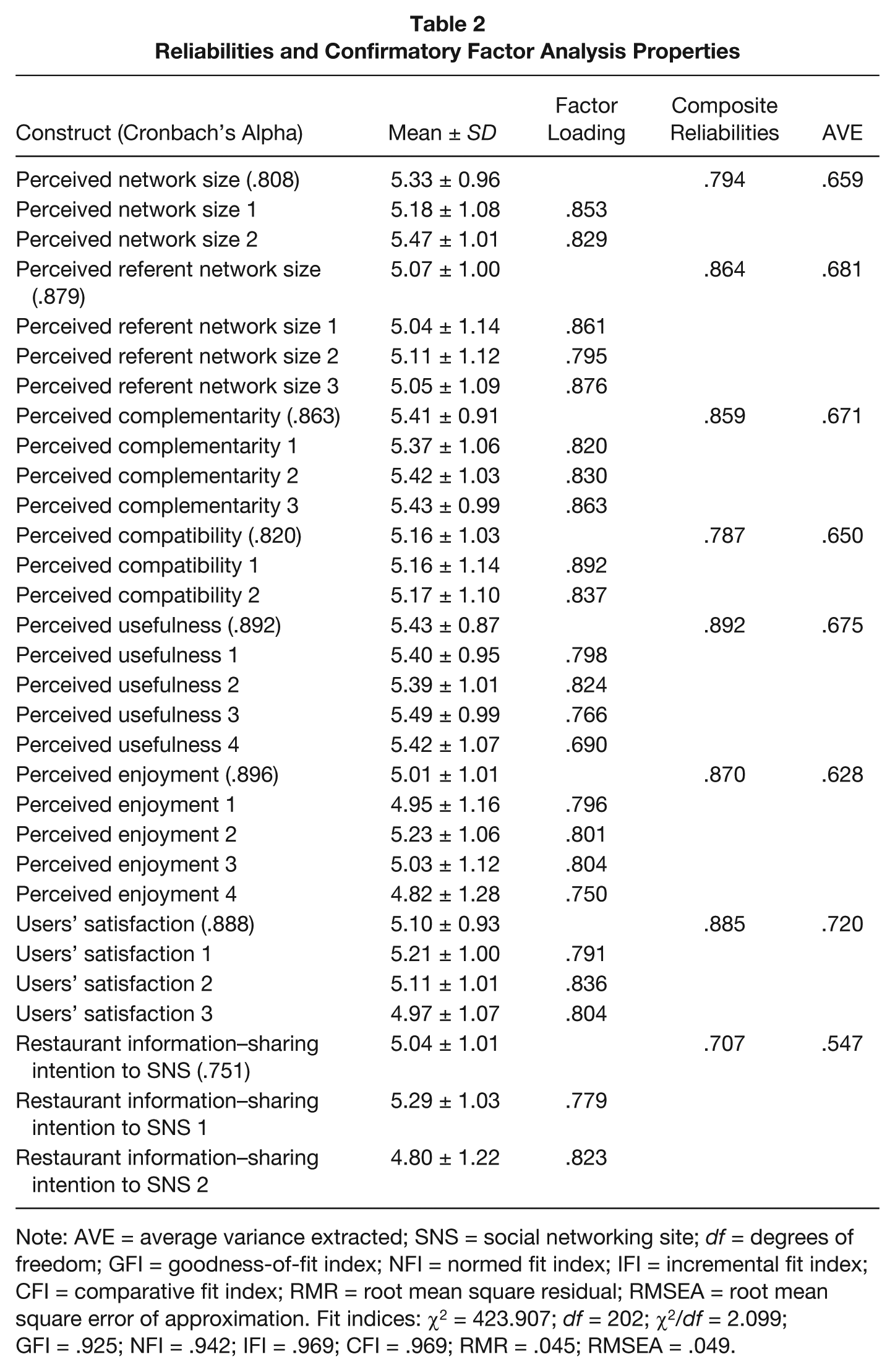
Note: AVE = average variance extracted; SNS = social networking site; df = degrees of freedom; GFI = goodness-of-fit index; NFI = normed fit index; IFI = incremental fit index; CFI = comparative fit index; RMR = root mean square residual; RMSEA = root mean square error of approximation. Fit indices: χ2 = 423.907; df = 202; χ2/df = 2.099; GFI = .925; NFI = .942; IFI = .969; CFI = .969; RMR = .045; RMSEA = .049.
Correlations Matrix Among the Latent Constructs
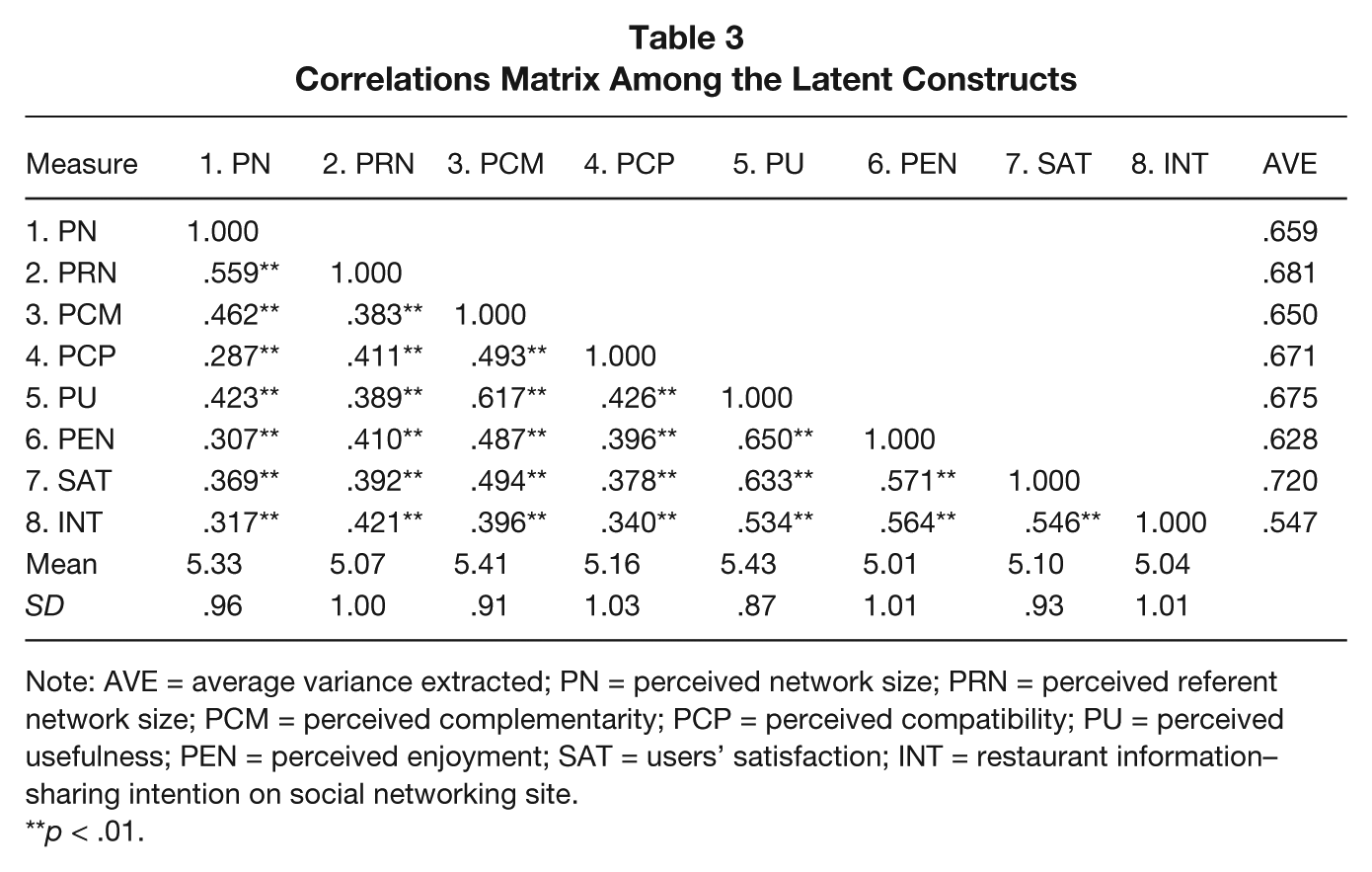
Note: AVE = average variance extracted; PN = perceived network size; PRN = perceived referent network size; PCM = perceived complementarity; PCP = perceived compatibility; PU = perceived usefulness; PEN = perceived enjoyment; SAT = users’ satisfaction; INT = restaurant information–sharing intention on social networking site.
p < .01.
Structural Equation Modeling
Table 4 shows the estimates of the structural modeling. The model-fit indices for the structural model were satisfactory (χ2 = 506.468; df = 212; χ2/df = 2.389; GFI = .912; NFI = .931; IFI = .959; CFI = .958; RMR = .074; RMSEA = .055); thus, it provided a good basis for examining the hypothesized paths.
Standardized Parameter Estimates
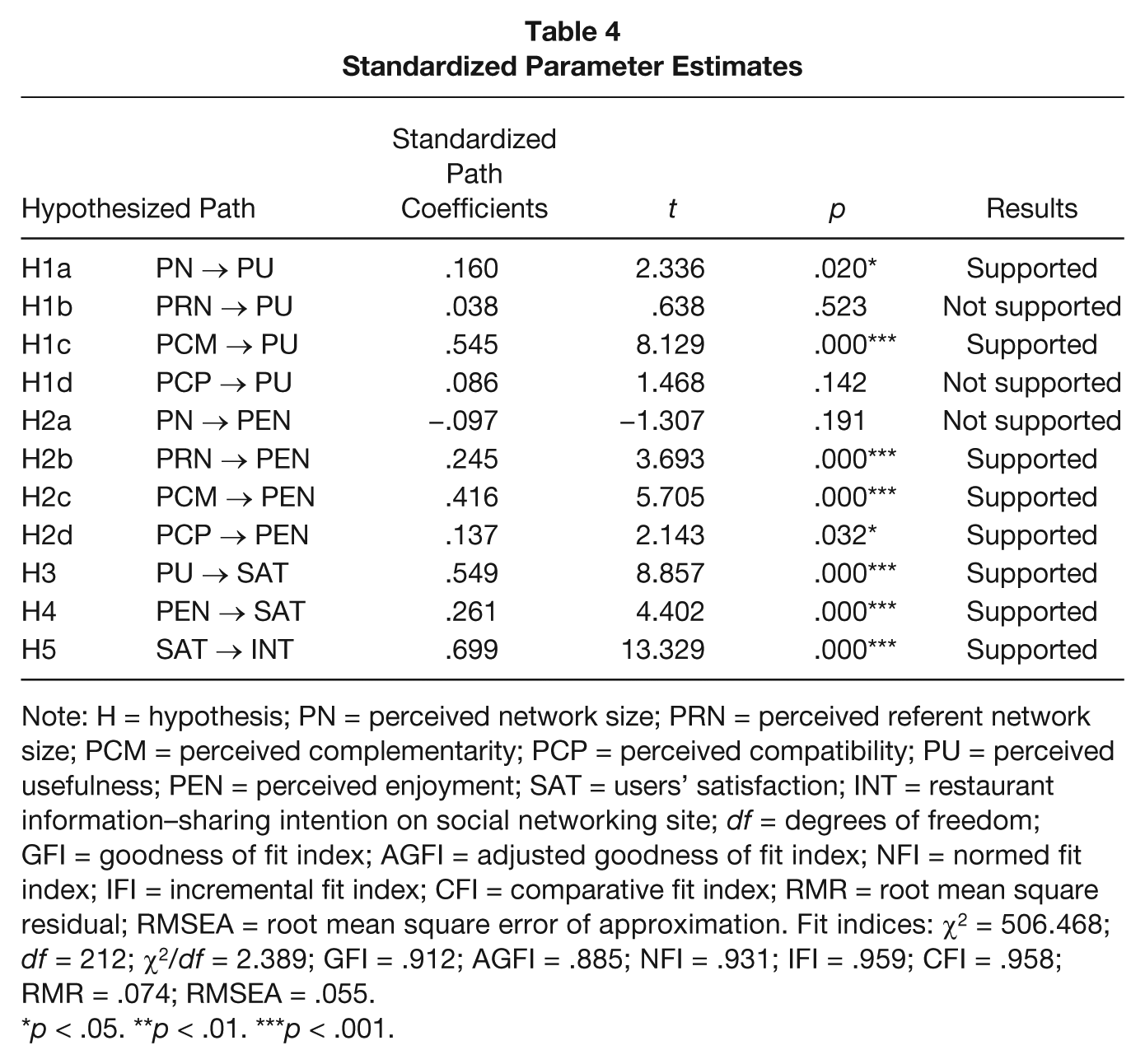
Note: H = hypothesis; PN = perceived network size; PRN = perceived referent network size; PCM = perceived complementarity; PCP = perceived compatibility; PU = perceived usefulness; PEN = perceived enjoyment; SAT = users’ satisfaction; INT = restaurant information–sharing intention on social networking site; df = degrees of freedom; GFI = goodness of fit index; AGFI = adjusted goodness of fit index; NFI = normed fit index; IFI = incremental fit index; CFI = comparative fit index; RMR = root mean square residual; RMSEA = root mean square error of approximation. Fit indices: χ2 = 506.468; df = 212; χ2/df = 2.389; GFI = .912; AGFI = .885; NFI = .931; IFI = .959; CFI = .958; RMR = .074; RMSEA = .055.
p < .05. **p < .01. ***p < .001.
Figure 2 depicts the structural results of the proposed model with standardized path coefficients for significant relationships. Eight hypotheses were supported, whereas Hypothesis 1b, Hypothesis 1d, and Hypothesis 2a were not supported. Regarding the association between SNSs’ four components of network externality and perceived usefulness, only perceived network size and perceived complementarity influenced perceived usefulness. Therefore, Hypothesis 1a (β = .160; t = 2.336; p < .05) and Hypothesis 1c (β = .545; t = 8.129; p < .001) were supported. Hypothesis 1b and Hypothesis 1d, which predicted positive relationships between perceived referent network size and perceived compatibility with perceived usefulness, were not supported. In contrast, perceived referent network size, perceived complementarity, and perceived compatibility significantly influenced perceived enjoyment. Therefore, Hypothesis 2b (β = .245; t = 3.693; p < .001), Hypothesis 2c (β = .416; t = 5.705; p < .001), and Hypothesis 2d (β = .137; t = 2.143; p < .05) were supported. Hypothesis 2a was the exception and was not supported. These findings indicate that complementarity is the most influential determinant increasing both usefulness and enjoyment.
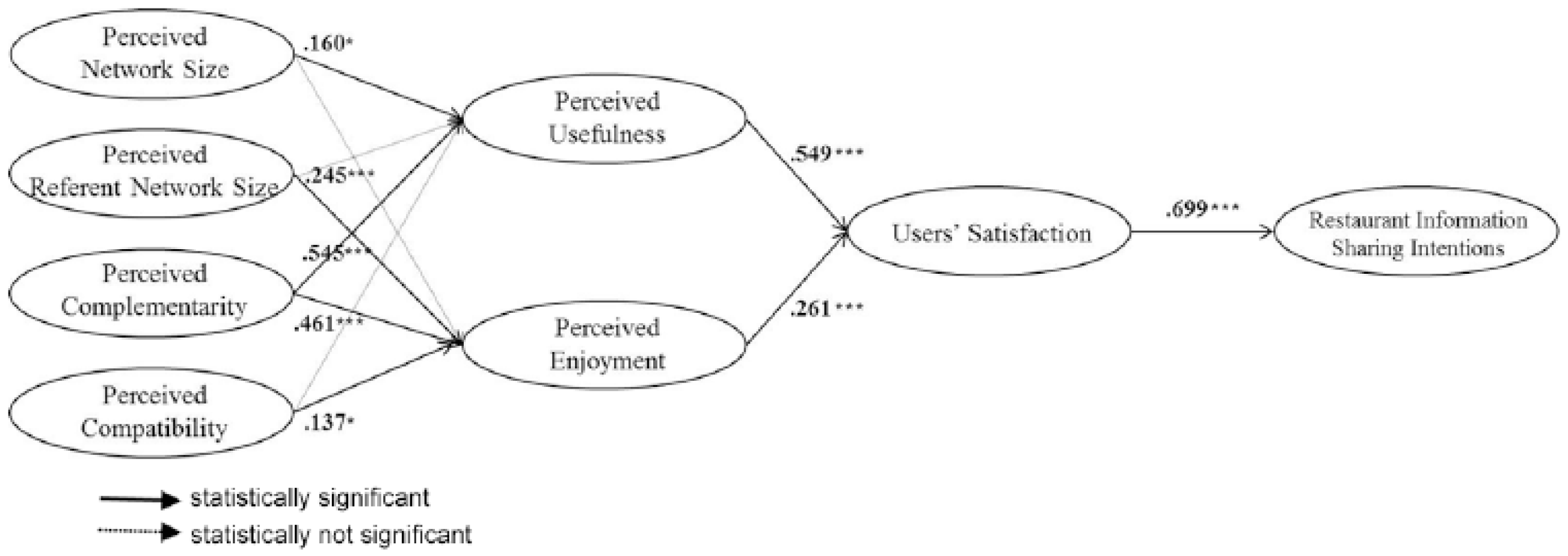
Structural Equation Model With Parameter Estimates
Both perceived usefulness (β = .549; t = 8.857; p < .001) and perceived enjoyment (β = .261; t = 4.402; p < .001) influenced users’ satisfaction. Thus, Hypothesis 3 and Hypothesis 4 were supported. These results verified the positive relationship between perceived benefits and users’ satisfaction. Considering the relative value of the path coefficient, individuals who perceived usefulness were more likely to be satisfied with sharing restaurant information through an SNS compared with individuals who perceived enjoyment. The results also supported Hypothesis 5, confirming that users’ satisfaction is positively related to restaurant information–sharing intentions (β = .699; t = 13.329; p < .001). As users’ satisfaction increases, they are more likely to continuously share restaurant information on SNSs.
Discussion
The results of the study offer several insights into how SNSs’ network externalities affect perceived benefits, satisfaction, and restaurant information–sharing intentions within the frame of motivation theory. First, network externalities were important factors affecting utilitarian and hedonic motivations. There appears to be a clear distinction between perceived usefulness, enjoyment, and each component of network externality. Network size and complementarity had a significant relationship with perceived usefulness, whereas referent network size, complementarity, and compatibility were significantly related to perceived enjoyment (Hypothesis 1a, Hypothesis 1c, Hypothesis 2b, Hypothesis 2c, and Hypothesis 3c). This indicates that perceived network size is related to information-sharing efficiency, as suggested by K. Y. Lin and Lu’s (2011) findings. A vast network size enable users to participate actively, receive comments or feedback immediately, and obtain more information. In addition, perceived complementarity strongly influenced perceived usefulness. It could be interpreted that individuals recognize that an SNS is useful when it contains a variety of content and tools for communication. However, the results showed that referent network size and compatibility had no significant effect on perceived usefulness (Hypothesis 1b and Hypothesis 1d). One possible explanation for the nonsignificant relationship between referent network size and perceived usefulness is that an individual’s referent network size is naturally smaller than the overall network size, thus there is a limit to the amount of information users can exchange with their referent network. Perceived compatibility was also found to be a nonsignificant factor for perceived usefulness. Since using SNSs on mobile devices is now common, it can be assumed that compatibility between mobile devices and PCs may no longer be a crucial factor influencing usefulness.
Regarding the relationship between network externalities and perceived enjoyment (Hypothesis 2), perceived referent network size, perceived complementarity, and perceived compatibility were significantly related to perceived enjoyment (Hypothesis 2b, Hypothesis 2c, and Hypothesis 2d). Perceived network size was not a significant determinant of perceived enjoyment (Hypothesis 2a). Interestingly, perceived referent network size, which was not a significant indicator of perceived usefulness, influenced perceived enjoyment significantly. This indicates that perceived referent network size evokes pleasure by allowing users to communicate with friends or relatives and join online communities. On the other hand, perceived network size showed no significant effects on perceived enjoyment, but was found to be a major determinant of perceived usefulness. Since SNSs are individual-centered networks (K. Y. Lin & Lu, 2011), this could be interpreted to indicate that it is difficult to enjoy a network if an individual has few relationships. When users have numerous friends on the same SNS, they interact more and enjoy the SNS. Besides perceived referent network size, additional services or functions (e.g., advanced search function, push notification, photo sharing, video sharing, music sharing, and various emoticons) also provide pleasure for users and consistently attract people to join. The emergence of mobile devices (e.g., smartphones and tablet PCs) reduces time and spatial constraints to accessing SNSs. The compatibility of electronic devices and ubiquitous content access allows users to enjoy SNSs anytime and anywhere. Furthermore, complementarity was the most powerful determinant of both perceived usefulness and perceived enjoyment. These findings support previous work (H. T. Kang, 2012; C. P. Lin & Bhattacherjee, 2008; Zhao & Lu, 2012) that demonstrated a positive relationship between complementarity and usefulness/enjoyment. Since complementarity is the most influential network externality for increasing both utilitarian and hedonic value, additional services or functions should be a primary consideration for communication technologies.
The second major finding of this study proved the positive impact of an individual’s motivations on satisfaction (Hypothesis 3 and Hypothesis 4). This study revealed that the effect of perceived usefulness on satisfaction was more influential than perceived enjoyment. This finding did not correspond with previous work done by K. Y. Lin and Lu (2011), which demonstrated that perceived enjoyment has a stronger influence than perceived usefulness on intentions to continue using SNSs. Since this study was focused specifically on using SNSs to share restaurant information, instead of general use as in previous studies, differences emerged between this study and the previous research.
Finally, the results proved the positive impact of satisfaction on restaurant information–sharing intentions on SNSs (Hypothesis 5). This finding was similar with previous research (Chiu et al., 2013; Zhao & Lu, 2012), which identified that satisfaction plays an important role in shaping behavioral intentions toward sharing information.
Implications
The findings of this study provide theoretical and managerial implications. This study adds to the theoretical body of knowledge about restaurant information–sharing behaviors through SNSs’ network externalities. A limited number of previous studies have considered SNSs’ network externalities as determinants of restaurant information sharing. Most previous research did not consider all representative network externality factors. This study dealt with four major constructs of network externalities and categorized them into direct and indirect network externalities to understand users’ motivations. Accordingly, differences between mechanisms and the relative importance of each network externality were found.
The results indicated that network size, referent network size, complementarity, and compatibility were determinants of perceived benefits. As such, restaurant marketers should consider both direct and indirect network externalities when they design and implement an SNS. For example, managers can increase the SNSs’ users by providing value-added services (e.g., various communities, video chatting, fun emoticons, and advanced security) to attract new users. In order to encourage peers to join the network, offering rewards to people who add friends periodically or make wide personal connections may be effective. Specifically, complementarity is of vital importance to satisfy both utilitarian and hedonic needs. Managers of SNSs need to design various complementary services and tools to promote active and convenient information sharing. SNSs managers should also offer diverse types of content such as videos, music, and voice messages to improve complementarity. As K. Kang et al. (2014) suggested, restaurant marketers should use a wide variety of tools and features on SNSs, such as games or chat features. Information generated by food service companies should strategically include not only facts but amusing stories as well. The information on SNSs could be considered as tangible evidence of service quality depending on how restaurant managers make use of complementarity services for marketing. In terms of compatibility, SNSs need to provide similar environments in any interface. For example, smoothly synchronizing friend lists and profiles and building sophisticated systems to avoid confusion.
Based on the results of this study, SNS marketers need to increase both usefulness and enjoyment by enhancing SNSs’ network externalities, which are the driving force behind first mover advantages in the market. The study findings also indicate that users are more concerned with achieving their goals efficiently rather than having fun when they use SNSs for restaurant information–sharing purposes. These findings suggest that SNS managers need to deliver utilitarian benefits, such as providing various content and functions for searching and posting information.
The results of this study indicated that blogs and Facebook are the most influential channels among the various types of SNSs for approaching consumers. Therefore, other types of SNSs may need data service interworking functions, such as the ability to share links to blogs or Facebook, to guarantee the circulation of information and access to expanded information. Marketers are advised to notice the differences among various types of SNSs. For instance, blogs not only enable users to find past content but also expose keywords to search engines. However, Facebook updates information at a more rapid pace than blogs. Due to the speed of sharing it is difficult to access content for very long. Therefore, marketers should choose SNSs that fit their marketing aims or operate several SNSs strategically to meet their business goals.
Developing SNSs, Internet platforms, mobile applications, or web services specializing in foodservice information with strong network externalities can provide opportunities for customers to access and exchange restaurant service information. Paying attention to maintaining and developing more value-added, compatible, and complementary applications or services is crucial to vendors interested in starting these businesses (Chiu et al., 2013). Consumers receive support in their decision-making process in these specialized virtual spaces, and companies can maximize promotions. Because SNSs area powerful method for building relationships between consumers and companies, it is important to devise communication strategies that create closer relationships. However, it is impossible for companies to control every review and comment. Thus, managers should actively monitor online reviews and participate in SNSs or online communities, as Berezan, Raab, Tanford, and Kim (2015) suggested.
Also, this research recommends that SNSs should respond to consumers immediately by offering real-time technical support via text chat, video messenger, events, or a comments notification service. Through such efforts, restaurant managers can create open communities on SNSs that offer both hedonic and utilitarian experiences, have a vast number of users, and stimulate sustainable information sharing by providing a variety of optional services, events, content, and advanced functions.
Limitations and Future Study
Despite its implications, some limitations of this study should be considered as opportunities for future research. First, types of sharing behavior could be categorized into transmitting and absorbing or active sharing and passive sharing. Future researchers can add those constructs to further understand diners’ information-sharing behaviors in association with network externalities and perceived benefits. Second, the influence of SNSs’ network externalities could be considered according to the type of SNS (e.g., Facebook, Twitter, Blogs, etc.) or by examining SNSs specializing in food and/or restaurants. Thus, future research needs to take into account various types of SNSs. In addition, future studies can explore the pros and cons of each type of SNS when sharing restaurant information from the perspectives of both users and restaurateurs. Third, users’ responses toward sharing information differ depending on whether they share positive or negative information. Thus, future research should examine the valence of information: positive and negative. Moreover, using qualitative methods to figure out the specific information consumers share could provide additional practical implications for restaurant managers. Fourth, even though there are diverse motivations related with restaurant information–sharing intentions, this study only considered perceived usefulness and perceived enjoyment. Future research might investigate other possible motivations, such as self-expression, altruism, efficacy, and so on. Finally, since this study was performed in South Korea, the results may not be generalizable. It would be useful to expand the study to other countries that vary in SNS usage statistics, which may result in the need for building different strategies for implementing SNSs. Considering the rising interest in SNSs, diverse industries could market themselves globally via SNSs for effective management. Accordingly, it is vital to understand how SNSs’ network externalities affect information-sharing intentions in other industries and other cultural settings as well.
Footnotes
Appendix
Measurement Items
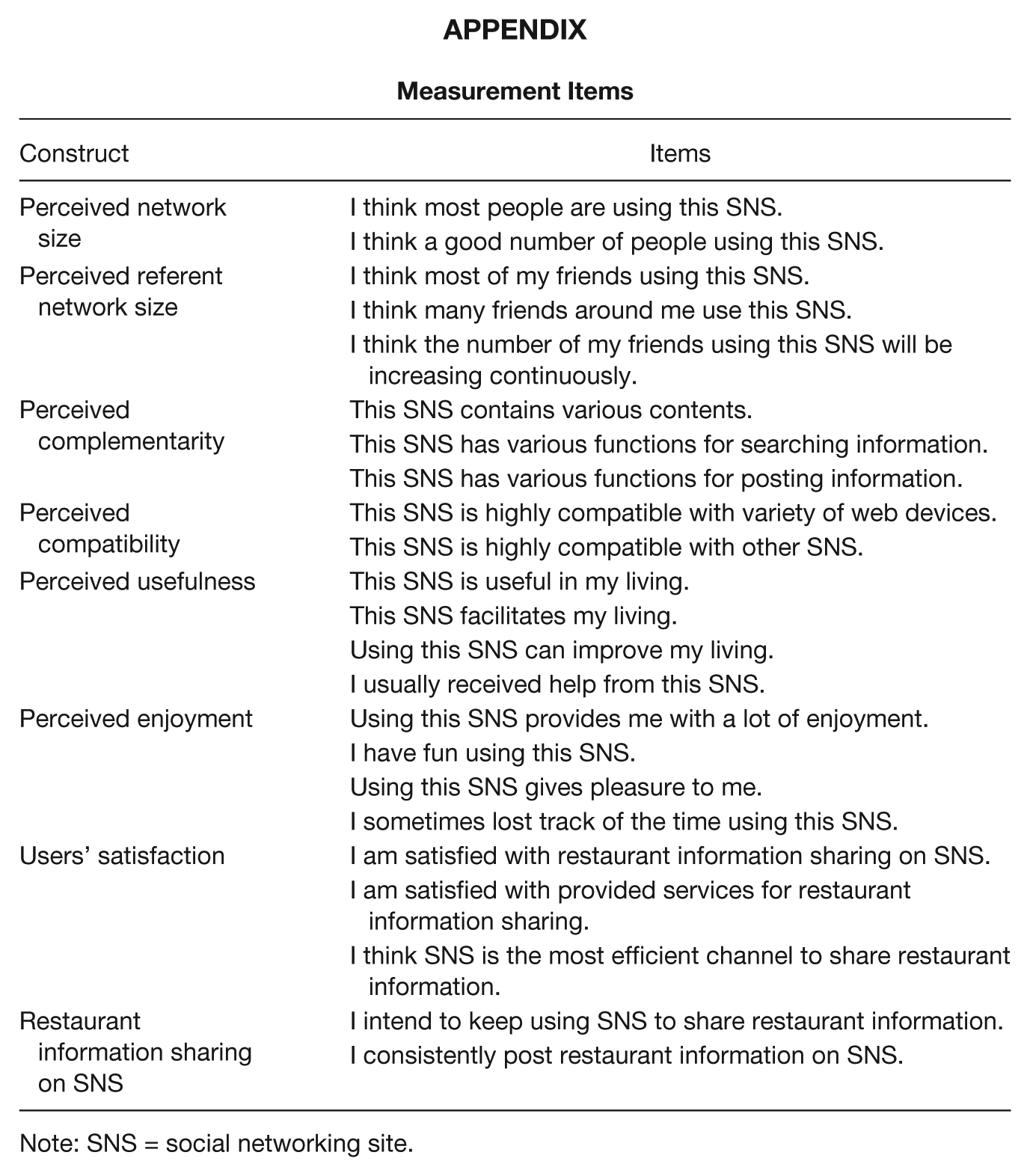
| Construct | Items |
|---|---|
| Perceived network size | I think most people are using this SNS. |
| I think a good number of people using this SNS. | |
| Perceived referent network size | I think most of my friends using this SNS. |
| I think many friends around me use this SNS. | |
| I think the number of my friends using this SNS will be increasing continuously. | |
| Perceived complementarity | This SNS contains various contents. |
| This SNS has various functions for searching information. | |
| This SNS has various functions for posting information. | |
| Perceived compatibility | This SNS is highly compatible with variety of web devices. |
| This SNS is highly compatible with other SNS. | |
| Perceived usefulness | This SNS is useful in my living. |
| This SNS facilitates my living. | |
| Using this SNS can improve my living. | |
| I usually received help from this SNS. | |
| Perceived enjoyment | Using this SNS provides me with a lot of enjoyment. |
| I have fun using this SNS. | |
| Using this SNS gives pleasure to me. | |
| I sometimes lost track of the time using this SNS. | |
| Users’ satisfaction | I am satisfied with restaurant information sharing on SNS. |
| I am satisfied with provided services for restaurant information sharing. | |
| I think SNS is the most efficient channel to share restaurant information. | |
| Restaurant information sharing on SNS | I intend to keep using SNS to share restaurant information. |
| I consistently post restaurant information on SNS. |
Note: SNS = social networking site.