



Abstract
This article provides an objective, systematic, and integrated review of the Western academic literature on adventure tourism to discover the theoretical foundations and key themes underlying the field by combining three complementary approaches of bibliometric analysis, content analysis, and a quantitative systematic review. A total of 114 publications on adventure tourism were identified that revealed three broad areas of foci with adventure tourism research: (1) adventure tourism experience, (2) destination planning and development, and (3) adventure tourism operators. Adventure tourism has an intellectual tradition from multiple disciplines, such as the social psychology of sport and recreation. There is an underrepresentation of studies examining non-Western tourists in their own geographic contexts or non-Western tourists in Western geographic contexts. Our findings pave ways for developing a more robust framework and holistic understanding of the adventure tourism field.
Keywords
Introduction
Adventure tourism has been developing globally with hotspots in many regions and territories, evidenced by increasing number of participants and intensive growth of adventure tourism products (Adventure Travel Trade Association, 2013; Tourism New Zealand, 2013). It has become an important component of the tourism industry in many Western countries (e.g., Canada and New Zealand) and is gaining some prominence in domestic tourism in emerging countries (e.g., China and Brazil). This growth of the adventure tourism sector in the past two decades is closely related to the increase in all types of nature-based tourism. Adventure tourism has been strongly likened to outdoor and adventure recreation (Pomfret & Bramwell, 2014; Sung, Morrison, & O’Leary, 1996). Buckley (2006) sees little definitional distinction between the terms adventure tourism, nature tourism, outdoor, and adventure recreation. Research in adventure tourism specifically, however, has been relatively modest, especially in comparison to the large number of other special interest tourism studies (Buckley, 2010). The existing literature on adventure tourism still remains largely underdeveloped. As such, it is timely to undertake a review article on adventure tourism.
The aim of this article is to advance previous reviews on adventure tourism via a more systematic, objective, and integrated review of this literature. The distinctive contribution of this study is the novel and comprehensive empirical approach in analyzing the structure and content of the adventure tourism field. Our approach identifies the theoretical foundations and key themes that underpin the core of the adventure tourism field through a combination of bibliometric methods of network-based direction-citation and co-citation analysis, content analysis, and a quantitative systematic review of the 114 core publications on adventure tourism identified for this study. Building on the work of Randhawa, Wilden, & Hohberger (2016), this study uses the strengths of these three different methods to complement each other in a holistic, objective, and accountable manner that helps reduce the bias that is often related to traditional literature reviews and expert interviews (Collins & Fauser, 2005; Petticrew & Roberts, 2006). By using network-based citation analyses, we provide a robust demonstration of the structure and knowledge base of the adventure tourism field. The use of content analysis through Leximancer allows the researcher to gain detailed conceptual insights by moving the analysis at the author and citation level to the actual texts used by authors (Randhawa et al., 2016). This facilitates an objective and text-driven review of the literature. Our use of a quantitative systematic review approach helps map the current adventure tourism literature by highlighting the boundaries around generalizations derived from the literature. Thus, the use of these three complementary methods advances the current tourism and hospitality methodological literature in the review of literature to allow for a more systematic, objective, and holistic overview of a particular academic field. Theoretically, our findings present a clearer and richer understanding of the foundation knowledge base and key concepts that comprise the contemporary state of the adventure tourism field.
This article is structured as follows. First, the evolution of adventure tourism and tourists are briefly summarized. The research methodology combining bibliometric analysis, content analysis, and a quantitative systematic review approach are then introduced. The results of the analysis are subsequently discussed via a series of visual and tabulated representations. We then discuss the relevant insights from the results, elucidate research gaps, and set areas for future research. The article concludes with a summary of the findings and limitations of this study.
Evolution of Adventure Tourism and Tourists
A simple and popular way to conceptualize adventure tourism is to describe it as “soft” or “hard,” the former involving less risk, such as trekking, while the latter is more challenging and involves higher risks, such as white water rafting (Swarbrooke, Beard, Leckie, & Pomfret, 2003). A closer examination of adventure tourism definitions in the past two decades reveals that they are centered on insight theories, risk paradigm, flow, notion of play, and more recently, rush. Early definitions of adventure tourism were discussed in terms of the risk paradigm. That is, adventure tourists are motivated by the pursuit of risk (Sung et al., 1996), either physical risk and/or perceived risk to achieve a state of flow (Jones, Hollenhorst, & Perna, 2003; Jones, Hollenhorst, Perna, & Selin, 2000). However, this risk paradigm was deemed to be inadequate to capture the adventure tourism experience (Cater, 2006; Kane, 2004). Researchers argue that there are other quests from adventure tourists, such as seeking knowledge, heroism (Laing & Crouch, 2009), admiration of nature (Cater, 2006), skill development (Pomfret, 2006), and self-efficacy (Filep, 2014; Llewellyn, Sanchez, Asghar, & Jones, 2008). With the development of the field, the single construct studies were developed into multiple construct studies that provided further insights into the interrelatedness or complementary nature of constructs to each other. For example, Gyimóthy and Mykletun (2004) introduced the concept of play into adventure tourism and demonstrate the interrelatedness of risk, insight, and play in adventure tourism experiences providing a complementary explanation of an adventure tourism experience. The authors further argue that to immerse oneself in adventure tourism, one must maintain comfortable arousal levels, secure a protective frame, and find a liminal “playground” matching the activity. Such insights outline the multidimensional experiences or outcomes that adventure tourists may be seeking.
Recently, rush as a concept was introduced to explain that adventure tourists, in particular the skilled and experienced, are motivated by rush experiences in commercial adventure tours (Buckley, 2012). Rush is described as “a particular kind of excitement associated with the physical performance of a specific adventure activity, at the limits of individual capability, under highly favourable circumstances, by a person who is already skilled and trained in the activity concerned” (Buckley, 2012, p. 936). These various concepts highlight the evolving dichotomy and complexity that exists in the adventure tourism literature. In some cases these concepts are too broad and not mutually exclusive, and consequently, they may simultaneously characterize the same segment (Gyimóthy & Mykletun, 2004). For example, as adventure tourism is activity based, a tourist who is considered to be skillful in certain activities might also be considered unskillful in another activity. This observation suggests that there is a complexity to understand adventure tourists who may be interested in activities specifically or the social psychological experiential outcomes that different activities can provide.
The evolution of adventure tourism follows the conventional approach in defining special interest tourism that “traveler’s motivation and decision making process are primarily determined by a particular interest” (Weiler & Hall, 1992, p. 38). However, Weber (2001) argues a narrow focus on motivational parameters may prevent gaining a comprehensive understanding of the phenomenon. The insight theories, risk paradigm, flow, rush, and notion of deep play are centered largely on the demand side, and inevitably neglects an understanding of the supply side of adventure tourism products (Swarbrooke et al., 2003). For example, Laing and Crouch (2009) contend that the frontier travelers of adventure tourism are motivated and influenced by fantasy narratives and dreamscapes, creating a paradigm of the “performance of adventure” (Cater & Cloke, 2007). That is, frontier travelers are “following the footsteps of explorers of old and performing a role based on heroic or mystic journeys of the past, as well as aspects of fairy tale and fantasy” (Laing & Crouch, 2009, p. 136). Thus, these few frontier travelers contribute significantly to the “on the edge experience” of the destinations/attractions while mistakenly appearing to be representative of the real experience of other adventure tourists (Hallin & Mykletun, 2006). This leaves the general public with a “fantasy” that might not be possible to be created by the suppliers as “authentic adventure experience.” Thus, commercial adventure tourism products are constructed under the realm of a “public secret,” where tourists are able to maintain the contradictory perceptions that they are simultaneously at risk but safe (Fletcher, 2009; Varley, 2006).
Table 1 presents a representative summary of adventure tourism definitions from the past two decades. What is notable is the shift in discussion from the physical aspects to the psychological aspects and more recently the incorporation of specialized equipment and the role of guided tours. The different focuses of these definitions show that disparity still remains over what adventure tourism is.
Representative Summary of Adventure Tourism Definitions
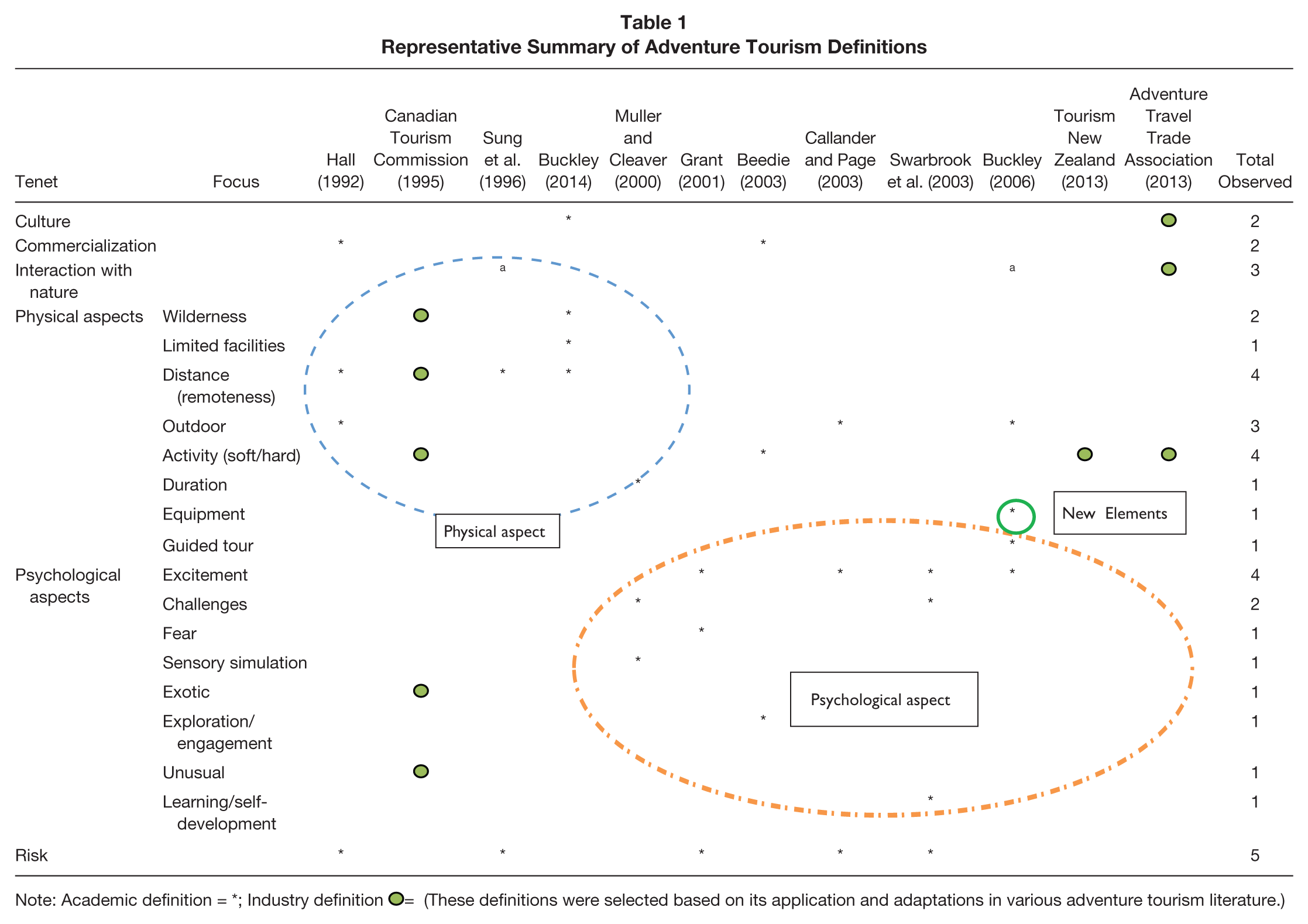
Note: Academic definition = *; Industry definition  = (These definitions were selected based on its application and adaptations in various adventure tourism literature.)
The diversity of what constitutes adventure tourism may be symptomatic of a lack of definitional development. Many studies have been written from an individual researcher’s perspective as opposed to examining broader participation in adventure tourism. To gain a more nuanced understanding of the field, its theoretical foundations, development, and key themes, this article draws on the use of bibliometric analysis, content analysis, and a quantitative systematic review.
Research Design
Data Collection
In this study, we followed the procedures of other tourism review articles where adventure tourism–related publications were identified through EBSCOHost, Science Direct, and Google Scholar, three of the largest and most popular online databases and search engines (Buhalis & Law, 2008). To provide a comprehensive overview of adventure tourism, the researcher searched titles, key words, and abstracts for “adventure tourism,” “adventure tourists,” and “adventure travel.” In addition, references cited in published articles as well as the ones obtained through the researcher’s personal communication with adventure tourism researchers were traced. Only articles published in refereed academic journals were reviewed, as these articles have already been peer evaluated to be of a suitable standard for academic publication (Jang & Park, 2011) and the assessment of references from these articles strengthen the reliability of the results obtained by using bibliometric analysis (Ramos-Rodríguez & Ruíz-Navarro, 2004). Although excluded from the analysis, “grey” literature, such as government and nongovernmental organization reports, were also reviewed, as it enabled the researchers to develop their understanding of the underlying phenomenon. In the initial search, a total of 345 articles prior to 2015 were retrieved. Then each article was reviewed one by one by the researchers and the final selection of articles was based on adventure tourism being one of the main focuses of the articles. As a result, 114 articles were identified. A list of the 114 articles has been provided as supplemental material (available online at http://jht.sagepub.com/content/by/supplemental-data).
The key information retrieved from these articles are from Scopus, including citation information of author(s), document title, year, source title, citation count, source, document type, and DOI; author affiliations, correspondence address; abstract, keywords; content of full length article; and references. Scopus was used as it offers intensive coverage of a wider range of journals than Web of Science (Falagas, Pitsouni, Malietzis, & Pappas, 2008). While Google Scholar, for the Web in general, can help retrieve even the most obscure information about a particular citation, its use is marred by inadequate and inconsistent citation information (Falagas et al., 2008; Jacso, 2005). As such, considering the use of bibliometric analysis (mainly citation and co-citation analysis), Scopus was considered to be more suitable for our study, as it not only provides well-structured and informative data about journal names, citation information, and archive composition but also offers a sophisticated, easy to use search and navigation platform to accurately capture the information needed for research (Li, Burnham, Lemley, & Britton, 2010).
Data Analysis
First, we calculated the published items and their associated citations in each year (Figure 1). In total, the 114 focal articles were cited 1,748 times. Average citations per article are 15.33.
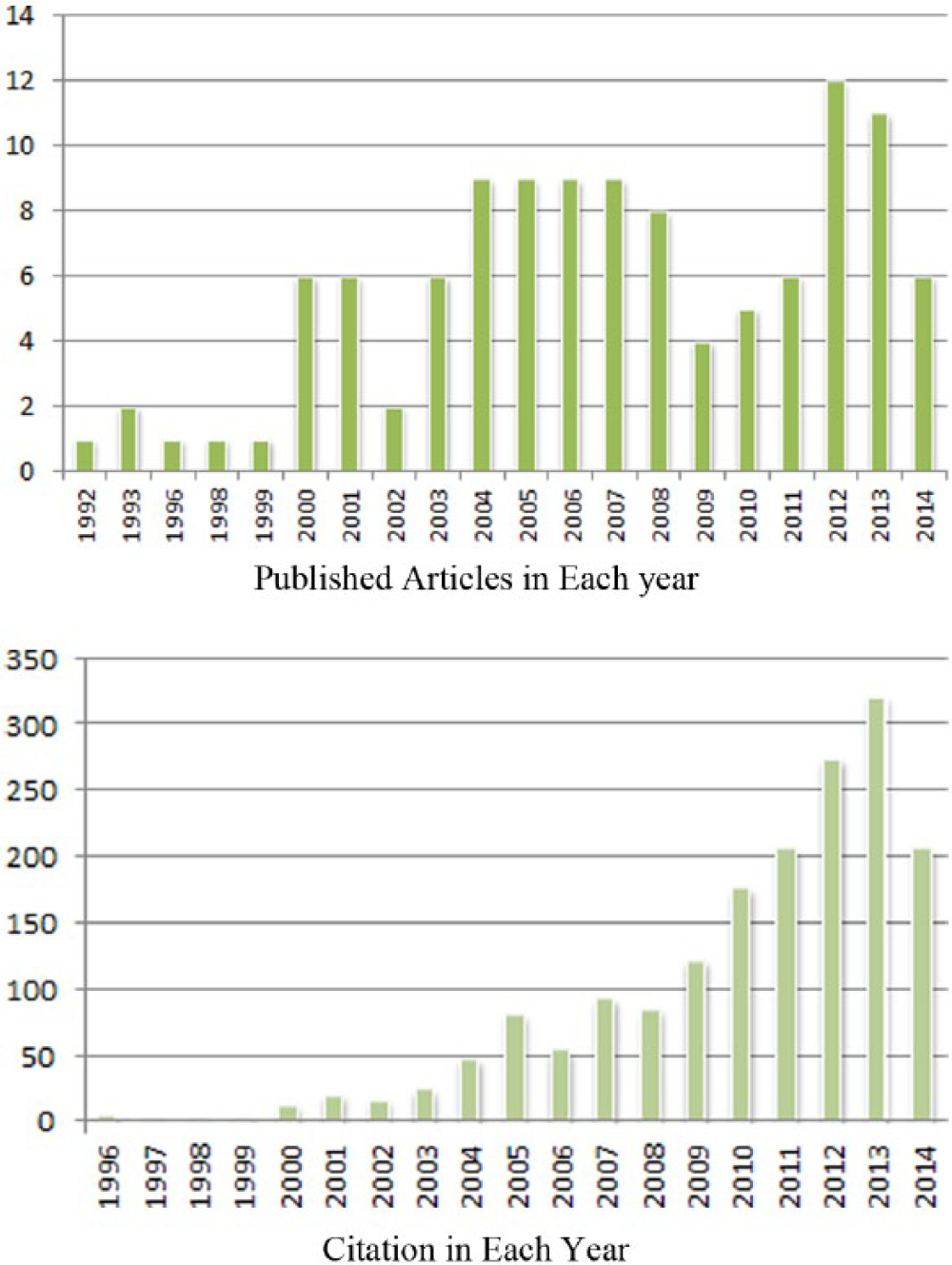
Published Items in Each Year and Average Citation per Year for All Focal Articles
Co-Citation Analysis
The idea of co-citation analysis is that citations are manifestations of otherwise usual invisible relationships between authors, concepts, and communities (Garfield, Malin, & Small, 1983; Small, 1973). Therefore, co-citation analysis is the investigation of the frequency with which two publications are cited in pair to explore the structure, theoretical foundations, and the pattern within a particular intellectual tradition. This provides an indicator of the affinity and proximity across publications (White & Griffith, 1981). As such, it identifies whether a discipline has an inward or outward looking approach, links the flow of new ideas, and explores the existence of barriers between the applied and basic sciences to which they belong (Ferreiro Alaez, 1993). This approach has been proved to be valid as a tool for understanding the intellectual structure of a scientific discipline in many scientific areas (Ramos-Rodríguez & Ruíz-Navarro, 2004) including tourism (Benckendorff & Zehrer, 2013; Severt, Tesone, Bottorff, & Carpenter, 2009; Shen et al., 2014; Ye, Li, & Law, 2013; Ying & Xiao, 2012).
Co-citation analysis is conducted through three stages based on the work of Randhawa, Wilden & Hohberger (2016). First, we performed at the document level rather than at the author level (Gmür, 2003). This enables the move from different contributions by certain authors to distinct intellectual streams, which is crucial to differentiate and link thoughts and theories within one research domain, particularly in a relatively young field of research. Second, to present the connection between publications in a more detailed and richer manner, the co-citation analysis proximity scores were visualized to generate a network graph. The connections between articles are based on (1) the number of co-citations, (2) the distances between any publications through the path length, and (3) the size of the bubble reflecting the number of citations for a given article. Third, based on the network structure, we used a grouping algorithm to uncover clusters of relevant publications (Blondel, Guillaume, Lambiotte, & Lefebvre, 2008), as this helps identify the theoretical foundations and research streams within the wider scientific community. The BibExcel program (Persson, Danell, & Schneider, 2009) was used to analyze the data and the results were visualized by the Gephi software (Bastian, Heymann, & Jacomy, 2009).
Content Analysis
Considering the fact that in co-citation analysis not all references are of equal importance within a publication and in a given article, citations can be quite unrelated. While a sufficiently large sample helps reduce the random “noise” embedded in citation pattern (Schildt, Zahra, & Sillanpää, 2006), references remain proxies for thoughts and concepts influencing a publication. To overcome these shortcomings and to provide a direct and detailed analysis of the concepts and themes underpinning the publication in adventure tourism field, content analysis of the focal articles is also conducted (Randhawa et al., 2016).
Content analysis is a systematic analysis of texts that aims to discover concepts, themes, and relationships in the collection and uncover unknown qualities about the data to produce valid and trustworthy inferences (Krippendorff, 2012). As a form of unstructured ontological discovery, content analysis allows the researcher to gain conceptual insights in details by moving the analysis at the author and their citations level to the actual texts used by authors (Biesenthal & Wilden, 2014). This facilitates an objective and text-driven review of the literature. We used the qualitative software Leximancer 4.0 to perform the analysis. Additional logic was applied to delete the information that would potentially crowd the analysis, such as author information, affiliation, and references.
Leximancer is a qualitative analysis (e.g., content analysis) tool that transforms “lexical co-occurrence information from natural language into semantic patterns in an unsupervised manner” by using “two stages of extraction—semantic and relational” (Smith & Humphrey, 2006, p. 262). The procedures behind Leximancer are from Bayesian statistical theory, in which “fragmented pieces of evidence can be used to envisage what is happening in a system” (Watson, Smith & Watter, 2005, p. 1233). It is considered suitable for sophisticated exploratory research, as it demonstrates high reproducibility and reliability of concept extractions and thematic clustering, without the problems of expectation biases embedded in manual text analysis techniques or expert based reviews (Smith & Humphreys, 2006). The frequent occurrence of a concept is based on a hot map of which the brightness of a concepts label and circle reflects the importance of themes, while the size reflects the number of concepts in the text. The concepts that are strongly related semantically will be mapped closely together (Campbell, Pitt, Parent, & Berthon, 2011; Rooney, 2005). It is also important to note that the absence of a concept also represent meaning (Randhawa et al., 2016). It is a potential indication that an important concept does not appear often enough and is not related to other concepts (Liesch, Håkanson, McGaughey, Middleton, & Cretchley, 2011). The process that Leximancer follows and its algorithm are explained in detail in the works of Liesch et al. (2011) and Smith and Humphreys (2006). As a qualitative analysis tool, Leximancer has gained increasing attention from tourism scholars, such as Darcy and Pegg (2011) in studying hotel managers’ perceptions of the accessible tourism market and Pearce and Wu (2015) in examining the entertainment experiences of international tourists in China.
Quantitative Systematic Literature Review Approach
As a word-based software, Leximancer fails to record the number of key incidents, as the interpretation is throughout the whole sample of focal articles. To address this issue, a quantitative systematic review approach was undertaken to determine the frequency of such key incidents. A quantitative systematic review is a relatively new method developed by Pickering and Byrne (2014) that aims to survey the literature in a quantitative manner. It creates ongoing categories that record the key information that the researchers aim to extract from the focal articles based on the needs of the research, such as locations in which the studies were conducted, the authors, and methods used. Following a series of clear steps the literature is mapped to highlight the boundaries around generalizations derived from the literature (Pickering & Byrne, 2014). In this review, we record the geographic location studied, sampling, the various methods used to undertake the research, types of adventure tourism activities examined, theories used, and recommendations for future research.
In summary, the use of these three different approaches—bibliometric analysis, content analysis, and a quantitative systematic literature review—appropriately complement each other to uncover the theoretical foundations and structure of adventure tourism research as well as to identify key concepts and themes, uncover research gaps, and set areas for future research.
Results
Bibliometric Analysis Results
Table 2 indicates the top 10 publications with highest citation impact. Cloke and Perkins (1998; n = 149) is the most cited article, followed by Weber (2001; n = 88) and Williams and Soutar (2009; n = 82).
Most Cited Focal Articles
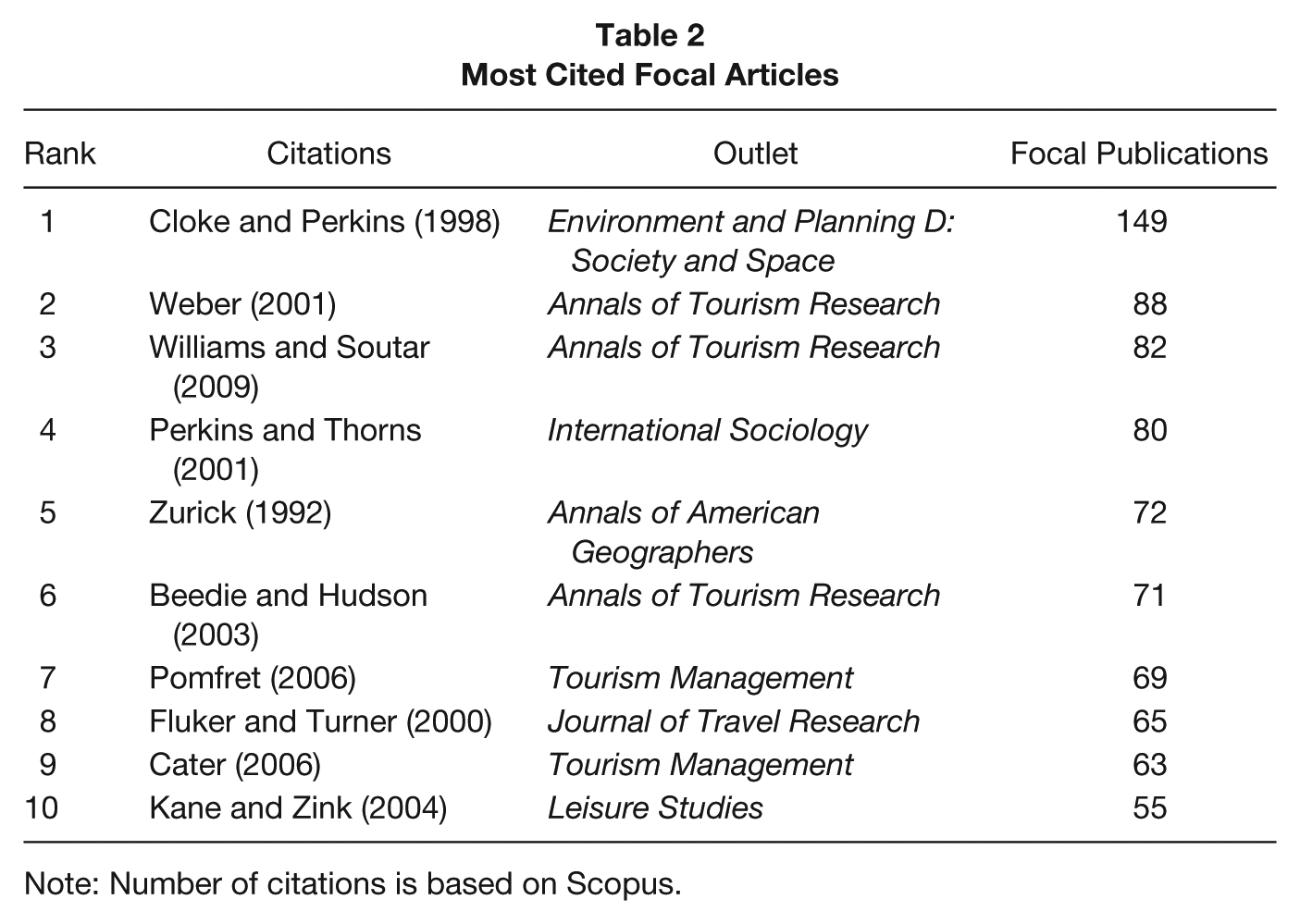
Note: Number of citations is based on Scopus.
Co-Citations
Figure 2 is the visual map of the co-citation network of the references from the focal publications. The relative size of the bubble represents the normalized citations received by the articles and the thickness of the lines represents the strength of co-citation ties. While the results do not indicate any particular study dominates the whole network, they do show the importance of several authors whose work bridges a number of disciplinary and interdisciplinary areas. To understand the structure and theoretical foundation of adventure tourism area, we used a group logarithm to cluster the references of our focal publications in different colors. Eight clusters have been identified through the process, as showed in Figure 2. The clusters identified were (1) Sport, (2) Service Quality, (3) Psychology, (4) Behavior, (5) Tourism, (6) Risk Paradigm, (7) Recreation, and (8) Environment and Geography. However, these clusters are distant and detached from each other indicating that these lines of work are not well integrated with the main stream adventure tourism concepts.
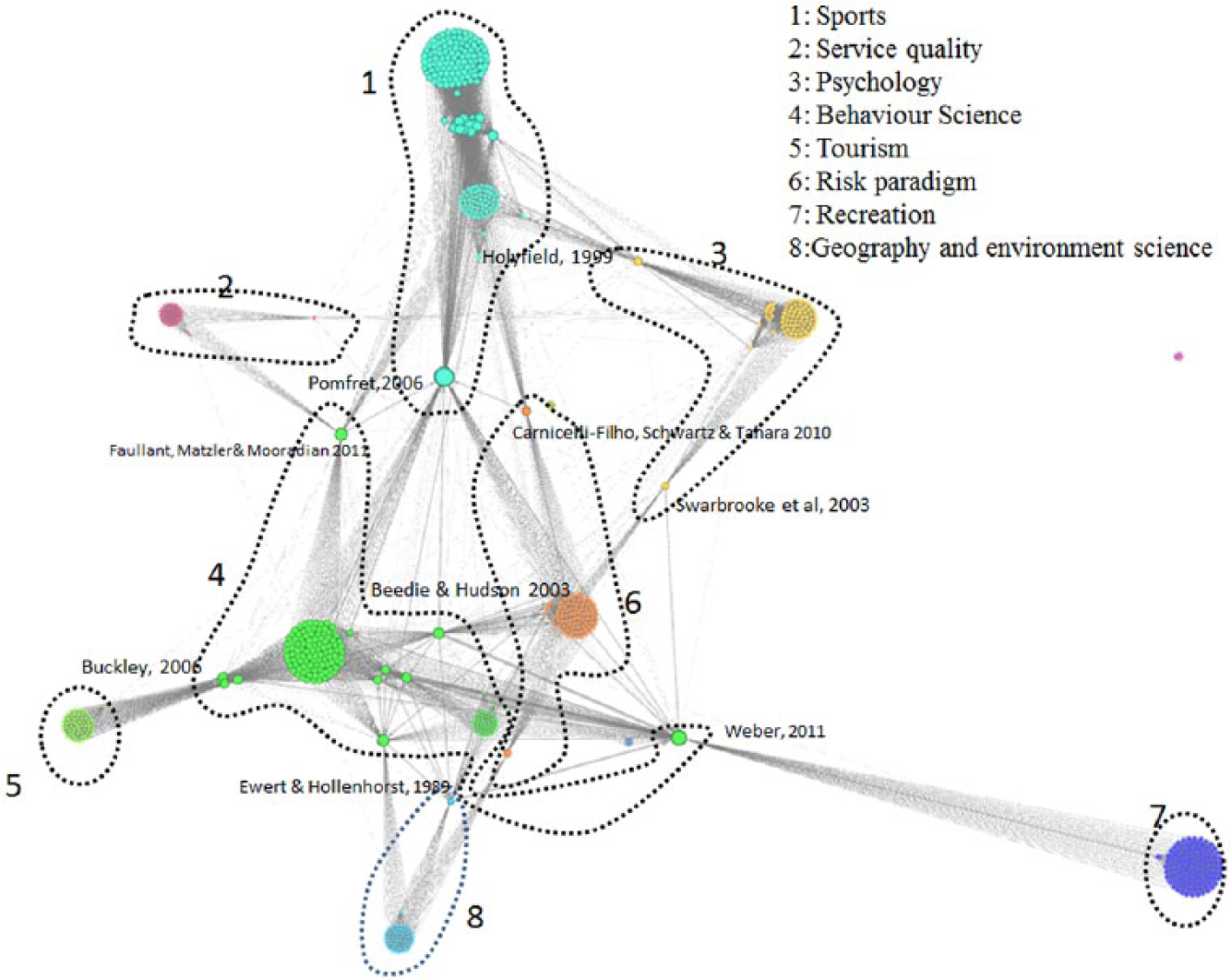
Visualized Citation Network
Gephi provides an interactive interface and demonstrates how a particular article is connected with different domains by clicking a particular article (the bubble; Figure 3). As such, the visual network indicates a number of articles that play important roles in bridging different research domains (Figure 2). Buckley’s (2006) book along with a number of his journal articles play a significant work in linking tourism, recreation, and behavior science. Pomfret’s (2006) work in conceptualizing mountaineering adventure tourists played an important role in bridging the fields of sports, behavior science, and risk paradigm. The book of Swarbrooke et al. (2003) also performed a bridging role in linking psychology and risk paradigm. Service quality has a strong connection with behavioral science, psychology, and risk paradigm by using research frameworks from service quality and applying them in adventure tourism research.
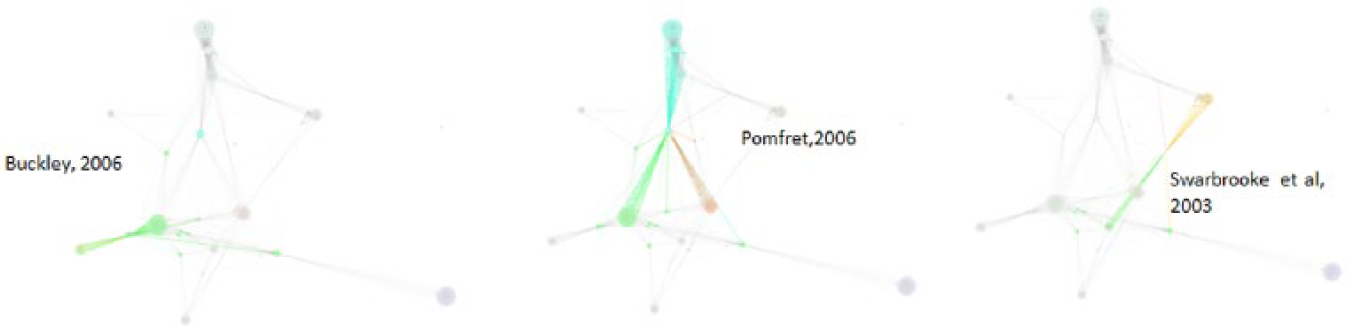
Example of References in Bridging Different Domains
Direct Citation
Next direct citation analysis of the focal articles was performed followed by a visualization of the network. This enables the researcher to gain insights into the influence of the work within adventure tourism. We applied the same grouping algorithm as earlier and four clusters have been identified through the citation relationship. The relative size of the bubble represents the number of citations of any particular publication received, which indicates the impact of the focal articles within the adventure tourism field. Figure 4 demonstrates that the work of Cater (2006), which challenged the dominant risk paradigm plays an important role in bridging different works. Beedie and Hudson (2003) and Weber (2001) also enjoy a higher level of citations. This is because of the importance of their work in the early conceptualisation of adventure tourism.
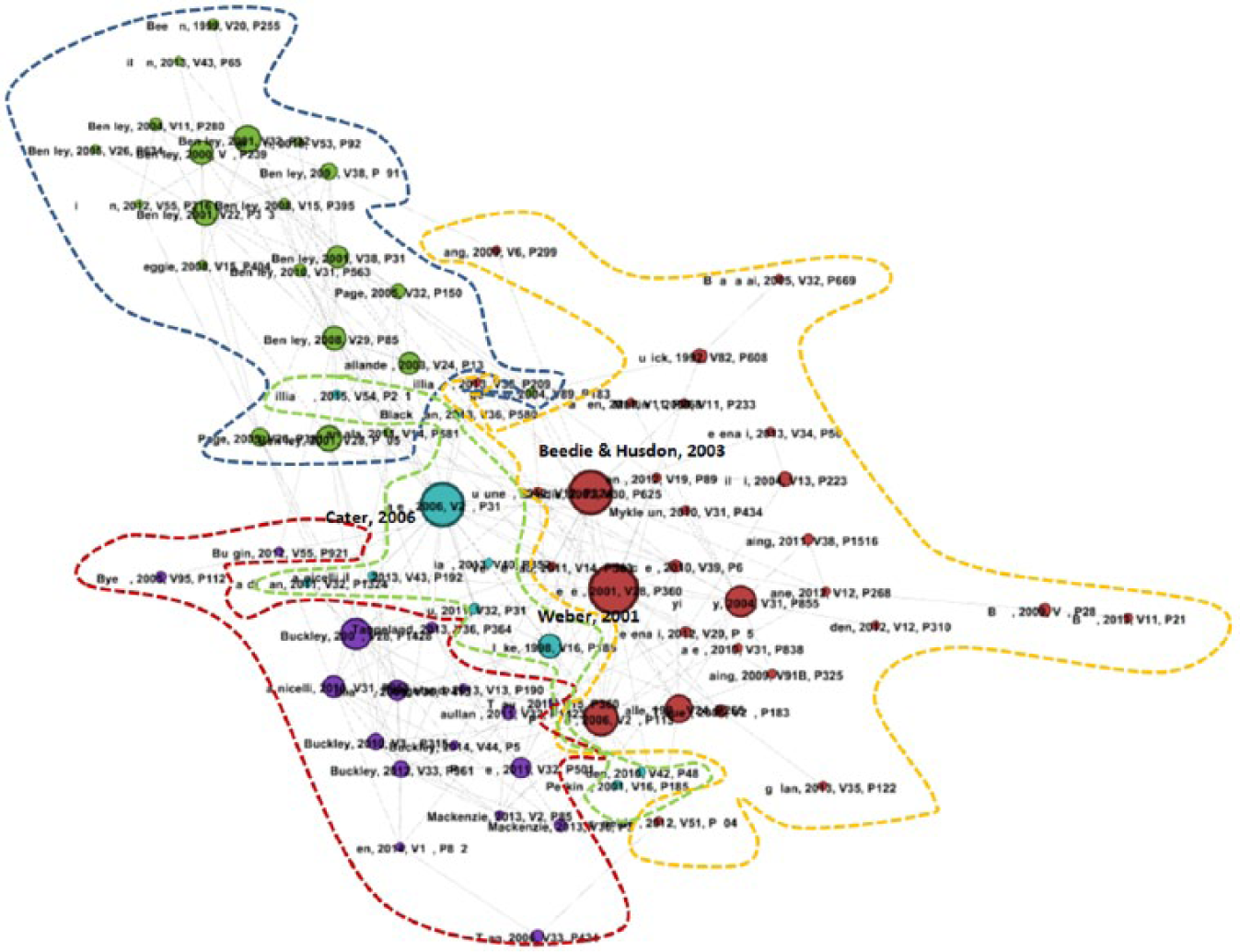
A Direction Citation Analysis Within the Adventure Tourism Field
Content Analysis and Quantitative Systematic Review Results
Figure 5 presents the conceptual map derived from the analysis of the focal articles. The map indicates three predominant research areas in the adventure tourism literature (Figure 5). These are (1) adventure tourism experience (n = 71, 62% of the total), (2) destination planning and development (n = 22, 20% of the total), and (3) operators (n = 21, 18% of the total). The adventure tourism experience is the largest theme with the most diverse concepts including the nature of adventure, adventure experience, social and personal capital from adventure tourism, adventure tourist behavior, type of activities, type of clients (segments), and different theoretical models that are semantically closely. From a quantitative review, we also identified the specific focus of the articles including psychological aspect of adventure tourism, in particular motivation (16 articles) and emotion (fear, sensory stimulation; 10 articles). In respect to the extant theories used, much of the discussion is centered on flow theory (6), although reversal theory (3), edge work (3), and the 3M model of personality and motivations (2) were also introduced.
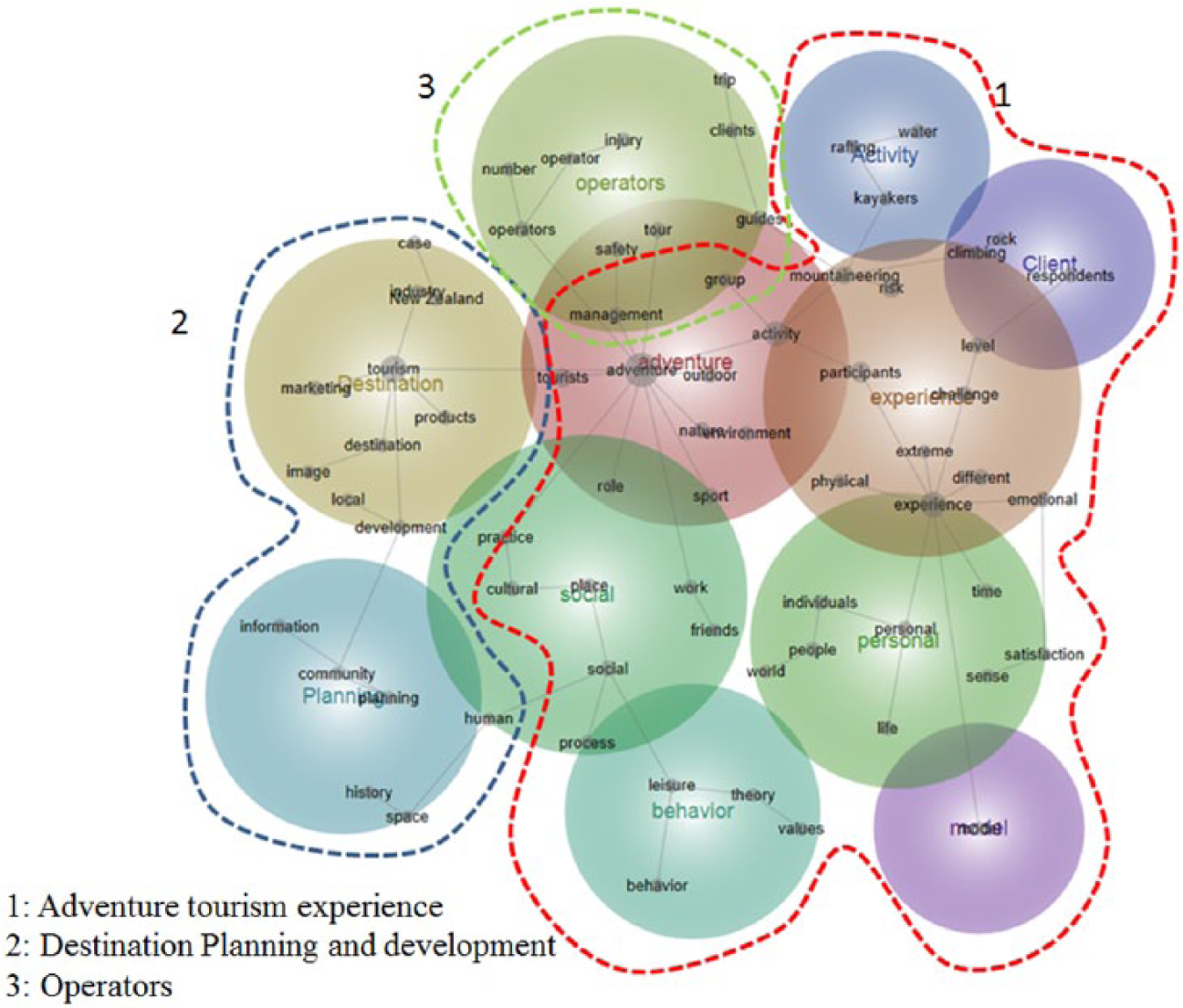
Conceptual Map
The destination planning and development theme encapsulates adventure tourism marketing and products, as well as community development and planning (dark brown and blue color). Studies here focus on the assessment of livelihood in developing adventure tourism and commercial adventure tourism products across a wide range of geographical areas, mainly conducted by Buckley using onsite audits and auto-ethnography. Six studies were specifically conducted in Asian regions including India (n = 4), Maldives (n = 1), and Nepal (n = 1), and three studies were in Africa (two in South Africa and one in Zambia).
Adventure tourism operators as a research theme have received relatively little attention (light green color) despite being regarded as important. Interests are mainly concerned with injury, tour guide, safety, and management of operations. The quantitative systematic review indicates that there were relatively more discussions about safety issues (n = 13) in the early 2000s and increasing discussions on the role of tour guides in the past few years (n = 6). Geographically the focus of these studies were conducted in New Zealand (n = 10), the United Kingdom (n = 2), and Australia (n = 1) mainly with Bentley and Page. These were conducted using a standard survey method or document analysis (e.g., insurance claims) and can be attributed to the more highly regulated safety environments of these countries. Tour guide studies are mainly in the United States and Latin America with auto-ethnographic approach. The recent discussions of tour guides is due to the growing demand for adventure guiding catering to the safe and effective management of adventure tourism activities (Houge Mackenzie & Kerr, 2013). However, the data analysis shows that the role of interpretation or guiding in conveying the message of sustainable tourism is absent in the literature.
Nearly half (n = 58) used qualitative methods, with a dominant use of interviews (43 articles). The use of auto-ethnography received increasing attention in the past 5 years with three from Buckley and two from Kane and colleagues. In addition, there are 12 mixed method articles and 29 quantitative method articles. The other articles are mainly conceptual research (n = 15) rather than empirical articles and do not carry key research design information. With this in mind, the following analysis is based solely on the identified empirical studies.
Based on the geographical location of the studies, 53 empirical studies were in the Western countries/regions of New Zealand (24 articles), the United States (9 articles), the Unites Kingdom (7 articles), and Australia (6 articles), while only 11 articles were conducted in Asia (6 in India, 3 in Taiwan, 1 in Maldives, and 1 in China) in the past 5 years. From a sampling perspective, the studies are predominantly concerned with Western tourists with only four articles focusing on Asian segments (3 with Taiwanese and 1 with mainland Chinese). This may be attributed to a long tradition of outdoor adventurous activities in the United Kingdom and the United States, where those activities evolved from the 1800s (Pike & Weinstock, 2013). The Western tourists have diffused the majority of the activities worldwide (Buckley, McDonald, Duan, Sun, & Chen, 2014).
There are 23 articles on land activities, 21 articles on water activities, 5 articles on air activities, and 6 articles on a combination of activities mainly from Buckley. There were a high number of articles on white-water rafting (17 articles) and mountaineering (15 articles), with a few on other activities, such as sky-diving. Rich evidence is produced in investigating mountaineering and white water rafting at experienced level while there is a dearth of work that looks into other activities that are of great popularity but requires less skill development. For example, the flow state could also be achieved in high-risk activities by low-skilled tourists with the help of professional tour guides (Wu & Liang, 2011). Additionally, only one empirical study revealed subtle differences on the operation model of activity between the West and East. Buckley, McDonald, et al. (2014) found that the white water rafting models are significantly different between the West and China in terms of operation practices, and the Chinese models present a significant risk controlled group dynamic.
Discussion
The results of the content analysis indicate three distinct areas within adventure tourism research-to-date: (1) adventure tourism experience, (2) destination planning and development, and (3) adventure tourism operators. We also identify the structure and theoretical foundation of adventure tourism literature in eight different domains: (1) Sport, (2) Service Quality, (3) Psychology, (4) Behavior, (5) Tourism, (6) Risk Paradigm, (7) Recreation, and (8) Environment and Geography. The following discussion focuses on three promising areas for future research: tourist market segments, new theoretical lens and cross-disciplinary approaches, and adventure tourism and the external environment.
Tourist Market Segments
Adventure tourism research has been undertaken predominantly from a Western perspective, in Western regions, and with a focus on Western tourists. Less attention is paid to emerging regions, which consequently contributes to a perception of adventure tourism as culturally homogenous (Buckley, McDonald, et al., 2014). The recent continued growth of nontraditional adventure tourist markets and their own group dynamic requires substantial attention. While acknowledging adventure tourists are not homogenous and encouraging market segmentation by using gender (Gyimóthy & Mykletun, 2004) or personal characteristics (Sung, 2004), the research reveals that only Buckley, McDonald, et al.’s (2014) article on adventure tourism considers cultural values in differentiating or mediating tourist expectations and experiences in an adventure tourism setting. While there are three studies conducted with Taiwanese tourists in tandem with this Asian emerging ascendancy in domestic, inbound, and outbound tourism, these studies accept Western assumptions about market segmentation, risk, flow experience, and satisfaction. In addition, since the emergence of domestic adventure tourism in many non-Western countries, many adventure tourism activities have been developed in domestic environments (e.g., “piaoliu” in China). These non-Western tourists subsequently carry out their own adventure tourism activities with their outbound travel worldwide. Therefore, this has the potential to significantly change the dilemma of the adventure tourism sector. As such, investigation from an emic approach and perhaps further comparative cross-cultural comparisons of different adventure tourist segments across geographical regions would provide researchers with a more comprehensive picture of adventure tourism globally.
New Theoretical Lens and Cross-Disciplinary Approach
Another fertile research area is unfolding the complexity of adventure tourism through a new theoretical lens. The co-citation analysis indicates that adventure tourism literature has an intellectual tradition with other fields. However, many current articles are based on traditional recreational theories that focus primarily on risk, such as flow theories, and edgework; these theories explore and explain the nature of adventure tourism through their theoretical lens. Yet they may consequently prevent a more general model of adventure tourism being formulated. For example, the consumer behavior literature may provide another theoretical lens that could assist supply-side understandings with subsequent marketing implications. Similarly, researchers also call for further studies looking beyond the outdoor adventure recreation paradigm to outdoor adventure tourists and establishing the link to new areas and concepts such as the use of lifestyles (Pomfret & Bramwell, 2014), as people’s involvement in activities in a home environment can lead to the same recreational activities when on vocation (Brey & Lehto, 2007). Additionally, Schneider and Vogt (2012) cautiously note that most existing research is descriptive and “fails to identify the psychological underpinning of consumer behaviour related to adventure tourism” (p. 703). Thus, consistent with co-citation results, there appears a need for diverse interaction of adventure tourism with other disciplines. The introduction and testing of other theories as well as cross-disciplinary approach would seem opportune for future research.
Our analysis also shows that because of the lack of agreement of the definitional concepts of adventure tourism, this area lacks formal conceptual development (Sung, 2004), and thus, the lack of theoretical foundation may impose even greater challenges for researchers (Williams & Soutar, 2005). A reflection of the definitional discussion earlier is that the co-citation analysis demonstrates that while there are some studies bridging different domains, there still lacks consensus over what is defined to be adventure tourism. Additionally, the quantitative systematic review reveals that in a lot of cases, adventure travelers are broadly defined as any tourists partaking in any type of adventure activities. This potentially exaggerates the size of the group, the total expenditure of adventure tourism, making the exact size and contribution of adventure tourism market debatable. Thus, much of the data are open to multiple interpretations. While 11 qualitative studies have been undertaken in examining motivations for the meanings of adventure tourism, they were seemingly limited to experienced and skilled tourists, where novices were neglected (Pomfret, 2006; Pomfret & Bramwell, 2014). This raises subsequent questions such as what are the primary motivations of tourists undertaking “adventure tourism” activities, and how may this moderate our understanding of the sector and the tourist when considering primary and secondary motivations for undertaking such activity? Thus, further research to conceptualize and operationalize the concepts of adventure tourism, seems a logical progression.
Adventure Tourism and the External Environment
From a contemporary viewpoint articles have not kept pace with trends in the external environment. The importance of the relationship between adventure tourism and the external environment was mentioned consistently through the quantitative review; however, only eight studies actually examine this aspect. This may be due to incomplete data to assess impact on local livelihoods (Buckley, Shakeela, & Guitart, 2014), the complex nature of different adventure tourism activities (Tsaur, Lin, & Liu, 2013), or researchers’ skills in personally experiencing the activity (Buckley, 2012). Thus, a number of issues appear to be missing in the current literature. For example, the advancement of technology allows adventure tourists to reach the “impossible” in the pursuit of adventure, such as the Arctic by using specialized aircraft (Berger & Greenspan, 2008), but the role of technology is seldom investigated. Equally, the emergence of the Internet and more recently social media has gradually changed tourist behavior in general and is highly relevant to adventure tourists, operators, and policy makers. The Adventure Travel Trade Association (2013), for example, found in a recent study that nearly 78% of adventure travelers have confirmed links to one kind or another of social media. In particular, 18% of adventure travelers said that they would make recommendations for similar trips by putting up positive reviews than 8% of non–adventure travelers. Technology with its associated applications provides a rich area for further investigation.
Nine articles mentioned the outcomes of adventure tourism experience but they mostly focus on the immediate results. There is no empirical evidence examining participants’ posttrip behavior, reflection and lifestyle changes, or the impacts of the activities on their attitude toward life. As Ryan (2003) argues, adventure tourism is undertaken with the view of “obtaining a state of exhilaration, an adrenalin rush, or a state of well-being that will often have both immediate and possible long-term benefits” (p. 56). Similarly, adventure recreation, as a core element of adventure tourism, was advocated to have an impact on participants’ group development, leadership, and decision-making changes and consequently these changes could be transferred to everyday life (Plummer, 2009). We argue that this situation is likely to apply to adventure tourists’ attitudes and lead to further behavior changes through a “positive adventure experience.” Thus, longitudinal studies can shed new light on the previously untapped “positive transformative experience” (Allman, Mittelstaedt, Martin, & Goldenberg, 2009). Equally, longitudinal studies tracing different novice participants across different time periods will offer more insights into their continued participation, and consequently prediction of their future behaviors (Tsaur, Yen, & Hsiao, 2013; Wu & Liang, 2011).
While safety issues were a rapidly growing area in adventure tourism in the early 2000s (by Bentley and Page with a particular focus in New Zealand), interest in this area seems to have declined. This is odd considering the growth of serious incidents associated with adventure tourism in different geographical areas, in particular in developing regions. Injuries and fatalities have the potential to seriously affect the adventure tourism industry through brand damage and questions around sector safety (China Tourist News, 2015; Mcclure, 2014). As such, detailed academic research that examines adventure tourism safety would lead to knowledge that could assist governments to draft or improve codes of practice to a wider range of adventure tourism activities. Additionally, although interest in the impact of adventure tourism on the environment seems to have increased over the past 5 years, much of the work is based on the assessment of the potential of a destination to develop adventure tourism. There appears scope for more research into the ecological, economic, and social impacts of adventure tourism. For example, waste management and the sustainable education training of adventure tourists could be two promising areas.
Conclusion and Limitations
This study has reviewed existing adventure tourism literature by using complementary bibliometric methods of network-based direct-citation and co-citation analysis, content analysis, and quantitative systematic approach to present an objective, novel, and integrated review of the field. The application of this novel approach can assist the academic community to position themselves to visibly understand the structure, theoretical foundation, key concepts, and themes as a step toward developing an integrated and robust framework (Randhawa et al., 2016) for the adventure tourism field. Our findings reveal three major research areas in the current adventure tourism literature: adventure tourism experience, destination planning and development, and adventure tourism operators. Predominantly research has focused on the adventure tourism experience, while less attention has been given to destination planning and development, and adventure tourism operators. These latter two areas are in themselves a demonstration of the theoretical complexity of establishing adventure tourism enterprises within local community and environmental planning contexts as they become overlaid with tourist-centric destination management and marketing of the products on offer.
While the co-citation analysis suggests that adventure tourism research has an intellectual tradition with mature fields in eight clusters, such as sport and outdoor recreation, these clusters are distant and detached from each other indicating that these lines of work are not well integrated with the mainstream adventure tourism concepts and adventure tourism still has a great reliance on established disciplines for theories, such as flow theory, edge work, and reversal theory. As such, despite the gradually changing focus (e.g., destination development and impact) and new methods of investigation (e.g., auto-ethnography), scholarship in this field is relatively immature compared with many other tourism areas. This highlights the physical difficulty of researchers to personally experience (Pomfret & Bramwell, 2014) or of the environment to research that challenged the ecological validity (Jones et al., 2003). Yet several studies form bridges (e.g., Buckley, 2006; Swarbrooke et al., 2003) between the identified knowledge domains, indicating that the field is indeed connected through disciplinary, multidisciplinary, interdisciplinary, transdisciplinary, and contextual fields. Importantly, such publications play a major role in the evolving intellectual structure of the adventure tourism field by tying separate knowledge groups together, elucidating their important relationships and new contributions to knowledge. This evolving development also suggests there are future opportunities for better integration of other relevant theories through disciplinary, multidisciplinary, interdisciplinary, transdisciplinary, and contextual field with adventure tourism research.
A few areas of future research to enhance this study are encouraged. First, this study focuses only on the literature review of academic journal articles, and further research on the grey literature would add another layer of insights into this subject. Second, future research using Delphi method by consulting experts and practitioners would enhance the findings of this research. Third, a review of adventure tourism literature in other languages and perhaps a further cross-cultural comparison between different sources of literature would offer more insights into different cultural histories, and subsequently their international implications in both theory and practice for adventure tourism studies.
Footnotes
Acknowledgements
The authors of this study would like to acknowledge the support and guidance of Krithika Randhawa in developing this study.