



Abstract
This study examines how two error cultures (error management and error aversion) influence customer-oriented behavior through negative affectivity and job satisfaction. We collected two samples: one for the error-aversive scale validation (n = 140) and the other for the conceptual model (n = 381). All responses are from contact employees working for mid-scale to luxury hotels in a metropolitan city in China. The findings reveal that mid-scale hotels are more error-averse than upscale hotels; upscale and luxury hotels are more inclined to error-management than mid-scale hotels. Further, error strains and error cover-up do not converge as lower-order constructs for error aversion; cover-up appears to be the truly opposite of error management. Cover-up along with strains decreases customer-oriented behavior through negative affectivity. In contrast, error management increases customer orientation through job satisfaction. This study contributes to the literature of organizational error culture by incorporating two opposite error cultures into the proposed model.
Highlights
Error aversion and error management cultures co-exist in an organization
Strains and cover-up do not converge as sub-dimensions of error aversion
Error management increases customer orientation through job satisfaction
Strains and cover-up reduce customer orientation through negative affectivity
Introduction
In the hospitality industry, customer focus is seen as fundamental; customer-oriented employees anticipate and respond to guests’ expectations during service transactions and create a memorable experience (Kim et al., 2000). Employees are at the core of the success of hospitality firms because their devotion to impeccable service makes or breaks a company (Kessler et al., 2015; Kim et al., 2000). Hospitality firms with a high level of aggregated customer-oriented behaviors produce more sales and profits over an extended period of time (Grizzle et al., 2009). This suggests that when a mistake happens, employees must promptly rectify it to minimize any potential negative consequences on the business (Goodman et al., 2011; Gronewold et al., 2013).
When an organization confronts employee errors or misconduct, Van Dyck et al. (2005) note two patterns of organizational responses, namely error management and error aversion. In an error management culture, employees learn from the error without being penalized for it; in an error aversion culture, employees who have committed errors are blamed or punished, and are expected to learn from the penalty (Dimitrova et al., 2017). Hospitality literature shows that an error management culture encourages employees to focus on service recovery (Guchait et al., 2018), fosters employees’ creativity and commitment to the organization (Wang et al., 2018), and diminishes turnover intention (Jung & Yoon, 2017).
Because of the highly acclaimed role of error management culture in the organization, it appears to be a remedy for all operational or service problems. An error management culture might have a favorable effect on the business, but it is questionable whether or not this culture prevails in the hospitality industry. Hospitality firms that seldom tolerate errors in customer service (e.g., Kessler et al., 2015) could cultivate an error aversive culture. In addition, an error management culture requires company resources to cover the expense of correcting the error and to improve employee skills (Cusin & Goujon-Belghit, 2019). By and large, the hospitality sector consists of under-resourced, small- and medium-sized businesses (Park et al., 2014). These organizations might prefer error aversion to error management.
Despite a growing interest in organizational error culture among scholars, predominantly focusing on error management culture, there is a dearth of research on error aversion culture. This has led to a fragmented body of literature. Therefore, we developed a research model incorporating both error cultures and their respective effects on work outcomes. Employees’ customer orientation is selected as an ultimate, final outcome in the research model due to its significance in hospitality businesses (Kim et al., 2000). Organizational culture or climate is widely known to dictate employee behavior either negatively or positively (e.g., Senbeto et al., 2021). Given that human errors are unavoidable in hospitality operations because of the job features—intensive physical workload and 24-7 contact with guests (Guchait et al., 2018; Ma et al., 2019)—it is reasonable to assume organizational error culture will influence hospitality employees’ behavior upon the occurrence of errors. Prior studies have not conceived organizational error culture as an antecedent of customer-oriented behavior. As the relationship between these two has not been investigated before, we are inspired to close this gap.
We integrate the job demands-resources (JD-R) model (Bakker & Demerouti, 2007; Demerouti et al., 2001) to theorize the effect of error culture on work outcomes. While an error management culture may be perceived as a job resource, an error aversion culture is likely to be perceived as a job demand (rather than a resource). These two cultures, therefore, possibly result in opposite relationships with employee work attitude and service behavior. In addition, we adopt affective events theory (Weiss & Cropanzano, 1996) to propose employee emotions as a mediating mechanism between the two error cultures and outcomes. When employees are exposed to distressing events at work, negative emotions are the most immediate response to the events, and this emotional reaction will exert a direct influence on employees’ subsequent behavior (Ashkanasy & Dorris, 2017). In hospitality industries, because of a variety of customer complaints that employees face on a daily basis, negative affectivity may be accumulated (Park et al., 2021), possibly making employees intimidated or hesitant to engage in activities with guests (Lee, in press). This negative affect could be softened or exacerbated by organizational culture which, in turn, affects customer-oriented behavior.
Besides negative affectivity, job satisfaction is used as another mediator. In affective event theory (AET), job satisfaction is regarded as both affectivity and work attitude (Brief & Weiss, 2002; Weiss & Cropanzano, 1996). Satisfaction is regarded as a response to work conditions or firm strategies, impacting employees’ work behavior (e.g., Park et al., 2021) including customer orientation (e.g., Lee et al., 2013). However, satisfaction has rarely been deliberated as both affectivity and work attitude within one model by hospitality scholars. In the theoretical model of this study, job satisfaction is presented as playing these dual roles, guided by AET theory. It also helps offset the missing positive emotion in the research model.
Note that no empirical studies have been conducted to validate the scale of error aversive culture (Van Dyck et al., 2005). To fill this void, we assess the rigor of psychometric properties of the scale with an additional data set. In summary, the primary purpose of this study is to examine interrelationships among two error cultures (aversion and management), two mediators (negative affectivity and job satisfaction), and customer-oriented behavior in the hospitality work setting, specifically in hotels. The secondary purpose of this study is to validate this recent scale of error aversion. Theoretically, this study enhances academics’ understanding of organizational error culture by comparing both error cultures. This study also enriches the body of literature on organizational error culture through the logic of the JD-R model and AET. In practice, we expect this study will provide hospitality practitioners with valuable insights into how to make the best use of these two conflicting cultures in error-prone hospitality operations.
Literature Review and Research Hypotheses
Organizational Error Culture: Error Aversion Versus Error Management
Errors, or deviations from rules, have undesirable consequences (Senders & Moray, 1991). To scale error, Reason (2000) conceptualized two categories of errors—systematic and personal. Systematic errors, which are attributable to an organization’s system flaws, have been widely studied in aviation, automation, and the military (Cusin & Goujon-Belghit, 2019; Reason, 2000). Personal errors have been studied by individuals, organizations, and countries (e.g., Goodman et al., 2011; Rybowiak et al., 1999). Rybowiak et al. (1999) explored the individual-level errors and developed an error orientation questionnaire (EOQ) with eight dimensions: error competence; learning from errors; error risk-taking; error strains; error anticipation; covering up errors; error communication; and thinking about errors. Drawing on the EOQ scale, Van Dyck et al. (2005) identified a two-dimensional organizational error culture—error aversion and error management.
An error aversion culture is a corporate environment that takes a strict view of employee errors, underpinning the supremacy of flawless service (Van Dyck et al., 2005). This culture modifies employees’ undesirable behaviors through aversive reinforcement (Podsakoff et al., 2006). An error aversion culture has two sub-facets (Rybowiak et al., 1999). The first one is error strains. The organization wants to get things right the first time. Such a climate has no tolerance of error, thereby creating a great deal of stress for employees (Cannon & Edmondson, 2001). The employee who falls short of perfect performance might be financially penalized to pay for the cost of his/her own error (Rybowiak et al., 1999). The other facet of error aversion culture is error cover-up, which is the concealment of personal errors. Argyris (1986) associates cover-ups with self-protection or self-defense in an organization that does not forgive mistakes. Employees are afraid of being denied a bonus or promotion in an organization that has an aversive error culture. Therefore, employees may make unethical decisions to hide their mistakes so that they appear to meet the company’s operational standards (Baucus & Beck-Dudley, 2005).
In contrast, an error management culture accepts error occurrences and treats them as opportunities for learning (Van Dyck et al., 2005). There are four sub-facets of error management culture—analyzing errors, learning from errors, error competence, and error communication. Analyzing error means that the company wants to diagnose errors to arrive at a more sophisticated understanding of that error (Rybowiak et al., 1999; Van Dyck et al., 2005). Learning from errors extends the role of error analysis and examines experience-based learning that optimizes organizational practices in the long run (Goodman et al., 2011). Error competence depicts an instant recovery from error by applying a combination of job skills and knowledge (Barber et al., 2003). Error communication describes an environment in which employees are willing to talk about their errors (Gronewold et al., 2013). In the hospitality field, many scholars have used the scale of error management (e.g., Guchait et al., 2018; Jung & Yoon, 2017). However, as far as the error aversion scale is concerned, the scale’s validity remains unknown because there has been so little empirical evidence. This study offers an opportunity to report the psychometric properties of the error aversion scale.
Job Demands-Resources Model
Job demands-resources (JD-R) theory was proposed by Demerouti et al. (2001) to elucidate how job characteristics influence employee burnout. According to the JD-R framework, job characteristics are divided into demands and resources. Job demands are portrayed as the “physical, social, or organizational aspects of the job that require sustained physical or mental effort and are therefore associated with certain physiological and psychological costs” (Demerouti et al. 2001, p. 501). In the hospitality literature, workload, role conflict, abusive supervision, customer-related social stressors are typically shown as job demands (e.g., Kim et al., 2009; Park & Kim, 2019). High job demands increase exhaustion, leading to negative outcomes such as turnover (Bakker & Demerouti, 2007; Schaufeli & Bakker, 2004). Job resources denote the physical, social, or organizational aspects that will facilitate personal growth, achieve work goals, and/or lessen job demands (Demerouti et al. 2001). Job autonomy, rewards systems, supervisor support, and skill utilization are common examples in the hospitality field (e.g., Kim et al., 2009). High job resources foster work engagement and buffer the negative consequence of job demands (Bakker & Demerouti, 2007; Schaufeli & Bakker, 2004).
Two organizational error cultures could be regarded as job characteristics from the JD-R perspective. As mentioned before, under error management culture, employees are open to discussing their errors with others at work; through discussion, they gain opportunities to enhance their knowledge and skills and further the growth of their career. On the other hand, employees may suffer greatly under error aversive culture, trying to avoid personal penalties (caused by their mistakes); this sustained psychological stress can adversely affect their health. These rationales qualify error aversion as a job demand and error management as a job resource.
Affective Events Theory
Affective events theory (AET) is a framework developed by Weiss and Cropanzano (1996) to explain how events in the workplace influence employees’ job performance—more precisely, the impact of their emotional reaction to the event on their job behavior (Ashkanasy & Dorris, 2017). Affective workplace events are categorized as follows: exogenous factors (events produced outside work); physical settings; stressful events/conditions; leaders; workgroup characteristics; and organizational rewards/punishments (Brief & Weiss, 2002). In AET, emotions are broadly divided into positive or negative affectivity. Positive affectivity is the degree to which a person feels enthusiastic, active, and alert; and negative affectivity encompasses anger, fear, and anxiety (Brief & Weiss, 2002).
AET proposes two different routes to behavior, both of which are preceded by employees’ affective responses. The first path is called an “emotion-driven behavior,” which is directly derived from the affective response to work events while the other path — a “judgement-driven behavior” — has a longer route from the affective reaction (to events) to the formation of work attitude and then to a final behavior (Weiss & Cropanzano, 1996). In the hospitality field, customer mistreatment (e.g., Lee., 2021; Cheng et al., 2020) and workplace victimization or aggression (Park et al., 2021) have been subject to employees’ (negative) mood or affectivity. How a rigid organizational culture, such as error aversive culture, could influence employee behavior through their mood or affectivity has been understudied.
Organizational Error Culture and Customer-Oriented Behavior
Customer orientation is an employee’s inclination to fulfill customer wants and needs in service settings (Brown et al., 2002). Customer orientation consists of pampering guests, reading their needs, delivering customized services, and cultivating a personal relationship with them (Donavan et al., 2004). According to the JR-D theory, job demands increase work stress and diminish work engagement while job resources have opposite outcomes — decreased stress and increased engagement. Employees in error aversive culture are likely to suffer from the company expectation of no error (job demands). Hospitality employees often endure customer incivility; accumulated customer incivility negatively affects service performance (Cheng et al., 2020). In an error aversive climate, the negative effect of customer incivility may be even greater. Employees are likely to be afraid of dealing with these types of customers as they will be intolerant of even small errors, which may trigger a penalty or punishment from the organization. This psychological burden could force them to focus on themselves rather than customers and erode their passion for work and their interest in customer-focused behavior.
In a similar vein, the JD-R framework could shed light on the feasible relationship between error management and customer orientation. Literature shows customer-oriented behavior is derived from a supportive work climate (e.g., Donavan et al., 2004). A supportive organizational climate positively enhances employee perceptions of the organization-to-employee relationship (Wang et al., 2018). In an error management culture, employees can learn from their co-workers and managers in a friendly work atmosphere (Van Dyck et al., 2005). Thanks to this learning opportunity, employees are less likely to be intimidated by unintentional mistakes and they continue to work hard to please their customers. Accordingly, we put forth the following hypotheses:
H1: Error aversion culture is negatively related to customer-oriented behavior.
H2: Error management culture is positively related to customer-oriented behavior.
Organizational Error Culture and Job Satisfaction
Job satisfaction is the extent to which one feels fulfilled by or discontented with one’s job (Locke, 1969). It is basically the outcome of an interaction between employees and their work environment (Locke, 1969). A work environment becomes an organizational culture reflecting the relationship between employees and the organization (Belias & Koustelios, 2014). The healthiness of this relationship is determined by the quality of employees’ experience (Grant et al., 2007). In an error aversive culture, employees are so stressed about their errors that they even think of concealing their mistakes. Drawing upon the JD-R theory, job demands decrease employees’ job satisfaction (e.g., Chiang et al., 2014), and job resources increase job satisfaction (e.g., Cheng & O-Yang, 2018). In an error aversive culture (with emphasis on no error), employees’ perception of job demands is likely to be high enough to deteriorate job satisfaction.
The relationship between organizational culture and job satisfaction can be strengthened by practices that are conducive to employees’ goals in a cooperative environment (Lund, 2003). An error management culture protects employees from being reprimanded (Van Dyck et al., 2005); this culture also fosters communications and teamwork (Guchait et al., 2015). Basically, co-workers and managers function as critical job resources to strengthen employees’ job competence. In this circumstance, employees are likely to feel they can grow with the company, and their career goals will be achieved. The error management culture is therefore likely to be perceived favorably and promote job satisfaction. Given this logic, we hypothesize that:
H3: Error aversion culture is negatively related to job satisfaction.
H4: Error management culture is positively related to job satisfaction.
Organizational Error Culture and Negative Affectivity
As introduced earlier, AET asserts that employees respond emotionally to work events and the emotions elicited are conveyed in the course of interactions with managers, colleagues, and customers (Ashkanasy & Daus, 2002). According to the categorization of workplace events by AET, an error aversive culture can fall into a stressful event/condition along with harsh leaders implementing strict error policies. When employees make errors in such a taxing environment, they are likely to feel fear, anger, and worry (Dimitrova et al., 2017). These negative feelings are likely to intensify in a punitive work climate.
In contrast, an error management culture embraces supportive workgroup characteristics (e.g., error communication)—one of the workplace events categories by AET—for employees to cope with mistakes more effectively (Rybowiak et al., 1999; Van Dyck et al., 2005). In this regard, the negative feelings that occur through the error-making experience may be alleviated. Wang et al. (2020) offer a glimpse into the relationship between error management and employees’ negative emotions. They found that employees are less anxious in an error management culture and able to concentrate on service recovery activities (Wang et al., 2020). Therefore, we propose the following two hypotheses:
H5: Error aversion culture is positively related to negative affectivity.
H6: Error management culture is negatively related to negative affectivity.
Organizational Error Culture, Negativity Affectivity, Job Satisfaction, and Customer Orientation
As shown in H5 and H6, the two error cultures are antecedents of negative affectivity—error aversion being a positive cause and error management being a negative one. Within the AET framework, job satisfaction has been viewed as both an emotional reaction to the work event and as a judgmental reaction to one’s work, which is close to work attitude (Brief & Weiss, 2002; Weiss & Cropanzano, 1996). If job satisfaction is indeed an affective reaction to various work events, the two error cultures should be able to function as the antecedents of satisfaction just like negative affectivity, in the opposite direction—error aversion being a negative cause, and error management being a positive one (shown in H3 and H4).
AET’s emotion-driven behavior follows directly from affective experiences triggered by work events (Weiss & Cropanzano, 1996). Positive emotions tend to prepare individuals for further growth while negative emotions tend to add more strains to cope with the events (Ashkanasy & Dorris, 2017). Wang et al. (2020) found that anxiety was negatively related to service performance while gratitude was positively related to the same outcome. Therefore, the opposing affects are expected to influence the quality of employee-to-customer interaction in opposite manners. Negative affectivity, such as being upset, fearful, or nervous, will activate employees’ withdrawal behavior from customer service. This withdrawal may reflect employees’ belief in “less engagement, fewer errors, and better protection for myself.” Conversely, job satisfaction, a positive affect at work (Brief & Weiss, 2002), will lead to a desirable, positive behavior—customer orientation (Lee et al., 2013). Based on the emotion-driven behavioral route, we propose the following hypotheses:
H7: Negative affectivity is negatively related to customer-oriented behavior.
H8: Job satisfaction is positively related to customer-oriented behavior.
If job satisfaction is a judgement of one’s job (job attitude, not an emotional reaction to the work event), it takes us to the path of AET’s judgement-driven behavior. The judgment-driven behavior suggests that work attitude forms after affective experiences take place. In other words, employees’ emotions at work influence their job satisfaction. It is reasonable to assume negative affectivity (caused by the organization’s error culture) diminishes job satisfaction, which then reduces the positive link between job satisfaction (attitude) and employees’ customer orientation (behavior). Based on this judgment-driven behavioral route, we propose the following causal relationship between negative affectivity and job satisfaction:
H9: Negative affectivity is negatively related to job satisfaction.
Putting all direct relationships (H1–H9) together and utilizing AET’s emotion-driven and judgement-driven behaviors, we propose the following indirect, mediating hypotheses:
H10: Error aversion culture influences customer orientation through negative affectivity (H10a) or job satisfaction (H10b) or a longer route of negative affectivity-job satisfaction (H10c).
H11: Error management culture influences customer-oriented behavior through negative affectivity (H11a) or job satisfaction (H11b) or a longer route of negative affectivity-job satisfaction (H10c).
Methodology
Sample and Data Collection
With assistance from one of the hotel associations headquartered in a metropolitan city in China, general managers (GMs) of seven properties approved data collection. The participating hotels include: one local, three-star midscale hotel; one international chain-affiliated, three-star midscale hotel; two local, four-star upscale hotels; two international chain-affiliated, four-star upscale hotels; and one international chain-affiliated, five-star luxury hotel. All star ratings were accredited by China National Tourism Association based on a variety of hotel facilities and service standards. We drafted a questionnaire via Wenjuanxing, the most popular online survey platform in China, and created seven links. With the GMs’ approval, human resource managers distributed the questionnaire to the company’s intranet groups to which all employees belong. We had two screening criteria: minimum 6-month employment and frequent face-to-face interactions with guests. Hotel employees who met both criteria voluntarily and anonymously filled in the online survey. As an incentive, each participant received 15 Chinese yuan (approximately US$2.5).
We had two rounds of data collection. We collected Sample 1 (n =150) to test the psychometric properties of error aversion, and Sample 2 (n = 400) to test the proposed conceptual model. After the deletion of several incomplete responses, 140 and 381 surveys (Sample 1 and Sample 2, respectively) were usable for data analyses. Of 140 respondents in Sample 1, 51.4% (n = 72) were females and 48.6% (n = 68) were males. Slightly more than half of the participants were single (55%, n = 77) and aged 21–30 (55.7%, n = 78), and 127 (90.7%) were full-time employees. The remainder were part-time. Half of the participants were entry-level employees (49.3%, n = 69), followed by frontline team leaders (27.1%, n = 38), and supervisors (21.4%, n = 30). Employees came from a variety of customer contact departments: rooms division (front desk, reservations, and guest services; 51.4%, n = 72); food and beverage division (restaurants, bars, and banquets; 30%, n = 42); and sales and marketing (13.6%, n = 19). The hospitality job tenure ranged from 9 months to 25 years; job tenure at the current property ranged from 6 months to 18 years.
The characteristics of Sample 2 were comparable to those of Sample 1. Of 381 respondents, 54.6% (n = 208) were females and 45.4% (n = 173) were males. Two-thirds of employees were single (68.8%, n = 262). The participants’ age ranged from 18–57 years with a mean of 26. Most were full-time employees (85 %, n = 324). About 59% (n = 223) were entry-level employees, followed by frontline supervisors (21.3%, n = 81) and managers (16%, n = 61). Approximately 49% of the participants were working for the food and beverage division (n = 186), 38% (n = 145) for rooms division, 9% for sales and marketing (n = 34) and 4% for others (spa, fitness, and private butler; n = 15). Job tenure in the hospitality industry ranged from 12 months to 30 years and job tenure at the current hotel ranged from 6 months to 27 years.
Measures
For error management culture, we adopted a four-dimensional measure (16 items; Rybowiak et al.,1999; Van Dyck et al. 2005): analyzing error (five items, e.g., “After making a mistake, we try to analyze what caused it”); learning from error (four items, e.g., “An error provides important information for the continuation of the work”); error competence ( three items, e.g., “When an error has occurred, we usually know how to rectify it”); and error communication (four items, e.g., “If we are unable to continue the work after error, we can rely on others”). For error aversion culture, we used a two-dimensional measure (11 items; Rybowiak et al.,1999; Van Dyck et al. 2005): error strains (five items, e.g., “We feel stressed when making mistakes”) and error cover-up (six items, e.g., “Why admit an error when no one will find out?”). Respondents rated both error cultures on a 5-point Likert scale (1 = strongly disagree, 5 = strongly agree).
Negative affectivity (five items, e.g., upset) was assessed by the short form of PANAS negative affectivity (Thompson, 2007). Respondents indicated the extent to which they feel negative emotions about making mistakes on a 5-point Likert scale (1 = not at all, 5 = extremely). Job satisfaction was assessed by Cammann et al.’s (1979) 3-item scale (e.g., “All in all, I am satisfied with my job”). Respondents rated all items on a 5-point Likert scale (1 = strongly disagree, 5 = strongly agree).
For customer orientation, we adopted the measure (13 items) developed by Donavan et al. (2004). We modified items into more action-oriented statements: pampering (four items, e.g., “I nurture my customers”), reading customer needs (four items, e.g., “I naturally read customers to identify their needs”), delivering customized service (three items, e.g., “I complete tasks precisely for customers”), building personal relationships (two items, e.g., “I remember my customers’ names”). Respondents rated their customer-focused behavior on a 5-point Likert scale (1 = strongly disagree, 5 = strongly agree).
Results
Sample 1: Scale of Error Aversion
Because no validation studies have been published, we conducted confirmatory factor analysis (CFA) to assess error aversion as a higher-order (second-order) construct. As a rule of thumb, 10 observations are required for each indicator (Wang & Wang, 2012). Error aversion had a total of 11 indicators (11 x 10 = 110) with two sub-facets. Therefore, 140 respondents exceeded the minimum sample size. CFA showed that two sub-facets of error aversion (error cover-up and error strains) failed to converge and revealed trivial associations with the higher-order construct—error aversion. Specifically, when error strains and error cover-up were treated as two sub-facets (first-order) of error aversion, neither strains nor cover-up were significantly loaded (p > .05) on error aversion. In addition, a localized ill fit was found because a few residual correlations between indicators were beyond the cut-off of .10 (Wang & Wang, 2012). These results suggest that error aversion should not be treated as a higher-order construct. We therefore ran CFA, with error strains and error cover-up being two independent constructs, and found a good model fit: χ2(42) = 71.553, p < .01, CFI = .92, TLI = .90, RMSEA = .07, and SRMR = .06. No localized ill-fit was found after this adjustment. The independence of error strains and error cover-up is again validated in the measurement model (CFA) of the main study (Sample 2). Discriminant and convergent validities of strains and cover-up are also reported in the main study.
Sample 2: Proposed Theoretical Model
After preliminary validation analyses of the error aversion scale (Sample 1), we conducted a main study with Sample 2 (n = 381). We first checked the existence of common method variance to ensure the accuracy of parameter estimates in the proposed model (Podsakoff et al., 2003). Then we performed descriptive (means and correlations of study variables), ANOVA (error cultural differences among hotels), and SEM analyses (measurement and structural models).
Common Method Variance
This study used cross-sectional data with predictor and criterion variables answered by the same respondents. The common rater effect is one of the major sources of common method variance (CMV) in hospitality research (Min et al., 2016). We conducted an unmeasured method factor test as a statistical technique to determine if the significant influence of CMV exists in the data (Min et al., 2016; Podsakoff et al., 2003). An unmeasured latent method factor was added to the measurement model, and all measurement items were loaded to the latent method factor (unconstrained). The unconstrained model indicates the variance commonly shared by all measurement items. Then, we compared the unconstrained model with a model where all the shared variance is constrained to zero (fully constrained). The fully constrained model assumes a model with no common method variance. A Chi-square difference test shows the invariance between the unconstrained model (χ2(878) = 1504.78, p < .01) and the fully constrained model (χ2(881) = 1504.61, p < .01; Δχ2 = .18, p > .98). This suggests that no significantly shared systematic error variance, namely CMV, exists among measurement items.
Descriptive Analysis and ANOVA
The mean ratings of error management, error strains, and error cover-up are 4.06, 3.23, and 2.26, respectively. Error strains and error cover-up are positively correlated with each other (r = .36, p < .01). The most unexpected correlational values occurred between error management and two error aversion cultures; error management has a significant positive association with strains (r = .23, p < .01) and a significant negative association with cover-up (r = -.36, p < .01). Correlations between error cultures and other variables such as negative affectivity, satisfaction, and customer orientation appear as expected. These variables are mostly negatively correlated with error strains and error cover-up, and mostly positively correlated with error management (Table 1).
Mean, Standard Deviations, and Correlations
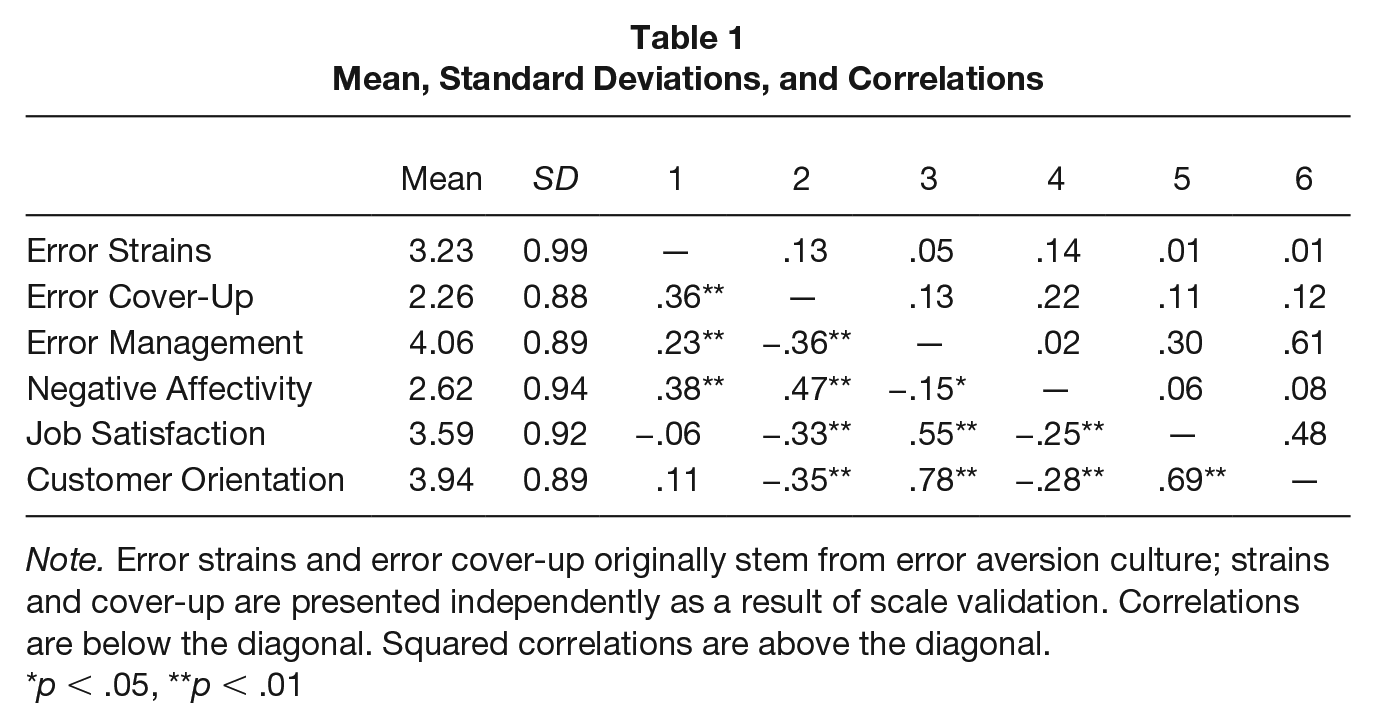
Note. Error strains and error cover-up originally stem from error aversion culture; strains and cover-up are presented independently as a result of scale validation. Correlations are below the diagonal. Squared correlations are above the diagonal.
p < .05, **p < .01
As far as error cultures of seven hotels are concerned, error management varied from 3.77 to 4.52, error strains from 2.98 to 3.93, and error cover-up from 2.06 to 2.85. To formally test a significant difference of the ratings of error management, strains, and cover-up among seven hotels, we performed a series of ANOVA along with Tukey’s post-hoc tests. The number of participating employees ranged from 45 to 67 per hotel. ANOVA results indeed indicated significant differences in all three cultures: error strains, F(6, 374) = 5.23, p < .01, error cover-up, F(6, 374) = 5.34, p < .01, and error management, F(6, 371) = 5.20, p < .01. After conducting Tukey’s post-hoc comparisons, we identified three groups (G1, G2, and G3) based on significant mean differences (Table 2). In general, error cover-up and error strains are higher for mid-scale hotels (G3 in cover-up and strains); and error management is higher for luxury and upscale hotels (G3 in error management). It is worth noting that the luxury hotel shows the highest strains as well as the highest error management.
ANOVA and Tukey’s Post-hoc Results
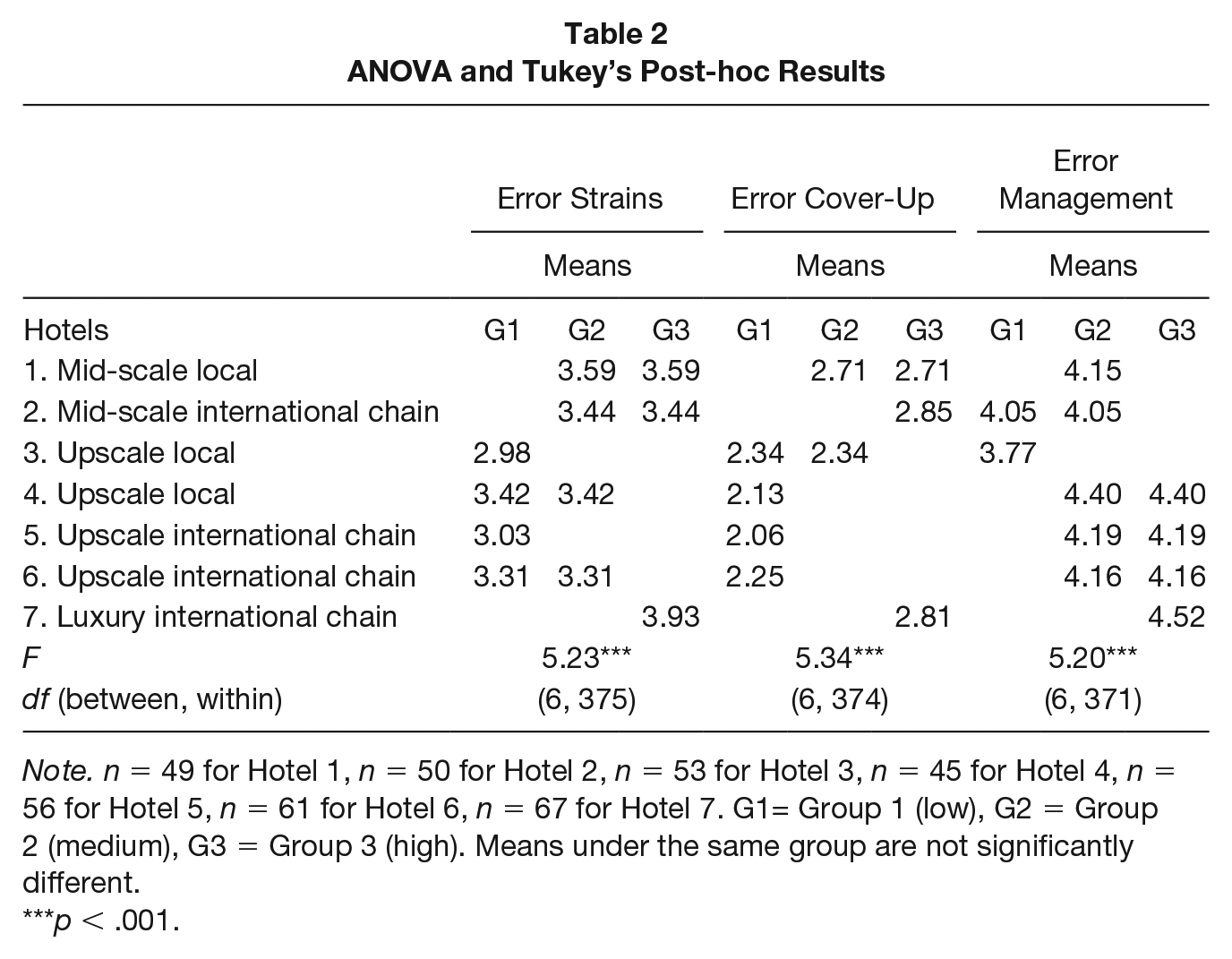
Note. n = 49 for Hotel 1, n = 50 for Hotel 2, n = 53 for Hotel 3, n = 45 for Hotel 4, n = 56 for Hotel 5, n = 61 for Hotel 6, n = 67 for Hotel 7. G1= Group 1 (low), G2 = Group 2 (medium), G3 = Group 3 (high). Means under the same group are not significantly different.
p < .001.
Results of the Measurement Model
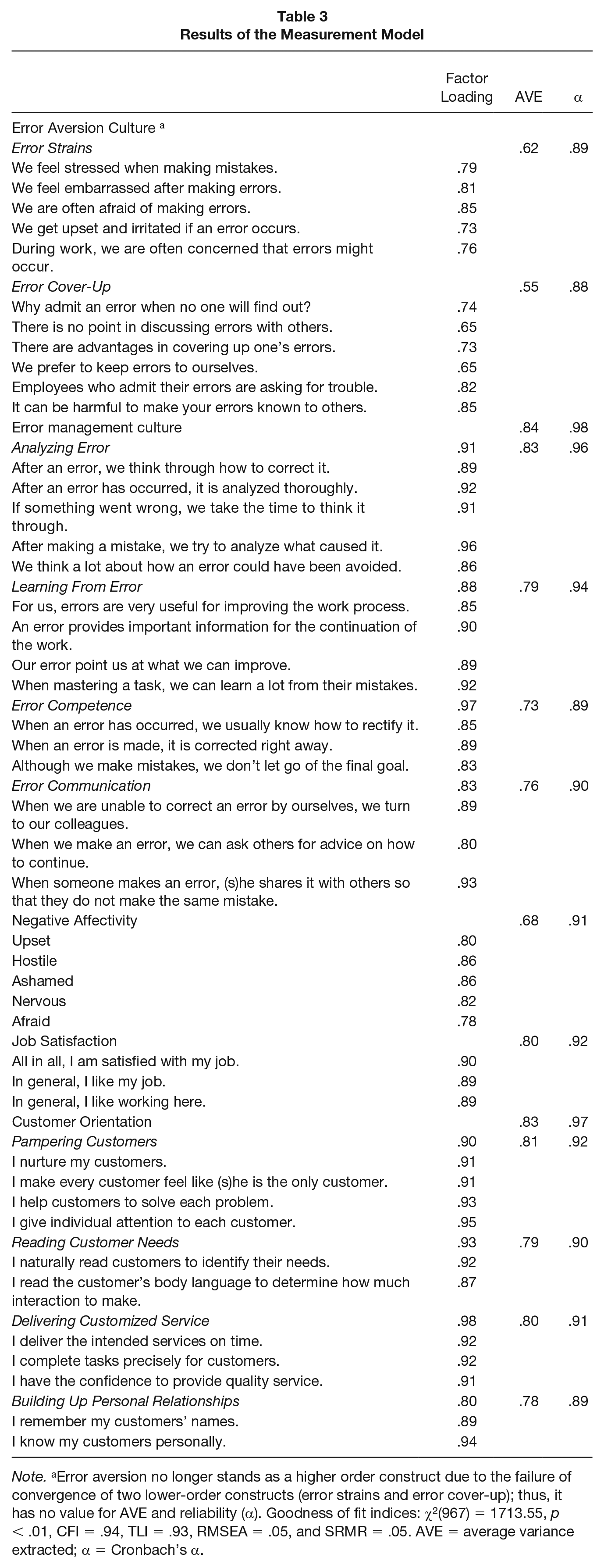
Note. aError aversion no longer stands as a higher order construct due to the failure of convergence of two lower-order constructs (error strains and error cover-up); thus, it has no value for AVE and reliability (α). Goodness of fit indices: χ2(967) = 1713.55, p < .01, CFI = .94, TLI = .93, RMSEA = .05, and SRMR = .05. AVE = average variance extracted; α = Cronbach’s α.
Measurement Model
For hypotheses testing, we adopted a two-step approach recommended by the SEM technique: measurement model and structural model (Anderson & Gerbing, 1988). Following prior results (Sample 1), we treated error strains and error cover-up as first-order constructs. Therefore, the management model consisted of four first-order constructs (error strains, error cover-up, negative affectivity, and job satisfaction) and two second-order (higher-order) constructs (error management and customer orientation). The measurement model revealed a good model fit: χ2 (967) = 1713.55, p < .01, CFI = .94, TLI = .93, RMSEA = .05, and SRMR = .05. Three items (one from error management and two from customer orientation) were removed because of their low factor loadings. The loadings for the remaining items were significant (equal to or above .65) at the .01 level (p < .01). Cronbach’s α of all constructs ranged from .88 to .98, suggesting solid internal consistency. Further, we found no localized ill fit. The average variance extracted (AVE) of all constructs demonstrated good convergent validity by exceeding the criterion value of .50 (Fornell & Larcker, 1981). The AVE values of latent constructs are larger than their squared correlations with other study constructs; this result demonstrated discriminant validity of all constructs (Fornell & Larcker, 1981).
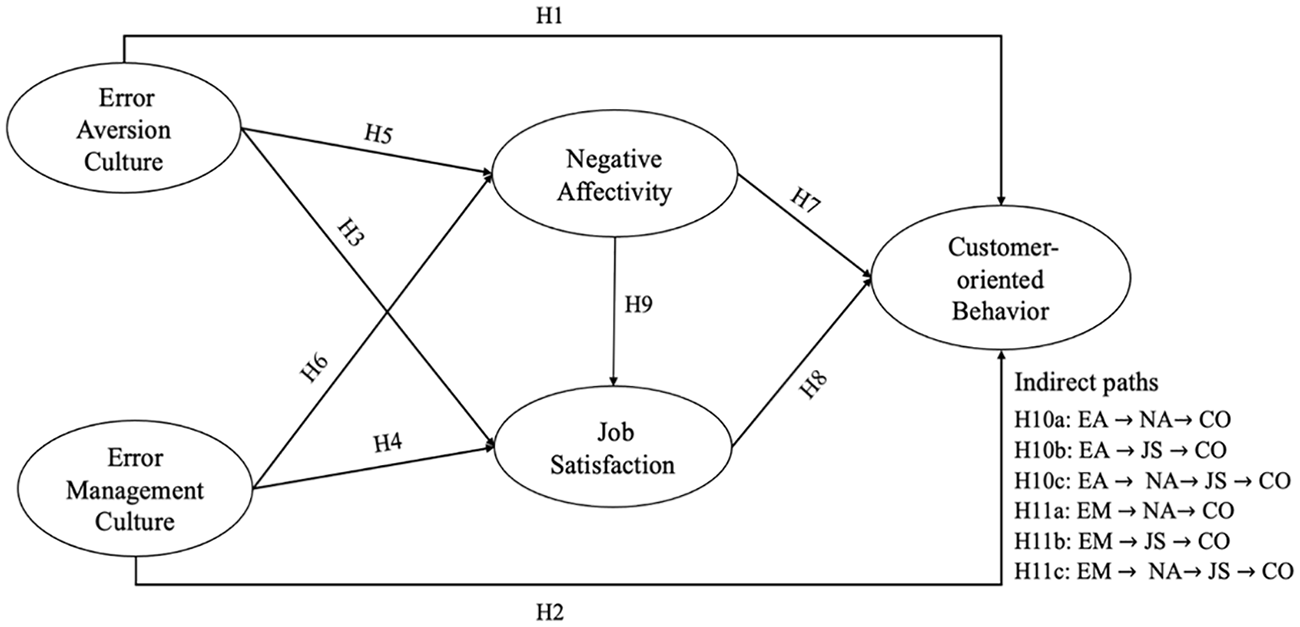
Proposed Research Model
Structural Model 1
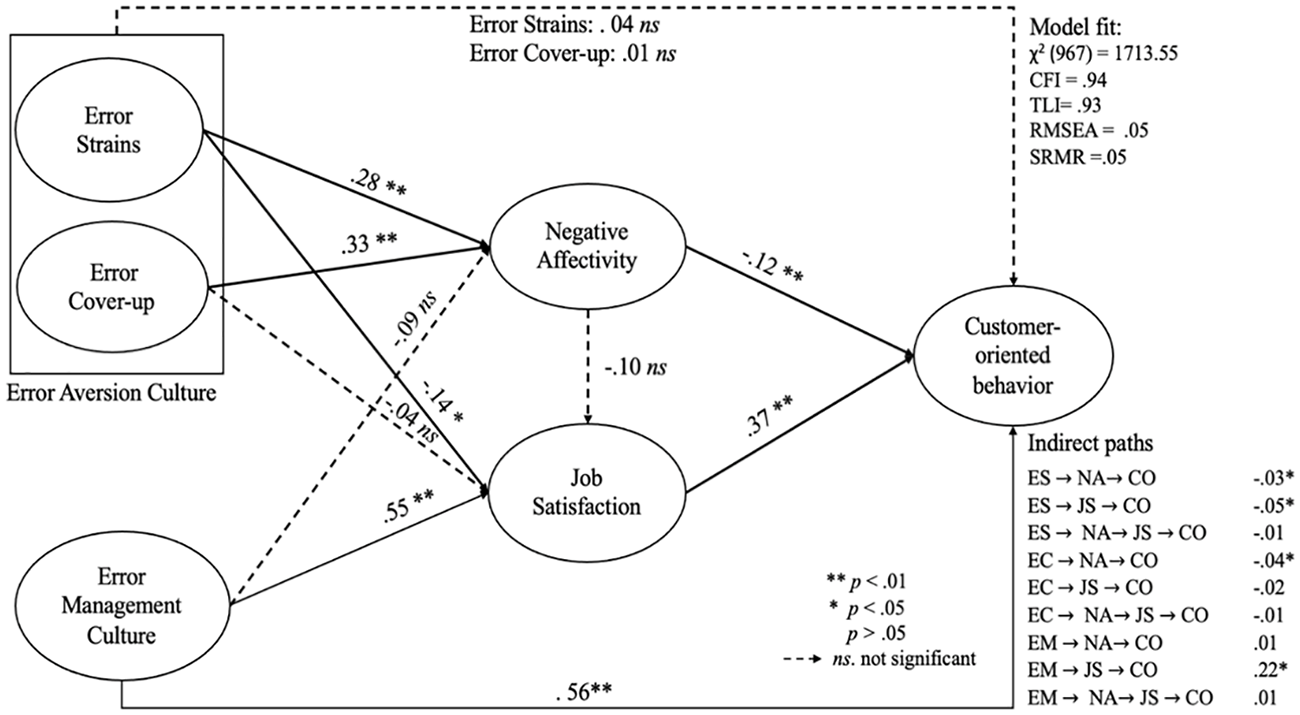
The structural model (Figure 2) demonstrated a good model fit with the data: χ2(967) = 1713.55, p < .01, CFI = .94, TLI = .93, RMSEA = .05, and SRMR = .05. H1 (error aversion to customer orientation) is rejected because neither error strains nor error cover-up is significantly negatively related to customer-oriented behavior. H2 regarding the positive link between error management and customer orientation is supported because of the significant beta between the two (β = .56, p < .01). As for H3, the hypothesis is partially supported because error strains have a significant, negative relationship with job satisfaction (β = -.14, p < .05) while error cover-up has no significant relationship with job satisfaction. As expected, error management is positively associated with job satisfaction (β = .55, p < .01) lending full support to H4. Both error strains (β = .28, p < .01) and error cover-up (β = .33, p < .01) are positively related to negative affectivity, thereby supporting H5 (error aversion to negative affectivity). H6 is rejected because error management is not significantly related to negative affectivity although the negative directional relationship exists between the two. The two hypotheses concerning the link from negative affectivity to customer orientation (H7) and job satisfaction to customer orientation (H8) are supported. Negative affectivity shows a negative association with customer orientation (β = -.12, p < .01) while job satisfaction has a positive relationship with customer orientation (β = .37, p < .01). The final hypothesis (H9) is rejected because of the insignificant relationship between negative affectivity and job satisfaction.
Results of the Research Model
To test mediation paths, we used 5,000 times bootstrap samples. The original six mediations paths became nine paths due to the breakdown of error aversion into error cover-up and error strains. Of the nine mediation paths (Figure 2), four are significant: (1) error strains → negative affectivity → customer orientation (
Negative affectivity appears to be a full mediator between two error aversive cultures (strains and cover-up) and customer-oriented behavior because of the insignificant direct link from the two error aversive cultures to customer orientation (as noted earlier in the result of H1; Baron & Kenny, 1986). Similarly, job satisfaction becomes a full mediator between error strains and customer-oriented behavior due to the insignificant direct relationship between error strains and customer orientation. However, job satisfaction serves as a partial mediator between error management and customer-oriented behavior because the link from error management to customer orientation still remains significant (as shown in the result of H2; Baron & Kenny, 1986).
Discussion
Organizational Error Culture in Seven Hotels
In all hotels, error management scores highest, closely followed by error strains and cover-up. However, pay attention to variations in the ratings of three error cultures. For example, a higher score of error strains (M = 3.51) and cover-up (M = 2.78) in mid-scale hotels (than upscale) indicates that employees in these hotels are exposed to an error aversion culture. We speculate that due to their limited resources, mid-scale hotels may push their employees not to make mistakes because they can be costly. This company attitude may create a strong aversion to error among employees. It is quite interesting to see that the luxury hotel with the highest error management score (M = 4.52) also displays the highest score for error strains (M = 3.93). This outcome implies that while employees experience a strong sense of support in a high error management culture at the luxury hotel, they may be under much pressure (strain) to deliver excellent customer service.
In summary, in reality, hospitality organizations do seem to have a fair share of both error cultures (error management and error aversion) as perceived by employees in this study. Van Dyck et al. (2005) report the means of two opposite error cultures, derived from four industry sectors (production, general business, finance, and trade): error management, M = 3.22; error aversion, M = 2.61. Compared to their ratings, the means from seven hotels are high for both error dimensions: error management, M = 4.06; error aversion, M = 2.77 (the average of strains and cover-up). We suspect that it mirrors the utmost efforts made by the hospitality sector to deliver superb customer service.
Psychometric Properties of Error Aversion
The two sub-facets of error aversion failed to converge, with an indication that error cover-up and error strains are independent of each other. The different correlational directions between cover-up and error management (negative) and between strains and error management (positive) provide additional evidence that cover-up and strains are conceptually distinctive; these correlations further indicate that error cover-up alone may be truly qualified as the opposite of error management. It makes sense that employees in the error management culture are encouraged to speak about their errors whereas employees in the cover-up culture are not allowed to make any errors, leaving them with no choice but to keep quiet. The positive associations of error strains with both error management and error cover-up indicate that error strains may arise in both cultures but for different reasons: in the former, because employees work hard to perform better after analyzing and learning from their mistakes; and in the latter, because employees simply cannot afford to make errors at all.
Relationships Between Error Management, Strains, and Cover-up and Customer-Oriented Behavior
In the proposed model, each error culture has its own emotional mediators that lead to employee behavior. Error cover-up reduces customer-oriented behavior through negative affectivity; in contrast, error management increases customer orientation through job satisfaction. Error strains, which are correlated with both cover-up and management, reveal both emotions (negative affectivity and satisfaction) as predictors of customer-oriented behavior. Wang et al. (2020) demonstrate gratitude as the emotional mechanism between error management and employees’ service recovery behavior. At the same time, error management is found to decrease anxiety. Wang et al.’s (2020) work somewhat contradicts our findings because we do not have any salient, negative relationship between error management and negative affectivity. We cautiously say our results are more intuitively consistent with affective events theory because a negative event such as error cover-up produces an adverse outcome via a negative emotion (negative affectivity), and a positive event such as error management produces a favorable outcome via a positive emotion (satisfaction).
Theoretical Contribution
This study’s crucial contribution is its integration of error aversion and error management and in revealing the extent of error aversion in the hospitality context. Hospitality scholars have focused on error management culture perhaps because they have regarded it as superior to error aversion culture. However, to comprehend error culture, scholars should focus on all of its facets. As seen in this study, error aversion and error management are likely to co-exist in hospitality organizations. This means that hospitality scholars should adopt a holistic approach to error culture and find out which prototype or mixture is ideal. For example, very high error management, very low strains, and very low cover-up may signal a possibility that the organization is so generous about employees’ errors that employees feel almost no pressure for correction and continue making errors. We imagine high error management, high/medium error strains, and low error cover-up might be an ideal indicator that hospitality organizations look for to ensure the improvement of error performance. It is natural for employees to feel somewhat strained while making their best efforts to do their job well.
Further, this study is the first to conduct an empirical test to validate the rigor of the error aversion scale after Van Dyck et al.’s (2005) initial scale development. Van Dyck et al. found that error aversion, presumably the opposite of error management, was not significantly negatively related to error management. Because of this result, the researchers themselves raised the possibility of the imprecise structure of the error aversion culture. This study apparently offers an insightful answer to this question—originating from the two sides of error strains positively related to both error cover-up and error management.
This study contributes to the JD-R theory and AET. In hospitality literature, customer misbehavior or mistreatment has been a primary source for affective events that elicit certain emotions from employees (e.g., Lee., in press; Cheng et al., 2020). In this study, we argue that organizational error culture can function as such an affective event. When AET was adopted by one, and the only paper in hospitality (Wang et al. 2020), the theory was applied to error management—partly due to no interest in error aversion among hospitality scholars. This study takes a more balanced approach, embracing the neglected error aversive culture, and presents error management as a pleasant event and error aversion as a stressful one, and offers more complete information. In addition, burnout theory, specifically JD-R theory, has been around for decades, and hospitality scholars have adopted this theory in an effort to explain the effects of job stressors (e.g., workload, job complexity, demanding customers) and resources (e.g., autonomy, supervisor support) on employee performance (e.g., Kim et al., 2009; Ma et al., 2019). We extend the usage of this theory to organizational climates. In fact, our study is the first to use the JD-R framework, identifying error management as a job resource and error aversion as a job demand.
Finally, this study sheds some light on job satisfaction. While testing AET, we used job satisfaction as both an affect (emotion) and an evaluative judgment (attitude; Brief & Weiss, 2002). The results supported an emotion-driven behavioral path and rejected a judgment-driven path. We are by no means arguing that job satisfaction is not an attitude. We rather contend that given that AET highlights the role of emotions in the workplace, job satisfaction is perhaps more pronounced as an affect triggered by a work event, directly influencing employee service behavior.
Managerial Implications
This study has several managerial implications for hospitality practitioners. First and foremost, hospitality operators are encouraged to regularly assess their organization’s error culture. Hospitality employees are often exposed to affective events at work—unpleasant and distressing. Although they suffer from the consequence of error aversive culture, they are likely to pretend to be energetic with a positive tone while dealing with guests. The management may not realize their deep negative emotions until they turn in a resignation letter. A strict, punitive culture may force even good workers or promising ones to leave the firm. Hospitality practitioners should be alert to the effect of negative affectivity (caused by an error-aversive culture) on customer-oriented behavior and, therefore, it is wise to conduct an error culture survey including job satisfaction (e.g., a semi-annual survey). This routine survey will aid management in grasping the up-to-date climate and providing a timely intervention not to lose promising talents. Along with a regular survey, the management could ask a unit supervisor to have a casual talk particularly with new talents to find out their job attitude, and how they feel about the firm (error) culture.
The information obtained from culture surveys or conversations will assist the firm with appropriate managerial actions to take. If error aversion (strains and cover-up) is reported high in the survey with an actual increasing frequency of errors in the organization, it sends a message that it is time to refine error management culture so that employees feel they are being supported in their efforts to do a better job. The organization should also find ways to reduce employees’ stress and temptation to hide their errors. Clear communications with employees are likely to be a simple yet effective strategy. Service errors jeopardize repeat business, which is essential for hospitality firms’ long-term survival. Employees must understand that they have a better chance of receiving bonuses and promotions if the operation prospers with returning customers.
For those who make frequent errors without conscious effort, management may consider disciplining them. Hospitality practitioners could develop a guideline or policy pertaining to disciplinary actions with sensible conditions. If the criteria for disciplinary actions are clearly stipulated, employees will believe that the punishment or penalty meted out by the organization is deserved. This stipulation may also help alleviate the harsh image of error aversion culture in employees’ minds, and their fear of being penalized for any random mistakes.
Hospitality practitioners should be aware that error management culture increases job satisfaction, which then promotes customer-focused behavior. It is, therefore, critical to maintain the error management culture. For example, a mentor and mentee relationship or apprenticeship could optimize error makers’ learning. This type of support system can be effective regardless of the size or ownership style of a hospitality firm. However, it is feasible that some employees take unfair advantage of an error management culture. They think their errors are easily forgiven and do not put enough effort into preventing future errors. The management may check with the mentor or unit supervisor about the mentee’s performance to ensure firm resources are wisely spent. The bottom line is to reinforce employees’ customer focus through a proper organizational culture. It is good to have a strong error management culture; however, more important is employees’ conscious efforts to grow out of their mistakes and become sincere, caring employees, which may be equated with the strains dimension of error aversive culture. In conclusion, we urge hospitality practitioners to give some thoughts to their extant error culture and find out the best combination of different error cultures to cultivate customer-oriented behavior.
Limitations and Future Research
We acknowledge the following limitations and suggest several directions for future research. Our data were collected from mid-scale to luxury hotels. In the future, we recommend researchers add economy or budget hotels to the sample to detect additional differences. Mid-scale hotels show a higher rating for error aversion and a lower rating for error management than upscale hotels. We suspect budget hotels may have even higher error aversion and the lowest error management scores.
For theory development, it is critical to have a solid scale. The failure of convergence of error strains and error cover-up suggest researchers should continue their validation studies for an error aversion culture. If necessary, they should look for other appropriate items that may fit better as sub-facets of error aversion. Finally, there are well-known corporate cultures such as bureaucratic, entrepreneurial, and supportive; it is feasible to expect the influence of these corporate cultures on employee behavior such as customer orientation (e.g., Williams & Attaway, 1996). For example, because of strong policies and rules in the bureaucratic organization, errors may not be perceived positively while errors are more acceptable in entrepreneurial and/or supportive organizations. In the future, researchers may want to utilize these dominant corporate cultures as control variables prior to testing the effect of organizational error culture on hospitality workers’ customer-focused behavior.
