Abstract
This study explores advertising students’ recognition and comprehension of in-feed native advertising on Instagram, a leading platform for social media native advertising. Data were collected from 303 U.S. college advertising students. It examines the impact of two key aspects of Instagram in-feed native advertising—an additional label (“Shop Now”) and ad-context congruency—through both quantitative and qualitative data. Findings reveal a significant deficit in native ad recognition among advertising students. Qualitative analysis identified four themes constituting Instagram in-feed advertising for advertising students: professional photo quality, branded products, persuasive elements, and excessive hashtags. Quantitative results indicate that high ad-context congruency led to higher perceptions of nativeness and more positive emotions, but did not significantly influence ad attitudes or negative emotions. The study underscores practical and theoretical implications for advertising educators and scholars, emphasizing the need for enhanced digital advertising literacy and discussing broader implications for advertising pedagogy and practices.
Keywords
Introduction
The evolution of digital media has revolutionized advertising practices, leading to the emergence of new formats such as native advertising. Native advertising seamlessly blends promotional content into editorial content or users’ feeds, blurring the line between traditional advertising and organic content (IAB, 2019; Wojdynski & Evans, 2016). However, this trend has sparked ethical and legal concerns surrounding transparency and consumer deception. Central to these concerns is the pivotal role of recognition in activating persuasion knowledge, enabling individuals to effectively process persuasive messages (Friestad & Wright, 1994).
Research on native advertising has primarily focused on its impact on the general public’s perception and behavior, particularly on news websites (e.g., Hyman et al., 2017; Moore, 2014; Wojdynski & Evans, 2016) and social media platforms (e.g., Huang & Yoon, 2022; Lee et al., 2016; Yang & Jiang, 2021). However, limited attention has been paid to specific demographic groups, such as students, whose susceptibility to advertising influence and developing persuasion knowledge warrant investigation. Existing studies, such as those conducted by Moore (2014) and Kendrick and Fullerton (2021), have only explored students’ challenges in differentiating native advertising from editorial content on news websites.
Despite the ubiquity of social media among today’s youth, little is known about college advertising students’ ability to recognize native advertising on social media platforms. Understanding their capacity to discern sponsored content within social media feeds is crucial for refining advertising education and informing professional training practices. This capacity provides insights into advertising students’ digital advertising literacy, contributing to the broader discussion on the deceptive nature of native advertising and its implications for both social media users and advertising professionals. If advertising students, well-versed in marketing communications, find it challenging to recognize native ads, it casts doubt on the general public’s ability to do so. Unlike platforms like Facebook and Twitter, where various ad formats coexist, Instagram primarily showcases sponsored native advertising. This makes Instagram a leading social media platform for native advertising (Frier & Grant, 2020), offering a unique opportunity for investigation. This study, therefore, focuses on in-feed native advertising on Instagram—sponsored stand-alone posts in users’ feeds, which constitute the primary advertising format on the platform.
This exploratory study aims to address this gap by examining advertising students’ ability to differentiate in-feed native advertising on Instagram and their perceptions of these ads, considering platform characteristics such as labeling and ad-context congruency. Utilizing both qualitative open-ended responses and quantitative data, this study explores advertising students’ self-reported recognition of native ads in Instagram feeds. By shifting the focus from a journalistic mimicking approach to a comprehensive understanding of native advertising, and from the general adult population to advertising students, this study sheds light on a critical aspect of contemporary advertising education. It emphasizes the importance of incorporating native advertising into the curriculum, updating textbooks to reflect the evolving nature of digital advertising, and instilling ethical principles in students to design and practice advertising ethically.
Moreover, by probing how advertising students distinguish and define advertising in the digital age, this study has the potential to inform curriculum development and promote ethical advertising practices. Ultimately, enhancing students’ critical evaluation skills regarding digital advertising is paramount for empowering consumers and fostering ethical advertising practices in the digital landscape.
Literature Review
Instagram In-Feed Native Advertising and the Persuasive Knowledge Model
Native advertising on social media, especially the in-feed type, seamlessly integrates promotional content into users’ feeds, resembling other non-promotional posts (Wojdynski, 2016). This advertising model has gained popularity among social media platforms due to its potential benefits. First, it offers a natural place to integrate native ad content, seamlessly fitting into the flow of users’ regular content consumption. Second, the infinite scrolling feature on mobile devices allows for larger native ads that occupy more screen space, enhancing visibility and exposure within a short period. Additionally, these platforms provide advertisers with access to a vast user base, maximizing the reach of native advertisements (Fulgoni & Lipsman, 2014).
Scholars have debated the effectiveness of native advertising, with some arguing that its integration reduces users’ perceptions of intrusiveness and ad avoidance while increasing engagement and positive attitudes toward advertisements (Campbell & Evans, 2018; Laffey, 2007; Panic, 2013; Tutaj & Van Reijmersdal, 2012; Wojdynski, 2016). However, others have raised concerns about users’ lack of awareness regarding sponsored content, potentially diminishing the effectiveness of native advertising (Carlson, 2015; Hart, 2014).
These debates can be understood through the lens of the Persuasive Knowledge Model (PKM) (Friestad & Wright, 1994), which posits that consumers must first recognize the persuasive attempt of the messages to interact effectively with advertising content. Product placement literature indicates that the persuasive content in advertising affects the use of persuasion knowledge only when consumers pay attention to the content and can effectively recall the content (Boerman, van Reijmersdal, & Neijens, 2012). Despite the labeling of native ads as “sponsored” content, users often struggle to discern their advertising nature due to their covert format (Carlson, 2015; Schauster et al., 2016).
As a platform that emphasizes visual content, Instagram makes it an ideal platform for native advertising with three main formats: feed, stories, and reels. Instagram feed, serving as the major place for users to share photos and videos and connect with the other accounts they follow, is the first format that presents native ads for businesses on the platform. Through in-feed native advertising on Instagram, businesses can visually tell the brand story, showcase products, and inspire users to connect more deeply with the business (Advertising | Instagram, 2024).
The subtle labeling and ambiguous nature of native advertising can hinder users’ ability to recognize sponsored content among organic and non-sponsored content, highlighting its double-edged nature (Lee et al., 2016). While the nonintrusiveness of native ads on social media can positively affect attitudes and sharing intentions (Lee et al., 2016), PKM suggests that once users do recognize the content as advertising, they are likely to understand its selling and persuasive intent. This recognition can lead to perceptions of manipulativeness and ad skepticism, which, in turn, may result in negative emotions and perceptions toward the sponsored content (Lee et al., 2016; Wojdynski & Evans, 2016). Thus, sponsorship disclosure of the sponsored content plays an important role in facilitating this recognition among users, and can further negatively impact product attitude (Kim & Kim, 2021).
Native Advertising Recognition and College Advertising Education
While previous research has extensively explored the recognition and effectiveness of native advertising, the focus has primarily been on the general adult samples (e.g., Ferrer Conill, 2016; Hyman et al., 2017; Moore, 2014; Wojdynski & Evans, 2016). The majority of the adult samples were unable to differentiate between paid and non-paid content, 92% in Wojdynski and Evans’ study (2016) and 63% in Hyman et al.’s study (2017), for instance. This led to ethical and legal concerns about native advertising and its impacts on general consumers, corresponding to the FTC’s attempts to strengthen enforcement in this area (FTC, 2013).
However, limited attention has been given to specific populations, such as students whose advertising and digital media literacy are still forming while being vulnerable to the effects of advertising. Only a few studies have focused on native ad recognition among students. For example, McGrew et al.’s study (2017) revealed that 82% of US middle school students failed to identify an ad marked “sponsored content” as an ad on news websites, for which, scholars called for early native advertising education to students “as early as elementary school” (Wojdynski, 2016, p. 10).
College-level advertising students, as future professionals, represent a crucial demographic within the advertising industry. Their ability to identify native advertising on social media platforms is essential for advancing advertising education and preparing them for ethical practices in the digital landscape. However, despite their training, advertising students still struggle to recognize native advertising on news websites (Kendrick & Fullerton, 2021). Among the 623 US college advertising students surveyed, one out of four could not properly identify “sponsored content” as an ad, and more than one in five misidentified a legitimate news article as advertising (Kendrick & Fullerton, 2021). This issue is particularly troubling, as it suggests that if these trained individuals find it challenging to identify native ads, the general public is likely to face even greater difficulties. Furthermore, it raises ethical concerns, as these students, if they become advertising professionals, may be indifferent to the deceptive nature of native ads, potentially leading to negative impacts on consumers.
Kendrick and Fullerton (2021) called for further research to conduct surveys among advertising professionals, professors, and students to triangulate results and gain a deeper understanding of their views on the ethical concerns surrounding native advertising and its effects on society. They also recommended expanding beyond a single platform stimulus to measure recognition across various online platforms and media types, as well as investigating the effectiveness of different labels and disclosure locations (Kendrick & Fullerton, 2021). Given the increasing prevalence of native advertising on platforms like Instagram, Facebook, and Twitter, it is crucial to expand beyond news websites and investigate how college advertising students navigate and perceive promotional content within these digital spaces.
The current study seeks to address this gap by examining the extent to which college-level advertising students can identify native advertising on Instagram feed. By doing so, it aims to contribute to the broader discussion surrounding the deceptive nature of native advertising and its implications for both social media users and advertising professionals. If advertising students at the college level, who are ostensibly more attuned to the nuances of marketing communication, struggle to distinguish native advertising from organic content, it raises significant concerns about the ability of the general public to do so. Based on the above literature gap discussed, the current study tried to understand:
Moreover, if advertising students demonstrate a limited ability to identify native advertising on social media, it underscores the importance of understanding what constitutes advertising in the digital landscape for these students. This understanding can provide crucial information for educators to critically evaluate current digital advertising education, integrate comprehensive training on this topic into advertising curricula, and promote media literacy skills. Ultimately, this would better prepare students for the complexities of the advertising industry and equip them to navigate ethical dilemmas in their future careers. Therefore, this study also seeks to understand:
Impact of Labeling and Contextual Congruency on Instagram In-Feed Native Advertising
Instagram in-feed native ads are labeled as “sponsored” and can include additional engagement options labeled such as “learn more,” “watch more,” “shop now,” or “install now” within the post (Advertising | Instagram, 2024). The effectiveness of these labels varies based on their explicitness and the degree of commercial intent they convey. Research has demonstrated that the presentation of sponsorship disclosures in influencer and native advertising content increases ad recognition, which can negatively impact users’ attitudes toward the product (e.g., Kim & Kim, 2021). Some researchers even studied the specific terms used for disclosure labels on the recognition and effectiveness of native ads. For instance, explicit terms like “advertising” or “sponsored content,” which clearly indicate paid advertising, are more effective than less direct terms like “brand voice” (Moore, 2014; Wojdynski & Evans, 2016).
For Instagram in-feed native ads, past research has rarely examined the effects of the additional engagement labels offered beyond the standard “Sponsored” label. The most commonly used one, “Shop Now,” with its explicit purchasing intent, might signal more aggressive advertising cues. In contrast, the absence of any additional engagement labels might be perceived as more deceptive, potentially decreasing ad recognition. Therefore, the current study aims to investigate the potential effects of this additional native advertising label on important consumer perceptions of native advertising in social media feeds, as well as reactions such as emotional responses and attitudes toward the native ad.
It is widely agreed that congruent information, the degree of similarity between two objects or activities, is generally preferred and better recalled than incongruent information (Osgood & Tannenbaum, 1955). Native advertising research has examined different kinds of congruency—ad-media congruency, self-brand congruency (e.g., Yang & Jiang, 2021), influencer-product congruency (e.g., Kim & Kim, 2021), and their positive effects on ad and product evolutions and further engagement intentions. In social media, in-feed native advertising where the seamless integration with the context is key, contextual congruency, which refers to the consistency of an ad with the surrounding content or theme, becomes even more important (Kim et al., 2017). Specifically, when in-feed native ads on social media offer congruent content through individual-based targeting, appealing to users’ relevant characteristics such as age, gender, interests, and social behaviors (Yang & Jiang, 2021), this high congruence can lead users to perceive these ads “as personal editorial content rather than purposeful marketing” (Kim & Kim, 2021, p. 407). Thus, when the content or theme of a native ad aligns with the flow of social media posts, users may exhibit lower ad resistance and higher tolerance for the ad (Cramer, 2015).
Previous studies have demonstrated the impact of ad-context congruency on consumers’ brand recognition, ad reactions, ad attitude, and brand attitude (e.g., Kim et al., 2017). For example, Huang and Yoon (2022) found that ad-context congruence increased ad involvement and favorable attitudes, particularly for public service ads. Yoon et al. (2023) confirmed that ad relevancy (i.e., ad-context congruence in the current study) decreased ad intrusiveness and improved ad and brand attitudes, especially in high content consistency settings. Li and Lo (2015) found that ad-context congruity plays an important role in brand name recognition and strengthens ad memorability on video-sharing websites. Similarly, Kusse (2013) revealed that when there is an “overlap” between the video ad and the video program, participants’ perceived intrusiveness of the ad is significantly lower. Moreover, participants can process the information effortlessly and their attitudes toward the ad were more positive when an overlap between the ad and the context occurred (Kusse, 2013; Segev et al., 2014).
Perceived nativeness in the context of in-feed social media native advertising can be understood as the extent to which an advertisement is perceived as a seamless and integral part of the organic content within a user’s social media feed. It reflects how naturally the ad fits within the user’s social media experience, minimizing interruptions and making the ad appear as part of the user-generated content flow, rather than a distinct paid promotional message. In Instagram in-feed native advertising, perceived nativeness is influenced by both the ad’s format and thematic consistency with organic posts (i.e., ad-context congruency), as well as the relevance of the content to the user’s interests. More specifically, the scroll-viewing model of Instagram feeds, where ads resemble the design of organic posts and are interspersed among them, enhances the format seamlessness of native ads (Fulgoni & Lipsman, 2014). Additionally, the use of algorithms to deliver highly targeted ads based on user behavior further enhances the content-wise seamlessness of native ads.
When the content or theme of an in-feed native ad is consistent with other posts, users might initially perceive the ad as highly native. However, once they recognize that a high-congruency ad is sponsored, they might experience negative emotional reactions, such as “creepiness,” the sense of discomfort or unease users feel when they encounter ads that seem overly intrusive, personalized, or manipulative (Tucker, 2014). This sensation often arises when users feel that their personal data is being used in an overly familiar or intrusive manner, creating a feeling that the ad “knows too much” about them.
As discussed above, users’ recognition of sponsored content and understanding of its explicit persuasive intent can be triggered by various kinds and numbers of disclosure labels used in in-feed native ads, leading to negative perceptions and attitudes. When users encounter an ad with an explicit disclosure “Shop Now” label and find that its content is highly consistent with their personal social media feeds (high ad-context congruency), they might perceive the ad as more native and experience higher levels of creepiness. This combination could enhance emotional reactions and lead to more negative attitudes toward the ad. Thus, the interaction effect of ad-context congruency and additional disclosure labels on perceived nativeness and creepiness is crucial for understanding consumer perceptions and attitudes towards in-feed native ads.
Given the features of Instagram in-feed native advertising, which includes additional labels like “Shop Now” beyond the standard “Sponsored” label and the personalized targeting algorithms that tailor ads to users’ characteristics and interests, this study incorporates these elements—labels and ad-context congruency—to capture a comprehensive understanding of students’ recognition and perceptions by mimicking real-life experiences. While extensive research on various aspects of native advertising, there is limited literature specifically focusing on if and how advertising students would perceive and react to this popular native ad format. To address this gap, it is essential to explore these factors in a real-world context, rather than making predefined assumptions. Therefore, this exploratory study proposes a research question rather than hypotheses, aiming to understand the nuances of advertising students’ responses to Instagram in-feed native advertising:
Method
Study Design
To capture native advertising in its all capacities on Instagram feed, a 2 (with “shop now” label vs. no purchasing label) x 2 (high ad-context congruency vs. low ad-context congruency) between-subject experiment was conducted, with an additional control condition (no native ad included). A power analysis indicated that 269 participants were needed to achieve a power of 0.80 with an alpha level of 0.05 and a medium effect size (f = 0.25). Initially, 303 participants were recruited and randomly assigned to each of five versions of a stream of Instagram posts to investigate the influence of purchasing label presence and ad-context congruency on ad recognition, perceived creepiness, perceived nativeness, emotional reactions, and negative attitudes while browsing Instagram.
Subsequently, only participants who reported recognizing advertising among the posts viewed (N = 169) were directed to respond to both quantitative and qualitative dependent measures about native advertising. These participants provided open-ended qualitative responses as well as quantitative data for analysis. This sampling limitation was due to the size of the advertising program and the maximum number of students who could be recruited with the assistance of faculty members and the offer of extra credit.
Stimuli
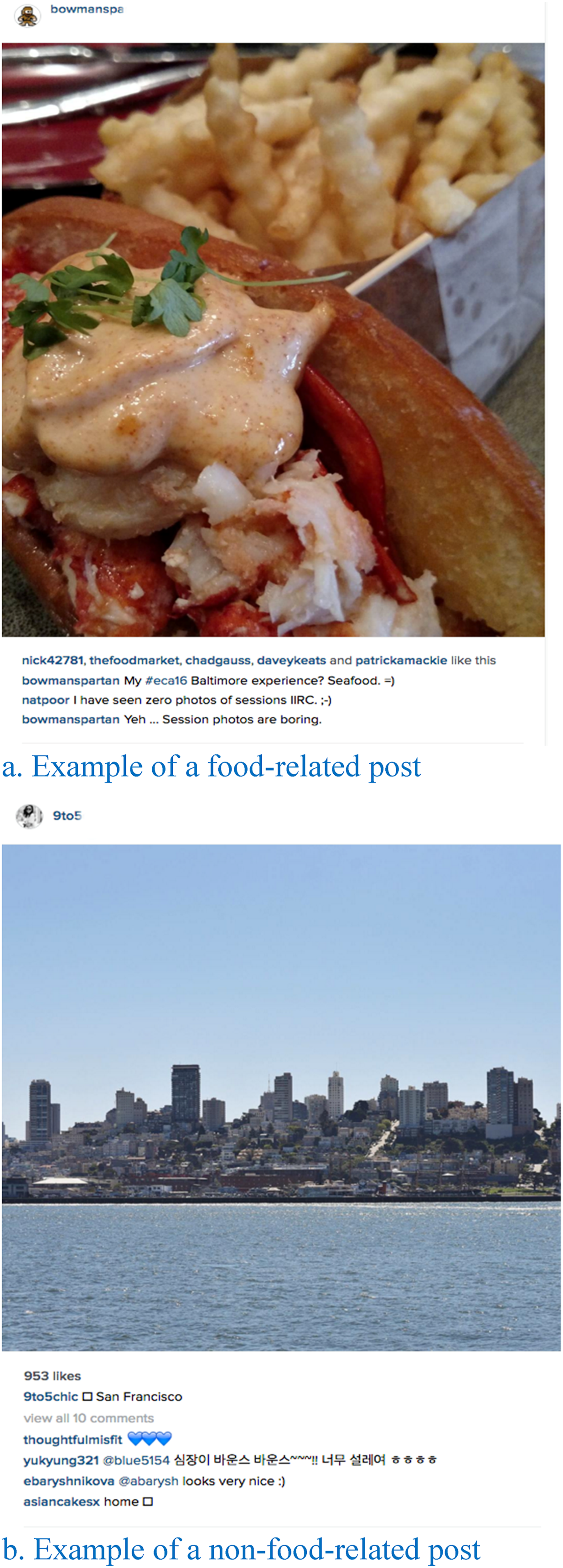
An Instagram post featuring a healthy sandwich with the “Sponsored” label by Whole Foods was used as the native advertisement for this study. A food-related post was chosen because food is one of the most popular subjects among Instagram photos (Hu et al., 2014). Photoshop was used to place the labels of the engagement option (“Shop Now”) and remove any other identification items such as when and where the post was posted (see Appendix 1). A set of another six food-related non-ad Instagram posts (see Appendix 2) was picked to create a stream of Instagram posts that provided a realistic and consistent context for the stimuli; the stimuli were inserted into the middle of the stream (conditions 1 and 3). The same procedure was used to create an inconsistent context (for conditions 2 and 4) with a set of six non-food-related Instagram posts (also see Appendix 2). The control group (condition 5) was a stream of non-related posts without any native advertising.
Participants
The final sample comprised 169 participants who indicated that they had seen at least one advertisement among the posts from all five conditions. The first condition (high ad-context congruency plus a “Shop Now” label) yielded the highest number of participants (43 or 25% of the sample) who indicated that they had seen an advertisement. There were 28 (17%) participants in the low congruency with a “Shop Now” label condition. The high congruency with no additional label group yielded 37 (22%) participants. The fourth group (low congruence with no “Shop Now” label) included 25 (15%) participants. Finally, the control group included 36 (21%) participants.
Participants were college students majoring in Advertising from a large public university, with ages ranging from 18 to 30 years (M = 19.73, SD = 1.53), and 82.25% were female (n = 139).
Procedure
Recruiting emails including the invitation and the Qualtrics link to the experimental conditions were sent to professors teaching in the advertising program at a large public university, who distributed them to their classes. Participants received extra credit for participation. After reading the informed consent and the instructions, participants viewed the stream of Instagram posts imagining that they were viewing their own Instagram feed following their own habits of using Instagram and indicated whether they recognized any advertisements. Subsequently, they answered questions regarding the recognized native advertisement.
Measures
Native Ad recognition
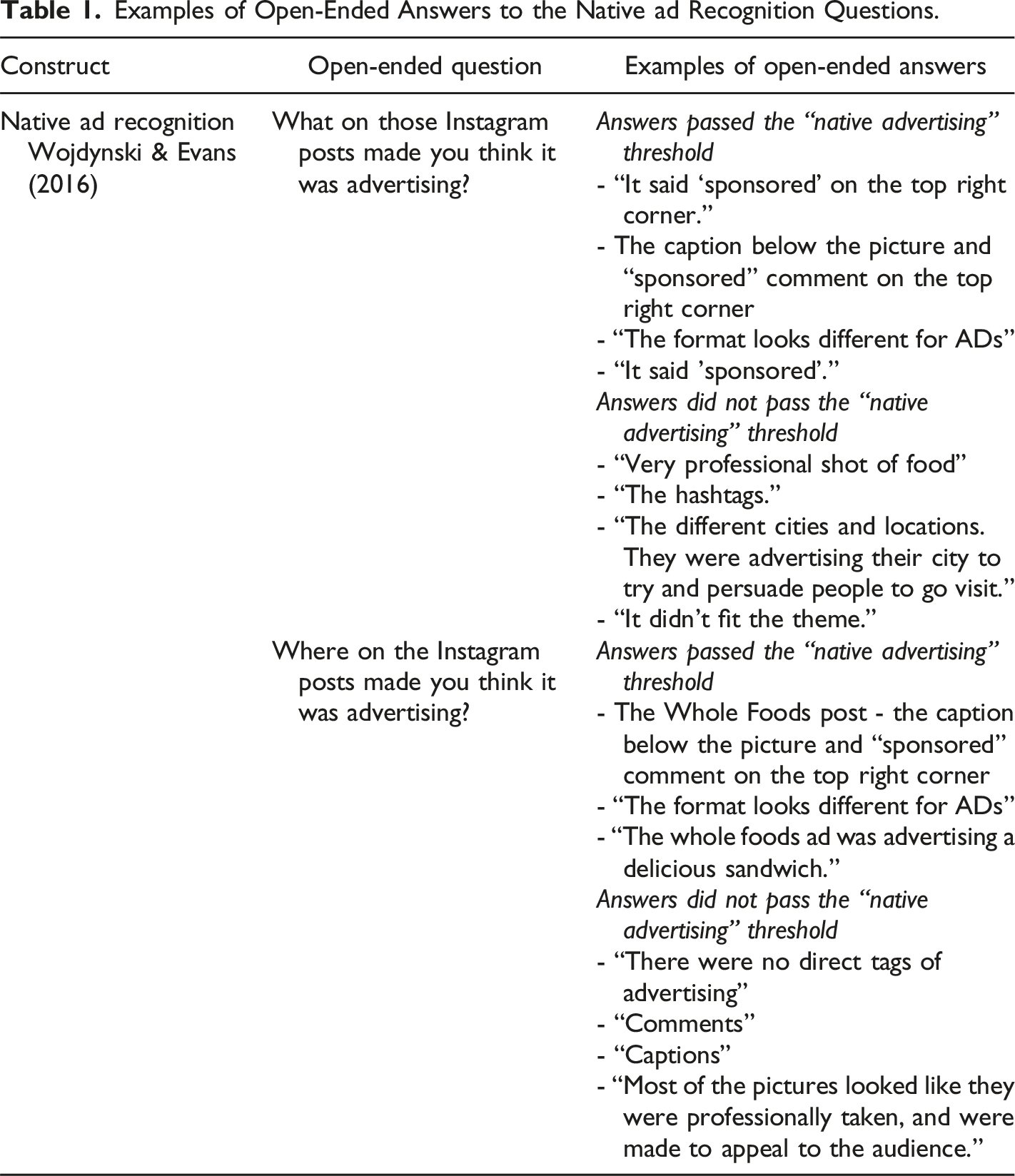
Examples of Open-Ended Answers to the Native ad Recognition Questions.
Other measures
Other Measurement Items.

Results
Advertising Students’ Ability to Identify Native Advertising Within Instagram Feeds
Out of all 303 participants, 169 claimed to recognize advertising among the Instagram feeds, indicating a recognition rate of 55%. Interestingly, 25% of these participants correctly identified the ad as being for a grocery store—Whole Foods, with only four participants using language indicative of native advertising in their responses to open-ended questions. Surprisingly, 36 participants who claimed to have noticed an ad were not exposed to any advertising at all. Thus, RQ1 was answered.
What Constitutes Advertising Within Instagram Feeds for Advertising Students?
Upon reviewing the responses to the open-ended questions—what it was that made them think they saw advertising and where they had seen evidence of the advertising—from participants who recognized advertising in the Instagram posts, four recurring themes emerged, shedding light on how participants discerned sponsored content within the social media feeds (RQ2). Each participant answered both questions, resulting in 338 statements available for textual analysis.
Theme 1: Professional photos equals advertising
Many participants associated the quality of the photos with advertising. They noted that well-tailored, filtered, and professionally planned photographs hinted at promotional content. For instance, one participant remarked, “Each was a well-tailored photo that was filtered and planned; therefore, the photos are being used to advertise for the various companies.” Participants also observed subtle details like food placement and the staging of objects, suggesting a deliberate effort to make products appear more appealing. Comments such as “strategically placed food” and “every single aspect of the picture was perfect” underscored the attention to detail that participants associated with advertising.
Theme 2: Branded product equals advertising
Another common theme centered around the presence of branded products or mentions of brands. Participants considered selfies with branded items or captions referencing specific brands as advertisements. Even if the brand was not directly involved in the post, participants interpreted any association with a product or company as advertising. One said that “buildings with signs on them” and “a random post of food and a restaurant title for a name” constituted advertising.
Others explained the presence of advertising with more details about product presence. For example, one participant said “Whenever they tagged a company or a person and talked about their product,” it was considered advertising. Another said that if the name of the account was “for a particular food company with a food item,” a viewer would be able to tell it was an advertisement. One participant went as far as to say the “products in the pictures were also advertisements because they show what you can get from the certain stores that have the account.”
Theme 3: Persuasiveness of the post
While some participants looked at the quality of the post as the determination of whether a post was an ad, others were not as particular about the technical quality of the photo. They noted that posts containing positive reviews or persuasive language aimed at promoting products were likely advertisements. For example, one participant decided that a post was advertising because the “caption mentions the quality of the food and where to find it.” Another said, “They kept saying in the captions great things about the food and made it look all nice.”
Some participants were persuaded by the posts, acknowledging that they were attracted to the item or that they wanted to try the product. If they were moved toward this action, they concluded that they must be seeing an advertisement. For example, one participant said that one of the posts “Made me want to visit the places.” Another said, “I thought the food post was advertising because the language wasn’t normal and it made me want to try that sandwich.”
Theme 4: Hashtag overload
Participants also identified advertising based on social media engagement cues, such as excessive hashtags, comments, and likes. They interpreted these signals as attempts to attract attention and promote products. Excessive use of hashtags, tagging, and adjectives, as well as persuasive language in comments and captions, led participants to conclude that a post was advertising. One participant, for example, claimed that the overuse of “tagging and adjectives” would be the determining factor. One participant was more descriptive, explaining that “food at restaurants and the pictures of travel destinations with hashtags” showed that a post was an ad.
For some, it depended on whether the hashtags or comments were trying to sell or persuade them to visit or buy something. For example, one participant said that there “were people and what seemed like restaurants tagged in the comments of the photos” and, thus attempted persuasion was occurring. Another said that “Exotic places with different types of language, which shows that a lot of people saw the image” would indicate that the post was an advertisement.
Effects of the Features of Instagram In-Feed Native Advertising
The results of the two-way ANOVA for perceived nativeness indicated a significant main effect of ad-context congruency, F (1,129) = 9.678, p < .01, ηp2 = .070, suggesting that high ad-context congruency led to higher perceptions of nativeness compared to low ad-context congruency. However, there was no significant main effect of the purchasing label, F (1,129) = 0.829, p = .364, and no significant interaction effect between ad-context congruency and purchasing label, F (1,129) = 0.348, p = .556.
For ad attitude, the ANOVA revealed no significant main effects or interactions. Specifically, neither ad-context congruency, F (1,129) = 1.069, p = .303, nor purchasing label, F (1,129) = 0.439, p = .509, nor their interaction, F (1,129) = 0.127, p = .722, significantly influenced ad attitude.
In terms of positive emotions, there was a significant main effect of ad-context congruency, F (1,129) = 7.437, p < .01, ηp2 = .055, indicating that high ad-context congruency elicited more positive emotions. The purchasing label did not have a significant main effect, F (1,129) = 0.156, p = .694, nor was there a significant interaction effect, F (1,129) = 2.165, p = .144.
Means and Standard Deviations of Outcome Variables Across Experimental Conditions.

Post hoc Tukey’s HSD tests showed significant group differences in perceived nativeness and positive emotions. For perceived nativeness, for perceived nativeness, the “Shop Now + high congruency” group rated the ad content as significantly less native than the “Shop Now + low congruency” group (Mean Difference = −0.48, p < .05). Additionally, the “Shop Now + low congruency” group perceived the ad content as more native than the “no Shop Now + high congruency” group (Mean Difference = 0.52, p < .05), and the “no Shop Now + high congruency” group rated it as less native than the control group (Mean Difference = −0.47, p < .05). For positive emotions, the “Shop Now + low congruency” group experienced more positive emotions than the “no Shop Now + low congruency” group (Mean Difference = 0.74, p < .05). Thus, RQ3 was answered.
Discussion
This study delved into the intricate realm of how college advertising students discern “advertising,” particularly native advertising, within the dynamic social media platform of Instagram. It also investigated the impact of additional cues, such as “Shop Now” labels, and the context in which native ads are presented on students’ recognition and perception of these promotional messages. Moreover, the study contemplated the evolving definition of “advertising” in the digital milieu.
Traditionally, native advertising recognition has been scrutinized in journalistic contexts, with concerns over its potential deception as journalistic content. This study bridges the gap by examining native advertising recognition within the realm of sponsored social media in-feed posts. Previous research has primarily focused on the failure of individuals, regardless of their education and training in advertising, to recognize native ads (see Kendrick & Fullerton, 2021; Wojdynski & Evans, 2016). This study provides critical insights into the abilities of media-trained college advertising students, who represent future industry professionals, to differentiate native advertising and redefine advertising concepts in the digital landscape.
A significant finding from this study is the tendency of participants to identify non-advertising content as advertising, even when no explicit advertisement was presented. This underscores the nuanced understanding of advertising among college advertising students and reflects the challenges posed by native advertising’s seamless integration. Consistent with trends observed in Kendrick and Fullerton’s (2021) national study where 23.3% percent of college advertising students misidentified a news story as advertising in a journalistic environment, this highlights a critical gap in advertising education, where students’ ability to identify advertising needs strengthening.
The low recognition of native advertising among advertising students suggests a shift in how native ads are perceived from what previous researchers have argued. “Seamless content flow” may not be inherently deceptive but rather an effective communications tool to provide information, whether persuasive or informative in nature, to an audience less interested in discerning the divide between journalism and advertising.
Furthermore, the analysis of participants’ open-ended statements tells an emerging story about the evolving nature of advertising, blurring the boundaries between advertising, public relations, and marketing. Participants identified content as advertising that was not traditionally defined as such—a paid, mass-mediated attempt to persuade. This reflects calls to encompass all types of brand-related communication that can impact people when defining advertising, moving beyond traditional notions of an identified paid, mass-mediated attempt to persuade (Dahlen & Rosengren, 2016).
Quantitative results revealed significant main effects of ad-context congruency on perceived nativeness and positive emotions, aligning with the PKM. High ad-context congruency led to higher perceptions of nativeness and more positive emotions. High ad-context congruency led to higher perceptions of nativeness and more positive emotions, consistent with prior research on general adults (Huang & Yoon, 2022; Yang & Jiang, 2021). This demonstrates that congruent ads are more seamlessly integrated into users’ feeds, thereby reducing reactance and enhancing positive perceptions. However, the purchasing label did not significantly affect attitudes or recognition, indicating that subtle cues might not suffice to activate persuasion knowledge effectively.
These results underscore the importance of congruency in designing effective native advertising strategies on social media. While the presence of a purchasing label did not significantly affect recognition or attitudes, high ad-context congruency positively influenced perceived nativeness and emotional responses. This finding aligns with PKM, suggesting that congruency is at the heart of why native advertising is potentially so effective within social media feeds, as it makes ads less intrusive and more credible.
Interestingly, participants exhibited positive emotions towards native ads but showed more negative attitudes towards explicitly branded content. This suggests that content quality and source are prioritized over whether a post is a paid promotion, consistent with the qualitative findings that elements like photo quality and hashtags left more impressions and were better recalled by advertising students. From a consumer’s perspective, regardless of their literacy and education in advertising, whether the content on their social media feed is paid (from advertisers) or unpaid (posted by users they follow), according to this exploratory study, their attitudes and responses were similar. The findings indicate that, for advertising students, the seamless integration of ads within social media feeds might reduce negative perceptions, reflecting the evolving nature of consumer engagement with digital content.
Implications for College Advertising Education
College advertising education plays a crucial role in preparing advertising students for the challenges and opportunities of the digital advertising landscape. The below section discusses how educators can empower students to become ethical and effective advertising practitioners who contribute positively to society.
Given the pervasive influence of native advertising on social media platforms, it is imperative for advertising educators to incorporate discussions and case studies on native advertising into their curriculum. Textbooks should be updated to reflect the evolving nature of advertising, including the nuances of native advertising formats. By familiarizing students with the characteristics and challenges of native advertising, educators can better equip them to navigate and critically evaluate advertising practices in the digital landscape.
The findings of this study suggest a need to redefine the concept of advertising within the context of the digital landscape. Advertising education could emphasize the importance of content quality and engagement over traditional distinctions between advertising and non-advertising content. By encouraging students to adopt a holistic view of brand-related communication, educators can prepare them to create impactful and ethical advertising campaigns that resonate with modern consumers.
As educators, it is essential to instill ethical principles in advertising students and teach them to design and practice advertising ethically. College advertising programs can include modules on ethical considerations in advertising, focusing on transparency, consumer trust, and the protection of consumer interests. By emphasizing the importance of integrity and accountability in advertising practice, educators can empower students to navigate ethical dilemmas and uphold professional standards in their careers.
College advertising education must address controversial topics in advertising and prepare students to engage with them responsibly. Topics such as native advertising, data privacy, and the influence of algorithms require thoughtful discussion and critical analysis. Fostering an environment where students feel comfortable exploring diverse perspectives and challenging conventional wisdom is important. By promoting critical thinking and ethical reasoning, educators can cultivate responsible professionals who are equipped to navigate the complexities of the advertising industry with integrity and professionalism.
Limitations and Future Directions
While this study provides valuable insights into the recognition and perception of native advertising among college advertising students, several limitations must be acknowledged. Firstly, the use of a small convenience sample at one institution limits the generalizability of the findings to a broader population. The small sample size also means the statistical power of the experiment is limited, which can affect the reliability of detecting true effects. Future research could benefit from employing more diverse and representative samples to enhance the external validity of the results. Larger sample sizes would increase the statistical power, allowing for more robust and reliable conclusions. Additionally, conducting studies across multiple institutions and geographic locations could provide a more comprehensive understanding of the phenomena and improve the generalizability of the findings. Secondly, the reliability of two scales used in the study, namely, the “perceived nativeness” and “attitude toward the ad,” fell below desirable levels. Given the exploratory nature of the study, however, the researcher decided to proceed cautiously with the analysis for these two scales.
Another limitation pertains to the potential for participant bias due to the nature of the experimental setup. Participants were told that they were being asked questions about Instagram rather than about advertising, it is still possible when they got to the question asking if they had noticed any advertising, they assumed that the answer should be yes, and responded accordingly. In future studies, implementing additional “masking” questions could help mitigate this bias and enhance the validity of the results.
Despite these limitations, the study underscores the importance of ongoing research to advance the understanding of native advertising in educational contexts. Future studies could explore alternative methodologies and samples to corroborate and extend the findings of this research. For instance, investigating how exposure to native ads across different social media platforms influences students’ perceptions and definitions of advertising could provide valuable insights into the evolving landscape of digital marketing education.
Furthermore, longitudinal studies could track changes in students’ attitudes and perceptions over time, offering a deeper understanding of the long-term effects of native advertising exposure. Additionally, qualitative research methods such as interviews or focus groups could provide rich contextual insights into students’ experiences and interpretations of native advertising.
Moreover, there is a need for research that examines the effectiveness of various pedagogical approaches in teaching native advertising awareness and critical thinking skills to advertising students. Comparative studies could evaluate the efficacy of different educational interventions in enhancing students’ ability to discern and evaluate native advertising content.
Footnotes
Declaration of Conflicting Interests
The author(s) declared no potential conflicts of interest with respect to the research, authorship, and/or publication of this article.
Funding
The author(s) received no financial support for the research, authorship, and/or publication of this article.

Appendix 1
Figure A1
Stimuli for the experiment.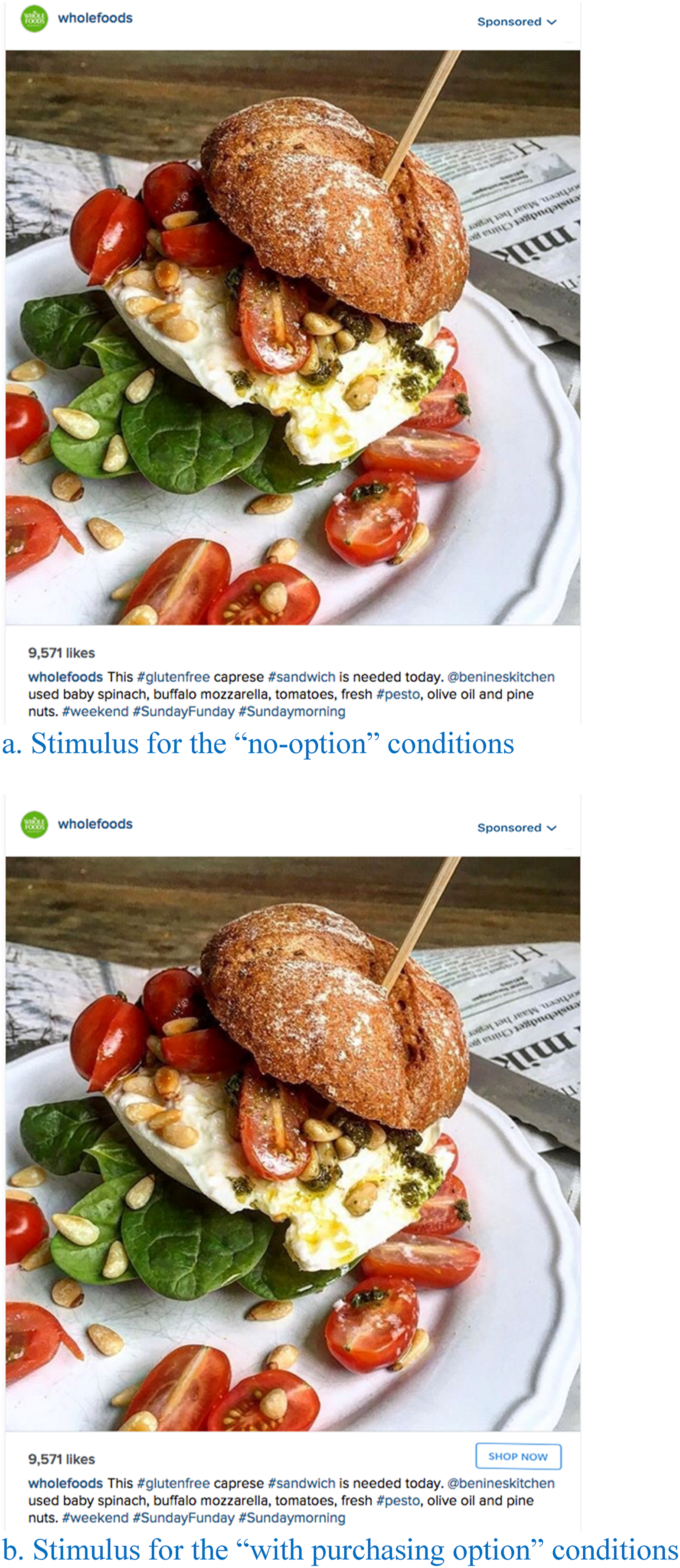
Appendix 2
Figure A2
Examples of food-related posts and non-food-related posts.