



Abstract
Building on prior research involving citizen complaints, the current inquiry seeks to add to the literature by examining citizen complaint data from eight U.S. cities. We assess the distribution of complaints and dispositions, along with the relationship between officer- and citizen-based characteristics. Further, we examine the extent to which varying types of investigatory models (e.g., internal affairs, command level, and external civilian oversight) influence whether complaints are found to have merit (i.e., sustained complaints). In line with prior research, we found that a small percentage of officers accounted for a disproportionate percentage of total complaints, excessive force and discourtesy were often the most common allegations lodged, and younger officers and those with less experience generally received a greater number of complaints. Adding to the literature, we found substantial variation across agencies with respect to the raw number of complaints generated, the extent to which use of force and discourtesy complaints accounted for the total number of complaints overall, and the extent to which various agencies sustained complaints. We also found that male and non-White complainants were more likely to lodge use of force allegations, with Black complainants less likely to have their complaints sustained. Moreover, cities where the police internal affairs unit served as the investigatory entity, but had their outcome decisions (i.e., dispositions) reviewed by an external civilian oversight agency, were significantly more likely to sustain complaints.
Public trust in the police is threatened upon reports of police misconduct. As varying citizen protests throughout U.S. history demonstrate (e.g., Detroit, 1960s; Kent State, 1970s; Miami, 1980s; and Los Angeles, 1990s), including those most recently in Missouri, New York, South Carolina, and Maryland, the extent of community frustration in relation to perceived or actual police deviance can be significant. While the United States is experiencing the most widespread period of civil unrest since the 1960s, more commonly citizens voice their displeasure by filing a complaint alleging police misconduct (Terrill & McCluskey, 2002).
Within the context of the citizen complaint literature, researchers have done an impressive job at uncovering several important findings. First, the extant research generally shows that a small percentage of officers account for a disproportionate amount of citizen complaints (Christopher, 1991; Harris, 2009, 2011; Lersch & Mieczkowski, 1996, 2000; McCluskey & Terrill, 2005; Walker, 2001). Second, verbal discourtesy and improper use of force allegations are often the most commonly filed complaints (Dugan & Breda, 1991; Hickman, Piquero, & Greene, 2000; Lersch & Mieczkowski, 1996). Third, few citizen complaints are often sustained (Dugan & Breda, 1991; Hassell & Archbold, 2010; Hickman, 2006; Lersch & Mieczkowski, 1996; Liederbach, Boyd, Taylor, & Kawucha, 2007; Manis, Archbold, & Hassell, 2008; Terrill & McCluskey, 2002). Fourth, numerous officer-based correlates of complaints have been identified, the most consistent being gender, age or experience, and education (Brandl, Stroshine, & Frank, 2001; Harris, 2009; Lersch & Kunzman, 2001; Lersch & Mieczkowski, 1996, 2000; Manis et al., 2008; McElvain & Kposowa, 2004). 1
While researchers have shed light on what can be learned from citizen complaints, there are a few limitations. First, given the level of funding generally required to conduct large-scale multicity studies, a large majority of prior work involves data gathered from a single city. 2 For instance, Lersch (1998a, 1998b, 1998c, 2002) and Lersch and Mieczkowski (1996, 2000) have published extensively using data collected from a Southeastern municipal agency. Similarly, Terrill and McCluskey (2002) and McCluskey and Terrill (2005) also relied on data collected from a Southeastern agency (i.e., St. Petersburg, Florida). Moreover, Hickman et al. (2000) used data collected from Philadelphia, Pennsylvania; McElvain and Kposowa (2004) relied on data collected from the Riverside, California Sheriff’s Department; and Brandl et al. (2001), Hassell and Archbold (2010), Liederbach et al. (2007), and Manis et al. (2008), all relied on data collected from a single agency, each of which was located in the Midwest.
Second, beyond studies primarily focusing on a single agency, most prior inquiries are based on data collected prior to the year 2000. The earliest work in this area came from data gathered during the 1960s (e.g., Cohen & Chaiken, 1972; Hudson, 1970), 1970s (e.g., Cascio, 1977) through the 1980s (e.g., Carter, Sapp, & Stephens, 1988; Christopher, 1991; Dugan & Breda, 1991; Kappeler, Sapp, & Carter, 1992). The most exhaustive period of data collection came during the 1990s (e.g., Brandl et al., 2001; Harris, 2011, 2009, 2010; Hickman et al., 2000; Lersch, 1998a, 1998b, 1998c, 2002; Lersch & Kunzman, 2001; Lersch & Mieczkowski,1996, 2000; McCluskey & Terrill, 2005; McElvain & Kposowa, 2004; Pate & Fridell, 1993; Terrill & McCluskey, 2002). Just four studies have relied on data collected post 2000 (Hassell & Archbold, 2010; Hickman, 2006; Liederbach et al., 2007; Manis et al., 2008).
Third, there is relatively little research relating to citizen-based correlates of complaints (in comparison with officer based), with much of this work being descriptive in nature as opposed to multivariate. For instance, several studies in this area have examined characteristics such as citizen race, gender, and age, but only within the context of reporting the percentage of complaints filed (Hudson, 1970; Liederbach et al., 2007; Pate & Fridell, 1993).
Fourth, there is but one assessment with regard to the role that civilian oversight plays in terms of outcomes or dispositions such as sustained complaints. Although such oversight has become a mainstay in many mid-to-large sized cities (Walker, 2001), only a Bureau of Justice Statistics-sponsored study conducted in 2002 (see Hickman, 2006) has sought to gather data with regard to whether such oversight leads to greater effectiveness in terms of holding officers accountable (e.g., via sustained complaints).
In an attempt to better understand the current state of knowledge surrounding citizen complaints, the current inquiry examines 2 years of citizen complaint data collected from eight U.S. cities to assess:
The distribution of complaints and outcome dispositions across agencies; The extent to which varying types of investigatory models (e.g., internal affairs [IA], command level, and external civilian oversight) are associated with whether complaints are found to have merit (i.e., sustained complaints); The relationship between officer characteristics and complaints, as well as the relationship between officer characteristics and sustained dispositions; and The relationship between citizen characteristics and complaints, as well as the relationship between citizen characteristics and sustained dispositions.
Literature Review
Complaint Distribution and Dispositions
Prior research indicates that a few police officers are often responsible for a disproportionate number of citizen complaints within a given agency. In the early 1980s, an analysis of citizen complaint data in Houston revealed that just 12% of officers accounted for 41% of all complaints (U.S. Commission on Civil Rights, 1981). A decade later, the Christopher Commission released its review of the Los Angeles Police Department in the aftermath of the Rodney King riots (Christopher, 1991). From its investigation, the Commission reported that “the top 10% of officers ranked by number of excessive force or improper tactics allegations accounted for 27.5% of all such allegations” (1991, p. 36). That same year, Dugan and Breda (1991) reported results from a survey of 165 police agencies in Washington State involving citizen complaints. They found that just 4.4% of officers accounted for all the sustained complaints. Similarly, drawing on citizen complaint data from a large unidentified Southeastern police agency (referred to as Sunnyville), Lersch and Mieczkowski (1996) reported that just 7% of officers accounted for more than one third of all citizen complaints generated over a 3-year period. Moreover, Harris (2011) analyzed citizen complaint data longitudinally over 14 plus years (1987–2001) in a large northeastern agency, finding that of 5.4% of the officers comprised roughly 20% of the 3,070 citizen complaints filed. Further, disproportionate findings have also been reported in cities such as Boston and Kansas City (Walker, 2003). It is important to note that while the implication is often that these officers are problem officers, there is some evidence to indicate that such officers may be more productive as well (e.g., via stops, searchers, force, and arrests; Brandl et al., 2001; Hassell & Archbold, 2010; Lersch, 2002; Terrill & McCluskey, 2002).
Prior research has also found that verbal discourtesy and improper use of force complaints are often the most common filed by citizens. Hickman et al. (2000) tracked 178 police officers graduating from the Philadelphia police academy for 3 years and found that verbal discourtesy and improper use of force complaints accounted for 72% of all complaints filed during that time period. Lersch and Mieczkowski (1996) found that these two forms of complaints accounted for 62% of all complaints. Dugan and Breda (1991) also found a similar percentage, where verbal discourtesy and improper use of force complaints accounted for 59% of all complaints. On the lower end, Liederbach et al. (2007), in their analyses of citizen complaints from an unidentified Midwestern municipal agency from 2000 to 2003, found that 40% of the complaints filed were for verbal discourtesy and improper use of force.
Another area of inquiry that various researchers have informed on involves the relative infrequency of sustained complaints, particularly with respect to use of force and verbal discourtesy complaints. Nearly all the studies to date have relied on internal mechanisms (i.e., IA units) to assess complaint dispositions. Dugan and Breda (1991) reported a 25% sustained percentage for all complaints received, 11.6% for force complaints, and 28.2% for verbal discourtesy complaints. Findings from a national survey conducted by the Police Foundation involving 830 police agencies across the United States in the early 1990s showed that the percentage of use of force complaints sustained for city municipal departments was 10.1% (Pate & Fridell, 1993). Lersch and Mieczkowski (1996) reported that 11.1% of all complaints were sustained in their study. Hickman (2006), drawing on Law Enforcement Management and Administrative Statistics data, reported an overall sustained percentage of just 8% for use of force complaints. He also found that jurisdictions with Civilian Complaint Review Boards were less likely to have sustained complaints (6%) versus those without a Civilian Complaint Review Board (11%). Finally, on the lower end, the Christopher Commission (1991) in Los Angeles Police Department found just 2% of force complaints were sustained, while Liederbach et al. (2007) did not find a single sustained force complaint in their study.
Investigatory Approaches
Historically, U.S. police agencies primarily investigated citizen complaints of police misconduct through internal administrative means (e.g., via command-level supervisors or IA units; Walker, 2001). More recently, cities have begun to incorporate civilian oversight, which is defined by Walker (2001) “as a procedure for providing input into the complaint process by individuals who are not sworn officers” (p. 5). The primary reason civilian oversight agencies began to take hold across the United States was the belief that the police were unable to effectively investigate themselves. Civilian oversight of the police initially began in the 1920s in a few select cities, but by the year 2000 had become firmly entrenched in most mid-to-large sized cities (Walker, 2001). However, the extent to which civilian oversight is any more effective at rooting out police misconduct has received little empirical inquiry.
3
To wit, Walker (2007) states, There are no studies evaluating the effectiveness of external citizen oversight agencies … there are no studies attempting to assess whether a particular organizational structure or procedure is more effective than another. Nor are there any studies attempting to assess whether the investigation of officer misconduct by external oversight agencies is more effective investigation by internal units. (p. 20)
Officer Correlates
A good deal of prior research involving citizen complaints has examined the role that officer characteristics play. In terms of officer race, the effects are inconsistent. In an early study, Cohen and Chaiken (1972) looked at the relationship between various officer background characteristics and numerous work performance indicators among 1,915 New York City police officers in the 1960s. One of these measures examined use of force complaints. The authors found that non-White officers received more force complaints than White officers. Similarly, Lersch and Mieczkowski (1996) found “[m]inority officers were over represented among officers named in complaints” (p. 33). Conversely, in a descriptive analysis of 827 police officers in an unnamed city (referred to as Metro City) during the early 1970s, Wagner (1980) reported that the race of officers receiving complaints mirrored the makeup of the police agency itself, thereby concluding race did not have an effect. In addition, in a multivariate examination of 5 years of citizen complaints filed against Riverside, California Sheriff officers, McElvain and Kposowa (2004) also found officer race did not affect the likelihood of receiving use of force complaints, as did Brandl et al. (2001) in their study.
Studies assessing officer gender show a more consistent effect. For instance, Lersch and Mieczkowski (1996, 2000) found that male officers were overrepresented with respect to receiving citizen complaints when compared with the composition of the police agency. Further, Lersch (1998c) reported that female officers represented 12.4% of the department but accounted only for 5.7% of all citizen complaints filed; however, she also noted that gender was not related to use of force complaints. In addition, Brandl et al. (2001), Hickman et al. (2000), and McElvain and Kposowa (2004), all found that male officers were more likely to receive such citizen complaints.
Perhaps the most consistent correlate uncovered by researchers is officer age and experience level. For instance, Cohen and Chaiken (1972) found that younger officers were more likely to have complaints filed against them. Further, Lersch and Mieczkowski (1996, 2000) reported that officers with less experience were more likely to generate citizen complaints in relation to the composition of the department. Brandl et al. (2001) also found an officer experience effect in their multivariate analyses involving complaints of excessive force. Similarly, McElvain and Kposowa (2004) reported that less experienced officers were more likely to receive complaints alleging excessive force. Moreover, when comparing officers with relatively little experience versus those with a substantial amount of years on the job, they found officers with less than 5 years of experience were 4.4 times more likely to receive excessive force complaints compared with officers with 20 or more years of experience. Finally, Harris (2009) found that complaint generation generally tends to peak early in one’s career and decline steadily over time. In teasing out critical experience points, Harris (2009) explained, “the typical active officer career begins in the 3rd year, continues for 6.5 years, and ends in the middle of the 9th year of experience” (p. 208).
Several studies have found that college-educated officers generate fewer citizen complaints, compared with their less educated peers. Cohen and Chaiken (1972) reported that officers who were more educated received fewer complaints. Cascio (1977), in an examination of 940 police officers in the Dade County, Florida Police Department, also found that higher levels of education were related to fewer complaints. In addition, Carter et al. (1988) looked at the impact of officer education using data collected from 699 state and local police agencies across the United States, finding that officers with 2 or more years of college education generated less complaints than those with less education. Lersch and Kunzman (2001) also found a similar 2-year college effect in their analysis of 233 Sheriff Deputies from a large Southeastern agency over a five plus year period. In addition, Manis et al. (2008) examined 3 years of citizen complaint data from an unidentified Midwestern municipal agency involving 105 officers looking at the role of education (in terms of level and major) in relation to complaint frequency, complaint type, disposition, and sanction. They found that officers without a 4-year degree generated a higher number of formal complaints, but when education was considered collectively with experience levels, the effect dissipated. In addition, Kappeler et al. (1992) found “that college educated officers had significantly few founded citizen-initiated complaints” (p. 44).
Finally, there is some evidence indicating that prior military experience is related to a greater number of citizen complaints. Harris (2010), using data from the aforementioned longitudinal study, found that there was a greater percentage of officers with prior military experience falling into the high-rate and midrate complaint trajectories, although the effects of prior military experience were not significantly different than officers falling into the low-rate complaint trajectory.
Citizen Correlates
In comparison with officer-based correlates of complaints, there is relatively little research relating to citizen-based characteristics, with much of this work being descriptive in nature as opposed to multivariate. With respect to race, two of the earliest studies reporting on citizen factors showed that non-White citizens were more likely to file complaints against officers. For instance, Hudson (1970) examined 677 complaints during the 1960s in Philadelphia and reported that non-White citizens represented 70% of all complaints filed. Pate and Fridell’s (1993) national study also found that non-White citizens were more likely to file excessive force complaints against police officers. Similarly, Lersch (1998a, 1998c) found that non-White citizens were more likely to file complaints, especially when police–citizen encounters were proactive in nature and when a greater number of officers were present on the scene. Further, she reported that use of force complaints were more frequently filed by citizens living in concentrated disadvantaged areas (i.e., locations involving a higher percentage of non-White residents, poverty, unemployment, and lower educational levels). In addition, Lersch and Mieczkowski (1996) found that non-White citizens accounted for 22.2% of the population in their study but 50.5% of all complaints. Finally, Liederbach et al. (2007) found that non-White citizens accounted for 77.5% of complaints filed and that in 77.6% of the cases, the target of the complaint was a White police officer.
A few studies have also reported on the gender and age of citizens filing citizen complaints. Hudson (1970) reported that 76% of the complainants in his study were men, while Pate and Fridell (1993) found that 73% of the complainants in their national study were men. Conversely, Liederbach et al. (2007) found that female citizens accounted for 53.4% of complaints filed. Finally, in relation to age, Hudson (1970) reported that 70% of the complainants were between 16 and 45 years of age, while Liederbach et al. (2007) reported that 66.5% of the complainants were between 20 and 39 years of age.
Method and Data
The current study seeks to update the extant literature on citizen complaints. To do so, more than 5,500 citizen complaint allegations are examined across eight cities. These data were collected as a part of a National Institute of Justice (NIJ) funded study, the Assessing Police Use of Force Policy and Outcomes project, designed to investigate use of force policies and practices across police departments in the United States. A major component of this project involved the selection of eight departments to examine force issues in depth and included Fort Wayne, Indiana; Columbus, Ohio; Colorado Springs, Colorado; St. Petersburg, Florida; Knoxville, Tennessee; Charlotte-Mecklenburg, North Carolina; Portland, Oregon; and Albuquerque, New Mexico. These departments were selected based on their use of force policies and reporting practices but were also comparable in terms of the social and economic characteristics of their jurisdiction (e.g., unemployment, poverty, and crime rates). In essence, the eight departments were selected to represent medium-to-large sized municipal agencies.
The complaint investigation processes varied across the study departments. At the time of the study, complaints were investigated solely by an IA unit in both Fort Wayne and Columbus. In Colorado Springs, investigations of minor allegations were conducted mostly by officers’ command, while serious allegations of misconduct were investigated by IA.3 St. Petersburg, Knoxville, and Charlotte-Mecklenburg had investigation processes similar to Colorado Springs with an added component of citizen oversight. In these three departments, citizen review boards did not conduct any investigations, as they reviewed only final disposition decisions or appeals.
The final two departments had independent review offices as a part of the investigation process. In Portland, this office primarily served an intake function at the time of the study. Complaints were received by the office, and the office would decide whether to refer the complaint for investigation or not. Complaints warranting investigation were most often referred to IA. IA would then decide whether to investigate it or refer it to the officers’ command for investigation. In Albuquerque, the independent review office served as an additional investigatory body. Here, minor allegations would be referred to IA for investigation, but serious allegations (i.e., use of force) would be investigated by the review office. 4
A number of data components were collected as a part of the project over a multiple-year period, including use of force reports, officer and citizen injury data, a survey of officers, complaints, and lawsuits. The current inquiry focuses primarily on the citizen complaint data collected over a 24-month period from each study department. While specific time periods varied across sites, ranging from 2004 to 2008, the data coincide with the 2-year periods associated with the other data components of the larger NIJ project. 5
A standardized protocol was created by the research team to ensure that complaints were coded reliably across sites. Before data collection occurred, extensive interviews were conducted with key stakeholders from each site (i.e., IA unit and independent review offices) to develop an understanding of the complaint intake and investigation processes, policies and procedures governing these entities, the nature of dispositions, and appeals processes. A report for each site was then prepared and reviewed by the stakeholders to make sure the content was correct. Once the complaint data were collected, they were either entered manually by hand or cleaned electronically by the research team. A standardized coding scheme for allegation types, investigation assignment types, citizen and officer information, and dispositions was used to ensure that the treatment of complaints was done in the same manner across each of the eight study departments.
Additional criteria were also used to ensure that the complaint data were comparable across departments for the current inquiry. First, the study examines only allegations of misconduct filed by a citizen. Complaints filed internally (e.g., by a supervisor, commander, or other officer) were not included. Second, complaints refer to each separate allegation of misconduct filed against an officer. For example, in a single police–citizen encounter, multiple allegations of wrongdoing may have been made against a single officer (e.g., discourtesy and improper force). Similarly, the same allegation type (e.g., improper force) may have been made against multiple officers during an encounter. While multiple allegations or officers might be investigated in a single complaint incident, each allegation for each officer would be unique, and a separate disposition (i.e., sustained, not sustained, exonerated, etc.) would have been decided for each allegation. Here, each separate allegation of misconduct for each officer is analyzed individually and is the unit of analysis often used in prior research in this area. Third, only allegations filed against identifiable, sworn personnel were included. Allegations against nonsworn personnel, unidentifiable personnel, or allegations where just the department was named were not included. Finally, only allegations that were investigated, either by the department or by some civilian oversight agency, were examined.
Analyses and Results
Complaint Distribution and Dispositions
Distribution of Investigated Complaint Allegations and Sustained Dispositions Across Agencies.
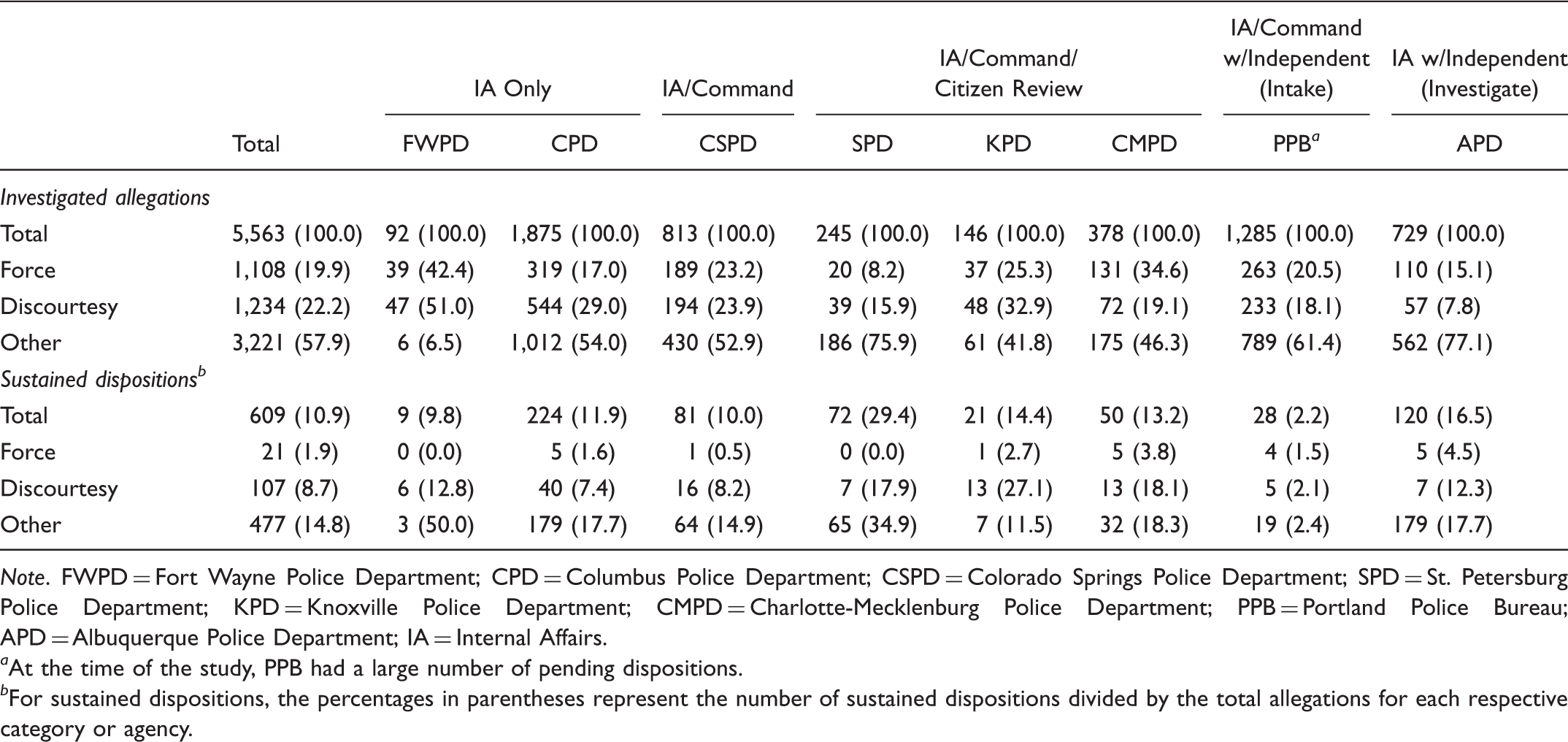
Note. FWPD = Fort Wayne Police Department; CPD = Columbus Police Department; CSPD = Colorado Springs Police Department; SPD = St. Petersburg Police Department; KPD = Knoxville Police Department; CMPD = Charlotte-Mecklenburg Police Department; PPB = Portland Police Bureau; APD = Albuquerque Police Department; IA = Internal Affairs.
At the time of the study, PPB had a large number of pending dispositions.
For sustained dispositions, the percentages in parentheses represent the number of sustained dispositions divided by the total allegations for each respective category or agency.
Table 1 also presents the distribution of allegation types across departments. While the percentages represent the three allegation categories’ contribution to each specific department’s totals, the frequencies provide insight as to how each department’s numbers contributed to the total number of allegations. These frequencies indicated that the larger departments, such as Columbus, Portland, Colorado Springs, and Albuquerque, generally had higher allegation numbers. The one exception was Charlotte-Mecklenburg, the largest jurisdiction (i.e., population) and the second largest agency (i.e., number of sworn officers) in the study. This department had a relatively low number of complaint allegations compared with the other large departments. It should be noted that in addition to the distribution of allegations across departments, we also broke down allegation types by investigation assignment types (IA, command, independent review) for each department. These results are presented in Appendix.
Dispositions from the complaint allegations were also collected. Here, we begin by examining and presenting findings for the numbers and percentages of sustained dispositions, where the allegations against officers were found to have merit. These descriptive statistics are presented in the bottom half of Table 1. In total, 609 of the 5,563 total allegations (10.9%) were sustained. Looking across departments, some variation in sustained dispositions existed. For example, St. Petersburg had the highest percentage of sustained dispositions (29.4%), while Portland had the lowest (2.2%). Notably, allegations of improper force were sustained infrequently (1.9% of all force allegations or 0.4% of all complaint allegations). This was consistent across all departments, as the percentages of sustained force allegations fell between 0% and 4.5%.
Investigatory Approaches
Because the disposition data were collected from multiple departments that used various complaint investigation processes, it allowed for the unique opportunity to determine if the different processes were associated with the likelihood of complaints being sustained. To do so, a series of variables were created at the allegation level. First, a variable was created for each allegation denoting sustained dispositions (1 = sustained allegation, 0 = all other findings).
Second, a set of dummy variables was created to reflect the five complaint process models used by the study departments. These variables reflected departments that used only IA (IA Only), departments that had IA or command investigate complaints (IA/Command), departments that had IA or command investigate complaints with an added citizen review component (IA/Command w/Citizen Review), departments that had IA or command investigations along with an independent review intake office (IA/Command w/Independent Intake), or departments that had IA along with an independent review office that also conducted investigations (IA w/Independent Investigate). In addition to complaint process models, we also coded the specific entity that conducted the investigation of the complaint allegation. Here, three dummy variables were created to signify whether the allegation was investigated by IA, officers’ command, or an independent review agency.
Third, a series of control variables were measured to be included in the analyses. Eight department dummy variables were coded to identify the study department where the complaint allegation was filed. Finally, two dummy variables were included as measures for improper force and discourtesy allegations. This allows for the control of two of the most frequent allegation types that might be more commonly investigated by specific entities (e.g., discourtesy allegations investigated by officers’ command staff).
Results for Investigation Assignments, Models, and Department Measures Predicting Sustained Dispositions.
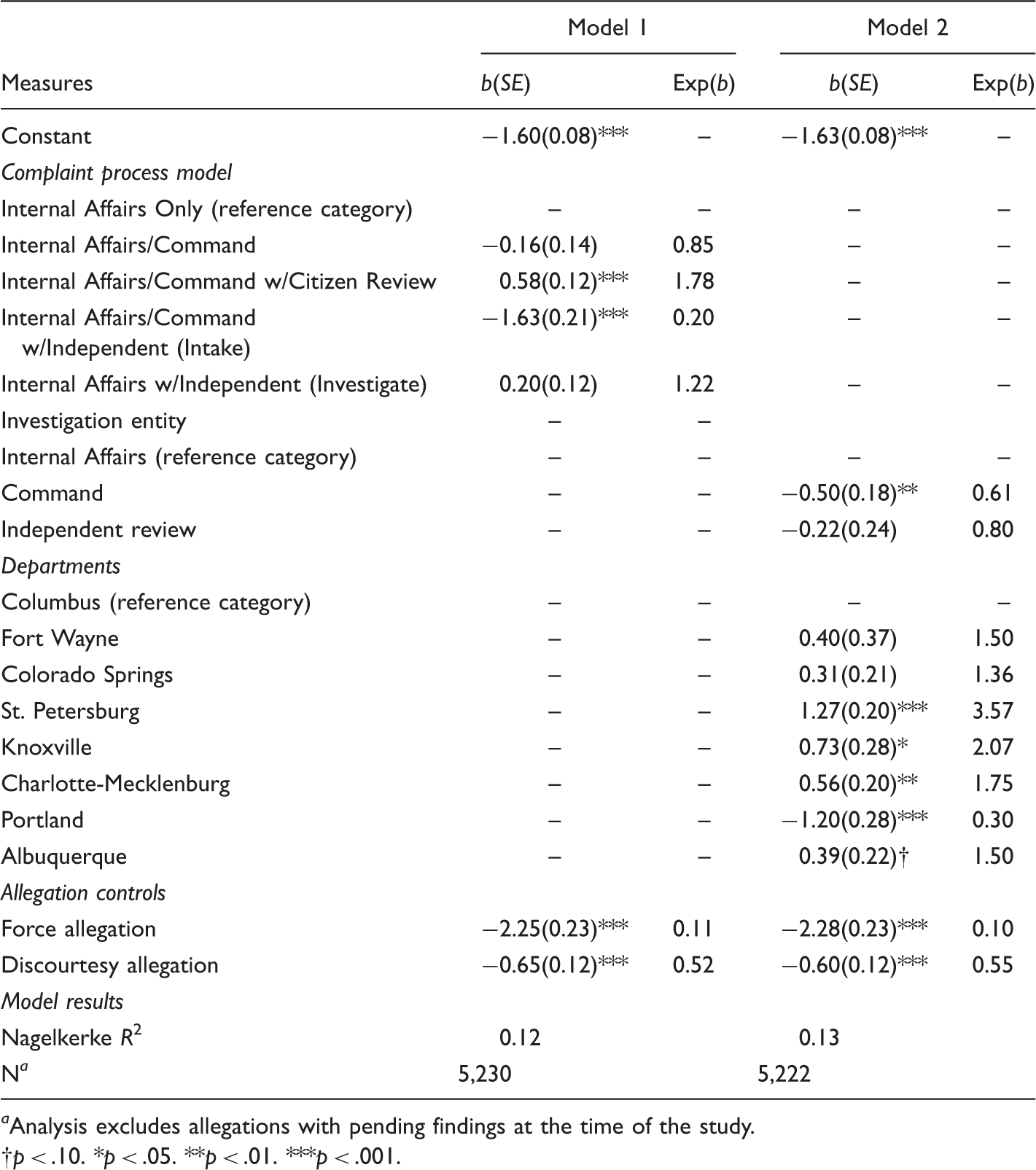
Analysis excludes allegations with pending findings at the time of the study.
p < .10. *p < .05. **p < .01. ***p < .001.
A second model was conducted examining the effects of investigation entity on the likelihood of sustained dispositions while controlling for department and allegation variables. The rationale for conducting this additional model was to determine if the likelihood of a sustained disposition was dependent upon the specific entity that investigated the complaint (i.e., IA, command, or independent review) irrespective of the investigation model specific to departments. For assignment type, IA served as the reference category, allowing the results for command and independent review investigations to be compared with IA investigations. In other words, this model assessed whether complaints investigated by officers’ command or independent review in general were more or less likely to be sustained compared with IA investigations.
Table 2 displays the results for Model 2. With respect to investigation entity, complaints investigated by officers’ command were less likely to be sustained, even after controlling for the department as well as force and discourtesy allegations. Specifically, when compared with IA, complaints investigated by officers’ command reduced the odds of the allegation being sustained by 39%. When compared with IA investigations, allegations investigated by independent review were no more likely to be sustained. Several department variables were statistically significant. Here, Columbus was used as the reference category, as it was the largest department, and it was one of the sites that used only IA for complaint investigations. Controlling for investigation assignment and allegation types, allegations were more likely to be sustained by St. Petersburg, Knoxville, and Charlotte-Mecklenburg. Recall from Model 1 that these were the three departments that all had a citizen review component to complaint investigations. On the other hand, the odds of allegations being sustained were significantly reduced in Portland (by 70%). Finally, allegations investigated by Albuquerque approached statistical significance (p < .08). The odds of a complaint being sustained increased by 50% when compared with Columbus. Similar to the results for Model 1, force and discourtesy allegations were significantly less likely to be sustained. Collectively, the variables in Model 2 produced a pseudo R2 of .13.
Officer Analyses of Complaint Allegations and Sustained Dispositions
The second research area examines complaint allegations and sustained dispositions at the officer level. This allows for the examination of complaint distributions across officers as well as for examining officer demographic correlates. To do so, counts of the following outcomes were created for each officer in the complaint data: (a) number of total allegations, (b) number of force allegations, (c) number of discourtesy allegations, and (d) number of sustained dispositions. These outcomes were then merged with data from the patrol officer survey that was administered across the eight study departments as a part of the larger NIJ project. Merging the complaint data with the officer survey data allowed for the comparison of officers who received complaint allegations to those who did not receive complaint allegations during the study period. It also allowed the complaint data to be linked to officer demographic characteristics captured on the survey. Overall, there were 2,331 patrol officers surveyed across the study departments and served as the basis for the officer-level analyses. 7
Officer Level Frequency Distributions of Complaint Allegations and Sustained Dispositions.

Excludes officers with zero complaint allegations and cases with pending findings at the time of study.
The frequency distributions and percentages reported here are in line with prior research. While specific percentages might have varied from past research, our findings do also indicate that the majority (63%) of patrol officers do not receive allegations of misconduct. Furthermore, more than 85% of officers never received an allegation of improper force, and more than 83% never received an allegation of discourtesy during the study period. Finally, of the 839 officers who did receive a complaint allegation and had their case disposed of, a large majority (78.8%) did not receive a sustained disposition.
Next, the extent to which officer demographics are associated with complaint allegation and disposition outcomes were assessed. After merging the complaint data with the survey responses, five demographic characteristics were coded in the following manners. Officer gender was measured as a dichotomous variable (male = 1), and male officers comprised 88% of the sample. With respect to officer race, three dichotomous variables were used to identify non-White officers (Black, Hispanic, or Other Race, Non-White) with White officers serving as the reference category. The majority of officers were White (81%), followed by Black (9%), Hispanic (8%), and other races (2%), respectively. Officer age in years (M = 35.48 years, SD = 8.01) at the time of the study was included as was officer years of experience (M = 7.62 years, SD = 6.55). Officer education was included and coded to reflect whether officers had a 4-year college degree (Less than Bachelors degree = 1). Just less than half of sample officers (45%) held a Bachelors degree or higher. Finally, military experience was included as a dichotomous variable with officers who had prior military experience coded as 1. Approximately 31% of surveyed patrol officers had prior military experience.
A series of negative binomial regression models were conducted. Negative binomial models were chosen for the following reasons: (a) the four dependent variables, all represented count data of infrequently occurring events; (b) the count measures are likely overdispersed, as the data (see Table 3) show that most officers did not receive any complaint allegations or sustained dispositions during the study period; and (c) extant research in this area has often dichotomized officers into problematic and nonproblematic categories based on arbitrary complaint counts (Terrill & McCluskey, 2002), which can lead to a loss of important information in the outcome variable as well as a loss of statistical power. In this regard, leaving the outcomes as counts and using the negative binomial approach was deemed to be the optimal technique for modeling complaint allegations and dispositions (see Huang & Cornell, 2012; Long, 1997). 8
Negative Binomial Results of Officer Characteristics Predicting Allegation Counts and Sustained Dispositions.
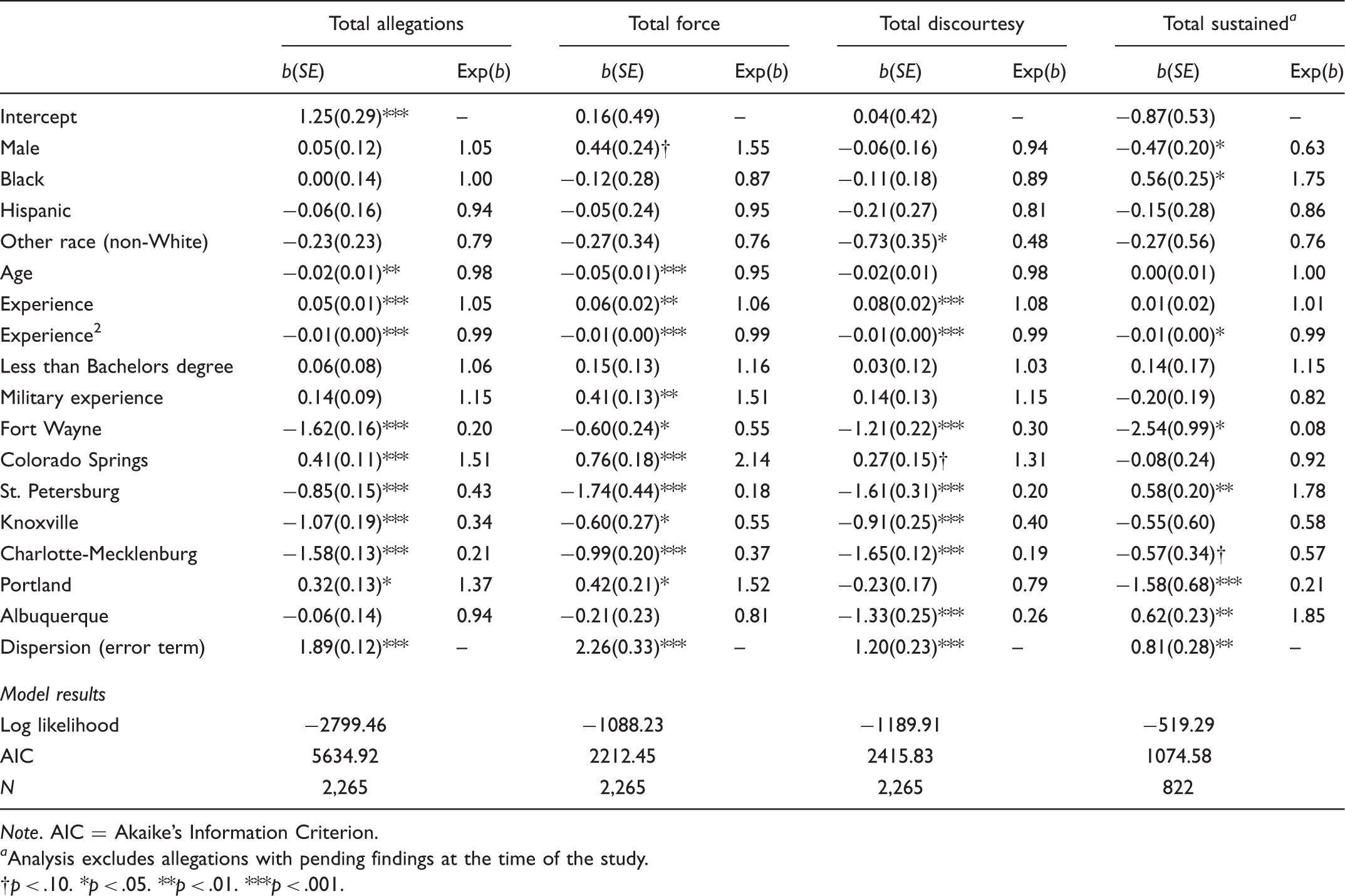
Note. AIC = Akaike’s Information Criterion.
Analysis excludes allegations with pending findings at the time of the study.
p < .10. *p < .05. **p < .01. ***p < .001.
For officer gender, it was found that male officers were less likely to receive sustained dispositions. Specifically, being men decreased the number of sustained dispositions by 37%. The results also showed two significant effects for officer race. Officers in the other race category (non-White, non-Hispanic, and non-Black) had significantly fewer discourtesy allegations. The number of discourtesy allegations was decreased by 52% for this racial category. On the other hand, Black officers received a higher number of sustained allegations when compared with White officers. In essence, being Black increased the number of sustained allegations the officer received by 75%.
With respect to officer age, older officers received significantly fewer total allegations as well as force allegations. A 1-year increase in officer age decreased the number of total allegations and force allegations, each by 2%. The findings for officer experience showed significant and consistent effects on the number of total allegations, improper force allegations, and discourtesy allegations. 9 Here, the positive linear term (experience) and negative squared term (experience2) indicated that the log of allegation counts initially increased but then began to decrease at approximately the 10-year mark for total allegations, the 10-year mark for force allegations, and the 11-year mark for discourtesy allegations. Thus, the current findings also suggest a curvilinear relationship between officer experience and complaint allegations. Although officer education was not found to have significant effects on complaint allegations or sustained dispositions, there was one significant effect for prior military experience. Officers with prior military experience received more improper force allegations. Specifically, prior military experience increased the number of force allegations by 51%.
When looking at the results for the department controls, several significant findings are worth noting. With respect to total allegations, patrol officers from Fort Wayne, St. Petersburg, Knoxville, and Charlotte-Mecklenburg received fewer total complaint allegations, while officers from Portland and Colorado Springs received a higher number of total allegations compared with patrol officers from Columbus. This same pattern of results was also found for the total number of force allegations. With respect to discourtesy allegations, officers from Fort Wayne, St. Petersburg, Knoxville, Charlotte-Mecklenburg, and Albuquerque received fewer allegations compared with officers from Columbus. Finally, officers from Fort Wayne and Portland received significantly fewer sustained dispositions, while officers from St. Petersburg and Albuquerque received a higher number of sustained dispositions.
Citizen Analyses of Complaint Allegations and Sustained Dispositions
Demographic information from citizens who filed complaints were also collected and coded as a part of the data. Across the eight study departments, three citizen characteristics were consistently collected as a part of the complaint investigation processes, gender, race, and age. The collection of citizen data allows for the examination of whether specific types of citizens are more (or less) likely to allege specific types of misconduct. In addition, the relationship between citizen characteristics and the likelihood of sustained dispositions can be assessed.
To examine citizen correlates of complaint types and dispositions, the three demographic variables were coded in the following manners. Complainant gender was measured as a dichotomous variable (male = 1), and male complainants comprised 53% of the data. With respect to complainant race, three dichotomous variables were used to identify non-White complainants (Black, Hispanic, or Other Race, Non-White) with White complainants serving as the reference category. Just more than half of complainants were White (51%), followed by Black (39%), Hispanic (7%), and other races (3%), respectively. Finally, complainants’ age at the time the complaint was filed was included. While the average age of complainants was 36 years old, this particular variable had a large amount of missing data (approximately 43%). As a result, complainant age ended up being excluded from further analysis. 10
Two sets of logistic regression models were conducted to determine if citizen gender and race were associated with allegation types or sustained dispositions. Here, we examined allegation types and dispositions using both the individual allegation and the complaint incident as units of analysis. We did so to determine if the different units would have an impact on the results. On one hand, it is appropriate to analyze sustained dispositions at the allegation level as findings are made for each separate allegation of misconduct. On the other hand, analysis of citizen correlates over multiple allegations within the same complaint incident could overestimate their results, as the citizen variables would essentially be counted more than once in the analysis. In addition to using two units of analysis, the models also controlled for department with Columbus again serving as the reference category. Finally, for models predicting sustained dispositions, force and discourtesy allegations were included to control for allegation (or incident) types, and the analyses excluded complaints where findings were pending at the time of the study.
Citizen Correlates of Force, Discourtesy, and Other Allegation Types and Sustained Dispositions.
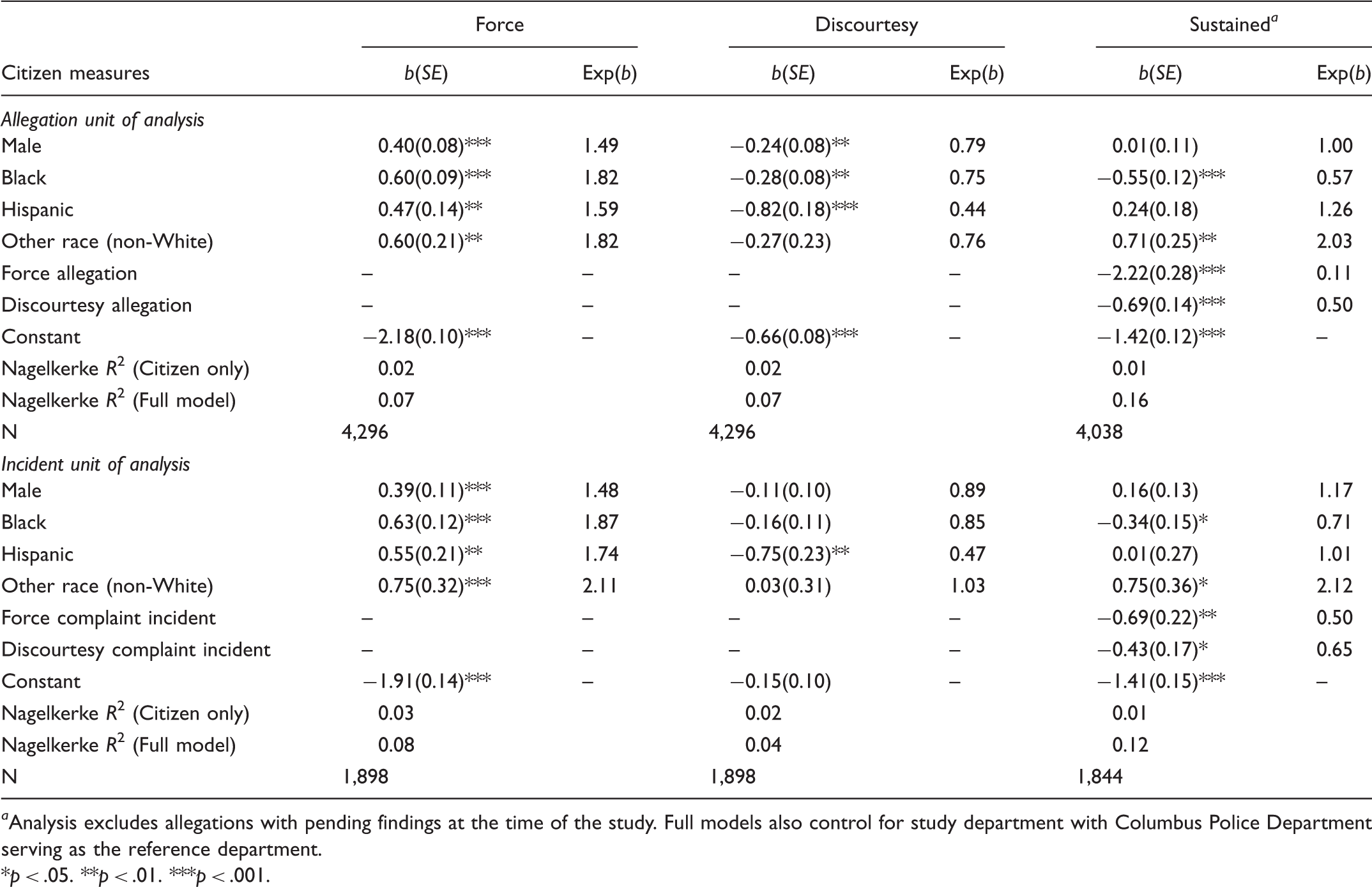
Analysis excludes allegations with pending findings at the time of the study. Full models also control for study department with Columbus Police Department serving as the reference department.
p < .05. **p < .01. ***p < .001.
Concerning types of misconduct, the results showed that male complainants and non-White complainants (Black, Hispanic, and other races) were more likely to allege improper force. These findings were consistent when comparing the results for both the allegation and incident levels of analysis. Specifically, being men increased the odds of improper force allegations by approximately 48%. Compared with White complainants, Black, Hispanic, and other non-White complainants were more likely to allege improper force, although the results varied somewhat depending on whether the analysis was conducted at the allegation or incident level (see Table 5). With respect to discourtesy, only one consistent effect was found. Hispanic complainants were significantly less likely to allege discourteous behavior at both the allegation and incident levels.
Finally, there were two consistent race effects when looking at the likelihood of sustained dispositions. At both the allegation and incident levels, allegations filed by Black complainants reduced the odds of a sustained disposition between 29% (incident level) and 43% (allegation level) when compared with allegations filed by White complainants. Complaints filed by other, non-White citizens, however, were more than 2 times more likely to receive a sustained disposition than complaints filed by White citizens. Again while the effects were weak, it does indicate that certain racial categories were correlated with complaint findings, even after controlling for the department where the complaint was filed as well as the type of misconduct alleged.
Summary
Using citizen complaint data from eight U.S. cities, we examined (a) the distribution of complaints and sustained dispositions; (b) the extent to which varying types of investigatory models (e.g., IA, command level, and external civilian oversight) influence whether complaints are found to have merit (i.e., sustained complaints); (c) the relationship between officer characteristics and complaints, as well as between officer characteristics and sustained dispositions; and (d) the relationship between citizen characteristics and complaints, as well as between citizen characteristics and sustained dispositions.
With respect to our first inquiry, a number of important findings emerged. First, the number of citizen complaints varied greatly across the agencies. While larger departments tended to have a greater raw number of complaints, such a finding was not universal. For instance, Charlotte-Mecklenburg had a relatively low number of complaints compared with similarly sized agencies (e.g., Columbus, Portland, and Albuquerque).
Second, improper force and discourtesy were the two most frequent complaints in six of the eight departments. Overall, 42% of all citizen complaints across the eight agencies were for allegations of excessive force (20%) or discourtesy (22%). There was tremendous variation though across the departments. For example, 94% of all complaints in Fort Wayne were for improper force or discourtesy compared with just 25% in St. Petersburg.
Third, while 11% of the complaints were sustained across the eight cities, once again there was substantial variation from one city to another. On the high end, St. Petersburg sustained 29% of all complaints, while on the low end, Portland sustained only 2% of all complaints. Improper force complaints were sustained infrequently—just 2% across all agencies, with Albuquerque on the high end (5%) and Fort Wayne on the low end (0%). Discourtesy complaints were sustained a bit more frequently at 9%, with Knoxville on the high end (27%) and Portland on the low end (2%).
In terms of our second inquiry, the likelihood of allegations being sustained was greater in departments that used external citizen oversight review as part of its complaint process. More specifically, such an investigation system increased the odds of a sustained disposition by 78%. Conversely, complaints referred to and investigated at the officers’ command level were less likely to be sustained, even after controlling for the department, as well as force and discourtesy allegations. When compared with IA, complaints investigated at the command level reduced the odds of the allegation being sustained by 39%.
In relation to our third inquiry, we examined several potential officer-based correlates (gender, race, age, experience, education, and military experience) with regard to complaints. Once again, a number of significant findings emerged. First, male officers were significantly less likely to receive sustained dispositions. Second, officer experience level showed a curvilinear relationship with complaints. For instance, less experienced officers (those with less than 10 years of experience) were significantly more likely to receive complaints, while more experienced officers (those with more than 10 years of experience) were less likely to generate complaints. Third, compared with White officers, Black officers were 76% more likely to have complaints sustained against them. Fourth, officers with prior military experience were more likely to garner complaints for improper force.
Finally, with regard to our fourth inquiry, we examined two potential citizen-based correlates (gender and race) of complaints. We found that these characteristics offered little overall explained variance, but a few individual variable effects did emerge. First, male and non-White complainants were more likely to lodge use of force allegations but not discourtesy allegations. Second, Black complainants were significantly less likely to have their complaints sustained. More specifically, when examining complaints using the allegation as the unit of analysis, Black complainants were 29% less likely to have their complaints sustained. When examining complaints using the incident level as the unit of analysis, Black complainants were 43% less likely to have their complaints sustained. Unfortunately, as a result of relying on official police records of complaints, only the information reported and recorded as a part of each department’s complaint investigation process could be used. This precluded the inclusion of other potentially relevant citizen correlates of complaints (e.g., age). Future research should continue to incorporate available citizen-based measures into multivariate examinations of complaints and dispositions.
Discussion
The findings uncovered here correspond with past research in a number of ways, thereby lending additional support to prior findings. More specifically, we found that (a) a small number of officers accounted for a disproportionate number of citizen complaints; (b) use of force and discourtesy complaints were often the most frequent allegations of officer misconduct made by citizens; (c) male citizens were more likely to file complaints; (d) few citizen complaints were sustained, especially use of force allegations; and (e) younger officers and those with less experience generated more complaints.
Our findings have also shed light on several additional areas of interest that have received less attention in the past, largely by our ability to examine complaint data across multiple agencies (N = 8) rather than a single agency. First, we found that there was a tremendous amount of variation with respect to the raw number of complaints generated, the extent to which use of force and discourtesy complaints accounted for the total number of complaints overall, and the extent to which various agencies sustained complaints. While the incorporation of multiple study departments was advantageous, it should be noted that the extent to which the distribution of complaints generalize to departments of different sizes (e.g., small or very large) or jurisdictions (e.g., county or state agencies) is unknown. The reasons for such variation in complaint distributions across the study departments could be many, such as community motivation to file complaints (e.g., the civic nature of Portland may lend itself to more citizen reporting of police misconduct compared with a city such as Albuquerque), the ease or difficulty of filing complaints from one organization to another, better policing in some agencies compared with others, or any number of unknown reasons. Future research could incorporate different types of police agencies to determine if results are comparable with those of the current inquiry.
One area we were able to explore more effectively with respect to such variation was in relation to sustained complaints. More specifically, we examined whether different complaint processes or models and investigation entities were associated with an increased or decreased likelihood of sustained complaints. This produced interesting and particularly useful findings. Cities (i.e., St. Petersburg, Knoxville, and Charlotte-Mecklenburg) where citizen complaints were investigated by an IA unit or at the command level, and then had their outcome decision (i.e., sustained, not sustained) reviewed by an external civilian oversight agency, were significantly more likely (78%) to sustain complaints compared with agencies where only an IA unit conducted the investigation with no external civilian oversight agency review (i.e., Colorado Springs and Fort Wayne).
Conversely, in a city such as Portland where the external civilian oversight agency served primarily as an intake or complaint receiving entity (as opposed to post decision review), officials were significantly less likely (80%) to sustain complaints. In addition, while Albuquerque’s complaint model was one where the external civilian oversight agency actually conducted complaint investigations, as opposed to simply an intake or post decision review function, there was no difference found with respect to sustaining complaints compared with those agencies with just an IA unit investigation. Further analyses showed that when citizen complaints were investigated solely by officers’ command-level supervisors, rather than an IA unit, officials were significantly less likely (39%) to sustain complaints.
While the empirical models demonstrate an association between civilian oversight models and sustained disposition, we should note that the results could also be influenced by other factors that we were unable to incorporate into the study. For example, departmental differences in complaint investigation or filing procedures, the workload of investigative units, and organizational views toward accountability may also account for the likelihood of a disposition being sustained. Furthermore, while we were able to control for force and discourtesy allegations, we did not have a direct measure for the seriousness of each complaint. Future research would benefit by incorporating these departmental factors into the study of sustained dispositions.
Despite this limitation, the results are interesting on two fronts from a policy perspective. First, with respect to the importance of an external civilian oversight agency, the benefit of having such an entity serve in the role of post decision review was associated with a significantly higher number of complaints being sustained. We speculate that in cities using this form of oversight, there is more transparency, and the police department may feel they are essentially on notice in relation to knowing that an external organization will be reviewing their investigatory outcome decisions. In this sense, it would seem that having an external civilian oversight agency may be beneficial. Second, our findings also offer a potential cautionary tale for those agencies that permit command-level investigations of citizen complaints, as such investigations significantly reduce the odds of a sustained finding of officer wrongdoing. In this case, we speculate that command-level supervisors may simply be too close or have personal relationships with the officers they are charged with investigating and thus have difficulty conducting an impartial investigation. Conversely, however, one might argue that those at the command level are actually able to more effectively discern the evidence, which may show the officer not being guilty of the allegation, thus leading to less sustained complaints, and rightly so.
Another important finding that emerged from our analyses involves the roles of gender and race. Although female officers were not found to garner more complaints than male officers, female officers were more likely to have complaints against them sustained. While this research uncovered an association between officer gender and sustained dispositions, the underlying reason for this result cannot be discerned. Perhaps female officers are more likely to be held accountable for their actions or perhaps gender bias exists within the investigatory process. Similarly, Black officers were significantly more likely (76%) to have complaints against them sustained, while Black complainants were significantly less likely (ranging between 29% and 43%) to have their complaints sustained. Thus, there is a dual-effect present in terms of race. Again, perhaps Black officers simply engage in police conduct more regularly and are held accountable for such deviance and that Black citizens file frivolous complaints more frequently and thus are simply not being rewarded for such baseless complaints. Conversely, perhaps there is some sort of race bias underlying the investigatory process whereby both Black officers and Black citizens are scrutinized more harshly. Unfortunately, we do not have the capability with the existing data to offer any sort of definitive conclusion one way or the other on these issues. We encourage researchers to consider such findings in future inquires as well as to expand on the role of gender and race in the nature of complaint allegations and dispositions. One area future research could focus on is the interactions between officer–citizen gender and race. This would add to the literature on citizen complaints but was beyond the scope of the current study.
Footnotes
Author Note
An earlier version of this article was presented at the American Society of Criminology in San Francisco, CA in November of 2014.
Declaration of Conflicting Interests
The authors declared no potential conflicts of interest with respect to the research, authorship, and/or publication of this article.
Funding
The authors disclosed receipt of the following financial support for the research, authorship, and/or publication of this article: This article is based on data from the Assessing Police Use of Force Policies and Outcomes Project, supported by Grant No. 2005-IJ-CX-0055 by the National Institute of Justice, Office of Justice Programs, U.S. Department of Justice. Points of view are those of the authors and do not necessarily represent the official position or policies of the U.S. Department of Justice.