




Abstract
The perceived benefits that generally accompany body-worn cameras (BWCs) include the ability to increase transparency and police legitimacy, improve behavior among both police officers and citizens, and reduce citizen complaints and police use of force. Less established in the literature, however, is the value of BWCs to aid in the arrest, prosecution, and conviction of intimate partner violence (IPV) offenders. We attempt to fill that void by examining the effect of pre- and post-camera deployment on a number of outcomes related to arrest, prosecution, and conviction. The findings provide initial evidence for the utility of BWCs in IPV cases. When compared with posttest non-camera cases, posttest camera cases were more likely to result in an arrest, have charges filed, have cases furthered, result in a guilty plea, and result in a guilty verdict at trial. These results have several implications for policing, prosecuting, and convicting IPV cases.
Introduction
Intimate partner violence (IPV) is a public health issue that negatively impacts millions of individuals in the United States each year. Breiding et al. (2014) estimated that approximately 31.5% of women (i.e., 38 million women) and 27.5% of men (i.e., 31.3 million men) experience physical violence by an intimate partner in their lifetime. Furthermore, the 12-month prevalence of physical violence against women and men by an intimate partner was 4.0% (i.e., 4.77 million) and 4.8% (i.e., 5.45 million). The physiological and psychological consequences of physical violence and abuse are far reaching and include such adverse health conditions such as bodily injuries, sexually transmitted diseases, posttraumatic stress disorder, depression, anxiety, social dysfunction, and substance abuse disorders (Beydoun, Beydoun, Kaufman, Lo, & Zonderman, 2012; Campbell, 2002; Smith, Hornish, Leonard, & Cornelius, 2012). For these reasons, and many more, resolutions to combat IPV is a particularly salient issue.
Despite its prevalence and adverse effects on health, IPV has relatively low prosecution and conviction rates. In an early review on IPV, Dutton (1987) found that only 53.1% of arrests for IPV resulted in a conviction. More recent estimates suggest that prosecution and conviction rates may still be relatively low. Garner and Maxwell’s (2008) comprehensive literature review found that IPV cases resulted in prosecution about 35% to 73% of the time for reported offenses and about 58% of the time for incidents involving an arrest. The prosecution of IPV cases only produced a conviction in approximately 35% to 48% of these cases (Garner & Maxwell, 2008). Such figures have served as the impetus for scholars to characterize the prosecution and conviction of IPV cases as “rare,” “infrequent,” or “low.” Sherman (2000), for example, stated that “domestic violence arrests in big cities are rarely followed by prosecution” (p. 264). Moreover, even with pro-arrest movements that increased the number of offenders sent to criminal court for IPV, “serious prosecution of these cases may still be unlikely” (Hartman & Belknap, 2003, p. 351; see also Jordan, 2004; Stroshine & Robinson, 2003).
The successful prosecution and conviction of criminal cases is often contingent upon the quality of evidence. In fact, strength of evidence is one of the strongest predictors of conviction (Devine, Clayton, Dunford, Seying, & Pryce, 2001), which is equally true for IPV cases (Bechtel, Alarid, Holsinger, & Holsinger, 2012; Nelson, 2012; Robinson & Cook, 2006). The role of police to collect evidence, therefore, is a fundamental task for the efficacious prosecution and conviction of cases, such as those involving IPV (Westera & Powell, in press). Research exploring IPV, for instance, found that several factors were positively related to prosecution and conviction, which included arresting the defendant, charging the defendant with multiple offenses, receiving an emergency protection order, and finishing the investigation on the same day as the incident (Nelson, 2012). The study also found that obtaining photographs and locating additional witnesses were positively associated with prosecution. Moreover, Robinson and Cook (2006) found that witness statements increased the likelihood that defendants pled guilty and decreased the probability of attrition for IPV cases, whereby the victim retracts their statement against the defendant.
Considering the impact of quality evidence on the prosecution and conviction of IPV cases, there is an imperative for police officers to collect the best evidence possible following an IPV dispute. As the National Institute of Justice (1982) indicated, “The greatest opportunity for obtaining information about an offense exists immediately after the offense has occurred—before the witnesses [(including the victim)] have an opportunity to disappear or to forget” (p. 14). The immediate collection of evidence after an IPV incident is not only important for an accurate account of the dispute, but such evidence also documents the emotional and physical distress of the victim, which is particularly impactful in criminal court (Nelson, 2012). The problem, however, is that many police investigations inadequately document IPV disputes such that prosecution and conviction are unlikely outcomes (Westera & Powell, in press).
One viable solution to improving the quality of evidence in IPV cases is through the use of body-worn cameras (BWCs). BWCs may enhance the manner in which police collect evidence for the prosecution and conviction of IPV cases by video recording the emotionally charged victim statement, the physical turmoil surrounding the incident (e.g., damaged property and evidence of physical abuse), and documenting witness testimony. Using 56 BWC systems deployed by the Phoenix Police Department (PPD), the current study examines the evidentiary value of BWCs to aid in the arrest, prosecution, and conviction of IPV cases. The pre- and post-camera deployment analysis provides preliminary evidence for the utility of BWCs in IPV cases among officers who were assigned and not assigned a BWC over the 15-month study period.
Prosecutorial Charging Decisions, Police Investigation, and IPV
Similar to judges, prosecutors must make assessments of responsibility and predictions about future behavior. When making the decision to charge a case, prosecutors often rely on three focal concerns: blameworthiness, protection of the community, and practical constrains and consequences (Steffensmeier, Ulmer, & Kramer, 1998). In other words, prosecutors are more likely to file charges when the crime is serious, the victim has suffered clear harm, and evidence against the suspect is strong (O’Neal, Tellis, & Spohn, 2015). Unlike judges, however, the practical constraints and consequences of prosecutorial charging decisions are not guided by the social costs of punishment. Instead, prosecutors have a “downstream orientation” to judges and jurors in which they focus on the likelihood that they secure a conviction (Frohmann, 1991). Consequently, prosecutors seek to increase the chance of conviction through the removal or rejection of cases that add uncertainty to the outcome of their case (Albonetti, 1986, 1987). For example, prosecutors may be less likely to file charges in cases where the victim’s credibility is called into question or it is difficult to establish a clear victim.
Research on charging decisions indicate that a significant portion of cases are rejected at screening (Spohn & Holleran, 2001; Spohn & Tellis, 2012; Tellis & Spohn, 2008). The Vera Institute of Justice’s (1981) seminal report on felony arrests in New York City, for instance, found that nearly half of all arrests did not result in a charge. The same is true for arrests involving IPV. Recent estimates suggest that IPV cases resulted in prosecution 57.6% of the time for incidents involving an arrest. Moreover, the prosecution of IPV cases involving an arrest only produced a conviction in about 31% of these cases (Garner & Maxwell, 2008). Studies examining prosecutorial charging decisions also reveal that the most robust predictors of charging decisions are legal factors such as offense seriousness, strength of evidence, and defendant culpability (Albonetti, 1987; Alderden & Ullman, 2012; Beichner & Spohn, 2005; Spohn & Holleran, 2001). 1
A prosecutor’s decision to accept or reject an IPV case is dependent on the quality of information that the first responding police officer (FRPO) includes in their written report of the incident. Although prosecutors may interview the victim or other witnesses, or hire an investigator to gather additional evidence, their course of action corresponds to “the evidence an officer memorializes in her/his written report” (Nelson, 2013, p. 2). Even with quality FRPO reports, however, there is no guarantee that prosecutors will investigate the crime. Regardless, if the FRPO does not include quality information in their report, the prosecutor is devoid of actionable knowledge that will facilitate the successful prosecution and conviction of a case. Police officers, therefore, must ground their reports in evidence to persuade prosecutors to file charges, especially considering the importance that prosecutors place on the convictability of a case (Albonetti, 1986, 1987; Frohmann, 1991; Spohn & Holleran, 2001; Spohn & Tellis, 2012).
Even though FRPO reports are generally not admissible in court because of their hearsay nature (Fox, 2009; Giannelli, 2012; Grimm, Deise, & Grimm, 2010), they still serve as one of the most powerful contributions to prosecutors during criminal proceedings. If the FRPO believes a crime was committed, he or she constructs a report that pieces together the facts of the IPV incident. The report may include a description or photographs of any physical injuries incurred by the individuals involved in the incident or statements made by the victim or perpetrator. Spontaneous statements such as “I’ll teach her to open her mouth” or “I’ll kill the bastard” are particularly useful for prosecutors when challenging the accuracy and truthfulness of testimony (Nelson, 2013). The FRPO’s report may also provide contact information for witnesses, who can be served with subpoenas to testify in court. Using the FRPO’s report, the prosecutor must decide whether the strength of evidence is strong enough to file charges. However, given that the prosecution and conviction of IPV cases are generally characterized as “low” or “infrequent,” the quality of FRPO reports are likely inadequate.
In the United States and other countries, “victimless” or “evidence-based” prosecutions have become a common practice to improve the quality of evidence in IPV cases and secure a conviction (Ellison, 2002). Under this approach to IPV cases, Police are encouraged to gather as much evidence as possible from sources other than the victim (e.g., detailed statements, photographs of the victim, medical evidence, emergency call recordings) and charge the alleged offender regardless of the victim’s view. (Westera & Powell, in press, p. 2)
Even with these reforms, it is still difficult to move forward with prosecution. Police investigations may be inadequate despite training and policies related to gathering evidence (Hester & Westmarland, 2005; Ruff, 2012). In an evaluation of 600 IPV cases where there was bodily injury, Her Majesty’s Inspectorate of Constabulary (2014) found that police reports included victim statements, police officer statements, photographs, house-to-house enquires, and evidence from BWCs 80%, 69%, 46%, 23%, and 4% of the time, respectively. Her Majesty’s Inspectorate of Constabulary described these findings as an “alarming and unacceptable weakness in some core policing activity, in particular the collection of evidence by officers at the scene of domestic abuse incidents” (p. 7).
Improving the strength of evidence in IPV cases is fundamental for prosecution and conviction, which means that police investigations must be more thorough and detailed. Westera and Powell’s (in press) research examining prosecutorial perceptions of quality of evidence in IPV cases provides a few suggestions for strengthening evidence, and thus, increasing the likelihood that prosecutors’ file charges. Through focus groups, the authors asked prosecutors to (a) distinguish between adequate and inadequate evidence and (b) explore ideas about how police could facilitate the likelihood of a successful prosecution. A common theme that emerged was prosecutors’ concern about poor evidence from police because it was often unreliable, incomplete, and irrelevant. They attributed this inadequacy to a lack of investigative skills and motivation on the officer’s behalf. One unanimous solution offered to overcome the shortcomings of written reports was video recording the initial encounter with the victim, perpetrator, and any witnesses. Prosecutors perceived many benefits to video recording the immediate aftermath of an IPV incident, including increased reliability and accuracy of victim or witness statements, improved documentation of injuries, a stronger foundation for cross-examining the victim if they change their story, and a more emotionally charged victim statement, which written reports are unable to capture (Westera & Powell, in press).
BWCs and IPV
BWCs may be one solution to increase the frequency in which prosecutors file charges for IPV cases and potentially secure a conviction. BWCs are small devices worn by officers, typically on their placket. The BWC captures and records activity, creating a permanent digital video recording of police encounters with citizens. Although research on BWCs is still developing, the perceived benefits of BWCs include increased transparency and police legitimacy, improved behavior among both police officers and citizens, and reduced citizen complaints and police use of force (Ready & Young, 2015; White, 2014). To date, a handful of studies have shown promising results for the future of BWCs in American policing. The deployment of BWCs in Phoenix, Arizona, for example, resulted in a 17% increase in arrests and a 23% reduction in complaints (Katz, Choate, Ready, & Nuño, 2014). Furthermore, those police officers who wore a BWC and received a complaint were significantly more likely to have the complaint unsubstantiated (i.e., dismissed) and as a result were less likely to be disciplined. Research examining the impact of BWCs on complaints and use of force have yielded similar findings in Rialto, CA (Ariel, Farrar, & Sutherland, 2014), Orlando, FL (Jennings, Lynch, & Fridell, 2015), and Mesa, AZ (Rankin, 2013).
Despite being perceived as primarily a policing-accountability tool, BWCs may also have an enhanced evidentiary value for prosecution. BWCs may enhance the manner in which police collect evidence for the prosecution and conviction of IPV cases by video recording the emotionally charged victim statement, the physical turmoil surrounding the incident (e.g., damaged property and evidence of physical abuse), and documenting witness testimony. Although the research is limited, Owens, Mann, and Mckenna (2014) found preliminary support for the prosecutorial utility of BWCs. Compared with the control group, the treatment group had a significantly higher proportion of IPV incidents that resulted in a criminal charge. Whereas 81% of IPV incidents resulted in a criminal charge in the treatment group, only 72% had the same outcome in the comparison group. Overall, police officers believed that the cameras more accurately captured the context of the IPV incident and increased their confidence that the video footage would lead to a conviction (Owens et al., 2014). Even though Owens et al.’ research serves to better inform academics, police officers, and prosecutors on the utility of BWCs during IPV incidents, several limitations prevent the study from being generalizable. First, the study was conducted in conjunction with the Essex Police Department in the United Kingdom. The findings may not be generalizable to police departments in the United States because of cultural, organizational, and training differences. Second, only one in six officers reported using BWCs for all IPV disputes. As a result, the reported impact of BWCs on IPV cases may have been biased.
Implications of Research
The use of BWCs by FRPOs may be important for the prosecution and conviction of IPV cases. As Westera and Powell (in press) indicate, the position of FRPOs gives them the best opportunity to conduct the investigation “because of the small window of time the complainant [(i.e., victim)] would cooperate with the police” (p. 6). Furthermore, the FRPO is also in a position to document physical injuries or distress and gather information from witnesses. A major concern among prosecutors, however, is the unreliability, incompleteness, and irrelevancy of FRPO written reports, which may be contributing to the infrequency of prosecuting and convicting IPV offenders (Westera & Powell, in press). For these reasons, FRPOs might consider BWCs as a way to help build cases against IPV offenders and support prosecutors in their endeavors to file charges and secure convictions. Using a pre- and post-research design with target and comparison groups, the purpose of the present study is to examine whether arrest, prosecution, and conviction outcomes for IPV cases significantly improved with the use of BWCs.
Methods
Setting
The current study examines data collected through a federally funded project that deployed BWCs among FRPOs in the PPD. The PPD is a large municipal police agency, with more than 3,000 authorized sworn personnel, and serves a community of more than 1.5 million people; making it the sixth largest city in the United States. At the time of the study, the PPD’s patrol division was divided into eight precincts. The precinct selected as the study site was approximately 15 square miles, and operationally and geographically divided into two similarly sized squad areas. Each of the two squad areas were assigned six patrol squads to provide first response coverage to calls for service (CFS) on a 24-hour basis, 7 days a week. While small changes in staffing occurred throughout the study, there were generally between 100 and 110 patrol officers equally divided between Areas 81 (comparison) and 82 (target).
The community served by the precinct had a population of about 105,000 residents and primarily comprised Hispanic residents who were poorer and more likely to be unemployed than residents living in the remainder of the city. In 2010, the UCR violent crime rate for the precinct was approximately 85 crimes per 10,000 residents, compared with 55 per 10,000 for the rest of the city, and there were more than 3,300 CFS initially dispatched as domestic violence incidents in the precinct.
The study precinct was divided into two patrol squad areas (Areas 81 and 82), under the same organizational command structure, and worked out of the same substation building (Table 1). The two areas were very similar geographically (7.4 and 7.9 square miles, respectively) but were somewhat different in terms of population size (71,676 compared with 56,630, respectively) and percent of population under 18 (39.5 and 43.1, respectively). Owner occupied homes were more common in Area 81 (63.7%) than in Area 82 (52.8%). Area 82 had a larger proportion of Hispanic or Latino residents (82.5% compared with 71.1%), but fewer Blacks or African Americans (3.9% compared with 6.4%). Rates (incidents per 1,000 population) for CFS were statistically the same between Area 81 and Area 82 for violent offenses (6.9 and 7.3), property offenses (37.9 and 36.8), and overall CFS (44.6 and 44.1). The two areas were also similar for IPV-related call rates (area 81 = 2.3 per 10,000 residents, area 82 = 1.9 per 10,000 residents).
Project Design and Analytical Strategy
The design and implementation of the project included the purchase of 56 camera systems (VIEVU), which were deployed to one of the two squad areas in the study precinct (Area 82). This group was referred to as the target group or as the camera officers. The equipment provided deployed officers with simultaneous coverage (using the system) for all three shifts during and, allowed for all officers to download data, prior to the next shift. All officers assigned to the six squads in the target area were issued the equipment and were provided training in its use and maintenance through a coordinated effort led by the precinct commander and VIEVU. Departmental policy involving the use of the cameras was formulated prior to implementation and was also an integral part of the training by the PPD.
The analytic strategy for the present study relied on pre- and post-IPV case outcome data from the target and comparison groups, which was collected from January 1, 2012 through July 31, 2014. The cameras were deployed in the field on April 15, 2013. The study period covered about 30 months or 15 months pre-camera deployment and 15 months post-camera deployment. We also compared IPV case outcomes across the target and comparison groups. The combination of these pre or post and target or comparison conditions defines our independent variable, the presence of a BWC. The analyses thus relied on the presence of a BWC on the officer responding to an IPV incident and its subsequent impact on processing and outcome of the case.
Data
Three sources of data were used for the analysis: domestic violence pocket card data, arrest reports, court data, and officer self-report data on their perceptions of BWCs in the processing of IPV cases. We discuss these sources of data later.
Domestic violence pocket card data
Data on IPV-related incidents were provided by the PPD through IPV pocket card data collected in the precinct from January 1, 2012 through July 31, 2014. The IPV pocket cards are a specialized form of the Field Interview card, designed specifically for IPV incidents. All phoenix officers are required to complete an IPV pocket card for each IPV incident, regardless of whether or not an arrest is made. Data from 2,063 incidents were collected through the IPV pocket cards over this time. These data were used to track IPV cases from incident initiation through prosecutorial disposition and sentencing.
Official Phoenix city court data
Official court processing data from January 1, 2012 through October 31, 2014 were collected from the City of Phoenix Prosecutor’s Office. All police contacts involving IPV in the precinct were identified (through IPV Pocket Cards) and were then tracked through the City of Phoenix Prosecutor’s Office case processing system. Incidents from the police were collected through July 31, 2014, but court document searches concluded on October 31, 2014 to allow a reasonable period of time (90 days) for those cases to be concluded. We then determined whether the incident resulted in an arrest or not (and thus forwarded to the city prosecutor’s office), the case was declined, whether charges were filed, the outcome of the case (e.g., dismissal, conviction, sentencing), and the amount of time that it took to process the case from arrest to final disposition or outcome. We then linked this data to our dataset on the assignment of officer worn body cameras. These data were used to examine the impact of the assignment of body cameras on the case processing of IPV cases. In the end, our analyses of the data were based on 2,063 unique incidents. Analyses were case-based, and conducted by comparing the case processing of three groups: (a) pretest IPV cases (n = 878); (b) posttest comparison cases (no video file, n = 933); and (c) posttest camera cases (video file available, n = 252).
Officer self-report survey data
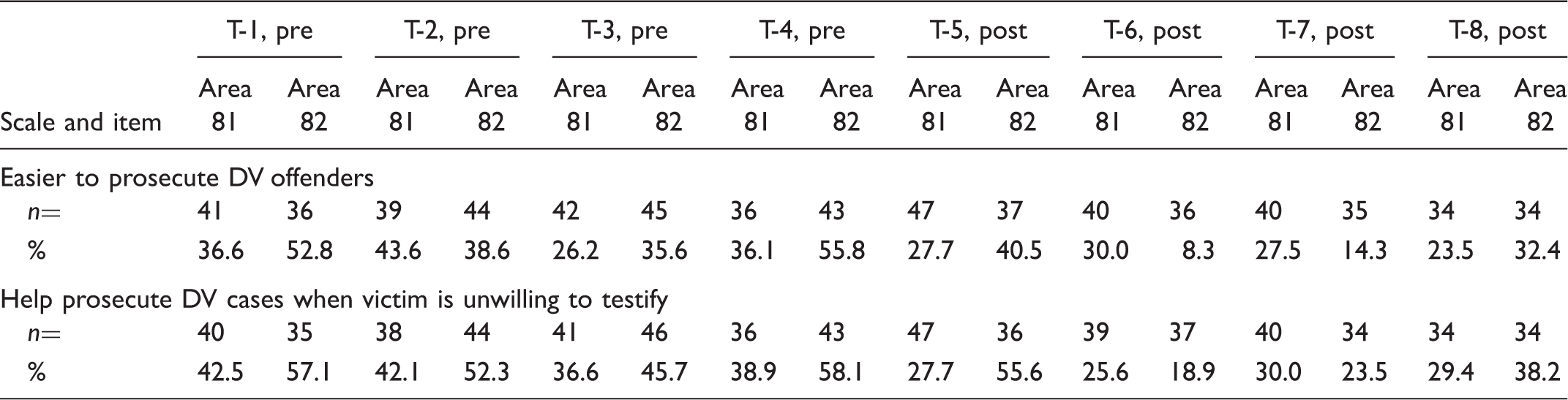
Perception surveys were anonymously completed by target and comparison group officers and were collected eight times throughout the course of the study: four times prior to camera deployment (October 2012, December 2012, January 2013 and March 2013) and four times following camera deployments (April 2013, July 2013, October 2013 and June 2014). Officers were surveyed during briefings immediately prior to the start of their shift. Officers were only surveyed if available on the selected day during the briefing. Officers who were absent were not eligible for participation. Response rates were high throughout each data collection period, with a 98.3% overall participation rate, which ranged from 96.5% to 100.0% per round of data collection. The instrument included 33 questions about the officer’s perceptions of BWCs, but only two items from that survey were used for the present study. These two items included: (a) Body cameras make it easier to prosecute domestic violence offenders; and (b) Evidence gathered from a body camera helps prosecute cases involving domestic violence when the victim is unwilling to testify.
Results
Characteristics of Target and Comparison Areas.

Intimate Partner Violence Case Flow.
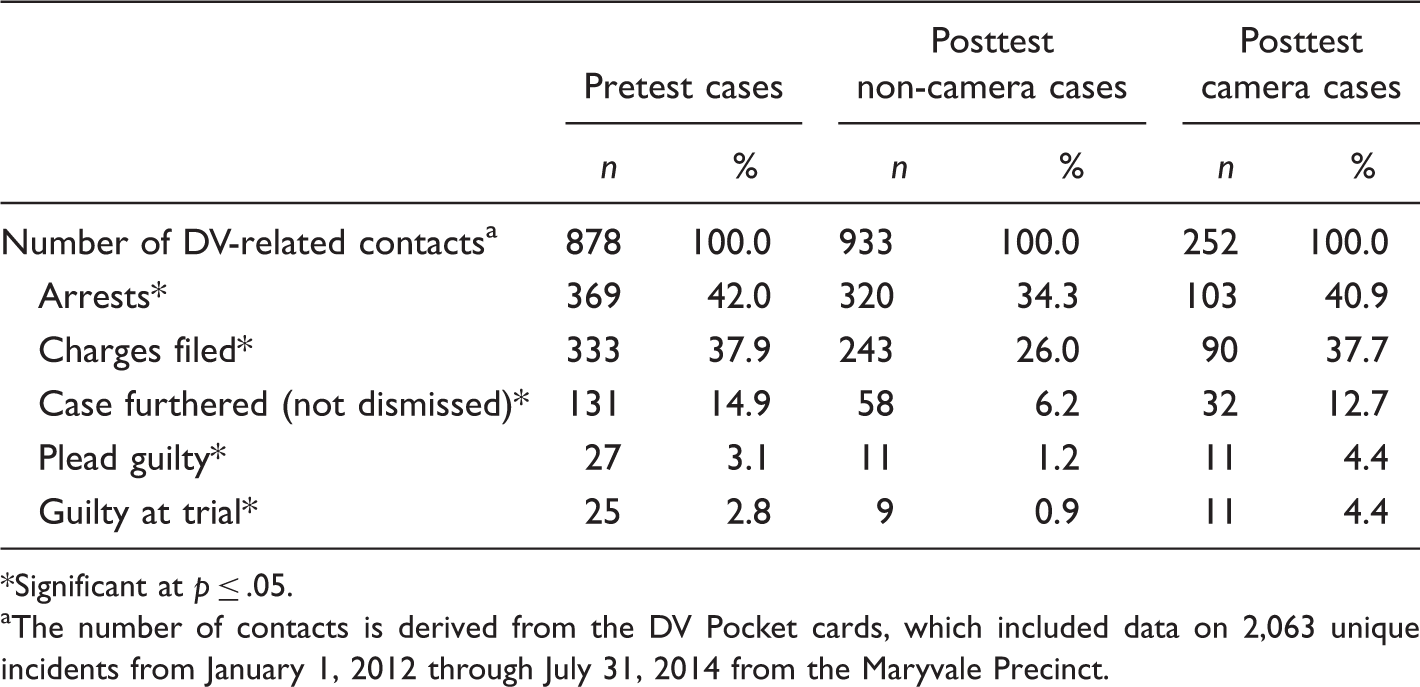
Significant at p ≤ .05.
The number of contacts is derived from the DV Pocket cards, which included data on 2,063 unique incidents from January 1, 2012 through July 31, 2014 from the Maryvale Precinct.
Number of Days to Process Case to Disposition (N = 792). a
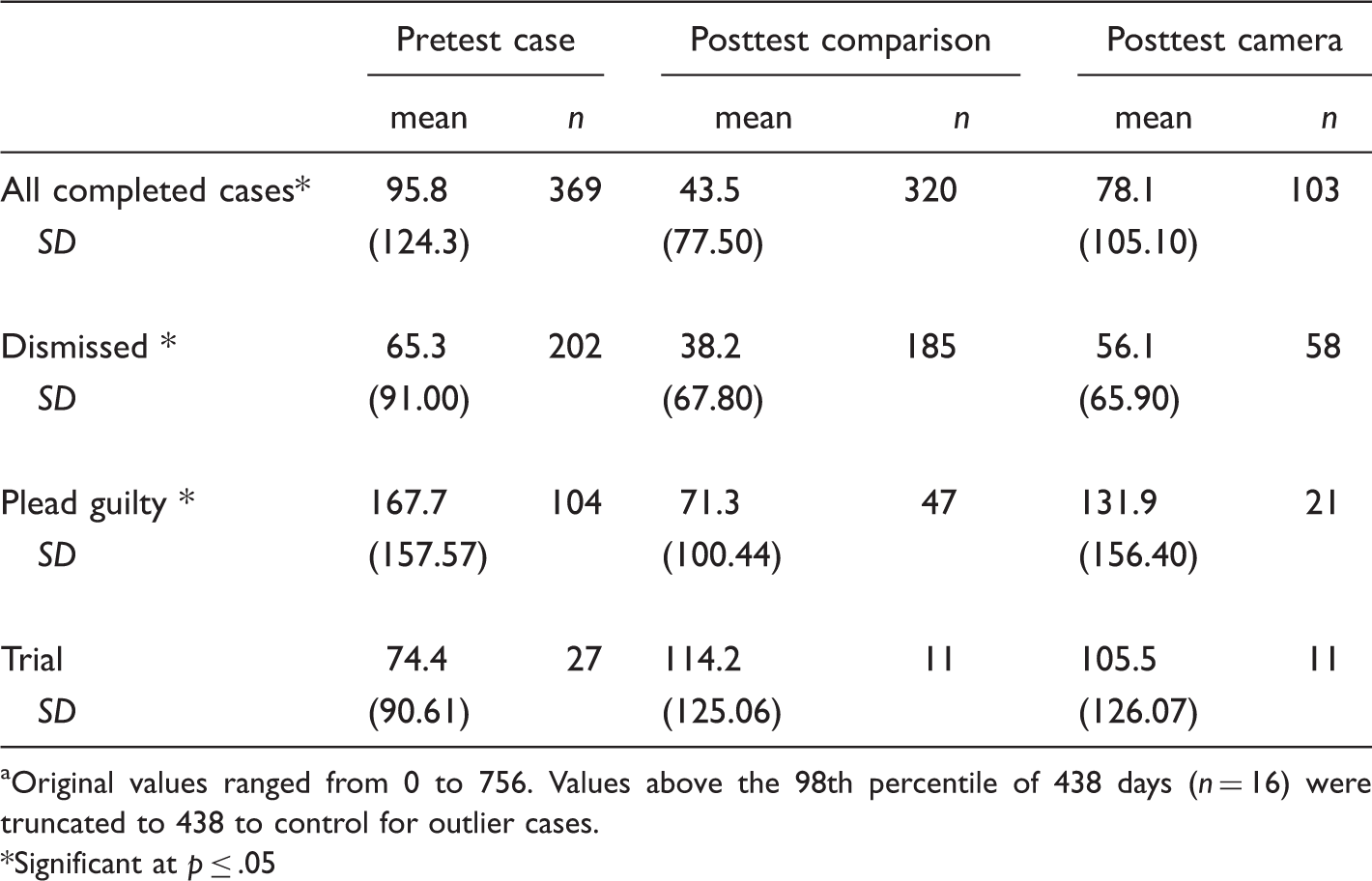
Original values ranged from 0 to 756. Values above the 98th percentile of 438 days (n = 16) were truncated to 438 to control for outlier cases.
Significant at p ≤ .05
Use of Evidence by Collection Cycle and Area (n and % agree or strongly agree).
Number of Days Sentenced to Jail (n = 217).
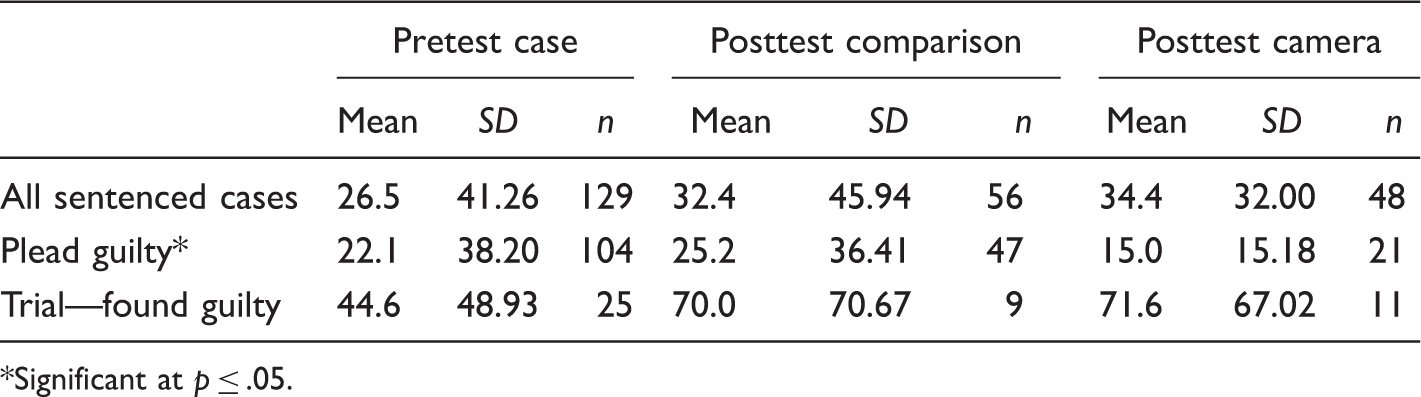
Significant at p ≤ .05.
Discussion
The perceived benefits that generally accompany BWCs include the ability to increase transparency and police legitimacy, improve behavior among both police officers and citizens, and reduce citizen complaints and police use of force. To date, a handful of studies have shown promising results for the future of BWCs in policing. Less established in the literature, however, is the value of BWCs to aid in the prosecution and conviction of IPV offenders. We attempt to fill that void by examining the effect of pre- and post-camera deployment on a number of outcomes related to prosecution and conviction. The findings provide initial evidence for the utility of BWCs in IPV cases. When compared with posttest non-camera cases, posttest camera cases were more likely to result in an arrest (40.9% vs. 34.3%), have charges filed (37.7% vs. 26%), have cases furthered (12.7% vs. 6.2%), result in a guilty plea (4.4% vs. 1.2%), and result in a guilty verdict at trial (4.4% vs. 0.9%). These results have several implications for policing, prosecuting, and convicting IPV cases.
First, the use of BWCs seems to improve the manner in which police collect evidence following an IPV incident. Such findings are particularly important for the FRPO, who constructs a report of the IPV incident. The FRPO has a host of responsibilities after arriving at the scene, which may include ensuring officer and civilian safety, deescalating combative parties, photographing any injuries, retrieving contact information from witnesses, and documenting statements made by the victim, perpetrator, and witnesses. The plethora of responsibilities may be so cumbersome that the quality of FRPO reports are reduced and considered unreliable, incomplete, and irrelevant by prosecutors. To the extent that BWCs provide a more detailed and accurate account of the IPV incident, prosecutors may be more likely to move forward with IPV cases because it increases the chance of convictibility. Furthermore, BWCs may not only provide video evidence for prosecutors, but they may also enable FRPOs to review the incident in order to construct a more thorough report. Consequently, prosecutors may have a substantial amount of actionable knowledge that will facilitate the successful prosecution and conviction of a case.
Second, police officers’ perceptions related to the ease in which BWCs facilitate IPV prosecution and help in cases involving reluctant victim testimony decreased in the post-camera time period. On average, more officers in the pre-camera time period in comparison to officers in the post-camera time period agreed that BWCs made it easier to prosecute domestic violence offenders. Similarly, on average, more officers in the pre-camera time period in comparison to officers in the post-camera time period agreed that BWCs helped prosecute domestic violence cases when the victim was unwilling to testify. These findings run contrary to existing research that generally reports positive perceptions of BWCs by police officers. Notably, in an experimental study, Ready and Young (2015) found that 38.1% of officers in the BWC group (i.e., treatment group) perceived cameras as being helpful, whereas only 12.9% of officers in the comparison group viewed BWCs in the same manner. They reported “officers were more likely to report that OVCs [(on-officer video cameras)] are helpful in situations where they conducted an arrest, stop-and-frisk, citation, or warning during the encounter” (p. 455). Jennings et al. (2015) also found that officers who wore BWCs overwhelmingly agreed that BWCs should be adopted by their department for all front-line officers. Some of the benefits that officers agreed upon included the ability of BWCs to improve collecting evidence, recalling events, and documenting reports. It should be noted that Jennings et al. did not have a comparison or control group for officers’ perceptions of BWCs. Our findings differ from past research. We believe that these differences might be the result of sample selection. While the samples used by Jennings et al. (2015) and Ready and Young largely comprised volunteer participants, 2 the sample from Phoenix comprised officers who were required to wear the BWC. Officers who are required to wear the BWC might have significantly different perceptions of BWC efficacy than those who request to use them. Those who volunteered to wear the BWC might have tempered expectations of their utility, whereas officers who were required to wear BWCs might experience increased levels of frustration with a technology that they did not choose to use and did not perform as well as they were told to expect.
Third, we found evidence of a possible “CSI effect.” A “CSI effect” refers to the phenomenon where there is an increased expectation of evidence because of an implemented technological innovation. The CSI effect has been largely discussed within the context of judicial processes, laboratory procedures, and DNA and genetic evidence (for a review see Ley, Jankowski, & Brewer, 2012). Although research generally suggests that viewing crime-related television shows does not influence “guilty” verdicts (Podlas, 2006), decisions to acquit or convict (Shelton, Kim, & Barak, 2006; Schweitzer & Saks, 2007), or the level of importance placed on DNA evidence in determining the outcome (Brewer & Ley, 2010), research has found that individuals held higher expectations that prosecutors would present scientific evidence (Shelton et al., 2006) and that cases would involve advanced forensic evidence (Schweitzer & Saks, 2007). Similarly, Brewer and Ley (2010) found that watching crime dramas was associated with self-perceptions of understanding DNA evidence and its reliability. Our findings may mirror such expectations. For example, arrests, charges filed, cases furthered, and guilty at trial verdicts decreased substantially among posttest non-camera cases when compared with pretest cases and posttest camera cases. It might be that police, prosecutors, and judges or jurors were less likely to further an incident or case unless a police BWC was present. These stakeholders may hold BWC footage tantamount to other forms of scientific evidence in that it is perceived as a more objective form of evidence if available. Further research is needed to fully understand the impact of BWC, or the lack there of, in the processing of criminal cases.
At least three potential limitations should be noted. First, the findings from the present study may not be generalizable to other communities. A number of studies have demonstrated that police behavior is unique and may not be similar to another community. Accordingly, a police agency’s and community’s response to the implementation of BWC may be a reflection of the scope and nature of issues in that department and community. Furthermore, given that the study site was a large urban police department, the findings may not be generalizable to small and rural police departments. Future research should examine the impact of BWCs on IPV (and other outcomes) in small and rural jurisdictions. Second, we employed a nonequivalent control group design that inherently possesses a number of limitations. The most important of which includes the interaction of selection with other sources of invalidity (Campbell, Stanley, & Gage, 1963). Specifically, officers transferred in and out of the precinct may have resulted in natural attrition and replacement processes. Additionally, the precinct experienced substantial turnover (about 39%) among patrol officers during our predeployment period (January 2013) due to a departmental re-bidding process. The planned implementation of body cameras in the precinct was well known among officers throughout the department and it is possible that some officers transferred out of the precinct, or avoided transfer into the precinct, to avoid having to wear a body camera. A brief review of the transfer process suggested that there was no major difference in the number of transferred officers to and from the study site compared with other precincts, but data on the motivations for transfer during this re-bidding process was not collected. Therefore, our findings could have been influenced by a selection effect. We did not have sufficiently detailed data on departmental transfers, but it was estimated that about 30% to 40% of officers transferred from one precinct to another, with the study precinct experiencing a similar transfer rate as other precincts. Third, we believe that another limitation to the present study is contamination of our treatment to the comparison group. Our camera and comparison groups shared patrol responsibilities in the precinct. As a consequence, target and comparison group officers communicated often with one another before, during, and after shift; and were sometimes deployed to the same location as one another. The presence of an officer with a camera might have impacted the behavior of those around them (e.g., officers, citizens), as well as influenced their perceptions of the technology.
Although our results provide support for the utility of BWCs in IPV cases, there may be concern that BWCs will lead to the disempowerment of victims through enhanced “evidence-based” prosecutions. In other words, the use of BWCs may lead police and prosecutors to disregard the victim’s wishes when deciding to press charges. Theoretically, “evidence-based” prosecution (i.e., mandatory prosecution policies) was designed to enhance victim safety through aggressively pursuing IPV offenders. By treating IPV as a serious crime, it was believed that mandatory prosecution policies would serve a powerful deterrent to abusers (Ferraro & Pope, 1993; Hanna, 1996). To date, “all 50 states have enacted laws that address IPV through strong criminal justice pro-arrest and prosecution policies” (Cerulli et al., 2014, p. 540; see also American Bar Association Commission on Domestic Violence & Sexual Violence, 2014). Even though such policies were applauded for making IPV a crime against society (and not just the victim), critics have suggested that mandatory prosecution may pose a risk to the victim, whereby the batterer may retaliate in response to the prosecution or the victim is discouraged from calling the police if violence reoccurs—both of which engender victim disempowerment and perpetuate victimization (Bell, Goodman, & Dutton, 2007; Mills, 1998). Recent research highlights these concerns. Whereas some research suggests mandatory prosecution does not lead to repeat victimization (Cerulli et al., 2014), Finn (2013) found that victims in jurisdictions with evidence-based prosecutorial policies were four times more likely to report that psychological aggression reoccurred and seven times more likely to report the reoccurrence of physical violence six months after disposition in comparison to the reference group. Considering that BWCs may aid in the mandatory prosecution of IPV cases, police and prosecutors must be cognizant of the adverse effects that BWCs in conjunction with mandatory IPV prosecution may have on victims. Future research should examine the existence of a potential BWC “boomerang” effect, whereby BWCs may further compound victim disempowerment and repeat victimization.
As BWC technology continues to grow in salience, research must keep pace with its evolution and diffusion throughout the criminal justice system so that policy focused research findings can encourage best practices. To date, most BWC research has revolved around the police–citizen encounter without giving much attention to downstream criminal justice actors. Future research should fill this void by examining the impact of BWCs on court processes and various courtroom actors. Research has yet to investigate how BWCs influence the decisions made by judges, prosecutors, defense attorneys, and jurors. A mixed methodological approach comprising quantitative and qualitative components could better inform these inquiries. Additionally, future research may want to examine how offense type impacts the evidentiary value that prosecutors place on BWC evidence. For example, in cases involving IPV, BWC footage may strengthen the case because it captures the emotionally charged victim statement, the physical turmoil surrounding the incident, and witness testimony; all evidence that will help secure a conviction. For other offense types, the utility of BWCs may not be as robust.
Footnotes
Acknowledgements
We would like to thank Justin Ready who served as a Co-PI on the evaluation team, and Assistant Chief Mike Kurtenbach and Sgt. Kevin Johnson for their collaboration and leadership in implementing the Phoenix BWC project.
Declaration of Conflicting Interests
The authors declared the following potential conflicts of interest with respect to the research, authorship, and/or publication of this article: The opinions expressed here are those of the authors and do not necessarily reflect the positions of the Bureau of Justice Assistance.
Funding
The authors disclosed receipt of the following financial support for the research, authorship, and/or publication of this article: The present study was funded in part by the Bureau of Justice Assistance, grant number 2011-DB-BX-0018.
Notes
Author Biographies
 ) and is currently a senior member of the national technical assistance and training team to implement BWC in more than 70 agencies across the country.