



Abstract
In this article, we elucidate that exploring managerial talk through the lens of metaphor might offer an opportunity to bridge the often acclaimed gap between rigour and relevance in management research and education. Building on an interpretative research approach and a qualitative field study among managers from the Netherlands, Poland and the United States, we reveal that managers view their day-to-day interactions in relationships with suppliers and clients as if they perform acts, play games and fight battles. These findings corroborate extant research, but they also show that combining (a) the use of metaphor as an analytical tool with (b) a focus on managers’ perceptions of their own and others’ micro-level behaviours offers substantial potential for synthesising theory with practice. More specifically, we argue that the layered nature of metaphors – on a primary level helping us imbue meaning to raw observations, and on a theoretical level drawing our attention to potentially interesting constructs – propels confrontation and symbiosis between research and practice. Simultaneously, a focus on micro-level behaviours enhances recognisability for practitioners, while facilitating the emergence of fine-mazed patterns underlying emerging constructs on a theoretical level.
Introduction
Although the debate on tensions between rigour and relevance in management research and education is longstanding (Hawawini, 2005; Mintzberg, 2004; Paton et al., 2013; Raelin, 2009; Syed et al., 2010; Welsh and Dehler, 2007), its associated problems are increasingly regarded as both pressing and acute. For example, in a recent volume of Management Learning, Perriton and Hodgson (2013) signal that the theory/practice divide in management studies ‘expresses the anxiety regarding the relevance of academic research to practitioners’ (p. 145). Likewise, in a special issue of the Journal of Management Inquiry, Miller et al. (2009) conclude that scholars ‘turn away from practitioners’ and that ‘our dialogue is with ourselves’ (p. 276). Accordingly, Sambrook and Willmott (2013) conclude that management learning as a field is experiencing ‘some of a crisis of legitimacy and credibility’ (p. 3). Correspondingly, Augier and March (2007) propose to pit the usefulness of ‘experiential’ and ‘academic’ knowledge against each other, calling for a new, integrative approach to business education and research.
In this article, we present such an integrative approach, suggesting that scholars may simultaneously attain rigour and relevance when they combine the use of metaphor as an analytical tool with a focus on how managers talk about their own and other practitioners’ micro-level behaviours. Consistent with Perriton and Hodgson’s (2013) call for ‘individual experience of practice in the management learning field’ (p. 154), our results suggest that management research and education may free themselves from the grip of a highly analytical and reductionist science paradigm rooted in economics and finance (Angwin et al., 2009) by exploring how managers perceive and talk about their own and others’ day-to-day activities through a metaphorical lens. This inductive approach helps researchers abstain from some flaws in ‘core assumptions about human rationality’ (Schoemaker, 2008: 135) while concurrently augmenting the accessibility, attractiveness and operational validity of academic studies for a broader public (see also Thomas and Tymon, 1982).
In what follows, we first outline our understanding of the term ‘relevance’ and the rigour–relevance debate, after which we introduce ‘metaphor’ as an analytical research tool. Subsequently, we present the results of our empirical work, which involved a six year qualitative study across three countries and a diverse range of industries. Subsequently, we discuss how an interpretive metaphorical analysis of managers’ accounts of their everyday realities presents both a meaningful and methodologically sound instrument to advance our understanding of business management. More specifically, we elucidate how our analysis may help researchers to establish valid associations between theory development and managerial practice, and how it can be informative of the behavioural tactics that managers use to navigate their organisations.
Relevance and rigour
Thus far, few attempts have been made ‘to define what relevance actually means’ (Paton et al., 2013: 2). In fact, some researchers have argued that the term itself is inherently problematic (Learmonth et al., 2012: 36) because among other reasons, the term is relational – relevant or irrelevant to whom and about what? – and contingent on issues of temporality and power (Grey, 2001; Learmonth et al., 2012). Moreover, whereas researchers generally agree that relevance must be assessed using the practitioner as its frame of reference (Augier and March, 2007), this can be understood in at least two ways (Grey, 2001; Huff, 2000; Starkey and Madan, 2001). The first approach focuses on immediate relevance, which generates insights that practitioners find useful (Huff, 2000; Starkey and Madan, 2001). However, as Huff (2000) states, ‘researchers who pursue immediate relevance are likely to produce knowledge that is both redundant with what managers already know and useful only over a limited time and under limited conditions’ (p. 55). The second approach, which we advocate throughout this study, is therefore oriented towards inducing reflection by practitioners and generating insights that – although not always readily applicable – may prove their value in the future (Augier and March, 2007; Cunliffe, 2009; Czarniawska-Joerges, 1992; Grey, 2001). This is crucial because ‘we cannot know in advance what types of knowledge will be useful and relevant and which will not be’ (Grey, 2001: 28–29).
Following this definition of relevance, one of the most pressing and acute questions in the management literature involves whether and how research can simultaneously be scientifically sound (i.e. rigorous) and practically useful (i.e. relevant). The traditional argument claims that there is a trade-off between rigour and relevance because fundamental knowledge (gained from scholarship) and experiential knowledge (gained from practice) are essentially different (Kieser, 2011). Others, however, argue that rigour and relevance are not necessarily mutually exclusive (Bartunek and Rynes, 2010; Gulati, 2007; Reynolds and Vince, 2004; Rynes, 2007). For example, in an attempt to bring rigour and relevance closer, Gulati (2007) proposes that ‘by probing more deeply into the problems and other issues that managers care about, we can naturally align our interests with more practice-relevant research without sacrificing rigor’ (p. 780).
In this study, we subscribe to the latter view, but we present a more encompassing route towards enhancing the alignment between rigour and relevance, which consists of two elements. First, addressing Augier and March’s (2007) call for consensus on the actual meaning of integrating experiential and academic knowledge, and following the tradition of micro-level, practice-based studies, we propose to refocus empirical studies of managerial talk on managers’ day-to-day behaviours (Bamberger, 2008; Combs et al., 2011; Cunliffe, 2002, 2009; Splitter and Seidl, 2011). 1 This allows scholars to delve into meaningful issues for managers, making sure that they explore issues that satisfy ‘the first criterion by which people judge anything they encounter, even before deciding whether it is true or false, [which] is whether it is interesting or boring’ (Davis, 1999: 245). Second, we argue that it is not only a focus on managerial accounts of micro-level behaviours, but instead its combination with the adoption of metaphor as an analytical tool, which enables management scholars to attain rigour and relevance at the same time. Metaphors resonate with practitioners, resulting in accessible and attractive studies that have high operational validity for managers and are also well established in qualitative research (e.g. Yanow, 2006a, 2006b). In fact, at a primary level, metaphors assist us to imbue meaning to raw observations, while they concurrently help us reveal fine-mazed patterns of behaviour at a more abstract level, possibly drawing attention to interesting theoretical constructs. In this sense, they offer considerable promise to, at minimum, bridge the rigour–relevance gap (Hodgkinson and Rousseau, 2009; Huff, 2000; Syed et al., 2010).
Metaphors for managerial behaviour
Metaphors constitute the outcome of a cognitive process in which the literal meaning of a phrase or word is applied to a new context in a figurative sense (Grant and Oswick, 1996). They provide the cognitive lenses that we use to make sense of situations, and they help us create new meaning ‘through the creative juxtaposition of concepts […] that previously were not interrelated’ (Cornelissen et al., 2005: 1547). Therefore, there is ‘true power behind metaphors, power to shape reality and structure the thoughts of the people who are caught up in a particular metaphor and its entailments’ (Kendall and Kendall, 1993: 149).
Over the last decades, the important role of metaphors has increasingly been recognised by management and organisation scholars (Alvesson, 1993; Chia, 1996; Cornelissen, 2004, 2005; Inns, 2002). Likewise, practitioners have frequently pointed to the significance of metaphors, indicating that they apply lessons learned from non-business contexts to explain what they do and why they do it (Hatch et al., 2005; Knights and Willmott, 1999; Watson and Harris, 1999). Managers adopt stories and metaphors, for example, to explain how they, their organisations or important role models and business leaders have attained superior performance (Hatch and Cunliffe, 1997; Hatch et al., 2005). Practitioners consider metaphors to be relevant and appealing because they make complex ideas more palatable and familiar (Oswick et al., 2002) and they help make implicit assumptions and ideas more explicit (Hatch and Yanow, 2008). Additionally, metaphors require creative power, which enables managers to discover new ways of seeing familiar things and helps them connect distinct realms of human experience and imagination (Cornelissen, 2004, 2005; Cornelissen et al., 2008; Czarniawska-Joerges, 1992). Consequently, metaphors are ubiquitous in our language, our conceptual system and in many of our activities (Lakoff and Johnson, 1980). They convey the way in which we express our world and what we compare it to, thus significantly influencing our perceptions of reality, and consequently, our behaviours (Kostera, 2007; Morgan, 1998). In fact, metaphors are often so embedded in our thoughts, speech and day-to-day behaviours that their pervasiveness can make us blind to the important ways in which they shape our world (Lakoff and Johnson, 1980).
In this study, the great value of metaphors lies in their quality to bridge academics’ world of theorising and practitioners’ world of everyday experience. Following Inns (2002), we use the concept as what may best be described as a qualitative research tool because we present our field material along the lines of some of the most prominent metaphors that surfaced during conversations with the practitioners in our empirical study. More specifically, following Grant and Oswick (1996), we only focus on ‘meaningful metaphors’, which are not so much ‘created’ by researchers, but ‘discovered’ after they ‘emerge’ from an iterative analysis of the actual discourse used by interviewees.
We are aware that this approach comes with some limitations, the most serious one most likely being that metaphor is presented unproblematically, as a convenient conceptual window in a ‘literal’ sense (Chia, 1996). However, we recognise metaphor’s ambiguity and elusiveness (Inns, 2002), and we do not claim that the metaphorical lenses that we present are ‘true’, we only wish to convey that they reflect the interviewees’ thoughts and feelings, possibly influencing their subsequent behaviours.
Study method
To explore practitioners’ views on managerial behaviour, we adopted an interpretative research approach (Miettinen et al., 2009) relying on interviews conducted by an international research team in Poland, the Netherlands and the United States (Silicon Valley) between 2004 and 2009, which were part of a research project focused on the development of trust in interorganisational relations. In our iterative readings of the material, we realised that all three interview sets contained copious and diverse – but in certain aspects, comparable – instances in which metaphorical language was used and related behavioural tactics were described by the interviewees. 2 Thus, the idea for this manuscript emerged as an unintended research outcome (Hay, 2013). However, as in Hay (2013), this is not considered to be problematic. Indeed, it might be that because the interviewees were asked about a different subject (e.g. trust in buyer–supplier relations), they most likely were less controlled in the language that they used, and we as researchers were unlikely to (unintentionally) impose certain constructs or our own preferences on their narratives. Cherishing Kendall and Kendall’s (1993) notion that ‘words spoken by organisational participants are important in shaping and sharing organisational reality’ and that ‘much of what is spoken comes through expressive figures of speech, including metaphors’ (p. 150), we then analysed our interviews, identifying and tracing metaphorical language in each of them.
Data collection
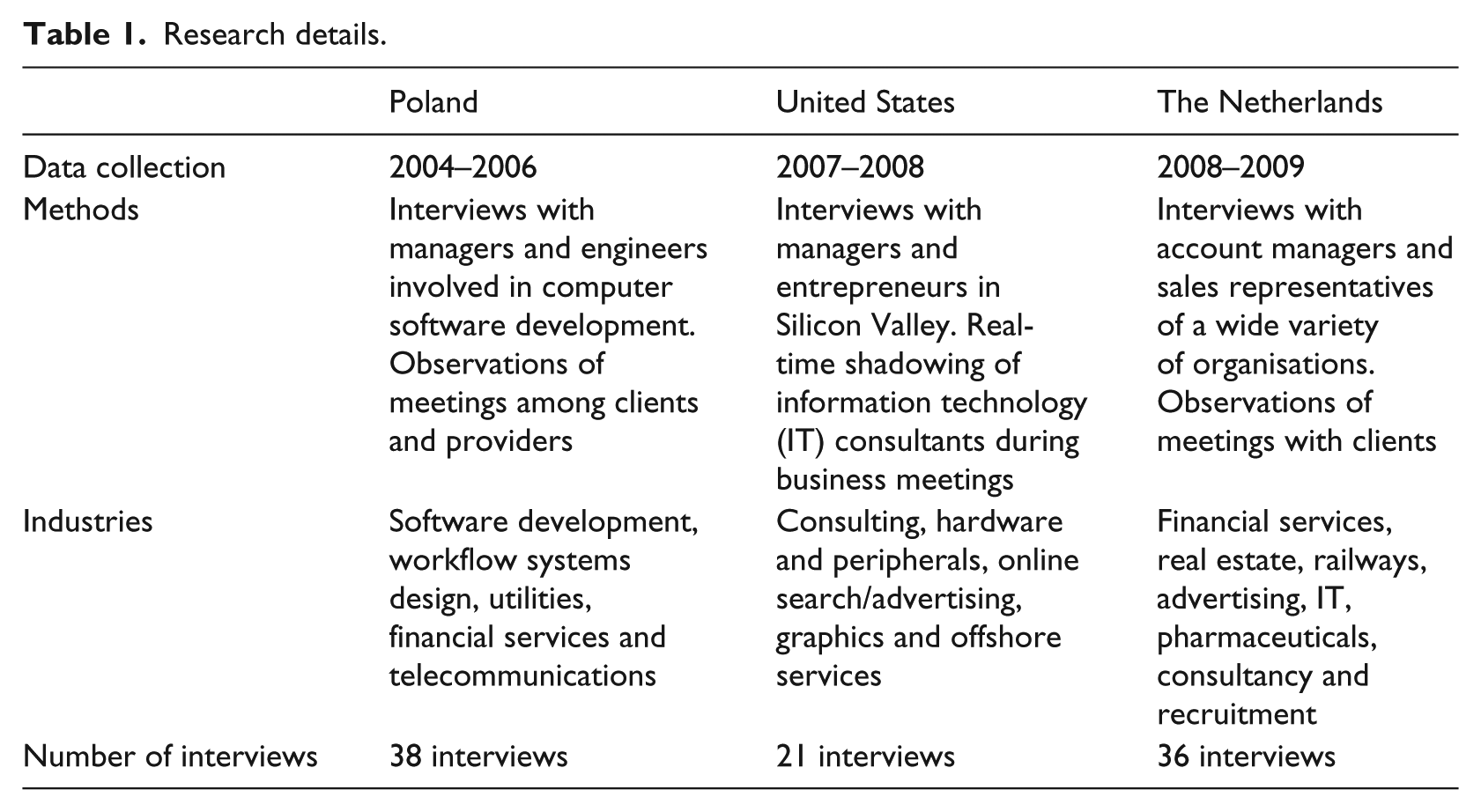
Table 1 below presents the overview of interviews analysed for this project. We interviewed 95 managers from firms in a wide variety of industries, located in Poland (38 interviews), the United States (21 interviews) and the Netherlands (36 interviews), using the snowball technique to obtain access to suppliers and customers. Although this technique carried the risk of silencing some voices in the field (Yanow, 2006a) – that is, suppliers could only introduce us to those clients with whom they had successful relationships – we have reason to believe that this was not a serious concern in our setting because we were provided with positive and negative accounts of interaction. In fact, some of the organisations expressed serious dissatisfaction with their clients or suppliers during the interviews, and bold remarks by other interviewees suggested that they spoke freely about troubles and misunderstandings.
Research details.
Our interviewees exhibited considerable geographic and cultural diversity. As an example, Table 2 presents information about the interviewees in the Polish study. It was interesting to us that the three metaphors surfaced regardless of context (e.g. culture, gender). More specifically, although the majority of our interviewees were male (more than 75%), we did not notice any fundamental gender-related differences with respect to the type of metaphors and the distinct constituent parts of those metaphors to which our interviewees referred.
Exemplary overview of interviews – Polish study.
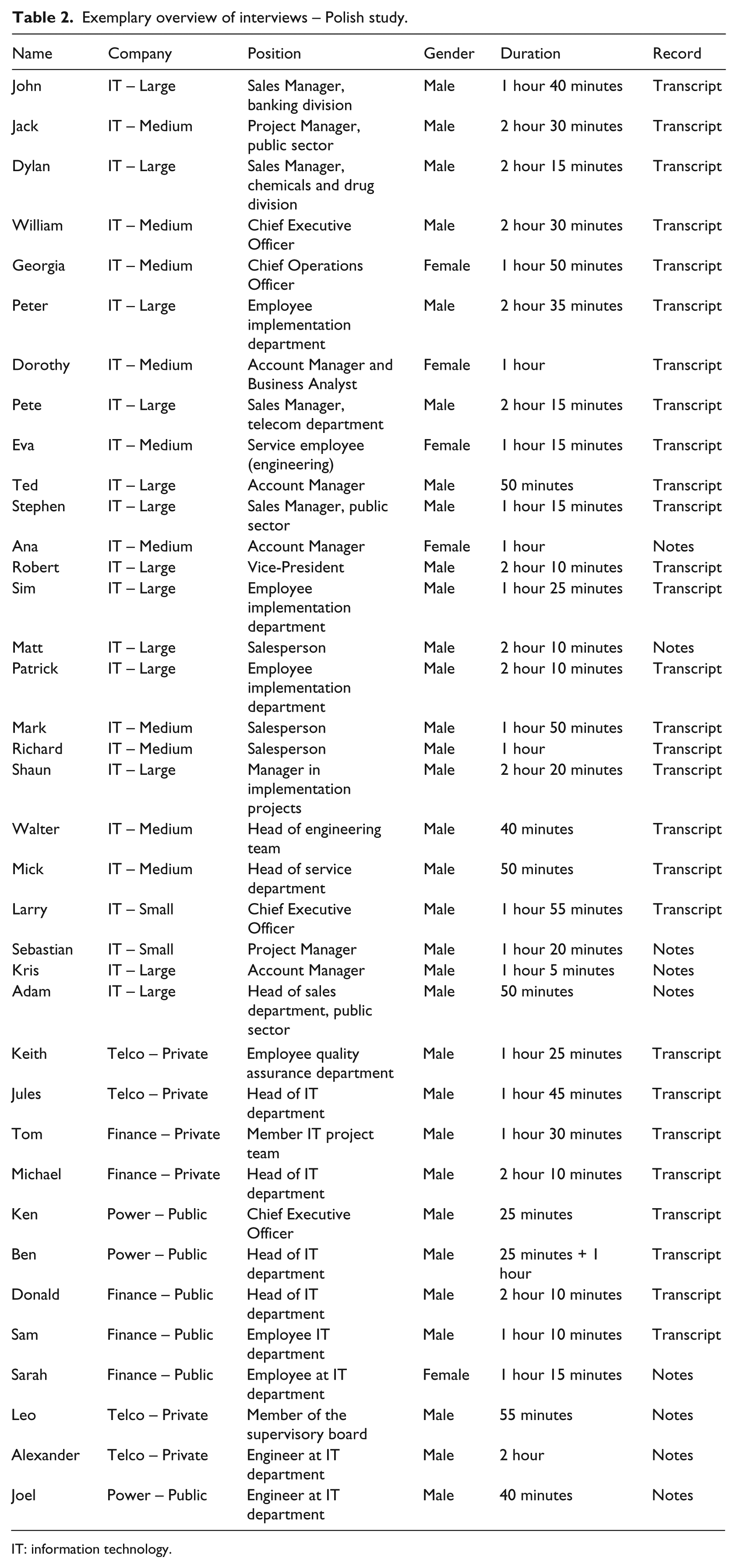
IT: information technology.
Because our project was originally about the development, maintenance and repair of trust in interorganisational relations, the idea to conduct a metaphorical analysis only arose after we had collected our data. In the data collection stage, we never elicited responses to the terms ‘drama’, ‘game’ or ‘fight’. Most of the time, our conversations evolved around governance issues in interorganisational relations and the processes that make up those relations. The guideline dispositions that we used during the interviews are presented in Appendix 1.
All of the interviews were conducted in the native language of the interviewees (i.e. Dutch, English and Polish). For us, this was a natural setup: one of us is Polish and the other is Dutch, but we both have lived and worked in English-speaking environments. Furthermore, English is the lingua franca both for academics (Steyaert and Janssens, 2013) and for the managers among whom we conducted our field studies (Hatch et al., 2005). Therefore, we enjoyed a rare situation in cross-language research in that we could speak fluently in the language of the communities where we worked (Temple and Young, 2004; Young and Ackerman, 2001).
We conducted the primary analysis of the interview data on the original (ad verbatim) transcripts, 3 after which selected passages were translated into English. It is important to note that we observed metaphors or their constituent parts in their original languages first. Only then did the translation into English take place. In many academic publications, the issue of translation remains undiscussed and is not problematised (Temple and Young, 2004). We are aware that translation is a creative act that carries some risks (March, 2004; Williamson et al., 2011) and that the process of translating is not necessarily neutral because power and interest issues are inevitably present (Temple and Young, 2004). Therefore, we translated excerpts from the interviews only after we conducted the initial data analysis, attempting to avoid misunderstandings and overinterpretation of text fragments. Our top priority in the translation process was to retain the metaphorical expressions presented by the interviewees in their original languages.
Data analysis
Data analysis occurred in two stages. The first stage comprised our individual work with ad verbatim transcripts (Silverman, 2001). Each of the authors marked relevant passages corresponding to the development, maintenance and repair of trust, as along with other statements capturing interviewees’ behaviours and those of their partners while interacting with others. In reading the interview transcripts, we were guided by questions such as follows: What is trust? How does trust develop? Why do persons (lose) trust (in) each other? What can be done to regain trust? When does trust become strong, and when does it remain weak? After having analysed a considerable number of interviews, and after having been struck by the observation that the prevalence of metaphorical language was abundant, we reanalysed all of the interviews, which brought other questions into play: What language is this person using? What metaphors are being referred to by the interviewee? Which patterns can be identified in managers’ stories about their own and others’ behaviours? At this stage, each of the coded interview fragments was translated into English with the assistance of a professional language editor. In cases of doubt, we further consulted with native English-speaking professionals.
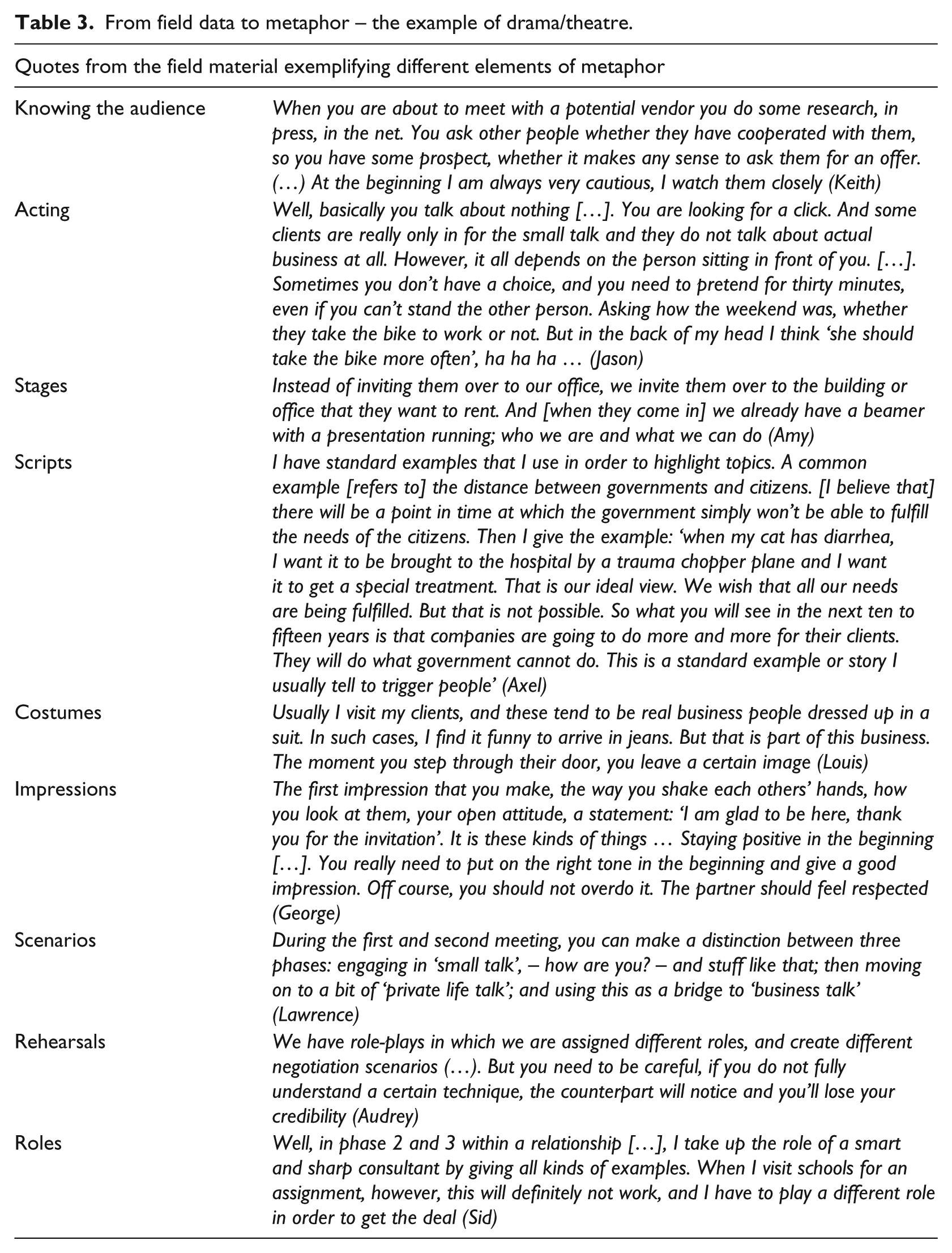
We then proceeded with the second stage of the analysis: exchanging tables with coded materials and analysing them together in a reflexive manner (Maclean et al., 2012; Śliwa et al., 2013). This analysis followed the guidelines developed by Strauss and Corbin (1998), which involve an iterative process of travelling between interview excerpts and emerging conceptual structures. A series of conversations between the two of us led to the conclusion that the field accounts were infested with metaphorical language corresponding to the main metaphors of ‘drama’, ‘game’ and ‘fight’. Next, we engaged in successive and iterative rounds of circling between empirical material and the emerging metaphorical concepts (Glaser and Strauss, 1967; Shepherd and Sutcliffe, 2011; Silverman, 2001) to ensure that all of the elements of the three metaphors emerging from our interview data were coded as such. Moreover, following the procedures used by other researchers dealing with multiple case studies and mass data (Barley, 1996; Jarzabkowski, 2008), we alternated between reviewing the literature to determine how our metaphor themes were reflected in the existing research and immersing ourselves in the data to ensure that our research framework was ‘empirical enough to be credible and analytical enough to be interesting’ (Van Maanen, 1988: 29). Although our interviewees sometimes referred to other metaphors, these were less omnipresent in the data. We therefore decided to concentrate on the three dominant metaphors, using them as organising principles for the empirical portion of our text (Clancy, 1989). As an example, Table 3 presents how the metaphor of drama/theatre emerged from our field data.
From field data to metaphor – the example of drama/theatre.
Findings
In presenting our results, we aim to continuously strike a balance between ‘showing versus telling’ by making extensive use of excerpts from the interviews, while also offering explanations of the more general patterns represented by these quotes (Golden-Biddle and Locke, 1993; Pratt, 2008, 2009). The first metaphor emerging from our data involves managers’ ‘performing drama/theatre’.
First metaphor – performing drama/theatre
Management and organisation theorists have often relied on the metaphor of drama and theatre to explore how people understand and interpret others’ behaviour (Berger and Luckmann, 1966; Boje et al., 2003; Burke, 1972; Goffman, 1959; Hatch et al., 2005; Höpfl, 1995, 2002; Mangham, 1990; Mangham and Overington, 1987; Meisiek, 2002). This metaphor emphasises the inescapable dimension of ‘relating’ in our life – it is the presence of others that gives meaning to our actions and behaviours – that turns any social interaction into a ‘performance’ (Goffman, 1959). At the heart of this metaphor are the assumptions that interaction and communication cannot be escaped (Watzlawick et al., 1967) and that individuals are generally concerned with giving appealing, persuasive, aesthetic and legitimate performances to others during social interactions. They also recognise that performances are interactive – both the actor and the audience play roles adjusted to their own characters, experiences and capabilities; the aims they pursue; and the reception and responses of others. In ‘social theatre’ (Berger and Luckmann, 1966), actors and audiences consequently often either change roles or work together to create a coherent performance as a whole. The roles that they assume have both an individual and a social dimension and are therefore never 100% stable: people re-enact them in their performances and make instant modifications.
Examples of this metaphor abound in our study. Some ‘actors’ pointed to executives who deployed sophisticated ‘scripts’ when presenting their company to external stakeholders, negotiating important deals or giving speeches to their employees, that is, their ‘audiences’. These persons are told to excel at aptly switching ‘roles’ when confronted with changing scenes or audiences, and they are believed to know how to ‘perform’ in various ‘genres’, skilfully applying elements from comedy, tragedy and other forms of theatre, depending on the situation.
This is consistent with the idea that skilful managers are ‘masters of drama’ (Hatch et al., 2005: 48; for some fundamental studies on theatre and drama see also Boje et al., 2003; Burke, 1972; Goffman, 1959; Mangham, 1990; Meisiek, 2002). They are considered to succeed at subtly conveying their messages while maintaining impressions of being trustworthy and authentic. This point is nicely illustrated by the story of Tim Nett, an interviewee in Silicon Valley, California (United States). Tim used to be the CEO of his own company, which survived the dotcom crash in 2001 and eventually went public. Now, Tim teaches entrepreneurs in Silicon Valley how to perform and impress their audiences, which mainly consist of investors, and he acts as a ‘teacher of drama’, coaching founders of start-ups in Silicon Valley to become proficient ‘actors’. Tim works in a fascinating place for those who are interested in theatre (see Table 4). Many activities in Silicon Valley are carefully scripted, although with the twist of a laid-back, relaxed and loose ‘California style’. Silicon Valley has many famous stages, such as the legendary garage in which Hewlett and Packard started the company HP, the iconic campus of Google and a host of extraordinary offices resembling cafes, living rooms and university campuses. Moreover, Silicon Valley has its own role models, consisting of information technology (IT) enthusiasts focusing on engineering excellence and young and ambitious entrepreneurs for whom ‘the sky is the limit’. The cluster is further represented by iconic characters, such as Facebook’s Mark Zuckerberg, Google’s Sergey Brin and Larry Page and Professors Frederic Terman and William Shockley, who are famous for their wholehearted support of young entrepreneurs.
Drama in Silicon Valley.

Furthermore, actors in Silicon Valley tend to adhere to particular dress codes; they typically do not dress up for business meetings, and shirts and flip-flops generally constitute acceptable work attire. Our interviewees further referred to keywords resembling spells. At the time of our study, these included, among others, concepts such as ‘biotechnology’ and ‘open source’.
Tim explained, What kills the deal is not the technology […]. It is the perception of an investor. Consequently, entrepreneurs need to make the right impression and provide their audience with exceptional performances. It is Tim’s job to help entrepreneurs prepare to perform their shows in Silicon Valley. He helps them to prepare presentations for venture capitalists and angel investors and counsels them on how to approach potential investors. Entrepreneurs have to rehearse their performances over and over again, while Tim acts as the theatre director, offering them direction and guidance. He even read emails written by entrepreneurs to see whether they are phrased consistent with local conventions:
Once in a while, the CEO wants to write an email to a prospective investor. He would run that by me. I tell him what to say, and what not to say … I guide them … (Tim)
This heightens the chance that the ‘audiences’ of these entrepreneurs will become interested and agree to meet – that is, it increases the likelihood that they will ‘come to the show’. We observed similar theatrical elements in our study of account managers in the Netherlands. Consider the following remark:
Sometimes you don’t have a choice, and you need to perform an act for thirty minutes, even if you can’t stand the other person. Asking how the weekend was, whether they take the bike to work or not … (Bill)
Several interviewees further referred to how they rehearse performances, stressing the importance of subtle details:
There might be over five million aspects that we are not aware of and that could have an effect: Do you shave in the morning? How do you do your hair? When a client gives his or her business card, do you look at it, or do you directly put it into your agenda? (Ally)
Overall, our interviews support the idea that business people often behave as actors, producers and directors of plays (also see Tables 3 and 4). Witnessing our empirical data, managers and executives aim to inspire other organisational actors, foster identification, interact with their audiences, establish compelling stories and synergise the talents of others. However, in contrast to the performances given by actors in real theatres, they simultaneously need to remain authentic, which generally implies that they only dramatise particular aspects of their own characters and experiences (Goffman, 1959).
Second metaphor – playing games
In addition to drama, our interviewees referred to ‘playing games’ and ‘viewing work and business as consisting of games’. A game is a mechanism of integration between an actor and a system, in which each actor pursues his or her own interest but also shares an overall interest with other participants – that is, to keep the system going (Crozier and Friedberg, 1980). In social life, many games are played simultaneously, and managers have to address ambiguities, interdependencies and conflicting interests all the time. In fact, one may envision any managerial activity as comprising a game between different players. Those players have different competencies and interests, and in addition, they may use various tactics to achieve their goals and define the elements and boundaries of the game (Brandenburger and Nalebuff, 1995). Consequently, they become trained in making trade-offs, conducting negotiations and initiating exchanges.
For example, just as tennis is played on a ‘court’, most business relationships are restricted and defined in relation to certain ‘arenas’ (e.g. particular product categories or geographically restricted markets). Similarly, timing may be crucial in winning organisational matches, just as it is in sports (Huizinga, 1938). More generally, the rules of games serve both to liberate and to constrain players; they inform, condition and give special significance to the social practices of play.
Games’ tight regulations, clear objectives and limited systems of symbols and boundaries allow players’ actions to be more easily understood, anticipated and appreciated by both participants and spectators. Thanks to rules, an imaginary playing field becomes an ordered sphere where certain behaviour is allowed or condemned by a broader community (Juul, 2005). Consequently, although many games involve very complex systems of rules, these eventually simplify the complexity of human action. At the same time, however, each of a game’s elements can change over time because games constitute ongoing processes. While a game is being played, new practices and meanings emerge continuously, possibly contributing to the reconfiguration of the game itself. In fact, because games are grounded in human practice, they tend to change while being played. Similarly, the way that a game is being played may be transformed across repeated interactions among players (Malaby, 2007).
The managerial literature is replete with examples of game tactics employed by business players, most of them aimed first at better understanding or getting to know one’s partner and then at adjusting one’s behaviour and (value) propositions to activate the audience and ensure both participation and engagement (Elsbach and Kramer, 2003). Correspondingly, our interviewees noted that they themselves and the managers and executives that they admired or interacted with tended to be talented at – and often fond of – playing games, both within and across the boundaries of their organisation. These people enjoy outsmarting competitors, renegotiating the rules, forming coalitions and redefining the playing field.
Proficient gamers champion the skill of ‘getting under the skin’ of their opponents, achieving intimate understandings of their opponents’ beliefs and thought patterns and adapting their tactics accordingly (Brandenburger and Nalebuff, 1995; Huizinga, 1938; Paglieri, 2005). These assertions are supported by our inquiry in the Polish software industry, which reveals strong parallels between ’games’ or ‘gaming’ and the behaviours occurring in buyer–supplier relations:
The clash of interests is built into … it’s just a regular part of the game. It’s a certain convention … There is, of course, the tendency to occasionally grab the provider or customer by the throat. Sometimes you just have to shout, so that they know their place. It’s not very nice, but it is just an inevitable aspect of the game. (Robert)
Regardless of the level and type of game being played, sly players require an intimate understanding of their opponents. Getting to know the motivations and ambitions of other players, and the resources and constraints with which they are confronted, allows managers and executives to conceive new strategies and enables them to adapt their tactics to changing conditions. To this end, they tend to search for information – for example, on the Internet, in newspapers and through social media – and they elicit insights from people in their informal networks. However, as our interviews illustrate, it may be particularly interesting to contact people who have ‘changed sides’ of the playing field. These are more likely to recognise the rules of the game and provide other players with inside knowledge of their rivals:
In negotiations, you need to understand the provider […]. I used to work for a software provider before I came here, so I know the other side very well. And that is the basis for everything I do. (Ben)
Our empirical material further suggests that the rules applying to games both enable and constrain the actions taken by managers and executives. Although rules commonly serve to simplify human behaviour, allowing players to better understand and evaluate the moves of their partners, our interviews also suggest that people who are truly skilful at playing games do not only recognise the importance of rules but also aspire to establish and modify them, making others ‘play the game’ as they define it:
From the very beginning, we are in a game … Both parties enter the deal, and both parties know that it is just not real … On the one hand [for example], we need to tell the customer that there are areas which we need to work on, but on the other hand, we cannot reveal that some things that we have promised at the beginning will just not happen … It’s a constant game. (Adam)
According to the executives and managers in our studies, respect for other players is of the utmost importance. Successful managers understand that the ultimate goal of most games is not a definitive win, but to enjoy the process and to continue to play. Although one may attempt to undermine the position of one’s opponents (e.g. competitors, clients, regulators), it rarely makes sense to ‘kill’ or ‘eliminate’ them from the playing field. Moreover, skilful managers tend to be quite aware of their own capabilities and the (implicit) choices they make among elements of their behavioural repertoire:
It is nothing else but a game. What you need to keep in mind … I am very driven about my area and think I know a lot about sales. Maybe not as much on the theoretical side of sales, but I am aware of my capabilities. I can sense, for example, when I need to be mad, or smile. It is not something I can explain … but it is really the case. And it really is just a game. It is about firing arrows and understanding how to dodge them. (Kris)
Managers play games, but they also attempt to construct, control and restructure games for their own benefit. Power games, for instance, may be pathological for an organisation, challenging executives to manage such games carefully, neutralise dangerous players early on and halt destructive dynamics. Moreover, games can sometimes be won even before they are played. For example, managers and executives can delineate the borders of a playing field so as to favour players who have particular qualities or abilities. In other instances, players may have opportunities to partially determine the rules of the game – and generally do so for their own benefit.
Third metaphor – fighting battles
The third prominent metaphor from our field data is ‘fight’; it appears to be common in the organisational world, especially in the field of strategic management (Boyd, 2003; Clancy, 1989; Kendall and Kendall, 1993; Lakoff and Johnson, 1980). This is consistent with other confrontational terms, such as battle, struggle, war and boxing, which are popular in the corporate context, not to mention the omnipresence of Sun Tzu’s bestseller ‘The Art of War’ in the business management book section of bookstores worldwide.
In our interviews, management parlance was rife with military expressions. The war metaphor tends to polarise dialogue participants, reducing possibilities for negotiation and compromise that could produce other solutions (Dunford and Palmer, 1996). Without judging whether this conflictual stance is good or bad, we have to recognise that it is a phenomenon that is ubiquitous in organisational life (Brehmer, 1976; Deutsch, 1969; Eisenhardt et al., 1997; Hocker and Wilmot, 1985).
Fights are usually seen as final escalations of conflict (Pondy, 1967). Managers and executives can choose how to behave and thus how to prevent and shape possible conflict dynamics. They and their opponents decide whether to escalate conflicts and engage in fights. More specifically, as our interviewees revealed, they chose when to fight (and when not), whom to fight (and whom not), where to fight (and where not), what to fight about (and what not) and how to fight (and how not):
I purposively direct them [people] into a conflict in order to change something. So a conflict can be positive. (Meg)
Throughout our dataset, we found that managers were often equal to leaders in military conflicts. Exemplary expressions used by the interviewees referred to managers who ‘choose their battles’, and ‘know when to attack, withdraw, and offer, accept or deny cease fires’. It seems that oftentimes managers resemble provocateurs, who agitate and upset their enemies to lure them into traps. Moreover, military leaders declare that they are capable of putting their troops in advantageous positions, equipping them with the right weaponry and guiding them towards victory on the battlefield. Our studies suggest that collaboration often involves elements of conflict and competitive dynamics, with the potential of ensuing fights:
It is a kind of symbiosis which cannot be devoid of the elements of war, especially when projects are large and complex. (Jill)
In the course of most business relations, open confrontations eventually occur, regardless of one’s temper and attitude towards others. Our interviewees suggested that skilled managers are rarely taken by surprise. Take this example of a conflict between an executive and a client:
We’ve known each other now for six months. Last time when he was in Holland, we had a huge conflict about something and he started screaming at me. I told him to listen very carefully, saying: ‘Listen! We both know that you’ve got a big mouth. And we can blow the whole situation up. But let’s not bet on who’s got the biggest mouth. I’ll win that. Now, do you want to make a deal, yes or no?’ And that was the first time I saw him getting calmer. And I think I received more respect from him, since I handled him this way. (Bill)
Another participant in our study indicated that executives sometimes feign ‘being angry’ and that they may purposefully initiate and nurture conflicts to achieve their goals:
I can act as though I am very mad. Sometimes I am [actually] on the side of the client, but the motive behind the relationship still remains to create benefits for my company. That is my responsibility. [For example] I once had a problem with a client about an open payment. So I went to the client and behaved as if I was very, very mad in order to get the payment. And it was taken care of. (Kris)
Interviewees further noted that successful managers and executives often seem to think in military terms, applying popular military-related sayings such as ‘jump the gun’, ‘keep your powder dry’, ‘choose your battles’, ‘fight fire with fire’, ‘shoot across the bow’ and the like. As good commanders-in-chief, respected managers know when it is beneficial to step back and prevent escalation of conflicts or fights. One of the managers in our Dutch study offered a clear illustration:
Let’s say I have a contract with a company, and I expect to find 30 000 dollars in savings. Assuming that we agreed on a fee of twenty per cent, this would mean we receive 6 000 dollars. Now, savings turn out to be 300 000 dollars, which would mean 60 000 for us. The client can think that this is too much and may not agree. This is a dilemma. On the one hand, I want the 60 000 dollars. On the other hand, I value our long-term relationship. If this situation will ever occur, and I am sure it will, I will not turn it into an open conflict. I’d rather receive eight – or ten thousand dollars each of the following ten years than having a fight and breaking up our relation. Eventually, the thing that you need to protect and take care of is your name and reputation. (Andrew)
Discussion
Our findings confirm the idea that managers and executives perceive managerial behaviour in terms of the metaphors ‘performing drama/theatre’, ‘playing games’ and ‘fighting battles’. They use language pertaining to these three metaphors when talking about the performances they enact to create meaning and manage impressions, deploying linguistic and visual elements to impress, persuade and manipulate others. These findings corroborate the extant research on each of these metaphors, but more importantly, they show that combining the use of metaphor as an analytical tool with a focus on managers’ perceptions of behaviours offers substantial potential to synthesise theory and practice. Building on the results presented in this manuscript, we further substantiate this argument here. First, our findings suggest that metaphors are layered in nature, helping us interpret our observations.
More specifically, our findings clarify that adopting metaphor as an analytical tool allows researchers and practitioners to ascertain confrontation or symbiosis between theoretical constructs and practice (see Figure 1 for an illustration). As a result, distinct patterns may emerge in which several statements about managerial behaviour can be discerned, possibly leading to enrichment of the concept and contextualisation of individual observations. Identification of such fine-mazed patterns becomes more likely when researchers focus their studies on statements concerning practitioners’ micro-level behaviours of practitioners, without risking that researchers might impose specific constructs or theoretical predispositions on interviewees ex ante.
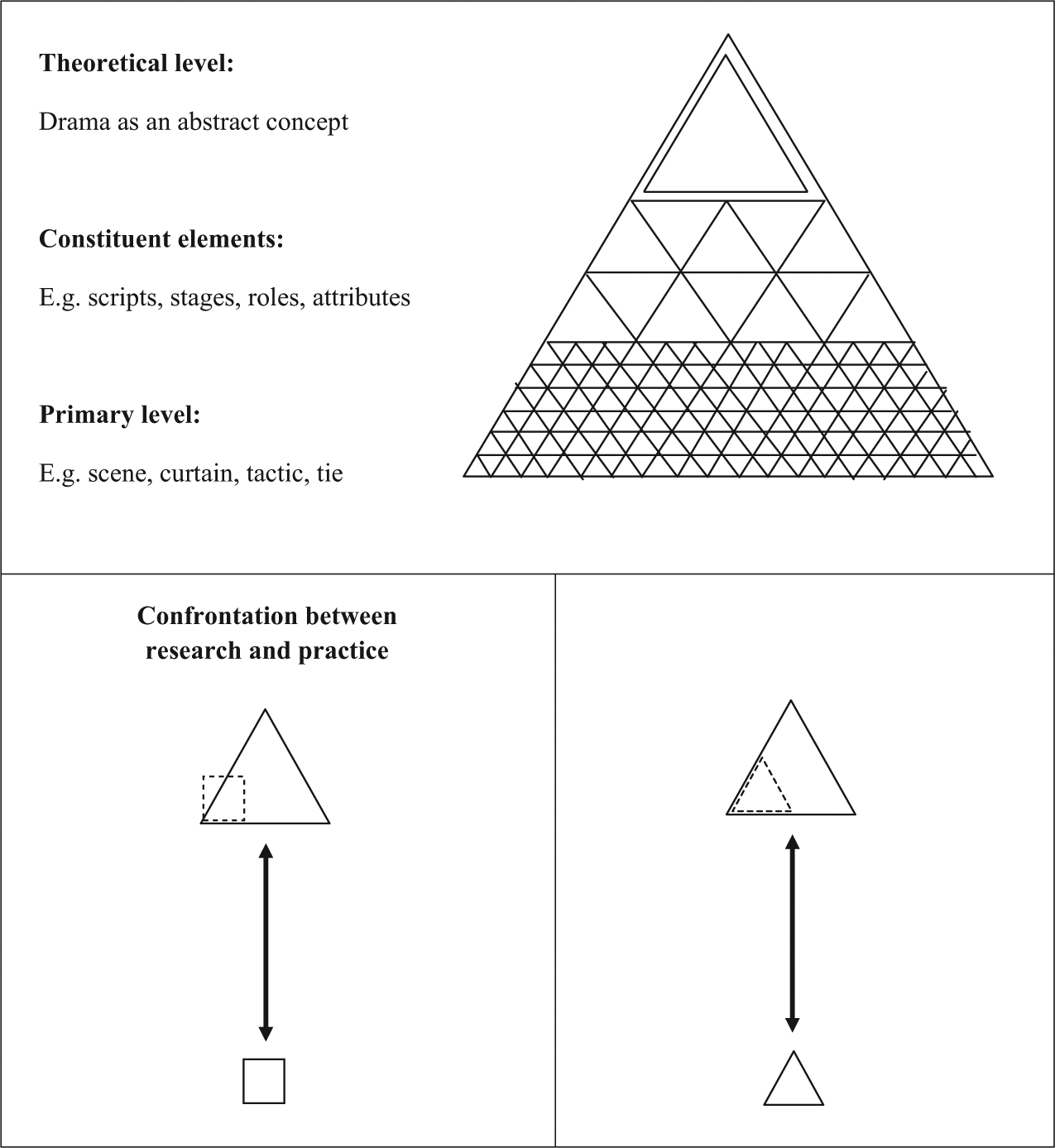
The layered nature of metaphor.
We have shown that by collecting micro-level empirical material in the field and interpreting it through the analytical lens of metaphorical language, scholars preside over a research approach that enables them to concurrently leverage powerful sources of experiential and academic knowledge: close-to-practice representations of behaviour integrated with the pure and well-established analytical tool of metaphor (Augier and March, 2007; Hodgkinson and Rousseau, 2009; Sambrook and Willmott, 2013; Starkey and Madan, 2001). More specifically, our study illustrates that alignment between rigour and relevance can take place without the need for scientists and practitioners to cross fields (Splitter and Seidl, 2011), provided that appropriate research methods are used that allow researchers to translate abstract constructs and variables into specific acts or behaviours that practitioners can take hold of and change in the real world (Thomas and Tymon, 1982). This comports with a view of the spheres of academia and practice as permeable fields (Sandberg and Tsoukas, 2010), instead of separated and closed systems (Kieser and Leiner, 2009; Splitter and Seidl, 2011), offering a powerful complement to existing literature advocating that rigour and relevance can be achieved simultaneously (Augier and March, 2007; Bartunek and Rynes, 2010; Gulati, 2007; Reynolds and Vince, 2004; Rynes, 2007).
Limitations and future research
The three metaphors dominating our field data do not exist in isolation. Boje et al. (2003), for example, suggest that although organisational life is scripted, one could easily argue that this happens within the boundaries of actors’ games. Otherwise, problems may arise, possibly resulting in fights. One of our interviewees supported this view, talking about elements of theatre, games and the anger associated with conflict and fighting, all at the same time:
Of course it is kind of theatre. I have got nothing personal against that man. I actually think he is a really nice guy. It is just about the money. That moment, I am just furious in my role as an account manager. Look, the game is still reality for me, because we are talking about big figures. But with games, if you play them, you have to play them well and you have to be convincing. It is hard to fake emotions in my business. When I am mad at you, I am mad at you as a business partner … It is a game in which I have two roles: one at home, the quiet guy; and [two] over here, when I need to get the money, and then I am mad as a tool to achieve my targets. (Barry)
This quote hints at the idea that different types of behaviours may co-evolve in relationships and that behavioural sequences may have to be interpreted through various metaphorical lenses. Adopting process-oriented perspectives on each of the three metaphors, taking into account how they co-evolve among actors within and across organisations (Bamberger, 2008), could therefore be a particularly fruitful area for future research.
Moreover, we suggest that further attention is warranted to the fact that the three metaphors presented in this article appear to be so dominant in our international collection of field studies. This is important, for example, because the dominance of any metaphor may entail certain threats and disadvantages (Höpfl, 1992). It may, for example, diminish managers’ creativity and increase the likelihood that they will take things for granted. In this respect, the omnipresence of each of the three metaphors in almost all of our field accounts indicates that business people from different cultures tend to share a common figurative language. In this regard, we were very surprised that actors speaking different languages painted very similar pictures with their words, which seems to confirm the emergence of a cosmopolitan managerial culture (Drucker, 1993), possibly providing a signal that managerial cultures may have developed common characteristics that cross national boundaries (Hatch et al., 2005).
Likewise, future research on the use of metaphor as an analytical tool should further recognise that metaphors only illuminate certain aspects of phenomena while they hide others. When focusing on fighting, for instance, we may overlook that certain aspects of management have a conciliatory, communicative and consensual nature. Thus, metaphors are never complete and they should not be taken too literally (Hatch et al., 2005; Morgan, 1998). Against this background, the interpretation of metaphors is rarely straightforward and unproblematic (Inns, 2002), and the instrumental use of metaphor as unambiguous and definite should not be taken for granted. In fact, as we also emphasise in the methodology section, when working through our data, we observed examples of many metaphors, but we intentionally focused on those present in all three sets of field material. The metaphors that we discuss here clearly dominate all of our field accounts, but they are not exclusive. Scholars who wish to build on the research approach that we present in this article should therefore realise that the apparent homogeneity of managerial accounts can be a consequence of their methodological choices (e.g. the type of questions they ask, the type of people they interview and the variety of settings in which they explore their research questions).
Finally, our findings have important implications for educational policies. They show that ‘focusing on the production of meanings and concepts used by social actors in real settings’ (Gephart, 2004: 457) is likely to be instrumental in generating important insights into ‘how meanings and their implications are shaped by or contingent upon contextual forces’ (Bamberger, 2008: 843). Everyday managerial experiences may be translated into the figurative and imaginative language of metaphor to help practitioners embrace the paradoxes and ambiguities pervading organisational life (Schoemaker, 2008). Having students think about managerial talk and behaviour in terms of the three metaphors presented here may be a useful exercise. The power of that exercise lies in its possibility of enriching action and response repertoires to better anticipate the consequences of behaviours and to increase the capability to ‘fine tune’ those behaviours to different situations. Or, as Chia and Holt (2008) note,
In the realm of management education, what is crucially important is not so much the production, transmission, and application of representational knowledge, but how the representations connect with and evoke business-like experiences in ways that enhance the specific habituated predispositions, sensitivities, and personal awareness of business school students. (p. 484)
Our study shows that the adoption of metaphor as an analytical tool to analyse managerial accounts of micro-level behaviours can be instrumental to this end.
Footnotes
Appendix 1
Funding
This research received a grant funded by Polish Ministry of Science and Higher Education (N N115 289439 “Trust and uncertainty management in interorganizational collaboration”).