




Abstract
In this paper, we introduce and theorize the concept of toxic experts as individuals who, by virtue of their perceived or actual expertise, systematically engage in behaviors characterized by professional and intellectual vices. Despite maintaining an appearance of legitimacy, toxic experts exploit public trust by disseminating unsubstantiated, misleading, or harmful claims for personal and commercial gain. Drawing on a multidisciplinary framework, we integrate diverse insights to explain how toxic expertise emerges and persists. Specifically, we combine ethical and epistemic perspectives that distinguish genuine expertise from opportunistic misrepresentation. We analyze how social and institutional recognition shapes expert authority. Then we examine how structural transformations of work erode professional integrity and identify cognitive mechanisms that sustain trust in unverified claims. Using the case of the longevity biotechnology business, we develop a multilevel relational theoretical framework that identifies: (i) the historical and socio-cultural preconditions that enable toxic experts to emerge, (ii) the social and cognitive processes through which they gain and maintain legitimacy, and (iii) prevention strategies centered on cascaded accountability reforms. Our contextualized perspective challenges the depiction of toxic experts as isolated deviant individuals, revealing them instead as products of broader social, institutional, and ideological conditions. We argue that mitigating their influence requires cascaded regulatory interventions at societal and institutional levels to restore public trust and prevent toxic outcomes.
Introduction
In an age where (mis)information is ubiquitous, the ethics and accountability of experts have become more critical than ever. Traditionally, experts—those endowed with specialized knowledge, skills, and credentials acquired through education and experience (Abbott, 1988/2014; Gerver and Bensman, 1954)—play a crucial role in guiding public discourse and decision-making. Yet, as recent crises of expert authority have demonstrated (Reed and Reed, 2022, 2023), the legitimacy of expert knowledge is increasingly contested. In this paper, we introduce the concept of toxic experts, defined as individuals who, by virtue of their perceived or actual expertise, systematically engage in behaviors characterized by professional and intellectual vices, thereby exploiting public trust by disseminating unsubstantiated, misleading, or even harmful claims for personal and commercial gain (Hughes, 2024; Snyder, 2020). Crucially, toxic experts not only undermine the well-being of those seeking their advice but also erode the broader integrity of scientific and professional fields, contributing to lasting damage in areas ranging from healthcare to public policy.
Despite growing concern over such practices, our understanding of the socio-political and cognitive conditions that facilitate the emergence of toxic experts remains limited. Rather than viewing these actors solely as isolated malefactors, it is essential to recognize that their rise is deeply embedded in historical, institutional, and cultural contexts. Drawing on the classical insights of Plato, which emphasize the pursuit of truth and the cultivation of virtue as normative benchmarks for expert behavior, we situate toxic expertise within a broader ethical and epistemic tradition. We further integrate Sennett’s (1998) analysis of the corrosion of character under the pressures of modern work regimes and Bourdieu’s (1997/2000) theory of recognition and misrecognition in the construction of social capital, and we complement these perspectives with insights from cognitive science that elucidate the mechanisms and biases reinforcing trust in unverified claims. Taken together, these perspectives capture the multifaceted dynamics underpinning toxic expertise as a relational phenomenon emerging from cascaded failures of accountability, deregulation associated with neoliberal policies, and pervasive socio-cognitive biases.
With this conceptual grounding, this paper seeks to answer three key research questions: Who are toxic experts in professional fields? What are the contextual, socio-political, and cognitive antecedents that foster their emergence? And what accountability mechanisms can prevent or mitigate their influence? To answer these questions, we develop a multilevel theoretical framework of toxic expertise, illustrated through the case of the longevity business, that makes three key contributions. First, we integrate historical and socio-cultural preconditions with individual and interpersonal dynamics to explain the emergence of toxic experts (e.g. Day, 2023; Mikhail, 2023). Second, we elucidate the dynamic interplay between macro-level institutional arrangements and micro-level socio-cognitive processes in the construction and maintenance of expert authority. Third, we enable theorizing of strategies for curbing the emergence and influence of toxic experts in longevity business, underscoring the importance of cascaded (i.e. multilevel interplay) accountability mechanisms that involve not just individual experts but also the institutions, regulatory bodies, and broader socio-political systems that validate and empower them.
The rest of the paper has the following structure: First, we elaborate on our integrated conceptualization of toxic expertise. Second, we introduce the longevity biotechnology business as a running example, demonstrating why this sector, characterized by deregulated healthcare practices and commercial pressures, provides a compelling case for examining toxic expertise. Third, we analyze the multilevel processes underlying both the antecedents and the emergence of toxic experts, highlighting macro-level socio-political and institutional factors alongside micro-level cognitive and relational dynamics that shape their legitimacy. Fourth, we propose cascaded accountability mechanisms as strategies to curb the influence of toxic experts, emphasizing interventions that span individual, organizational, and societal levels. We conclude by discussing the broader implications of our framework for the governance of expert authority and by outlining avenues for future research.
Introducing and theorizing the concept of toxic expert
MacIntyre (1981) argues that socially established cooperative forms of activity have external goods, like fame and money, and internal goods, such as excellence in practice. When it comes to experts, we expect them to exhibit certain internal goods of their practice, embodying virtues like honesty, integrity, and diligence. However, being recognized as an expert, even when the required credentials and qualifications are attained, does not guarantee the internalization of these virtues. As MacIntyre (1981: 191) notes, “A virtue is an acquired human quality, the possession and exercise of which tends to enable us to achieve those goods which are internal to practices and the lack of which effectively prevents us from achieving any such goods.”
Following this line of thought and drawing on Aristotelian virtue ethics and contemporary research on expertise (Collins and Evans, 2002), we define and conceptualize toxic experts as individuals who, by virtue of their perceived or actual expertise, systematically engage in behaviors characterized by professional and intellectual vices. These behaviors significantly undermine the integrity of their field, erode public trust in institutions, and potentially harm societal welfare.
Our framework is grounded in a virtue-based approach that distinguishes between professional and intellectual domains of toxicity. Building on Aristotle’s concept of virtue as the mean between two extremes (Aristotle, 350B.C.E/2019), we conceptualize vices as excesses or deficiencies of virtues. Drawing from the virtue epistemology (Zagzebski, 1996), Table 1 presents key professional and intellectual vices (Cassam, 2019) exhibited by toxic experts, their corresponding virtues, and their manifestations:
Virtue-based framework of professional and intellectual vices in toxic experts.

Our conceptualization emphasizes two important points. First, it encompasses individuals with recognized credentials and those who have cultivated a perception of expertise without formal qualifications. According to Epstein (2019), the public often attributes expert status to individuals based on their media presence, charisma, or alignment with pre-existing beliefs, rather than their actual knowledge or skills. This phenomenon can amplify the impact of toxic experts, as their perceived authority may outweigh their actual competence in influencing public opinion or policy decisions.
Second, our conceptualization acknowledges the importance of distinguishing toxic expertise from well-intentioned errors or legitimate challenges to mainstream knowledge. Errors, arising from oversight or incomplete knowledge, become toxic only when persisting despite evidence of harm (Reason, 1990). Innovation, manifesting as good-faith challenges to established paradigms, comes from inclusive and interdisciplinary science, which bridges orthodox science (i.e. legitimate and established view) and heterodox science (i.e. legitimate but outside track; Greenhalgh et al., 2021). Therefore, the scientific debate is not toxic but healthy. It becomes problematic only when the expert refuses to engage with contrary evidence or persists in harmful practices despite clear negative consequences. As such, we define toxicity by persistent patterns of professional or intellectual vices, resistance to correction, and significant negative impact on the field or society (Mergen and Özbilgin, 2021). The distinction between toxic expertise and other forms of professional conduct safeguards academic freedom and the legitimate challenging of established norms while still identifying truly toxic behaviors.
To illustrate how this definition behaves in boundary conditions, consider the following four examples. First, the case of Andrew Wakefield, who published a now-discredited study linking vaccines to autism, exemplifies the transition from error to toxicity. Initially, his work is a potential scientific finding. However, his persistence in promoting anti-vaccine views despite overwhelming contrary evidence and the revelation of ethical breaches in his research pushed him into the realm of toxic expertise (Deer, 2020; Menzin, 2025; Tait, 2025). His study was retracted by The Lancet (Davidson, 2017), and he was struck off the UK medical register by the General Medical Council for serious professional misconduct (Boseley, 2018). His prominence surged during Donald Trump’s presidency, where anti-establishment rhetoric amplified his influence (Bristow and Robinson, 2018), contributing to a dangerous decline in vaccination rates (Kata, 2010).
Conversely, the second example is Barry Marshall and Robin Warren’s proposal that bacteria cause stomach ulcers. They identified the link between H. pylori bacteria and ulcers, facing criticism due to the prevailing medical consensus that bacteria could not survive in the stomach. It took nearly a decade for the medical community to accept the results, eventually leading to a Nobel Prize (Sample, 2005). This example demonstrates how challenging established paradigms can be mistaken for toxic expertise. Initially dismissed by the medical community, their persistence in the face of skepticism was ultimately vindicated, highlighting the importance of distinguishing between toxic behavior and legitimate scientific innovation (Altman, 2005).
Third, in the case of COVID-19, Greenhalgh et al. (2021) demonstrate that the exclusion and dismissal of heterodox scientists in the UK led to flawed health policies that prioritized randomized clinical trials over evidence of airborne transmission from physicists and engineers. This highlights how orthodox experts can become toxic when they reject interdisciplinarity due to hubris and overconfidence (Maclean et al., 2021). Fourth, in financial expertise, figures like Bernie Madoff illustrate how perceived expertise can secure personal gain through manipulation. Madoff’s reputation as a financial expert allowed him to perpetrate a massive Ponzi scheme, demonstrating how the gap between perceived and actual expertise can be exploited by toxic experts (Hayes, 2024). These examples underscore the nature of toxic expertise and the importance of considering both the actions of the expert and the broader context in which they operate. By framing toxic expertise through the lens of Aristotelian virtues and vices, our conceptualization provides an understanding of the ethical dimensions of expert behavior across various fields and contexts.
Our conceptualization of toxic expertise as a relational phenomenon requires a framework that accounts for both its antecedents and its emergence. Figure 1 presents this framework, highlighting how toxic expertise arises and persists at the intersection of macro-level structural conditions, such as neoliberal deregulation and shifting accountability norms, and micro-level cognitive and relational mechanisms that shape the perception and legitimacy of expertise. Specifically, we theorize toxic expertise as manifesting through two key interactive processes: (i) corrosion of character, which captures how systemic transformations in expertise and work erode professional integrity, and (ii) dialogical processes, which explain how social recognition and persuasion tactics enable toxic experts to gain and maintain legitimacy. These mechanisms are particularly visible in the commercialized longevity biotechnology business, where the convergence of scientific uncertainty, market incentives, and public desire for life extension creates an ideal environment for toxic expertise to flourish. We elaborate on each of these dynamics in subsequent sections, demonstrating how toxic experts strategically position themselves at the nexus of knowledge asymmetry, regulatory gaps, and socio-cognitive biases to exploit public trust and professional authority.
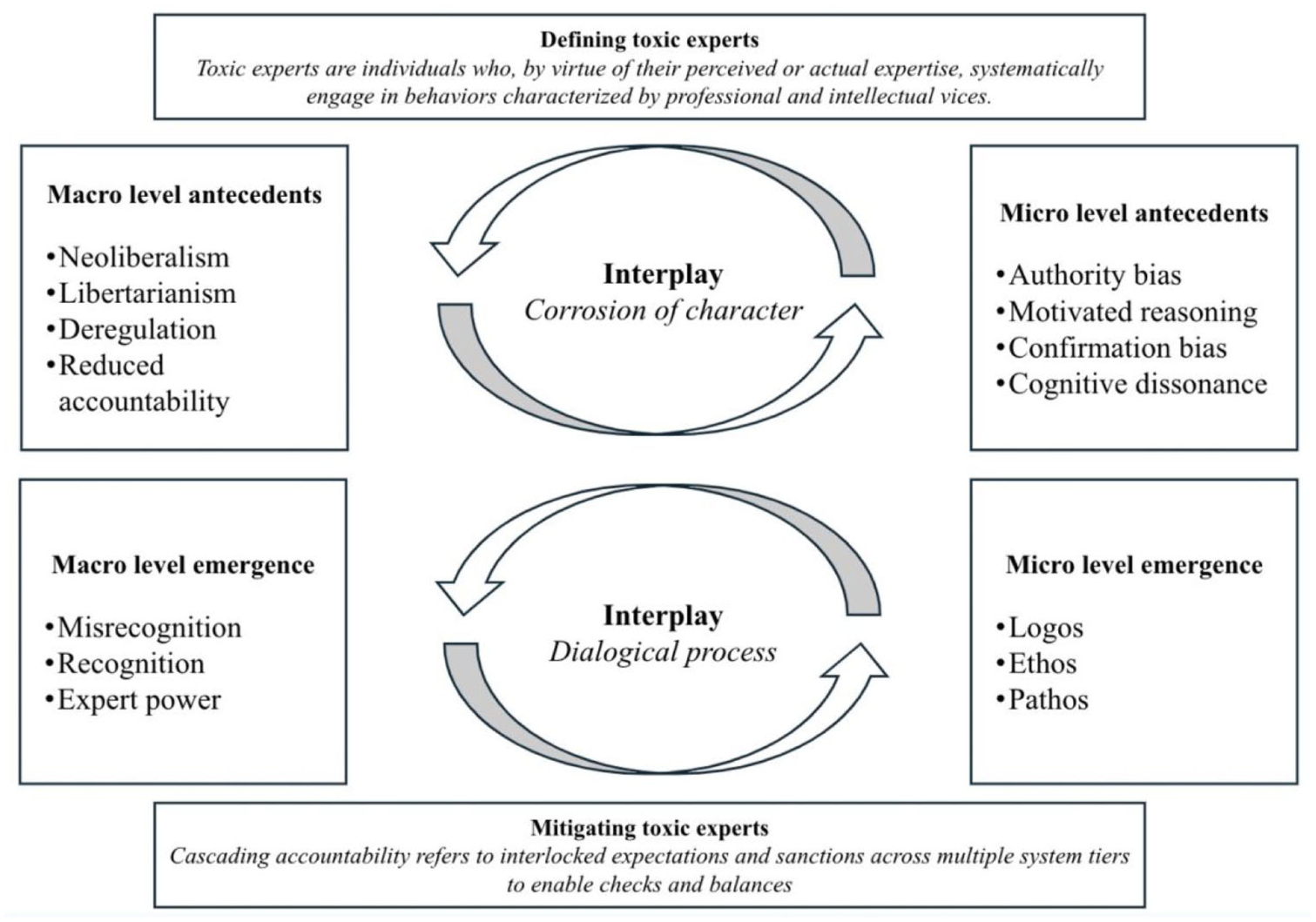
Multilevel framework of the antecedents and emergence of toxic experts.
The case of toxic experts in the commercialized pseudoscience of longevity
The phenomenon of individuals promoting pseudoscientific treatments for profit and notoriety is not new. Historically, as far back as ancient Greece and Rome, peddlers sold potions and elixirs with false claims of curing illnesses and extending life, targeting wealthy patrons (Porter, 1997). Similarly, in 19th century America, the rise of patent medicines saw dubiously qualified entrepreneurs aggressively market cure-all treatments, including anti-aging tonics with unverified promises of longevity, a practice now known as quackery (Young, 1961). Transitioning to the present day, this historical backdrop sets the stage for our examination of toxic experts in the longevity business. We hypothesize that the international healthcare field’s neoliberal shift catalyzed the deterioration of medical authority through market deregulation, individualism, and weakened accountability systems (Lacobucci and Kmietowicz, 2023), creating fertile ground for the emergence of these toxic experts. Indeed, toxic experts often exploit individuals’ vulnerabilities, insecurities, and desires for self-improvement, targeting areas such as renewed youth, hair growth, and weight loss, along with so-called remedies for terminal diseases. For instance, David Noakes, a British computer consultant, set up a commercial company selling an unlicensed and empirically unproven blood derivative as an alleged cure for cancer (BBC, 2018). In 2018, Noakes was found guilty by a UK court of money laundering and of manufacturing, supplying, and selling an unlicensed medicine, and was sentenced to 15 months in prison (BBC, 2018; Byrne, 2018). Assets worth £1.4 million were later seized under the Proceeds of Crime Act (Medicines and Healthcare Products Regulatory Agency [MHRA], 2020).
While quackery has evolved, the science of longevity also advanced in legitimate ways focusing on extending the healthy human lifespan. This includes the study of molecular and cellular mechanisms of aging, the role of genetics and immunology, the impact of lifestyle factors like diet and exercise, and the development of medical interventions to slow aging (Wang, 2022). Factors influencing lifespan include DNA damage, epigenetic changes, protein regulation, and transgenerational inheritance. Studies on drugs targeting harmful senescent cells, which accumulate with age, have reached clinical trials. Some show positive results, like improving walking speed in patients with age-related lung disorders (Partridge, 2024), but no evidence exists that any of these longevity products prolong life. Zhavoronkov (2023), CEO of Insilico Medicine and researcher of longevity medicine, argues that longevity biotechnology should focus on specific age-related diseases rather than on aging itself. This approach aligns with the recent research shift toward addressing the fundamental causes shared by various aging diseases (Kollewe, 2023).
Yet, the intersection of legitimate science and commercial interest has created a gray area where the distinction between scientific discovery and profit-driven ventures is blurred (Hamzelou, 2022). The rapidly evolving longevity biotech industry, marked by billions of dollars invested in aging biology, further complicates this domain. Despite substantial investment, the industry must have defined guidelines, leading to products claiming to boost longevity with robust scientific evidence in humans (Boekstein et al., 2023). The modern longevity business positions itself outside the boundaries of orthodox medicine: adhering to strict standards of efficacy (i.e. a medical treatment, such as insulin, must work in an experimental trial), effectiveness (i.e. it must also work under real conditions of use—for example, when patients with diabetes inject their insulin at home), and cost-effectiveness (i.e. the treatment must be worth the cost, in terms of improvement in mortality, morbidity, or service efficiency). Operating outside this framework has fostered the emergence of speculative enterprises (Neilson, 2006), often promising more than established scientific evidence can support distorting public imagination.
The case of Oliver Zolman exemplifies the complex interplay of science and commerce. Zolman is distinguished for his imaginative prowess and avant-garde approach in longevity biotechnology. His endeavors, marked by an aspiration to transcend medical orthodoxy, embody an eclectic fusion of innovative thinking and theoretical exploration. His therapies for ultra-wealthy clients highlight challenges and opportunities in this field. Zolman’s collaboration with American tech entrepreneur Bryan Johnson on a high-profile anti-aging project underscores such dynamics (Gray Desai, 2023). This project involves measuring biomarkers (Sullivan, 2020) across Johnson’s genome, microbiome, proteome, and other domains to tailor personalized interventions, including severely restricted calorie intake, dozens of supplements, experimental compounds, and medications (Mikhail, 2023).
While Zolman has set an ambitious goal to reverse aging by 25% in all 78 organ types by 2030 (Vance, 2023; see also Zolman, 2025), his claims lack rigorous clinical evidence and have drawn skepticism from longevity scientists (Day, 2023). Zolman himself has acknowledged that he has not yet achieved empirical results proving substantial age reversal (Knoepfler, 2023). One concern regarding toxicity in this case is the temporal disjuncture between the rapid pace of entrepreneurial claims and the slow development of interdisciplinary scientific evidence (Hamilton and Sarathy, 2018). This mismatch risks distorting public imagination and undermining trust in evidence-based science (Hensmans and van Bommel, 2020).
Despite listing numerous credentials on his website and holding a medical degree from King’s College London (Zolman, 2018), as verified by the authors through the General Medical Council’s online register search on July 2025, Zolman is not listed on the UK General Medical Council (GMC, 2025) register, meaning he is not licensed to practice medicine in the UK. Furthermore, Zolman brands himself as “Oliver Zolman MD”—a designation that carries different meanings across jurisdictions. In the UK, where he earned his MD, the title is a higher research degree akin to a PhD, not a primary medical qualification. In contrast, in the US, “MD” denotes a standard medical degree (Marsden, 2006; University of Leicester, 2025; see also Association of American Medical Colleges, 2025; GMC, 2025). This distinction may lead to public misperception of his clinical qualifications, particularly in markets where the MD title is associated with licensed medical practice.
Although toxic experts resemble failed personalized attempts due to guideline misalignment, they emerge from an over-reliance on the morality of the market (Rushforth and Greenhalgh, 2020). In this context, commercial interests overshadow scientific rigor and ethical standards. Weak regulation of entrepreneurial initiatives fosters hype and allows self-experimentation and overpromotion, rather than rigorous science. As medical entrepreneurship expands into a commercial market, little focus has been on how this commercial turn affects medical and scientific experts. We note that the commercialized longevity biotechnology business supported the emergence of toxic experts in two distinct ways: First, the commercialized longevity enterprises lacked scientific rigor, typically upheld by ethical review panels, national healthcare systems, medical science, and medical education. Thus, a lack of attention to scientific rigor allowed the emergence of commercialized treatments and the toxic experts who sell them based on weak evidence. Second, commercialization occurred without concomitant regulation and accountability. There is a growing need for better governance, accountability, and openness in expert domains (Reed and Reed, 2022, 2023). However, the medical entrepreneurship field underplay these needs. Weak accountability structures allow for experts who promise more than they can deliver, sidelining scientifically grounded experts, whose claims are more cautious.
Antecedents of toxic experts
The transformation of healthcare systems under certain socio-political ideologies (i.e. neoliberalism and libertarianism) combined with micro-level socio-cognitive beliefs and biases fosters the emergence of toxic experts. Through the interplay of these multilevel antecedents, we frame the fertile ground for toxicity with Sennett’s notion of corrosion of character which highlights how the choices of macroeconomic configurations allow certain types of toxic experts to emerge.
Macro-level antecedents: Transformation of healthcare
Neoliberalism has catalyzed the capitalist transition of healthcare systems worldwide since the late 20th century (Coburn, 2000). It promotes free markets over state infrastructure, as optimally efficient for essential services provision. Neoliberalism reframes medical care as a consumer good instead of a public welfare right, subject to business imperatives of competition and cost control (Maarse, 2006). Indeed, the neoliberal zeitgeist promoted unfettered privatization, marketization and deregulation of healthcare, and responsibilisation of the individual over collective protections starting in the 1970s (Marmot et al., 2012). Hayek’s (1960) emphasis on individual liberty and free markets, coupled with Friedman’s (1962) monetarist approach advocating for minimal government intervention, provided the theoretical foundation for neoliberal healthcare reforms, arguing that market competition would lead to greater efficiency and innovation in medical service delivery than state-controlled systems. Their theories took policy root as leaders from Thatcher to Reagan and Third Way politicians like Blair began forcefully dismantling public health institutions (Chen and Hanson, 2004). They slashed budgets, opened bidding for commercial contracts and rolled back oversight across partisan lines. Successive administrations and global financial institutions bolstered this ideological shift as the IMF and World Bank strong-armed debt-saddled countries to shrink state expenses and oversight by privatizing medical systems (Rowden, 2009). Supranational bureaucracies like the EU enshrined competition mandates that positioned patients as healthcare consumers over citizens deserving care. Together, national and international actors made private healthcare delivery the new status quo (McGregor, 2001), “naturalized to the point where key economic and political actors lose a sense of alternatives” (Saleem et al., 2023: 4).
The transition toward market-driven healthcare has opened doors for exploiting scientific knowledge, as evidenced by the rise of toxic experts. Within this neoliberal context, toxic experts exploit the blend of commercialization and popularization of science to cloak pseudoscience, exploit unsuspecting public audiences outside expert communities (Goldacre, 2007) and weaken the stability of institutions (Casey, 2004). Notably, this systemic erosion of expert authority is not solely an individual phenomenon but rather a product of broader institutional and societal transformations that have altered how expertise is valued and legitimized in contemporary society (Gomes and Reimberg, 2025). Commercialization entails infusing business logic and profit motives into fields traditionally guided by open knowledge dissemination (Tijssen, 2004). Popularization renders complex technical knowledge accessible to general audiences (Bucchi, 2004), albeit without full comprehension. For instance, toxic experts may use scientific jargon to make unsupported claims seem legitimate to non-experts (Lewandowsky et al., 2015). Langmuir (1953/1989) characterized this calculated degradation of scientific discourse as pathological science. Toxic experts may then harness popularized media forums like social media and mass media to reach audiences outside peer-reviewed channels to spread this pathological science, facing little accountability (Schäfer, 2017). For example, Oliver Zolman utilizes social media and other platforms (e.g. Gowing Life, 2021; Oxford Society of Aging and Longevity, 2023; Longevity Summit) to brand himself as an evidence-based rejuvenation coach, thereby packaging specialized knowledge in a manner that merchandises hope, promotes his brand, and makes it accessible to a broader audience (Mikhail, 2023).
Reflecting a trend of diminishing accountability, toxic experts often embrace libertarian ideologies that promote individualized medicine and resist regulatory oversight (Somin, 2014), mirroring right-wing populism’s antagonism toward established institutional control and governance systems (Lopdrup-Hjorth and Du Gay, 2020). They often advocate radical self-reliance and personal responsibility (e.g. “Do your own research!”) while evading public responsibilities and duties to the public and their organization, field of science, and profession (Ballantyne et al., 2022). Toxic experts tend to develop anti-establishment discourses, portraying government and institutions as impediments that stifle innovation and enable bureaucratic control. For example, Andrew Wakefield distinguished himself from medical consensus by postulating a connection between the MMR vaccine and autism, contributing to a dangerous decline in vaccination rates (Deer, 2020). Though subsequent evaluations invalidated his findings, leading to the retraction of his study (Davidson, 2017), Wakefield’s prominence surged during Donald Trump’s anti-establishment presidency. The political climate of Donald Trump’s presidency emboldened Wakefield’s divisive stances, cementing his status as a leading US anti-vax figure (Boseley, 2018; see also Bristow and Robinson, 2018). In an environment shaped by the neoliberal paradigm, misinformation flourishes and dominates, penalizing those who champion factual integrity. For example, Kate Starbird at the University of Washington faced legal and political backlash from conservative figures for her work on misinformation (Shapiro, 2023). These dynamics show how the current system, instead of curbing misinformation, often amplifies and legitimizes it, even at the cost of the common good.
Governments and institutions can shape experts’ agency through regulation, credentialing, and shaping science communication norms (DiMaggio and Powell, 1983). While the expert power is co-constructed by experts and their audiences, macro-level actors create the regulations and accountability structures that shape boundary conditions. Through its legislative and regulatory powers, the government establishes the framework for medical expert authority, ideally ensuring safe, effective healthcare delivery, and public health protection. This interplay between medical experts and governmental institutions is pivotal in shaping the dynamics of expert vices and virtues in medicine (Vaagan et al., 2021). Nevertheless, regulating medical expertise presents complex challenges. While most medical professionals strive to provide the best care under often difficult circumstances, misconduct and scientifically unsupported interventions still occur. Specific trends raise concerns about the effectiveness of current regulatory frameworks. Decades of international deregulation and reduced healthcare accountability have allowed individuals to take considerable risks, advocating interventions lacking scientific backing via popular media and circumventing expert analysis (Lewandowsky et al., 2015). This phenomenon, compounded by the widespread dissemination of questionable health advice online, has undermined public trust in key institutions, including the UK National Health Service (NHS) and the broader field of medical expertise (Fotaki, 2014).
Moreover, in Britain, disgraced physicians are barred from the NHS due to misconduct, and they continue to practice in non-accredited clinics with little oversight, further undermining public confidence (Campbell, 2015). The recent reluctance of the GMC to intervene when doctors provide false or incorrect advice to patients exacerbates this issue, highlighting the dire consequences of inadequate legal support and insufficient professional regulation (Parr, 2023). Similarly, in the USA, unethical marketing practices by pharmaceutical firms, such as GlaxoSmithKline’s payments to doctors for promoting antidepressants, which resulted in a $3bn bribery fine, have further damaged the public’s perception of medical experts (Neville, 2012).
Micro-level antecedents: Socio-cognitive processes
At the micro-level, the entrenchment of toxic expertise resides within an intricate web of cognitive biases and social influences that shape individual perceptions and behaviors. We identified six primary socio-cognitive constructs that foreground toxic experts’ emergence. First, authority bias leads individuals to overvalue titles and credentials, often ignoring the lack of evidence (Cialdini and Goldstein, 2004). The profound implications of this bias, as demonstrated in Milgram’s (1963) foundational study on obedience, reveal how even the illusion of authority, manifested through superficial symbols of legitimacy, can unduly influence judgments.
Furthermore, authority bias is not merely a personal inclination. It penetrates the fabric of societal structures, bestowing undue legitimacy on individuals who possess or appear to possess institutional authority. The licensing system inadvertently fuels this bias by endowing professionals like physicians with perceived legitimacy, enabling toxic experts to meet technical requirements but not necessarily ethical standards (Kleiner and Krueger, 2013).
Motivated reasoning is a cognitive process by which individuals’ preexisting beliefs, values and worldviews overshadow objective assessment of information (Lewandowsky and Oberauer, 2016). Kahan et al. (2011) suggest that individuals conform their factual beliefs to cultural values, privileging identity-affirming opinions over empirical evidence. Motivated reasoning, such as affective biases, leads to slower processing of incongruent information, which may enhance support for positively evaluated individuals (e.g. politicians and public figures such as experts) even after learning negative information (Redlawsk, 2002). As such, the belief systems of followers empower toxic experts who reinforce their preexisting worldviews, irrespective of scientific consensus (Aubrey, 2012). Toxic experts exploit these cognitive loopholes by anchoring their spurious claims in the fertile ground of hope for a longer, healthier life and doubt of societal distrust and ideological dogma. For instance, some doctors gained followers by promoting disproven links between vaccines and autism by capitalizing on anti-vaccine sentiments and aligning with specific communities’ distrust of pharmaceutical companies and government health mandates (Kata, 2010).
Confirmation bias further facilitates the entrenchment of toxic experts’ power by predisposing individuals to seek, interpret, and remember information that confirms their preconceived notions (Nickerson, 1998). This bias interacts with cultural cognition to affect the acceptance of information and its recall and dissemination, leading to a self-reinforcing cycle of misinformation. As such, once a toxic expert’s narrative gains acceptance within a cultural framework, it is more likely to be remembered and propagated, deepening the misinformation further within the cultural group. Such phenomena may create echo chambers that dismiss dissenting voices or contradictory information. This leads to an environment where the toxic expert’s narrative becomes the dominant, unquestioned truth within the cultural framework. For instance, during the COVID-19 pandemic, social media experienced a significant increase in disinformation and hate speech, serving as a notable example. Groups such as “Doctors for the Truth” leveraged their healthcare credentials to create echo chambers filled with COVID-19 misinformation. This strategy attracted an extensive global following and was crucial in propagating deceptive narratives about the pandemic (Milhazes-Cunha and Oliveira, 2023).
Furthermore, the phenomenon of cognitive dissonance, as described by Festinger (1957), also contributes to this intricate psychological tapestry. Individuals experiencing psychological discomfort when encountering conflicting information may reject factual evidence in favor of falsehoods that align with their beliefs. Toxic experts adeptly exploit this discomfort, providing narratives that reduce dissonance and resonate with the audience’s preexisting beliefs. The stark contrast between the claims and evidence base in longevity biotechnology often leaves the public at a crossroads. This divergence forces individuals to choose sides as they grapple with the dissonance between the allure of persuasive yet unproven promises and the rigor of leisurely scientific truth.
Lastly, the illusion of explanatory depth plays a critical role in the proliferation of misinformation (Rozenblit and Keil, 2002). Individuals often overestimate their understanding of complex topics, making them susceptible to the simplistic explanations provided by toxic experts. Toxic experts exploit this illusion by offering seemingly comprehensive yet oversimplified solutions to complex issues, enhancing their perceived expertise.
Macro-micro interplay of antecedents of toxic experts: Corrosion of character
The shift in healthcare paradigms has broader implications for the nature of work and professionalism within the sector. As theorized by sociologist Richard Sennett, the corrosion of character refers to stable personal traits, ethical dispositions, and enduring social bonds due to the flexible and unstable nature of work in modern capitalism. Sennett (2007) demonstrates how the supposedly innocuous transformation of work through capitalist expansion has led to the proliferation of enterprising experts, individuals more inclined to take risks and self-regulate. In the context of toxic experts, corrosion of character refers to the transformation of professional ethics and integrity, shifting away from professional virtues under neoliberal and capitalist influences. Freed from bureaucratic constraints while facing market pressures, medical professionals and entrepreneurs increasingly privilege financial sustainability over professional virtues, as well as patient care. This trend echoes the modern neoliberal worker’s imperative to continuously reinvent themselves, conceptualizing liminality as a continual state of becoming (Reed and Thomas, 2021). This strain erodes their altruistic purpose as personal interest supersedes ethical canons (Light, 2003). The result is decreased professional accountability and risks to public health from unqualified providers peddling unproven therapies. The neoliberal and libertarian turn in medicine encourages untrained individuals to fashion themselves as medical experts (Greenhalgh et al., 2022), shifting responsibility from organizations to individuals and foregrounding professional vices of experts to remain unchecked.
Toxic experts from a multilevel relational lens: Recognition and persuasion as constitutive forces
Expert power emerges through the dynamic interplay of social-relational processes and the agentic exchanges of experts with their audience. Drawing on Bourdieusian (macro) and Aristotelian (micro) concepts, we explain the emergence of toxic experts and their power below as a dynamic process of recognition and misrecognition afforded by the professional field of medicine and the persuasion efforts of experts.
Macro-level of emergence: Recognition of toxic experts
According to Bourdieu (1997/2000), social institutions and webs of social relations shape the value of knowledge, abilities, and cognitions through dual processes of valuing (i.e. recognition) knowledge capital and devaluing (i.e. misrecognition) knowledge capital of individuals. Subjecting the notion of an expert to Bourdieusian theorizing reveals that experts are products of recognition within social fields. Social institutions, such as regulators, universities, schools, and credentialing bodies, help co-construct expert power by licensing (Bourdieu and Wacquant, 2013). Conversely, misrecognition represents a multifaceted and ongoing social phenomenon wherein social fields misrecognize and devalue the knowledge capital of legitimate outsiders within (Erbil and Özbilgin, 2024).
Sociocultural context influences the recognition or misrecognition of expert power. Social hierarchies related to class, race, and gender may lead to the misrecognition of expert power, resulting in an uneven valuation of expertise. For instance, Morillas (2023) explored the misrecognition of highly skilled migrants in Sweden, finding that their acceptance and inclusion were often contingent upon how they were perceived and valued within the broader social context rather than solely on their professional merits. Similarly, gender perspectives reveal the patriarchal biases embedded in many fields of expertise (Criado-Perez, 2019). According to Bourdieu (1997/2000), experts emerge as social constructs, with their expert status evolving through the interplay of recognition and misrecognition, which is intertwined with social status and class hierarchies. Understanding experts, therefore, requires examining the social and institutional context shaping them and the cultural, symbolic, and social ascription of values and meanings attributed to expertise. Thus, the emergence of toxic experts is a social relational process conditioned by the moral, cultural, and symbolic landscape of a particular social and institutional setting.
Recognized experts are sanctioned to practice expertise, though recognition alone does not guarantee accountability. Experts engaging in professional vices are expected to face misrecognition. However, this idealized process only sometimes holds. Some toxic experts may still be highly valued, while misrecognition unjustly applies to stigmatized, minoritized, and disadvantaged groups. Furthermore, recognition is only sometimes robustly interdisciplinary, sometimes relying excessively on a single disciplinary focus (Greenhalgh et al., 2021) or glorifying and legitimizing ignorance. The sociology of ignorance (Gross and McGoey, 2015) posits that ignoring relevant information could be a significant unearned privilege. Through their refusal to address criticisms toward their methods, this dynamic potentially enables the meteoric rise of toxic experts, as the capacity to ignore contradictory evidence bolsters perceived credibility.
Misrecognition of expert authority may cause toxicity when the public fails to acknowledge the arbitrary nature of claims to expert power. Uncritical acceptance of expert pronouncements undermines legitimate expert power (Bourdieu, 1991). Recognition should involve identifying arbitrary components of expert power and critically evaluating claims rather than blind acceptance (Zanoni and Janssens, 2007). Addressing issues like conflicts of interest, lack of evidence, or professional vices enables challenging toxic experts, though institutional affiliations still shape public perceptions, hindering complete recognition (Van Laer and Janssens, 2017).
Micro-level of emergence: How do toxic experts persuade their audience?
At the micro-level emergence of toxic expert power, we turn to Aristotle to understand how toxic experts persuade their audience (i.e. clients and patients in a medical setting). Persuasion presents a source of expert power. As Aristotle identified, there are three means of persuasion that, when mobilized, may shape the social recognition of toxic experts: logos (i.e. appeal to logic or reason), ethos (i.e. appeal to credibility), and pathos (i.e. appeal to emotion; Aristotle, 350 B.C.E/1984). The persuasive tactics of toxic experts often exploit the inherent power imbalance in medical settings, where patients’ vulnerability and limited technical knowledge can amplify the impact of ethos and pathos, potentially overshadowing critical evaluation of scientific evidence or logical argumentation. As merchants of hope and doubt, toxic experts appeal to emotions such as the desire to remain youthful, to have a long and healthy life, and fear of death or aging, or anger to sway public opinion, rather than relying on logos or actual evidence.
Toxic experts capitalize on their credentials (i.e. ethos) to legitimize views without rigorous supporting evidence. Licensing, intended as a gatekeeping mechanism in domains such as healthcare, is backed by governmental oversight (Kleiner, 2006). It ensures professionals meet an established competency threshold and endows them with a mark of credibility in the public eye (Guldemond et al., 2022; Kleiner and Krueger, 2013). However, the case of Oliver Zolman highlights the limitations of relying solely on credentials, as his work in longevity therapies faces skepticism (Kaur, 2023). Indeed, some of his peers have expressed significant concern about his methods. Richard Siow, Professor of Vascular Biology and Director of Ageing Research (ARK) at King’s College London, has critiqued Zolman’s approach as a radical departure from professional virtues and validated science (McBain, 2023). Charles Brenner, a prominent biochemist, has criticized the oversimplification of complex genetic science in such ventures (McBain, 2023). Robert Winston, Emeritus Professor of Fertility Studies, has expressed strong skepticism about anti-aging interventions like those promoted by Zolman, stating they lack robust scientific validation and often exploit vulnerable individuals seeking hope (Piers Morgan Uncensored, 2023). This phenomenon is accentuated in diverse global contexts. In the USA’s highly commercialized longevity biotechnology sector, there is often a more porous boundary between scientific credibility and entrepreneurial ventures. In contrast, Europe’s more fragmented and regulated environment promotes a more rigorous scientific approach (Evers et al., 2023). This regional disparity shapes the public’s perception and acceptance of longevity science, influencing how they navigate alluring yet unsupported claims of toxic experts and the established parameters of evidence-based research.
When the emphasis is on the appearance of credentials rather than pure scientific evidence, toxic experts may leverage their institutional credibility to make sweeping claims that lack robust clinical validation. For example, Dr. David Sinclair, a professor of genetics at Harvard Medical School, has garnered public attention for his anti-aging claims and promotion of longevity interventions through companies he co-founded and via social media (Janin et al., 2024). According to various media sources and peer commentary, his public statements have led to accusations of “overhyping” research and “glorifying unproven products” (Dean, 2023; Weiss, 2024). Some stem cell scientists have warned that his unsubstantiated claims risk “diminishing the credibility of all of us who do serious research with stem cells” (Weiss, 2024). Media reports have questioned Sinclair’s research claims (Weiss, 2024), with Charles Brenner arguing that Sinclair’s assertions falsely legitimize the concept of age reversal while benefiting from commercial interests (Brenner, 2023; Miranda, 2023).
Second, toxic experts rely on scientism rather than engaging with interdisciplinary evidence (Vassilopoulou et al., 2024). Scientism is an extreme faith in language and behaviors that misleadingly claims to be scientific. They may appeal to limited literature and half-truths to justify deviating from evidence-based consensus (Greenhalgh et al., 2019). This delineation between narrow versus wide interdisciplinary evidence is insightfully articulated by Kelly (1996); while the former relies on a limited set of disciplines, the latter embodies a more encompassing synthesis drawing from diverse academic perspectives. Such narrow selectivity not only misleads audiences but also represents a misrecognition of the full spectrum of interdisciplinary knowledge. In doing so, toxic experts undermine the broader, more inclusive scientific discourse.
This issue is further compounded by the systemic valorization of certain types of knowledge over others, a process embedded in the structures of academic and professional institutions. Bourdieu’s (1997/2000) concept of symbolic capital is pertinent here; the selective recognition of specific knowledge as legitimate or authoritative in professional and academic circles perpetuates a cycle where toxic experts are afforded credibility. This credibility is not necessarily based on the robustness of their expertise but on their ability to align with the prevailing norms and biases of the field. Indeed, the failure of the particular social and professional field to recognize a wide range of interdisciplinary evidence contributes to the rise and influence of toxic experts, who exploit these systemic biases for their own gain.
Macro-micro interplay of the emergence of toxic experts: A dialogical process
The dialogical process refers to the dynamic interaction between different forms of knowledge, perspectives, or levels of analysis that mutually influence and transform each other. In the context of our paper, this process specifically describes the interplay between macro-level institutional recognition and micro-level persuasion tactics that shape the emergence of toxic expertise. We conceptualize this dialogical process in healthcare settings as the interaction between professional knowledge and patient narratives (Renedo et al., 2018). Healthcare professionals recontextualize patient experiences, integrating them with clinical expertise to create hybridized, albeit often instrumentalized, forms of knowledge.
In the case of toxic medical expertise, this dialogical process manifests clearly as a theoretical construct. The macro-level institutional structures provide platforms that certain actors navigate to interpret scientific research for public consumption, ultimately shaping broader understanding of complex scientific domains. This exemplifies how the macro-micro dynamic operates as a dialogical continuum: institutional recognition frameworks and their contestation are recontextualized through persuasive communication tactics, creating tensions around the boundaries of legitimate medical authority (Reed and Thomas, 2021; Renedo et al., 2018). Such cases illustrate how the interplay between institutional credibility structures and individual rhetorical strategies can create conditions where scientific claims become detached from evidentiary standards (Greenhalgh et al., 2022; Sperber et al., 2010).
Preventing the emergence of toxic experts: Individual, systemic, and cascaded accountability
Tackling the complex threat of toxic experts demands a multilevel approach targeting the varied antecedents enabling their emergence and influence across systemic and individual levels. As our discussion highlighted, toxic experts do not emerge in a vacuum but rather proliferate within particular socio-political conditions that require comprehensive, multilevel reforms (Ebrahim, 2003a). We propose an integrated cascaded accountability framework as the most viable path forward. Cascaded accountability refers to interlocked expectations and sanctions across multiple system tiers to enable checks and balances (Lerner and Tetlock, 1999). In this framework, concrete mechanisms promote answerability for decisions and performance among interdependent actors (Ebrahim, 2003b), while deficiencies at any level activate demands for account-giving at other levels in a ripple effect.
At the macro level, governmental bodies play a fundamental role through their powers of regulation, oversight, and policymaking that collectively establish the infrastructure shaping expert authority (Walshe, 2003). Indeed, professional regulation and licensing should first and foremost aim to uphold standards of competency and ethics. However, as our conceptual review revealed, toxic experts still gain legitimacy despite perpetuating questionable practices. Lack of legal clarity around defining medical expert power or rigorous professional controls over misinformation risks further deterioration, creating vacuums where toxic experts thrive (Parr, 2023). Tighter accountability around conflicts of interest in credentialing processes can help block toxic experts systemically (Goldenberg, 2021). Professionals who violate codes of ethics should face stringent sanctions, losing the ability to establish private clinics without proper accreditation to prevent endangering the public (Campbell, 2015). However, static punitive measures have constraints. The priority is a forward-looking assessment of how evolving landscapes strain existing policies. For instance, the need for more regulatory clarity on online health advice eroded public trust in institutions like the NHS (Fotaki and Hyde, 2015). Regular systemic monitoring to address emerging concerns is thus critical.
Meanwhile, professional communities and institutions like medical societies and journals govern norms and evidentiary standards in their domains (Cruess et al., 2000) and grant expert status. Enforcing stringent ethics education and evidence standards can prevent toxic experts from gaining undeserved legitimacy. Reforms have been proposed to address this issue to improve the quality and integrity of professional credentialing processes beyond just knowledge testing (Institute of Medicine [IOM] and Committee on Planning a Continuing Health Professional Education Institute, 2010). For instance, more interdisciplinary and robust character assessments beyond mere knowledge testing may better identify those circumventing the ethical code of practice. Greater scrutiny is also needed regarding how systemic biases valorizing certain claims as “legitimate knowledge” may enable toxic experts to align with those prejudices (Bourdieu, 1997/2000).
At the micro level, experts carry the responsibility to uphold integrity despite corrosive systemic forces, resisting abusing their position of public trust (Wilkins, 1998). As discussed, toxic experts often capitalize on ostensible credentials while lacking evidence, rely on narrow scientism versus interdisciplinarity, exhibit anti-establishment mentalities, and exploit commercialization and populism (Somin, 2014). Training for critical information consumption without blind obedience to perceived authority and raising greater public awareness and scientific (e.g. medical) literacy to address biases enabling such exploitative persuasion tactics may help curb these tendencies at the micro level (Sperber et al., 2010). However, environments rewarding profit over ethics pose constant challenges to this self-regulation.
Discussion
In this paper, we aimed to advance the understanding of toxic experts as a socio-politically constituted relational phenomenon by moving beyond isolated narratives of individual deviance, exemplified through the case of the longevity biotechnology business. We defined the concept of toxic experts by drawing on Aristotelian virtue ethics, which locates toxicity as practices and behaviors in deficit or excess of expert virtues with adverse impact. To present a comprehensive view of toxic experts, we formulated a multilevel framework that illuminates the complex interplay between macro-structural conditions and micro-level processes in the emergence and perpetuation of toxic expertise. With this framework, we capture the complex interplay between systemic forces and individual actions and also illuminate the cascaded failures of accountability that enable the emergence and perpetuation of toxic experts.
Our analysis, grounded in a critical social science paradigm, enables us to explore the dialogical interaction between macro-level structures and micro-level behaviors. This approach provides a perspective on the relational emergence of toxic experts, challenging reductive views that solely emphasize individual moral duty. Our study contributes to a more contextualized and systemic understanding of toxic experts, emphasizing the need for multilevel interventions to address this pressing issue in professional fields.
We examine how the neoliberal reconfiguration of healthcare systems has created fertile ground for toxic experts and fundamentally reshaped the epistemic and ethical foundations of medical expertise, particularly in emerging fields like longevity biotechnology. This ideological shift, characterized by the marketization of healthcare and the erosion of collective accountability, has fundamentally altered the landscape of biomedical expertise. Within this paradigm, the commodification of expertise supplants its ethical imperatives, precipitating a profound shift in the axiological foundations of biomedical praxis.
As such, we augment extant scholarly discourse on the ontology of expertise in contemporary society (Nichols, 2017; Reed, 2018) by highlighting the paradoxical consequences of neoliberal policies on expert power and influence. While such policies aim to enhance efficiency and innovation, they subvert the epistemological and ethical foundations underpinning legitimate expertise. This inherent contradiction is emblematic of the broader dialectical tensions within neoliberal ideology, echoing critiques from scholars such as Harvey (2005) and Coburn (2000).
Conclusion
This paper makes several key contributions. In line with our research questions, we first offer a conceptual definition of toxic experts that captures social constructions of expertise and their adverse consequences. By offering a theoretically grounded, multilevel framework for understanding the emergence of toxic experts, we extend the theory of toxic experts by illuminating the complex interplay of social, institutional, and cognitive factors that lead to their emergence. Our cascaded accountability approach moves beyond individualized solutions to systemic and institutional reforms. We offer a more nuanced understanding of expertise and accountability in contemporary organizations and societies, challenging us to rethink how we validate and govern expert knowledge in an era of eroding trust and institutional flux.
Our paper opens up several avenues for future research. The proposed framework could be studied across various professional contexts, exploring how different institutional arrangements and cultural settings can shape the emergence and influence of toxic experts. Comparative analyses across different fields could illuminate sector-specific dynamics and patterns. Longitudinal studies could investigate the long-term effects of toxic experts on public trust and scientific authority, informing policy interventions. Theoretically, future work could further explore the dialectical relationship between expert toxicity and neoliberal governance regimes, building on our insights to develop a more comprehensive theory of mitigation in late capitalism. Additionally, the concept of cascaded accountability could be extended and refined, offering a new paradigm for understanding governance in multilevel systems.
Footnotes
Funding
The authors received no financial support for the research, authorship, and/or publication of this article.
Disclaimer
This paper analyzes public claims, media reports, and scholarly critiques regarding individuals in the longevity industry. All characterizations of individuals’ work are based on publicly available information and cited sources. The authors do not make claims about personal intent, ethics, or professional misconduct beyond what is documented in the referenced literature. The term “toxic expert” is used as a theoretical construct to describe patterns of behavior, not as a personal accusation.
