



Abstract
This study focuses on the context of historiographical and acoustic research in St. Martin’s Cathedral in Bratislava, as it also serves as a concert hall. The aim of the study is to offer an innovative perspective on the interpretation of exact acoustic results in the context of concert productions. By applying heuristic research and acoustic field research according to the latest methodologies, it details the stages in the construction of the cathedral and characterizes its acoustic properties. The main contribution of the study lies in its detailed evaluation of the historico-cultural contexts and selected spatial acoustic parameters of the cathedral (T30, T20, EDT, C80, IACC, BR), together with recommendations for sound when concerts are held in it. Our acoustic research has revealed that St. Martin’s Cathedral is a suitable concert hall for specific instruments (organ, choral singing, wind and strings solo instruments). As for speech intelligibility without the use of sound reinforcement equipment (STI), it was found to be an unsatisfactory space.
Introduction
The present study deals with the analysis of acoustic properties of the historically significant space of St. Martin’s Cathedral in Bratislava. In addition to presenting the results of acoustic measurements, it also focuses on a deeper analysis of the historical context of the space, especially with regard to its use in musical and cultural activities. The aim of the study is to convey a comprehensive understanding of the acoustic behaviour of the space under study in relation to its architectural and historical context.
Among the most important studies dealing with the acoustic properties of historic spaces are the works of Francesco Martellotta et al.,1–3 which mainly emphasize the technical and physical aspects of the research. Recommendations in the field of musical interpretation are only marginally represented in them. Similarly, the works of Umberto Berardi et al.4,5 detail the development of acoustic solutions for churches and address the issue of creating acoustic models of these spaces, with only minimal consideration of their functionality in terms of musical performance. The closest work to linking technical data from acoustic research with its relevance to musical performance is that of Gino Iannace and team,6–8 who attempt to translate measured results into concrete recommendations for musical and instrumental practice.
Thus, the studies published so far in the field usually deal only marginally with the historiographical and cultural-social contexts of the spaces under study. However, the research team is of the opinion that an integrated presentation of these aspects is essential for a comprehensive understanding of the space under analysis. Taking into account the historical, cultural and social context also allows the reader to better grasp the significance of the acoustic characteristics within a broader interpretative framework.
The research team has been systematically engaged in research for a long time—over the past decade—with the main aim of providing the results of rigorous research not only to the professional community in the field of physics and acoustics, but also to a broader range of users, including musicians, music dramaturgs and performers. The unique contribution of the present study lies in the presentation of the results. Compared to previous published research, the present study adds a new dimension in the form of an analytical commentary on the results in relation to musical performance and the specific acoustic characteristics of musical instruments.
Based on the available literature and previous outputs in the field, the research team has not seen a similar way of presenting acoustic data, which allows the present study to be considered as an innovative contribution in the field of applied acoustics research in the context of music practice. On the basis of detailed acoustic characterization, musicians, music dramaturgs and performers will be able to make informed choices about appropriate musical repertoire and corresponding performance ensembles, as historic sacred buildings were not generally designed primarily for concert purposes.
Another goal of the research team is to present the results of the research also through a qualitatively formulated descriptive output that will be understandable and inspiring for a broader base of researchers in the field of acoustics, thus promoting interdisciplinary dialogue between the exact sciences and the humanities. Among the significant contributions of the present study is the highlighting of the need to preserve the acoustic characteristics of historic spaces as part of intangible cultural heritage. The acoustic aspect is often marginalized or insufficiently reflected in the field of conservation. The study therefore seeks to highlight the importance of this dimension of the cultural environment and to present acoustic data as a relevant and valuable research output with the potential for application in both heritage conservation and cultural management.
The methods of field acoustic measurements (according to the standards STN EN ISO 3382-1 and STN EN 60268-16, a detailed description of the methodology can be found in Chapter 3) in combination with heuristic approaches focussed on the interpretation of the historical and cultural context of the investigated area were applied to carry out the research.
The structure of the study is conceived in two complementary parts. The introductory part focuses on the historical, cultural, social and architectural context of the space of St. Martin’s Cathedral, which forms the interpretive framework for the subsequent analysis. In the second part, the results of the acoustic research are systematically presented, including a detailed description of the methodological approaches used. The final section of the study contains an interpretation of the results, with an emphasis on the formulation of recommendations for musical interpretation in the space, based on correlations between acoustic parameters and the specificities of musical interpretation and musical bodies.
The historical and culturo-social contexts of the erection and development of St. Martin’s Cathedral in Bratislava
St. Martin’s Cathedral: construction
As a highly creative being, man has always been able to design and erect admirable buildings, among which churches dedicated to the faith have occupied a prominent place. Their monumentality and beauty testify to the creativity of their builders, translated into their artistic design. These churches, characterized by solidity and permanence, have not only served to move the human spirit towards higher spiritual values but also became hubs and driving forces of the development of art music.
Along with Bratislava Castle, St. Martin’s Cathedral (Figure 1) was the most prominent landmark of the Slovakian city of Bratislava already on historical engravings and other artistic depictions and is one of most significant mediaeval architectural monuments of the city. Its significance, enhanced by its role as a parish church and seat of the provost from the beginning of the Middle Ages, increased further after 1562 when it became the coronation church of Hungarian monarchs. Yet, until as late as the end of the 20th century, knowledge of the historical aspects of its construction and its role in socio-cultural contexts was not exhaustive. It relied only on partial reports of its archaeological restoration survey, art historical research and selective archival research. To outline the history of research on St. Martin’s Cathedral is to provide a picture of the history of this building from several perspectives.
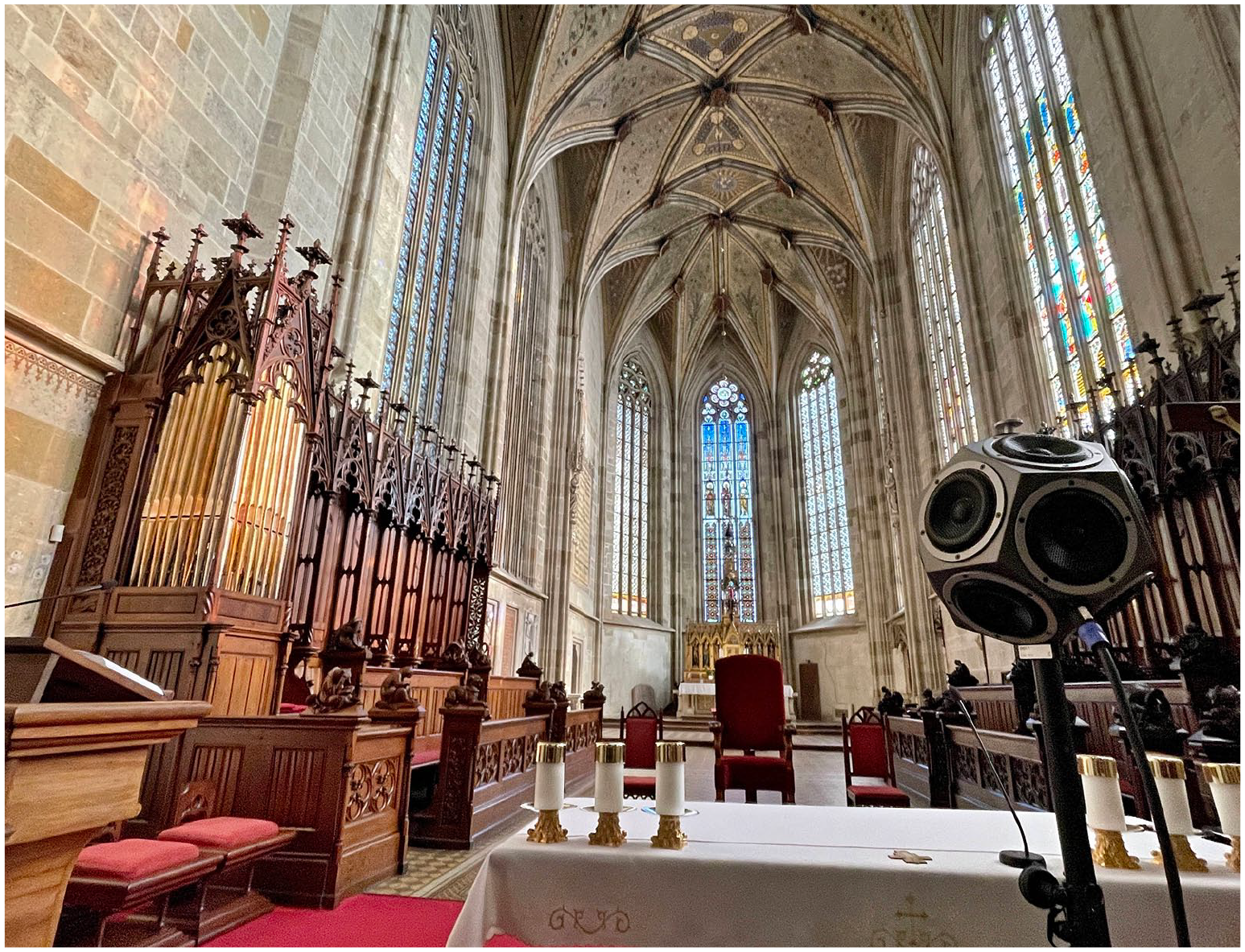
View of the presbytery of St. Martin’s Cathedral figure.
In the course of the 14th and the 15th centuries, the hustle and bustle around the construction of this main church of Bratislava did not always have the same dynamics. It largely depended on the socio-political situation and the relations between the burghers and the monarch. After a slight stagnation in the latter half of the 14th century, the work gained momentum at the turn of the centuries thanks to Sigismund of Luxembourg. The Bratislava cathedral under construction provided an ideal opportunity for him to manifest the idea of constituent alliance and to demonstrate the monarch’s connection with both the burghers and the spiritual power of the Hungarian clergy. This was to be evidenced by the so-called Royal Chapel (today’s St. Joseph’s Chapel), the second of the two quadrangular chapel-like spaces added to both sides of the tower after the year 1401, following the model of St. Stephen’s Cathedral in Vienna. 9 Together with the chapels, the side walls of the nave were also extended, thus definitively demarcating the floor plan of the cathedral and closing the gap between the tower (that stood separately in the city wall with the south-west corner attached to it) and the unfinished nave, inside which a smaller church still functioned. The construction work was thus extensive in the early 15th century, and the new construction phase substantially changed the architectural character and enriched this Bratislava cathedral with the most impressive achievements of the Lower Austrian, especially Viennese, artistic milieu. 10
The end of the Hussite wars (1419–1434) and the waning interest of Sigismund of Luxembourg in Bratislava had an impact on the progress of the work on the cathedral. Nevertheless, construction did not stop but moved to the interior of the building, to the nave and the aisles. In 1432, a committee inventoried the church and that means the ongoing construction required the demolition of the older, inner church. 11 The work, which concentrated on the outer walls and the pillars of the cathedral, took almost 20 years to complete. The wide hall was vaulted with a gently curved net vault by Hans Puchsbaum (1390–1454). The cathedral with a nave and two aisles could be accessed from the centre of the mediaeval town through a Gothic portal with a relief of the Holy Trinity. 10 The addition of a new, bright presbytery consecrated at the end of the 15th century meant the completion of the cathedral.
While the beginning of the construction of the cathedral was significantly influenced by Sigismund of Luxembourg, the end of the work was supported by King Matthias Corvinus (1443–1490). Both these prominent figures of the late Middle Ages and the emerging Renaissance were aware of the importance and strategic location of not only Bratislava but also its main sacred building, which became the coronation venue of the Kings of Hungary a few decades later.
Music in St. Martin’s cathedral
St. Martin’s Cathedral is not only one of the oldest sacred buildings in Bratislava but also the oldest musical institution in the city. It fulfilled two sacred functions already in the Middle Ages: (a) it was the church of the collegiate chapter and the provostry, headed by the provost who also held partial powers of the Archbishop of Esztergom and (b) it was also a parish church over which the municipal council exercised patronage. 12 These two important sacred functions together determined the status of music in this church. They manifested in an increased interest in the cultivation of liturgical music on the one hand and in supervision over its execution on the other hand. Foundations to support liturgical singing and choristers under the direction of a canon-cantor and to finance the production of notated codices for the needs of the church were already established in the Middle Ages. The role of the cathedral increased after two churches were demolished outside the city walls in fear of Ottoman raids. After 1531, the cathedral became the only Catholic parish church in the city for almost 200 years and the coronations of Hungarian monarchs in the city after 1563 enhanced its prestige.12–14
In the centuries-long history of the cultivation of liturgical music in the cathedral, periods of exceedingly favourable times alternated with those of crisis due to insufficient funds or a lack of skilled musicians. The support of art music in the church depended on the power and privilege of particular social classes and on the position of the Catholic Church throughout history. On the one hand, part of the funding for musical productions was provided by the chapter, which set up several foundations for its support. Part of the interest from these funds (e.g. from the funds of Archbishop Péter Pázmány, Canon Michael Veresmarti, Bishop Sigmund Zongor and others) was used to support the services provided by the musicians. 12 From the 1630s onwards, the city also pulled its weight and co-financed the musical productions in the parish church by paying the organist, the master of the parish school and the cantor, and financing the construction and repairs of the organ. The third entity co-financing musical productions was the parish office of St. Martin’s Cathedral. However, the latter lacked assets and consequently had no regular income. The situation improved in 1697 when an agreement was reached between the municipal council and the chapter on the performances and duties of the town pipers in the cathedral and the chapter took effective economic measures. Moreover, new or renewed fraternities and confraternities, which became active especially in the last third of the 17th century, also began to co-finance musical productions. Over the years, in addition to providing funds, the chapter sought to improve the organization of the music and discipline among the musicians, issuing several regulations concerning their conduct during the performance of their duties over the 18th century. In 1763, for example, instructions were issued advising musicians to preserve the local traditions of singing and guard themselves against any secularization or liberalization of liturgical music. 12
From the establishment of the chapter, the choir was headed by a canon-cantor who led the choristers in singing during the liturgical services. The schoolmaster was another important figure, as he trained the adolescent singers in the school that functioned at St. Martin’s Cathedral (the school had already been established in the Middle Ages). 15 Their duties included participation in the sung parts of solemn liturgies and certain other events. From 1582 onwards, the schoolmaster was paid by the municipal council and the parish only paid him a small remuneration on special occasions. During the 16th century, 14 liturgical feasts were specified which required the cooperation and participation of the schoolmaster and his pupils.
During Bethlen’s Revolt (1619–1626), the church briefly came under forced administration by Protestants. After it was returned to the Catholics, demands for musical productions during the liturgy increased. In addition to the schoolmaster, a cantor without teaching duties became a musician paid from the municipal treasury. By virtue of his patronage right by the municipal council, the cantor of the cathedral became a ‘regens chori’ and enjoyed supremacy over the schoolmaster in matters of directing musical productions in the church. The cantor’s demanding duties of leading the vocalists and instrumentalists in their performance of figural music suggest that this position could only be held by a talented musician. From 1623 onwards, ‘regentes chori’ included Johann Simonides (1623–1630), Hans Schrott (1631–1644), Johannes Albertinus (1648–1664), Franz Nikolaus Weigel (1664–1669), Joseph Zettl (1724–1730) and others. Towards the end of the 17th century, the number of feasts with solemn liturgy increased. The spectacular celebrations organized in honour of St. Cecilia, the patron saint of musicians, from the 1770s onwards are worth mentioning in this respect. As the Pressburger Zeitung newspaper reveals, the music of Anton Zimmermann (1741–1787), a member of the archbishop’s orchestra, was also played during these celebrations. Solemn masses were also celebrated on special occasions in the social life of the city, such as coronations, the election of a mayor, the election of the senate, sessions of the Hungarian Diet, etc. 12
Musicians working and performing in St. Martin’s Cathedral included choralists, solo singers and instrumentalists. In addition to these paid musicians, students of the parish school and the Jesuit college also performed there. Entries in the municipal ledgers (after 1719) preserved the names of some singers and enable us to trace back their career development. The cantor also had to work with municipal instrumentalists, who were led by the tower master. The joint performances of these instrumentalists in solemn liturgies are documented from as early as the 16th century. 12
Next to the cantors, the second most important figure in church music (Figure 2) was undoubtedly the organist. Surviving ledgers enable us to trace the occupation of the post of organist from 1536 onwards, although organ music was presumably present in the cathedral’s liturgy already in the mid-fifteenth century. This is evidenced by a surviving purchase order for an organ for the needs of the cathedral from 1452. From 1556 onwards, the names of organists regularly appeared in the ledgers among the paid employees of the city. This position required not only a highly talented but also a responsible musician. Many of the candidates who passed the extremely difficult selection process remained in this post until the end of their lives. The musicians who applied for this post included the aforementioned brilliant musician and composer Anton Zimermann. However, he worked as an organist in the church for only a short time (1780–1781), as he died shortly after his appointment. 12
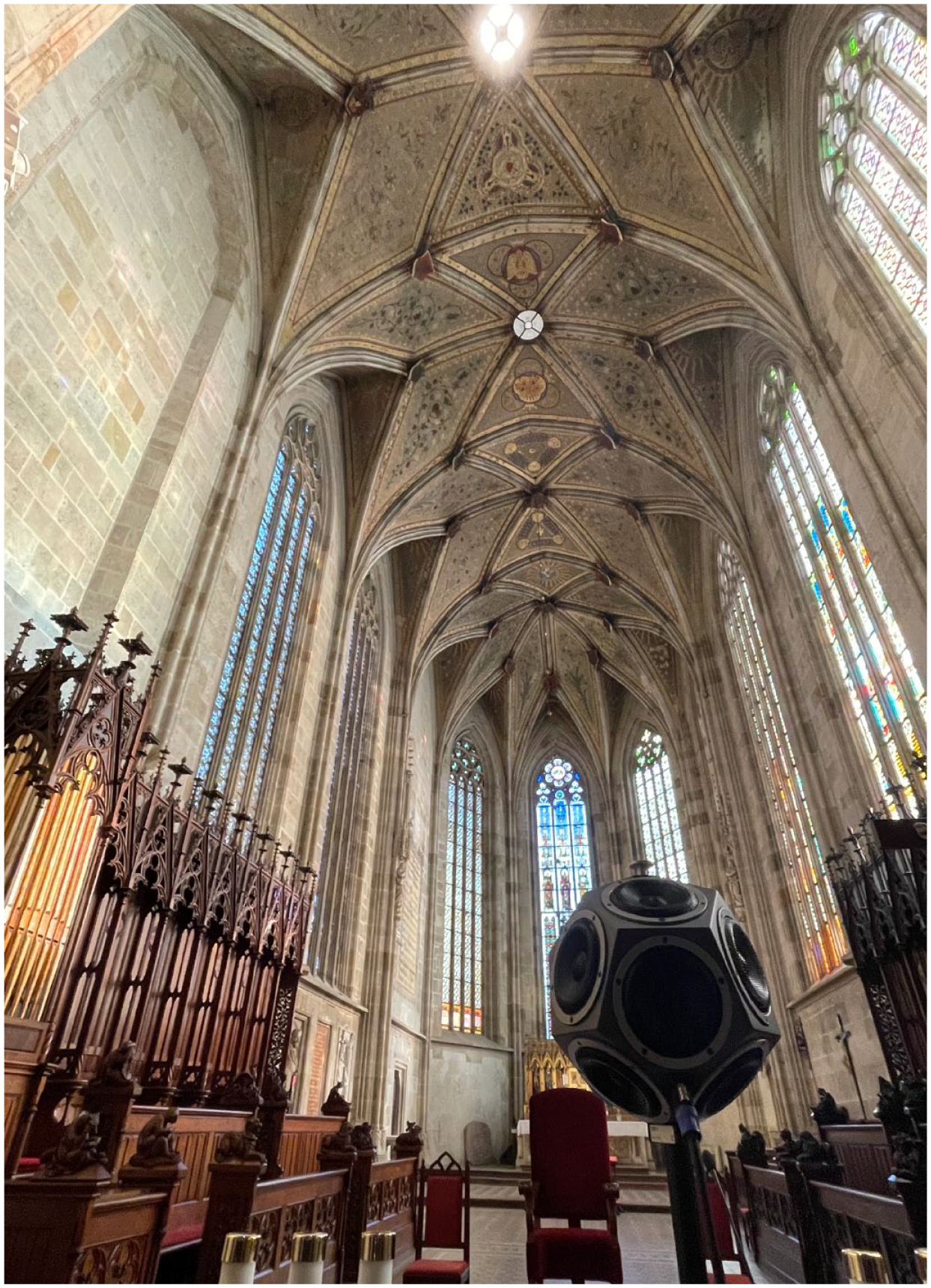
View of the auditorium and gallery of St. Martin’s Cathedral.
Paradoxically, no collection of music documenting the repertoire of the musical productions survived from the 16th to the 18th centuries. What survived are only a few pieces that may have been available to the musicians. These include a codex of the burgher Anna Schumann (widow of Hans Schumann) with transcriptions of compositions of Renaissance polyphony, which she donated to the church in 1571 or a manuscript codex titled Responsoria, hymns aliae et cantiones (1601), written directly for the needs of St. Martin’s Cathedral. 12 From the late 16th to the early 19th centuries, we can infer the repertoire from secondary sources such as inventories of music. These reveal that the repertoire evolved according to the styles of the time: before 1616 it was Renaissance polyphony, while before 1700 it was already compositions in the Baroque concertante style (masses, motets, sacred concertos). Some works in the inventories point to a connection with coronation festivities (Missa Coronationis, Missa libera).13,14 As for the 18th century, it is difficult to determine the character and style of the repertoire from the extant materials. The collection of music surviving from the 19th century and the first half of the 20th century is associated with the activities of the Church Music Society at St. Martin’s Cathedral, founded in 1833. 12
Architectural features and geometrical data
The main hall dates back to the first half of the 15th century. The net rib vault above the triple arch forms the main artistic and expressive element of the space (Figure 3). It is divided by eight supporting pillars (four on either side). The rear two pillars carry the organ emporium. The heights of the aisles are approximately equal, so that the space is lit by the perimeter walls on the south and north sides. There are three stained-glass windows on the left wall and six on the right. The depth of the hall is 32.3 m, the width 15.2 m and the height of the vaulting 15.6 m.
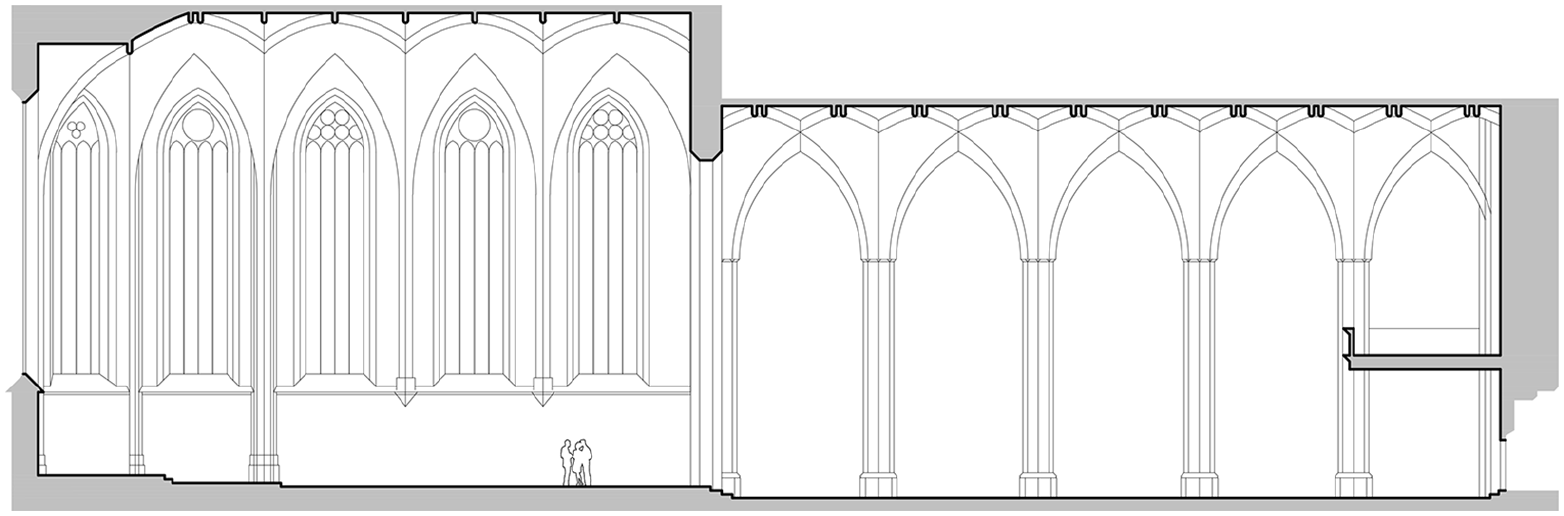
Schematic representation of St. Martin’s Cathedral.
The presbytery was built after the main hall in the last quarter of the 15th century. The rooms are connected by a broken triumphal arch, 6.2 m wide and 13 m high. The sanctuary is framed by a polygonal termination at a depth of 27.2 m. With a width of 10.6 m and a rib vault at 18.7 m, the space is well proportioned to represent the Gothic style. The quality of the style is also reflected in the high level of light in the presbytery, which is provided by a total of nine large stained-glass windows. The volume of the main hall of the dome is 11,300 m3 and the volume of the presbytery is 5100 m3. The interior of the cathedral is conceived mainly from stone materials, which are represented in the construction of the ceiling, supporting columns and perimeter walls. The floor surface is made up of stone tiles with a polished surface, which contributes significantly to the high acoustic reflectivity of this space. The presbytery is characterized by the dominant presence of stained-glass windows, which, in addition to their visual effect, also influence the propagation of sound. The seating furniture in the nave consists of varnished wood, with the lower part of the pews upholstered. The general furnishings in the interior are limited and mainly made of varnished wood. The presence of acoustically absorbent materials is minimal in the cathedral space, resulting in prolonged reverberation and significant reflectivity of sound waves. The space of the nave is divided by eight massive support columns of circular cross-section, which cause local shielding of the direct sound field. As a result of this physical obstruction, the sound energy is not distributed in a straight line to the areas behind the columns, creating the phenomenon of the so-called acoustic shadow. Nevertheless, the level of intelligibility of the musical production in these areas remains at a satisfactory level, which can be attributed to the high degree of diffusivity and homogeneity of the acoustic field in the cathedral space. The ribbed vault of the apse contributes significantly to the diffuse dispersion of sound waves and increases the overall reflectivity of the space. This phenomenon is reflected in the symmetrical behaviour of the measured acoustic parameters, namely the reverberation time (T), early reflection time (EDT) and C80 parameter curves. The shape configuration and volumetric proportion of the presbytery, especially in relation to the position of the sound source, fundamentally influence the formation of a homogeneous reverberation field throughout the interior. The height differentiation between the vault of the presbytery and the nave, which promotes both vertical and horizontal dispersion of acoustic energy, also contributes to this effect.
Measurement methodology and equipment
The measurement methodology of the acoustic features of a space is primarily based on the requirements set by the STN EN ISO 3382-1 and STN EN 60268-16 standards.16,17 The primary objective in our research was to determine the quality of the acoustic conditions of St. Martin’s Cathedral with respect to musical sound. The secondary objective was to determine the level of speech intelligibility without the use of a sound system. The research implementation concept respected the recommendations of the major scientific studies and methodologies published to date.18–22 The determination of the measurement positions (of both sound source and microphones) was based on the methodology of Francesco Martellotta et al.
23
for the measurement of the acoustic properties of sacred spaces. Since one of the objectives of this acoustic research was to preserve the acoustic sound model of St. Martin’s Cathedral in Bratislava, the AudioEase Altiverb software was used for this purpose, with the methodology recommended by the manufacturer of this software.
24
The following variables were included as the measured parameters of the acoustic space:
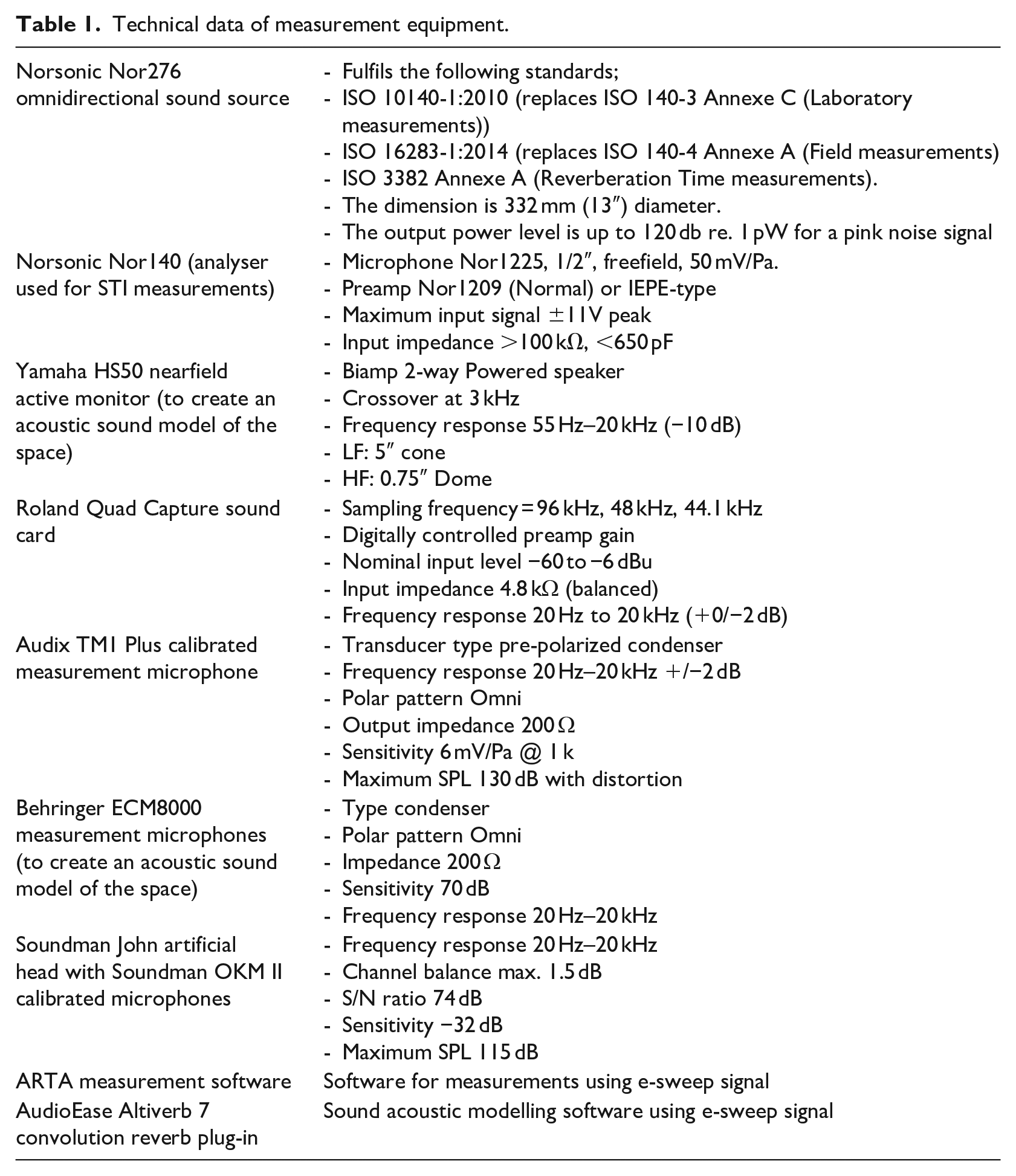
The measurements were conducted using the following devices presented in Table 1:
Technical data of measurement equipment.
The measurement took place on 29 November 2023 in a vacant space.
Sound source positions
During concert performances, musicians are situated in an area in front of the altar (Z1), as the public is not allowed to enter the presbytery (Figure 4). Therefore, only one sound source position was used. However, the omnidirectional characteristics of the measuring loudspeaker ensured an acceptable level of the acoustic build-up of the space. A sound source with omnidirectional characteristics was used for the measurement of the acoustic quantities according to the STN EN ISO 3382-1 standard (T, EDT, C80, IACC, BR). A directional loudspeaker was used to measure speech intelligibility. An excitation signal of the exponential sweep (e-sweep) type was used to measure the acoustic parameters according to STN EN ISO 3382-1, which covers the entire spectrum of audible frequencies in the range of 20 Hz to 20 kHz. Nevertheless, the evaluation will concentrate on the frequency range from 100 Hz to 4 kHz, which corresponds to the fundamental tonal range of most acoustic musical instruments. This approach allows us to capture and analyse the acoustic properties of the space from the perspective of musical performance, while the versatility of the measurement signal used provides methodological flexibility with respect to different types of musical ensembles and repertoire.
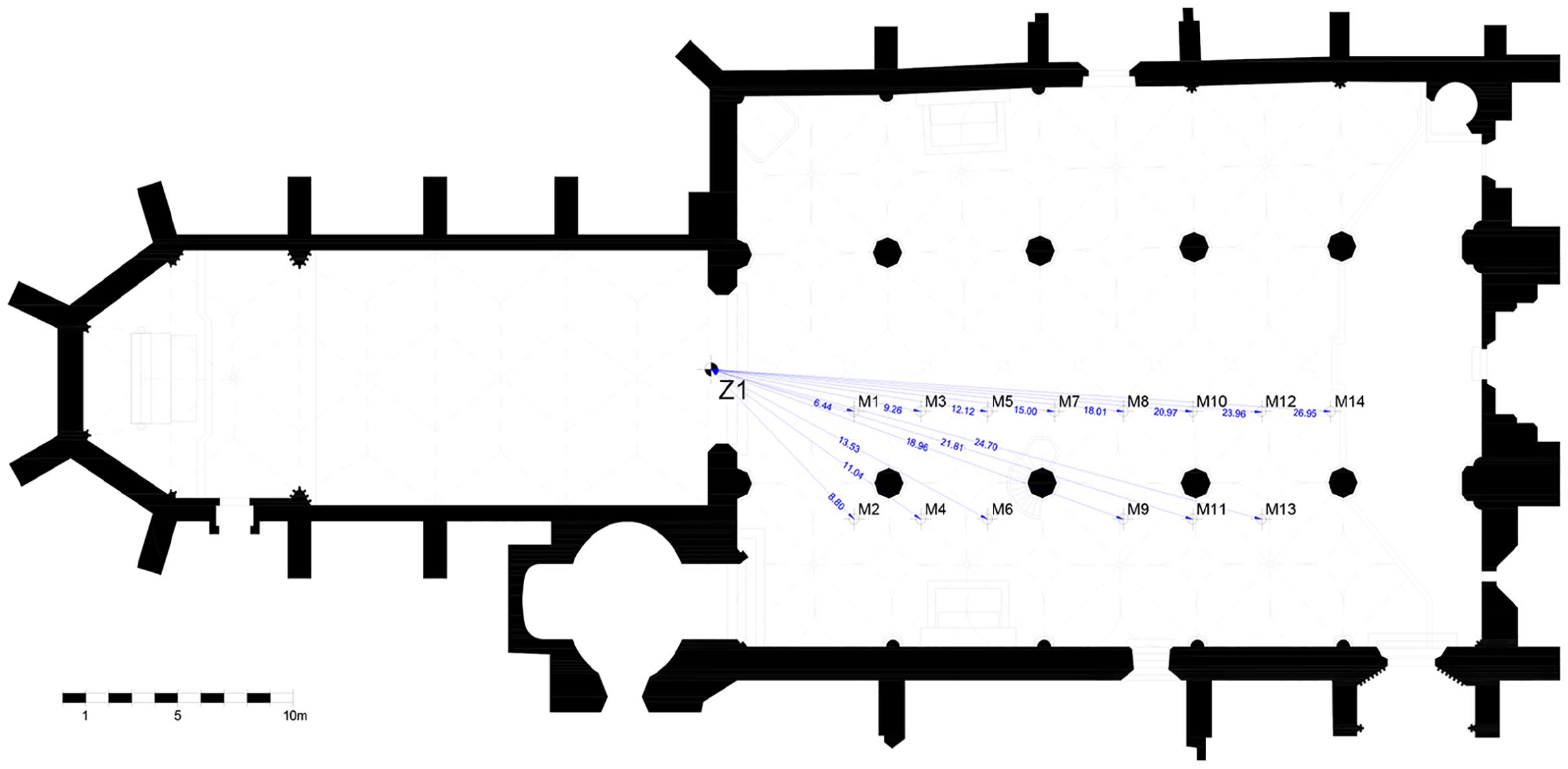
The floor plan of St. Martin’s Cathedral in Bratislava with sound source (Z1) and microphone (M) positions marked.
Microphone positions
The space of the nave, where the largest number of listeners is concentrated, can be considered symmetrical. Therefore, measurements were taken only in one-half of the space. The observed inconsistency in the geometric symmetry of the interior is mainly due to the asymmetrical placement of the entrance openings on the opposite side walls and the presence of the pulpit, which is situated almost centrally in the space of the main nave. These deviations are considered marginal from the point of view of acoustic measurement, since they do not affect the overall volume of the space and therefore do not fundamentally alter the acoustic characteristics affecting reverberation or the distribution of sound energy. In the context of the methodology of EN ISO 3382-1, these geometric irregularities are classified as acoustically insignificant. The microphone positions were spaced so that the reflection of the sound was captured throughout the entire nave. Fourteen measurement positions is a satisfactory number even with respect to the requirements of STN EN ISO 3382-1 (Figure 4). The measurement results can therefore be considered relevant and objective. All selected microphone positions were used for each measured parameter (T, EDT, C80, IACC, BR, STI). When measuring the InterAural Cross-Correlation Coefficient (IACC), the omnidirectional measuring microphone was replaced by an artificial measuring head.
Scanning methodology of the acoustics of the space
The sound of the acoustic model of St. Martin’s Cathedral was captured from sound source position Z1 using sine sweep generated by Altiverb 7 processor. A pair of omnidirectional microphones was placed in microphone position area M7 symmetrically to the sound source (Figure 4). The obtained acoustic sound model can be used in several ways. It can be primarily used in post-production work in recording studios. The research team feels that using this acoustically interesting space for making recordings would be a significant added value for post-production work, although the place is inaccessible for this purpose yet. An even more important use of the model would be to preserve it for future generations in case the space ceases to exist or gets partially destroyed. A database of the acoustic sound models of the musical spaces studied so far is currently under development.
Results and research evaluation
Reverberation time and early decay time (T30, T20, EDT)
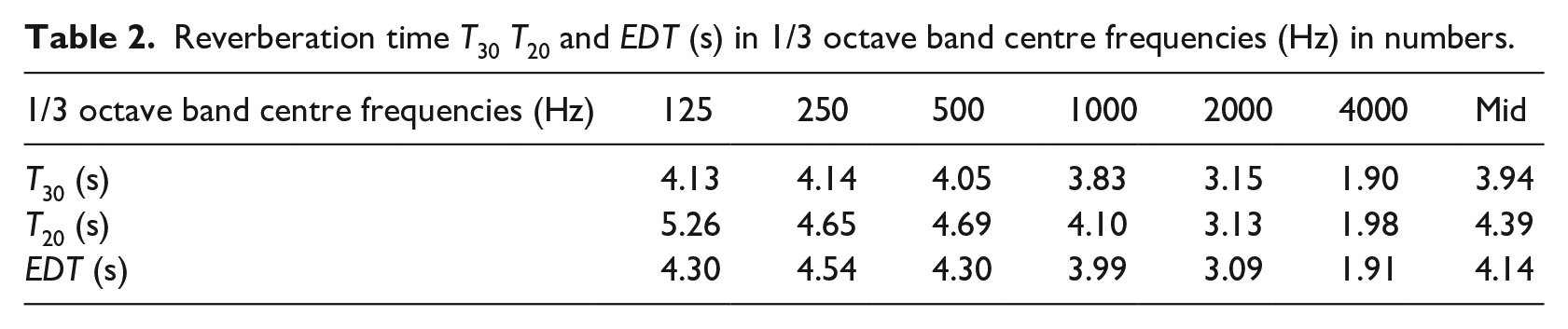
One of the most important acoustic parameters that define an acoustic space is reverberation time and primary reflections. The measured results, shown in the
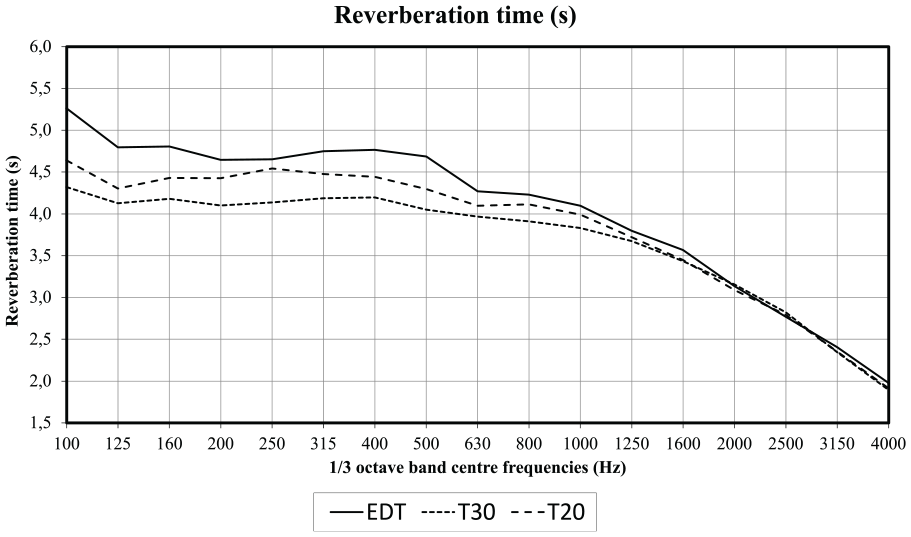
Reverberation time T30 T20 and EDT (s) in 1/3 octave band centre frequencies (Hz).
Reverberation time T30 T20 and EDT (s) in 1/3 octave band centre frequencies (Hz) in numbers.
Clarity (C80)
The values of the
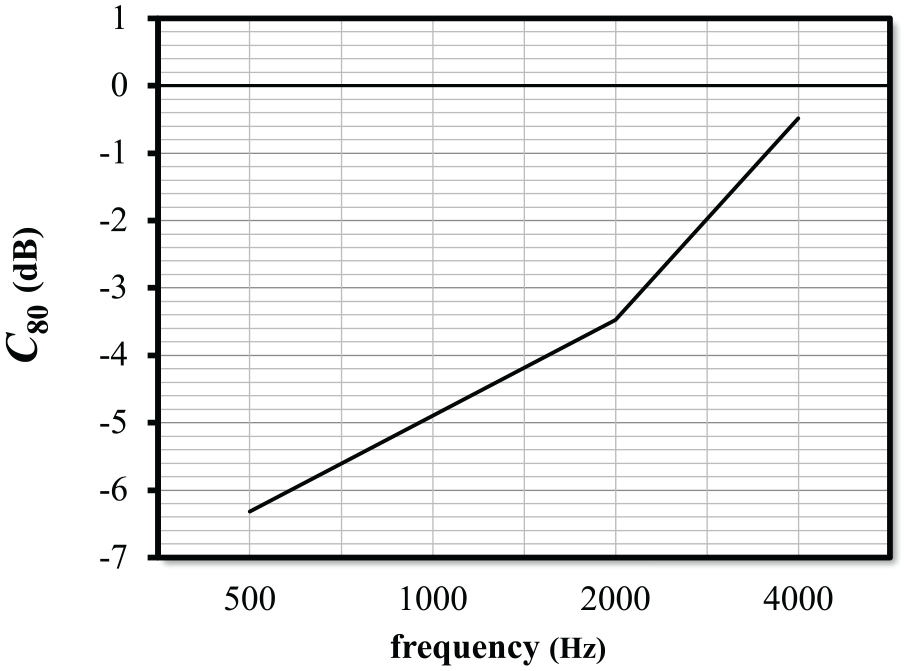
Clarity C80 in octave band centre frequencies (Hz).
Clarity C80 in octave band centre frequencies (Hz) in numbers.

Speech transmission index (STI)
The measurement of speech intelligibility without the use of sound equipment according to the STN EN 60268-16 standard was intended to demonstrate the intelligibility of liturgical texts spoken at a time when microphones and loudspeaker systems were not yet in use. As the main function of cathedrals has always been the celebration of the liturgy, the level of speech intelligibility is important for their acoustic space. Given the size of the space and the highly reflective materials used in the interior, STI intelligibility was not anticipated to reach an acceptable level. The measurements showed (Figure 7) that throughout the measured range of distance from the sound source, intelligibility was below average (down to 0.3) to inadequate (below 0.3). The STI parameter is directly dependent on the distance of the measurement position from the sound source and the measurements showed that intelligibility was unsatisfactory from approximately the centre of the cathedral auditorium. This is the reason why sound systems are currently installed in large sacred spaces.
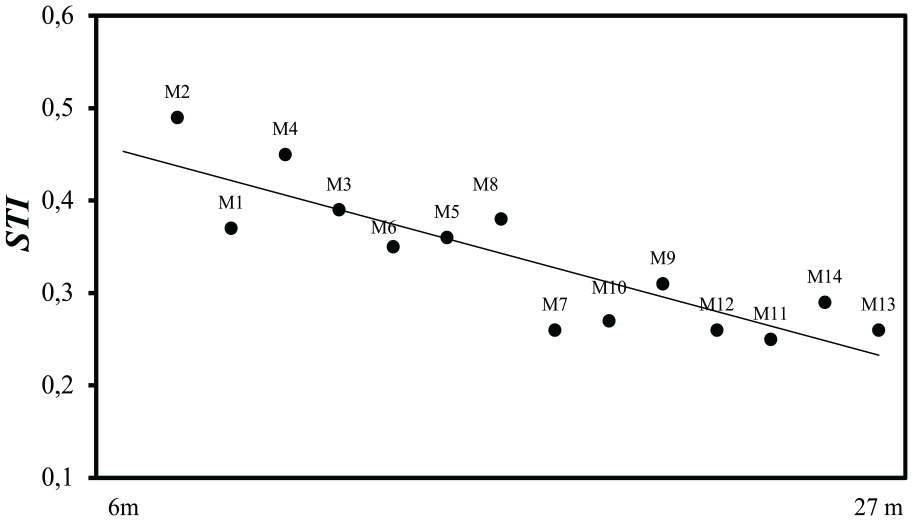
Speech transmission index (STI) for each measured position and its distance from sound source Z1.
InterAural cross-correlation coefficient (IACC)
The IACCE parameter was measured according to the principles of the STN EN ISO 3382-1 standard and all microphone positions were used for the measurement. The measurement was performed using a measuring head with microphones placed in plastic earpieces. Although IACC measurements are usually carried out in concert halls, the research team decided to evaluate this parameter also for St. Martin’s Cathedral, a sacred space with little concert activity. The results make it clear that, unlike the best concert halls, this space does not possess the parameters required for excellent perception of spatiality. The average IACCE value reaches only 0.42 (Table 4). According to Hidaka et al.′s 25 qualitative categorization of the standards laid down for concert halls, it is a good concert space. Due to the high diffusion of the space and the weaker primary reflections, the directionality of the sound in the space is limited and this affects the perception of the quality of spatiality. This phenomenon is characteristic for most cathedrals and reaffirms the need for a careful selection of instruments and musical material for concert performances.
InterAural cross-correlation coefficient (IACCE) values.

Bass ratio (BR)
One of the parameters in which the acoustic space of St. Martin’s Cathedral excels is bass ratio. This value shows the degree of bass frequency support. According to Beranek, 26 bass ratio is one of the most significant indicators of the quality of concert halls. In St. Martin’s Cathedral, we measured a BR value of 1.07. Taking into account Beranek’s recommendation that the value should be as close to 1 as possible, it is an extremely suitable concert space for organ music in terms of balance and bass frequency support.
Conclusion
Because of its historical significance, St. Martin’s Cathedral is highly valuable not only in Slovakia but also in Central Europe. Extensive archaeological research, carried out especially in the 19th and the 20th centuries, confirmed that the cathedral space has received special attention over the centuries, both during its renovations and its purposive use. To understand its historical context, as well as its legacy for future generations, it is essential to document, archive and define the phases of the development of St. Martin’s Cathedral. The acoustic research we carried out in the cathedral aimed to contribute to a more comprehensive understanding of its space, partly in view of its rich concert history. As St. Martin’s Cathedral could not have been built with the knowledge of modern spatial acoustics at the time of its construction, it cannot serve as a universal concert space. By mapping the acoustic characteristics of historic spaces, we point out the importance of the selection of appropriate instrumental ensembles and repertoire. In terms of concert activity, St. Martin’s Cathedral is suitable for organ music, choral singing and some solo instruments. The choice of the musical repertoire should take into account the requirement for a slower tempo, especially with regard to reverberation length (T and EDT) and the C80 level of clarity. In this context, it is necessary to stress that spatial and structural interventions aimed at improving acoustic parameters are generally not permissible in buildings of historical and cultural significance. For this reason, it is important to carry out systematic acoustic mapping of these spaces, on the basis of which recommendations for adequate musical interpretations can be formulated, including optimized selection of musical instruments and repertoire in accordance with the natural acoustic properties of the space.
In addition to its practical application, measuring and preserving the acoustic properties of this space has a longer-term dimension to it, too. The acoustic properties of historical spaces are a form of intangible cultural heritage and can partly be used for reconstruction purposes in case the space gets damaged or destroyed.27,28 At the same time, the acoustic sound model of this space (available at request) can also be used as a post-production tool in recording studios, which may be highly valuable given the importance and general inaccessibility of St. Martin’s Cathedral for making recordings. The historiographical facts and results of the acoustic research presented in this study form part of a database of concert venues developed by the research team. The main findings of the research are as follows:
Investigating the acoustic properties of historic spaces, whose function includes the performance of music, requires not only providing research results. A clear presentation of the acoustic characteristics of the space in relation to the selection of appropriate musical instruments and musical repertoire is recommended.
St. Martin’s Cathedral in Bratislava is an acoustically suitable venue for concert events, and the use of the following musical instruments and ensembles is recommended: organ, choral singing, as well as solo instruments, especially flutes, guitars and strings. The repertoire performed should consist of slower tempo pieces with less rhythmic articulation. In terms of stylistic classification, music from the Renaissance, Baroque and Romantic periods is particularly recommended.
Currently, the St. Martin’s Cathedral is a sought-after and renowned concert venue, which can be attributed to its acoustic qualities. Measured reverberation time values (
Values of the Clarity (
In the field of acoustic research aimed at the preservation of intangible cultural heritage, the focus should be on recommendations for concert ensembles and musical repertoire. Acoustic adaptations are not possible in every concert venue, especially not in cathedrals of transnational importance.
The present study does not include acoustic simulation designs of the investigated space, which represents a certain limitation in terms of the possibility of generalization of the obtained knowledge. This absence results from objective circumstances of methodological and technical nature. The research team is aware of the importance of this form of analysis and is actively working to create conditions that will allow the implementation of numerical models and advanced predictive simulations of the acoustic behaviour of the space in the future.
Footnotes
Data availability
Data used in this research can be made available on request.
Declaration of conflicting interests
The author(s) declared no potential conflicts of interest with respect to the research, authorship, and/or publication of this article.
Funding
The author(s) disclosed receipt of the following financial support for the research, authorship, and/or publication of this article: VEGA under Grant 1/0642/23.
