



Abstract
We use the gravity model to examine the causal link between economic policy uncertainty (EPU) and inbound tourism (ITM) in the United Kingdom. The results for the full sample demonstrate that EPU Granger causes ITM. This finding shows that association is misappropriated due to structural changes. We apply the time-varying rolling window technique to revisit the dynamic association between EPU and ITM. The findings for the subsamples indicate that EPU has a negative effect on ITM. In contrast, ITM has a positive effect on EPU in the subsamples. These results support the gravity model, which states that as EPU increases, the level of ITM decreases. The results have noteworthy implications for policymakers in the form of consistency in policies and short-term shock forecasting that is capable of greater shock-absorbing capacity to lessen the revocation of tourist programs. A stable exchange rate regime in the destination country will make tourism cheaper and more attractive to tourists. Decision-makers should consider time-varying attributes to establish tourism activities for effective and accurate predictions.
Introduction
Discussion of the tourism industry and economic policy uncertainty (EPU) has received considerable attention from policymakers and researchers (Ghosh, 2019). Tourism is known as the “smokeless industry” and has emerged as a rapidly growing segment and an impetus for socioeconomic development (Leiper, 2008; Shahbaz et al., 2018). However, tourism is extremely vulnerable to global crisis and domestic political turmoil (Tekin, 2015). There is a strong interaction between EPU and tourism due to economic integration between countries (Su et al., 2019a; Wu and Wu, 2019a). The policymaking process and the implementation of economic policy can generate EPU, which may have an impact on economic activity (Demir and Ersan, 2018; Su et al., 2017). Tourism is extremely important in naturally advantaged countries, in which the tourism industry is the engine of economic growth (Pablo-Romero and Molina, 2013). It provides revenues and foreign direct investment to improve infrastructure development while indirectly contributing to subsidiary industry growth (Drakos and Kutan, 2003; Ghosh, 2019; Shahbaz et al., 2018). The aggregate effect is reflected in gross domestic product (GDP), which is sensitive to economic and political uncertainty and thus influences decision-making by reducing tourism (Chen et al., 2018; Ghosh, 2019; Li et al., 2010; Shahbaz et al., 2018). This can create a fear factor that ultimately leads to the delay or abandonment of access plans (Demir and Gozgor, 2018; Gozgor and Ongan, 2017; Oxford Economics, 2012). The smooth development of tourism depends to a large extent on economic and political stability and vice versa.
According to the World Tourism Organization (2018), the United Kingdom is one of the most frequently visited countries by tourists; it welcomed 37.7 million tourists in 2017 (Foley and Rhodes, 2019). The tourism industry is an important sector of the economy, contributing to more than 3% of GDP and 5% of employment (Dubarry, 2000; Oxford Economics, 2012). Inbound tourism (ITM) generates revenue through transport, accommodation, food, and beverage services and cultural attraction activities. EPU fundamentally affected ITM during 2001–2003, driven by instability generated by the terrorist attacks in 2001 and the Iraq war in 2003. This uncertainty affected the United States, Germany, Japan, and the UK’s largest sources of tourists, reducing the UK’s ITM (Belau, 2003). In 2005, EPU decreased, and tourism resumed its previous pace, showing a steep trend. As indicated by the World Tourism Organization, the United Kingdom received £16 billion in receipts from ITM in 2006 and remained in the sixth position in terms of travel industry income. From 2000 to 2008, there was remarkable growth in ITM. This period showed strong economic growth combined with a lower EPU in the United Kingdom, providing a favorable environment for tourism growth. According to the Office for National Statistics (ONS), a record number of 30 million overseas travelers visited the United Kingdom, in that period despite a high degree of uncertainty caused by the 2005 London bombing (Katz, 2006).
The largest decrease in ITM was observed in 2007–2008 due to the global economic recession, which increased EPU and led major economies such as the United States and the European Union (EU) to experience economic crisis. EPU led to low disposable income and an increase in the cost of living, reflected in a decrease of approximately 2.7% in U K ITM (Rebecca, 2009; Webber et al., 2010). In addition, the recession resulted in declining economic activity because the main component of tourism is business expenditures, and companies sought to reduce costs and maintain their liquidity position by cutting business travel. The Eurozone debt crisis slowed economic activity in Western Europe and increased the level of EPU, which translated to a low number of visits to the United Kingdom. However, the postcrisis period has witnessed lower EPU, supporting ITM as the economy has recovered.
Tourism in the United Kingdom expanded and recorded an astonishing increase between 2010 and 2016. Similarly, ITM increased by an average of 7.2% over the past 5 years, accounting for 6% of the UK’s GDP (Foley and Rhodes, 2019). The crucial event of the Brexit referendum in 2016 has had a serious impact on tourism (Belke et al., 2018), including increased airline prices, visa restrictions, and numerous taxes created by new trade agreements, which further deters visitors to the United Kingdom. Moreover, the legal framework is no longer applicable, which has a negative impact on ITM (Papí et al., 2018). Brexit has raised concerns about future economic and political affairs between the United Kingdom and the EU. However, the number of visitors has increased in the post-referendum period as the pound weakened against the Euro and the dollar, making the country cheaper and attracting more visitors. As a result of the failure of the Brexit agreement in 2019, the pound will continue to fall, although tourist spending in the United Kingdom reached £25.5 billion in 2017 due to an increase in ITM (Coffey, 2018).
It has been recognized that economic, financial, and political stability supports tourism development and vice versa (Gozgor and Ongan, 2017). EPU has increased the vulnerability of ITM in the United Kingdom (Webber et al., 2010). Because EU rules allow for the free flow of tourists between EU countries and the United Kingdom, the resultant EPU is expected to be detrimental to tourism in the region. Therefore, EPU is the deciding factor in tourism between the United Kingdom and the rest of the world. Recently, the nexus between EPU and ITM has been extremely important in terms of the Brexit referendum, which has created a stalemate in the United Kingdom There is economic and political uncertainty and a reduced level of business confidence; thus, the investment scenario depends on the outcome of the Brexit negotiations. The renegotiation of agreements for immigration and trade are the main factors behind the uncertainty in the United Kingdom as well as in the EU affect tourism (Belke et al., 2018). Similarly, the weak performance of the UK economy and pound sterling against the US dollar and the Euro makes the topic of tourism important for the United Kingdom.
This study contributes to the literature in the following ways. First, the existing literature focuses mainly on the one-way impact of EPU on tourism but does not fully examine the correlation in the other direction. Hence, this study attempts to explain the mutual relationship between EPU and ITM. The outcome suggests that EPU has a negative effect on ITM in the subsamples. However, there is a positive impact of ITM on EPU. The causality occurs with regard to financial and economic events that increased EPU and resulted in low ITM. Furthermore, the results show that EPU has a notable role in ITM and is supported by the gravity model, indicating that on various occasions ITM declined because of EPU. Second, this study contributes by demonstrating a link between EPU and ITM in the United Kingdom, which is a high-tourism destination, and considers the exchange rate (EXG) as a control variable. It finds that the EXG greatly increases uncertainty in the short run, thus influencing tourists’ plans (Krol, 2014). Lastly, this study discusses the structural changes caused by various economic and political events. Most previous studies have examined the causal link between EPU and tourism in a full sample, which may lead to inaccurate results due to structural changes. The instability due to the terrorist attacks in 2001 and the Iraq war in 2003, the London bombing in 2005, the global financial crisis in 2008, and the Eurozone debt crisis and the Brexit referendum in 2016 affected EPU and ITM in the United Kingdom (Balcilar et al., 2010), suggesting that the dynamic relationship between EPU and ITM experiences time-varying instability. Thus, this study takes into account the time-varying characteristics of the time series. The rolling window is applied to evaluate the nexus between EPU and UK tourism in the presence of structural changes. The findings suggest that EPU and ITM have bidirectional causality in multiple subsamples. This finding supports the gravity model, which suggests that a higher EPU has a negative effect on ITM in the United Kingdom.
The remainder of this article evaluates the previous literature, links theory with practice through the gravity model, and illustrates the bootstrap rolling window approach. These sections are followed by an outline of the study data, a critical analysis of the results, and a recapitulation of the study.
Literature review
Some contemporary literature reveals that there is a significant relationship between EPU and ITM. Drakos and Kutan (2003) suggest that EPU significantly disturbs tourism inflow. Li et al. (2010) evaluate the impact of the economic crisis on ITM and find that economic slowdown leads to a decrease in domestic tourism. Kapiki (2012) examines the tourism sector and the global economic crisis and reveals that EPU has a negative effect on tourism in Greece. Tekin (2015) investigates tourism in Turkey in terms of the global crisis and regional and domestic political instability and confirms that global uncertainties have an extensive negative impact on local tourism. Alawin and Lila (2016) analyze the determinants of international tourism and identify EPU as one of the contributing factors to the reduction of tourist arrivals. Dragouni et al. (2016) evaluate the spillover effect from EPU to outbound tourism and find a high interrelationship between the two. Monterrubio (2017) highlights the effects of EPU on tourism generated by social movements and suggests that uncertainty caused by movement significantly influences tourism. Gozgor and Ongan (2017) find that a higher EPU has a negative impact on ITM in the long run. Fareed et al. (2018) explain the asymmetric impact of terrorism on tourism and find a negative relationship between EPU and tourism. Demir and Gozgor (2018) show that rising EPU leads to a decline in tourism as safety and social instability decrease household consumption, which results in the delay or cancelation of tours.
Tangvitoontham and Sattayanuwat (2018) indicate that EPU has an immediate negative impact on tourism in the long run. Gozgor and Demir (2018) suggest that with increasing EPU, people tend to reduce their expenditures on traveling abroad. Wu and Wu (2019b) conclude that EPU influences international tourism in the short term and tourism in European countries in the long run. Tsui et al. (2018) explain the importance of EPU to New Zealand’s tourism, and their results show that EPU has a significant role in ITM. Balli et al. (2018) describe the shock of EPU on tourism inflow. They find that EPU has a negative impact on tourism, especially around the global financial crisis of 2008 and the 2001 terrorist attacks. Demir and Ersan (2018) consider the association between EPU and the tourism index in Turkey. Their findings suggest that EPU has a negative impact on tourism inflows. Chen et al. (2018) study the EPU effects on tourists’ hotel room demand in Taiwan. They conclude that EPU has a negative and significant impact on demand during the trough period. Ghosh (2019) reports that EPU has an adverse impact on tourism in the long run. Wu and Wu (2019a) detect a strong relationship between EPU and tourism in Brazil, Russia, India, China, and South Africa countries. Su et al. (2019b) detect that political uncertainty has a significant impact on economic activity in the medium run.
Blake et al. (2003) evaluate the economic policy impact of foot and mouth disease (FMD) on ITM. Their results suggest that the disease has an adverse effect on tourism. Rebecca (2009) reports that uncertainties generated by the financial crisis have reflected in the decline in ITM to the United Kingdom. Webber et al. (2010) evaluate the uncertainty caused by the global financial crisis on tourism expenditures in the United Kingdom. Their findings suggest a negative impact on tourism. Denis and Kannan (2013) measure the effect of EPU on economic activity and conclude that EPU depresses the overall economic position in the United Kingdom. Rhodes et al. (2018) detect that Brexit uncertainty has significant consequences for tourism in the United Kingdom. Belke et al. (2018) evaluate that uncertainty caused by Brexit has extremely affected the overall economic activity in the UK and regional countries, resulting in a decrease in ITM. Foley and Rhodes (2019) show that uncertainty from the financial recession in 2008 and the Eurozone debt crisis have reduced ITM in the short run.
Analyzing the literature relevant to the causal link between EPU and tourism reflects weaknesses. First, past studies have revised the relationship between EPU and tourism, taking into account the impact of EPU on tourism but with a lack of reverse feedback. Although the works of Dragouni et al. (2016), Gozgor and Ongan (2017), Demir and Ersan (2018), Demir and Gozgor (2018), Gozgor and Demir (2018), Ghosh (2019), and Fareed et al. (2018) analyze the impact of EPU on tourism inflow, they lack an analysis of the reverse impact. Second, almost all these studies use conventional techniques to scrutinize the association between EPU and tourism. Contemporary studies such as Dragouni et al. (2016); Alawin and Lila (2016); Gozgor and Ongan (2017); Demir and Gozgor (2018); Gozgor and Demir (2018); Fareed et al. (2018); Ghosh (2019); and generalized autoregressive conditional heteroskedasticity have used the generalized method of moments, autoregressive distributed lag models (ARDL) and ARDL vector autoregression (VAR), and ordinary least squares. These cannot detect the cross-sectional relationship between the variables and lack the power to notice time variation. Moreover, such techniques may have a prerequisite of pretesting for stationarity and cointegration, which may cause biased results. Thus, this study uses a rolling window with a fixed size, including time-varying effects, to overcome the drawbacks of conventional methods. This study’s model has the advantage of detecting structural changes that occur because of the different external shocks and exploring a more precise outcome during subsample periods. The technique is used because it is associated with a small sample size and asymmetric data. The results show that bidirectional causality exists between EPU and ITM in the United Kingdom across several subsamples. This finding is consistent with the gravity model, which indicates that higher EPU has a negative impact on ITM. It shows that EPU is very important for the inflow of tourism in the United Kingdom, particularly given the vulnerability of tourism around the global financial crisis in 2008, the Eurozone debt crisis and the Brexit referendum in 2016. The higher the EPU is, the lower the amount of ITM that can be minimized by consistency in the policy and avoidance of abrupt changes.
The gravity model
This study uses the gravity model of trade proposed by Isard and Peck (1954) to describe the causal link between EPU and ITM. Newton’s Law of Gravitation is used as an analogy to evaluate international trade (Morley et al., 2014). It shows that the bilateral flow of tourists is directly related to their income size and the distance between the two countries (Morley et al., 2014; Tsui et al., 2018). Given its broad applicability and robustness, the gravity model has been generally accepted to be useful in the analysis of international tourism (Alawin and Lila, 2016; Balli et al., 2018; Morley et al., 2014). Moreover, Rodrigues and Gouveia (2004) and Fizari (2006) adapted the research of Tinbergen (1962) for the field of tourism and modified the study variables. These studies conceptualize the international tourist movement as a special trade-in service. Thus, the gravity model describes tourism between the two countries with income and distance as follows:

where

where GDP denotes economic growth and IFS is the level of infrastructure development. equation (2) shows that an increase in EPU will cause a reduction in tourist inflows (Gozgor and Ongan, 2017). It outlines how EPU and other macroeconomic indicators can create distance between the flow of tourism between the two countries and cause travel plans to be delayed or canceled. The increase in EPU leads to a decrease in tourism, as security and social instability reduce household consumption, which leads to travel delays (Demir and Gozgor, 2018). The uncertainty generated by the various financial and economic crises and the Brexit referendum is likely to have had a significant impact on overall economic activity in the UK and regional countries, as reflected in lower ITM (Belke et al., 2018; Foley and Rhodes, 2019). This finding proves that the slow economic growth and EXG fluctuations caused by several economic and financial recessions have been confirmed to increase instability, reduce disposable income, and increase the cost of living, ultimately having a negative impact on ITM in the United Kingdom.
Methodology
Bootstrap full-sample causality test
The absence of stationarity in the time series does not have a standard asymptotic distribution. The VAR estimation is inappropriate when the time series is not standard asymptotically distributed (Sims et al., 1990). The problem is solved by Toda and Yamamoto (1995), who suggest that the Wald test estimates the asymptotic distribution underlying the augmented VAR variables. Moreover, the power and size aspects of the small- and medium-size modified Wald test are corrected by Shukur and Mantalos (2000) through Monte–Carlo simulation. Similarly, Shukur and Mantalos (2004) solve the size and power issue by using a residual-based bootstrap (RB) procedure. This study used the method to explore the causal link between EPU and ITM in the United Kingdom. The RB-based modified-(likelihood ratio) LR causality test is as follows:

where ε t = (ε1t, ε2t)′ denotes the white noise process with zero mean. The Schwarz information criterion (SIC) is used to estimate the optimal lag length. The equation is divided into two subvectors:

where
Parameter stability test
It is assumed that the parameter of the VAR model in the full sample Granger causality remains unchanged over time. However, structural changes cause parameter instability and inappropriate results (Balcilar et al., 2010). Therefore, numerous studies have indicated that parameter instability is a considerable problem (Granger, 1969). The problem is to address using short-term parameter stability tests. The short-run parameter constancy is investigated by Sup-F, Mean-F, and Exp-F suggested by Andrews and Ploberger (1994). The overall parameter stability in the VAR system is evaluated by the Lc test recommended by Nyblom (1989) and Hanson (2002). The estimation of these tests is based on the LR statistics to explore the parameter consistency in the presence of structural changes. The parametric bootstrap method is used to estimate critical and p-values, respectively.
Subsample rolling window causality test
To avoid structural changes in the full sample, a pretest is conducted (Balcilar et al., 2010) using a rolling window. The pretest is best suited to cases in which the full sample is nonstationary and indicates instability across subsamples. A static rolling window with l full-size observations is transformed into an order of T-l subsamples of
Data
This study assesses the nexus between EPU and ITM in the United Kingdom from 2000:01 to 2019:03. There was an economic downturn in the early 2000s due to global technological collapse, particularly in the EU and the United States, which are the main markets for UK ITM. In addition, the EU’s transition process and the introduction of a new currency, the Euro, proved to be a weak currency in 2000–2001, whose sharp decline led to a drop in tourism. The epidemic of FMD 1 in 2001 also had a notable impact on tourism in the United Kingdom. It deterred foreign visitors because of the media images of the disease and fear about the possibility of spreading the disease to other countries (Blake et al., 2003). Visitors were banned from rural areas, and visits were down 31% from the previous year. The uncertainty increased because of the terrorist attacks of 2001 in the United States, which had a major impact on ITM in the United Kingdom. There was a mass cancelation of US visitors immediately after the attack, which declined tourism receipts in the short run. The total earnings from tourists are used as the ITM variable, which is seasonally adjusted and retrieved from the ONS. It is equivalent to the amount of money spent by overseas visitors in the United Kingdom. EPU is measured by the index consisting of uncertainties about tax spending and monetary and regulatory policy by the government on the basis of the frequency of newspaper references (Baker et al., 2016).
Figure 1 shows the trends in EPU and ITM. During 2001–2003, EPU remained high due to terrorist attacks and the Iraq war in 2003, which increased the level of uncertainty. On the other hand, ITM declines in the same period attributed to the economic downturn of the major countries due to instability. Likewise, security concerns have also contributed to a decline in tourism (Belau, 2003). The sluggishness of ITM ended in 2005, and tourism observed an upward trend characterized by low uncertainty. EPU and ITM remained relatively stable from 2005 to 2008, as the economic and political stability of the major economies led to tourism growth. However, the financial crisis resulted in a large drop in ITM in the United Kingdom because of the economic breakdown of advanced economies in the EU and the United States. It influenced disposable income and led to a decrease in ITM (Webber et al., 2010). EPU dominated during the Eurozone debt crisis and ITM to the UK weakened. However, we note that EPU dropped significantly from 2013 to 2015, and tourism maintained steady growth. We witnessed a substantial increase in EPU in 2016, for which the most important driver was the Brexit vote. The referendum has raised concerns about future economic and political affairs between the United Kingdom and the EU. ITM was not affected and actually increased following the Brexit vote. ITM in the United Kingdom boomed as the pound weakened, making travel to the United Kingdom more affordable and attracting more tourists. The majority of visitors to the United Kingdom are from the EU, and new restrictions as a result of Brexit can be anticipated in the form of new customs checks, delays, or possible unilateral controls on immigration and an increase in airline prices. Similarly, tourism will be threatened because the legal framework that encourages tourism between the United Kingdom and the EU will no longer be applicable (Papí et al., 2018). Thus, it is predicted that if no Brexit deal is reached in 2019, there will be a positive impact on tourism as the pound drops in value. It is concluded that the nexus between EPU and ITM experiences time-varying characteristics in the United Kingdom. A summary of the statistics is illustrated in Table 1. The mean values of EPU and ITM are 4.640 and 7.227, respectively. EPU and ITM are identified with negative skewness, which implies that the series are skewed to the left and show greater changes. The various structural and policy changes over the period confirm the level of fluctuations in both EPU and ITM. The kurtosis of EPU is greater than 3, which confirms leptokurtic distribution and suggests a higher risk of uncertainty. However, ITM is considered platykurtic because the kurtosis is less than 3 and shows low volatility. Several economic and policy-related events occur over the period that is associated with a higher EPU, which has a negative impact on ITM. The Jarque–Bera test concluded that ITM is nonnormally distributed, while EPU is normally distributed. The results show that conventional techniques are not suitable to cover the Granger causality test between EPU and ITM. Thus, we apply bootstrap rolling window causality, which establishes the reliability and precession of the outcomes between the two variables.
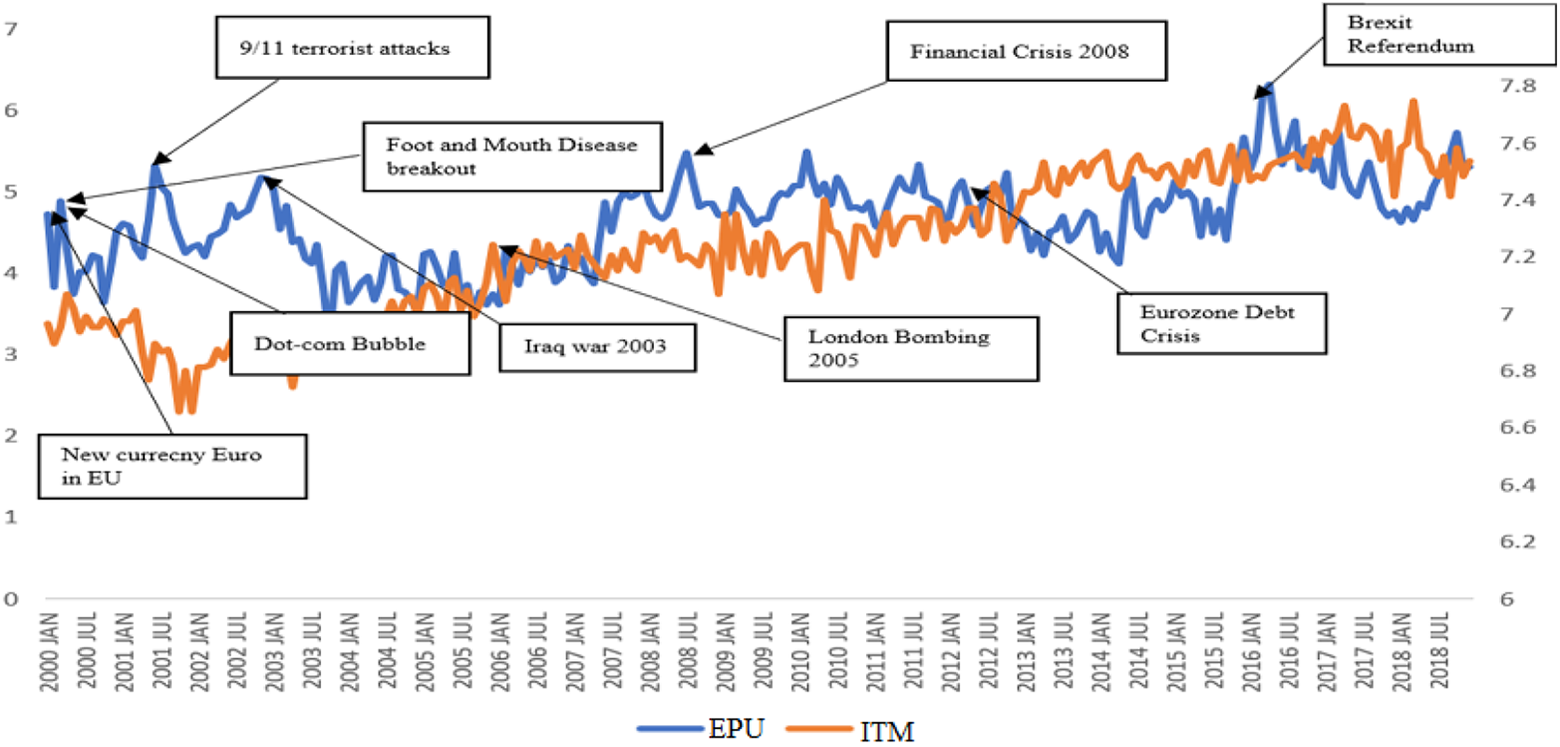
Trends in EPU and ITM. EPU: economic policy uncertainty; ITM: inbound tourism.
Descriptive statistics.
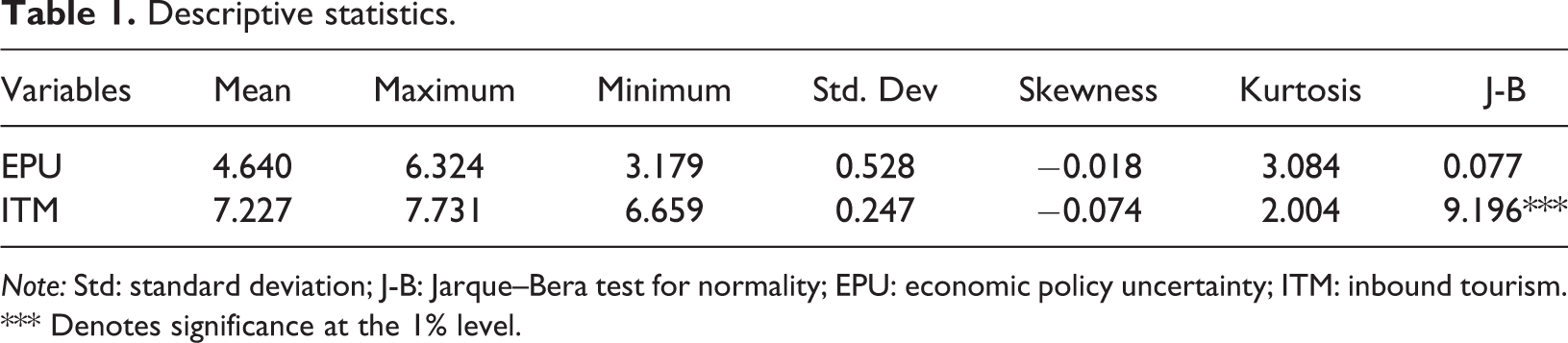
Note: Std: standard deviation; J-B: Jarque–Bera test for normality; EPU: economic policy uncertainty; ITM: inbound tourism.
*** Denotes significance at the 1% level.
Empirical results
Prior to investigating the causal relationship between EPU and ITM for the full sample, lag 2 is stated for the SIC. The full sample causality results are illustrated in Table 2. The null hypothesis of Granger causality from EPU to ITM is rejected at the 1% significance level, but ITM does not Granger cause EPU. The full sample causality test underlines the importance of EPU’s role in ITM in the United Kingdom (Belke et al., 2018; Rhodes et al., 2018).
The full sample Granger causality test.
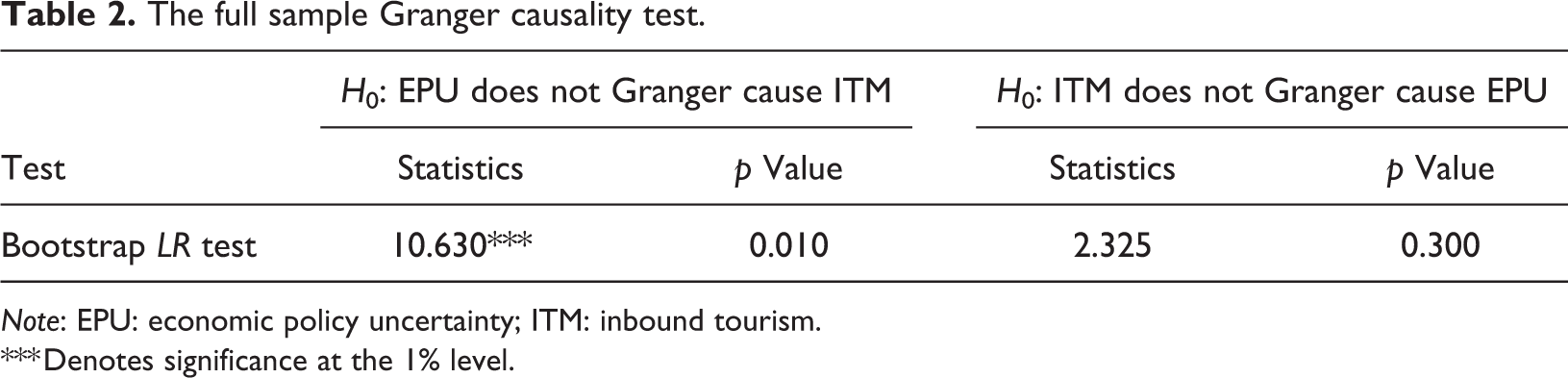
Note: EPU: economic policy uncertainty; ITM: inbound tourism.
*** Denotes significance at the 1% level.
A consensus is established that the full sample has a single causal link and is free from structural changes for the entire sample period (Balcilar et al., 2010). However, a shift can be observed in the causal relationship between EPU and ITM due to structural changes. The underlying association becomes an ambiguous and unreliable estimation (Zeileis et al., 2005). The parameter stability test provides the solution to identify the structural changes in the sample data. Next, the Sup-F, Mean-F, and Exp-F tests examine the constancy of parameters in VAR models consisting of EPU and ITM. The Lc test is used here to test for all parameters in the complete VAR model. The parameter stability test results are reported in Table 3. Sup-F was applied to evaluate the parameter stability against a one-time sharp shift. The null hypothesis of parameter constancy against the one-time sharp shift is rejected for both EPU and ITM, suggesting short-term instability. Similarly, Mean-F and Exp-F are used to test whether the parameter evolves gradually over time. Thus, Mean-F and Exp-F cannot be rejected for the null hypothesis of parameters following a martingale process. It proposes that ITM is evolving over time. The overall VAR system stability is evaluated by applying the Lc test under the null hypothesis parameter constancy against the random walk. The result shows that the parameter follows the random walk, confirming that the overall estimated VAR model possesses short-run instability and that empirical analysis of these findings is invalid. Thus, it can be concluded that the overall results face the problem of parameter stability in the short run due to structural changes and that the full sample is not reliable.
The parameter stability test.
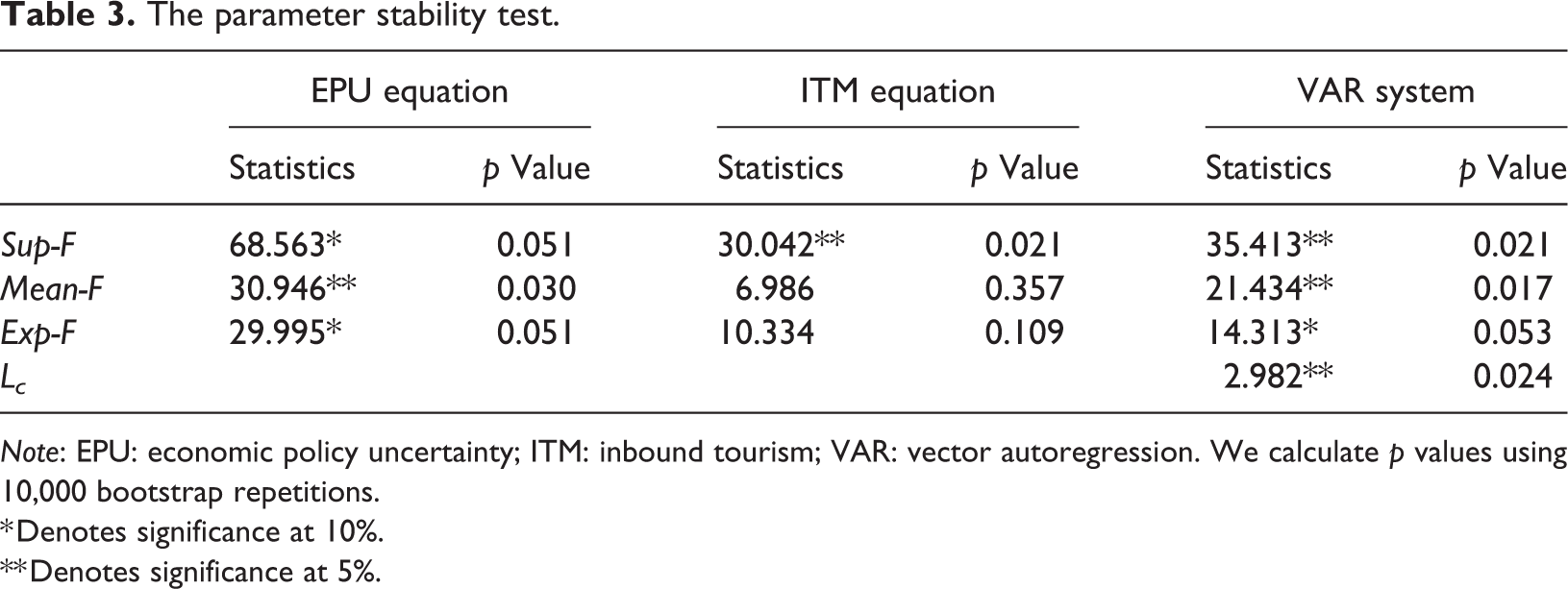
Note: EPU: economic policy uncertainty; ITM: inbound tourism; VAR: vector autoregression. We calculate p values using 10,000 bootstrap repetitions.
* Denotes significance at 10%.
** Denotes significance at 5%.
The rolling window approach aims to obtain a credible causal relationship between EPU and ITM while taking structural changes into consideration. It is different from the full sample because it examines the causality between the two time-varying variables across the different subsamples (Balcilar et al., 2010). It tests the null hypothesis that EPU does not Granger cause ITM, and vice versa. The VAR model provides the bootstrap p-values of LR statistics by using the rolling window. The extent of the influence of EPU on ITM and vice versa are also computed. The results of the rolling window test between EPU and ITM are illustrated in Figure 2. The given bootstrap p-values suggest that EPU Granger causes ITM across several subsamples at the 10% significance level, including 2005:01–2005:05, 2007:02–2008:10, 2015:07–2015:11, and 2017:08–2017:12. This finding implies that causality runs from EPU to ITM.
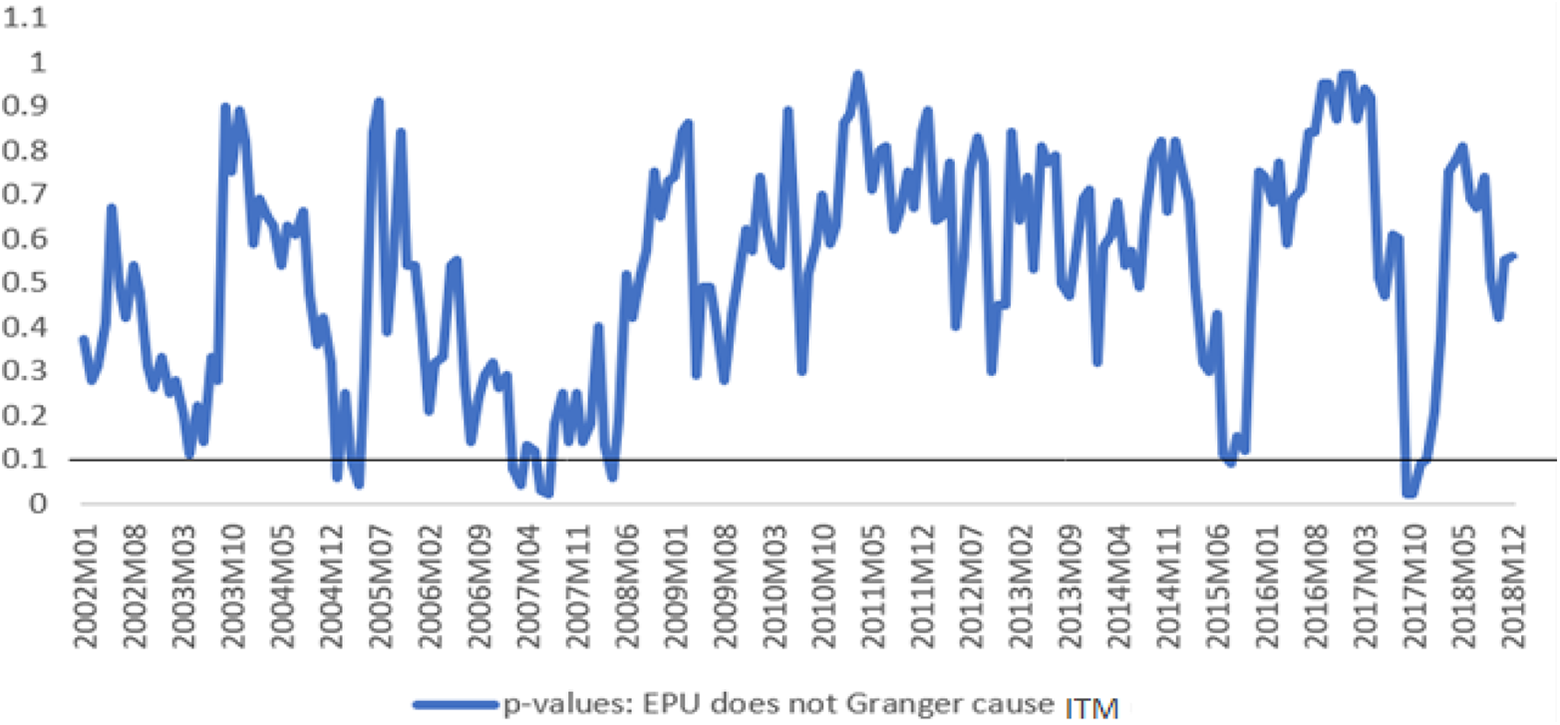
Bootstrap p-values of rolling test statistic for the null hypothesis that EPU does not Granger cause ITM. EPU: economic policy uncertainty; ITM: inbound tourism.
The extent of the causality of EPU on ITM is exhibited in Figure 3. According to bootstrap coefficient values, EPU has a negative impact on ITM in several subsamples. The subsample, 2005:01–2005:05, exhibits a negative impact of EPU on ITM. According to the ONS, despite the July 2005 bombings, a record number of tourists visited the United Kingdom in that year. Approximately 30 million trips were recorded in 2005, suggesting 2.2 million more visitors in that year than in the previous year, driven by the higher economic stability. Economic prosperity alongside increased disposable income in the region and emerging countries had a positive impact on ITM. Similarly, the economic boom improved the liquidity position of firms, with the UK’s main component, including business travel, leads to an increase in ITM (Katz, 2006). As previously stated, this increase is driven mainly by an increase in visitors from Poland, Hungary, and the Czech Republic, which is the result of EU expansion (Katz, 2006). However, the EXG negatively affected tourism, as the US dollars remain weak against the pound, which curtailed spending by US visitors (Jacqueline, 2006). Similarly, the causality from EPU to ITM is negative for the 2007:03–2008:07 subsample. The results are in line with Gozgor and Ongan (2017) and Fareed et al. (2018), suggesting a negative impact of EPU on tourism. During 2007–2008, a declining trend of 2.7% was observed for ITM, which is considered the largest fall in the past 7 years (Rebecca, 2009). Major economies such as the EU and the United States witnessed an economic downturn that caused low disposable income and a higher cost of living, which impacted ITM in the United Kingdom. Furthermore, EXG devaluation has not significantly contributed to ITM. Business spending was the main contributor to the travel industry, as companies sought to cut costs and maintain liquid positions to reduce business travel, and tourism earnings declined by £24.4 million (Webber et al., 2010). The tourism advisory council and cross-government ministerial group on tourism were organized to ensure efficient coordination with the tourism industry.
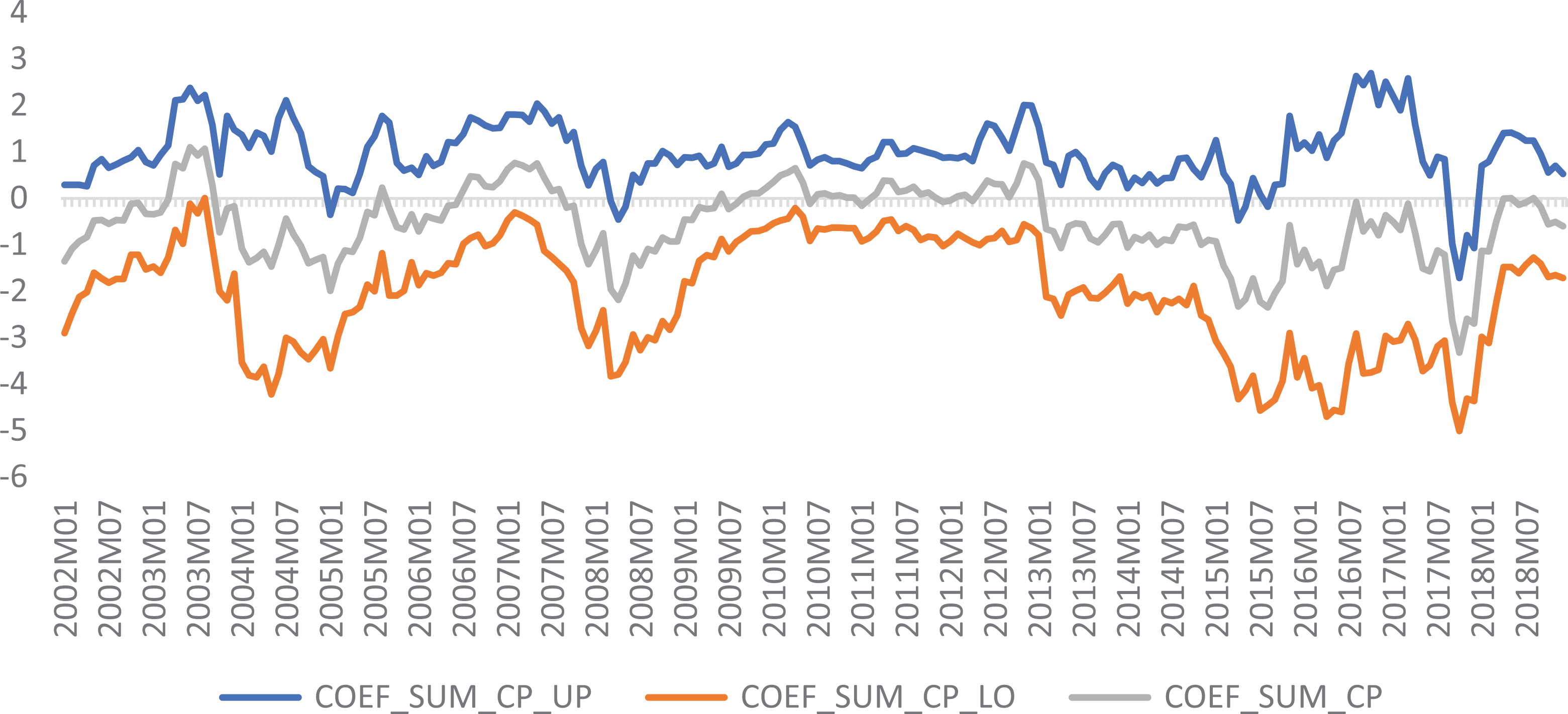
Bootstrap estimates of the sum of the rolling window coefficients for the impact of EPU on ITM. EPU: economic policy uncertainty; ITM: inbound tourism.
The subsample 2015:05–2015:10 shows a negative relationship running from EPU to ITM. This period is characterized by increasing uncertainty caused by the global economic outlook, slow economic growth in China, and the rising interest rate, all of which contributed to the increase in EPU (Allen, 2015). The overall economic outlook at the global and the UK levels negatively impacted tourism. The Brexit referendum created uncertainty, and the UK’s exit from the EU will have serious ramifications for the travel industry (Allen, 2016). A Brexit deal could increase airline prices and visa restrictions, which would deter tourists. The legal framework will no longer be applicable between the United Kingdom and the EU, which will have a negative impact on tourism (Papí et al., 2018). Lastly, we find negative causality between EPU and ITM during the 2017:08–2017:12 period, which is consistent with Demir and Gozgor (2018), who find a negative relationship between EPU and tourism. A possible factor of uncertainty is the likely cause of slow economic growth in 2017, which is the weakest in 5 years due to the Brexit vote. It will create a new restraint and legal framework between the United Kingdom and the EU, which can have a negative impact on ITM (Papí et al., 2018). Similarly, the pound’s depreciation attracted many tourists in 2017. According to the ONS, the frequency of overseas visitors was 4% more in 2017 than in 2016 as a result of the weak pound against the Euro and the US dollar, which made the United Kingdom a cheap travel destination for tourists.
Figure 4 shows the bootstrap subsample results for the relationship between ITM and EPU. It is clearly evident from the bootstrap p value that ITM has a significant impact on EPU in several subsamples, including 2002:03–2003:07, 2010:03–2010:07, 2011:07–2012:02, 2012:10–2012:12, 2015:05–2015:10, and 2017:11–2018:02. The bootstrap coefficient determines the magnitude of the impact of ITM on EPU, as shown in Figure 5. The 2002:03–2003:06 subsample shows a positive impact of ITM on EPU. A large influx of tourism was associated with higher economic stability and 2003 was considered one of the sunniest and the driest years in the United Kingdom, attracting overseas visitors to the country. However, terrorist attacks and the Iraq war increased EPU, which had a significant effect on ITM in the short run. The outbreak of severe acute respiratory syndrome also had a significant impact on tourism (Mason et al., 2005). Likewise, the transition process of the EU and the acceptance of the new currency, the Euro, which proved to be a weak currency, supported ITM. Despite these factors, there did not appear to be a significant impact on ITM, and the United Kingdom witnessed a rising trend in tourism in this period.
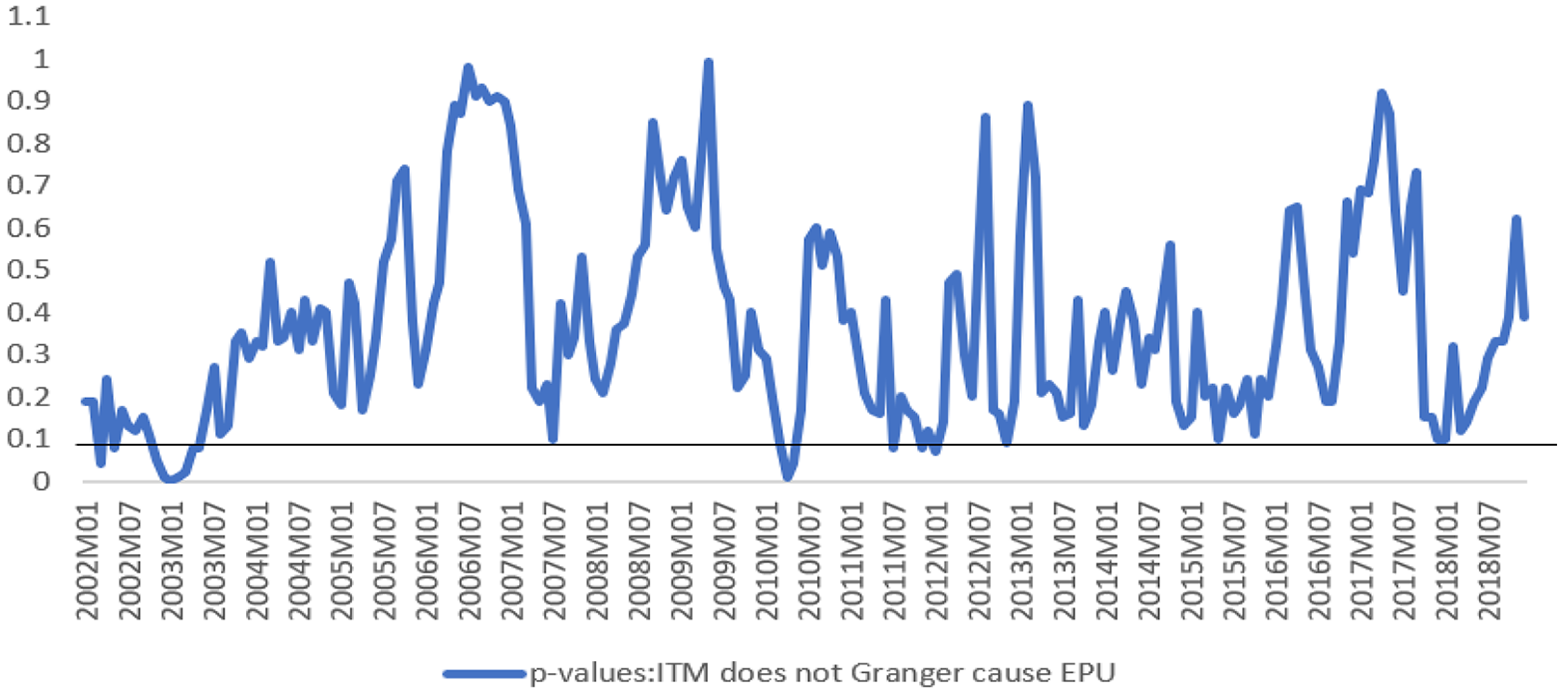
Bootstrap p-values of rolling test statistic for the null that ITM does not Granger cause EPU. EPU: economic policy uncertainty; ITM: inbound tourism.
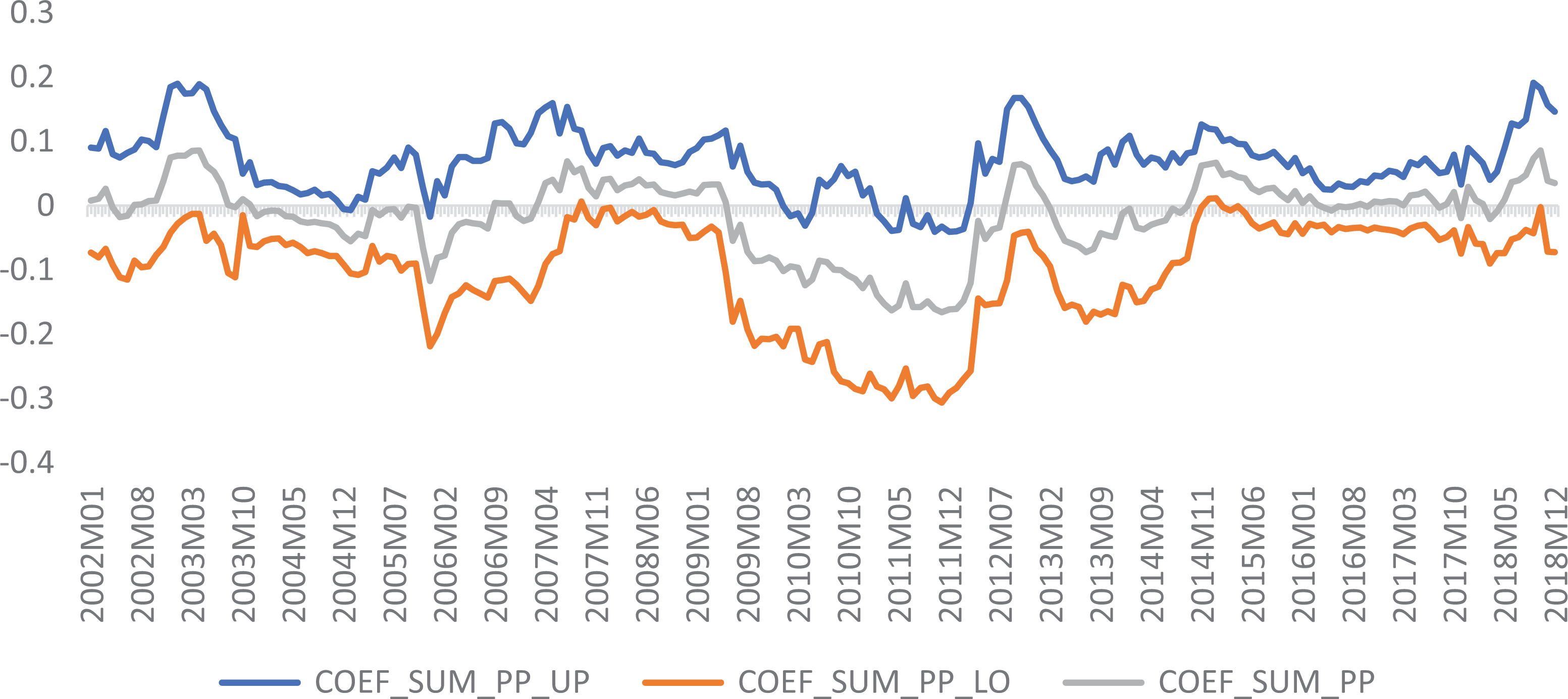
Bootstrap estimates of the sum of the rolling window coefficients for the impact of ITM on EPU. EPU: economic policy uncertainty; ITM: inbound tourism.
The time period from 2010:03 to 2010:07 exhibits a negative effect of ITM on EPU apparently because tourism was severely affected by the global financial crisis. Thus, it is clear that visitors restricted their vacation plans because they had less disposable income. Similarly, the poor performance of the major economies and currency appreciation led to a decrease in ITM. In addition, continuing economic uncertainty as a result of recovery from the global recession and higher living costs resulted in the decline in ITM. Thus, the 2011:07–2012:02 subsample showed negative causality from ITM to EPU. The economic growth in the EU declined due to the Eurozone debt crisis and increased the level of uncertainty. The largest number of visitors to the United Kingdom traditionally came from EU countries that experienced the crisis; therefore, the crisis led to a decline in the number of tourists to the United Kingdom. Causality exists around these financial and economic events, which increased EPU and resulted in low ITM (Foley and Rhodes, 2019).
The most important points in time are 2001–2003, 2005, 2007–2008, 2011–2012, and 2017–2018, and the results indicate a significant association between EPU and ITM (Blake et al., 2003; Foley and Rhodes, 2019; Katz, 2006). Moreover, this finding supports the notion that EPU has a role in ITM. These results support the gravity model, which argues that EPU negatively affects ITM. The results indicate that on various occasions, ITM declined because of the insecurity produced by certain events, pushing tourists to drop or defer their visits. The higher the EPU level is, the lower the ITM expenditures; this phenomenon can be minimized by a consistency in government policies and the avoidance of sudden policy changes. Furthermore, the anticipation mechanism of short-term shock should be proactive and capable of greater shock absorption to minimize the cancelation of tourist plans. The stability of the EXG system in the destination country will make tourism less expensive and more attractive to visitors. Policymakers should consider time-varying properties to establish tourism activities for effective and precise forecasting.
Conclusion
This study uses the rolling window technique to investigate the causal relationship between EPU and ITM in the United Kingdom. The results for causality in the full sample demonstrate that EPU Granger causes ITM. However, the results of the causal relationship in the full sample are unstable and inappropriate due to the existence of structural changes. The outcomes of the rolling window analysis show that EPU has a negative impact on ITM in the subsample and vice versa. The results support the gravity model, which indicates that the level of ITM will decrease with the increase in EPU. The following policy suggestions can be derived from this study. First, the findings reveal the negative impact of EPU on ITM, which implies that the higher the instability and precariousness of these factors are, the lower the number of overseas arrivals, which ultimately results in a reduced amount of expenditures in the United Kingdom. Subsequently, the government must ensure the consistency of economic and financial policies and avoid abrupt changes because tourists make their plans in advance. The emergence of unexpected policy changes results in the cancelation or postponement of tourists’ plans (Tsui et al., 2018). Second, the outcomes demonstrate that EPU assumes a critical role in the reduction of tourism in the short term around higher uncertainty. Therefore, the government should formulate policies that aim to mitigate the negative impact on the tourism industry in the context of higher EPU scenarios. It can help to minimize adverse effects, pave the way for future decision-making under the same conditions, and provide inclusive information on the factors affecting ITM. Additionally, the EXG movement significantly amplifies uncertainty in the short run and influences tourists’ plans (Krol, 2014). Hence, a favorable EXG system will have a positive impact on smooth ITM. Finally, the connection between EPU and tourism evolves over time, which influences the nexus between EPU and tourism. Hence, policymakers should consider time-varying properties to establish tourism activities for effective and accurate forecasting (Shahbaz et al., 2018). The policy should be flexible, not rigid, to maximize the benefits of EPU and ITM on economic growth.
Footnotes
Declaration of conflicting interests
The author(s) declare no potential conflicts of interest with respect to the research, authorship, and/or publication of this article.
Funding
The author(s) disclosed receipt of the following financial support for the research, authorship, and/or publication of this article: This work was supported by China Postdoctoral Science Foundation (No. 2019M650946).
