



Abstract
The paper examines the impact of specialization and diversity on economic growth of tourist cities. Industrial diversity is decomposed into two parts, related and unrelated diversity (UV). The paper constructs a panel threshold model with city size as the threshold variable, and empirically tests the nonlinear effects of specialization and diversity on economic growth of tourist cities from the perspective of city size. The results show that: First, tourism specialization has a positive impact on economic growth of tourist cities, and there is a double threshold effect based on city size. When the city size exceeds two thresholds, tourism specialization plays a significant role in promoting economic growth of tourist cities. Second, related diversity (RV) has a positive impact on economic growth of tourist cities, and there is no threshold effect based on city size. Third, the impact of unrelated diversity on economic growth of tourist cities has a single threshold effect based on city size. Specifically, when the city size is lower than the threshold value, unrelated diversity inhibits economic growth of tourist cities. Otherwise, unrelated diversity will promote economic growth of tourist cities. The conclusions are still valid after a series of robustness tests. The paper highlights that local governments of tourist cities should not pursue absolute tourism specialization or industrial diversity, but should design and adjust industrial structure reasonably according to the city size.
Introduction
The existence of cities benefits from increasing returns to scale of agglomeration economies (Krugman, 1991). According to new growth theory and new economic geography theory, Marshall-Arrow-Romer (MAR) externalities (specialization) and Jacobs externalities (diversity) are two main sources of industrial agglomeration effect. The former is an externality effect occurring within industries, emphasizing that specialized agglomeration of similar industries is conducive to knowledge spillover and urban growth (Arthur, 1920; Arrow, 1962; Romer, 1986, 1990). The latter is an external effect occurring between industries, focusing on the coexistence of multiple industries can bring vitality to the city more than a single industry (Feldman and Audretsch, 1999; Glaeser et al., 1992; Jacobs, 1969, 1984).
Previous studies have focused on the important role of tourism specialization on economic growth (i.e., MAR externalities) (Chang et al., 2012; Croes 2013; Croes et al., 2018, 2021; De Vita and Kyaw, 2017; Jackman, 2014; Lanza et al., 2003; Marsiglio, 2018; Soulie and Valle, 2014). Despite its importance, tourism is one of the most vulnerable sectors (Dogru et al., 2019; Duro et al., 2021; Liu and Pratt, 2017). “Black swan” incidents, such as the financial crisis in 1997 and 2008, the severe acute respiratory syndrome (SARS) epidemic in 2003, and various earthquake and social unrest events, have brought significant negative impacts on tourism (Zhang et al., 2021). Especially since the end of 2019, the global tourism industry has been hit hard again by the COVID-19 pandemic (Gil-Alana and Poza, 2020; Gssling et al., 2021; Kreiner and Ram, 2020). As a result, the economies of countless tourist cities have fallen into recession (Lim and To, 2021). It can be seen that the urban economy relying solely on tourism specialization is unstable. In the context of the pandemic, how to promote stable economic growth of tourist cities has become a crucial research issue.
In recent years, a few scholars have begun to pay attention to the effect of industrial diversity on the development of tourist cities (i.e., Jacobs externalities). For example, Sheng (2011) pointed out that tourist cities should actively use the revenue from booming tourism to pursue economic diversity, so as to avoid problems such as Dutch disease caused by the rapid growth of tourism. Based on the research of Frenken et al. (2007), Aarstad et al. (2016) divided industrial diversity into two dimensions of related diversity (RV) and unrelated diversity (UV), and believed that rich RV and limited UV were most conducive to the development of tourism destinations. Erkuş-Ozturka & Terhorst (2018) showed that the development of tourism stimulated the growth of related and unrelated industries and generated economic diversity. On the whole, these studies provide a new perspective for economic growth of tourist cities. However, the role of diversity in economic growth of tourist cities still lacks empirical tests at the regional level.
As the two main sources of industrial agglomeration, the externalities of specialization and diversity are significantly different (Attaran, 1986; Batisse, 2002; Glaeser et al., 1992; Henderson et al., 1995). Therefore, in order to ensure stable economic growth, should tourist cities focus on developing tourism specialization or promote the diversified development of industries? According to the literature on the relationship between tourism and economic growth, the research conclusions will be different depending on the sample range selected by scholars. Most scholars support the tourism-led growth hypothesis (TLGH); they believe that tourism can drive economic growth (Brau et al., 2007; Chang et al., 2012; Croes 2013; Lanza et al., 2003). However, a small number of scholars have found that tourism specialization has no significant impact on economic growth (Croes et al., 2021) and may even have a certain negative impact in economically unstable regions (Jackman, 2014). Therefore, it is difficult for us to directly judge which externalities economic growth of tourist cities comes from. Especially for China, which has a large number of cities, the size of tourist cities varies greatly, from small cities with a population of less than 500,000 to megacities with a population of more than two million. It remains to be studied which industrial agglomeration mode (specialization or diversity) should be chosen by tourist cities of different sizes.
Using the panel data of 60 typical tourist cities in China from 2005 to 2019, the paper adopts a nonlinear threshold regression model to empirically test the impact of specialization and diversity on economic growth of tourist cities from the perspective of city size. The main contributions of this paper are as follows:
First, existing studies have mainly focused on the impact of tourism specialization on the city’s economic growth, and less attention has been paid to the important role played by industrial diversity. Therefore, this paper uses entropy method to decompose industrial diversity into two parts, related and unrelated, and discusses their impact on economic growth of tourist cities. Second, previous literature on the relationship between tourism and economy neglected the impact of city size. The paper constructs a panel threshold model with city size as the threshold variable and empirically tests the nonlinear effects of specialization and diversity on economic growth of tourist cities from the perspective of city size.
The remainder of the paper is structured as follows: Literature review and research hypothesis introduces the literature review and research hypothesis; Research design explains the research design, including empirical models, variables, and data; Empirical results and analysis presents the empirical results and analysis; and Conclusions and implications is the conclusions and implications.
Literature review and research hypothesis
Theoretical background
Specialization externality and diversification externality
Classical economists represented by Romer regard technological externalities as the engine of economic growth (Romer, 1986). Enterprise agglomeration facilitates the dissemination of knowledge and information, especially tacit knowledge, promotes knowledge spillover among enterprises, and boosts economic growth. According to the theory of agglomeration economy, agglomeration externalities are divided into specialization externalities and diversification externalities. Specialization externalities refer to those generated by enterprises in the same industry. Marshall (1920) believed that enterprises in the agglomeration area acquired externalities due to sharing “reservoir” of labor force, intermediate input of non-tradable goods, and knowledge spillover, thus forming industrial agglomeration. Industrial agglomeration further promotes division of labor and is conducive to specialization of production. Subsequently, Arthur (1920), Arrow (1962), and Romer (1986, 1990) studied the impact of externalities on economic growth and argued that production specialization is beneficial to technical progress and production efficiency. Therefore, based on the viewpoints of the above scholars, the agglomeration externalities formed by the enterprises in the same industry are called Mar-Arrow-Romer externalities (MAR externalities), also known as specialization externalities.
The viewpoint of diversified externalities comes from the famous urban economist Jacobs (1969, 1984). He emphasized that knowledge spillovers originated from enterprises in different industries, that is, diversification promotes economic growth. This view is called Jacobs externalities, also known as diversification externalities. In a specific region, industrial diversification is conducive to the activities of inter-industry enterprises and promotes the exchange of knowledge, technology, information, and technological innovation, thus boosting the development of regional economy (Dissart, 2003; Skyes, 1950). In addition, urban diversification also enables enterprises to have more stable investment choices. When the price of a certain upstream product fluctuates, they can choose alternative products of other industries as new sources of investment (Neffke et al., 2011), thus promoting urban development.
Related diversity and unrelated diversity
With the expansion of theoretical research, scholars have further deepened their understanding of industrial diversification. Early literature believed that the level of industrial diversification was measured by the degree of equilibrium of industrial distribution and the number of types of industries. This view ignores the interconnectedness of different industries. Siegel et al. (1995) pointed out that, in addition to regional economic scale, industrial diversification is also related to the interconnection between industries. Wagner and Deller (1998) believed that the traditional definition of industrial diversification emphasizes the distribution of employment across industries but ignores elements that fully reflect the linkages between industries. Frenken et al. (2007) firstly decomposed industrial diversification into RV and UV. Specifically, RV represents the level of diversification among industrial sectors with complementary abilities and moderate cognitive distance, and UV represents the level of diversification among industries without technological linkages. Knowledge spillover is the main mechanism of RV. The relevant and diversified environment is conducive to the re-integration of scattered and diversified knowledge into new knowledge (Boschma, 2005). The industrial sectors involved in UV do not share complementary capabilities, and lack input-output linkages and opportunities for knowledge sharing, so it is difficult to produce effective knowledge spillover. But industry irrelevance helps spread the risk from changes in external demand. If one industry sector is hit by an economic crisis, cities can spread the risk by developing other unrelated industries. Since there is no input-output connection between industries, the impact of the crisis will not be transmitted to other unrelated industries, thus maintaining employment and economic stability (Frenken et al., 2007).
The impact of tourism specialization on economic growth
Existing literature on the relationship between tourism specialization and economic growth is still controversial. Most scholars support the TLGH and agree that tourism specialization can drive economic growth. At the national level, Lanza et al. (2003) took 13 OECD countries as examples and found that tourism specialization would not harm economic welfare. Brau et al. (2007) pointed out that if small-scale countries actively pay attention to the development of tourism, it will greatly promote economic growth. Based on the data from 159 countries, Chang et al. (2012) found a positive relationship between economic growth and tourism. Croes (2013) showed that tourism specialization was not harmful to economic growth of small islands and could make up for technological gaps and resource constraints. At regional level, Jin (2011) demonstrated the positive short-run effect of tourism on Hong Kong’s economic growth. Lee (2012) found that tourism has indirect effects on economic growth in the long run in Singapore. Brida and Giuliani (2013) indicated that the TLGH holds for South Tyrol and Trentino (sub-national trans-frontier economies). Wang and Xia (2013) concluded that there is a long-term integration relationship between economic growth of Gaochun and tourism revenue. Neuts (2020) confirmed a long-term equilibrium between tourism and gross domestic product (GDP) in German cities. However, a few scholars also point out that the development of tourism cannot bring sustainable economic growth. For example, Jackman (2014) believed that tourism specialization may have negative effects in areas where tourism is particularly unstable. Croes et al. (2018) and Croes et al. (2021) found that tourism specialization had no significant direct impact on economic growth.
Although these studies help us to understand the relationship between tourism and economic growth, it is worth considering that the impact of tourism on economic growth may be different under different levels of conditional factors. In other words, it is possible that the current conclusions cannot be agreed because there are nonlinear effects between them. A few studies have explored the nonlinear effect of tourism specialization and economic level. For example, Sequeira and Nunes (2008) found that poor countries always benefit from tourism specialization. Chang et al. (2012) pointed out that tourism specialization has a greater impact on economic growth in tourist destinations with a lower level of economic development. Deng et al. (2014) confirmed a non-monotonic relationship between international tourism and economic growth. They further pointed out that tourism-led economic growth may not be sustained at high levels of tourism specialization. De Vita and Kyaw (2017) believed that the positive impact of tourism specialization on economic growth depends on the level of economic development and the absorption capacity of the financial system.
Recently, some studies have concluded that city size appears to be an important determinant of tourism specialization for economic growth. At the national level, the positive correlation between tourism specialization and economic growth seems to be more obvious in small-scale countries (Brau et al., 2007; Croes, 2013; Jackman, 2014). At the city level, the larger the city size is, the more tourism development and economic benefit will be improved (Huang et al., 2000; Zhang and Sun, 2016). In general, in tourist cities with smaller size, tourism specialization may result in a monolithic economy and over-reliance on tourism. Furthermore, the influx of tourists may put pressure on cities with limited capacity and cause serious social problems. However, large-scale tourist cities often have complete infrastructure systems, systematic tourism planning and development capabilities, and stable consumer markets. These advantages can enhance the attractiveness of cities to tourists and promote the aggregation of advantageous resources and factor allocation (Wu et al., 2020). Therefore, tourism specialization seems to be desirable in large-scale tourist cities. Based on this, the paper proposes the first research hypothesis:
The impact of industrial diversity on economic growth
At present, there is no consensus on the effects of diversity on economic growth. Most scholars support the idea that diversity promotes economic growth. For example, Attaran (1986) believed that diversity is conducive to reducing the impact of fluctuations caused by changes in economic factors outside the region on economic growth. Glaeser et al. (1992) found that industrial diversity had a significant impact on economic growth, while industrial specialization had no significant impact. Batisse (2002) showed that industrial diversity promoted economic growth, while industrial specialization inhibited economic growth. Simonen et al. (2015) proposed that the diversified structure of high-tech sector did play a role in regional economic growth. However, a few scholars have found that diversity has no significant impact on economic growth. For example, Henderson (1986) pointed out that industrial diversity had no significant impact on small and medium-sized regional economic clusters. Fan et al. (2014) showed that diversified economy had no significant impact on total factor productivity. Although there is still a lack of empirical tests on the relationship between diversity and economic growth of tourist cities, existing studies all support the view that diversity is beneficial to economic growth of tourist cities (Aarstad et al., 2016; Erkuş - Ozturka & Terhorst, 2018; Sheng, 2011).
It is worth noting that some studies have found that city size may influence economic growth effect of diversity. Duranton et al. (2001) discussed the mechanism for manufacturing enterprises to relocate from metropolitan to small and medium-sized cities. The results show that enterprises often take advantage of the diversified environment of big cities to develop new production processes, and when the production technology is gradually mature and standardized, enterprises will relocate to specialized small- and medium-sized cities. Duranton and Puga (2005) further pointed out that cities of different sizes will move toward functional division of labor, such as large- and medium-sized cities represented by headquarters and advanced business services, small- and medium-sized cities dominated by ordinary manufacturing and processing industries. Sun and Zhou (2013) found that specialized agglomeration in small cities has a significant economic growth effect, while diversified industrial agglomeration in big cities has a significant economic growth effect. Su and Zhao (2011) showed that the larger the city size, the higher the level of industrial diversity. The expansion of city size will produce agglomeration economic benefits. When the city’s development reaches a certain threshold scale, it may be able to benefit from the linkage of upstream and downstream industries, and promote productivity improvement and economic growth (Ke and Zhao, 2014). Therefore, the impact of industrial diversity on regional economy may be nonlinear due to the city size. Based on the above analysis, we propose the second research hypothesis:
Existing empirical evidence shows that the impact of RV and UV on economic growth is different. Frenken et al. (2007) studied the Netherlands from 1996 to 2002 and found that RV had a significant positive impact on regional employment and productivity growth, while UV had no significant impact. Based on a study of 205 European regions, Van Oort et al. (2015) found that RV was significantly correlated with employment growth, especially in small and medium-sized urban areas, while UV was not. Fritsch and Kublina (2018) pointed out that the West German region benefited from the effects of both related and UV, but the effects of UV were more pronounced. In tourism research, Aarstad et al. (2016) first paid attention to the impact of related and UV on tourist destinations and believed that rich RV and limited UV were the best choices for cities. However, they did not provide empirical evidence.
A tourist city can be regarded as a production system. From the perspective of tourists, the services or products in this system are usually provided by many suppliers (Haugland et al., 2011). RV means that there are many suppliers offering different but complementary products. On the one hand, enterprises in related industries also share resources, information, and knowledge to reduce costs, thus improving the production efficiency of enterprises and industries. On the other hand, RV can promote knowledge spillover between complementary industries. The exchange of knowledge between relevant departments can promote innovative search behavior and diffusion of new technologies, so that tourist cities can provide novel products or services and promote regional economic growth.
Unrelated diversity is an industrial pattern in which industries without obvious technical and economic ties are distributed in a particular region. Its impact mechanism on city growth is different from RV. On the one hand, co-production may be limited in an undiversified region due to the lack of local complementarity of products and services. In addition, unrelated industries will fragment the knowledge base, which may further limit the development of integrated tourism products, thus detrimental to the growth of the city’s economy. On the other hand, from the perspective of externalities, unrelated industrial agglomeration can improve the matching opportunities of material capital, human capital, technology, and other elements required by enterprises in the process of production and operation. This can not only effectively reduce the search cost of factor supply and demand but can also help to increase the types of intermediate inputs, thus improving the production efficiency of enterprises and promoting regional economic growth. Therefore, we propose the third research hypothesis:
Research design
Empirical models
In order to test the hypothesis of this paper, we use the threshold regression model and take city size as the threshold variable to test the nonlinear relationship between tourism specialization, industrial diversity (related and unrelated), and economic growth of tourist cities, respectively.
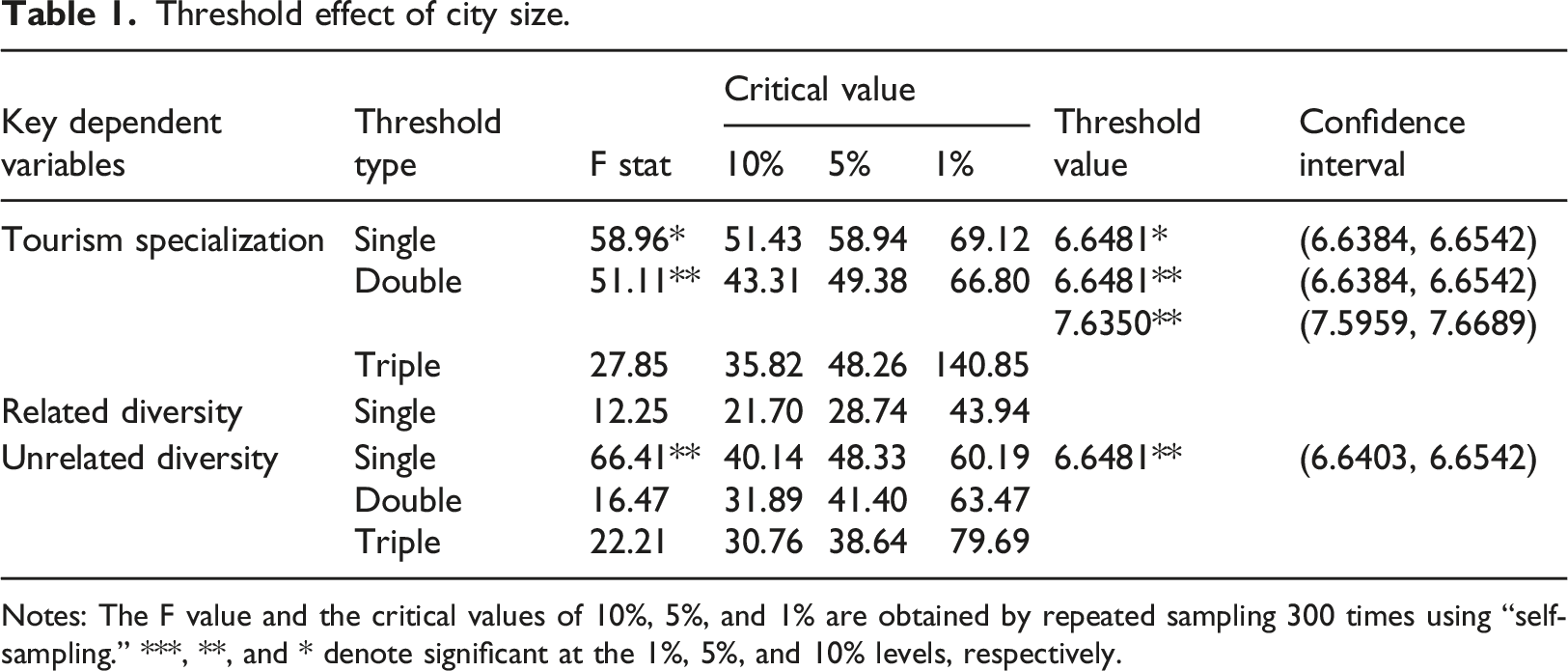
Threshold effect of city size.
Notes: The F value and the critical values of 10%, 5%, and 1% are obtained by repeated sampling 300 times using “self-sampling.” ***, **, and * denote significant at the 1%, 5%, and 10% levels, respectively.
According to Table 1, first, the single threshold and double threshold of tourism specialization are significant at the 5% level, and the triple threshold effect does not pass the significance test. This shows that when city size is taken as the threshold variable, the model with tourism specialization as the key independent variable rejects the assumption of linear relationship, and tourism specialization has a double threshold effect on economic growth of tourist cities. Therefore, we construct a double threshold model between tourism specialization and economic growth of tourist cities as follows
Second, the single threshold effect of RV does not pass the significance test, indicating that there is no threshold effect of RV on economic growth of tourist cities Therefore, we construct the following empirical model to investigate the impact of RV on economic growth of tourist cities
Third, the single threshold of UV is significant at the 5% level, and neither the double threshold nor triple threshold effects pass the 10% significance test. The results show that the UV has a single threshold effect on economic growth of tourist cities when the city size is taken as the threshold variable. Therefore, we construct a single threshold model between UV and economic growth of tourist cities as follows
Variables
The dependent variable
Existing literatures mostly adopt GDP or per capita GDP as the variable of city’s economic growth (Frenken et al., 2007; Sun and Chai, 2012). Considering the difference of city’s population size, this paper uses the per capita GDP of cities over the years as the dependent variable and converts it into constant price based on 2005.
The key independent variables
Tourism specialization
Referring to the studies of Adamou and Clerides (2010), Brau et al. (2007), Deng et al. (2014), and Zhang et al. (2020), in the paper, tourism specialization level (TR) is measured by the proportion of the nominal tourism revenue (i.e., the sum of domestic tourism revenue and inbound tourism revenue) in the nominal GDP. Among them, the inbound tourism revenue is converted into RMB using the average exchange rate of RMB against US dollar in the current year.
Diversity index decomposition based on entropy index: related and unrelated diversity
Drawing on the practice of Frenken et al. (2007), the paper uses the measurement method of entropy index to decompose industrial diversity (VAR) into RV and UV. The overall diversity of the industry can be expressed as
In order to illustrate the decomposition process of related and UV, we assume that there are S major sectors in the economic system, and S major sectors can be subdivided into n subsectors (n ≥ S). For one of the major sectors, that is s, its proportion of employment is equal to the sum of the proportion of employment in each small sector, which can be expressed as
Then, the degree of diversity of each subdivision within a major sector s can be expressed as follows
The diversity entropy index among each major sector s is
Based on the measurement method of entropy index, the overall industrial diversity is decomposed as follows
Industrial classification method
When the entropy index method is used to calculate related and UV indexes, it is necessary to clarify the standards of industry classification at different levels. As for the division of small sectors, the paper follows the Industrial Classification for National Economic Activities (GB/T 4754-2002) and divides the industry into 19 small industrial sectors. Specifically, it includes: agriculture, forestry, animal husbandry, and fishery; mining; manufacturing; electricity; gas and water production and supply; construction; transportation, storage, and postal services; information transmission, computer services, and software; wholesale and retail; accommodation and catering; finance; real estate; leasing and commercial services; scientific research, technical services, and geological survey; water conservancy, environment, and public facilities management; residential and other services; education, health, social security, and social welfare; culture, sports and entertainment; public administration; and social organizations.
The division of major sectors is mainly based on the three industries. Among them, the primary industry is agriculture, forestry, animal husbandry, and fishery. The secondary industry includes mining, manufacturing, electricity, gas and water production and supply, and construction. As there are many subsectors in the tertiary industry, further classification is needed. This paper refers to Browning and Singlemann (1975) and classifies the service industry into four categories according to the United Nations Standard Industrial Classification (SIC): producer service, consumer service, circulation service, and social service. To be specific, producer services include finance, real estate, leasing, and business services. Consumer services include accommodation and catering, residential and other services, culture, sports, and entertainment. Circulation services include transportation, warehousing and postal services, information transmission, computer services and software, and wholesale and retail. Social services include scientific research and technical services and qualification exploration, water conservancy environment and public facilities management, education, health and social security and social welfare, public administration, and social organizations.
Control variables
In addition to tourism specialization and industrial diversity, there are some other factors affecting economic growth of tourist cities. Therefore, referring to existing literature, this paper takes human capital, infrastructure, industrial structure, government intervention, and openness as control variables. Details are as follows: (1) Human capital (EDU): the number of college students per ten thousand is used as the proxy variable of human capital. (2) Infrastructure (INF): it is expressed by the per capita road area of the city. (3) Industrial structure (IND): it is measured by the proportion of the GDP of the secondary industry in a city. (4) Government Intervention (GOV): it is measured by the proportion of the city’s government fiscal expenditure to local GDP. (5) Openness (FDI): it is expressed by the proportion of foreign investment actually utilized in the city to local GDP. For the foreign investment denominated in US dollars, the average exchange rate of the year is converted into RMB.
Threshold variable
City size is an important factor affecting the externality of industrial agglomeration. From the perspective of economic and social development, the aggregation of population is generally corresponding to the comprehensive development level of the city (Li and Wang, 2014). Therefore, this paper measures the city size (POP) by the number of permanent residents in the city.
Data
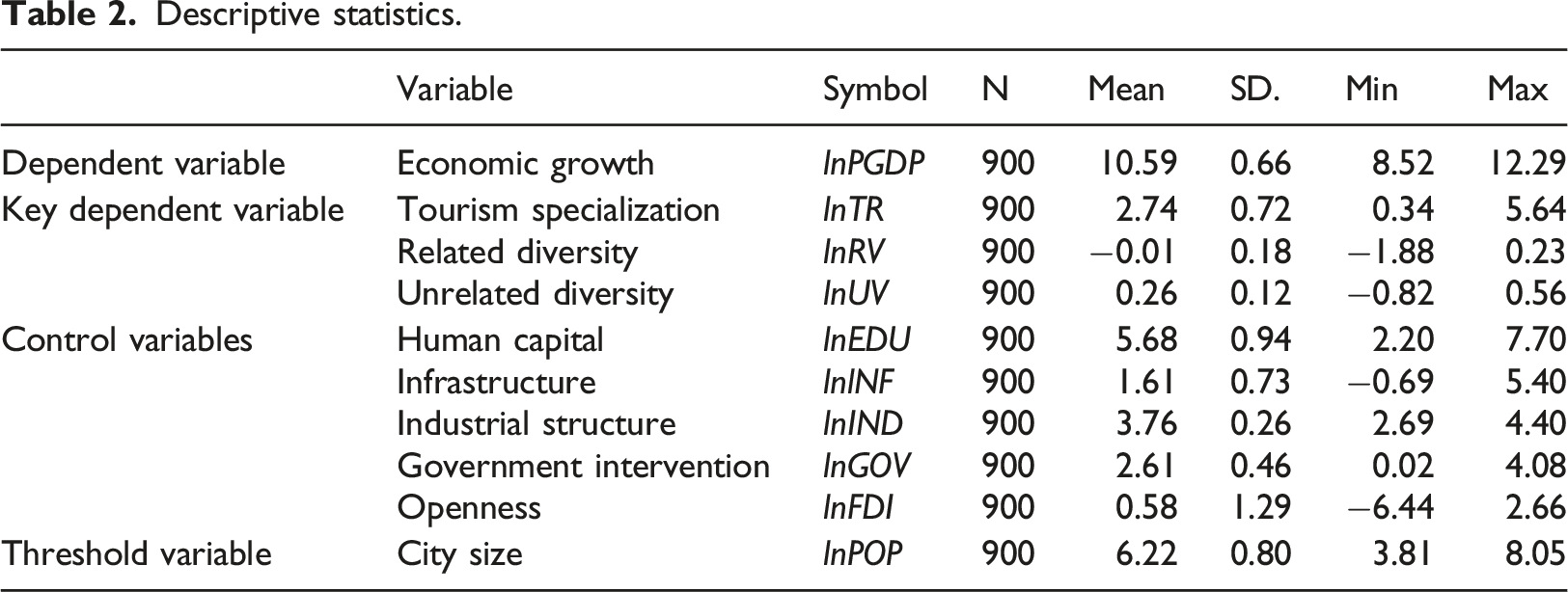
Descriptive statistics.
Empirical results and analysis
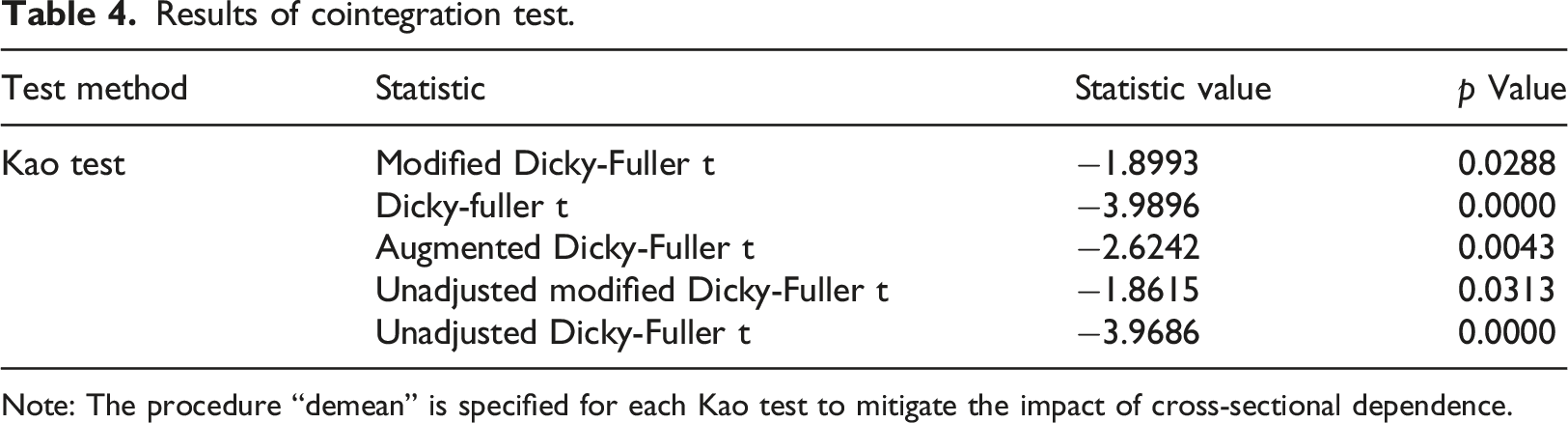
Panel unit root test and cointegration test
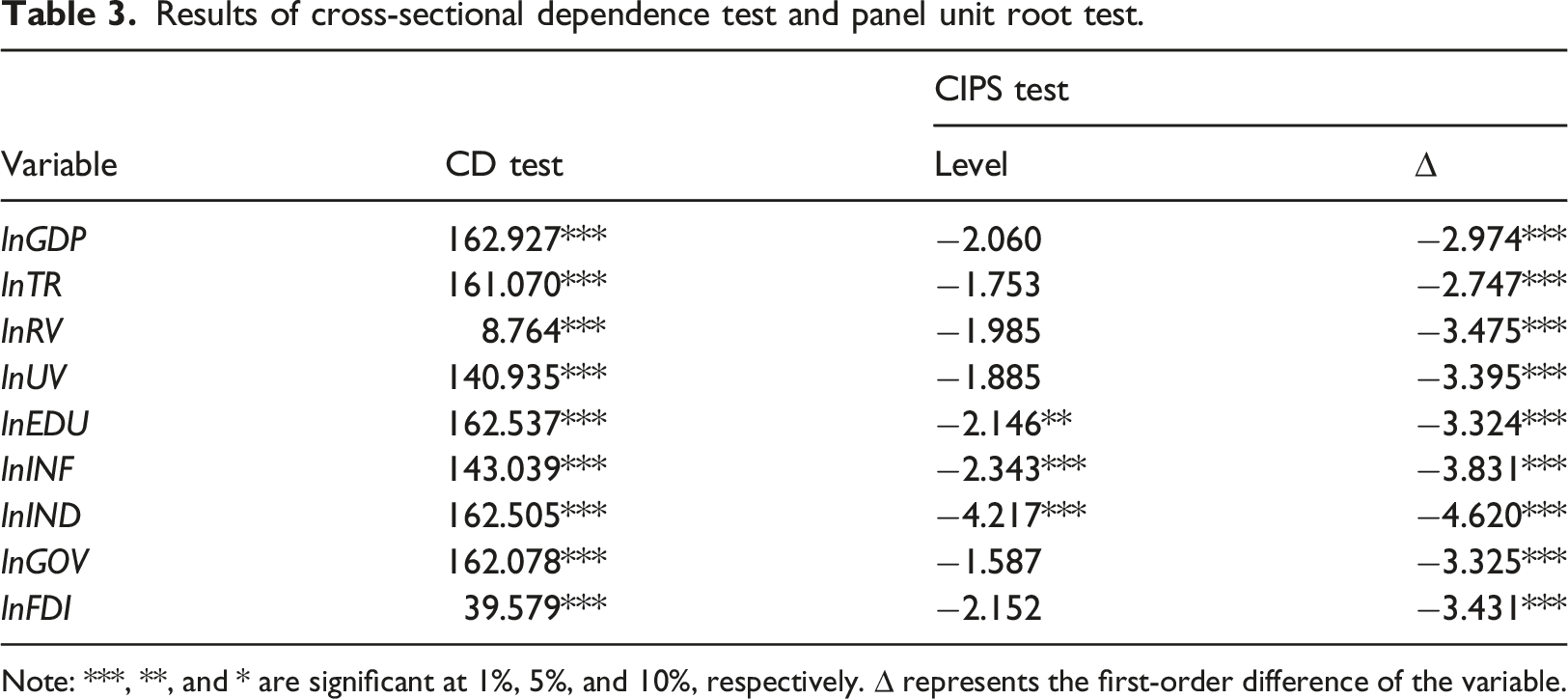
In order to ensure the validity of the estimation results and avoid the problem of pseudo regression, this paper uses panel unit root test to examine whether the panel data is stationary. The methods of panel unit root test can be divided into two types according to whether there is cross-sectional correlation in the panel data. One is the first-generation conventional panel unit root tests based on the hypothesis of “cross-sectional independence,” such as LLC test, HT test, IPS test, ADF test, and PP test. The other is the second-generation panel unit root test (the CIPS test) proposed by Pesaran (2007) based on the hypothesis of “cross-section dependence.” If there is cross-sectional dependence in the panel data but the first-generation panel unit root tests are adopted, it is likely to reject the null hypothesis excessively. Therefore, the paper first looks at whether cross-sectional dependence exists within the panel data by applying Pesaran’s CD test (Pesaran, 2004) before the panel unit root analysis.
Results of cross-sectional dependence test and panel unit root test.
Note: ***, **, and * are significant at 1%, 5%, and 10%, respectively. ∆ represents the first-order difference of the variable.
Results of cointegration test.
Note: The procedure “demean” is specified for each Kao test to mitigate the impact of cross-sectional dependence.
Analysis of results
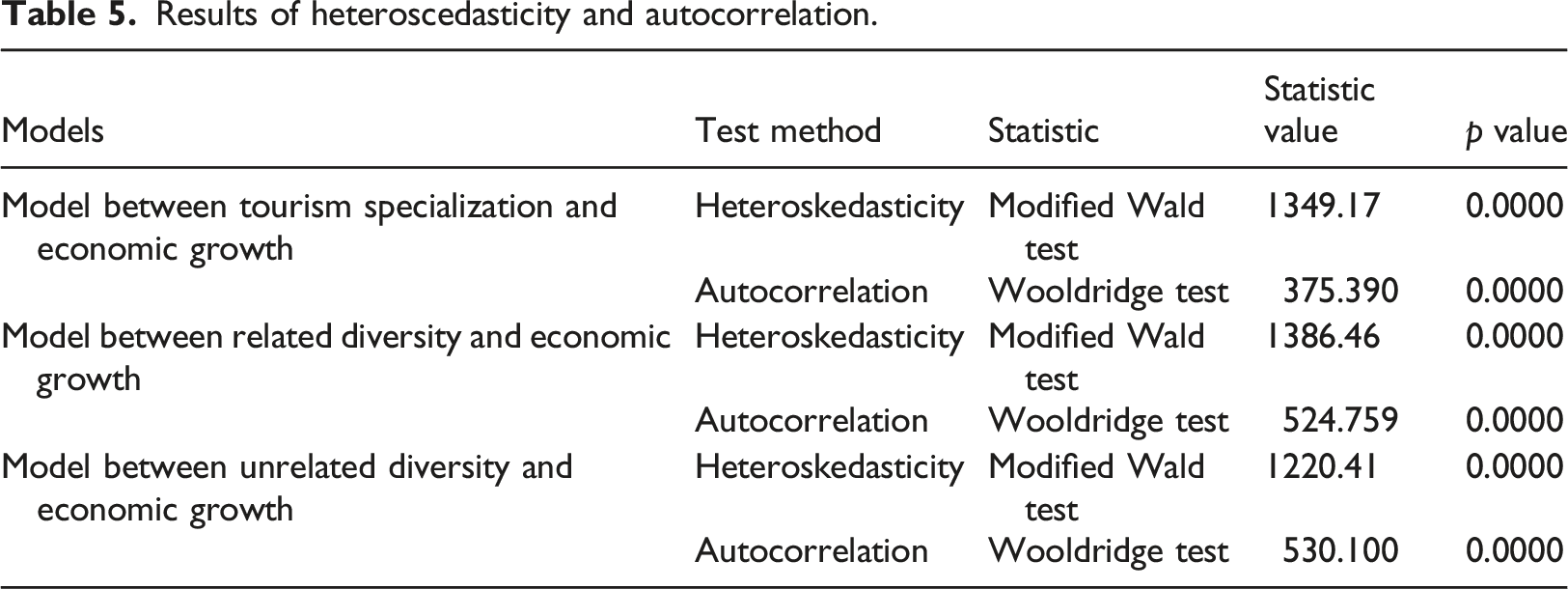
Results of heteroscedasticity and autocorrelation.
Regression results of threshold model.
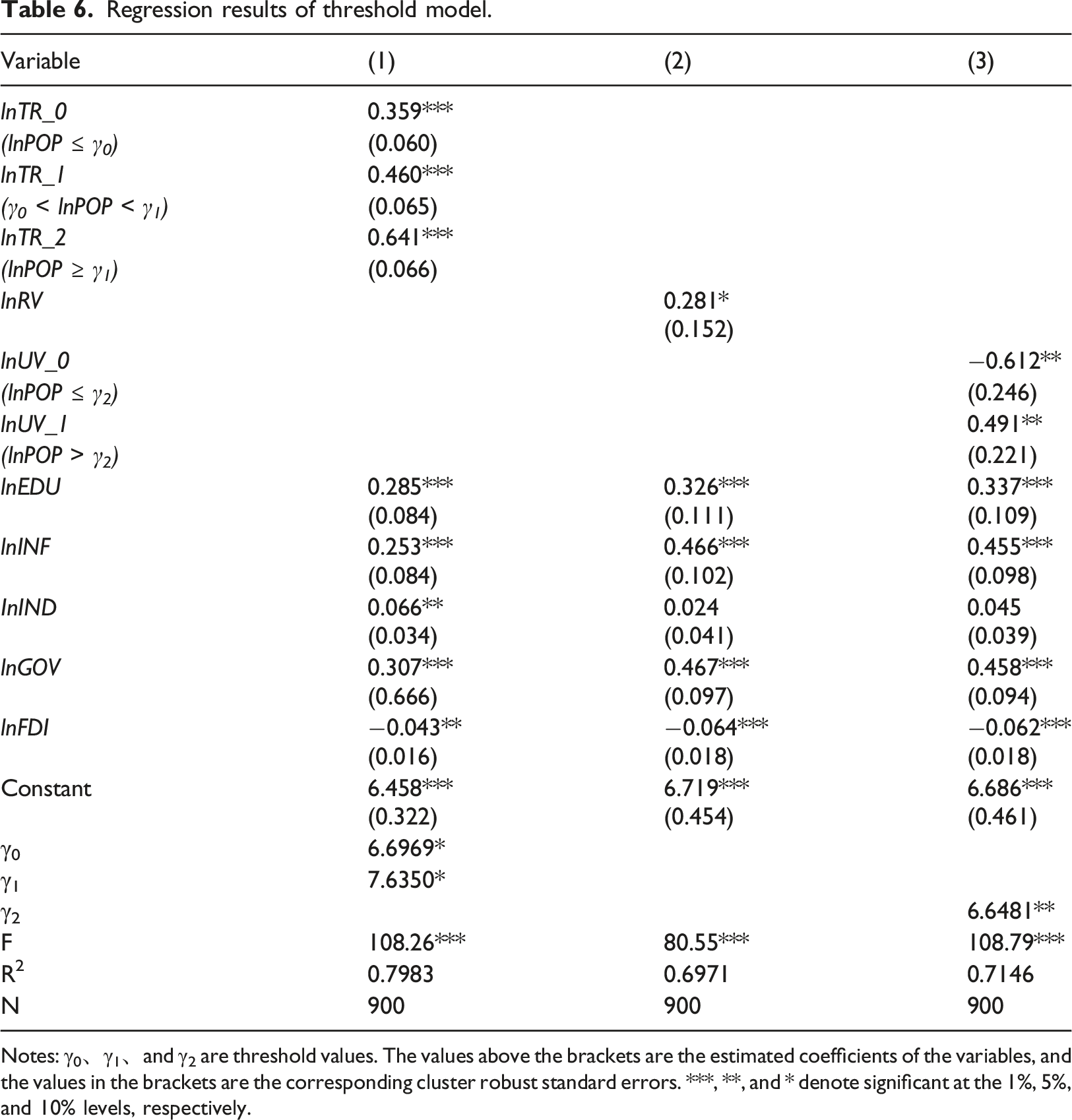
Notes: γ0、γ1、and γ2 are threshold values. The values above the brackets are the estimated coefficients of the variables, and the values in the brackets are the corresponding cluster robust standard errors. ***, **, and * denote significant at the 1%, 5%, and 10% levels, respectively.
Column (1) of Table 6 reports the estimation results of tourism specialization on economic growth of tourist cities based on the threshold model. In column (1), there are two thresholds for the impact of tourism specialization on economic growth of tourist cities, which are 6.6969 (the city’s resident population is 8.0986 million) and 7.6350 (the city’s resident population is 20.693 million), respectively. When the city size is lower than the first threshold value, the impact of tourism specialization on city’s economic growth is significantly positive, and it passes the 1% significance level test with a coefficient value of 0.359. When the city size exceeds the first threshold value, the impact of tourism specialization on city’s economic growth increases, with a coefficient of 0.460 and passing the 1% significance level test. Furthermore, when the city size exceeds the second threshold value, the impact of tourism specialization on city’s economic growth is further enhanced, and the coefficient rises to 0.641, which still passes the 1% significance level test. The above analysis results show that the impact of tourism specialization level on economic growth of tourist cities is related to city size. Specifically, tourism specialization has a positive impact on economic growth of tourist cities, and there is a double threshold effect based on city size. When the city size exceeds the two thresholds, the promotion effect of tourism specialization on economic growth of tourist cities has a significant jump. This is consistent with the research results of Huang et al. (2000) and Zhang and Sun (2016) and verifies our H1. Tourism specialization is more advantageous in large-scale tourist cities. This is mainly because tourist cities with larger city size tend to have more advantages in infrastructure system, tourism planning and development capacity, consumer market, and other aspects. As a result, large cities are more attractive to tourists, which is conducive to the aggregation of advantageous resources and element allocation.
According to the above analysis, there is no threshold effect between RV and economic growth of tourist cities based on city size. Therefore, we use a linear regression model to test their relationship. Column (2) of Table 5 is the result of parametric regression. In order to achieve better fitting effect, it is still necessary to determine whether the model is suitable for mixed regression model, fixed effect model, or random effect model before panel model regression. After F test and Hausman test on the model, it is found that the null hypothesis of the mixed effect model and random effect model are rejected at the 1% significance level. Thus, the fixed effect model is finally selected for analysis in this paper. In column (2), the coefficient of industry-related diversity is significantly positive at the 5% level, indicating that the RV has a significant positive effect on economic growth of tourist cities. Related diversity emphasizes the aggregation of industries, which makes knowledge spillovers more likely to occur, so as to promote economic and technological connections between local enterprises. This also reduces the enterprises’ cost, thereby improving the enterprises’ productivity, and may also achieve common economic development by attracting related industries to gather.
Column (3) of Table 6 reflects the parametric regression results of UV on economic growth of tourist cities. The threshold value of UV to economic growth of tourist cities is 6.6481 (the resident population of the city is 7.713 million). When the city size is less than the threshold value, UV inhibits city’s economic growth with a coefficient of −0.612 and is tested at the 5% significance level. When the city size expands and crosses the threshold value, the further improvement of the level of UV will promote economic growth of tourist cities. It has a coefficient of 0.491, which still passes the 5% significance level. Therefore, there is a significant U-shaped threshold effect based on city size in the impact of UV on economic growth of tourist cities. This is consistent with H2. With the expansion of city size, diversified industrial structure is concentrated in the region, forming diversified industrial spatial distribution pattern. This can strengthen the close linkages between the various industries, resulting in a wider range of local economic benefits. Compared with small cities, the diversity of large cities is more conducive to the exchange of information, sharing of knowledge and technology, thereby promoting economic growth of tourist cities.
For control variables, the estimated coefficients of human capital, infrastructure and government intervention on economic development are much higher than the degree of openness and industrial structure. It shows that the current economic growth of tourist cities still relies more on the accumulation of human capital, the improvement of infrastructure, and the investment of government finance in China. However, the degree of openness has a significant hindering effect on the economic development of tourist cities, which may be due to the low degree of openness and the large differences in the regional distribution of the degree of utilizing foreign investment in these cities. Compared with the central and western regions, the eastern coastal regions are more likely to expand the level of opening up and improve the quality of economic growth.
Robustness test
This paper uses two methods to test the robustness of the empirical results. On the one hand, all continuous variables are winsorized at the 1% and 99% levels to prevent extreme values from adversely affecting the estimated results. On the other hand, we change the measurement index of the dependent variable, use real GDP (lnGDP) to represent economic growth level of tourist cities, and re-estimate the model parameters.
Robustness test results of threshold effect of city size.
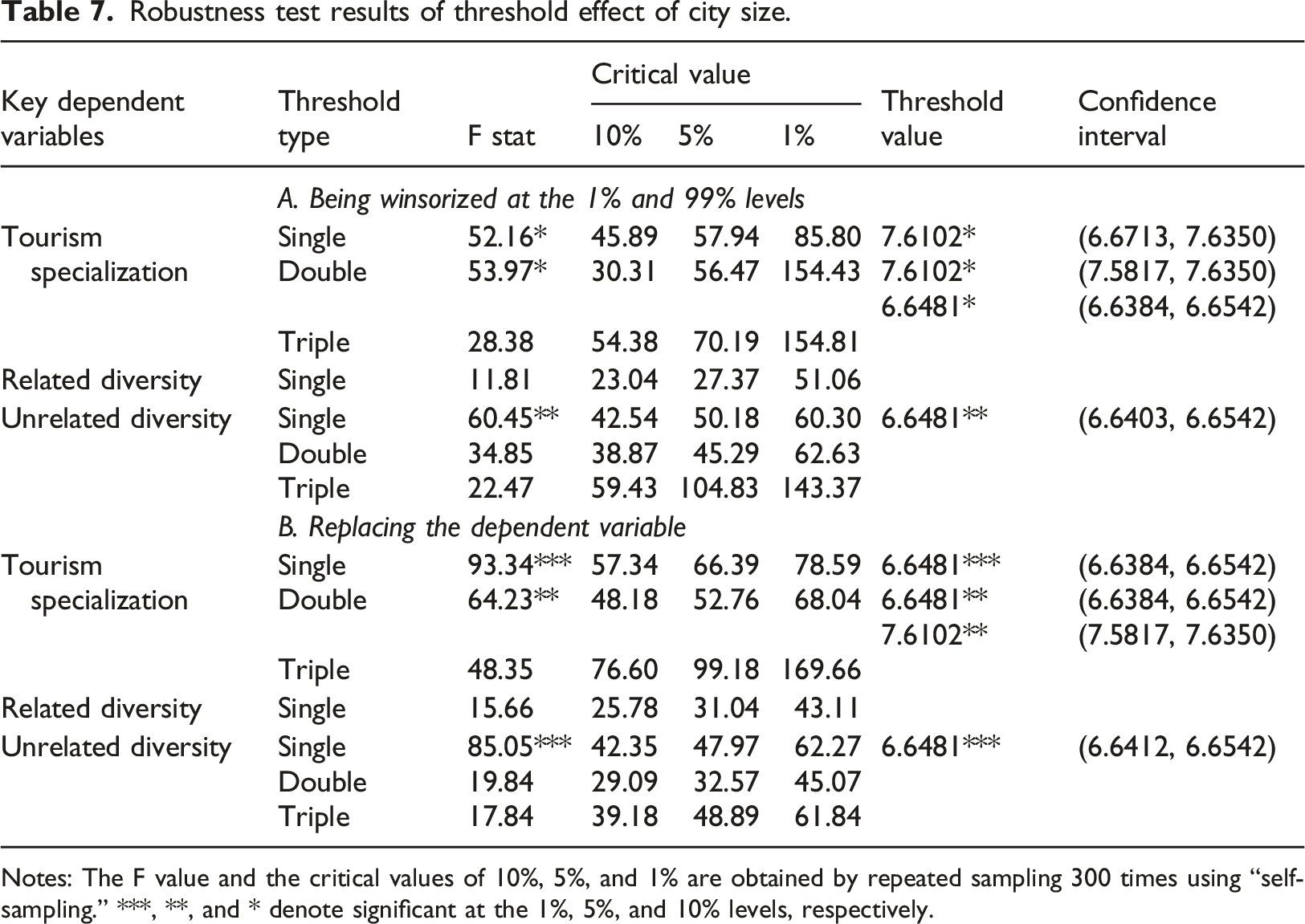
Notes: The F value and the critical values of 10%, 5%, and 1% are obtained by repeated sampling 300 times using “self-sampling.” ***, **, and * denote significant at the 1%, 5%, and 10% levels, respectively.
Robustness test results of threshold model regression.
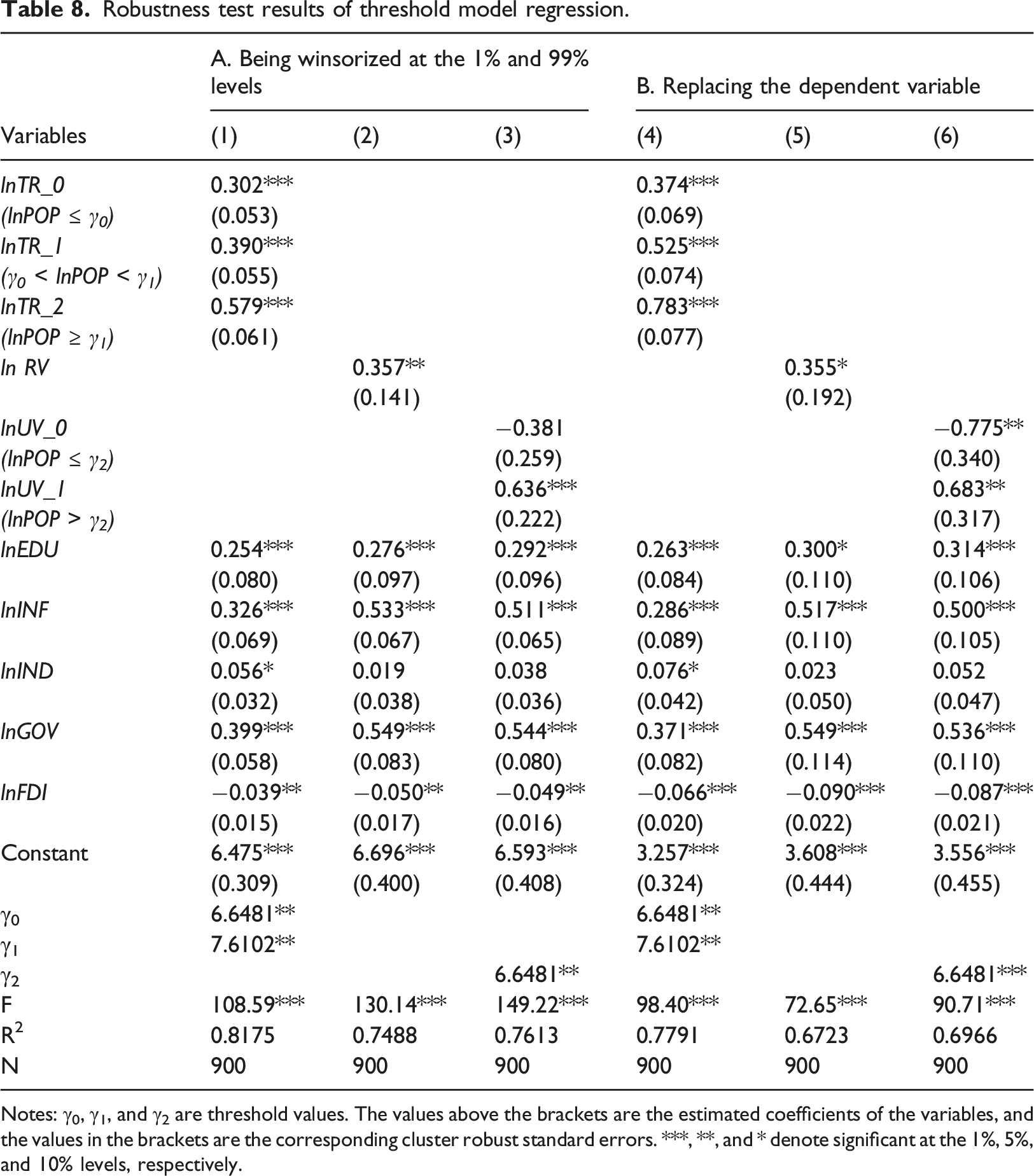
Notes: γ0, γ1, and γ2 are threshold values. The values above the brackets are the estimated coefficients of the variables, and the values in the brackets are the corresponding cluster robust standard errors. ***, **, and * denote significant at the 1%, 5%, and 10% levels, respectively.
Moreover, columns (4)–(6) are the results after replacing the dependent variable (the robustness test B). In column (4), the signs and magnitudes of the coefficients of lnTR_0, lnTR_1, and lnTR_2 are consistent with the original results and the robustness test A. In column (5), the coefficient of ln RV is significantly positive at the level of 10%, which is also consistent with the original results and the robustness test A. In column (6), the coefficient of lnUV_0 is significantly negative at the level 5% and the coefficient of lnUV_1 is significantly positive at the level of 5%, indicating that there is a significant U-shaped threshold effect based on city size in the impact of UV on economic growth of tourist cities. This further verifies the original results. To sum up, the robustness test B show that the signs and magnitudes of the coefficients are basically consistent with the original results, which further confirms the robustness of the conclusion.
Conclusions and implications
Main conclusions
From the perspective of city size, this paper innovatively studies the role of diversity and specialization on economic growth of tourist cities of different sizes, aiming to provide basis for the formulation of industrial development strategy and pattern design of tourist cities. The findings are as follows: first, the promotion effect of tourism specialization on economic growth of tourist cities is related to city size. When the city size exceeds the two thresholds, the promotion effect of tourism specialization on economic growth of tourist cities has obvious jump. Second, the promotion effect of RV on economic growth of tourist cities has nothing to do with city size. Third, the impact of UV on economic growth of tourist cities presents a U-shape. When the city size is lower than the threshold value, UV inhibits economic growth of tourist cities. However, when the city size exceeds the threshold value, UV promotes economic growth of tourist cities.
Theoretical implications
Based on the empirical findings, the paper can formulate two theoretical implications for research on agglomeration externalities and economic growth. First, the results offer evidence for the nonlinear effects of tourism specialization on economic growth of tourist cities from the perspective of city size, which contributes to the tourism agglomeration externalities theory. The impact of city size has been neglected in previous studies on the relationship between tourism development and economic growth. This paper uses the threshold regression model with city size as the threshold variable and finds that tourism specialization has a positive impact on economic growth of tourist cities, and there is a double threshold effect based on city size. Second, this paper puts diversified externalities into the research frame of economic growth of tourist cities, which enriches the theory of diversification externalities. Prior studies have mainly focused on the impact of tourism specialization on economic growth of tourist cities, ignoring the role of industrial diversity. This paper uses entropy method to decompose industrial diversity into two parts, related and unrelated, and discusses their impact on economic growth of tourist cities.
Policy implications
The main policy implications of this paper are as follows: tourist cities should reasonably design and adjust the industrial structure according to the city size, and avoid blindly pursuing the development of tourism specialization or industrial diversity. In other words, tourist cities should first consider their own population when formulating economic development strategies and then carry out industrial economic activities. Specifically, first of all, for small- and medium-sized tourist cities, they should concentrate superior resources to develop tourism and give full play to MAR externalities and advantages of localized economy. At the same time, according to the comparative advantages of the region and the correlation between the characteristics of the industry, the communication and integration of tourism industry and other related industries should be promoted to highlight economic growth effect of RV. Second, for large tourist cities, on the premise of realizing scale economy in the existing tourism industry, they should rely on the macro-control function of the government to guide the diversified adjustment of the industrial structure, so that the stabilizer function of UV can be fully played. The synergistic development of various industries should be encouraged to give play to Jacobs externalities among industries. Based on the dominant industry status of tourism, these cities should continue to develop industries that have a certain foundation and are horizontally related to the tourism industry, and improve the level of RV. In combination with the strategic focus of the national strategic emerging industries, tourist cities should appropriately cultivate emerging sectors that are different from the existing pillar industries against the economic cycle and improve the level of UV.
Limitations and future research directions
Although this study provides several significant implications, there are still certain limitations that need to be addressed in future research. First, considering the availability of data, the paper is limited to a single geographic area. Although tourist cities in China are studied because of the current importance of tourism development in China, future research can collect corresponding data from other countries, therefore resolving the generalizability issue. Second, due to space constraints, the paper only uses city size as the threshold variable, and examines the nonlinear effects of specialization and diversity from the perspective of city size. Future research could establish other threshold variables to better understand the nonlinear effect of tourism specialization and diversity.
Footnotes
Declaration of conflicting interests
The author(s) declared no potential conflicts of interest with respect to the research, authorship, and/or publication of this article.
Funding
The author(s) disclosed receipt of the following financial support for the research, authorship, and/or publication of this article: This work was sponsored by Shanghai Pujiang Program (NO.21PJC054).
