



Abstract
This study examines the relationship between green hotel practices and consumer revisit intention, with the mediating mechanisms of brand identification, promotion focus, and green consumption value. A paper-based survey was conducted to collect data from consumers in four-star or above hotels in China. Findings from multivariate data analysis show that green hotel practices positively influence consumer to revisit intention, which is mediated by brand identification and green consumption value. Moreover, consumer promotion focus positively mediates the relationship between green hotel practices and brand identification. The findings validate a unique multi-path mediating model of green hotel practices. They also have important implications for hotel managers interested in developing genuine environmental initiatives to generate positive customer responses.
Keywords
Introduction
The hotel sector makes essential contributions to the growth of tourism and economic development at national and global levels (Merli et al., 2019; Olya and Han, 2022). However, this sector also harms the environment because its daily operations require significant consumption of water, energy, and other environmental resources (D'Souza et al., 2021; Han et al., 2017; Pham et al., 2020). As an illustration, the world's hotel sector releases approximately 200 kg of CO2 per m2 of room floor area per year (Hotel Energy Solutions, 2018). A hotel room's annual water consumption can range from 60,000 to 220,000 liters (Italian Partner for Water Solutions, 2022). Hotel facilities in Europe rank among the top five in consuming energy in the building sector. Research in Britain has also shown that hotels generate approximately 289,700 tons of waste each year (Open Access Government, 2018).
Consumers have increasingly demanded green products and services from hotel companies (Pham et al., 2020; Yi et al., 2018). For example, a survey by Booking.com reported that 73% of global travelers hold a high intention to stay at a green hotel, 96% believe that sustainable traveling behavior is essential, and 76% intend to make a more sustainable travel choice in the future (Booking.com, 2019). Another survey by the UN Intergovernmental Panel on Climate Change (IPCC) revealed that global travelers’ intention to stay at least once in a green accommodation has increased from 62% in 2016 to 81% in 2021 (Statista.com, 2022). As a result, global hotel companies have gradually engaged in green business practices to reduce their negative environmental impact and satisfy consumers’ expectations about environmental protection (Eid et al., 2021; Gao and Mattila, 2016; Teng et al., 2015).
Given the importance of the issue of “green” in the hotel industry, researchers have recently focused their attention on investigating the influence of green hotels on consumer behavior (Yeh et al., 2021). In a review study of 76 papers in the green hotel field, Arun et al. (2021) summarized various antecedents and mediators (e.g. attitudes, social norms, values, beliefs, green image, and green initiatives) and moderators (e.g. demographics, psychographics, country context, and hotel context) of consumer behavior toward hotels’ green products and services. However, they argued that the mechanism underlying the impact of green hotel practices on consumers’ motivations, emotional feelings, beliefs, values, and behavioral outcomes remains underdetermined in the existing literature.
Consumer behavior toward adopting and consuming green hotel products and services is inherently a complex question that needs further investigation (Arun et al., 2021). More research is needed to clarify how green hotel practices may affect consumers’ psychological processes and behavioral outcomes (Arun et al., 2021; Nimri et al., 2020a, 2020b; Yeh et al., 2021). One important research direction is developing and validating mediation and/or moderation models that explain the underlying mechanisms through which various factors affect hotel consumers’ environmentally sustainable behaviors (Gursoy, 2018; Nguyen and Johnson, 2020).
This study intends to enrich the current literature by investigating the relationship between green hotel practices and consumer revisit intention, with the mediating mechanisms of brand identification, consumer promotion focus, and green consumption value. Brand identification has been acknowledged as an important factor in building consumers’ loyalty, satisfaction, and purchase behavior (Torres et al., 2017; Yeh et al., 2016). It reflects consumers’ emotional attachment and connection with the brand they love (Lam et al., 2013). In the hospitality industry, companies are putting more efforts into enhancing consumers’ brand identification (Berrozpe et al., 2019). By engaging in green practices, hotel companies can build a good brand that cares about the environment and consumers’ well-being (So et al., 2017). This helps to increase consumers’ emotional connection (i.e. brand identification) and purchasing behaviors toward hotels that engage in socially responsible behavior and environmental protection (So et al., 2017). Thus, brand identification may play a mediating role in the relationship between green hotel practices and consumer revisit intention, which will be explored in this study.
In addition, promotion focus is a type of positive motivation (Wang et al., 2020). It is often the result of a positive stimulus and a predictor of positive emotional feelings and behaviors (Chang et al., 2019). When consumers visit a hotel and witness green attributes and green practices of this hotel, they may form a positive motivation (i.e. promotion focus) and have a positive emotional feeling (i.e. brand identification) toward the hotel (Moise et al., 2021; Pham et al., 2020). The reason is that today's consumers are often stimulated by and emotionally connected with green hotels (Han et al., 2017). Thus, consumer promotion focus may mediate the relationship between green hotel practices and consumer brand identification, which will be investigated in this study.
Furthermore, today's consumers often are highly interested in green products and services (Solomon, 2018). They often demonstrate their beliefs and values about environmental protection (Haws et al., 2014). In other words, green consumption value is a core belief and value of today's consumers, which shapes and guides consumers’ behaviors toward green products and services (Lee, 2008, 2014). In the case of the hotel industry, various green attributes and activities of a hotel may trigger and induce consumers’ green consumption value because they see a fit between their beliefs and values and the hotel's green practices regarding environmental protection (Haws et al., 2014). Consequently, consumers may have a high intention to revisit the green hotel that fits their beliefs and values about environmental protection (Assaker, 2020). Thus, green hotel practices may enhance consumers’ green consumption value, which in turn leads to their intention to revisit the hotel. This relationship will be examined in this study.
China, with a population of 1.4 billion people, has the largest hospitality and tourism industry in emerging markets (Chen and Peng, 2014). The luxury hotel sector makes a significant contribution to the growth of the hospitality and tourism industry in China (Dang-Van et al., 2022). China's Ministry of Culture and Tourism (CMCT, 2021) reported that 90% of all luxury hotels are domestic companies and more than 70% of luxury hotel guests are local consumers. The market potential of the luxury hotel sector in China is tremendous, which brings several opportunities for both domestic and foreign hotel companies. Furthermore, Chinese consumers gradually demand more green products and services and tend to choose green hotels as the top priority for their accommodation (Liu and Jiang, 2020). The luxury hotel sector in China promises an ideal context to determine the issue of green practices and their effect on consumer behavior. It can be viewed as representative of emerging markets in investigating the issue of green hotel practices (Dang-Van et al., 2022).
The present study expectedly contributes to the extant literature in two main ways. First, it sheds new light on consumer behavior regarding green and sustainable consumption in the hotel industry. The influence of green practices on consumer behavior in the specific context of the hotel industry has been investigated but not fully understood, especially in the luxury hotel sector (Nimri et al., 2020a; Yeh et al., 2021). Second, this study proposes a unique model that explains the mediating mechanisms of several important variables in the link between green hotel practices and consumer revisit intention. This unique model provides a new explanation of the influence of green hotel practices on consumers’ motivation (i.e. promotion focus), emotional feeling (i.e. brand identification), value (i.e. green consumption value), and behavioral outcome (i.e. revisit intention).
This study is structured as follows. Section “Literature review and key concepts” discusses the literature review and key concepts. Section “Theory and hypothesis development” shows the theory and develops hypotheses. Section “Methodology” discusses research methods. The last two sections present the data analysis results and their implications.
Literature review and key concepts
Green hotel practices
Green hotels refer to “environmentally friendly properties that implement initiatives to save water and energy and reduce solid waste, simultaneously saving money to protect the earth” (Green Hotel Association, 2014, p. 1). They are generally defined as “establishments that provide guests with comfortable, healthy, and natural lodging along the basic principles of environmental protection, sustainable management, and minimization of environmental impact” (Lee and Cheng, 2018, p. 33). The green hotel trend has been growing globally (Moise et al., 2021; Pham et al., 2020). Many hotels engage in green practices given their potential benefits, including operational efficiency, competitive advantage, and financial performance (Jones et al., 2014). Some studies have determined “green hotel practices” in the hotel literature (Moise et al., 2021; Nimri et al., 2020a). For example, this concept is defined as a business strategy regarding environmental protection that adds value and benefits to a hospitality company (Kim et al., 2017, p. 236). In particular, green hotel practices include all green activities, such as recycling, using resources and energy efficiently, reducing waste production, conserving of landscape and natural environment, purchasing local and ecological products, and providing environmentally friendly products and services (Moise et al., 2021, p. 723). This study refers to green hotel practices as environmental management and activities that a hotel engages in to protect and minimize its business impacts on the environment.
Brand identification
Brand identification is a type of emotional feeling that refers to “a consumer's psychological state of perceiving, feeling, and valuing his or her belongingness with a brand” (Lam et al., 2013, p. 235). It suggests that a firm/brand presents extrinsic and intrinsic cues that reflect a match/similarity/congruence between the firm/brand and the consumer's actual self (Yeh et al., 2016). The higher congruence between firm/brand and consumers, the stronger brand belongingness and emotional attachment consumers identify with the firm/brand (Berrozpe et al., 2019). Brand identification is an important antecedent of consumers’ brand loyalty, brand equity, brand preference, and purchase intention (Torres et al., 2017; Yeh et al., 2016). A few studies have investigated the issue of brand identification in the hospitality industry. For example, Berrozpe et al. (2019) measured brand identification in the tourism context. So et al. (2017) tested the predictive ability of brand attractiveness on brand identification. Informed by previous studies, the current research views brand identification as an emotional feeling that reflects the feeling of similarity and congruence between a green hotel and consumers’ values and beliefs. It reflects the feeling of emotional connection when consumers identify themselves with a green hotel, which may affect their attitudes and behaviors toward that green hotel.
Consumer promotion focus
Promotion focus is a core concept in regulatory focus theory. It is a mechanism that motivates individuals’ eagerness toward the desired end state (Wang et al., 2020). Specifically, promotion focus is a type of motivation that reflects the eagerness of a person hopes to gain an objective. It represents the person's excitement, enthusiasm, and enjoyment about reaching a purpose (Higgins, 1997). Promotion focus is often associated with positive feelings (e.g. love, admiration, rewards, and other pleasures) (Wang et al., 2020). It is derived from positive stimuli, which create favorable conditions to trigger positive emotions and psychological states (Chang et al., 2019). In this study, consumers’ promotion focus is associated with their positive emotional feelings toward green hotels.
Green consumption value
Green consumption value is a type of belief and value defined as “the tendency to express the value of environmental protection through one's purchases and consumption behaviors” (Haws et al., 2014, p. 337). It is an important aspect of a socially responsible consumer who purchases products and services or engages in activities that positively influence the environment or contribute to positive social change (Roberts, 1993, p. 140). Consumers with green values often hold strong beliefs and values and act toward environmental protection. They use environmental resources wisely, such as clean water, clean air, energy efficiency, and personal resource conservation (Haws et al., 2014). In this study, green consumption value refers to consumers’ values and beliefs about environmental protection. It reflects consumers’ beliefs, evaluations, and feelings toward green activities in the hotel industry.
Theory and hypothesis development
Social learning theory
Research in psychology and management has widely adopted social learning theory (SLT) to explain human behavior in the social context and organizational environment (Bandura and Hall, 2018). Accordingly, SLT states that an individual's behavior is formed as a learning process of perceiving and observing external factors, including other people's behavior, events, and other stimuli in the social environment (Bandura and Walters, 1977). More specifically, an individual that observes and interprets the behaviors of others or any events in the surrounding environment engages in a cognitive process that shapes and influences one's motivations, emotional feelings, and behavioral outcomes (Bandura, 1971; Hoyer et al., 2018).
In the context of the hotel industry, consumers who visit and stay at a green hotel will observe and witness various green hotel practices, which occurs naturally because consumers often observe and interpret the environment when they visit and browse at a hotel (Solomon, 2018). According to SLT, consumers can learn more about green hotel practices’ environmental and personal benefits through their observation and interpretation, which motivates them and triggers their emotional feelings, beliefs, and values toward green hotels. Consequently, consumers may hold a behavioral intention toward green hotels (Assaker, 2020; Moise et al., 2021). In other words, consumers’ observation of green hotel practices may lead to their promotion focus (i.e. motivation), brand identification (i.e. emotional feeling), and green consumption value (i.e. beliefs and values), which may lead to their revisit intention (i.e. behavioral intention) toward green hotels. Thus, on the theoretical foundation of SLT, this study proposes the following research model (as presented in Figure 1).
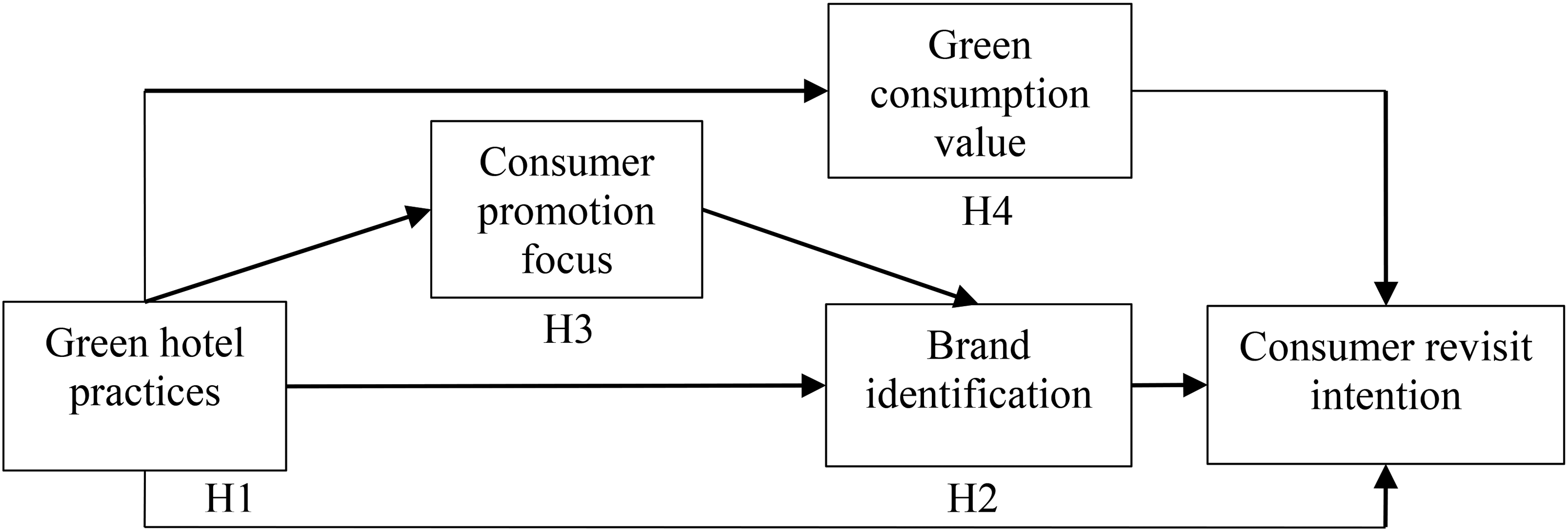
Research model.
Green hotel practices and consumer revisit intention
In today's social environment, consumers increasingly care about environmental protection and are willing to engage in green consumption (Merli et al., 2019). Many consumers choose to stay at green hotels and purchase green products at tourist destinations (Wang et al., 2020). Given that green consumption has become an essential part of consumers’ beliefs, values, and behaviors (Yeh et al., 2021), green hotels are the priority for today's consumers when choosing an accommodation to stay at the destination (Han et al., 2017). Some studies, such as Assaker (2020), Moise et al. (2021), Nimri et al. (2020a), and Yeh et al. (2021), reported that consumers tend to be satisfied and loyal to green hotels and highly intend to choose green hotels.
According to SLT, when consumers observe and interpret various green activities of a hotel company, they may find that the hotel can fulfill their needs regarding environmental protection (Merli et al., 2019; Wang et al., 2020). Consequently, consumers may hold a high intention to revisit the hotel. In other words, observation of a hotel's green activities shapes and influences consumers’ behavioral intention toward this hotel company. Consumers may realize that staying at a green hotel is a type of green consumption that meets their expectations about environmental protection (Han et al., 2020). Thus, the first hypothesis is proposed.
Green hotel practices are positively related to consumer revisit intention.
The mediating role of brand identification
A brand often serves as a useful tool for creating a meaningful association between consumers and the firm that owns the brand (El-Amir and Burt, 2010). It helps represent consumers’ social status and boost consumers’ self-expression (Bartsch et al., 2016). Consumers usually identify with a brand when they perceive a high congruence between the brand's values and characteristics with themselves (Torres et al., 2017). This brand identification determines consumers’ attitudes, emotions, and behavioral outcomes (Davvetas and Diamantopoulos, 2017).
In the hotel industry, consumers often feel a sense of belongingness and have a strong identification with hotels that actively engage in socially responsible behavior and environmental protection (So et al., 2017) because of a strong match between their values and these hotels (Berrozpe et al., 2019). Hotels’ environmental practices and green characteristics help build a good image and brand reputation that generate meaningful identifying symbols of green-oriented consumers (So et al., 2017). Today's consumers often favor and prefer brands and firms that are environmentally and ethically oriented (Lee, 2008; Suki, 2013). Thus, when consumers stay at a hotel characterized by green attributes and one that provides environmentally friendly products and services, they may form an emotional attachment and identify with this hotel (Han et al., 2017). Given that consumers have similar beliefs and values with green hotels that care about sustainable and environmental issues, they may hold a high intention to revisit the hotel.
According to SLT, consumers’ emotional feelings (i.e. feeling of emotional attachment and connection) and behavioral intentions are likely to be shaped and influenced as a result of observing and interpreting a hotel's green activities. That is, when observing and interpreting various green activities of a hotel, consumers learn and form positive feelings and emotional connections toward the hotel because such green practices benefit the environment, society, and consumers. Consequently, consumers tend to hold a high intention to revisit the hotel. Thus, the following hypothesis is developed:
Brand identification positively mediates the relationship between green hotel practices and consumer revisit intention.
The mediating role of consumer promotion focus
In the hotel sector, consumer promotion focus is often induced by positive factors, such as online service recovery reviews (Chang and Cheng, 2021), destination image (Zhang et al., 2018), perceived value (Liu, 2015), and service recovery (Kim and Jang, 2015). This study argues that consumer promotion focus can be triggered by hotels’ green practices, leading to positive emotional attachment and feelings of connection to these hotels.
According to SLT, people form motivations, beliefs, values, and behavioral outcomes through perceptions and cognitive processes about external events and phenomena (Bandura, 1971). In other words, people perceive and interpret environmental stimuli to form a comprehensive understanding of the surrounding environment. In the hotel industry, when consumers find that a hotel takes action to protect the environment and provides green products and services that bring goodwill to consumers, they tend to see this hotel as a good business firm that cares about society and consumers (Han et al., 2020). Given that many consumers are socially responsible and green-oriented (Solomon, 2018), they tend to view green hotels as good citizens that share similar beliefs and values and are motivated to support these green hotels (Rahman et al., 2020). In other words, green hotels and their environmental activities tend to promote consumers’ motivation and feelings of emotional attachment to these green hotels because they and such green hotels share the same values and beliefs about environmental protection. That is, green hotel practices increase consumers’ positive motivation (i.e. promotion focus), enhancing their ability to identify with the brand image of green hotels (i.e. brand identification). Thus, the following hypothesis is developed.
Consumer promotion focus positively mediates the relationship between green hotel practices and brand identification.
The mediating role of green consumption value
The environmental movement and green consumption have widely and profoundly shaped and influenced consumers’ behavior in today's social environment (Solomon, 2018). Several scholars have claimed that green consumption has become a core belief and value of consumers in modern society (Han et al., 2020; Haws et al., 2014). As a result, today's consumers often choose green products and services as their priority and actively engage in environmental behavior (Assaker, 2020; Nguyen and Johnson, 2020).
According to SLT, green hotels and their environmental activities may trigger consumers to reflect as green and responsible consumers (Lee, 2008, 2014; Suki, 2013). In this case, hotels’ green and responsible activities may elicit consumers’ beliefs and values of green consumption, encouraging them to select and revisit green hotels. In other words, green hotel practices act as signals that trigger and induce consumers’ green consumption value (Haws et al., 2014), built upon their attitudes and beliefs about environmental protection and green hotels’ environmental activities. Researchers suggest that green consumption value is likely activated and formed from the perceptions of green hotel practices (Nimri et al., 2020a, 2020b), which motivates consumers to stay and revisit green hotels (Assaker, 2020). The following hypothesis is therefore developed.
Green consumption value positively mediates the relationship between green hotel practices and consumer revisit intention.
Methodology
Measures of variables
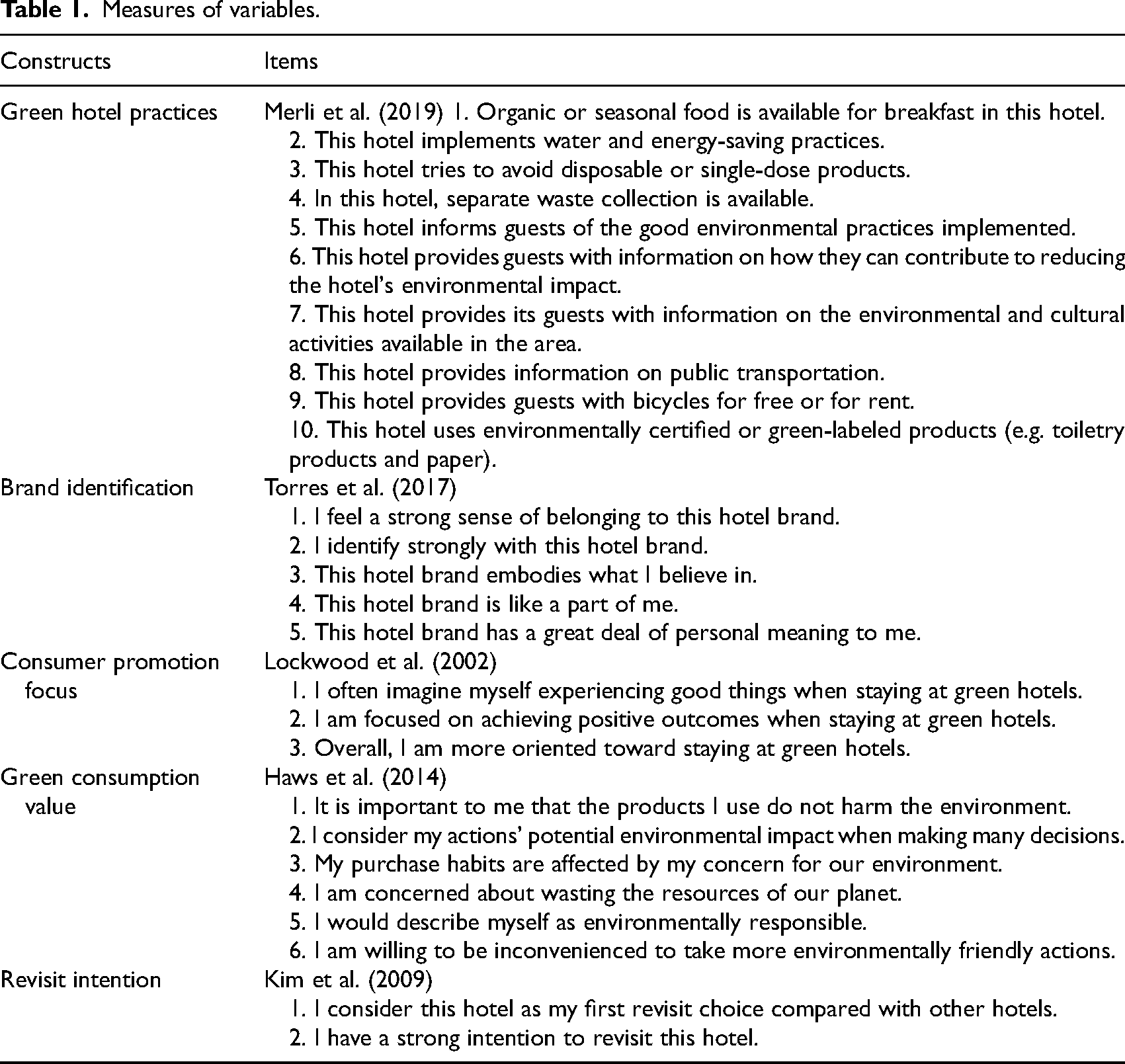
This study adopted existing measurement scales from the extant literature. These scales were selected because they have proven to have high validity and reliability in prior literature. Green hotel practices were measured using a 10-item scale from Merli et al. (2019) and validated by Preziosi et al. (2019) with a reliability of 0.957. Brand identification was measured using a 5-item scale from Torres et al. (2017) and validated by Dang et al. (2020) with a reliability of 0.93. Consumer promotion focus was measured using three items adapted from Lockwood et al. (2002). This original scale was developed with five items to measure students’ promotion focus toward educational goals in the educational context. Given the target research and context of the present study is hotel consumers, the researchers refined and adapted three items to reflect the hotel context. The reliability of this adapted scale was confirmed in a pilot study, which will be presented in the next section. Green consumption value was measured using the 6-item scale from Haws et al. (2014) and validated by do Paço et al. (2019) with a reliability of 0.94. Revisit intention was measured using a 2-item scale from Kim et al. (2009) and validated by Wang and Wu (2011) with a reliability of 0.77. All items were measured using a 5-point Likert scale (1 = strongly disagree, 5 = strongly agree). Table 1 shows the details of items of the measures.
Measures of variables.
Sample data procedure
This study used a survey questionnaire to collect sample data. Following McGorry's (2000) suggestion, the forward-backward translation method was used to design the questionnaire with items translated between English and Chinese. A sample of 41 students was invited to participate in a pilot test. All respondents clearly understood the wording and meaning of all the items. The Cronbach's alpha coefficients for the variables were 0.95 (green hotel practices), 0.62 (brand identification), 0.68 (consumer promotion focus), 0.72 (green consumption value), and 0.72 (revisit intention).
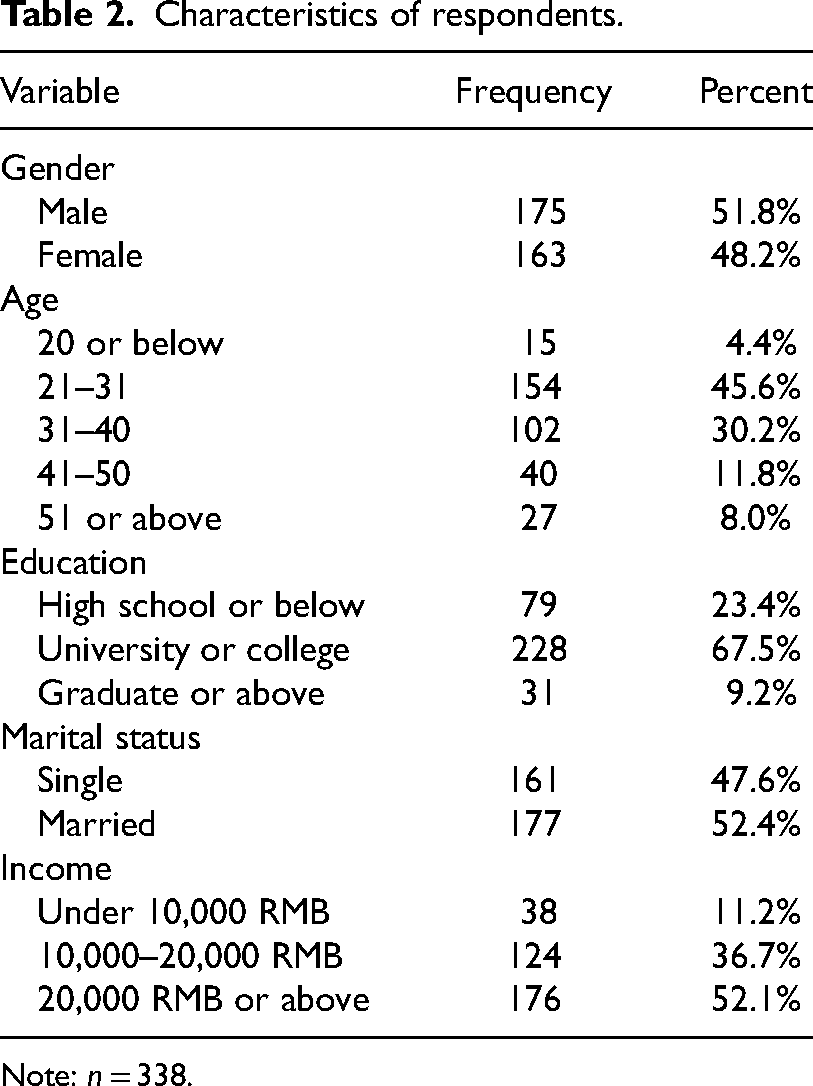
This study collected formal data in Guangzhou city because it is one of China's most prominent tourist destinations. Given that a list of all hotels in Guangzhou is not publicly available, the researchers conveniently contacted and selected different four-star and above hotels. The researchers selected only hotels that obtained a green hotel certificate and engaged in different green practices. This selection is made by asking each hotel's CEO/general manager two filtered questions: (1) Has your hotel obtained a green hotel certificate? and (2) What green practices/activities has your hotel engaged in? Twenty hotels that met the selection criteria approved the researchers’ request to survey the site. In May 2021, the research team with six members conveniently approached consumers at these hotels face-to-face. A total of 400 consumers were invited and agreed to participate in the survey. Following the ethical standards of the American Psychological Association's Ethical Principles, consumers completed the questionnaire based on their voluntariness, and the survey was regarded as “informed consent.” A gift of 25 RMB was given to each respondent who completed the survey to appreciate their participation. The final sample data consisted of 338 valid questionnaires. Characteristics of respondents are present in Table 2.
Characteristics of respondents.
Note: n = 338.
Analysis methods and control variables
This study used different multivariate methods to analyze the collected data. SPSS 24 was used for data screening, descriptive statistics, and reliability analysis. Structural equation modeling (SEM) with AMOS 24 was used to perform confirmatory factor analysis (CFA) and test hypotheses.
Kline (2011) argued that covariance-based SEM (CB-SEM) is decisive in simultaneously testing a complex model with multiple hypotheses. It can control for the error term in a single model and provides more accurate estimations. According to Reinartz et al. (2009), a CB-SEM is suitable when the sample size must be 250 cases or above. Furthermore, Kline (2011) suggested that the sample size of an SEM model should be determined by the rule of thumb “n:p” (n is the number of items of the measures, and p is the number of questionnaires). Accordingly, an ideal sample size should be 1:10 or above (one item needs ten questionnaires or above) (Kline, 2011). In this study, the total number of items of the measures was 26 (see Table 1), requiring at least 26 × 10 = 260 questionnaires. The sample size in this study was 338 questionnaires. Thus, CB-SEM with AMOS 24 was used to test the proposed hypotheses because the sample size in this study is large enough.
Green hotel literature has emphasized the vital role of consumers’ demographic characteristics (Dang-Van et al., 2022; Merli et al., 2019). Several prior studies have suggested the potential impact of consumers’ demographic variables, including age, gender, education, marital status, and income level, on their intentions and behaviors toward green hotels (Dang-Van et al., 2022; Han et al., 2011; Nimri et al., 2020a). Hence, the present study incorporated these demographics as control variables in the SEM model.
Findings
Measurement model
Before estimating the measurement model, the normality of the variables and items was assessed using Skewness and Kurtosis statistics. All the statistical values of Skewness and Kurtosis were within twice the standard error (±1.96). Thus, assuming that the data were normally distributed is reasonable (Hair et al., 2010).
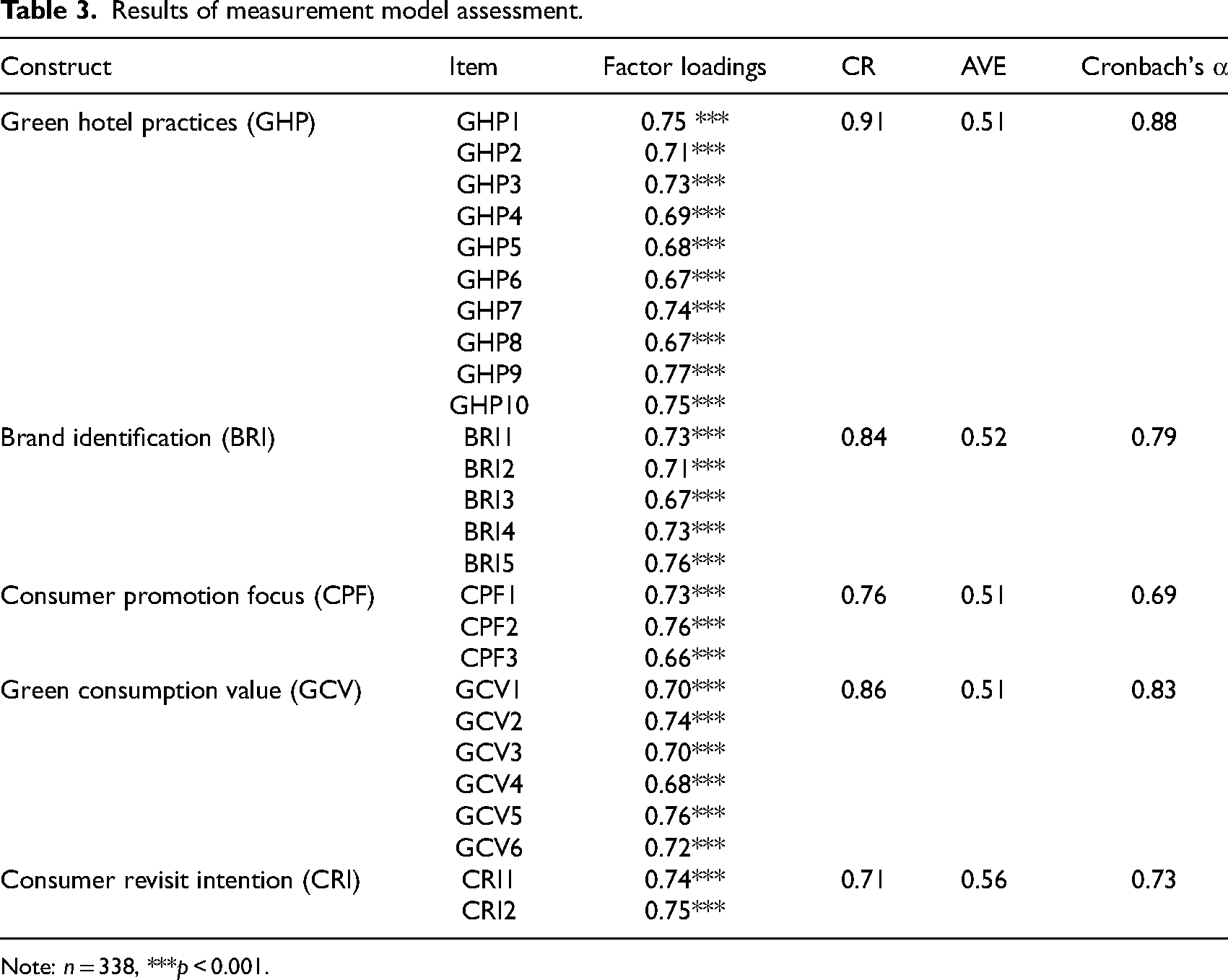
A CFA was performed to assess the measurement model. A result shows that the measurement model had a very good model fit: Chi-square/degree of freedom = 427.550/289 = 1.479, comparative fit index (CFI) = 0.964, goodness of fit index (GFI) = 0.964, Tucker Lewis index (TLI) = 0.960, root mean square error of approximation (RMSEA) = 0.038, and standardized root mean residual (SRMR) = 0.030. Table 3 shows the results of the measurement model assessment.
Results of measurement model assessment.
Note: n = 338, ***p < 0.001.
Reliability and validity
Table 3 shows that Cronbach's alpha values for the variables were 0.88 (green hotel practices), 0.79 (brand identification), 0.69 (consumer promotion focus), 0.83 (green consumption value), and 0.73 (revisit intention). These values were greater than the cutoff value of 0.60 (Hair et al., 2010), supporting the measures’ reliability.
Following the suggestions by Hair et al. (2010) and Kline (2011), average variance extracted (AVE) and composite reliability (CR) were used to test the convergent validity. As shown in Table 3, all AVE values were above the cutoff value of 0.50, and all CR values were also greater than the cutoff value of 0.70 (Hair et al., 2010; Kline, 2011). These results provided evidence for a good convergent validity of the measures.
Furthermore, according to Chin (1998) and Hair et al. (2010), discriminant validity was measured by comparing the square roots of AVE and correlation coefficients between variables. Results in Table 4 indicate that square roots of the AVE were all greater than correlations between the variables, suggesting a good discriminant validity of the measures.
Descriptive statistics and discriminant validity.
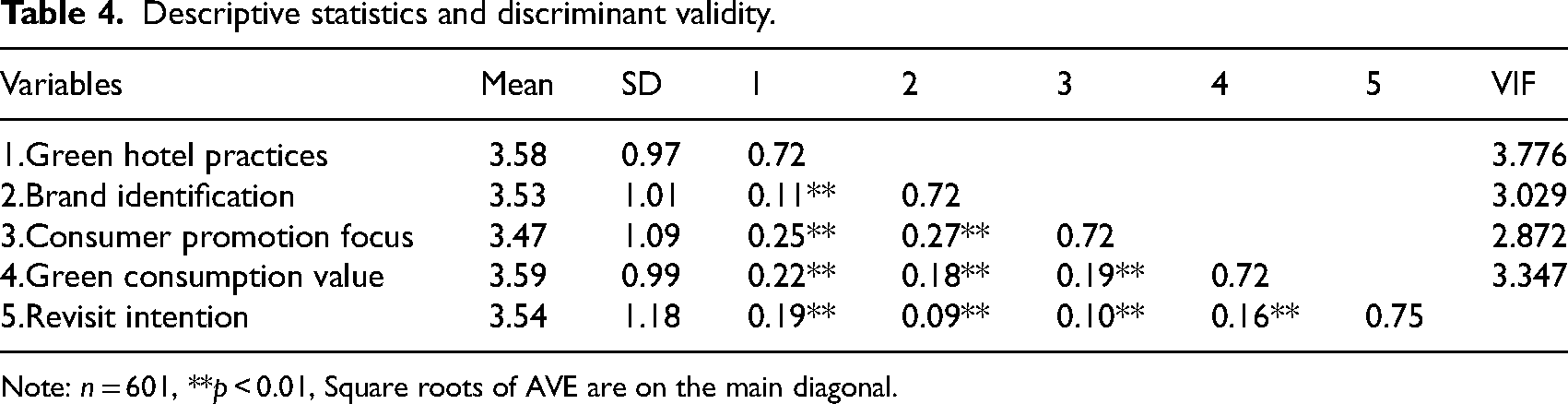
Note: n = 601, **p < 0.01, Square roots of AVE are on the main diagonal.
Common method variance, social desirability, and non-response biases
This study followed Podsakoff et al.'s (2003) method and initially conducted Harman's single-factor test to check common method bias (CMB). Results of the principal component analysis show that the first factor accounted for 31.28% of the variance, which is less than the cutoff value of 50% (Podsakoff et al., 2003). Furthermore, a marker variable was used for testing CMB (Mackenzie and Podsakoff, 2012). According to Miller and Chiodo (2008), the variable “blue attitude” with four items has been widely used in prior literature and was used as the marker variable in this study. One example item was “I like blue color.” The results of the marker variable test indicate that CMB was less than 2%, implying that the relationships between the variables were not significantly affected by CMB. Thus, CMB was not a serious concern in the sample data.
In addition, Juvan and Dolnicar (2016) indicated that social desirability bias (SD) may present a potential problem in studies of environmentally sustainable tourist behavior when prompted closed questions are used. Specifically, these questions often lead to higher reporting of environmentally sustainable intentions and behaviors. To deal with this issue in this study, respondents were allowed to complete their questionnaires anonymously, and the order of some items was counterbalanced to minimize the possibility of the respondents guessing the purpose of the study (Juvan and Dolnicar, 2016; Podsakoff et al., 2003). This procedure can help reduce item-context effects and respondents’ desire to create a positive social image (Holtgraves, 2004; Podsakoff et al., 2003).
Furthermore, non-response bias can occur when respondents differ from non-respondents, leading to a biased sample and influencing the analysis results (Armstrong and Overton, 1977). Following Lambert and Harrington (1990) and Pearl and Fairley (1985), this study compared the early respondents (first five days) and later respondents (last five days) to check for non-response bias. Results indicate no significant difference between early and later respondents for all the variables. Therefore, non-response bias was not an issue in the sample data.
Hypotheses testing
Figure 2 shows the results of hypothesis testing in this study. Results indicate that only marital status was negatively related to revisit intention (β = −0.052, p < 0.05), suggesting that unmarried respondents were more likely to revisit green hotels than married respondents. Other controlled variables (i.e. gender, age, education, and income) were not significantly related to revisit intention.
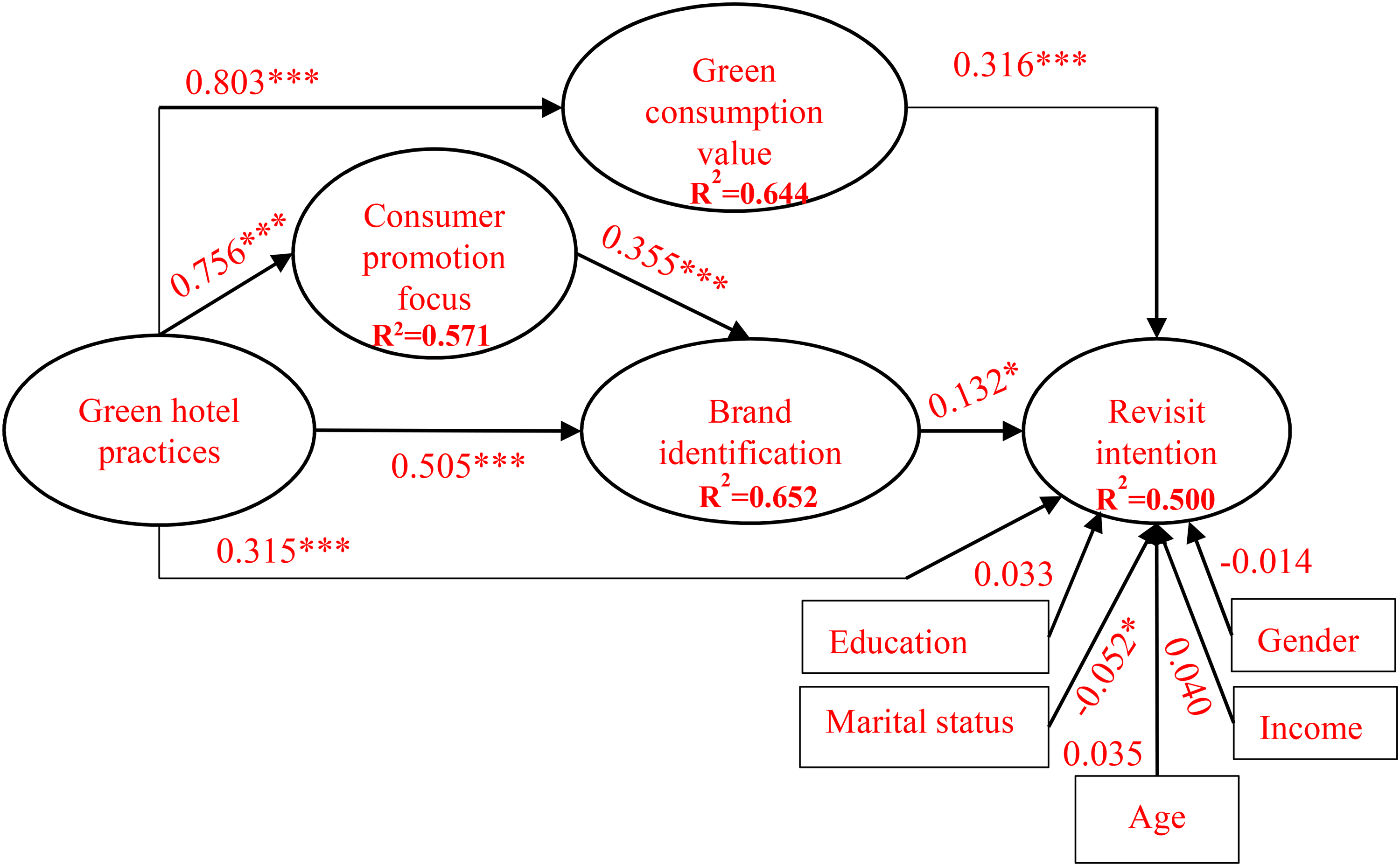
Results of hypothesis testing.
Figure 2 also shows that green hotel practices were positively related to consumer revisit intention (β = 0.315, p < 0.001). Thus, hypothesis H1 was supported. Furthermore, green hotel practices were positively associated with brand identification (β = 0.505, p < 0.001), which was positively associated with consumer revisit intention (β = 0.132, p < 0.05). Results of bootstrap analysis (Preacher et al., 2007) with 5000 samples and a 95% confidence interval show that the indirect effect of green hotel practices on consumer revisit intention through brand identification was statistically significant (β = 0.078, p < 0.05, 95% CI = [0.010, 0.170]). Thus, hypothesis H2 was supported.
Figure 2 also shows that green hotel practices were positively related to consumer promotion focus (β = 0.756, p < 0.001), which was positively associated with brand identification (β = 0.355, p < 0.001). Results of the bootstrap analysis indicate that the indirect influence of green hotel practices on brand identification through consumer promotion focus was statistically significant (β = 0.280, p < 0.01, 95% CI = [0.195, 0.353]). Thus, hypothesis H3 was supported.
Furthermore, green hotel practices were positively related to green consumption value (β = 0.803, p < 0.001), which was positively associated with consumer revisit intention (β = 0.316, p < 0.001). Results of the bootstrap analysis indicate that the indirect influence of green hotel practices on consumer revisit intention through green consumption value was statistically significant (β = 0.298, p < 0.01, 95% CI = [0.138, 0.476]). Thus, hypothesis H4 was supported.
Figure 2 shows the R2 values for consumer promotion focus (R2 = 0.571), brand identification (R2 = 0.652), green consumption value (R2 = 0.644), and revisit intention (R2 = 0.500).
Discussion and conclusions
Discussion of main findings and theoretical implications
This study reveals several interesting findings that provide important implications for the current literature. First, this study finds a positive relationship between green hotel practices and consumer revisit intention. The finding suggests that various green activities of a hotel company enhance consumers’ behavioral intention toward the hotel because green activities of the hotel meet consumers’ needs and expectations about environmental protection and green consumption (Solomon, 2018). Hotel consumers increasingly care about environmental protection (Yi et al., 2018), and one way to demonstrate their environmental concern is to choose green hotels (Han et al., 2020). Consumers who witness various green activities of a green hotel may realize different values and benefits of the hotel's green activities (Moise et al., 2021), directly leading to their revisit intention because their expectations about environmental protection are satisfied by the hotel's green practices (Yeh et al., 2021). This study's finding extends previous studies conducted by Han et al. (2020), Moise et al. (2021), and Yeh et al. (2021), who found that consumers tend to be satisfactory and loyal and choose green hotels as their top priority. Thus, this study enriches extant knowledge about the influence of green hotel practices on consumer behavior, which may benefit researchers in investigating the issue of green practices in the hotel industry.
Second, this study's findings indicate that brand identification positively mediated the link between green hotel practices and revisit intention. The finding implies that consumers tend to form an emotional connection and identify themselves with green hotels, which actively engage in socially and environmentally responsible behaviors (So et al., 2017). In particular, when consumers stay and witness the green activities of a hotel company, they learn and understand that this hotel is endeavoring to solve environmental problems and create more value for consumers (Assaker, 2020). Given this observation and realization about the hotel's green practices, consumers tend to form a positive emotional connection and highly intend to revisit the green hotel (Berrozpe et al., 2019). In this case, the influence mechanism goes from consumers’ observation of green hotel practices to their feeling of belongingness with the green hotel, leading to their behavioral intention toward the green hotel. That is, brand identification transfers the effect of green hotel practices to consumers’ revisit intention. This study's finding further highlights the role of brand identification in the relationship between consumers and hotel companies, which has been claimed by Berrozpe et al. (2019) and So et al. (2017). Thus, the present study helps to clarify the mediating mechanism of brand identification in the link between green hotel practices and revisit intention, which has been absent in prior literature. This finding has implications for researchers interested in investigating the issue of brand identification in the context of green and sustainable hospitality.
Third, this study's finding shows a positive mediating effect of consumer promotion focus on the relationship between green hotel practices and brand identification. When consumers see that a hotel engages in green practices to protect the environment, they are likely to perceive this hotel as a socially responsible firm (Han et al., 2020). Given this perception, consumers tend to be motivated and form an emotional feeling of belongingness with the green hotel because consumers and the hotel share the same values and beliefs about environmental protection in today's social environment (Rahman et al., 2020). In this case, the green activities of a hotel can act as a driver to encourage and trigger consumers’ positive motivation (Han et al., 2020), which functions as a driving mechanism to induce these consumers’ feeling of emotional attachment and connection to the green hotel (Park et al., 2017; Rahman et al., 2020). In other words, consumers’ promotion focus is motivated by green hotel practices, which triggers consumers’ brand identification with the green hotel. This finding extends previous studies of Chang and Cheng (2021), Kim and Jang (2015), and Liu (2015), who highlighted the vital role of consumer promotion focus in driving consumers into positive behaviors toward hotel companies. Thus, this study sheds new light on the mediating mechanism of consumer promotion, focusing on the link between green hotel practices and brand identification. This finding provides implications for researchers interested in determining the role of consumer promotion focus in green and sustainable hospitality.
Fourth, this study finds that green consumption value positively mediated the relationship between green hotel practices and revisit intention. This finding indicates that consumers tend to form beliefs and values about environmental protection when they witness the green practices of hotel companies (Assaker, 2020). In today's social environment, green consumption and environmental protection have become core beliefs and values of consumers (Solomon, 2018). Given these beliefs and values, consumers care about how their consumption and firms’ activities contribute to environmental preservation (Hoyer et al., 2018). In the case of staying at green hotels, the hotels’ socially and environmentally responsible practices trigger consumers’ perceptions and beliefs about green consumption and environmental protection, which motivates them to choose green hotels as their priority (Nimri et al., 2020a, 2020b). In other words, green hotel practices activate and trigger consumers’ beliefs and values about environmental protection, encouraging them to support the green hotel by having a high intention to revisit the hotel (Assaker, 2020). The finding in this study enriches prior studies, such as Haws et al. (2014), Kao and Tu (2015), and Wang et al. (2020), which showed the direct influence of green consumption value on consumer behavioral intention in the context of green hospitality. Thus, this study reveals the mediating mechanisms of green consumption value in the relationship between green hotel practices and consumer revisit intention. This finding provides implications for researchers interested in studying the role of green consumption value in the issue of green and sustainable hospitality.
Finally, the analysis of the control variables demonstrates that only consumers’ marital status is significantly related to their visit intention. This finding is consistent with previous research suggesting that unmarried Chinese consumers are more likely to support environmental protection and engage in pro-environmental behaviors than married consumers (Chen et al., 2011). However, other control variables, including gender, age, education, and income, do not significantly impact revisit intention. These findings partly support Dang-Van et al. (2022) and Nimri et al. (2020a), who found that age, education, and income level do not create differences in consumers’ attitudes and intentions toward staying at green hotels. However, they contradict Han et al.'s (2011) finding that females tend to have higher intentions toward green hotels. This discrepancy highlights the need to control for the effect of demographic variables in green hotel research.
In sum, although few studies have investigated the relationship between green hotel practices and consumer behavior (Yeh et al., 2021), the mediating mechanisms in this relationship have been underdetermined in the extant literature. This study makes a significant contribution by developing and validating a multi-path mediating model of green hotel practices. In particular, this study draws on the theoretical foundation of SLT to propose a unique research model, which explains the multi-path mediating mechanisms in consumers’ psychological and behavioral outcomes toward green hotel practices. Developing a mediation model is essential to understand better consumers’ environmentally sustainable behaviors in the hospitality and tourism context (Gursoy, 2018; Nguyen and Johnson, 2020). Essentially, this study's research model helps to clarify and advance current knowledge about consumers’ sustainable behavior. Thus, the model validated in this study can serve as a theoretical framework for future research into consumers in sustainable hospitality.
Managerial implications
Several implications for business practitioners are also derived from the findings of this study. Hotel companies should invest and engage in green practices to increase consumers’ intention to choose these hotels. Specifically, hotel companies should implement some green activities, such as providing green foods and beverages; increasing efficiency in using electricity and water; adopting green and eco-friendly materials, furniture, apparel, and other products; and engaging in other socially responsible activities.
In addition, along with investment and implementation of green practices, hotel companies should use different marketing strategies to deliver green signals to consumers. For example, hotel companies can use marketing communications to build a green image and claim to the public that they are responsible firms that care about the environment and the well-being of consumers. In this regard, since consumers often actively interact with brands on social media, hotel companies should use various social media platforms (e.g. Facebook, Instagram, and YouTube) to communicate with these consumers about their environmental activities and green initiatives. These platforms can also serve as effective tools for customer relationship management because they enhance consumers’ participation and discussion. Hotel companies can also develop marketing strategies based on green practices to trigger and elicit consumers’ motivations, emotions, beliefs, values, and behaviors toward green and sustainable consumption. Such green marketing strategies should combine providing environmentally friendly products and services, planning and executing green marketing channels, and adopting green promotion activities. These environmental activities can help hotel companies position themselves as socially responsible firms and influence consumer purchase behavior.
Furthermore, hotel companies consider green practices as an important strategic orientation. Green hotels should also identify green-oriented consumers as the primary target market in their marketing strategy. Today's consumers support sustainable and ethical consumerism, demand more environmentally friendly products, have the willingness to invest in green consumption, and demonstrate a strong sense of social responsibility. Hotel companies may explore several market opportunities and potentials from different consumer groups regarding green consumption. Therefore, hotel companies should invest more resources and efforts in analyzing and understanding consumers. For example, marketing research utilizing qualitative and quantitative techniques should be used to gain regular insights into different consumer groups, providing the foundation for developing green practices that match different consumers’ beliefs and values.
Limitations and future research
This study has some limitations that need to be addressed in future research. Although the survey has been carefully designed and implemented, the disadvantage of cross-sectional data is its ability to test the causal relationships between the variables. Future research should collect longitudinal data to validate the results of this study.
Furthermore, this study investigated consumer intention instead of actual behavior. Although studies of environmentally sustainable behaviors often examine consumer intentions, the attitude/intention-behavior (or say-do) gap exists in sustainable tourism and hospitality literature (Juvan and Dolnicar, 2014). Thus, future research should seek to measure actual revisit behavior. For example, a follow-up study could be conducted to confirm whether consumers have revisited green hotels.
Another limitation of this study is the consideration of control variables in the analysis. Although consumers’ characteristics were adopted as control variables in prior research (e.g. Assaker, 2020, Moise et al., 2021) and in this study, the predictive ability of consumers’ demographics on their intention was not significant or influential (Arun et al., 2021). Other variables may be more powerful predictors of consumer intentions. For example, Jiang and Gao (2019) suggested that consumers’ environmental consciousness and attitudes significantly influenced their intention toward green hotels. Thus, future research should include environmental consciousness and attitudes as control variables in analyzing intentions and behavioral outcomes toward green hotel practices.
Moreover, this study collected data from consumers in a single country (i.e. China). Although the results from China can be viewed as representative of emerging countries (Dang-Van et al., 2022), it may limit the generalizability of the results for Western and other developed countries. Future research should collect data from those developed markets to provide evidence for the generalizability of this study's results. Comparative studies could also be conducted to explore how the cultural differences between countries affect consumers’ perceptions of and responses to green hotel practices.
Furthermore, while this study intentionally considered brand identification, consumer promotion focus, and green consumption value as mediating variables in the research model, the complex influence of green hotel practices on consumers’ psychological and behavioral outcomes needs more exploration. Several additional variables can be considered in future research, including green service innovation, consumer citizenship behavior, and perceived value of green hotel practices.
