



Abstract
Introduction
Studies show that physicians’ attitudes are a major influential factor in the degree of implementation of telemedicine and that most of them identify much more opportunities in this type of visit than risks. These findings do not explain the observed decrease in the use of telemedicine in primary care with the decline of the COVID-19 pandemic. The aim of our study was to understand the gap between the attitudes that primary care physicians declare towards telemedicine and the extent to which they use it in practice.
Methods
A qualitative research using a semi-structured phone interview with 33 primary care physicians experienced in telemedicine from Leumit Health Services, a health fund in Israel. A qualitative thematic analysis method was used to extract the main themes from all interviews, and descriptive statistical tests were used to analyze the demographic variables.
Results
The attitude of the physicians depended on the perception of their professional identity and their sense of control over telemedicine implementation. The more established their professional identity and the stronger the support from the organization in the technology integration, the more positive the physician's attitude towards this type of visit.
Discussion
Healthcare organizations that wish to improve the use of telemedicine in primary care should understand that this is more than just the implementation of new technology: they must find a way to properly support the profound change that doctors must undergo when defining their new role and professional status.
Introduction
While telemedicine visits (by telephone or video) have been available in primary care medicine for the past 20–30 years, their use has expanded rapidly during the COVID-19 pandemic. 1 Healthcare organizations have invested many resources in accelerated assimilation during the pandemic. The basic premise was that this process should have happened anyway, in light of the strong evidence of remote care's benefit on the healthcare system's usefulness,1–5 and its ability to improve access to healthcare, 3 to reduce the risk of cross-contamination, 3 and to improve the efficiency of healthcare delivery. 4 Surprisingly, a significant decrease in usage was observed in many countries, with a decline in infection rates,6–10 enhancing the need to discuss the challenges and opportunities for sustaining telehealth beyond the COVID-19 pandemic.4,11
Many studies have dealt with the characterization of the barriers to a successful implementation of telemedicine visits in primary care medicine (family medicine and pediatrics) and raised a variety of options, most of which have become less relevant as time has passed. For example, the technical or organizational barriers related to policies, payment, and management methods were removed gradually as telemedicine developed.
Also, patient acceptance of the modality was initially low and changed as time passed.12–15 Now, there is evidence of a significant improvement in digital literacy in many populations.2,16,17
The willingness of physicians to adopt the technology was identified as one of the main barriers,2,6,8,18,19 and a strong association was found between the physicians’ approach to telemedicine and the extent of its use.20,21 Barriers identified before the pandemic, or immediately at its beginning, included fear of harming the quality of care, technical challenges, fear of violating patient confidentiality, fear of inability to ensure the same quality standard of a frontal visit, and fear of harming the doctor–patient relationship.22–27 Some previous studies show that after gaining experience, most of the barriers have been reduced.28–30 Recent studies indicate that most primary care physicians (PCPs) point out different types of opportunities that the use of telemedicine allows,12,31,32 and they understand how the addition of technology can improve the quality of care.29,33–36
Assuming that doctors’ willingness to adopt telemedicine significantly influences the degree of its use, we must understand the gap between the doctors’ awareness that telemedicine can improve treatment and its low usage, despite accumulated experience. Understanding this gap is critical to halt the continued decline in the use of telemedicine in order to derive the expected benefits from the large investment that has already been made in the assimilation of the technology.
This study was carried out in Leumit Health Services (LHS), one of the four health funds in Israel, providing service to 712,000 insured persons throughout the country. LHS implemented telemedicine meetings with the PCP at the end of 2018. Subject to the Israel Ministry of Health guidelines, implementation was gradual but, like other healthcare systems, gained momentum when the COVID-19 pandemic broke out. During the pandemic, there was a twofold increase in video appointments and a threefold increase in telephone appointments. However, like in other places,6–10 such visits decreased significantly as COVID-19 receded.
The aim of our study was as follows:
To explore the key factors that influence the attitudes toward telemedicine of the PCPs experienced in using it. To evaluate the influence of the attitudes and experience gained on the willingness to use the technology.
Methods
The study design was cross-sectional based on the qualitative approach. Data were collected using a semi-structured phone interview.
Study population. PCPs who work at LHS and provide ongoing and regular care to the patient population associated with their clinic, who used video and/or telephone visits for at least 3 months until the start of the study. Doctors who joined telemedicine but, due to technical problems, were unable to provide the service were not included in the study.
Sampling and sampling method. Thirty-three PCPs of a purposive sample who performed at least 20% of their visits using telemedicine sessions and agreed to participate in the study were interviewed. The sample represented the distribution of occupational areas, gender, sectoral, and geographical spreading of the entire population of PCPs in the fund. All participants were asked and expressed their informed consent to participate in the study before the start of the interview.
Study period. April–July 2021.
Research tools. We conducted semi-structured telephone interviews. The duration of each interview was 30–40 min. The interviews were conducted by three research assistants who underwent appropriate training and used the same interview guidelines. The conversations were audio-recorded, transcribed verbatim, and then uploaded into an Excel form.
The interview questions comprised demographic information about the interviewees and their attitudes regarding the risks and opportunities of using video and telephone in telemedicine meetings.
Data analysis. A qualitative thematic analysis method was conducted according to the Braun & Clarke guidelines. 37
The transcripts of the interviews were read repeatedly by two researchers: one an expert family physician and the other an expert in behavioral sciences, to generate codes that were then aggregated into sub-categories and categories (Figure 1). Differences in coding were resolved by consensual dialogue. Afterward, a mapping analysis was constructed to depict associations between sub-categories and categories, enabling the extraction of themes. Three professional PCPs reviewed the analysis and the suggested themes to validate the themes’ naming and definitions. A total of 56 categories and sub-categories of themes were extracted from all interviews.
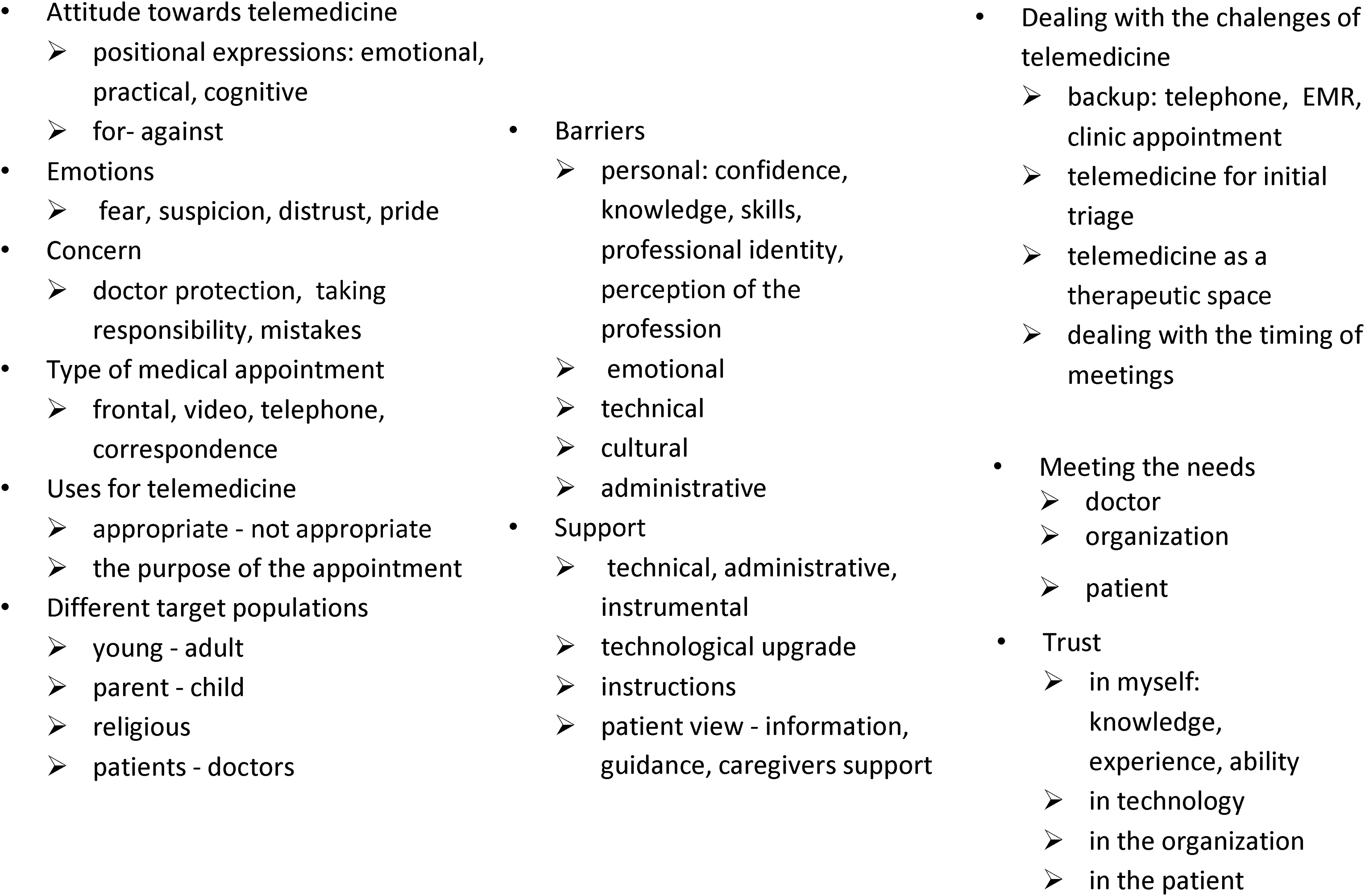
Categories and sub-categories of themes extracted from the interviews (N = 33).
In addition, the demographic variables and the attitude of the interviewees towards the use of telemedicine were analyzed using basic descriptive statistics tests.
Results
As shown in Table 1, out of the 33 interviewees, 19 were women, and the average age was 57 years (range 35–72, SD 9.9). The average professional seniority was 29 years (range 5–48, SD 13), but only five interviewees had less than 15 years of experience.
The demographic characteristics of the interviewees (N = 33).

Most participants (69.7%) were family physicians, and about a third (30.3%) were pediatricians. 30.3% studied medicine in Israel, and 57.6% of the others studied in East European countries and the former Soviet Union.
Table 2 shows the main themes that emerged in the interviews concerning the questions explaining the willingness to adopt telemedicine visits. The themes are divided into four main topics, generally referring to two aspects: the definition of the professional identity and the sense of involvement or control in the technology assimilation. Each topic is divided into the sub-topics included in it. The findings and analysis of each sub-topic are presented, and quotations are given for illustration, next to them.
The main themes, their analysis, and quotes.

The findings presented in Table 2 illustrate that, from the professional point of view, the interviewees were divided into those who saw telemedicine as an opportunity to expand the therapeutic setting, respond more quickly to acute situations, and make treatment accessible to a wider range of chronic patients. The physicians who attributed to telemedicine a positive effect on their professional status were usually the more experienced doctors who, apparently, have a defined personal professional identity. These physicians gained successful experience with telemedicine visits. They learned how to manage their work schedule in a way that will help them take advantage of the implementation of telemedicine to manage their workload. They also felt confident to harness the clinic staff to improve how visits are organized and get support when needed.
In contrast, other doctors experienced telemedicine as breaking the traditional treatment framework, threatening their ability to maintain their professional status. These doctors attributed a critical value to the physical examination in the doctor's room, without which they believed that the contribution to the patient's health could not be sufficient. These doctors also attached great importance to the traditional setting of the visit to the doctor's clinic and saw the transition to a remote visit as a violation of the balance in the relationship with the patient. They demonstrated the violation of the balance through the additional effort that the doctor invests in a remote visit when less effort is required for the patient compared to a frontal visit. The more the doctor experiences technical malfunctions and the less support he experiences from the technical staff or the staff at the clinic, the greater the perceived gap in the relationship and, at the same time, the stronger the feeling that the patient too easily makes appointments for situations of low clinical importance. For those who felt the need for more support from the organization, there was also a greater fear that they would not receive support if their professional decisions were wrong. Therefore, their tendency to invite patients for a physical examination at the clinic after the telemedicine visit was greater. For them, also, telemedicine created an additional burden.
The effect of the supporters’ and opponents’ positions on the actual conduct can be examined according to the elements of the Tripartite Model. This model defines attitude as a prolonged response to an abstract or a tangible object. According to the model, each attitude is based on three dimensions: cognition, behavior, and affect. Although the three dimensions are usually related, one can experience conflict between them.38,39 Table 3 presents examples of negative versus positive affects (feelings), cognitions (thoughts and beliefs), and behavior intentions (the actual use of telemedicine visits) of the PCPs who were interviewed.
Examples of negative vs. positive attitudes toward telemedicine.
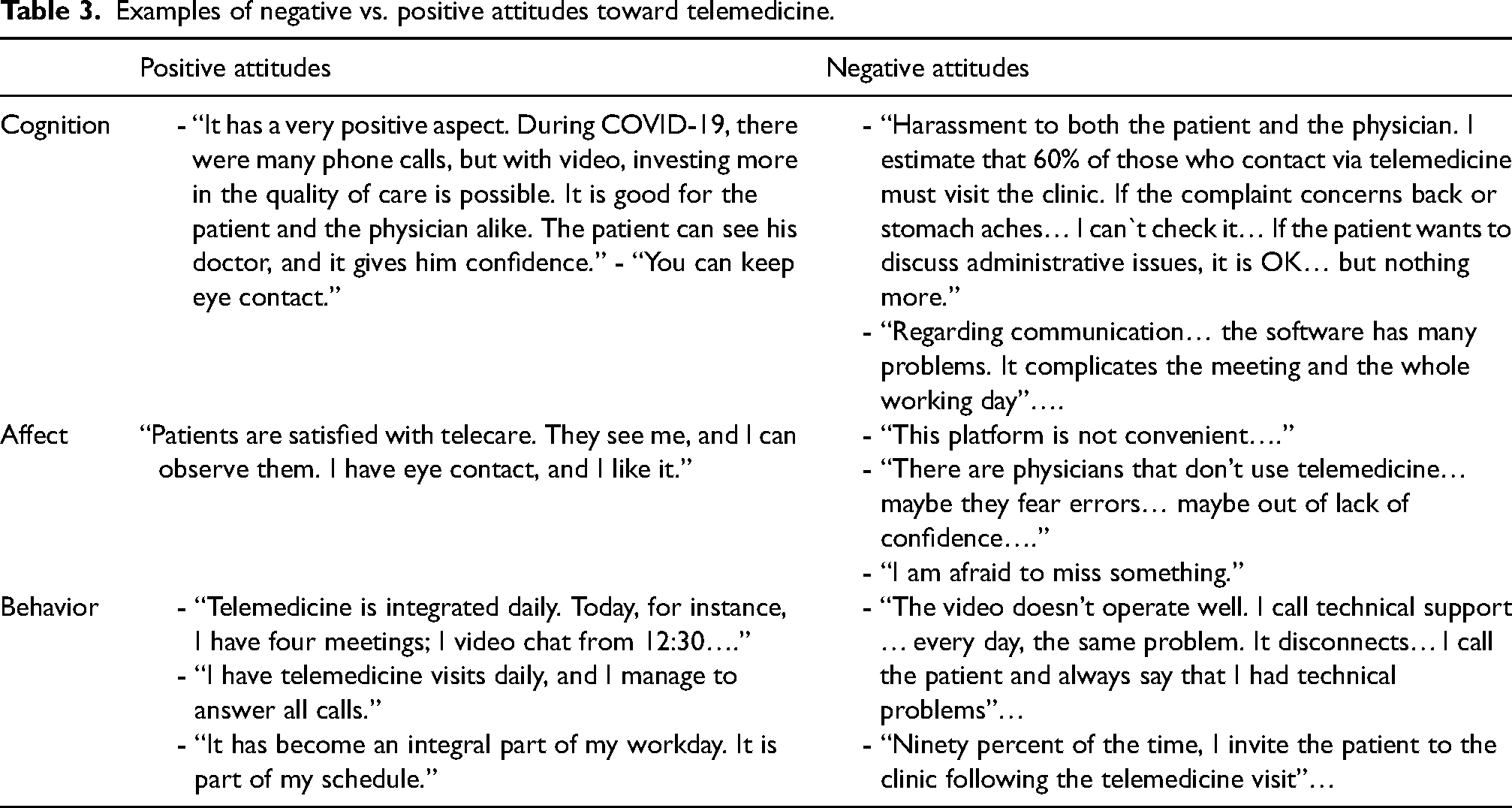
A manifested content analysis of the answers indicated two different perspectives: nearly 50% (17 of the interviewees) had positive attitudes towards the use of telemedicine while the other half (16 participants) expressed their dissatisfaction with the modality.
Among the positive feelings, we detected a sense of confidence, satisfaction, and even a feeling of pride in the ability to diagnose remotely. In contrast, those with a negative attitude felt that telemedicine is a cumbersome, disruptive, and even stressful addition to the workday.
As described in Figure 2, there is a circular process of attitude—experience—behavior, and vice versa.
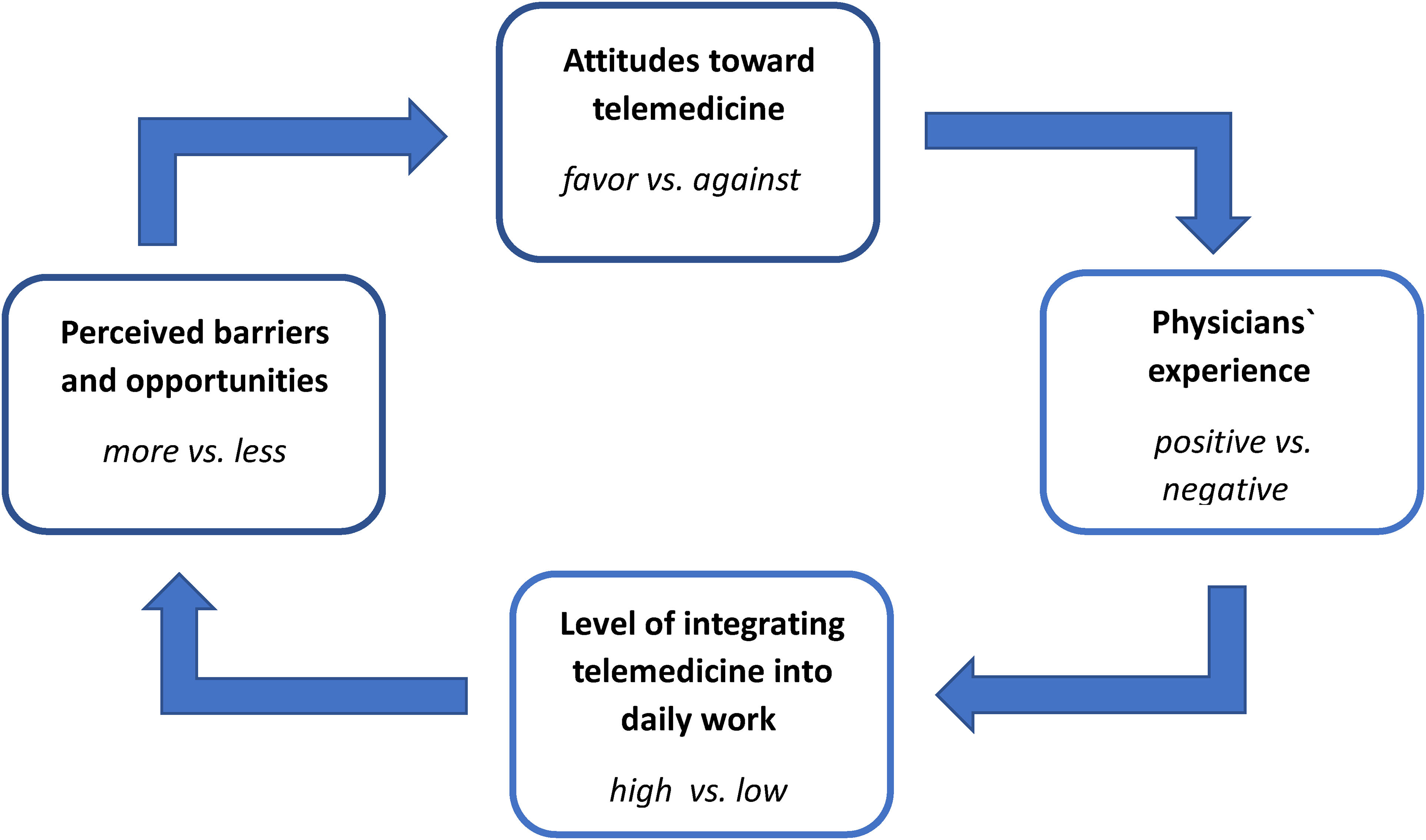
The telemedicine feedback loop: how the use and attitudes toward telemedicine are reinforced.
A positive association was found between attitudes toward integrating telemedicine into work and the telemedicine experience.
Those with positive experience had positive attitudes towards the use of telemedicine. They declared that they manage to practice telemedicine efficiency, that they have good experience with the technology, and find it beneficial. They knew how to recruit help from the staff and the management when needed, and manifested a proactive approach using telemedicine. This successful implementation intensified the positive experience and attitudes and contributed to the continued successful utilization of this technology and further incorporating telemedicine into their work. In contrary, a negative experience was associated with a no-choice attitude and a feeling of “forced-on-me” and thus unwillingness to use telemedicine on a regular basis. These participants expressed their dissatisfaction with the modality, emphasized the disadvantages that they had experienced such as impaired interaction with patients, inadequate diagnosis due to the remote process, technological malfunctions, etc. These PCP's said that they don’t find telemedicine as a good or even valid mean of communication with patients, that it has limited or low efficiency, and some mentioned that they try to avoid telemedicine visits if they can. Thus, if they have to practice it according to the clinique policy, they do it unwillingly.
Discussion
Many studies show that doctors recognize many opportunities in the implementation of telemedicine visits, yet their willingness to adopt the technology is significantly lower than expected.2,6,10,12,18–20,29,31–35
This study aimed to understand the gaps between the theoretical positions and the degree of adoption by PCPs in LHS after they gained experience with telemedicine. We used a qualitative research method to uncover barriers related to feelings, values, and needs and to identify information that the quantitative studies carried out so far may not have recognized.
Our study benefited from the controlled setting, as organizational telemedicine policies and rewards for usage remained consistent throughout the research period. This differs from other studies conducted during the pandemic, making it difficult to isolate the effects of policy changes on physicians’ attitudes.2,24,25,29,30,34,40
Our findings indicate that physicians’ attitudes represent professional, self, and role perception dilemmas.
First and foremost, PCPs base their support for the implementation of telemedicine according to the contribution they estimate it will have to the health value when treating the patient. The degree of contribution is assessed differently by individual doctors and is influenced mainly by professional experience, seniority, and familiarity with telemedicine. As previously reported, 41 more experienced PCPs feel confident to try new communication technologies and challenge traditional examining methods. In contrast, PCPs with lower professional confidence prefer work methods they are familiar with. We found that this attitude has a circular effect on the willingness to adopt telemedicine: PCPs with a positive attitude tend to create opportunities and identify the type of encounters where telemedicine can add value. The more comprehensive the doctor's experience with telemedicine, the stronger his confidence in reaching a diagnosis and his support for integrating telemedicine into his work. In contrast, PCPs who prefer to work in the traditional and familiar way show passivity in managing the mix of visit types, letting the patient determine the kind of encounter. Then, they express more frustration because more visits are scheduled to address administrative issues with a lower therapeutic value. These doctors will also prefer to complete telemedicine visits with the patient's appointment for a traditional face-to-face examination at the clinic. As a result, they will gain less experience in remote examination and will lack confidence in their ability to achieve an accurate and satisfactory diagnosis by telemedicine.
A negative correlation was also found between the degree of willingness to adopt telemedicine and the feeling of lack of support from the organization. These feelings relate to the doctor's more basic perceptions of his place in the team, the degree to which he feels that the organization considers his needs and the degree to which he feels involved in decisions about providing the service. The more the PCP thinks that the organization supports him, the greater his willingness to use telemedicine. On the other hand, PCPs who, in their opinion, face the new technology alone describe an experience of increased workload and frustration. They consider their investment in the visit's success as more significant than the patient's and greater than the organization's investment.
These processes demonstrate a feedback loop between experience and attitudes, which can result in an acceleration or deceleration of telemedicine usage. According to Kolb's experiential learning cycle, 42 which is also relevant for the adoption of new technologies, knowledge is generated through the transformation of experience. The learning cycle consists of four stages: concrete experience, reflective observation, abstract conceptualization, and active experimentation. In the concrete experience stage, the learner engages in a task or activity. In the reflective observation stage, the learner reflects on their experience. In the abstract conceptualization stage, the learner formulates generalizations and conceptualizations based on their experience. Finally, in the active experimentation stage, the learner tests the implications of their concepts in new situations. It is important to note that these stages are part of a cyclical iterative process: the learner goes through the four stages multiple times, progressively enhancing their performance and knowledge.
According to this theory, positive experiences can foster positive attitudes, which, in turn, can lead to increased telemedicine usage. Conversely, negative experiences can result in negative attitudes, leading to decreased telemedicine usage.
Another major professional issue deals with the relationship between the doctor and the patient and the balance required to generate the trust that should lead to the patient's motivation for treatment. In this context, the change in the meeting setting produces a shift in the balance of the relationship. The therapeutic space seems to become less secure because, in contrast to the conventional meeting, the patient is the one that chooses where to be, to what extent he is available, and who else will attend the session. With telemedicine, patients may take advantage of the ease of scheduling appointments for administrative issues or minor medical questions that previously would not have concerned them. The PCPs feel their time and ability are “wasted” in favor of situations that bring lower health opportunities. Here also, PCPs with more vast experience or high self-professional confidence are less threatened and are more active in guiding patients to choose the appropriate type of visit for their medical needs.
Three major shortcomings of the study should be considered. The study describes physicians’ attitudes from one health organization in Israel, and it is unknown to what extent this experience represents all physicians. However, similar conclusions from other studies8,9 indicate that the positions are based on general perceptions rather than how the service is built in a specific organization. Another drawback is the social desirability bias because interviews were in person thus not anonymous to the research assistants responsible for conducting the interviews. The fact that the weight of the positive and negative attitudes was similar allows the assumption that this bias did not have a significant effect.
Lastly, our findings regarding the association between the PCP's attitudes and their tendency to use telemedicine are based on their own testimony during the interview. We did not examine the association between the attitudes of PCPs and their actual usage of telemedicine during the decline of the epidemic, in practical terms. This limitation arose from the research protocol and informed consent procedures of our study that required keeping the identities of the interviewees confidential and thus the names of the participants were held only by the research assistants and were not disclosed to the researchers themselves. Since the general trend of telemedicine usage by primary care doctors in LHS is consistent with the literature, and our sample is representative of the PCP population in LHS, it is reasonable to assume that it is also represented the doctors who were interviewed. However, it is highly recommended in future researches to examine how PCP's attitudes predict their actual use of telemedicine as part of their routine practice via a longitudinal study design and objective organizational records.
To the best of our knowledge, this is the most comprehensive qualitative study on the attitudes of PCPs who have experienced telemedicine aiming to understand the gap between physicians’ attitudes towards telemedicine and their actual use of it in practice.
There is growing evidence that telemedicine is a safe and effective way to deliver healthcare, and that it has the potential to improve patient outcomes1,11 and therefore should be encouraged.
Our research shows that implementing telemedicine deals not just with changing technologies and how the therapeutic job is being done, but with changing the perceptions of the physicians’ professional identity and role description. It is not merely a technological change but an organizational and professional cultural change, requiring adopting new values and behavioral norms. Policymakers are advised to act by the recommendation of David Rogers43,44 and understand that the assimilation of telemedicine is not only the assimilation of new technology but is concerned with strategy, leadership, and adaptation of corporate culture.
We also recommend policymakers and others who try to implement telemedicine change, to take into account the telemedicine feedback loop between experience and attitude. This feedback loop can be a powerful force, and it's important to consider it when trying to increase telemedicine usage. By ensuring that PCP's will gain positive experiences with telemedicine by organizational, administrative, and technical support, and by adequate professional and non-technical training, one can help to create a positive feedback loop that will lead to increased telemedicine usage.
Footnotes
Acknowledgments
The authors wish to express their deep gratitude to Mrs. Talma Peer RN, MPH, Director of the LHS Risk Management Department, who was among the study's initiators and contributed significantly to its construction.
Declaration of conflicting interests
The authors declared no potential conflicts of interest with respect to the research, authorship, and/or publication of this article.
Ethics approval
The study was approved by the Leumit Health Services’ Review Board and the Ethics Committee/IRB of Shamir Medical Center (ID number 149-20-LEU, Date: 12.05.2020).
Funding
The authors received no financial support for the research, authorship, and/or publication of this article.

Data availability statement
The datasets analyzed during the current study are not publicly available because they are business information but are available from the corresponding author upon reasonable request.