



Abstract
Aim
The aim of this study is to assess if a patient-focused mobile application can increase compliance with active Enhanced Recovery After Surgery (ERAS) items and thereby improve surgery-related outcomes and patient satisfaction.
Method
This is a prospective observational study of patients admitted for elective colorectal surgery, under the ERAS protocol, and having access to the mobile application iColon during all perioperative phases.
Results
The 444 participants were included in the study. The overall adherence to the use of iColon was 62.4%. The overall adherence to active ERAS items was 74.1%. Adherence to the use of iColon significantly impacted adherence to active ERAS items. The use of the application was negatively related with factors such as age, type of disease, and postoperative complications. In the postdischarge phase, low adherence to active ERAS items typically indicates an increased likelihood of readmission; however, the use of iColon correlated significantly with a reduction in the 30-day readmission rate. A survey regarding patient satisfaction and confidence in using iColon resulted in positive feedback in more than 94% of cases, while 92.7% reported better quality of care.
Conclusion
Our findings suggest that digital health tools are beneficial and effective in the follow up of patients after early discharge. Our mobile application, iColon, represents user-friendly technology that is well-accepted. It has real-world implications in increasing adherence to active ERAS items, which results in an improvement in perceived quality of care by its users.
Keywords
Introduction
Enhanced Recovery After Surgery (ERAS) is an evidence-based standardized multimodal approach developed to reduce surgical stress, ensure preservation of postoperative physiological functions, and optimize the postoperative course.1–5 The protocol includes a series of items that can be divided into four phases: preadmission, preoperative, intraoperative, and postoperative.4,6
Patient compliance is essential in obtaining the full benefits of ERAS.5,7–9 As the achievement of protocol objectives relies on collaboration between clinicians and patients, the protocol items should be divided into active and passive in the different phases of the protocol.4,9 Active items depend, in part or completely, on the cooperation of the patient, whereas passive items are clinician led. 9 As such, the care pathway must include effective patient education to ensure the full benefits of the ERAS protocol can be achieved. 5
Digital technology, such as mobile applications, explanatory videos, and wireless monitoring, are innovative solutions that educate and stimulate patients to take a more active role in their care pathway, thus improving adherence to ERAS items.10,11 Moreover, some digital platforms also allow for preoperative and postoperative data collection. 5
In 2018, the ERAS protocol for elective colorectal surgery was standardized at the IRCCS Sacro Cuore Don Calabria Hospital of Negrar of Valpolicella (Verona, Italy) and in 2022, the hospital became an ERAS Qualified Center.
This study is designed to validate the hypothesis that a patient-focused mobile application can improve compliance with the active elements of the ERAS protocol and thereby improve patient satisfaction and surgery-related outcomes. 5
Methods
iColon mobile application and study design
iColon is a free mobile application customized by the surgeons of the Operative Unit of General Surgery of IRCCS Sacro Cuore Don Calabria Hospital and designed for patients undergoing colorectal surgery. iColon works on smartphones with the operating systems, iOS 11.1 (release date: March 22, 2020) and up or Android 5.0 (release date: March 19, 2020) and up. It is organized into ERAS phases and contains educational sections. iColon sends push notifications twice daily to remind patients to record their data for active ERAS items. It provides real-time feedback, and surgeons can monitor a patient's perioperative progress on a dedicated web-app. During the postdischarge phase, in cases of critical issues such as fever, increased stoma output, difficult pain control, alternated bowel functions, and reduced feeding, a specific alert is sent to surgeons.
During the preoperative phase, the main aims are patient prehabilitation, nutritional optimization and effective communication between surgeon and patient. During hospitalization, the principal goals after surgery are early intake of oral fluids and solids, and early mobilization. From the day of surgery until 5 days after discharge, iColon helps educate patients to reliably record any pain, nausea and vomiting, bowel movements and, for those with a stoma, it explains how to manage and quantify its output. At the end of the ERAS protocol, patients will complete a satisfaction survey about the usability of the mobile application during the perioperative care period and about their confidence in using it filling a detailed textual survey. Further information regarding its administration, use and data collection methods is outlined in our previous publication. 5
This is a single-center, prospective observational study of data collected from participants admitted for elective colorectal surgery, in compliance with the ERAS protocol, at IRCCS Sacro Cuore Don Calabria Hospital from September 2020 to October 2022, who had access to the iColon application throughout the care pathway.
Inclusion criteria
During the preadmission phase, all patients eligible for elective colorectal surgery follow a standardized pathway according to the principles of ERAS. Details of participant enrollment are explained in our previous publication. 5
Participant inclusion criteria were: an age ≥ 18 years; reliable access to a smartphone or a tablet running an operating system of iOS V.11.1 and above, or Android V.5.0. and above; eligibility for colorectal surgery (open or laparoscopic) for benign or malignant disease in compliance with ERAS protocol, with or without a stoma creation; and written consent to enrollment in the study and to the treatment of their personal data. Exclusion criteria were: palliative surgery; urgent and emergency surgery; inability to understand the Italian language; visual impairment; and physical or mental disabilities that could limit application usage.
Objectives
The co-primary objectives of the study were:
To assess patient adherence when using the mobile application, iColon, whereby adherence is defined as responding (yes/no versus missing value) to questions in a daily diary. To assess who, among adherent patients, was compliant (“yes” versus “no” responses) to the active items of the ERAS protocol.
The secondary objectives of the study were to determine the following: length of stay (LOS); 30-day readmission rate; postoperative complications according to Clavien-Dindo classification
12
; patient satisfaction regarding received care; and a better understanding of “noncompliant patient” behavior.
Statistical analysis
Descriptive statistics, measures of variability and precision, and frequency distribution were performed to describe demographic, clinical, and surgical data.
Adherence to the use of iColon was calculated as the ratio between the number of participants using iColon (patients who completed the daily surveys on mobile app iColon) for at least 75% of active ERAS items, and the total number of participants.
Concerning compliance to active ERAS items, the ratio between the number of participants following at least 75% of the active ERAS items and the total number of participants was calculated.
In the multivariate analysis, age was dichotomized using the median value (i.e., 0 ≤ 64 years, 1 ≥ 64 years); length of surgery was categorized into 3 classes (0 = 0–120 min, 1 = 121–240 min, 2 ≥ 241 min); classes 3 and 4 of American Society of Anesthesiologists (ASA) status were considered as a unique category because of the small number of patients in class 4.
A multivariate linear regression model was used to analyze the percentage adherence to active ERAS items with a set of predictor variables and confounders (percentage adherence to iColon, age, sex, ASA status, inflammatory bowel disease (IBD), Hartmann's reversal, and diverticular disease).
Multivariate logistic models were performed for each phase (preoperative, hospitalization, postdischarge) to analyze adherence to iColon (yes/no) and adherence to active ERAS items (yes/no) as dependent variables with a set of predictor variables and confounders (age, sex, ASA status, IBD, diverticular disease, Hartmann's reversal, malignant disease, type of surgery, laparoscopy, length of surgery, drain, stoma, postoperative complications, anastomotic leak, postoperative blood transfusion, 30-day readmission rate, and hospital stay).
Concerning confidence in the usability of iColon, the ratio between the number of participants submitting positive feedback (4–5 points) in the satisfaction survey, and the total number of participants, was calculated.
Statistical analyses were performed with R software version 4.2.2.
A p-value < 0.05 was considered as statistically significant.
Ethical consideration and dissemination policy
Only the authorized personnel directly involved in the study were allowed access to the recorded data. The data are confidential and have been processed in accordance with Legislative Decree 196/03 and GDPR 679/2016.
The study was conducted according to the principles of the Declaration of Helsinki and Oviedo Declaration and was approved by the Ethics Committee (protocol number 29219) on May 25, 2020.
Results
Four hundred and forty-eight patients underwent colorectal surgery in compliance with a standardized ERAS protocol between September 2020 and October 2022. All patients were invited to use iColon. Two patients were excluded from the study due to the language barrier and two others because they were under 18 years of age. Subsequently, 444 patients became participants in the study according to inclusion criteria.
Table 1 shows the demographic, clinical, and surgical details of the study population.
Demographic, clinical, and surgical details of the study population.
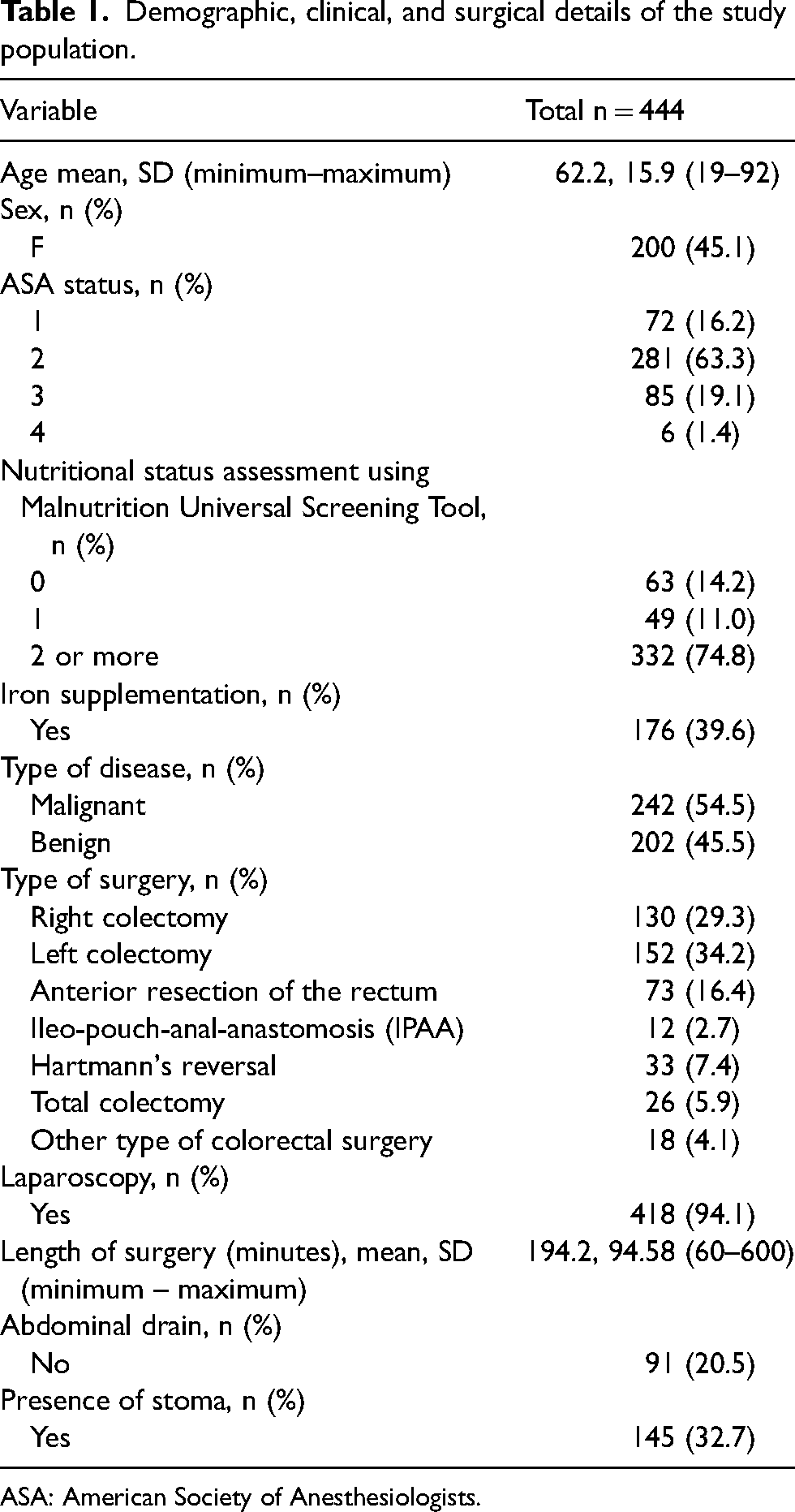
ASA: American Society of Anesthesiologists.
The overall adherence to the use of the mobile application iColon was 62.4%, while the overall adherence to ERAS protocol items was 74.1%. The percentage adherence to active ERAS items is positively correlated to the percentage adherence to iColon (coefficient = 0.94, p < 0.001) and negatively correlated to IBD (coefficient = −2.54, p = 0.022) and Hartmann reversal (coefficient = −3.01, p = 0.042), adjusted for potential confounders (Table 2).
Correlation between the use of iColon and adherence to the ERAS protocol.
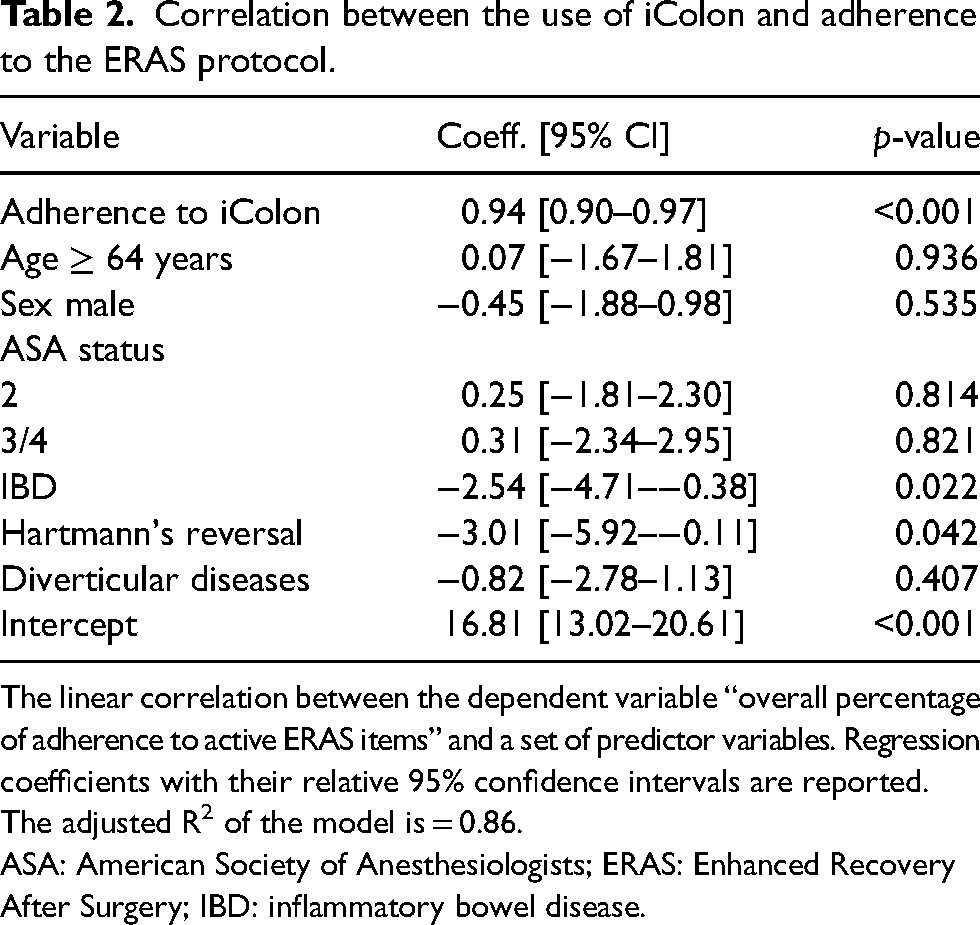
The linear correlation between the dependent variable “overall percentage of adherence to active ERAS items” and a set of predictor variables. Regression coefficients with their relative 95% confidence intervals are reported.
The adjusted R2 of the model is = 0.86.
ASA: American Society of Anesthesiologists; ERAS: Enhanced Recovery After Surgery; IBD: inflammatory bowel disease.
Adherence to iColon during the preoperative phase was 87.4%. Among the factors relating positively to adherence was the presence of diverticular and malignant disease (p = 0.031 and p = 0.026, respectively) (Figure 1 BOX A). During the hospitalization phase, adherence was 54.1%. The factors that negatively affected iColon's use were age ≥ 64 years (p < 0.001), ASA status 3 and 4 (p = 0.015) and postoperative complications (p = 0.037) (Figure 1 BOX C). In the postdischarge period, adherence to the mobile application was 79.5% with the presence of an ostomy being strongly related to iColon's use (p = 0.022). In this last phase, there was a negative association between the use of iColon and blood transfusions (p = 0.013) and also with 30-day readmission (p = 0.004) (Figure 1 BOX E).
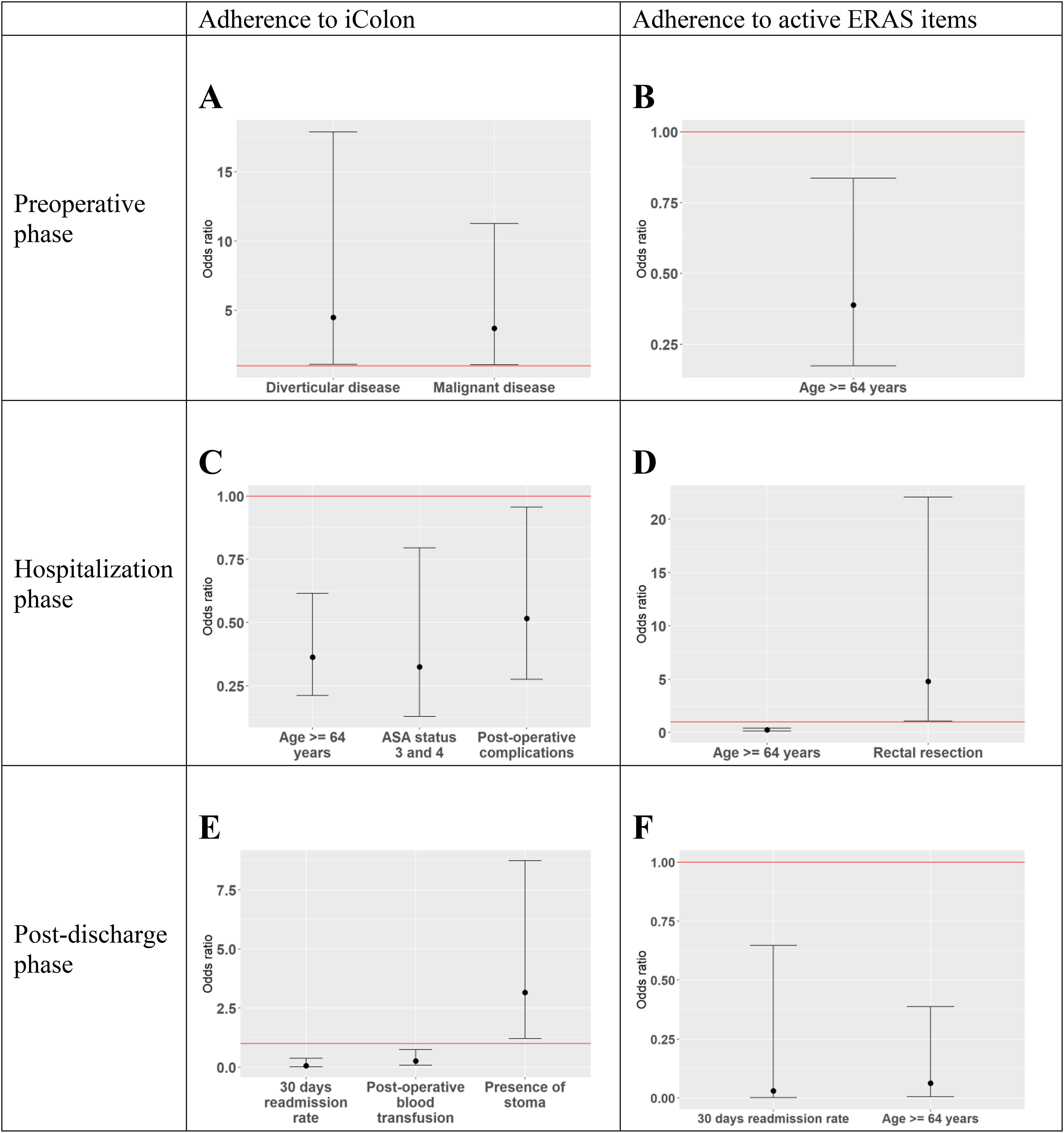
BOX A, C, and E: This figure shows the associations between the dependent variable “adherence to iColon” (defined as 0 = no if adherence <75%; 1 = yes if adherence ≥ 75%) and the independent variables that in the multiple logistic regression significantly impacted on the adherence to iColon during the preoperative, hospitalization, and postdischarge phases. BOX B, D, and F: This figure shows the associations between the dependent variable “adherence to active ERAS items” (defined as 0 = no if adherence <75%; 1 = yes if adherence ≥ 75%) and the independent variables that in the multiple logistic regression significantly impacted on the adherence to ERAS active items during the preoperative, hospitalization, and postdischarge phases. All variables are represented with odds ratio and 95% confidence interval. If the odds ratio and the 95% confidence interval is < 1, the variable has a negative impact on adherence. Conversely, if the odds ratio and the confidence interval is > 1, the variable is positively associated with adherence. The red horizontal line corresponds to the value of odds ratio = 1.
Adherence to the active items of the ERAS protocol during the preoperative phase was 88.9% with an age ≥64 years negatively affecting it (p = 0.018) (Figure 1 BOX B). In the hospitalization phase, adherence was 60%. An age ≥64 years negatively influenced adherence (p < 0.001), whereas patients who underwent rectal surgery had significant adherence to the ERAS protocol (p = 0.040) (Figure 1 BOX D). After discharge, an age ≥ 64 years and 30-day readmission rate were negatively related to adherence (p = 0.08 and p = 0.014, respectively) (Figure 1 BOX F).
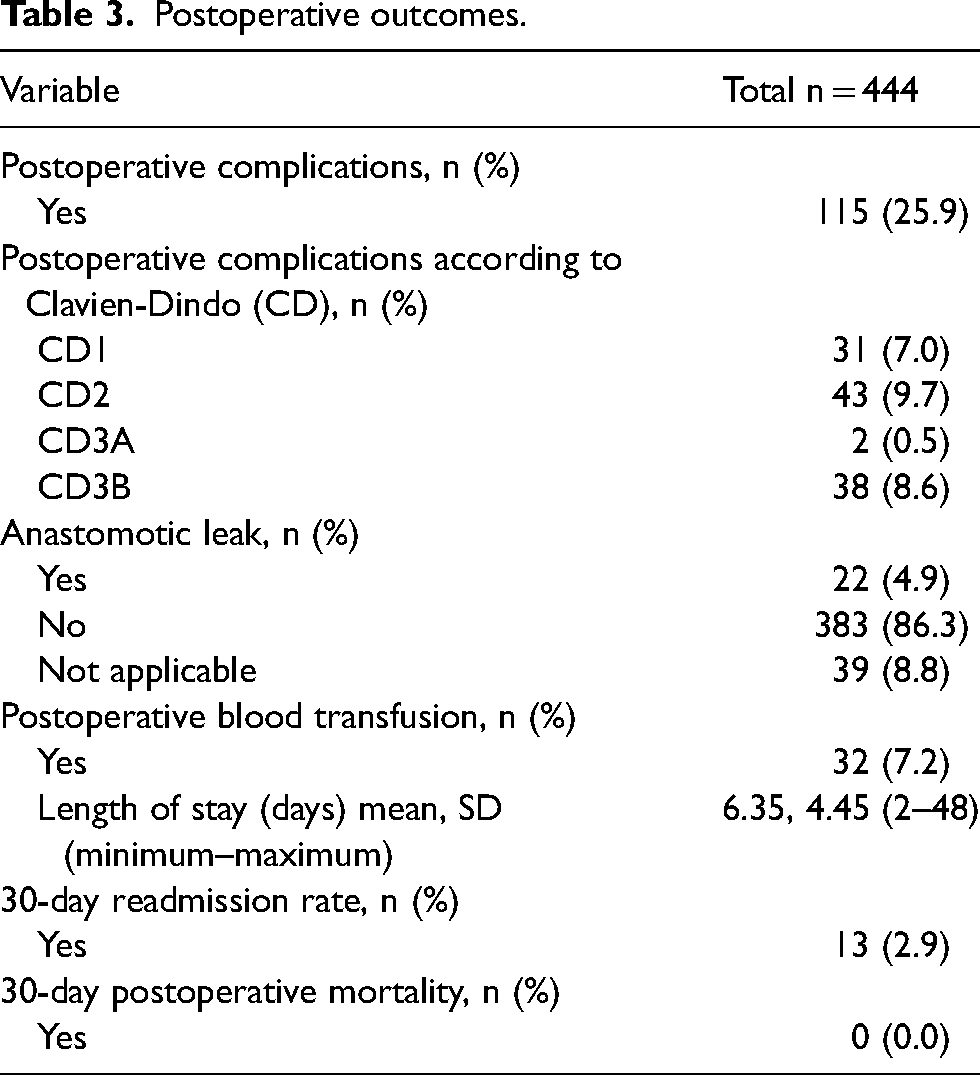
Postoperative outcomes are reported in Table 3. The survey regarding patient satisfaction and confidence in using iColon showed positive feedback in 94.9% of cases. For 94.5% of participants, iColon was easy to use while 92.7% of the study population reported a better quality of care attributable to iColon.
Postoperative outcomes.
In the supplementary material we reported a table about the compliance to ERAS items in our institutional database. This table was downloaded from ERAS® Interactive Audit System (EIAS).
Discussion
The ERAS protocol requires a multidisciplinary collaboration to obtain preoperative optimization and early postoperative recovery.4,11 Patients are fundamental in successfully implementing the protocol, and their education and participation in the pathway of perioperative care are key factors in attaining positive outcomes.4,5,7
The use of the mobile application iColon has proven effective in stimulating adherence to the ERAS protocol in all phases of perioperative care, regardless of demographic data. These data contrast with the evidence of Mata et al., who found in their randomized clinical trial, that the use of mobile applications did not improve adherence to the ERAS pathway when compared to standard issue written patient education content. 13 This may have been due to the application's use being limited to the postoperative period only, whereas the participants in our study used iColon throughout the entire perioperative pathway, consequently having more time to learn how to use it and thereby benefit from its full potential. We found that only two variables were associated with lower adherence to the use of iColon: participants undergoing Hartmann's reversal (p = 0.042) and those with IBD (p = 0.022). The majority of participants who underwent Hartmann's reversal in this series were women with endometriosis as baseline disease as well as previous complicated surgery and multiple medical therapies. This specific population is explained by our institute being a tertiary referral center for this disease in particular. In addition, patients with IBD tend to be complex cases with a long clinical history who can show poor compliance with proposed treatments.
We have found that in the preoperative period, significantly higher adherence was apparent in participants following shorter clinical courses such as those with neoplastic and diverticular disease (p = 0.026 and p = 0.031, respectively). In this phase, the correlation with age was at the limits of statistical significance, with older participants tending to use iColon less so than younger participants. Although elderly individuals are arguably less accustomed to modern technology, our experience suggests that the mobile application could still be used with the assistance of family members. During the hospitalization phase, the negative correlation with an age ≥ 64 years became significant (p < 0.001) as these participants probably did not have regular access to a smartphone. This also applied to participants with an ASA score of 3 and 4 (p = 0.015) and to those with postoperative complications (p = 0.037) which are characterized by more complex management. Complicated patients are understandably not inclined to use technology given the difficult and unpredictable recovery pathway. In the postdischarge phase, the mobile application ensured close monitoring of ostomy patients who showed particularly high adherence (p = 0.022). Our findings highlight an important role for this kind of technology in managing patients with a stoma, ensuring that healthcare staff can conduct close monitoring of their progress. Of great interest is the higher 30-day readmission rate amongst participants who showed lower adherence to the use of the application, whereas iColon use significantly reduced the 30-day readmission rate (p = 0.004). In contrast, Eustache et al. did not find a reduction in 30-day readmission, but they did report a significant reduction in potentially preventable emergency room admissions. 14
The analysis of adherence to active ERAS items before hospital admission showed a negative correlation between age and adherence, in which the elderly were typically less adherent to the protocol. During the hospital stay, the significant age-related trend of low iColon use and ERAS active items adherence, was noted. Furthermore, a particularly high adherence (p = 0.040) occurred in patients who underwent rectal resection. This could be explained by the work of the multidisciplinary team at our ERAS Qualified Center, that allowed us to develop standardized protocols for the management of nausea, vomiting, and postoperative pain. From our institutional database on rectal ERAS patients collected in the EIAS, the median value of the maximum nausea reported according to the visual analogue scale (VAS) is between 0.5 and 0.7 points and the median value of the maximum pain reported is between 1.7 and 2.5 points in the first three postoperative days. In complicated patients, adherence to the ERAS protocol was reduced. Although this value did not reach statistical significance, the encouragement of patients to use iColon could well result in improved adherence to ERAS items and faster recovery after complications. After discharge, lower adherence to active ERAS items was confirmed in participants ≥ 64 years old. Those who were not adherent to the protocol also had higher 30-day readmission (p = 0.014). In the postdischarge phase, nonadherence to iColon and to active ERAS items may be a potential indicator of readmission risk. The ERAS protocol is well-designed from preoperative to postoperative phases, but it lacks standardized indications regarding the monitoring of patients in the postdischarge period. 4 Technology such as iColon could represent a useful tool in monitoring patients during the postdischarge period, and as such may reduce readmission rates.
The lower adherence to the protocol in the elderly during the predischarge and postdischarge phases despite the high use of iColon suggests that the best results are obtained by those who use the mobile application directly on a device they own and regularly use.
We reported a significant degree of participant satisfaction and an improvement in the perception of quality of care among those using iColon, as has also been outlined by Lee et al. 15 Such technology needs acknowledgment and standardization within the ERAS protocol to encourage active involvement by patients in the most crucial phases of the healthcare pathway. As suggested by Dawes et al. in their meta-analysis, mobile health can promote behaviors that facilitate faster recovery. 16 The use of this technology also allows for a constantly updated database which can further develop the ERAS protocol and make it more tailored to patients’ needs.
This study has its limitations, mainly in that it is a single-center study that lacks a control group. The lack of a control group arises from our desire to develop an evidence-based study that investigates real-world impacts of this technology in patient populations, which may have been a source of bias.17,18 We look forward to future multicenter real-world studies regarding the usage of such technology in order to validate its role in patient involvement in the perioperative care pathway and in postdischarge follow up. In addition, a cost analysis to assess the possible economic benefit of this technology to the healthcare system would also be most interesting.
Conclusions
iColon represents user-friendly technology that is well-accepted and improves the perceived quality of care by patients. It can be used in real-world settings to increase adherence to active ERAS items with faster recovery after surgery ensuing. It allows patients to be more active in their perioperative care pathway and also appears to be useful and effective in the follow up of period after early discharge.
Supplemental Material
sj-docx-1-jtt-10.1177_1357633X231203064 - Supplemental material for iColon, a patient-focused mobile application for perioperative care in colorectal surgery: Results from 444 patients
Supplemental material, sj-docx-1-jtt-10.1177_1357633X231203064 for iColon, a patient-focused mobile application for perioperative care in colorectal surgery: Results from 444 patients by Elisa Bertocchi, Giuliano Barugola, Gaia Masini, Massimo Guerriero, Nicola Menestrina, Irene Gentile, Francesca Meoli, Lorenza Sanfilippo, Mario Lauria, Roberta Freoni and Giacomo Ruffo in Journal of Telemedicine and Telecare
Footnotes
Acknowledgments
The authors thank Nicoletta De Santis, data manager, Unità per la Ricerca Clinica, IRCCS Sacro Cuore Don Calabria Hospital, Via Don A. Sempreboni 5, 37024, Negrar di Valpolicella, Verona, Italy. The authors thank Elinor Julie Rae Anderson, medical writer freelance, for her linguistic revision of the manuscript.
Declaration of conflicting interests
The authors declared no potential conflicts of interest with respect to the research, authorship, and/or publication of this article.
Ethical consideration
The study was conducted according to the principles of the Declaration of Helsinki and Oviedo Declaration and was approved by the Ethics Committee (protocol number 29219) on 25 May 2020.
Funding
The authors received no financial support for the research, authorship, and/or publication of this article.

Supplemental material
Supplemental material for this article is available online.
References
Supplementary Material
Please find the following supplemental material available below.
For Open Access articles published under a Creative Commons License, all supplemental material carries the same license as the article it is associated with.
For non-Open Access articles published, all supplemental material carries a non-exclusive license, and permission requests for re-use of supplemental material or any part of supplemental material shall be sent directly to the copyright owner as specified in the copyright notice associated with the article.
