



Abstract
While sex differences in play have been extensively observed in typical development, only a handful of studies have explored this phenomenon in depth with children with autism spectrum disorders. This study explored sex differences in play complexity and toy engagement within caregiver–child interaction samples for preschool-aged children (2–5 years 11 months) with an autism spectrum disorder who were matched to typically developing children on sex and non-verbal development. Overall we found that girls and boys with autism spectrum disorder were largely equivalent in their play complexity. Despite similar play, girls and boys with autism spectrum disorder differed in a number of ways in their toy engagement, replicating traditional gender differences—girls played more with dolls and domestic items (though at lower rates than typically developing girls) and boys played more with the garage and cars (though at lower rates than typically developing boys). Our findings support the importance and utility of examining sex differences in autism spectrum disorder in light of those observed within typical development.
Introduction
Ever since Kanner’s (1943) first description of autism spectrum disorders (ASDs), male dominance in the rate of diagnosis has been reported with a well-replicated sex ratio of 4:1 (Autism and Developmental Disabilities Monitoring Network, 2014; Brugha et al., 2011; Chakrabarti and Fombonne, 2005; Fombonne, 2009; Kim et al., 2011). As a result, girls with ASD are frequently grouped together with their male counterparts or excluded from research studies altogether and are rarely studied as a separate group. However, there have been some recent notable exceptions, including a recent study of the corpus callosum in preschool girls with ASD (Nordahl et al., 2015) and an in-depth examination of sex differences in large sample of high-risk siblings (Messinger et al., 2015). With renewed interest in recent years in girls with ASD, our understanding of how they may be similar and dissimilar to boys with ASD has significantly increased but much is still unknown about the female phenotype, particularly in early development (Van Wijngaarden-Cremers et al., 2014).
Researchers have attempted to uncover reasons for the sex ratio in ASD with multiple theories proposed (Baron-Cohen, 2002; Baron-Cohen et al., 2011; Kirkovski et al., 2013; Werling and Geschwind, 2015). As discussed by Werling and Geschwind (2015), girls have been hypothesized to be protected genetically or to require a greater genetic threshold to present with the ASD phenotype. In addition to reaching a greater genetic threshold, it has also been hypothesized that girls must reach a greater behavioral symptom threshold in order to receive an ASD diagnosis (Dworzynski et al., 2012). Furthermore, the suitability of current diagnostic procedures and assessments for girls has been questioned (Lai et al., 2015) potentially leading to later detection and diagnosis of ASD in girls (Kopp and Gillberg, 1992; Rivet and Matson, 2011). The “extreme male brain” (EMB) theory (Baron-Cohen, 2002) postulates that ASD represents an extension of typical sex differences in the domains of empathizing and systemizing (E-S; Baron-Cohen, 2009, 2010) and thus hypothesizes differences in play behavior and engagement with toys based on the assumptions of this theory (Baron-Cohen, 2002). Specifically, boys with ASD would be predicted to demonstrate heightened engagement with male-typical toys whereas girls with ASD would show a reduction in engagement with female-typical toy and play behavior.
Phenotypic profile in ASD girls
While there is considerable debate as to whether ASD manifests differently in girls and boys, few consistent empirical differences have emerged in early childhood (Kirkovski et al., 2013; Van Wijngaarden-Cremers et al., 2014). One relatively consistent finding is of fewer and somewhat different restricted and repetitive behaviors (RRBs) in girls compared to boys with ASD (Hiller et al., 2014; Kopp and Gillberg, 1992; Mandy et al., 2012; Szatmari et al., 2012).
Girls have also been found to have superior pretend play and doll play on parent report (Hiller et al., 2014; Knickmeyer et al., 2008) and fewer impairments in social play (McLennan et al., 1993), suggesting the presence of sex-specific preservation of play and imagination abilities relative to boys with ASD and more in line with the sex advantage observed in typically developing (TD) girls (Cherney et al., 2003; DiPietro, 1981; Jones and Glenn, 1991; Liss, 1981). However, these differences have not been consistently reported (Holtmann et al., 2007; Tsai and Beisler, 1983), and a recent study using a pairwise matching of 40 girls with ASD to 40 boys with ASD identified more similarities than differences in the play behavior of girls and boys (Harrop et al., 2015).
Against this background, no study to our knowledge has directly examined sex-based toy preference in children with ASD. Ingersoll et al. (2003) reported differences between children with ASD and TD children, with preference for toys with sensory properties apparent in children with ASD, although the analysis did not separate by sex. Despite the lack of direct study of toy preference, various theories of ASD postulate that specific properties of toys—such as mechanical features (Auyeung et al., 2009a; Baron-Cohen, 2002) and potential innate biological differences (Auyeung et al., 2009a, 2013)—may influence both play and toy behavior in girls and boys with ASD. However, much of this research is drawn from largely nonclinical samples and caregiver report.
Sex differences in play complexity and toy preference in typical development
Differences in early play behavior have been consistently reported in TD populations (Maccoby and Jacklin, 1974; Servin et al., 1999; Zosuls et al., 2009). Early research suggested female preference for playing with household toys and dolls, contrasted with male preference for cars and construction toys, and with such preferences emerging early in development, evidenced through both behavioral and preferential looking paradigms (Alexander and Charles, 2009; Caldera et al., 1989; Hines and Kaufman, 1994; Jacklin et al., 1984; Jadva et al., 2010; Zosuls et al., 2009). Girls also demonstrate more presymbolic and symbolic play overall and at an earlier age than boys (Cherney et al., 2003; DiPietro, 1981; Jones and Glenn, 1991; Liss, 1981). However, more recent studies have not consistently replicated these findings (Zosuls et al., 2009), and it is striking that little systematic and rigorous behavioral research has examined sex differences in play, despite the field moving toward attempts to understand the factors underlying apparent sex differences (Auyeung et al., 2009a, 2013; Servin et al., 1999).
A number of theories exist regarding typical sex differences in play complexity and toy preference, many of which have relevance for sex differences in ASD. Caregivers have been shown to differentially reward toy preferences, discouraging cross-sex toy choices in play and labeling toys based on assumed sex-typical stereotypes (Fisher-Thompson, 1990; Langlois and Downs, 1980) and such reinforcement has been shown to relate to the amount of sex-typical behavior demonstrated by children (Caldera et al., 1989; Eisenberg et al., 1985). However, this has not been replicated by others (Idle et al., 1993; Servin et al., 1999), and there is speculation regarding the extent to which reinforcement has an all-encompassing influence on sex role development (Blackmore et al., 2009). In the context of ASD, the role of sex role socialization remains largely unknown, although it is possible that caregiver expectations and reinforcement are reduced here. Likewise, due to their profile of core social communication skills and needs, it is possible that children with ASD may be less receptive to reinforcement than TD children. Biological theories of sex role development have also been proposed, including the role of prenatal hormones (e.g. Auyeung et al., 2009a) and their influence on innate sex differences, and these have been applied in the context of ASD to explain sex differences in diagnosis as well as in the phenotypic profile (Auyeung et al., 2009a, 2013).
Aims and hypotheses
This study has two aims: (1) to explore how engagement with toys varies as a function of diagnosis (ASD or no ASD) and sex and (2) to examine how diagnosis and sex impact upon play complexity. The study extends from both retrospective parent report methods (Knickmeyer et al., 2008), and a recent study of experimenter rated play behaviors during a structured play assessment shown by girls and boys with ASD (Harrop et al., 2015). Using similar methodology to Harrop et al. (2015), girls and boys with ASD were pairwise matched here on factors such as ASD severity, developmental abilities, and chronological age. In addition, we also recruited samples of TD girls and boys matched for non-verbal developmental level. This study goes beyond the recent investigation of Harrop et al. (2015) through the inclusion of matched TD controls, examining sex differences within the context of a free play session (rather than a structured assessment of play), and providing an analysis of play material engaged with during this session.
Based on previous literature, we predicted the following:
ASD girls would show (a) elevated rates of engagement with more male-typical toys relative to TD girls and (b) reduced rates of engagement with female-typical toys (dolls, domestic items) relative to TD girls, based on the assumptions of the EMB theory of ASD.
TD girls would show greatest engagement with dolls and domestic items and boys (regardless of diagnosis) would show greatest engagement with car-related toys.
Irrespective of sex, children with ASD would show lower engagement and less diversity in toy engagement than TD children.
Irrespective of sex, TD children would reach a higher level of play complexity and would spend more time engaged in presymbolic and symbolic play and less time engaged in simple object play, than children with ASD.
Method
Approval for this study was obtained through the University of Manchester Medical and Human Sciences Ethics Committee and Central Manchester Multi-Centre Research Ethics Committee (05/Q1407/311). All caregivers provided written consent for their child’s inclusion in the study.
Participants
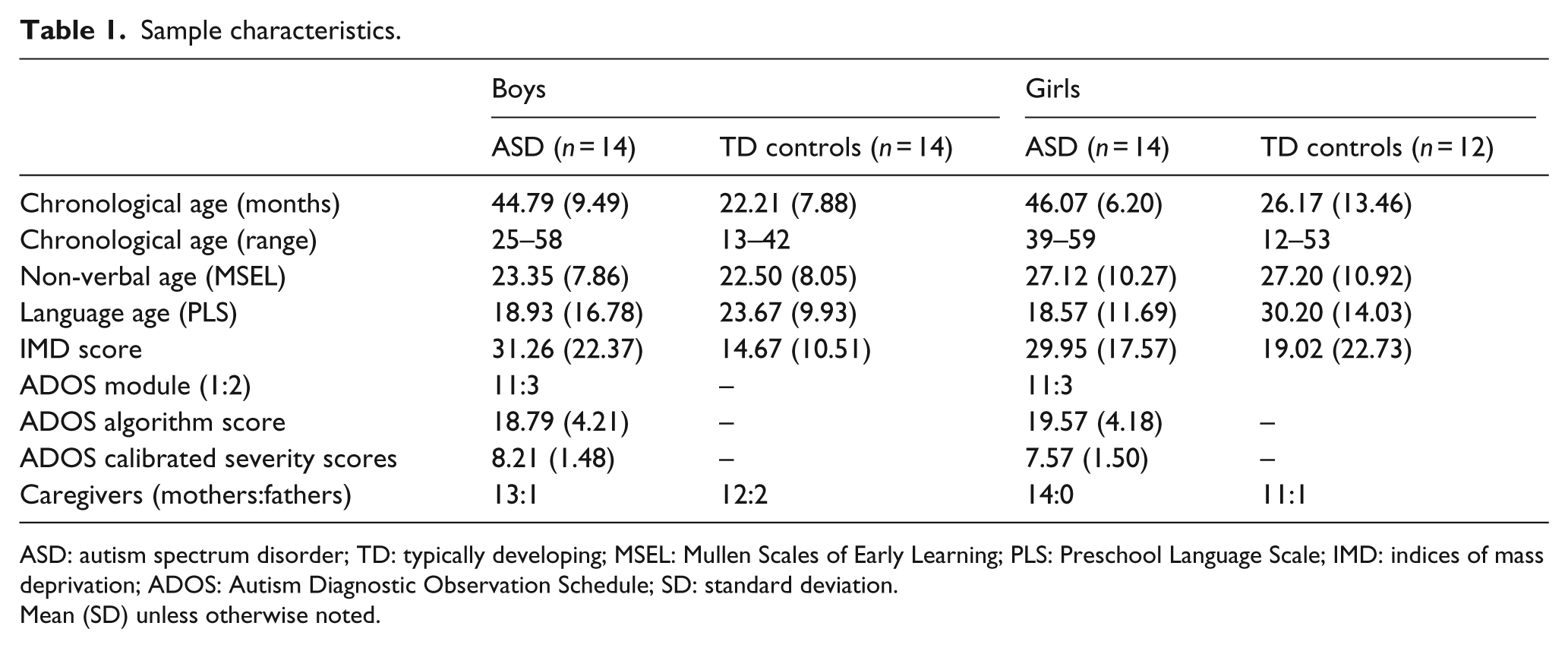
Four participant groups were included in this study: (1) girls with ASD (ASD girls), (2) boys with ASD (ASD boys), (3) TD girls, and (4) TD boys. All children with ASD were recruited through the Preschool Autism Communication Trial (PACT; Green et al., 2010) and represent a subgroup of this larger cohort. Community diagnosis of ASD was verified for entry into PACT through administration of the Autism Diagnostic Interview-Revised (ADI-R; Lord et al., 1994) and Module 1 or 2 of the Autism Diagnostic Observation Schedule-Generic (ADOS-G; Lord et al., 2000) by a research reliable administrator. Only children meeting PACT inclusion criteria—age between 2 years and 4 years 11 months, reaching threshold on two of three ADI-R algorithm domains and the onset criterion, meeting all ADOS-G algorithm cut-offs for autistic disorder, and demonstrating non-verbal age equivalence of at least 12 months according to the Mullen Scales of Early Learning (MSEL; Mullen, 1995)—were included in the final PACT sample of 152 children (see Green et al., 2010, for further details). All 14 girls in the PACT sample were included in this study and 14 ASD boys from the same cohort were selected for pairwise matching to ASD girls on chronological age, ADOS module, and ADOS algorithm score—as per the matching strategy used by Harrop et al. (2015) in a similarly aged sample. Revised ADOS-2 algorithm and calibrated standardized severity scores are reported in Table 1.
Sample characteristics.
ASD: autism spectrum disorder; TD: typically developing; MSEL: Mullen Scales of Early Learning; PLS: Preschool Language Scale; IMD: indices of mass deprivation; ADOS: Autism Diagnostic Observation Schedule; SD: standard deviation.
Mean (SD) unless otherwise noted.
TD comparison groups were recruited through advertisements in local nurseries and media. Any atypical developmental profile or familial history of ASD was established through initial screening questions and discussion with caregivers, with children thereby excluded from study participation. Following self-referral, 14 TD boys and 12 TD girls were recruited and matched on non-verbal age equivalence (as indexed through the MSEL) to ASD boys and girls. Sample characteristics are reported in Table 1. Language age equivalency scores were derived through administration of the Preschool Language Scales (Zimmerman et al., 1992). Socioeconomic status (SES) data were also collected via indices of mass deprivation (IMD) scores based on the participant’s residential postcode.
Due to the smaller size of the sample of TD girls, group-wise matching was undertaken. Non-verbal developmental level was considered a suitable matching variable due to significant delays in language development in children with ASD, many of whom had language levels under 12-month age equivalence. This made matching on verbal ability inappropriate. As a non-verbal age equivalence was set above 12 months for inclusion of children with ASD into PACT, the TD controls were also matched on this variable with the aim of ensuring that the TD controls would be comparable on both play behaviors and toy choice.
As shown in Table 1, the two ASD groups did not differ in their non-verbal age equivalence (t(26) = −9.15, p = 0.37), language age equivalence (t(26) = −0.12, p = 0.91), SES index (t(26) = 0.17, p = 0.86), chronological age (t(26) = −0.42, p = 0.67), ADOS algorithm score (t(26) = −0.49, p = 0.62), or ADOS calibrated severity score (t(26) = 1.10, p = 0.28). As the ASD boys were drawn from the wider PACT cohort, we sought to confirm whether this sub-sample was representative of the remaining 124 boys not selected for this study. The current sub-sample did not differ from the wider cohort of PACT boys on any standardized measure: chronological age (PACT: M = 44.66; t(136) = 0.05; p = 0.96), ADOS algorithm score (PACT M = 16.83; t(136) = −0.17, p = 0.87), non-verbal development (PACT M = 26.50; t(136) = −1.23, p = 0.22), or language level (PACT M = 18.66; t(136) = 0.08, p = 0.93).
TD and ASD groups did not differ on non-verbal (F(3, 50) = 0.94, p = 0.42) or language age equivalence (F(3, 50) = 2.11, p = 0.11). There was a trend toward a significant between-group difference on SES index (F(3, 50) = 2.59, p = 0.06) with the TD groups somewhat more affluent than the ASD groups. Unsurprisingly, there was also a group difference in chronological age (F(3, 50) = 23.39, p < 0.01); TD girls and boys were younger than both ASD girls and boys (p < 0.01). The TD girls and boys did not differ on any demographic or cognitive measures: chronological age (t = −0.93, p = 0.36), IMD score (t = −64, p = 0.53), non-verbal age equivalence (t = −1.26, p = 0.22), or language age equivalence (t = −1.38, p = 0.18).
Measures
Children with ASD were seen as part of their baseline PACT assessment (Green et al., 2010), in research laboratory settings. TD controls were assessed in their own homes.
Caregiver–child play interaction
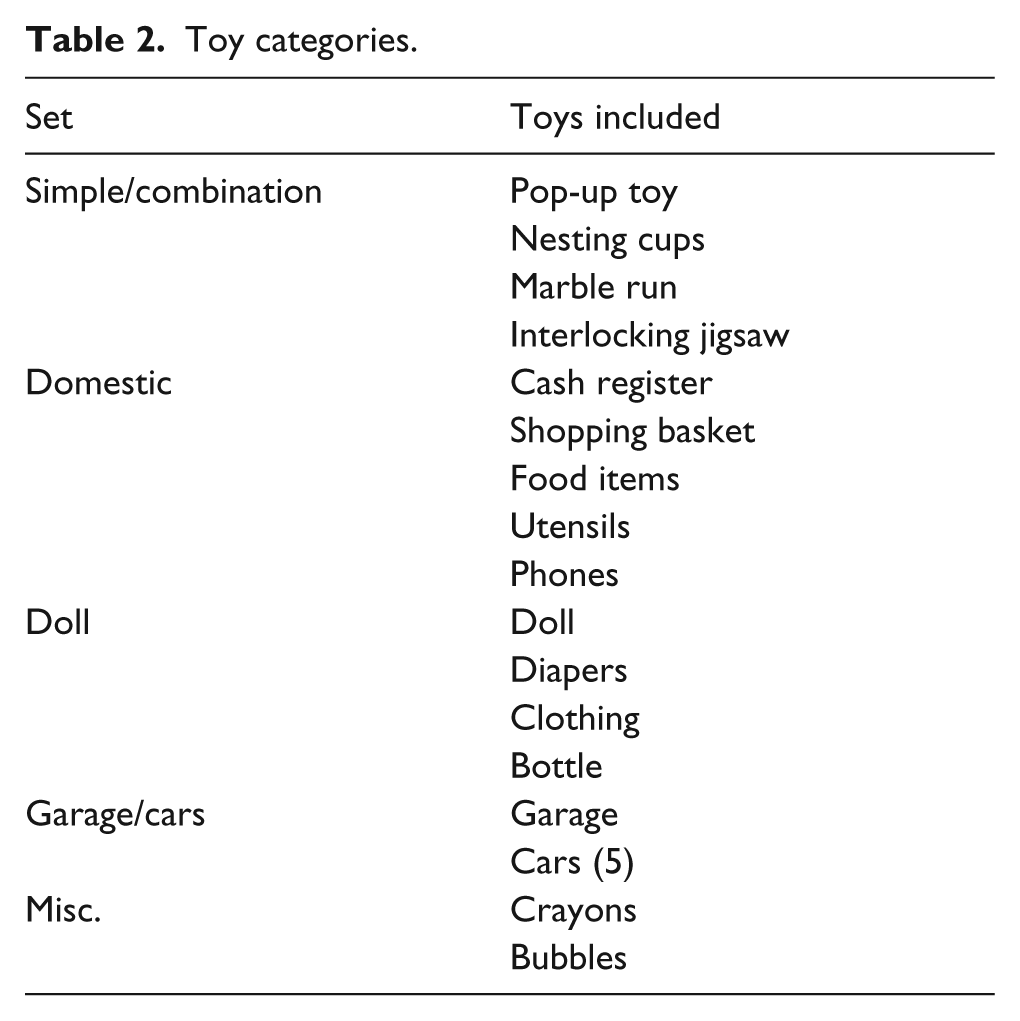
All children were filmed playing for up to 20 min with their caregiver, with a standardized set of toys provided (see Table 2). The toys were selected for developmental appropriateness and variety and were the same for both the ASD and the TD groups. The majority of caregivers were mothers; however, four fathers also took part in the study. Caregivers were asked to play as they typically would. Caregiver behaviors were not coded in this study (see “Discussion”).
Toy categories.
Coding
Following a 2-min “warmup” period, 10 min of child play was coded for both toy engagement and complexity of play behavior using Noldus Observer XT 7.0 (Noldus, 1991).
Play complexity
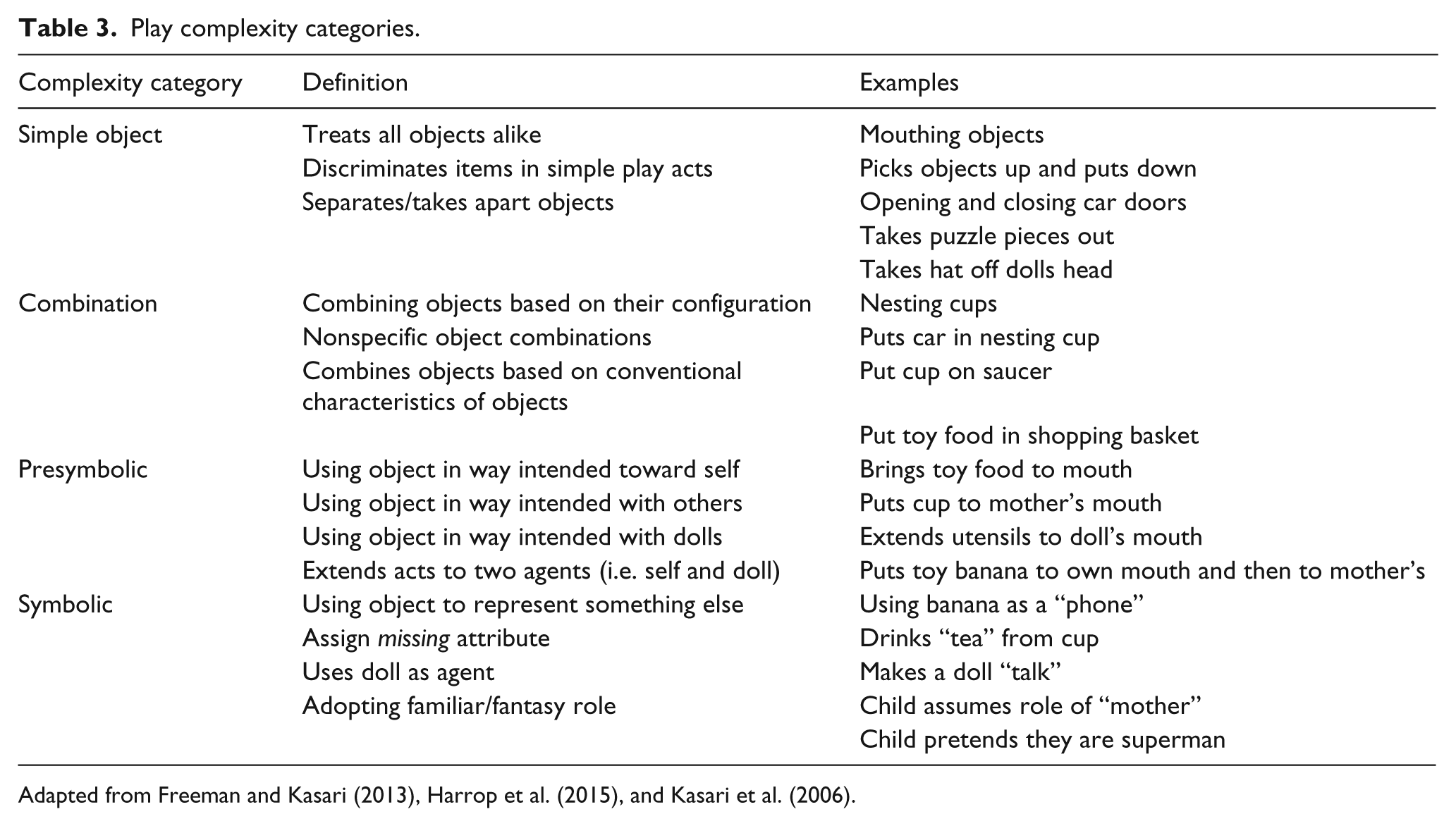
Play complexity was coded in two ways: (1) the percentage of time children spent engaged in one of four mutuality exclusive play categories and (2) the child’s highest mastered play level (defined below). Play categories were drawn from previously published studies (Table 3; Freeman and Kasari, 2013; Kasari et al., 2006, 2010). Unlike previous studies, however, we did not use frequency counts of discrete play acts but calculated the proportion of time children spent engaged within each play category. This was in order to capture how much time children spent in and out of codable play behaviors which is not possible when frequency counts are used. The four categories were (1) simple object play, (2) combination play, (3) presymbolic play and (4) symbolic/multischematic play (see Table 3 for definitions and examples).
Play complexity categories.
Adapted from Freeman and Kasari (2013), Harrop et al. (2015), and Kasari et al. (2006).
In addition to the four play categories, we coded the proportion of time children spent not actively engaged in play. We also acknowledged that while children might not be engaged in play activities, they may also not be totally disengaged from the play interaction. Therefore, we included the percentage of time the child spent within “person engagement” (e.g. singing songs, using the bubbles, and playing person games).
As with previous studies (Freeman and Kasari, 2013; Harrop et al., 2015), we included a measure of play complexity to reflect the child’s highest level of play mastered within the interaction. This was defined as the highest category of play within which the child was engaged for at least 10% (i.e. 1 min) of the time.
Toy engagement
The amount of time children spent engaged with toys was also coded. Engagement was defined in line with previous research (Servin et al., 1999; Zosuls et al., 2009) as physically holding toys and/or active engagement in play with a toy. Children could therefore be coded as being engaged with toys despite not actively playing with them. All toys were available for the child and caregiver to use. In order to maintain statistical power and remain hypothesis-driven, we categorized toys into one of five categories based on the type and/or function (Table 2). Domestic toys were all grouped together (cash register, shopping basket, food items, utensils, and phones). The doll and related items (clothing and diapers) were grouped as a single category as were the garage and cars, as these were the most highly gendered toys within the play set based on previous research (Alexander et al., 2009; Caldera et al., 1989; Cherney et al., 2003; Jadva et al., 2010; Zosuls et al., 2009). Simple and combination toys (pop-up toys, nesting cups, marble run, and jigsaws) were grouped together based on the typical/physical properties of the toys (i.e. combining items and actions, and cause and effect properties) and on descriptions of combination level play acts from Freeman and Kasari (2013) and Harrop et al. (2015). A miscellaneous category included items such as bubbles and crayons and a category of other was created for toys that the child may have brought with them into the play interaction. The toy categories were not mutually exclusive—children could engage with multiple toys at the same time. Therefore, the time spent engaged with toys was calculated as a relative proportion of overall toy engagement (see section “Data Analysis”).
Studies of play in TD children suggest that girls may demonstrate greater diversity in their play than boys during early childhood (Jones and Glenn, 1991). We therefore included a measure of play/toy diversity by calculating the number of different toys (individual rather than by toy category) the child used within the play interaction.
Inter-rater reliability (IRR) coding was completed by a graduate research assistant on 20% of the cases. Intraclass correlations (ICCs) were computed for the percentage of time spent in the four different play categories, the highest level of play complexity reached, and the five categories of toy engagement and toy diversity. There was high inter-rater agreement in all four play categories (simple: 0.84, combination: 0.96, presymbolic: 0.87, symbolic: 0.96), with slightly lower agreement regarding time spent not engaged in play (0.76) and excellent agreement for the highest level of play attained (0.94). High agreement was also found for all categories of toy engagement (0.95–0.99) and diversity (0.94).
Data analysis
Statistical analysis was completed using SPSS Version 20. Group and sex effects were explored using two-way analyses of variance for the different categories of play complexity and toy engagement. Group × sex effects were also explored and any significant interactions examined further with post hoc comparisons. Due to our small sample size and number of variables of interest, we employed a Bonferroni-adjusted significance of α = 0.012 for play complexity (to account for the four categories of play) and α = 0.01 for toy engagement (to account for the five categories of toy type/function). Analyses that reached significance at this corrected level are denoted with an asterisk in the text and tables and reported in the “Results.” Effect sizes (η2) are reported for significant findings. Scales of magnitude were taken from Cohen (1988) with a η2 of 0.01 indicating a small effect, 0.06 indicating a medium effect, and 0.14 indicating a large effect. As children could engage with multiple toys at the same time, there was a chance that total toy engagement might exceed 100%. As a result, relative proportions of toy engagement were calculated based on the total time engaged with toys overall.
Based on the analysis of Harrop et al. (2015), we also examined how chronological age and verbal and non-verbal abilities associated with play abilities by computing correlations between these variables and the variables Total Time Spent in Play (a composite of the four play levels) and Highest Level of Play Reached. A Bonferroni-adjusted significance level of α = 0.01 was employed. Correlations that passed the Bonferroni adjustment are denoted with an asterisk in the text.
Results
Skew and Kurtosis values were all in the acceptable range (−2 to 2), indicating normal distribution of the data with the exception of three variables—percentage (%) Person Engagement, Relative % Engagement with “other,” and Relative % Engagement with Misc. Engagement with these categories of items and in person engagement was low in the majority of children, so results from any results pertaining to these categories are interpreted with caution.
Play complexity
Group effects
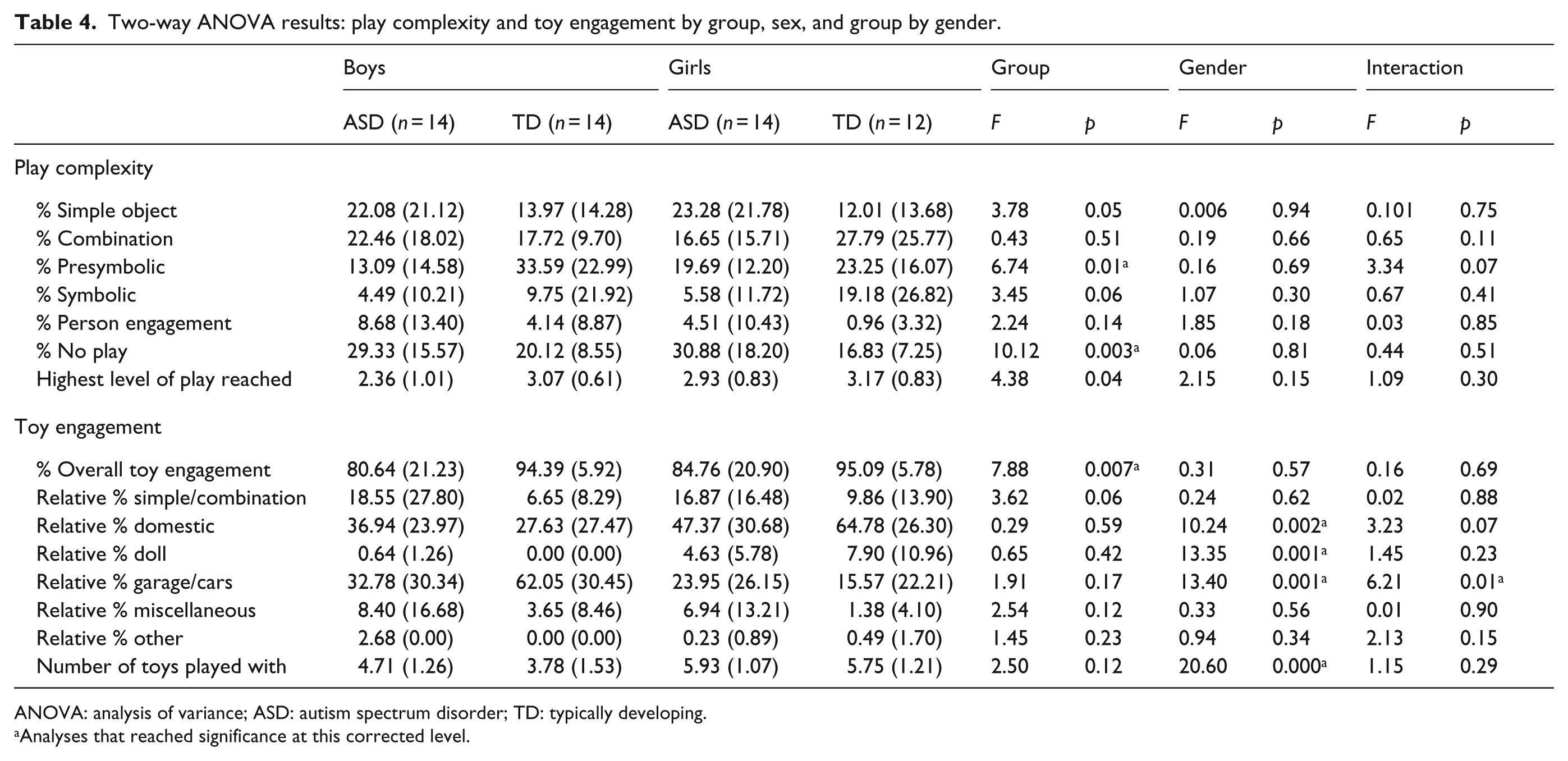
A moderate group effect (η2 = 0.12) was found for the time children spent engaged in presymbolic play (F(3, 50) = 6.74, p = 0.01*), with TD children spending more time in this category of play complexity (Table 4, Figures 1(a) and 2). There was a strong effect of group (η2 = 0.17) for the time children spent not playing (F(3, 50) = 10.11, p = < 0.01*), with children with ASD playing significantly less than TD controls.
Two-way ANOVA results: play complexity and toy engagement by group, sex, and group by gender.
ANOVA: analysis of variance; ASD: autism spectrum disorder; TD: typically developing.
Analyses that reached significance at this corrected level.
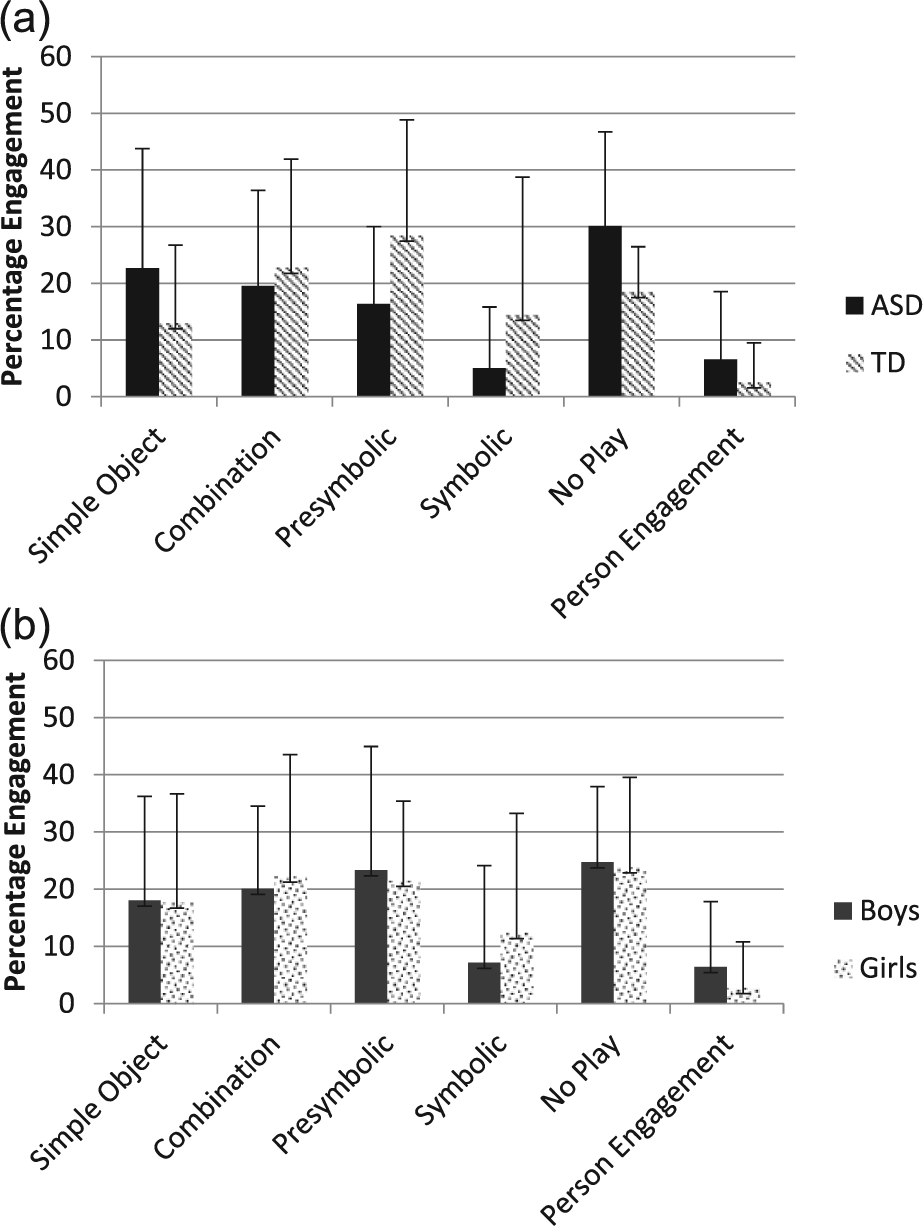
Play complexity by group and sex: (a) group: ASD versus TD and (b) sex: boys versus girls.
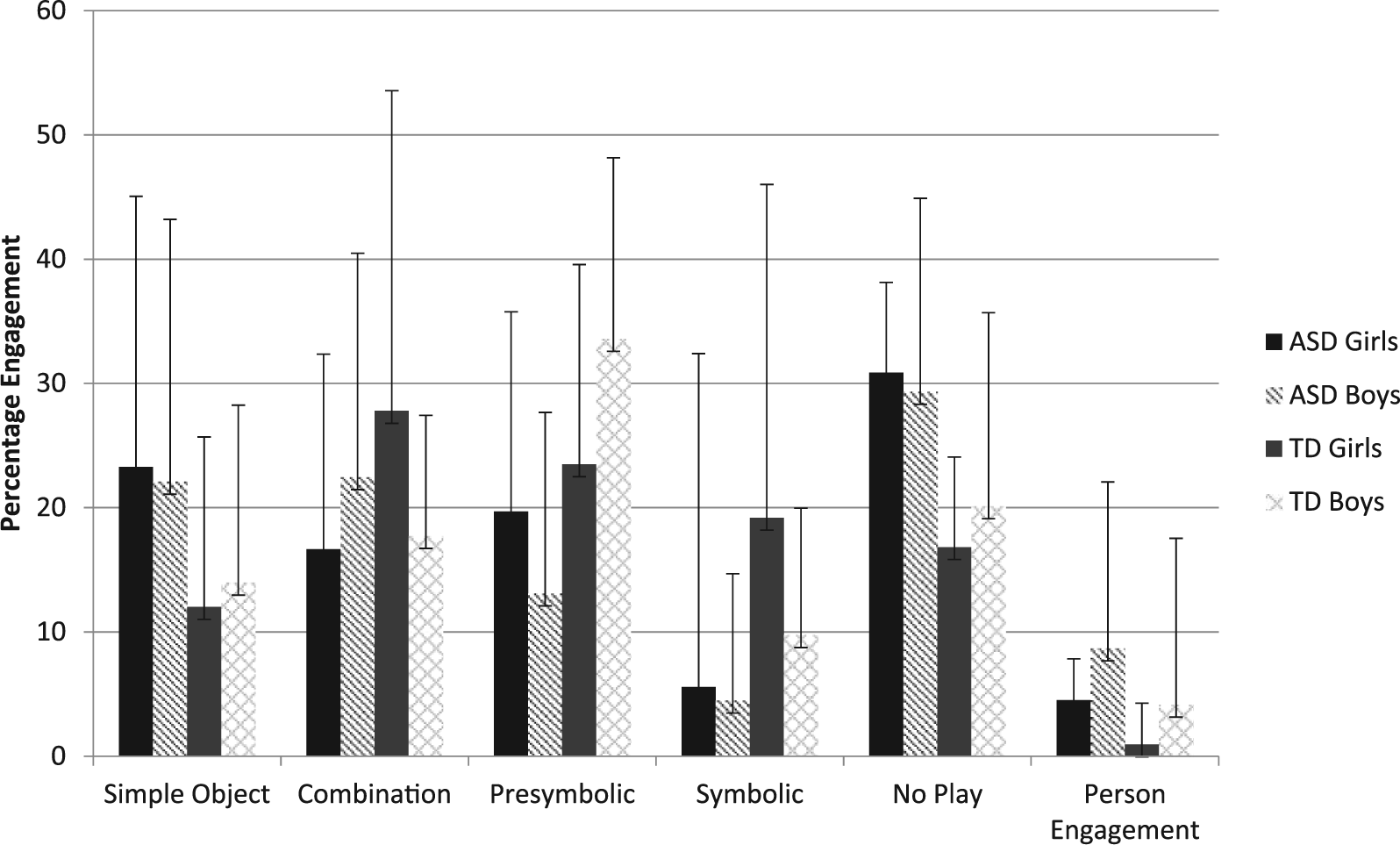
Play complexity by group × sex.
No group effects were found for the time children spent engaged in simple object play, combination play, symbolic play, or person engagement. There was no group effect in the highest level of play reached (Table 4, Figure 3).
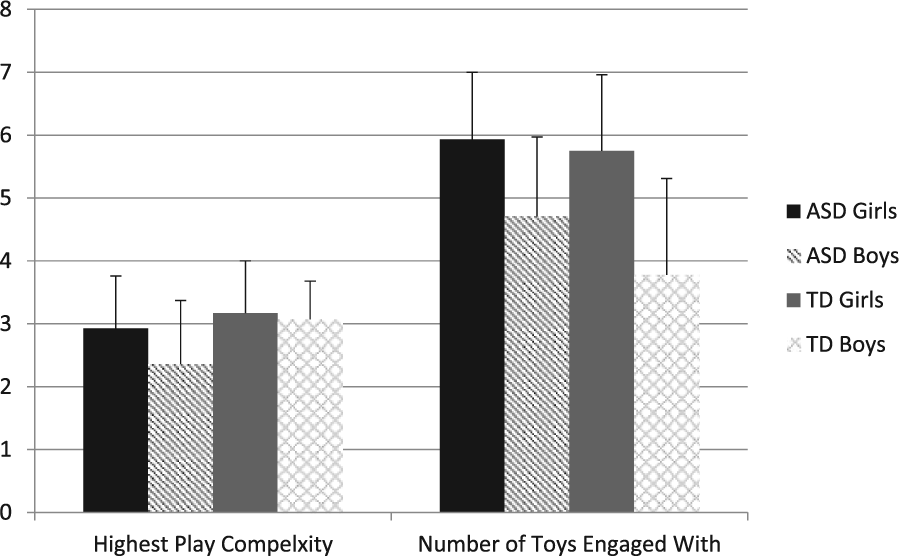
Highest play complexity and number of toys engaged with group × sex.
Sex effects
No sex effects were found for time spent engaged in the four different play complexities, the time spent not engaged in play, time spent in person engagement, or the highest level of play reached (Table 4, Figures 1(b) and 3).
Group × sex effects
No group × sex effects were found for time spent engaged in the different play complexity types, the time spent not engaged in play, the time spent in person engagement, or the highest level of play reached.
Toy engagement
Group effects
A group effect was found for total toy engagement (F(3, 50) = 7.89, p < 0.01*, η2 = 0.14), with controls spending more time engaged with toys during the play interaction (Table 4, Figure 3). No other group effects were found (Table 4, Figure 4(a)).
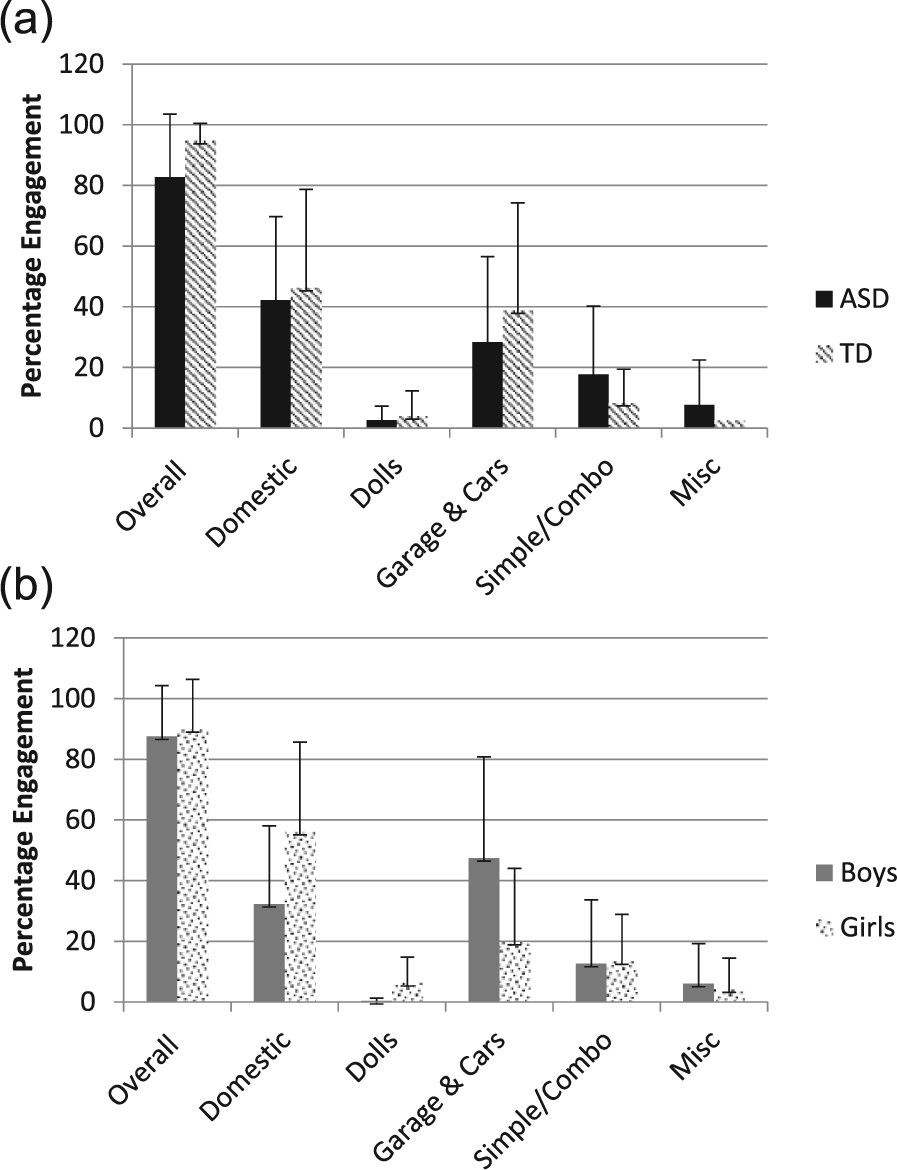
Toy engagement by group and sex: (a) group: ASD versus TD and (b) sex: boys versus girls.
Sex effects
There was a strong sex effect (η2 = 0.29) for toy diversity during the play interaction (F(3, 50) = 20.21, p < 0.01*), with girls playing with more toys than boys (Table 4, Figure 3). Girls also spent more time than boys engaged with domestic toys (F(3, 50) = 10.24, p < 0.01*, η2 = 0.17) and dolls (F(3, 50) = 13.54, p < 0.01*, η2 = 0.21). Large sex effects were also observed for the time spent engaged with the garage and cars (Table 4, Figures 4(a)), with boys engaging more with this toy category than girls (F(3, 50) = 13.40, p < 0.01*, η2 = 0.21).
Group × sex effects
A group × sex effect was found for engagement with the garage and cars (F(3, 50) = 6.21, p = 0.01*, η2 = 0.11; Table 4, Figure 5). Post hoc test revealed that TD boys spent more time engaged with this set of toys than all other groups (ASD girls and TD girls: p < 0.01*; ASD boys: p = 0.04). No other group × sex effects were observed in toy engagement (Table 4, Figure 4(a)).
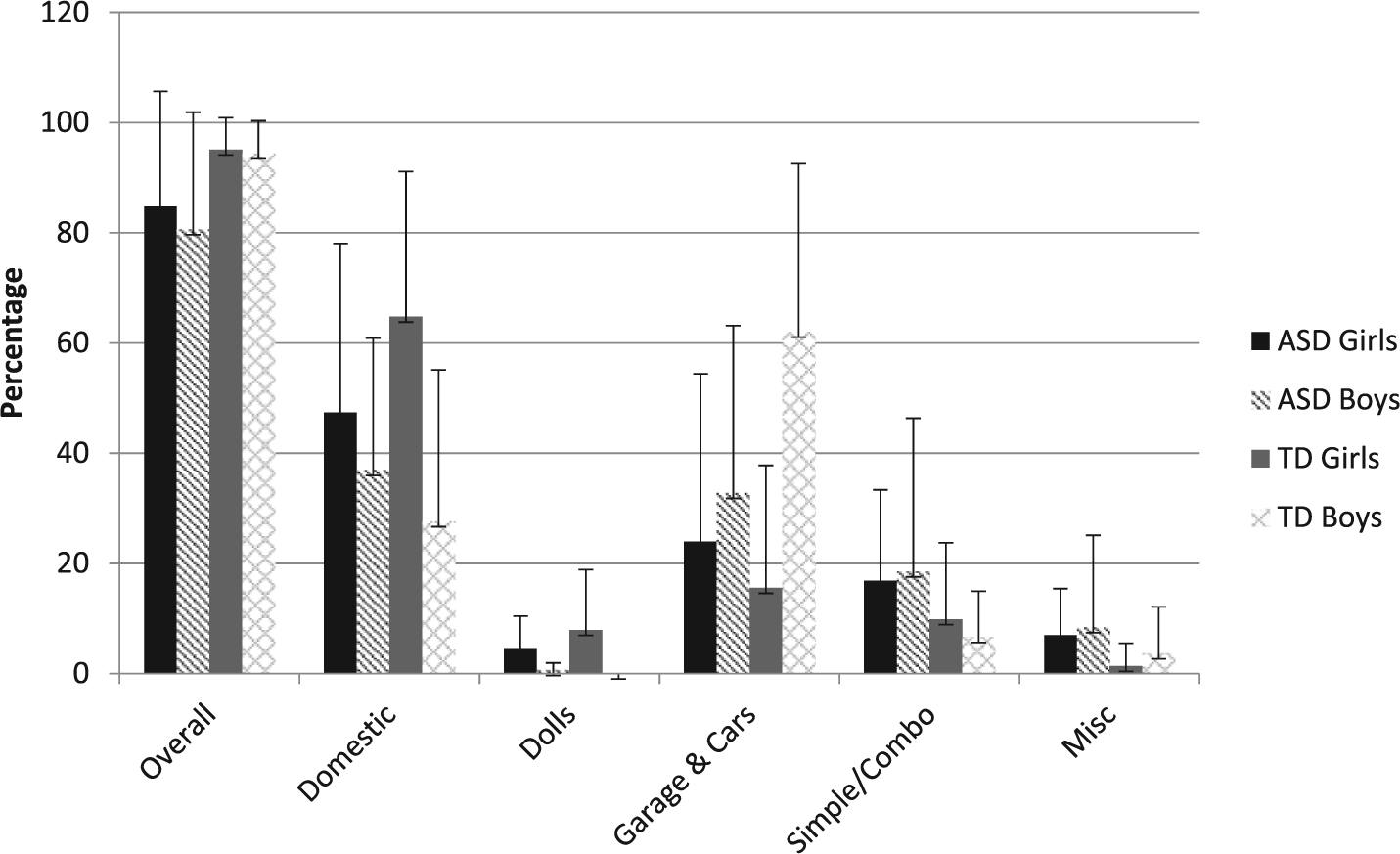
Toy engagement by group × sex.
Associations with development and chronological age
The total time spent in play (composite of all four play levels) was not associated with non-verbal, verbal, and chronological age in any of the four groups (all p’s > 0.05). Higher levels of play were associated with higher non-verbal abilities in all groups (ASD boys: r(14) = 0.74, p < 0.01*; ASD girls: r(14) = 0.75, p < 0.01*; TD boys: r(14) = 0.89, p < 0.01*; TD girls: r(12) = 0.65, p = 0.02). The same was true for verbal abilities with higher abilities associated with higher mastered level of play (ASD boys: r(14) = 0.62, p < 0.01*; ASD girls: r(14) = 0.84, p < 0.01*; TD boys: r(14) = 0.84, p < 0.01*; TD girls: r(12) = 0.75, p < 0.01*). Chronological age was not associated with either the time spent in play or the highest play level reached in ASD boys and girls (p’s > 0.05). However, chronological age was associated with the highest mastered play level in the TD groups (TD boys: r(14) = 0.86, p < 0.01*; TD girls: r(12) = 0.61, p = 0.03), although this did not meet the adjusted significance level for TD girls.
Discussion
The aims of this study were twofold: first to examine the play complexity of girls and boys with ASD matched to TD girls and boys and second to explore what types of toys children with ASD engaged with during a play interaction and whether this differed from the toy choices of TD controls matched on sex and developmental abilities. Overall, we found no significant differences in either play complexity or toy engagement between preschool-aged girls and boys with ASD. This finding is in line with the results of a recent study by Harrop et al. (2015) that similarly found no sex-related differences in play complexity in similarly aged children with ASD using a more structured play assessment.
Focusing first on differences between girls and boys with ASD, no ASD-specific sex effects were found for girls or boys with ASD for either toy engagement or play complexity. However, a number of overall sex effects were found, replicating what has been found in the TD literature. Both ASD and TD girls engaged with the doll and domestic items at a greater rate than boys (ASD and TD), suggesting that engagement with gender-typical toys is potentially preserved. While not a direct test of the EMB theory, our findings do not support the predictions of this theory that postulates that girls with ASD may show a reduction in sex-typical toy preferences typically observed in TD girls (Auyeung et al., 2009b; Baron-Cohen, 2002). In our study, both TD girls and those with ASD spent more time engaged with the two most highly gendered toy sets—the doll and domestic toys—replicating findings in the TD literature.
As no differences were found between girls and boys with ASD in play complexity, our findings suggest that girls with ASD may engage in similar types of play as boys with ASD but doing so with female-typical toys (e.g. dolls and domestic items). As we did not code for play complexity by toy category, we cannot conclusively claim that girls with ASD are engaging with female-typical toys yet playing at a reduced complexity compared to TD girls. This is worthy of further investigation. However, our findings highlight the importance of studying sex differences in ASD in light of what is observed in TD (Halladay et al., 2015; Messinger et al., 2015) and the importance of including factorial group × sex designs.
Boys with ASD engaged with the garage and cars for a longer time than did girls with ASD (and TD girls), replicating what has been observed in typical development. The garage/cars—a highly gendered toy set—was the most common toy choice for both TD and ASD boys. Boys with ASD did not engage with this toy set more than TD boys, who spent the most time engaged with the garage/cars across all four groups. This finding fails to support the theory that preference for highly gendered and mechanical toys will be enhanced in boys with ASD (Auyeung et al., 2009b; Baron-Cohen, 2002). As much of the research surrounding the EMB theory of ASD is derived from caregiver report data (Auyeung et al., 2009b; Knickmeyer et al., 2008), more direct observational research is required to examine sex differences in ASD to provide a more direct test of the assumptions of this theory.
As with Harrop et al. (2015), Holtmann et al. (2007), and Tsai and Beisler (1983), we did not find any differences between ASD girls and boys in their play complexity—both groups reached the same highest level of play and spent the majority of their time engaged within either simple object or combination play. Our results suggest that while girls and boys with ASD were similar in a number of ways, they also demonstrated overlap in their engagement with toys compared to their TD counterparts. It is possible that differences between girls and boys with ASD may become more apparent later in development, supporting the need for longitudinal research in this area.
One potential issue that could have reduced the likelihood of measurable sex differences is the fact our ASD samples were recruited shortly after receiving an early ASD diagnosis. Generally girls have been found to receive a diagnosis later than boys (Salomone et al., in press) and also require a greater symptom threshold for diagnosis to be assigned (Dworzynski et al., 2012). As the girls in our sample were recruited at a young age and many of the children had significant language impairments/delays, it might be unsurprising that girls and boys were more similar to one another than different. Girls who are higher functioning and have more difficulty receiving an accurate ASD diagnosis until a later age are not therefore captured in this sample. Despite this, the wider sex ratio in the PACT study (Green et al., 2010) was 14:138, with just 9% of the sample comprising girls. This is unexpected, given research indicating that the sex ratio is reduced at the more impaired end of the spectrum (where many of the PACT cohorts fell; Volkmar et al., 1993). Future studies should attempt to include higher functioning girls with ASD and examine how differences may emerge over time.
Our findings have implications for play-based interventions with girls and boys with ASD. Play complexity is frequently targeted within early intervention for children with ASD (Kasari et al., 2006; Landa et al., 2011). Our results suggest that these skills can be approached similarly in girls and boys with ASD within intervention particularly at a young age. However, our findings also suggest that girls and boys with ASD may have differential preferences for toys. As female-typical toys are linked to more complex play (Cherney et al., 2003), girls may demonstrate different trajectories of play behaviors within intervention if these toys are included. As the children in our study were young (2–5 years) and had not been exposed to much intervention, the heightened symbolic play among ASD girls (relative to ASD boys) reported by a number of researchers (Hiller et al., 2016; Knickmeyer et al., 2008) may emerge at a later date and be directly related to preference for items more gender-typical such as dolls.
Many of the differences found between children with and without ASD replicate previous findings (Baron-Cohen, 1987; Jarrold et al., 1996). TD girls and boys spent more time playing, overall, and more time engaged in presymbolic play than ASD girls and boys. There were also trends toward group differences in the highest level of play reached, in simple object play, and in symbolic play (Figure 1(a)) that, with a larger sample, may have reached statistical significance. These differences were expected given the well-documented differences in play complexity between children with ASD and their TD peers (Baron-Cohen, 1987; Jarrold et al., 1996) and suggest that our findings reflect developmental differences between children with ASD and their TD peers rather than sex differences per se. While non-verbal and language abilities were associated with play mastery (highest level of play reached) in all groups, only chronological age was associated with this variable in the TD samples. This supports existing literature that shows that play and developmental levels are intrinsically linked in ASD and TD (Belsky and Most, 1981; Charman et al., 2000; Mundy et al., 1987; Rutherford et al., 2007) and further supports the need to examine how developmental abilities may associate with or predict sex differences concurrently and longitudinally in ASD (Harrop et al., 2015; Volkmar et al., 1993).
There was a large group effect concerning the amount of time children with ASD spent not engaged in any of the codable play behaviors or with toys, which begs the question—what were the children with ASD doing when not engaged in play? While we did not code unengaged behavior, children with ASD were not observed to be in person engagement more than the TD group and coding their unengaged behavior may be informative for future research and intervention practices.
With regard to toy engagement, children with ASD spent less time engaged with toys overall. Girls (TD and ASD) engaged with a greater number of toys during the play session. This finding replicates that of Jones and Glenn (1991) who found greater play diversity (as indexed through engagement with a greater number of different toys) in TD girls but also extends this finding to girls with ASD who, like their TD peers, engaged with more toys during the 10-min session than did boys with ASD. This may reflect reduced diversity or a narrower focus in both TD boys and those with ASD.
While our study was not designed to explore TD gender differences in detail, it was interesting to note that our sample of young preschool TD girls engaged with the doll and domestic items more than TD boys of the same age. Furthermore, these young TD boys engaged with the garage and cars to a greater extent than children in all other groups. In fact, while there was variation in both the TD and ASD girls in engagement with the garage and cars, there was very little variability in boys’ (TD and ASD) engagement. Even in our modest sample of young TD children, these expected biases were therefore robustly present.
Limitations
Building on the recent study of Harrop et al. (2015), this study used a relatively unstructured play-based interaction to explore play complexity and toy preference. However, as play behavior and toy engagement were coded within the context of a play interaction, this introduced the possibility that these variables were influenced by the caregiver. As with Harrop et al., we found no differences in play complexity between girls and boys with ASD matched on ASD severity, chronological age, and development. However, as we did not code caregiver behavior, we cannot be certain that they did not influence both toy engagement and play complexity. Caregivers were instructed to play as they normally would with their child with the standardized set of toys provided to them; however, research indicates caregivers have a significant impact on gender-typical differences observed within TD. While sex role reinforcement has not been studied in ASD, caregivers are known to influence both their child’s toy choice and play behavior in TD (Caldera et al., 1989; Eisenberg et al., 1985). Furthermore, mothers (who comprised 93% of our sample) have been found to be more encouraging of sex stereotypes than fathers (Langlois and Downs, 1980). Additionally, differences have been found between parents of a child with ASD with regard to play behaviors and caregiver synchrony (Freeman and Kasari, 2013; Siller and Sigman, 2002), which may further impact the play interaction. Given the social impairments experienced by children with ASD, it is possible that children may be less susceptible to caregiver reinforcement and may be less active in seeking gendered information from their environment and also that caregivers may not prioritize this. Conversely, given the lower play complexity observed in ASD, caregivers may actually model more play in children with ASD. Thus, future research using play interactions should address caregiver input and their expectations regarding sex role conformity, as highlighted by Halladay et al. (2015).
A trade-off of our well-matched sample is undoubtedly the small size of our four groups. While the inclusion of a matched TD group strengthens our study, there are issues with interpreting trend level findings which require further investigation. However, even with our relatively small sample, TD differences in toy choice and play behavior were replicated and differences between the four groups emerged. It is also worth acknowledging that while we grouped toys based on the type and/or function, there was an uneven number of toys across categories. While most categories were equal, fewer toys were classed as miscellaneous. Additionally, certain toys had prominence within the toy set—in particular the garage was large and was presented next to the container of other toy sets and therefore stood as an independent item and may have influenced the high rates of play with this item, particularly in TD boys. Future research would benefit from ensuring equal numbers of toys considered to be female and male-typical are included in the play set. The inclusion of toys described as high autism interest would also be beneficial given that even in early childhood, these items reduce attention to social stimuli when assessed using alternative methods (Sasson et al., 2008, 2011).
It is worth noting that while our groups were well matched on non-verbal abilities and also did not differ on language ability (although we did not purposefully match on this variable), there was greater variation in the language abilities of children in the ASD group. Given the well-documented associations between play and language abilities that were replicated in this study (e.g. Mundy et al., 1987; Toth et al., 2006), this variation may have contributed to the differences found between children with and without ASD. While matching on verbal abilities was not possible in this study (as some of the TD control group would have necessarily been in their infancy, making their play behavior incomparable due to global developmental differences, such as mobility), it is worth considering the role of developmental and language abilities on the emergence of sex differences in ASD. It is acknowledged that due to the age difference between the ASD and the TD groups, it was not possible to ensure the coders were blind to group membership. The IRR coder was blind to study purpose and hypotheses. However, the unavoidable lack of blinding is recognized as a limitation.
A further confound worthy of future consideration is the role of context on play behavior. In our study, TD children were seen at home whereas all ASD assessments were completed in a research laboratory setting. While in typical development, research indicates that play across contexts is comparable (Bornstein et al., 1997); this may not be the case for children with ASD.
Conclusions and implications
Preschool girls and boys with ASD demonstrated both similarities and differences during a free play session. Girls and boys with ASD resembled one another in their play complexity and differed from TD controls, replicating recent findings from research using a more structured play assessment with an unfamiliar examiner (Harrop et al., 2015). Despite similar play, girls and boys with ASD differed in some of their engagement with toys, replicating traditional sex differences—girls played more with dolls and domestic items and boys played more with the garage and cars. Overall our findings suggest that TD sex differences in toy engagement are preserved to some extent in ASD, which has implications for the theories of sex differences in ASD. Our findings have implications for popular play-based interventions as girls and boys may be more motivated by different toys which could in turn relate to progress within treatment.
Footnotes
Acknowledgements
The authors thank the PACT Consortium members for their valuable feedback and Faye Plummer for her assistance with coding. Clare Harrop was based at the Institute of Brain, Behaviour and Mental Health, University of Manchester, Manchester, UK, at the time of data collection. Kristelle Hudry was based at the Centre for Autism Research and Education, Institute of Education, London, UK, at the time of data collection.
PACT Consortium members: Catherine Aldred, Barbara Barrett, Sam Barron, Karen Beggs, Laura Blazey, Katy Bourne, Sarah Byford, Tony Charman, Julia Collino, Ruth Colmer, Anna Cutress, Tori Houghton, Pat Howlin, Dharmi Kapadia, Ann Le Couteur, Sue Leach, Kathy Leadbitter, Wendy Macdonald, Andrew Pickles, Sarah Randles, Vicky Slonims, Carol Taylor, Kathryn Temple, and Lydia White.
Funding
This research was funded by a University of Manchester Strategic Studentship to C.H. as part of the Preschool Autism Communication Trial. J.G. and K.H. were supported by the Medical Research Council.