



Abstract
Obtaining and maintaining employment can be a challenge for autistic adults and learning challenges may be related to vocational outcomes in this population. The present study sought to evaluate the Learning Needs Screening Tool to identify autistic job seekers who may benefit from additional services to obtain employment. A total of 401 autistic adults participated in this study. Internal consistency of Learning Needs Screening Tool items was evaluated. A principal component analysis was then completed to understand the measure’s factor structure and evaluations of external validity were completed. Evaluation of the screening items of the Learning Needs Screening Tool revealed high internal consistency. Three factors (Orthography, Arithmetic, and Retrospective Learning and Service Receipt) emerged. Overall, 56% of the sample screened positive on the Learning Needs Screening Tool, indicating a history of learning challenges. Analysis of history of special education receipt and vocational outcomes showed strong external validity for the measure. Results support the utility of the Learning Needs Screening Tool as a possible screening tool to evaluate learning challenges in autistic job seekers. As those who screened positive were more likely to have no vocational/educational activities, knowledge of retrospective learning needs may help vocational counselors identify autistic adults who need greater supports when seeking and obtaining jobs.
Lay abstract
Finding a job can be hard for autistic adults. No studies have been completed that look into whether having difficulties learning and troubles finding a job are related in this population. The current study did so by evaluating the Learning Needs Screening Tool, a measure of learning challenges used in vocational rehabilitation settings, or places meant to help people find work. A total of 401 autistic adults completed this study online. Specifically, the study evaluated (a) the characteristics of the Learning Needs Screening Tool, including the relationships between questions that ask about similar learning challenges, and (b) the ability of the measure to relate to real-world outcomes that are associated with learning difficulties, namely prior special education receipt and difficulties finding a job. Evaluation of the questions asked on the Learning Needs Screening Tool revealed that they were highly related and that learning difficulties fell into different categories. Fifty-six percent of the people in the study showed learning challenges on the measure. People who were identified as having learning difficulties on the Learning Needs Screening Tool had higher rates of receiving special education services in the past and lower rates of current employment. These results suggest that the Learning Needs Screening Tool may help to identify autistic job seekers who have learning difficulties and may have more challenges finding a job.
Keywords
Autistic 1 individuals face a range of unique challenges across the lifespan, and studies of adults reveal generally less favorable outcomes across multiple metrics (e.g., employment, social relationships and activities, independent living) relative to their neurotypical peers (Billstedt et al., 2011; Roux et al., 2013). As increased numbers of autistic individuals are transitioning to adulthood (Anderson et al., 2018), a greater emphasis has been placed on studies of adults in recent years. These studies have revealed that, relative to neurotypical adults, autistic adults have increased mental health concerns (Billstedt et al., 2005; Liew et al., 2015), decreased quality of life (Levy & Perry, 2011), fewer opportunities for social relationships (Howlin et al., 2013), and often do not live independently (Seltzer et al., 2004). As evidence emerges that these areas are challenges when compared to same-aged neurotypical peers, there have been efforts to identify future areas of research in education, employment, community living, and community engagement to support successful outcomes for autistic adults (for review, see Hendricks & Wehman, 2009).
An important area of inquiry in studies of autistic adult outcomes is vocational engagement (Lord et al., 2020), with most studies reporting that approximately 40%–50% of autistic adults face unemployment (Chiang et al., 2013; Scott et al., 2019). Successful and gainful employment opportunities translate into activity, routine, independence, and access—both in terms of social opportunity and monetary support for activities of daily living—for autistic adults. Although employment is an outcome itself, there is merit to considering it an experience that supports the attainment of other essential outcomes in this population. In fact, less favorable employment outcomes among autistic adults are associated with lower socioeconomic status and quality of life as well as poorer mental health (Gerhardt & Lainer, 2010; Smith et al., 2014). Moreover, unemployment/underemployment are associated with elevated rates of reliance on anti-poverty programs (e.g., income assistance; Anderson, 2020; Jarbrink et al., 2007; Krieger et al., 2012) and the potential for social isolation (Rözer et al., 2020).
While this evidence for suboptimal outcomes exists at the group level, there is also evidence for heterogeneity in outcomes among autistic adults. Some autistic adults do obtain successful competitive employment, live independently, and develop desired romantic and social relationships (Billstedt et al., 2005; Eaves & Ho, 2008; Farley et al., 2009). There are many factors that may contribute to these varying outcomes. For example, research on psychosocial factors has revealed that family support (Holwerda et al., 2012), access to interventions, and vocational and health service availability support more favorable outcomes in adulthood (Levy & Perry, 2011). In samples of autistic adults that include those with intellectual disability, factors at the individual differences level, such as higher global cognitive abilities (Billstedt et al., 2005; Howlin et al., 2004; Lord et al., 2020) and higher verbal abilities (Durkin et al., 2017; Kobayashi et al., 1992), in childhood are predictive of more favorable outcomes in adulthood within the areas of employment, postsecondary educational attainment/vocational engagement, independent living, and peer relations. For those without intellectual disability, research suggests that lower levels of anxiety and depressive symptoms are associated with more favorable quality-of-life ratings (Lin & Huang, 2019; Park et al., 2019), another important adult outcome.
An additional factor that may be related to adult outcomes is the presence or history of learning difficulties. Autistic individuals are more likely to have specific learning challenges than base rates found in the general population (O’Brien & Pearson, 2004). In fact, prevalence rates for specific learning disorder (SLD) diagnoses in autistic populations are estimated to be as high as 60%–70% (Ibrahim, 2019). Research on reading skills in populations of autistic individuals consistently reveals challenges or variability in speed and comprehension both when comparing to neurotypical peers and those with another neurodevelopmental condition, such as attention-deficit hyperactivity disorder (ADHD; McIntyre et al., 2017; Solari et al., 2017). While some studies suggest a relative strength or average ability in mathematics (Baron-Cohen et al., 2007; Chiang et al., 2013; Titeca et al., 2014), approximately 25% of autistic individuals have a learning disability with impairment in mathematics (Mayes & Calhoun, 2003b; Williams et al., 2008). These variable learning challenges are important to understand, as they relate to functional outcomes in autistic populations. The combination of autism and SLD increases the risk of academic struggle and social, emotional, and behavioral difficulties (Hendren et al., 2018). To date, no research has been done relating history or presence of specific learning challenges to adult vocational outcomes in samples of autistic adults, despite findings and evidence in the general population that specific learning challenges may be related to employment status/history. Specifically, studies in the general population have documented that individuals with relatively stronger academic abilities experience more favorable employment outcomes, including employment rate, income, and career adaptability (Datu & Buenconsejo, 2021; Durkin et al., 2017; Smart et al., 2017), and individuals with SLD without autism show lower employment rates (Durkin et al., 2017; Eloranta, 2019).
Despite known cognitive and behavioral challenges, autistic adults can succeed in the job market, especially when transition and vocational rehabilitation services are identified and tailored to meet the unique needs autistic adults may have (McDonough & Revell, 2010). Furthermore, utilization of vocational rehabilitation supports has been shown to be a significant predictor of successful employment in samples of autistic adults (Kaya et al., 2016; Wehman et al., 2015). In order to maximize the efficacy of vocational support services, research into factors that are associated with less favorable postsecondary outcomes along with tools to identify and ameliorate these factors may be important. Given (a) heightened rates of learning difficulties among autistic individuals and (b) associations between learning difficulties and employment in the general population, it is hypothesized that individual differences in learning difficulties are associated with individual differences in vocational outcomes among autistic adults. As some autistic individuals may not receive autism diagnoses until adulthood and thus may not be identified as needing academic supports while in primary or secondary school, it is important for vocational counselors to have a tool to screen for academic difficulties among autistic adults seeking vocational rehabilitation services, as these individuals may be at heightened risk for less favorable employment outcomes.
The current research sought to evaluate the utility of one such tool, the Learning Needs Screening Tool (LNST; Payne & Associates, 1997). The LNST is a brief questionnaire used to identify those who might have learning challenges that contribute to difficulties with employment. Although it has been used in other groups who are at risk for less favorable employment outcomes, including individuals receiving outpatient mental health treatment (Keyser & Mathiesen, 2010), it has not been evaluated for autistic adults or those with other neurodevelopmental conditions to date. The tool is not diagnostic, but rather identifies those who might benefit from further evaluation. For adults in the general population, the tool is used to identify if additional supports are needed to help obtain and maintain vocational placements. Since it was published in 1997 by Payne and colleagues, it has been utilized in several state-level departments concerned with vocational placement, as evidenced by government websites in Washington, Florida, Kentucky, and Arkansas.
The current study had four aims: (a) validate the LNST in a sample of autistic young adults (ages 18–39 years) by probing its psychometric characteristics, including its internal consistency and factor structure; (b) describe the nature of learning difficulties identified by the LNST among autistic young adults without co-occurring intellectual disability; (c) evaluate the external validity of the LNST by examining its relations with earlier receipt of special education services; and (d) evaluate how learning difficulties as measured via the LNST relate to current postsecondary outcomes.
Method
Participants
Four hundred and one autistic adults participated in this study. Autistic adult participants were recruited via Simons Powering Autism Research (SPARK; The SPARK Consortium, 2018) Research Match (Project Number: RM0045Wallace1839). The Research Match service is a valuable tool that allows researchers to contact individuals who have expressed interest in learning about autism research opportunities, many of whom have previously participated in autism research, allowing for efficient recruitment of large-scale cohorts like the one included in this study. All study procedures were approved by the Institutional Review Board (IRB) of record and were conducted consistent with guidelines provided in the Declaration of Helsinki. Participants independently elected to participate in the study after being contacted by SPARK, which served as a partner in data collection. If participants elected to participate, they first provided informed consent and then completed study surveys online. See Table 1 for demographic information.
Demographics.
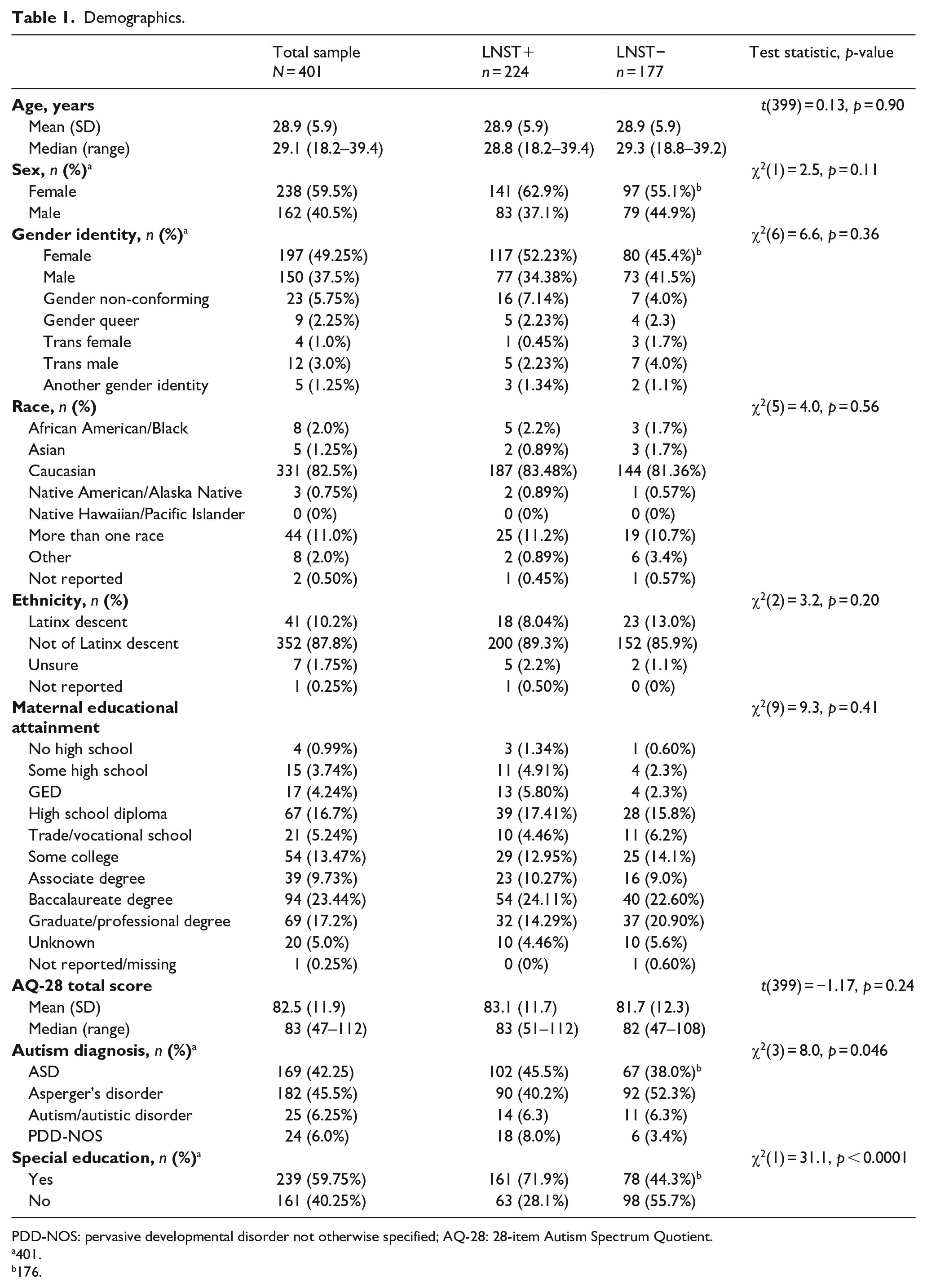
PDD-NOS: pervasive developmental disorder not otherwise specified; AQ-28: 28-item Autism Spectrum Quotient.
401.
176.
This sample was made up of autistic adults between the ages of 18 and 39 years, consistent with the larger study’s focus on vocational and other important outcomes among autistic young adults. Eighteen was chosen as the lower limit for the study, as this is the age of majority in the United States where this study was conducted. The upper limit was selected because developmental science commonly identifies 39 or 40 years of age as the end of the “young adult” developmental period (Erikson, 1982).
Participants were designated as “independent” by SPARK, which means that these adults could provide consent for themselves, and thus, they are unlikely to have a concurrent diagnosis of intellectual disability. Furthermore, as part of a medical history questionnaire that was collected for the current study, none of the individuals in the sample reported an intellectual disability as a previously given diagnosis. To meet the eligibility criteria for the larger study, the participants must have reported that they received an autism diagnosis from a clinical or medical professional. While SPARK does not independently validate or confirm diagnoses, it partners with and recruits from expert autism clinical sites to increase the probability that participants have an official diagnosis of autism spectrum disorder. Moreover, independent research on the SPARK registry has demonstrated strong convergence between participants’ self-disclosed autism spectrum diagnoses and documented autism spectrum diagnoses in electronic medical records (Fombonne et al., 2022). In an effort to provide additional validity to these self-disclosed diagnoses, participants in the current study completed the 28-item self-report Autism Spectrum Quotient (AQ-28; Hoekstra et al., 2011). Scores >65 indicate a positive screen for autism spectrum disorder. Ninety-three percent of participants in the current sample scored >65. Given confidence in the convergence of self-disclosed diagnosis and official diagnosis from electronic medical records in the research of Fombonne and colleagues (2022), the 7% who scored below the cutoff score on the AQ-28 were included in the current investigation.
The 401 participants included in these analyses were drawn from a larger sample of 413 individuals who completed the study measures. As our goal was to study idiopathic learning challenges faced by autistic adults that were not due to an acquired neurological insult, participants with a reported history of traumatic brain injury requiring hospitalization (n = 12) were excluded. In contrast, participants with reported seizure activity (n = 22) were not excluded, given the heightened prevalence of co-occurring epilepsy in autistic populations (Canitano, 2007) and the desire to describe the needs of a more representative sample of autistic adults.
Measures
LNST
The LNST is a measure used most often in vocational rehabilitation settings. It was developed for the Washington State Division of Employment and Social Services Learning Disabilities Initiative (November 1994 to June 1997) by Nancie Payne and is available in the public domain. According to the author, the tool was validated with a “welfare clientele” though further information about the demographics of this sample is not available (Payne & Associates, 1997). As noted previously, the LNST has since been used in other states, as evidenced by government websites in Washington, Florida, Kentucky, and Arkansas.
The measure collects retrospective information from adults about school and educational/learning experiences, with the goal of identifying those who may be in need of greater resources and services to support securing and sustaining employment. The measure collects yes/no responses to 13 screening questions, which are divided into 4 subsections (A, B, C, and D). A total score for the measure is derived by multiplying the number of positive (“yes”) responses by 1, 2, 3, or 4 for sections A, B, C, and D, respectively (see Payne & Associates, 1997). See Figure 1(a) for a list of LNST items. A score of 12 or greater is considered a “screen positive” score on the LNST. Importantly, the LNST authors indicate that the tool is not a diagnostic measure. In the case of a positive screen, it is suggested to refer for further testing to identify a potentially meaningful clinical diagnosis and indicate additional resources and services that may help these individuals to attain employment. In this study, participants completed a self-report form of the 13 screening questions via a secure online platform.
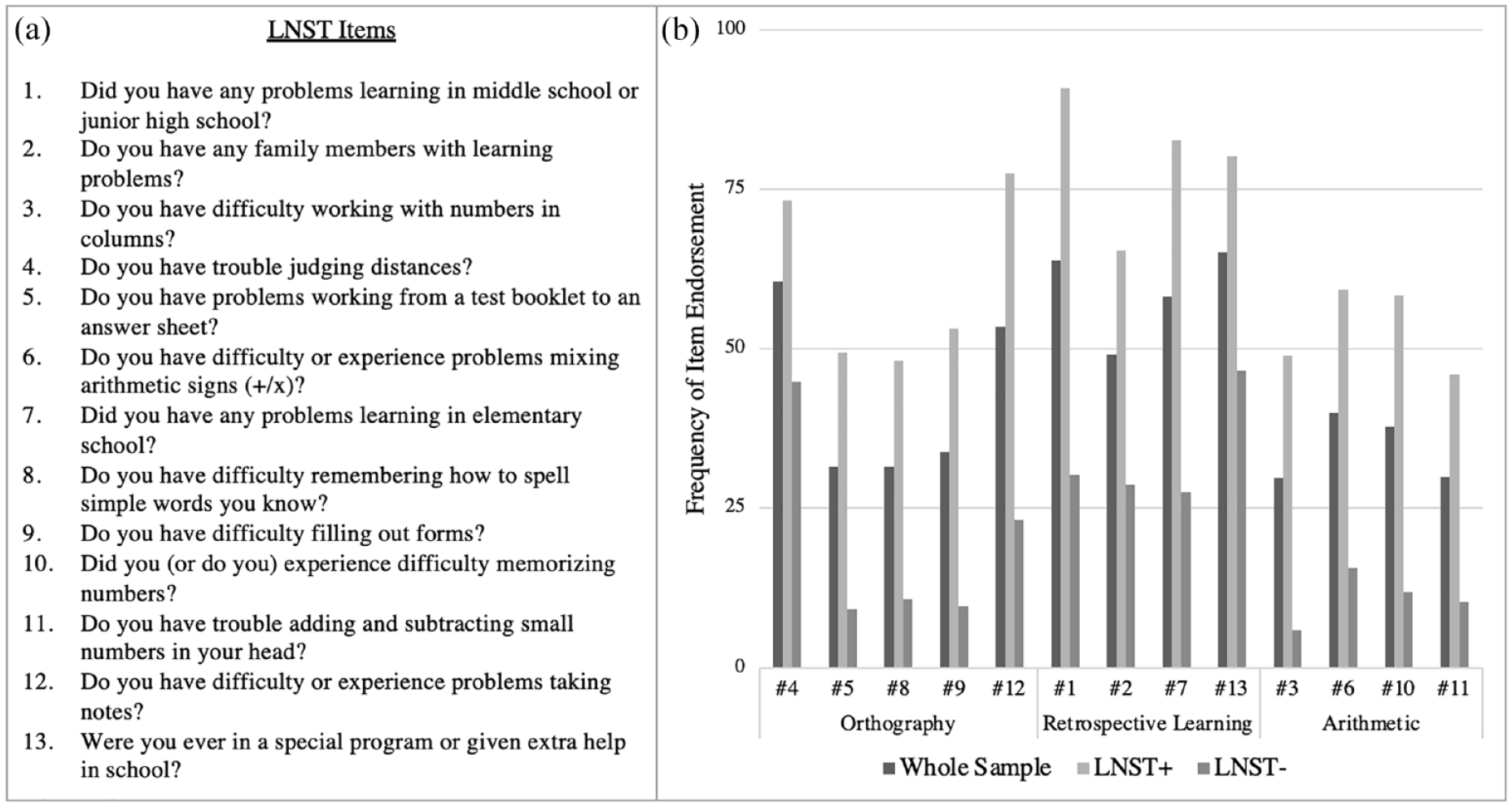
Frequency of item endorsement by group and item content.
For the purposes of the current investigation, the measure’s cutoff score was utilized to designate “screen positive” and “screen negative” cases. In addition, we completed a principal component analysis (PCA) of the instrument’s 13 screening items (described in the results) and created composite scores on the different identified factors in order to characterize the nature of learning challenges in this autistic sample.
Self-report of demographic information and receipt of special education services
Participants provided detailed demographic information including age, race, ethnicity, sex assigned at birth, and educational history, such as the receipt of special education services. As receipt of special education is related to the presence of early learning challenges in both the general population and those with known developmental disabilities (Thomas & Loxley, 2007), participant report of special education receipt was utilized as a means of investigating the construct validity of the LNST in the current study.
Taylor Vocational Index
The Taylor Vocational Index (TVI; Taylor & Seltzer, 2012) was used to categorize the vocational and postsecondary educational activities of autistic adults. The TVI is composed of nine ordered, mutually exclusive categories, ranked on a scale from 1 to 9. Ordering of categories reflects the independence necessary to achieve a vocational/postsecondary educational activity, as well as whether the adult participated in activities for more than 10 h per week. TVI scores are as follows: 1 = no vocational/educational activities; 2 = volunteering or non-degree seeking education only; 3 = sheltered vocational setting (e.g., sheltered workshop or adult day center) for 10 h/week or less; 4 = sheltered vocational setting greater than 10 h/week; 5 = sheltered vocational setting and employment in the community; 6 = supported employment in the community for 10 h/week or less; 7 = supported employment in the community for greater than 10 h/week; 8 = degree-seeking educational program or employment in the community without supports for a total of 10 h/week or less; 9 = degree-seeking educational program or employment in the community without supports greater than 10 h/week. An examination of the distribution of scores on the TVI revealed that the vast majority of participants received a score of either 1 or 9 (n = 374; 93.5%) in the current sample. Only 24 participants (6%) received scores that were not at these extremes (two participants were missing TVI scores due to data that did not allow for coding). Due to the distribution of these data, analyses involving the TVI only included participants who received scores of 1 (n = 148) or 9 (n = 226) in order to contrast the LNST in groups with the least versus most independent postsecondary education/vocational outcomes, respectively.
Community involvement
There was no public community involvement in this research.
Results
Psychometric characteristics of the LNST
The internal consistency of the LNST was evaluated and a PCA was performed to identify domains of early learning concerns. First, to evaluate internal consistency, the 13 items of the LNST were evaluated using Cronbach’s alpha. The resulting alpha level (α = 0.81) indicated high or “good” levels of internal consistency. Next, an exploratory PCA with oblimin rotation was completed (as it was expected that different components would be correlated) on the 13 screening items of the LNST. A preliminary examination of the correlations among items (see Table 2) revealed the presence of many coefficients of r ⩾ 0.30 and significance values below the cut-off of p < 0.05. Moreover, the Kaiser–Meyer–Olkin value of 0.84 exceeded the recommended value of 0.60 (Kaiser, 1970, 1974) and Bartlett’s Test of Sphericity (Bartlett, 1954) reached statistical significance, thus supporting the factorability of the correlation matrix. Eigenvalues exceeding 1 were used to ascertain components. Applying this cutoff, the PCA yielded three components. Eigenvalues for the three factors were 4.1, 1.4, and 1.1 and explained 31.2%, 10.7%, and 8.8% of the variance, respectively. The overall three-component solution explained a total of 50.7% of the variance in LNST items. An evaluation of the items comprising the three components revealed factors that we have labeled as an “Orthography” factor (i.e. items related to spelling, judging distances, filling out forms, and taking notes; items 4, 5, 8, 9, 12), a “Retrospective Learning and Service Provision” factor (i.e. items related to prior services, learning problems, and history of learning problems in the family; items 1, 2, 7, 13), and an “Arithmetic” factor (i.e. items related to mixing signs and symbols, memorizing numbers, and performing mental math; items 3, 6, 10, 11). See Table 3 for factor loadings that resulted from the PCA (and Figure 1(a) for item content).
Correlations among LNST items.

Pattern matrix.
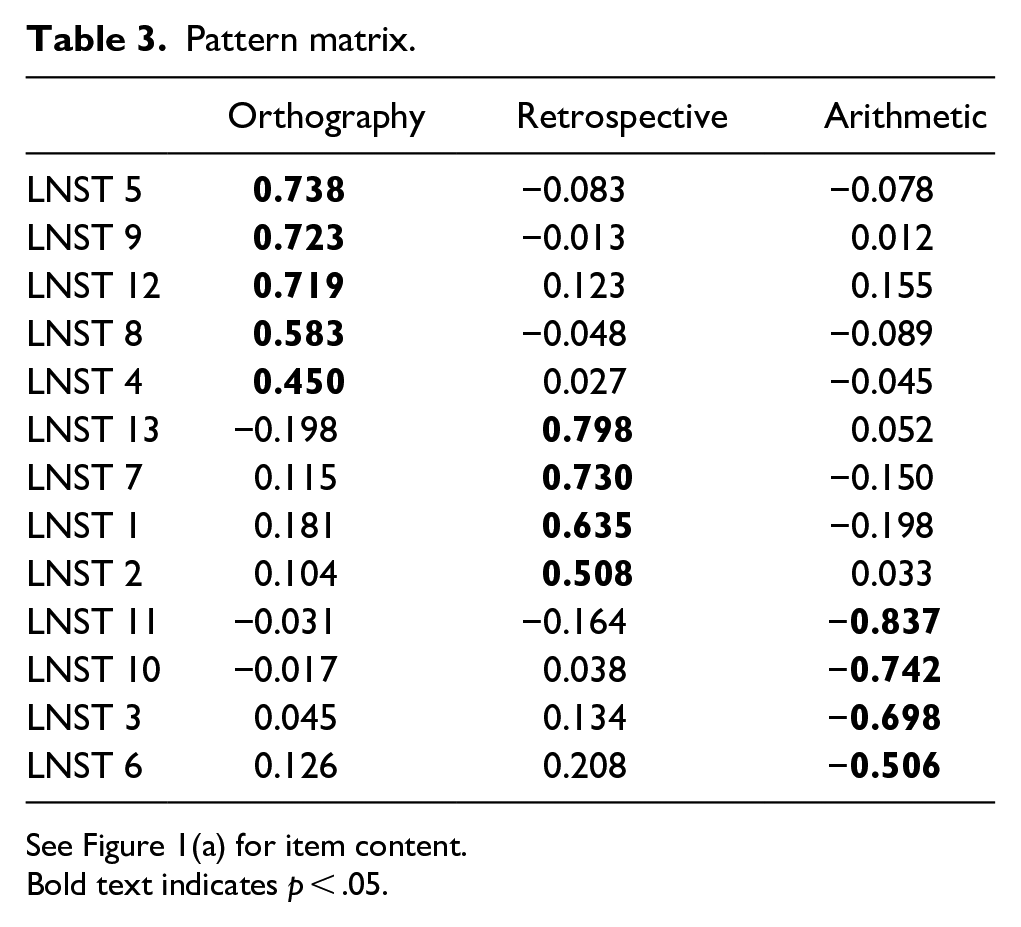
See Figure 1(a) for item content.
Bold text indicates p < .05.
Characterization of LNST total scores, item endorsement, and learning needs “profiles”
Findings for whole study sample
More than half, 56% (n = 224), of the participants received a total score on the LNST that fell above the “screen positive” cutoff (total score of 12 or greater), indicating a history of learning difficulties. The frequency of specific learning difficulties, as measured by individual items, is presented in Figure 1(b) (black bars). The items are organized by PCA component—‘Orthography, “Retrospective Learning and Service Provision,” and “Arithmetic.” As can be seen, over half of the sample endorsed multiple items in the “Retrospective Learning and Service Provision” cluster. Among the questions probing specific learning difficulties (as opposed to a history of service receipt), LNST item 4, which asks about difficulty judging distances, was the most endorsed (61%) and LNST item 3 was the least endorsed (30%) and asks about difficulties working with numbers in columns.
To evaluate the nature of current learning difficulties in this sample, composite scores (i.e. average item ratings) for “Orthography” and “Arithmetic” were compared using a paired-samples t-test. Results revealed greater impairment in learning related to Orthography (M = 0.42, SD = 0.31) than Arithmetic (M = 0.35, SD = 0.35), t(400) = 4.34; p < 0.001 (two-tailed); Eta squared = 0.05.
Findings for screen positive and negative samples considered separately
To further characterize the sample, and in particular, to probe possible differences in the profile of learning needs (i.e. relative strength vs weakness on factors) among participants who screened positive versus negative on the LNST, we repeated the analyses above but included the factor of “group” (i.e. screen positive vs negative) in analyses.
First, with regard to rates of item endorsement, chi-square was used to contrast item endorsement among those who screened positive versus negative. Not surprisingly, we found higher learning needs endorsement for all 13 items among those who screened positive versus negative using chi-square tests (all ps < 0.004; Bonferroni corrected for multiple comparisons (0.05/13 = 0.004)) with chi-square values ranging from 32.63 (item 4) to 160.14 (item 1).
Second, we sought to determine whether the LNST profile—that is, pattern of scores on the Orthography and Arithmetic composite—varied as a function of group. Thus, a 2 (group: screen positive vs screen negative) × 2 (LNST factor/composite score: factor 1 (ortho) vs 3 (arithmetic)) mixed measures analysis of variance (ANOVA) was implemented. There was no statistically significant interaction between screen status and factor on the LNST profile, F(1,399) = 0.17, p = 0.65. As expected, there was a significant main effect of group, with those screening positive receiving higher scores overall than those screening negative. There was also a significant main effect of factor, with participants displaying greater challenges in orthography than arithmetic, F(1,399) = 18.95, p < 0.001, partial eta squared = 0.05. These analyses confirmed our earlier findings of increased rates of learning difficulties in the realm of orthography than arithmetic regardless of screening status.
Evaluating external validity: examining relations between LNST and earlier receipt of special education
Having described the psychometric characteristics of the LNST and the learning needs profile among this sample of autistic adults, we next sought to evaluate the external validity of the instrument by evaluating group differences in report of historical receipt of special education services. Specifically, rates of special education receipt were compared via chi-square for the “screen positive” and “screen negative” groups. Results indicated a significant association between a screen-positive status on the LNST and special education receipt status, χ2 (1, n = 400) = 29.99, p < 0.001, w = 0.27. Specifically, 72% of the screen-positive subsample received special education services compared to 44% of the screen-negative subsample. As an additional external validity check and to ensure that questions related to the receipt of learning supports on the LNST were not driving this finding, we examined differences in LNST scores after removing the three questions that queried past receipt of learning support, items 1, 7, and 13. With these items removed, a comparison of mean LNST scores for those who did and did not receive special education services was completed using independent samples t-test. Results revealed significantly higher LNST scores for those who received special education services (n = 239, M = 9.65, SD = 6.7) compared to those who did not (n = 161, M = 7.99, SD = 6.1), t(398) = −2.52, p = 0.012, two-tailed; Cohen’s d = 0.26.
Evaluating relations between LNST scores and current vocational outcomes
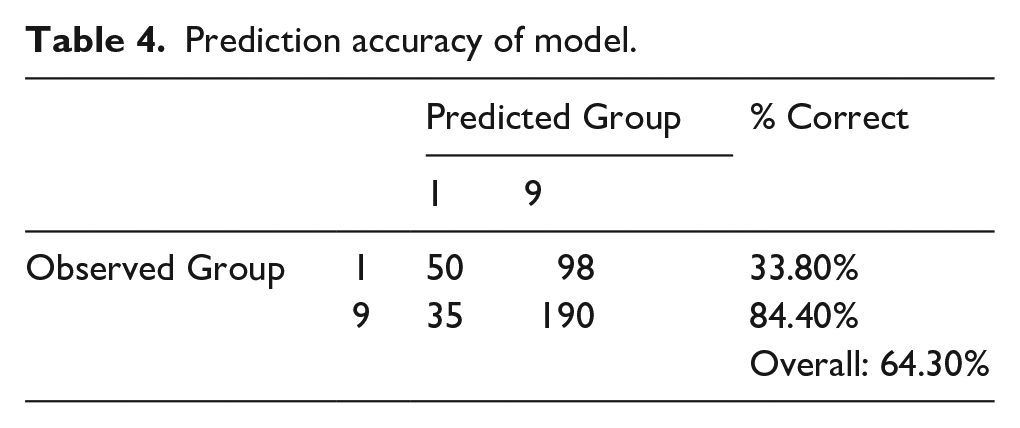
Finally, in order to evaluate whether individual differences in learning difficulties as measured via the LNST relate to critical real-world outcomes, the LNST total score was investigated as a predictor of independence in vocational/postsecondary educational pursuits. Specifically, the LNST was used to predict TVI scores of 9 (most independent) versus 1 (least independent) among the autistic adults in the sample. A logistic regression model indicated a significant association between LNST total scores and vocational/postsecondary educational engagement, χ2(1, N = 374) = 30.30, p < 0.001. Overall model accuracy was 64.3%. The model that included the LNST score represented a 4% increase from the baseline model’s prediction accuracy of 60.3% (which is based on the rate of scores of 9 and included the TVI score only). The overall model was associated with a Cox and Snell r2 value of 0.08 and a Nagelkerke r2 value of 0.11. See Table 4 for prediction accuracy. An evaluation of both the standardized beta coefficients and odds ratio (OR) values (with associated confidence intervals (CIs)) in the model revealed that LNST total scores added significant unique variance to the prediction of the TVI score (B = −1.00, SE B = 0.19, OR = 0.37, 95% CI = 0.25–0.53).
Prediction accuracy of model.
Discussion
The current study sought to investigate and validate a measure of learning needs (LNST) in a large sample of autistic young adults (ages 18–39 years) without intellectual disability who were recruited via the SPARK participant registry. It also examined relations between academic/learning challenges and postsecondary vocational/educational engagement (as assessed using the TVI; Taylor & Seltzer, 2012), as this relationship has not been formally evaluated among autistic adults to the best of the authors’ knowledge.
First, our evaluation of the psychometric characteristics of the LNST found the instrument has high internal consistency. Second, the LNST identified a high rate of learning difficulties among the autistic young adults studied, with 56% of the sample screening positive on the measure. This rate is largely consistent with investigations that have evaluated SLDs among autistic individuals without intellectual disability with direct testing (Fombonne, 1999; Ibrahim, 2019; McIntyre et al., 2017; Williams et al., 2008). Further support for the construct validity of the measure comes from our investigation into whether rates of special education receipt varied as a function of LNST screening status. These results revealed that these rates did differ between screening groups, with reports of special education services allocation occurring at greater rates for those who screened positive on the measure.
Although further research is needed, these results suggest that the LNST may serve as a useful measure to screen for learning challenges among autistic adults without co-occurring intellectual disability. Our report largely confirms the presence of such challenges for a subset of autistic adults and further suggests that there is a relationship between learning challenges and functional adult outcomes, such as postsecondary educational/employment pursuits. The measure, previously used in government-based vocational rehabilitation settings, has only been investigated in one other clinical sample to date (to the best of our knowledge; Keyser & Mathiesen, 2010). As such, this article also adds to a small but growing literature that investigates screening tools used to identify learning disabilities and related disorders/outcomes in clinical populations, such as the Colorado Learning Difficulties Questionnaire (Willcutt et al., 2011).
Adding to the literature on specific learning needs in autistic individuals, the PCA revealed three areas of academic/learning history that may be relevant to autistic adults seeking employment. Consistent with prior findings on the learning profile of autistic individuals (Mayes & Calhoun, 2003a, 2003b; Solari et al., 2017), these areas included challenges in arithmetic, challenges in orthography, and a history of learning supports. Moreover, our results revealed less significant reported challenges in arithmetic skills relative to orthographic skills, reinforcing findings of greater heterogeneity in the arithmetic domain for autistic individuals (Baron-Cohen et al., 2007).
LNST “Learning Profiles”
The current study also sought to examine differences in learning profiles between those who screened positive versus negative on the LNST. Those who indicated they experienced learning challenges on the LNST were more likely to endorse learning needs across all items on the measure. Although not surprising, this finding was not inevitable, as certain items could have been driving the group difference in overall learning difficulties on the LNST for those who screened positive.
The pattern of relative strengths and challenges in arithmetic and orthography did not vary as a function of screen status (i.e. a main effect of group and of learning factor emerged but there was no group × factor interaction). These findings suggest that there is an overall increased rate of learning concerns in those who screened positive on the measure rather than a different profile of learning challenges (see Figure 2).
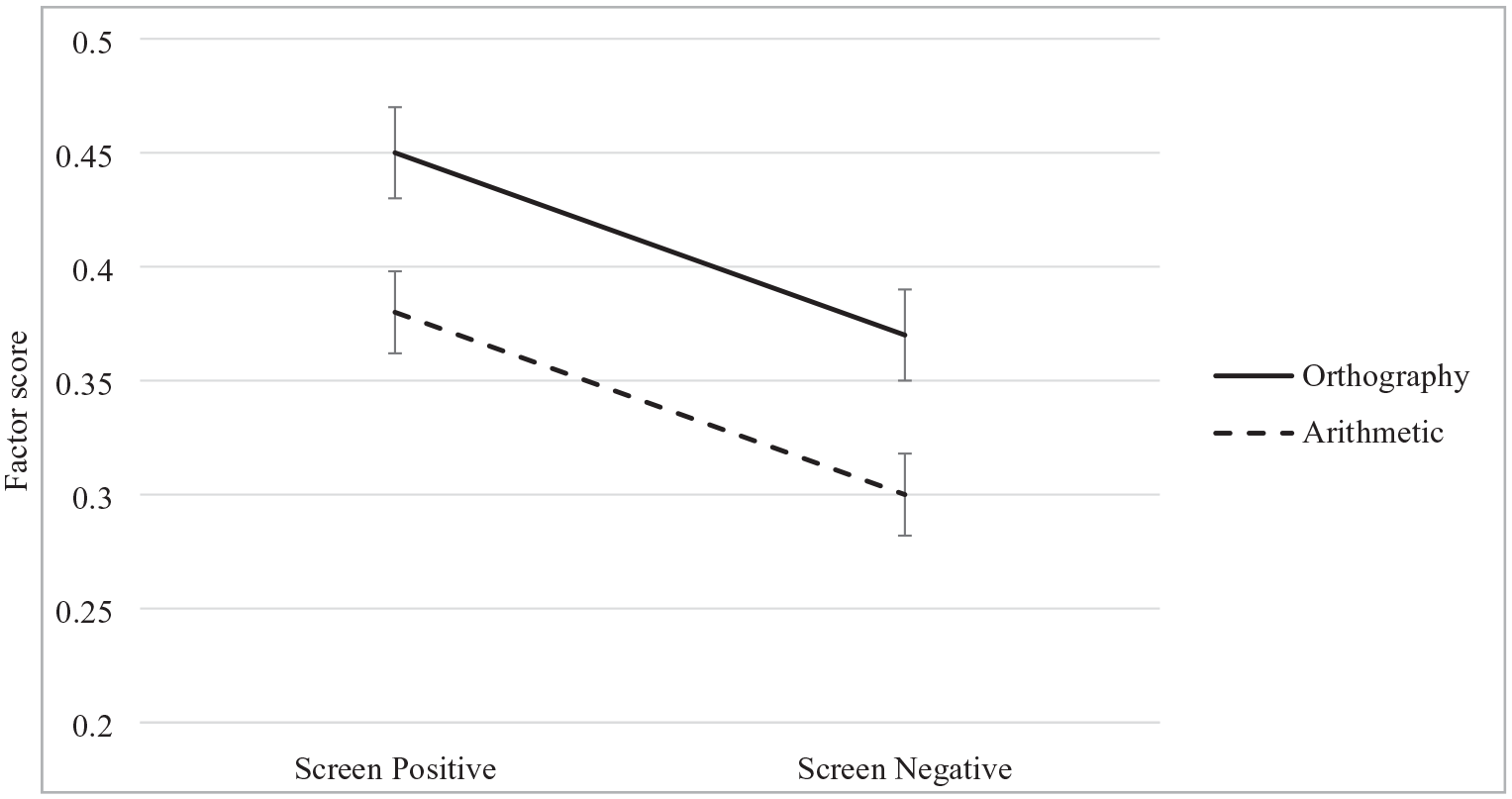
LNST “Learning Profiles” by group.
Learning needs, special education, and vocational outcomes
Turning to the relationship between learning difficulties and functional outcomes, this is the first study to date to investigate the relationship between self-reported learning difficulties and both historical receipt of special education services and concurrent vocational outcomes among autistic adults. One prior study has identified that individual differences in academics may relate to adult cognitive outcomes in autistic individuals, particularly for those without intellectual disability (Anderson et al., 2014). However, to the best of our knowledge, there are no prior studies in which a screening tool was used to examine relations between learning difficulties, special education receipt, and vocational outcomes.
Results revealed that the LNST has promise as a screening tool for learning difficulties among autistic adults. Those who scored above the cutoff were more likely to have received special education services in childhood. Not surprisingly, those who received special education services in childhood had higher LNST scores (i.e. reported greater learning challenges). This finding, though intuitive, serves as an important start to the evaluation of the external validity of the LNST. Next steps include further investigating the validity of the measure, utilizing standardized measures to confirm learning challenges to further investigate the real-world utility of the LNST.
Turning to vocational outcomes, this study suggests a relationship between academic challenges and postsecondary outcomes, such that those with fewer academic/learning challenges are more likely to achieve favorable postsecondary educational/vocational outcomes. Surprisingly, no studies have examined this directly and sought to identify which aspects of academic abilities are associated with more favorable postsecondary outcomes in autistic adults. The current study served as an important first step in this process. Next steps in this work include better parsing of how specific academic abilities or challenges relate to more or less favorable outcomes, not only in employment/postsecondary educational pursuits but also in terms of psychosocial and other important outcomes that relate to subjective quality of life.
Clinical implications of the use of the LNST in autistic adults
Consistent with its intended use, the LNST may prove to be a useful tool to identify autistic job seekers who may need formal evaluation for a diagnosis of SLD. Complementing this potential use, the LNST may also serve as a means of identifying the components of different jobs that may be challenging for an autistic job seeker, or conversely, components of jobs for which a particular job seeker may be well suited. This may be particularly helpful, as some individuals may not think to report on academic concerns such as those queried in the LNST without prompting. Further research is needed to characterize the ability of the LNST to identify occupational domains (or specific job roles) that may or may not be a good fit for the individual.
Importantly, these findings suggest that autistic individuals with co-occurring learning needs may benefit from additional supports when pursuing different postsecondary outcomes, including employment. Next steps for research evaluating the clinical utility of the LNST in vocational settings may include comparing vocational outcomes for subsets of autistic job seekers who are or who are not screened for learning difficulties using the LNST. Should outcomes be more favorable for those who are screened (presumably due to the benefits of diagnostic testing for a learning disability or simply gaining insight into areas of different jobs that may be difficult), researchers may be able to recommend its use in vocational rehabilitation settings.
Limitations and future directions
There are several limitations to discuss within the context of these findings. The results of this study suggest that the LNST is a valid and reliable measure for use with autistic adults without co-occurring intellectual disability. However, this measure was not designed for or by autistic individuals and as such does not represent every factor or area of learning challenges that might contribute to this group’s postsecondary outcomes. Recent studies have made an intentional effort to include the voices of autistic adults when defining factors that contribute to real-world outcomes such as vocational placement and work readiness skills, highlighting the importance of person–environment interactions (Lee et al., 2024). Future studies on the topic of the relationship between learning challenges and postsecondary outcomes should seek to include quantitative and qualitative methods that highlight the real-world experiences of autistic adults. Second, the LNST is not a diagnostic measure and does not formally allow for the diagnosis or classification of SLD. That is, the study relied on self-report of current and past academic skills/experiences. Third, information about formal diagnosis of SLDs (e.g., dyslexia, dyscalculia) was not captured for the sample. This was due to concerns about the accuracy of this information, given that many autistic individuals may not carry this co-occurring diagnosis due to diagnostic overshadowing (i.e. it may be the case that providers assume that academic learning difficulties experienced by a subset of autistic individuals are due to autism rather than a co-occurring diagnosis, such as SLD). In addition, because many autistic individuals who receive special education will do so under the “autism” Individuals with Disabilities Education Act (IDEA) disability category, it is unlikely that these individuals will have also received a “specific learning disability” educational classification. Again, this may cause many individuals who have a co-occurring learning disorder to be unaware of it due to either diagnostic overshadowing and/or limitations in their school district’s assignment of educational disability categories. Having acknowledged this limitation, the present study provides the foundation for the validity of this measure as a screener for learning difficulties/disabilities, and future studies should aim to further this investigation by employing formal standardized measures of academic skills and functioning as well as diagnostic assignment of SLDs, as appropriate, to further evaluate the LNST. Finally, it is essential to note that the majority of participants included in the current research were White and non-Hispanic and level of maternal educational attainment was high for many participants. As such, we are limited in the generalizations we can make about these findings. Moreover, disparities exist in the assignment of autism diagnoses and treatment of related issues, particularly for those with marginalized/underrepresented identities. Specifically, socioeconomic status and ethnoracial identity have been linked to disparities in the receipt of educational services in childhood for autistic individuals (Liptak et al., 2008). Given this fact, it will be crucial for future studies of learning needs and vocational outcomes to ensure the equitable representation of participants from historically underrepresented groups in autism research.
Conclusion
In conclusion, the present study took the first step in validating a measure characterizing learning needs (LNST) in a sample of autistic young adults without significant intellectual impairments. The LNST has previously been used in vocational rehabilitation settings in the United States and was novel to the autistic adult population and research community. Furthermore, this study sought to investigate the factor structure of the measure within this community to better understand domains of learning needs. Findings reinforced previous reports of heightened rates of learning difficulties among individuals on the autism spectrum. In addition, the study showed associations of these challenges with reduced postsecondary engagement. Given that individual differences in learning difficulties were associated with postsecondary educational and vocational outcomes among autistic adults, identification of learning challenges may be important for identifying autistic adults at heightened risk for experiencing less favorable vocational outcomes. Many autistic individuals may not receive autism diagnoses until adulthood and thus may not be identified as needing academic supports while in primary or secondary school. Therefore, it is important for vocational counselors to have a tool to screen for academic difficulties among autistic adults seeking vocational rehabilitation services, as it was shown these individuals may be at heightened risk for less favorable employment and postsecondary educational outcomes. While the LNST is not diagnostic, it may serve as an important tool to identify those who might benefit from further evaluation and supports to optimize vocational outcomes.
Footnotes
Data availability statement

Declaration of conflicting interests
The author(s) declared no potential conflicts of interest with respect to the research, authorship, and/or publication of this article.
Funding
The author(s) disclosed receipt of the following financial support for the research, authorship, and/or publication of this article: This work was supported by: the Eunice Kennedy Shriver National Institute of Child Health and Human Development (Grant/Award Number: R21HD106164; G.L.W. and N.R.L.) and start-up funds from The George Washington University (G.L.W.).