



Abstract
Aims and objectives:
The aim of this manuscript is to provide an overview of the population and languages studied and the methods and practices surrounding the definition of bilingualism in children below age 3.
Methodology:
A quantitative descriptive scoping review
Data and analysis:
From 530 articles, we identified 127 papers (167 studies) that met our predefined criteria, of which 144 studies defined their bilingual population.
Findings/conclusions:
The samples investigated were predominantly western in geographical origin and languages. Percent exposure was the most common method to measure bilingualism among infants and young children, with 20% and 25% the most used cutoffs as the minimum requirement for children’s second language. We also analyzed the predictive value of these cutoffs on the likelihood that studies reported a significant difference between monolinguals and bilinguals. The stricter the inclusion requirement for bilinguals was, the higher the odds of a study to report a difference between monolingual and bilingual children. We conclude that a lack of uniformity of definition in the field may be one factor that predicts whether or not significant differences are reported.
Originality:
This scoping review provides developmental researchers with a unique overview of the different practices used in the field to characterize bilingual and monolingual infants/toddlers. The reported results can be used as preliminary evidence for the field to report and carefully formulate how to categorize monolinguals and bilingual infants.
Significance/implications:
As globalization continues to foster migration and intercultural exchange, it is essential for developmental researchers to diversify their samples and language groups. We highly encourage researchers to carefully document the definitions and rationale for all their language groups and to consider analyzing the impact of bilingualism both from a categorical and continuous approach.
Who is included in studies of bilingualism?
Researchers have estimated that at least half of the people in the world speak more than one language (Ansaldo et al., 2008; Ellajosyula et al., 2020; Giovannoli et al., 2020; Grosjean, 2010, 2013). For example, some nations (approx. 200) officially recognize two or more languages (Bolivia, India, Nigeria, etc.). And although the United States does not have an official language, it counts with a diverse bi-/multilingual population with at least one of five people reporting speaking more than one language at home (Ryan, 2013). Considering that globalization has facilitated the migration of millions of people per year, it is very likely that the number of multilingual speakers around the globe will continue to increase over time.
The majority of psychological and developmental literature has focused on participants coming from or living in Western, Educated, Industrial, Rich, and Democratic (WEIRD) nations (Arnett, 2016; Henrich et al., 2010; Moriguchi, 2021, Nielsen et al., 2017). Researchers have urged the scientific field to expand their research beyond a western-centric focus (Arnett, 2016, Cole, 2006; Hendriks et al., 2019; Jahoda, 2016; Pollet & Saxton, 2019). Considering that the bilingual population is more diverse and lives in more than half of the nations of the world, it would be expected that research would also reflect such diversity in location and participants. The current study aims to empirically review the diversity of the sample populations across the ages 0 to 3 in the bilingual developmental literature.
Along with sample diversity, it is important to direct a spotlight on which languages the field is focusing on. Societies or governments consider some languages to be “more prestigious” or carry higher value or priority. Such arbitrary consideration can influence the way policies and intervention programs are developed and the populations that are served. For example, a report by UNICEF (United Nations Children’s Fund) and FILAC (Fund for the Development of Indigenous Peoples of Latin America and the Caribbean) pointed out that the more recent COVID-19 pandemic has exacerbated the exclusion of native languages in the education systems of most Latin American countries. Of 12 nations in this region, only a small percentage have been able to create remote learning programs or materials for all their indigenous groups, all their languages, or even all their school grades (“Educación Intercultural Bilingüe en América Latina y el Caribe,” 2021). The lack of appropriate remote educational materials has left thousands of children without access to an intercultural or bilingual education. The current scoping review will document which bilinguals are researched and where.
Defining bilingualism
The Linguistic Society of America defines an individual as bilingual as “someone who speaks two languages” (Birner, n.d.). In the Merriam-Webster (n.d.) online dictionary, bilingualism is defined as “the ability to speak two languages or the frequent use (as by a community) of two languages” (see Byers-Heinlein & Lew-Williams, 2013, for a similar definition). For adults, bilingualism is defined as a dynamic and multidimensional construct that includes both individual and contextual variability (Kaushanskaya & Prior, 2015; Luk & Bialystok, 2013). Such variability may explain the absence of a common standard to define adult individuals as bilinguals (Surrain & Luk, 2019).
But how is bilingualism defined for young infants who are still preverbal or are barely able to produce any words? Although the definition of bilingualism for very young children does not need to account for language production, different research groups have applied different criteria (e.g., Birulés et al., 2018, or Morin-Lessard et al., 2019, for 25%; Polka et al., 2017, or Singh, 2018, for 30%) and used various methodological approaches to classify infants as monolinguals and bilinguals (e.g., Language Exposure Questionnaire by Bosch & Sebastián-Gallés, 2001, or Language ENvironment Analysis [LENA] by Orena et al., 2019). Such variation makes it difficult for researchers to compare their findings across research groups and populations, increasing the probability of mixed results in the field. In some instances, such definitions are not even included in the published documents.
An additional challenge of creating a standard definition of bilingualism in the developmental field is the increased weight of contextual variables on infants’ bilingual experience. Contextual variables include family language practices and beliefs, family language policies (Crawford, 1991; King et al., 2008), speakers’ language proficiency, and even the language combinations exposed to at home and in the surrounding community. For example, while some caregivers may both choose to speak multiple languages, other families may choose to have each primary caregiver as the sole source of each language the child is learning (e.g., Parent A only speaks language A while Parent B only speaks language B). In some instances, families may choose to code-switch or use a language other than the ones spoken in the community.
Currently, there is no empirical evidence documenting the variability in the definition of bilingualism in infant populations. And even when the definition is based on the same construct (language exposure), researchers may not use the same threshold or cutoff to define what amount of language exposure makes an infant monolingual or bilingual. The current study aims to fill that gap in the literature and provide the field with a compilation of questionnaires utilized for such definitions.
Does the way that researchers define bilinguals matter?
Despite a considerable increase in bilingualism research during infancy and toddlerhood over the last 20 years (Byers-Heinlein, 2015), several findings remain inconsistent. For example, a study by Kovács and Mehler (2009a) using an anticipatory eye movement paradigm to measure 7-month-olds’ cognitive skills reported a monolingual–bilingual difference, with the latter being more likely to update their prediction during the test trials. As one of the earliest studies to show such an advantage even before the language producing stage, several researchers have attempted to replicate such findings with no success (D’souza et al., 2020; Ibánez-Lillo et al., 2010; Kalashnikova et al., 2021; Molnar, Pejovic, et al., 2014; Tsui & Fennell, 2019; but see Iliaei et al., 2020, updated analysis). Some researchers who focused on other cognitive skills such as memory flexibility have found bilingual infants to outperform their monolingual peers (Barr et al., 2020; Brito & Barr, 2012, 2014; Brito et al., 2014, 2015, 2021) but not all published studies have found a significant difference in cognitive skills. For example, in a review by Williams et al. (2021), of 26 studies focusing on infants’ executive function and memory skills, only 10 of them reported a significant difference between monolinguals and bilinguals—with bilinguals outperforming their monolingual peers. Some people have attributed the contradictory findings to the variability of tasks utilized (Hilchey & Klein, 2011; Valian, 2014), the analytical approaches (Iliaei et al., 2020), and even the definitions used to classify infants into various language groups (Luk & Bialystok, 2013; Marian, 2018). To help answer this question, the present scoping review will analyze whether the differences in definitions (using language exposure cutoff as a proxy) could impact the likelihood of the study reporting a significant difference between monolingual and bilingual infants.
The present study
This is a scoping review of the definition of bilingualism in studies with samples of children younger than 3 years of age. This quantitative descriptive review aims to provide an overview of the different methods and practices used in the empirical field to categorize infants and toddlers as “bilinguals” and analyze whether the different cutoffs used to define bilinguals have any predictive value on the likelihood of them reporting a significant difference between monolinguals and bilinguals.
There are three main research questions we aim to answer:
Research Question 1. Who is included in studies of bilingual infants? (a) Where do bilingual populations come from? (b) What languages are included in the bilingual developmental literature?
Research Question 2. How are bilingual (and monolingual) infants defined in the developmental literature? (a) What are the most common measures used to define bilinguals? (b) How often do researchers provide an operational definition of their language group? (c) For studies where researchers have estimated language exposure, how much exposure is enough to meet monolingual/bilingual inclusion? (d) Do the various cutoffs utilized vary across time? (e) Are there gaps in the cutoffs? How much is too little L2 to be categorized?
Research Question 3. Can we predict the likelihood of a study to report differences between monolingual and bilingual infants using the L2 cutoffs?
Methods
Search strategy & selection criteria
Three searches were performed using the PsycINFO database with the keywords “biling*” OR “dual language learner” AND one of the following three: “infan,” “toddl,” and “babies.” The searches were performed to include all articles published by April 9, 2020. After removing duplicates (n = 453), there were 530 unique papers. All 530 abstracts were reviewed using predetermined criteria (see Table 1).
Selection criteria.

Inter-rater reliability
A second independent coder reviewed 86 abstracts and classified them as being eligible or not for review utilizing the aforementioned criteria. Inter-coder agreement was high, Cohen’s Kappa = .84, p < .001, with any disagreement resolved via discussions.
The same coder was also trained on a set of studies to extract information pertaining to the following variables: monolingual sample size, bilingual sample size, monolingual and bilingual definition present (binary: yes/no), monolingual cutoff, and bilingual cutoff. A test set of 17 studies (~10% of total eligible studies) was used to calculate inter-rater reliability for the sample and article characteristic variables. All kappas were acceptable, range = .77–.93. Any discrepancies were resolved through discussion between the coders.
Results
The flowchart in Figure 1 details the selection process used for the review. Of 983 references found in the database for all three searches (oldest from 1933), 453 were excluded as being duplicates. Abstracts from a total of 530 unique records were screened using the predetermined criteria. A total of 403 records did not meet the predetermined criteria and were excluded from further review, leaving a sample of 127 records eligible for review (or 167 studies). Records were excluded for the following reasons: papers were not being empirical (n = 190), papers were not focused on bilinguals or their cognitive/linguistic outcomes (n = 97), papers were meta-analysis/monographs/dissertations (n = 33), papers focused on children older than 3 years old (n = 55), papers focused on children who were not typically developing (n = 22), and papers focused on multimodal bilinguals (n = 6). The oldest study was published in 1993, and the newest study in 2020. The complete table for all eligible studies (n = 167) included in the review is posted in Supplement A, including information about language categorization and measures utilized for each study. The complete data set and scripts used in this review can be found in this OSF repository: https://osf.io/5fhrb/?view_only=62555867466a42eb85b00bed984ac6ba.
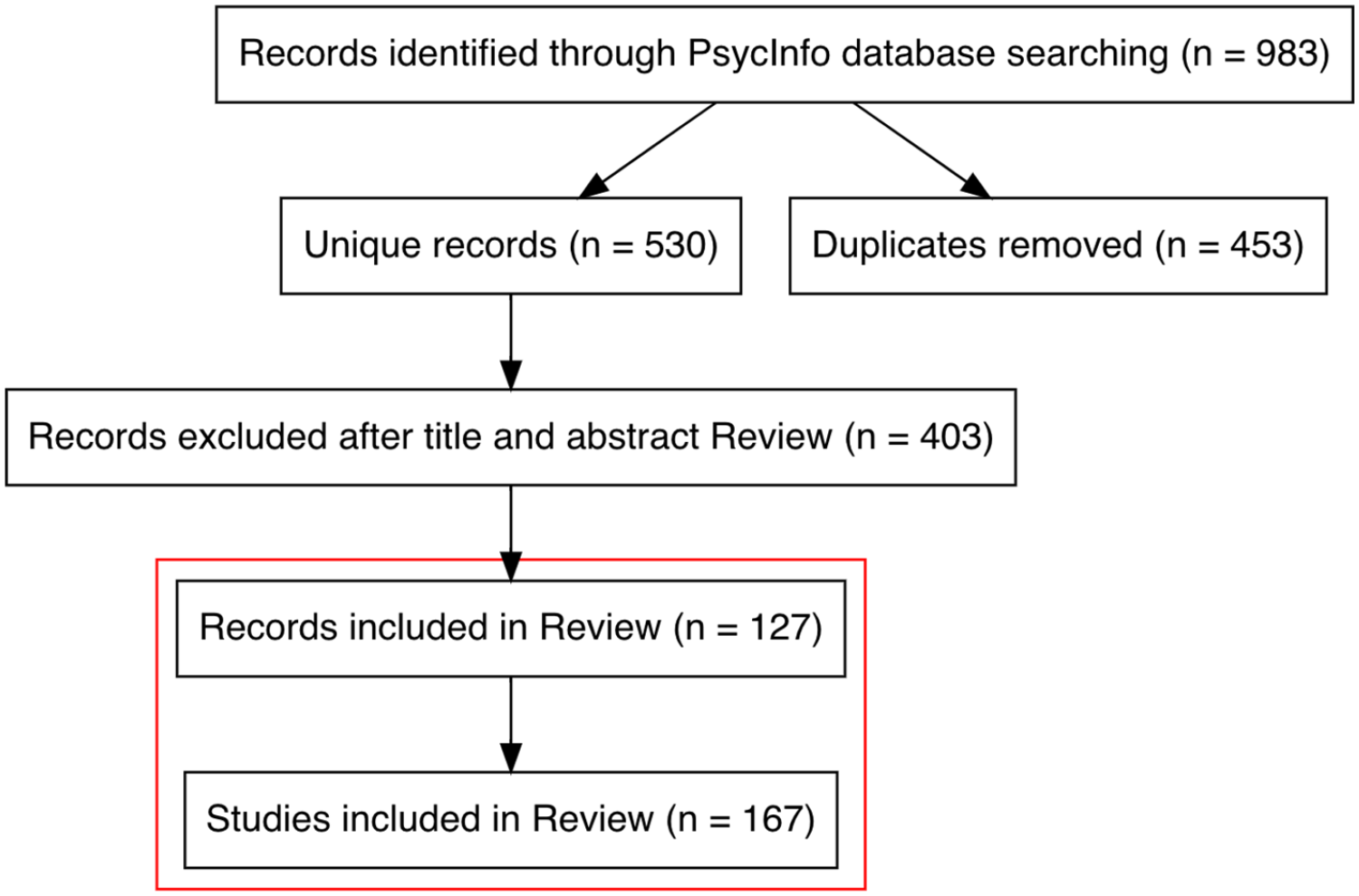
Study selection process flow diagram.
Q1. Who is included in studies of bilingual infants?
Q1a. Where do bilingual populations come from?
The study’s geographic location was described either explicitly or in the acknowledgments/notes of the manuscript. A significant proportion (38 studies) did not report where the study was conducted. The majority of researchers recruited participants for their studies solely from Canada (27), the United States (27), or Spain (23). Eight studies included samples from multiple countries. For example, Cote and Bornstein (2014) recruited bilingual samples in the United States but monolingual samples from the United States, South Korea, and Argentina. Two others (Legacy et al., 2016, 2018) recruited monolinguals from Geneva, Switzerland, while the bilingual groups were recruited from Montreal, Canada (for more details, see Supplement A). Figure 2 shows a map of the locations and languages provided by the articles, including those who recruited samples from multiple countries.
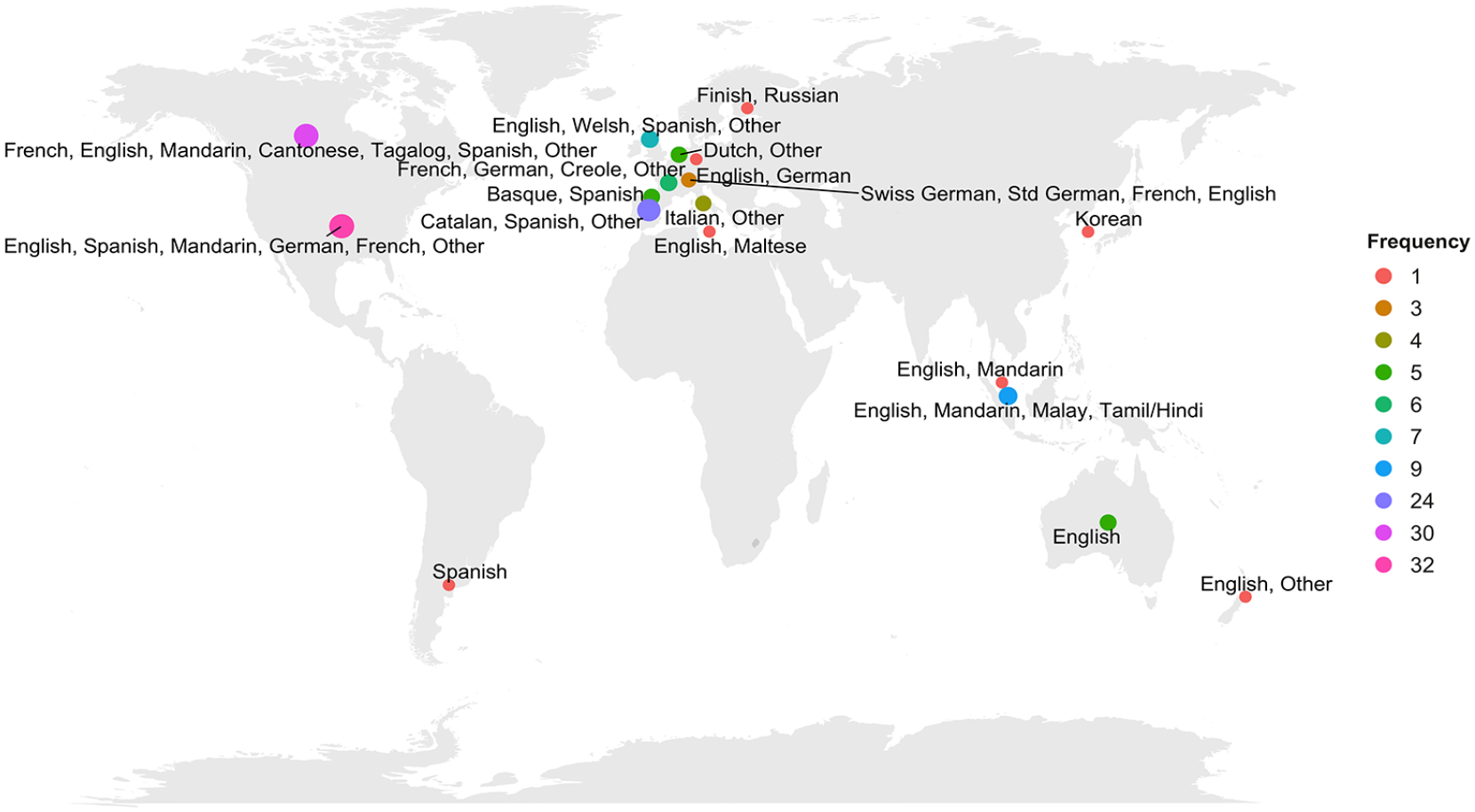
Frequency of studies by geographic location and language(s) reported.
Q1b. What languages are included in the developmental bilingual literature?
Only four studies did not include information about their bilinguals’ language pairs. Since the majority of the participants were recruited in countries where English, French, or Spanish is the community language (United States, Canada, and Spain, respectively), the majority of the bilingual groups had English as one of the languages of interest (110 studies), followed by Spanish (60 studies) and French (31 studies).
While 116 studies restricted their bilingual sample to one type of language pair (e.g., English–Spanish, Spanish–Catalan), 51 studies focused on more diverse bilinguals (Table 2). This approach would allow for one primary language among the children in the sample while their second language (L2) could have been any other language (e.g., English–Other, Spanish–Other).
Frequency of language pairs reported in studies.

Note. n refers to the number of studies that reported having these language pairs.
Q2. How are bilingual (and monolingual) infants defined in the developmental literature?
Q2a. What are the most common measures used to define bilinguals?
Measures of bilingualism vary from single questions such as “Consider your baby’s whole life, up till the time that he or she was 24 months. When you, your spouse, and everybody else in your baby’s life talked to him or her, what percentage of each language was spoken to him or her?” (Goh et al., 2017) to more complex measures. For example, some studies took advantage of long detailed questionnaires asking caregivers for the time all individuals spend with the child, their languages, and the amount of time they speak to the child. This number was later converted into proportions/percentages for overall exposure (e.g., Bosch & Sebastián-Gallés, 2001; DeAnda et al., 2016).
Some researchers (n = 36 studies) reported using their questionnaires, while the remainder reported using a specific published measure (either with a source or not). Among the measurements provided, the Language Exposure Questionnaire by Bosch and Sebastián-Gallés (2001) (37 studies) and 1997 (29 studies) were the most common measures cited. Despite authors citing either one of these sources, Bosch and Sebastián-Gallés’s questionnaires from 1997 and 2001 had the same questions, making this questionnaire the most used measure to assess children’s language exposure (39.53% of 167 studies, see Table 3). How the language exposure measures are reported and used differs across studies, as seen in the follow-up questions.
Summary of measures utilized to classify bilinguals.
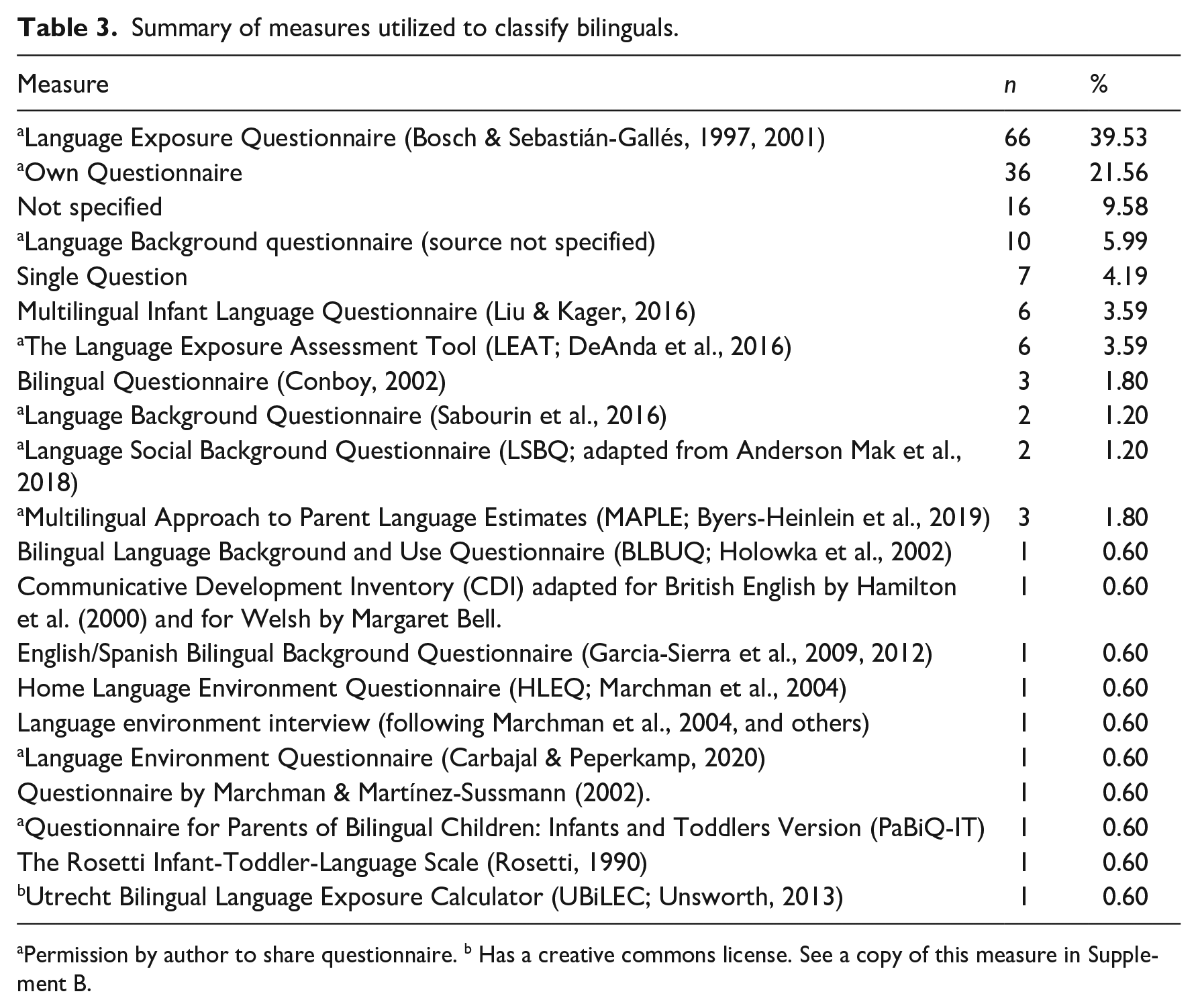
Permission by author to share questionnaire. b Has a creative commons license. See a copy of this measure in Supplement B.
Q2b. How often do researchers provide an operational definition of their language groups?
Monolinguals
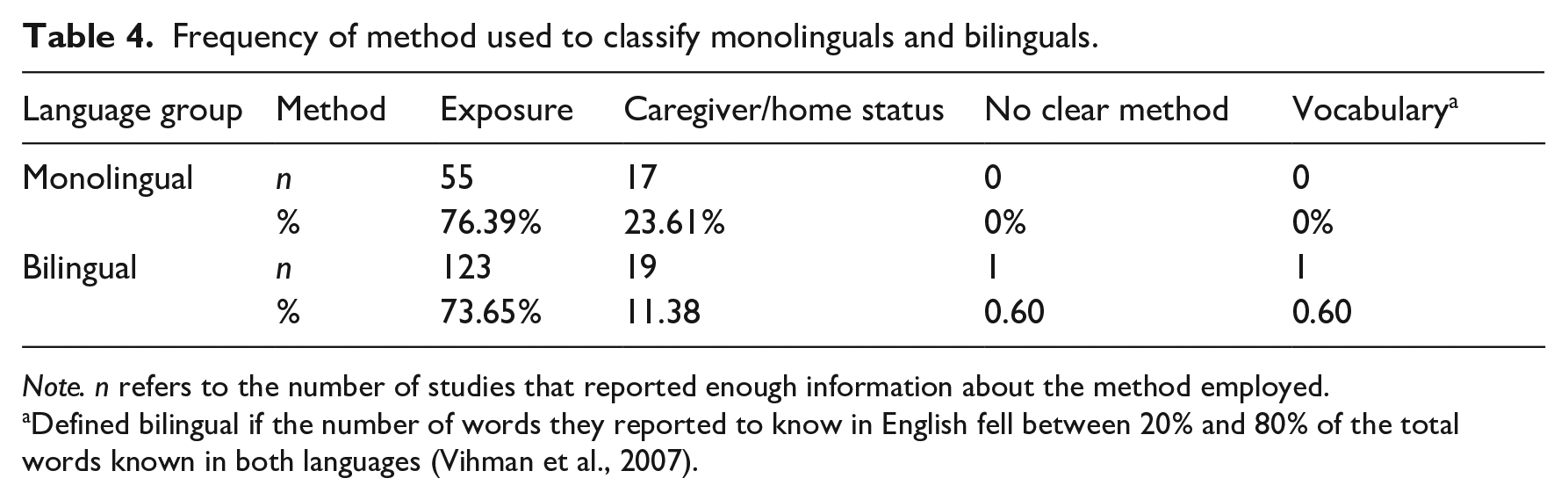
Of the 167 eligible studies, 111 included a monolingual group for comparison. However, only 64.86% of studies (n = 72) offered some definition for their monolingual group and the remaining 26.24% (n = 39) did not. Of the 72 studies that included a definition, three quarters (n = 55) focused on time or percent exposure. In contrast, one quarter (n = 17) used the caregiver or home status as a proxy for monolingualism (e.g., “child growing up in a monolingual household” or “parents only speaking one language”; see Table 4). For example, some studies included explicit definitions of monolinguals, such as “to be included in a monolingual group, participants had at least 75% of regular exposure to either Catalan or Spanish . . .” (Bosch et al., 2013). Others used vaguer definitions, such as the one in Kalashnikova et al. (2018) that reported their monolingual infants to be acquiring English with no exposure to any other languages. For the 39 studies that did not report an operational definition for their monolingual group, one quarter of them (n = 10) reported descriptive information for their monolingual language exposure suggesting that the authors may have used exposure for their measure of monolingualism but did not provide a specific definition. No definitions or additional information were provided for the remaining studies (n = 29).
Frequency of method used to classify monolinguals and bilinguals.
Note. n refers to the number of studies that reported enough information about the method employed.
Defined bilingual if the number of words they reported to know in English fell between 20% and 80% of the total words known in both languages (Vihman et al., 2007).
Bilinguals
The majority of the studies (86.23%, n = 144 studies) offered some sort of definition for their bilingual group (see Table 4). If the document provided enough information about its measures, we could deduce the researcher’s method to classify children as bilingual. The “Percent exposure to a second language” was the most common method employed (123 studies), followed by “Caregiver/Home status” (19 studies; that is, defined as bilinguals if caregivers or home were bilingual). The vagueness of one of the definitions did not allow us to determine whether they were interested in the parent/home status or the amount of exposure (i.e., “exposed to both languages regularly”). One study utilized the children’s receptive vocabulary as a marker for bilingualism (i.e., defined as bilinguals if the number of words they reported to know in English fell between 20% and 80% of the total words known in both languages; Vihman et al., 2007).
Q2c. How much exposure is enough to meet monolingual/bilingual inclusion?
Considering that most of the studies utilized measures focused on a child’s language exposure, it was important to analyze how consistent studies have been at stating cutoffs or minimum requirements that would guide the experimenters on their definition of monolinguals and bilinguals.
Monolinguals
Of 72 studies that included a definition for their monolingual group, 20 did not state a minimum requirement or cutoff for their monolingual sample. Twenty-seven studies (37.5%) stated a cutoff of “90%” for their first language (L1), while 10 studies reported having a cutoff of 80% (see Figure 3).

Frequency of studies by the reported cutoff for children’s L1.
Bilinguals
Of the 123 studies that reported exposure as their proxy for bilingualism, 23 (18.70%) studies did not provide a minimum exposure requirement for the bilingual group. Four studies (3.25%) used “number of hours of exposure” (range = 8–20 hours) for their bilingual categorization. However, the majority of studies used a percent exposure cutoff to categorize infants as monolingual or bilingual. Researchers opted for two percentage cutoffs most frequently, 26 studies used “25%” as their minimum requirement for the child’s second language (L2), and 25 studies used “20%” as their cutoff (see Figure 4).

Frequency of studies by the reported cutoff for children’s L2.
Q2d. Do the various cutoffs utilized vary across time?
To observe whether the use of cutoffs varied over time, a Pearson correlation was performed to determine the relationship between the study’s publication year and percent L2 exposure cutoff (Figure 5). A statistically significant negative correlation (r = −.41, p ⩽ .001) revealed that the most recently published studies were more likely to use lower cutoffs. Figure 5 also illustrates an increase in the number of studies using cutoffs to categorize bilingual infants in the past 10 years. A similar analysis was performed for the monolingual cutoffs, but this was not statistically significant, likely due to more inconsistent reports of monolingual definitions (r = .24, p = .089; see Figure 6).

Association between the study’s year of publication and their reported L2 cutoff.
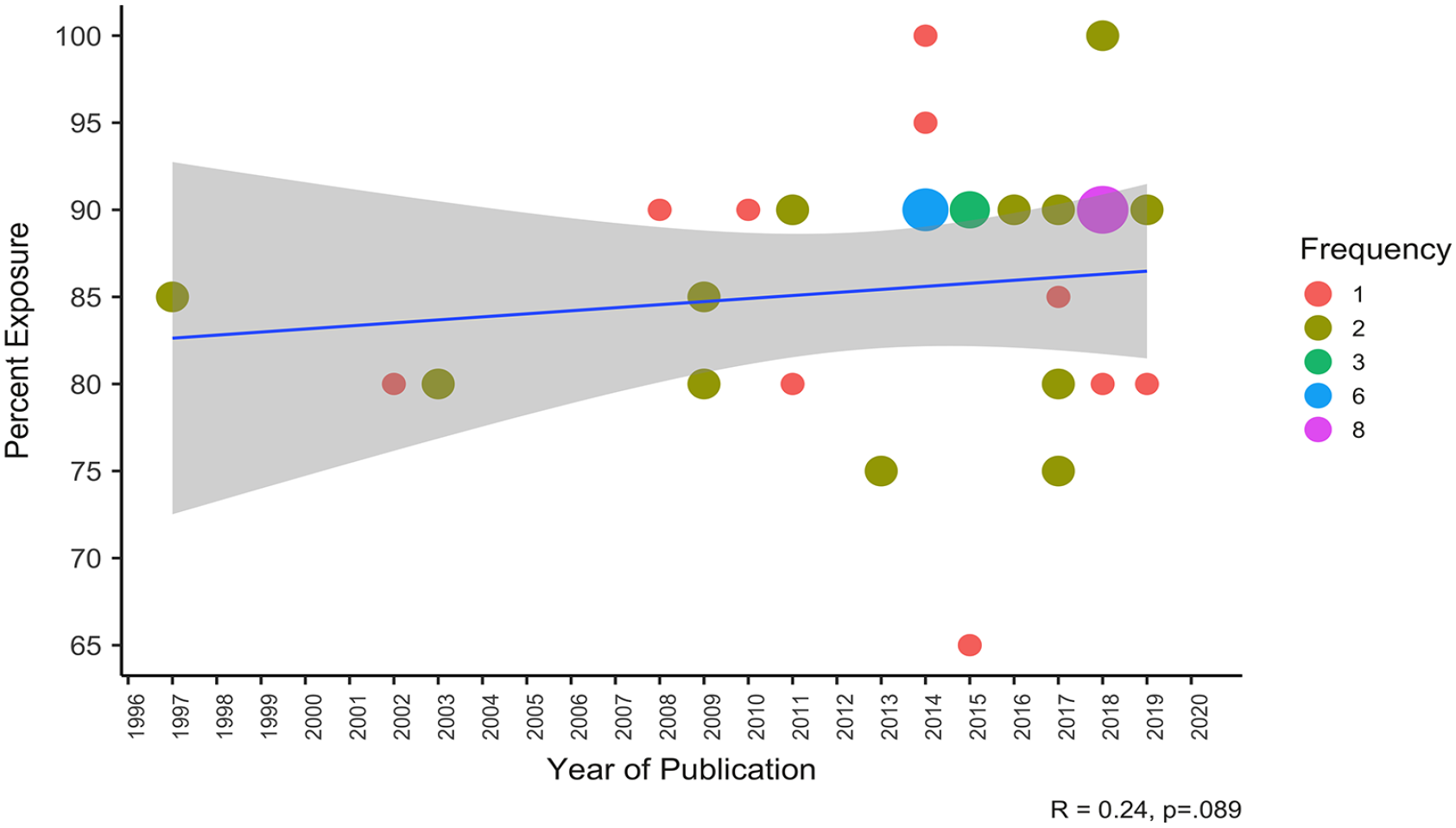
Association between the study’s year of publication and their reported L1 cutoff.
Q2e. Are there gaps in the cutoffs? How much is too little L2 to be categorized?
Some researchers exclude participants whose L2 is too high to be considered monolingual or too low to be considered bilingual. For example, if the participant’s L2 exposure is 20%, but the L2 cutoff of the bilingual group is 25%, and the monolingual group cutoff is 10%, this participant would be excluded from analyses for not meeting language criteria. To investigate the frequency of this practice, only studies that included cutoffs for both a monolingual and bilingual sample were included (n = 45). For the 11 studies with a zero gap, individuals would be categorized into either of the language groups (e.g., Children with ⩾20% L2 exposure are classified as bilinguals, but if <20% categorized as monolinguals; see Figure 7). On the contrary, for the rest of the studies (n = 34), if a participant’s L2 percentage falls in these gaps, they would be excluded from the analysis or not included in the study in the first place.

Frequency of studies by the gap between L2 cutoffs.
Q3. Can we predict the likelihood of a study to report differences between monolingual and bilingual infants using the L2 cutoffs?
Overall, 57 studies did not include a monolingual comparison group. For the remaining studies, 69 studies reported significant differences between both language groups and 41 studies did not. Studies were included in the following analyses if they included a monolingual sample and information about the exposure cutoffs for both languages (Figure 8). A logistic regression was performed to assess whether we could predict the likelihood of studies to report a significant difference between monolinguals and bilinguals. The following variables were included in the model: year of publication, bilingual cutoff, and L2 gap size. The overall model was significant, χ2(3) = 8.26, p = .041. The L2 gap size and publication year did not predict the likelihood that studies reported differences between monolingual and bilingual infants. In contrast, the cutoff for the bilingual group was significantly associated with the likelihood of studies reporting a significant difference. Studies were 15% more likely to report a significant difference between monolinguals and bilinguals for every 5-point increase in their L2 cutoffs (see Table 5). Meaning that the more L2% exposure was required to be considered bilingual, the more likely the study was to report a significant difference between the two language groups.

Scatter plot of studies by year of publication and reported L2 cutoff.
Logistic regression model for reporting differences between groups (yes/no).

Note. Total of 47 studies were included in the regression model, LR χ2(3) = 8.26, p = .041.
p < .05.
Discussion
Overall, the scoping review demonstrated that the field of early bilingual development is limited to industrialized countries and non-indigenous languages. It also revealed the vast variability in the definition of monolinguals and bilinguals. This variability is associated with when the articles were published (as a proxy for data collection) and the assessment method. Furthermore, the definition may be one factor that predicts whether or not significant differences are reported. The discussion will expand upon the implications of each of these findings.
Like most developmental science literature, research on bilingual exposure is limited to a narrow geographical range. As reflected in Figure 2, most of the studies eligible for this review focus on northwestern populations with few exceptions. There is little to no representation of samples residing in the continents of Africa, South America, or Asia (see Figure 2). Furthermore, it was surprising that geographic location could not be determined for 38 of 127 studies despite the predefined protocol to extract this information from the entirety of the manuscript rather than solely from the main text. A more transparent reporting of the context (e.g., geographic location), the target population, and the methods utilized (including a rationale for their bilingual definition) would facilitate replication and increase the validity of findings. For the bilingual field specifically, the context such as the geographic locations could explain the possibility of contradictory findings. Research with bilingual populations in geographic regions with no support at a policy level may not reflect the same patterns as those in cultural contexts where bilingualism is not only accepted but encouraged.
It is also important to mention that although both the United States and Canada were the most common sample recruitment locations, none of the studies conducted in the United States or Canada included language groups from indigenous communities. Once again, this finding highlights a focus on WEIRD nations (i.e., Henrich et al., 2010) and how the field has overlooked families from indigenous communities. The lack of inclusion of indigenous or non-European languages reduces our understanding of bilingualism. More research is needed that includes a broader range of languages and representation across geography, race, and ethnicity. The field is moving to expand to other nations through large-scale collaborations such as ManyBabies (“ManyBabies: Multi-lab replications of classic developmental psychology experiments,” n.d.), ManyNumbers (“OSF ManyNumbers,” n.d.), and Quantifying Bilingual Experience (“Quantifying bilingual experience,” n. d.) but more intentional work to reach these goals is needed (see Byers-Heinlein et al., 2021, for an example).
Considering the different measures of bilingualism chosen by researchers, almost 40% of the studies utilized either the original or adapted version of the questionnaire published by Bosch and Sebastián-Gallés (1997, 2001) (see a version in Supplement B). The questionnaire (which happens to be the same questionnaire in both publications) asks the primary caregiver questions about the family’s language background and the amount of time they spend with the child. Caregivers then estimate the child’s daily and overall exposure to each of the languages provided earlier. This questionnaire does not necessarily require a structured interview to complete it, limiting how much information the caregivers could provide about the length and quality of exposure. Another limitation of this questionnaire is that it does not consider the fluency or nativeness of the speakers. It is possible that a child with a “significant” language exposure (as defined by the researchers) could be exposed to a low-quality second language, which may modulate how bilingual exposure relates to a specific outcome. The majority of the studies that provided a definition for their bilingual groups (124 of 140 studies) focused on the quantity of language exposure, discounting the possible effects of its quality (but see Bree et al., 2016, for an exception). More studies are needed to understand how the quality of language in a bilingual environment is associated with outcomes.
Although this scoping review focuses on the definition of bilingualism, authors need to include information on all groups being compared. Most of the studies reviewed here provided some definition for their bilingual group, but surprisingly, only 64.86% offered a definition for their monolingual sample(s). Given that many studies (34 of 45 in this review) excluded some participants based on exposure thresholds (e.g., <10% L2 = monolinguals, >25% L2 = bilinguals), researchers can no longer assume that monolinguals are simply the inverse of the bilingual group (e.g., <20% L2 = monolinguals, ⩾20% L2 = bilinguals). Thus, reporting the definitions of monolingual and bilingual groups is necessary to facilitate replication and extension of prior research (see Byers-Heinlein et al., 2019 for some guidelines).
In addition, based on our review, more recently published studies were more likely to use lower cutoffs to classify bilinguals (Figure 4). It is unclear why this pattern has emerged and a more in-depth analysis is required. It might be that the recent increase of articles published in the past decade originate from only a handful of laboratories that have lower cutoffs or that the field is moving toward a less stringent definition of bilingual exposure. Alternatively, the metrics for collecting exposure data have also changed across time from single questions to more structured interviews meaning that estimates may also have been affected. It is important to note that our review revealed an association between the cutoff used to classify bilinguals and the likelihood of the studies reporting a language difference. In other words, the greater the L2 minimum requirement, the greater the likelihood of studies reporting a significant difference between monolinguals and bilinguals. It is also likely that other factors, including the study outcome (linguistic or cognitive outcomes), may have been associated with the likelihood of a significant difference between monolinguals and bilinguals. We would caution researchers not to overinterpret this finding because more stringent inclusion requirements could make data collection more complex and less inclusive. Future research is needed to examine how bilingual measurement and other experimental factors are associated with differences in outcomes. This finding raises the possibility that differences in bilingual measurement in and of itself account for some of the mixed findings in the literature.
Limitations and future directions
The scoping review presents mainly descriptive results. Regarding the search for records, it is possible that some studies have not been included due to our criterion for the records to be peer-reviewed articles, as well as restricting the search to one database (PsycINFO). Although the search terms were meant to encompass a broad array of studies with the bilingual infant/toddler population, we decided to focus the search on early bilinguals and did not explicitly include other terms such as “multilingual.” No statistical findings were extracted for each record; therefore, no major quantitative analyses were included. Besides, while we provide an array of measures utilized by researchers to measure bilingualism (see Supplement B), their quality or characteristics were not evaluated. Furthermore, the review did not include an evaluation of the quality of the definitions provided.
Despite these limitations, the present scoping review provides developmental researchers with a unique overview of the different practices used in the field to characterize bilingual and monolingual infants/toddlers. The reported results can be used as preliminary evidence for the need of the field to report and carefully formulate how to categorize monolinguals and bilingual infants. Further work is needed to more accurately operationalize early bilingual exposure taking into account its complexity and factors such as language quality and family policies. To interpret and compare findings across studies, developmental researchers need to include operational definitions of monolinguals and bilinguals and details of the relevant measures/questionnaires used to make such classifications (see Table 6 for more recommendations). New open-source databases such as OSF (https://osf.io/), Databrary (https://nyu.databrary.org/), or Github (https://github.com/) can be used to share measures and questionnaires to facilitate reproducibility.
Recommendations and suggestions from the present scoping review.

Note. WEIRD = Western, Educated, Industrial, Rich, and Democratic.
There are pros and cons of a standardized definition. The pros are that it would be much easier to compare across studies if a standardized measure and cutoff were used for each study. However, we do not advocate for a standardized bilingual categorization method because it would not fully characterize the variability within different bilingual populations and could limit the inclusion of different bilingual samples and the breadth of questions asked. One solution to using a standardized binary categorization would be to use continuous measures of bilingual exposure. In our review, only a handful of studies included exploratory analyses treating bilingual exposure as a continuous variable (see Carbajal & Peperkamp, 2020; Tsang et al., 2018).
A second possibility suggested by Kremin and Byers-Heinlein (2021) is that researchers could combine both a binary categorization and a continuous approach when reporting their results (see following examples: Kalashnikova et al., 2021; Rocha-Hidalgo et al., 2021). Categorization approaches could also be improved. Another option could be to use a more sophisticated method to categorize participants into different language groups that better reflects the heterogeneity of growing up in a bilingual household. For example, researchers could take advantage of latent profile analyses to identify latent subgroups in their samples based on the language information provided (percent exposure, speakers’ nativeness to the languages, language profile of the location, speakers proficiency, etc.). This holistic approach would take into consideration more than one factor (e.g., exposure) and provide a much richer picture of the experience of growing up in a bilingual household.
However, it is important for researchers to carefully decide a priori which approach(es) is(are) appropriate for their population and research questions. Practices such as preregistered reports can facilitate the exchange of peer-reviewed feedback before the study is performed, increasing the likelihood of more careful decision-making. This preregistration step can also function as a method to keep researchers accountable with the predetermined approach (categorization vs. continuous vs. both) and therefore reduce the likelihood of subsequent manipulation of the criteria to find significant results.
General conclusion
This scoping review has evaluated a body of available empirical research on bilingual infants and toddlers to examine how bilingualism is being defined to research the implications of growing up in a bilingual environment. From the initial studies conducted in the early 1990s and 2000s, the field has advanced considerably, moving away from defining bilingualism based on one “yes/no” question to more detailed interviews (see Cattani et al., 2014; DeAnda et al., 2016), taking into account other caregivers and members of the family (e.g., grandparents and siblings), and even more complex ones that take into account the speaker’s fluency (see Bree et al., 2016; Supplement B). Despite this improvement, there is no consensus on the definition of bilingual exposure during infancy and early childhood. In addition, we now have another challenge with the existence of various methods and measures used to classify children and their environment as monolingual or bilingual (for a review, see Kašćelan et al., 2020). As the bilingual population continues to grow in the United States and the world, it is essential for developmental researchers to examine more diverse groups of young children and to carefully document definitions of what it means to grow up in bilingual and multilingual contexts.
Supplemental Material
sj-docx-1-ijb-10.1177_13670069211069067 – Supplemental material for Defining bilingualism in infancy and toddlerhood: A scoping review
Supplemental material, sj-docx-1-ijb-10.1177_13670069211069067 for Defining bilingualism in infancy and toddlerhood: A scoping review by Joscelin Rocha-Hidalgo and Rachel Barr in International Journal of Bilingualism
Footnotes
Acknowledgements
We are grateful to all the authors who provided access to their measures and our fantastic research assistants Meghana Malyala and Julia Chertkof, for their invaluable help.
Declaration of conflicting interests
The author(s) declared no potential conflicts of interest with respect to the research, authorship, and/or publication of this article.
Funding
The author(s) disclosed receipt of the following financial support for the research, authorship, and/or publication of this article: This research was funded by the NSF BCS-1551719 “From Memory Flexibility to Cognitive Flexibility: Examining Precursors to Bilingual Advantages During Early Childhood” to Barr.

Data accessibility statement
Supplemental material
Supplemental material for this article is available online.
Author biographies
References
Supplementary Material
Please find the following supplemental material available below.
For Open Access articles published under a Creative Commons License, all supplemental material carries the same license as the article it is associated with.
For non-Open Access articles published, all supplemental material carries a non-exclusive license, and permission requests for re-use of supplemental material or any part of supplemental material shall be sent directly to the copyright owner as specified in the copyright notice associated with the article.
