



Abstract
Aims and objectives:
This study explores the effect of cognitive load on code-switching (CS), by examining whether an increase in cognitive load can lead to a different amount and/or pattern of CS use, and whether there is an interplay between the effect of cognitive load and the effect of social factors (i.e., language and use, and attitudes towards CS).
Methodology:
Thirty-one Chinese-English bilinguals participated in a picture recall experiment consisting of three sessions, with an incremental increase in cognitive load which was achieved by manipulating the number of attentional targets that should be attended to. The increase in cognitive load was validated by a self-report survey adapted from Paas. Information on social variables was collected by a language use questionnaire.
Data and analysis:
The amount and pattern (intraclausal vs interclausal) of CS were coded and quantified. One-way analysis of variance (ANOVA) was performed to compare the within-participant use of CS across the sessions. Hierarchal regression analyses were also conducted to examine how cognitive load and the social variables of interest predicted the between-participant variation of CS in each session.
Findings/conclusions:
The results showed that the participants used significantly less intraclausal CS in Session 3, in which they reported the highest degree of cognitive load. In addition, the results of hierarchical regression analyses for overall CS use in Session 2 confirmed the significant effect of cognitive load. The influence of attitudes towards CS was also shown to be another significant predictor with large effect size. However, in the more demanding Session 3, none of the factors of interest could predict between-participant variation in CS use.
Originality:
This study is among the first to examine how cognitive load affects nonlaboratory CS.
Significance/implications:
This study argues for a recognition of the cognitive processing basis of socially driven language use, linking sociolinguistic and psycholinguistic perspectives on the use of CS.
Introduction
The alternate use of two languages/language varieties within the same discourse, the same conversation or even the same sentence, defined as code-switching (Gardner-Chloros, 2009), is a common practice among bilinguals, including balanced bilinguals from stable bilingual communities (e.g., Zentella, 1997) and dominant bilinguals, such as language learners, who have limited proficiency in one of their languages (e.g., Moore, 2002). Instead of indicating language deficiency or poor cognitive control, code-switching (hereafter CS) requires competence in all the languages involved to combine them in a meaningful way, both grammatically and socially (Gumperz, 1982; Myers-Scotton, 1993a, 1993b; Poplack, 1980), and involves higher-level cognitive executive abilities (Green, 1998; Weissberger et al., 2015). Therefore, research on CS provides valuable insight into bilingual language and cognitive architecture.
Employed by individuals embedded in social interactions, CS should be subject to both social motivations and individuals’ mental cognitive processes. For this reason, it is safe to say that a full understanding of CS is more likely to be obtained through a combined approach which incorporates insights from both social and cognitive perspectives. However, most previous research stress the importance of sociolinguistic factors in accounting for the use and variation in CS, and a major reason for this argument might be associated with the fact that the combination of two or more languages in interactions was first noticed to be combined in social contexts and in a socially meaning way (Gardner-Chloros, 2009). The dichotomy between ‘we-code’ and ‘they code’ (Gumperz, 1982) and the theory of markedness (Myers-Scotton, 1993b) exemplify the sociolinguistic approach to address social indexicalities of CS. Within this approach, bilinguals switch as a result of their agentive speaker choice, to signal their social identity and/or to negotiate rights and obligations in relation to other participants in a talk exchange.
However, there may also be a cognitive element that conditions such agentive language choice but is often overlooked in previous research. In one of the earliest models in style shifting in sociolinguistics, this cognitive element was characterized by the attention paid to speech, that is, a diverted attention was accompanied by a return to a vernacular style that was first learned, more automatic, and less subject to conscious control (Labov, 1966). Labov (2001) emphasizes that speakers engage in ‘both adaptation to different audiences and different degrees of audio-monitoring’ when they design their speech (p. 87). The ‘different degrees of audio-monitoring’ or a divided monitoring among different attentional targets may also affect the availability of resources from two languages and in turn how they are orchestrated in the case of CS.
This possibility of CS based on the availability of language resources seems to be supported by some psycholinguistic research on CS, showing that switching is often driven by the accessibility of lexical items (de Bruin et al., 2018; Gollan et al., 2014; Kleinman & Gollan, 2016). For example, Kleinman and Gollan (2016) show that bilingual switching is not always costly as found in the laboratory setting, as bilinguals may switch because the names for the concepts to be expressed are easier to be accessed and retrieved in the other language. The ease of access in turn can be affected by many factors, such as prior use (de Bruin et al., 2018), a lack of formal knowledge or semantic translation equivalent of some lexical items (Heredia & Altarriba, 2001), and/or the extent of word clustering in a semantic network (Xu et al., 2021). The suggested lexical accessibility-driven switching, to some extent, also implies a limited attentional capacity that operates under a ‘first come, first serve’ basis. Therefore, an increased cognitive load should also reduce the accessibility of language items in CS. This possibility seems plausible, as high cognitive load has been found to adversely affect language production and comprehension in both monolinguals and bilinguals, such as affecting speech prosody (Huttunen et al., 2011), disrupting communication fluency (Lively et al., 1993; Roelofs & Piai, 2011), reducing speech convergence (Abel & Babel, 2017), and increasing difficulty in integrating structural information (Sorace, 2006).
However, very little empirical research has investigated how limited capacity of cognitive resources (Allport et al., 1994) may constrain the agentive use of CS. The present paper thus explores the effect of cognitive load, among other previously reported influential factors, on the use of CS (both amount and pattern) using a quasi-experiment method. Following Sharma (2018) and Abel and Babel (2017), cognitive load is defined as the level of processing load associated with the task difficulty and/or with the split of attentional resources, without making further specific types (cf. Sweller et al., 2011).
The cognitive basis in agentive language use
The cognitive basis implied in Labov’s model seems to be confirmed by a few recent studies that have incorporated both social and cognitive elements in investigating language variation, showing that agentive choice of language use is constrained by cognitive or attentional load.
Sharma (2018) analysed the dynamics in style variation in broadcasting recordings of an India-American media personality Fareed Zakaria. Zakaria displayed a broad contrast in his speech features when addressing audiences in India and in the United States, shifting from one variety to another in relative to the audience. However, in situations when his attention was divided when challenged or doubted, he defaulted to his first learned Indian English, the variety that emerged ‘automatically and unthinkingly’ regardless of audience. This finding suggested that these interruptions in speech diverted Zakaria’s attention, making it hard for him to attend to audience-tailored speech design. A similar finding was also reported in Sharma and McCarthy (2018), which investigated the shift in style by experimentally manipulating the level of attentional load experienced by the subjects. In the low-level attentional load condition, the subjects either read aloud a text or read and then recalled a text using the style that they believed to be appropriate for formal presentation, and in the high-level condition, they performed the same reading task but also needed to attend to some numbers played audibly at an interval of 2 seconds and reported the heard numbers at the end of text reading or recall. The results showed that the increase in attentional load was associated with a trend in increased vernacular form use.
Another study by Liu (2020) examined the use of CS in two interaction modes (i.e., speech and writing) by some Chinese-English bilinguals living in London. This study considered both the influence of social factors (i.e., social networks and attitudes) and the relative cognitive processing load. The level of synchronicity of interaction mode was taken as a proxy for processing load, such that writing placed a less burden on subjects’ working memory because of the longer preparation time whereas speaking amplified cognitive load because subjects were under time pressure to retrieve, process, and store information simultaneously with rapidity. The results exhibited an interplay between network influence and attitudes modulated by the synchronicity of interaction mode, such that attitudes can override network-based predictions of CS use, but only in the asynchronous writing.
These three studies provide some preliminary evidence for the interaction between cognitive load and speaker agency in real-time language use and variation. Individuals’ ability to design their speech (including the decision to code switch) should be affected by the degree of cognitive load they experience at any given moment in real-time communication.
The present study
The present study continues this line of research and aims to provide further empirical evidence on the cognitive basis of CS use. Building upon the results of Liu (2020) but experimentally manipulating cognitive load, we examine whether an increase in cognitive load can lead to a different amount and/or pattern of CS use, and whether there is an interplay between the effect of cognitive load (if found) and the effect of the social factors that have found of close relevance in the use of CS, that is, English proficiency, network-based English use, and attitudes towards CS.
Proficiency is usually taken into account when examining how individuals vary in the extent and pattern of CS use. Individuals of varying degree of proficiency may exhibit different patterns of CS (Poplack, 1980; Singh & Backus, 2000). In addition, proficiency may also modulate any potential effect of cognitive load on CS (de Bot, 1992; Sorace, 2006). In addition to proficiency, network-based language use and attitudes are two important variables to consider in the variation of language use (Labov, 2001; Milroy, 1987). In the case of CS, Li Wei (1994) and Wei et al. (2000) showed that social networks mediated the relationship between CS and the wider social context. They measured the ethnicity of subjects’ networks, that is, the Chineseness/non-Chineseness in the network ties. Different ethnic backgrounds of a speaker’ social contacts can expose the speaker to particular language varieties and increase the opportunities to speak and use those language varieties. Their findings showed that CS and its specific patterns indeed varied along with the network types. On the contrary, Liu (2020) showed that attitudes towards CS can override network-based prediction of CS use, confirming the strong impact of subjective affiliation on language use that was also found in some previous studies (e.g., Barden & Grosskopf, 1998, cited in Auer & Hinskens, 2005). But the effect was only observed in the asynchronous writing that supposedly placed less processing demand. Therefore, the inclusion of these factors in an investigation of the effect of cognitive load allows a fuller examination of the interplay between cognitive load and socially driven language choice.
Methods
Participants
Thirty-one Chinese-English bilingual speakers (males = 22, females = 9) with a mean age of 20.13 (standard deviation [SD] = 1.48) participated in the experiment. They were students from an English-Medium Instruction (EMI) university in mainland China. All official teaching and learning activities in this university are conducted in English.
The experiment: design, procedure, material, and data coding
The experiment consisted of three sessions, with an incremental increase in cognitive load from Session 1 to Session 3 by manipulating the number of attentional targets that should be attended to (Sharma & McCarthy, 2018). In Session 1, the participants performed a picture recall task. They were shown a set of narrative picture stimuli on a computer screen and then asked to recall the contents without the aid of the pictures. The set of picture stimuli was taken from the Multilingual Assessment Instrument for Narratives (MAIN, Gagarina et al., 2012), originally designed to evaluate bilingual children’s narrative production and comprehension abilities. These pictures were chosen for the neutral scenes depicted in the pictures, which were unlikely to bias the participants towards any country or culture and the associated language use. In this session, the participants received no restriction on language use, that is, they can use either English or Chinese or CS between the two in their recall. The purpose was to obtain a baseline of language use that reflects subjects’ voluntary language choice when no external guidance has been provided and when they can focus their attention on the task at hand.
In Session 2, they performed the same picture recall task with a different set of picture stimuli also drawn from the MAIN. Different from Session 1, they were required to switch between Chinese and English in their recall by using words from both languages to describe the pictures, 1 but the amount and the type of switch were not restricted. In test Session 3, the participants performed the same picture recall task (using another different set of MAIN picture stimuli) under the same instruction and a distractor task simultaneously, that is, a semantic categorization task, in which the participants decided whether a presented object on the screen belonged to the category of animal. Common objects such as clothing and fruit were mixed with animals (see Supplemental Appendix A for the full list of objects). The names of these objects were high-frequency words in both Chinese and English (Zipf values >4, cf. van Heuven et al., 2014). This distractor task was added to divert the participants’ attention as they needed to process the pictures and retrieve knowledge from long-term memory for decision-making.
Across the three experiment sessions, the picture stimuli were controlled in regard to (1) protagonists, that is, the number of protagonists, their relative position in the pictures, and the timing of the introduction of new protagonists; (2) similar visual representation density in background and foreground; and (3) cognitive complexity across pictures and stories, that is, the onset, development, and conclusion of the story in the two picture sets were comparable (Gagarina et al., 2012). The three sets of pictures used in the experiment can be found in Supplemental Appendix B.
Although the experiment was designed to incrementally increase cognitive load, there remained the possibility that the experienced load may not fluctuate in the desired way. For this reason, an independent measure of cognitive load was needed. In terms of measuring cognitive load, it is still unclear ‘to what extent and under which circumstances objective measurements capture cognitive load’ (Minkley et al., 2021, p. 5). In contrast, subjective measurements have the advantages of flexibility and economy (Klepsch et al., 2017) as well as better predicting task performance (Minkley et al., 2021). Therefore, the questionnaire from Paas (1992) and Krell (2017) was adapted to evaluate the participants’ cognitive load. After each experiment session, the participants reported their agreement with some statements on a 7-point scale. A higher score indicated a higher degree of agreement with the statement. There were 10 items in the original questionnaire. After the reliability analysis, two items were removed and the remaining eight items were used (see Supplemental Appendix C for the full list of questions). The values of Cronbach’s α were .921, .934, and .948, respectively, for Sessions 1, 2, and 3, indicating a very high level of reliability of this scale.
The participants were given the instructions in Chinese on the following experiment, and this was to ensure a full and accurate understanding. For the picture recall task, the participants were allowed 1 minute to study the pictures shown on a computer screen and were reminded to start their recall when the pictures disappeared. There was no time limit placed on the recall. The distractor task was presented with E-prime (version 3.0). The black-and-white pictures for the semantic categorization task appeared at random time points during the recall, with item intervals ranging from 3 to 7 seconds. They should press J on the keyboard if the picture fell within the category of animal and press the key L if not. All test sessions have been audio recorded for later data coding and analysis. Speech fluency in the picture recall task and speed of response in the semantic categorization task were emphasized in the instruction. The participants were allowed to have a practice during which they performed both a practice picture recall task and a distractor task, with different materials that were not used in the experiment. After the practice, the participants were encouraged to ask questions if anything remained unclear.
The recorded test sessions were transcribed verbatim. Phonetic and prosodic features of the speeches were not included because of the research focus on the lexical and sentential level. As Chinese was the dominant language of all participants, which was also confirmed in Session 1 (see ‘results’ section), we coded the amount and pattern of switching to English. The amount of switching was quantified by calculating the percentage of English morphemes in the total number of morphemes. For Chinese, each character counted as one morpheme (Packard, 2015). 2 The typology proposed in Deuchar (2012) and also used in Liu (2020) to distinguish between ‘intraclausal’ and ‘interclausal’ type of switching was followed to categorize types of switching. A unit was considered a clause if it comprised a verb and its arguments. Tags and discourse markers were considered part of the adjacent clause to which they were semantically related. Unfinished clauses (including clauses that have been repaired later in a separate clause and abandoned clauses) were considered complete clauses. The frequencies of interclausal and intraclausal switching were also normalized: the percentage of intraclausal CS was calculated by dividing the number of English morphemes in intraclausal CS by the total number of produced morphemes, and the percentage of interclausal CS was calculated in the similar way. The following are some examples of each type of CS. Chinese pinyin (italicized) is followed by word-for-word translation and then free English translation. Switching to English was underlined.
1. Intraclausal switching
2. Intraclausal switching
3. Interclausal switching
4. Interclausal switching
Postexperiment survey: design and coding
After the experiment, the participants were asked to fill in a language background and language use survey. The survey consisted of four parts: autobiographical information, self-reported English proficiency, English use, and attitude towards CS. The latter three parts collected information on the variables that have also been shown to affect CS use (see Supplemental Appendix D for a full list of questions in this survey).
English proficiency
Participants’ proficiency in English was first measured by self-report on a scale of 10 on speaking, listening, reading, and writing skills. For each skill, three to five concrete scenarios were outlined for the participants to describe their language abilities in those particular settings. For example, the participants were asked to rate their speaking proficiency when communicating on familiar daily topics, when engaged in in-depth discussions on unprepared/unfamiliar topics, when participating in classroom discussions, and when delivering prepared presentations. These scenarios were added to afford a more reliable reflection of the speakers’ proficiency level, as different speakers might have different criteria for assessing their language abilities. Their final scores were added and averaged to represent their overall English proficiency. The higher the score was, the more proficient a participant considered his or her English was.
English use
Following Li Wei (1994) and Li Wei et al. (2000), ethnicity of network types was approximated by the extent of English use by the participants with their various social contacts in this survey. The participants were asked to report on how much they use English with different interlocutors and in different contexts on a scale of zero to four, with zero representing ‘never’ and four ‘always’. The interlocutors include people from the grandparent generation (both close and extended), from the parent generation (including parents, relatives, and teachers), the peer generation (including siblings, friends, classmates, and partners), and oneself (including self-talking and journal writing). The different contexts include home, school (including class and outside class), and social media. The scores were added and normalized into percentage to represent the extent of the participants’ English use. The higher the percentage was, the more frequent a participant’s English use was.
Attitudes towards CS
The questions on the participants’ specific attitudes towards CS asked them to rate the degree of their agreement on the statement on a 7-point scale, with one being strongly disagree and seven strongly agree. These questions mainly focused on the participant’s evaluation of CS on naturalness and pleasantness. Cronbach’s Alpha test suggested that all questions can be grouped together to provide a better understanding of participant’s attitudes towards CS (α = .852). Thus, for each participant, his or her scores on this dimension were added and averaged. A higher score indicated more positive attitudes towards CS.
Results
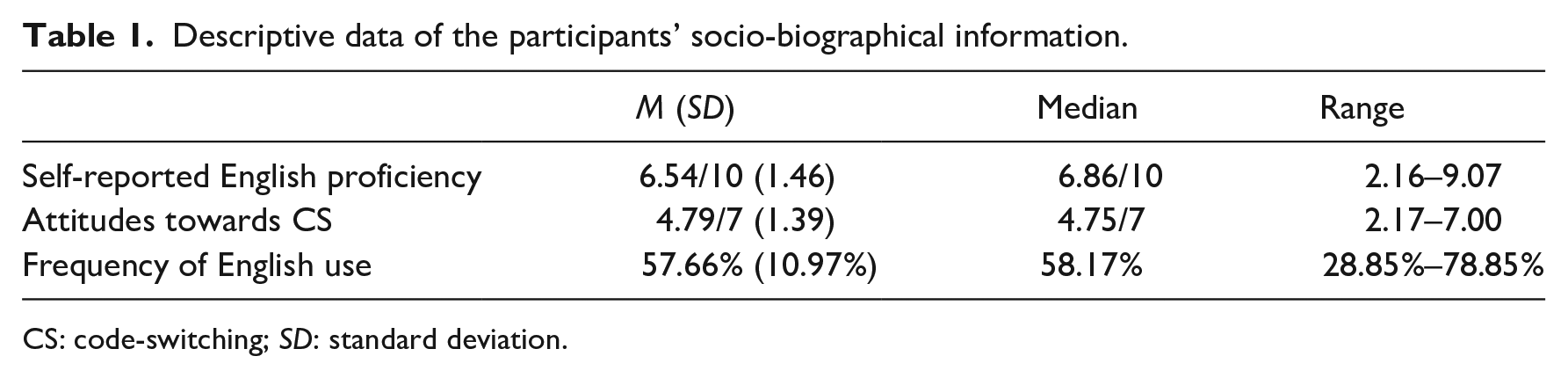
The descriptive results of the participants’ self-reported English proficiency, their attitudes towards CS, and their frequency of English use are shown in Table 1. The results show that the current participants had upper-intermediate English proficiency and leaned towards an overall positive and tolerant attitude towards CS. With regard to their English use, it seemed that English was used half of time with different interlocutors and in different contexts.
Descriptive data of the participants’ socio-biographical information.
CS: code-switching; SD: standard deviation.
The perceived amount of cognitive load experienced in the three sessions is shown in Figure 1. The figure shows that the mean value of cognitive load steadily went up from Session 1 to Session 3. A one-way analysis of variance (ANOVA) shows that the perceived cognitive load across the three sessions was significantly different, F = 11.66, p < .001. Separate t-tests were conducted, and the results show that the three sessions significantly differed from each other, that is, Session 1 versus Session 2, t = −3.254, p = .002; Session 2 versus Session 3, t = −5.723, p < .001; Session 1 versus Session 3, t = −7.868, p < .001. Such results confirmed that the current experiment manipulation did increase the perceived cognitive load, that is, having to switching to English increased the perceived cognitive load, and having to performing an additional task simultaneously also increased the perceived cognitive load.
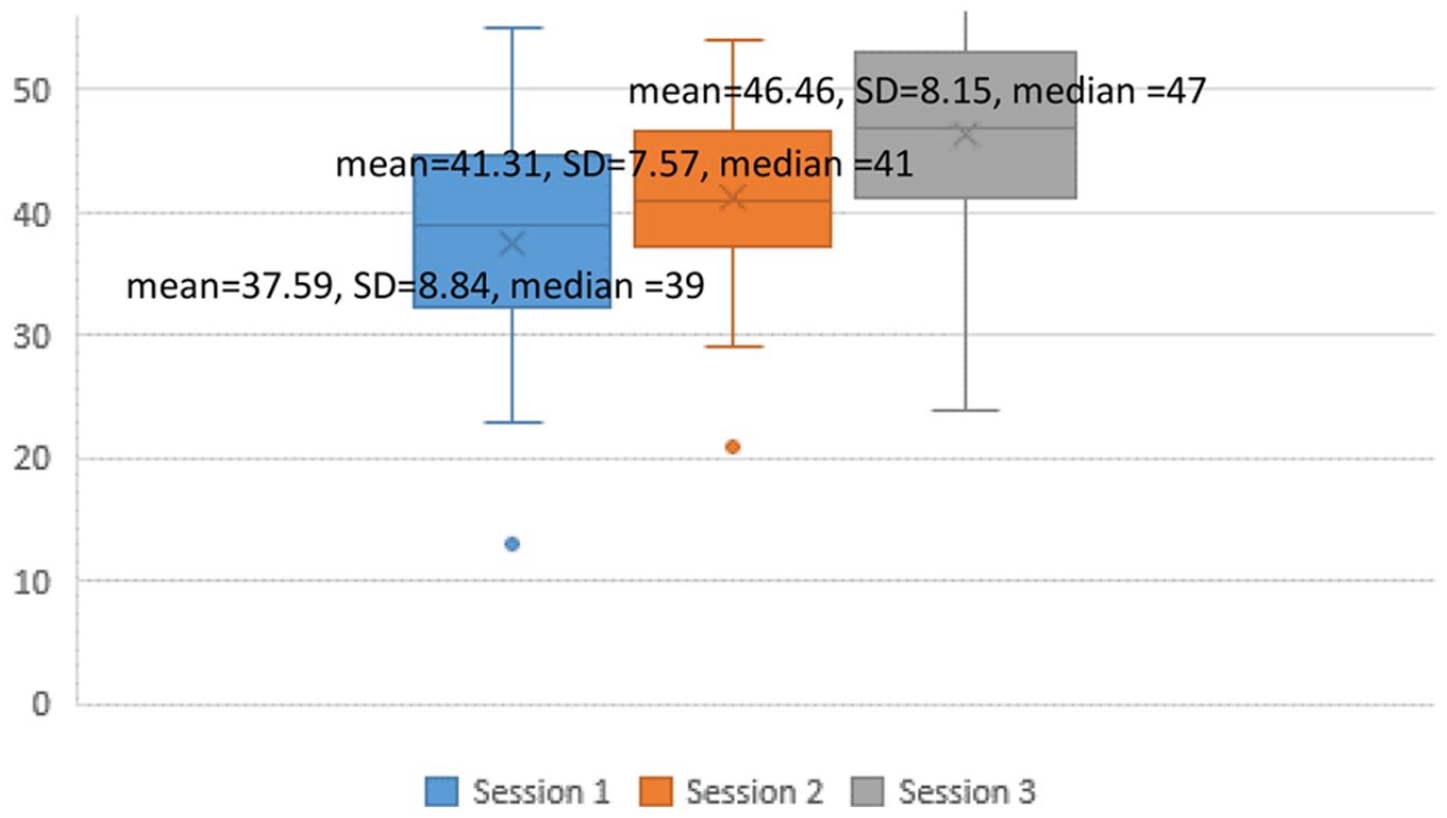
The perceived cognitive load across the three test sessions, with mean, standard deviation (SD, and median values shown in the figure, N = 31.
The use of CS quantified by different measures across the three test sessions was illustrated in Figures 2–4. The figures show that most participants rarely switched in the first session, which allowed them to freely choose the language of recall. The amount of CS for 30 participants ranged between 0% and 2.5% (M = 0.25%), with only one participant having 33.8% switching in the recall. Therefore, these participants can be overall considered nonswitchers in their daily life, and they had Chinese as their dominant language.

CS amount across the three test sessions, with mean, SD, and median values shown in the figure, N = 31.

Amount of intraclausal CS across the three test sessions, with mean, SD, and median values shown in the figure, N = 31.
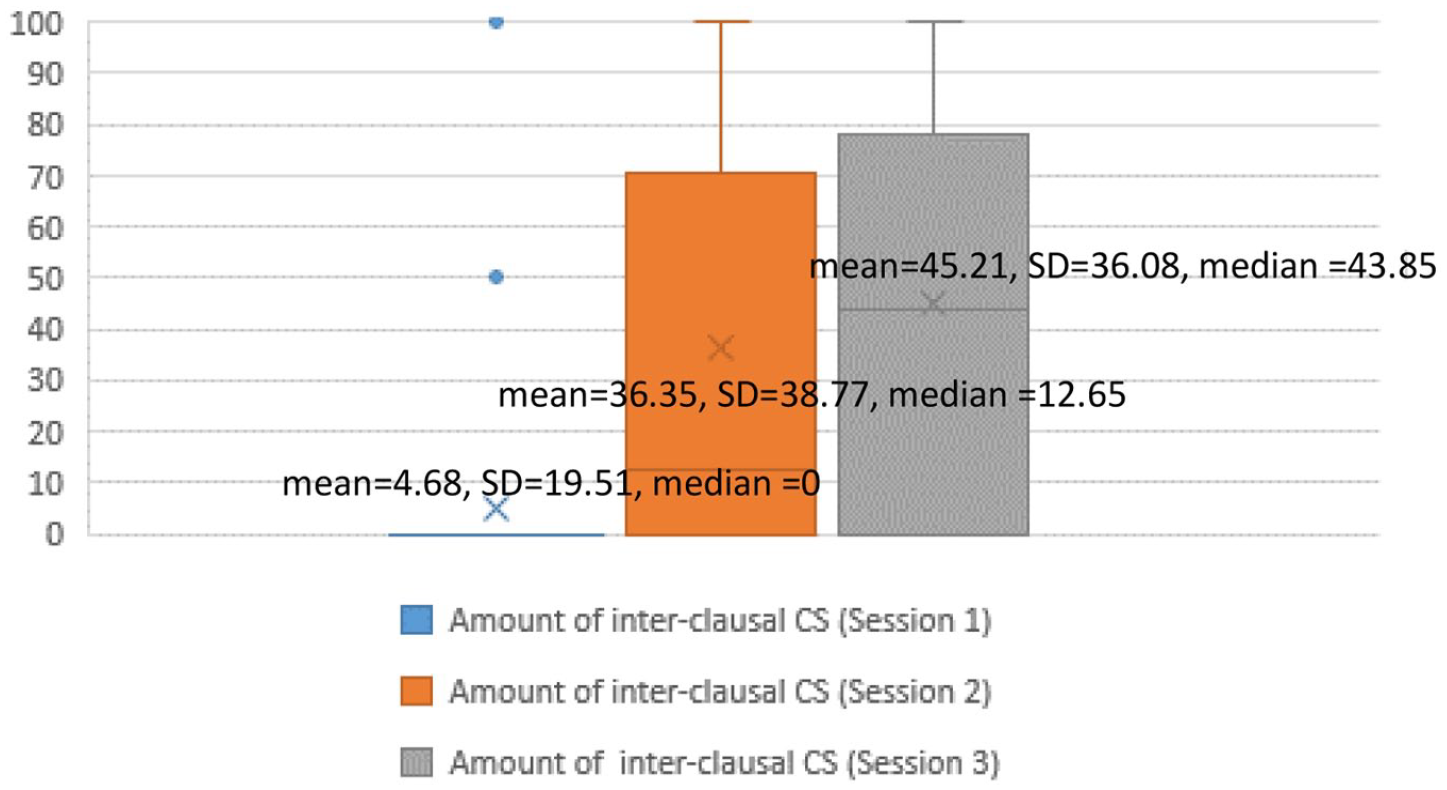
Amount of interclausal CS across the three test sessions, with mean, SD, and median values shown in the figure, N = 31.
When comparing the difference between the sessions on the measures of CS use, outliers shown in the box plot were removed. On the three measures, Session 1 always significantly differed from the other two at p < .01 level, which was expected as the participants hardly switched in this session. Therefore, in the following analysis, only data from Sessions 2 and 3 were analysed as the central question in the current paper investigates how the increase in cognitive load affects CS use, not vice versa. The cognitive load in Session 1 compared with that in Sessions 2 and 3 can be interpreted as how CS use affected cognitive load.
Between Sessions 2 and 3, the comparison on the amount of intraclausal CS was significant, t = 1.84, p = .03, and approached significance on the amount of interclausal CS, t = −1.61, p = .06. But the comparison on the overall amount of CS was not significant, t = −1.16, p = .12). Therefore, although the participants did not differ in the overall amount of CS use between Session 2 where only one task was required and Session 3 where an additional task had to be performed simultaneously, their use of intraclausal CS was significantly lower in Session 3. But it seemed that the participants tended to use more interclausal CS in Session 3.
By comparing Sessions 2 and 3, it seems that within participants, when the perceived cognitive load increased, the use of CS patterns changed, increasing in the use of interclausal CS, but decreasing in the use of intraclausal CS. Before concluding the effect of the perceived cognitive load on the use of CS, a series of hierarchical regression analyses were also conducted to examine how the perceived cognitive load affected between-participant CS use, along with other factors (i.e., English proficiency, English, and attitudes towards CS).
The hierarchical regression analyses were separately performed on the dependent variables, including CS amount, intraclausal CS amount, and interclausal CS amount for Sessions 2 and 3. For each measure, Model 1 did not include any variables and was created for the purpose of obtaining the total sum of squares. From Model 2 to Model 4, ‘Perceived cognitive load’, ‘English proficiency’, ‘Frequency of English use’, and ‘Attitudes to CS’ were added in order.
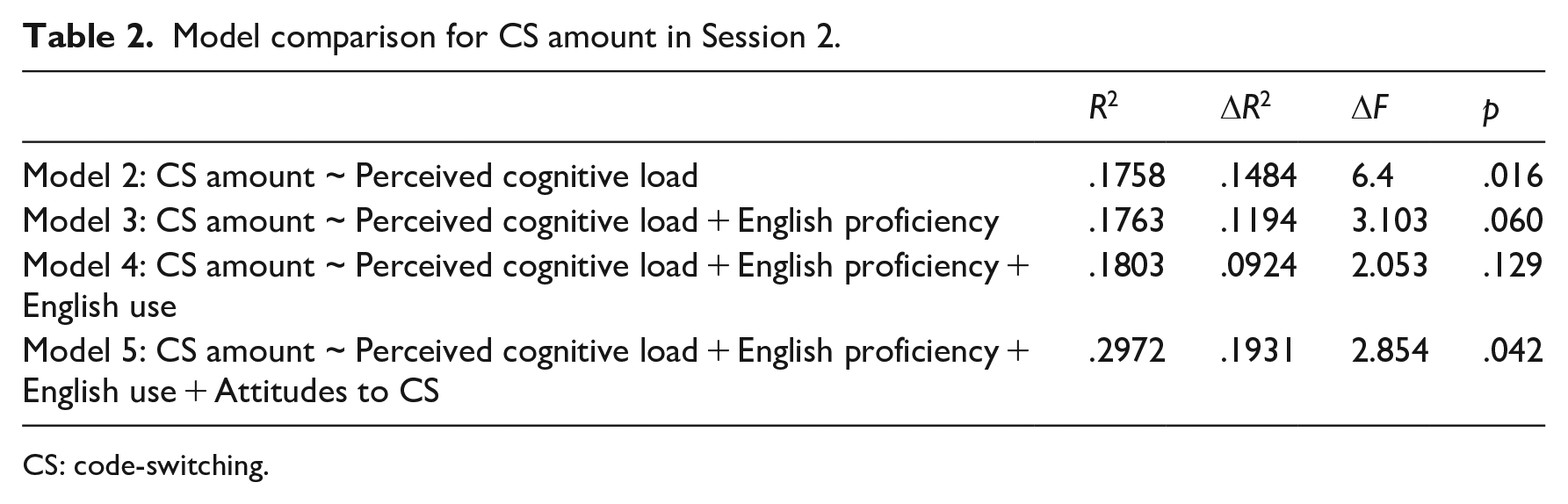
Tables 2–4 provide the summary of model comparisons for the CS measures in Session 2. For the amount of interclausal and intraclausal CS, no significant models were found. For the overall CS amount, Model 2 and Model 5 were found significant. Table 5 presents the summary for these two models. The model explaining power increased by 14.84% with the addition of ‘perceived cognitive load’ and a further 10.07% after ‘attitudes towards CS’ has been added, both can be considered a large effect size according to the benchmark in Cohen (1988). Therefore, in Session 2, between the participants, those who perceived a higher cognitive load tended to use less amount of CS, and those who held a more positive attitude towards CS tended to use more amount of CS.
Model comparison for CS amount in Session 2.
CS: code-switching.
Model comparison for intraclausal CS amount in Session 2.
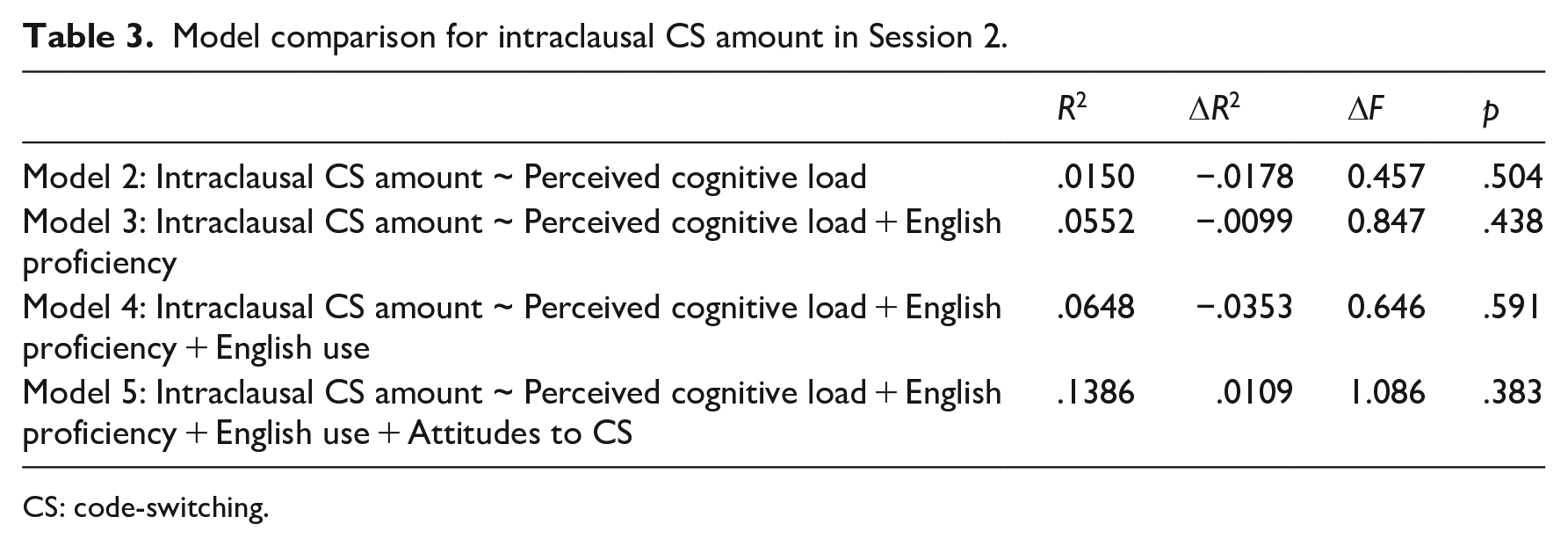
CS: code-switching.
Model comparison for interclausal CS amount in Session 2.
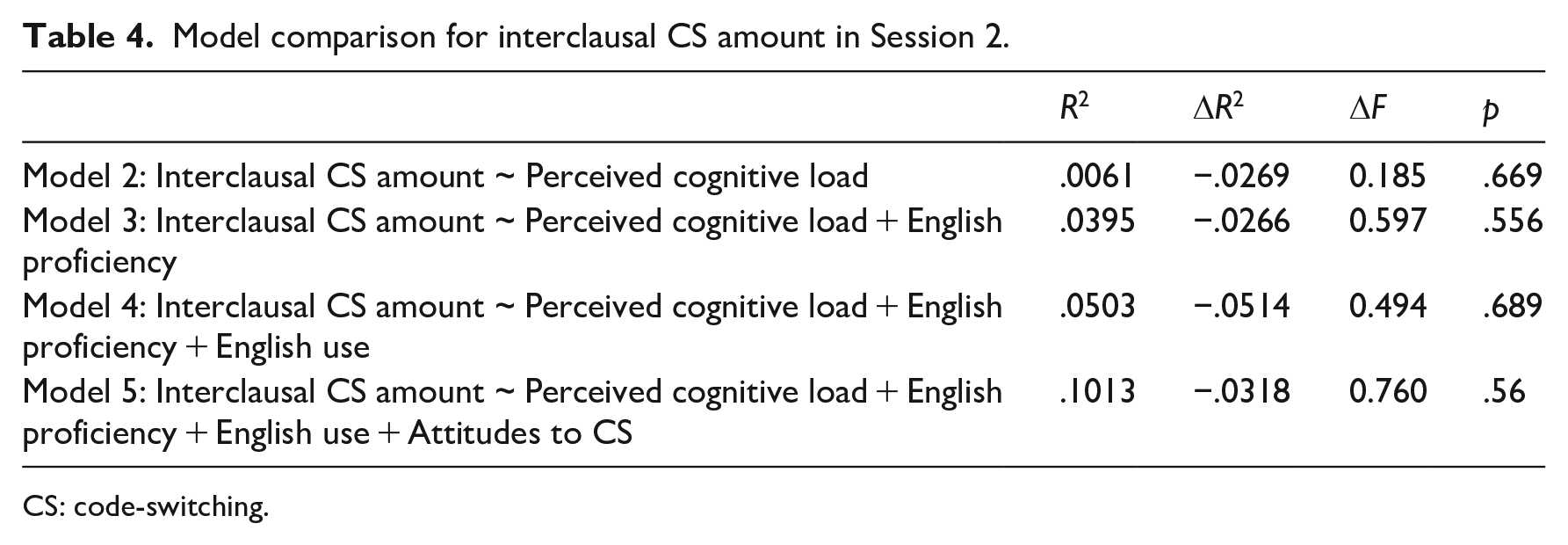
CS: code-switching.
Summaries for the significant models for CS amount in Session 2.
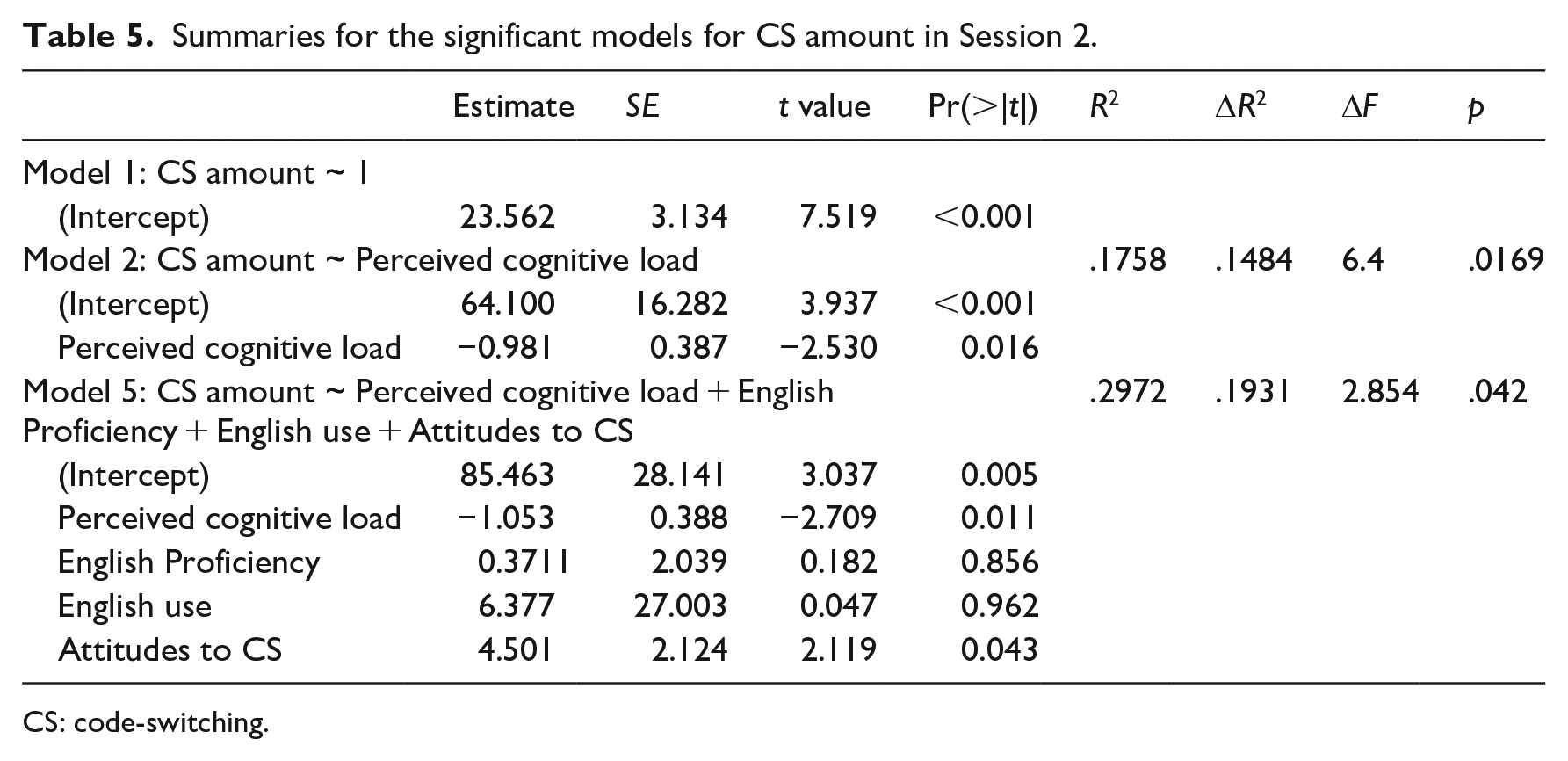
CS: code-switching.
In Session 3, however, no model was found significant for any CS use measure. Tables 6–8 show the model comparisons. It seemed that no particular variables under investigation can significantly predict the use of CS in this session. 3
Model comparison for CS amount in Session 3.
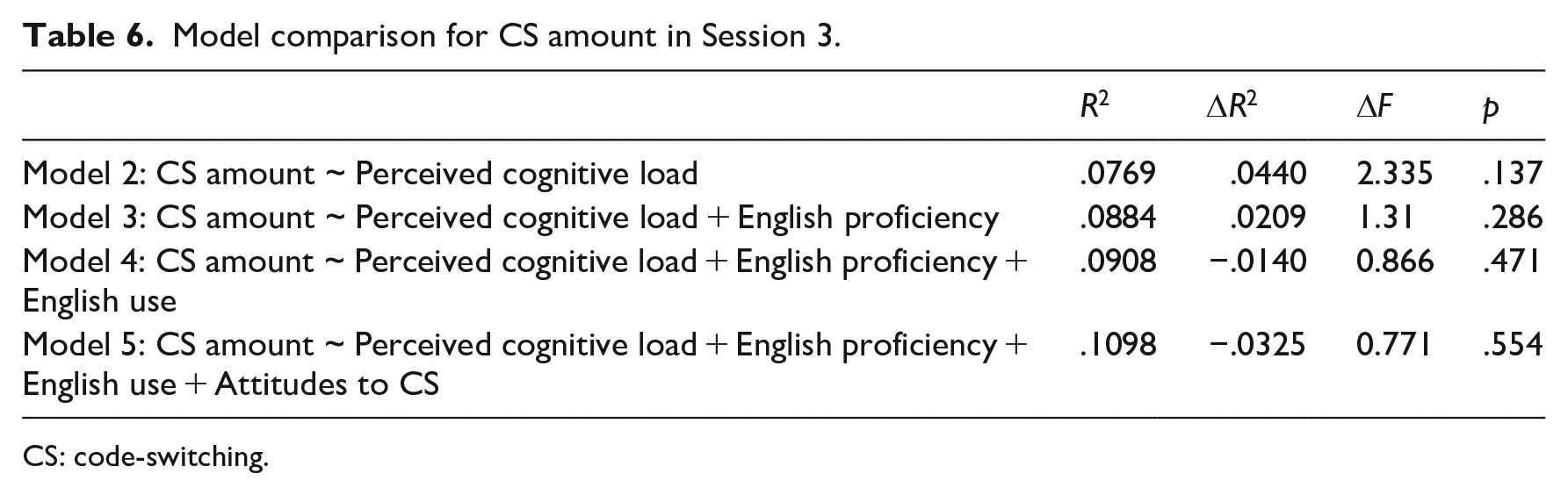
CS: code-switching.
Model comparison for intraclausal CS amount in Session 3.
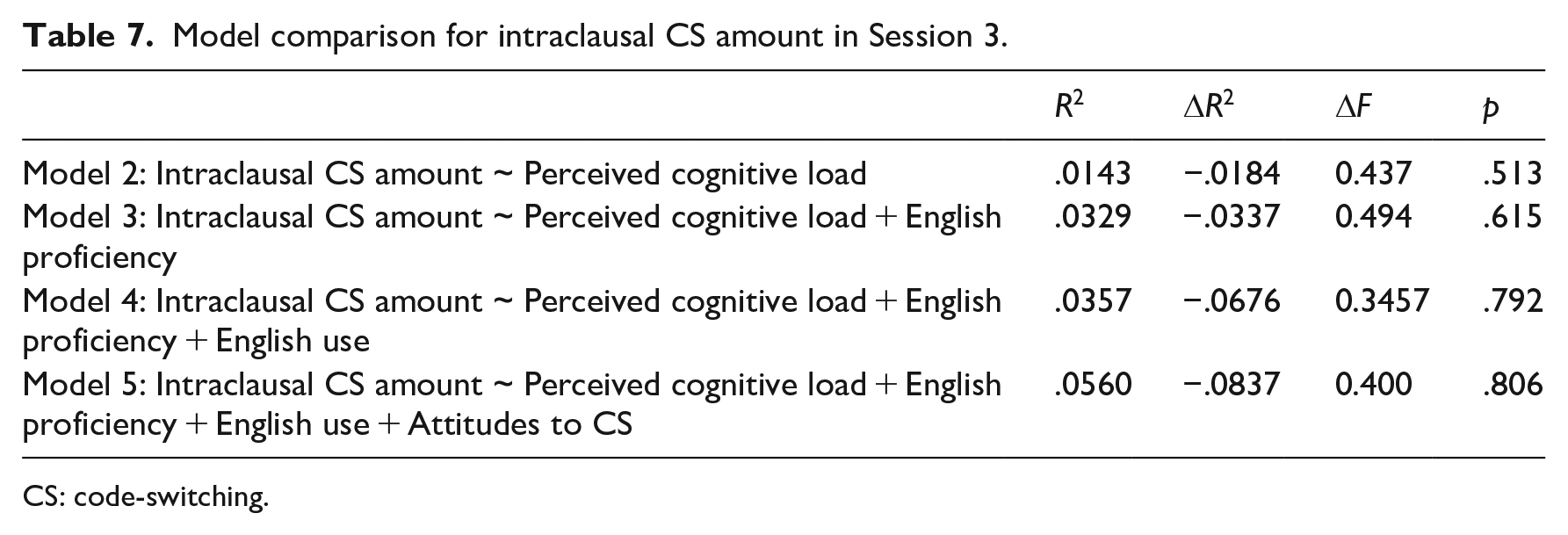
CS: code-switching.
Model comparison for interclausal CS amount in Session 3.
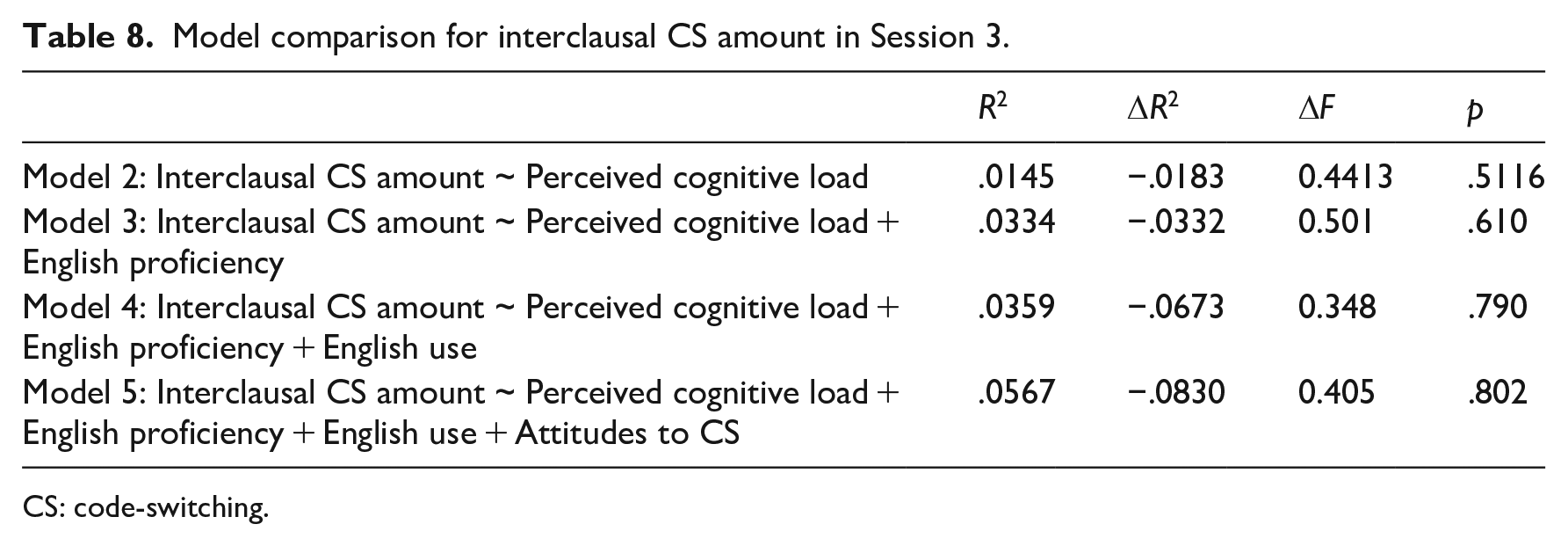
CS: code-switching.
Discussion
This paper investigated how the change in cognitive load affected the use of CS in both amount and pattern. More specifically, we manipulated the change of cognitive load using a quasi-experiment method. The perceived cognitive load reported by the participants across the three experiment sessions confirmed the validity of this design. Among the three measures of CS use (i.e., CS amount, intraclausal CS amount, and interclausal CS amount), the participants used significantly less intraclausal CS in Session 3, in which they reported the highest degree of cognitive load. But there was a tendency that the participants’ use of interclausal CS actually increased in the higher demanding Session 3. In addition, the results of hierarchical regression analyses for overall CS use between participants in Session 2 confirmed the significant effect of the perceived cognitive load. The influence of attitudes towards CS was also shown to be another significant predictor with large effect size. However, in the more demanding Session 3, none of the factors of interest could predict between-participant variation in CS use.
The within-participant decrease in the use of intraclausal CS in response to the increase in the perceived cognitive load was in line with the findings reported in several previous studies reviewed above, showing a shift in language use accompanying a change in processing demand. In Sharma (2018) and Sharma and McCarthy (2018), it was a shift to a more automatic and first learned vernacular, indicating that subjects returned to the variety that demanded less attention and less processing effort when the added task absorbed more attentional resources. In Liu (2020), this shift was to a less use of CS and its specific types in the synchronous speaking mode as a result of high online processing demand. The decrease in intraclausal CS use across sessions in the present results seems to suggest that intraclausal CS was a more demanding type of switching and a higher cognitive load led to a less use of this type. Poplack (1980) indeed showed that switching occurring within sentential or clausal boundaries required a higher degree of proficiency in both languages, as a legitimate switch should conform to the rules of both languages and thus requires high sensitivity to where the rules converge. It is possible that a divided attention in Session 3 made it more difficult for the participants to attend to the various legitimate switch points where the different syntactic structures from the two languages converge. The inverse relationship between the perceived cognitive load and CS use was also shown in the between-participant analysis of CS use. The perceived cognitive load produced the largest effect size in explaining the variation of CS in Session 2 when proficiency, English use, and attitudes were also taken into account. Therefore, these findings suggest that there is an ‘element of cognitive primacy’ (Sharma & McCarthy, 2018) that constrains agentive choice of switching.
On the contrary, from Session 2 to Session 3, there was a marginally significant increase in the use of interclausal CS. In Liu (2020), it was suggested that interclausal switching was a more complex form of CS, as it involves a complete switch in both lexicon and grammar to a different language, thus requiring a higher degree of proficiency and a stronger support of network-based usage. The finding here seems to contradict this claim, that is, the present participants used more interclausal CS when facing a higher cognitive demand. But there is an important difference between this study design and the one in Liu (2020). The participants performed the same picture recall task, despite using different picture stimuli. Given the comparability in story outline, it is possible that the syntactic structures and possibly even the discourse structure constructed for the story recall in Session 1 can prime the sentence and discourse construction in Session 2 (Bock, 1986; Bock & Levelt, 1994), and the cycle can be further fed into Session 3. Therefore, the participants may have developed some task strategies, such as recycling some syntactic structures from the previous sessions. It should be noted that participants can recycle abstract syntactic structures from the previous recall, not necessarily the surface forms of English sentences that have been articulated (Bock, 1986). It is possible that the insertion of English words and phrases in the story recall in Session 2 may have activated the associated syntactic structures, which became accessible and even more preferable candidates for picture description in Session 3 when English use was compulsory and the cognitive demand increased. Put in a different way, the recycled syntactic structure may have made the realization in English easier. At the same time, the participants’ extensive use of English (i.e., about 50% of their language use was English) because of their experience in an EMI university also increased the possibility that they found full English recall was actually easier than switching between languages, as they were more likely to switch between monolingual language modes (English to Chinese and vice versa) in their daily study than switch between languages in a mixing language mode (Grosjean, 1998). The complete switch to English in Session 3 by one participant, who was removed from the analysis as an outlier, seemed to support this possibility. The null effect of all the variables, including the perceived cognitive load, on the between-participant variation of CS use in Session 3 also indicates that the explanation of CS use in this session may be complicated by the experiment design that encourages strategy use.
This raises some methodological considerations in experimental approach to the investigation of how cognitive load interacts with CS use. On one hand, it is essential to control the task type while manipulating cognitive load to ensure that the change of CS use can be attributed to the increased or reduced cognitive load instead of a change in speaking situation. On the other hand, the same task type makes it possible to develop task strategy that can add noise in the data. Therefore, although the study confirms that the current design can capture some characteristics in the interaction between cognitive load and CS, a follow-up design can reduce topic predictability, for example, by placing subjects in a conversation task with a confederate interlocutor (cf. Abel & Babel, 2017), to avoid sentence-level strategy use.
Another interesting finding in the present data concerns the role of attitudes towards CS. Such attitudes were found to predict the use of CS in the presence of English use and in addition to the perceived cognitive load, but this was only found in Session 2, the lower demanding session. This was also the result reported in Liu (2020), that is, attitudes can override network-based usage, but only in the low demanding asynchronous writing. In language use, attitude can be a powerful engine that bypasses network-based selection of linguistic representation (Backus, 2014; Bybee, 2010). Our motivation to modify our language behaviour for specific communication goals and discourse effect can be so strong that we stretch our repertoire to exploit language features that are otherwise outlandish. However, there is also a limit to the influential range of attitudinal preference (e.g., Garrett, 2010). To what extent individuals’ language attitudes can predict their language behaviour differs according to the ‘complexity of domains in which language is used’ (Garrett, 2010, p. 28). Only in contexts that our cognitive capacity allows such stretching, our desire to subjectively modify and design our speech features can play out. Therefore, the interplay between cognitive and social elements in language use was confirmed in the present study.
In summary, this explorative study on the cognitive basis of CS confirms that agentive use of CS also interacts with cognitive processing factors. When participants’ attention was divided between two simultaneously executed tasks, they returned to a less use of intraclausal CS which otherwise may demand more processing effort to attend to the congruent points between grammars. The task demand of using English may also have encouraged them to recycle sentence structures that have been used in the previous sessions and thus became more accessible, leading to an increase in interclausal switching. This element of cognitive primacy was further demonstrated in the largest effect size of the perceived cognitive load in predicting between-participants CS use, compared with attitudes and network-based use of English, arguing for a recognition and further investigation of the cognitive processing basis of socially driven language use.
Supplemental Material
sj-docx-1-ijb-10.1177_13670069231170142 – Supplemental material for The effect of cognitive load on code-switching
Supplemental material, sj-docx-1-ijb-10.1177_13670069231170142 for The effect of cognitive load on code-switching by Hong Liu, Zhixin Liu, Meng Yuan and Tingyu Chen in International Journal of Bilingualism
Footnotes
Acknowledgements
We thank all the subjects who participated in the experiment.
Declaration of conflicting interests
The author(s) declared no potential conflicts of interest with respect to the research, authorship, and/or publication of this article.
Funding
The author(s) disclosed receipt of the following financial support for the research, authorship, and/or publication of this article: This study was supported by the SURF programme funded by the School of Humanities and Social Science of Xi’an Jiaotong-Liverpool University.

Supplemental material
Supplemental material for this article is available online.
Notes
Author biographies
References
Supplementary Material
Please find the following supplemental material available below.
For Open Access articles published under a Creative Commons License, all supplemental material carries the same license as the article it is associated with.
For non-Open Access articles published, all supplemental material carries a non-exclusive license, and permission requests for re-use of supplemental material or any part of supplemental material shall be sent directly to the copyright owner as specified in the copyright notice associated with the article.
