



Abstract
In a real cable-strut tensile structure, the element-length errors are inevitable. To understand their effects on the bearing capacity of a cable-strut tensile structure, the element-length error sensitivity analysis was investigated in this study. First, mathematical model of the element-length error was proposed based on stochastic theory. By combining the balance equation, geometric equation, and physical equation, the fundamental equation between the pre-stress deviation and element-length error was derived. After that, pre-stress deviation statistics characteristic was achieved with the help of statistical theory and the element-length error sensitivity analysis method was formulated. Then, a cable-strut tensile structure model with a diameter of 5.0 m was designed and fabricated to validate the proposed method. The element-length was set adjustable in order to simulate the element-length errors. Making use of the measured internal forces induced by element-length errors, the error sensitivity of each kind of element was achieved. In addition, a finite element model was also established with the commercial software ANSYS. The element-length errors were simulated by the changes of element-length due to temperature variations. The results of the three models coincided with each other satisfactorily, verifying the effectiveness of the proposed mathematical model. It was found that different elements had different error sensitivities. The error sensitivity of the hoop cables was most prominent, the ridge cables and diagonal cables the second, and the struts the third.
Keywords
Introduction
The cable-strut tensile structure is a sort of flexible structure composed of cables in tension and struts in compression. Because of the high strength as well as the adjustable stiffness distribution of the tension cables, the cable-strut tensile structure possesses excellent bearing capacity. As the stiffness of tension cables is provided with the help of pre-stress, the exact pre-stress distribution is the premise of the superior bearing performance of a cable-strut tensile structure. In the last two decades, a lot of work on self-stress mode analysis (Pellegrino, 1993; Pellegrino and Calladine, 1986) and optimal pre-stress design (Chen and Dong, 2013; Yuan et al., 2007) have been reported. Most of them were carried out in ideal conditions which ignore the construction errors. However, due to the complicated working conditions, construction errors are inevitable in a cable-strut tensile structure. As a result, the real parameters of a cable-strut tensile structure may deviate from the ideal ones, such as the pre-stress (Lin and Wang, 2007; Qin et al., 2007). Previous studies have shown that the bearing capacity of a cable-strut tensile structure is very sensitive to the pre-stress deviation (Gao et al., 2005; Peng and Wu, 2004). It therefore necessitates the evaluation of the effects of construction errors and the elimination or reduction of their negative effects.
Construction errors mainly include element-length error, installation deviation error, pin hole machining error, node or anchorage size error, and temperature deviation error. In the last two decades, a lot of error sensitivity analysis studies had been reported (Guo et al., 2009; Sheng et al., 2008; Wang et al., 2012; Zhang, 2008; Zong et al., 2012). The methods proposed by them are mainly divided into two types. The first type method is established based on the probability theory, which models the errors with a group of stochastic errors conforming to a certain distribution. The second type is a kind of orthogonal design method, which simulates the errors with some groups of deviation levels. The error sensitivity analysis can then be conducted by evaluating their effects on the distribution of initial pre-stress as well as the structure static and dynamic behaviors. So far, the construction errors which conform to not only a certain distribution but also the mathematical statistics law have not been studied.
In this study, the element-length error of a cable-strut tensile structure, which is an important construction error that affects the bearing performance, was investigated by approaches of a mathematical model, a scale-down model, and a finite element model (FEM). First, the mathematical model of element-length error was proposed based on stochastic theory. By combining the balance equation, geometric equation, and physical equation, the fundamental equation between the pre-stress deviation and element-length error was derived. After that, pre-stress deviation statistics characteristic was achieved with the help of statistical theory and the element-length error sensitivity analysis method was formulated. Then, a cable-strut tensile structure model with a diameter of 5.0 m was designed and fabricated to validate the proposed method. The element length was set adjustable in order to simulate the element-length errors. Making use of the measured internal forces induced by element-length errors, the error sensitivity of each kind of element was achieved. In addition, an FEM was also established with the commercial software ANSYS. The element-length errors were simulated by the changes of element length due to temperature variations. The results of the three models coincided with each other satisfactorily, verifying the effectiveness of the proposed mathematical model. It was found that the error sensitivity of the hoop cables was most prominent, the ridge cables and diagonal cables the second, and the struts the third.
Mathematical model of element-length error
Element-length error mainly comes from the original length calculation error and machining error. The original length calculation error is the deviation between the approximate curve equation and the real shape. In addition, temperature or humidity changes, material properties changes, and other factors may also contribute to element-length errors. In this study, it is assumed that the errors are independent of each other and the probability of positive or negative errors is the same. According to the Lindberg–Levy central limit theorem, the total length error obeys the normal distribution N∼(µ,σ2), where µ is the average error and

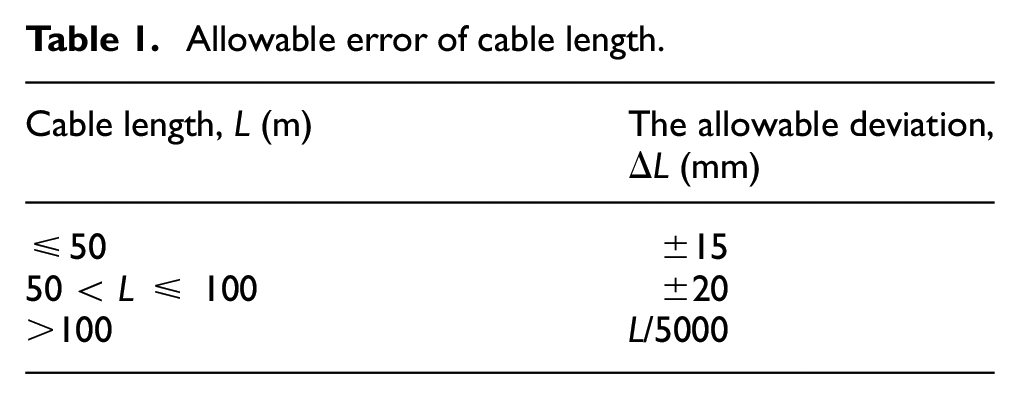
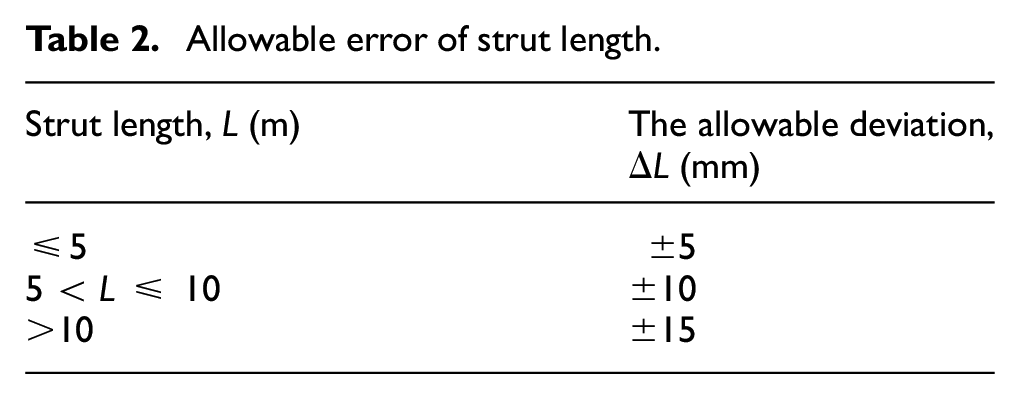
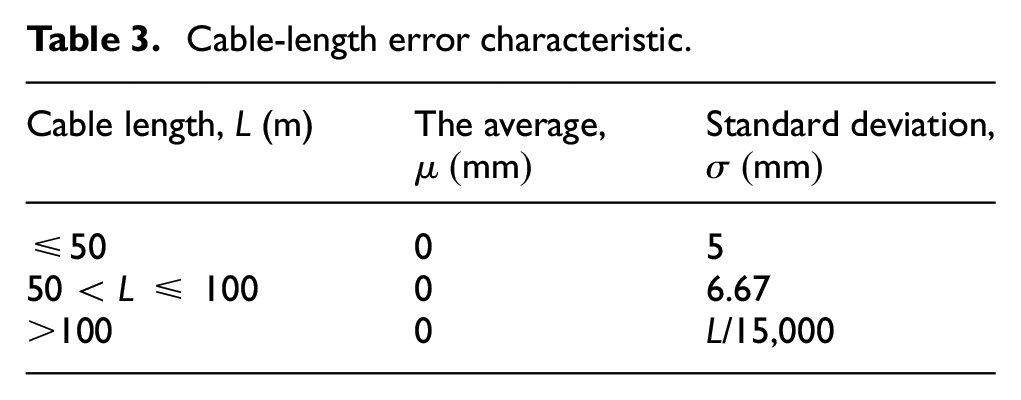
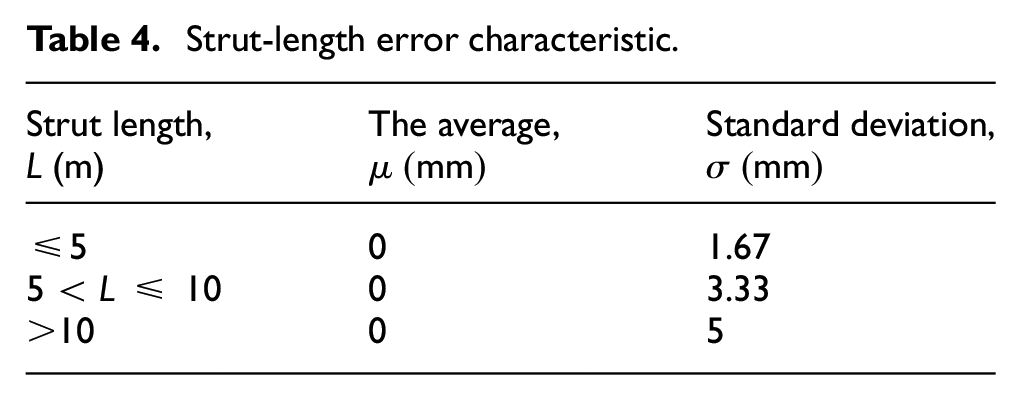
where a and b are the upper and lower limits of the length error, respectively. As per the technical specification for cable structure (JGJ257-2012), the manufacture errors of cable-strut tensile structure are shown in Tables 1 and 2. Making use of equation (1), the average value and standard deviation of the cable and strut length deviation distribution difference can be obtained, as shown in Tables 3 and 4.
Allowable error of cable length.
Allowable error of strut length.
Cable-length error characteristic.
Strut-length error characteristic.
The relationship between element-length error and pre-stress deviation
To analyze the effects of element-length error on the pre-stress deviation, it is desirable to establish the relationship between the element-length error and the pre-stress deviation. In a cable-strut tensile structure, set b as the number of elements, n as the number of nodes, c as the number of support constraints, and



where
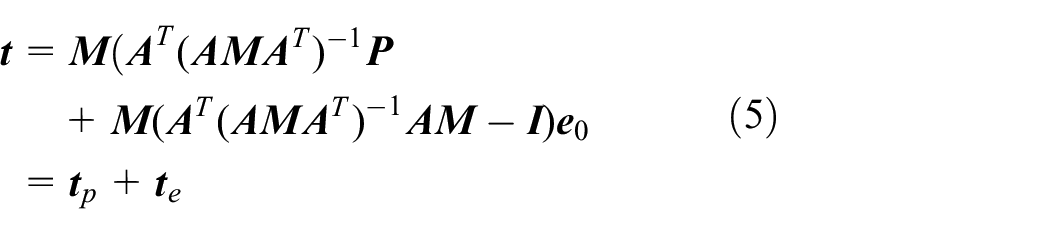

Equation (5) reflects the relationship among the initial defect length


where
The statistical features of the pre-stress deviation
As mentioned earlier, this study assumes that errors are independent of each other and the probability of positive or negative errors is the same. According to the Lindberg–Levy central limit theorem, the total error obeys the normal distribution N∼(µei, σei), where


Making use of equations (9) and (10), the pre-stress deviation caused by the element-length error, that is, the element-length error sensitivity, can be evaluated.
Experimental study
Model design
To validate the proposed error sensitivity analysis method, a cable-strut tensile structure model with a diameter of 5.0 m was fabricated in laboratory, as shown in Figure 1. The model is composed of 12 pieces of cable-strut units and 24 pieces of supporting elements, which form a self-balance system. The supporting platform consists of ring beams and columns, as shown in Figure 1(b). The cable-strut unit, as shown in Figure 2, consists of tension cables and compression struts. The tension cables, including hoop cables, ridge cables, and diagonal cables, are made of high-strength steel wire with a diameter of 7 mm. The length of cables can be slightly adjusted by the cable sleeve. The compression strut shown in Figure 3 comprises strut 1 and strut 2 with a section parameter of Φ15 × 3. To adjust the length of strut, the strut also has sleeves. The model has two kinds of nodes. The first kind is used for connecting cables and struts, as shown in Figure 4. For simplicity, it is denoted as node A hereafter. The second kind is used for the connections of outer cables and the supporting platform, as shown in Figure 5. Likewise, it is referred to as node B. One end of the screw is connected with cable and the other end is connected with screw cap. Thus, the length of cable can be adjusted by tightening or loosening the screw cap.
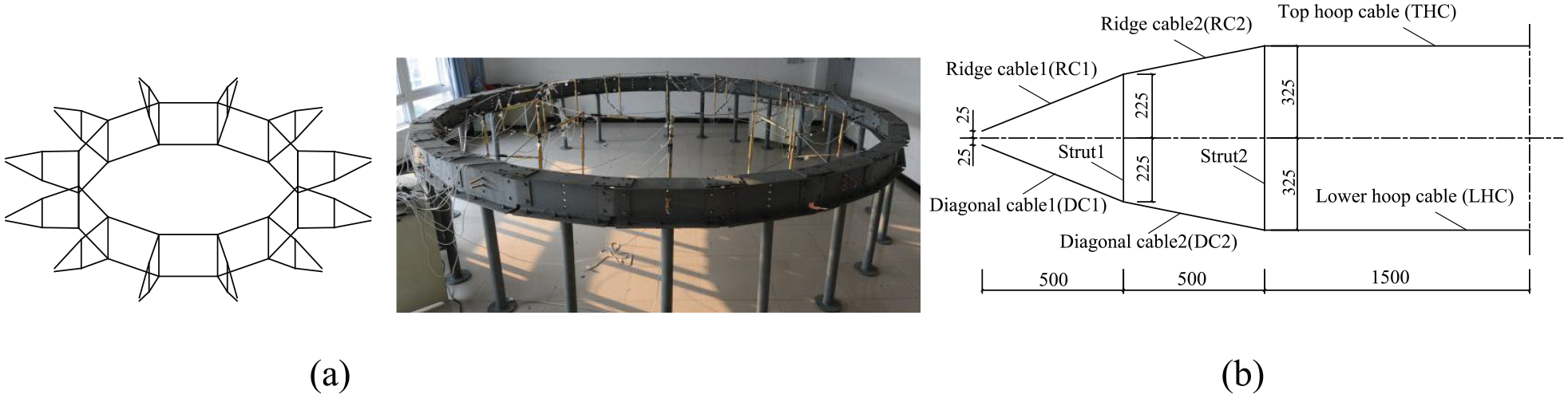
A cable-strut tensile structure model: (a) the whole model and (b) element of each symmetrical unit.
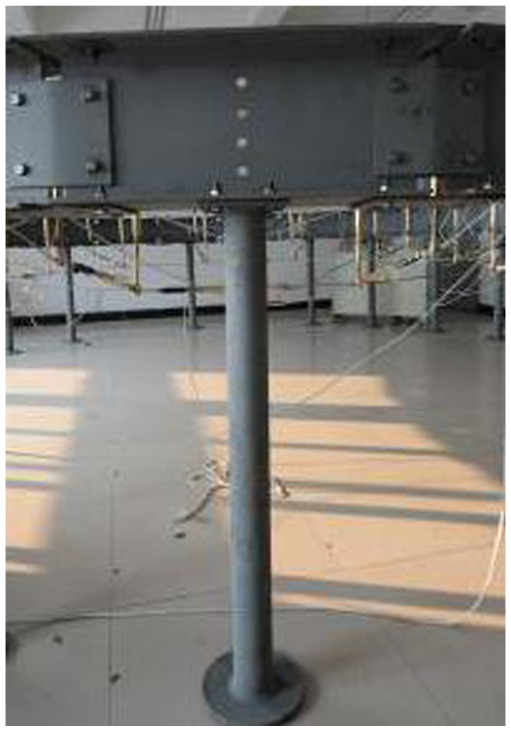
Basic element.
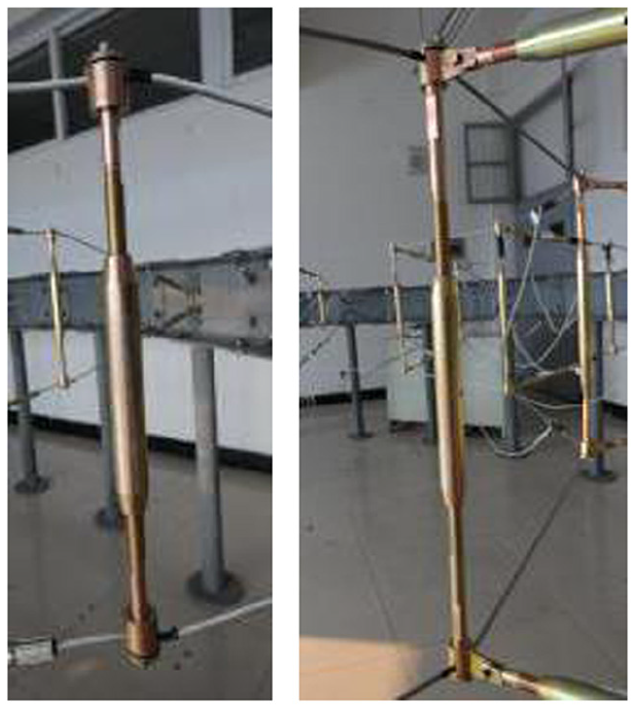
Struts.
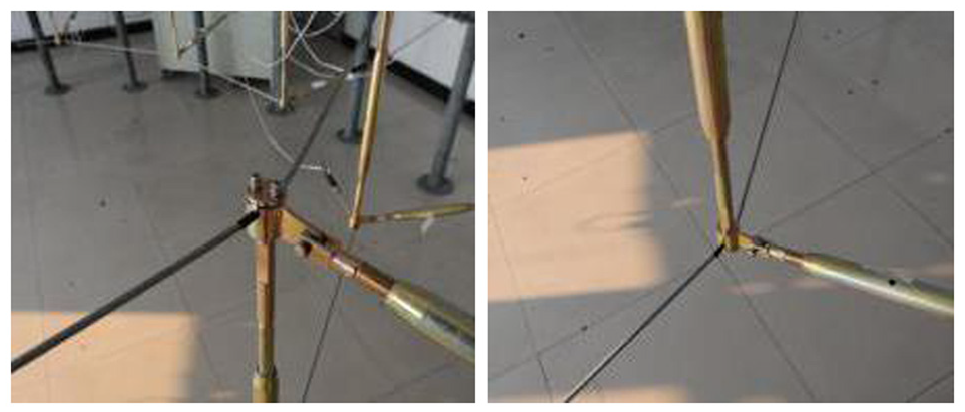
Partial node A.
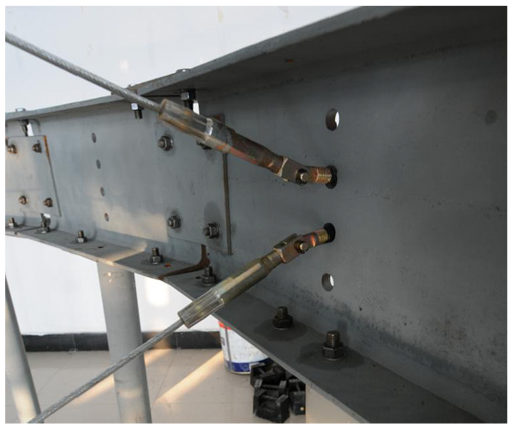
Node B.
Due to inevitable construction errors, six pieces of cable-strut units shown in Figure 6 were measured in the experiment although the tensile structure is symmetrical. All kinds of members except for the hoop cables were measured in each of the six units, implying each kind of member has six measurement points. For hoop cables, the measurement positions were located in units 1, 4, 7, and 10 only. Electrical resistances foil strain gauges with 5-mm gauge length were employed to measure the member internal force and a data logger was used to collect the readings of the strain gauges. In order to eliminate the errors induced by the temperature changes and eccentric force, two strain gauges were mounted on opposite surfaces of each measurement point. They were then connected with a temperature compensation strain gauge to form a half bridge circuit. In addition, the nodal displacement was measured with dial gauge.
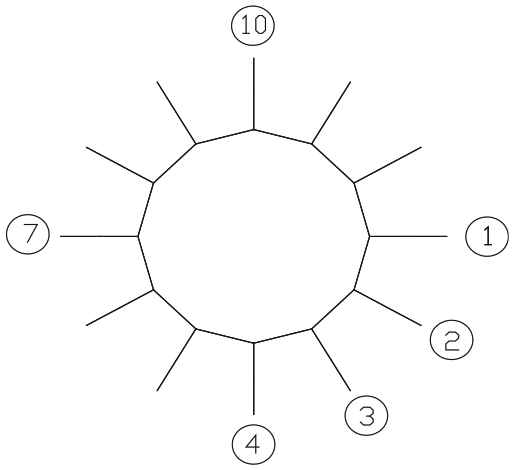
Measurement position.
In order to improve the measurement precision, eliminate the errors induced by the section dimension and material differences, and verify the validity of the resistance foil strain gauges, the relationships between the internal force and the strain must be obtained in advance, with the help of the least square method, that is

where N and ε represent the internal force and the strain obtained by strain gauges, respectively; k is the coefficient to be decided, which was obtained with the help of the least square method, that is

As an illustration, Figure 7 shows the strain–force curves of partial cables in unit 4. The coefficient k is summarized in Table 5. It is seen that the force–strain relation is almost linear and the coefficients of different elements usually differ from each other.
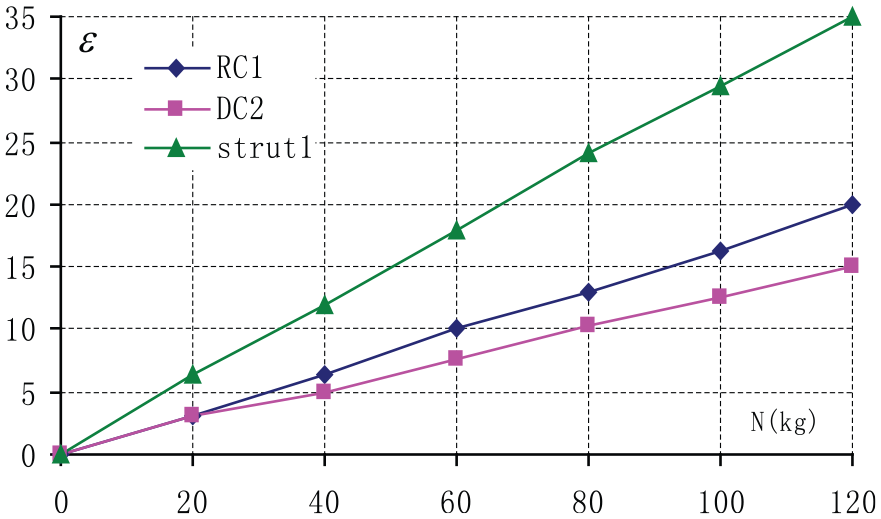
Strain–force curves of typical cables in unit 4.
Coefficient k of cables in unit 4.
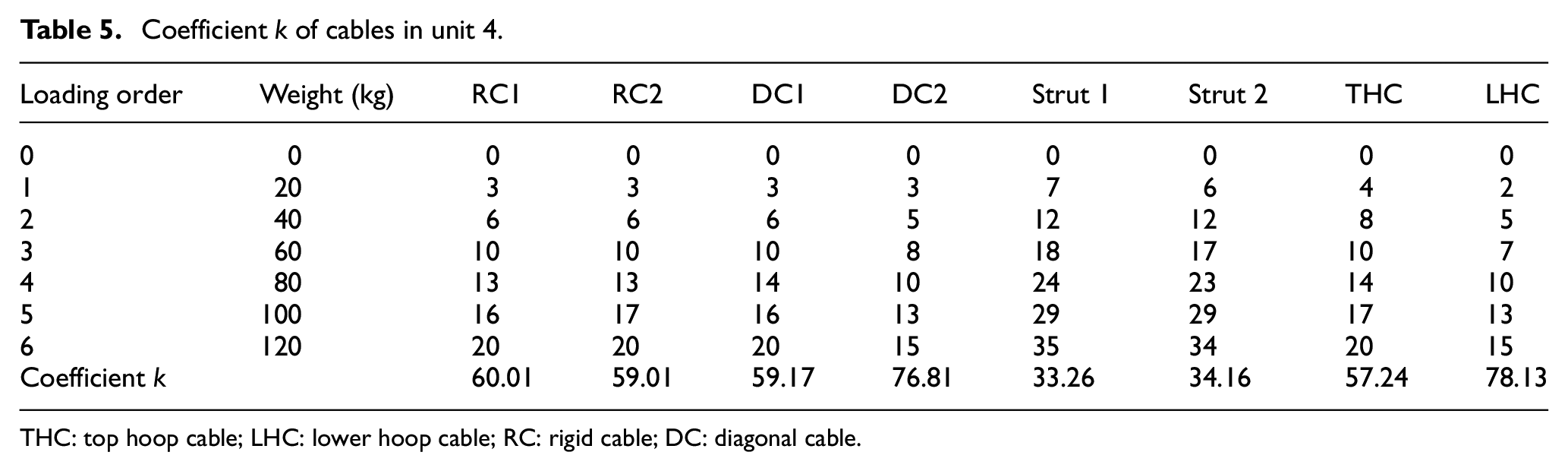
THC: top hoop cable; LHC: lower hoop cable; RC: rigid cable; DC: diagonal cable.
Numerical analysis
The element-length error sensitivity of the model structure was also studied by finite element analysis with the commercial software ANSYS. The change in element length was simulated by temperature changes. The temperature change ΔT was described as

where
Model research
The ridge cable 1 (denoted as RC1), diagonal cable 1 (denoted as DC1), strut 1, strut 2, top hoop cable (denoted as THC), and lower hoop cable (denoted as LHC) in unit 4 were all elongated 3 mm, respectively. The variations of internal forces of the elements in unit 4, unit 3, and unit 2 were shown in Tables 6 to 11. Positive value indicated an increase in the element force and vice versa. It can be seen that the length change of any element can cause the variation of forces of the whole structure, which indicated the tensile structure has an excellent entire balance performance. The length changes of THC and LHC both induced some 27% variation in internal forces. The length changes of ridge cable 1 and diagonal cable 1 both caused about 15% change in internal forces. The length changes of strut 1 and strut 2 both generated about 3% variation in internal forces. Therefore, the error sensitivity of the hoop cables is the most prominent; the sensitivity of ridge cables and diagonal cables the second and that of struts the third. It is also found that the element force changes in unit 4 were almost similar to the element force changes in unit 2 and unit 3. For example, they were all about 15% when the length of the ridge cable 1 and diagonal cable 1 were elongated 3 mm, which again indicates the tensile structure has an excellent entire balance performance. In addition, the measured values and computed results of the error sensitivity analysis were generally consistent with each other. The small differences between them were attributed to the errors such as element-length error, geometric error in boundary platform, and adjustment length error.
The element internal force changes caused by the diagonal cable 1 elongation 3 mm in unit 4 (kN).
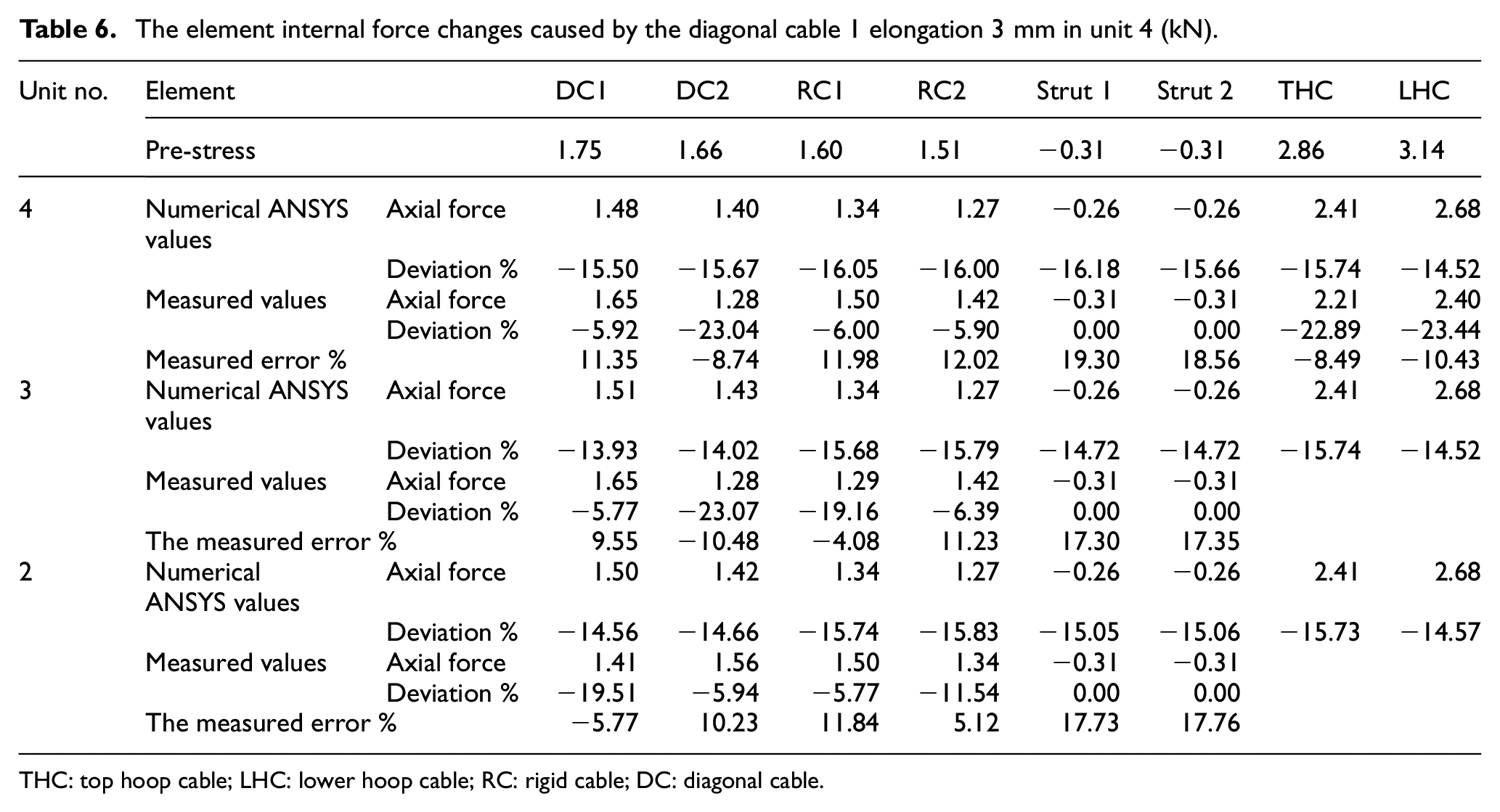
THC: top hoop cable; LHC: lower hoop cable; RC: rigid cable; DC: diagonal cable.
The element internal force changes caused by the ridge cable 1 elongation 3 mm in unit 4 (kN).
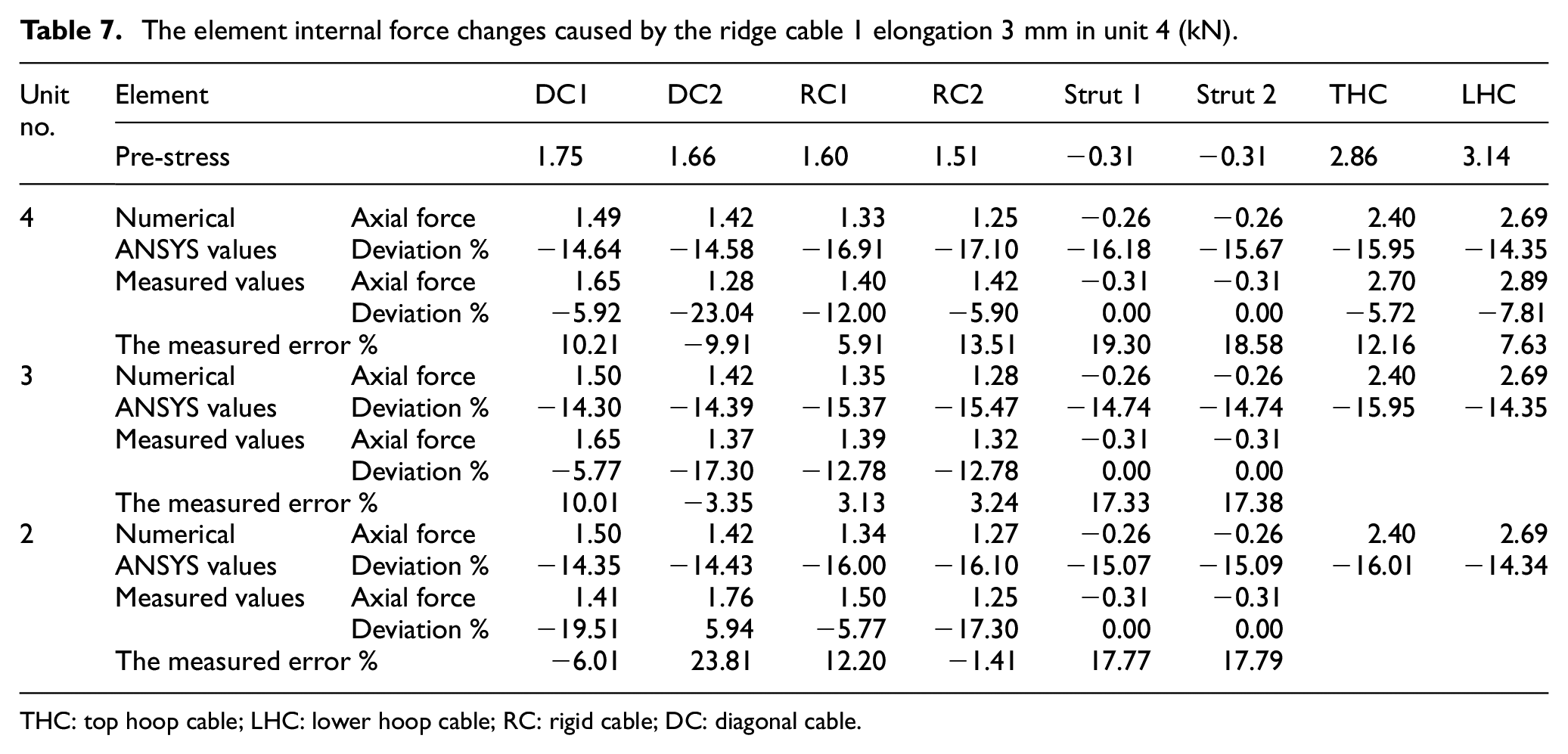
THC: top hoop cable; LHC: lower hoop cable; RC: rigid cable; DC: diagonal cable.
The element internal force changes caused by the strut 1 elongation 3 mm in unit 4 (kN).
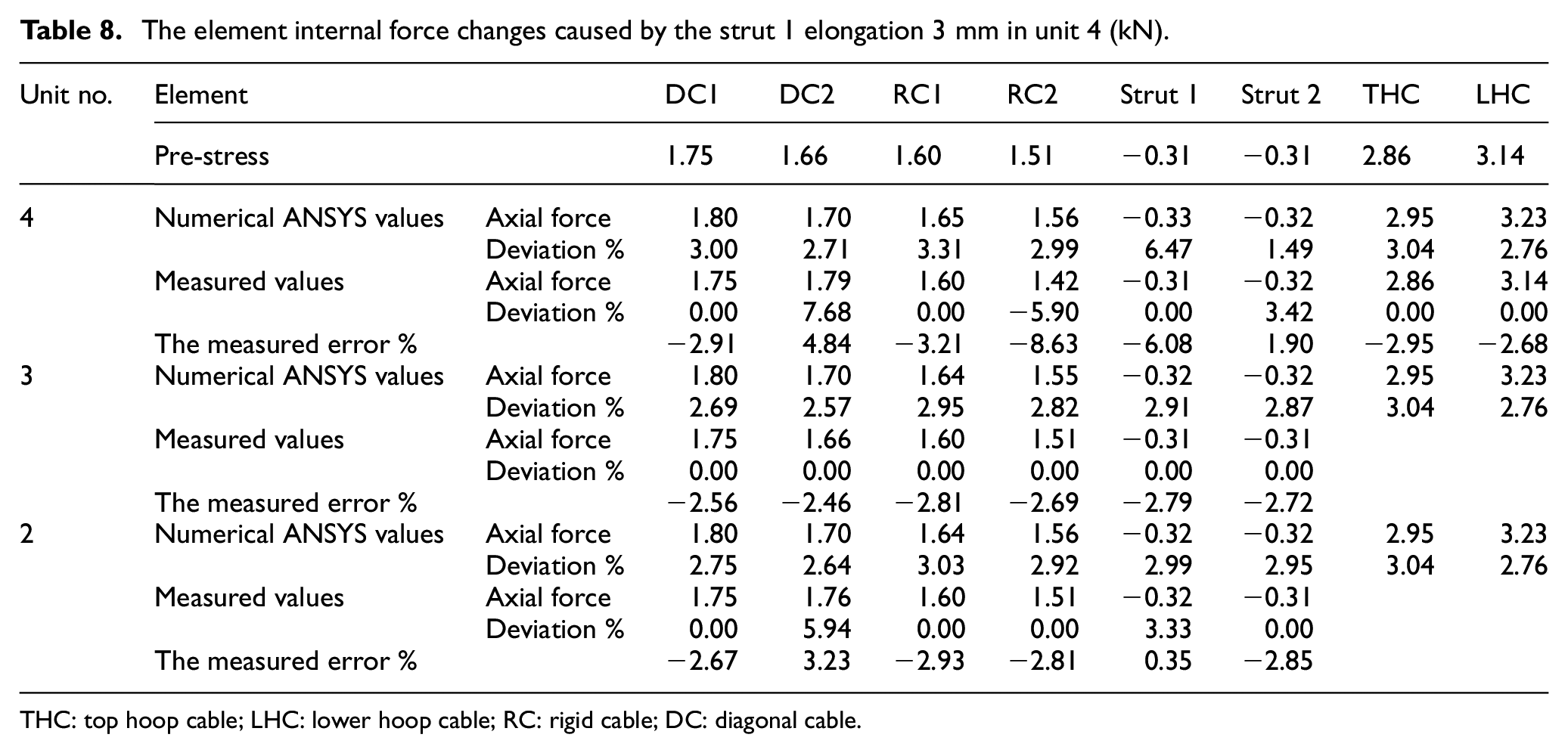
THC: top hoop cable; LHC: lower hoop cable; RC: rigid cable; DC: diagonal cable.
The element internal force changes caused by the strut 2 elongation 3 mm in unit 4 (kN).
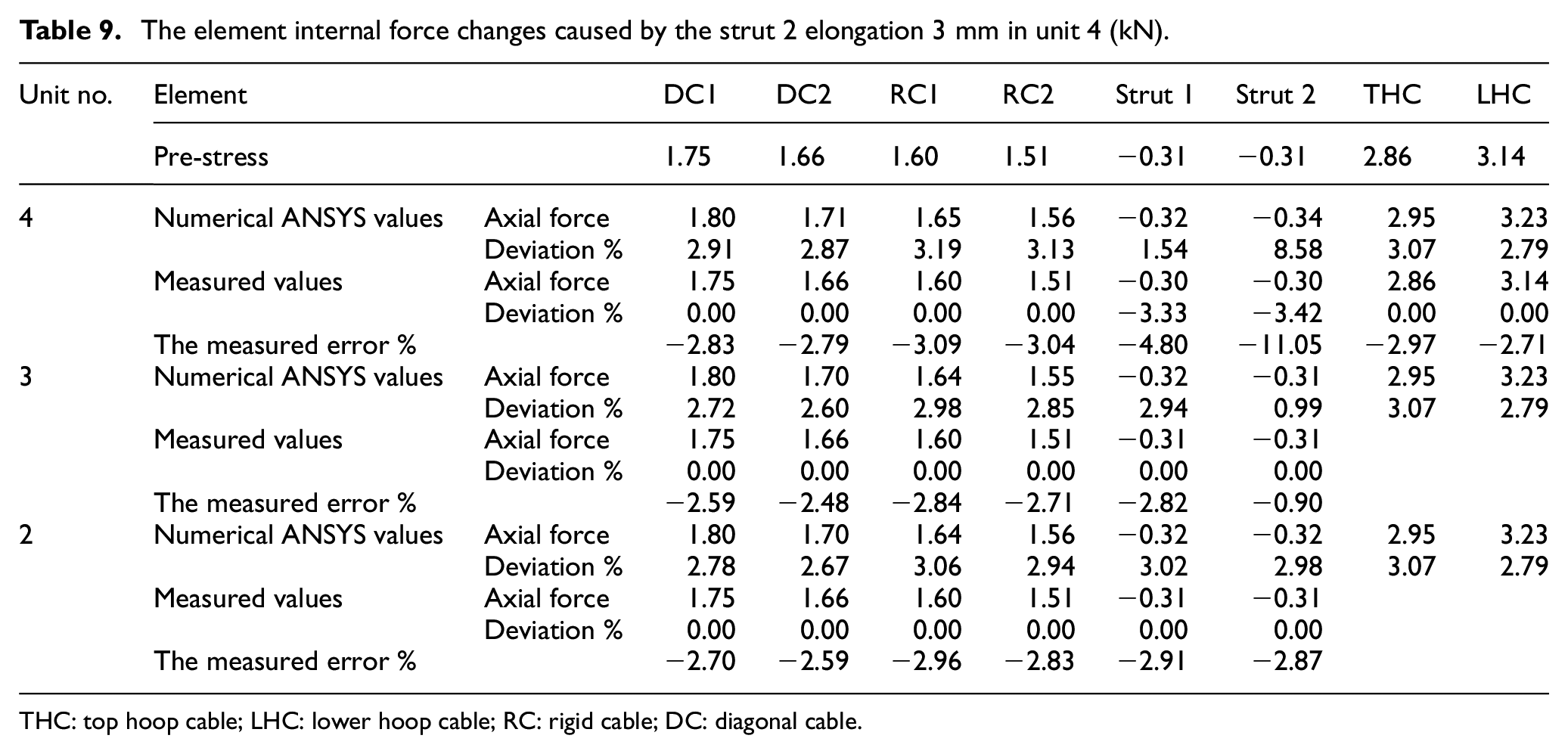
THC: top hoop cable; LHC: lower hoop cable; RC: rigid cable; DC: diagonal cable.
The element internal force changes caused by the top hoop cable elongation 3 mm in unit 4 (kN).
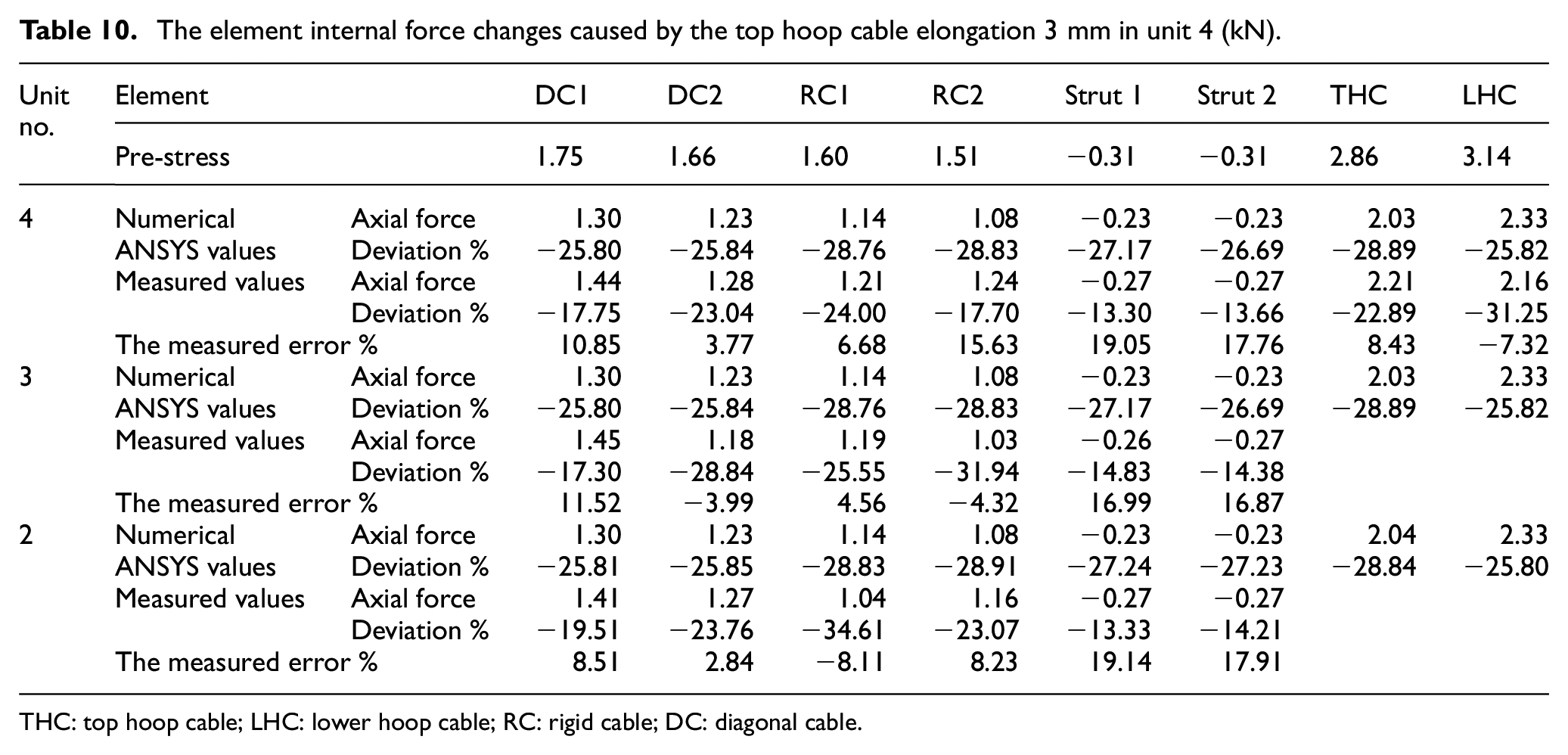
THC: top hoop cable; LHC: lower hoop cable; RC: rigid cable; DC: diagonal cable.
The element internal force changes caused by the lower hoop cable elongation 3 mm in unit 4 (kN).
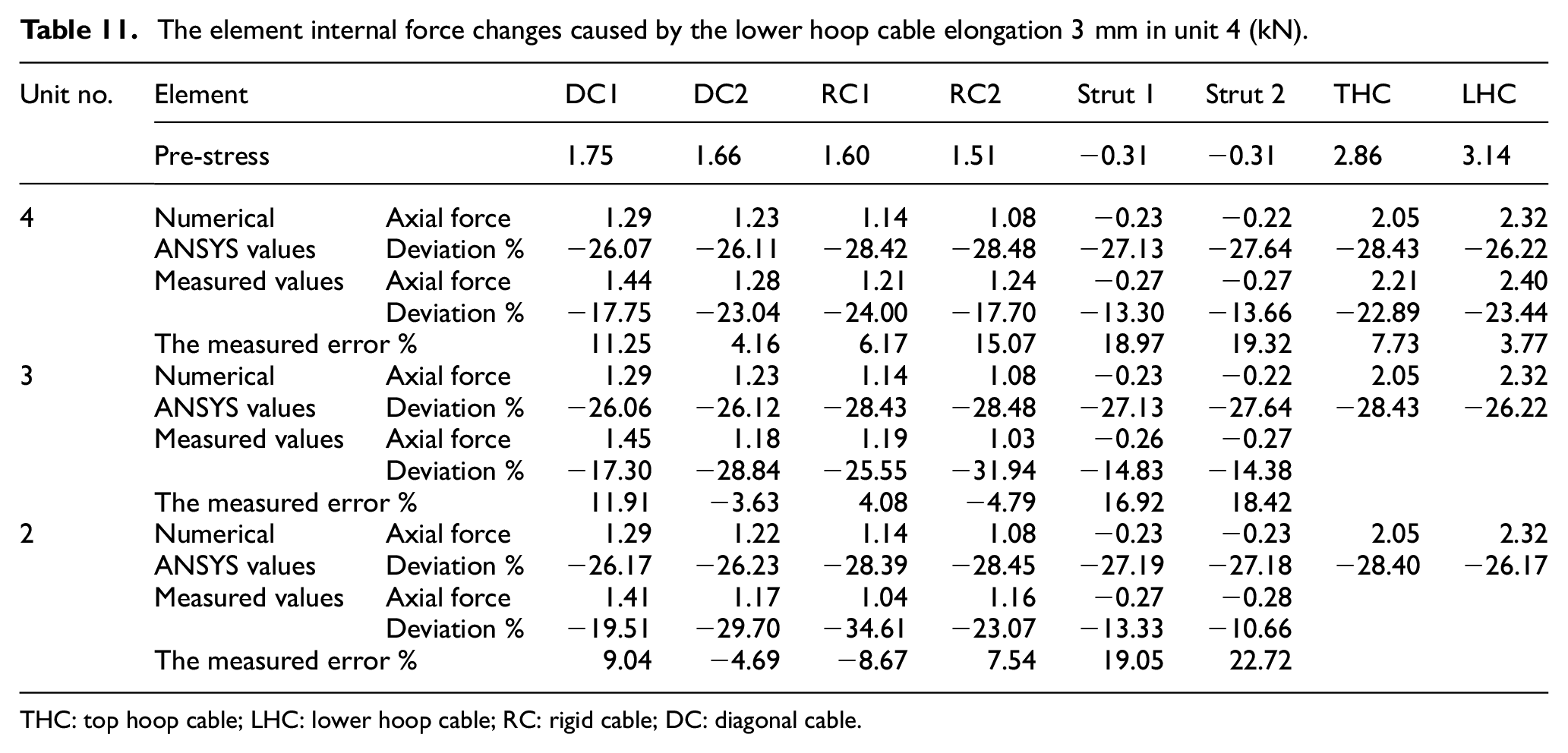
THC: top hoop cable; LHC: lower hoop cable; RC: rigid cable; DC: diagonal cable.
Element-length error sensitivity analysis of the model structure based on the proposed method
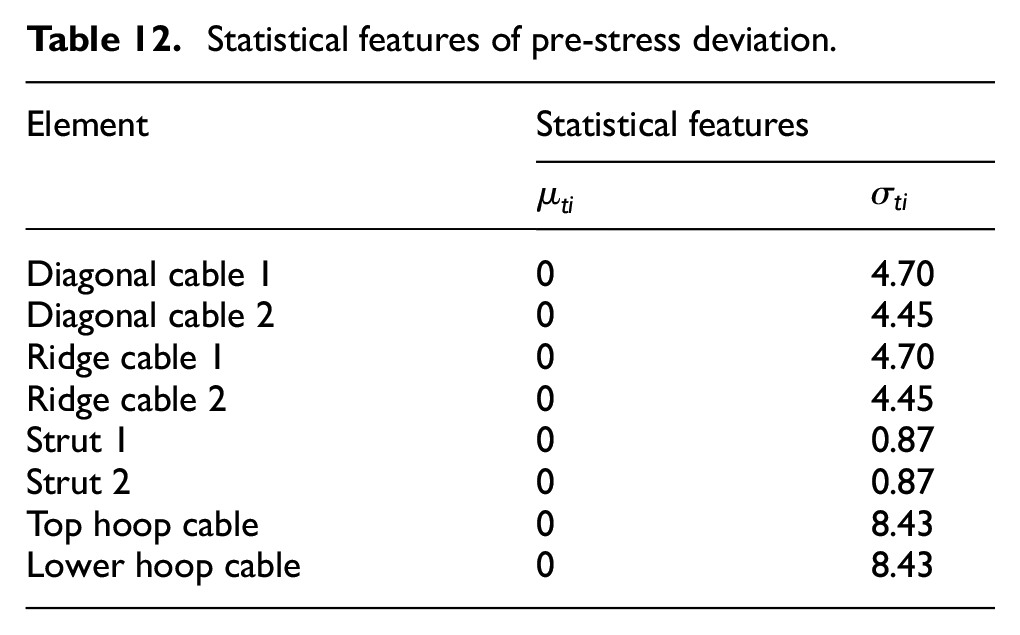
The mathematical models of the element-length error were first established based on equation (1) and Tables 3 and 4. Then, the sensitivity matrix
Statistical features of pre-stress deviation.
Conclusion
This study carried out an investigation into the element-length error sensitivity of a cable-strut tensile structure. A total of three models, including a mathematical model, a scale-down model, and an FEM, were established to carry out the element-length error sensitivity analysis. The following findings were obtained: (1) the results of the three models coincided with each other satisfactorily, verifying the effectiveness of the proposed mathematical model; (2) different elements had different error sensitivities. In this study, the error sensitivity of the hoop cables was most prominent, the ridge cables and diagonal cables the second, and the struts the third; and (3) the study results of this article can not only help to find out those elements with prominent error sensitivity, whose lengths should be controlled accurately, but also provide a basis for further study, such as the controlling and optimization theories of structural pre-stress distribution. So, it is a very important and meaningful work of this article both to real project applications and theory studies.
Footnotes
Declaration of Conflicting Interests
The author(s) declared no potential conflicts of interest with respect to the research, authorship, and/or publication of this article.
Funding
The author(s) disclosed receipt of the following financial support for the research, authorship, and/or publication of this article: This work was supported by the National Natural Science Foundation of China (Grant Nos 51578422 and 51308080), the Natural Science Foundation of Zhejiang Province (Grant No. LY14E080019), the Science and Technology Project of Zhejiang Province (Grant No. 2014C33013), the Science and Technology Project of Ministry of Housing and Urban-Rural Development of China (2014-K3-005), and Qinglan Project of Jiangsu Province.