



Abstract
In order to forecast temperature-induced strains and deflections of bridges, this study introduces a deep learning framework enhanced with feature engineering. Utilizing 1 year of field-measured temperature (input), strain and deflection data (output) from the Queensferry Crossing cable-stayed bridge, an LSTM-Attention model is developed as the core predictive architecture, with its performance evaluated both with and without feature engineering, which comprises lag feature, difference feature, rolling standard deviation and moving average. Meanwhile, comparative analyses against LSTM-Attention model and other proposed models are conducted to assess the contribution of feature engineering and attention mechanisms. Results reveal that feature engineering significantly improves predictive accuracy, particularly when integrated with the LSTM-Attention framework. For both strain and deflection forecasting, the feature-engineered LSTM-Attention model achieves up to an 84.32% reduction in
Introduction
During the service life of a bridge, structural damage and deterioration are often inevitable under the influence of various loads, mainly arising from vehicles, winds, and temperatures (AASHTO, 2020; Li et al., 2020a). Among these, thermal loads often govern the change of structural response, attracting large attention since 1960s (Cornwell et al., 1999; Huang et al., 2022; Jin et al., 2025; Tomé et al., 2018; Xia et al., 2017, 2022; Yang et al., 2018; Zhang et al., 2025; Zhou et al., 2018). For instance, the Tsing Ma Bridge in Hong Kong showcases monthly thermal effects of the main cables and bridge decks, with a maximum displacement of over 500 mm (Xu et al., 2010; Xia et al., 2013; Zhang et al., 2024a). Also, the cable forces of the third Nanjing Yangtze River Bridge in Jiangsu province, China, exhibits seasonal variation, with an amplitude of approximately 80 kN (Ren et al., 2019). Similarly, a prestressed concrete continuous box girder bridge in the G3 expressway in China experiences a longitudinal temperature-induced strain of 200 με (Gong et al., 2023). Furthermore, a suspension bridge located over the Yangtze River in Jiangsu Province, China, is subjected to a temperature-induced stress of 25 MPa on the upper deck (Xia et al., 2018). Therefore, the investigation of the relationships between thermal effect and structural response is indispensable.
Currently, the data-driven approach serves as one of the primary methods to investigate the relationship between temperature and structural response, which are broadly categorized into three types: statistical methods, signal processing techniques and deep learning models. First, in terms of statistical methods, typically a specific distribution (e.g., normal distribution) or variables are assumed to exhibit certain relationships, such as linearity, offering capabilities in statistical inference and providing high interpretability (Gong et al., 2024; Jiang et al., 2024; Xia et al., 2020b; Yan et al., 2025). However, statistical methods are limited by their dependence on assumptions and may struggle with highly nonlinear systems and intricate feature interactions (Xie, 2011). Second, signal processing techniques employ mathematical tools to extract features, denoise signals, or identify features from raw monitoring data, such as temperature, deflection, and strain, without requiring a physical model of the structure, which are particularly effective for multi-scale behavior interpretation (Ding and Li, 2007; Fallahian et al., 2022; Liu et al., 2011; Xia et al., 2020a; Xu et al., 2020). Nevertheless, one major limitation of this approach is its inability to provide causal insights, along with the risk of generating misleading features or data distortions (Smith, 2003; Vaseghi, 2008). Third, deep learning models, characterized by deep neural network architectures, exhibit superior capabilities in feature extraction and handling data variability, significantly outperforming traditional machine learning methods, and thus, it has been widely adopted in practical engineering applications (Liu et al., 2017; Meng et al., 2025; Zhang et al., 2024b). Despite these advantages, deep learning models still have certain limitations, including high data requirements and significant demands on computational resources (Ahmed et al., 2023; Thompson et al., 2020). Consequently, deep learning models possess substantial potential for future engineering applications.
Furthermore, deep learning models such as long short-term memory (LSTM), bidirectional long short-term memory (BiLSTM), and Convolutional Neural Network (CNN) have been widely applied to the prediction of thermally induced strain and deflection in recent years, achieving notable enhancement in prediction accuracy (Liao et al., 2025; Qu et al., 2024; Wang and Peng, 2024; Zhou et al., 2024). For instance, at the aspect of strain, Chen et al. (2023) apply a hybrid deep learning and autoregressive model with attention to predict the temperature-induced strain, indicating a root mean square error (RMSE) of 4.07. Besides, Zhao et al. (2023) employ a BiLSTM regression model with wavelet transform to forecast temperature-induced strain, demonstrating a
To delve into the details, the aforementioned studies on the prediction of thermally induced structural response primarily focus on the design and optimization of deep learning model architectures, such as neural network layer configurations. As a result, one limitation of the model lies in the absence of feature engineering, such as lag features or moving averages, which could potentially improve the model’s performance. When combined with feature engineering techniques, these approaches exhibit significant advantages in capturing temporal patterns, periodic trends, and local variations of thermally induced response. This integration holds great promise for enhancing the sensitivity and recognition capabilities of deep models in identifying low-frequency responses, such as thermal strain and deflection. Taking the moving average as an example, it is capable of improving the robustness of the CNN-BiLSTM-Attention model by reducing random noise interference (Pei et al., 2025). Accordingly, the integration of a deep learning model and feature engineering presents a promising direction for future research.
In this study, a deep learning network, specifically the LSTM-Attention network, is constructed to forecast temperature-induced strains and deflections for the Queensferry Crossing, located in Scotland, UK. Initially, the data preprocessing is introduced, with the model development illustrated, including feature engineering and the deep learning model. Subsequently, a case study is conducted to predict temperature-induced strains and deflections, illustrating the accuracy through four different metrics. Ultimately, a comprehensive comparison analysis is performed to evaluate the performance of feature engineering across multiple existing models.
Methodology
In this section, the data preparations are introduced, including the input temperature field and the output strain and deflection data. Subsequently, feature engineering, particularly lag features, difference features, rolling standard deviation, and moving average, is described to illustrate how it contributes to the predictive performance of the model. Finally, the architecture of the LSTM-Attention model is presented, preparing for the following case study.
Data preparations
For the input dataset, the field-measured temperature data is collected over a 1-year period between July 2020 and June 2021 from multiple sections of the Queensferry Crossing, comprising soffits, bottom chords, deck chords, stay cables, concrete decks, and tower shell sections. Through the investigation of the temperature field, it was observed that the bridge exhibited consistent overall thermal trends, while the tower shells experienced the highest rate of data loss, amounting to approximately 63.79%. Besides, the concrete sections of the bridge, including the deck and tower, experienced notable thermal gradients across their thickness—around 6°C and 4°C respectively. Meanwhile, the temperature variation in steel components remained below 1°C, owing to their superior thermal conductivity and thinner cross-sections, resulting in more homogeneous temperature fields (Xu et al., 2025).
For the output dataset, strain and deflection are processed using separate strategies to ensure that only the temperature-induced components are retained for model training. The strain data use 10-min mean values, which effectively represent the thermal effects because they are less sensitive to short-term dynamic loads. However, for the deflection data, the 10-min mean is insufficient to suppress high-frequency noise caused by traffic and environmental disturbances. Therefore, following the procedure proposed in our previous study (Xu et al., 2020), a multi-resolution wavelet-based method is applied to decompose the measured deflection signals into multiple frequency bands. The low-frequency component corresponding to the diurnal temperature variation is extracted and used as the temperature-induced deflection, while the high-frequency components dominated by vehicle loads and measurement noise are filtered out. This wavelet-based separation ensures that the LSTM network is trained on structural response data primarily governed by thermal actions rather than transient load effects.
Feature engineering
Summary and comparison of feature engineering.

Lag feature represents one of the most fundamental techniques in time-series feature engineering, which involves introducing past observations (e.g., at time 
Difference feature is a time-series transformation technique that involves computing the difference between the current value and a lagged value, typically to quantify the magnitude of change over time, contributing to revealing dynamic variations in the series. The 
The rolling standard deviation is calculated by computing the standard deviation of values within a fixed-length moving window, and assigning the result to the last time step of each window, capturing the local variability of the time series, with the “rolling” mechanism enabling the analysis of dynamic fluctuations over time. However, this feature only quantifies the magnitude of fluctuations and does not distinguish between upward and downward trends. Generally, the rolling standard deviation at time step 
The moving average is calculated by taking the mean of values within a fixed-size time window and assigning the result to the final time step of the window. The moving average at time step 
Deep learning model
In this study, the LSTM-Attention model is constructed to forecast the temperature-induced stain and deflection, with its architecture illustrated in Figure 1. Architecture of the LSTM-Attention model.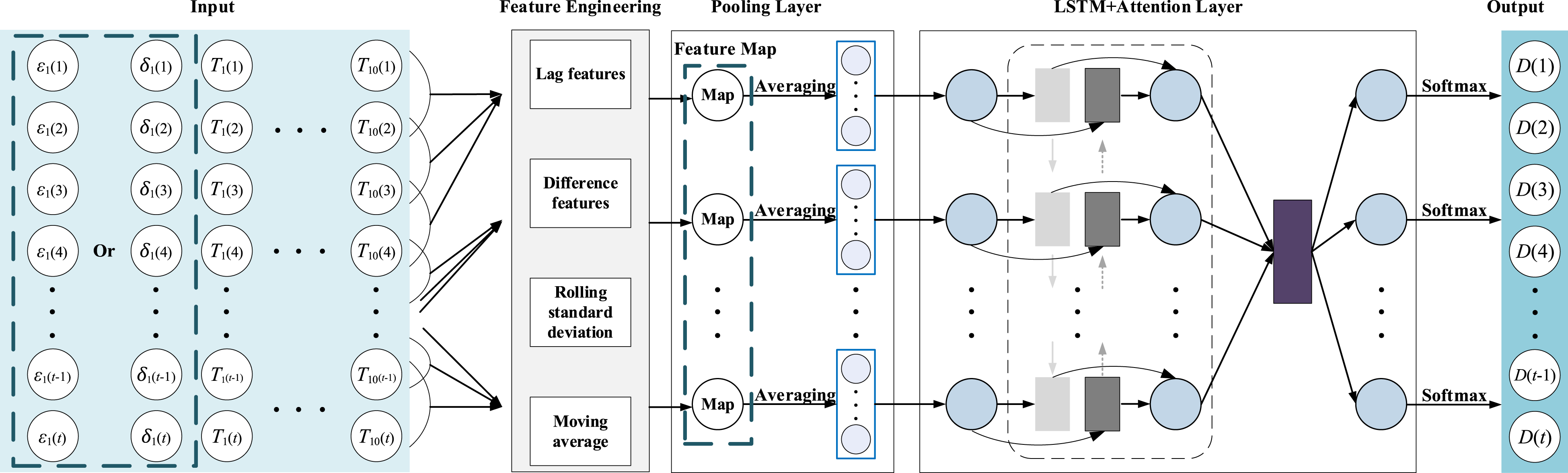
LSTM
Since its introduction by Hochreiter and Schmidhuber, the LSTM network has become a widely adopted tool in engineering applications (Hochreiter and Schmidhuber, 1997). To enhance memory control, Gers et al. (2000) subsequently incorporated a Forget Gate into the LSTM structure, allowing the cells to regulate memory retention and prevent output saturation. As a specialized structure of Recurrent Neural Network (RNN), the network effectively overcomes the vanishing and exploding gradient problems inherent in traditional RNN, and exhibits strong performance in handling time series data and capturing long-term dependencies (Li et al., 2020b). Normally, the structure of the LSTM cell, which is the core of the LSTM network, is divided into three parts, including the forget gate, the input gate, and the output gate, with the structure of the LSTM cell shown in Figure 2 (Zhou et al., 2024b). The structure of LSTM cell.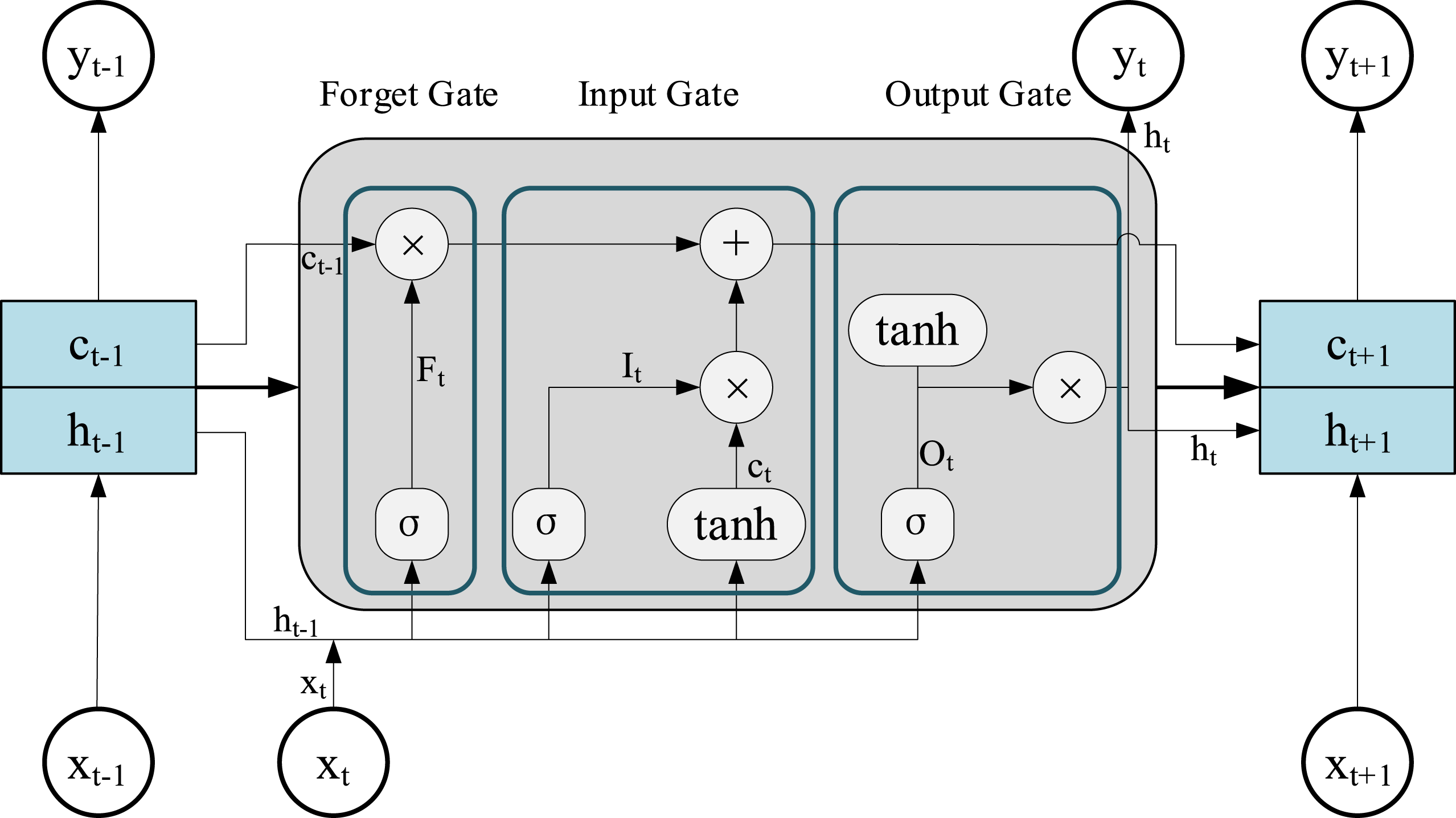
Additionally, the calculation process of LSTM network is outlined as follows:






Attention mechanism
The attention mechanism, which enables the model to focus on critical information while filtering out redundant or irrelevant signals, was initially inspired by findings in biological cognitive systems (Wu et al., 2024). Currently, this novel mechanism, which is capable of capturing inherently significant information in the input data, has been successfully utilized in time series prediction by paying attention to input data selectively (Li et al., 2021; Liao et al., 2023). Typically, there are three vectors primarily construct this mechanism, comprising query vector Overview of attention mechanism. Attention mechanism expressed with 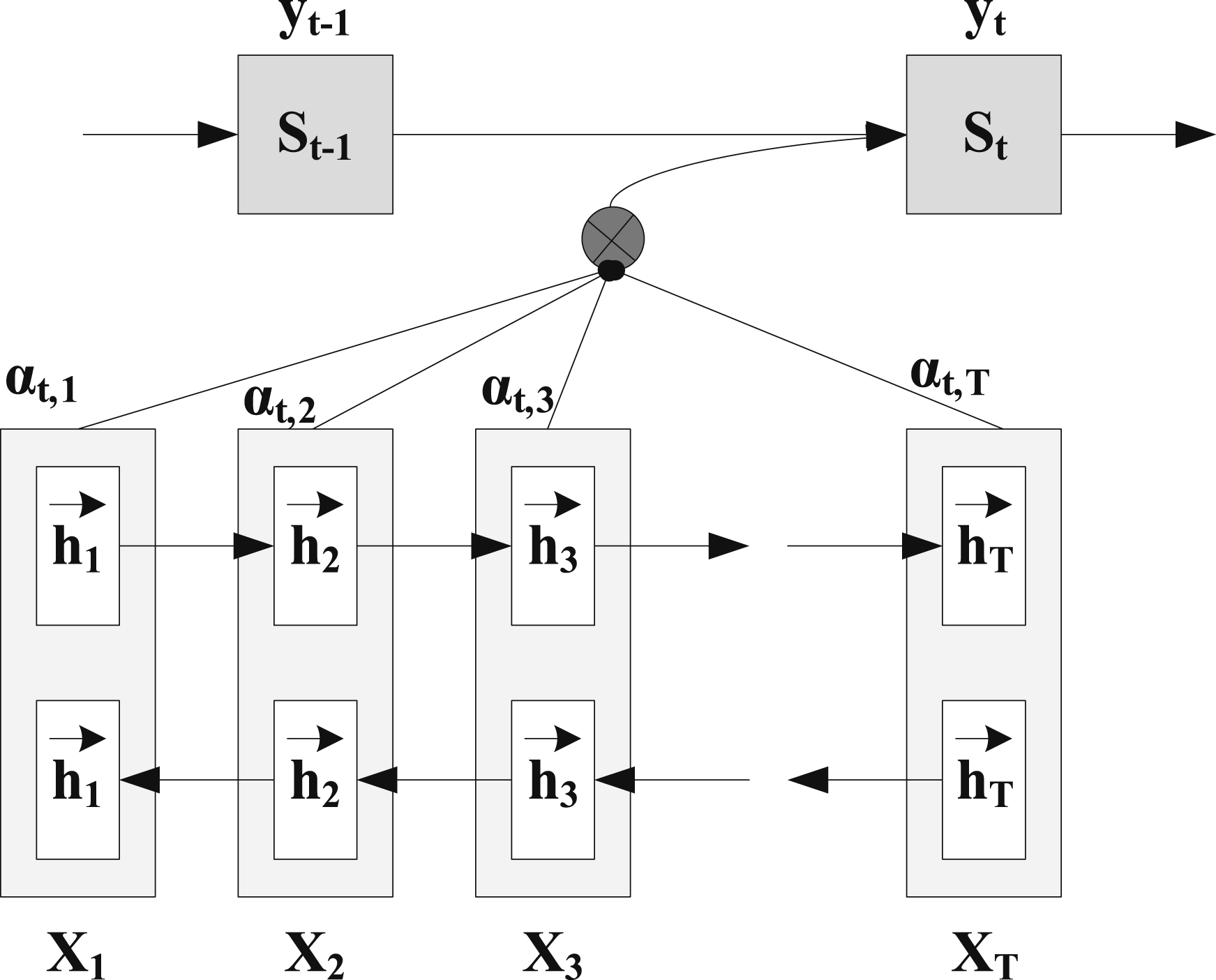
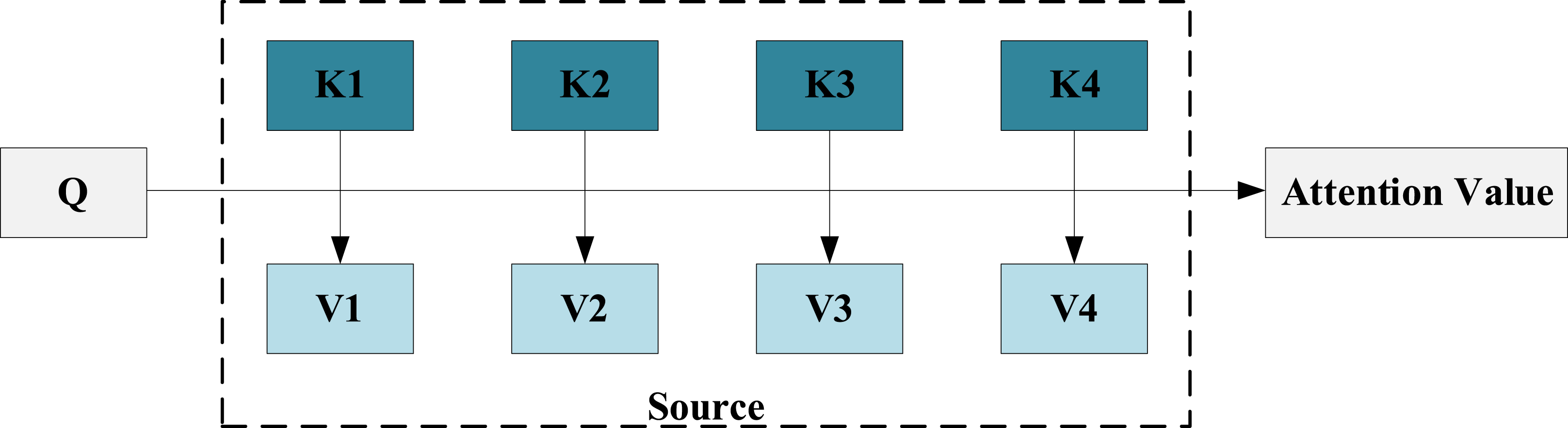
Furthermore, considering the diverse information relationships among structural responses, a multi-head attention mechanism is employed in this study, with the detailed architecture described in Figure 5. In addition, the process of transformations is summarized in equations (12) and (13) (Liu et al., 2025; Shi et al., 2024). Architecture of multi-head attention mechanism.

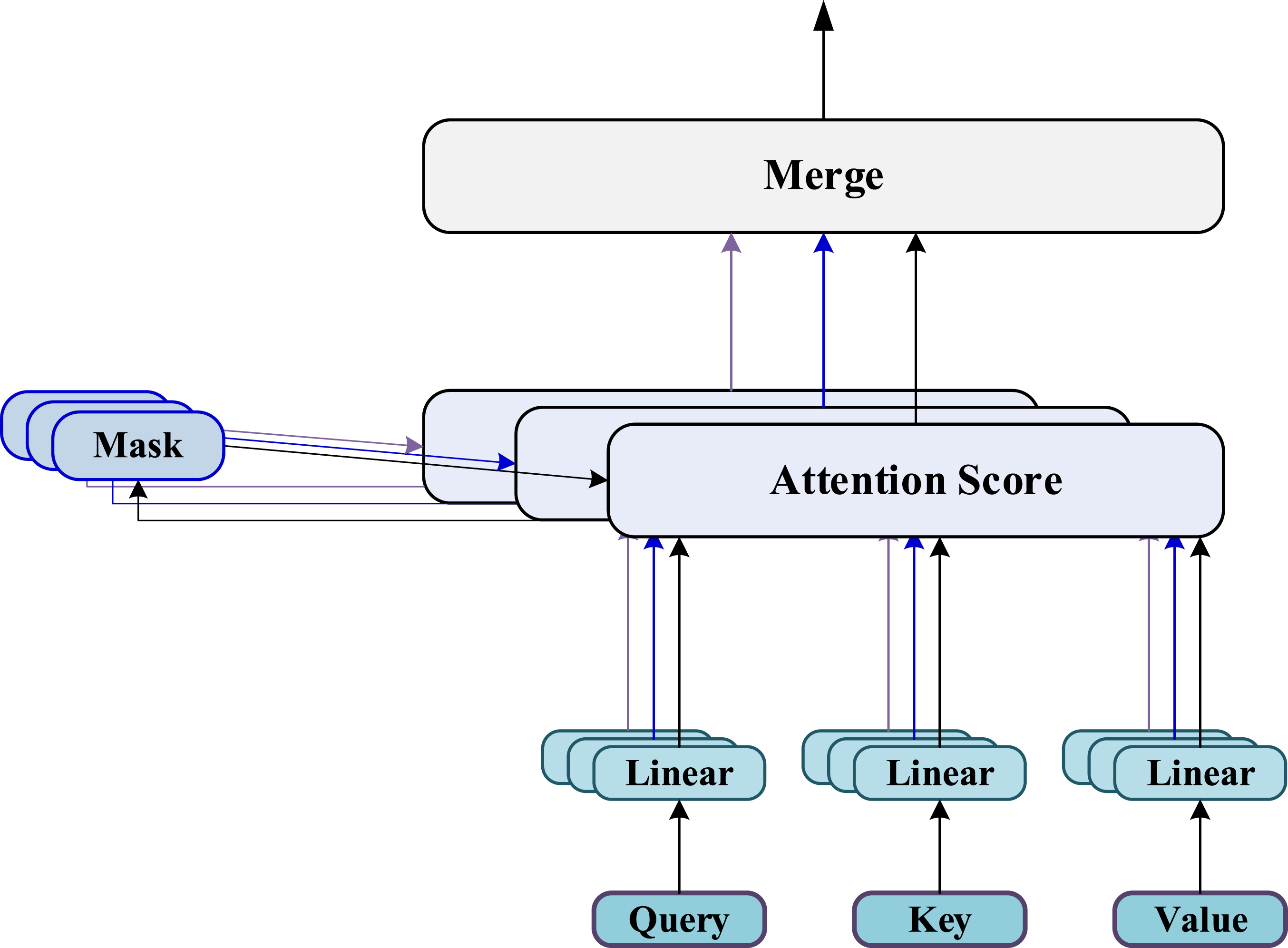
Case study
Structure of LSTM–attention model.
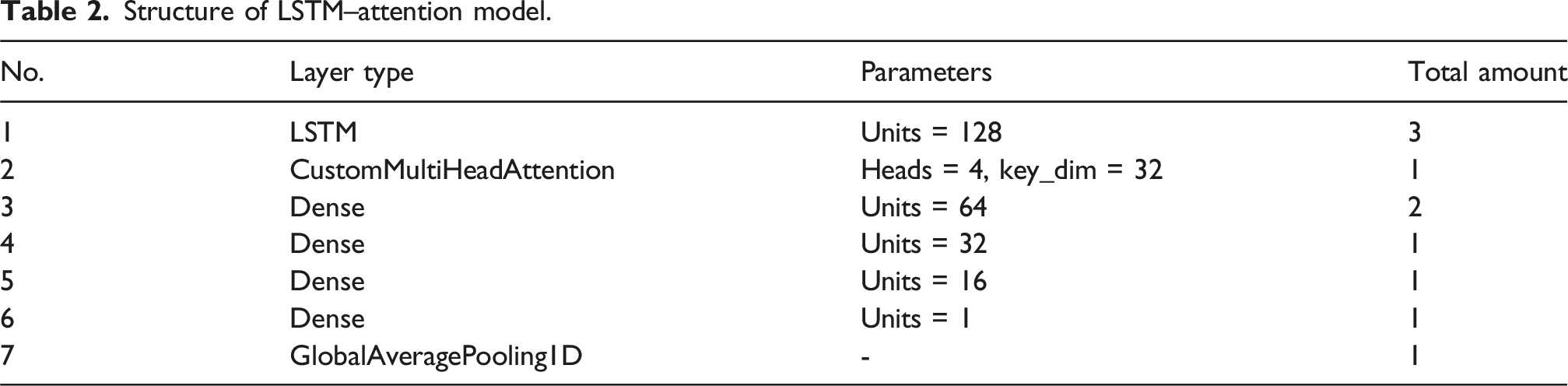
Basic parameters of LSTM–attention model.

Besides, preceding the model training phase, four evaluation metrics are applied, comprising 



First, in terms of strains, the LSTM–Attention model with and without feature engineering is conducted. Also, to further confirm the effectiveness of feature engineering, an LSTM model is implemented, with the results of all models summarized in Figure 6 and Table 4. Summary of results for strains. Optimal results of different models for strains.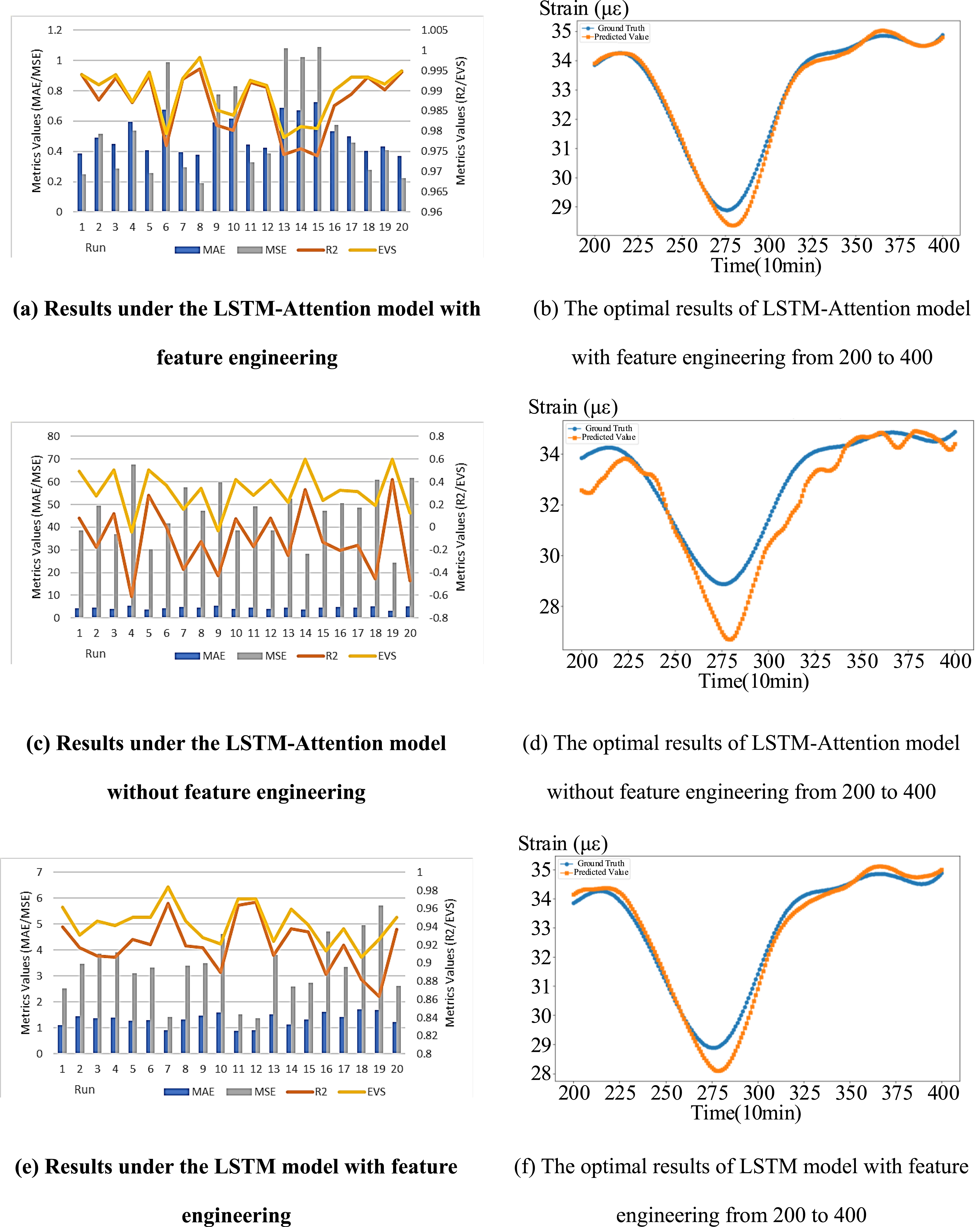

Observed from Figure 6 and Table 4, the LSTM-Attention model with feature engineering exhibits a better predictive performance than that without feature engineering, specifically an 84.32% reduction in
Second, similar models are also executed for deflections, with the results presented in Figure 7 and Table 5. Summary of results for deflections. Optimal results of different models for deflections.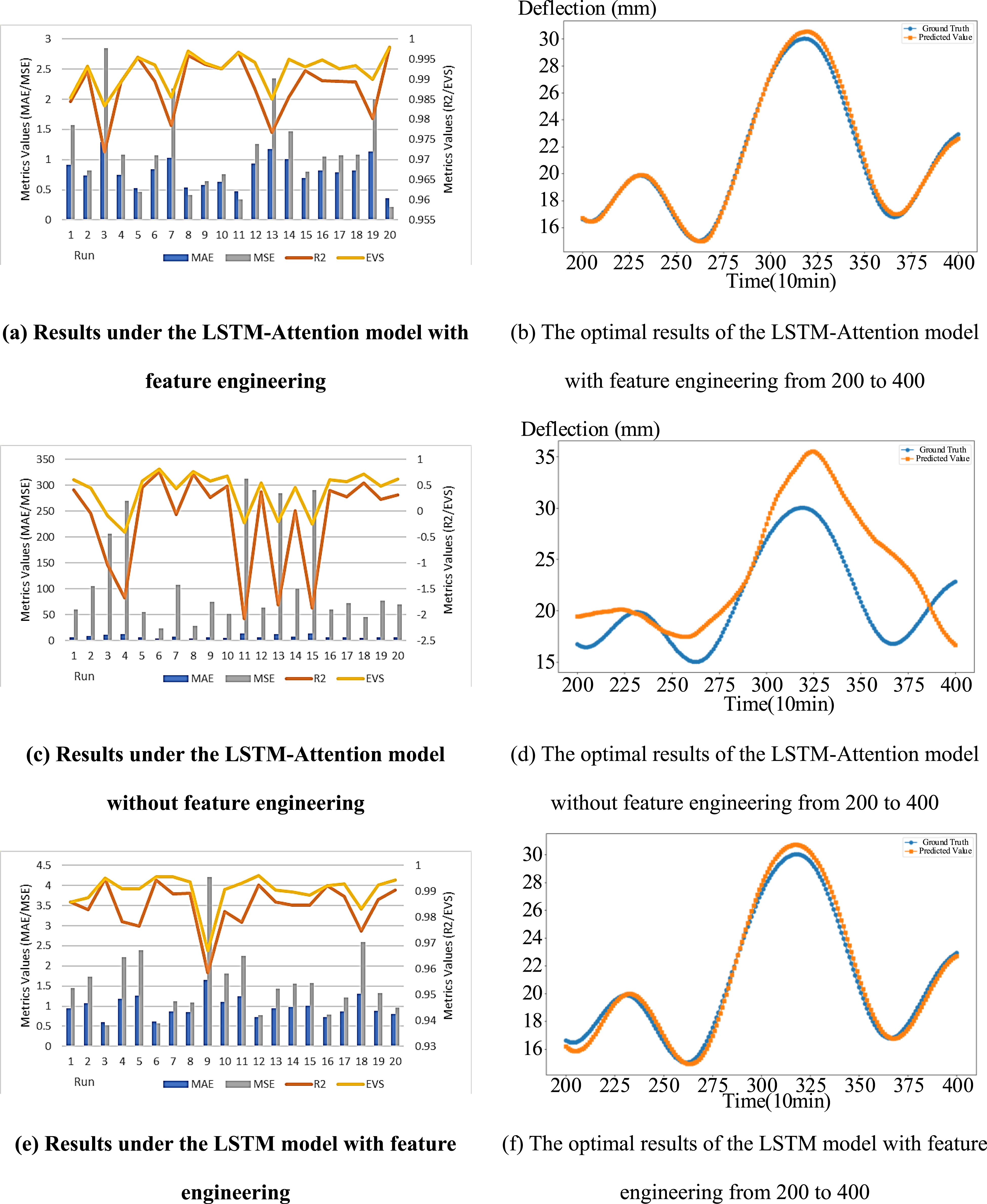

As shown in Figure 7 and Table 5, compared to that without feature engineering, the LSTM-Attention model with feature engineering achieves superior prediction accuracy, which is a decrease of 91.30% in
These findings suggest that while model selection influences performance to some extent, it is the implementation of feature engineering and attention mechanism that drives the most significant gains in predictive accuracy.
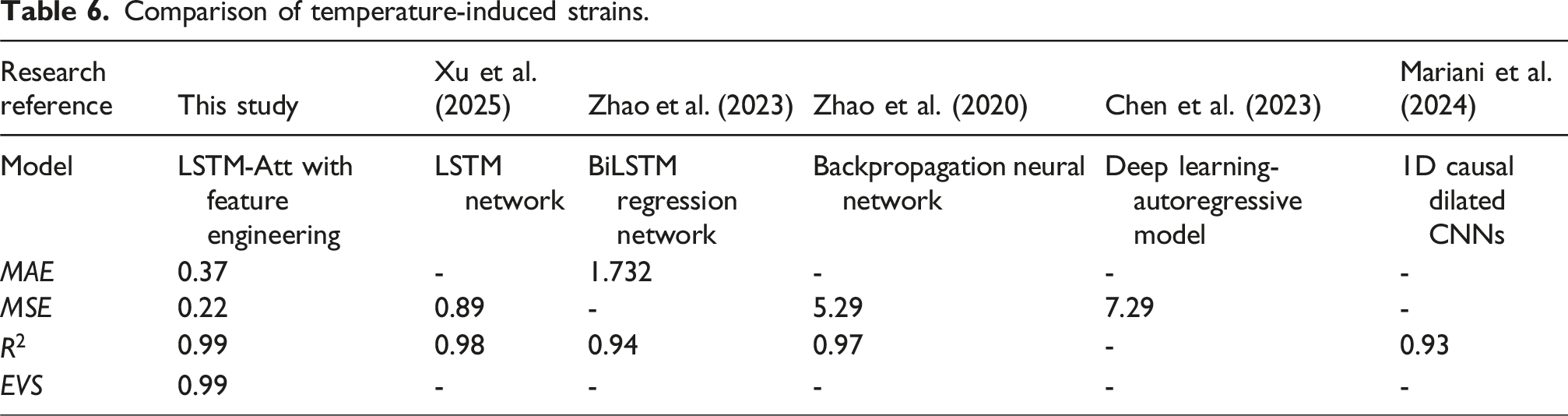
Comparison of temperature-induced strains.
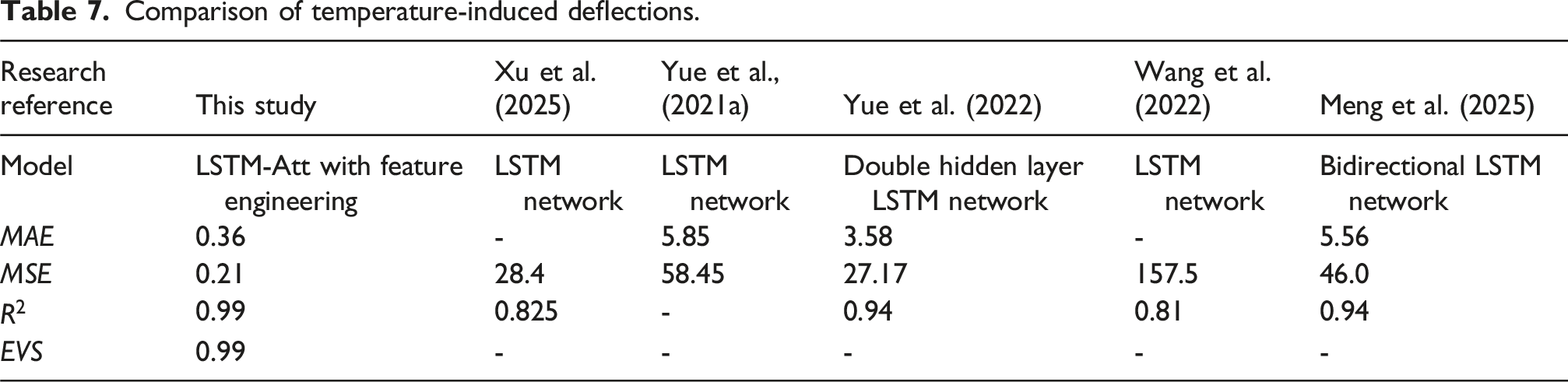
Comparison of temperature-induced deflections.
At the aspect of strains, first, compared to the results from Xu et al. (2025), which utilized the same dataset with an LSTM model, there is only a slight improvement observed in
With regard to deflections, the LSTM-Attention model with feature engineering showcases significant enhancement when comparing with the LSTM network from Xu et al. (2025), specifically a 99.26% decrease in
In summary, when applied to the same dataset, the LSTM-Attention model shows significant improvement in deflection prediction. Furthermore, compared to previous studies using different datasets, the LSTM-Attention model with feature engineering reports substantial improvements in predictive accuracy for both strains and deflections.
Concluding remarks
This study introduced a deep learning model applying feature engineering to forecast the temperature-induced strains and deflections from the Queensferry Crossing cable-stayed bridge. The LSTM-Attention model is initially constructed to serve as the core predictive framework. Subsequently, to evaluate the role of feature engineering, the predictive performance of models with and without its application is first analyzed. Finally, based on the results of recent studies, for the sake of strengthening the findings, a comparative analysis referencing recent studies is also implemented. In summary, the conclusions drawn from this study are as follows: (1) Feature engineering showcases noticeable function through comparative analysis. Specifically, for strains, the LSTM-Attention model with feature engineering presents an 84.32% reduction in (2) The attention mechanism is capable of enhancing the predictive accuracy of temperature-induced strains and deflections. With regard to strains, in comparison with the LSTM model incorporating feature engineering, the feature-engineered LSTM-Attention model yields markedly superior results, exhibiting a 58.43% decrease in (3) According to previous studies, the LSTM-Attention model with feature engineering demonstrates superior predictive performance. At the aspect of strains, the LSTM-Attention model with feature engineering outperforms other models by approximately 78.64% in
In conclusion, this study underscores the potential of deep learning models incorporating feature engineering and the attention mechanism, indicating that future research may further explore adaptive or domain-informed feature engineering strategies to fully leverage the learning capacity of advanced neural architectures.
Footnotes

Funding
The authors disclosed receipt of the following financial support for the research, authorship, and/or publication of this article: This project has received funding from the National Natural and Science Foundation of China grant No. 52308150; the Jiangsu Provincial Department of Science and Technology grant No. BZ2024015; China Railway Group Limited Science and Technology Research and Development Program (2025-Major Project-17); the European Union’s Horizon 2020 Research and Innovation Program under the Marie Skłodowska-Curie grant agreement No. 801215 and the University of Edinburgh Data-Driven Innovation Program, part of the Edinburgh and South East Scotland City Region Deal, and Screening Eagle, AG, Zurich, Switzerland. This research work is supported by the Big Data Computing Center of Southeast University.
Declaration of conflicting interests
The authors declared no potential conflicts of interest with respect to the research, authorship, and/or publication of this article.
Data Availability Statement
Some or all data, models, or code that support the findings of this study are available from the corresponding author upon reasonable request.