



Abstract
Bolted bamboo connections are ubiquitous in contemporary bamboo structures, yet their performance remains under-researched—particularly in configurations without cement mortar infill. This study investigates the structural behaviour of a T-shaped fish-mount joint, commonly used to connect two angled bamboo members. The joint consists of two culms connected using through-culm threaded rods—one straight and one with a hooked end. A critical loading scenario arises when the threaded rod is pulled through the bamboo, causing the washer to bear against the outer culm wall. To simulate this, the study replicates the failure mechanism by pushing the rod inward, effectively assessing the rod pull-in capacity. In this context, the study tests one hundred connection specimens made of Bambusa blumeana bamboo poles and threaded rods of 8 mm and 12 mm in diameter, with corresponding nuts and washers. From the experimental results, it then develops three predictive models for estimating maximum capacity: (1) a dimensional analysis model, (2) a regression-based model, and (3) a bending-perpendicular-to-fibre model. Among these, the dimensional analysis model based on bamboo density, culm diameter, and wall thickness demonstrates the best performance, offering a simple, unit-consistent formulation with a strong fit (
Introduction
Bamboo’s abundance and fast-growing characteristics have made it an integral material for sustainable and affordable housing for over a billion people across the globe (Bundi et al., 2024; Md Tahir et al., 2023). Traditional bamboo houses use artisanal joineries such as lashed connections, carpentry joints, etc. (Alarcon, 1991; et al., 2025). Such joineries are often temporary (Widyowijatnoko and Trautz, 2012; Zhang, 2017), dependent on craftsmen’s tools and skills, and have unknown structural performance (Disén and Clouston, 2013). Furthermore, the connection assembly is complex due to the combination of natural variability of bamboo poles, their peculiar geometry, and anisotropic properties (Hong et al., 2019). In this regard, numerous engineered (Aniñon and Garciano, 2024; Benitez et al., 2019) and innovative (van Wassenhove et al., 2021; Barnet and Jabrane, 2019) connections have been proposed to address those challenges.
Steel dowels are widely used to connect bamboo members (Deng et al., 2025; Paraskeva et al., 2019) because they provide a practical solution to address the material’s irregular geometry and hollow cross-section. To prevent common failure modes in dowelled joints, such as local crushing and splitting of the culm wall, reinforcement methods including mortar infill (Correal et al., 2021) and radial confinement (Hu et al., 2021; Moran and García, 2019) are applied. Recent research also explores hybridization of culm and slat elements to reduce variability and establish predictable load paths (Villegas et al., 2019), while engineered bamboo products (Wahan et al., 2022; Zhao et al., 2025) are developed to overcome the geometric limitations of natural poles. In this context, dowel-type connections represent an efficient approach to the structural joining of bamboo culms, employing nails, screws, and bolts. These connectors are widely available and cost-effective, and they accommodate the intrinsic variability of bamboo poles (Pradhan and Dimitrakopoulos, 2021). Their response (Malkowska et al., 2022; Malkowska et al., 2023; Mouka and Dimitrakopoulos, 2022) and damage mechanisms (Ramful, 2018; Zhou et al., 2022) are predictable, and they can be designed to deliver high stiffness and ductility (Kang et al., 2024; Khodabakhshi et al., 2025).
This study investigates one of the most common connections used in bamboo structures, the T-connection. It is used to join two angled bamboo elements through the traditional fish-mouth, lashing, or fasteners, forming a T-shaped connection (Michiels et al., 2017; Romero Méndez et al., 2017) (see Figure 1(a)). Despite its ubiquitous use, studies on these connections remain limited (Boucher et al., 2025). Axial load tests on limited samples of mortar infilled T-connections exhibited bamboo splitting as the dominant failure mechanism (Dickson et al., 2013). These connections exhibit low moment resistance governed by capacity of the dowel (Cabanas, 2018) and small lever arm between compression and tension zones (Harries et al., 2022). Existing design standards (ISO 22156:2021; Asociación Colombiana de Ingeniería Sísmica, 2012) provide limited guidance and are solely for designing T-connections with mortar infill. To the authors’ knowledge, there are no studies on unfilled T-connections to-date. Understanding the performance of unfilled T-connections could enable its use in lightly loaded connections without the need for reinforcements (e.g. through mortar infill, confinement, etc.). Common (a) T-connection used in BASE socialized houses, (b) force transfers, and (c) testing setup.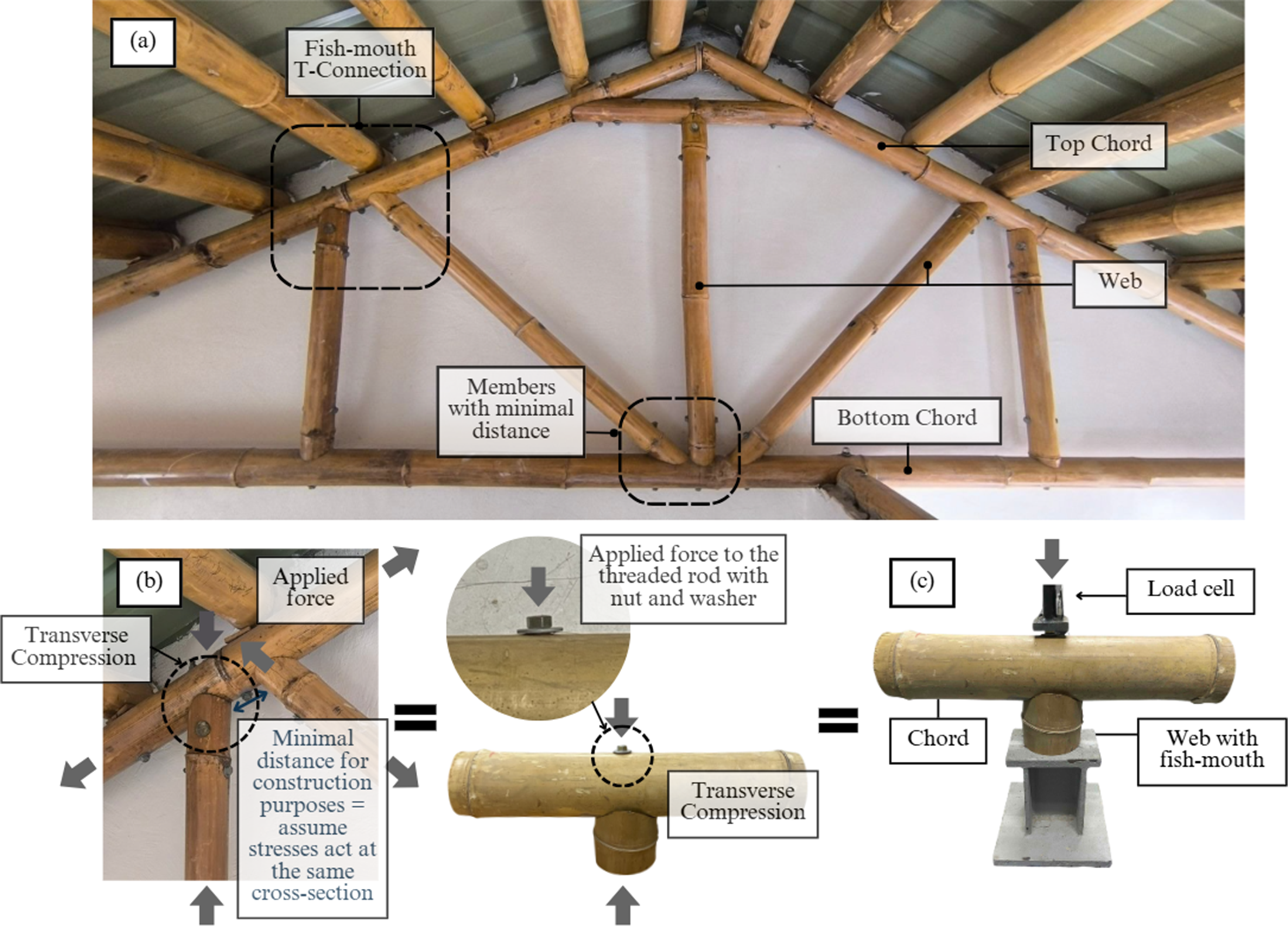
In this regard, the motivation of this study arises from the need for the engineered design of T-connections for bamboo structures. Note that the T-connection consists of two components: (a) a through-culm threaded rod with a nut-washer bearing at the chord member, which hooks onto (b) the dowel connection in the web element. This study focuses on the first component of the T-connection, without mortar infill. The other component (i.e., the dowel connection in the web member, Figure 1(b)) is known to exhibit a predictable response (Correal et al., 2021; Mouka and Dimitrakopoulos, 2022), and is a theme of a future study. Specifically, this study tests 100 T-connection samples to establish their maximum capacity and damage patterns. It then examines three different prediction models based on mechanics, regression, and dimensional analysis to estimate its maximum capacity. Finally, the results recommend a lower-bound model for designing the T-connection component.
Methodology
Physical properties of Bambusa Blumeana bamboo poles.

The tests are conducted in the Base Innovation Centre using the Shimadzu AG-X plus 100 kN Universal Testing Machine. The proposed test setup (see Figure 1(c)) applies a vertical compression load on the threaded rod. The other end of the rod is free within the chord member. This represents internal forces in the T-connections, for instance, in bamboo trusses under load (see Figure 1(b)). Herein, the diagonal web member is under tension and pulls on the T-connection, whereas the vertical web member is under compression and provides restraint. This causes compression on the cross-section of the chord member. The loading rate is set to 5 mm per minute, which ensures all specimens fail within 3-7 minutes of loading (following the ISO 22157:2019 guidelines).
Results and discussion
Figure 2 presents the force-displacement response of the T-connection samples. The maximum observed force, i.e. Force-displacement response of the connections with (a) 8 mm and (b) 12 mm threaded rods.
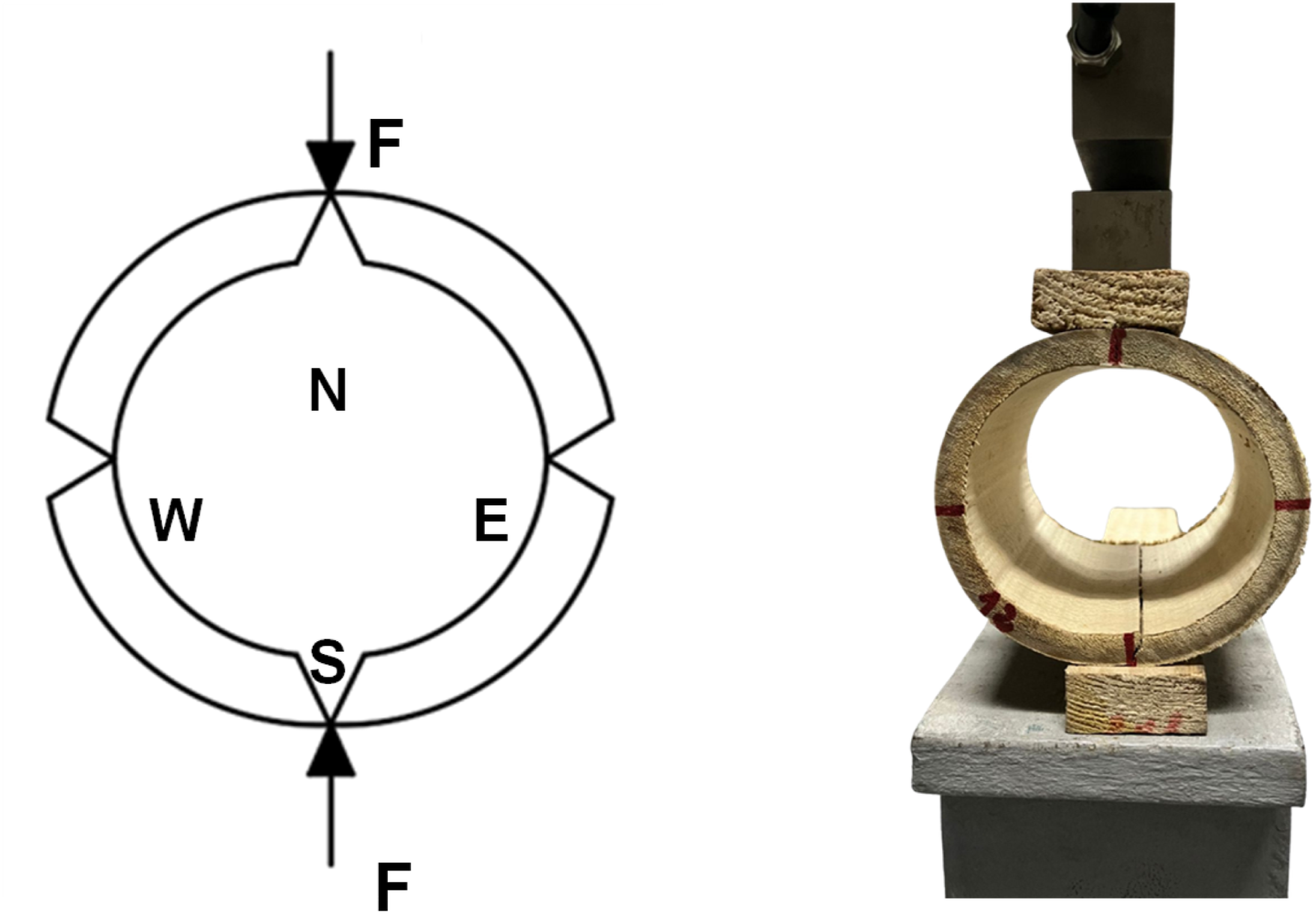
As the specimen is loaded, the compression force induces localized ovalization of the cross-section, causing the softening of the force-displacement curve. The damage modes at failure differ between the specimens. The 12 mm threaded rod specimens exhibit splitting on the top and sides of the chord (see Figure 3(a)). This is similar to the failure observed from the ISO 22157:2019 bending perpendicular to fibres test (see Figure 4). On the other hand, the 8 mm threaded rod specimens fail by splitting originating at the rod’s perimeter (see Figure 3(b)). The failure is likely a combination of the bending perpendicular and localised shear failure of the top wall. The difference in the failure modes between the 8 mm and 12 mm rods is likely due to the smaller stress area in the 8 mm threaded rod, which caused a localised failure. Lastly, note that all observed failure modes are governed by the brittle damage modes of bamboo. Such damage modes are influenced by the natural variability in geometry and mechanical properties of bamboo and brings a significant scatter in the test data in Figure 2. Typical failure in tests with (a) 12 mm and (b) 8 mm threaded rods. Bending perpendicular test based on ISO 22157:2019.
Developing prediction models
This section evaluates methods for estimating the maximum capacity
Bending perpendicular model
The 12 mm threaded rod specimens exhibit a failure mode resembling bending perpendicular to fibres, i.e., diametric compression with splitting at one or multiple quadrants (i.e., N, S, E, or W, see Figure 4). This study estimates, as a first approach, the capacity of this failure mode using the principles of bending strength perpendicular to the fibres 



Note that in equations (3) and (4), the expression 

The subscripts N, S, E, and W refer to the quadrants where the failure is observed (see Figure 4). The symbols, i.e.
The equations depend on the strength
Figure 5(a) shows scatter plots of the experimental Predicted values plotted against observed values for: (a) NS and (b) EW failure. Predicting equations and their corresponding 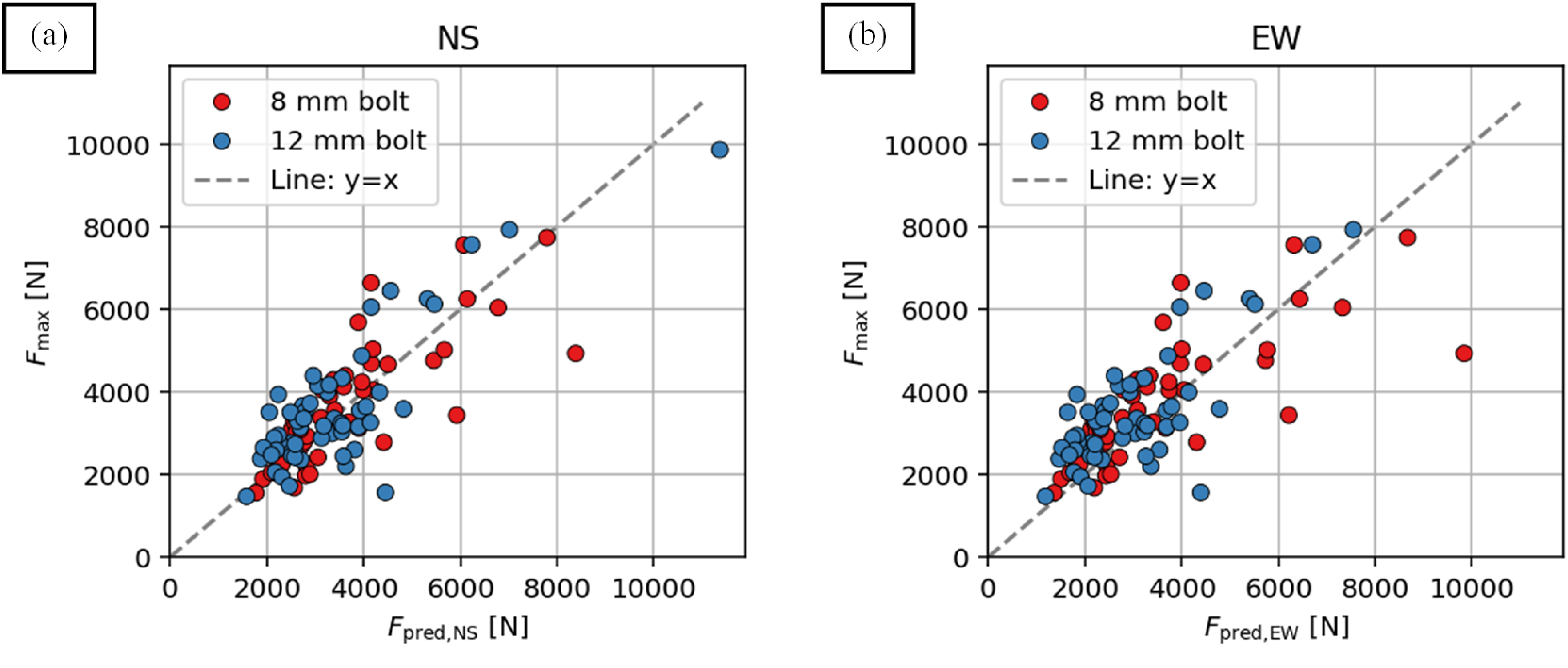

Regression analysis


Best performing regression models.
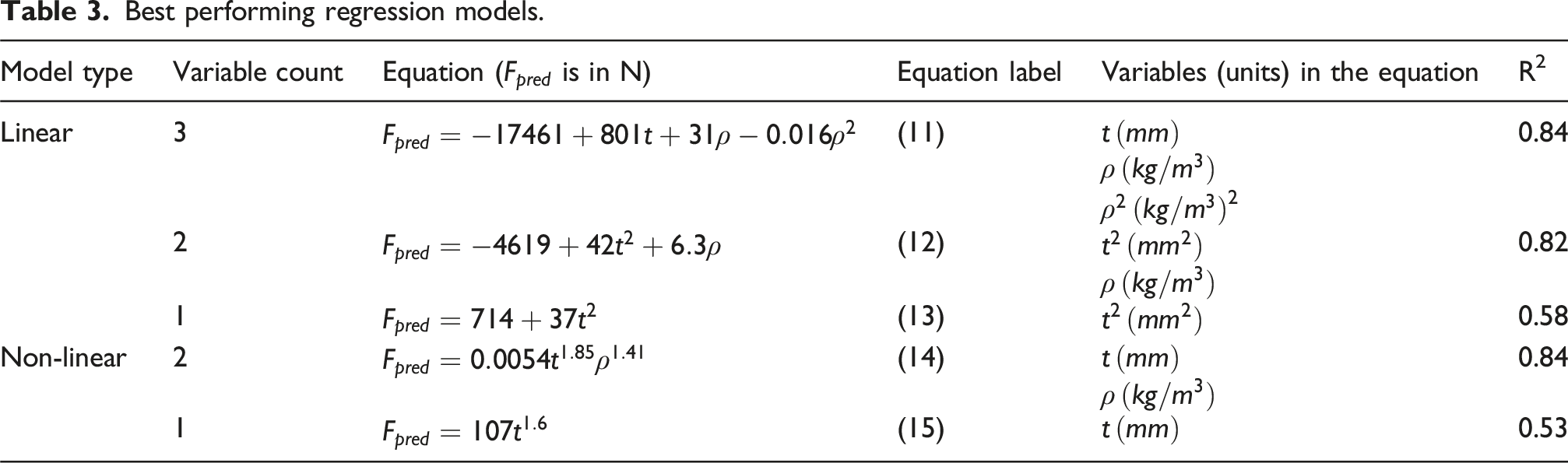
Herein, considering both the simplicity (fewest parameters) and goodness-of-fit (highest Regression prediction model plotted against the observed data.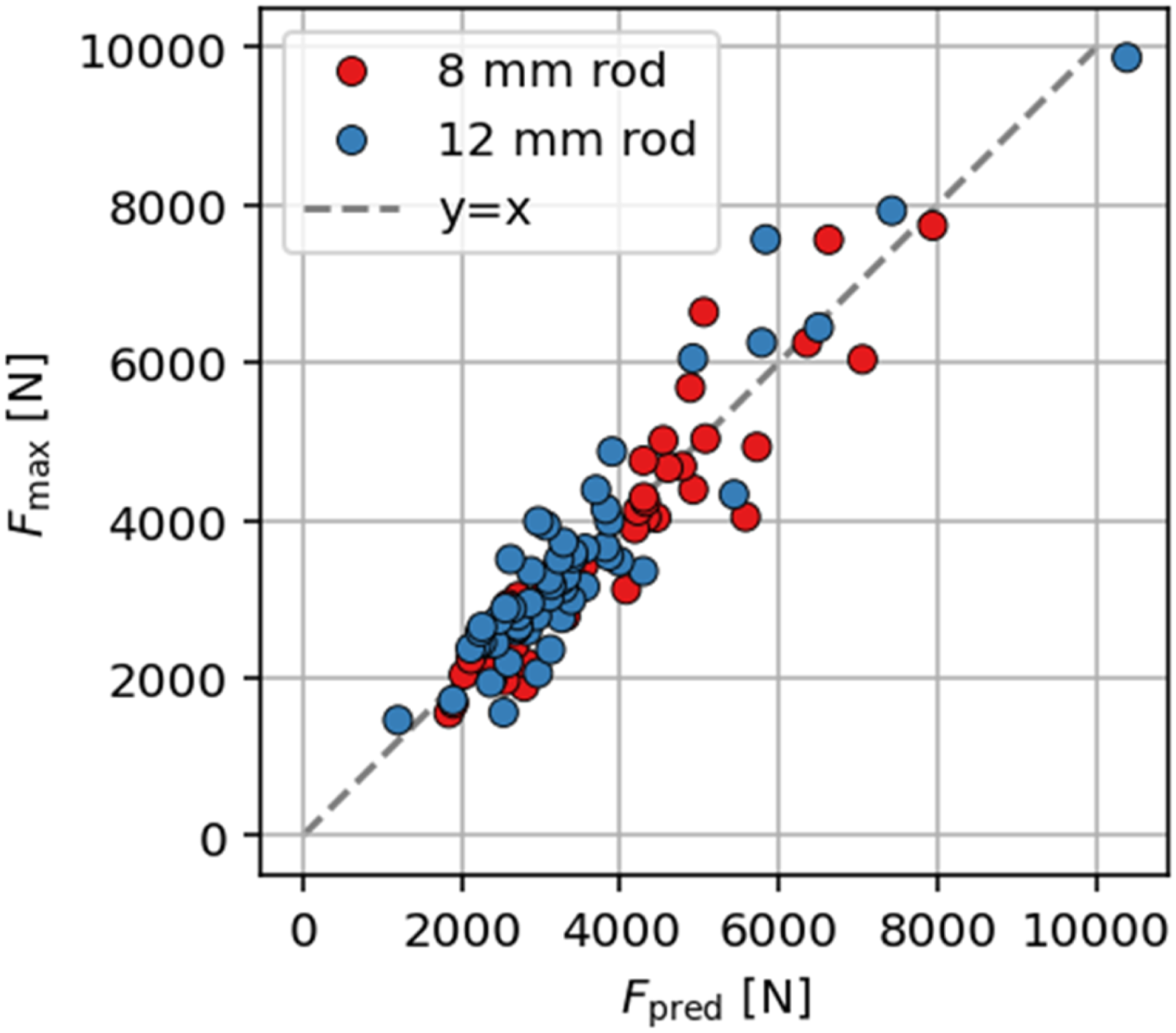
Dimensional analysis
Considered variables with their units and dimensions.

(*) gravitational acceleration is used to enable dimensional compatibility with maximum force
Using the Buckingham Pi theorem, the considered 

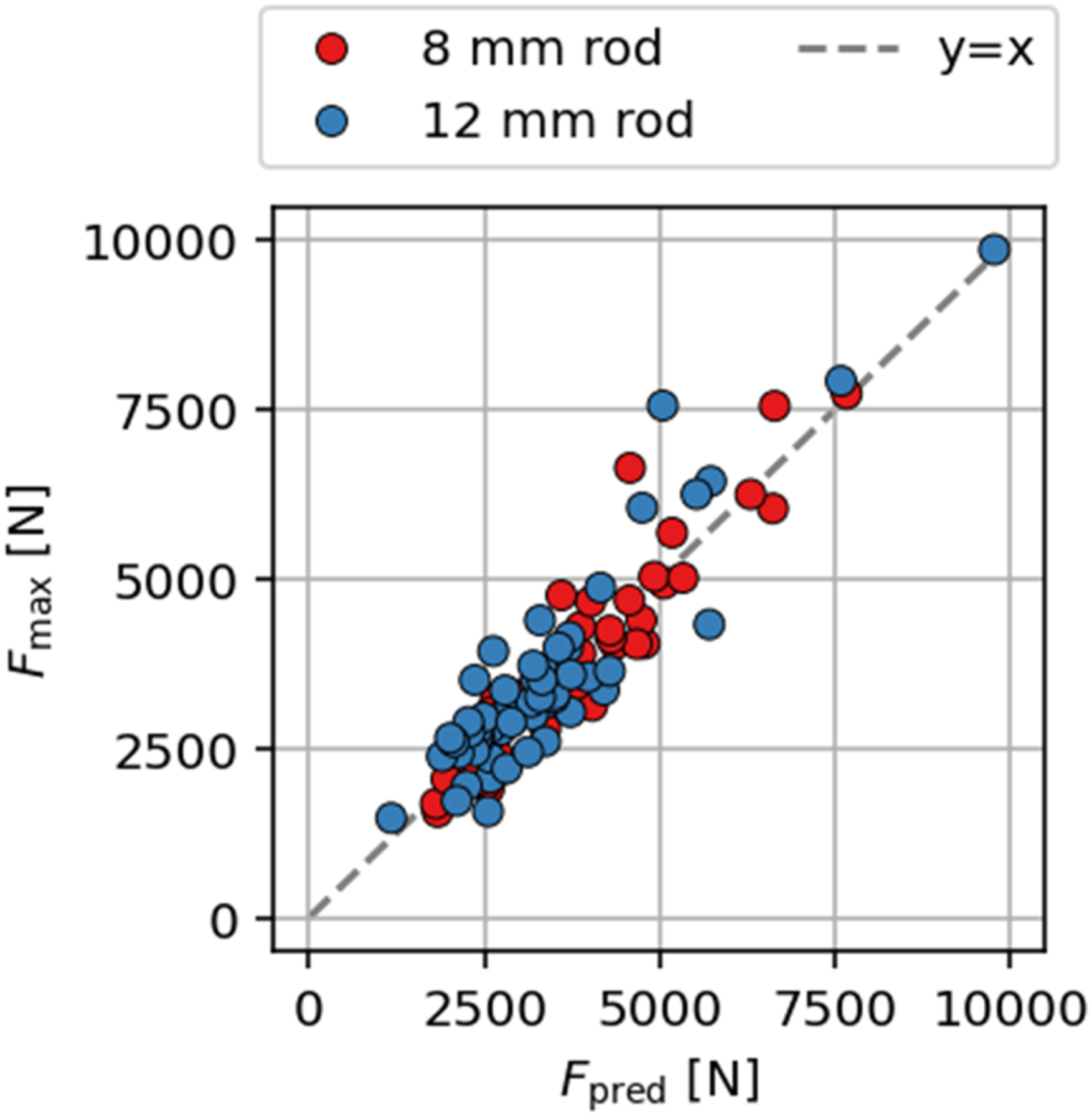
The relationship between Fit of the Dimensional Model to data. Dimensional models with their corresponding equations. Dimensional prediction model plotted against observed data.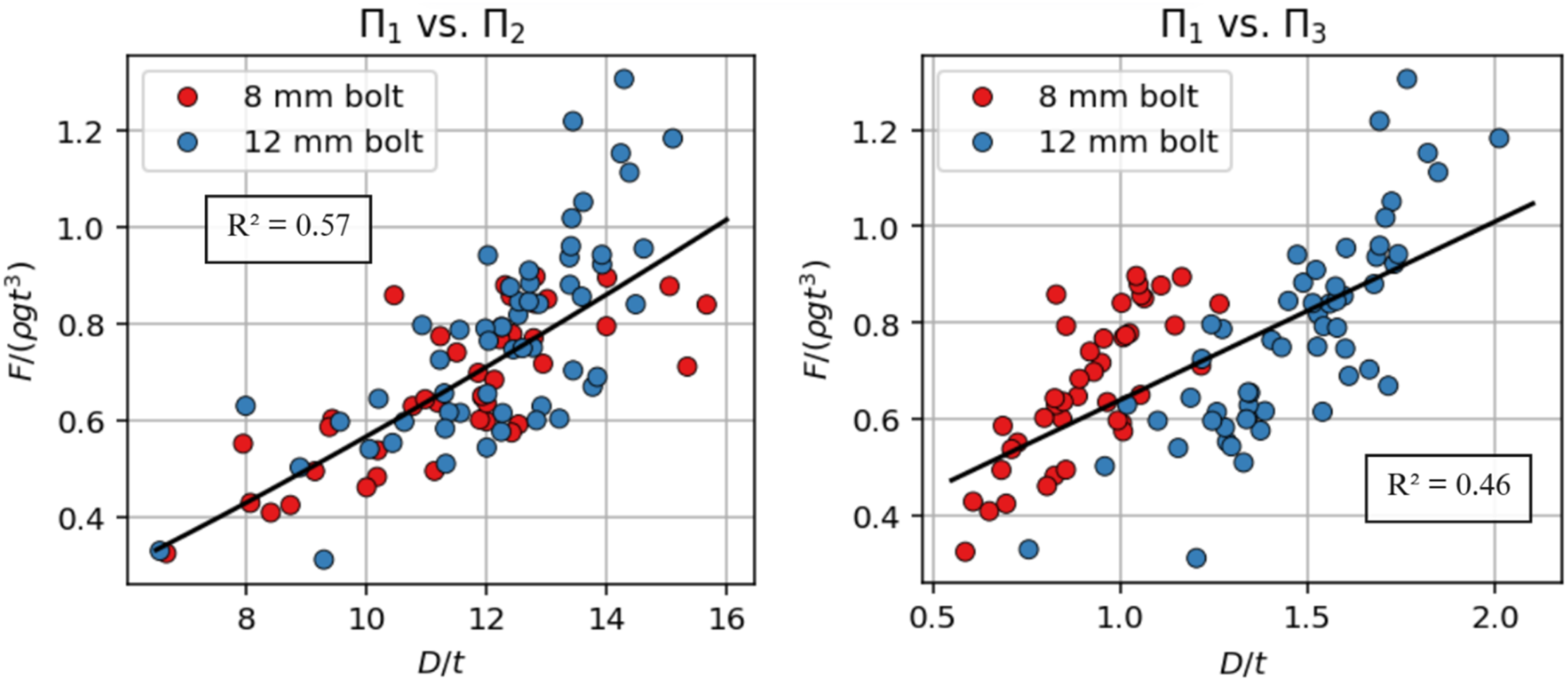

Discussion
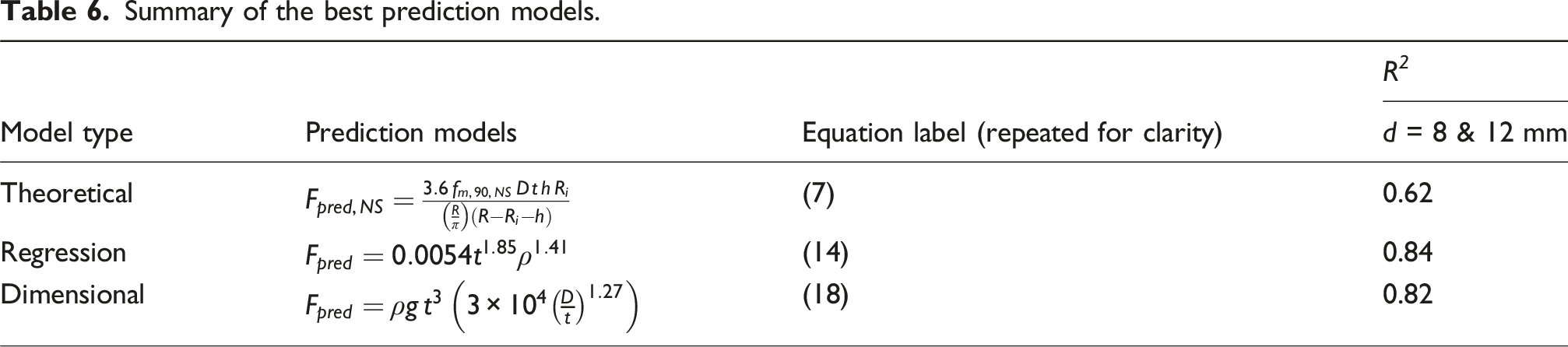
Summary of the best prediction models.
Developing a characteristic model for design
The proposed models for
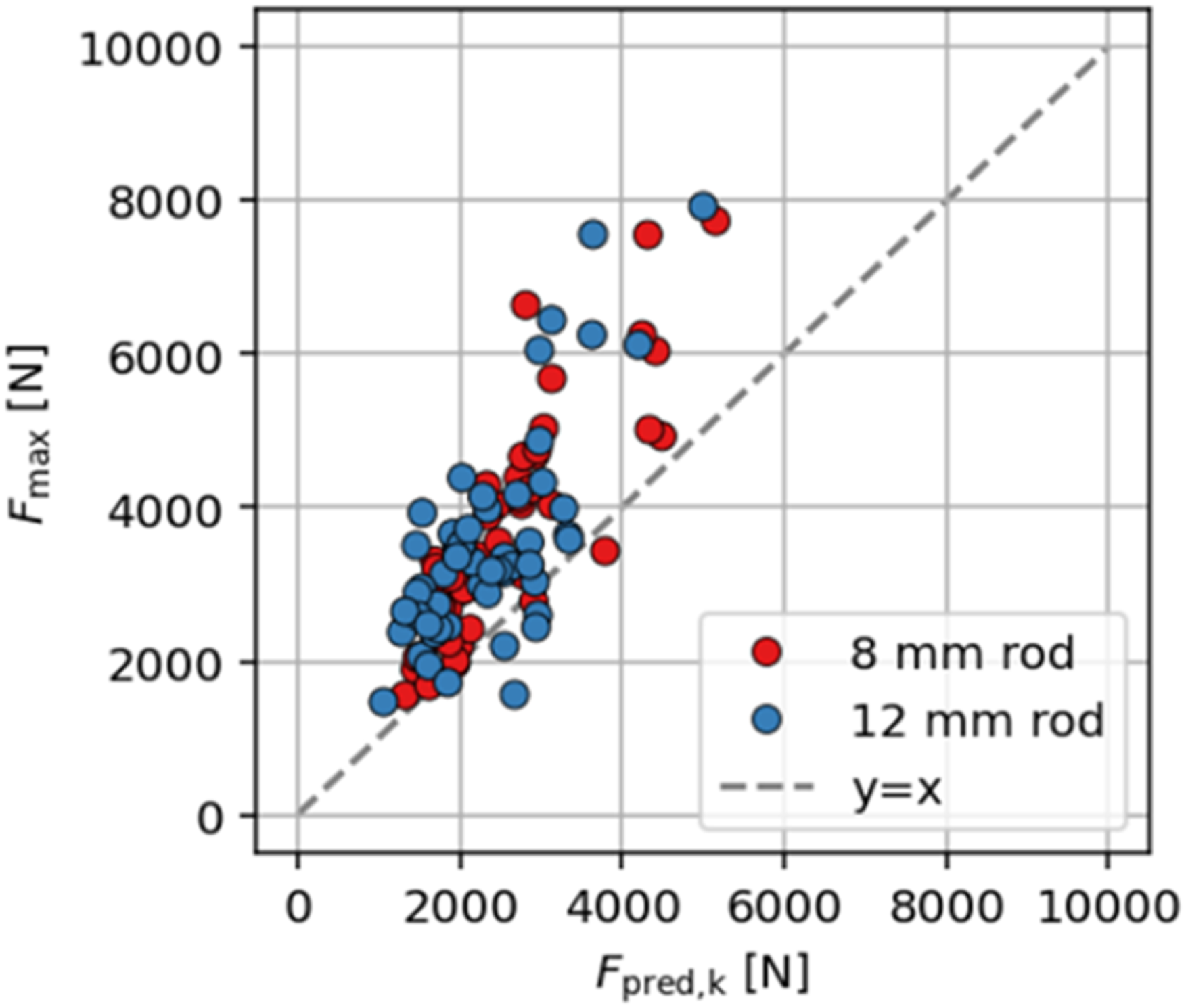
The derived lower-bound equation (Equation (20) and Figure 9) is intended for direct use with existing design standards (e.g., ISO 22156:2021) to determine the design capacity of the T-connection’s member subjected to the pull-in of the rod. The equation enables to check whether the joint can remain unfilled or requires cement-mortar infill. It is calibrated for Bambusa blumeana bamboo, and threaded rods of 8 to 12 mm in diameter with standard nuts and washers. Indeed, thick and enlarged washers could lower the transverse stress on the bamboo poles and return higher capacities, but this is beyond the scope of the current study. Crucially, because the equation is dimensionally consistent, it shows promise for use with other bamboo species by simply plugging in their characteristic test density and pertinent Lower bound model.
Conclusions
The study presents an experimental analysis of a common connection type in bamboo, i.e., T-connection, without mortar infill. With one hundred experimental tests on the rod pull in capacity, the failure in all tests is brittle, due to the cracking of the culm. Although different cracking pattern is observed for the two diameters, the maximum capacity is similar between the two diameter variations. Three different analytical models are developed. Among them, the dimensional model incorporating bamboo test density, culm diameter, and wall thickness is found to be the most suitable, offering a good fit to the data while remaining relatively simple and dimensionally consistent. The model based on bending perpendicular to fibers returns the lowest fit, indicating the model does not adequately capture the stresses acting on the joint during failure. The regression-based model returns the highest fit; however, the derived equation lacks physical sense as it possesses inconsistent dimensions.
Based on the dimensional analysis model, the study derives a lower-bound equation intended for the structural design of such connections. The proposed equation combines the characteristic 5th percentile test density with the
Footnotes
Acknowledgments
We sincerely thank all the students who contributed to sample preparation, experimental testing, and data recording. In particular, we extend our heartfelt appreciation to Dr Roneh Glenn D. Libre Jr of Mapúa University and Dr David Trujillo of Coventry University for their valuable support and suggestions throughout the study. We thank Jose Hazem Fadrigo for providing the photos of the truss in  .
.
Author contributions
Funding
The authors disclosed receipt of the following financial support for the research, authorship, and/or publication of this article: This research is fully funded by the HILTI Foundation.
Declaration of conflicting interests
The authors declared no potential conflicts of interest with respect to the research, authorship, and/or publication of this article.
Data Availability Statement
Data will be made available on request.