




Abstract
Background
Early life adversities can have lifelong consequences for health, including for cognitive functioning and Alzheimer's disease and related dementias. Moreover, early-life disadvantages stemming from parental death and divorce have been linked with later life social, mental, and physical well-being outcomes, including social isolation. Therefore, loneliness stands out as an intervenable aspect of well-being that may mediate long-term consequences of early life exposure to parental death and divorce for midlife and older adults’ cognitive decline.
Objective
The present study aims to determine whether early life exposures to parental death and/or divorce are associated with cognitive functioning in later life, and whether loneliness in midlife mediates such effects.
Methods
We used the 2014-2020 Health and Retirement Study (HRS), 2015 HRS Life History data and longitudinal structural equation modeling to address our research questions.
Results
Early-life exposure to parental divorce, but not death, was associated with greater loneliness in late midlife and older age, and loneliness predicted more rapid declines to cognitive functioning over time. Mediation was statistically significant (p < 0.05).
Conclusions
Although racial/ethnic minorities had higher exposure to both parental death and divorce, the effects of parental death and divorce were similar across race/ethnicity. Our results underscore the long-term impacts of parental divorce on well-being and health in adulthood and highlight loneliness as a critical determinant of cognitive declines and disparities in later life.
Introduction
Social and structural determinants of health (SSDoH), such as economic stability, education access/quality, neighborhood environment, health care access, and social/community context, have a significant impact on brain health across the lifespan. 1 Early-life parental disruption, including parental death or divorce, may serve as a key stressor and SSDoH that contributes to social and emotional difficulties over time, ultimately shaping late-life health trajectories. Growing evidence suggests a strong association between chronic stress and loneliness across the life-course with an increased risk of Alzheimer's disease, with some work showing loneliness may triple the risk of future cognitive decline over a 10-year period, even in individuals with relatively low genetic or age-related vulnerability. Chronic social isolation across the lifespan has been linked to accelerated brain aging. 2 Additionally, review articles have found that sustained loneliness adversely affects cognitive processes and is associated with Alzheimer's disease biomarkers.3,4
Among potential mediating factors for the long-term effects of early life disadvantage, loneliness stands out as a modifiable SSDoH risk factor that has demonstrated racial/ethnic disparities (e.g., 5 ) as well as a relationship with cognitive health outcomes (e.g.,6,7). Loneliness may also result from disruptions in early life as a function of parental separation, 8 yet less is known about the impact of early-life social disruptions on loneliness in adulthood and how this relationship impacts late-life cognition. As such, taking a life course perspective is essential to understanding how early-life family disruption contributes to late-life cognitive outcomes, and particularly whether loneliness in adulthood serves as a pathway for long-term harms of early-life exposure(s) to parental disruption.
The early-life death of a parent is a significant adverse experience that can disrupt a child's health and development, leading to both immediate and long-term consequences (e.g., 9 ). Research indicates that the loss of a parent in childhood is associated with increased risks of emotional and behavioral problems, including heightened anxiety, depression, and difficulties with social relationships. 10 This type of early trauma is also linked to physiological alterations, such as dysregulation of the hypothalamic-pituitary-adrenal (HPA) axis, which may contribute to deleterious effects of chronic stress and adverse health outcomes later in life. 11 Children who experience parental loss are more likely to engage in risky behaviors, such as substance use and smoking, which further exacerbates vulnerability to physical health problems, including cardiovascular disease and metabolic disorders. 12 Furthermore, the death of a caregiver often leads to economic instability and reduced access to educational and social resources, compounding developmental risks and potentially negatively impacting cognitive development and academic achievement. 13 The impact of such a loss varies based on factors such as the child's age at the time of the parent's death, the quality of remaining caregiving, and the availability of social support systems. 14 Yet overall, early-life exposure to parental death is believed to contribute to disparate outcomes in health and mortality across the life course. 15
Early-life exposure to parental divorce may likewise serve as a SSDoH with implications for racial and ethnic health disparities later in adulthood. 16 Children of divorce are more likely to engage in risky health behaviors that can influence late-life health. 17 Parental financial precarity is a risk factor that directly impacts the child's ability to access the resources needed to thrive. 18 Early exposure to parental disruption via divorce may lead a child to experience the strain of parental relationships with one or both parents. 16 Children of divorced parents often spend less time with one parent, therefore disrupting the attachment relationship with one or both parents in the process. Navigating the dynamic of divorce may leave children vulnerable to feeling the animosity between parents, differentially impacting how a child experiences interacting with one or both parents. As a function of the new family dynamic, children of divorced parents may experience heightened levels of stress, self-blame, and anxiety that have lifelong implications extending beyond the childhood period and influencing social relationship formation throughout the lifespan. 16 Furthermore, the timing of parental divorce may be developmentally important as well, as children who experience parental divorce at earlier ages are more likely to experience poor health in later life. 17
While the primary goal of the present study is to examine life course mechanisms, racial/ethnic disparities in exposure and outcomes are a secondary aim, given the growing body of evidence demonstrating differential outcomes. For example, there is evidence that early-life death of a parent may disproportionately put Black children at risk for loneliness, low self-rated health, poor cardiovascular health, and strained relationships with their adult children (e.g.,9,19, 20 ). Additionally, minoritized children are more likely to experience parental divorce and have reduced post-divorce contact with the non-custodial parent, potentially disrupting their support networks and long-term stability. 21 Prior work suggests that minoritized individuals are more likely to experience economic strain post-divorce, with Black women being at the highest risk for financial precarity post-divorce. 21 Additionally, there are potential ethnic and racial differences in the downstream impact of divorce on the child. For example, there is research showing that Black adolescents report being more harshly affected by financial instability, while Asian adolescents report being more impacted by limited social resources. 22 Further research has demonstrated ethnoracial differences in the amount of social support given by parents to children in step-biological households. 23 Cross 24 examined ethnoracial disparities in the relationship between family structure and educational outcomes and found differences in the negative impact of single-parent-family households on educational outcomes between Black and White children, further highlighting the importance of understanding the unique experiences of minoritized children.
Though there are a number of studies that investigate the long-term outcomes of parental separation on children as they enter adolescence and early adulthood, less is known about the later-life implications of parental separation and its impacts on loneliness and cognitive health. Specifically, there is a dearth of literature on how this disruption in early social relationships may lead to differential rates of loneliness in later life, particularly along racial/ethnic lines (e.g., 5 ), and subsequent rates of cognitive decline in later life. Given the risks that loneliness poses for ADRD onset 7 , and its role as a potentially modifiable psychosocial pathway, we focus on loneliness as a mediator of the association between early-life parental disruption and late-life cognitive functioning. Additionally, given racial/ethnic disparities in experiencing loneliness in mid- and later life 5 and that minoritized individuals are more likely to be exposed to SSDoH risk factors in early life, exploring racial/ethnic disparities in exposure and outcomes is a secondary goal of this study.25–27
We anticipate that loneliness may be an important mediator of SSDoH effects on cognition among the aging population, with the potential for variation in implications across racial/ethnic groups. The present study examines how early-life exposure to parental death and/or divorce is associated with cognitive functioning in later life. Additionally, we examine loneliness as a possible mediator in the relationship between early-life adversity and cognitive decline. Finally, we examine potential racial/ethnic differences in these associations. Specifically, we hypothesize that early life exposure to parental divorce (H1a) and parental death (H1b) will be associated with greater loneliness in mid/later life, and that loneliness will be associated with more rapid declines to cognitive functioning over time (H2). Loneliness will thereby serve as a mediator of long-term indirect effects of parental divorce (H3a) and parental death (H3b) on cognitive decline. Finally, given well-established racial/ethnic disparities in both early life parental disruption and later life cognitive health, we considered whether effects were moderated by race/ethnicity.
Methods
Data and sample
Data for this study came from the 2014–2020 waves of the Health and Retirement Study (HRS), a nationally representative longitudinal panel study of adults ages 51 and older in the United States, as well as the HRS Life History Mail Survey (LHMS; 2015–2017). The LHMS collects retrospective reports from HRS participants about their early life, allowing for a unique assessment of early life antecedents of late life outcomes. 28
Focal measures for this study were drawn from a variety of HRS data resources including the HRS Core Survey (cognitive functioning), the HRS Leave-Behind Questionnaire (LBQ; loneliness), and the HRS Life History Mail Survey (parental divorce and death). The HRS Core Survey is administered to all HRS participants every 2 years. Starting in 2006, the HRS added a leave-behind questionnaire which is administered to a 50% random subsample of households at alternating waves (i.e., every 4 years). In 2015, the HRS began a life history survey asking participants about their early life experiences, including exposure to parental divorce or death. Given this data structure, the analytic sample was restricted to participants who (a) completed the HRS LBQ in 2014 or 2016; (b) also completed the HRS Core Survey in 2014 or 2016, as well as 4 years later (i.e., in 2018 or 2020); and (c) who completed the HRS Life History Mail Survey between 2015 and 2017.
A total of 14,303 participants responded to the HRS Core and LBQ at the 2014/2016 waves, 70.02% of whom (n = 10,015) responded again 4 years later (2018/2020). A total of 80.34% of these returning participants (n = 8046) also completed the HRS Life History Mail Survey (2015–2017), which provided information on early life exposure to parental divorce and death. These 8046 participants comprised the analytic sample for this study.
Sensitivity analyses revealed that participants who participated at both waves exhibited higher cognitive functioning at baseline than those who were lost to attrition (p < 0.001). Further, participants who completed the Life History Mail Survey exhibited better cognitive functioning (p < 0.001) and lower loneliness (p < 0.001) than those who participated at both waves but did not complete the Life History Mail Survey. There were differences in racial/ethnic demographics across these groups, as well. Those who responded at both waves were significantly more likely to be non-Hispanic White (p < 0.001) and less likely to be non-Hispanic Black (p < 0.001), Hispanic (p < 0.001), or non-Hispanic of another race (p < 0.01). Likewise, those who completed the Life History Survey were significantly more likely to be non-Hispanic White (p < 0.001) and less likely to be non-Hispanic Black (p < 0.001), Hispanic (p < 0.001), or non-Hispanic of another race (p < 0.001). A sensitivity analysis using full information maximum likelihood (FIML) methods to address attrition and non-response (available upon request) produced significant findings of interest consistent with those presented here.
Measures
Outcome. Cognitive functioning was measured using the Telephone Interview for Cognitive Status (TICS). Because we were interested in trajectories of cognition in mid/later life, cognitive functioning was measured at both Time 2 (2014/2016 waves of HRS) and at Time 3 (2018/2020 waves of HRS), such that analyses concerning Time 3 cognitive functioning could control for baseline (Time 2) levels of cognitive functioning. TICS scores range from 0 to 27, with higher scores indicating better cognitive functioning.
Loneliness. Loneliness was measured using the 11-item UCLA Loneliness Scale. 29 Sample items include how often one feels “isolated”, “left out”, and “part of a group of friends” (α = 0.88). Loneliness was derived from the Leave Behind Questionnaire, and was measured at Time 2 for analysis (2014/2016 waves of HRS). Loneliness scores range from 1 to 3, with higher scores indicating greater loneliness.
Parental divorce and death. Early-life exposure to parental divorce and/or death were measured separately in the HRS Life History Mail Survey and were measured as dichotomous indicators of whether a respondent experienced parental divorce or the death of a parent before the age of 16 (Yes/No).
Covariates. We controlled for respondents’ age, gender, having children, race/ethnicity (non-Hispanic White (reference), non-Hispanic Black, non-Hispanic Other race, and Hispanic any race), educational attainment, employment status, total household wealth, and marital status. All time-varying covariates were measured at the 2014/2016 wave. In the equation for cognitive functioning at 2018/2020, we also controlled for baseline cognitive functioning at 2014/2016.
Analytic strategy and missing data
We used longitudinal structural equation modeling (SEM) to address our study hypotheses. This approach allowed us to examine the associations of (a) early life exposure to parental death and divorce with midlife reports of loneliness (H1) and of (b) midlife reports of loneliness with later life cognitive declines (H2) in a single overarching structural model, as well as to explicitly analyze mediation via significance of indirect effects (e.g., the effect of parental divorce before the age of 16 on later life cognition via midlife loneliness) (H3). Separate equations were estimated for the 2014/2016 (loneliness) and 2018/2020 (cognitive functioning) outcomes, with both equations including all covariates listed above. Model fit statistics refer to the goodness of fit for the structural model as a whole, including both outcome equations. Indirect effects were tested using post hoc non-linear combinations of parameters (nlcom) in Stata 18/SE. Additionally, SEM allowed us to address missing data using full information maximum likelihood (FIML) methods, to maximize our analytic sample size and protect against potential bias from listwise deletion. A total of 86.56% of participants (n = 6965) had complete data on all items included in the analysis, and significant results of interest were consistent in analyses that used listwise deletion.
Because of racial/ethnic differences in exposure to parental divorce and death by age 16, we also performed sensitivity analyses concerning potential moderation of effects by race/ethnicity. These analyses examined interaction terms between (a) parental divorce, and (b) parental death with each of the race/ethnicity categories. None of these interaction terms was significant, indicating that the effects of interest were consistent across racial/ethnic identity groups. We also explored potential differences in effects by participant gender, with no significant interactions found. Therefore, our final analysis presents the main effects of interest without these interaction terms included.
Results
Descriptive results
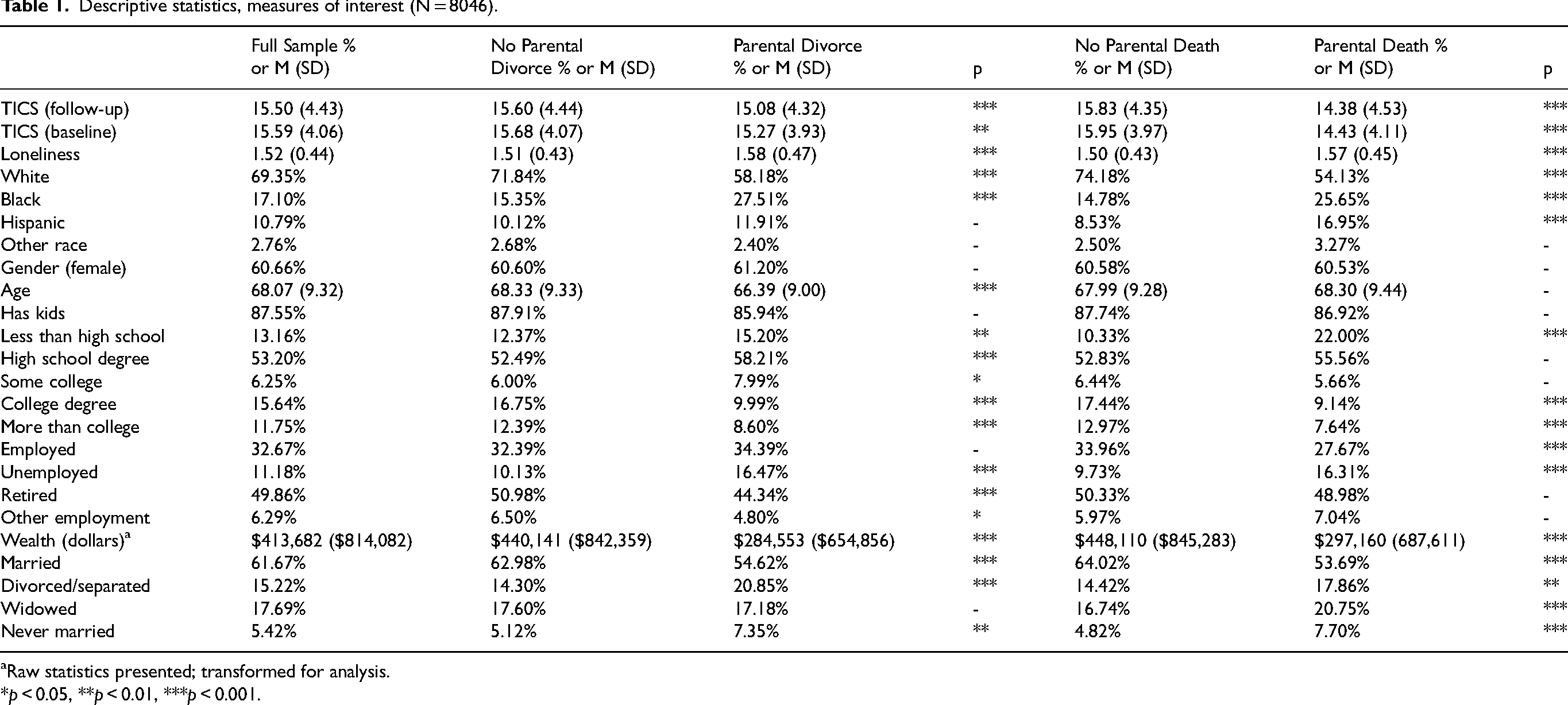
Approximately 15% of the sample (n = 1170) experienced parental divorce before the age of 16, while 21% of participants (n = 1624) experienced the death of a parent by age 16. Less than 5% of the sample (n = 349) experienced both parental divorce and death of a parent before age 16. Loneliness at midlife (2014/2016 waves) was fairly modest overall, averaging 1.52 on the 1–3 scale. However, loneliness was significantly higher among those exposed to parental divorce (mean = 1.58, p < 0.001) and parental death (mean = 1.57, p < 0.001). Likewise, cognition at mid/later life (2018/2020 waves) averaged 15.50 on the 0–27 scale, and was significantly worse among those who experienced parental divorce (mean = 15.08, p < 0.001) or death of a parent (mean = 14.38, p < 0.001).
Notably, non-Hispanic Black participants were significantly overrepresented among those who experienced both parental divorce and death (both p < 0.001), such that while non-Hispanic Black participants made up only 17% of the total sample, they made up 27% of those exposed to parental divorce, and 26% of those exposed to parental death. In contrast, non-Hispanic White participants made up 69% of the total sample, but only 58% of those exposed to parental divorce, and 54% of those exposed to parental death.
There were also racial/ethnic differences in loneliness and cognitive functioning. Loneliness at Time 2 was lowest among non-Hispanic White respondents (mean = 1.49) and significantly greater among non-Hispanic Black (mean = 1.58), Hispanic (mean = 1.62), and non-Hispanic respondents of another race (mean = 1.56; all p < 0.001). Moreover, cognition at Time 3 was best among non-Hispanic White respondents (mean = 10.38) and worse among non-Hispanic Black (mean = 9.16, p < 0.001), Hispanic (mean = 9.76, p < 0.10), and non-Hispanic respondents of another race (mean = 9.51, p < 0.001). Overall, these descriptive statistics suggest greater exposure to early-life SSDoH among racial/ethnic minorities, coupled with greater loneliness and poorer cognition in mid/later-life. Table 1 provides an overview of the sample characteristics.
Descriptive statistics, measures of interest (N = 8046).
Raw statistics presented; transformed for analysis.
*p < 0.05, **p < 0.01, ***p < 0.001.
Analytic results
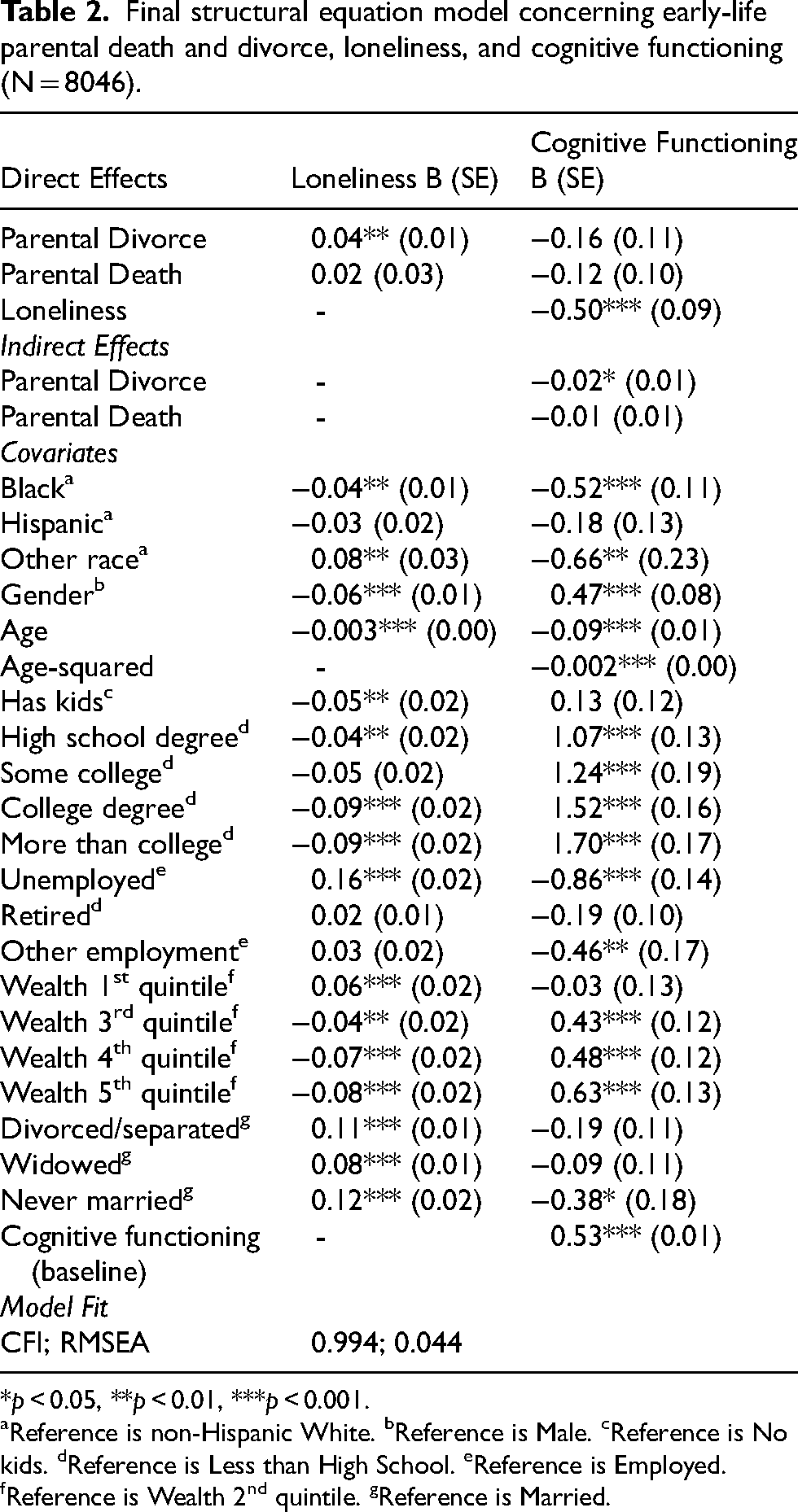
Hypothesis 1: Exposure to parental divorce prior to the age of 16 (H1a) was associated with significantly greater loneliness in mid/later life (B = 0.04, SD = 0.01, CI = 0.01–0.06, p < 0.01). However, exposure to parental death prior to the age of 16 (H1b) was not significantly associated with loneliness in mid/later life (B = 0.02, SD = 0.01, CI = −0.01–0.04, p > 0.05), when accounting for covariates.
Hypothesis 2: Although neither parental divorce nor death of a parent prior to age 16 was directly associated with declines to cognitive functioning between the 2014/2016 (Time 2) and the 2018/2020 waves (Time 3), loneliness at 2014/2016 was associated with significantly greater declines to cognition by 2018/2020 (H2; B = −0.50, SD = 0.09, CI = −0.67– −0.33, p < 0.001). That is, loneliness was associated with significantly worse cognitive functioning after four years (Time 3), even accounting for cognitive functioning at baseline (Time 2).
Hypothesis 3: The indirect effect of parental divorce before age 16 on declines in cognitive functioning at 2018/2020, mediated by 2014/2016 loneliness (H3a), was also statistically significant (B = −0.02, SD = 0.01, CI = −0.03– −0.004 p < 0.05). That is, individuals exposed to parental divorce before the age of 16 were likelier to experience loneliness in mid/later life and, therefore, to experience sharper declines to cognition over later years. This was not the case for those who experienced the death of a parent before age 16 (H3b).
Table 2 presents the final structural equation model for early-life parental death and divorce, loneliness, and cognitive functioning. Figure 1 displays simplified results of our final SEM analysis. Joint model fit statistics (CFI = 0.994, RMSEA = 0.044) indicated very good fit to the data.
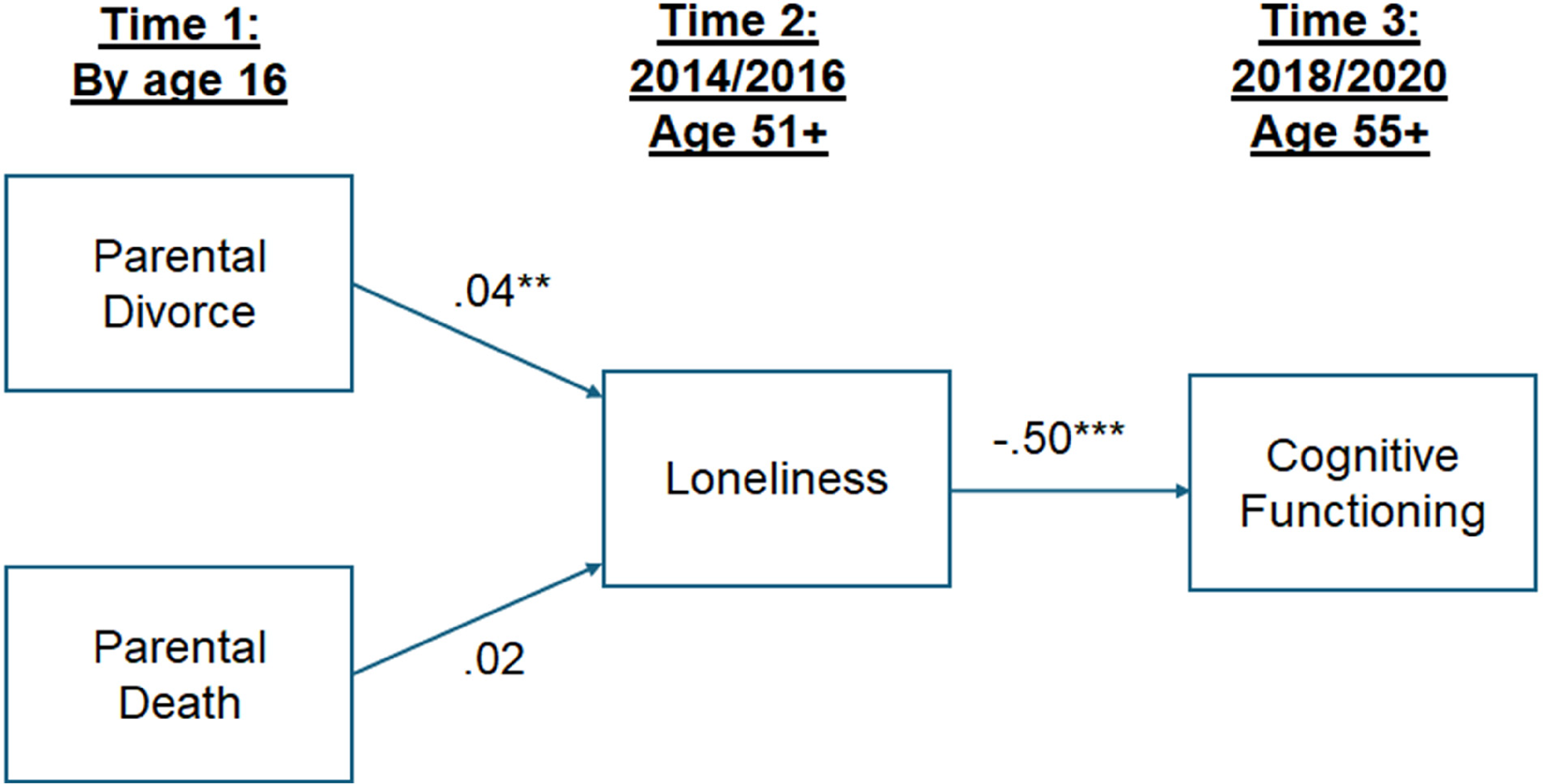
Simplified analytic model.
Final structural equation model concerning early-life parental death and divorce, loneliness, and cognitive functioning (N = 8046).
*p < 0.05, **p < 0.01, ***p < 0.001.
Reference is non-Hispanic White. bReference is Male. cReference is No kids. dReference is Less than High School. eReference is Employed. fReference is Wealth 2nd quintile. gReference is Married.
Discussion
This study explores how early-life parental disruption (parental death or divorce) is associated with later-life cognition, and whether mid/later life loneliness mediates these pathways. Our findings suggest that only exposure to early-life parental divorce, not parental death, was linked to mid/later life loneliness, in contrast to expectations based on prior research concerning death of a parent in early life (e.g., 9,30). However, the mediational pathways from early-life exposure to parental divorce to later life cognition via mid/later life loneliness were significant, as anticipated (e.g., 6 ). Our results are partially supported by Deng et al. 31 who did not find an association between adverse childhood experiences and declining cognitive functioning, but noted that the mediating factor of subjective feelings of loneliness was associated with cognitive decline. We discuss the implications of these findings for future research, as well as for public health interventions aimed at alleviating cognitive health disparities in later life.
Divorce versus death: unique “loss” experiences?
Our findings suggesting that pathways from early-life exposure to parental disruption and to cognition were significant for parental divorce but not for parental death could be explained by several factors. For one, parental death, while traumatic for children, 32 may not be a socially toxic experience like divorce can be. 33 Instead, losing a parent may result in communal coping – the collective effort of relatives and friends to manage a stressful event through their networks. This may result in the strengthening of the social ties of these children and contribute to fighting isolation, at least during the immediate period following the loss of a parent. 34
Secondly, whereas parental death may not necessarily change perceptions of marriage, parental divorce could alter views on marriage and other relationships.35,36 According to these studies, individuals who experienced parental divorce during childhood were more likely to end their own intimate relationships, had higher separation and divorce rates, and greater difficulty with their own intimate relationships including with their aging parents.35–38 Indeed, sensitivity analyses suggested lower perceived social support and greater perceived social strain in midlife/older age among those exposed to early-life parental divorce in our sample, though this was not the case for those exposed to parental death. The authors propose that intimate and social relationships, and in particular their quality, may play an important role in the elevated experience of mid/later-life loneliness among those exposed to parental divorce early in life, as this experience undermines capacity to establish and maintain close ties even in adulthood.35,36
In conjunction with negative perceptions towards marriage, additional reasons that could explain the negative long-term effects of exposure to parental divorce include extended conflicts, instability, and experiencing potential socioeconomic difficulties, all of which can affect loneliness and cognitive development (e.g., 5 ). According to Lansford and colleagues 36 as well as Thomas and Högnäs, 17 children of divorced parents engage in riskier health behaviors, internalize problems and engage in externalizing behaviors more often, have lower academic achievement and face more social relationship challenges, all contributing to greater difficulty in forming strong social connections during adulthood. Our own findings, that respondents with lower educational attainment or who were unemployed also had higher levels of loneliness and lower cognition, are also supported by previous studies.5,39–41 For instance, one recent study found that those with lower academic achievements were more likely to have higher levels of externalizing behaviors and internalizing problems, and that those with more persistent externalizing problems during childhood and adolescence faced higher unemployment rates, all of which are risk factors for worse social connections during adulthood. 40
Racial/ethnic differences
We observed nonsignificant interaction effects by racial/ethnic groups in the mediational pathways from early-life exposure to parental divorce and death to cognition via loneliness (i.e., there were equal effects of parental divorce on cognitive functioning, regardless of racial/ethnic characteristics). However, there were significant racial/ethnic disparities in exposure to parental divorce and death, as well as in levels of later life loneliness and cognitive functioning (e.g., 5,9). Notably, our findings indicated that non-Hispanic Black Americans had the highest rate of early-life exposure to both parental divorce and death, as well as the highest levels of loneliness and poorest cognition in later life.
Even in the absence of statistical moderation by racial/ethnic groups, it is important to highlight the significant direct effect of being non-Hispanic Black on loneliness and cognition. These findings may imply that exposure differences to parental divorce by racial/ethnic groups are an early-life determinant of later-life disparities in loneliness and cognitive health. 9 In fact, compared to other racial/ethnic groups, non-Hispanic Black Americans marry later, report the lowest rate of ever being married, and have the highest divorce rates, which could be reflective of their early-life exposure to parental divorce. 42 Such exposure to divorce may also contribute to adverse long-term consequences on individuals psychological or cognitive well-being throughout the life course. 5
Implications
Importantly, our results suggest that loneliness results from early-life exposure to parental divorce and, thereby, contributes to accelerated cognitive decline in later life. Because of racial/ethnic disparities in exposure to parental disruption, loneliness also serves as a pathway exacerbating racial/ethnic disparities in cognitive health in mid and later life. Loneliness as a response to chronic stress has been well-established (e.g., 43 ) and is associated with cognitive decline and ADRD in mid-and later-life, including among minoritized populations (e.g., 6,7,43). Since loneliness is greater among non-Hispanic Black Americans 5 and contributes to racial disparities in cognitive functioning among the aging population, mid-and-later life public health interventions should aim to improve social integration within close-knit as well as broader social networks, to reduce feelings of loneliness and thereby promote better cognitive aging. Targeted interventions, including family counseling or community support programs in early-life, could prevent negative long term health consequences.
Interventions aimed at improving social support networks and reducing loneliness in mid- and later life, particularly among racial/ethnic minority populations, could help reduce disparities in cognitive functioning among the aging population. An important time for intervention work to mediate associations between early life parental disruption and cognition may lie in midlife. Longitudinal work has linked parental disruption to higher levels of loneliness later in the lifespan.44–46 The midlife period is often a period of changing social rolessuch as retirement, caregiving, empty nest, and divorceas well as both prescriptive and retrospective self-evaluation. 47 At the same time, midlife has also been identified as a pivotal period of life with capacity for plasticity and resilience, 48 making this stage particularly promising for interventions. Changes to social patterns which reduce feelings of loneliness during midlife can positively affect later life outcomes.
Interventions that encourage social interaction in midlife may help to mediate some of the detrimental effects of diminished social interactions in early life resulting in loneliness. For example, structural and community interventions from public health systems supporting social connectedness (as opposed to isolated individual efforts that put pressure on the person who is already feeling lonely), such as the ones proposed by Chatterjee & Goswani, 49 Crowe et al. 50 and Witzel et al., 51 could be beneficial. This aligns with Erikson's 52 stage theory of psychosocial development which proposes that midlife is a time to self-reevaluate and find a deeper purpose in later life.
Limitations
The current study has several limitations. First, sample attrition and selectivity of sample participants may reduce the generalizability of findings from this study. Second, the HRS early-life exposure to parental disruption measure lacks specific information on the exact age at which participants were exposed to parental disruption. This prevented us from examining more nuanced differences based on the age of exposure, which might exert differential effects on later life outcomes. Moreover, due to sample size limitations, we are unable to examine more complex disruption experiences, such as experiencing multiple divorces, the death of both parents, or experiencing both parental divorce and death before age 16. These may have unique effects upon later life trajectories beyond the additive effects identified here. Additionally, no information is provided on the qualitative aspects of the divorce experience, its amicability, nor on living and custody arrangements following separation, all of which may affect the impact of divorce on lifelong well-being and health outcomes. Gender of both the parent and child involved in a disruption experience may matter, as well, though we did not find evidence of gendered effects in this study. Lastly, the varying ages of participants at the time of later life outcome measures (i.e., loneliness, cognitive functioning) prevents us from understanding the duration of distal effects of early-life exposure to parental disruption. Some participants may have experienced health disadvantages during midlife and others during late adulthood; precise trajectories of loneliness and cognitive functioning across the life course could not be analyzed given the structure of our data.
Future studies should address these limitations to build upon our findings, which could enhance our understanding of the mechanisms underlying the long-term effect of early-life exposure to parental disruption on later-life cognition. In addition, incorporating information about attachment, changes and timing of marital status across mid/later life, and patterns of social strain in spousal relationships, may provide further insights into the link between early-life exposure to parental disruption and mid/later life loneliness. For instance, examining how individuals experience greater difficulty maintaining relationships over the life course (due to attachment issues or lack of parental figures during childhood) may offer valuable explanations concerning life course social exposures and loneliness risk factors, as well as point to intervention targets. Finally, the current findings call for studies investigating the differential lasting effects of early-life exposure to parental divorce versus death on later life health outcomes. Specifically, exploring whether family relationship quality during childhood/adolescence (prior to parental divorce or death) as well as adulthood (following parental divorce or death) contributes to cumulative disadvantages in health trajectories and consequences may shed light on how early-life family environments shape long-term health and well-being.
Conclusion
Despite its limitations, the present study contributes important new knowledge to the field concerning early-life exposure to parental divorce, midlife loneliness, and cognitive aging. Overall, we identify parental divorce as a risk factor for cognitive decline in mid-to-later life, and as a contributor to racial/ethnic disparities in loneliness and cognitive health among the aging population. Moreover, we highlight loneliness as a potentially intervenable psychosocial mediator of the long-term effects on cognition of early-life adversity. Taken together, these findings advance the literature on social determinants of health and health disparities and lay the groundwork for future research concerning life course adverse events, psychosocial well-being, and successful aging among an increasingly diverse older population.
Footnotes
Acknowledgements
The authors have no acknowledgments to report.

Ethical considerations
Not applicable
Consent to participate
Not applicable
Consent for publication
Not applicable
Author contribution(s)
Funding
The authors disclosed receipt of the following financial support for the research, authorship, and/or publication of this article: This research was supported by the National Institute on Aging of the National Institutes of Health under award numbers P30AG059300 and U01AG009740. The content is solely the responsibility of the authors and does not necessarily represent the official views of the National Institutes of Health.
Dr Lee is supported by the National Institute on Aging (training grant T32AG000129), awarded to the Center for Demography of Health and Aging (P30AG017266) at the University of Wisconsin-Madison by the National Institute on Aging. Dr Pugh is funded by the National Institutes on Aging (Prime Funding grant: U19AG078109). Dr Leggett is also funded by the Michigan Alzheimer's Disease Research Center (NIA P30AG072931).
Declaration of conflicting interests
The authors declared no potential conflicts of interest with respect to the research, authorship, and/or publication of this article.
Data availability statement
Data from the Health and Retirement Study are available at their website.