



Abstract
Background
Cyclin-dependent kinase 5 (CDK5) plays a critical role in neuronal development, synaptic plasticity, and cytoskeletal regulation. Its dysregulation has been implicated in Alzheimer's disease (AD); however, supporting genetic evidence remains limited in Middle Eastern populations.
Objective
This study aimed to identify CDK5 genetic variants in a Saudi cohort with AD and evaluate their association with disease susceptibility, without addressing downstream functional mechanisms.
Methods
Peripheral blood samples were obtained from 52 Saudi patients with AD and 60 age- and sex-matched healthy controls. Genomic DNA was extracted and quantified using a NanoDrop One spectrophotometer. CDK5 exons 1, 2, 6, 7, and 12 were amplified and sequenced by Sanger methodology on an ABI 3500 Genetic Analyzer. Variant screening and frequency comparisons were performed between dementia and control groups.
Results
Eight CDK5 variants were identified in exonic (2, 12) and intronic (1–2, 7–8, 11–12) regions, including three novel variants (c.105delG, c.858C > T, and one intronic variant). No variants were detected in exons 1, 6, or 7. Frameshift variants c.103del and c.105delG were significantly more frequent in AD cases (38%) than controls (5%) (p < 0.001). Conversely, the synonymous c.855C > T variant (Exon 12) was more common in controls (23%) than cases (5%) (p < 0.01), indicating a significant association between specific CDK5 variants and AD.
Conclusions
Identification of novel CDK5 variants associated with AD in a Saudi cohort highlights population-specific genetic susceptibility. Further functional and biomarker studies are needed to clarify their biological relevance.
Introduction
Alzheimer's disease (AD) is the most prevalent neurodegenerative disorder, yet its complex etiology remains incompletely understood. 1 It is characterized by progressive and irreversible cognitive decline, accompanied by hallmark neuropathological lesions, including extracellular amyloid-β (Aβ) plaques and intracellular neurofibrillary tangles, ultimately leading to neuronal loss. 2 In Saudi Arabia, approximately 130,000 individuals are currently affected by AD, a number projected to double by 2050 due to increasing life expectancy. 3
Although aging is the strongest risk factor, genetic predisposition plays a critical role in determining disease susceptibility and progression. Among genes involved in amyloid processing and cytoskeletal regulation, Cyclin-dependent kinase 5 (CDK5) has emerged as an important candidate in AD. CDK5 encodes a proline-directed serine/threonine kinase essential for neuronal development, synaptic plasticity, and cognitive function. 4 Unlike other cyclin-dependent kinases, CDK5 is activated by non-cyclin regulatory proteins p35 and p39, which are predominantly expressed in neurons.5,6 Aberrant activation occurs when p35 is proteolytically cleaved to p25, resulting in hyperactivation of CDK5, which has been implicated in several neurodegenerative conditions, including AD. 7 Such dysregulation has been associated with tau hyperphosphorylation, neuronal apoptosis, and cytoskeletal destabilization. 7
CDK5 also regulates neuronal migration, neurite outgrowth, and synaptogenesis, 8 and its activity has been observed in non-neuronal cells, including pancreatic β cells and corneal epithelial cells.8,9 Overactivation of CDK5 has been linked to enhanced Aβ plaque production through phosphorylation of substrates involved in amyloid-β protein precursor processing.10–12 The interaction between CDK5 and its regulatory subunits p35/p39 is critical for neuronal growth and migration, 13 reinforcing its role in synapse formation and plasticity. Consequently, CDK5 has been proposed as a molecular link between neurofibrillary pathology and amyloid deposition, 14 contributing to vulnerability to neurodegeneration 15 and a spectrum of neurological disorders,16–20 including non-syndromic intellectual disability, 17 Huntington's disease, 18 Parkinson's disease, 19 and AD. 20 Beyond neurodegeneration, aberrant CDK5 expression and mutations have also been associated with various cancers,21–23 highlighting its multifaceted biological significance.
Despite its established role in neuronal signaling, the contribution of CDK5 genetic variants to AD remains poorly characterized. Population-specific studies are particularly valuable, as they can reveal unique variants influencing disease susceptibility. The Saudi population, characterized by high genetic homogeneity and consanguinity, provides an exceptional opportunity to identify novel variants associated with AD risk.
Accordingly, this study aimed to investigate the association of genetic variants in CDK5 with AD in a Saudi cohort, comprising both individuals with dementia and community-dwelling healthy participants. By integrating genomic analysis with functional prediction, we sought to identify CDK5 variants potentially linked to dysregulated kinase activity and neurodegeneration. These findings are expected to provide deeper insight into the genetic architecture of AD and highlight the potential of CDK5 as a theragnostic target in precision medicine for neurodegenerative disorders.
Methods
Study subjects
This retrospective case–control study included 52 individuals with clinically diagnosed dementia consistent with probable AD (38 females, 14 males) and 60 age- and sex-matched community-dwelling healthy controls. The study was conducted at the Department of Forensic Science, College of Criminal Justice, Naif Arab University for Security Sciences (NAUSS), Riyadh, Saudi Arabia. All participants were of Saudi Arabian origin, and written informed consent was obtained prior to inclusion in accordance with the Declaration of Helsinki. 24
Clinical diagnosis was made according to the National Institute on Aging–Alzheimer's Association (NIA–AA) criteria for probable AD. 25 In accordance with these criteria, diagnosis was based on clinical presentation, cognitive assessment, and supportive neuroimaging findings (MRI and/or FDG-PET patterns). No amyloid- or tau-specific biomarker confirmation (e.g., cerebrospinal fluid or PET) was performed, and therefore the presence of underlying AD pathology could not be definitively established in all cases.
Participants classified as dementia cases exhibited Mini-Mental State Examination (MMSE) scores ranging from 10–22 and Clinical Dementia Rating (CDR) scores of 0.5 or 1, corresponding to mild cognitive impairment due to dementia and mild dementia stages. Clinical data collected included age at diagnosis, disease stage, treatment type, family history of dementia, and comorbid medical conditions. Exclusion criteria comprised a Geriatric Depression Scale (GDS) score >8, presence of major psychiatric illness, other known neurological disorders, significant systemic disease, or history of traumatic brain injury.
Given the reliance on clinical criteria without biomarker confirmation, it is acknowledged that a subset of cases—particularly those in the mild dementia stage—may represent non-Alzheimer's dementias, such as vascular dementia. This possibility is further supported by observed cohort characteristics, including a higher proportion of illiteracy and increased prevalence of hyperlipidemia among dementia cases compared to controls. Both low educational attainment and hyperlipidemia are established risk factors for vascular cognitive impairment and dementia. Additionally, family history of AD was less prevalent than expected among individuals with mild dementia, suggesting potential etiological heterogeneity within this subgroup.
Healthy controls (42 females, 18 males) were recruited through community healthcare home visits from the same geographic and demographic background to minimize environmental and genetic confounding. Control participants had no history of neurodegenerative or psychiatric disorders, demonstrated normal cognitive performance (MMSE ≥26), and had a CDR score of 0.
Demographic and clinical variables collected for both groups included age, sex, education level, body mass index (BMI), hypertension, diabetes mellitus, serum cholesterol levels, and medication history. Differences in educational status and vascular risk factors between groups were considered during data interpretation and represent an important limitation of the study.
Ethical approval was obtained from the Ethics Committee of King Saud Medical City, Riyadh, Saudi Arabia (Ref. No.: H1RE-27-Nov18-01).
DNA extraction and quantification
Genomic DNA was extracted from 6 mL peripheral blood samples collected from study participants in BD Vacutainer® Plus Plastic K2 EDTA blood collection tubes, using the ReliaPrep™ Blood gDNA Miniprep System following the manufacturer's protocol (Promega, Madison, WI. The quantity and purity of the extracted DNA were assessed using the NanoDrop™ One/OneC Microvolume UV-Vis Spectrophotometer (ThermoFisher Scientific, Waltham, MA). DNA samples were then stored at −20°C for further analysis.
Amplification of CDK5 exons 1, 2, 6, 7, and 12
CDK5 exons 1, 2, 6, 7, and 12 were amplified using specific primers (ThermoFisher Scientific) (Supplemental Table 1). Specific primers were designed using Primer-BLAST software to ensure high specificity and efficiency, targeting the selected exons and their immediate flanking intronic regions to capture splice site variants. PCR reactions were performed in a final volume of 25 µL and contained 50 ng of DNA, 0.4 μl of each primer, 0.2 μl Super Taq polymerase (Invitrogen; Thermo Fisher Scientific), 0.8 μl MgCl2, 0.4 μl dNTPs master mix (10 mM of each), and 2.5 μl 10X PCR. PCR was performed using Veriti thermal Cycler (Applied Biosystem) with the following cycling program: Initial Denaturation (95˚C for 5 min), followed by 30 cycles of Denaturation (95˚C for 30 s), Annealing (60˚C for 30 s) and Extension (72˚C for 1 min), and a Final Extension (72˚C for 10 min). The amplified products were visualized on 1% agarose gel stained with SYBR Safe DNA Gel Stain (Invitrogen; Thermo Fisher Scientific).
These exons were selected based on prior evidence indicating their potential functional significance in CDK5 regulation and neurodegenerative pathways. Exons 1 and 2 encode portions of the N-terminal kinase domain responsible for ATP binding and catalytic activity, whereas exons 6 and 7 correspond to the p35/p25-binding region that modulates CDK5 activation and substrate recognition. Exon 12 represents the C-terminal regulatory domain implicated in post-translational modification and protein stability. Previous studies have highlighted these regions as mutation-sensitive sites that can alter CDK5 enzymatic activity and neuronal function, thereby influencing AD pathogenesis.6,15 Accordingly, a targeted exon selection approach was adopted to enhance the likelihood of identifying functionally relevant variants within this gene.
Sequencing of CDK5 exons 1, 2, 6, 7, and 12
PCR reactions were purified using ExoSAP-IT™ PCR Product Cleanup Reagent (ThermoFisher Scientific, USA), and were subjected to bidirectional Sanger sequencing to ensure coverage of the coding regions and adjacent intronic boundaries. DNA sequencing was carried out using the BigDye™ Terminator v3.1 Cycle Sequencing Kit (Applied Biosystems, ThermoFisher Scientific), and the sequencing reactions were purified using BigDye XTerminator™ Purification Kit (ThermoFisher Scientific, USA), containing 10 ng of purified PCR product, 1 µM of forward or reverse primer, and the sequencing mix, in a total volume of 10 µL. Thermal cycling conditions comprised an initial denaturation at 96°C for 1 min, followed by 25 cycles of 96°C for 10 s, 50°C for 5 s, and 60°C for 4 min for efficient incorporation of fluorescently labeled dideoxynucleotides. The purified sequences were then analyzed using Genetic Analyzer ABI3500 (ThermoFisher Scientific).
Sequencing data analysis
DNA sequencing results were visualized using Series Data Collection Software 3130 (ThermoFisher Scientific) and analyzed using Sequencing Analysis software v5.3.1 (ThermoFisher Scientific). Genetic mutations were detected using Seqscape® software v2.6 (ThermoFisher Scientific). Raw electropherogram files were first assessed for quality using Sequencing Analysis Software (Applied Biosystems, ThermoFisher Scientific), and high-quality sequences were aligned to the CDK5 reference sequence (NCBI GenBank accession number: NM_004935.4), using MEGA X: Molecular Evolutionary Genetics Analysis [ 2 ] with the reference sequence of the NM_004935.4 and NG_042167.1 from GenBank. Variants were identified by manual inspection of electropherograms and comparison with the reference sequence.
Statistical analysis
Baseline characteristics of AD patients and healthy controls were summarized as mean ± standard deviation (for continuous variables) and as frequencies with percentages (for categorical variables). Group comparisons were performed using Student's t-test for continuous variables and Chi-square (χ2) or Fisher's exact tests for categorical variables, as appropriate.
Allelic and genotypic frequencies of CDK5 variants were determined and compared between AD cases and controls using the χ2 test (or Fisher's exact test for small sample sizes). The Hardy–Weinberg equilibrium (HWE) was assessed for all variants within the control group. Logistic regression models were used to calculate odds ratios (ORs) and 95% confidence intervals (CIs) for associations between CDK5 variants and AD risk. Both unadjusted and adjusted analyses were conducted, with adjustments made for age, sex, and other potential confounding variables identified during preliminary analyses.
All statistical analyses were performed using SPSS version 22.0 (IBM Corp., Armonk, NY, USA), and a two-tailed p value < 0.05 was considered statistically significant.
Results
Clinical characteristics of the study's groups
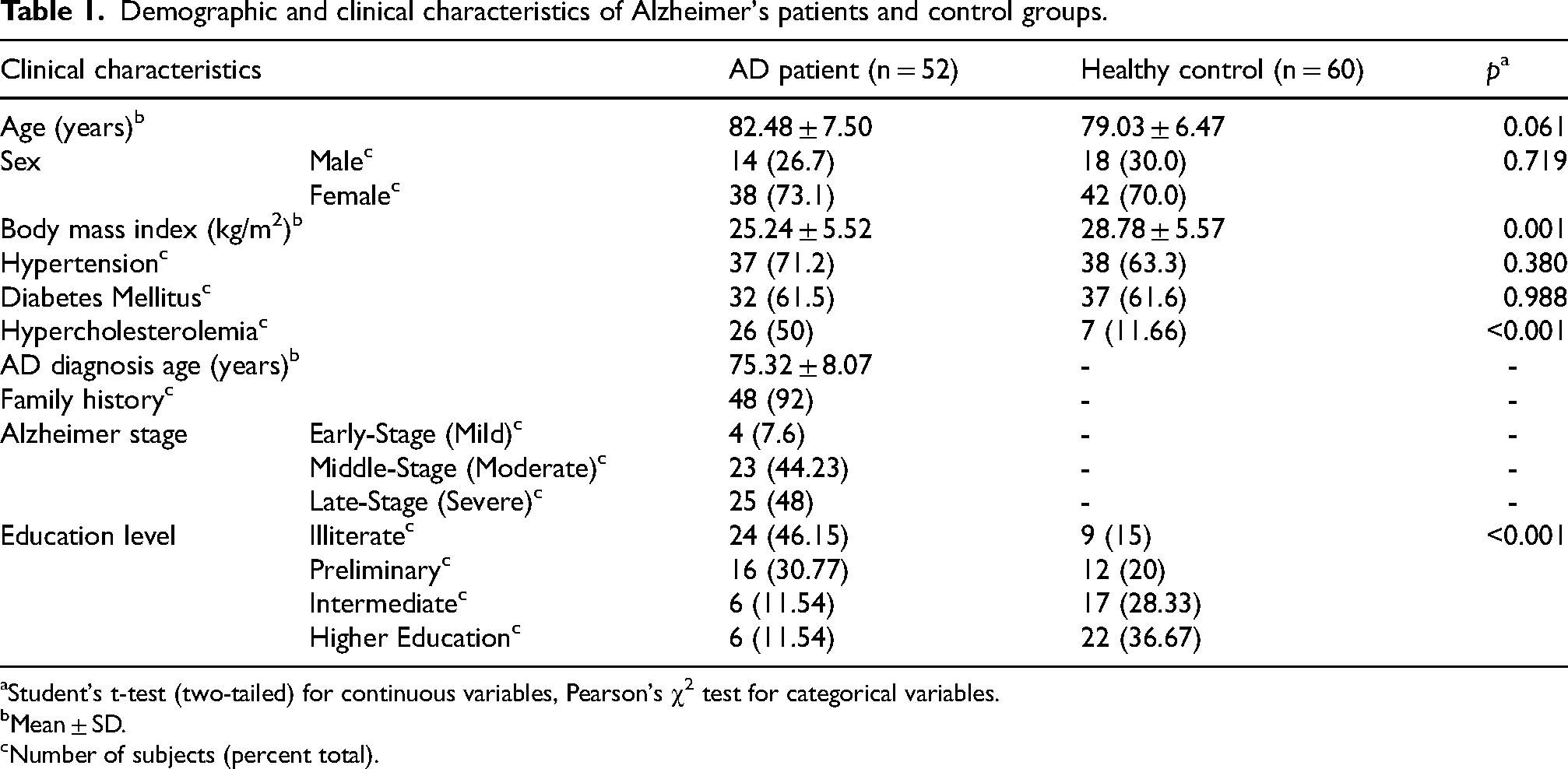
The demographic and clinical characteristics of the 52 AD patients and 60 healthy controls are summarized in Table 1. The mean age of AD patients did not differ significantly from that of the control group (p = 0.061). Female predominance was observed in both groups (73% in AD versus 70% in controls).
Demographic and clinical characteristics of Alzheimer's patients and control groups.
Student's t-test (two-tailed) for continuous variables, Pearson's χ2 test for categorical variables.
Mean ± SD.
Number of subjects (percent total).
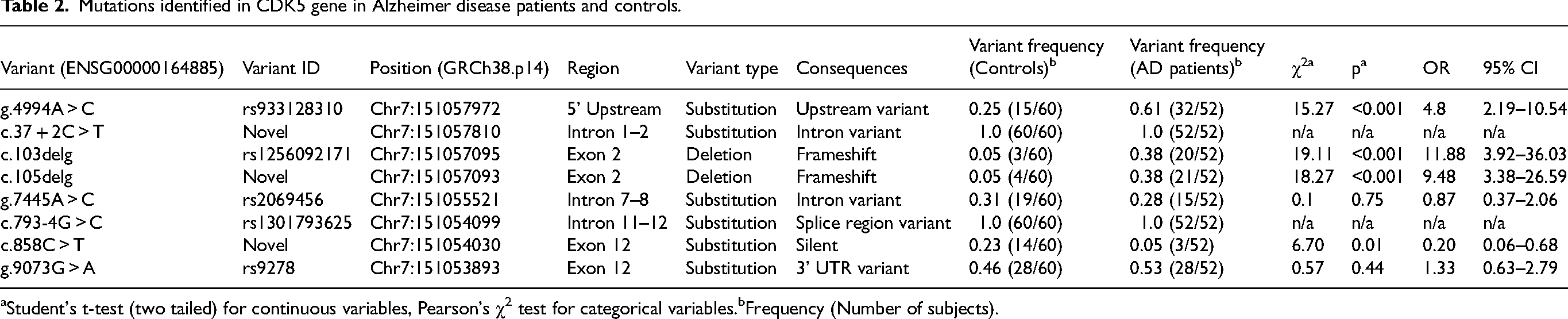
Mutations identified in CDK5 gene in Alzheimer disease patients and controls.
Student's t-test (two tailed) for continuous variables, Pearson's χ2 test for categorical variables.bFrequency (Number of subjects).
The prevalence of hypertension (p = 0.380) and diabetes mellitus (p = 0.988) was comparable between AD patients and controls. However, individuals with AD exhibited a significantly lower body mass index (p = 0.001) and a higher frequency of hypercholesterolemia (p < 0.001).
Educational status differed markedly between the two groups: a higher proportion of AD patients were illiterate (46.15%) compared to controls (15%, p < 0.001), whereas both intermediate (p = 0.028) and higher (p = 0.002) education levels were significantly lower among AD patients.
A strong familial predisposition to AD was noted, with 92% of patients reporting a positive family history. Disease severity distribution among AD patients indicated that 7.69% were in the early (mild) stage, 44.23% in the middle (moderate) stage, and 48% in the late (severe) stage.
CDK5 sequence analysis
The sequences of CDK5 exons were compared in AD cases and controls with the reference sequence (NM_004935.4, NG_042167.1 from GenBankin). Schematic representations of the mutations are shown in Figures 1–8, highlighting their locations within the CDK5 gene and their distribution among patients with AD and controls. A total of eight mutations were observed in the CDK gene, and were located in the 5’ upstream sequence, exons 2 and 12, as well as the intronic regions 1–2, 7–8, and 11–12 (Figure 1; Table 2). Of these variants, three mutations comprising c.37 + 2C > T in intron 1–2 (Figure 2), c.105Delg in exon 2 (Figure 3), and c.858C > T in exon 12 (Figure 4) were novel and were detected in both the AD and control groups. No mutations were identified in exons 1, 6, and 7 in AD cases and control groups.
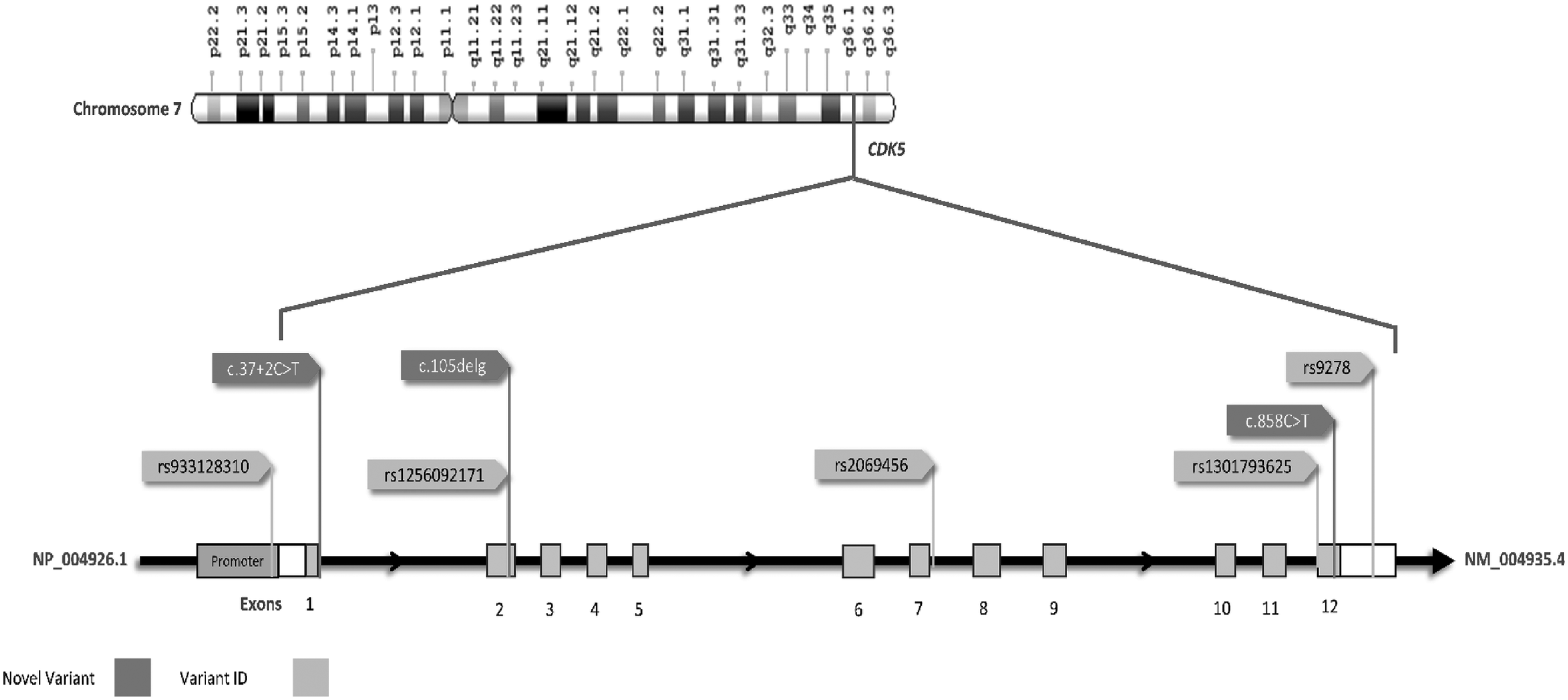
CDK5 genomic organization. A total of eight mutations were observed in various regions at the CDK5 gene among AD patients and control groups, including the 5’ upstream sequence, Exon 2, 12, and Intronic 1–2, 7–8, and 11–12. Three novel mutations were observed among them: c.37 + 2C > T in Intron 1–2, c.105Delg in Exon 2, and c.858G > T in Exon 12 (Diagram generated by authors).
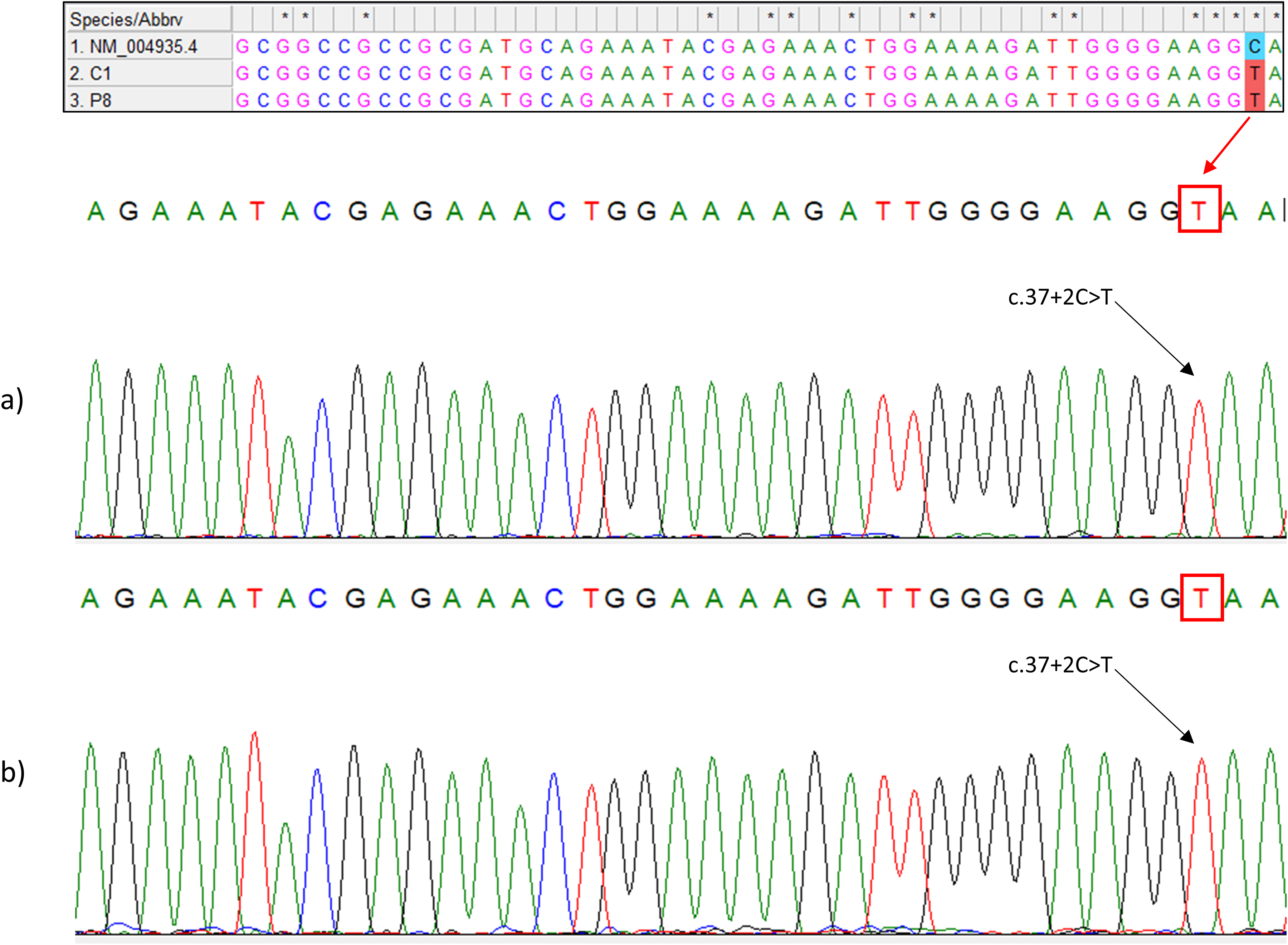
Novel Intron 1–2 variants. Mutation c.37 + 2C > T in intron 1–2 was observed in all members of both patients and control groups (reference gene NM_004935.4).

Deletion in Exon 2. Two deletions were observed in exon 2: c.103 delg (rs1256092171) and c.105delg in patients and control groups (reference gene NM_004935.4).

Silent variant in Exon 12. Mutation c.858C > T in exon 12 was observed in some members of the patients and the control group (reference gene NM_004935.4).
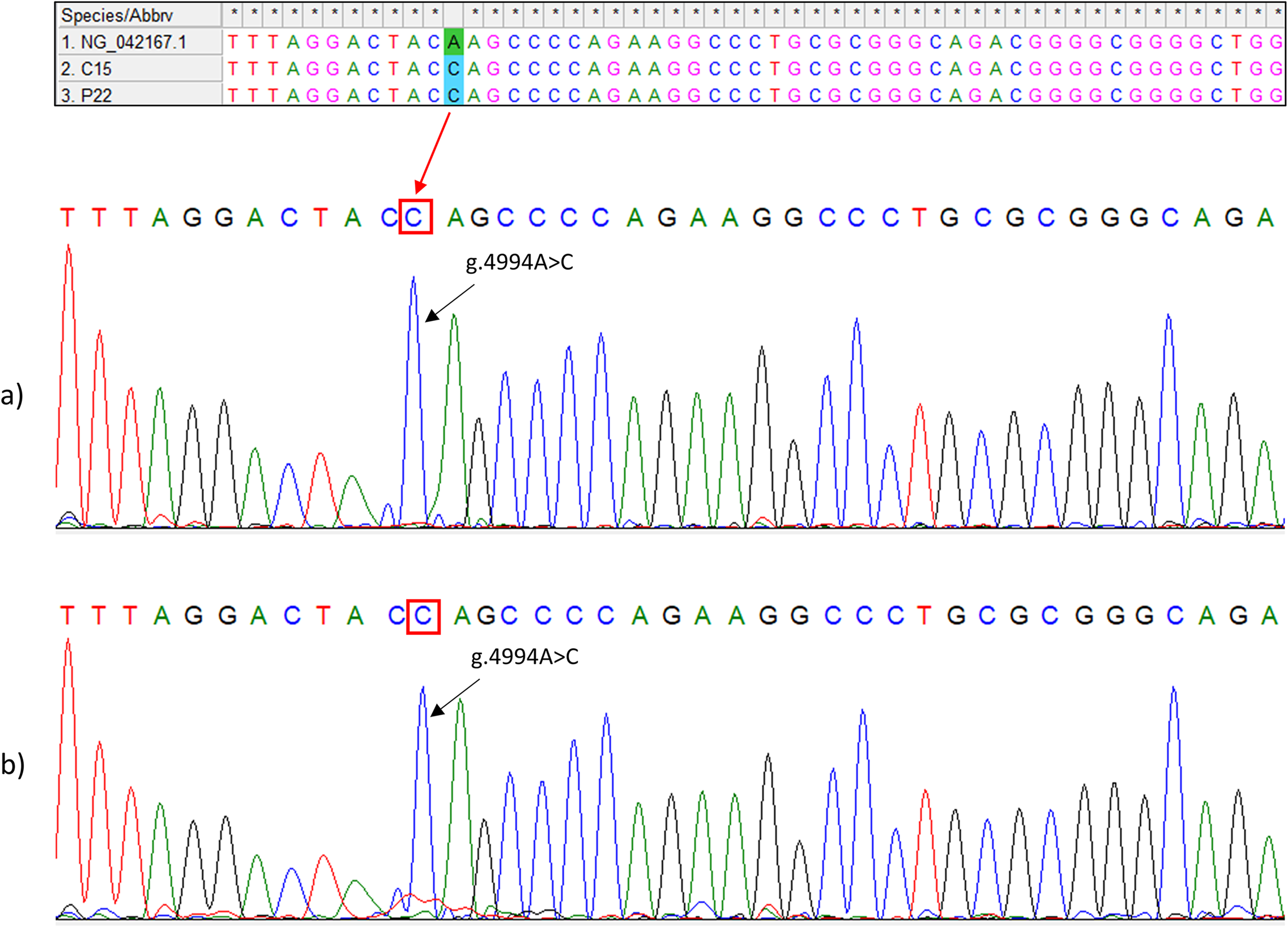
Variant in 5’ upstream sequence. Mutation g.4994A > C (rs933128310) in the 5’ upstream sequence was observed in some members of the patients’ and control groups (reference gene NG_042167.1).

Variant in Intron 7–8. Mutation g.7445A > C (rs2069456) in intron 7–8 was observed in some members of the patients’ and control groups (reference gene NG_042167.1).
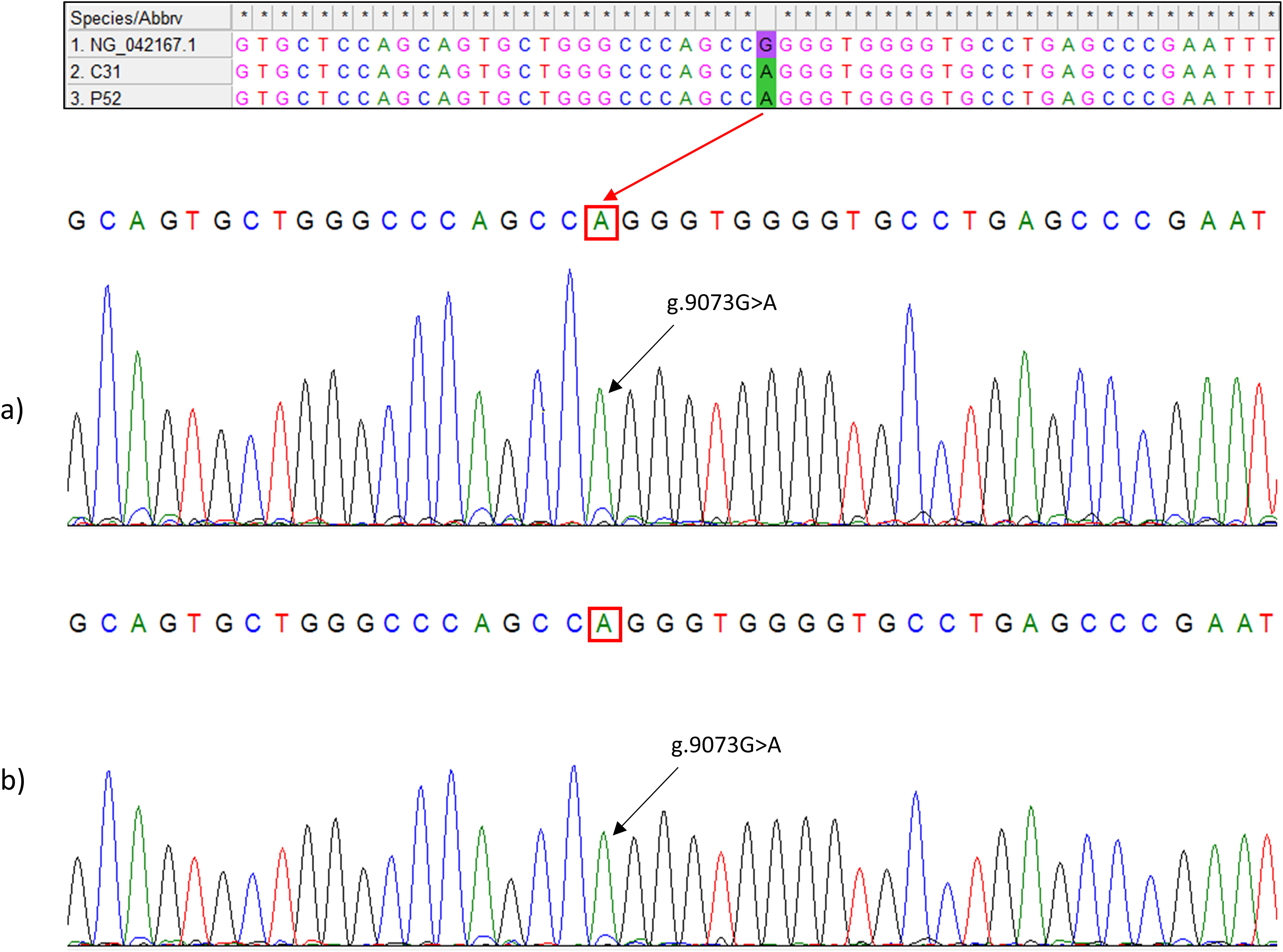
The variant in Exon 12. Mutation g.9073G > A (rs9278) in exon 12 at the 3` prime UT region was observed in some members of the patients and the control group (reference gene NG_042167.1).

The variant in Intron 11–12. Mutation c.793-4G > C (rs1301793625) in intron 11–12 at the Splice region was observed in all members of the patients and the control group (reference gene NM_004935.4).
The 5′ upstream sequence mutation, g.4994A > C (rs933128310), was detected at a significantly higher frequency in patients with AD (0.61) compared to controls (0.25) [(χ2 = 15.27, p < 0.001, OR (95% CI) = 4.8 (2.19–10.54)]. Similarly, the exon 2 c.103delg (rs1256092171) [(χ2 = 19.11, p < 0.001, OR (95% CI) = 11.88 (3.92–36.03) and the novel c.105delg [χ2 = 18.27, p < 0.000, OR (95% CI) = 9.48 (3.38–26.59)] deletions were strongly associated with AD, as they were significantly more prevalent in patients with AD (0.38 each) compared to controls (0.05 each). In addition, the exon 12 c.858C > T silent mutation was less frequent in AD patients (0.05) compared to controls (0.23), suggesting an AD- protective nature [χ2 = 6.70, p = 0.01, OR (95% CI) = 0.20 (0.06–0.68)]. Other variants, including intron 7–8 g.7445A > C (rs2069456), exon 12 g.9073G > A (rs9278), and intron 11–12 c.793-4G > C (rs1301793625) showed no significant differences in frequency between AD cases and controls.
A higher frequency of exon 2 mutations was noted among patients in the middle stages of the disease, while a higher prevalence of the g.4994A > C variant was seen in patients in the advanced stage (Figure 5). No comparable distribution was seen in patients in the initial phase of the disease. Similarly, the higher frequency of the g.7445A > C mutation was associated with the advanced stage of AD compared to the other stages (Figure 6), in contrast to the frequency of the 9073G > A mutation, which was higher in the middle, but not advanced stage of AD (Figure 7).
Intron 1-2c.37 + 2C > T and Intron 11-12 c.793-4G > C mutations were observed in all participants, suggesting a non-pathogenic variant common to the study population (Figures 2 and 8). The frequency of the 5’ upstream sequence variant, g.4994A > C, was significantly higher in patients with AD compared to the control group (61.5% versus 25.0%; p < 0.001), individuals carrying this mutation are 4.8 times more likely to be affected. In sharp contrast, the comparable prevalence of the heterozygous g.7445A > C (26.9% versus 30.0%; p = 0.719), g.9073G > A (9.6% versus 16.2%; p = 0.274) variants were noted in patients with AD compared to controls indicating lack of association with AD. Furthermore, the g.7445A > C mutation was detected at a low frequency in patients with AD was 1.92% and was not identified in the control group. In exon 2, while c.103G > T mutation was observed in 38.4% of AD patients, it is found only in 5% of the control group (p < 0.001), suggesting a possible association between this mutation and AD. The same results were observed with c.105del deletion mutation in the same exon.
Discussion
CDK5 is a key regulator of synapse formation, neuronal signaling, and synaptic plasticity—processes fundamental to learning and memory. 13 In this study, we examined both known and novel genetic variants of CDK5 and evaluated their association with clinically diagnosed AD in a Saudi cohort. By characterizing genetic variation in this neuronal regulator, the findings contribute population-specific data to the existing literature on genetic susceptibility to dementia syndromes consistent with AD pathology.13,15 Importantly, AD is increasingly recognized as a biologically heterogeneous disorder, encompassing diverse molecular mechanisms and pathways rather than a single linear pathogenic cascade. Within this complex landscape, genes such as CDK5 may exert disease-relevant effects through functional dysregulation rather than large-scale transcriptional alterations.
Several novel CDK5 variants were identified, including c.37 + 2C > T (intron 1–2), c.105delG (exon 2), and c.858C > T (exon 12), highlighting the genetic heterogeneity of CDK5 within this population. 26 Although the functional consequences of these variants were not assessed, their differential distribution between dementia cases and controls suggests a potential association with dementia susceptibility, warranting further investigation in larger cohorts with biomarker-defined diagnoses.
Clinical and demographic analyses revealed that individuals with dementia had a significantly lower mean BMI. Rather than representing a predisposing risk factor, this finding is more plausibly explained as a consequence of dementia-related factors, including reduced appetite, nutritional decline, and functional impairment, particularly in moderate to severe stages of the disease. Previous studies have reported associations between both high and low BMI and all-cause dementia, and the temporal relationship between BMI changes and AD remains incompletely understood. 27 Accordingly, BMI alterations in the present study are interpreted as secondary to disease progression rather than causal, reflecting the multifactorial metabolic changes accompanying neurodegeneration.
Elevated cholesterol levels were also more prevalent in the dementia group. While hyperlipidemia has been reported as a potential risk factor for cognitive decline in previous studies,28,29 an alternative explanation in the present cohort may relate to dementia-associated non-compliance with dietary recommendations or lipid-lowering medications, given the retrospective and observational nature of the study. Therefore, hyperlipidemia is interpreted cautiously as a comorbid condition rather than a definitive risk factor, although these findings continue to support the broader role of metabolic dysregulation in AD.28,30
Higher educational attainment was associated with a lower prevalence of dementia, supporting the concept of cognitive reserve delaying the clinical manifestation of cognitive impairment.31,32 As reported previously, this protective effect may diminish as neurodegeneration advances.33,34
CDK5 has been extensively studied in experimental models of neurodegeneration.10,13,14 In the present study, the enrichment of the g.4994A > C (rs933128310) variant among dementia cases suggests a possible association with altered CDK5 regulation, although no conclusions regarding functional impact can be drawn. Similarly, the synonymous variant c.858G > T (exon 12) was more frequent in controls, suggesting a potential protective association; however, synonymous variants may exert subtle effects through altered mRNA stability or translational efficiency.35,36 Given the absence of functional validation, these observations should be interpreted cautiously.25,37
The exon 2 deletions—c.103delG (rs1256092171) and the novel c.105delG—demonstrated high odds ratios, suggesting a potential association with altered CDK5 function. Frameshift variants of this type may lead to truncated or unstable proteins, which could plausibly contribute to neuronal dysfunction, although direct functional effects were not assessed in this study. Previous research has linked aberrant CDK5 activity, particularly via p25 overexpression, to synaptic loss, tau hyperphosphorylation, and neurofibrillary tangle formation.14,15,38 Notably, the affected nucleotides encode the valine residue, and deletions at this position may influence the structural and functional domains of CDK5. According to UniProt database annotations (www.uniprot.org), residues 4–286 constitute the kinase domain, and variants near the ATP-binding site (amino acid 33) could potentially affect enzymatic activity and substrate interactions. 39 While these observations are consistent with mechanisms previously implicated in neurotoxicity and neuronal loss,20,25 the present study does not experimentally confirm such downstream effects and therefore interprets these deletions primarily as variants of interest associated with AD.
Intronic variants were detected in both dementia and control groups, and their functional relevance remains unclear. Overall, the findings support an association between CDK5 genetic variability and clinically diagnosed dementia, without establishing causality or disease specificity. The differential frequency of the g.4994A > C variant highlights it as a candidate for further study rather than a validated biomarker.
This study represents the first investigation of CDK5 genetic variants in relation to AD in a Saudi population. Strengths include the identification of both known and novel variants, the use of age- and sex-matched community controls, and confirmation by Sanger sequencing. The targeted selection of exons 1, 2, 6, 7, and 12 was guided by prior functional relevance to kinase regulation and protein interactions.6,15,20
Several limitations must be acknowledged. The modest sample size reflects the exploratory nature of this population-specific study, and formal power calculations were not feasible due to the lack of reference allele frequency data. Dementia diagnosis was based on clinical criteria without amyloid or tau biomarker confirmation, raising the possibility of diagnostic heterogeneity. Environmental, metabolic, and lifestyle factors were not comprehensively assessed and may have influenced the observed associations.
In conclusion, this study provides preliminary evidence supporting an association between CDK5 genetic variants and clinically diagnosed AD in a Saudi cohort. While CDK5 may not constitute a major AD risk gene in large-scale association studies, its established involvement in key neurodegenerative pathways underscores its biological relevance. These findings contribute to the expanding understanding of the molecular complexity and heterogeneity of AD and support further investigation of CDK5 within integrative genetic, biomarker, and functional frameworks.
Conclusion
This study identified both known and novel genetic variants in the CDK5 gene in a Saudi cohort with clinically diagnosed AD, providing preliminary population-specific data on CDK5 genetic variability. Several variants, including c.37 + 2C > T, c.105delG, and c.858C > T, showed differential distribution between dementia cases and community-based controls, suggesting a potential association with dementia susceptibility. The g.4994A > C variant was also significantly enriched among cases; however, its utility should be regarded as exploratory, rather than as a validated genetic biomarker.
Given the retrospective design, the recruitment of cases from a clinical cohort and controls from the community, and the absence of amyloid or tau biomarker confirmation, the findings should be interpreted with caution. Observed differences in educational level, body mass index, and hypercholesterolemia are likely influenced by selection bias and disease-related factors, and therefore represent potential confounders rather than evidence supporting disease causation or multifactorial pathogenesis.
Despite limitations related to sample size and lack of functional validation, this study supports CDK5 as a candidate gene for further investigation in dementia research within the Saudi population. Future studies incorporating larger cohorts, biomarker-defined diagnoses, harmonized recruitment strategies, and functional analyses will be essential to confirm these associations and clarify their biological relevance.
Supplemental Material
sj-docx-1-alz-10.1177_13872877261427358 - Supplemental material for Association of genetic variants in cyclin-dependent kinase 5 with Alzheimer's disease in a Saudi cohort
Supplemental material, sj-docx-1-alz-10.1177_13872877261427358 for Association of genetic variants in cyclin-dependent kinase 5 with Alzheimer's disease in a Saudi cohort by Safia A. Messaoudi, Abrar Alsaleh, Lama A. AlSalem, Saranya Rameshbabu, Sachil Kumar, Mourad Assidi, Khaled Ouanes, Vera Chayeb, Hedia Zitouni and Wassim Y. Almawi in Journal of Alzheimer's Disease
Footnotes
Acknowledgements
The authors express their sincere gratitude to all participants who volunteered for this study. Special thanks are extended to Dr Ghassan Watfa and Talat H. Abduljawad (King Saud Medical City) for their assistance with patient recruitment. The authors also acknowledge the valuable support of the Center of Excellence in Genomic Medicine Research and the Central Military Laboratory & Blood Bank for providing technical and logistical assistance.

Ethical considerations
The study protocol was reviewed and approved by the Ethics Committee of King Saud Medical City, Riyadh, Saudi Arabia (Approval ID: H1RE-27-Nov18-01). All procedures involving human participants were performed in accordance with institutional ethical standards and the Declaration of Helsinki.
Consent to participate
Informed consent was obtained from all individual participants included in the study prior to sample collection and data analysis.
Consent for publication
Written informed consent for publication of identifiable data was obtained from all participants or their legally authorized representatives.
Author contribution(s)
Funding
The authors received no financial support for the research, authorship, and/or publication of this article.
Declaration of conflicting interests
The authors declared no potential conflicts of interest with respect to the research, authorship, and/or publication of this article.
Data availability statement
Supplemental material
Supplemental material for this article is available online.
References
Supplementary Material
Please find the following supplemental material available below.
For Open Access articles published under a Creative Commons License, all supplemental material carries the same license as the article it is associated with.
For non-Open Access articles published, all supplemental material carries a non-exclusive license, and permission requests for re-use of supplemental material or any part of supplemental material shall be sent directly to the copyright owner as specified in the copyright notice associated with the article.
