




Abstract
While the academic interest in the political blogosphere has grown exponentially in recent years, existing research is predominantly dedicated to political campaigning. In view of the “diminishing prestige of the electoral process” and the “rise of new forms of legitimacy” a broader political analysis of blogs is called for. This article investigates whether the political blogosphere is an arena for political representation by asking (1) how representatives communicate with citizens through blogging in order to aid central functions of political representation, such as accountability, connectivity, and inquiry, and (2) what strategic, technological, and normative factors explain differences in representatives’ communication with citizens. The empirical analysis, based on a survey questionnaire targeting all Swedish blogging representatives, illuminates four different approaches to blogging, with different drivers and implications for the representative democracy.
Introduction
With each election, candidates and representatives improve their use of the Internet and further integrate online tools into their overall communication strategy. With each election, there also seems to be a certain hype surrounding one specific tool, triggering hopes of its democratic impact. In the run-up to the 2010 Swedish election, it was the blog. While, for example, Twitter remained a marginal activity in the electoral campaign at this time (Larsson and Moe, 2012), blogs were widely adopted by politicians and citizen alike (Åström and Karlsson, 2013). Of all Swedish Internet users in 2010, about 50% turned to the Internet to get information about the election and about 40% read blogs (Findahl, 2011).
In the scholarly debate, political blogs have been considered a new and potentially important means to connect politics and the public (Blumler and Kavanagh, 1999). Many important contributions have been made to our understanding of the workings of political blogging in election campaigns, but the literature has—with some notable exceptions—overlooked aspects of political representation (Karlsson, 2013b; Wright, 2008). In view of the “diminishing prestige of the electoral process” and the “rise of new forms of legitimacy” (Rosanvallon, 2011) a broader political analysis of blogs is called for.
This study set out to investigate whether the political blogosphere is an arena for political representation. We do this by asking (1) how representatives communicate with citizens through blogging in order to aid central functions of political representation, such as accountability, connectivity, and inquiry, and (2) what strategic, technological, and normative factors explain differences in representatives’ communication with citizens.
By focusing on Sweden, we have the opportunity to explore the political blog space under rare, yet theoretically interesting, circumstances. Sweden is not only a country in the international frontline when it comes to Internet use (Findahl, 2011). It is also a country with exceptionally strong political parties (Karlsson, 2013a), as well as a highly individualized political culture among its citizens (Inglehart and Welzel, 2005). This study is thus particularly well placed to learn what happens with political representation when individualization meets strong parties in blog space. While Sweden may not be a representative case, it thus has the potential to reveal more information on this central issue than many other cases. Indeed, the so-called extreme cases are often said to activate more basic mechanisms in the situation studied and are therefore considered suitable for theory development (Flyvbjerg, 2006). The article begins with a review of key elements in theoretical accounts on the relationship between information and communication technologies (ICTs) and political representation (Coleman, 2005; Karlsson, 2013b; Norton, 2007; Zittel, 2003), which leads us to present our main theoretical framework, political blog space, aiming at conceptualizing various approaches to blogging. The empirical analysis that follows is based on a survey questionnaire that targets all Swedish blogging representatives. In contrast to the main empirical techniques used to map the online developments to date, link analysis and content analysis, the survey can grasp the intentions behind political blogging practices. Few investigations of political bloggers have been conducted with such a view, and these are focused on small samples of elite bloggers (cf. Coleman and Moss, 2008; Ekdale et al., 2010; Jackson, 2008; Shaw and Benkler, 2012; Trammell et al., 2006; Wright, 2008). The theoretical implications of the patterns we find are discussed in the concluding part of the article.
Representation and the Internet
What’s new?
Scholarly interest in the Internet is related to what it allows the users to do—the technology’s affordances. In the case of political communication, a potential for bridging the gap between politics and the public has long been envisioned (Blumler and Kavanagh, 1999). This potential includes new ways of providing public input in regard to policy-making through various forms of online consultations, as well as new tools used by political parties and politicians for communicative purposes. While much of the early empirical research has shown that this potential is far from being realized, the rise of social media has sparked new hope. It has been argued that the participatory culture and practices in social media can be particularly helpful in bridging the gap between politicians and citizens, perhaps fostering a new mode of representation that is centered on interactive communication between the two (Coleman and Blumler, 2009). This is especially true for blogs. Weblogs, or blogs, are defined as online diaries where information is electronically posted, updated frequently, and presented in reverse chronological order. They have a special aura of authenticity and appeal because of the freedom it permits participants. As peer to peer rather than hierarchical in nature, blogs permit individual expression and interactivity (Lawson-Borders and Kirk, 2005). As our survey data show, 98.7% of the responding politicians report offering readers a channel for two-way communication (comment fields, contact forms, or public e-mail address). Comment fields alone are used by 86.4% of the blogging politicians. In a technical sense, this indicates that blogs are in fact used for two-way communication. However, a valid question is whether this technological potential for two-way interaction is realized in practice, and how.
An important step for theoretically understanding and empirically exploring the potential of blogs has been the construction of new normative and ideal roles of representation. Coleman (2005) has developed the concept of “direct representation,” which focuses on communicative elements of representation, thereby challenging two current dominant approaches: one that pits direct democracy against representative democracy, and the other that sees representation as mimetic representativeness. In direct representation, communication between representatives and citizens should consist of three essential conditions: it should be (1) an on-going and (2) two-way process where (3) politicians proactively hold themselves accountable by regularly justifying their decisions to the public.
Thomas Zittel (2003) engages in a more classical debate in political science about the relationship between political representatives and parties. His framework proposes two models of political communication in the networked society: the technological and the constitutional. The former sees the transformative opportunities of the Internet, helping to create an electronic democracy and redefining the relationship between legislators and electors. Over time, new generations of parliamentarians have been able to utilize the Internet to bypass party conventions and to create a more direct, individual mode of representational communication. The Internet is seen as being at the heart of communication and a challenge to existing forms of responsible party government. The latter model posits the use of the Internet as one of the several means of enhancing existing political systems. In a parliamentary system, it will be utilized to bolster rather than challenge the position of parties as essential elements in delivering a cohesive and coherent program of public policy.
The influential models of Coleman and Zittel are not identical, but certainly overlap. Coleman focuses more on the mode of political communication, while Zittel concentrates more on the party–person focus. However, both authors touch upon both dimensions without explicitly distinguishing them. Furthermore, both authors draw a rather sharp line between continuity and change in their ideal descriptions of political representation. For empirical studies indicating something of a middle ground, the duality between old and new, and continuity and change is insufficiently precise (Karlsson, 2012; Stromer-Galley, 2000). This is especially true given that no explicit distinction is made between the focus and mode of representation.
For these reasons, we will construct a theoretical framework that allows for more empirical variation, by aligning function and focus as orthogonal dimensions (instead of consistent ideal types). Although the commonality of various combinations of these dimensions remains to be seen empirically, for theoretical purposes, they are orthogonal to one another: a blogging representative may use any combination of representational focus and function, both of which are theoretically independent. In principle, representational communication can accompany either a focus on party or person, just as an individual focus can accompany representational or presentational communication. We can, therefore, set them out to form a two-dimensional political blog space.
The political blog space
Before analyzing how representational focus and function are combined to represent a meaningful two-dimensional space, we should elaborate on each dimension a little further. Starting with the horizontal axis, one common finding is that politicians tend to primarily use the Internet to present themselves or their parties, as opposed to interacting with the public. However, it often remains unclear what kind of communication would fulfill the various functions for representation. How can we tell whether communication in political blogs is of such a character that it can refresh the representative relationship?
Our analysis finds its point of departure in three concepts with strong roots in normative theories of representation: accountability, inquiry, and connectivity (Karlsson, 2013b). First, accountability represents communication that legitimizes political actions by giving accounts to constituents concerning representatives’ convictions or the rationale behind prior actions (Coleman, 2005; Mansbridge, 2009). Furthermore, representational communication includes the function of allowing for representatives to inquire among their constituents in order to uncover the constituents’ perspectives, ideas, and policy positions. Through interaction between representatives and constituents, such ideas can be aggregated and discussed (Fung, 2006). Finally, representational communication may encourage connectivity and thereby foster trust and a feeling of being represented among citizens (Coleman and Blumler, 2009). The theoretical basis for this concept is found within the theory of social capital (Putnam, 2000), which views communication as something more than an exchange of information about goals, concerns, interest, or strategies. Instead, its chief characteristic is the development of interpersonal relationships where the identities of others matter. The more a politician uses blogging to fulfill these three functions, the further to the left we will position him or her in the political blog pace.
Building on responsible party government representation theories, the second dimension aims to distinguish between party oriented and individually oriented representations. The party government model is a relevant departure point when studying parliamentary systems with strong political parties, such as the Swedish system. Candidates are selected by party elites rather than through open primaries, so they are first and foremost party representatives. Meanwhile, blogging is being recognized as a practice that allows candidates and representatives to engage with citizens more directly and bypass parties to articulate individual opinions, thoughts, feelings, experiences, and identities (Albrecht et al., 2007; Coleman, 2005; Wright, 2008). Therefore, the degree to which the content of the blog focuses on party versus individual views is highly interesting. According to Wright (2008), “a battle is being fought” (p. 53). On one hand, there are politicians trying to make use of the individualistic blog platform, while on the other, there are parties trying to conduct professionalized campaigns, controlling their messages, and presenting uniform fronts. The more the content of the blog is focusing on a politician’s individual positions, the lower we will position him or her in the political blog space.
The political blog space brings about four main positions (I–IV), as depicted in Figure 1. The first position is mainly about presenting parties, ensuring that the party message is conveyed electronically. As the party is the main focus and relatively little communication meets any representational function, this position may be interpreted as a reinforcement of existing means of communication (Norton, 2007). We refer to the second position as self-presentation since it tends to promote the politician as a person rather than as a representative (Lilleker and Koc-Michalska, 2013). As is made evident by the empirical analyses presented below, this group shows no more representational communication than the first group (see also Appendix 1). We can thus conclude that more individualistic blogging does not necessarily mean more representational communication.
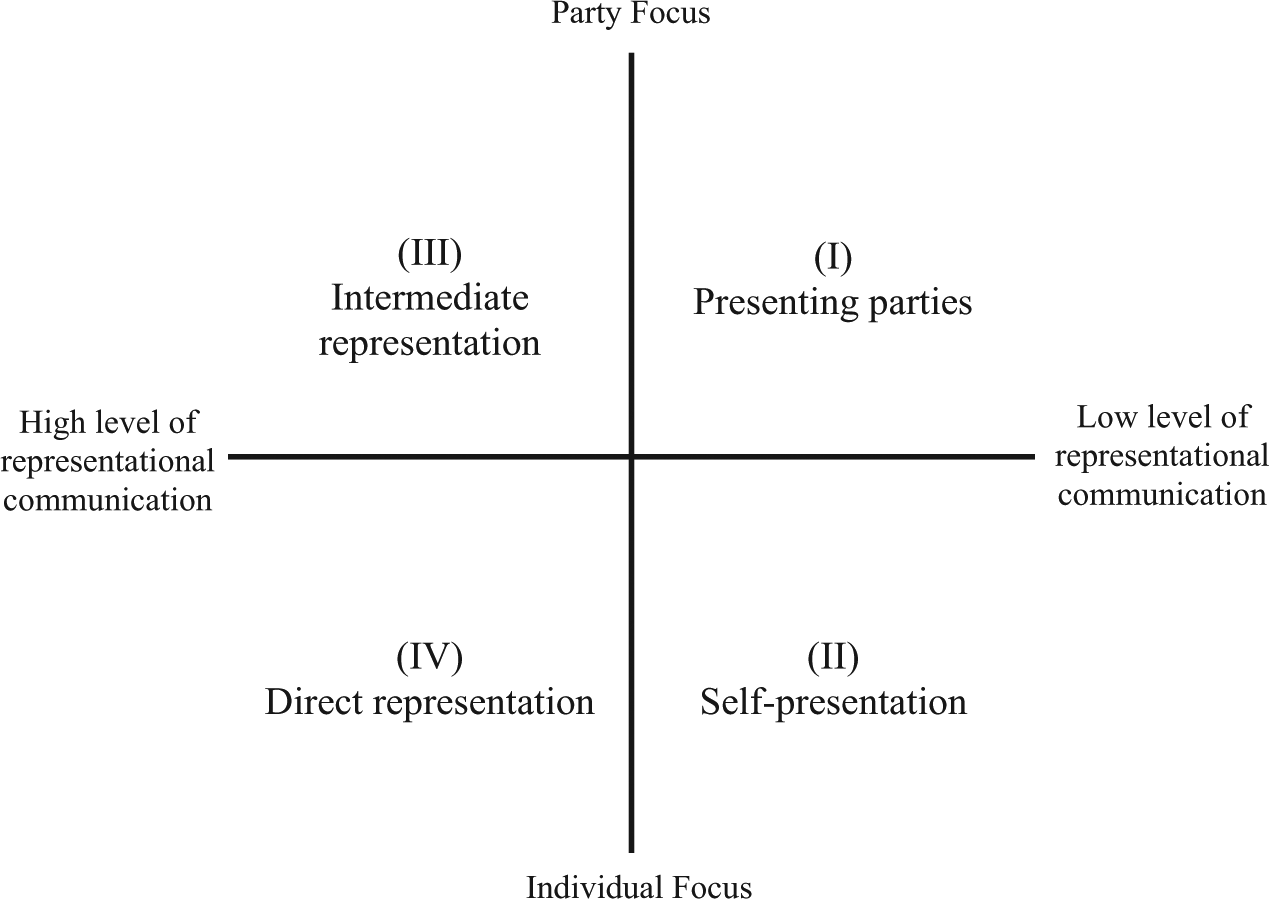
The political blog space.
The third position, intermediate representation, distinguishes representatives that combine representational communication with a party focus rather than a focus on their individual positions in their blogs. The empirical analyses of this article make evident that also this combination is common among blogging representatives, which illustrates the empirical relevance of the quadrant. The fourth position, which comes closest to Coleman and Zittel’s individualistic and representational accounts, is called direct representation. On the basis of the theoretical division lines constituting the political blog space, four positions with varying implications for representative democracy thus emerge.
Explanatory perspectives
So, what factors determine the representational function and focus of political blogs? When Wahlke et al. (1962) initiated empirical research on political representation, they argued that three sets of factors influence the roles taken by individual politicians: normative views, strategic considerations, and practical circumstances. Even though we have argued in favor of a somewhat different understanding of political representation, we will employ the same three perspectives for explaining variations in blogging.
The normative perspective
Is there an ideological foundation for politicians’ blog use? In previous research, party affiliation was emphasized as the main reason why different members support different principles of representation, and the explanation for these differences usually indicates ideological as well as organizational factors. Holmberg (1974) highlights the tradition of collectivism within socialism. The guiding principle of leftist parties has been party solidarity, unlike the right-wing parties, which have been influenced by the liberal, individual tradition of representation. Others argue that the organizational base within the labor movement has made leftist parties accept a greater influence of the extra-parliamentary party organization on the officials (Wallin et al., 1981).
Interestingly, there also seems to be an ideological dimension in the political use of blogs. A Swedish study concluded that the adoption, usage, and impact of blogging among Swedish politicians are considerably mediated by ideologies and parties. The findings not only suggest that blogs seem to be more attractive to politicians who stand to the right but also that the parties on the right appear to embrace candidate-centered blogging, while the left gives the impression of having a more collective agenda (Åström and Karlsson, 2013). Similar differences have been observed in the United States between Republicans as Democrats have demonstrated much better ability in using the Internet to mobilize and engage public support than Republicans (cf. Karpf, 2009).
If this account is correct, then communication on blogs in general and its functions when it comes to promoting political representation in particular might reflect ideological positions. Digital politics should mirror traditional forms of communication so that there will be more politicians from right-wing parties that use the blog for individual representation styles.
Strategic considerations
While all politicians have some capacity to build trust through more individual representation styles via their blogs, some probably can gain more than others. According to the strategic perspective, each politician will consider the context she faces when deciding on how to communicate (Lipinski and Cooper, 2003).
The increasing amount of comparative Internet research indicates that there is a set of structural mechanisms guiding the political use of social media. By accounting for mainly institutional variables, such as party structure and funding, electoral regulations, and media systems, research shows how similar instances of online campaigning are shaped by national contexts. However, relatively little attention has been paid to intra-national variations and aspects of representation. In developing hypotheses in this regard, we turn to historical accounts.
The first hypothesis concerns the distance to voters. In Considerations on Representative Government (1962/1861), John Stuart Mill argued that locally elected officials are in more regular contact with voters, and thus should be more influenced by voter opinion. Locally oriented politicians should, in other words, have greater incentives to intensify their communication with their constituents than nationally oriented politicians, and perhaps should use their blog more frequently for individual representation.
The second hypothesis builds on empirical evidence showing that parliamentary position influences views on representation. According to Gilljam et al. (2010), the pressure to follow the party line is stronger if in majority as any deviation from the party line may lead the party to lose its majority. In opposition, on the other hand, there are few who notice any deviation from the party line since the consequences are less severe. Yet, another argument for a more individual representation style among politicians in opposition is that innovation is usually seen as offering an opportunity to change the rules of the game, which is a strategy that is more appealing to candidates and parties in opposition (Karpf, 2009).
Practical circumstances
According to a technological perspective, political and social organizations respond to adaptations and uses of ICTs that are relatively autonomous in ideology, strategy, and other social influences. The most important factor driving digital politics is considered to be the technological development in itself, which directly influences how far politicians can go to provide online communication and indirectly produces greater incentives to do so (Norris, 2001).
Along these lines, an increasing number of empirical results suggest that Internet use in itself is encouraging online political activity among citizens (Di Gennaro and Dutton, 2006; Gibson et al., 2005). Even when it comes to political representation, there is some evidence that suggests a link between online stimuli and increased interaction with citizens. Politicians who are experienced Internet users have greater confidence in technology’s potential for promoting democratic values, they are more positive toward a strategic usage of the new technology, and that they are more positive toward proposals that allow a higher degree of interaction. As Åström (2004) argues, these findings may be interpreted as a cumulative technological effect or a process in which goals are gradually adjusted to the available means.
From a technological perspective, we should expect that the more a politician uses and has confidence in social media, the more she might use the blog as individually representative, regardless of ideology and strategy.
Data and measurements
The article draws on a survey that targets political representatives in Sweden. Of the countries that were democratized in the early 20th century, Sweden has had one of the most stable party systems. Besides the five parties that comprise the classic Swedish “five-party system,” only four other parties have, on any occasion, held seats in the national parliament. During the 2006–2010 parliamentary term, the national parliament included seven parties that are commonly divided into two blocs: a “left” bloc containing the Left party, the Social Democrats, and the Greens, and a “right” bloc containing the agrarian-based Centre Party, the Liberals, the Moderate party, and the Christian Democrats. Bloc identity has, at times, been unstable, but during this term, the left and right blocs have been more organizationally and ideologically coherent than perhaps ever before.
For the purpose of this article, we should note that the ideological landscape differs between Sweden and, for instance, the United States, where most studies of ideology and political blogging stem from. Socialism, not liberalism, is dominating on the left side, most so in the Left party and least so in the Green party. In Sweden, the liberals are instead to be found on the right side of the spectrum, with a mix of conservatism in the Moderate party and the Christian Democrats. The highest level of individualism among Swedish politicians is thus found within the liberal right, while a more collectivist tradition is dominant within the socialist left. It is also worth noting that the right bloc in Swedish politics held a majority of the seats in the national parliament at the time of this study.
Data
In September 2010, a web survey was sent to the authors of all blogs listed by the Swedish political blog indexing service “Politometern” (http://www.politometern.se), with available e-mail addresses. Of the 2103 blogs listed by Politometern at the time of the survey, e-mail addresses of 1112 bloggers (53%) were found. The survey was answered by 730 political bloggers (66% of the survey recipients, 35% of all bloggers listed on Politometern). This study is based on a sub-sample of blogging politicians, including only those 391 bloggers (54% of the total sample) who held a political office at the time of the survey in the analyses. As this article focuses on politicians’ role as representatives, we are predominantly interested in respondents who are acting as elected representatives.
Measurements
Dependent variables
The dependent variable of the analyses is an operationalization of the political blog space model, identifying four positions in the blog space among Swedish blogging representatives. This operationalization is based on two variables—focus and function of blogging—each measuring one dimension of the political blog space.
Focus of blogging: For measuring politicians’ blog focus, a survey item measuring whether the content is focused on the politician’s party or his or her individual positions was used. Blogging representatives that primarily focus on their own positions and ideas (person) were distinguished from other bloggers.
Function of blogging (representational communication): The main focus of this study is the usage of blogs as an instrument for political representation. To measure this utilization of political blogging, an index was constructed on the basis of the theoretical framework of “representational communication” presented above. The three variables included attempts to measure the usage of blogs for inquiring with citizens (inquiry), making accounts of political positions (accountability), and fostering a greater connection between representatives and constituents (connectivity). As we are interested in the function of blogging, these items measure the representatives’ purposes and intentions related to blogging rather than their actual communication practices. The index reaches an acceptable, yet not a very strong, level of reliability (Cronbach’s α: .696) indicating that the three included variables measure a common dimension. The index was transformed into a categorical variable (divided at the mean value) in order to separate between low and high levels of representative communication among blogging politicians.
Independent variables
Four sets of independent variables were included in the analyses and were used to manifest the three explanatory perspectives presented above. In addition, a set of variables describing the representatives’ personal characteristics was used as control variables:
Technological factors. We measured the level of confidence the respondents expressed regarding the importance of social media as a political tool. Second, the study included an item measuring the respondents’ level of activity in the blogosphere through their reported time spent blogging in the month preceding the survey.
Strategic factors. In terms of factors that previous studies underlined to potentially influence politicians’ strategic considerations (e.g. in relation to political blogging), we included in the analysis the respondents’ political level (local or national) as well as whether they enjoyed a majority position in their political setting or were part of opposition.
Ideological factors. To account for the potential influence of ideological positions (often highlighted as influential in earlier studies on political representation), we included the politicians’ party affiliations, as well as individual self-positioning, on an 11-point ideological scale ranging from left (0) to right (10). In the descriptive analyses, the various party affiliations were grouped into the dominating political camps in Swedish politics at the time of the study: the red–green cooperation (the Left Party, the Social Democrats, and the Greens) and the Alliance for Sweden (the Centre Party, the Liberal Party, the Moderates, and the Christian Democrats). Additionally, variables describing the respondents’ normative orientation toward political representation were included, distinguishing among trustee representatives, party delegates, and citizen delegates (cf. Karlsson, 2013a).
Personal characteristics. As several earlier studies illustrate, individual characteristics also play a role in explaining politicians’ norms and roles of representation. We include in this analysis items measuring the age of the respondents (as a categorical variable separating between respondents under the age of 40 and those that are 40 or older), as well as the gender of the respondents.
Explaining positions in political blog space
Innovations usually spread to an increasingly large group only after a period of time. When a phenomenon is new, it is usually limited to a relatively small group (Schmidt, 1986). However, we find a relatively differentiated group of representatives engaged in the political blog space in the run-up to the 2010 election. The gender proportions in the sample are roughly equal to the percentages among Swedish representatives in general at 40.5% female to 59.5% male. Young representatives are overrepresented among bloggers, but there is nonetheless a fairly high number of bloggers over the age of 40. The mean age among blogging representatives is 44 years compared to a mean of 51 years among all Swedish representatives. Quite naturally, there are more politicians belonging to the political majority in their respective political assemblies (55.4%) than oppositional politicians (44.6%) in the data. One notable fact about the distribution is, however, that the political blogosphere is ideologically biased to the right, as 59.5% of the respondents belong to the center-right parties, which is markedly more than their vote share in the 2006 election for the national parliament. Although some biases are evident among the respondents, these descriptive analyses nonetheless indicate that the Swedish political blog space is characterized by diversity and variation. On the basis of this variation, we can expect that Swedish politicians utilize blogging in divergent ways. Let us therefore turn to the questions how and why.
Presenting parties
We begin the empirical analysis in the upper-right corner of the political blog space, where politicians first and foremost are presenting parties. This makes a natural starting point in party-dominated systems, such as the Swedish one. Still, this does not mean that presenting parties is a neutral starting point, in that all types of politicians are equally represented in this part of the blog space. Blogging among politicians per se has been considered as an indication of a more individualized and interactive orientation toward representation, which would attract a certain type of politician (Norton, 2007). We, therefore, need to consider descriptive data about this group. Note that 31% of the representatives in the sample are positioned here. Compared with other positions, presenting parties is overrepresented by certain groups. The clearest over-representation can be attributed to men; politicians from the left bloc; politicians with low confidence in social media; and finally, politicians who mainly have a national focus on their blog. These general characteristics must be considered when we now focus on explaining steps taken from this position in other directions.
The presenting parties’ position is subsequently used as a reference category in the multinomial logistic regression models presented below. These models calculate the likelihood of taking the other three positions in the political blog space through paired comparisons with the presenting parties’ position. As argued above, this is a suitable reference category given the party-centric nature of the representative democracy of the Swedish system.
Self-presentation
One vertical move away from the presenting parties’ point of departure is represented by the self-presentation category, in which the politicians—representing 16% of the respondents—focus more on themselves in their blogs, but nonetheless stay in the presentational side of the blog space. What factors influence the odds for going in this direction? The result in Table 1 indicates a straightforward answer to this question: ideology. According to both regression models (1 and 2), self-presentation is related to positions to the right on the ideological 11-point scale (odds ratio [OR]: 1.339, p < .001 for Model 1 and OR: 1.265, p < .05 for Model 2), which turns out to be the only factor predicting the movement toward self-presentation with any statistical significance.
Multinomial logistic regression models explaining positions in political blog space.

The table presents odds ratios for different positions in the political blog space. Party presentation is used as reference category. Significance levels are displayed as follows. ***p < .001. **p < .01. *p < .05. Xp < .1. Standard errors are presented within parentheses. N = 314, pseudo R2 (Nagelkerke), M1 = 0.279, M2 = 2.97.
Note that the ideological effect is somewhat weakened when estimated using a control for party bloc affiliation, as demonstrated in Model 2. This specific control is included to investigate whether ideological positions matter for modes of political blogging also within political blocs, which clearly seems to be the case. Bloggers in the left political bloc who stand further to the right are more likely to fall into the self-presentation group than their colleagues on the left. The same is applicable for politicians from the center-right bloc. Against this background, we can conclude that ideology matters between and within party blocs, and that the variation between individual politicians within the two blocs is more important for explaining the step toward self-presentation than the variation between the blocs.
To proceed with an analysis of the link between ideology and self-presentation, the predicted probabilities were calculated. As Figure 2 illustrates, the likelihood for self-presentation, when all variables in Model 1 (except for ideological orientation) are held constant at their mean values, shows a continuous and strong increase along the left–right scale. The probability for self-presentation is low for politicians far out on the left (values = 0–3), ranging from 10% to 22%. On the far right of the scale (values = 8–10), the probability is much higher, between 54% and 68%.
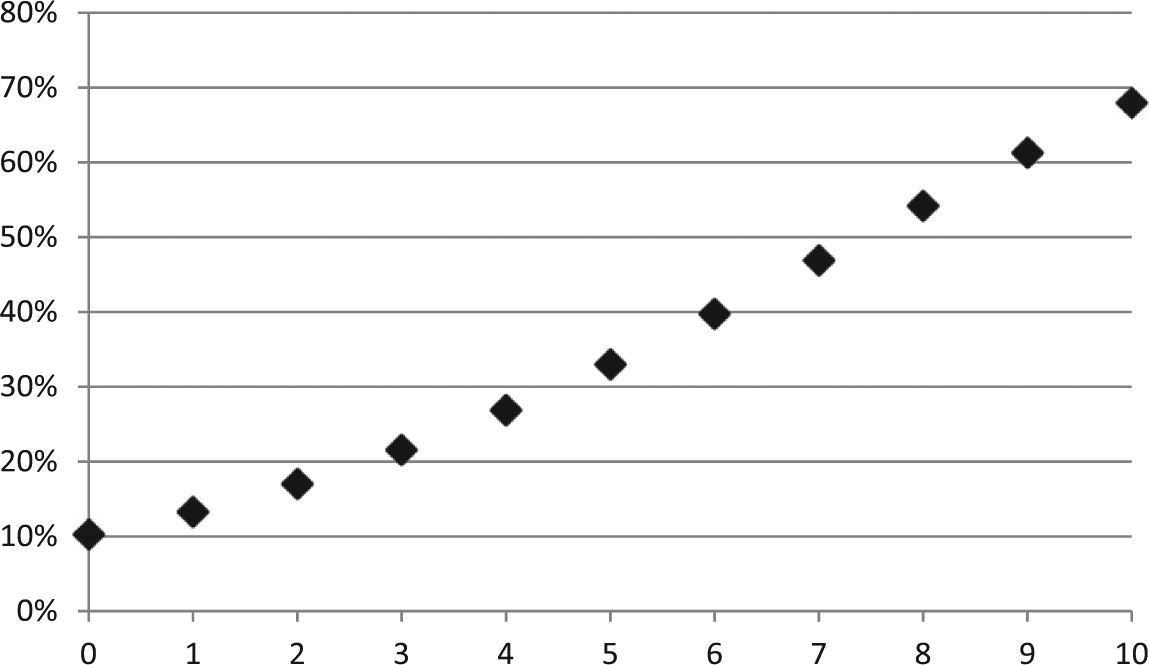
Predicted probabilities for self-presentation group membership at different positions along the left-right ideological orientation scale (based on model 1).
Even though strategic and technological factors cannot predict the step toward self-presentation, they cannot be deemed irrelevant. Rather, we should interpret the results to mean that given these factors, the politicians in the self-presentation group are similar to those in the presenting party group, when the other variables in the models are controlled for. This means that there is a similar bias toward men, politicians with low confidence in social media, and politicians who mainly have a national focus on their blog; this is also indicated by the descriptive statistics.
Given the prominence of strategic and technological factors in the literature (Anstead and Chadwick, 2009; Norton, 2007; Zittel, 2003), it is nonetheless an interesting result that the step from party presentation to self-presentation significantly depends on ideology. Several recent empirical studies indicate a similar tendency. Just as blogging is shaped by how national institutions support persons or parties, blogging seems to be shaped by party affiliation and ideological positions on individualism and collectivism (Åström and Karlsson, 2013; Karpf, 2009; Shaw and Benkler, 2012). In line with the results presented here, it is argued that liberal political bloggers are more individualistic in their blog focus.
Intermediate representation
What about a lateral move in the political blog space, then? Does ideology explain the step from party presentation to a more representational, yet collectivistic, type of blogging that characterizes 37% of the representatives? The results show that this is not at all the case. Within the space of intermediate representation, ideological orientation is not significantly different from those who present parties. The weak odds ratios relating to ideological orientation and political bloc indicate that these groups share similar ideological profiles, neither do the variables measuring normative views on political representation create any statistically significant effects. Instead, strategic incentives and technological factors are keys for understanding a move in this direction.
When it comes to strategic factors, local issues seem to be regarded as promising avenues for representational communication. Representatives who focus on local political issues in their blogs are more than twice as likely to belong to the intermediate representation group than those who focus predominantly on national political issues (OR: 2.489–2.52, p < .01). Considering that people feel most competent and are most immediately engaged in local issues, this comes as no surprise (Phillips, 1995). The interesting thing is the intermediate, collectivistic angle. Despite the relatively contained and uniform nature of local environments, reducing the role of parties as aggregators of diverse interests, along with the fact that local issues can exist apart from or even in conflict with the interests of national parties, these bloggers remain faithful to their parties.
The results relating to the technological factors speak a similar language. Both models provide strong support for the technological perspective, indicating that representatives that have stronger confidence in the political importance of social media are more than twice as likely to move in this direction (OR: 2.426–2.431, p < .05). In addition, the time spent on blogging is positively related to this position (OR: 1.778–1.78, p < .01). Thus, blogging politicians who have a stronger belief in technology and invest more time using it are more likely to utilize their blogs for intermediate representational communication. On one hand, this could indicate a cumulative technological effect as attitudes and behaviors are gradually being adjusted to the available means (Åström, 2004). On the other hand, this effect is bounded, in that it does not automatically lead to a more individualized representation.
Besides the boundaries that seem to be set by ideology, gender emerges as an important element in studying these politicians. As many as 50% of the blogging female politicians belong to the intermediate representation category, and women are more than twice as likely as men to belong to this group (OR: 2.517–2.552, p < .01). The fact that no corresponding effect is found regarding any other group means that the gender effect is specific for intermediate representation. Similar to earlier studies on political participation and representation, this indicates that female politicians are more open to interactive, yet collectivistic, communication with voters than men (Karlsson, 2012).
Direct representation
The last position to be investigated combines representational and individual communication, what we call direct representation. Theoretically, this position differs the most from our reference category, party presentation. Furthermore, it has attracted the most academic attention (cf. Coleman, 2005; Zittel, 2003). It is also an interesting position when it comes to representational communication, since it stands out in the case of the inquiry function. Almost half of the politicians, 48% of the sample, fulfill the otherwise neglected inquiry function (see Appendix 1). The question is, does this position only reflect the horizontal plus vertical move in blog space, or does it add something new to our understanding?
Certainly, some major traits are recognizable from previous analyses, which are—as expected—related to all three explanatory perspectives: the normative, the strategic, and the technological. In the case of the normative perspective, ideology seems to be an important factor. While individual ideological orientation does not produce any statistically significant coefficient in either of the regression models, party bloc affiliation has a strong impact (OR: 4.2, p < .05). Recalculated into predicted probabilities, this effect can be described as a difference between a mere 14% probability for direct representation among representatives within the left political bloc and a 48% probability within the center-right bloc. In total, this amounts to a difference of 34 percentage points’ increase in likelihood for the latter category. Similar to self-presentation, we can thus conclude that there is an ideological dimension to direct representation (and thus to the vertical dimension more generally).
In the case of strategic factors, we find that a focus on local political issues once again is positively associated with representational communication, producing statistically significant coefficients in both models. The regression analyses indicate that locally oriented bloggers are twice as likely to adopt direct representation, compared to the reference category. Moreover, the technological factors—the representatives’ level of confidence in social media as well as time spent blogging per week—show strong positive coefficients in relation to a movement toward direct representation. Similar to intermediate representation, we thus conclude that a focus on local political issues as well as technological experience and confidence in social media aid direct representation (and thus representational communication more generally).
Additionally, the combination of a horizontal and a vertical movement seem to add two new and highly interesting associations: one normative and one strategic. First, normative views on political representation are significant. While the tendency of representatives to follow their own conviction rather than their party position in the case of conflict seems irrelevant for moving from presenting parties to self-presentation or intermediate representation, it is clearly changing the odds for direct representation. Trustee representatives are more than twice as likely to represent directly as party delegates (OR: 2.371–2.322, p < .05). In other words, direct representation seems to demand more freedom from political parties than the other positions in the blog space. By this token, direct representation can be interpreted as being more ideologically challenging than any move along single dimensions.
Second, parliamentary position is significant. It has often been argued that politicians in majority tend to rely more heavily on a party delegate role of representation (cf. Gilljam et al., 2010), and that a challenger position is a strong incentive for using alternative channels for communication (Karpf, 2009). However, our results show that a majority position increases the odds for direct representation. Perhaps this can be understood in relation to people’s preference of communicating with politicians holding executive power (Wrenne, 1997).
Summary of the results
As is made evident by the analyses, the vertical axis of the political blog space, relating to the party–individual dimension of communication in the blogosphere, is strongly determined by ideology. Exclusively ideological orientation differentiates the self-representation group from the presenting parties group. Further ideological factors deviate between the intermediate representation and direct representation groups.
Regarding the horizontal axis of the political blog space, the analyses indicate broad set of common characteristics differentiating the intermediate representation as well as direct representation groups from the reference group (presenting parties). These representatives have stronger confidence in the political importance of social media, are more experienced bloggers, and are more often locally oriented. Apart from these commonalities between the intermediate- and direct representation groups, the analyses also indicate a number of diverging characteristics. Women are strongly represented within the intermediate representation group while the direct representation group has a strong representation of politicians in majority position.
Conclusion
When exploring the blogosphere as a new arena for political representation, it is suggested that both focus and function of blogs are important to consider. In this article, we have argued that these dimensions are better viewed as orthogonal to one another: a blogging representative may use any combination of representational focus and function, both of which are theoretically independent. Representational communication can accompany either a focus on party or person, just as an individual focus can accompany representational or presentational communication. Empirically, the two dimensions show a weak correlation (r = .13, p < .01), and are thus not strictly orthogonal; however, through our framework, four common positions emerge with different implications for the representative relationship.
Two of these positions—presenting parties and self-presentation—include only a limited use of representational communication, which almost exclusively fulfills an accountability function. The presenting parties’ category can primarily be interpreted as a reinforcement of existing means of communication, while the self-presentation category reinforces the trend of personalization in politics. For politicians in both groups, however, the blogosphere is not primarily an arena for political representation.
The two other positions—intermediate and direct representation—are more interesting from the perspective of political representation. Intermediate representation signifies a collectivist route to interactive representation, which so far has eluded scholars’ radar. Here, the representatives’ blog reinforces the party position, but innovates in interactive representational communication. Even though the blog is seldom used to fulfill the inquiry function, this approach to blogs could foster the political sentiment of producing something together, strengthen the bond of identification, and reduce the distance between politics and the public. However, for those who believe that we need ways to correct, offset, and structure this distance such that citizens can direct the representatives by means other than bestowing a mandate via the ballot box, this is probably not enough. For these people, direct representation is preferable since it is more individualistic, makes more use of inquiry functions, and is therefore perceived as a better position for capturing the wants, needs, and demands of the public in making government policy. Even so, we would argue that both positions deserve more scholarly attention in the future.
One reason is theoretical as they illustrate opposite positions in the debate on the future role of political parties in representative democracy, either as intermediates between citizens and public policy-making or bypassed by direct communication between citizens and individual representatives. A second reason stems from the empirical analysis. The results suggest that representational communication is affected by strategic and technological factors, while the focus on person or party primarily is of a normative nature. This would mean that function probably is more susceptible to change than focus, at least as long as the electoral system stays the same. We can, therefore, expect a continued differentiated focus of blogs, as the future of representational communication within them perpetually evolves. The lessons learnt from the Swedish blogosphere would also be of increasing relevance for other contexts. In light of an ever-changing media landscape, with new tools triggering hopes of its democratic impact by each election, the framework could provide fertile ground for comparisons. Indeed, recent analyses of Twitter and Facebook show persisting importance of ideology (Larsson and Moe, 2012) and a tendency of top-down communication (Leston-Bandeira and Bender, 2013). At the same time, the trend toward individualization continues in most countries, making the positions of intermediate and direct representation interesting points of departure for understanding how political representation develops.
Footnotes
Appendix
Distribution of functions of representational communication in the political blog space (% of respondents).
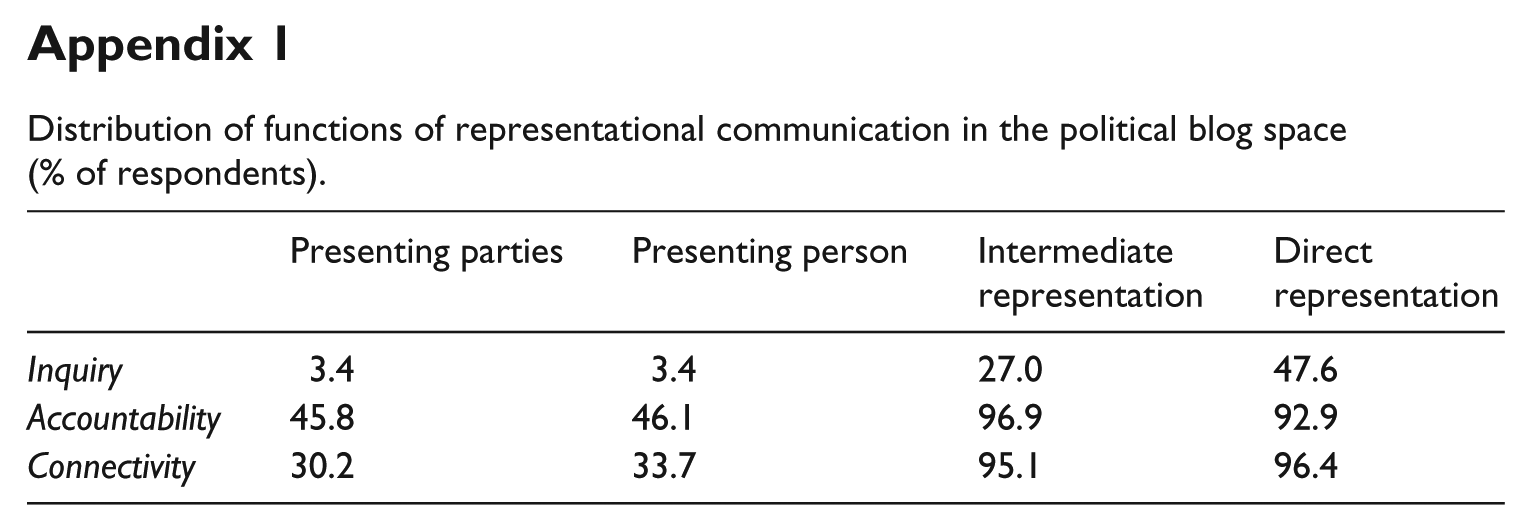
| Presenting parties | Presenting person | Intermediate representation | Direct representation | |
|---|---|---|---|---|
| Inquiry | 3.4 | 3.4 | 27.0 | 47.6 |
| Accountability | 45.8 | 46.1 | 96.9 | 92.9 |
| Connectivity | 30.2 | 33.7 | 95.1 | 96.4 |
Funding
This research received no specific grant from any funding agency in the public, commercial, or not-for-profit sectors.