




Abstract
This study explores gender differences in the relationship between adolescents’ risky online behavior and their social context, as in family factors and the prevalence of Internet use in a country. Using the EU Kids Online dataset, including information on 8554, 14- to 16-year-old adolescents in 25 countries, and applying multilevel modeling, this study shows that social context is additionally and differentially related to adolescent boys’ and girls’ risky online behavior. When taking individual characteristics such as sensation seeking and digital skills into account, particularly for male adolescents, growing up in a single-parent household and lacking parental co-use increases the chance of online risk behavior. Adolescents, especially males, however, are less likely to participate in risky online behavior in societies where Internet use is widespread. Overall, this study shows that it is important to take account of individual and social factors when explaining adolescents’ online risk taking and gender differences herein.
Introduction
Online communication is an immersive phenomenon among adolescents. Especially youngsters are highly involved in online social networking, both as producers and as users of online information (Lenhart et al., 2010; Valkenburg and Peter, 2011). Yet, adolescents also often are reckless in their online activities, as in providing personal information to others or agreeing to meet with strangers (Shin et al., 2012; Walraven et al., 2009). Although different classifications of risky online behavior exist (see, for example, Staksrud and Livingstone, 2009), this study focuses explicitly on adolescents’ participation in risky online communication, here also referred to as risky online behavior. Participation in such risky social- and communication-related online behavior among adolescents is indicative of victimization (Wolak et al., 2008; Ybarra et al., 2007) and, therefore, a major concern. For instance, research shows a link between adolescents’ risky online communication and consequences like online sexual harassment (Görzig and Ólafsson, 2013; Peter and Valkenburg, 2006; Wolak et al., 2007) or the actual confrontation with harmful content and privacy violations (Hasebrink et al., 2008; Lobe et al., 2011).
Whether adolescents will actually encounter harmful content on the Internet or be confronted with situations such as sexual intimidation and privacy violations varies with the intensity and frequency of the online risks taken (Leung and Lee, 2012; Livingstone and Helsper, 2007). Some children are not involved in risky online activities, which reduces their risk of exposure to inappropriate content or communication possibilities. Other adolescents, however, voluntarily engage in risky online communication (Stamoulis and Farley, 2010). According to prior research, adolescents’ overall risk-taking behavior peaks around age 15, is significantly correlated with social contextual factors, and is highly differentiated by gender, with risk behavior more prevalent in boys’ external behavior (Byrnes et al., 1999; Jessor, 1991; Junger-Tas et al., 2004). Since research on gender differences with regard to online risk behavior and social context is scarce, we focus in this study on contextual characteristics such as family factors and country characteristics that might explain differences in adolescent boys’ and girls’ online risk taking.
Family characteristics are acknowledged as a relevant indicator of both children’s media use and risk taking in general. In some families, children participate in various online activities, including risky activities (Livingstone and Helsper, 2010; Notten et al., 2009). This may be due to household characteristics, such as family structure, parental socioeconomic background, and the parents’ low online skills and media literacy. Moreover, parents’ individual efforts in guiding their children’s online activities also differ between families, affecting children’s online behavior (Lee, 2013; Livingstone and Helsper, 2008; Notten, 2014 1 ; Sonck et al., 2013). Additionally, societal characteristics seem related to children’s online behavior. Differences in computer skills and usage may not only vary between individuals and families, but also between countries (Hargittai, 2010; Notten et al., 2009). Some studies suggest that a higher diffusion of Internet in a country correlates with more online risk taking among young people (Hasebrink et al., 2008; Lobe et al., 2011), though others find no clear relation (Notten, 2014). Therefore, exploring how national characteristics, and particularly the prevalence of Internet use, parallel adolescent boys’ and girls’ engagement in risky online behavior is of great interest.
This study explores the role of social contextual factors for 14- to 16-year-old adolescent boys’ and girls’ engagement in risky online behavior from a cross-national perspective, employing a hierarchical multilevel design on EU Kids Online survey data supplemented with Eurostat and United Nations Development Programme (UNDP) data. Our general research question (RQ) is, To what extent do social contextual factors differently affect male and female adolescents’ risky online behavior? Since in today’s digitalized societies, online use plays an increasingly dominant role within families, schools, and wider society, gaining more insight is relevant for parents, educators, and policymakers.
Gender differences and adolescents’ risk taking
Generally, risk behavior peaks in adolescence, and prior research has repeatedly shown that there are clear gender differences in risk taking (e.g. Jessor, 1991). Traditionally, research on antisocial or problem behavior shows that boys are more sensation seeking and engaged in risky behaviors, such as alcohol use or truancy, than girls (Junger-Tas et al., 2004; Moffitt et al., 2001). Also, when it comes to various online risky activities, differences were found between boys and girls. For instance, as compared to young women, male adolescents more often purposely expose themselves to sexually explicit online material (Peter and Valkenburg, 2006), are Internet addicted (Leung and Lee, 2012), and play online age-restricted videogames (Nikken and Jansz, 2007). More importantly, boys are also found to participate more in communication-related risky behavior and more often disclose personal information online (Fogel and Nehmad, 2009; Sasson and Mesch, 2014). However, girls sometimes are affected by risky online behavior too: more than boys, they reported that their online communication activities resulted in unwanted situations (Baumgartner, 2013). One of the individual factors explaining gender differences are pubertal hormone fluctuations and brain development. Higher levels of testosterone lead to more sensation seeking and direct risk taking in boys, and postponed risks in girls (Peper et al., 2013).
Studies that explain gender differences in online risk taking are scarce, and often limited to either individual traits or to parenting style, and are mostly conducted within a single country or cultural context (e.g. Sasson and Mesch, 2014; Stamoulis and Farley, 2010). Our aim is to reveal what might explain the occurrence of online risk behavior and gender differences herein, by studying a comprehensive set of environmental aspects. Following prior studies on the relevance of the social context for a child’s development and risky behavior (Bronfenbrenner, 1979; Jessor, 1991; Junger-Tas et al., 2004), we focus on various familial and country factors proven to be related to risk or problem behavior in general, and online risk taking in particular. These factors entail, for example, family structure and socioeconomic status, parental Internet mediation activities, and a country’s level of Internet diffusion. In the theoretical argumentation that follows, we will hypothesize more specifically about these environmental factors as potential explanations for adolescent boys’ and girls’ online risk taking.
Family context and adolescent boys’ and girls’ risky online behavior
Family socioeconomic background and family structure
Scholars from different research traditions agree that for a child’s development, the parental home as the immediate social context is most influential (Bronfenbrenner, 1979; Hirschi, 1969). Families, however, differ in offering children valuable opportunities, including a “good” media socialization environment (Liu et al., 2013; Notten and Kraaykamp, 2009b). Consequently, in some families, children are less prone to use the Internet in a risky way compared to others (Livingstone and Helsper, 2010). This study, therefore, examines how family social background (represented by educational level) and family structure (single-parent families vs nuclear families) affect adolescent boys’ and girls’ risky online behavior.
Generally, children in higher educated families are less often involved in risky or deviant activities, due to the cultural and social norms disapproving such behaviors within these families, or to the intergenerational transmission of knowledge and cognitive competencies (Bourdieu, 1984; Bronfenbrenner, 1979). Also, higher educated parents usually are experienced users of digital technologies and hold a more positive attitude toward the learning benefits of the Internet. Since their adolescent children usually are more skilled and resilient Internet users too (Livingstone and Helsper, 2010; Notten, 2014; Notten et al., 2009), it is likely that especially adolescents from lower socioeconomic backgrounds show risky online behavior (Hypothesis 1a). However, boys and girls are also found to respond differently to opportunities and constraints related to their family’s socioeconomic status (e.g. Moffitt et al., 2001). Boys in particular seem to respond to adverse family socioeconomic circumstances, as in low academic and economic resources, by showing problem behavior. Therefore, we expect that the relationship with socioeconomic status will differ between male and female adolescents (Hypothesis 1b), with lower socioeconomic status particularly related to male adolescents taking risks online.
Family structure is also found highly relevant for a child’s healthy development. Traditionally, children from broken homes and single-parent families tend to show more antisocial and risky behavior than children from nuclear families (Barrett and Turner, 2006; McLanahan and Sandefur, 1994). Children growing up in single-parent households generally encounter more stressful situations and financial strain (Amato and Keith, 1991). In addition, they experience less parenting time and support, both in general and of their media usage (e.g. Notten et al., 2009). Based on this research, we expect that especially adolescents from single-parent households show risky online behavior (Hypothesis 2a). Furthermore, there are indications that family structure is more predictive of adolescent girls’ risk behavior as compared to boys (Junger-Tas et al., 2004). Others, however, suggest that boys are more vulnerable to divorce and changing family conditions, resulting in engagement in risky behavior (Moffitt et al., 2001). Since research is inconclusive, it leads us to expect that boys and girls growing up in single-parent homes differ in their online risk behavior (Hypothesis 2b).
Parental Internet mediation
Family homes vary in their support and strictness of family rules (Baumrind, 1991). Nevertheless, studies repeatedly confirm social control theory: higher levels of parental bonding and parent–child interaction limit children’s risky or deviant behaviors (Hirschi, 1969; Hoeve et al., 2009), which may be applicable to the guidance of children’s Internet use too. Following recent studies that have discerned several styles of parental mediation for Internet use by children (Kirwil, 2009; Livingstone and Helsper, 2008; Nikken and Jansz, 2014; Sonck et al., 2013), this study focuses on the following types of Internet mediation: active mediation, restrictive mediation, and co-use.
With regard to media use, active mediation by parents is generally aimed at enhancing a child’s advantageous media use (Lobe et al., 2011). Parents see active mediation as effective in mitigating online risks and apply it more often when the child gets older and interested in social online communication (Nikken and Jansz, 2014). Qualitatively good communication by parents about Internet use can help to prevent teenagers from excessive Internet use (Van den Eijnden et al., 2010). Also, children who learned to value privacy offline are more cautious with online privacy issues (De Souza and Dick, 2009; Liu et al., 2013). Hence, by active mediation, parents may teach their children valuable knowledge and skills, thereby instilling their children’s resilience regarding online risks.
Parental restrictive mediation generally aims at reducing or prohibiting children from participation in unwanted behavior. Parents put more restrictions on both the time that children spend with media and objectionable content when they are concerned about negative media effects (Livingstone and Helsper, 2008; Nikken and Jansz, 2014). Since the amount of time spent on online media by children is an important predictor of online risk taking (Leung and Lee, 2012; Livingstone and Helsper, 2010), restrictive mediation should be effective in reducing adolescents’ participation in risky online behavior. Indeed, parental restrictions are found associated with less involvement of children in delinquent and norm-breaking behavior, both offline and online (e.g. Hoeve et al., 2009; Lee, 2013; Leung and Lee, 2012; Livingstone and Helsper, 2010; Notten, 2014). However, putting extreme limits on a child’s media usage also may lead children to transgress the restrictions, especially in adolescence (e.g. Nathanson, 2002; Van den Eijnden et al., 2010), or to limited chances for positive outcomes.
Co-use of the media by parents and children consists of the mutual enjoyment of media content (Kirwil, 2009). Although the status of this type of parental mediation on adolescents’ online use is still inconclusive (see, for example, Sonck et al., 2013), parents who value both educational and entertainment benefits of digital media are more apt to share media content with young and middle childhood children (Lee and Chae, 2007; Nikken and Jansz, 2006, 2014). Co-use may counter children’s risky online behavior in two ways. First, when co-using, the parent can directly influence the types of content the child is confronted with; by just being in the child’s vicinity, the child may refrain from choosing risky online activities. Second, when being around, parents notice their adolescent child’s online behavior and may indicate, verbally or nonverbally, which types of content are to be preferred. However, co-use may also encourage the use of objectionable content when it is used together, and the child sees the parent’s co-use as an endorsement (Nathanson, 1999).
Research in various areas suggests differences in parental mediation activities for boys and girls, also regarding media use (e.g. Livingstone and Helsper, 2007; Roe, 1998). For instance, girls report more TV co-viewing with parents than boys (Notten and Kraaykamp, 2009a). Additionally, parents indicate to apply more monitoring and active mediation with regard to the online activities of their daughters (Sonck et al., 2013), whereas boys, on the other hand, tend to be more restricted in their digital media usage by their parents (Nikken and Jansz, 2006, 2014). These gender differences may result from different responses from boys and girls. Some studies argue girls to be more susceptible than boys to their parents’ instructions and more receptive to family events in general, which could result in differential effects of parental mediation and involvement (Junger-Tas et al., 2004; Svensson, 2003). Others have found that boys are more reactive to a lack of parental support and warmth (Moffitt et al., 2001), also regarding online risk behavior (Lau and Yuen, 2013). Therefore, while girls are rather stimulated in beneficial behaviors and taught lessons how to behave safely when they start to engage in contacts in the online environment, sons are restricted, in order to limit the length and types of their exposure to disadvantageous online content. It should be noted, however, that parental mediation and control may also backfire (Grolnick, 2003). Parental restrictions on girls’ use of sexually oriented media were followed by more sexual activity among these girls 18 months later (Nikken and De Graaf, 2013). Among boys, these relationships were absent.
Following the reasoning above, co-use, and active and restrictive mediation by parents are expected to be paralleled by less adolescents’ risky online behavior (Hypothesis 3a), although the impact might differ between boys and girls (Hypothesis 3b).
Country characteristics and risky online behavior
Socialization takes place within different social contexts: norms and behaviors are learned within the family home, but also in wider society (Bourdieu, 1984; Bronfenbrenner, 1979; Kirwil, 2009). Since the media climate at children’s homes, due to technological and cultural factors, differs between societies, children’s Internet access, usage, and skills not only vary between or within families, but also between countries (Kirwil, 2009; Notten et al., 2009). For instance, Hasebrink et al. (2008) and Lobe et al. (2011) report that experiencing online risks correlates with societal factors, such as a nation’s level of broadband penetration and educational dispersion. Yet, since these studies did not investigate individual- and country-level characteristics simultaneously, findings may be spurious due to individual-level factors, such as the extent to which users are experienced with the medium and have acquired skills to use the media. Also, at present, research on country differences regarding children’s voluntary online risk taking is scarce. This study contributes to existing research in the field, since it concurrently analyzes the relationships of family indicators and country-level factors, in particular, the level of Internet diffusion within a country, with adolescent boys’ and girls’ engagement in risky online behavior.
In digitalized countries, characterized by a high rate of Internet diffusion, adolescents spend more time online compared to their peers in less digitalized nations (Lobe et al., 2011). However, in a social context in which Internet use is widespread, more time spent online and frequent use of Internet may provide adolescents also more possibilities to experiment in risky online activities (e.g. Livingstone and Helsper, 2010; Lobe et al., 2011). Following this reasoning, a higher level of Internet penetration within a country will likely correlate with a higher level of adolescent online risk taking (Hypothesis 4a). On the other hand, a higher level of Internet use in a country may also represent a better understanding among adolescents of what online risks entail. For example, when online use and knowledge about online opportunities and risks are more widespread in society, parents and teachers may be more apt to stimulate media literacy (e.g. DiMaggio and Hargittai, 2001) which helps to prevent adolescents from risky online behavior. From this contrasting point of view, a higher level of Internet familiarity within society, represented by a higher level of Internet diffusion, will relate to a lower level of adolescents’ risky online behavior (Hypothesis 5a).
With regard to gender, it is clear that in general boys and girls are not equally attracted to risk behaviors (e.g. Byrnes et al., 1999; Junger-Tas et al., 2004). Also, some scholars suggest that boys are more influenced by wider social contexts (e.g. peer networks) when it comes to risky behavior than girls (Claes et al., 2005). Since adolescents’ Internet use also differs with country characteristics (Notten et al., 2009), in this study, we explore whether a social context with more online users affects male and female adolescents’ engagement in online risk behavior differentially by testing the above-mentioned two contradictive expectations for both genders. Hence, a country’s level of Internet diffusion may affect adolescent boys and girls differently in either stimulating (Hypothesis 4b) or inhibiting their odds of risky online behavior (Hypothesis 5b).
Data, measurements and method
This study makes use of EU Kids Online dataset (2010), combined with data from Eurostat (2013) and UNDP (2010). The EU Kids Online dataset holds information on family characteristics, parental Internet mediation, and children’s (9–16 years) online behaviors in 25 European countries. 2 The EU Kids Online project intends to increase insight in children’s and parents’ experiences and practices regarding online risks and opportunities. 3 The Eurostat (2013) and UNDP (2010) data were added to provide information on Internet usage and educational dispersion on the country level. This study analyzed male and female adolescents only between ages 14 and 16 years (N = 9346), since risk behavior peaks in this developmental period. Respondents with missing scores on the included variables in the analyses were deleted list-wise (8.5% total, 9.2% for boys, 7.8% for girls). Therefore, the final sample consisted of 8554 adolescents (4201 male and 4353 female respondents). Note that this study uses cross-sectional data, implying that conclusions about causality have to be interpreted with care. In this study, we explore whether social context has differential impact on adolescent boys and girls, controlling for individual characteristics such as age and sensation seeking that have proven to be influential regarding online risky activities (e.g. Livingstone and Helsper, 2007; Shin et al., 2012). By this, we hope to reveal more insight in gender differences in the impact of social context on adolescents’ online risk taking.
Measurements
Risky online behavior
Acknowledging that different categorizations and measurements of online risk behavior exist, this study focuses explicitly on risky communication-related online behavior (Livingstone and Helsper, 2007; Staksrud and Livingstone, 2009; Stamoulis and Farley, 2010). Generally, online behavior or communication in itself is not risky. However, for some adolescents, some forms of online communication activities can be risky. These risky activities might comprise different dimensions or behaviors as sending photographs, disclosure of personal identifiers, and stranger contact (Stamoulis and Farley, 2010). Engaging in several of such risky online behaviors is worrysome (Wolak et al., 2008; Ybarra et al., 2007), and a major concern of policymakers and parents, especially since online communication activities are highly favorite among adolescents (e.g. Madden et al., 2013; Ybarra et al., 2007).
The EU Kids Online survey includes questions on five risky online social activities (see Livingstone et al., 2011). Respondents were asked how often they had done any of the following things in the past 12 months: (1) looked for new friends on the Internet, (2) sent personal information (e.g. my full name, address, or phone number) to someone whom I have never met face to face, (3) added people to my friends list or address book whom I have never met face to face, (4) pretended to be a different kind of person than I really am, and (5) sent a photo or video of myself to someone whom I have never met face to face. Answer categories were as follows: (0) “never/not in the past year,” (1) “less than once a month,” (2) “one or twice a month,” (3) “once or twice a week,” and (4) “every day or almost every day.” For measuring adolescents’ risky online behavior, a scale was constructed by taking the mean score on all five items (α = .75). 3
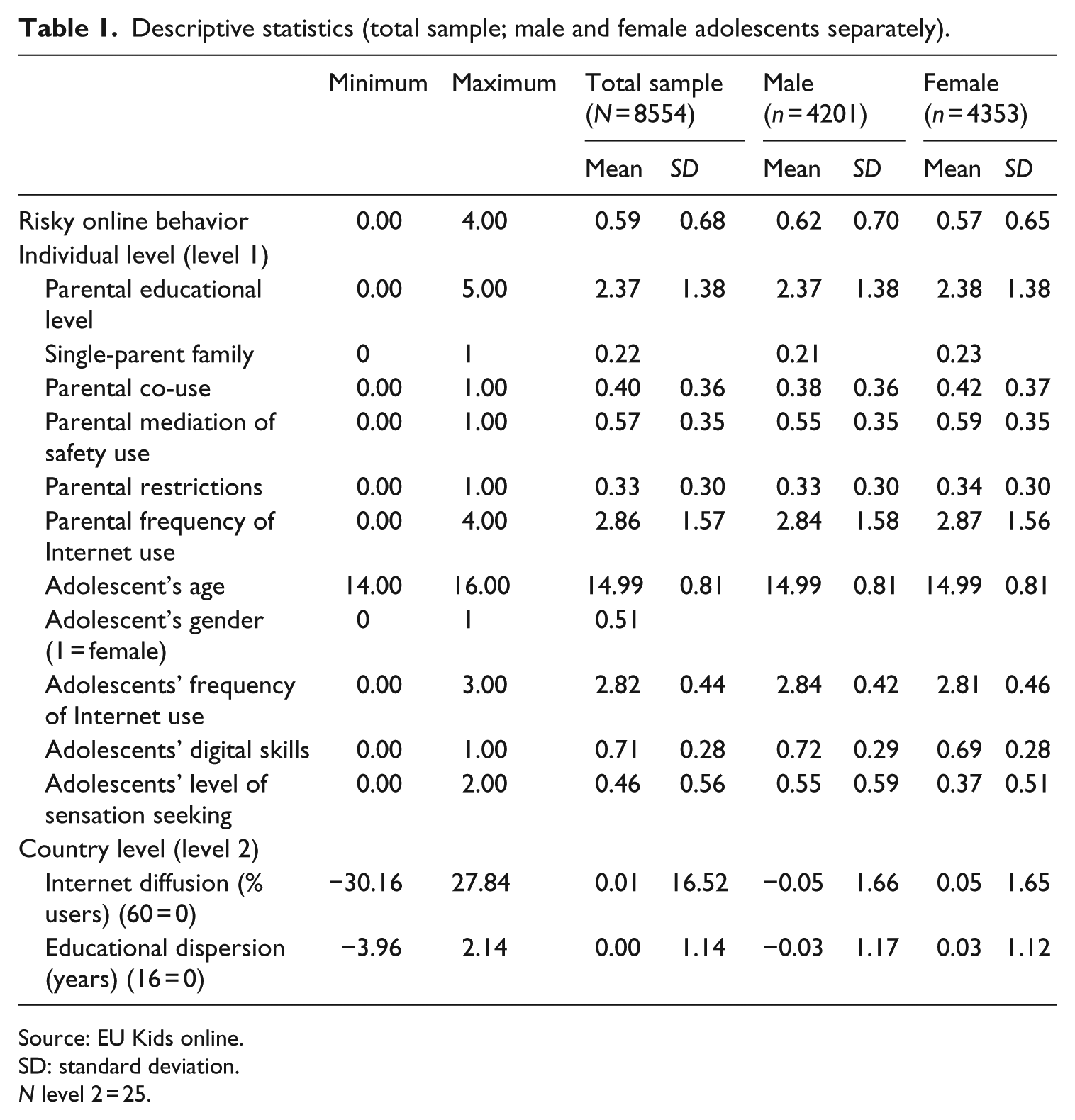
Table 1 presents the descriptive statistics for the variables included in our analyses, including means and standard deviations (SDs), for the total sample, as well as for male and female adolescents separately.
Descriptive statistics (total sample; male and female adolescents separately).
Source: EU Kids online.
SD: standard deviation.
N level 2 = 25.
Family socioeconomic background and family structure
Family socioeconomic background is represented by parental educational level, which measures the highest educational level of either father or mother, and ranges from (0) “not completed or primary education only” to (5) “tertiary (second stage),” using the International Standard Classification of Education (ISCED) 2011 (United Nations Educational, Scientific and Cultural Organization [UNESCO], 2012). To measure family structure, adolescents indicated whether they live in a (0) “two-parent” or (1) “single-parent household.” Alternative household compositions are excluded (0.9%).
Parental active and restrictive mediation and co-use
The EU Kids Online data include several questions on parental Internet mediation, referring to different mediation strategies (see Lobe et al., 2011; Sonck et al., 2013). We use the questions on Internet mediation that were answered by the parents and that referred to the following three styles. First, the active mediation aimed at Internet safety scale (α = .83) is measured by asking parents whether they did (1) or did not (0): (1) explain why some websites are good or bad, (2) help the child when something is difficult to do or find on the Internet, (3) suggest ways to use the Internet safely, (4) suggest ways to behave toward others, (5) help the child when something bothering happened on the Internet, and (6) talk with the child about what to do when something bothering happened on the Internet. Next, the restrictive mediation scale (α = .80) includes six questions asking parents whether they allowed their child to do the following activities: (1) use instant messaging, (2) download music or films, (3) watch video clips, (4) have his or her own social networking profile, (5) give out personal information to others, and (6) upload photos, videos, or music to share with others. Answer categories were as follows: “all of the time” (0) or “only with permission or never” (1). Finally, the scale parental co-use of Internet (α = .61) was constructed by averaging three questions about things parents do with their child together: (1) sit with him or her while he or she uses the Internet, (2) stay nearby when he or she uses the Internet, (3) do activities together with the child on the Internet. Answer categories were (0) “no” and (1) “yes.”
Since both the child’s use of media, and the mediation that a parent applies on that media use are associated with a parents’ own media consumption (Lee, 2013; Notten and Kraaykamp, 2009a), this study controls for the extent that parents are online. We include the variable parental frequency of Internet use into our models, indicating whether parents use the Internet “never” (0) to “(almost) daily” (4).
Individual-level child control variables
This study includes several individual-level control variables which were found decisive in research on children’s and adolescents’ (off- and/or online) risk taking.
Media use characteristics
Since young people’s frequency of Internet use appeared linked with online risks (Livingstone and Helsper, 2010; Notten, 2014), adolescents’ frequency of Internet use is included and measured as follows: “less than once a month” (0), “once or twice a month” (1), “once or twice a week” (2), or “(almost) every day” (3). Adolescents’ Internet skills were also found related to online risks (e.g. Shin et al., 2012); therefore, we included the scale adolescents’ digital skills (α = .82), measuring whether adolescents know how to accomplish the following actions: (1) bookmark a website, (2) block messages from someone you do not want to hear from, (3) find information on how to use the Internet safely, (4) change privacy settings on a social networking profile, (5) compare different websites to decide if information is true, (6) delete the record of which sites you have visited, (7) block unwanted adverts or junk mail/spam, and (8) change filter preferences. Answer categories were (0) “no” and (1) “yes.”
Personality characteristics
Prior studies show that offline social–psychological characteristics are highly relevant when it comes to adolescents’ odds of online risky behaviors and that they are important mediators of gender differences in risk behavior (e.g. Junger-Tas et al., 2004; Livingstone and Helsper, 2007; Peter and Valkenburg, 2006). Therefore, this study includes adolescents’ level of sensation seeking, which is measured by asking the respondents to indicate whether the following statements are true: (1) I do dangerous things for fun and (2) I do exciting things, even if they are dangerous (see Stephenson et al., 2003). Answer categories were as follows: “not true” (0), “a bit true” (1), and “very true” (2). A scale was created taking the mean of the two items (α = .78).
Demographic characteristics
The age of the respondents is used to account for developmental fluctuations, even within the restricted age group of 14- to 16-year-old adolescents under study here.
Country-level characteristics
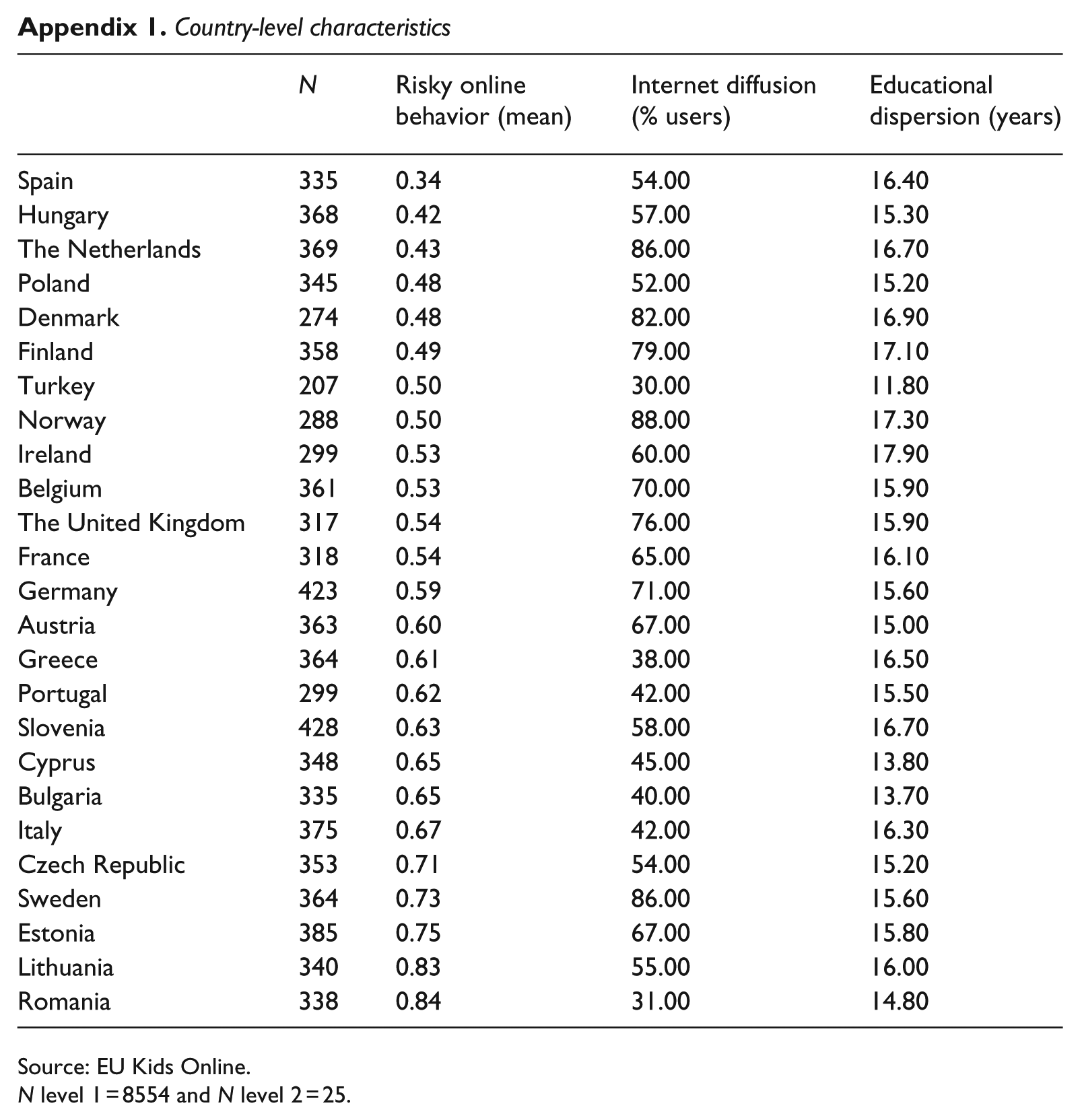
Different indicators of a country’s digital readiness exist, such as the spread of broadband or the percentage of daily online users. Since these measurements highly correlate (e.g. Lobe et al., 2011), this study uses the spread of Internet use to represent a country’s digital development. A country’s Internet diffusion indicates the proportion of the total population of that country that used the Internet on a weekly basis in 2009 (Eurostat, 2013), the year preceding measurement. For more correct estimations and meaningful interpretations of the results on the second level of the multilevel analyses, this variable is centered to its mean by subtracting the grand mean value (M = 60) from all values of the variable (cf. Snijders and Bosker, 1999). Next, this study also controls for a country’s level of educational dispersion, which is represented by the years of expected education in 2010, that is, the number of years of schooling that a child of school entrance age can expect to receive if prevailing patterns of age-specific enrolment rates persist throughout the child’s life (UNDP, 2010; see also the UNESCO institute for statistics database). This variable is also centered to its grand mean (M = 16) for inclusion in the analyses. Appendix 1 provides more information on the country-level indicators.
Methods and models
To provide insight into the relation between social contextual factors and online risk taking by male and female adolescents, we estimated several hierarchical linear multilevel models (using STATA 12). In the EU Kids Online dataset, individual adolescents are nested in 25 different European countries. Multilevel modeling deals with this hierarchical structure, and by concurrently estimating individual- and country-level effects on adolescent boys’ and girls’ risky online behavior, country-level influences are more rigorously tested (Snijders and Bosker, 1999). In all models, we, therefore, include a random intercept, assuming adolescents’ online risky behavior to differ across countries. The effect of gender is allowed to vary between countries as well (random slope), while the effects of all other variables are assumed to be stable (fixed). 5
Our aim is to provide more insight into gender differences in the relation between parental mediation and a country’s level of Internet diffusion, on the one hand, and adolescents’ risky online behavior, on the other. In our multivariate analyses, we, therefore, control for several individual-, family-, and country-level characteristics proven to be relevant in predicting male and female adolescents’ risky behavior, both off- and/or online. To answer our RQ, several multilevel models are estimated. Models 1–3 show consecutive results for the total sample of 14- to 16-year-old adolescent boys and girls, including stepwise all child, family, and country features. Next, Models 3a and 3b present the contribution of all variables included on risky online behavior for male and female adolescents separately. In Model 4, we explicitly tested the significance of our hypothesized gender differences by including (cross-level) interaction terms.
Results
Table 2 shows the results for all estimated multilevel regression models on adolescents’ risky online behavior. 6 The intra-class correlation (ICC) of the null model (empty model, not presented here) indicates that most of the variance is explained on the individual level (as may be expected), although the variance on the country level also is significant. For the total sample (N = 8554), 3.10% of the total variance in risky online behavior is explained on the country level. For male adolescents, 2.96% of the variance in risky online behavior is explained on the country level, whereas for female adolescents, this amounts to 3.15%.
Hierarchical multilevel regression modeling on male and female adolescents’ risky online behavior.

Source: EU Kids Online.
ICC: intra-class correlation; SE: standard error.
Two-tailed test. N level 2 = 25.
Significance: ***p < .001; **p < .01; *p < .05.
Results for individual-level factors (controls)
In Model 1, the effect of gender is estimated. The model shows that female adolescents are significantly less often engaged in risky online behavior (b = −.052). This is in line with prior research on gender differences in online risky activities (e.g. Fogel and Nehmad, 2009; Peter and Valkenburg, 2006). Note that the random slope variance is non-significant, suggesting that the effect of gender is rather stable across countries. Next, Model 2 shows that, when all child (individual) control variables are included, gender no longer significantly predicts risky online behavior. Instead, an adolescents’ frequency of Internet use (b = .131), level of digital skills (b = .150), and especially sensation seeking (b = .315), which is more present among boys than girls (mean gender difference = .19; p < .000), all determine adolescents’ risk taking and largely explain the gender difference in online risk taking. 7 Hence, when taking into account personality characteristics, boys and girls no longer significantly differ in their online risky behavior.
Results for family- and country-level factors (total sample)
Model 3 shows, first, that contextual factors, and especially family factors, additionally determine risky online behavior, next to individual characteristics. As expected, adolescents with lower educated parents (b = −.032) and living in a single-parent family (b = .034) show more risky behavior than their peers in higher educated and two-parent families (corroborating H1a and H2a). Hence, similar to traditional research on offline risk behavior (Hirschi, 1969) and recent insights in online risk taking (e.g. Notten, 2014), adolescents from more vulnerable family homes are more attracted to risky online behavior. Furthermore, in line with social control theory and our expectations regarding parental bonding (H3a), the results in Model 3 also suggest that especially parental restrictive mediation is paralleled by less engagement in risky online behavior (b = −.241). Unexpectedly, a parent’s active mediation and co-use of the Internet are not associated with 14- to 16-year-old adolescents’ risky Internet behavior. Hereby, it is important to note that additional analyses showed no collinearity for these three mediation variables. Since Model 3 includes all controls, the findings suggest that irrespective of social background, applying restrictive Internet mediation may be beneficial in guiding adolescent children’s online activities.
The relationship with a country’s level of Internet diffusion appears negative and significant (in line with H5a). Since Model 3 controls for Internet usage at the individual level (compositional effect), the remaining contribution of our measure for a country’s level of Internet diffusion can be interpreted as a country-level contextual effect. Hence, regardless of the Internet usage of each individual adolescent, a more digitally developed social environment, which may imply an overall higher level of media literacy, also among parents and teachers (cf. DiMaggio and Hargittai, 2001) is associated with less online risky behavior among 14- to 16-year-old adolescents. 8 This finding contradicts a widely shared concern about the detrimental effect of high rates of Internet usage in adolescents’ social environment (H4a). In general, we may thus conclude that individual and contextual factors are separate, but cumulative important domains related to 14- to 16-year-old adolescents’ risky online behavior.
Results for gender differences in contextual factors
The aim of this study was to find out whether social contextual factors differently relate to adolescent boys’ and girls’ online risky behavior. Models 3a and 3b in Table 2, therefore, present the findings of the full model (Model 3), including all contextual factors and control variables, for male and female adolescents separately. Model 4, furthermore, explicitly tests whether the hypothesized gender differences in family- and country-level factors (as presented in Models 3a and 3b) are significant.
In contrast to what we expected (H1b), the significant negative relationship between parental social background and online risk taking is rather similar for male and female adolescents. Moreover, although in particular boys living in a single-parent household seem predictive of their engagement in risky online behavior (Model 3a), this relationship does not significantly differentiate between boys and girls (see Model 4). This contradicts our expectation (H2b) and indicates that apparently girls also can be at risk in more vulnerable family homes (cf. Baumgartner, 2013).
The impact of parental mediation seems to differ between boys and girls. Male adolescents engage significantly less often in risky online behavior when their parents more often co-use the Internet with them together (Model 3a), whereas this result is absent for girls (Model 3b). The interaction result of Model 4 (b = .092) indicates that the difference found in the relationships between parental co-use and online risk taking for boys and for girls is significant (confirming H3b). Next, the relationship of parental active mediation aimed at safety online use, however, is not different, nor significant for either gender. Furthermore, according to Model 3a and 3b, when parents set rules for Internet use, their adolescent children are significantly less likely to engage in risky online behavior. As the non-significant interaction effect (b = .033) in Model 4 suggests, putting restrictions on adolescents’ Internet use does not differ for male and female adolescents.
Finally, and in line with our expectation (H5b), the results also suggest that greater Internet diffusion within a country is paralleled with less online risk taking for all adolescents, but even more for male adolescents as compared to their female counterparts, and this difference is significant (b = .019, see Model 4). Although adolescent boys and girls both are less risky online in societies where Internet use is widespread, it especially applies to boys to take less online risks.
Note that when it comes to gender differences in the impact of the control variables, the results in Models 3a and 3b suggest that the impact of adolescents’ age is negative for girls, whereas a parents’ frequency of Internet use significantly correlates with less risky online behavior among male adolescents’. Apparently, especially younger girls are more risky online, and in family homes with online experienced parents, adolescent boys are less apt to take online risks than adolescent boys with parents who lack digital skills and experience.
Conclusion and discussion
In today’s European societies, Internet use and online communication is common practice for most adolescents. However, although Internet offers valuable opportunities, it also entails risks, especially for those adolescents voluntary engaging in risky online activities (Lenhart et al., 2010; Valkenburg and Peter, 2011). The potential negative consequences of these risky online behaviors are a major concern for parents and policymakers. Hence, more insight into the relationship between parental and policy-related relevant aspects and adolescents’ online risk taking is needed. Research on environmental factors related to online risk behavior, however, is scarce, and gender differences herein are hardly explored. Therefore, this study focused on 14- to 16-year-old adolescents’ engagement in risky online behavior and explores whether social context has a differential impact on adolescent boys and girls. Our general aim was to find out whether male and female adolescents’ risky online behavior is differentially related to parental social background, the intensity and type of parents’ mediation of the child’s Internet use, and the diffusion of Internet within a country. We analyzed 25 European countries with multilevel techniques using the EU Kids Online dataset. We present four main conclusions and discuss their implications.
The first conclusion concerns the gender gap in online risk taking. We found clear gender differences in adolescents’ risky online behavior. In line with prior research on offline and online risky activities, male adolescents are more involved in online communication-related risk taking. The gender gap in online risk taking is, however, largely explained by an adolescent’s personality characteristics, primarily the level of sensation seeking, followed by the adolescent’s Internet use. Furthermore, social context also is relevant. Regardless of an adolescents’ level of sensation seeking, or its frequency of Internet use, several contextual characteristics also significantly relate to both male and female adolescents’ online risky activities.
Second, this study shows that some family aspects differentially relate to male and female adolescents’ risky behavior. Although growing up in a low socioeconomic (i.e. less educated) or a single-parent family home increases all adolescents’ odds of taking online risks, we also found indications of male adolescents being more vulnerable in single-parent homes. This is in line with Moffitt et al. (2001) who found that boys in particular respond to adverse family circumstances by showing problem behavior. Future research could focus more in detail on how financial problems, parenting constraints, or stress levels, which are often present in these single-parent families, affect boys’ and girls’ online behavior.
Next, whereas restrictive and active mediation do not interact with gender, parental co-use of the Internet is differentially related to male and female adolescents’ risky online behavior. Parental co-use especially among boys is paralleled by less online risky activities as compared to girls. There may be several explanations for these gendered mechanisms. For instance, boys seem more responsive to their parents’ expectations when the parents are in their direct presence, while girls, on the other hand, are found more susceptible to their parents’ norms in general (Hirschi, 1969; Svensson, 2003). Also, since boys more often than girls take online risks, parents may be more vigilant by just being present, without necessarily applying more active or restrictive mediation among boys. The absence of relationships for active safety mediation might reflect that adolescents are aware of online risks and opportunities. Therefore, discussing safety issues with their parents will not withhold them more from risky behavior. Parental Internet mediation, finally, overall is more restrictive for adolescent boys when it comes to online risk taking, although restrictive mediation may limit online risk taking both among boys and girls. For parenting support policies, thus, it appears relevant to differentiate in mediation activities in order to effectively guide male and female adolescents’ Internet use and limit their online risk taking.
Our final conclusion is that adolescents, and especially males, are less likely to participate in risky online behavior in more digitalized societies with higher levels of Internet use. Thus, as noted before, where sensation seeking and intense Internet use on a personal level increase the odds for risky online behavior, living in a digitalized society lessens the chance that, especially male, adolescents are engaged in online risk taking. This contextual finding means that, regardless of an adolescents’ own level of Internet use, its personality characteristics, and factors of the adolescent’s family, familiarity with digital usage in its wider social context is decisive for 14- to 16-year-old adolescents’ odds of online risk taking. For media-literacy policymakers, this indicates that it is important to take notice of their society’s level of digital development, when they develop programs or other materials and services aimed at reducing 14- to 16-year-old adolescents’ online risky behavior. Interventions that are efficient in one country, for example, may be less effective in another because of differential influences of the media environment.
It should be noted that to study gender differences in the impact of several contextual factors on adolescents’ risky online behavior, a cross-sectional dataset was used. This implies that we have to be cautious with conclusions about causality. A panel design would therefore be preferable, however, for cross-country comparison such data are lacking. Also, this study takes into account the variation in age among adolescents 14–16 years of age, though, future research concerning gender differences in risky online behavior should also focus on younger children. Findings may differ across age groups (e.g. Notten, 2014). Moreover, this study shows that adolescent males and females from lower socioeconomic families are consistently more at risk. Upcoming research might, therefore, explore more in detail the extent that socioeconomic influences differentially affect this particular group of young people. Finally, we focused on both family- and country-level factors, since these social environments should be of interest to (i.e. can be affected by) educators and policymakers. Yet, we propose that future international comparative research also includes a more detailed focus on the influence of peer networks or school environments.
Overall, the findings of this study show that an adolescents’ social environment is important for dealing with online risk behavior but that there is differentiation between male and female adolescents. Since, in contrast to personality characteristics related to risk behavior, parenting and policy are modifiable, the findings of this study urge parents on the micro-level and policymakers on a macro-level to be further involved in adolescents’ Internet use, thereby applying different strategies for male and female adolescents.
Footnotes
Appendix
Country-level characteristics
| N | Risky online behavior (mean) | Internet diffusion (% users) | Educational dispersion (years) | |
|---|---|---|---|---|
| Spain | 335 | 0.34 | 54.00 | 16.40 |
| Hungary | 368 | 0.42 | 57.00 | 15.30 |
| The Netherlands | 369 | 0.43 | 86.00 | 16.70 |
| Poland | 345 | 0.48 | 52.00 | 15.20 |
| Denmark | 274 | 0.48 | 82.00 | 16.90 |
| Finland | 358 | 0.49 | 79.00 | 17.10 |
| Turkey | 207 | 0.50 | 30.00 | 11.80 |
| Norway | 288 | 0.50 | 88.00 | 17.30 |
| Ireland | 299 | 0.53 | 60.00 | 17.90 |
| Belgium | 361 | 0.53 | 70.00 | 15.90 |
| The United Kingdom | 317 | 0.54 | 76.00 | 15.90 |
| France | 318 | 0.54 | 65.00 | 16.10 |
| Germany | 423 | 0.59 | 71.00 | 15.60 |
| Austria | 363 | 0.60 | 67.00 | 15.00 |
| Greece | 364 | 0.61 | 38.00 | 16.50 |
| Portugal | 299 | 0.62 | 42.00 | 15.50 |
| Slovenia | 428 | 0.63 | 58.00 | 16.70 |
| Cyprus | 348 | 0.65 | 45.00 | 13.80 |
| Bulgaria | 335 | 0.65 | 40.00 | 13.70 |
| Italy | 375 | 0.67 | 42.00 | 16.30 |
| Czech Republic | 353 | 0.71 | 54.00 | 15.20 |
| Sweden | 364 | 0.73 | 86.00 | 15.60 |
| Estonia | 385 | 0.75 | 67.00 | 15.80 |
| Lithuania | 340 | 0.83 | 55.00 | 16.00 |
| Romania | 338 | 0.84 | 31.00 | 14.80 |
Source: EU Kids Online.
N level 1 = 8554 and N level 2 = 25.
Funding
This research received no specific grant from any funding agency in the public, commercial, or not-for-profit sectors.
Notes
Author biographies
 for more information.