



Abstract
The legal service industry, which relies heavily on SMEs and their entrepreneurship capacity, faces more uncertainty than ever before. Global disruption events like Covid-19, wars and climate change, on the one hand and technocentric status quo disruptors like AI, digitalisation and remote working on the other have redefined law SMEs’ pathways to prosperity. The paper explores how senior legal professionals working in the UK law SMEs sector view these challenges by analysing 20 semi-structured in-depth interviews. Five diverse themes, around innovation and resilience, emerged from a six-step thematic analysis that was benchmarked against a theoretical framework mixing Resource- and Practice-Based Views. These themes are resistance to innovation, talent management, economic pressures, cybersecurity and regulatory compliance. The results highlight the need for improved access to technology, increased preparedness against cyber threats, remote working normalisation, more IT-focused education, life-long training initiatives, flexible and evidence-based regulations and more custom-tailored support from the relevant authorities.
Introduction
The professional services sector is one of the fastest-growing areas of the global economy (Dotzel et al., 2013). The legal industry, in particular, has transformed over the years into a cornerstone for socio-economic growth and an enabler of business entrepreneurship (Michalakopoulou et al., 2024). According to a 2024 report by the International Bar Association, the legal profession directly contributes $1.6 trillion to the global economy, accounting for 1.7% of the global gross domestic product (IBA, 2024). Over the past few decades, the global business environment has undergone profound changes due to the rise of emerging economies, financial crises, pandemics and advancements in information and digital technologies (Saleh, 2023). These shifts have introduced challenges and necessitated the adoption of innovative strategies for legal firms to remain competitive, something particularly true for small and medium-sized enterprises (SMEs), where, due to size, the margin for error is less (Michalakopoulou et al., 2023). Currently, many law SMEs struggle to manage their operations effectively and capitalise on new opportunities. Consequently, in order to improve management practices and ensure the prosperity of the legal SME sector, there is an urgent need to understand the current challenges faced by law SMEs and identify available opportunities for innovation, something that has so far been severely understudied by a law operations literature that is still as a whole in infancy.
More specifically, the legal industry has been facing unprecedented change (Park, 2021). In the realm of regulatory compliance, as corporate law breaches have increased, the importance of compliance for law firms has become even more pronounced, leading to stricter regulatory mandates (Lin et al., 2021). Navigating these constantly changing regulations poses a substantial challenge, especially for SMEs that often operate with limited staff and lesser capacity to make investments, a trait particularly applicable to the UK legal service eco-system. Compounding these challenges is the increasing reliance on digital tools and online communication, which has raised concerns about the profession's ability to safeguard sensitive client information and maintain their confidentiality (Teichmann and Wittmann, 2023). As a result, cybersecurity and data protection have emerged as critical issues, requiring legal professionals to navigate complex regulatory frameworks and ensure compliance with data protection laws to safeguard their clients and the firm (Kuner et al., 2017; Rothchild, 2017). In addition to the challenges posed by regulatory compliance and cybersecurity, the COVID-19 pandemic has further accelerated the digitalisation of legal practices, prompting some firms to adopt new technological solutions (Björkdahl and Kronblad, 2021). This shift has led to a more entrenched hybrid work culture, with remote working models becoming a persistent feature of the legal profession (Empson, 2021). While remote work offers various benefits, it has also intensified recruitment and retention challenges, as modern lawyers have started to increasingly seek technology-enabled firms that support flexible working arrangements (Wolters, 2023). Moreover, remote work has allowed legal professionals to join larger firms without relocating, creating significant competitive pressures for smaller local firms that struggle to match the compensation and benefits offered by city-based firms (Gillette, 2023). As law firms strive to enhance productivity and efficiency in an increasingly competitive environment, their ability to navigate these challenges will play a crucial role in determining their success.
Faced with mounting pressures for enhanced performance, law firms are increasingly compelled to innovate and reimagine their operational strategies. Much like other industries, the legal sector is focused on streamlining processes, boosting productivity, and delivering superior client service (Evans, 2015; Evans and Price, 2017). Technological advancements and demand for cost-effectiveness have been a significant catalyst for pushing law firms to adopt advanced information management systems. These systems include intranets, expert systems, online dispute resolution tools, and knowledge management platforms such as decision support and document management systems externally (Bedford and Morelli, 2006; Gliddon, 2014; Winston, 2014). Additionally, the integration of artificial intelligence (AI) tools has become increasingly common; service firms have invested heavily in AI innovations to standardise their services (Akter et al., 2023). Such tools not only allow firms to efficiently manage and retrieve information but also enhance decision-making processes and streamline document handling (Armour et al., 2021). However, for SMEs, adopting new technologies poses unique difficulties. Lacking the expertise and resources of larger firms, SMEs often struggle with the high costs and risks associated with introducing AI and other high-tech tools (Lathrop, 2023). They could be hesitant to invest in untested systems, fearing costly mistakes that could impact on their already tight budgets. More precisely, in the UK, according to the Solicitors Regulation Authority (2025), around 82% of small legal firms agree that technology helps provide better value to consumers, but only 4% feel there are no barriers to adopting it. Moreover, the legal profession's deep-rooted traditions and risk-averse culture further hinder the rapid integration of innovative tools (Alarie et al., 2018; Ribstein, 2010). As SMEs strive to remain competitive, understanding the value of available technological advancements will be crucial for their future business survival (Love and Roper, 2015).
This paper seeks to fill this gap by understanding how law SMEs in the UK can build resilience and seize opportunities for innovation in an increasingly complex business environment. The UK landscape is of critical global importance, being the second-largest legal market in the world after the US and the leading one in Europe. The research investigates how law SMEs perceive and respond to various challenges, including those arising from global events like the Covid-19 pandemic, remote working, regulatory compliance, cybersecurity and technological advancements such as case management systems and AI.
Its core research aim thus focuses on identifying and contextualising the key factors that dictate the resilience and innovation practices of law SMEs in the UK. More specifically, the study sets out three research objectives: first, to examine how law SMEs perceive and define business resilience in the face of external pressures; second, to explore how these firms identify and approach opportunities for innovation adoption; and third, to propose evidence-based solutions aimed at enhancing the business operations, technology adoption and competitive edge of SMEs for the context of the UK legal sector. To address these goals, a series of in-depth interviews with legal professionals in managing roles across the country were conducted and thematically analysed. The interviews and their analysis were rooted in an original theoretical framework mixing Resource- and Practice-Based Views, which is the theoretical contribution of the present work. Henceforth, the paper provides an overview of relevant literature followed by an outline of the research design and methodological approach. The next section presents the results of a content-driven thematic analysis of 20 interviews. Next comes a systematic discussion meant to benchmark the findings against the state of the art. Finally the paper ends with our conclusions, reflections and likely future research pathways.
Literature review and theoretical underpinning of the study
Organisational resilience and innovation
A series of crises that have shaken the economy and challenged businesses in unprecedented ways (Mitze and Makkonen, 2024) have recently made the issue of organisational resilience highly relevant (Des Jardine et al., 2019). Resilience refers to an organisation's capacity to effectively navigate current and emerging challenges and adjust to change (Ortiz-de-Mandojana and Bansal, 2016), describing its ability to not only bounce back but also bounce forward through accelerated learning and organisational renewal (Sinha et al., 2025). After the unprecedented global disruption caused by Covid-19 (Blais and Cloutier, 2023), professional service providers, especially law firms, were pushed to prioritise resilience, emphasising the need for an inherent capacity to navigate uncertainty and absorb shocks. Although SMEs are increasingly acknowledging the role of circular business models in enhancing resilience (Zamfir et al., 2017), they still face substantial barriers to the long-term implementation of these strategies, which impact their rate and extent of adoption (Fehrer and Wieland, 2021).
Remote working, evolving skill sets, data processing demands and security protocols are increasingly important to organisational needs, driving technological advancements that are reshaping how businesses operate today (Krause et al., 2021). Covid-19 has further accelerated this digital transformation, bringing innovation to the forefront of business strategy (Yáñez-Valdés and Guerrero, 2024). Innovation is widely regarded as a fundamental driver of business success, contributing to long-term growth, resilience and competitive edge (Hamel, 2006). In this context, innovation is not limited to creating new products or services but also involves introducing advanced processes, technologies and operational strategies that enhance overall business performance (Michalakopoulou et al., 2023; Robert et al., 2019). In the professional services sector, innovation encompasses the adoption of new technological tools, effective employee management, and the transformation of employee knowledge into value-added services (Bourke et al., 2020). For SMEs, adopting new technologies is no longer optional but essential to adapt, modify or even overhaul existing business models for staying competitive (Akpan et al., 2020; Hansen and Bøgh, 2021). Service innovation can be understood as a strategic redesign of service processes, aimed at improving the delivery system and the interactions within it (Radnor et al., 2014). This approach is vital for law SMEs, which can innovate by adopting new operational methods, improving their service offerings to clients, and leveraging technology to boost business.
The unique challenges of SMEs
Since SMEs differ fundamentally from large corporations (Shuman and Seeger, 1986), existing research may not always be directly applicable to them. SMEs differ from large corporations in their ability to operate ‘outside-the-box’ (Michalakopoulou et al., 2024). One distinction is that the leadership in an SME typically operates with fewer formal management systems, decision-making frameworks and information processing mechanisms (Kiss et al., 2018). As a result, managing ambidexterity in SMEs can be particularly challenging because of the need to continually balance innovation and efficiency while working within resource constraints and a more flexible but less formalised management structure (Wenke et al., 2021). In SMEs, employees often perform multiple roles, unlike in larger organisations where there is greater specialisation (Russo and Perrini, 2010). Therefore, during periods of crisis or uncertainty, the presence of surplus human resources in SMEs can positively influence the profitability of the business by acting as a buffer and helping SMEs better handle workloads, absorbing external disruptions, and maintaining productivity (Lefebvre, 2023). SMEs can leverage this flexibility without the inefficiency risks that excess human resources might bring to larger firms. Despite their challenges, law SMEs are crucial for the UK economy's stability and growth, disproportionally perhaps when compared to other European markets, because they act as the primary legal advisors to the nation's 5.5 million SMEs, which comprise over 99% of all businesses and employ ∼60% of the private-sector workforce (UK Department for Business and Trade, 2024).
Regulatory compliance and its implications
Evidence shows that for SMEs, the burden of regulatory compliance is often disproportionately heavy, which can hinder their growth, competitiveness and potential for entrepreneurship in comparison to larger firms (Wilkinson, 2018). SMEs lack the resources to employ dedicated personnel for managing ever-changing compliance processes, implement necessary systems or ensure ongoing oversight. Therefore, meeting rapidly changing regulatory requirements places a substantial administrative and financial strain on these legal firms.
Cybersecurity risks
SMEs also face other significant resource constraints (Eggers, 2020), which makes the pressures of ambidexterity taxing (De Clercq et al., 2014). Knowledge, in particular, is a scarce resource in SMEs (Colombo et al., 2012). Developing in-house knowledge is frequently too costly, leading SMEs to rely heavily on outsourcing it from external parties (Moilanen et al., 2014). One critical area of knowledge that many SMEs tend to outsource is cybersecurity. The shift to remote work during Covid-19 has introduced new security risks and challenges in accessing data, contracts and other essential files while working from home. Consequently, cybersecurity has emerged as a factor for organisational survival and growth (Ekelund and Iskoujina, 2019; Fernandez De Arroyabe and Fernandez de Arroyabe, 2023).
Cybersecurity challenges refer to risks and threats that arise from the use of digital technologies, networks and systems. These risks can lead to breaches in security, loss of sensitive data, disruption of business operations and significant financial damage (Rawindaran et al., 2023). Compared to larger firms, SMEs have limited resources and insufficient expertise needed to adequately protect their systems and data, making them more susceptible to cyberattacks. Since SMEs’ information systems are often connected to broader networks, they become vulnerable entry points for cyberattacks, which can compromise both the functionality and resilience of their operations (Weishäupl et al., 2018; Wright et al., 2014).
Evolving work dynamics
As organisations adapted to a new era of hybrid and remote work forced by the Covid-19 pandemic, work dynamics had to transform. The recruitment processes became less constrained by geographical limitations, enabling companies to access a broader pool of candidates (Andrew and Sofian, 2011). While this expanded reach has created opportunities to tap into talent from various regions and cities, it also introduced new challenges for SMEs. Law SMEs often found it difficult to retain and attract local talent due to their limited resources compared to larger firms that can offer better benefits to their candidates (Eggers, 2020). Moreover, the shift has also changed the goals and expectations of job seekers, prompting them to re-evaluate what matters most in their careers. Consequently, candidates are increasingly seeking employers that can meet their needs for remote or hybrid work arrangements (Waldrep et al., 2024). Offering flexibility is now a key determinant defining staff's employment preferences. Therefore, it is essential for SMEs to understand how to navigate this evolving landscape carefully, balancing their resource and flexibility constraints with the growing expectations of a modern workforce.
AI and automation: threats and opportunities
The integration of AI into legal services is poised to have significant repercussions for SMEs. As posited by Susskind and Susskind (2023), the advent of AI could potentially make certain professional roles obsolete. Susskind (2017) further emphasises that law SMEs that fail to adopt AI-informed business structures and innovative technology may struggle to remain competitive in an evolving market (Susskind, 2017: 64). AI-based systems can enhance the capabilities of legal professionals by interpreting external data, learning from it and applying those insights to achieve specific objectives (Kaplan and Haenlein, 2019). These systems primarily contribute to the legal profession by automating repetitive tasks, thereby freeing up valuable time for lawyers that they can dedicate to clients instead. Additionally, AI facilitates client interactions by allowing for self-service options, which in turn reduces the demand for lawyers’ time on routine inquiries. For instance, an automation system that enables clients to review and modify contracts autonomously not only improves overall operational efficiency but also enhances their service offerings (Spring et al., 2022).
By alleviating the typical burden of multitasking encountered by many SMEs, AI allows legal professionals to concentrate on more complex analytical tasks, addressing the challenges posed by staffing shortages and the need for specialised knowledge. However, despite the potential benefits of AI, many SMEs face barriers to successful implementation (Hansen and Bøgh, 2021). A lack of strategic planning, limited knowledge and insufficient resources can hinder these firms from leveraging AI technologies. Therefore, while AI presents both threats and opportunities, the extent to which law SMEs can capitalise on these innovations will depend on their readiness to adapt and evolve within a rapidly changing landscape.
Sustainability in the wake of climate change
SMEs play a crucial role in global climate action, contributing approximately 13% of the world's carbon emissions and accounting for 50% of commercial and industrial energy consumption (IEA, 2015; OECD, 2021). Despite their significant environmental impact, SMEs have received limited attention in the discourse on sustainable development (Fawcett and Hampton, 2020; Jamali et al., 2017) and are often excluded from energy and decarbonisation policies due to their smaller carbon footprints, heterogeneity, limited resources and reduced regulatory compliance compared to larger corporations (Fawcett and Hampton, 2020).
While the impact of individual SMEs may be minimal, their cumulative effect can be substantial (de Sousa Jabbour et al., 2020). Environmental sustainability for SMEs involves practices aimed at reducing their ecological footprint while maintaining performance, such as waste reduction, resource conservation, renewable energy use and minimising carbon emissions (Fan and Shahbaz, 2023; Le, 2022). However, challenges like limited resources, lack of access to information and high initial costs often hinder the adoption of sustainable practices (Durrani et al., 2024). As governments establish ambitious Net Zero targets, and digitisation slowly but steadily replaces paperwork-oriented practices (Michalakopoulou et al., 2023), it is essential to enhance climate policies by expanding incentive-based initiatives and considering regulations tailored to SMEs (Hampton et al., 2023).
A mixed resource- and practice-based view theoretical underpinning
This study employs a hybrid theoretical framework that integrates the resource-based view (RBV) and the practice-based view (PBV) to address the distinct challenges faced by law SMEs. This novel theoretical benchmark has also been adopted from previous studies that focused on legal services’ innovation (e.g. Michalakopoulou et al., 2023, 2024), while broader efforts to combine those two theories in a meaningful way have also been recorded when studying innovation in operations (e.g. Di Guardo and Cabiddu, 2015). This is because, as reported by Bromiley and Rau (2016), PBV is not only an alternative to RBV, but it can also be a strong complement when explaining operational performance. More specifically, the RBV serves as a foundational theory in operations management research, positing that organisations can achieve sustainable competitive advantages by effectively leveraging their internal resources (Blome et al., 2014; Llach et al., 2025; Seepana et al., 2021). This perspective is particularly relevant for knowledge-intensive sectors, such as legal services, where firms must identify and capitalise on their unique capabilities to develop organisational competencies (Ellström, 2010; Mitrega et al., 2017; Somsuk and Laosirihongthong, 2014). In contrast, the PBV emphasises the significance of practices as processes that can be executed by firms, focusing on activities that are transferable and replicable across different organisations (Bromiley and Rau, 2014; Danneels and Colarelli-O'Connor, 2025). By blending the RBV with key elements of the PBV (see Figure 1), this study acknowledges and addresses the specific irregularities inherent in the legal sector offering a (still relatively) novel theoretical contribution.
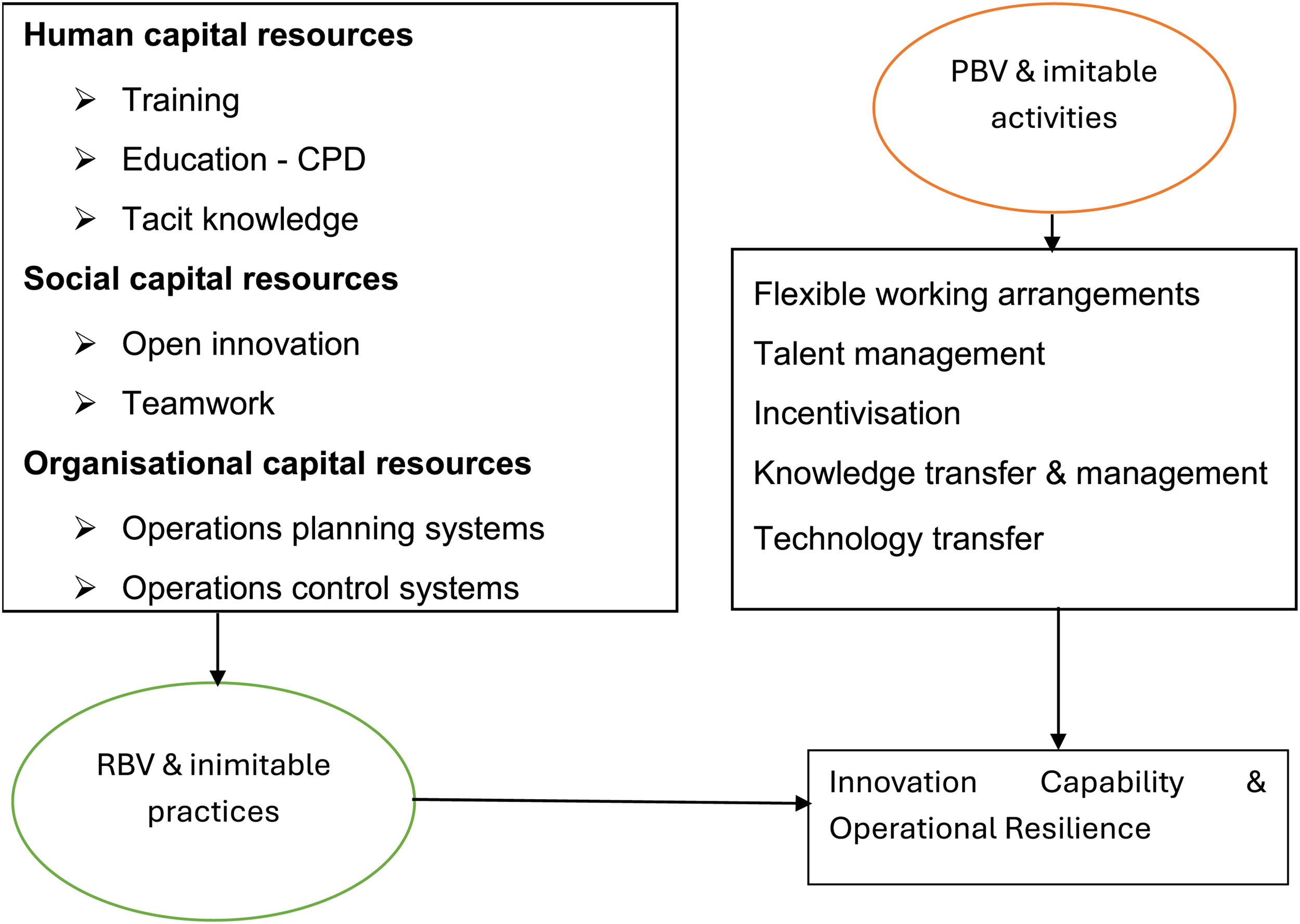
Theoretical framework.
The combination of inimitable resources (RBV) with the evolution of new technologies and the PBV resources referring to continuous process improvements can help, in theory, law SMEs to obtain a competitive advantage regarding their capability to innovate and sustain operational resilience (Huang et al., 2023).
Research methodology
This study adopts exploratory case-based research as a qualitative research design, employing semi-structured interviews (Voss et al., 2002). Given the exploratory nature of this study, the use of qualitative data is suitable for developing an in-depth understanding of the operational complexities of law SMEs, which cannot be fully captured through quantitative approaches (Creswell and Poth, 2016). The authors conducted a structured literature review following Tranfield et al. (2003) to identify existing challenges and drivers for innovation in the sector and designed the semi-structured interview guide accordingly and in line with the PBV–RBV theoretical underpinning discussed in the previous section.
Data collection and interview design
Twenty semi-structured interviews were conducted with senior legal professionals working for law SMEs in the UK. Actually, UK is a particularly intriguing case study since it is the second-biggest legal market in the world and UK law SMEs represent 85–99% of all legal firms by number and account for approximately one-third of total UK legal services revenue (The Times, 2026). The interviews were conducted from November 2023 to May 2024, across the UK to ensure a diverse representation of firms. Each interview lasted about one hour and was conducted following an interview guide. All interviews were audio recorded with prior participant consent and later transcribed for analysis, where direct quotes were anonymised and verified prior to publication (Van der Loos et al., 2023). Our research design was ethically approved before its execution by our institutional authorities.
In terms of the interview design per se, open questions were used to give the interviewees leeway to structure content according to their reality (Kessler et al., 2025). The interviews focused on themes including the impact of global events such as Covid-19, the energy crisis and climate change, as well as the implications of technological developments like AI, remote working and digitisation on law firm operations. Although the questions and thematic organisation of the interview guide were primarily original, the prior work of Michalakopoulou et al. (2023) was a significant reference point for our work. The design and use of this guide allowed our protocol to be benchmarked accurately against our theoretical underpinning; that is, each heading from the RBV and PBV ‘boxed’ indicators in Figure 1 represented at least one unique question asked to our participants. The semi-structured interview format allowed for a flexible yet focused exploration of key topics, enabling interviewees to share their experiences and insights freely while ensuring consistency across interviews (Kallio et al., 2016). This format also enabled the full representation and further exploration when this was evident of all the RBV/PBV elements in each and every interview.
Sampling strategy
Purposive sampling was used to recruit participants who were best positioned to provide insights into the resilience and innovation challenges and opportunities faced by UK law SMEs. Law firms and their representatives were selected based on the following criteria:
Being a registered law SME with the Law Society of England and Wales and Solicitors Regulations Authority (i.e. a firm with fewer than 250 employees and an annual turnover of less than £50 million) Holding a senior role within the selected law firm (e.g. partners, senior associates or heads of departments) Being involved in the operations management of their firm.
This sampling approach ensured that the dataset collected is relevant, meaningful, timely and rich, and its analysis could lead to developing a ‘big picture’ narrative.
Study characteristics
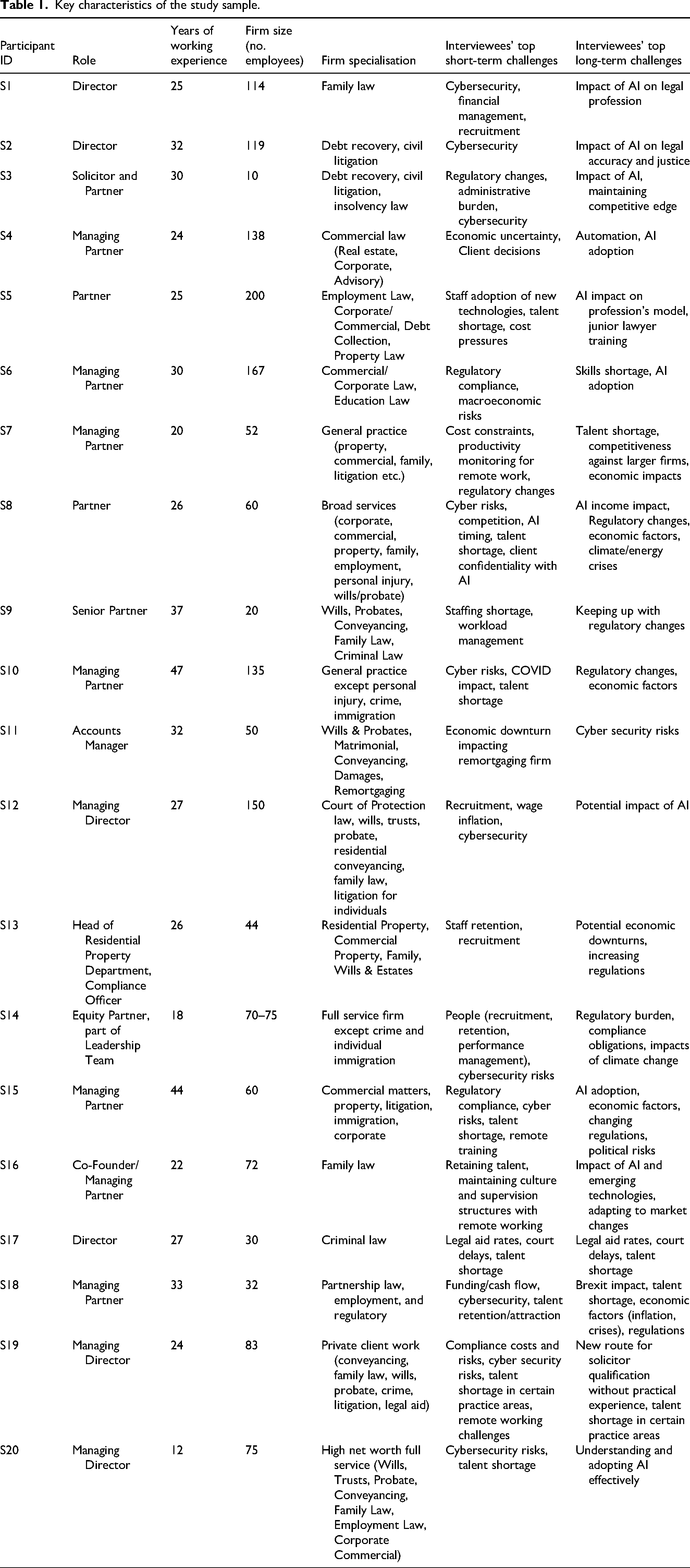
A sample of 20 senior legal professionals were interviewed representing 20 law SMEs. The participants’ professional working experience ranged from 12 to 47 years, ensuring a rich diversity of insights. The cohort included managing partners, directors and other high-level professionals, covering a broad spectrum of leadership roles within law SMEs. The firms represented in the study varied significantly in size, from small teams comprising as few as 10 employees to larger firms with over 200 employees. This range provided a comprehensive view of the challenges faced by law firms of different scales within the SME sector. The firms specialised in a variety of legal areas, including family law, debt recovery, commercial law, criminal law and private client work, offering a well-rounded understanding of the sector's challenges. For anonymisation purposes, participants were given a code name (S1 to S20).
Table 1 provides detailed characteristics of the sample, including information about the participants and their key priorities and about their respective firm.
Key characteristics of the study sample.
Method of analysis
Thematic analysis (as per Braun and Clarke, 2006) was employed to analyse the data. This method was selected for its flexibility and ability to identify, contextualise and report patterns (themes) within qualitative data (Nikitas et al., 2019). Thematic analysis allows for both an inductive, data-driven approach and a deductive, theory-driven approach, making it suitable for the exploratory nature of this research (Guest et al., 2012). This work was underpinned by the RBV-PVB blend introduced but primarily relied on the rich data collected.
Step 1: Data familiarisation
Following the completion of the 20 interviews, the recordings were transcribed verbatim to ensure accuracy and depth of analysis. The research team repeatedly read the transcripts to familiarise themselves with the content, actively engaging with the data to gain an initial understanding of emerging ideas and patterns (Braun and Clarke, 2006).
Step 2: Generating initial codes
Using NVivo and Atlas.ti software, initial coding was carried out by identifying recurring words, phrases or concepts within the transcripts. This stage involved systematically coding each transcript, focusing on elements relevant to the short-term and long-term challenges faced by the participants (Boyatzis, 1998).
Step 3: Searching for themes
Once the data was coded, codes were grouped into potential themes. Themes were identified by looking for patterns across participants’ experiences, particularly in relation to business risks, the impact of AI, regulatory challenges and cybersecurity concerns. Special attention was given to how participants conceptualised the challenges of operating SMEs in the context of recent global events and technological advances (Nowell et al., 2017).
Step 4: Reviewing the themes
The initial themes were reviewed to ensure they accurately reflected the data and were relevant to the research aim. At this stage, themes were refined; some themes were merged, and others were broken down into sub-themes for more nuanced analysis. The authors adopted the constant comparison method, where data was continually revisited to ensure consistency and accuracy (Miles et al., 2014).
Step 5: Defining and naming the themes
The final themes were defined and named to represent the essence of the data. The five themes were resistance to innovation, talent management, economic pressures, cybersecurity and regulatory compliance. The themes were linked to previous literature to contextualise the findings within the broader landscape of law firm operations (Creswell and Poth, 2016).
Step 6: Writing up the analysis
Finally, the five themes were integrated into a coherent aim-centric narrative. The themes were presented in relation to how legal professionals perceived the evolving landscape of law SMEs, particularly in terms of resilience and innovation. Comparisons were also made with findings from previous studies (e.g. Michalakopoulou et al., 2023, 2024), to illustrate the consistency or divergence of experiences across different contexts.
Thematic analysis
Challenges facing law SMEs in a high-tech era
In the rapidly evolving landscape of the legal industry, law SMEs find themselves at a crossroad where traditional practices intersect with the demands of a new technology-driven era. Unlike their larger counterparts, SMEs possess a unique set of advantages and face distinct challenges that shape their operational dynamics and strategic decisions.
A primary differentiator for SME law firms is their ability to make swift decisions with less bureaucratic red tape. As interviewee S20 observed, ‘In a small law firm, you can certainly make decisions more quickly and with less discussion. But then there are less support functions and infrastructure that you would typically find in a big global law firm’. This sentiment is echoed by S4, who noted, ‘I think that working in an SME enables you to be perhaps a little bit nimbler than some of your larger competitors’.
However, this flexibility comes at the cost of multi-tasking, which is both a hallmark and a hurdle for law SMEs. Legal professionals in these firms often wear multiple hats, balancing roles that extend beyond their legal expertise. This multi-tasking is necessitated by the limited resources and staff available in SME firms, requiring employees to engage in various roles such as business development, client management and administrative tasks. S8 described this environment, stating, ‘in smaller firms, as you get more senior you wear a lot of hats. So you’re not only a fee earner but you’ve got business development roles because everyone really is a salesperson trying to encourage people to use the firm services’. Similarly, S3 highlighted the breadth of responsibilities: ‘In my firm, I have to deal with everything. As well as bringing in the money I've got to also manage my business and keep on top of things and try to deal with changes that are coming in the pipeline’.
This multi-role environment is further complicated by the lack of specialised support that is found in larger firms. For instance, S1 noted the necessity of managing both legal and operational aspects: ‘In a small firm I actually have to be able to consult with my employees and manage all issues from person to person to the business planning and operations’. This was also noted by S2, who suggested that, ‘in an SME-sized firm, you have to roll your sleeves up and do things that potentially you wouldn’t have to do in a larger firm’.
In the context of law SMEs, this need to multitask can be seen as both a challenge and an opportunity. On the one hand, it may lead to increased workload and stress for employees, as noted by S17, who stated, ‘People will fit into a number of different roles and you end up having to manage many different aspects of practice, that you probably wouldn’t need to know if you were part of a larger organisation’. On the other hand, the opportunity to engage in multiple roles can lead to a more holistic understanding of the firm's operations and foster a versatile skillset among staff.
When competing with larger firms, law SMEs face significant challenges due to limited resources and infrastructure. Larger firms often have the advantage of specialised departments and greater financial backing, enabling them to invest in advanced technology and marketing strategies. However, SMEs can leverage their agility and personalised client service to differentiate themselves. S18 highlighted this ability to pivot quickly and adapt to market needs: ‘There are disadvantages in being smaller and sometimes less well-resourced. Advantages though are that when you don’t have a huge bureaucracy you can be much more nimble and you can spot the gap in the market and take advantage of it quickly’.
SMEs must focus on leveraging their inherent strengths by emphasising personalised client service and niche expertise, creating value that distinguishes them from larger competitors. This strategy not only helps in retaining clients but also fosters a strong referral network, as S16 emphasised the importance of service, stating, ‘About 80% of our work is referrals from existing or former clients. So, if we look after our existing clients really well then that guarantees a pipeline of work for us for the future’.
New technology and more innovation adoption present significant opportunities for law SMEs to enhance their resilience. While limited resources can hinder immediate technological adoption, technology enables SMEs to streamline operations, automate routine tasks and improve overall efficiency. S6 noted, ‘We fortunately have the resources to adopt new technologies, but smaller high street practices may face some challenges with that’. S14 highlighted, ‘Where there are opportunities available for technological growth, we don’t have the financial resources that the big firms do to be able to be at the forefront of those’. This means that while SMEs see the potential in technological advancements, their financial constraints often prevent them from being early adopters, forcing them to strategically navigate their technology investments to maintain competitiveness.
The integration of technology also opens new avenues for legal service delivery, such as virtual consultations, digital documentation and AI-driven legal research. These advancements can help SMEs to compete more effectively by offering services that are both efficient and accessible to clients. By adopting innovative solutions, SMEs can maintain their competitive edge in a market dominated by larger players.
Theme one: From resistance to innovation – embracing technological change
While the integration of technology presents new opportunities for enhancing legal service delivery, several barriers hinder its adoption within the legal SME industry. Despite the potential for virtual consultations, digital documentation and AI-driven legal research to revolutionise the industry, many law firms face significant resistance to change, rooted in cultural norms and the conservative nature of the profession.
The legal sector's reluctance to embrace technological change is deeply embedded in its culture. Many legal professionals prefer to adhere to traditional practices rather than explore innovative approaches. This resistance is highlighted by S4, who stated, ‘Lawyers do not want change. That's the barrier’. Interviewee S10 similarly observed that ‘Lawyers usually want to do it the way they’ve always done it’. This aversion to change is a common theme in the industry, where the reliance on established methods is seen as a safe and reliable approach. However, this mindset can hinder the potential for growth in a rapidly evolving technological landscape.
The challenge of integrating new technologies is further exacerbated by inadequate training and a lack of continuous learning opportunities within many firms. Implementing advanced technological solutions requires ongoing education and skill development, which can be costly and logistically challenging for smaller firms. S1 identified this issue, noting, ‘We are still often reliant on external expertise which costs money’. This reliance on external resources reflects a significant barrier, as the cost and effort involved in upskilling staff are often perceived as prohibitive. Moreover, without sufficient in-house expertise, firms may hesitate to invest in new technologies, fearing potential risks and disruptions to established workflows.
Generational differences also play a critical role in the legal sector's resistance to technology adoption. Younger employees typically exhibit higher levels of digital literacy and are more comfortable with technological innovations, while older generations may resist these changes due to unfamiliarity and discomfort with digital tools. S11 candidly admitted, ‘At my age, you become used to the way you work, and you are reluctant to new tools and technologies’. This highlights a common challenge in law firms, where varying levels of technological comfort can impede the adoption of new systems. The generational divide can create friction within teams and complicate efforts to foster a unified approach to technological innovation.
These barriers also have significant implications for talent recruitment and retention. Firms that are slow to adapt to technological advancements may struggle to attract and retain skilled professionals, particularly those who value innovative work environments. S14 highlighted this, stating, ‘We don’t have the financial resources that the big firms do to attract talent’. This financial limitation not only hinders technological progress but also impacts a firm's attractiveness to tech-savvy candidates. S14 also pointed out that the financial burden of implementing new systems is a considerable obstacle: ‘It's cash cost and it's time cost to implement new systems’. These financial constraints can lead to a cycle of stagnation, where the inability to invest in technology further limits a firm's competitiveness and appeal.
Furthermore, the lack of technology uptake can affect employee satisfaction and motivation. S12 noted that ‘Firms which are failing to embrace video-conferencing technologies and hybrid working are really going to struggle because people do like them’, suggesting that the flexibility and efficiency offered by technological tools are increasingly becoming a priority for legal professionals. As the industry continues to evolve, law SMEs must address these barriers to ensure they remain attractive to both current and prospective employees.
In this dynamic landscape, addressing the resistance to technological innovation becomes critical for ensuring long-term sustainability and competitiveness in the legal sector. The ability to leverage technology effectively will be a key differentiator for firms aiming to attract and retain the best talent.
Theme two: Competing for talent – recruitment and retention perspectives
As the legal industry continues to evolve, the recruitment and retention of talent have become increasingly intertwined with a firm's capacity to embrace technological advancements and foster a progressive workplace culture. While leveraging technology is a key differentiator, attracting and retaining top talent, it is also the source of economic and cultural factors that influence the legal workforce.
One of the most pressing issues in talent recruitment and retention is the ability of SMEs to offer competitive salaries and benefits. Larger firms often have the resources to provide attractive compensation packages, making it difficult for smaller firms to compete for top talent. As noted by several professionals, rising salary demands driven by a competitive marketplace put significant financial pressure on smaller firms. S19 highlighted the problem of escalating salary expectations, stating, ‘You have to pay ridiculous amounts of money to get talent. There are financial consequences of these salary demands because at the end of the day, we’ve still got to make money’. S1 echoed this concern, explaining, ‘we’re low on candidates and this has pushed salaries up. And that's making it very difficult for small firms to recruit because big law firms can pay more. So, we’re losing many really good candidates to big law firms’.
In addition to financial incentives, the modern workforce places a high value on work-life balance and flexible working arrangements. The Covid-19 pandemic has accelerated this shift, normalising remote and hybrid working models across the industry. While many firms have adapted to these expectations, smaller firms find it challenging to maintain their competitive edge in flexibility as these practices become standard. S13 observed, ‘with the changes to hybrid working across the country we’ve actually lost our edge on that because everybody expects it; they expect flexibility’.
Moreover, young professionals often gravitate towards larger firms perceived to offer better career prospects, structured training programs and a prestigious brand reputation. This trend poses a significant challenge for smaller firms that must find innovative ways to appeal to new legal professionals. Offering unique opportunities for professional growth and a supportive work environment are strategies some firms are adopting to remain attractive. S1 noted, ‘In some areas of law, SMEs are not attracting the next generation into the profession. They lose out to big firms that offer more opportunities, training and salaries. SMEs need to offer a family-like environment to make up for this and be attractive’.
Retaining experienced staff is equally important, as their departure can significantly impact a firm's operations and client relationships. SMEs are particularly vulnerable to turnover, as the loss of key personnel can disrupt service delivery and affect the firm's bottom line. Developing a strong workplace culture that emphasises employee engagement and satisfaction is critical for retaining top talent. S13 noted, ‘In terms of retaining staff, we’ve started looking at what benefits and opportunities we can offer staff differently… to make us a more attractive proposition to come and work for’. Similarly, S19 emphasised that ‘How we recruit? Well mostly, and it might sound arrogant, with our reputation as a good employer. This is the first thing. Because if we’re not a good employer, we’re neither going to attract talent nor retain it’.
Additionally, law SME firms face challenges in hiring and retaining high-quality support staff. There is a growing trend where individuals in support roles aspire to become fee earners, leading to a shortage of dedicated support personnel. This shift necessitates strategic adjustments in recruitment and retention policies to ensure that firms can maintain operational efficiency. S13 highlighted this issue, stating, ‘There's a real lack of people that want to remain in a support role. Everybody wants to qualify and be a fee earner. So that's a big challenge’.
Overall, the recruitment and retention of talent are critical challenges for law SMEs today. As the industry continues to evolve, firms must adopt creative strategies to remain competitive and attractive to both new and experienced professionals. By addressing compensation concerns, fostering a supportive work environment and embracing flexibility, SMEs can better position themselves to meet these challenges. However, these efforts must be balanced against broader economic pressures that increasingly shape the landscape of legal practice, challenging firms to adapt and innovate continuously.
Theme three: Navigating economic pressures for financial sustainability
Law SMEs must also contend with the broader economic pressures that shape the legal landscape. While technology adoption and attracting and maintaining skilled professionals are key priorities, these efforts are further complicated by financial constraints that demand strategic agility. Economic fluctuations, inflationary pressures and the unpredictable nature of global markets impose additional burdens on SMEs, requiring them to adapt swiftly to ensure sustainable growth.
Wage inflation is a significant concern, placing additional strain on profit margins. Law SMEs face mounting pressure to offer competitive salaries in an increasingly tight labour market. As S16 noted, ‘We’ve definitely seen pressure on profit margins as a result of the general candidate shortage in the marketplace’. Despite the need to attract and retain talent, law firms find it challenging to pass these increased costs onto clients. The inability to transfer these costs highlights the delicate balancing act firms must perform to remain competitive while managing rising operational expenses.
Economic cycles also play a pivotal role in shaping the financial landscape. The legal sector is not immune to the boom-and-bust dynamics of the economy. As described by a partner in a small firm S9, ‘We live in a kind of boom-bust economy. So, one minute we’re doing loads of work and selling loads of houses… it's all great. And then the next minute there's a recession’. This cyclical nature of demand affects revenue streams, with some departments experiencing growth while others face decline. The unpredictability of these cycles requires SMEs to be flexible in their strategic planning.
Inflationary pressures further complicate the financial landscape for law SMEs. Rising costs for overheads, energy and essential services force firms to re-evaluate their budgets and pricing strategies. One managing director (S18) noted, ‘Inflation impacts all of our costs, whether it's overheads, energy costs, vendor costs for the stuff that we buy. So that makes it harder to generate the profit that you need to make as a firm’. Additionally, SMEs must contend with the challenge of offering competitive salaries to staff, who are themselves grappling with increased living costs. This creates a financial strain that requires careful management to ensure operational sustainability.
Economic uncertainty also influences decision-making within law SMEs. The current climate, characterised by high inflation and fluctuating interest rates, creates an environment where strategic investments in growth areas become vulnerable to risk. S4 explained, ‘Financial changes create uncertainty for me running the business that I'm trying to run. It makes borrowing money expensive’. This uncertainty impacts both the firms’ operational decisions and their clients’ willingness to engage in legal services, further complicating financial planning.
For law SMEs reliant on legal aid, particularly in criminal law practices, financial constraints are exacerbated by fixed rates of pay and short-term contracts. As one criminal law specialist (S17) observed, ‘With criminal practice you’ve got problems that are outside of your control so that's legal aid. You have no control over rates of pay that you’re going to receive’. Court delays compound these challenges, as they hinder the timely resolution of cases and affect cash flow. The need for increased government funding for the court system and legal aid is a recurring theme, with S16 noting that ‘Legal aid is going to be the single biggest factor that's going to impact law firms and law SMEs in particular over the next few years’.
As financial resources become stretched, investments in essential areas like safety, protection and risk management may be restricted. Many law SMEs, already operating with tight margins, may find it difficult to allocate sufficient funds to bolster their cybersecurity defences, leaving them vulnerable to increasing threats in the digital landscape. As the frequency and sophistication of cyberattacks grow, the need for greater investment in cybersecurity measures becomes paramount.
Theme four: Cybersecurity in a digital age
Cybersecurity emerged as a paramount concern within the legal industry, with SME professionals across the board expressing anxiety over their ability to protect sensitive client data. ‘Cybersecurity is a massive deal’, states S1, underscoring its critical importance. The potential repercussions of a cybersecurity breach extend beyond data loss; they threaten the very reputation and financial stability of law firms. As S4 candidly admits, ‘Cybersecurity has the potential to keep me awake every night’, highlighting the pervasive anxiety surrounding these threats.
For many law SMEs, the challenge lies not only in the sophistication of cyber threats but also in their sheer inevitability. S8 observes, ‘It's not if, it's when’, capturing the widespread understanding that cyber incidents are a matter of time to occur. This acknowledgement drives the urgency for law firms to implement comprehensive cybersecurity strategies.
The shift to remote work, accelerated by the Covid-19 pandemic, has further complicated cybersecurity efforts. Remote work environments have expanded the attack surface for cyber threats, as S11 notes: ‘Cyber threats are a constant concern, especially with remote working increasing the attack surface’. This new reality demands that law SMEs reassess and strengthen their cybersecurity measures continually and beyond their typical office space.
Despite the challenges outlined, many firms are taking proactive steps to bolster their defences. External IT companies provide guidance and support, as noted by S1: ‘We use an external IT company to advise us on our cybersecurity. We have internal policies in place. And we train our staff. We have paid for and implemented security measures such as two-factor authentication’. Similarly, S3 highlights the collaborative efforts with local authorities to address cybersecurity issues, stating, ‘I went to an event in Liverpool in conjunction with Merseyside Police and the Liverpool City Mayor and the chief police commissioner put together a package to offer some free cybersecurity which we’ve joined’.
Nevertheless, the human factor remains a critical vulnerability in handling cyber threats. S2 warns that ‘Any minor mistake made by a member of staff could potentially cause us massive reputational risk and potentially financial risk’, underscoring the importance of ongoing training and awareness to mitigate human error. The stakes are undeniably high. As S10 points out, ‘Any breach could damage our reputation significantly’, illustrating the potential consequences of a cybersecurity incident for a law firm's credibility and financial health. This risk underscores the necessity for law firms to prioritise cybersecurity as an integral component of their operational strategy.
Looking ahead, the challenge of cybersecurity is not a new one, but it is one that continues to evolve alongside digital innovations. As law firms increasingly adopt new technologies to enhance their operations, the complexity and scale of cybersecurity threats are likely to grow. The need for advanced cybersecurity measures, therefore, becomes even more pressing. Protecting sensitive data and maintaining client trust will require ongoing vigilance, investment and adaptation as the legal industry navigates the challenges of a digital future.
Theme five: Balancing innovation and compliance – a complex regulatory landscape
As law firms continue to embrace digital innovations, the regulatory landscape they must navigate becomes increasingly complex. While cybersecurity remains a critical concern, the broader spectrum of regulatory compliance presents equally formidable challenges. SMEs, in particular, face significant hurdles in meeting these evolving regulatory demands, which often require considerable resources and strategic adaptation.
The burden of regulatory compliance has grown substantially, placing a strain on the operational capacities of law SMEs. Legal professionals frequently express concern that these demands divert crucial resources away from client services and strategic growth. S1 captures this sentiment, noting that ‘The dynamic nature of legal regulations poses a risk to law firms’, as constant updates and changes in regulations create a challenging environment for smaller firms. S15 discusses the impact of compliance on operational efficiency, stating, ‘Regulatory compliance takes up an inordinate amount of time and effort’, thereby hindering the firm's ability to focus on its core business objectives.
The financial implications of compliance are also significant. Many law SMEs find the costs associated with meeting regulatory standards to be a considerable burden. S19 describes compliance as ‘becoming increasingly expensive’, highlighting how these costs can strain firms with limited financial margins or those engaged heavily in legal aid work. The expense of compliance often forces firms to reassess their service offerings or scale back operations to maintain financial viability.
A particular challenge arises with the integration of AI technologies in the legal sector, adding a new layer of complexity to regulatory concerns. Several professionals express unease about the lack of clear guidelines and regulations governing AI use in legal practice. S10 describes the potential need for regulation, stating, ‘Regulators might need to craft some regulation about the responsible use of AI and give us advice’, yet expresses doubt about whether such measures will be implemented. S2 adds that ‘There's a major concern about its accuracy and we wouldn’t certainly want to almost give AI the autonomy to just produce things’, emphasising the uncertainty and potential risks associated with AI-generated advice.
This uncertainty is compounded by the perception of both too many and too few regulations. Many SMEs feel overwhelmed by the plethora of existing regulations, which can be seen as excessive and burdensome, while simultaneously lacking clear guidance on newer technologies. S14 articulates this duality, stating, ‘I think we’re heading to the point where they need to start getting some proper AI regulation, you know? There's a lot of uncertainty about what's okay to use, and we could do with some clearer guidelines’, highlighting the need for balance and clarity.
The relationship between law SMEs and regulatory bodies is often characterised by tension, as firms feel overwhelmed by the demands placed upon them. S15 criticises the Solicitors Regulation Authority (SRA) for its perceived overreach, arguing for ‘A bigger voice with the SRA’ to ensure that regulatory frameworks better accommodate the unique challenges faced by SMEs. This sentiment is echoed by S14, who notes that ‘The extent to which we are being over-regulated, and the compliance obligations are so onerous’.
The dual challenge of too many regulations on existing practices and too few on emerging technologies like AI creates a landscape of confusion and uncertainty. SMEs must navigate this multifaceted regulatory environment, which impacts their financial health, operational efficiency and strategic planning. Addressing these challenges requires a balanced approach that considers the specific needs and capacities of SMEs while ensuring compliance with essential legal standards. Greater clarity in AI regulations and more supportive relationships with regulatory bodies could help alleviate some of these pressures and enable these firms to eventually thrive. Figure 2 presents the five themes and their relevant sub-themes that emerged by the thematic analysis as discussed herein.
Discussion and research implications
The findings trigger agenda-setting discussions around each of the emerging themes, and the way these interrelate, with serious practical and policy implications for an industry of key socio-economic importance that is transforming in ways that need to be better understood.
The rise of AI-based legal tech and the role of law professionals as adopters
Technology, much like in previous studies (Michalakopoulou et al., 2023, 2024), is pronounced as a paradigm-shifting intervention that will shake the industry one way or another. It is argued herein that with responsible and methodical integration, some of technology's digitalisation and automated functions may lead from an initial disruption to a digital transformation. While the fear of AI replacing lawyers entirely is rather unfounded (Armour and Sako, 2020), the interviews reveal a more nuanced perspective. AI, with its well-documented transformative powers (Nikitas et al., 2020), is seen as an opportunity to automate repetitive tasks, freeing up lawyers for higher-level strategic work and client interaction. However, concerns exist about AI accuracy and the lack of knowledge referring to its implementation.
AI-powered legal tools could potentially make legal services more accessible and affordable, in line with Marwala and Mpedi (2024), for a broader range of clients, causing the democratisation of tech-legal services. This could disrupt the traditional legal service model, forcing SME firms to adapt by specialising in niche areas or offering value-added services beyond just legal expertise. The use of AI in law raises ethical concerns, as also discussed in Simshaw (2018), specifically around bias, transparency and accountability. SMEs will need to develop frameworks to ensure responsible AI adoption and mitigate potential risks. The interviews also highlight a critical knowledge gap and need for training regarding AI capabilities and potential applications within law SMEs. This presents an opportunity for the Law Society for the UK context and other similar bodies internationally to provide training and resources on responsible AI adoption and support with the creation of a systematic regulatory framework for its ethical use.
Despite AI's potential, the interviews emphasise the continued importance of human judgement and client relationships; the human factor will still be irreplaceable. Legal professionals, much like other professionals (Giustini and Dastyar, 2024), will need to develop skills in interpreting AI outputs and effectively communicating their value proposition in a tech-driven landscape.
Regulatory burden versus business agility
The interviews reveal a growing frustration with the increasing complexity and volume of regulations. While lawyers acknowledge the need for regulation, they find it stifles business agility and consumes valuable time. Overly strict regulations can stifle innovation within SME firms (Stojcic, 2024). The legal profession may struggle to keep pace with technological advancements if regulations do not adapt to the evolving landscape, creating a compliance conundrum.
The analysis highlights, much like Susskind and Susskind (2023), a desire for more evidence-based justifications for any new regulations. Law professionals want to understand the rationale behind regulations and their actual impact on legal services. Lawmakers could explore alternative regulatory approaches, such as sandboxes or innovation hubs, to allow SMEs to experiment with new technologies and legal service delivery models in a controlled environment. Also, finding a balance between standardisation and flexibility in regulations is crucial. Standardisation has been shown in other industries (Rojas et al., 2023) to create a level playing field, but excessive rigidity can hinder innovation. Finally, worth noting is that law SMEs see the Law Society as a potential advocate in lobbying for lighter-touch regulations that prioritise public good while enabling efficient business operations.
The cybersecurity imperative
The interviews indicate a high level of awareness about cybersecurity risks among law SMEs, which is a progress from previous research (Michalakopoulou et al., 2024). This is positive, as it demonstrates a willingness to invest in preventive measures. However, these require SMEs to invest in ongoing security assessments, staff training and advanced security solutions. Cybersecurity preparedness creates a financial burden, especially for smaller firms.
At the same time, the human element emerged as a key vulnerability in cybersecurity, something in line with other industries (Liu et al., 2020; Zimmermann and Renaud, 2019). This suggests a need for ongoing cybersecurity training for all staff, not just IT professionals. Also, the legal profession could explore the development of specialised cyber insurance products tailored to the specific risks faced by law firms and work together to create collective defence initiatives. It was suggested that the Law Society could explore ways to facilitate collaboration among SMEs in sharing best practices and resources to strengthen collective cybersecurity defences.
The future of work and the remote working paradigm
The pandemic has accelerated the shift towards remote and hybrid work models (Phillips, 2020) that are now appropriately supported by the growth and opportunities provided by digital technologies (Yáñez-Valdés and Guerrero, 2024). This trend is likely to continue (Tahlyan et al., 2024), with lawyers seeking a better balance between work and personal life. Talent retention could depend on working flexibility offered. While remote work offers advantages (Ferreira et al., 2021), concerns exist regarding the impact on the development of soft skills in junior lawyers, traditionally fostered through in-person interaction with senior colleagues. Also, while flexible working can attract talent from a wider geographical pool (Braesemann et al., 2022), it can also exacerbate the recruitment and retention challenges faced by SMEs, particularly in attracting top graduates from major cities.
The interviews highlight the need for legal education to adapt to the evolving practice of law; legal education should be re-imagined and reshaped as a whole. This includes, according to best practice from other sectors (e.g. Ahmed, 2023; Yasmin and Tanaka, 2022), integrating essential IT skills and training in collaboration techniques for successful remote work. The rapid pace of change in the legal profession necessitates a shift towards a culture of lifelong learning. Lawyers will need to continuously update their skills and knowledge to remain competitive. Apprenticeship programmes can provide valuable practical experience for aspiring lawyers and bridge the gap between legal education and the realities of legal practice in a tech-driven world.
At the same time, remote work also necessitates an effort from SMEs to build and maintain strong client relationships (Hafermalz and Riemer, 2021). Lawyers will need to develop effective communication strategies and leverage technology to foster trust and engagement with clients in a virtual environment. Finally, traditional metrics of lawyer performance based on billable hours may need to be re-evaluated in a remote work environment. Firms will need to develop new metrics that capture value delivered to clients and team collaboration.
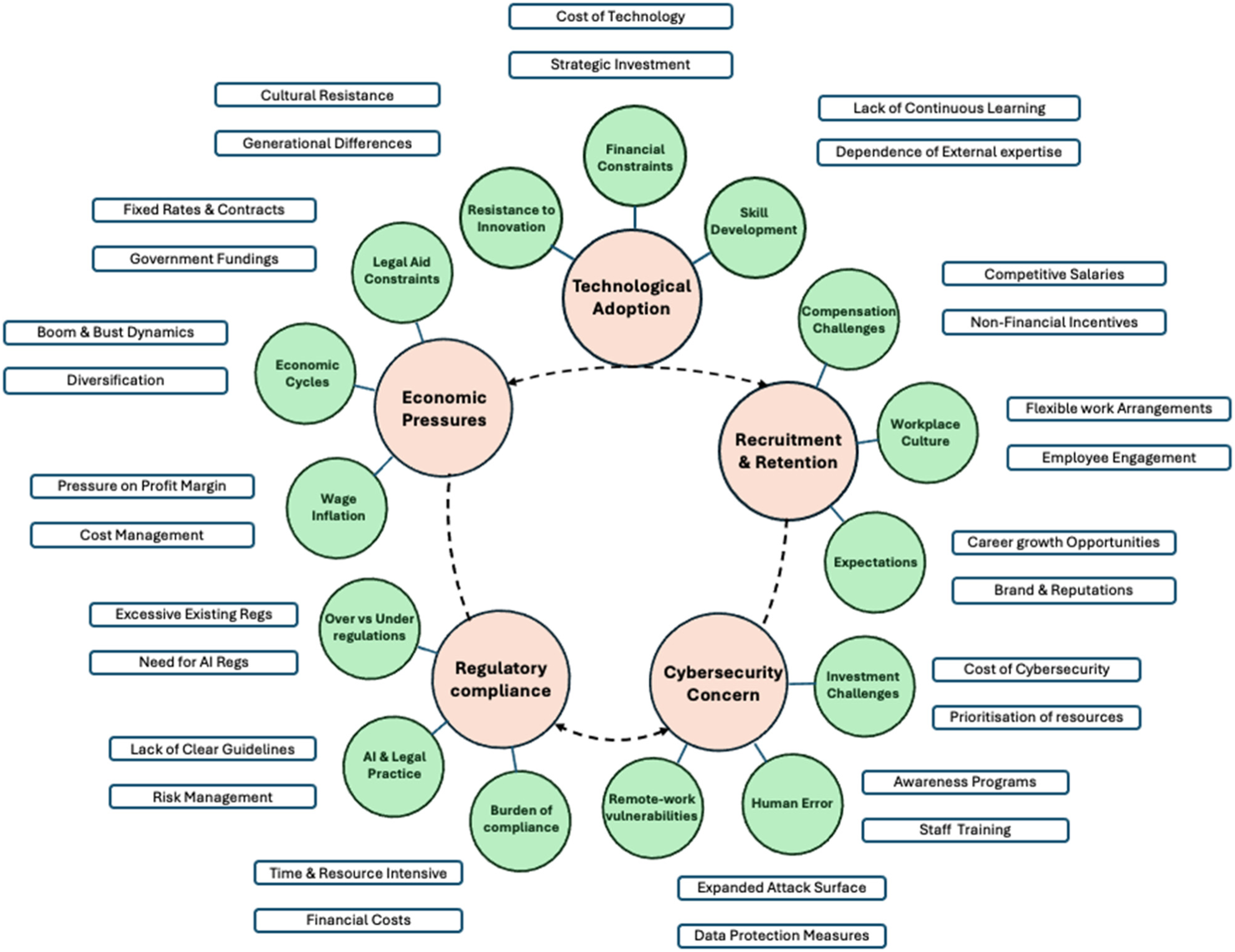
The thematic map.
A call for more support
Some of the interviews suggest there may be confusion in law SMEs about the respective roles of the SRA and the Law Society, such that respondents do not fully understand that the SRA is the regulator, and the Law Society is the representative professional body. Respondents emphasised the need to access practical guidance, training resources and other programmes from the professional body; they need to see the Law Society acting as a collaborative and supportive partner that gives them a voice. The regulatory authorities, according to the interviewees, need to play a more active role in supporting legal aid work, providing financial incentives, easing regulations for SMEs and helping them to attract talent. The financial constraints and economic pressures, in a challenge-intense market landscape, are substantial for law SMEs when compared with bigger firms (as per Michalakopoulou et al., 2023) and should be the focus of pro-active interinstitutional investment.
Figure 3 summarises the thematic discussion.
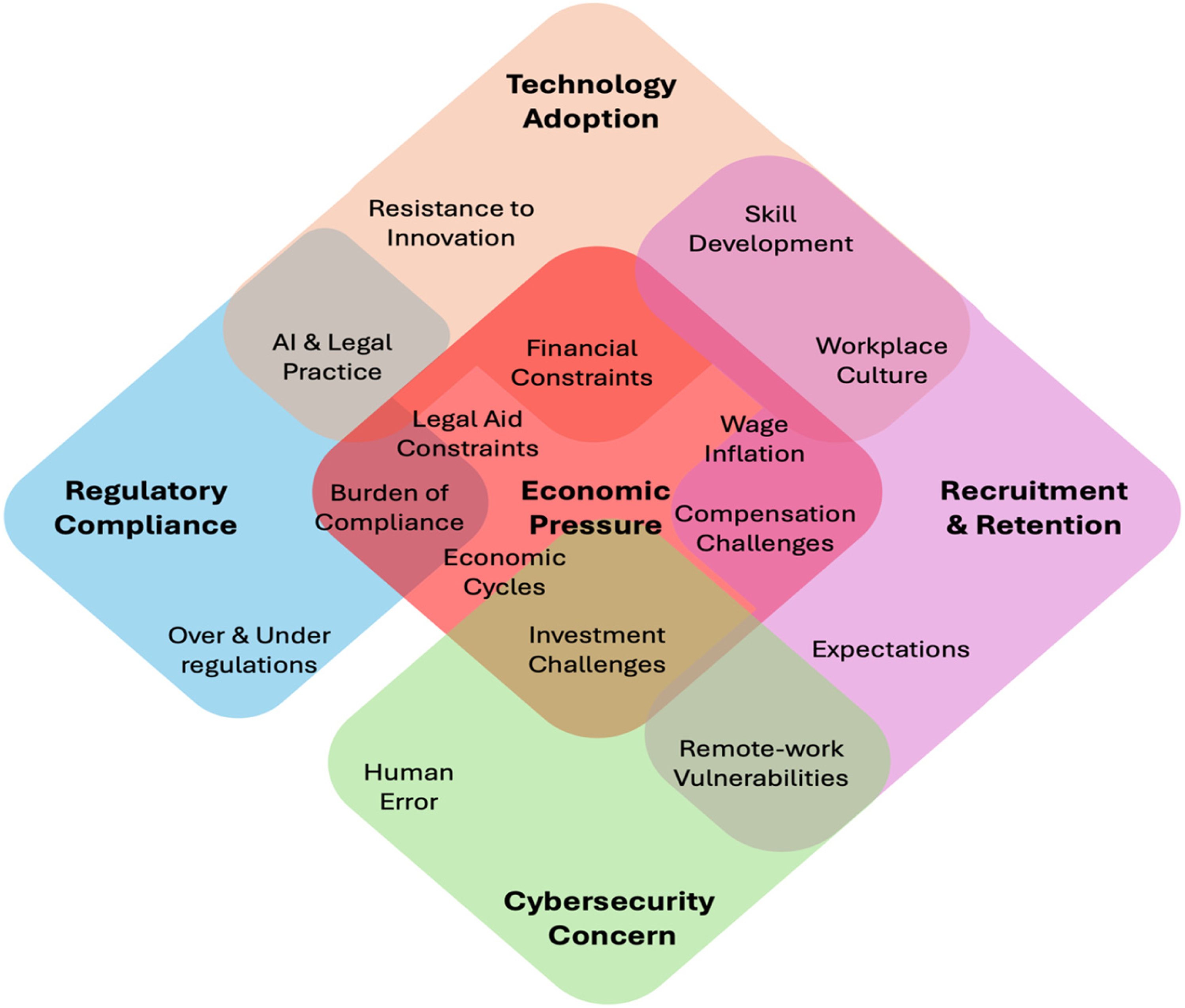
Determinants of innovation and resilience for law SMEs.
Conclusions, limitations and future research
The paper uses a theory-supported thematic analysis of 20 senior legal professional interviews to identify and contextualise five emerging agendas reflecting and affecting the pathways of law SMEs to innovation and resilience. These diverse themes, namely: resistance to innovation, talent management, economic pressures, cybersecurity and regulatory compliance, highlight the key opportunities and challenges that law SMEs need to seize and overcome respectively when navigating in a rapidly changing global landscape that is defined by digital transformation, disruption and uncertainty. This work makes an important contribution in the still severely understudied area of legal service operations that guides the advancement of sector-enabling policy building and business planning in the critical areas of innovation and resilience. It also contributes to theorisation by establishing a novel hybrid theoretical framework appropriate for legal business that mixes RBV and PBV.
As with any study that uses self-reported data, some biases (including optimism and social desirability biases) are acknowledged. The way the qualitative data has been interpreted may also involve, to some degree, analyst bias, although the careful employment of a systematic interview approach and benchmarking our thematic analysis against best practice, including the use of multiple analysts, significantly reduces inconsistencies and improves rigour. Further research will include a follow-up survey study with law SME professionals working across the UK who do not necessarily have managerial duties or senior roles in their firms. This future work will aim to further decode the five themes that emerged from the present analysis and validate our mixed theory framework; the questionnaire will be administered in five thematic sections with questions that will allow the generalisation of our key results into a wider context.
Footnotes
Acknowledgements
The authors acknowledge financial support from the ECR Seed Corn funded by the University of Huddersfield Business School, and from the Law Society of England and Wales. The authors are grateful for all the legal professionals who participated in the study for sharing their valuable insights.

Ethical approval and informed consent
The study adhered to ethical guidelines and received formal approval from the University of Huddersfield's Business School Research Ethics and Integrity Committee (Decision: BELETHICS2324_005). The authors confirm that informed consent was obtained from all the study participants.
Funding
The authors disclosed receipt of the following financial support for the research, authorship, and/or publication of this article: The study was funded by the ECR Seed Corn of the University of Huddersfield Business School, and from the Law Society of England and Wales.
Declaration of conflicting interests
The authors declared no potential conflicts of interest with respect to the research, authorship, and/or publication of this article.
Data availability statement
The data generated by the interviews is available but not shared for confidentiality reasons.