



Abstract
Summary
In recent years, xenophobia has become an increasingly important area of research in social work. This study was conducted in the South-Eastern Anatolia and the Mediterranean regions of Türkiye, both of which are densely populated by immigrants. In the study, the mixed method was conducted on social workers working in these regions. In the quantitative section, the Xenophobia Scale was applied on 242 social workers. In the qualitative section, 35 social workers were interviewed.
Findings
The findings revealed that married social workers were more xenophobic than their single counterparts (p ≤ .05). While those who did not receive training on immigration tended to be more xenophobic than those who received training (p ≤ .000), those who worked in the Mediterranean region tended to be more xenophobic compared to their counterparts who worked in the South-eastern Anatolia region (p ≤ .05). In the qualitative section featured 35 social workers who fell into three categories: those who did not use xenophobic expressions but were disturbed by the problems that arose with living with immigrants, those who used xenophobic expressions, and those who did not use xenophobic expressions at all.
Applications
This study's findings highlight the significant role of non-xenophobic social workers in the field of migration. Additionally, it emphasizes the necessity for xenophobia-focused trainings for social workers. In conclusion, there is potential for enhancing non-xenophobic practices among social workers in the field.
Introduction
Xenophobia – defined simply as the fear or hatred of foreigners – has resulted in genocides, social uprisings, and racist attacks throughout history (Khair, 2015) The term originates from the Greek words xenos, meaning foreigner, and phobos, meaning fear (Roose, 2017). Xenophobia is characterized by discriminatory attitudes and behaviors that often result in violence, abuse, and hatred (Odiaka, 2017), and is a significant concern that has been prevalent since the 1880s (Meriam-Webster, 2023) when the idea originated. Consequently, xenophobia has become a subject of interest in various fields, including psychology, psychiatry, human geography, anthropology, history, international relations, law, and economics (Omoluabi, 2008). Social work is another discipline that studies xenophobia.
Within the field of social work, there have been ongoing debates concerning anti-racism and discrimination since the 1970s (Laird, 2013). People have made their criticisms at social work practices for their shortcomings in meeting the needs of both those who are exposed to racism, as well as of other oppressed groups. Accordingly, the need for anti-racist social work practices is growing. Furthermore, there is an ongoing discourse regarding the insensitivity of social work education toward anti-racism, and the maintenance of ignoring racism in social work education (Hamilton-Mason & Schneider, 2018). In this context, one can argue that xenophobia poses a significant problem for social work – particularly for vulnerable refugees and immigrants who have been forced to migrate for various reasons (Garcia, 2020; Keigher, 1997; Popescu & Libal, 2018; Zaviršek, 2017). Another context in which the social work profession addresses xenophobia is their work with victims thereof. Sewpaul (2014) has recommended implementing programs to prevent xenophobia in South Africa, establishing crisis teams to offer community-based crisis interventions and trauma debriefing for instances of violence related to xenophobia, and creating spaces for dialogue. In a South African study, Van Der Westhuizen and Kleintjes (2015) cited the need for explicit guidelines and training programs for social workers on supporting xenophobia victims, as well as programs tailored to their particular needs.
Although social work addresses xenophobia as an important issue, the related studies have indicated that social workers themselves can demonstrate xenophobic attitudes. Eliassi (2017) investigated how 22 Swedish social workers perceived immigrants, found that they were dissatisfied with number of immigrants in Sweden, and believed that immigrants received social assistance unjustly, did not contribute to the country, and failed to integrate. Park et al. (2011) did a study with 1.124 social workers across 47 states in the USA and found that social workers categorize immigrants as either deserving or undeserving. They treated undeserving ones, specifically illegal immigrants, less positive. Conversely, they saw that social workers who worked in institutions which did not question the status of immigrants held a more positive attitude about them. A separate discourse analysis study on the attitudes of social workers toward illegal immigrants in the USA uncovered that certain social workers asserted that they need not cater to illegal immigrants. Additionally, they believed that illegal immigration would adversely affect the utilization of current social service resources and marginalize immigrants (Park & Bhuyan, 2012). One study involving 4.499 American social workers revealed that those who perceived immigrants as a threat were less likely to accept the structural barriers faced by immigrants. By contrast, social workers who accepted the structural barriers faced by immigrants saw them as less of a threat (Park et al., 2022).
On the other hand, Fazzi (2015) surveyed 90 social workers employed in local governments where populist parties hold power in Italy and discovered that political populism's rise in xenophobia adversely affected social workers’ professional conduct. He also reported that anti-prejudice activists and anguished social workers are unsure of their next steps. some maintained a taciturn disposition, even if they do not endorse discrimination and others support xenophobic beliefs. These studies all indicate that social workers can exhibit unfavorable attitudes toward migrants – in turn presenting challenges for social work practices.
However, other reasons why social workers are likely to display xenophobic attitudes include political rhetoric from populist leaders (Fazzi, 2015; Noble & Ottmann, 2018), misbeliefs surrounding xenophobia (Juhász & Szicherle, 2017) and a sharp rise in immigration (Rafael, 2008).
Türkiye has faced significant influxes of migrants due to the ongoing Syrian conflict and turmoil in the Middle East. According to the Ministry of Interior's statistics, 3.764.193 Syrians are registered under temporary protection in Türkiye, and thus make up 4.26% of the Türkiye's population (The Presidency of Migration Management, 2021)
However, most Syrians are not classified as refugees or migrants, but rather hold a temporary protection status. That policy is founded on the belief that they will eventually return to their country. The growth of the migrant population in conjunction with policies predicated on Syrians’ temporary residence has caused several issues between the local population and Syrians. Such issues have resulted in the emergence of prejudices among the local population against Syrian - as delineated by the Syrian Barometer surveys carried out between 2017 and 2020 (Erdoğan, 2018, 2020, 2021). These surveys indicate a notable level of apprehension in Turkish society toward Syrians. Although the 2020 survey exhibited a moderating negative attitude toward Syrians compared to those from 2017–2019, such attitudes persisted with a small decline (Erdoğan, 2021). Negative attitudes toward Syrians feed xenophobia.
A study by Saraçoğlu and Bélanger (2019) in Izmir indicated that growing concerns among Turks about the loss of economic gains, urban space, and national integrity led to xenophobia toward Syrians. A study by Getmansky et al. (2018) found that messages about the negative impact of refugees, especially from non-Kurdish participants, led to negative views about refugees and their impacts on Türkiye, and hence xenophobia. How social workers act in the atmosphere described above is of the essence in this context. This study aimed to examine the xenophobic attitudes of Turkish social workers working in certain provinces of South-Eastern Anatolia and the Mediterranean regions of Türkiye.
Method
This study was conducted with mixed method-based sequential transformative design. All of data was analyzed sequentially.
Population and sample/study group
The population of this study consisted of social workers in the provinces of Gaziantep, Kilis, Şanlıurfa, Hatay, Adana, Osmaniye and Mersin, where Syrians under temporary protection status live in Türkiye. No data is available on how many social workers work in public institutions, the private sector, and non-governmental organizations in these provinces. Hence, this study was conducted on social workers that the researchers could easily reach. Therefore, the sample is also the study group. The quantitative section of the study dealt with 242 social workers.
The sample group of the qualitative section consisted of 35 social workers and was heterogeneous. They were selected for their age, gender, field of study, province of residence, and level of education. They worked in Gaziantep, Kilis, Şanlıurfa, Hatay, Adana, Osmaniye, and Mersin. As mentioned above, these provinces are densely populated by immigrants. The youngest participant was 21 years old; the oldest was 56. There were 23 women and 12 men. Fourteen were single; the remaining ones were married. Twenty-seven held an undergraduate degree and 8 had had a master's degree. Additionally, while 23 belonged to an existing ethnic minority group in Türkiye; 12 did not. The participants worked in different fields of social work – namely medical, social aid, migration, and child welfare.
Data collection tools
A personal information form consisting of 12 questions about gender, age, marital status, level of education, program, year of graduation, and how many years they have lived in the province they work in. The Xenophobia Scale (XS) was used in order to examine xenophobia among the social workers. XS was developed by van der Veer et al. (2011) and adapted into Turkish by Özmete et al. (2018). XS is a brief and nationally applicable scale that aims to identify xenophobia. The original version of XS consists of 14 items. The XS provided a structure consisting of 11 items and a single dimension in the validity and reliability study conducted under its adaptation study. Participants respond to each item on a 6-point rating scale and could obtain a score ranging from 1 “strongly disagree” to 6 “strongly agree” (Özmete et al., 2018).
The quantitative section was initially analyzed by the study design, and then a qualitative questionnaire was prepared based on the findings thereof. The participants’ xenophobia scores revealed the findings about which social workers were more xenophobic.
In the qualitative section, data was collected through a semi-structured questionnaire consisting of questions about how social workers communicate migrants, the easy and challenging aspects of being with migrants as an individual and as a social worker and their predictions about living with migrants.
Data collection
The researchers contacted 242 social workers in Gaziantep, Kilis, Şanlıurfa, Hatay, Adana, Osmaniye, and Mersin through the Association of Social Workers of Türkiye, and sent them a Google form that acted as an online survey. This was used to collect the quantitative data for the study between February and April 2021. For the quantitative part, they emailed 242 social workers.
The participants from the qualitative section were contacted through WhatsApp groups set up by branches of the Association of Social Workers. All social workers, whether they are members of the association or not, are members of these groups. They were interviewed over Zoom. Qualitative data were collected between May 2021 and 2022.
Data analysis
This study utilized SPSS software to analyze the quantitative data and MAXQDA software to examine the qualitative data. Accordingly, the quantitative data were analyzed using averages, frequency analysis, t-test for identifying the differences, and analysis of variance (ANOVA). There was no loss in data from any of the questionnaires upon analysis.
Qualitative data was analyzed after each interview was transcribed (from audio), read several times, and uploaded on the program. While the shortest interview lasted 24 min., the longest lasted for 79 min. The findings from the texts were coded, and then categorized into themes. The qualitative section included the following themes: difficulties and conveniences participants encountered in their contact with migrants (as individuals and social workers), their suggestions for solving the problems they encountered, and their future predictions about their contact with migrants (as individuals and social workers). In the second analysis, their responses were re-evaluated later for xenophobic attitudes, from which 3 themes emerged.
Ethical considerations
This study was approved by the Ethics Committee of Burdur Mehmet Akif Ersoy University (decision number: GO 2021) on February 3, 2021. In the quantitative section, the participants signed the informed consent text before proceeding to the questionnaire. They could not see the questions without reading and giving consent. In the qualitative section, the consent form was sent to the participants before making an appointment for the interview. Consent was also obtained verbally from them just prior to the interview itself. The findings from the qualitative section were anonymized before being analyzed. Personal information of the participants was not disclosed.
Findings
Quantitative findings
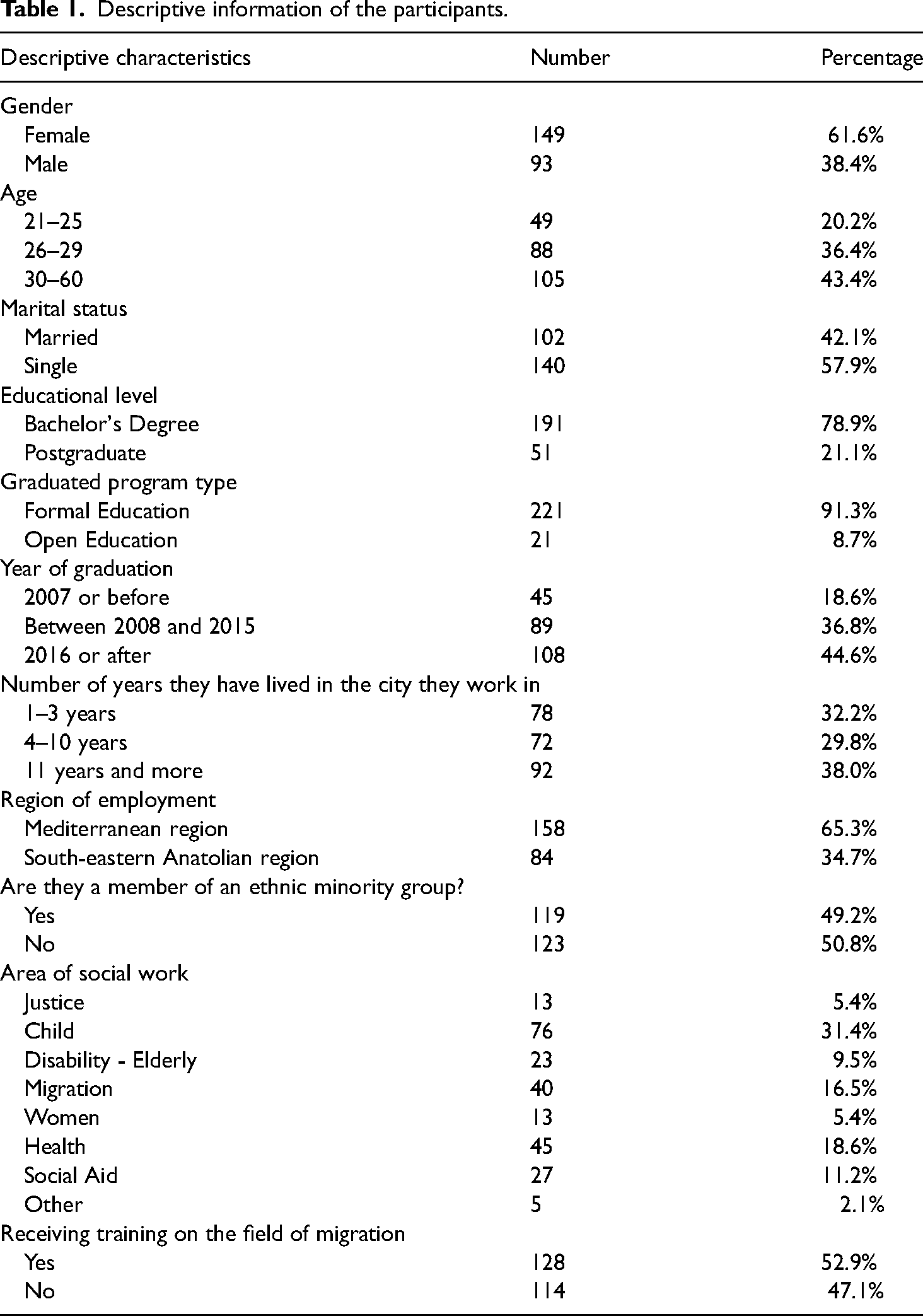
Table 1 shows the socio-demographic and descriptive information of the participants in the quantitative section, in numbers and percentages.
Descriptive information of the participants.
The Cronbach's alpha value – which reflects the reliability of the data of this study was 0.90 (Table 2). Table 3 shows the results of the t-test and ANOVA.
Reliability coefficients of the scale.

Xenophobia in the participants according to some variables.
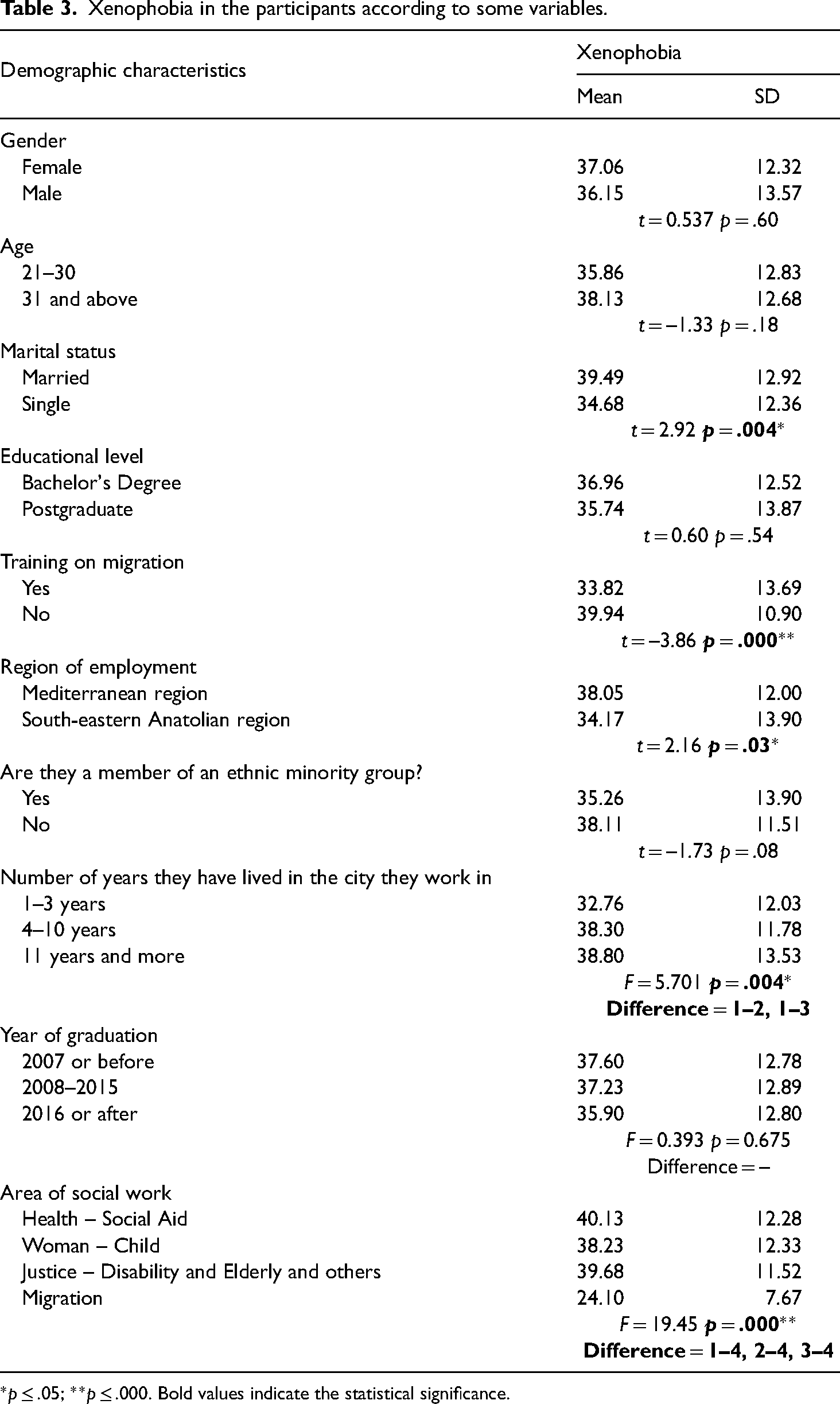
*p ≤ .05; **p ≤ .000. Bold values indicate the statistical significance.
Assessment of the social workers in terms of xenophobia. a
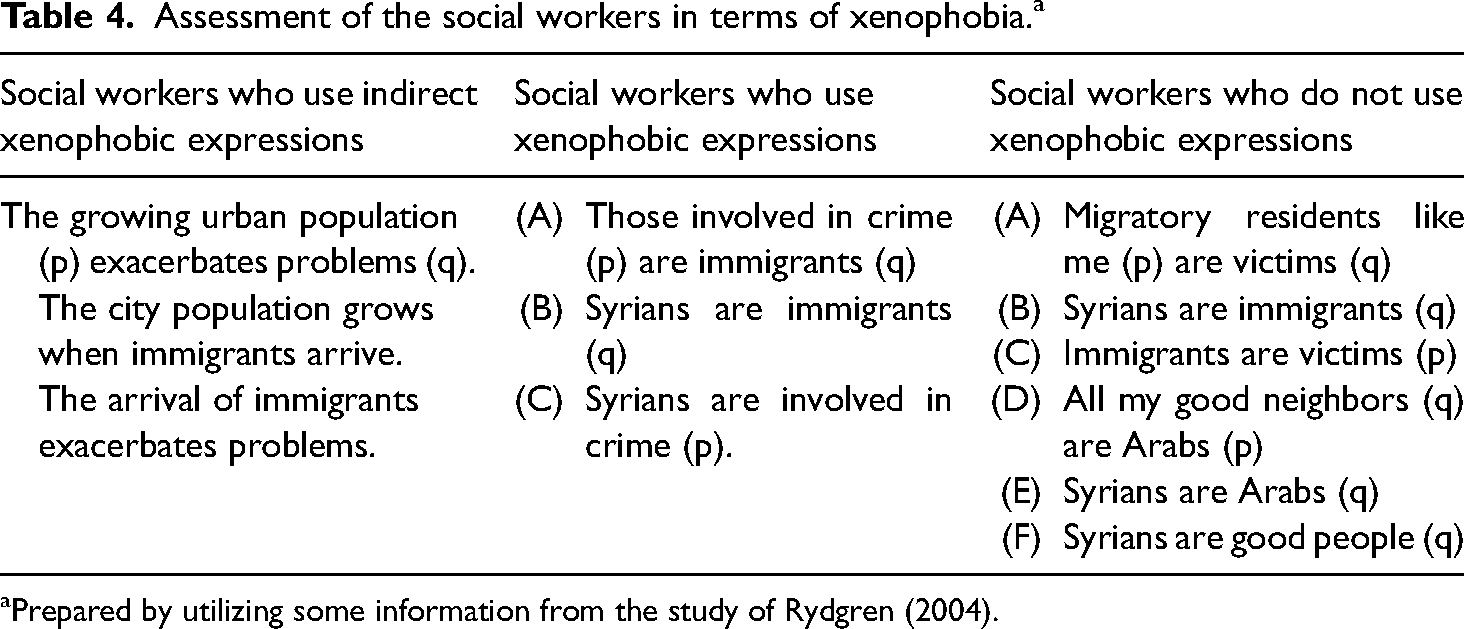
Prepared by utilizing some information from the study of Rydgren (2004).
The results of Table 3 indicated that the mean XS scores of the social workers did not show a statistically significant difference in terms of gender, age, education level, membership in an ethnic minority group, and year of graduation.
Married social workers were significantly more xenophobic than their single counterparts (p ≤ .05). Those not trained in migration were significantly more xenophobic than those who were (p ≤ .000). Those working in the Mediterranean region were significantly more xenophobic than those from South-eastern Anatolia region (p ≤ .05). In other words, these groups had higher mean scores concerning xenophobia.
Those who lived in their respective province for 1–3 years were significantly less xenophobic than those who lived there for 4–10 years or for 11 years or more (p ≤.05).
Those who specialized in migration were significantly less xenophobic than those specialized in “health and social aid,” “children and women,” “justice-disability, old age, and other social work fields” (p < .000).
Qualitative findings
The qualitative findings of the study were categorized under three themes: Social Workers Who Do Not Directly Use Xenophobic Expressions, Social Workers Who Use Xenophobic Expressions, and Social Workers Who Do Not Use Xenophobic Expressions.
Social workers who do not use direct xenophobic expressions
Twenty-three out of the 35 participants who did not use direct xenophobic expressions. Those in the first group outlined several problems that came up during the process of living with immigrants, namely: overcrowding, difficulties in utilizing public services, employment issues, pollution, and health concerns. However, they did not blame the immigrants for the difficult circumstances of living with them, but also they expressed that they were uncomfortable with the existence of the problem.
For example, the statement of I10:
Social workers who use xenophobic expressions
In the qualitative section, seven of the 35 participants used xenophobic expressions. Those who used xenophobic expressions appeared to be aware that they should act differently due to their professional identities, but they still used xenophobic expressions in their personal lives:
Social workers who do not use xenophobic expressions
Five of the 35 participants did not use xenophobic expressions. Several factors influenced their views about immigrants. Among these, education ranked first:
Discussion
As Frindte et al. (1996, p. 463) note, “Xenophobia is as untouchable and frightening as a ghost, yet it is very real and very alive.” Therefore, it is important to reveal how xenophobic attitudes develop and what these attitudes lead to. The findings of this study showed that some social workers exhibited xenophobic attitudes.
The quantitative section indicated that there was no significant difference in the mean XS scores of the social workers in terms of gender, age, education level, being a member of an ethnic minority group, and year of graduation. It was important that there was no significant difference in the findings of the study. Nevertheless, regardless of the year of graduation, neither receiving social work education nor having a postgraduate education had any impact on attitudes toward xenophobia. That reveals the necessity of restructuring social work education to fight xenophobia and other forms of discrimination. Moreover, the quantitative section revealed that married participants were more xenophobic than their single counterparts. Another finding was that participants from south-eastern Anatolia exhibited fewer xenophobic attitudes than those in the Mediterranean region. In addition, the quantitative section also showed that those working in migration were less xenophobic than those working in other fields. Social workers who deal with immigrants are aware of the conditions under which they live, and in this context, tend to exhibit positive attitudes toward them (Birger et al., 2020) (Table 4).
The qualitative section categorized the expressions of the social workers into 3 groups. The participants in the first group – although they never used xenophobic expressions– expressed problems resulting from living with immigrants. Indirect xenophobic statements tend to be linked to realistic threats within the framework of integrated threat theory. An increase in migrants among the urban population leads the respondents to mingle with more migrant populations in public spaces and while utilizing public services. It can be asserted that social workers who use indirect xenophobic expressions develop their attitude about Syrians through the events they encounter in daily life. Urban areas are seeing an increase in migrant populations. Social workers frequently interact with this population in public spaces and through public services, which can create a range of challenges. The rising cost of rental accommodation serves as one example of such challenges (Diker & Karan, 2021). Social workers who make use of indirect xenophobic expressions link problems with migrants to them individually, rather than acknowledging the need for social policy responses like demanding social housing to tackle the challenges they face. This leads to the evaluation of the statements of social workers in this group as indirect xenophobic statements.
On the other hand, it can be asserted that social workers who used indirect xenophobic expressions benefited from a language strategy to negatively portray and marginalize migrants. They did so by making use of interpretive repertoire – as revealed in Masocha's (2015) study – and thus they try to be in a position that does not conflict with ethical principles and values.
The second category of social workers in the qualitative section encompassed those who used xenophobic expressions. Within the framework of integrated threat theory, their expressions can be explained with realistic and symbolic threats. One realistic threat that lead directly to xenophobic statements is health problems. A large proportion of the children who make up the majority of the Syrian population arrived in Türkiye as unvaccinated. That has contributed to them contracting certain diseases that have been reduced by vaccination and to their re-emergence (Sezen et al., 2018). Another realistic threat is the assumption that immigrants take local people's jobs. Immigrants generally work without insurance and under inhumane conditions, hence representing cheap labor. This has created an alternative labor force that can compete with locals, especially those who used work in dayworks without insurance before the arrival of the Syrians. Syrians are perceived as a threat rather than demanding social policy arrangements for both groups to work under fair conditions (Koca, 2019; Ulukan, 2015).
The participants using xenophobic expressions also believed that immigrants have disrupted the dominant family structure in society and they would undergo cultural assimilation and Arabization because of the immigrants. These expressions are new racist phrases that may be examples of symbolic threats according to the integrated threat theory. It can be asserted that these elements, which can be called as symbolic threats, constitute the cultural stress that develops in immigrants due to the ethnic identity of the person (Schwartz et al., 2015), and that assumptions about symbiotic threats may be related to false beliefs.
An analysis of the statements from both groups suggested that participants who used direct or indirect xenophobic expressions generally believed that Syrians under temporary protection do not deserve this status. The distinction between deserving and undeserving migrants creates a basis for xenophobic attitudes. In this context, their statements are an example of everyday racism (Aquino, 2020).
The third category that appeared in the qualitative section was participants who did not use xenophobic expressions. In the qualitative section, participants from ethnic minorities who were discriminated against did not use xenophobic expressions, and were more empathetic. The same went for those who experienced internal migration as well.
Participants’ own experiences led them to be non-xenophobic. That noted, their negative experiences can also result in harboring xenophobic attitudes toward immigrants. For example, Gong and Wang (2021) pointed out that previous negative contact experiences increased xenophobia in Japan, and that negative impact of xenophobia still persists. In that context, several things are needed to develop new training programs, and supervision systems aimed at preventing social workers from letting their personal experiences affect their professional practices.
Education is another factor that prevents them from being xenophobic. The quantitative section, revealed no significant difference between those with an undergraduate or graduate education in terms whether they were xenophobic or not. Nevertheless, although postgraduate education programs do not prevent people from being xenophobic, participants who received education on migration were significantly less xenophobic than those who did not. In the qualitative section, education seemed to prevent the social workers from being xenophobic. Krott et al. (2018) has arrived at a similar finding, too They conducted a longitudinal study on xenophobic attitudes held by German police officers. They found that undergraduate education, which included training modules on intercultural practices, generally taught them to be more tolerant.
Limitations of the study
This is a national study from perspective of Türkiye. It therefore is impossible to generalize the findings. It is the first mixed-method study to examine the xenophobic attitudes of Turkish social workers from Gaziantep, Kilis, Şanlıurfa, Hatay, Adana, Osmaniye, and Mersin in Türkiye. Participation in the study was based on voluntariness.
Conclusion
Social workers acting according to ethical principles and values is important to carry out qualified practices. People often struggle keeping their individual and professional decisions separate. Social workers play an effective role in the fight against xenophobia and other forms of discrimination. Directly or indirectly using xenophobic expressions and displaying xenophobic attitudes can negatively affect their social work practices and harm service beneficiaries.
Several actions can be taken to prevent the above, namely: integrating anti-oppressive social work and critical social work into undergraduate programs to be able to make critical thinking, developing advanced vocational training programs for social workers, and improving qualified supervision practices, and organize awareness-raising campaigns for social workers who may be impacted by anti-immigrant discourses. Türkiye also needs to establish a professional chamber with sanctioning power, alongside an audit mechanism to promote both professional ethical practices as well as anti-xenophobic values. The results of this study are valuable and will shed light on future studies– especially if they focus on psychosocial support personnel.
Footnotes
Ethical approval
Ethical approval for this project was granted by Burdur Mehmet Akif Ersoy University [ref. number 03/02/2021 - GO 2021].
Funding
The authors received no financial support for the research, authorship, and/or publication of this article.
Declaration of conflicting interest
The authors declare that there is no conflict of interest.
Acknowledgements
The authors would like to thank Firuze Yanardağ for her contribution to this article.
