




Abstract
The number of organic shops in Bengaluru has increased remarkably in the last few years, with millets being the main products drawing consumers. Yet, organic shops are only attracting middle-class consumers. We observed and interviewed 104 customers in five organic shops in Bengaluru to find out why this is the case. In this article, we follow practice theory to discuss the reported consumption patterns. We show that consumers, influenced by commercials and the advice of medical and nutritional professionals, legitimize their consumption of organic foods as an investment in their future health. We show that the customers of organic shops legitimize their consumption practice with affective engagements; thereby, performing symbolic boundaries that distinguish them from other social classes. This distinction manifests itself in the consumption of millets, which contributes to the change of the meaning of this food from a life-sustaining staple to a lifestyle superfood. In this article, we take a critical look at the role of organic retailers and how they reproduce class-based consumption practices in India.
Introduction
The organic movement in Bengaluru, India, has accelerated in the last few years. Besides the promotion of organic production and consumption for charitable reasons, such as farmer welfare and environmental concerns, there are also financial interests involved. An ostensibly ever-increasing demand for organic produce attracts more and more entrepreneurs interested in a business within that movement. In the last 4 years, the number of organic shops in Bengaluru increased from around 50 shops in 2013 to over 100 in 2017. In addition, online organic food retailers have entered the market and even small independent supermarkets stock organic products. Due to these developments on the supply side, it can be expected that food purchasing on the demand side must also have changed. We will take a closer look at these changes in this article.
Usually, consumers in Bengaluru get involved with the organic movement via alternative food networks (AFNs), ‘a broad embracing term to cover newly emerging networks of producers, consumers, and other actors that embody alternatives to the more standardised industrial mode of food supply’ (Renting et al., 2003: 394). Studies on AFN that focus on consumption exist for countries of the Global North (Blake et al., 2010; Carfagna et al., 2014; Fonte, 2013), where they are well established. Studies on AFNs in the Global South, in contrast, mainly focus on a marketing perspective (e.g. Nandi et al., 2016; Paul and Rana, 2012; Yadav and Pathak, 2016). By centring on Bengaluru, India, this article looks at AFNs in the Global South from a consumption perspective, thus extending the inquiry of this topic beyond the Global North.
In Bengaluru, organic shops are the most common way for consumers to encounter AFNs. We found that millets, a staple grain predominantly consumed by poor populations in the semi-arid tropics of Africa and Asia (FAO, 1995), are the main product attracting consumers to do their grocery shopping in these shops. In the urban parts of Bengaluru, millets have long been regarded as an inferior staple when compared to rice and wheat. Recently, however, millets have regained popularity, thanks in large to being marketed as an Indian superfood. By superfoods, we mean foods which are marketed to consumers as being especially nutritious, and therefore healthier. These foods are mostly sold unprocessed.
In this article, we use millets as an example to examine the ways in which consumption practices have changed through the emergence of organic shops in India. We show how organic shops influence food practices of mostly new middle–class consumers by influencing the consumers’ affective engagements. We discuss how these practices serve the social distinction of this class. New middle–class consumers, we argue, deploy their consumption practices in organic shops mainly for distinction within the new middle class. Thereby, they create and maintain symbolic boundaries that exclude lower (middle) class people. This distinction manifests itself in millet as material and in its changing meaning from a life-sustaining staple to a lifestyle superfood. By elaborating our case, we thus illuminate the role of AFNs for class-based social consumption in India and criticize the marketing of millets under the label of superfood.
AFNs and the Indian middle class
In response to the negative social and environmental impacts of conventional food systems, scholars have increased emphasis on the study of AFNs. Yet, apart from their relevance in the context of global environmental change, the critical scrutiny of sociologists, geographers and others has shown that the politics and practices of AFNs are often embedded in a ‘narrow and weakly politicized expression of middle- and upper-class angst’ (Goodman and Goodman, 2009: 1). Therefore, in this section, we provide a short overview of the criticism brought against AFNs. We also include a summary of the literature on India’s new middle class and our rationale behind choosing Bengaluru as our study area.
AFNs are mostly addressing a relatively small group of middle-class consumers, often at the expense of other groups. While access to AFNs is often limited due to financial reasons, lower class people might additionally feel excluded because of their class status or the absence of AFNs in their living area (Brons and Oosterveer, 2017; Paddock, 2016). This overall situation is often amplified by middle-class consumers who appropriate AFNs (explicitly or implicitly) for class distinction (Carolan, 2017; Paddock, 2016). However, these findings stem from the Global North, in particular from anglophone countries. Thus, it could be asked whether exclusionary mechanisms in AFNs might also be a problem in AFNs in the Global South.
In India, health and food safety are key topics impacting consumer motivation to shop in organic food stores (Nandi et al., 2016; Paul and Rana, 2012; Yadav and Pathak, 2016). In a study by Chakrabarti (2010), managers of organic businesses suggest building on the influence of doctors and nutritionists to capitalize on this motivation and improve the marketing success of organic shops. Remarkably, most studies on the topic focus almost entirely on the so-called new middle class (e.g. Kumar and Ali, 2011; Paul and Rana, 2012; Yadav and Pathak, 2016). This indicates that likewise in India AFNs are spaces of food consumption which predominantly cater to middle-class consumers.
India’s new middle class represents a relatively small section of the country’s much larger middle class. In terms of employment, its members are distinguished from other middle-class groups because they have almost entirely profited from the market liberalization policies of the 1990s (Fernandes and Heller, 2006). The rise of this new societal group brought along lifestyle changes largely connected to altered modes of consumption (Brosius, 2011). Yet, consumerism alone does not provide an adequate definition of this class (Fernandes, 2009). By appropriating consumption and education for social distinction from other groups, the composition of the new middle class is highly fluid. It is ‘a class-in-practice, that is, as a class defined by its politics and the everyday practices through which it reproduces its privileged position’ (Fernandes and Heller, 2006: 497). Anantharaman (2015), for example, shows how the new middle class appropriates the formerly stigmatized practice of bicycling for class distinction, with questionable consequences for lower classes. Represented as the drivers of economic growth due to their high education levels and their demand for new consumption patterns, the new middle class is often used as legitimation for neoliberal policies by decision makers at the national level (Fernandes, 2009). The promise that the benefits of these policies would seep through to lower classes has, however, yet to be kept (Brosius, 2011).
In the last decades, Bengaluru has produced as well as attracted a large number of individuals belonging to the new middle class. National liberalization policies have changed the city’s employment structure. In the late 20th century, the middle class depended mainly on government jobs and public sector industries; however, since the beginning of the 21st century, many are employed in the ever-growing information technology (IT) sector. For those fortunate to obtain a job in such enterprises, income available for consumption has increased when compared to that of previous middle-class generations (Fernandes, 2009; Nisbett, 2007). Since Bengaluru offers conveniences such as gated apartment complexes and, compared to other Indian cities, a relatively moderate climate, the city is an attractive residential area, especially for those with a degree in IT or engineering (Nagendra, 2016; Täube, 2004).
Many members of Bengaluru’s new middle class have worked in the United States or other Western countries for a certain period of their lives. These experiences have led to extensive reflection on their personal identities as Indians, which is expressed in an increased demand for ‘authentic’ Indian food (Radhakrishnan, 2008; Srinivas, 2007). Since our main emphasis is on the consumption practices of the new middle class in India, we decided to locate our study in Bengaluru, where access to this societal group is easy to achieve.
Consumption as a practice
The theory of social practices has been developed in order to shift the focus from individualist approaches, such as rational choice theory, to understandings and explanations of practices, such as consumption, as a socially produced phenomenon (Schatzki, 2005). Schatzki (2005) defines a practice as ‘a set of actions. […] [T]he actions that compose a practice are either bodily doings and sayings or actions that these doings and sayings constitute’ (p. 56). The study of consumption through the lens of practice theory emphasizes the actual human conduct and its spatial interdependencies. Thus, in contrast to other approaches, practice theory connects expressive aspects of consumption to material contexts (Warde, 2016). In sum, practice theory attaches less importance to cognizant, individual choice and self-representation, instead highlighting affects, routines and situational conduct (Schatzki, 2000; Warde, 2005).
Bourdieu’s concept of habitus, which is one of the early contributions to practice theories, helps us to understand the embodiment of consumption practices. Incorporated through experiences, the habitus influences how subjects perceive, evaluate and feel about situations they find themselves involved in, and thus act accordingly. With new experiences, the habitus can be renewed but not reset (Bourdieu, 2001). For Schatzki (1997), it is fundamentally the sedimentation and aggregation of practices, which together lead to the formation of a person’s habitus. In the context of our study, habitus, as sedimented experiences and embodied practices, helps us to understand how social distinction occurs without much deliberation by its carrier.
Apart from the notion of habitus, we refer to the concept of teleoaffective formations, which has recently been suggested by Welch (2017) to capture the normative aspects of consumption practices. Welch (2017) defines teleoaffective formations as a configuration across multiple practices, conditioned by a relational nexus of general understandings that enjoins those practices to common ends and normatively orders the orientations and affective engagements of those practices. At the more integrated, we may say teleoaffective formations instantiate an axiology or cosmology which subtends practices and the comportment of its Träger [carrier]. (p. 7)
The concept of teleoaffectivity of practices originally stems from Schatzki (2000). He describes ‘teleoaffective structures’ as an aspect of practices which orders them normatively, as correct or incorrect, to reach an acceptable end. In this article, we regard the affective engagements expressed by the interviewees as part of their teleoaffective structures. Yet, to politicize the study of practices, we have to go beyond these. In the context of allegedly sustainable practices, such as shopping organic food, it is especially important to question ‘the power relations that shape and maintain them’ (Denegri-Knott et al., 2018: 17). As distinguished from teleoaffective structures, teleoaffective formations combine several practices and are collectively shared by a group, for instance consumers and cultural authorities. They provide an explanatory approach for ‘the relationship between consumption and provision, production and capital and the role of commercial communications (advertising, marketing, etc.) in shaping consumer culture’ (Welch, 2017: 3). In other words, in contrast to teleoaffective structures, teleoaffective formations are not only perpetuated by consumer practices but also deliberately controlled by certain actors. Thus, teleoaffective formations condition the teleoaffective structures, and therefore also the affective engagements of consumption practices.
We decided to read our subsequently described consumer motivations for shopping in organic shops as being rooted in teleoaffective formations for three reasons: first, Welch opens the concept of teleoaffective formations ‘to restricted slices of praxis (professions, subcultures, cultural fields, etc.)’ (Welch, 2017: 7), which makes it applicable to the group of our interviewed consumers. Second, our interview partners repeatedly mentioned the advice of doctors and nutritionists as a reason to start buying organic to improve their personal health status. Chakrabarti (2010) mentions ‘targeting innovators and opinion leaders’ and specifically doctors and nutritionists as a management strategy to ‘increase awareness’ about organic food among consumers (pp. 908–909). The statements of our consumers indicate the success of this strategy. Third, commercials with a content similar to the ideas expressed by the consumers were displayed in many of the shops. In brief, the expressed shopping motivations shared by a group of consumers are likely intertwined with advice from cultural authorities and commercials. Therefore, they are best referred to as teleoaffective formations.
Apart from teleoaffective formations, we will put emphasis on the material arrangements surrounding and enabling shopping in organic shops in Bengaluru. Material arrangements are set-ups of material entities relevant to human conduct, such as ‘[other] human beings, artefacts, other organisms, [or] things’ (Schatzki, 2005: 472). Human activity in relation to and in exchange with these specifically ordered sets of material entities together constitute what is called practice bundles (Schatzki, 2014). This approach allows us to discuss the importance of access to certain materials in order to carry out certain practices. Thus, exclusionary aspects of practices become visible beyond their symbolic effects.
Data and methodology
We collected our data in three work phases, totalling 8 months of fieldwork, between August 2016 and December 2017. We first mapped all of the organic shops in Bengaluru. This provided us with an overview of the existing variety of organic retail formats in terms of management structure, size, product variety and marketing efforts. At the time of our research, the term ‘organic’ was not legally protected in India. We thus defined ‘organic shop’ as a store that predominantly sells products which claim to be organically produced. Being equipped with the map, we contacted a range of shops covering a high possible degree of diverse retail formats. Eventually, five of these shops allowed us to make detailed observations and further investigations during their opening hours. Our selected shops are located in different parts of the city. Nevertheless, the respective locations of the shops resembled each other in the sense that they were either located in middle-class residential quarters or conveniently situated on day-to-day routes of middle-class people we met in the shops.
The sales concepts of these shops differed significantly. In four of the shops, managers were involved in producing organic food, for example, by supporting farmers to convert to organic cultivation. Only one shop was focussed solely on sales. Two of the shops offered visits to the farms they source from and in one shop, the manager reported spending a lot of time explaining the farmers’ situation to the customers to achieve rapprochement from both sides. While some shops tried to provide a supermarket-like experience for their customers, including full product range and shopping carts or baskets, others appeared more like a distribution site for fruits and vegetables with a constrained and carefully selected product range. Three of the shops had a minimalistic interior, with almost no decoration or commercials on the walls except for a few leaflets behind the counter. The two other shops invested more effort in their interior design. While one set up posters with different slogans about organic food, the other had a television broadcasting videos about the shop and organic food in general.
In each of these shops, we spent 2 days observing and interacting with a total of 104 consumers. When customers entered the shop, we asked to accompany them during their shopping and to interview them. We also requested permission to record our conversations during our joint tour through the shop. With their consent we then began asking a set of pre-formulated questions. At the same time, we observed the customers doing their shopping and asked situational questions about the products they picked.
Figure 1 provides an overview of our interview partners. As we managed to speak to almost all of the customers who entered the shops during the days we spent there, the possible sampling bias is rather low. Thus, we expect this figure to provide an adequate, yet, not representational overview on the consumer base of Bengaluru’s organic shops. Consumers classified by sex, age and profession.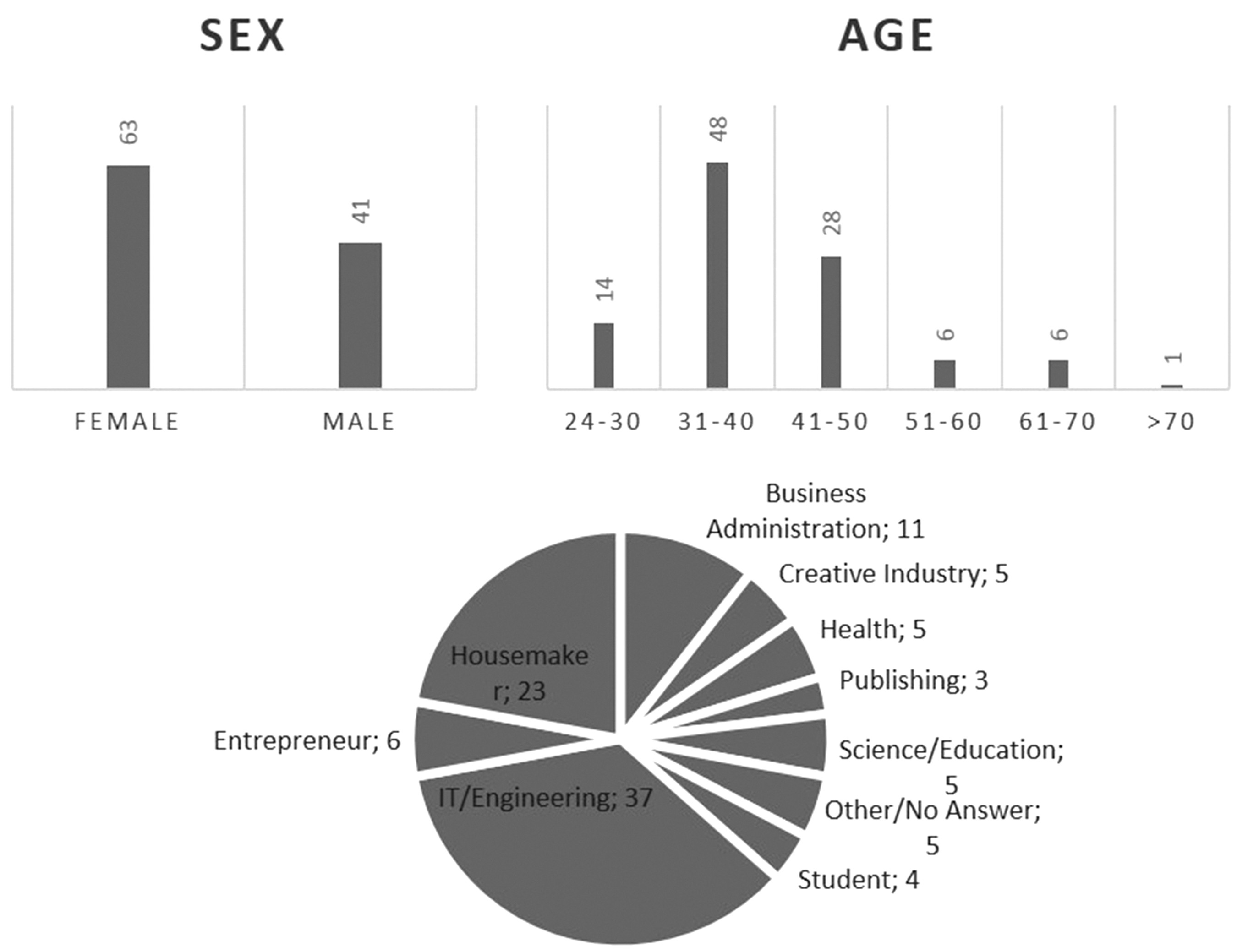
Findings
Cosmopolitan consumers in search of authenticity
In the interviews we conducted during our field stay, we were often told that in Bengaluru it is mostly men who do the grocery shopping on their way back from work. Yet, in the sampled organic shops, we predominantly met women. Irrespective of how realistic this claim of our interlocutors is, the high attendance of women in the organic shops is probably related to two factors. First, most of the women we interviewed reported that they would continue their wage labour despite the fact that they were married, doing the grocery shopping on their way back from work. Second, even if they were homemakers, they reported doing the grocery shopping on their way back from bringing their children to school or to leisure activities. Children were regularly put forward to legitimize buying organic and we assume that this is the reason why almost half of the consumers we talked to were between 31 and 40 years old. Another legitimization was relatives with health problems, such as a spouse who is diabetic. The combination of the high attendance of women and the claim to buy organic for other family members allows for conclusions to be made that go beyond the more obvious and practical reasons described above. This topic is further explored in the discussion section of this article.
In addition, a high share of our interview partners was employed in one of the new economy enterprises (see Figure 1). This has to do with the fact that the new economy is one of the largest economic sectors in Bengaluru and that some of the organic shops we studied were located close to a quarter where some of these enterprises have their headquarters.
Another interesting connection was that many of them had been working abroad in Europe or the United States previously, where according to them they became aware of organic food. This adds a new aspect to the discussion on how experiences abroad influence the food practices of the Indian middle class. As Srinivas (2006, 2007) has shown, (formerly) expatriate Indians practice an ostensible connoisseurship of foreign cuisines while, at the same time, they express their preference for ‘authentic’ Indian food. In other words, their habitus as members of the new middle class was renewed by their experiences abroad. By following a similar logic, Bengaluru’s organic shops enable middle-class consumers to continue a practice they became acquainted with abroad, while, making it even more compelling to the target consumers by giving it an Indian twist. This reinforces the analysis that global and Indian practices do not contradict but complement each other in the opinion of India’s cosmopolitan middle class (Radhakrishnan, 2008).
Health, trust and self-optimization
One of the most prevalent motivations described by the customers for buying organic was obtaining a product that contributes to better health. Vijay, a 40-year-old interior designer, told us that her husband is diabetic and his doctor advised them to consume millets. When we asked more specifically if the consumption happened only for the sake of health, she replied, Health, health, absolutely health, nothing beyond that. Because, I don’t know, you are working hard, you work to be yourself and if you are not getting the right products, in fact you are getting something which is not good for your health. So, it’s not a good prerequisite for living a good life, a healthy life and a happy life.
For both of the above-mentioned groups, the first step to diverge from conventional food shopping routines was to problematize the consumption of conventional food. Consumers stated that they were worried about ‘overfertilization’ of fresh produce in industrial agri-food systems, food adulteration during transport or health reports on specific food items, such as rice, which presented them as unhealthy. This resulted in a partial loss of trust in the mainstream agri-food system and its production techniques and in these specifically targeted crops. Trust was then shifted to a new product. As Indira, a 58-year-old chemistry professor, explains, the motivation to consume millets or other organic products can also be read as a story of loss and regain of trust: Yeah, see, I have only gone to places where there is some association [with the shop owner] in some form. Either personally or because a friend of a friend. Things like that. So, trust is a part of it. Generally, I think we are distrusting [the food industry]. […] [I]t’s just today because of what has been happening [e.g. food scandals]. So now when you don’t know a person, the trust doesn’t even come into it. I know the [shop owner], so I would just, you know … it’s not conscious. And the person talks to us, he tells us about things, he says ‘visit my farm’. So not many people want to pay the extra that needs to be paid to buy organic products but it’s an investment in your health I think. If you don’t want cancer a few years down the line, you might as well invest something now. Advertising board from one organic shop (photography: R. Herzberg).
Material arrangements and practice bundles
To do their grocery shopping in organic shops, consumers have to replace and integrate new products and practices into their daily routines. In the case of millets, for example, staples like rice or wheat must be replaced. In this article, we regard replacing and integrating as practice bundles, described by Schatzki (2014) as practices linked to material arrangements and place-path arrays that are common to and shared by practice participants (p. 35). In this chapter, we will show that material arrangements play a pivotal role for the success of replacing one food with another and for integrating new items in someone’s everyday consumption routines.
As our interview partners stated, the replacing product was often more expensive than the replaced product. Radha, a 37-year-old housewife, for example, commented on the price difference between food from the supermarket and food from the organic shop: Yeah, it is getting a little expensive […]. If I buy from supermarket, it'll be half the price, but here it is double the price of that. Yet, the majority [of the purchase] is possible [to buy organic] and I try to maintain this. We wanted millets actually, and we thought this is an organic store so […] it would be easier to find it here rather than in other stores. […] All shops don’t keep these things [millets]. So, this is organic shop so we get everything here. So, in mornings we have shifted to the [millet] breakfast, so I asked the lady [shop assistant] for helping me with the various options what you have for idly or dosa [common South Indian breakfast dishes usually prepared with rice as the main ingredient] for breakfast kinds.
Aside from replacing millets, the practice bundle of integrating millets in our interview partners’ everyday lives was reported to be difficult. In fact, integrating new food items required special knowledge and creativity, posing a potential challenge for cooking. In our case, this is due to the fact that compared to wheat and rice (-flour), millets have different characteristics regarding shelf life or the amount of water required for cooking. Another challenge to successful integration of millets was that family members had to be convinced of the positive impacts on health and accept its good taste. One popular way to convince other family members of the superiority of millets was mentioned to be the preparation of chapatis, unleavened flatbreads usually served with curries or vegetables. As such, Vinod told us about his family’s new eating habits with millets: Now, we use Bajara (millet) flour for chapatis in the evening time. […] Before we used to eat wheat. Now we are using wheat also; in the afternoon […]. But for dinner we prefer to use this Bajara or any other kind of millet.
Discussion
Teleoaffective formations and illusion
Concurring with MacGregor et al. (2018), we argue that the motivations, put forward by the consumers to buy organic, primarily represent their affective engagements with that practice. This is substantiated by the claim that they would buy organic to care for children or relatives with health problems. Furthermore, the high presence of women, who in present-day India are still principally in charge of most of the family’s care work, is another indicator for that reading. As consumption is less time consuming than most other caring practices, it is particularly attractive for women who feel pressured to fulfil traditional gender roles while continuing their wage labour. Therefore, we argue that customers of the organic shop interpret their consumption practices as a caring practice. However, because this and other affective engagements of the consumers cannot be analysed detached from the commercials and narratives of organic food and organic shops, they thus become teleoaffective formations.
Health, as another one of the presented teleoaffective formations, might be tangible to some extent for consumers, such as Supriya’s mother, who could quantify the effect of their consumption, for example, on the reduction of required diabetes medication. Yet, it is questionable if the other teleoaffective formations of trust and self-optimization are similarly tangible. Trust is basically rooted in a consumer’s willingness to trust; however, it also suggests that the retail and production side provide honest information about their products. In the case described by Indira, the shop owner contributed to the creation of trust by repeatedly inviting people to visit his farm. As we followed his invitation, however, we learned that the vegetables he sold in his shop were not sourced from his farm, rather from a big organic farmers cooperative that supplies almost all of the organic shops in Bengaluru that we mapped. The shop owner stated that no customer had ever followed his invitation before. Thus, we argue, the teleoaffective formation of trust in regard to organic shops in Bengaluru is at least to some extent based on an illusion in a Bourdieuan sense (Bourdieu, 1998). While customers and shopkeepers mention that trust is a necessary stake in the business, there is no effective material arrangement to support this formation, merely the performance of both parties as if trust has already been established. As such, we find that illusion plays an important role when it comes to teleoaffective formations – a finding which calls for further scrutiny.
Symbolic boundary making
The aforementioned teleoaffective formations help reproduce symbolic boundaries that contribute to class distinction of the new middle class (Fernandes, 2009; Fernandes and Heller, 2006). That our interview partners belong to that class was apparent by the fact that almost all of them spoke English fluently and held a university degree; this is not the case for consumers in conventional retail stores. It was also made apparent by the consumption practices which are so decisive for this class-in-practice (Fernandes and Heller, 2006: 497). In our case, a symbolic boundary was constantly drawn between the organic consumers and the non-organic-consuming others. When shopping in organic shops, the first group assumes that they are investing in their individual future health, while also building widely on the illusion of trust provided by shop owners regarding the transparency and quality of their products. By taking both the future investment and the ostensible trust for granted and by mutually sharing them among their peers, the customers of organic shops and the shopkeepers thus produce a boundary which not only defines the identity of this group, but excludes all unknowing others at the same time (Lamont et al., 2015). While symbolic boundaries do often overlap social boundaries (Lamont and Molnár, 2002), we suggest that this symbolic boundary contributes to the formation of a new sub-class – not only against lower classes, but also within India’s middle class and even within the new middle class.
In our case, the distinction against lower classes happened in reference to the general high prices of organic food, which are hardly affordable for the interviewed middle-class consumers. For example, Lakshmi, a 50-year-old non-governmental organization (NGO) employee, commented, While the health compensates for it [higher prices of organic food], I think it’s also expensive and an ordinary person cannot afford it. […] Even the farmers who grow organic today can’t afford organic.
The changed meaning of millets
In today’s Bengaluru, millets are marketed as a superfood made in India. This is noteworthy since traditionally millets were perceived as ‘dark grain for poor people’ (Nichols, 2017: 877). For lower (middle) class families residing in the villages around Bengaluru, millets are still regarded as a staple food, said to provide strength to the body and cultivated even on drylands. For the organic shop customers, in contrast, the meaning of millets has changed considerably as they are not only praised as beneficial against high blood sugar, but also as supportive for regulating body weight. Against this background, we argue that the customers at organic shops in Bengaluru contribute to the change of the meaning of millets from a life-sustaining staple to a lifestyle food.
Aligned with this change of meaning, our interview partners highlighted purchasing a variety of millets. Compared to finger millet, which is mostly consumed by poor people in rural areas, most other varieties are sold without their husk, which gives them a lighter appearance. In regard to processing, they are more similar to rice. While finger millet is available at general food retailers, other sorts of millets are more difficult to find. This is why they are sold in organic shops, in smaller packages, for higher prices. Against this background, our interview partners raised the difference between traditional finger millet and the other types of organic millet they consume by explicitly addressing the difference between these two types of food. While people belonging to Bengaluru’s lower (middle) class would use the word ‘finger millet’ directly, the customers of organic shops would speak of ‘millets’, with an emphasis on the plural first, and afterwards state which particular millets they would consume. Thus, they address millets differently, likely due to the fact that they consume a wide variety of millets, a stark contrast to the one or two millet varieties that are consumed by lower classes.
Apart from the difference in addressing millets, the ways of consuming them have changed as well. While the most common traditional South Indian dish made of finger millet is ragiball, a lump of welled finger millet flour, consumers of the new middle class use millets also for dishes such as dosa or chapati, which are usually prepared with rice or wheat. Even in cases when finger millet is used for ragiball, our interview partners tried to underline the difference of their eating practices from those of poor people. As such, Puneeth, a 41-year-old businessman, claimed to eat ragiball regularly, but not without mentioning that he would instruct his personal cook how to prepare it for him. By doing so, he clearly distanced himself from lower class consumption patterns, despite the fact that he pursued a very traditional style of eating.
These distinction practices show a remarkable resemblance to the findings of Anantharaman (2015). Similar to her statement about middle-class bicycling practices (Anantharaman, 2015: 878), we find that millets are perceived as a lifestyle food by the new middle class. While impoverished farmers in India might experience (finger) millet consumption as a consequence of deprivation, for the new middle class, it becomes an act of self-optimization (e.g. in the case of desired weight loss) and an investment in a person’s future health. As such, the members of Bengaluru’s new middle class have decided to consume (a variety of) millets bought from organic shops in order to assure themselves of their belonging to this class-in-practice and to distinguish themselves from other (lower) middle classes. Millets have become the material of this distinctive consumption practice.
Unlike this article, other contemporary contributions on superfoods mainly discuss marketing and consumption of those foods in the Global North. While class distinction and self-representation are described to play a role for the consumers of superfoods, some authors highlight how consumers are misled by exaggerated claims about the products (MacGregor et al., 2018; Sikka, 2019). Marketing of superfoods often contributes to the problematization of the own body (Sikka, 2019), an argument which, in our study, is reinforced by Supriya’s aim to lose weight with the help of millets. Regarding the effects of the consumption of superfoods beyond its consumers, the fact that superfoods are usually unprocessed products only harvested by the farmer contributes to a romanticizing of farmer livelihoods (Loyer and Knight, 2018). However, in this article, we find a distinctive attitude towards the farmers in the practices of the consumers more salient. Thus, in contrast to distinctive superfood consumption practices in the Global North, we find that distinction practices are not only directed towards other consumers but also towards the producers of the so-called superfood. We strongly believe that this finding is particularly relevant for the consumption of superfood in the Global South and other places where production and consumption takes place in close proximity and producers are among the traditional consumers of the superfood.
Conclusion
In this article, we used practice theory to make contemporary consumption patterns in Bengaluru’s organic shops comprehensible. We found that the practice of buying in those shops was carried out by a particular group of people who were able to spontaneously express their legitimizations for that practice. Customers of Bengaluru’s organic shops belong predominantly to the affluent new middle class and, according to them, they shop there to improve their health, to be able to trust in the food they consume and to optimize their bodies. Therefore, Bengaluru’s organic shops can be described as class-exclusive spaces of consumption. In addition to these observations, the consumers’ motivation to shop there is more complex.
In Bengaluru’s organic shops, traditional gender roles and caring for relatives become reinterpreted. Our study revealed that shopping in organic shops in Bengaluru is relatively often done by new middle-class women, and that caring for children or relatives with health problems is often put forward to legitimize this choice. Thus, shopping in organic shops is reinterpreted as a caring practice which is a time-saving way to fulfil the role of, for instance, the caring homemaker for women and also for some men. In this way, the mere material purchase of groceries is loaded with additional meaning.
Beside the interpretation of consumption as a caring practice, there is evidence pointing to an increasing importance of affective components of food shopping in India. Our study shows that the main reasons Bengaluru’s consumers do their grocery shopping in organic shops are health and a general mistrust in the mainstream agri-food system. Yet, by following these overall affective rationales, the customers constantly draw a symbolic boundary between themselves and the non-organic-consuming others. By referring to consumption as investment in their future health, they not only define their own identity as a group, but also exclude all unknowing others. This works via the rhetorical recognition of inequality, which serves to distinguish themselves from ‘ordinary persons’, and further, by mentioning that consuming organic food is quite costly, serves to distinguish themselves from the rest of India’s middle and upper classes. Therefore, we conclude that the current way of manifesting affective engagements via consumption practices in Bengaluru is reproducing patterns of class distinction.
Furthermore, our study confirms the applicability of Welch’s teleoaffective formations concept for a politicized study of affectivity in consumption practices. The concept shows that affective engagements in consumption practices are not merely intrinsically motivated but also influenced by advertisements and other forms of media. In our case, affective engagements were rooted in the advice of doctors and nutritional professionals. This proves the importance of actors who are perceived as authorities when creating and perpetuating teleoaffective formations. Furthermore, illusions accepted by the customers, such as false statements regarding product origins, indicate that their affective engagements were not necessarily fulfilled. In more general terms, we thus argue that affectivity in contemporary food consumption practices is deliberately influenced by commercially motivated actors who mislead consumers in order to adjust their aims and consumption practices in favour of the actors’ businesses. In this process, intermediaries, who are consulted by the consumers, leverage this strategy.
Our study shows that millets have become a key material for the rationale of the emerging new organic middle class-in-practice. While millet was traditionally perceived as an inferior grain compared to rice and wheat, in today’s Bengaluru, it is marketed as a superfood made in India. For the customers of organic shops, the meaning of millets has changed and is now appreciated for its positive effects on health and its ostensible support in optimizing a person’s body weight. While impoverished farmers in India often perceive the consumption of (finger) millet as a consequence of their deprivation, the members of Bengaluru’s new middle class consume (a variety of) millets in order to assure their membership in this class-in-practice.
By analysing this new meaning of millets, our study is one of the first to investigate the consumption of superfoods in a country of the Global South. Unlike most superfoods sold in the Global North, millets are produced in close proximity to the consumer. In the Global North, in contrast, they are mostly imported from distant places. While other debates such as the consequences of the exotification of superfoods are particularly relevant there, in our context what stood out to be of key relevance was the consequences of consuming superfoods for class distinction.
Footnotes
Acknowledgements
We would like to thank Prof. Dr. Vijayalaskshmi D. from the University of Agricultural Science, Bengaluru for her advice and support, during our field research. We are also thankful to all the organic shops in this study as well as the people who let us accompany them during their food shopping in those shops.
Declaration of conflicting interests
The author(s) declared no potential conflicts of interest with respect to the research, authorship and/or publication of this article.
Funding
The author(s) disclosed receipt of the following financial support for the research, authorship, and/or publication of this article: The authors gratefully acknowledge the financial support provided by the German Research Foundation, DFG, through grant number DI 709/2-1 as part of the Research Unit FOR2432/1.
