



Abstract
Despite the numerous studies on social interaction in collaborative learning, little is known about interaction forms in successful computer-supported collaborative learning situations. The purpose of this study was to explore and understand student interaction in successful collaborative learning during a university course which was mediated by two different types of virtual learning environment. Through a qualitative case study, we examined how students interacted with each other while working with collaborative tasks. Results indicate that interaction in collaborative situations was more often group-related than task-related. Group-related interaction concentrated mostly on coordination of group work, such as planning and organising group activities. Task-related interaction was mostly in the form of comments or answers to earlier messages. However, there were differences in the interaction forms according to the learning environment. The results of this study provide teachers, educators and educational coordinators guidelines for how to organise and enhance successful collaborative learning both virtually and face-to-face.
Keywords
Interaction in computer-supported collaborative learning
Many studies have demonstrated positive effects of social interaction for individual learning (Light et al., 1994; Roschelle and Teasley, 1995) and thus collaborative learning is seen as a powerful approach, especially for higher education (e.g. Cheng and Warren, 2000; Healey, 1993). Higher education students are provided with collaborative problems to solve, which at the same time offer them both opportunities to enhance communication skills and give them valuable teamwork experiences (McCorkle et al., 1999). The ability to work in various teams, both face-to-face and online, is increasingly important in nowadays working life, and effective collaboration, including productive interaction, needs to be taught while a person is still in education (Aggarwal and O’Brien, 2008; French and Kottke, 2013). This, however, requires understanding about interaction forms in successful collaborative learning.
Collaborative learning is grounded in social constructivist learning theory, which emphasises that learning and knowledge construction is affected by interaction and collaboration (Dillenbourg et al., 2009; Krange and Ludvigsen, 2008; Palincsar, 1998). Compared with cooperative learning, as defined by Roschelle and Teasley (1995) and Dillenbourg (1999), collaborative learning includes the mutual engagement of learners in joint effort to construct knowledge and solve problems together. Instead, cooperative learning refers to accomplishing the task by the division of labour among learners. However, there are also similarities between these concepts as highlighted by Kirschner (2001). Both involve small group work to maximise learners’ own and each other’s learning. Also, both approaches highlight the positive relationships and social support between learners instead of competition (Johnson et al., 2007). Research has evidenced that collaboration and group work can support deep learning (Baeten et al., 2010; Johnson et al., 2007) and enhance learners’ engagement (Herrmann, 2013). Research has also reported that learners value opportunities for studying together because collaborative activities can motivate, activate and assist the development of their understanding of the content matters (Cavanagh, 2011). In this study, collaborative learning is defined from socio-cognitive perspective as goal-oriented group work where learners are committed to joint activities, and where they aim to construct new knowledge through negotiation, sharing ideas and providing arguments (Arvaja et al., 2007; Dillenbourg, 1999; Mercer, 2010; Roschelle and Teasley, 1995; Sawyer, 2007; Scardamalia and Bereiter, 2006).
Studies have indicated that in collaborative learning, well-performing groups elaborate further each other’s responses and ask complex questions, which refer to high levels of cognitive processing (Näykki et al., 2014; Roscoe and Chi, 2008). This requires learners’ commitment to joint activities and tasks, which can be manifested as equal and active participation in group work (Oliveira et al., 2011). Accomplishing a good collaborative group requires also time and effort from its members (Fransen et al., 2013). In addition, such factors as skills for reflecting one’s own thoughts and strategies for coordinating the collaboration are needed in collaborative learning (Oliveira et al., 2011).
Collaboration can be supported with various technologies, and technology in higher education has the potential to significantly improve student learning (Turney et al., 2009). Research on computer-supported collaborative learning (CSCL) focuses on the possibilities for technology to enhance collaboration and interaction between learners, group work and sharing expertise (e.g. Dillenbourg and Jermann, 2006; Scardamalia et al., 1994). The CSCL environment can shape interaction between participants in both co-present and geographically distributed settings (Dillenbourg, 1999). Technology, like virtual learning environments, can provide tools for negotiation and argumentation (Kolodner and Guzdial, 1996; Stahl, 2007). Virtual learning environments enhance interaction between learners because collaboration is usually an optimal and desirable working method within these platforms (Stahl, 2007). Besides computers, nowadays technology refers to multiple tools which mediate interaction, including social media tools, virtual learning environments and mobile tools. These include, for example, Moodle, SecondLife and a chat environment (e.g. Edmodo). While Moodle has been designed for collaborative learning, SecondLife is not designed primarily for educational purposes. However, it can be applied to enhance collaborative learning.
In the CSCL context, social interaction is a key factor in determining the level of one’s own learning, and the interaction process is considered to be a more important element in learning than the outcomes (e.g. Dillenbourg, 1999; Mercer and Howe, 2012; Scardamalia and Bereiter, 2006). However, only certain forms of interaction can lead to high-level collaborative learning (Lebie et al., 1996; Wagner 1995; Webb and Palincsar 1996). Interaction in collaborative learning can be characterised by theoretical argumentation, negotiation and questioning (Järvelä and Häkkinen, 2002; King, 2007). Correspondingly, focussing on presenting factual knowledge and comments without arguments does not promote collaborative learning (Oliveira et al., 2011). In addition to this task-related interaction, the socio-emotional aspect of interaction is essential in successful collaborative learning. Socio-emotional aspects refers to the interactional processes through which group members become familiar with each other, commit to social relationships in a group and form a group (Bales, 1970). Also interaction related to regulative processes such as planning, monitoring and evaluating joint activities can be seen as part of socio-emotional aspect (Volet et al., 2009). These processes are not related to learning content as such, but are essential requirements for solving joint problems by making content-related discussion possible. (Bales, 1970; Kreijns et al., 2003). Task-related interaction is relevant especially in the context of formal learning, but in order to succeed in learning tasks, socio-emotional needs must be fulfilled and conflicts resolved. Both task-related and socio-emotional forms of interaction alternate during the collaborative learning process. Both forms of interactions are needed in successful group work, but there has to be balance between them (Hartley, 1997).
When considering technology, different types of virtual learning environment enhance different types of interaction. Certain environments, like Moodle, include possibilities (like the discussion board) for asynchronous interaction only, while other environments, like SecondLife, are designed for real-time interaction (Branon and Essex, 2001), with both having their strengths. Asynchronous environments allow learners to use time for thinking, formulating their contributions and reacting to other learners’ messages. However, the lack of real-time interaction can lead to one-way interaction (Wang and Woo, 2007) or ‘broken threads’ (Hewitt, 2005). Synchronous environments encourage immediate knowledge exchange between learners, and are reported to promote joint decision making (Branon and Essex, 2001), reciprocity (Gunawardena et al., 1997) and giving spontaneous feedback (Park and Bonk, 2007). However, synchronous interaction can hinder reflection on group activities because of the rapid progress of discussion (Branon and Essex, 2001).
While research has indicated that certain forms of interaction can lead to a high level of CSCL, there is still a need for research implemented in an authentic learning context over an extended period of time (e.g. Kollar, 2010). In addition to this, it has been seen that in real learning situations, true collaboration and productive interaction among learners is rare (e.g. Dillenbourg et al., 2009; Kreijns et al., 2003; Prestridge, 2014; Webb, 2009), and therefore more information is needed whether successful collaborative learning (defined in terms of grades given by a teacher, students’ own evaluation and activity of participation) is preceded by certain forms of interaction. There is also a lack of research comparing the quality of interaction in different types of virtual learning environment. There is a need to further gain an insight into how learners interact in successful collaborative learning situations in virtual learning environments. Specific research questions are as follows:
What kinds of forms of interaction occur in successful CSCL?
How do forms of interaction vary between synchronous and asynchronous learning environments?
Methods
A qualitative approach was chosen to facilitate the gaining of deeper insights into the forms of interaction in collaborative learning situations than can be obtained from counting the number of speech turns or discussion notes. The use of qualitative research methods enabled indication of the qualities and differences in the content of the data.
Participants
The participants were 54 higher education students from three European universities, namely, the University of Oulu (Finland, N = 30), Tallinn University (Estonia, N = 5) and Valahia University of Targoviste (Romania, N = 19). Most participants had a background in educational sciences (33%) or information technology (33%), with other students having backgrounds in sociology or psychology. Almost half of the participants had previous experience of participating in a virtual course. Over half of the participants (66%) had previous experience of studying with collaborative methods.
Design and procedure
An international virtual course called Designing Technology-Enhanced Learning (TEL) (7 credits) was designed to acquaint students with the design process for TEL. The goal of the course was to design, implement and evaluate a prototype for an advanced virtual course. The aim of the course was also to familiarise the students with the theoretical ideas related to the subject matter and provide practical experience for how these theories can be applied when designing a virtual course. Various technologies were applied in facilitating collaborative learning, with most course activities taking place in Moodle and SecondLife environments. Each group had their own working space in both environments. In addition to this, the groups used other applications such as a chat tool (Edmodo).
Students were divided into groups of eight, and each group consisted of students from different countries. However, three to five students participated actively in each virtual group work throughout the entire course. The groups were further divided into three script groups by the form of instructions they got (see Table 1). One group got the following form of instruction; collaboration was first supported with prompts (e.g. Hmelo and Day, 1999), second, with functional roles (e.g. King, 2007) and finally with loose instructions. Another group got the following form of instruction; collaboration was supported first with loose instructions, second, with prompts and finally with functional roles. The remaining group got the following form of instruction; the students studied the whole course with loose instructions. The purpose of this was to counterbalance the design in terms of the effect of instructions.
Research design of the case study.
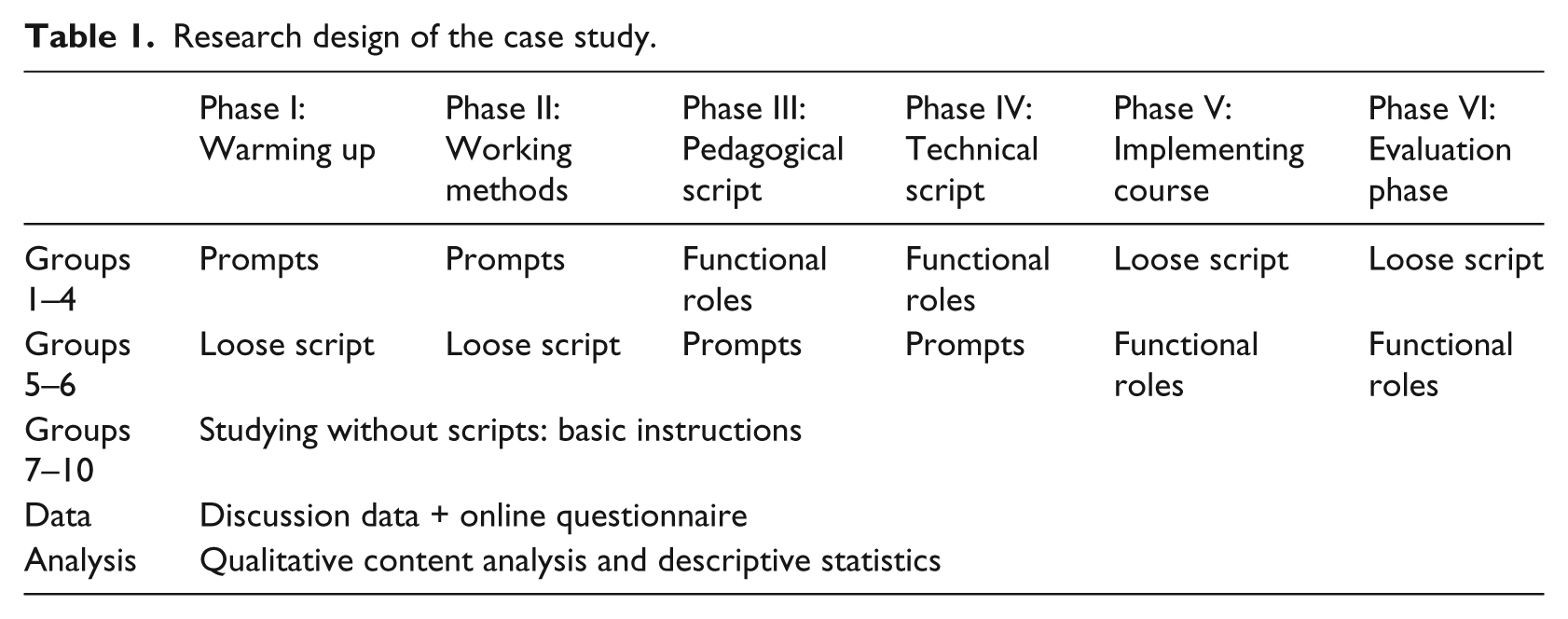
The Designing TEL course consisted of six collaborative tasks and the whole course lasted for 3 months during spring semester 2012, with each task lasting for 2 weeks. The first task was designed for supporting group formulation and building common ground (Stahl, 2007). Each student introduced themselves to others and described their previous knowledge, studies and interest in the course. The second task was to make a collaborative decision about study methods and tools. In the third phase, groups created a pedagogical script for their virtual course, and in the fourth phase, pedagogical decisions were supplied, along with technological choices. The fifth task was to build the course environment based on pedagogical and technical scripts. The course ended with peer-evaluation of the course implementation. Peer evaluation was conducted as group evaluation, where one group wrote collaborative feedback on one other group.
Data collection
Before the course started, all students signed a consent form in which they were informed about the data collection and asked permission for the use of their products for research purposes. Students were also familiarised with how to use SecondLife one week before the implementation of this study. During the study, the groups worked synchronously and asynchronously in Moodle, SecondLife and/or a chat environment. Over the 3 months, the groups designed their own virtual courses, culminating finally in the implementation of the courses. The data consisted of discussion notes (n = 1500) in Moodle and recorded and transcribed online meetings in synchronous environments. Altogether, the groups had 43 online meetings, and these meetings lasted 45 minutes–120 minutes.
Data analysis
Data were analysed with qualitative theory-driven content analysis (Krippendorf, 1985). Data analysis progressed through two phases. In the first phase, the unit of analysis was the group, and the three most successful groups were determined. Based on the results of the first phase, in the second phase, the analysis was conducted at individual level, and forms of interaction were analysed in more detail in these three successful groups.
Determining successful groups
In the first phase, each group’s activities in each studying phase were analysed in terms of (1) the number of active participants, (2) the number of written messages in virtual learning environments per student and tutor, (3) the groups’ own evaluations regarding the success of collaborative learning and (4) the grade for the final product of each study phase. A participant was defined as active if they participated in all six collaborative tasks by taking part in joint discussions. Students’ own evaluations of the quality of collaborative learning (on a scale 1–5, where 1 = unsuccessful, 2 = mostly unsuccessful, 3 = partly unsuccessful, partly successful, 4 = mostly successful, 5 = successful) represents one important aspect in determining the success of the groups. All group members had previous knowledge about the idea of collaborative learning and therefore they could reflect the phenomena in their own group. The number of written messages and/or oral speech turns, especially from the students, is considered to indicate active participation and inter-action. Finally, the grade represents the quality of the outcome of each collaborative task.
The three most successful groups (see Table 2) were chosen for more detailed analysis based on following criteria: (1) the groups represented different script groups, (2) there were more than three active participants in the group who participated in each phase of the course, (3) the group was active in terms of amount of discussion message in Moodle sent by students, (4) the group members evaluated collaborative learning as mainly successful and (5) the group were awarded good course grades by the teacher. The primary basis for the selection of successful groups was criteria 1 and 2.
The groups’ activity and success in collaborative learning.
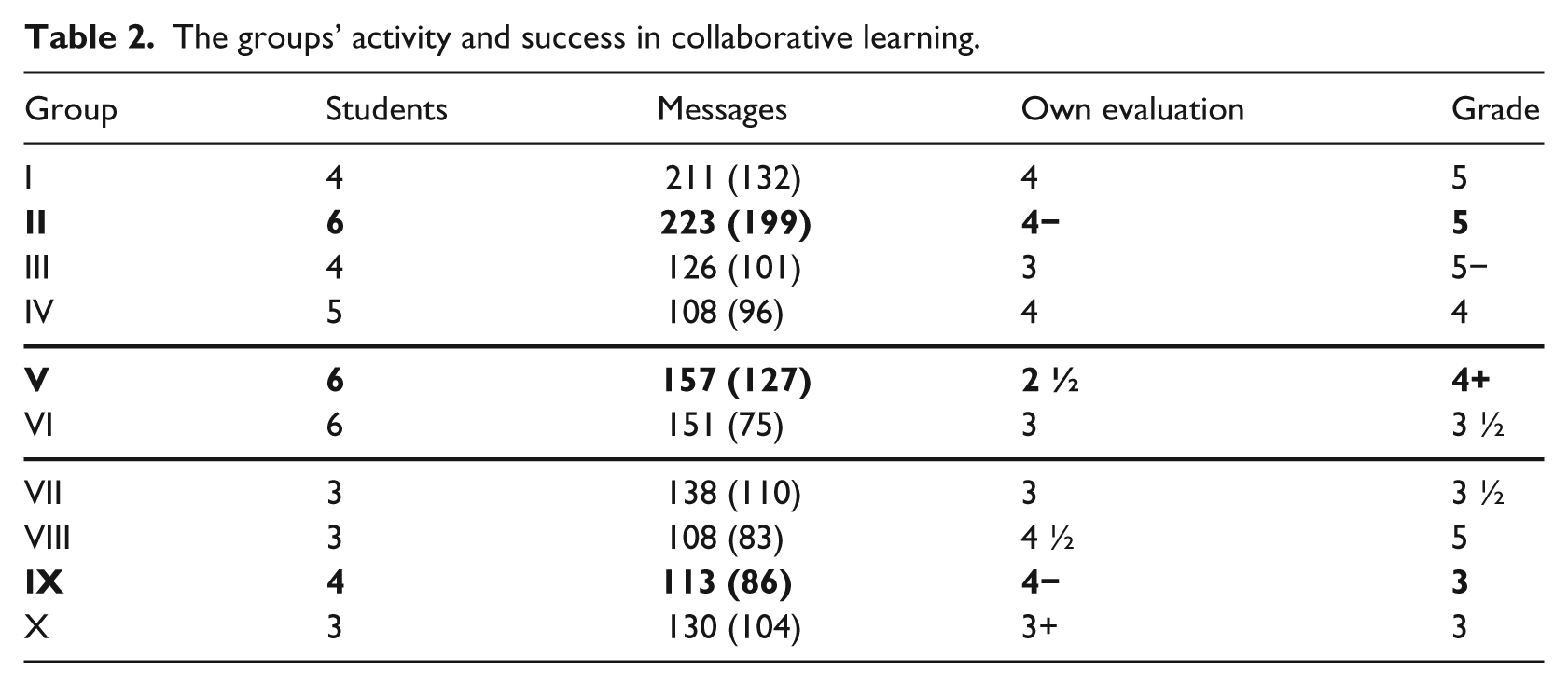
In Table 2, first the number of active participants is presented. With regard to Moodle messages, first the total number of messages written by students and teachers is presented. The number of students’ messages is presented in the brackets. Finally, the groups’ own evaluations of the success and grades given by a teacher are presented. The groups selected for more detailed analysis are marked with bolded letters. The bolded line separates the script groups.
Groups II and V succeeded best compared with other groups in the same script condition according to all previously mentioned criteria. The selection of the third group was more challenging, but in order to be more comparable in terms of group composition, group IX was selected because of the highest number of active participants.
Forms of interaction
A coding scheme (see Table 3) was developed to analyse student interaction in virtual learning environments. The unit of analysis was discussion note (asynchronous discussions in Moodle) or speech turn (synchronous discussions in SecondLife or chat). The analysis procedure was developed based on analysis methods presented by Weinberger and Fischer (2006), Hmelo-Silver (2003) and Järvelä and Häkkinen (2002). Finally, Bales’ (1950) interaction process analysis (IPA) has also been utilised. The initial coding schemes were used as guidelines to create a scheme for this study.
Coding scheme for online discussions.
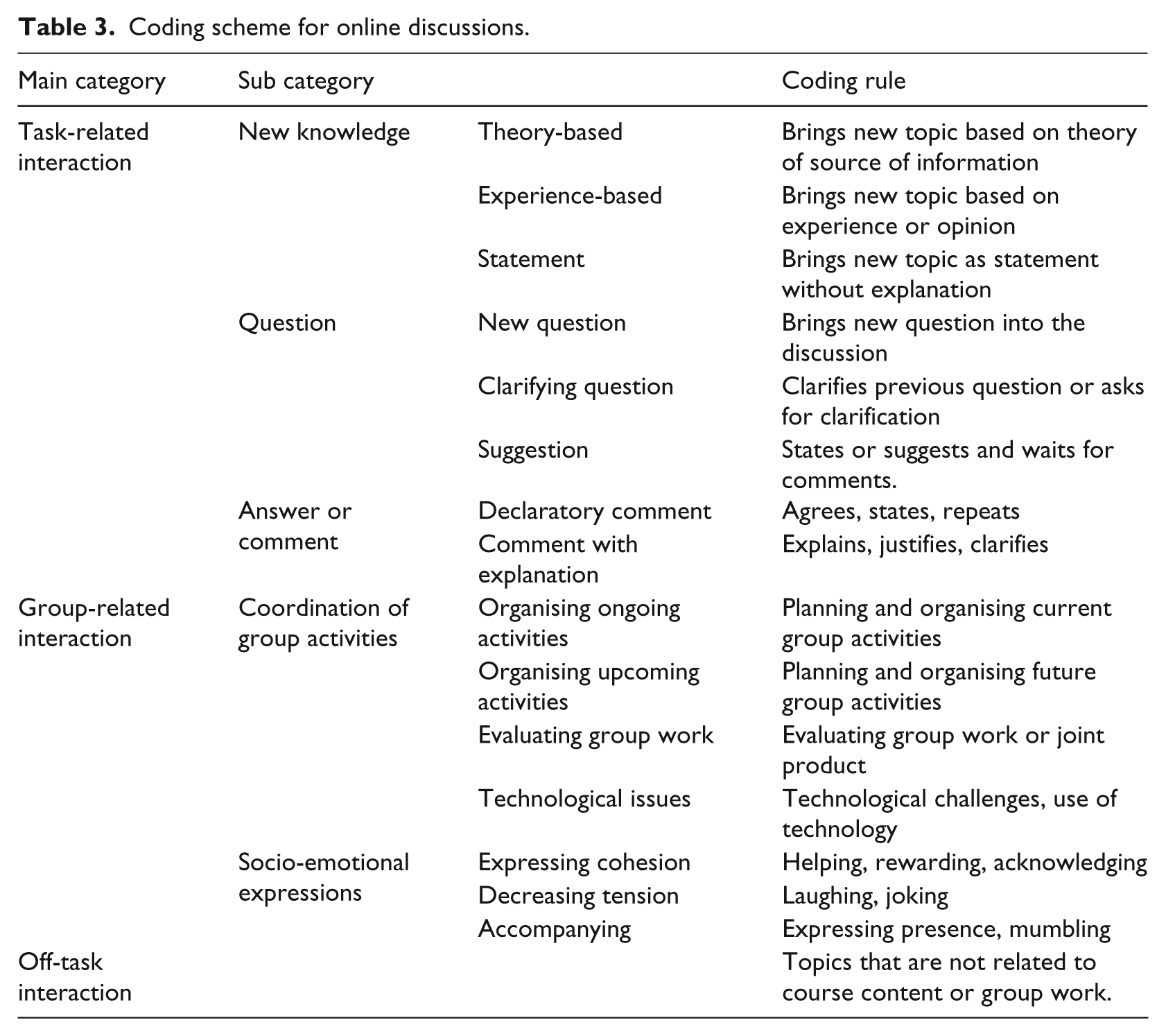
The interaction processes in the most successful group were analysed and all messages and speech turns were sorted into the categories presented in Table 3. Finally, cross-comparison coding was implemented by another researcher and Cohen’s Kappa values were defined. Kappa values varied between 0.68 and 1 according to the category.
Results
What kinds of forms of interaction occur in successful computer-supported collaborative learning?
The analysis of interaction forms revealed that there were both similarities and differences between the three successful groups. In all three groups, interaction was more group-related than task-related. Altogether 368 discussion notes and 2019 speech turns were related to group-related issues, while 187 discussion notes and 1601 speech turns were related to task-related issues in these three successful groups. In Table 4, the amount of group-related units is presented.
Group-related units according to the group.
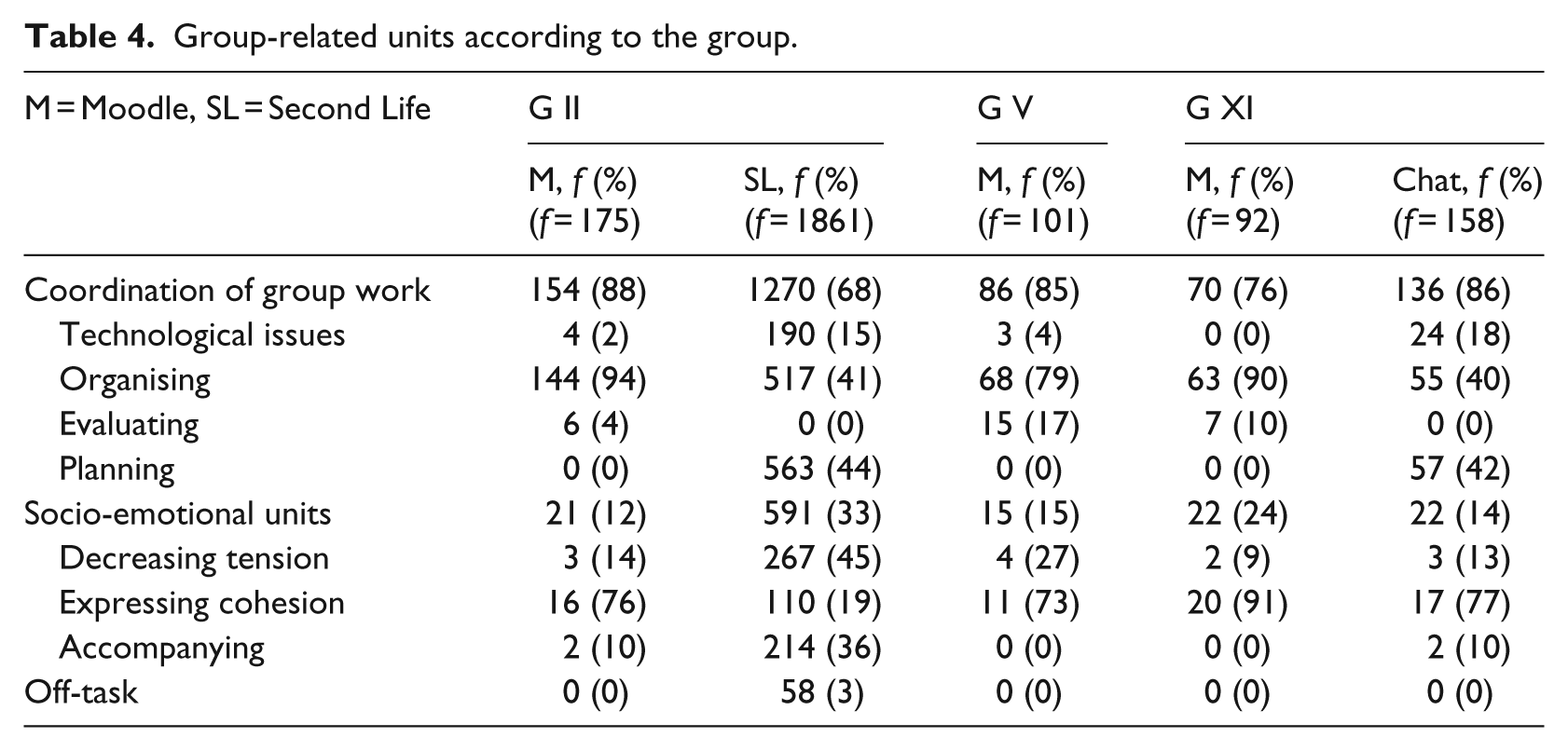
Most of the group-related messages were related to coordination of group work (80% of all group-related units), especially to planning and organisation of group work:
Our Pedagogical Script Form in GoogleDocs is almost ready, point 5.1 Description of the pedagogical model and explanation why this model has been chosen is still missing – please read our form improve and additional comments if necessary!!! (R2O5M)
Evaluation of collaborative learning was rare. For example, group number II, who were the most successful in their collaborative learning, had next to no interaction related to evaluation of collaboration. Only one group, namely, group V, evaluated their collaboration to some extent:
It seems like most of our team members listed have not been participating the group tasks so far. It is not very likely they can catch up several weeks of work in the last tasks. It doesn’t feel like group effort if some group members only do bits and pieces at the end of the course. (R5O4M)
Socio-emotional units varied between 12% and 31% according to the group. Most often, socio-emotional interaction was related to expressing cohesion, but it was also used for decreasing tension between group members, for example, through humour: ‘I just love apple pie! Sounds great! Maybe to served with whipped cream? Or vanilla sauce, but that’s not so simple to make any more unless you get it from a deli’ (R12O2M).
Although interaction was mainly focussed on group-related issues, discussion was oriented towards success in the learning task. There was very little or no off-task discussion in all three groups. Only group II had a small amount of discussion about topics other than course-related content, such as personal issues: ‘Aa jeah, so you are now in Finland?’ (R2O4S) and ‘no not yet, I come there for weekend, right now I’m home with my sick child’ (R2O6S).
The most apparent common feature concerning task-related interaction was the minor amount of new theory-based knowledge units (18% of all new knowledge units, see Table 5).
Task-related units according to the group.
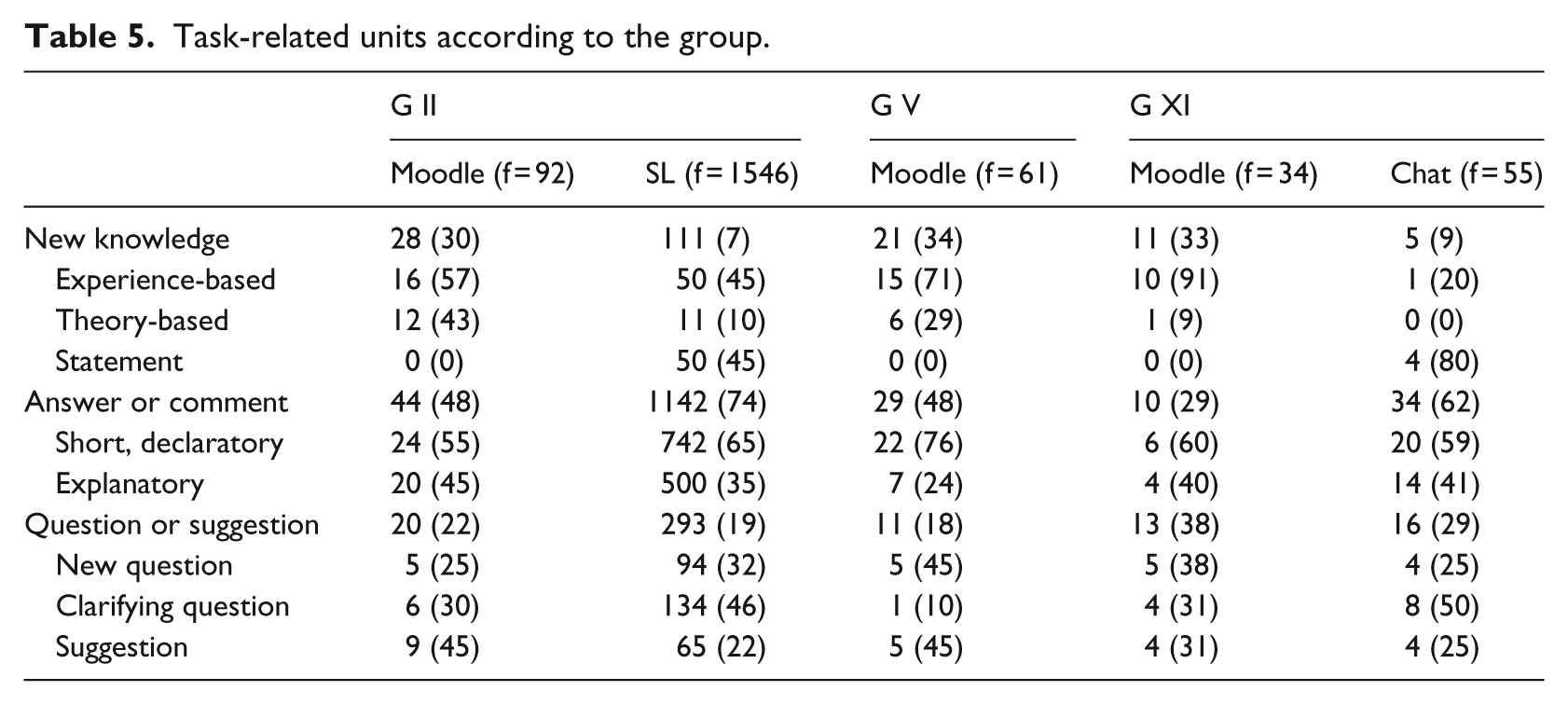
However, when comparing the amount of theory-based new knowledge units, it can be concluded that group II presented more theory-based knowledge than the other two groups:
Our chosen learning theory is collaborative learning and because it is a virtual course, it is computer supported collaborative learning (CSCL) … In collaborative learning, shared understanding is built on the subject in a situation where participants are committed to the shared goal and problem solving. It requires that participants are committed to the goal and to building shared understanding. Problem solving tasks can be divided but the attention of participants is directed to the same subject at critical points of work. Equality among participants (equal contribution) promotes collaborative learning. When the participants build shared understanding, they try to make others to understand their thoughts, make sure that others understood, and let others know that they understood them (this is called grounding). Discussion tends to be inquiring, not cumulative of critical. However, building a common ground requires a lot of effort and that’s why it is important that participants are equally committed to the task … (R2O4M)
Groups also differed from each other in terms of the amount of ‘answer or comment’ units. Group II presented more answers or comments than the other two groups. However, in all three groups, answers and comments were usually short statements (more than 50% of all ‘answer or comment’ units) rather than argued explanations: ‘You can be right our case can be more our own way case study’ (R2O5M).
Groups II and XI had more argued explanations (about 40% of all new knowledge units) than group V (24%):
I agree. We do not need to create here detailed instructions for SL or Moodle or Google hangout. I try to clarify what I thought we could do. The Moodle site is the place the students come first. This is a place where they find all materials, and basic instructions about what they are expected to do. There will be one opening session for the course in Google hangout, and later there will be meetings in SL in groups with tutor. The final conference for the whole course and the feedback session are in SL. The time for the first conference (in Google hangout) is fixed in the schedule. The info for getting to the conference can be sent to them by e-mail together with the Moodle user accounts and address, when they are accepted to the course … (R2O4)
The percentage of questions varied between 18 and 38, according to the group, with group XI presenting more questions than other groups. There was no significant variation in the different question forms between the groups, except for group V, where more new questions were presented than in the other two groups. In groups II and XI, the number of new questions (‘What do you think? What kind of virtual course do we want to design?’, R5O4M), clarifying/clarification seeking questions (‘what do you mean about the frame … ?’, R2O5M) and suggestion (‘Flying Minds is fine by me. FM for short? Team FM? Flying minds is probably more optimistic than Simple Minds’, R5O4M) were almost equal.
How do forms of interaction vary between synchronous and asynchronous learning environments?
When comparing the variation of interaction forms between synchronous and asynchronous interaction, both similarities and differences can be found (see Tables 4 and 5). In synchronous discussions, there was more interaction concerning the use of technology. Technology-related discussion concerned usability or how technology can facilitate collaboration, for example, sharing learning materials: ‘what you couldn’t open, articles? I just tried to open this collaboration script article and it really opens to me, and the seven pages’ (R2O6S) and ‘yeah if someone does have access to them maybe they can send them to the rest of us’ (R2O2S).
Synchronous discussions were more often related to the organisation of group work than asynchronous discussions were: ‘I think tomorrow we are getting this aa new exercise and then aa we also can decide is needed if we start right away because I think we have two weeks to do it’ (R2O6S).
With regard to group-related units, there were more expressions aimed at decreasing tension (‘ladies are 100% woman and men are 50% woman’, R2O6S) and accompanying (‘mmm, aa okay cool, cool, cool’, R2O2S) in synchronous discussions than in asynchronous discussions. On the other hand, there were more messages aimed at expressing cohesion in Moodle than in synchronous discussions (‘also want to thank everybody for nice collaboration! This was a positive experience and I learned a lot’, R2O4M).
With regard to task-related units, new knowledge was presented more often as short statements in synchronous than in asynchronous discussions (‘it’s clear it’s simple, it’s like a really well structured and not so complicated’, R2O6S). Based on the number of comments and answers, synchronous discussions were more reciprocal than asynchronous discussions in Moodle. In Moodle, more new knowledge was presented than in real-time discussion and it was more often theory-based:
I think we can ground our pedagogical solutions to many theories. First ones that pop in my mind: Blended learning, connectivism, classic theorists that support student centered learning, SRL (self regulated learning has been present quite a lot in our studies), CSCL … and cognitive apprenticeship was brought up in course materials. (R5O4M)
Conclusion and discussion
The results show that successful collaborative learning can be characterised as a process where learners are actively regulating joint activities and coordinating their group work. This study indicated that in successful groups learners negotiated a lot especially about issues relating to the planning and organisation of joint activities. This result is in line with Volet et al. (2009) who have shown in the context of self-regulated learning that groups put a lot of effort into the regulation of joint activities. However, there is also contradictory evidence. Dewiyanti et al. (2007) and Hou and Wu (2011) found in their study that groups do not actively plan and organise their group work during collaborative learning. It can be concluded that one reason for success might have been the essential role of the regulation of joint activities during collaborative learning.
Although the groups in this study were successful in terms of course grades, participation and group members’ own evaluations, discussions stayed at a fairly superficial level. Presentation of deep theory-based knowledge was rare and the comments were usually short statements without further explanation. Hou and Wu (2011) also reported similar findings when exploring collaborative knowledge construction in synchronous chat-discussions. In the study described in this article, none of the three successful groups achieved high-level collaborative learning, although one group, namely group II, almost achieved this. Compared with the other two groups, more theory-based knowledge was presented and discussions were commentative.
The results showed that there were differences in the forms of interaction according to the environment in which discussions took place. Synchronous discussions included more answers and comments than asynchronous discussions in Moodle and SecondLife and the chat environment seemed to provide more opportunities for reciprocal discussions. Instead, Moodle seemed to support metacognitive discussions such as the planning and organisation of group work. Based on the results, it can also be concluded that synchronous discussions were more informal than asynchronous ones. Especially in SecondLife, the students discussed their personal issues, like hobbies and families.
The results of this study contribute to the research on CSCL in two ways. First, the results indicate the nature of interaction during collaborative learning in a computer-supported course. They highlight the importance of the coordination of group activities and socio-emotional issues in collaborative learning. Second, the results of this study suggest that different types of technology can have an influence on the forms of interaction.
This study also provides practical guidelines for teachers and educators regarding designing and supporting collaborative learning in virtual learning environments and face-to-face ones. Successful collaborative learning requires both task and group-related interaction. Students need time and space for the planning and coordination of group activities, and such discussions need to be supported by a teacher. Also, making productive contributions such as asking explanation, seeking questions or providing theory-based knowledge and well-argued comments is a skill that can be learned and should be taught. When students are able to participate in productive collaboration both at task and group-related levels, they will be effective and creative problem solvers and experienced collaborators when moving into work place contexts.
This study, however, has its limitations. First of all, the study was small-scale, undertaken with only one cohort of students in the context of one university course. The second limitation concerns data collection. For some of the students who participated in the study, using English as a language of study was challenging. This may have led to limited use of expressions in both asynchronous and synchronous discussions. Third, the course lasted 3 months and this period of time might have an effect on the interaction forms. Group members were mostly unfamiliar with each other and the grouping process took quite a long time. Over an even longer period of time, students would have got to know each other better, which might have led to more lively and relaxed communication.
This study indicates that even the outcome of collaborative learning is high-quality interaction leading to the outcomes staying in a superficial level. However, interactional processes can be promoted during collaboration, for example, with collaborative scripts (Fischer et al., 2007; Haake and Pfister, 2010). Future work is needed, and should include the investigation of the effects of collaborative scripts on the quality of both interaction and the learning outcomes. Also, the connection of different interaction forms and the development of learners’ understanding during collaborative intervention provide possibilities for future research. Finally, more research needs to be carried out in order to understand how group members’ familiarity, cultural background and time period affect the quality of interaction in collaborative learning.
Footnotes
Declaration of Conflicting Interests
The author(s) declared no potential conflicts of interest with respect to the research, authorship, and/or publication of this article.
Funding
The author(s) disclosed receipt of the following financial support for the research, authorship, and/or publication of this article: This research was supported by Finnish Cultural Foundation (grant number 00121027).